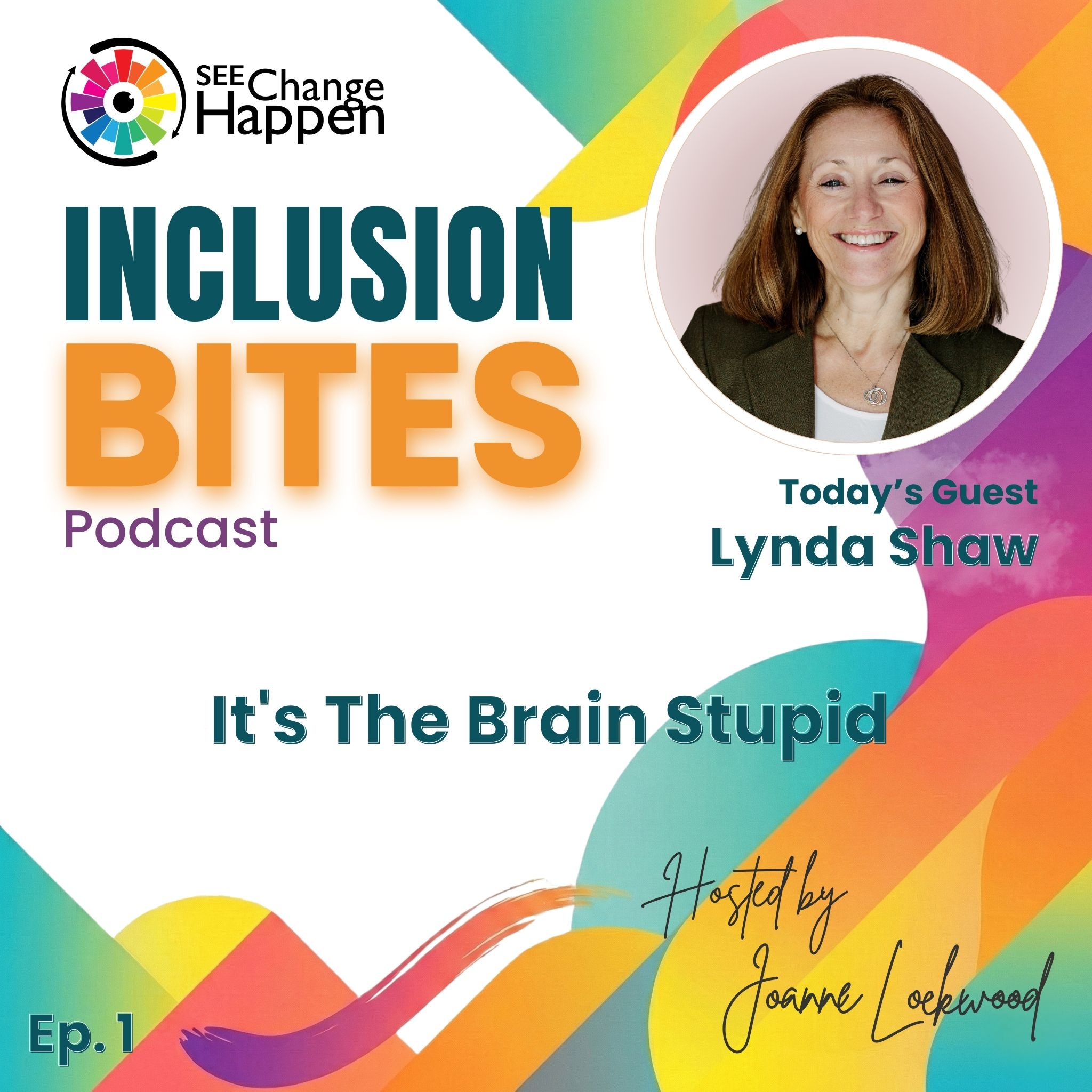
Hello, everybody, and welcome to the very first podcast in myno new show called Inclusion Bites. In this series, I'll beinterviewing a number of amazing people simply having a conversationaround the subject of inclusion, belonging, and generally making the world abetter place for everyone to thrive in. Would like to join me in thefuture, then please do drop me a line to jo.lockwood@seachangehappen.co.uk.You'll be at a catch up with all of the shows on iTunes, Spotify, andall the user places. So plug in your headphones, grab a decaf, and let'sget going. Well, today, I have the absolute honor and privilegeto be joined by Dr Lynda Shaw. I first met Lynda ata mess musical, at the Professional Speaking Association, and was recentlyamused by her entertaining the audience in a musical comedy sketch playingin the triangle in a different dialect. I asked Lyndato describe her superpower, as she said, her superpoweris always loving change while the rest of us try toresist change, this is something Lynda does to great effect.And today, we're gonna tackle the topic entitledIt's the brain stupid. So Dr Lynda Shaw, goodmorning. How are you? Good morning, Joanne. Really good. Thank you. How are
Dr Lynda Shawguest
you? I'm fantastic. Thank you. Really looking forward to this. We planned this a
Joanne Lockwoodhost
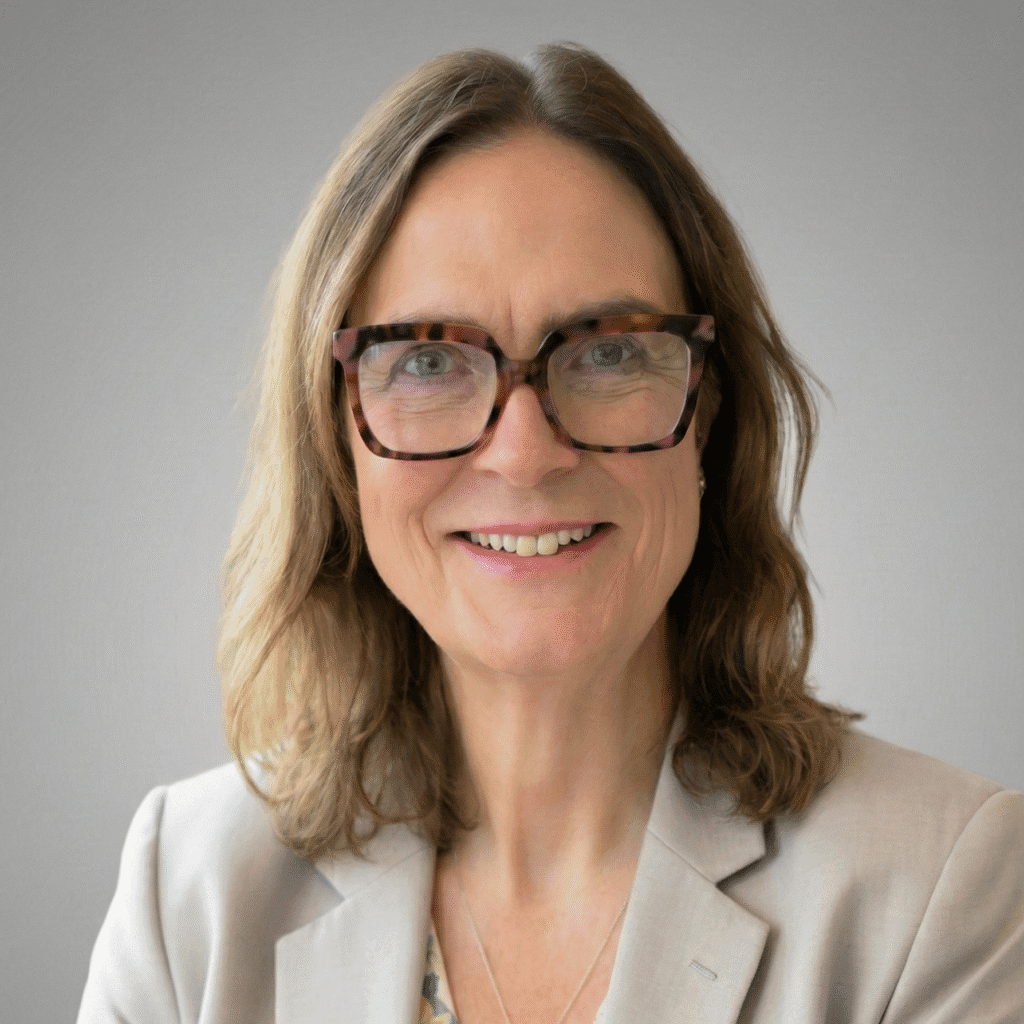
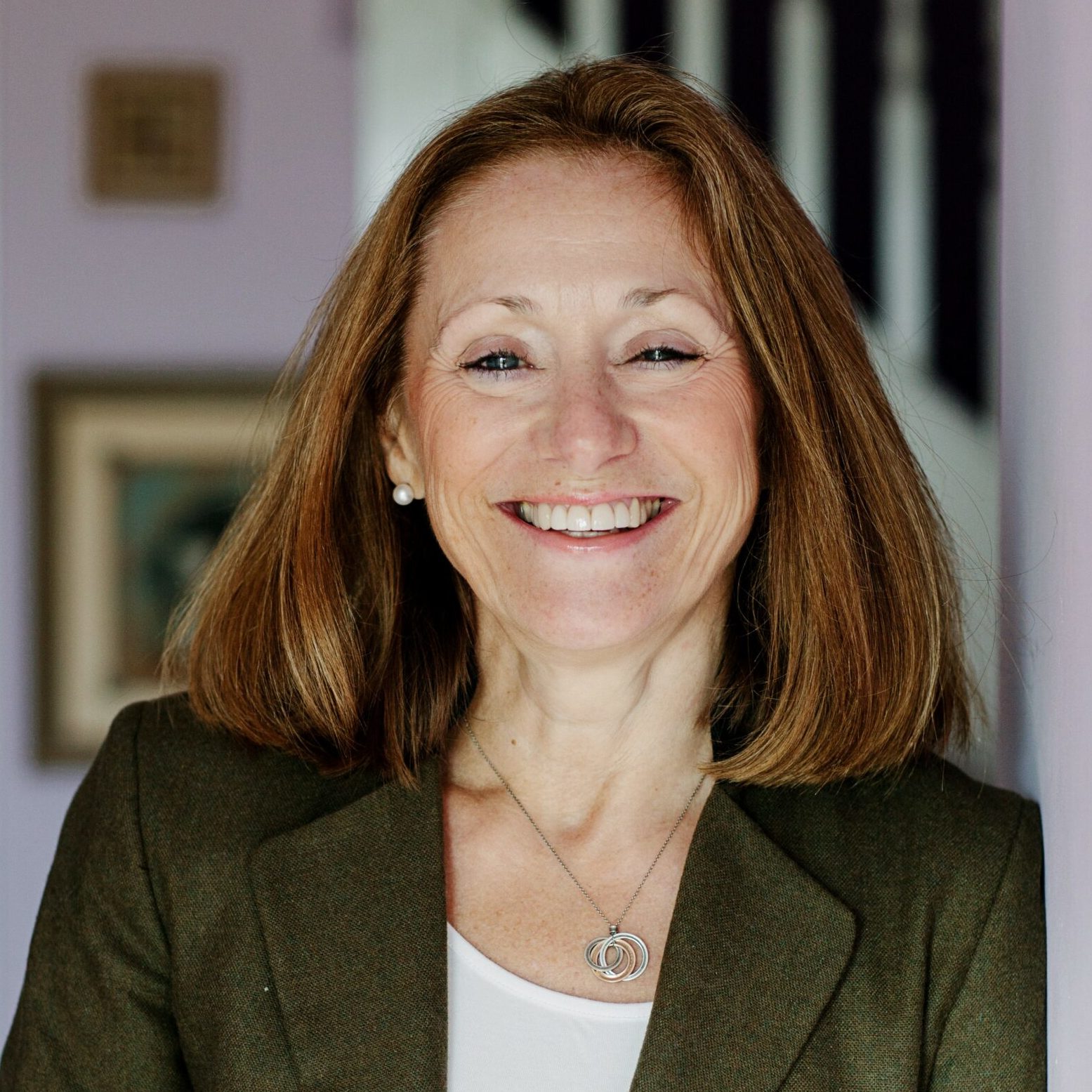
couple of months ago, and I'm really, really excited to, finally have theopportunity to catch up. So do you want to tell me andthe listeners a bit more about yourself? So who is Dr LyndaShaw? Yep. I'm, I've got a doctorate in neuroscience.
Dr Lynda Shawguest
My, specialty is unconscious processing of emotion,and it's morphed into, other things as well.Basically, because I had 3 businesses before I went back to academia,and I've got a psychology in my background. So, my biggestbusiness, I had 2, 20 staff and 2000 members of a healthclub. So I sort of get what it's liketo manage people to understandhow to motivate them, how to dis how to create decentdecision making processes, how to judgments, all of those thingsthat the cognitive brain does. So my discipline is cognitiveneuroscience. So I basically am a specialist in how the brainchanges behavior and behavior changes the brain.And because of that, what people don't realizeis just how much control they really have.They can control their behavior to a certain extent, not completely,but to a certain extent, more than they realize if they just were awareof it, understood how to do it, how to,how to change willingly. So that's what I rang on about when I goaround to companies and senior people in on in the city and suchlike. So it's almost like saying to yourself,
Joanne Lockwoodhost
before something comes out your mouth before a thought becomes locked in, howcan I change that thought? How can I reframe that? How can I nudge itinto a different orbit maybe? Yeah. I mean, as soon as
Dr Lynda Shawguest
you, create a different way of thinking on a particulartopic or a particular person or particular object, you'll actuallyrewire the brain. You've lead our new neural pathways and newconnections, new synapses, new dendrites, new everything. So itand then if you keep rolling that thought, youwill strengthen it, and it will become your default thought instead ofthe more destructive one. So if we Yeah.So, you know, we are we can do that, and we do it allthe time. But what people don't realize is they can do it deliberately.And by doing it deliberately, you have that you're in more in control of yourdestiny, which is really cool. So I I heard
Joanne Lockwoodhost
recently that most of the biases we have are learned.Okay. We we do have some protection type biases, some subliminalreptilian buses, but we do learn a lot of biases, over thecourse of our lifetime, don't we?
Dr Lynda Shawguest
Wellbeing has come from heuristics.Heuristics is a method the brain uses to,create shortcuts to lay down information becausewe we are bombarded with this cacophony of stimuliall the time, and the brain can't cope with it. So it relegates everythingto unconscious processing, automatic processing that does nottake attention as quickly as possible. So we're locking awayall of this huge amounts of data. Now, if I said toyou, if this was, is this a four sheet ofpaper here, was a, as the was thebrain. And, part of it's consciousprocessing, and part of it is unconscious processing. How much wouldyou say that sheet of paper is conscious processing?
Joanne Lockwoodhost
I'd have to say with a that's the thing I'm slightly educated. So I left,I just say that probably 80% was probably unconscious and 20%conscious. 20% conscious is what you reckon.
Dr Lynda Shawguest
Yeah? Well, in actual fact, it'sprobably that much. So That little dog.
Joanne Lockwoodhost
A couple of stuff. All the rest is unconscious processing.
Dr Lynda Shawguest
So what we do with heuristics is we thinkOkay. That person has, has agreen skin with things sticking out of his head, must be a Martian, put themin the Martian book. That person has,that that thing has four legs of tail and ears. It must be a dogin the dog box. The unconscious processing, it gets it could soit's speed of efficiency for the brain to operate. But thenwe get these biases, because they were all of a sudden thinking, well, that meansthat all green people our martians when it could bethe Grinch, or it could be, you know, that dog isactually a cat. So we we start get it wrong,biases are, are not very, very helpfulin terms of being accurate because we stereotypedpeople, immediately into, because they've got that accent,that must mean they're ABC. In a box. It's stereotypical.So, it's not helpful because we get that wrong, butequally, it's helpful because it enables us process so muchinformation so quickly. So the heuristics are great,but the side effect of the biases And the site, thebiases are the things that we're trying to tackle so much in commerce now, whichis a very difficult thing to tackle. And,it's it's a conundrum. It's it's actually a really big problem.
Joanne Lockwoodhost
I heard somewhere that, the the, if youlike, this unconscious brain is really fast, whereas the consciousbrain is quite slow and expensive in terms ofbrain cycles. It costs more process things consciouslythan it does unconsciously. Is is that a truism, or is that just a No.
Dr Lynda Shawguest
It's it's it's fairly true. We've got to be careful of thesegrant statements in neuroscience, the pop the popular press get hold ofthis stuff. I mean, may I give you an example of what it's like tobe a neuroscientist to give you to give you context? Okay.So we have an idea. And we've got our little idea,and we think, okay, this is a really good idea. I want to research thisI wonder if anybody else has researched it and what's been saidbefore. So our little idea becomes this great bigpiece of work where we're doing a massive literature review, and we're reading up onit. We've realized then I'm going, okay. My dear's sound. I could dothat. So we break it right the way down, to our hypothesis.And then we think, right, I'm going to design my experiment now. So we openit up, we design the experiment, we run the experiment, we get theresults, And then we they finally take hold, not quite finally.They're being brought back down to those tiny results in abouthalf a page. And then we open it up again, in our discussion,looking back at the literature review. So we're now Lockwood we've nowgot our discussion. We've opened it up and we're trying to make sense of theresults. And then we'd close it down, get it down, and down, and down, andto our conclusion, nice and neat, saying what needs to be donenext. And then with a bit of luck and a fair wind,we are published in a peer review paper, and itgoes out there to the, to, the enlightened ones. And thenthe popular press get hold of it, and that's all how it breaks loose,because it goes wrong. So so you get this lovelyneuroscientific, of explanations and ideasand what is going on in the brain, then popular press get hold of itsomebody says, oh, that's gonna fit my business model. I'm gonna say I can makethat fit because of what I'm selling or what my products or myservices. And then it goes reallyWellbeing, Mike, I'm I'm on amission to stop this. It's not I'm not gonna stop it, but I willenlighten everybody I because, so we have to be very careful of grantstatements when it comes to neuroscience. It's a very seriousscience, but it's an embryonic science. It's brand new in sciencespeak, and so we're learning new stuff all the time.So I I believe that when we get the next generation ofneuroimaging equipment, we will probably unlearnand discover things again that we have no idea about.That's what's exciting about neuroscience. Okay. So so
Joanne Lockwoodhost
we've been living in a world of kind offake news is it in terms of what we believe about the brain, and we'vehad all these, you know, I, you know, you hear that Myers Briggs is isis as interesting as horoscope and you hear the introvert extrovert,the binary parallels that we thought they were before and the and the brainis far more complex. So are we even now saying that men aren't for Marsand women aren't for Venus anymore? Is is there no male brain, female brain, oris that another myth? I worry about this. This this
Dr Lynda Shawguest
labeling like this, it's it's the brain isn't that simple. We'resimplifying it too much. We are productsof our, of our chemicals and our biology, butwe're also products our environmental and social upbringing.So, therefore, we can't just say a male. I mean, I I know that itgirls are little tomboys in the playground. I know that little boys who would ratherplay with the prime or chair or, you know, or dolls.It's, how do we talk about the so called male and femalebrain like that, especially when you consider how wetreat our boys and girls differently. And there's been somereally good documentaries on on mainstream television here in the UK,about this and how, you know, boys, wepush a little bit to be more physical because we're a little bit moreprotected with. We don't need to be But it's the way we're programmed asparents and as teachers and carers. So I think totalk about a male and female brain is really misleading.
Joanne Lockwoodhost
It's almost, I think it's quitedemeaning often to women to say, well, the female brain isdifferent to the male brain. Therefore, you can't be as effective as aman. And it's almost like it's almost like creating 2nd class of citizenby by using this malefemale brain thing and men is strong women aweek. Men men don't quote. Women do quote. And then that's thekind of the label we're given as women. That we have to performto our stereotype. Yeah. Absolutely. And, you know, we
Dr Lynda Shawguest
have this, this idea of of the masculine, you know,engineers of of men, mathematicians on men. Whatnonsense? There's plenty of it female in in men mathematiciansand plenty of female engineers out there, but it's this you know, and one ofmy kids, so when they were at university, one of their friends was done onengineering course, she was the only girl in the auditorium. You know, in thelecture theater, everyone else was a guy, and I just thought, that's so sad.Yeah. You know, that's it. And I did some covert of research in asenior school, not far from here, and I was looking at year 9, so theywere fourteen to fifteen year olds. And, I said,okay. Let's look at the jobs of nurse, doctor,what secretary, and she was anurse. He was a doctor, and I'm thinking,really? Still we're doing this? And, you know,it still goes on. It perpetuates everywhere. I mean, I think I remember one of
Joanne Lockwoodhost
the BBC TV programs where they talked about boys and girls, and they kindof identified around about the age of and 7 is where we start locking inthese identities within us, and a lot of that issocialized. And there was big great examples about if you dressa a baby in girl clothes at the age of6 months to 18 months. People treated them in a different way than if youdressed them in boy clothes regard their actual sex drug gender.And, yeah, I was talking to some people that was like, because I work onthe recruitment HR space. And one of the challenges is trying toattract more young girls, women, into stemsubjects, into into subjects where traditionally it's beenoperated by men. I I think it's I wasactually speaking it to a an organization, andthey said, well, it's not our problem so much. Society's problem,and I said, well, hang on a minute. If you're running a business, you've gottatake some responsibility to invest in the future and go outinto schools, go out into the into the work beyond your workplaceto make your subjects aspirational and to try and overcome thosebiases by having great female role models great role models fromunderprivilege or underrepresented communities, not just sit back and go,well, we can't do anything in society. And that that's a challengeI see. And I almost a demand where we have to startmaybe into anti nation classes. We starttrying to educate parents on how to debise how todegenerate a lot of the stuff they and the message that they give their children.The schools are now doing a fantastic job. I I I speak to a lotof pair and the schools are putting a lot of effort into making sure thatboys and girls feel equally aspirational. But, of course, you come home, youthen get socialized back into the boy girl. And then the friends and allyour peers kick in, and and they just reinforce the terrorist. So all the greatwork the schools are doing is being deprogrammed by the parentand society around them. And that's that's all. I think we've gottapre we gotta tackle pre parents and changethe generation. Otherwise, we're never gonna make a difference. I I I'm
Dr Lynda Shawguest
I'm looking forward to the day when we do not discuss gender at all.
Joanne Lockwoodhost
Yes. Amen. Yeah. Yeah. I'm look yeah. I'm really am looking forward to that
Dr Lynda Shawguest
day. I'm looking forward to the day when somebody gets a job on theirmerit. On their capability and their experiences sofar. I'm looking forward to that. I'm a mother of a son and adaughter. I don't want to either of them to have aproblem because of their gender. So I worry about us saying weneed more women in on the board or we need more womensomewhere. Yes, we do, but surely weare doing the same as we did with the other with the oppositegender, but just change the label. You know, we toto it's it's a it's a labeling thing. I would rather just say, let'sthe north gender. Did you know I did a documentary with Karen Brady onchannel 5 new? No? Okay. Wesorry. I'm cracked. Tell me if you just want me to be quiet, Jo. Oh,
Joanne Lockwoodhost
that's good. I get very excited.15 minutes a final hour frame. Definitely. Yeah. Care for it.
Dr Lynda Shawguest
Okay. We we did this we did this program. I setup an experiment, and we we've gotten some recruiters from an indifferent employment agencies, half old guys, half old girls. We split theminto 2 groups. And we hid them away in the side rooms. Wehad CVs stuck up on the wall.Half the CVs had the name of the applicantand the photograph, half of the CDs had no name andno photograph. So you would think that was not you couldn't tell whatgender they were because of that. With them,the first group of the, of the first group of recruiterscame in, and they saw with photo first andwithout, and we swapped it around for the second group. So we mixed it upa bit, so there wasn't any kind of ordering problem.The brief was they didn't know why they were there, but the briefwas that they had to, decideon one applicant for a first interview inan engineering firm as an IT expert.Traditionally so called a male role, engineering firm,IT, and that was it. I think it was95 percent of the result, 95%of them chose men. Even withthe CVs without a photograph or a name.And when we told them that there was a bias going on, they were mortified.Because they're recruiters. They understand what bias means. And they justsay, no. No. No. No. No. What was it? Well, why did you choose thatperson? Well, because they've got a better degree was more suitable. No.They've all got suitable degrees, every one of them. And but itturned out that it was the language in the CVs thatthat gave them the idea of which gender it was. So thefemale CVs were words like team building, and,things like that, that looks the more cohesive, typeof words, whereas the guy words were all about ambition andthose words. And that that gave a clue as to what the recruiterswere looking at. And it was quite enlighteningthat, and they were really upset with themselves. Andargued big time pushed back. Yeah. But,it, it was true. You know, but people will have biases. You know, the onlypeople that don't have biases are dead people. So, you, youknow, so it's not a bad thing. We just need to be awareof them and work with them sensibly. Yes. I
Joanne Lockwoodhost
mean, the whole, meritocracy in recruitment andopportunity is a whole new topic, which I'm I'm planning on tackling the otherday, but, I often find merit pushing meritoxiforward is an excuse to keep the status quo because what we're sayingis based on the based on the merits we've decided, this is the bestperson, but we often don't include inthat merit autocracy scoring other skills thatare maybe more appropriate to the workplace, about collaboration, about teamwork, aboutempathy, about building relationships.So often we're building the meritocracy with male bias inmind, and that that's that's the challenge I have with meritocracy. And, yes, we'd alllove to be equal, but I think some people needequity, which means give them a leg up to give them equality, if you like,or equal chance. So Yeah. Yeah. So that, yeah, I think currentlymeritocracy is almost an excuse to keep status quo.And sometimes I I feel that a diversity hire,whether that's gender ethnicity is somehow somehow seems2nd best. I'm hiring for diversity,not for the best person, but I have to hire someone who's different.They won't be as good. So you're almost pre bias in person to benot as good as the obvious candidate. And, anyway, that's athat's a topic for all of you in the future. Unless you've got
Dr Lynda Shawguest
some Sorry, Jeremy. You've just really touched on something that'sreally interesting there. If we are,feeding the status quo,we're actually going to become dinosaurs because things arechanging so rapidly, we really have got to thinkin in much more creatively, with with much moreinnovation. So In actual fact, if we've got a job speaker, we're lookingfor a certain type of person and we're trying not to be gender biased orany bias whatsoever, maybe we're looking at the rock, maybe obscapes,not correct. Oh, completely. Completely. It's
Joanne Lockwoodhost
a whole whole recruitment industry, and it is is shaking itself up.Is based on a CV, which is a historical document. Andthat was only invented in the eighties when we started having fax machines, and wecould start writing CVs on computers. Before that, we used to fill an applicationform. So we we constructed the CV as the official document.People Wellbeing at video interviews, again, video interviews could have their ownbuy you know, you see somebody at the way they talk, the way theysound, the way they all these other facts kicking. But yeah, it'sI think the the more forward looking companies now are being moreobjective in their approach where they were setdefined criteria, you would maybe rate yourself, someone else would rate you onthe answer to a question. So for the time you get around to saythat the second round, there's always there's always that affinity, but as youalready know, that person has capability. So you're more likely to you're more likelyto welcome everybody whereas first system of CV isdown to how good you are at creating a CV, whether you've paidsomeone or or what it is a whole load of factors that CVs often arewritten by professionals to get people jobs, not actually todo the job. And, often, the the interview process isis two people lying to each other, about the demomode of the game, if you're like, rather than actual actual game footage.So, yeah, it's, it I think the forward looking companies are starting toaddress the way they recruit, the way they attract. The wholecandidate experience, and also understand that the step isabout their brand and about their, what they're offering people in terms offlex ability and the skills they need because they don't wantthe hierarchical businesses in the past. They want more neuralnetworks, and that requires different skill sets, which can't always pick up ina CV. Absolutely. There's a lot you can't pick up in a
Dr Lynda Shawguest
CV. But, of course, as soon as you get somebody in front of apanel, the the, perceptions of eachpanelist will be, unique toonly them. So they'll be looking with their with their buyers views as well,you know, it's one of the big different. To be honest with you, when Igo into companies, one of the things I talk about is if you have gotan interview panel, or a board or whatever is that youcome to a point of agreement that you areif you display a bias, which you're bound todo, the others pointed out to you. Yes. I'd justsay, hang on a minute. Little Jiminy cricket here. We're all watching on yourshoulder. You just did X Y Zed. The problem with thatis that somebody might feel they're being got atby their peers. So it has to be really a placeof where everybody consents to the same thing.And, you know, you actually are looking after one another, so you are notdemonstrating or using buyers because you're being pulled up on it. Soit raises awareness of of, youknow, what what is your default button? Yeah. And I think,
Joanne Lockwoodhost
again, look at some of the forward looking companies, they're they're a lot moreeffort into training their recruiters. They're alsotrying to avoid groupthink or dominance within an interviewboard where each person has to rate and review against a setof objective criteria before they discuss. Andonly then do you do you consolidate the results and try and averageout those biases if you can? Andsome of those are done blindly, and some of those are done,as I say, just using objective based questions. So, you know, find the error inthis code, write me 5 lines of code that will do this.So really testing in job experience, and some are evensaying come in and work for us for a day, do the job andsee how it goes. And and those are kind of a better, better ways ofevaluating someone's fit performance,capability than a 5 minute interview, which really,I think people are saying now that an interview and a CV and applicationvideo only gets you a month or 2's head start. It's the actual theperson that's gonna thrive after the 3 or 4 months, when they've they've picked upthe job, they've picked up the opportunity.And, they're actually enrolled I think what wetend to do is we we tend to go for the person who's got theextrovert personality or the or the person more like usor the more like the person just left or the other people in the team.And that's that's when we're right at the job set, we often think of theperson we want to hire, and then we match everybody against thatperson other than the actual needs of the role.But, yeah, that that's that's that's the way theworld is moving, and it slowly in some areas, but people organizingare really focused on that. Yeah. I think it's it's all about group membership.
Dr Lynda Shawguest
You know, we, we identify with people like us, andwe need our group membership, and we will fight for our group.As you've seen everywhere, absolutely, every week, just listen to the newsanytime, and you will find people fighting for their group that they feela member of, and anybody out side of that group is a threat.And that's, you know, that's evolutionary psychology going on here. You know,everybody outside that, and and for very good reason, when we were inLittle Villages, and we were being invaded all the time and raided andstuff and, you know, raped and pillaged and all of those things goingon. So, but so our group membership is very,very important to us. So it's the, I thinkthe way to get help to get over it is to forpeople to appreciate the differences ofother groups. So there needs to be a a moveforward to to appreciate. So we're raisingawareness, and then we start to appreciate how thosedifferences are valuable, So set set a break
Joanne Lockwoodhost
uniqueness, set a break differences. It makesthe whole bigger by enriching it with different experiences,different thoughts, different different ideas. Yeah. I agree. Yeah.
Dr Lynda Shawguest
Absolutely. Absolutely. And then what you've got is but to be honestwith you, you raise awareness, but people will stillignore it if they feel threatened. So you won't actuallychange anybody's mind unless you can stimulatecuriosity. Because with curiosity, welearn. You know, sure we learn the times table by road,you know, just boring, boring, dram it in, but most of uslearn by being curious. And children, especially, like, they'responges. They're everything they're in in awe, and they're in wonder ofeverything that going on, and they're learning huge amounts of dataevery single day. And just by being sponges and curing,about what the, what's going on in the world. So if we can stimulate thatin adults, but raising awareness of what's goingon, Finding that curiosity to then appreciatethe differences there are and then being curious about what that personcontribute, or those people can contribute, all that group contributeto what you're doing. That's a good way forward, I
Dr Lynda Shawguest
think. Yeah. Are are we now living in society
Joanne Lockwoodhost
where people aren't being as curious as they oncewere with, maybe there's too much information, too much strong opinion,mean, it's just to look at some of the the hot topics of the ofthe world in the UK. So we've got the, the Brexit debate. We'vegot climb change. We've got some of these other debates that are going on wherewe have, anti vaxxes and and and people who areadamant that vaccines, cause, autism,etcetera, etcetera. So we've got all these really strong opinions, and people seem toset up camps on opposite sides of the opposite hills andjust start throwing grenades and and rocks and stones at each other and aren'tjust So you're not with this carnage of where the centerground is almost like dangerous whereyou have to have an opinion, and think we saw it with withBrexit. Once you'd entrenched into a camp, it was very hard toto get into the middle ground and have a conversation. And isthat the media? Is social media? Is that is that just the way society's evolved?Is that how do we how do we get curious again? How do we howdo we reverse what we've done? I think, if
Dr Lynda Shawguest
anybody is so ensconced in their, in their group membership,they are not going to be curious unless their curiosity is stimulated.That could be stimulated by an outsider, or it could be stimulatedby what another group has done. And,and and it depends how how much identitysomebody has with their group, how deep that identity is.If somebody has more than one identity, then theyare going to be more willing to bond to find outabout others. But if people, if somebody has got, you know,some religions, well, all religions, some people in them, they become,they don't want to know about anything else. They are right, and everybody else iswrong. And that's so black and white. It just can'tpossibly be true. It just can't be true. And of course, if we canget that going, that curiosity you going, then we communicate better. And if wecommunicate better, there'd be far less, anguish andanxiety. Oh, yeah.
Joanne Lockwoodhost
We need to put this this this this podcast onto the onto onto the radio,play it everyone's home and just and get people to on. Let's open our mindsup, but it's it's a really difficult thing to overcome when you're so entrenched.You you so everything in your life saying you're right.You're being bombarded with your in group stuff, as you said. Andthat sometimes in order to break away from that, you've got to be the braveone. Step out of your in group and go and go and visitvisit the enemy. You know, it's it's I often talk about it asa you're either a man in ice fan or a man city fan. You'reeither a a bright red or a light blue. You you can'tthere's no middle ground. You can't be half half aJedi. You can't be half a sith. You know, you're you have to make youhave to snare your colors sometimes, and and that's where people reallystruggle to the open minded, isn't it? It is. And it's
Dr Lynda Shawguest
all again down to group identity. They can't belong to more thanone group, but I've never stood. Why? It doesn'tI don't I I I can understand it psych inin terms of psychology, but I don't understand because you everyone else isthreat. But if somebody, if that group has proven themselves not to be athreat, then, you know, lift yourself up. Andjust start to ask questions and find out what it'slike to be at that other group.Yeah, Yeah. I I mean, that that segue is nicely. And just one of the
Joanne Lockwoodhost
things we were talking about the other week, which was around trans identities.And the way that trans identity and people who aretrans can polarize people into two camps.There are some who are vehemently transgendercritical who try and base theirunderstanding of the world based on a fixed binary gender, binary sex,birth, chromosomes, birth genes, etcetera.And other people who are more able to see gender as a freelysense of sense of identity, sense of self, something we've evolved overour lifetime, and and there's no binarygender, as such, there's a whole spectrum, which is fluid and itcan evolve and not everyone has to be thisyeah, the gender box of an expectation of a man or the gender boxexpectation of a woman. And, there are some people whoseem to want to police people back into their box. I
Dr Lynda Shawguest
know. I know we do. And it's giga box quite interesting.Last week, I was, I was speaking at a conference. And just beforeI had to go on stage, they they broke out in groups.And, I was that one group stayed in the main room, andother groups went to different areas in the building. So I stayed in the room,because I knew I was I was wired up and with the mic and everything.So I stayed there. And, I watched this group. Honestly,Joe, it was the weirdest thing there wereabout 20 of them. And in my imagination, Icould see, like, particles all comingtogether and entwining and bouncingbouncing and doing this and bouncing a bit more and doingstuff. And I just thought, this is I I'm veryinterested in quantum physics, but I don't understand it. But,it's pretty hard. But, but it's like,when you talked about when you have a period in our lives where we're morefluid, we can be, you know, whatever we wish to be in terms ofgender or whatever. It was like that. It was, I couldsee all these particles, again, in my imagination, just comingmingling together, very much influencingone another. Very much, leaving yourtemplate, your footprint, whatever, but equally, then thought tomyself, okay, in terms of neuroscience, what's going on here? Andin neuroscience and psychology, we try to explain things in very,not fixed ways, but certain ways of logic,whereas quantum physics is random. You know,that you get these these particles going on, all of a sudden, they're behaving certainway and then they don't. It just they just randomly do something else. And that'swhat people do. Yeah. You know, we we have all thesepsychology theories and neuroscience stuff coming out. And,all of these things going on about human brain and the human behavior,but then they get all of a sudden, they can do something really random. Yougo, where did that come from? Why why would you do that? And it'slike we are intwined in quantum theory,in that just for some reason, we do something random, andit's a very fluid process.That's how I saw it. Sorry. I went off on that. I'm
Joanne Lockwoodhost
As you're talking, I'm I'm going back to the intro we had where yousaid you embrace change and where you find that other peopledon't. Is, and I completely get thatbecause what I found since I I embrace changemyself, I've almostbecome a a change in bracelet because I realized that I'vehad to go through an event in my life. Where I changed significantly,and I impacted those around me. So it's kind of reasonablefor me to want respect who I am for me to be able to embraceother people's change, whether that or difference of opinion, because if I, ifI'm if I say why not, I'm okay, but I don't get you. That'salmost like saying, well, hang on a minute. If if I if I if Iwant any modicum of respect, I have to be out of but everybody has anopinion. Everybody, everybody's identity, and you say in groupout group, whatever that identity is, whether it's football,gender politics, you're allowed to have an opinion.And it's just a way of embracing that opinion and sharing it ina discussion respectful way rather thantrying to force an opinion on somebody, you know, you're allowed to have it, butyou don't have to necessarily share it. Sometimes you can you can keep your mouthshut and know when it's, it's not mainstream. So
Dr Lynda Shawguest
But I don't I don't think people realize how they come across sometimes.I I have I have an this quirk in mybehavior in that I can actually stand outside of myselfand watch me interact with others. I don't know if you dothat. Do you do that? I I think I'm I'm in space
Joanne Lockwoodhost
looking down. Yeah. Watch the gameplay if you like.
Dr Lynda Shawguest
Yeah. Yeah. I mean, I do it when I'm on stage. You know, I Ican I can be telling a story, and I am watching the re that theme telling the story and the response of the audience, and I'm not in thestory are more watching it play out Yes? So that Ican work the audience, to communicate with them better.
Joanne Lockwoodhost
Yes. So, so I so I think,
Dr Lynda Shawguest
aim, just stand outside of ourselves and watch theshow and realize that we are not doingterribly Wellbeing we are doing very Wellbeing what we can then change ourbehavior. The problem is when it gets reallyimportant is when we're in a high state of arousal, when weare really, you know, the emotions are going, and they're incharge, and people get really heated. And,and you see it on social media all the time, it's just ridiculous.And so you people just, are in that state of,of of emotions, rolling, Wellbeing the brain, rolling the way that youcan't actually step up side of yourself and watch the show go on.And it just fuels everything to the negative.So, yeah, for me, standing outside of myself is reallyhelpful. That's a really good, technique. And I
Joanne Lockwoodhost
It's funny. I I I I often say the same thing to people, and notoften do I hear people go, like, oh, I know exactly what you mean, butto hear you say that, I think, yes. I found somebody else.And the analogy I often use is the is the the film, the matrix,at the point where when Neo dies and he wakes up again.And when he wakes up. He he sees the world as a social construct. Hesees his place in the world, how he can influence it, how he getsinfluenced. And then at the end, flies over the city lookingdown at the world or the construct of the world.And I've I kind of found that since I embrace my changethat to be critical about what I'm what theinformation I'm feeding critical about the biases I'm hearing be able toquestion. So why did I think that? Why do I think why do you thinkthat? And then almost like trying to come up with a little thought that thatdoesn't allow me to proceed until I until I've realized why I'm sayingsomething Or is that a fact? Is that anopinion? Is that kind? Is it cruel? Whatwho told me to believe that thing? What's the media telling me I should believe?Why do you want me to click that button? And it's almost like, ishaving the that extra bit of circuitry in your head that says, just quicklycheck it and put it back in again before it gets processed before it getslocked in. Yeah. I mean, I've got a a a little
Dr Lynda Shawguest
digital, when Ihear information, when I see a situation or whatever,I'd check it by saying who says? Yeah. Whosays? You know, if somebody tries to light on who says? Yeah.And they go Well, you know, because that, you know, thestuff that people come out with is just a it it it is theirperceptions based upon their experiences so far. And,which is why it's so unique becausewe perceive the living based on experiences that have gone before, so they arecompletely unique. It's this massive pyramid going on. So what I do,I double check, and who says? And it just stops people in their tracks,because nobody, yeah, if you're going to quote some kind ofresearch going on, then, clearly, the authors of the researcher who said, butthat's not what people are talking about. They're talking about anopinion or an idea or an perception that isbased on something that is, as I say, unique. Sopulling them up short, it says, perhaps some works.
Joanne Lockwoodhost
Yeah. Based on what? Yeah. Yeah. It'sit's almost like a Hayward taught school in math mathematics.It it show your workings out. It's, you may have been answer wrongat the end, but if someone understands how you got to that answer, they canthey can then piece together your thought process. Don't have tonecessarily just disagree with you, but they can see what you're trying to think atthe same time. Yeah. And even even though math is your right
Dr Lynda Shawguest
or your wrong, you you get marks for the, what are you worked it out?
Joanne Lockwoodhost
Yeah. Exactly. So, you know, it's, so, yeah, absolutely
Dr Lynda Shawguest
agree with you. Really good. Just able to see at the same date the same
Joanne Lockwoodhost
evidence and draw a different conclusion based on theirperspective, their biases, their groups. Butthen you have a discussion about where where they diverge based on this data.So you thought that at that point. I thought this at this point. So whydo you think that? Do I need to adjust mythinking, or should I help you adjust your thinking, or do we just say, okay,that's a fundamental theology type disagreement. Wecan't we can't rationalize that one, but we can understand why we people thinkthat. I think also people take themselves too seriously.
Dr Lynda Shawguest
Yeah. I do. Hello. You know, I, but my I and mywork is serious. I love my work, and I do good stuff with what Iwith the results I get with clients and so on, but I've to take myselfseriously, it's not it doesn't serve anyone. No.
Joanne Lockwoodhost
The triangle in in a DJ is. Yeah. I think we all need tohave our off days and just chill out and and be a bea be ourselves, be relaxed sometimes, don't we? We're not careful. We we just seenas this professional orsomeone without outside interests, who? Would that be all of us?
Dr Lynda Shawguest
Yeah. And you know full well that you're not going to be liked by everybody.Well, that's okay. Sorry. Yeah. I don't, you know, it itdoesn't matter. It really doesn't matter. And ifwe worry about stuff that we can't do anything about, and that's just dark,We all do it. Don't get me wrong. I'm as guilty as the next person,but I talk so I'm talking to myself here. There's a mirror going on.So I, you know, we, we, we do. We need to lighten up.
Joanne Lockwoodhost
Yeah. Be far more accepting and lighten up and not
Dr Lynda Shawguest
think that we are because we Touplings with our perceptions,we are always the central player. Whatever wesee, we are the central player. So wetake ourselves too seriously. Yeah. That's the expression I
Joanne Lockwoodhost
heard was, strong opinions lightly held. I can't rememberwho said Nice. I think it's nice to have a an opinion.It's nice to know who you are, what you stand for, but holdingit lightly enough that you're willing to listen and adapt andimprove your algorithm if you like. Yeah. I think that's actually where
Dr Lynda Shawguest
the schools can come in is to, encourage more debating societies.Because we we are losing the art ofarguing sensibly our corner and then letting the audiencedecide which can, which foot they've got in, in which camp. I can remember, Iwas once that, consciousness is my favorite topic full time, right, it'smostly tip terrible ever so hard. It's like the last frontier. And Iwas at in Tucson at the consciousness, a conference.And, I was sitting in, in in the audience, andone, there were 2 neuroscientists on this stage. 1 was arguingfor Freud, the other was arguing against. Now neuroscientistsand Freud do not work together. Okay. It's a bit like oil and water.But the way the guy talkedabout Freud and persuaded the audience that we still needed toconsider Freudian theory in our neuroscience work,He won. Because of the way he argued it and itwas calm, it was logical. He got really goodevidence and, he he won, I Ithink if you're very good at debating, you could say persuade somebody, thesky's green. You know, so, sorry, there goes myphone in the background. So you can actually persuade somebody in is sort of inagreement with purple spots. So if you're really good at argument, thatyou will persuade people. Now that could be right or wrong. Don't get me wrong,but then I'm talking right or wrong again, then that's wrong,if you see what I mean, because it's not, it's not black andwhite. It's, there's this lovely ambiguity aboutlife. So, yeah, So I think the schoolscould help us not to be, to be better at understanding one another ifthey taught debating skills. I suppose
Joanne Lockwoodhost
the modern society, young children,teenagers, they're kind of brought up in a world of wanting to beliked wanting to get selfgratification or gratification. This is a selfie. It's a Snapchat filter.There's a lot of mental health issues, as we know, about children whoare are bullied by not by people actively blocking them ordislike them on social media. And this is kind of the the themodern generations way of of social contact is that thein groups and out groups are a hyper magnifiedthrough these these social media outlets, aren't they? Yeah.
Dr Lynda Shawguest
Absolutely. Absolutely right. And I mean, the the social media is just, Imean, the children and anybody just cannot get away from anybodydecides to be a bully. And, and Ireally use the word hate, but I hatebullies. Absolutely categorically hatebullies. There is never, ever, ever, any excuseever to bully someone, never. And of course, thekid now are in their rooms, you know, aren't fartoo late on various social media networks or, or whatever they're doing.And, they can't get away from the bullies. They can't get away from those whoare who are feeding them with self doubt and low self worth.And, it's serious dangerous, and I think horrific,really horrific. Yeah. There's an oxymoron, and what it sounds like an oxymoron, and
Joanne Lockwoodhost
is it you should be intolerant of intoleranceThat's kind of knocks you more on its own way, but what it's basically tryingto say is that anybody who steps out of what is consideredpolite normal society, whatever normal is, or the socialconstruct of the rules we've created. Anyone steps outside of that shouldnot be tolerated, but they're intolerant. Which is where we talk about religious,fanaticism, some of the the terror attacks. We can't betolerant of that even to know that person, you have toalmost allow them to express their religious freedom or their their viewbut we can't be tolerant of that person in this society. And at that point,ladies, it's like, it's bully. It's it's it's that they're they'resitting out to harm the many and they're not the one that at atbeing harmed if you like. I actually have a
Dr Lynda Shawguest
problem with the word tolerate. So do I hate it hate it. Yeah.I do. I'd I'd it tolerates sounds arrogant.It sounds like, I'm okay. I will put up with the fact that you're notas good as me. And I just really have a strongproblem with that. I don't I think, you know, we talk about toleratingin society. No. We show compassion and understanding.We do not tolerate, and we appreciate. Weappreciate differences. So I think there's a, it's notjust a case of semantics because the words we use have a subliminaleffect on our mind. So if you're going to, if you're going to feedpeople with this, with the way I've got to be more of a tolerant society,I'm sorry. That makes you an arrogant society. AndI don't like it. Catching people against our rule set is tolerance. You're gonna say
Joanne Lockwoodhost
my rule set is this. You don't quite meet my rule set. Therefore, I'mgonna allow you in a bit Yeah. But it's still on the outside.You're still on the out group, but I I I tolerate you as an outgroup. Yeah. Yeah. It's it's very condescending. Yeah.No. I hate the word. It's it's bought from
Dr Lynda Shawguest
yours. It's we've we've got to come from a place ofbeing curious to understand one another and to appreciate theour differences and appreciate that we've all got a place inthis world to contribute to society. That's how Isee it. Yeah. You're talking to
Joanne Lockwoodhost
the converted. So, yeah, no compete in this. Exactly. See the world.Whilst I've got you on the line, one one thing I wanted to talk toyou about was around about, soI often get misgendered by people. And whatI figured out in my limited research is that it's only certainpeople that do it. So that I break people into, like, kind of, 3categories. There's people who've known me most of my life. So they'veknown both sides of me, and therefore, there's gonna be a lot of legacy, alot of history, behind how they know me, what we've done together, the livedexperience, the shared environment we have. So I have an understanding that they'regonna get it wrong from time to time because it is difficult and I'm notsaying it isn't difficult. There's another group of people who've only known me asme today, and that group is huge. Within that groupof people who've only known me as Joanne, Joanne, the woman, Joanne, the female,Joanne's speaker, business owner. There were people inthat group who still misgendme from time to time, and It'srandom. It's occasional. Often when they're referring tome, so they'll they'll say, they'll look to somebody else and say, he'sfantastic. Oh, sorry. I meant she's fantastic, but there were people whonever get it wrong. And then there's a third grouping, the main groupingis people I see in a service providing,position. So that that there is a a steward, a hotelcheck-in, serving me on a at a restaurant there, thecabin service crew, checking people where wherethose are the kind of people that sometimes from time totime through either subliminal message in their brain that'ssaying, oh, hello, sir, orjust misgendering that casual way. So it's it's trying to understand. So I've I'vecome down to think that it's not always just about the person being say,ignorant. I hate the word ignorant. Or is it laziness? Is ittheir brain just has some pathways in it that they can't override? I mean,what's your thought? I don't think it's
Dr Lynda Shawguest
laziness. I think it's just preconditioning. Accordingto their own perceptions, their own upbringing, their own environment,and they slip into default. Ifif it was laziness, I think they would know they're doing it and can't bebothered, but I don't think they do. I think it's something just comes out. It'slike that unconscious processing. It's just, you know, thedefault comes out of their mouths, without withoutthinking it through. I mean, especially with the 3rd group, who might not even beaware they've done it, okay, all of a sudden, calling you. Hethank you. He thank you for your passport, sir. Have a good flight.Whatever. They might not even realize they said it, they've just gone on and they'reon automatic. So I don't, I don't, I don'tthink it's too deliberate, unless theoccasional person is being horrid. But, Idon't I don't think it's a talk to liberal. I think it's just the unconsciousbrain going into default, and they, they'vejust not been exposed to e enough people who have been tror a transgender. I think it depends on, you know, what they'vebeen exposed to to that date. And I I I
Joanne Lockwoodhost
fully appreciate it. It's it's a very complex thing because thatmillisecond perception of who you are that that, you know, how we we we doall that processing very quickly, and it's made up of so many differentdynamics. It's frame and stature, theway you move, just from the way you stand or just, the,the voicelet alone the face the facial dimensions, theratios, the hair, size of hand,size of feet. There's a whole lot of dynamics going on where someone just makesa snap decision, and it's what you do with that data that varies,I think, between people. Some people some people kind of look at meand go, no they don't interpret it at all.They just they just say, sir. Some people say, I see a woman. You area woman. And some people is where it's a bit more complicated where they're sortof at. They don't want students to evaluate and go, clearly, Joeis trans. Joe was born this way, and thentheir brain almost like flips over it they think too muchalmost. Yeah. I think that's right. And I do think, I
Dr Lynda Shawguest
mean, I do believe that society is getting better.Our society is getting better, because we're being we're talking aboutit more, we're understanding more. I think it's very hard forpeople who are not exposed to anything like that at all,they're gonna come across as more stuck.But the more we we talk about it, the more we become open, the morewe realize there are many, many categories of human Wellbeing. If we want to talkabout categories at all, then I think that that it willbecome less of an issue, but I think maybe we're in a place of transitionin our society at the moment. Yep.
Joanne Lockwoodhost
No. Yeah. I think we'll we'll we'lltransition in life. Not as I say every day, butwe we evolve. We go from being an infant to a child, to a youngadult, to a teenager, to, all these various things we haveresponsibilities as a as a parent, as a as an employer,employee, a boss, a a yeah. So we all have thesedifferent hats, different identities. And Oh, it's a
Dr Lynda Shawguest
generation thing as well. Yeah. Completely. And We all think we're
Joanne Lockwoodhost
different, but we're all the same. Yeah. I do I do think there's
Dr Lynda Shawguest
a generation thing. I think, you know, if if you've got an oldergeneration who has not that society hasnot openly talked about transgender, transsexual, tran, lesbian, gay, whatever. They'veSo therefore, they're not going to be sure how to handleit. Whereas the next generation down, it's more open. It's talksabout a lot more. It's become the norm, and the youngest generation probably won't eventhink about it. You know, it's just like, for yes, So what'syour point, which will be great? So do
Joanne Lockwoodhost
you think there's anything, say, I, as a trans person, coulddo to help people who may be struggling with this,what what what technique could I learn to make it easier for people? Do youhave a thought on that? Yeah. I do. I
Dr Lynda Shawguest
know some people who are younger people,and they have, gone through,they've changed gender andthey lack understanding for those who don't understand. They,theyexpect everybody to, makeallowances and inverted commas and use the correct words. Wedon't say he, she, you say it, we use that stuff, which, you know, youcan't, it's very hard to say a sentence like that. It doesn't sound grammaticallycorrect. That's hard in itself. Think there are a lot ofpeople out there who want to understand andand dot people as equally regardless of what they've chosento do, but those people, there are some people whoare who are intolerant, and they're expecting, expectingmore of the society, the society are able to give at this moment.So, and this is this is a massive generalization.Massive. So I think peep perhapspeople who want to not be in the stereotypicalnorm to be a little bit, understanding andhelp educate those people in what it's like,or why, or whatever, just sothat they can, you you can, increase the level of understanding
Joanne Lockwoodhost
So almost what I'm hearing is soyou would say people who havelimited exposure to different identities, whether that'sgender, race, whatever, they needhelp to learn. And to shutsomeone down doesn't help Wellbeing. All it does iscreate conflict. So it's finding a wayto turn, a potentialaccident or a potential over or just someunconscious slip up into into a a positive outcomethrough, I'm sorry, that that that hurt. Thatdoesn't work for me. Can we have a conversation about it?
Dr Lynda Shawguest
Yeah. I mean, you you gotta be very careful you don't putpeople, they, that they make people feel bad about themselves.Because everybody's trying to do the best they can. Mostpeople are trying to do the best they can. So to make them feel badabout themselves, we'll just set up with more of a them and
Joanne Lockwoodhost
Yeah. I I I get that. And I think the struggle,a lot of people who have who are less typical, what, whatever thatI did see maybe is that it could become very, very exhausting whereyou're having to do that time and time and time again. Sofor for me to meet the chemist one day, thatmay be the 5th thing this week. It may be the 3rd thing that morning.I may be feeling great about myself, and I'm thinking about the day. Andthen the airline stewardmakes a remark And then that's completely sofor me to then be in in the right firm of mind to say, actually,can we treat this as a learning exercise? Havinghad this experience many, many times, you know, the drips of water, themicroaggressions. So it's some, at some point, someone is to straw thebricks of the camel's back some of that one person and that that Yeah.Struggle where you you are having to kind of explain yourself allthe time. Yeah. Absolutely great. But Yeah.But I think there's an element of of 2 city battles. Yeah.
Dr Lynda Shawguest
I So and I the breath the word battle is completely wrong,but, it's like you've got to choose the timesthat it suits you and the, have you perceivedthe person to be receptive, to takeyour message on board? And just choose when it, when it, when it, you thinkit's going to work at its best, and you're, you're in the right frame ofmind to do it. And then, andhopefully, enable that person to be an ambassador,to be able to talk about this to others in a positive light.So you're you're setting up little ambassadors to toggle offand spread the word in a positive way. Yeah.I did. Yeah. I think I think the biggest struggle though is the
Joanne Lockwoodhost
It it's a one off to you. It's a it's a 50 off to me.And, essentially, the the the micro the, you know,the the drip drip effect of it, it it it can becomeexhausting. And I think, you know I'm sure. In the same way.
Dr Lynda Shawguest
Maybe maybe that's why you're you're really at a disadvantage there, Joe, in that you'rea professional speaker. Yes. And that's what I do. Yeah. You cansay your thing to hundreds of people at any one time,which is fantastic. Yeah. I know. And and that
Joanne Lockwoodhost
and that's that Ithink a society evolves. And and it's Iuse Brett it as a as an example, if if Ican understand the other view, it doesn't matter what my view is. If I can'tunderstand the other view, I can have more empathy that in a way,it's incumbent on us all to be educated aboutourselves. Yeah. Because we're all unique. You'reyou're you, I'm me. That there'll be something that I don't understand about you. Soyou kind of gotta explain it, and that that thing that's different about youmay not be as obvious as the thing that's different about me. So you mayhave to explain more, less often. But there's some times where you'll youmaybe have to justify some research, your thoughts. You you know,some of the conversation we've had today is challenged. Thinking thatpeople have had around neuroscience and the brain for years. And a lot ofpeople go, no. No. No. No. I've I've based my whole talk on left brain,right brain, and and Myers Briggs, because all this stuff, and and you'resaying, well, now, actually, that's it's not as simple. And so you're changing other people'sbeliefs. And it, yeah, sometimes you youprobably find the same. You have to pick your back and see it actually hasno point arguing with you. It doesn't it's not bad. You know, you you can
Dr Lynda Shawguest
you can do make a, a, an impression of somebody, and you could just think,do you know what? It's just not worth me talking to them. Wasting mybreath. And then you'll know your extents, you'll instinctively knowthat, somebody's actually receptive to learningand that's the person to talk to. Maybe this otherperson will be more receptive in a month's time. Who knows? Butat that moment, you know, full word, you're just wasting your breath. So I dothink we need to choose who we talk to aboutwhat. If I engage rather than battles or or pick our
Joanne Lockwoodhost
conversations here. I agree. I agree. That's been fantastic,and I I thank you for your time this morning. There anything you'd like tojust wrap up? It's like, so how do people contact you? How canI find out more about your work? Okay. I'm As I
Dr Lynda Shawguest
say, I'm a specialist in in the art of change or embracingchange, which in which covers many behaviors, including habitsand all sorts of things that I guide people through. So I'myou can find me at Lynda at drLyndaShaw.com. That'sl y n d a, d r l y n d a s h aw. It's really hard to say that, isn't it? And why can't I just havea simple name? lynda@drlyndashaw.com or www.drlyndashaw.com.That's me. Brilliant. I'll put all those details in the in the
Joanne Lockwoodhost
pop notes and the accompanying this. Andif, if you've enjoyed this conversation, if you'd like to hear more, thenplease do subscribe. The links again will be in the comments,and I'd love to hear more. And, of course, if you'd like to contributeto a future edition, then please contact me, and I'd love to have you asa guest. So for now, Dr Lynda Shaw, thankyou so much for your time. You've been an inspiration. Thank you very much.
Joanne Lockwood is joined by Dr Lynda Shaw, a cognitive neuroscientist specialising in unconscious emotional processing and behavioural change, to explore how the brain forms shortcuts and why those shortcuts can become bias.
They discuss heuristics, the dominance of unconscious processing, and how deliberate reframing can build new neural pathways. The conversation also challenges popularised neuroscience and over-simplified models, including the risks of turning complex research into neat soundbites.
From there, they connect brain science to real-world inclusion: stereotyping, in-groups and out-groups, recruitment bias, and how organisations can redesign interviewing and assessment to reduce subjectivity. They explore the role of curiosity and dialogue in reducing polarisation, including in debates amplified by social media.
The episode also touches on gender identity and misgendering, focusing on how default patterns and limited exposure can shape behaviour, and how learning, empathy, and thoughtful conversations can help people navigate change more respectfully over time.
“Because of that, what people don't realize is just how much control they really have. They can control their behavior to a certain extent, not completely, but to a certain extent, more than they realize if they just were aware of it, understood how to do it, how to, how to change willingly.”
“The unconscious processing, it gets it so it's speed of efficiency for the brain to operate. But then we get these biases, because we were all of a sudden thinking, well, that means that all green people are martians when it could be the Grinch, or it could be, you know, that dog is actually a cat. So we start getting it wrong, biases are not very, very helpful in terms of being accurate because we stereotype people immediately. So, it's not helpful because we get that wrong, but equally, it's helpful because it enables us to process so much information so quickly. So the heuristics are great, but the side effect of the biases and the biases are the things that we're trying to tackle so much in commerce now, which is a very difficult thing to tackle. And, it's it's a conundrum. It's actually a really big problem.”
“So so you get this lovely neuroscientific, of explanations and ideas and what is going on in the brain, then popular press get hold of it somebody says, oh, that's gonna fit my business model. I'm gonna say I can make that fit because of what I'm selling or what my products or my services. And then it goes really Wellbeing, Mike, I'm I'm on a mission to stop this.”
“It was 95 percent of the result, 95% of them chose men. Even with the CVs without a photograph or a name. And when we told them that there was a bias going on, they were mortified. Because they're recruiters. They understand what bias means.”
“I think it's all about group membership. We identify with people like us, and we will fight for our group. Anybody outside of that group is a threat. Our group membership is very, very important to us. So the way to get over it is to appreciate the differences of other groups.”
“I could see all these particles, again, in my imagination, just coming mingling together, very much influencing one another. Very much, leaving your template, your footprint, whatever, but equally, then thought to myself, okay, in terms of neuroscience, what's going on here? And in neuroscience and psychology, we try to explain things in very, not fixed ways, but certain ways of logic, whereas quantum physics is random.”
“I think that's actually where the schools can come in is to, encourage more debating societies. Because we are losing the art of arguing sensibly our corner and then letting the audience decide which can, which foot they've got in, in which camp.”
“I don't think it's laziness. I think it's just preconditioning. According to their own perceptions, their own upbringing, their own environment, and they slip into default. If if it was laziness, I think they would know they're doing it and can't be bothered, but I don't think they do...”
“I think people who want to not be in the stereotypical norm should be a little bit understanding and help educate those people in what it's like, or why, or whatever, just so that they can increase the level of understanding.”
The sensationalized claims in neuroscience and the misinterpretations by the popular press.
The meticulous process neuroscientists follow from hypothesis creation to research outcomes.
The impact of gender biases in recruitment and unconscious decision-making.
The need for debating skills in schools to foster critical thinking and sensible arguing.
Strategies for businesses to attract more women into STEM fields and provide gender-neutral role models.
The importance of empathy, understanding different viewpoints, and educating oneself about societal evolution.
Innovations in recruitment practices focused on reducing biases and assessing candidates more objectively.
One thing to remember
In this episode of "The Inclusion Bites Podcast" titled "It's the Brain Stupid," Dr Lynda Shaw joins Joanne Lockwood to discuss the intricacies of neuroscience and its influence on cognitive bias and human behaviour. A crucial takeaway is the importance of critically evaluating sensationalized neuroscientific claims while understanding the evolving nature of the field. The conversation also highlights the significance of empathy, the role of education in challenging biases, and the shifting landscape of recruitment practices to foster more inclusive environments.
Questions this episode helps answer
How can an understanding of quantum physics and neuroscience help us shed light on the complexities of cognitive bias?
How do biases influence our decision-making, particularly in the context of the recruitment process?
What are some practical steps that organizations can take to minimize bias in the hiring process?
How can parents and educators challenge and overcome societal gender stereotypes to encourage equal aspirations for boys and girls?
In what ways can businesses invest in the future and break gender biases by providing aspirational role models?
What role can anti-bias classes play in challenging and dismantling societal gender stereotypes?
Explore topics
Ideas from this episode
Workplace Culture Systems
Change & Transformation
Belonging
Community & Connection
Allyship
Psychological Safety
Learn
Frequently asked questions
What is the significance of the title "It's the Brain Stupid"?
The title emphasizes the role of the brain in shaping our thoughts, behaviors, biases, and perceptions, and discusses how understanding neuroscience can promote inclusion and challenge biases.
How does cognitive bias affect our decision-making process?
Cognitive bias refers to our tendency to make irrational judgments and decisions based on unconscious patterns of thinking. It can influence everything from the hiring process to how we interact with others, and understanding it helps address bias and promote inclusivity.
Can we overcome gender bias in recruitment and hiring?
Yes, by implementing objective-based questions, blind evaluations, and offering trial work opportunities, companies can mitigate gender bias and create a more inclusive hiring process.
How can parents counteract societal gender stereotypes?
Parents play a crucial role in challenging and overcoming societal gender stereotypes by educating themselves, promoting equal aspirations for both boys and girls, and advocating for balanced representation in traditionally male-dominated fields like STEM.
What steps can businesses take to break gender biases?
Businesses have a responsibility to invest in the future by providing aspirational role models, implementing anti-bias training, and creating inclusive environments that encourage diversity and challenge traditional gender roles.
Why is it important to question our beliefs and biases?
Questioning our beliefs and biases allows us to gain a deeper understanding of ourselves and others. It helps us challenge societal norms, learn from different perspectives, and promotes personal and professional growth.
Share this episode
Heard something worth passing on? Send this conversation to someone who needs to hear it.