Understanding the conflict between Culture vs Humanity
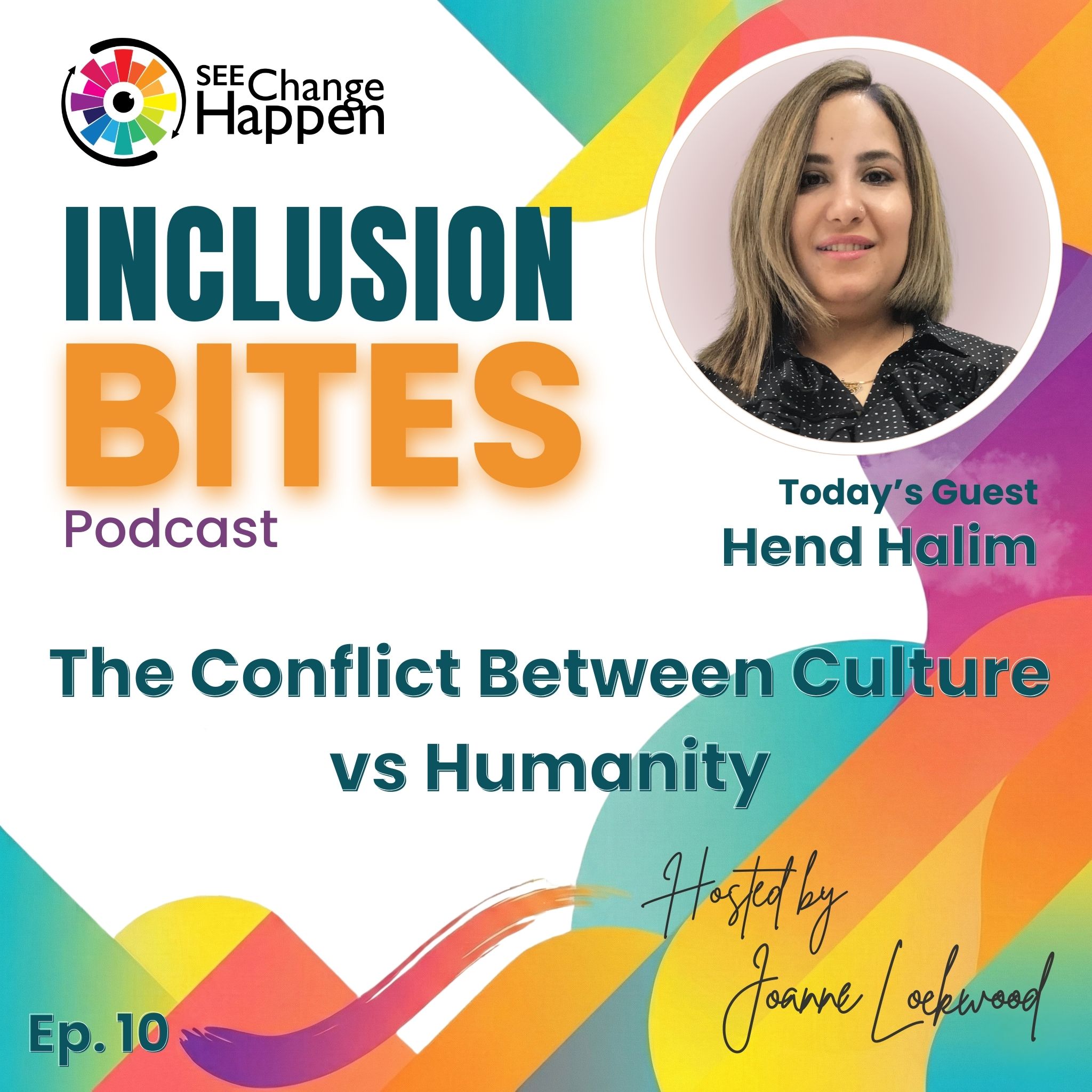
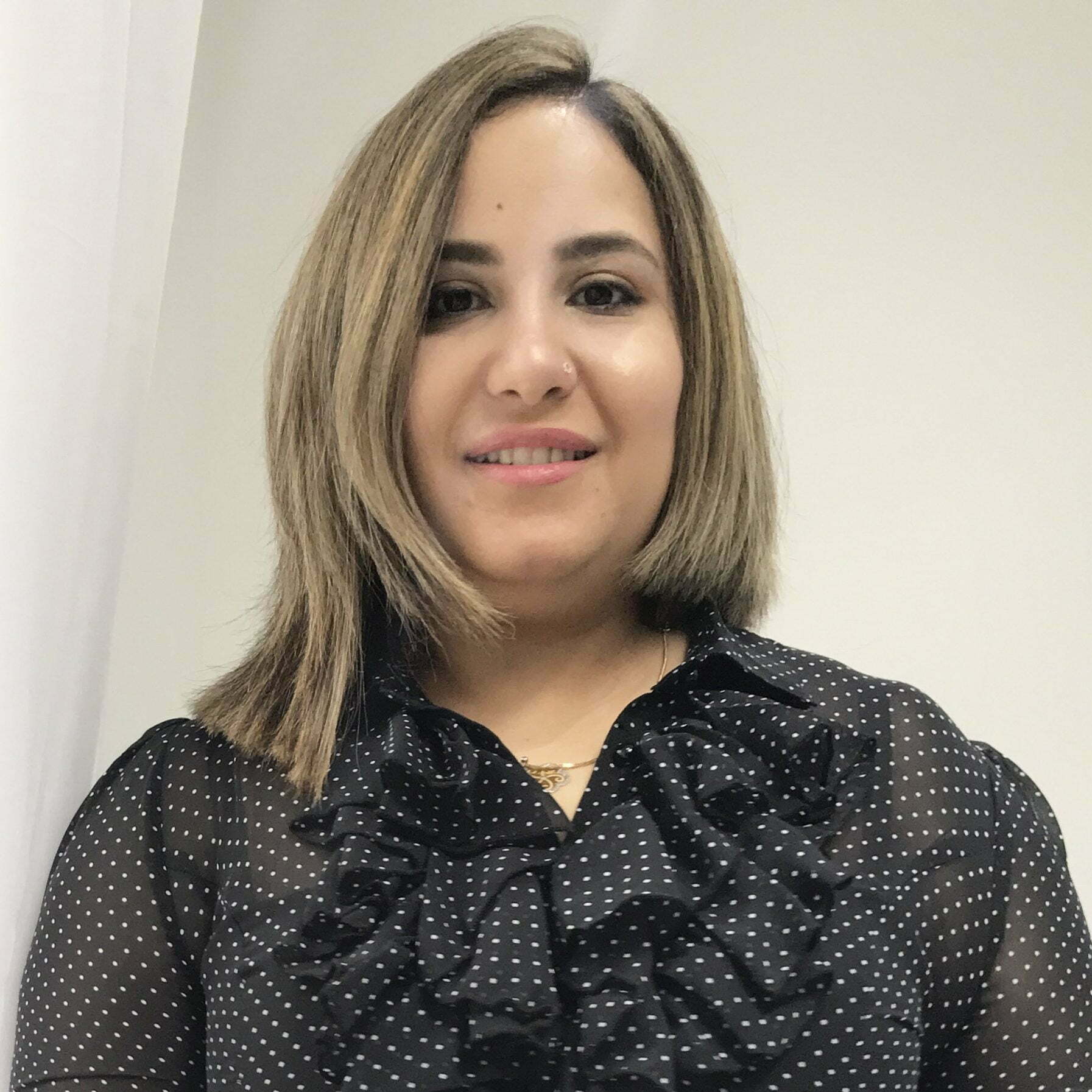
Joanne has a chat with Hend where we discuss her perspectives as someone who was brought up in Egypt, as a Muslim in an Islamic Country who now lives in the UK
In this episode of Inclusion Bites, Joanne Lockwood speaks with Hend Halim about workplace culture systems.
“What you do in the bedroom has nothing to do with how good you are.”
Explore
Navigate this episode
Joanne Lockwoodhost
Hello everyone. My name is Joanne Lockwood and I am your hostfor the Inclusion Bytes podcast. In this series, I will be interviewinga number of amazing people and simply having a conversation around thesubject of inclusion, belonging, and generally making the worlda better place for everyone to thrive in. If you would like tojoin me in the future, then please do drop me a line tojo.Lockwood@seechangehappen.co.uk.That's seechangehappen.co.uk.You'll be able to catch up with all of the shows on iTunes, Spotify, andof course, all of the usual places. So plug in your headphones,grab a decaf and let's get going.Today is episode ten with the titleUnderstanding the conflict between cultureversus humanity, and I have the absolute honour andprivilege to be joined by Hend Halim. Imet Hend at several CIPD events and true events in London overthe past year or so, and Hend describes herself as an HRprofessional who is passionate about givingunderrepresented people a voice. So I asked Hen todescribe her superpower and she said being cheerfuland diligent. So hello Hend. Welcome to theshow. Hi Jo. It's a pleasure to be with you
Hend Halimguest
and all the guests. Ah, thank you. So tell
Joanne Lockwoodhost
me, why is it important to understand this conflictbetween culture and humanity?
Hend Halimguest
It starts with liberating yourself outof everything you grew up learning byinteracting with people and finding the truth yourself.Because I personally grew up in Egypt,I lived in Holland and I lived in the UK.I have three life experiences, so I'mgoing to share more details during thispodcast about it. For me, as acis straight Muslim, it's afight against discrimination and promoting equalopportunities to create a space foreveryone to be treated with respectand to not feeldifferent. Because peopleusually havestereotypes, they have certainideas. If they don't deal with the person directly,they will keep having them until maybe they die.So I used to come to London as a kid with myparents every summer holiday since I was ten.I would see people who lookcompletely different from what I used to see back inEgypt, because we don't have much diversity in Egypt. Wedon't have other nationalities until the Arab Springstarted and then we started to have some Syrians or Iraqisand so on. Sothe first ever challenge betweenculture and humanity was at the age of17. I studied a Canadiandegree and we had a professor who taught ushuman rights. It was a core module andwe had a project aboutLGBT and Islam.At first we were all shocked andbecause it's something hush hush, nobody speaks about.It's frowned upon, it's not accepted, and soon. But she insisted that this is the topic we aregoing to do our graduation project about.So it was a big eye opener to all ofus growing up knowing that those peopleare wrong or not doing something rightor going against nature.Again, Egypt is 80% Muslims and20% Christians, and both of them againunder the Middle Eastern culture.So everyone is homophobic bynature. So wedid a lot of research. We werecompletelysurprised that there is a hugecommunity of Muslimsin Canada who are LGBTQ. They arewelcome. They have their own mosques.You cannot lose your faith and stop being aMuslim if you're an LGBTQ person.So that was something against everything we grew uplearning, that if you do that, you lose yourfaith, you will not be accepted,and so on. So that was the first evereye opening experience. And nowattending webinars or events where people speakabout they are in the learning phase, getting toknow the problems of the black people, ethnicminorities, Muslims, or whatsoever. So I can relateto that because I used to have anopponing point of viewagainst a group I never dealt with orknow anything about. But it just built inthrough culture that they are not goodfor no reason. Soa few years later, I moved to London to do mymaster's degree. That was the firstever direct contact with gaypeople. I had some at my class.One was open about his sexuality, the other onewas keeping it a secret. I only
Hend Halimguest
knew that with my classmatesduring the pride when she was part of it.So that took me some timeto think that they are not different.They are really good people, very niceto us. They have good manners,they are successful, smart. They wouldn't go topostgraduate school if they are. Sothat showed me the reality thatsometimes someone who isLGBTQ, according to culture and religion,who's not good enoughor on the right path, canbe better than someone who's bornand raised Muslim, but who would be athief or a murderer or whatsoever. Sowhat you do in the bedroom has nothingto do with how good you are.And from then, I startedloving them, accepting them, giving them all therespect they deserve, because I sawand I've dealt with someone for a whole year,and I loved her so much, and I had no ideaabout her sexuality. So ittaught me a very good lesson that whatyou built in or getplanted in the culture is not always right.It's because you never dealt with them. So you havethose wrong stereotypes eventhough in the Egyptian mediait's really visible,and they feature themes abouttrans people andgender, cross dressing and everything. Soit was accepted in the media, but not inreality. The latestsurvey was launched in Egyptin 2017. The resultshowed that 95% of peopleagreed that humansexuality should not be accepted.So that's a very large number.
Joanne Lockwoodhost
From my perspective. So I'm obviouslya person born who lived in England all of mylife, almost all my life. So I would see theMiddle east as a veryunfriendly place for LGBT people.We hear of imprisonment,beatings, lashes and evendeath for people who'vebeen found guilty of being gayor lesbian or trans. Ifind that personally really tricky to kind of understandbecause. And I also see that with maybesome cultures within the UK, so we lookat some fundamental Christians, there's some Muslimcommunities, there are people who are still antigay, anti trans, anti LGBT, who live in this country.And I think recently there was an incident where there were some schools inBirmingham that were trying to ban the education of their childrenaround LGBT people. But the culture,I suppose, where Islam is sort ofrooted in the Middle east is very strong antiLGBT. But there's nothing, from what I understand, nothing in the religion or thefaith that says LGBT is bad, is it? It's not anIslamic doctrine. It's an interpretationby the people in power. That's the problem.
Hend Halimguest
An Arabic word can have up to 18meaning. So it depends on the scholar tochoose and manipulate whatever he wantsto deliver. That's whywhen the ISIS movements and so onwere going on, they started targeting nonArabic speaking Muslim because they are easier to manipulate. Theydon't understand Arabic. They will believe whatever youtell them. They wouldn't target someone like me becauseI know Arabic, I can read. And the problemagain is the scriptwas released over 1400years ago, so we need scholarsto introduce new updateslike the iPhone. We keep getting updatesbecause there's a new software. So what wasunderstandable or accepted 1400 yearsago should match the currentand new situation and give a spaceto everyone. Because in Islam, we start likeevery prayer that God is the most merciful andcompassionate. I don't think God creates faulty,so you can't really dismiss acertain group. When Godcreated them, he wouldn't create something and ask us tohate them. That's a very valid
Joanne Lockwoodhost
point. I think that's so true, where if you have a faith anda belief that you have a God that youbelieve in and is part of your faith, then you generally don'tbelieve that. That God is imperfect. You believe that God hasperfection. And why bring hate into the world?We're talking about culture versus humanity here, and it'sbecome a cultural thing, as you say, 1400 years ofevolution of scripture and text without beingupgraded to iOS or Quranversion six to meet the context. So people areinterpreting the way that people existedand gathered 1400 years ago about theway people work, computers, online,internet, relationships, clothing, differentcountries. The culture has changed completelyunderlying that text. And you're right, we need toreinterpret it with a modern lens, maybe, yeah.
Hend Halimguest
Because sometimes you get attacked frommy friends and stuff that Ipromote and support theLGBTQ and so on. So I keep telling them,defending black people will not make me black. Defendingdisabled people will not make me disabled. Sodefending LGBTQ will not make me one aswell. It's just a matter ofrespect and acceptingunderstanding, because I'm different atworkplace. I look different, I sound different.So I know how much courage for someonefrom the LGBTQ or any otherdiversity focuses. Come to work,take the courage to get dressed and meet people whoare mostly homogeneous and don't accept you.So they should be greeted with somuch respect and love for trying to showwho they really are. So you said
Joanne Lockwoodhost
yourself you emigrated oryou came to this country. How many years ago was that now? Severalyears. I've done my
Hend Halimguest
master's in 2014, went back to Egypt for a year,got married and moved to Holland for two years and now fouryears in the UK. So you've been in the UK four years
Joanne Lockwoodhost
as a person that you would belabelled as know in the broad sense of it. So yourethnic minority, you also have a faith,which is Muslim with an Islamic background, youspeak Arabic, you spent most of your life in a culture inEgypt, but you've also had exposure to a morenorthern European, Western type upbringing. Canada,Holland, UK. So how have youfound it to adjust tothe lifestyle in the UK versus maybe thelifestyle in Egypt? What sort of big things you notice different?
Hend Halimguest
The difference is there is a room for everyone to bequirky and different,but it comes with a huge responsibilityto educate others.And the involvement of the lawis protecting all those groups.While in Egypt or the rest of theMiddle east, the law enforcesharming anyone who is againstthe norm. The majority, yeah, the typical. Youhave to conform to whatever.It's a preset catalogue all of us should gothrough, from baby todeath. So you must have had to learn
Joanne Lockwoodhost
English. Did you learn that while you were in Egypt or atschool. You did learn at school, and that's part of theeducation to learn Western languages.Do you learn much about Western cultures?So the environment in Egypt is one of crossculturalizing you from an early age, so you understand about the world,but very restricted about the sort of things you can learn within that culture.
Hend Halimguest
Exactly. And it's mainly depending onprivilege. It depends on the social classyou belong to. Everything can makeyour life easier if you belong to a certainlifestyle. And I would like to mentionan example of twoLGBTQ EgyptianMuslims who have totallydifferent stories when they started to facethe society. We have someone called NoorHashem. She was born a girl. Shemade gender reassignment because she's adaughter of a famous actor in Egypt.She only had minor attacks in the media.She was not arrested. She was not deported,nothing at all. And we have a different exampleof a girl named Sara Hege.She only raised the rainbow flag during aconcert. She was prisoned,molested, electrocuted,and then she was bailed out. She was asked to be deportedto Canada. Last year, she lost her mom,and she was unable to attend her funeral or saygoodbye or anything. Last month, she committedsuicide in Canadabecause she was under severedepression and PTSDand so on. Soprivilege plays a huge part of protectingyou from the law.
Joanne Lockwoodhost
I visited Egypt back in 2000.So I went to the pyramids at Giza, saw the Sphinx.I visited the Cairo Museum. I saw the Titan Car Moonexhibition, the Cairo Museum. And I only stayedprobably 14 hours. It was a stopover on acruise. So that was my experience of Egypt. I kind ofresigned myself to the fact that it's not a place I could probablyvisit again and feel safe or becertain that I would be safe. And it's quite sad,
Joanne Lockwoodhost
really, that there are countries in the world where someone like myself, who'sLGBT, who's trans, would facediscrimination just being yourself.I even have to think about how, when I fly to Australia,can I stop off in Dubai? I probably can't. There's a whole lot of countries.But should I go to Russia and Moscow? So I'm now thinking about the countrieswhere it's safe for me to. So I guess I have aprivilege of living in the UK that I can be myself,but there are many people in other countries who can't,and they're living in a regime where they feel they have tohide or mask or cover themselves for fear of death or punishment. Andthat must be a terrible way to live. It is. And
Hend Halimguest
unfortunately, I had a culture shock in Hollandwhen I lived there for two years, because most of the peoplefrom different age group, old ones or young ones,were cracking jokes againsthomosexual or trans people and they don't accept him.So I was shocked. Like, this is Europe. I thoughtyou would have the same tolerance I would seein the US or the UK. It was one of themost culturally shocking for me because Ithought that they would have that.So it's by law they cannot doanything. But because some people know thatI'm Muslim, they feel comfortable to show theirhomophobic or transphobic natureand think that I will not be offended because I share thesame.
Joanne Lockwoodhost
Mean. You said you were shocked about hearingpeople in the UK or in the US or wherever, you were freelyexpressing negative views of people. So did youbelieve from an Egyptian point of view that the UKor the west was kind of free and easy and everyone wasaccepted? Or did you get a bit of a shock when you realised that? My
Hend Halimguest
work experience showed me that it's notthe reality. As I told you, I feel likepeople just feel tied by the law.They have to say that we accept them and so on,but realistically speaking, they are not.Some refuse to wear the rainbow lanyard when wegive them away at work.We have really close family friends whoare atheist, andthey come home, they play with my son and so on. SoI was just complimenting them and saying, okay, oneday your daughter will give you one or two of thembecause you will make fantastic grandparents. So themother looked at me with so much sadness and shesaid, well, that's not possible because my daughteris gay. And then there was awkward silence.I didn't know what to say. So my husband jumped inand said, well, they can adopt.So I mean that evenhere there's still people who areagainst it. At workplace,we had a trans person,and when I wanted to invite herfor, like, we usually go for lunch or dinner and soon, some people said thatthey don't want her with us, they don't feel comfortablearound her. And I wasreally heartbroken because those peopleare born and raised here. I thought theywill have more acceptance than someonewho was born and raised, that those people are wrong.
Joanne Lockwoodhost
Yeah, it's still the reality. Andas a trans person myself, I'm aware that there are some peoplewho embrace me and some people who reject meand some people who don't understand me or don't want to understandme. And I guess you must also facethat as a non British personfrom birth, people maybe you must also suffersome sort of puzzlement or discrimination because of your accent,because of your faith, and because of your gender, because you'rea woman as well. So intersectional or even a mother. A mother aswell, yeah, because I. Was once stopped from a
Hend Halimguest
promotion until I finished my mom years, my earlymom years. So it.
Joanne Lockwoodhost
So we're going back to the sort of culture versus humanitything. So this is the culture we have in the UK as well,in the workplace. And you're inHR. I'm in diversity and inclusion, promoting wellbeing for people.How do you see we can tackle this culture problem we'vegot in organisations? What you would advise people?
Hend Halimguest
I would encouragedoing something like speed dating,where you put people like us who aredifferent, who are Bame, who are LGBTQ,and then invite people in thecompany to sit, like, for ten minutes or something.Maybe you will like me. Maybe you willeliminate a wrong stereotype thatyou thought about people. I usually getfunny comments like, oh, you're Muslim. I didn't know that.You don't look like them or you don't act like them. Sosometimes I feel like they are aliens. They arespecial species, but no, some of us arefunny, cool and just like you.
Joanne Lockwoodhost
So you mentioned that. I've had people say, well, I'm okay for agood. I'm a good trans person. I'm an okay trans person. And maybe youalmost. People say to you, you're a good Muslim, you're a funnyMuslim, you're an okay Muslim. Andit's a compliment, but it's insulting, isn't it? Exactly.
Hend Halimguest
Backhanded. Yeah,
Joanne Lockwoodhost
because I'm well behaved and make you laugh. I'm acceptable. Is that whatyou mean? And this isBritish privilege, sort of speaking again sometimes, isn'tit? People think they're being kind, but actually they'rebeing really cruel by saying that, aren't they? Yeah.
Hend Halimguest
We're going out for after work drinks. I don'tdrink, but I don't mind sitting with people who drink. I don'tmind gifting my friends with champagneor anything, whatever they like, because I can'tforce my belief on people.If you want real integrity, there should be aspace for acceptance,tolerance, and just liveand let live. For sure.
Joanne Lockwoodhost
I noticed, reading some of the bio you sent me inadvance, you're saying you're doing a lot of public speaking now, soyou've spoken at a few events. So what got you into that?What inspired you to want to speakeventually? It's Bill Borman.
Hend Halimguest
Because while doing my studies. He believed in me.I met him at Talent Leaders Connect,where he did a fantastic speech and Idid my dissertation about recruitment. SoI approached him and then he invited me to trueLondon and then other events likeEnterprise Ireland, until I becameone of the speakers, not just an attendee.
Joanne Lockwoodhost
Fantastic. So what do you like to speak about? Is it about culture, aboutHR or talent or. What's your passion when you speak?
Hend Halimguest
I mainly speak about diversity and inclusion.I shared some stuff about faith atworkplace, aboutthe challenges of minority group employment,how we all get rejected just because of our namebefore even reading our resume. You don'tknow anything about me, but I'm immediatelyrejected. I don't go through the funnel.
Joanne Lockwoodhost
No. We spill over the edge, don't we? Somehowwe get swept up afterwards and people, we neverhit the radar. It's a shame. Yeah.We're now in this world where we're living in COVID2020. We all had these big plans for the year. Whatare you learning about? Maybe your own work or your ownpassions? Are you reevaluating your life becauseof COVID Because of the future?
Hend Halimguest
Yeah, definitely. It'sa huge momentum, likereflecting of all previous yearsmy current situation and what I want to do in the future.So it's really good. Do you see the UK as being
Joanne Lockwoodhost
part of your future? Or are you thinking the world and thinking,where else could you sit down, rootsand maybe try a different culture? I'm not really
Hend Halimguest
sure. My husband loves travelling and living indifferent countries, but I want a bit of stability,especially that we have a little one. So I want him to joinschool to have some friends,to have a bit of stability. Yes,
Joanne Lockwoodhost
I agree. That's very important in their younger years, isn't it?In lockdown. Are you having to home educate or is he tooyoung? No, he's just two. Just two. Okay, so I'm
Hend Halimguest
lucky with just cartoons. And feeding
Joanne Lockwoodhost
and balancing that with working as well. So remote working.
Hend Halimguest
Yeah. Well, thanks toCorona, I left my previous roleand I was supposed to start another one end ofMarch, but it was terminated due to Corona. Okay,so I'm now in the job applicationphase, reviewing and so.
Joanne Lockwoodhost
Guess, I suppose that's a challenge. Mean, in the HRTAspace, there's a lot of people being laid off at the moment orfurloughed, not being brought back. So it's a tough marketfor HR, D I and L D professionals at the moment, isn't it?
Hend Halimguest
Yeah, it is.Optimistic. Yeah, I think we should now. It's a lot betterthan the few months back. Yeah,
Joanne Lockwoodhost
I certainly see a lot more activity on LinkedIn, a lotmore people speaking positively. I stillthink we've got some tough times to come. When the furlough scheme ends in October,I think we'll see a lot more casualties, but I see businesses goingback to business and focusing onplans and futures now, which they probably weren't doing two or three monthsago. Yeah, I'm getting invites for
Hend Halimguest
events end of September, early October. Soit's getting better. So you're still staying in
Joanne Lockwoodhost
HR. You describe yourself as kind of an HR generalist.Is that still your passion, is it? Yeah, it is.And are you looking to sort ofincrease your speaking? You want a role where you can speak moreand get involved with the event still? Yeah, I'm currently
Hend Halimguest
focusing on diversity inclusion roles,where I can advocate the underrepresentedvoices, like, I love to give them a space,promote women in leadership roles,give diverse people, black ethnicminorities, some space in thetop senior level, because if you start at the top,then the people at the bottom will be happy andsatisfied. Do you feel that
Joanne Lockwoodhost
you as yourself are represented by Black Lives Matter,as Black Lives Matter really is focusing on blackpeople, you would maybe class yourself, maybe as brownor not black. So do you feel that you're being represented in thatmovement and you're getting a spotlight shown on yourown ethnicity eventually? No,
Hend Halimguest
not direct, butif it works for oneof the underrepresented groups, thenall of us will be oneday will have our turn, because nowit's the South Asian month. So there isa highlight on that. And then in October, there's Black HistoryMonth, which I'm expecting to bea very specialmonth, especially this year with the George Floyddeath and all the revolution and all theprotests globally. Yeah,
Joanne Lockwoodhost
I think you're right. I think one of the things that the conversations I've hadwith people around BLM, Black Lives Matter, is thatas a white person, I don't understand often what it's like tobe white. I need to understand my privilege and understand what white privilegemeans, and also I need to understand about the historyof how the UK is built on colonialism, onthe money generated through the slave trade, and I need to do some more researchon that. So I think we actually need a white History month as well, tosay how white people have evolvedand where our cultures come from, and to reallyunpack that, because it's not just about understanding black culture so much,understanding how white culture impacted black culture as a whiteperson, and maybe look at the statues, rather than just tear thestatues down, look at each one and understand the history of that personor what the circumstances were, so that we can now put this. We talkedabout the 1400 years of evolution since theQuran and was written, et cetera. We now need to look at the last fouror 500 years since British culture was establishedand the lens through how that evolved andhow it was built on the blood and sweat andtears of other cultures. And I think that's theimportant thing. We need museums of whiteness so that we can go and look atour past through the truthful lens, rather than seeing usas the victorious conquerors who are the champions all thetime. And I actually reflected on thisbecause I went to see the Egyptian pop upCarmun exhibition that was in the Versace Gallery inLondon. And I didn't really think of much of it untilthe Black Lives Matter movement startedand highlighted to me that I now see that through a different lens.The British people were the colonists of that region.They were invading these burial grounds. They were digging stuffup, really just trying to pillagethose artefacts and conquering that sort of sideand stealing these things, taking them back to the UKfor our pleasure, destroying the culture of the Egyptianculture effectively. And I started seeing thatmaybe this Tuden Carmen exhibition was actuallya celebration of colonialism rather than a celebrationof Egyptian history. True. And
Joanne Lockwoodhost
I started looking at things now through a different lens, thinking,I actually want to understand Egyptian culture, but I don't want to understand it througha white lens. I want to understand through the Egyptian lens. I need EgyptIan peopletelling me this story, not awhite lord with loads of money who'senslaving people effectively to dig this thing.So I see some of these historic things I'vegrown up with in school through a different lens now. And I'm now starting toquestion how I've been brought up and how I've beentaught about the British Empire. Andwhen people talk about dismantling the British Empire, I'm now thinking,that's a good thing, we should learn about what itdid and what it did to people. But I don't feel proud of it inthe same way that maybe I did when I was younger.
Hend Halimguest
I get your point. And I think
Joanne Lockwoodhost
hanging on to the Commonwealth again, that's British territories, whichare. We describe them as British dependencies.Why are they dependent on us? Why aren't we puttingeffort and time into making them less dependent on us andmaking them free nations and not hanging on to thiscolonialism of the past and propagating effectivelyracism, or racism by permission.I think we all need to take a long, hard look at the way we'retaught history, the way we see ourselves. Andpeople say that history is written by thevictors. You never hear the losers perspectives.Yes, and we need to blend bothperspectives becausewe're all freedom fighters. It's just the winnersare freedom fighters, the losers are terrorists, and that'sthe struggle we've got to face. So you still go back toEgypt? Do you still go home? Such eventually.
Hend Halimguest
We were supposed to go in April for my sister in law wedding.Unfortunately, we couldn't go because ofCorona lockdown, so we missed it.
Joanne Lockwoodhost
How is it in Egypt? We don't hear much aboutthe relaxed. My parents at the beach
Hend Halimguest
and everyone is enjoying their life. They've
Joanne Lockwoodhost
just not had many incidents or they have or theymanaged it. Is it just a different culture? Is it?
Hend Halimguest
Well, I don't think the media isgiving so much transparency about it.
Joanne Lockwoodhost
Right. So they leave people to go with the
Hend Halimguest
immune. What
Joanne Lockwoodhost
it's called herdimmunity. Yes. So they
Hend Halimguest
are adopting this style because they don't want tostop the economy from going on. So they didn'thave lockdown for several months, like here. No.
Joanne Lockwoodhost
Okay, so you said atthe beginning your superpower is being cheerful and diligent.How does that superpower manifest itself? I can see you nowon camera, though. The listeners can hear us.What keeps the smile on your face? What's that? Passion?
Hend Halimguest
It's positivity. Alsomaking my family proud. My parents are proud of me.I always share the events or the things I participate,so it makes them very proud of me.My son, my husband, representingEgyptians abroad, just like Mosala.He's the Egyptian king of Liverpool. We haveRami Malik, who won the Oscars forresembling Freddie Mercury. So it'ssomething like that that keeps you.
Joanne Lockwoodhost
Yeah. I hate this word, role model. But being a great Egyptianand being a fantastic Egyptian in the UK,being yourself and smiling about that. Yeah,
Hend Halimguest
brilliant. Just to be proud of yourself. Yeah.
Hend Halimguest
Someone who making contributions to society oreven educating people, because your wordsand the events I attend for you, theyeducate me. Something about trans people. Theymake me reflect when I go home about theideas you share, the emotions, everything yousay. And then I start educating other people.I attended an event with Joe. She said, so andso. What do you think about that? So you start engaging withothers, spreading the word, spreading your positiveideas. Thank
Joanne Lockwoodhost
you. I think that's a really greatoutlook on life. To educate, tolearn, to share that and be really positive. That's a reallygood mantra, because there's. No silver bullet
Hend Halimguest
to make everyone accept diversityand inclusion, love everyone and livepeacefully. No.
Joanne Lockwoodhost
If you had a magic wand or you had some vision, wheredo you see the world going?We're in the middle of July now. We've probably got another year, or at least18 months worth of COVID relatedlockdown measures adjustment. So where do you seethe future? Do you see humanity getting better? Do we think we'll be able tolearn something from this? Yeah, a lot.
Hend Halimguest
I see more flexibility with employersbecause some Stone Age one were againstpeople working from home or flexibility.Now that they are forced to do that, they foundthat you can be productive. You can trust your employeesto deliver whatever is required from them. If they areworking from home, they don't need to be chained to the deskto give that. I see some companies arepromoting the four days week which can give morework life balance to do whateveryou like, do your hobies, stay with yourfamily, travel and so on. Isee a better environment,there is less pollution, nobody's travelling, nocarbon print. People are more conscious andappreciating of everything we used to have andwe got deprived of. So there is more appreciationto everything. Do you think as a working mum,
Joanne Lockwoodhost
it will be easier for you or harder for you? Becauseeveryone thinks it's easier. But there are other challenges ofworking at home or remotely and having ayoung family, aren't there? Yeah, definitely. It's
Hend Halimguest
very hard. But again, ifyou have support from your partner, it can make lifeeasier because we cover each other.
Joanne Lockwoodhost
So a more even balance between the gender roles athome helps everybody win. Yeah,
Hend Halimguest
well, my husband has been living in Europe for like 15 years,so he's not very Egyptian.
Joanne Lockwoodhost
Meaning traditional gender roles inEgyptian society.Yeah, I understand that. TheWoman's role in Egyptian society or in Muslim societyis very traditional, isn't it? Very at home,cooking, cleaning, childcare. The malerole is more working, providing,fighting, thestrong outbound role, whereas the female tends to theweaker home based role, isn't it? Yeah.Although isn't Muslim society often verymatriarchal, where the woman does wield someauthority in the home, or is it very patriarchal still?
Hend Halimguest
No, it's moreequal, but it's not forthe public. The man has to be like thefinal decision maker. It's the womanwho decides and designs andsets everything, but just for theimage. It's not like Saudi, where
Joanne Lockwoodhost
as a woman, you didn't need permission from a man to travel or leave thecountry. No, not at all. And even driving, because my friends
Hend Halimguest
would always ask me, can you drive? So I said I had the carsince I was 16.
Joanne Lockwoodhost
In fact, probably earlier than the UK it is, and.
Hend Halimguest
Even in Egypt, because it'slegally at the age of 18. But again, as Itold you, speaking of privilege, sometimes youcan do stuff and get away with it.I'm not so proud to say that, but that's thereality. So we got your naughty secret out in the end.
Joanne Lockwoodhost
Well, it's been absolutely fantastic talking to you. You've got some great lifestories and you've overcome somechallenges in your life. You're living in several countries,living in a country that's completely different, yetstill being firmly proud of your Egyptianheritage is absolutely incredible. It's part of my identity.
Hend Halimguest
It's me. It is. And I think we talked about culture
Joanne Lockwoodhost
versus humanity, and the humanity in you is shining throughand your hopes for the future evolving. The culture is.I think we can all aspire to that as well. So how do people getin touch with you if they want to book you to speak? I'm sure peoplewant to find out more about you. So what's the best place to get incontact? My Linkedin. It's Hend
Hend Halimguest
Halim,and I'm happyto receive any messages. Okay, so connect with you on there, drop
Joanne Lockwoodhost
you a message and have a chat. And if someone's looking forspeaker on anything you've heard about today, you'd bereally pleased to take part, wouldn't you? I can tell that, definitely.So I wish you well in your job hunt. Maybe someone who listens tothis may listen to this and want tooffer you an opportunity coming from India, which will be amazing. But I'm surewe'll keep in touch, and I'm sure once the lockdown is over, we'll bump intoeach other at a CIPD or another event. It'd be greatto have a hug. I miss hugging. Yeah, me
Hend Halimguest
too.
Joanne Lockwoodhost
So thank you so much. So if anybody would liketo take part in this podcast, thenplease do get in contact. It'sjo.Lockwood@seechangehappen.co.uk. And it's ahuge thank you to everyone for being a listener to tuning in, and pleasedo subscribe to keep updated on future episodes of the Inclusion Bytespodcast at Bites. Please tell your friends, please tell yourcolleagues, because I've got a number of exciting guests lined up that I'm sure you'llbe inspired by over the next few weeks and months in addition to today's.So please get in contact. My name is Joanne Lockwood, and it's beenan absolute pleasure to.
Breaking Stereotypes with a Speed Dating Approach to Diversity in the WorkplaceGender Dynamics and Women's Rights in Muslim SocietiesThe Intersectionality of Discrimination
Joanne Lockwood is joined by Hend Halim, an HR professional who grew up in Egypt and has lived in Holland and the UK, to explore the tension between cultural norms and shared humanity.
Hend reflects on how early cultural messaging shaped her understanding of LGBTQ+ people, and how education and direct relationships challenged stereotypes. She describes learning to separate morality and character from sexuality or gender identity, and why exposure and dialogue are essential for changing deeply held assumptions.
The conversation also looks at how law, privilege, and workplace culture affect people’s safety and inclusion, including examples of how LGBTQ+ people can face very different outcomes depending on social status. Hend discusses being an ally in practice, the realities of discrimination in supposedly tolerant environments, and simple ideas organisations can use to help employees connect across difference.
They also touch on wider societal context, including Black Lives Matter and colonial history, and how current events such as COVID-19 may shift working practices and expectations in ways that could improve flexibility and inclusion.
“For me, as a cis straight Muslim, it's a fight against discrimination and promoting equal opportunities to create a space for everyone to be treated with respect and to not feel different.”
“At first we were all shocked and because it's something hush hush, nobody speaks about. It's frowned upon, it's not accepted, and so on. But she insisted that this is the topic we are going to do our graduation project about.”
“I used to have an opposing point of view against a group I never dealt with or know anything about. But it just built in through culture that they are not good for no reason.”
“Defending black people will not make me black. Defending disabled people will not make me disabled. So defending LGBTQ will not make me one as well. It's just a matter of respect and accepting understanding.”
“I had a culture shock in Holland when I lived there for two years, because most of the people from different age groups, old ones or young ones, were cracking jokes against homosexual or trans people and they don't accept him. So I was shocked.”
“So the mother looked at me with so much sadness and she said, well, that's not possible because my daughter is gay. And then there was awkward silence.”
“I see some companies are promoting the four days week which can give more work life balance to do whatever you like, do your hobies, stay with your family, travel and so on.”
Implementing a "speed dating" approach to break workplace stereotypes and enhance diversity.
Addressing backhanded compliments related to religion and ethnicity and their impact.
The significance of advocating for underrepresented voices in diversity and inclusion roles.
Challenges and adjustments in remote working and job applications amidst COVID-19.
Understanding the intersectionality of discrimination, including gender, faith, and motherhood.
Examining traditional gender roles in Egyptian and Muslim societies and their evolution.
The necessity of modern interpretations of religious texts to promote inclusivity.
One thing to remember
The episode underscores the complexity of culture versus humanity and the importance of fostering inclusivity within organisations. Hend Halim and Joanne Lockwood delve into the nuanced dynamics of respecting cultural norms while advocating for underrepresented voices. They highlight how the intersectionality of identity factors—such as gender, faith, and ethnicity—can lead to unique experiences of discrimination.
Questions this episode helps answer
How effective do you think Hend Halim's "speed dating" approach to breaking stereotypes can be in a corporate environment?
Have you ever received or witnessed a backhanded compliment based on religion or ethnicity?
In what ways has the pandemic prompted you to reassess your professional and personal priorities?
What are some specific challenges relating to diversity and inclusion that have been highlighted by the shift to remote working?
How important is it to ensure diverse ethnic representation within social movements like Black Lives Matter?
What are some of the benefits and challenges of maintaining one's cultural heritage while living in a different country?
Explore topics
Ideas from this episode
Breaking Stereotypes with a Speed Dating Approach to Diversity in the Workplace
During my recent chat with Hend Halim, we touched on an innovative "speed dating" concept for promoting diversity in the workplace. The idea is to create short, structured interactions that encourage breaking down stereotypes and fostering deeper understanding among colleagues.
Gender Dynamics and Women's Rights in Muslim Societies
Our discussion shifted to explore the traditional gender roles within Egyptian and Muslim societies, a topic close to Hend’s heart. Hend shared her personal insights and experiences of navigating gender dynamics whilst balancing her professional and personal life.
The Intersectionality of Discrimination
Hend and I also tackled the complex interplay of various forms of discrimination, including gender, faith, accent, and motherhood. This intersectionality often leads to compounded biases and challenges that underrepresented individuals face in their daily lives.
Learn
Frequently asked questions
What is the "speed dating" approach for diversity in the workplace?
The "speed dating" approach suggested by Hend Halim involves brief, structured interactions between diverse individuals in the workplace. This method aims to break down stereotypes and encourage open-mindedness by facilitating genuine, rapid exchanges that highlight personal experiences and diverse perspectives.
How are backhanded compliments based on religion and ethnicity addressed in this episode?
Joanne Lockwood and Hend Halim discuss how backhanded compliments often stem from ignorance and unconscious bias. They emphasise the importance of educating others about cultural sensitivities and guiding them towards more respectful and inclusive communication.
How did COVID-19 influence Hend Halim's perspective on her career and personal life?
COVID-19 prompted Hend Halim to reassess her life priorities and future plans. She reflected on her career in diversity and inclusion, the impact of remote working, and the unique challenges faced by HR professionals during the pandemic. This introspection helped her to focus on advocating for underrepresented voices and ensuring a balanced life for her family in the UK.
How does the episode address the representation of different ethnicities in social movements like Black Lives Matter?
Hend Halim discusses the importance of raising awareness and advocating for ethnic representation in social movements. She highlights the need for inclusive platforms that amplify the voices of underrepresented communities and promote solidarity across different causes.
What insights does Hend Halim provide about gender roles in Egyptian and Muslim society?
Hend Halim shares her experiences with traditional gender roles prevalent in Egyptian and Muslim societies. She emphasises the ongoing struggles for gender equality and women's rights, and speaks about the support from her partner in balancing domestic and professional responsibilities.
What challenges does Hend Halim mention about living in different countries while maintaining her Egyptian heritage?
Hend Halim highlights the difficulty of preserving her cultural heritage while adapting to different societal norms in countries like the UK and Holland. She underscores the importance of educating others about her background and advocating for cultural respect and legal protections.
Share this episode
Heard something worth passing on? Send this conversation to someone who needs to hear it.