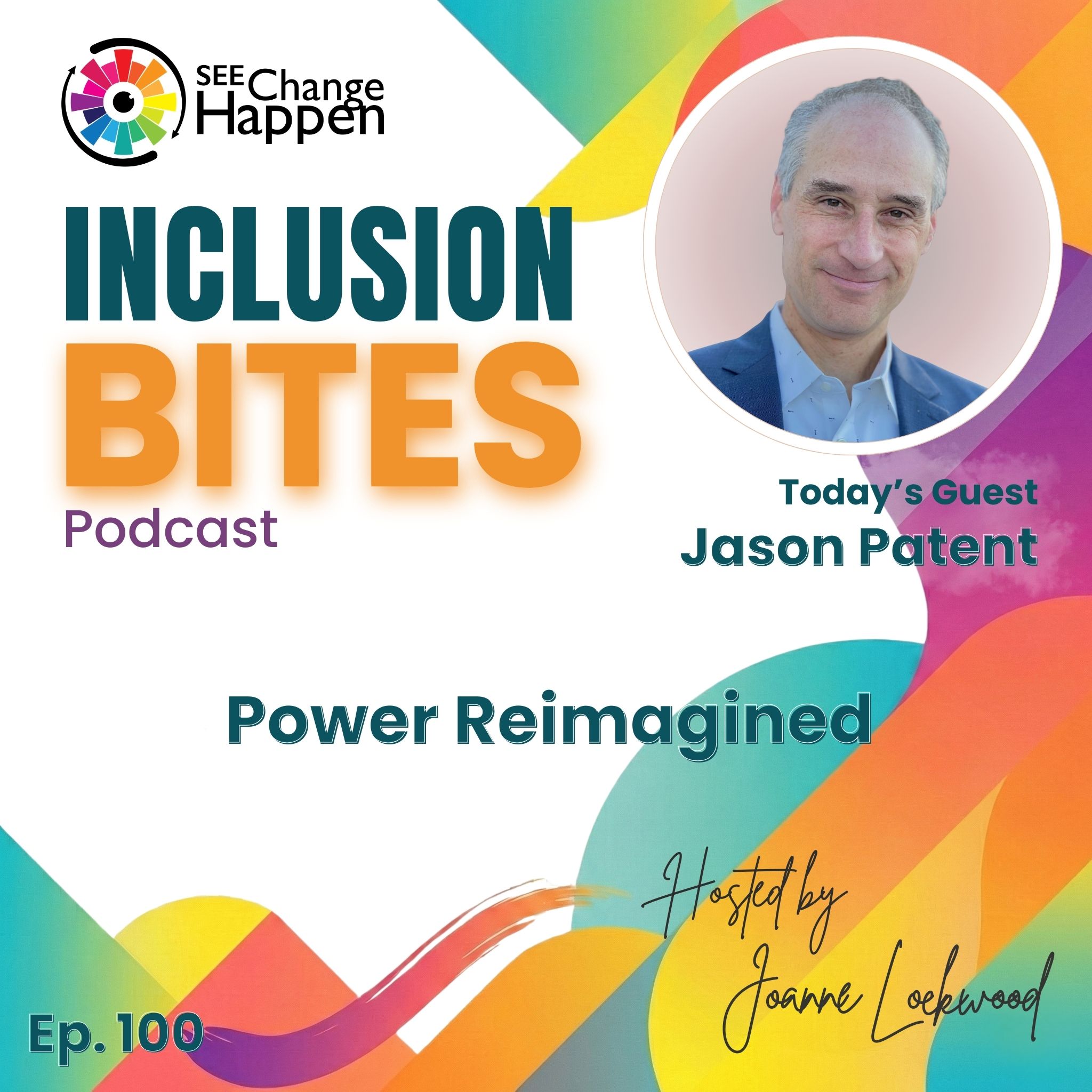
Join Joanne Lockwood and Jason Patent as they delve into the complex dynamics of power, privilege, and diversity, offering thought-provoking insights for creating a more inclusive world.
In this episode of Inclusion Bites, Joanne Lockwood speaks with Jason Patent about inclusive leadership management.
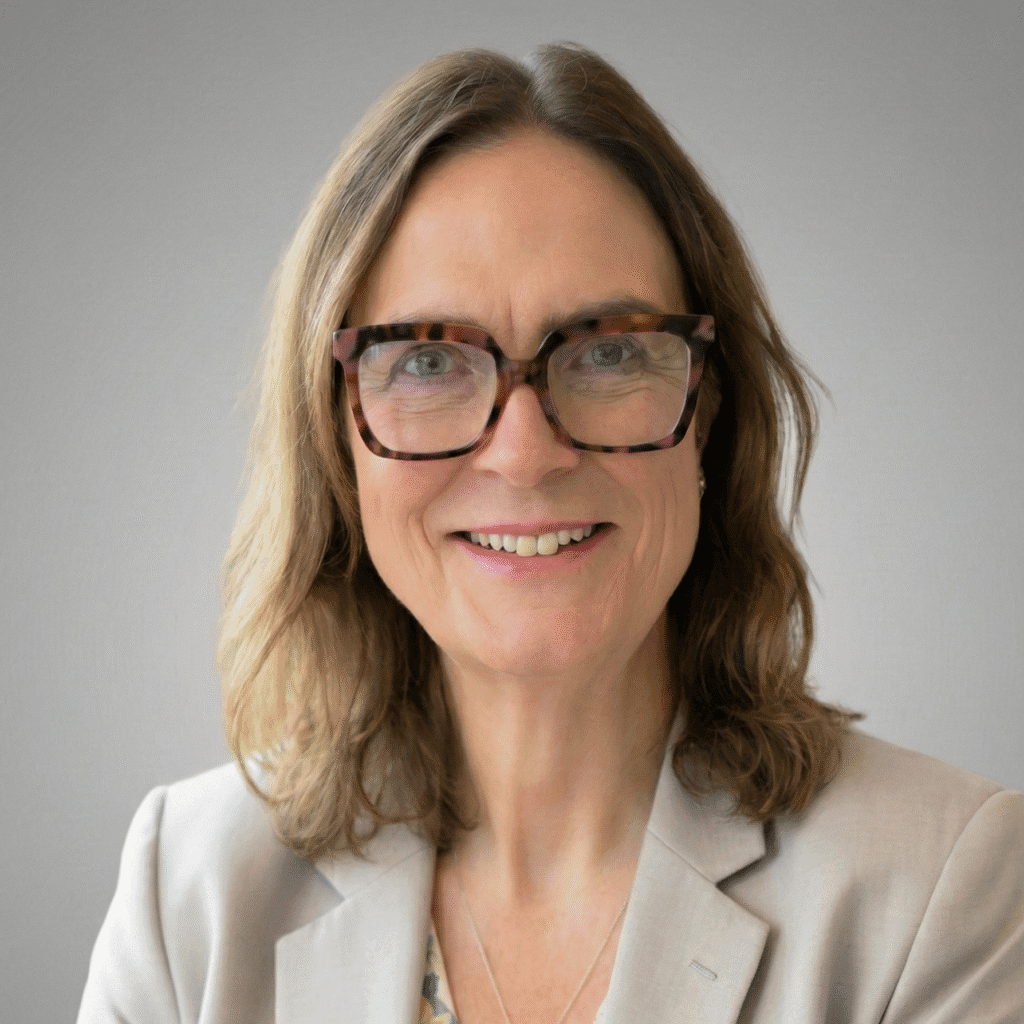
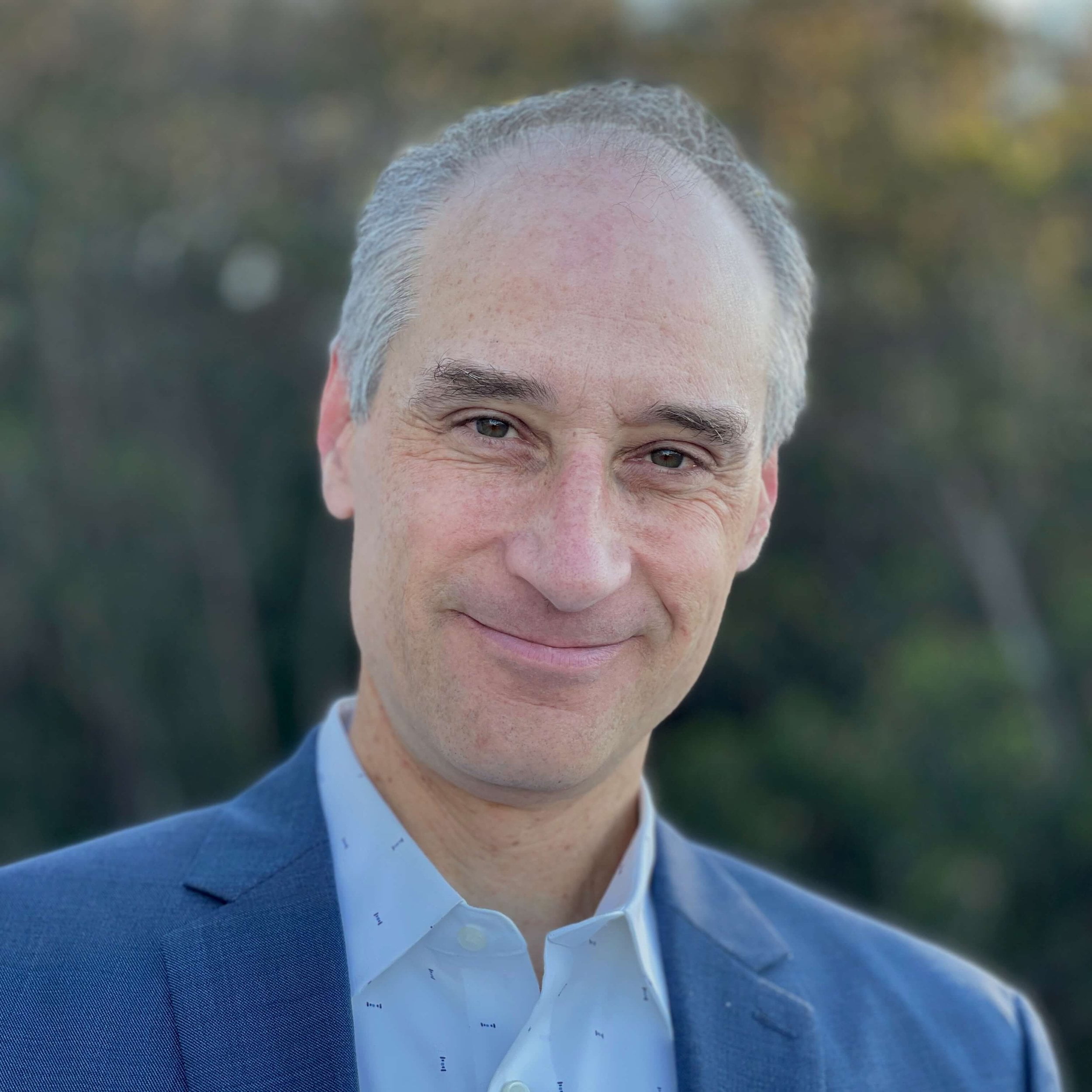
Hello, everyone. My name is Joanne Lockwood and I am your host for theInclusion Bytes podcast. In this series, I have interviewed a number ofamazing people as they've had a conversation around the subject ofinclusion, belonging and generally making the worlda better place for everyone to thrive. To join me in the future, then pleasedo drop me a line tojo.lockwood@seechangehappen.co.uk,that's S-E-E Change Happen dot Co. dot UK. You cancatch up with all of the previous shows on iTunes, Spotify and the usual places.So plug any headphones, grab a decaf and let's getgoing. Today is episode 100. Yay. 100. Withthe title power reimagined. AndI have the absolute honour and privilege to welcome JasonPatent. Jason describes himself as a Global Leadership andDEI consultant and coach. When I asked Jasonto describe his superpower, he said, persistence, finding solutions,growing in partnership with others.Wow. Hello, Jason. Welcome to the show. Thank you, Joanne,
Jason Patentguest
I'm really happy to be here with you and have thechance to talk about some topics that I know you and I both care deeplyabout. So thank you so much for inviting me. Absolute pleasure. And
Joanne Lockwoodhost
it's really great for Suzanne to introduce us aswell, and that's really good. Thank you. So,Jason, power reimagined. Tell me about power.
Jason Patentguest
I feel like any conversation aboutmaking the world better for more people has to startand end with power. And I also feel like, and I'llspeak really now, I think this does apply beyondthe borders of the United States, butI don't want to overstate the case. And I was born and raised in theUnited States and while I've spent about ten years of my career also livingand working in China, really, I mean, the United States andAmerican Us american culture and language and all ofthat is what I'm most familiar with and what I live and breathe every day.
Jason Patentguest
So that's sort of a caveat to what I'm about to say, which is thatI think that we don't have that many tools for meaningfullydiscussing power and having it be front and centre inconversations. And there's a couple of reasons forthat. I think. One is generally the people who have the powerset the conversation topics, and when we have power,we generally have a harder time recognising that we have it. And when we do,we don't want to talk about it because we're afraid someone's going to come andtake it from us. And then also, and this, I think, is verymuch not unique to the United States but a hugepart of our culture here is we like to think of ourselves as reallyegalitarian and equality minded.I don't think that the behaviour of the nation statereally bears that out. I don't think that the structures in the waythat systemic oppression still happens every singleday in the United States really bears that out behaviorally.But we don't like talking about power herebecause there are these myths that we've built uparound meritocracy. Tothe extent that we have merit and ability,we can create the future that we want for ourselves,irrespective of our membership in identity groups,irrespective of history, et cetera, et cetera.So all of that to say, in answer to yourquestion, we have to talk about power because it is the centralreality of humanity and we're really not good attalking about power. Yeah, power,
Joanne Lockwoodhost
privilege, these are all words that Deiprofessionals like ourselves talk about all the time. Yet when you try and bring theminto the conversation with people who maybe are not HRdei orientated, they feel there's a threat. I think youmentioned it. People feel that you're taking something away from them.You mentioned egalitarian and this belief ofmeritocracy. If people believe in themeritocracy, then they believe that everybody has a fair chance. Butwhat they don't often see is the power and privilegeimbalance in the meritocracy that they swim inall the time. Exactly. And those
Jason Patentguest
feelings, we're also not really good at talking about feelings. It'sconsidered quote unquote soft, not businessy.And that's another skill set that we have to developcollectively, is emotional intelligence,recognising what our feelings are, naming them, dealing with them,and also recognising their origins. And what I mean by that isI'm a cisgender, heterosexual, able bodied white man. The country thatI grew up in, the society that I grew up in, really, in a lotof ways, the world was kind of built bypeople like me, for people like me, which means that Iam not immune to those same emotional reactions.There are times when I'm reading something or hearing something, andI can feel myself bristling and getting annoyedwhen somebody questionssomething I've considered to be fundamentally true. Andthe feelings aren't going to go away because they've been burned into our brainsby the systems that we have grown up inside of and that we stillcontinue to live inside of. So I think that right out ofthe gates, one thing that can stop a conversation, really, even beforeit gets started is these feelingsof defensiveness, protectiveness, feeling like somebody isgoing to take something away from me. That's one piece of it.And then another piece of it is I can feel as if my identity, whoI am, is being challenged. What kind of a person I am is beingchallenged. Oh my gosh. If I have a racist thought, I must bea bad person. There's a very, very steep and slipperyslope from if I have this kind of thought totherefore I am this kind of person, that I definitely know thatI'm not. I know that I'm a good person. And thesystem's context can be extremely helpfulbecause it kind of frees us up from having toblame ourselves or feel badly about who weare. And it helps us set, I think, a much more really kind ofscientific and objective. I mean, I don't believe inobjectivity. That's a whole philosophical conversation we could have there,right? But we do have science.And I think if one were totake as close to an objective look as possibleat the world, the world is structured by systems that power is distributedunequally. This is all true as far as I'm concerned. Why would Iexpect that I somehow am free fromall of the biases that theunjust and unequal power systems I've grown up inside of haveburned into my brain. Of course I'm not free from those.
Jason Patentguest
It doesn't mean that I'm a bad person because I have a particular kind ofthought. I have a particular kind of thought, say a racistthought, a thought that is disparaging of an entiregroup of people based on race, which, as we all know, is afiction as well, human created fiction? Why would Iexpect that my brain wouldn't be polluted with all of thesenegative biases if the systems around me that I grew up in and continueto live inside of have burned them into my brain. It's just afact. So if we can begin to have to lookat ourselves with a certain kind of objectivity, I think we can also look atourselves with a certain kind of compassion as well, and understand.Look, I'm stuck in this muck along with everybody else.How can I begin to develop a set of tools and skillsto deal with it every moment of every day so thatI can deploy the power and the privilege that I haveinto something that is closer to inclusion and belongingand equity and equality than if I don't have thatawareness? Because if I don't have that awareness, I'm just going to roll forwardand do what humans do, which is generally use thepower that we have in order to keep what we have and keep othersfrom getting it. So roundabout now, several minutes in, Ithink that that's when we talk about power reimagined. We're talkingabout something like that. Yeah. It's interesting you brought into the
Joanne Lockwoodhost
conversation of social constructs. This is the ruleset we invented over generations, hundreds of years, thousandsof years, whatever it may be, as a society, that we've decided these socialconstructs are the rule set that we must all live by.And if you don't conform to those constructs, you get policed eitherout of your society or you getforced back into the box where you come from. And I knowit's quite a well worn cliche, but it's basically thepremises of the film. Matrix is all around understandingthe world of social constructs, how it's been designedand being able to step out of that rule set and see the worlddifferently. It's literally taking the two blue pills, isn'tit? Because once you've stepped outside and see theworld through constructs, you can't unsee them.
Jason Patentguest
I've used that metaphor in conversations and specifically, actually incoaching conversations before, the blue pill, red pill metaphor from thematrix. And isn't it exactly what you just said? Once you've seen it, youcan't unsee it. And it can be daunting, it can befrightening. But I also feel like if we reallymean it when we say that we want to create a world that works foreveryone, if we want to create a world of genuine belonging,if we want to create a world where we're not really creatingneedless suffering and death every day, if we really want to boil itdown, we don't really have a choice. You mentioned another word,
Joanne Lockwoodhost
oppression. And you mix that with power, you mix that with privilege, youput oppression in there, again, another triggering word for manypeople. I'm not oppressing anybody. But again, whenyou think of that, of the dynamics of systemic and socialconstructs and how we've built society, the inequities that areinherent in it, it's again, hard to see howI as an individual have oppressed anybody. But Irecognise that I benefit from a system isinherently a construct. Disadvantages many,yes. And I'm going to pan out for a
Jason Patentguest
moment because I think one of the things we've gotten into pretty quickly in thisconversation is some of the limitations of thehuman brain and how we evolved and what we evolved to be successfulat. There's a phrase thatI doubt that I invented. I did some googling to see if I could findit out there. And I didn't see that anybody had used this before. But thenI'm still kind of testing it out to see if it sticks and if it'shelpful for people. But essentially, the workplace is the modern day savannah. And what Imean by that is no specific savannah, but the savannah of theimagination, where it's a struggle for survival, scarceresources, there's danger, life threatening dangeraround every corner. And humans evolved insideof this context. It's kill or be killed, eat or be eaten,the law of the jungle. And ourphysical brains and bodies exist and areconfigured in the way that they are so that we can succeed inthat kind of an environment. Take that and throw thatinto still, I guess. I guess it's still the early 21stcentury here and now in January 2024, and we'rerecording this episode. And there'sall of these ways in which it is absolutely necessary for the survival of ourspecies that we be able to collaborate well with people whoare really different from us. To unleash their talents,to have them feel like they belong so that they can unleash theirtalents. And I don't mean this in the instrumental, extractive,capitalist sense of get stuff out of people. I mean. I meanthis in kind of the highest sense of, like, let'sdeploy our humanity in the most effective way possible for the bettermentof our species. So you take this veryunderstandably terrified, frightened animalbrain and you throw it into this current context andthis need to collaborate effectively. And it's areal mismatch. We're really not very well equippedat the most basic biological level. We're not well equipped to meetthe challenges of the moment. In other words, we've got a really long way togo because of this fundamental mismatch. I'm trying to remembernow that this whole sort of panning out context and savannahcontext. Do you remember the last questionyou asked me a moment ago? I want to tie it back to that. It's
Joanne Lockwoodhost
around the systemic oppression and the social constructs andhow we benefit from. Without realising.
Jason Patentguest
Yes. So the broad context is our brains and bodiesaren't equipped to think in certain ways. And one of those ways is we'renot really equipped. It's very difficult to think in thesemacroscopic, big picture, systemic termsbecause we evolved in this environment that was extremely local. We formin groups and out groups. Right. It's not like every individual is struggling againstevery other individual. Groups are struggling against groups. We have in groups and we have
Jason Patentguest
out groups, and we're really goodat understanding the interests of our ingroups, those who are nearest and dearest to us, the peoplewhose interests we perceive to be aligned with our own, and theneverybody else whose interests we perceive to be not aligned with our own, and sometimesoften directly conflicting with our own. Hence,intergroup conflict, war. So allof this points towards a need for usas human beings to try to look at ourselvesin a more objective way to understand what ourlimitations are. Because if we don't understand what our limitations are, wedon't really have a chance. If we do understand what our limitations are,then we can start to work with those limitations, address thoselimitations, and build up sets of skills that we can thendeploy that help to overcome those limitations. Yeah, because
Joanne Lockwoodhost
our in group out group biases are soingrained in our prehistoric brains.I live in a commune. Anybody who comes from over the hill is onlycoming over the hill to attack me or do something bad to me. Therefore,I trust people who are in my in group. I distrustinherently anybody else who's not like me. So it's the affinitybias out group stuff. So it's soingrained in who we are, in our biases, ourprotection mechanism, our vagus nerve is straight to our adrenalinegland, kicking us into action or kicking us into hide.You see it in the animal kingdom as well. We have an inherent distrust.So if you think about that as a fundamental survival bias,no wonder people who are not like us, people who havedifferent values or different systems or different language or different skin colour, whatever,or sexuality, they may become outgroup. And it's reallyhard to let our brains encompass them and bring themin unless we find an affinity. Yes, absolutely.
Jason Patentguest
And I think if it's okay with you, I'd like to givea. I love this. And it's allextremely. This is context. Would it be okay with you if we move into somethinga little bit more practical and applied? Okay, go for it. Yeah,
Joanne Lockwoodhost
please do it. I'm wondering if your listeners just like, okay,
Jason Patentguest
great. What am I supposed to do?
Joanne Lockwoodhost
Solution is good. Yeah.
Jason Patentguest
I have a book and I write about this in the book. I'll just givean example. And when I talk aboutglobal leadership and global Dei, there's afairly specific way in which I mean that and thewhole global piece. The reason I put that in there, first of all, it's becausemy career has been global, but also becausedifferences that when we're talking when we're in a global context,we expect difference to show up. And there's a whole field calledintercultural communication, intercultural leadership that hasa rich set of tools to offer us forlooking at difference and changing the lens through which we seedifference. And so to give a specific example,what it helps us to do is focus on behaviours so that we're not jumpingimmediately into identity, we're not jumping immediately into power,because it can generate these shutdownreactions from people. And you can't get anywhere if you start there sometimes,right? So if we start with something behavioural, behavioural, Ithink we all are familiar with differences in, say,communication style. Individuals have differences in communication style,and differences also pattern across cultures. From thestandpoint of communication style. One of the big adjustments that I had tomake as somebody born and raised in the UnitedStates and trying to work effectively inside the chinesecultural and linguistic environment was different communication styles.I was trained know, say what you mean, mean what you say. Directcommunication was really the only way to communicate. And then I foundmyself in a situation where the dominant, which is not to say thatevery individual conforms to this, right, this is patterns. But broadlyspeaking, my direct communication style was not going to be successful,it wasn't going to build trust, it wasn't going to help collaboration. And so Ihad to do some adapting, or the term that I useis bridging. I didn't admit the term bridging. It comes from the interculturalfield. But even when we're not talking about internationalborders, one of the stories that I tell in thebook is about a colleague that I had who had a very different communicationstyle from mine. And she has the pseudonymAnita in the book. And she was one of my direct reports,and she was kind of a dream colleague. She wasso good at her job that I never really felt that I had tomanage her. She just got her work done extremelyeffectively. We would meet, I always met with my director reports, one on oneevery single week. And when we would sit down every week,what I wanted to hear from her was because I was busy. I wasmoving a million miles an hour, trying to accomplish way too much.What I really wanted to hear from her was whatevershe needed me to hear so that I could help her do her work moreeffectively. Instead, what I got was a story. Every singletime we'd sit down and she would say,we've exchanged pleasantries, and then she'd get outher list and start going through all of the things that she's beendoing. And then before long, she would start telling me astory. And it really bothered me becauseI just wanted her to get to the point. And oneday she caught me looking at my watch in the middle of our meetingand stopped talking immediately. And I knew exactly whathad happened. And I was like, oh, she got me. She caught meand she said, do you need me to stop talking? And I said,anita, I'm sorry, no, please continue with your story.And she did. But it felt a little bit different. I kind of spoiled themood, I think, with my checking of my watch. Wegot through the meeting, it was fine. And it was an important moment for mebecause I recognised a couple of things. One was thatshe really needed to tell me these stories. It wasn't aquestion. There was this part of me, this voice inside my head, thatI felt like she was wasting my time and wasting our time. And soit got me thinking more about what else could be happening here.And I had already been trained. In fact, one ofmy jobs at there was actually wasdirecting a centre for intercultural leadership. Soit's not like I was new to this whole topic, right? I just wasn't applyingit to myself in this particular relationship at this particular time. And it'scommunication style. This colleague of mine is a
Jason Patentguest
high context communicator. That's a term in the field, and it's a term in thefield for a reason. And I'm a low context communicator. What that means is, asa high context communicator, she needed to provideenough context to understand what she was doing inside of a largercontext. As a low context communicator, I'm just like, let's boil it down to whatwe need to know, because efficiency and transparency, those arethe values that are driving, that are most important for usto honour here, where she is more concerned with valuesaround relationships and a sort of moreholistic approach. What I was eventually able to do in that relationshipwas a little bit of fake it till you make it, which is to say,grit my teeth and listen to the stories until they were done. And thenI found, over time, that I was actually enjoying the stories that shewas telling me. I feel like it helped us to,over time, to build trust and actually kind of ironically, to get more efficient inour work. So I feel like I'm so concerned with efficiency. Like,tell me, get to the point. But the rupturing of trust could actuallylead to inefficiencies in the long run. Whereas ifI could flip this viewpoint in the ways that I've beendescribing to you, we actually might have a more trusting relationship that couldlead to longer term efficiencies. So that's one example. Now, if we getinto identity and power there, I'm the supervisor, I'm a man,she's a woman. English is my first language, it's not hers. She'san immigrant, I'm not. There's a massive power imbalance in thatrelationship. What normally happens in the workplace is we're notaware of the power that we have. And when I say power, I deliberately includeprivilege in that as a specific form of power, the normis to keep rolling forward. I'm notaware of the power that we have and just expect other people are going todo all of the adapting, code switching, accommodating,assimilating, integrating. And when we talk about powerreimagined. One of the key things, behaviorally, that we're talking about every singleday in the workplace is the folks with more power needto be doing the adapting, which is what in thebook I call bridging. And again, not my term, but I apply it ina particular way in my work that was pretty long. I hope the listenersare still with us.
Joanne Lockwoodhost
One area that I've come to realise is whenwe talk about different groups, intergenerationalgroups particularly, it's incumbent on the oldergeneration to bridge down because the youngergeneration won't bridge up. They may have an appreciation, but it'sincumbent on us, Gen X's or other generationsto learn about Gen Alpha, Gen Zenz and learn about how they'reinteracting with the world because they will not show any interest inwhat we're doing. So in order to create that bridge, as youcalled it, we have to bridge downwards. They will never bridge up. Sothe power imbalance, if you like, in that scenario is actually from an ageperspective, the power is with the younger generation because theyare setting the new communication styles. And if we, as oldergeneration want to keep relevant, even in business, we have to bridgedown and understand what's coming, not trying to force the younger generationto live in our world. Yeah, generation is a particularly interesting
Jason Patentguest
example because there's a reallyinteresting how generation interacts with age.They're closely related, but not synonymous. But the fact thatpeople in a given generation are going to ageup into a cohort where they're the onessetting the standards for everybody else. I think you make areally valid and important point there that there is a power, but they don't havethat power yet, right? We're still the ones in charge.And so often we feel like we can just go ahead and dictate ourway, when in fact, as you point out,I guess the power is kind of latent,it's nascent, but there's no question it's coming right.
Joanne Lockwoodhost
I had to learn that as a parent. I thought the power laid with me,but I learned that I had to be a negotiator, I had to be anadapter, I had to be the one who gave to ensure the relationshipwas productive, because I can assure you, my childrenwere, whilst they're fantastic children and superb youngadults, or your adults now, I realised that me sayingI'm old, I know better is no way to communicate. Youhave to learn a different set of skills to communicate with youngerpeople. And as like, being a parent really taught me that.
Jason Patentguest
Yes. And I think I appreciate the application ofthis power reimagined concept togeneration. I think one of the important differences between generation anda lot of other identity categories is exactly what I was saying a moment ago,which is they'll age up into positions of power,but if we're looking at, say, for example, race and reallyjust about any other identity category, that doesn't hold.So we're talking about a lifelong condition of beingmarginalised, of being unseen,of being forced into situations where I have to change whoI am every single day and suffer indignities every single dayjust in order to get by. Also to avoid
Joanne Lockwoodhost
standing out, being different, being accused of beingtroublesome or argumentative or bossyor whatever other negative words we could throw at people. Yousay the code switching, the masking, the covering, is a survivalmechanism to survive in a world where youare not the majority, because the majority set of rules, you have to playby those rules, even though they don't necessarily work for you. Exactly.
Jason Patentguest
I want to clarify one importantdistinction, which is, and I touched on this a little bit earlier inour conversation, but this whole, the ideaof collaborating effectively together, tome, is we can and shouldbe thinking and talking about that in human terms. And what Imean by that is, what is it like to be aperson, a human being who feels seen,who feels included, who feels like they belong, and then tobe able to contribute their talents and energies accordingly?We do function inside of an extractive globalcapitalist system. That's a fact. Right. AndI don't see that changing anytime soon. It's not like we're going to snap ourfingers and have a set of systems that are going to bemore focused on humanity. I mean, the extractive systems that wefunction inside of are not focused on humanity. At the same time,it's possible, I believe, to functioninside of these systems in much more healthy andhumane ways than we currently do. And that's also just fundamentalto the work that I do, is thisbelief that we have a lot more wiggle roomthan we think we do, especially when we have outsized power andoutsized privilege. And so much of the challenge of leadinginside of these inhumane structures is finding wherethat wiggle room is. Where do I have, wherecan I bridge where? And how can I bridge such thatin my spheres of influence, however big or however small they maybe, can I carve out spaces where people feel morelike they belong? Isn't the pace of change, though
Joanne Lockwoodhost
glacially slow and frustratingly slow, somuch so sometimes you can't even see change occurring becauseit's those micro kind of increments?World Economic Forum, their gender equity report, I thinklast year said that we're not going to achieve gender equity in thewestern world for another 7500 odyears. And globally, it's more like 250years. When you think about some of the Far east and other parts of theworld. And who wants to wait 75years for gender equity to start occurring? Who wants to waithalf of that time, a quarter of that time, a third? Whateverfraction it is, it's like anything. We want it now. Howdo we get it now? How do we keep patient thatlong? Well, that's a great question,
Jason Patentguest
and I don't think we have a choice, which is to sayeach of us has a certain amount of agency. AndI think my work is predicated on a beliefthat, let's just say, let's snap our fingersand fast forward 10,000 years, presuming that we're all still aroundas a species, right, and that we haven't completely destroyed life on thisplanet, or maybe 1000 years, whatever, just some verylong time into the future. And let's say that there's still an awful lotof nastiness going on. I still believe thatinside of our spheres of influence and the relationships that we have with otherhuman beings, it's meaningful. This work is stillmeaningful because of the impact that we can have within our spheres of influencenow. So that's the worst fallback case, right? Soin the very, very worst case, we're still having apositive impact if we're doing this work mindfully,intentionally, persistently. I also happen tobelieve that the more skilled we canget broadly speaking, doing this work, which has many, manyaspects to it, and we've touched on a few of them in this conversation already,that over time we've got a better and better chance attransforming these larger structures and these larger systemsin more meaningful and more impactful ways, so that theactual impact of the work that we do extends beyond our immediate spheres ofinfluence. We can't know, there's no way that we're going to knowwhat that impact is. It's very mysterious. So there is afaith aspect to this work as well, I suppose. Andthe longer I'm around, themore I recognise that my time on this planet is really limited.And in my lifetime I'm only going to see so much change. And then Ilook at my. I have two grown daughters and I think about them,they may have kids at some point and I'll be thinkingabout them as well if I'm still around. And my hope isthat when they leave this earth, that wewill have progressed in some meaningful waytowards this better future. I don't think there's a finish line, I should say that.I mean, I think because of how we're wired, we're not going to change humanwiring. That is how it is. We just have to get better andbetter at managing our limitations, at overcoming ourlimitations. But there's no shiny futurewhere we're born. We come out into theworld and it's like we're all one big happy family.No, but through education, etcetera, the future can look aheck of a lot better than it does right now. So, yes, we want itnow. And not only do we want it now,to the extent that one belongs to identitygroups that are historically and currently still very much marginalised.And I boiled it down in a really stark way earlier, and I'll say itagain, suffering and dying, they need it now. And I guess that's partof what motivates me and keeps me moving forward with this work,is like I can sit here on my high horse in myincredibly privileged life and say, some distantday, things will be better. Well, okay, great. But people aresuffering and dying now. How okay am I with that?How much do I really care? And how much ismy caring about that actually going to motivate me to take action? And thenwhat sorts of action am I willing to take? Those are questions that Ithink we all need to be wrestling with every single day. We're not going tolive up to our own standards every single day. We might be really lucky ifwe have a day where we feel like we live up to our own standards,but I feel like those are questions that we have to be asking and respondingto in our action. Yeah, it occurs to me there's this massive
Joanne Lockwoodhost
disconnect between society atlarge and the corporate world thatwe breathe all the time. Where in most companies,sizable companies, global organisations, there's DNI teams,there's people worrying about equity, inclusive recruitmentprocesses, there's lots of people focusing on this as a job. But youstep out of corporate America, corporate Europe, corporate UK, corporatewherever, onto the pavement, who is thinking aboutequity in the same way? Because you can say, well, ourgovernment are know you look at, we'vegot elections coming up in the US, we've got elections coming up in the UK,we've got elections coming up in five or six other countries aroundthe world that will put potentially differentgovernments in the next twelve to 18 months. And thosegovernments, a lot of them, have a different viewon human rights and equity. Andwithout naming any names, so are weregaining and then getting pushback? Becausewoke has been weaponized as somethingthat's used against people who are trying to create positive change where people canthrive. We talked about the pushback, the power privilege, peoplefeel losing something. The white man is feelingmarginalised now and the governments are reacting tothat feeling. So say there's this disconnect betweencorporate motivation to be inclusive andsocietal and the world at large. There's a disconnect there. How do werationalise that? I appreciate that. That's a change of the world question, isn'tit? That's pretty
Jason Patentguest
big question there, but happy to indulge and exploreit with you. I haven't thought about it in those terms before.Well let me focus in on one piece. I don't know if this is actuallygoing to get at what you're trying to get at, but let me focus inon one thing that you said, which is this whole idea of the white manfeeling marginalised. Tim Wise, whois a white male author, anactivist, long time, decades long activist onrace based in the United States. I attended a webinarof his and he said the following. He said, let me make sure I getthe words right. What was the one word? When you're usedto privilege, inclusion feels.
Joanne Lockwoodhost
Like oppression or something like that, isn't it? Yeah, something like when you're
Jason Patentguest
used to having power. That wasn't his exact words. But when you're used to havingpower, pluralism feels like oppression. And what Iappreciate about that observation was it's an effort to get inside the mindof this quote, unquote, marginalised white man.I think there's some real truth in there. Thereaction, and I'll just use white men ascisgender, heterosexual, able bodiedwhite man, is a shorthand now forcertain intersection of identities, wherethere's sometimes a shared sense. And I think the election, I willname names, the election of Donald Trump in 2016, and Trumpism, which hasexploded in terms of its visibility and its influence,certainly in us politics and elsewhere around the world, it seems as well,is a global.What's the word I'm looking for? It's a global phenomenon that stemsfrom, I think, a human reaction that we shouldn't be surprisedabout, based on the wiring of the brainthat I was talking about earlier. Having power feelsgood, and it grants usaccess to scarce resources inside of a system that has trainedus to think in terms of scarcity. We tend not to notice power when wehave it, we tend to notice it more when others have it. Andif we get the slightest sense that somebody wants to take our poweraway, it's terrifying. There could hardly be anything more terrifying thanthat. And I think that's fundamentally, that'swhat's going on. It's going on at a micro level and a macro level. Andof course, people are exploiting this tendency in order to gainpower for themselves, but I think fundamentally that's what's happening.I don't think it ties into your question about the disconnect betweencorporate approaches and societal approaches. So my apologies for notconnecting it back to that. But that's where you got me thinking with your question.
Joanne Lockwoodhost
Yeah, I think it was just an observation that the corporateorganisation, or organism, if you like, isdeveloping a more inclusive culturethat isn't necessarily married or mirrored outside of their frontdoor. And often we see corporate culture influenced by thewider outside. But I now see corporate culture as being a safespace from the outside world where you can get dignity andrespect, a level of equity, a level ofprotection that you may not get outside of your company,which creates another inequity in society, where if you're working for a largeorganisation, you're far more likely to succeed and be respectivefor who you are. If you're working for a smallorganisation, a local organisation, in a local town, where there's going tobe a massive disconnect between the experience of peoplefrom an inclusion, from an equity, from an opportunity perspective, onceyou get inside the door of a corporate, then you're more likely tosucceed again. That's a privilege, I guess there's power and privilege toget a role or a job in a large organisation.
Jason Patentguest
Well, I will defer to your expertise on that simply becauseI haven't ever worked for a particularly large organisation andI don't have any large corporate clients either. So I don't have that kind ofa window into that. Okay, yeah,
Joanne Lockwoodhost
let's go to another attack. We talk about equity, andpeople often assume that equity is going back to breeze. Conversation isabout giving something up so that other people havemore. Because it's kind of a human nature, isn't it, to wantbetter for yourself, betterment. I wanted my children to havesomething I didn't have. I'm not going to walk awayfrom an opportunity where someone says, here, havethis role, this job, this assignment. I'm not going tosay, no, you give that to somebody else.And that's not. Equity is about. It's not about taking things awayfrom people or asking people to step back. It's trying to recognise in a society,people need to be given more tools to allow them toget to the start line. Yes.
Jason Patentguest
I feel like scarcity mindset versus abundancemindset is, for me, anyway, it's been an extremely helpfulframe going back to the savannah. We evolved in this environment ofscarcity. One way to look at the globalsystems, the extractive global systems that still dominatework in the world, is just an extension of that savannahmentality. And so we tend to think of things in terms ofscarcity and zero sum. If you get something, that means I losesomething andeverything that I'm sharing with you and everything that I'm saying, I want to bereally clear with your listeners about this. This is stuff that I'm struggling with inmy own mind every single day, right. My mindis polluted in the same ways that everybody's mind is polluted,right? There's all kinds of really nasty stuff kicking around in my brain all thetime. I struggle with this stuff. It's really hard forme some days. Some days it's easier than others. But generally speaking,it's really hard for me togenuinely feel a sense of abundance about the world.Like I say, some days are easier than others, some days are harder than others.But scarcity has been burned into our brains through ourevolution and through the ongoing existence of these scarcity based structures thatwe all function inside of. So it's a naturalreaction to feel like, you get something, Ilose something. I once had the opportunity to listen to thepresident of Ireland give a talk. And he said something that reallystuck with me. And he was talking about, I guess theUnited States as kind of the worst offender in this category,but this also being a global phenomenon as well. Buthe was talking about an ethos of insatiability. There'snever enough. We always want more and more and more and more and more understandableinside of a scarcity mindset. If resources arescarce and everyone's looking for the same resources, I need to hoard thoseresources. I have to, because otherwise someone else is going to get them and I'llhave less. And then what he said was what he would like to see isa shift towards an ethos of sufficiency. Can we
Jason Patentguest
all just please have enough? And we can take any resource and think about anyresource. I think in those terms, you can startwith the basic material stuff of life. Food, water,healthy, unpolluted food, clean water, decentshelter, clothing, like the basics of human existence that arelacking for an embarrassingly,horrifically large percentage of humanity. Start with that. Canwe just please have enough? And from there we can get in. We work ourway up to the amount of power we have inside of our organisations, the amountof influence that we have over others to change policies and build. If we getback to equity, creating laws andpolicies that distribute resourcesin ways that are more based on humanneeds, then I guess all of that.To say that I have found this notionof trying to think in terms of abundance and trying to think in terms ofsufficiency as a baseline as opposed tothe scarcity insatiability approach that weare still functioning very much inside of today. I appreciate
Joanne Lockwoodhost
this next thought I have is probably outsideof your kind of everyday comfort zone.But I'm thinking as you're talking is there is no profitinsufficiency. Our capitalist society is aboutpropagating the scarcity model. We look atenvironmental issues. People don't wantlimitless renewable energy. They want fossil fuels, becausefossil fuels is power. Fossil fuelsgives control over things. We don't want to cut our pollution becauseChina won't cut theirs. It's all about protecting ourselvesand hoarding what we have. And that seems to be the capitalist modelat the moment. I was listening to you. I'm thinking I can see wherewe're going wrong as a society because we're not geared up, asyou point out, for sufficiency.
Jason Patentguest
Yeah, I agree. And that's also areminder to me that there's a caveat that I want to throw intothis conversation as well, which is I think it can be veryeasy for us if we'relambasting the excesses of capitalism.It can be helpful to remember that there's nothing wrong with commerce,right? And there's nothing inherently wrong with markets.To me anyway, there's a real beauty in youand I coming together. You need or want something that Ihave, and I need or want something that you have and we're able to makeas free individuals chooseto engage with each other in commerce. I think that's actuallypotentially a beautiful way for humans to interact. Now, if that's the basis ofeverything, no, right? Butto me, there's nothing inherently evil or wrong about that. It's whencapitalism is that just run amok, where it becomesall about hoarding resources and power.
Jason Patentguest
And to me, that's what fundamentally we need to work onchanging over. You know, folks can getvery defensive, know, and say, what are you, a communist or something?Capitalism, everyone knows that free marketsgenerate wealth, and Adam Smith and a rising tide lifts all boats.And I think it can be absolutely true thatmarkets in certain ways allocate resources more efficiently, as theeconomists like to say. And it can at the same time also betrue that we've gone to ridiculous excessas a species as far as how this is playing out aroundthe world and the dire human consequences every single dayof that. Which also reminds me, since I said we can think this and wecan also think this, this is another skill set that we have to build ashuman beings, which is the ability to hold multiple truths. We have toget better. And I say this with such emphasis because I'm reallyyelling at myself because this is something I'm really not very good at andI'm trying to get better at because my brain always wants to go to the,listen there, I just said it right there. Always wants to go to the binary.That's actually not true that my brain always wants to go to the binary. ButI just gave you a binary lot there, right? Sofrequently my brain just wants to just separate intoyes or no, good or bad, right or wrong. That's because, that's becauseI'm a human being. That's my inheritance as a human. My brain is limited inthat way. Okay? That means I just need to direct more of my focustowards holding multiple different truths at once.It's another one of the skills, another one of the toolsin the toolbox that we need to get better at.Recognising and using as human beings is much as my brain might wantto simplify into right and wrong? Yes. No. We have to getbetter at holding multiple truths and seeing things from multiple perspectives atonce, or at least switching more fluidlybetween realities. And I think it's not necessarily
Joanne Lockwoodhost
multiple truths, it's recognising that one truth is not the onlytruth and it's perspectives are key. Being able to stepback or step one pace to the left or one pace to the right, yousee something different. And I think that's the hard thing. And I'ma great believer in perspectives and multipleviews, but I'm also quick to jump to thebinary. You have to slow your thinking down, step back and sayokay, that's my view. It's just my view. Okay. Thereare other views, those views are different. And I thinkit's just a habit. You have to learn to overrideyour default thought and be able to press pause for a secondand just ask. Hear a different story? Yes.It doesn't mean they say they're right or you're wrong, it just means it's adifferent view. Yes. And I think you hit on two really
Jason Patentguest
key skills and these are real skills and that's another thing.These are actual skills. We'retrained and hired in a set of technical skills, but there are these human skillsand you just pointed to two of them. Pause, askif everyone could get a little bit better every dayat pausing and asking. That would take us pretty far.
Joanne Lockwoodhost
Some of the basis of emotional intelligence as well though, isn't it? It'srecognising your own sense of self, your owninteraction style, the needs of others, and starting toconnect with a bit of compassion and empathy there. Yes.
Jason Patentguest
And I think that if I'm sort of reframing that in terms ofthe work that I try to do with folks and what I'm trying to doin my book, it's essentially, yes, emotional intelligence is thefoundation of it all. And then what I try to do is provideframeworks and contexts and related skillsto apply every single day. So like the communication style thing that, theexample I shared with you about my colleague who told the stories, right. It wasreally helpful to me that I could recognise that the function of my discomfortwas a difference in communication style. And communicationstyle is just one among many, many different kinds.Behavioural differences in the workplace. There's a wholeworld of what we call cultural dimensions. So riskorientation versus certainty orientation status orientation versusegalitarian orientation, there's a whole big list of those.There's different conflict styles, there's different leadership styles, thereare different ways of giving and receiving feedback. And so we'vegot these sort of big picture, fundamental background skillsets around emotional intelligence and managing our feelings. And then there's thevery specific applied skill set of self awareness.So this is how Ithink the world should be run. These aremy preferences, other awareness. My colleagues have a different set ofbehavioural preferences based on values,maybe a quite similar value set, but ordered or ranked a little bitdifferently. And then a set of skills for bridging the wholeintercultural field is based around this self other bridge model. And I get into
Jason Patentguest
that a lot in the book. And all the work that I do with clientsfundamentally is around this self other bridgemodel and framing it in terms of thisshared meta language around cultural dimensions, conflict styles,leadership styles, et cetera. And then therubber meeting the road in all of this is bridging strategies. Whatcan I do differently every single day as somebody withmore power to move towards somebody with lesspower and the way that they go about theirbusiness? So what I'm really trying to do in my work istake these really, we've talked in this, we'vegone pretty deep and pretty broad in this conversation aroundthese big picture questions, around humaninstitutions and human challenges. I really try toboil that down into specific actions that wecan take every single day. And soultimately we could talk all day and thensome about these big picture questions. But if we're not able to,in a really practical way, advise peopleon what they can do and what they can try, then I don't personallysee, like, I wouldn't be interested. To me, that'sfundamentally the impact that I want to have in the work that I do, isequipping people with a very concrete set of skillsaround bridging to people with less power. And if we get back to this wholenotion of power transformed, that really is what I'm talkingabout. Anyway, you're right, and you're right exactly
Joanne Lockwoodhost
in what you said. We could keep talking about this all day, and I've absolutelyloved chatting to you for the last hour with the record button onand 20 minutes or so in the green room beforehand. And no doubt we'llhave five or ten minutes before we hang up after this recording. So,Jason, it's been absolutely an honour and privilege to have you here today. Howcan our listeners get hold of you? What's the best way to keep in touch?Tell us about your book. Well, for keeping in touch, I guess I'm
Jason Patentguest
a Gen xer. I'm an emailer.Jason@jasonpatten.com. That's the easiest way to drop me an email.Jason@jasonpatten.com. You can find me on LinkedIn.I'm there. That's really my only social media is LinkedIn.I haven't found the bandwidth to do Instagram, Twitter,so you can find me on LinkedIn. Jason patent. So if you wantto get in touch, please do. There's lots of different ways that we canengage, and I'd love to have a conversation with you. If any of this piquesyour interest, drop me a note and or search up my book.Humanly possible, a new model of leadership for a more inclusiveworld. It's almost a year old now. It's going to have a birthday here atthe end of the month. It's a short read. You could read it in anafternoon, and I would encourage you to do that. If this conversation has piqued yourinterest, go pick up the ebook or the paperback and justgive it a read. I think you'll find it interesting. The feedback that I've receivedfrom readers is they really like the stories. Everything is grounded in stories. SoI don't talk about any concepts outside of the context of a specificstory. Some of them are my stories. They're mostly stories about mistakes that I've madeand tried to learn from. But there's also a lot of stories that don't involveme at all. But they all tie back to thesequestions around power and how we can use power as a force for inclusion.
Joanne Lockwoodhost
Fabulous. Is that on Amazon? Can I jump on there in a minute and geta copy? Yes. Brilliant. I'll do that. I'll go and cheque it out onAmazon, and I'll put the link to the book in the show notes so thatanyone else who's interested in following up can hunt it down.
Jason Patentguest
Thank you, Jamie. Thank you. You're welcome. And there's just one morepiece I want to add to this, which is, I wouldn't be doing this ifI wasn't fundamentally optimistic. I get into this inthe introductory chapter of the book. I feel likeright now we're at the very, very leading edge. We're just starting to scratchthe surface of what we can do as a species inthis realm of creating a better world for everyone. And I thinka lot of it has to do with the things that we've learned. And we're
Jason Patentguest
talking, you're talking about the vagus nerve, and we're talking about the brain and thebody and the amygdala. This is relatively newthat humans have had the knowledge that we have the understanding that we have aboutourselves as organisms and how we function, that we can contextualise ourselves,put ourselves into this larger context, understand our limitations, but alsoour potential. And the two are just two sides of thesame coin, our limitations and our potential, and we can really start to realisemore of our potential to the extent that we're able to recognise and manage thelimitations that we have. So I have no idea what kindof a listener experience this episode is going to create. I think there'smoments where we got kind of heavy with stuff, but I wouldn't be doing thiswork if I didn't have a really foundational optimism about whathuman beings can accomplish and also just a real excitementabout where we could potentially be headed as a species. I concur, and
Joanne Lockwoodhost
I think you said something very early on, that we can't change the entire world,but we can change ourselves, we can change how we show up, we can influenceothers. And that's why I do it as well, knowing that the power ofone, it's exponential when all the people who do care gettogether and we share that care and we start making a difference together. So youhave to have faith. It's exhausting, but it'srewarding when you see small gains. And thank you,and I've enjoyed listening to you, I've enjoyed recordingthis with you. I've learned an immense amount and contextualised afew other things as well. So it's been really good. So thank you very much,Jason, and a huge thank you to you, the listener. I appreciate you gettingto the end. Tuning in. If you're not alreadysubscribed, please track us down on Spotify oriTunes and hit the follow or subscribe button. Leave us acomment, give us a rating. Give us five stars, Gordon. Give us five stars. Idare you. And please keep a lookoutfor next week we'll have another episode of the Inclusion Bytes podcast. That's B-I-T-E-S. Andof course you can share it with your friends and colleagues if you've enjoyed thisepisode or others. I've got a number of other exciting guests. This isepisode 100. Yay. Woo. We've got another hundred to go, I'm sure. Atleast there's another hundred to go, so I'm sure you'd be equally inspired by those
Joanne Lockwoodhost
guests. Of course, if you'd like to be a guest yourself, you'd like tohave a conversation. You don't have to have a book out, you don't have tohave a deep study of anything. You just have to have aninterest in making the world a better place. Come and join us. Send me anemail jo.lockwood@seechangehappen.co.uk and finally,my name is Joanne Lockwood. It's been an absolute pleasure to hostthis podcast with you today. Catch you next time. Bye.
Understanding Power Dynamics and Communication StylesRedefining Power for Inclusion and EquityThe Influence of Societal Constructs and Multiple Perspectives
Joanne Lockwood is joined by global leadership and DEI consultant Jason Patten to examine why conversations about power and privilege so often stall, and what it takes to make them constructive. They unpack how myths of meritocracy, defensiveness, and fear of loss can prevent people from recognising the systems that distribute power unevenly.
Drawing on intercultural leadership, Jason shares practical tools for focusing on behaviours (like communication styles) as an entry point into harder discussions about identity and inequity. Through a workplace story about mismatched communication preferences, the pair explore “bridging” as a skill—especially the responsibility of those with greater power and privilege to adapt, build trust, and create conditions where others can contribute without masking or code-switching.
The conversation widens to include how social constructs shape in‑group/out‑group thinking, why change can feel painfully slow, and how leaders can still act meaningfully within their spheres of influence. Jason also references his book, Humanly Possible: A New Model of Leadership for a More Inclusive World, as a framework for turning awareness of power into everyday inclusive leadership practices.
“I feel like any conversation about making the world better for more people has to start and end with power. And I also feel like, and I'll speak really now, I think this does apply beyond the borders of the United States, but I don't want to overstate the case.”
“And those feelings, we're also not really good at talking about feelings. It's considered quote unquote soft, not businessy. And that's another skill set that we have to develop collectively, is emotional intelligence, recognising what our feelings are, naming them, dealing with them, and also recognising their origins.”
“How can I begin to develop a set of tools and skills to deal with it every moment of every day so that I can deploy the power and the privilege that I have into something that is closer to inclusion and belonging and equity and equality than if I don't have that awareness?”
“What it helps us to do is focus on behaviours so that we're not jumping immediately into identity, we're not jumping immediately into power, because it can generate these shutdown reactions from people.”
“What I was eventually able to do in that relationship was a little bit of fake it till you make it, which is to say, grit my teeth and listen to the stories until they were done.”
“Can we all just please have enough? And we can take any resource and think about any resource. I think in those terms, you can start with the basic material stuff of life. Food, water, healthy, unpolluted food, clean water, decent shelter, clothing, like the basics of human existence that are lacking for an embarrassingly, horrifically large percentage of humanity. Start with that. Can we just please have enough? And from there we can get in. We work our way up to the amount of power we have inside of our organisations, the amount of influence that we have over others to change policies and build. If we get back to equity, creating laws and policies that distribute resources in ways that are more based on human needs, then I guess all of that. To say that I have found this notion of trying to think in terms of abundance and trying to think in terms of sufficiency as a baseline as opposed to the scarcity insatiability approach that we are still functioning very much inside of today.”
“We have to get better. And I say this with such emphasis because I'm really yelling at myself because this is something I'm really not very good at and I'm trying to get better at because my brain always wants to go to the, listen there, I just said it right there. Always wants to go to the binary.”
“What can I do differently every single day as somebody with more power to move towards somebody with less power and the way that they go about their business?”
“I have no idea what kind of a listener experience this episode is going to create. I think there's moments where we got kind of heavy with stuff, but I wouldn't be doing this work if I didn't have a really foundational optimism about what human beings can accomplish and also just a real excitement about where we could potentially be headed as a species.”
Experiencing and overcoming communication challenges due to differing styles and the path towards efficient and trusting working relationships.
Bridging generational divides in communication, with a focus on older generations adapting to the styles of younger ones within the workplace.
The role of systemic inequities, oppression, power, and privilege in shaping societal interactions and professional engagements.
Understanding the human brain's prehistoric biases and their influences on current in-group and out-group perceptions and behaviours.
Addressing cultural differences through enhancing intercultural communication skills and adopting behaviour changes for effective collaboration.
The slow progression towards gender equity, the reality of continued societal pushbacks, and methods for making meaningful impacts within individual spheres of influence.
Recognising multiple perspectives and the importance of emotional intelligence and self-awareness for bridging cultural gaps and empowering those with less power.
One thing to remember
The central takeaway from the "Power Reimagined" episode is the critical importance of understanding and adapting communication styles across different cultures and contexts to foster more inclusive and efficient working relationships. The episode emphasises the need for individuals, especially those in positions of power, to develop emotional intelligence and self-awareness to navigate and bridge cultural differences effectively. Through the lens of power dynamics and privilege, the discussion highlights that realising and addressing systemic inequities can lead to a more equitable and human-centric approach in both corporate environments and wider society.
Questions this episode helps answer
How can understanding different communication styles, such as high-context and low-context, aid in building more inclusive and effective workplace relationships?
What practical strategies can be employed to bridge cultural communication differences in the workplace, as discussed by Jason Patent in relation to Chinese and American communication styles?
How can individuals in positions of power, particularly older generations, adapt their communication styles to bridge intergenerational gaps in the workplace?
What are the challenges and potential solutions for navigating power dynamics in relation to other identity categories, such as race and gender, within corporate environments?
In what ways can individuals challenge and re-evaluate the current economic system to create a more equitable and inclusive global society, as suggested by Jason Patent?
How can emotional intelligence and self-awareness be leveraged to bridge cultural differences and empower those with less power in the workplace?
Explore topics
Ideas from this episode
Understanding Power Dynamics and Communication Styles
An in-depth exploration of power dynamics and communication styles in the workplace. We dived into how individuals' different communication styles, such as high-context and low-context, can lead to misunderstandings and inefficiencies.
Redefining Power for Inclusion and Equity
We then navigated towards the redefinition of power and its impact on creating inclusive environments and equitable societies. Our exchange provided insights into the challenges of acknowledging privilege, systemic inequities, and the influence of power dynamics across different identity categories.
The Influence of Societal Constructs and Multiple Perspectives
The dialogue further expanded to encompass the influence of societal constructs on our perceptions and understanding of power, privilege, and equity. We explored the concept of stepping outside societal constructs, akin to the metaphorical "red pill" moment in 'The Matrix', to see the world from different vantage points.
Learn
Frequently asked questions
What is the significance of understanding different communication styles in the workplace?
Understanding different communication styles in the workplace is crucial for fostering efficient and trusting relationships. It can help bridge the gap between high-context and low-context communicators and lead to better collaboration and productivity.
How can individuals bridge cultural differences in their communication styles?
Individuals can bridge cultural differences in communication by practising active listening, being open to understanding diverse storytelling approaches, and adapting their behaviours to accommodate different communication styles.
Why is it important for those in positions of power to adapt and understand others?
It is essential for those in positions of power to adapt and understand others to create a more inclusive environment, build trust, and ensure that a diverse range of perspectives are considered in decision-making processes.
How can individuals make a meaningful impact within their spheres of influence?
Individuals can make a meaningful impact within their spheres of influence by practising emotional intelligence, self-awareness, and embracing multiple perspectives, as well as empowering those with less power.
Why is it important to challenge the current economic system?
Challenging the current economic system is vital to address the consequences of its extreme application globally and to create a more equitable and inclusive world for everyone.
Where can I find Jason Patent’s book, "Humanly Possible: A New Model of Leadership for a More Inclusive World"?
Jason Patent’s book, "Humanly Possible: A New Model of Leadership for a More Inclusive World," is available on Amazon. You can find the link to the book in the show notes of the podcast.
Share this episode
Heard something worth passing on? Send this conversation to someone who needs to hear it.