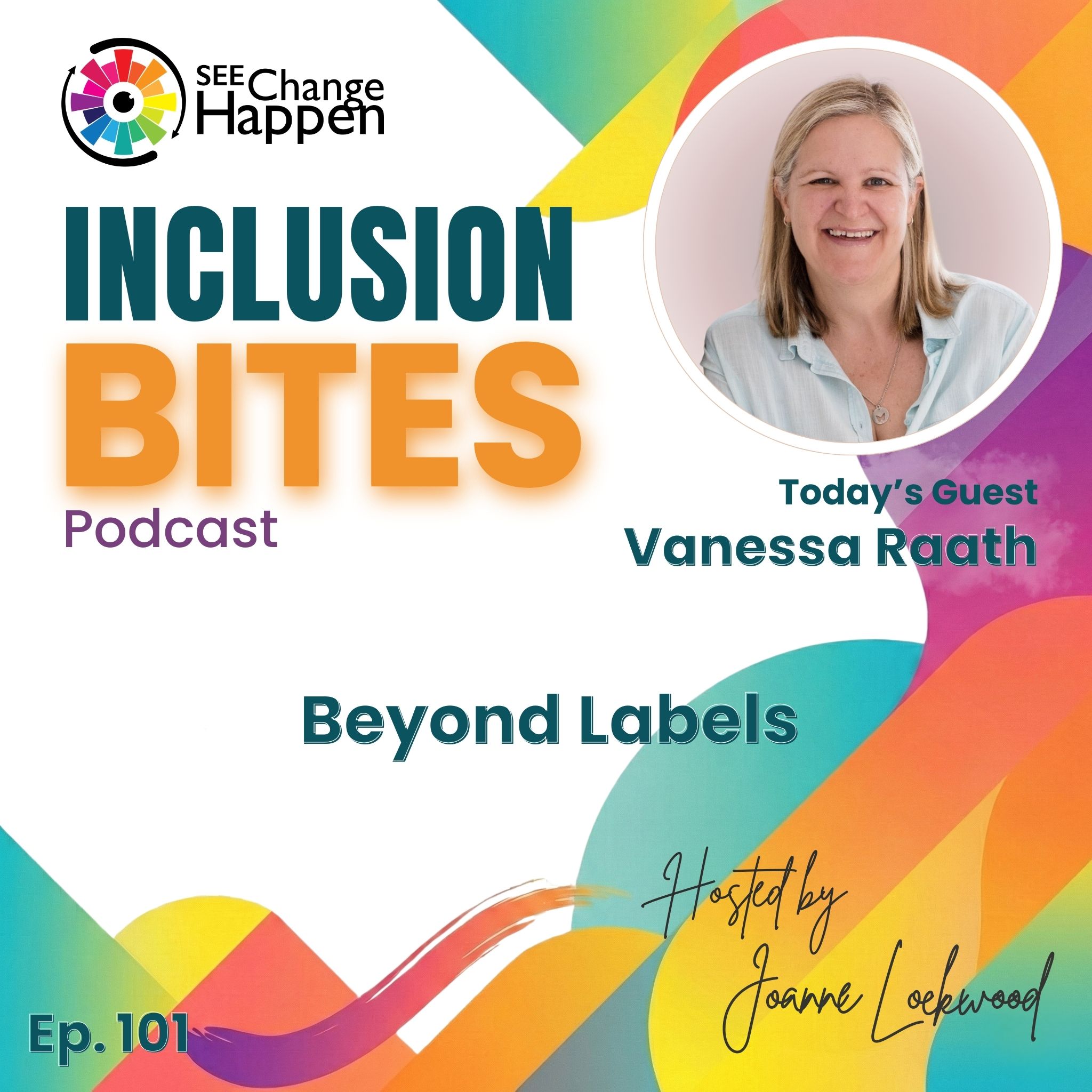
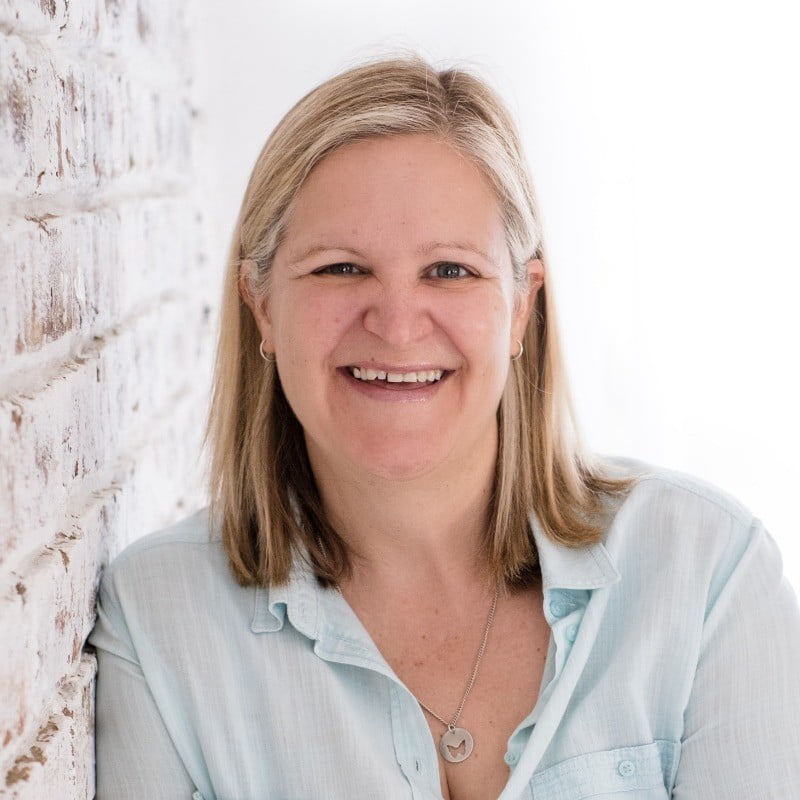
Join Joanne Lockwood and guest Vanessa Raath as they unpack the impact of labels and stereotypes, revealing the power of understanding and embracing individual differences in this thought-provoking discussion on The Inclusion Bites Podcast.
In this episode of Inclusion Bites, Joanne Lockwood speaks with Vanessa Raath about workplace culture systems.
Hello, everyone. My name is Joanne Lockwood and I'm your host for theInclusion Bites podcast. In this series, I've interviewed a number of amazingpeople and simply had a conversation around the subject of inclusion,belonging and generally making the world a better place for everyone tothrive. So to join me in the future then, please do drop me a lineto jo.lockwood@seechangehappen.co.uk,that's S-E-E Change Happen dot Co dot Uk.You can catch up on all the previous shows on iTunes, Spotify and theusual places. So plug in your headphones, grab a decafand let's get going. Today is episode101 with the title beyond labelsand I have the absolute honour and privilege to welcome Vanessa Wrath.Vanessa is a talent sourcing trainer, and when I asked Vanessa to describeher superpower, she said her ADHD. Hello,Vanessa, welcome to the show. Hey, Jo, good to be on your show. Thanks so
Vanessa Raathguest
much for inviting me to be here. 101 guest I feel like Ishould be thinking about Dalmatians, because as soon as you said 101, I justthought Dalmatians and dogs, why not?
Joanne Lockwoodhost
Obviously, we steer away from you being Cruella, stick to theDalmatians themselves. No, it's an absolute honour. I can't
Vanessa Raathguest
believe you've done 101 episodes. That's amazing. Well done, you. I
Joanne Lockwoodhost
know, and I've enjoyed every one of them. And it's fascinating tomeet guests such as yourself and have a great chat and get to knowpeople. And we've been looking to catch up for some while, so this is anideal opportunity. So thank you. Excellent. Vanessa. Beyond labels. Beyondlabels. What does that mean to you? So, for me, I think that it goes
Vanessa Raathguest
beyond just saying beyond labels. I've always had a thing aboutpeople judging others, and I think when you judge someone, you give them alabel. And that, for me, is just so frustrating, is that we doit. I think it's human nature. You see someone walking down the streetand you give them a label straight away. Maybe it's a gentleman with alot of tattoos and you immediately think, rough, maybe from the wrong side ofthe street. Meanwhile, these days he's probably like a top CEO or
Vanessa Raathguest
MD. It's about those snap decisionsthat we make when we look at people and we give them a label, andit's completely unfounded. It's just based onour point of reference, where are we coming from? And probablyfrom something that inherently has been built into us throughthe course of our lives. So for me, from my perspective of being a talentsourcing trainer, beyond labels is giving everyone an equalopportunity. Don't look at a CV and just label someone.Don't look at someone on LinkedIn only and give them a label. Arethey a perfect candidate? If you haven't cross referenced them across theInternet, you might find something else that's even really good, that you can sellthem to be a culture, fit into the organisation. Or you might find something thatmakes you think, well, this isn't actually going to work in this role, so it'sabout doing your homework before just willynilly applying labels to individuals. Obviously, I
Joanne Lockwoodhost
work in the EDI space. You're an experienced person who works in the talentsourcing space. So we talk about these kind of things all the time. But theaverage person in corporate SouthAfrica, corporate UK, corporate America, wherever you happen to be, doesn't always thinkabout this, do they? Their focus is on emptyseat. I need someone to fill that slot. I want someone to hit the groundrunning. Mike has just left. I want another person just likeMike. How do we move peopleinto that way of thinking? Absolutely, 100%. And I think
Vanessa Raathguest
that what happens is, and this is why I'm alittle bit stuck with company referral systems, because what happens isMark leaves. Mark is a white male. We must get another white male because Markwas great and we're all going to really miss Mark around here. Or you thenhave someone who looks like Mark, who's left behind and he recommends hisfriend who looks and sounds and speaks like Markbecause that's what was there previously. So it's all about our. AsI say, it's our point of references of what we think will work best.And it is a massive problem. It really and truly is.You've done 101 episodes on this. We all know that more diverseorganisations and staffing teams perform better, makemore money, are more enjoyable workplaces for people.And from my perspective of. I have the unique, Idon't want to even say it was a privilege, but the unique view of growingup in apartheid South Africa, we didn't haveopportunities to mix with people from other races. So in the workplace waswhere I got to meet people and actually form friends with people fromother racial groups. And I'm eternally grateful for that because it affordedme the opportunity. I went to a school where only white children wereallowed to attend up until I was in my final year. So I thinkit's something that we definitely need to do in the workplace because wecan. I perceive
Joanne Lockwoodhost
there to be kind of often a disconnect between themotivation in a workplace and the motivation in society. So if you workfor a large organisation or corporate, you've got Dei, you've got HRpeople, you've got people in talent sourcing, all focusingon equal opportunity equity, ensuring peoplesucceed, whereas you step out onto the pavement. Society doesn'talways care about you as an individual in the same way. Andwe often think that a company culture is a microcosm ofthe societal culture. But sometimes companies are actually leading the way inthis. They definitely are, 100%. But then
Vanessa Raathguest
we have the extreme case in a country like South Africa where I'm based,where businesses are mandated to go and hirepeople from different racial groups because the government puts stipulations in placeon them. So sometimes you find it, it's always happening, but it'sa false kind of view of what they're trying toachieve, which is good. We need to do thishowever it needs to be done for the right reasons. So ed andI is something that's hugely important, has to be a focus,but it has to be done with the whole company's buyin, because society is kind of left to their own devices. There's noone really trying to be the CEO of a society, but ifit's coming from the CEO of a business, and they are all over there, they'reon the Ed Andr bus. Brilliant.
Joanne Lockwoodhost
Yeah. So you talked about labels, you talked aboutstereotyping people. And as a species, we're quitejudgmental, aren't we? Oh, it's just awful. We're evaluating people allthe time, going, oh, yeah, shoes, watch, hair, car,nose, glasses, whatever it may be, and putting people into ourlittle stereotype box and say, I know who you are now because I've sussedyou. And we do that hiring as well. Yeah, it happens all the time. And
Vanessa Raathguest
it's really something that's quite difficult not to do. I mean, no one's perfect. Imean, I do it, I catch myself doing it. I've just actually had knee surgery.So I've spent a lot of time while all the guests have been hereover Christmas, sitting on a bench at the beach, while others have been playingon the beach or walking or swimming. And you sit there and you look atpeople and I find myself judging people as they're walking past me. And I'mlike, who am I? Why am I doing this? I don't have to be doingthis. And then often I'd be left with all the old grannies who also havethe bad knees and couldn't walk on the beach. And then you find out thateven though this person's old. I mean, they're in their 80s. They're amazing. Ihad the most wonderful conversations with old ladies whowere pretty much. Their knees were about as good as mine and theywere just the most interesting, lovely people. But when they sat down next to me,I was like, no, but you shouldn't feel like that.They were wonderful. I can't believe how it
Joanne Lockwoodhost
happened. But apparently I checked my diary and I'm 60 next year,but in my head I'm still 25. I'mstill a young adult with young adultthoughts. Just with knees that don't work. That's the only thing that's different, isn't it?
Vanessa Raathguest
Yeah, absolutely. And I think that we're talking aboutlabels. We also sometimes label ourselves incorrectly.And our perception of what we're putting out there and what people areseeing is often two completely different things. And I just thinkthat there's a bit of a disconnect there of what we think we are puttingout into the universe and how they're reading that.Are they getting a different label to what we're trying to give ourselves?
Joanne Lockwoodhost
Yeah, I could see how it evolved. You think aboutprehistoric human back in the timeswhere we were living in small communities, small tribes,and anybody who came from over the hill or across thewater was inherently bad becausewhy were they coming? Probably to rape, pillage, attack, stealor whatever. They weren't coming to knock on the door and say, do you wantto buy something or anything like that? Or be nice.So we've evolved this sense of protectionism where thejudgement is evaluating the threat level, isn't it?Adrenaline glands, our vagus nerve, our fight, flight orfreeze mechanism are kicking in all the time, linked all to our biases, whichis why people who are different to ourselves and not in our ingroup are seen as maybe as threats orless effective than we are. Yeah, absolutely.
Vanessa Raathguest
It's the whole thing of who are you going to. So you walk intoa conference venue and there's a whole lot of people attending a conference, whoare you going to naturally gravitate towards? And again,that's people who look and sound like you. And I consciously trynot to do that and go to groups of people that don't look and soundlike me. Because again, I think this is a throwback from growing up inapartheid South Africa. I want to know more about different people. Iknow what people like me do for fun on the weekends, butI want to make friends from other racial groups because I'm really interestedin their lives and how they grew up and those kind ofthings. So, yeah, you're right.Do we hang out with the labels that we like, or do we go andlook for people with other labels? That's the question.
Joanne Lockwoodhost
Did you talk about how you grew up? So you probably grew upin the FW, de Klerk era, the preMandela, the apartheid, thesanctions era, where South Africa weren't allowed to compete insport, et cetera, et cetera. So how did that effectivelyinfluence you as a person, but also influence those aroundyou? It was very ingrained. Apartheid was very ingrained in the culture,wasn't it, in the white culture? Sorry, it is. And look, I do believe that
Vanessa Raathguest
it's getting better. I mean, if I look at my son, who's 18, andgodchildren and things like that, they all mix interracial groups and they havefriends from different racial groups at school, which I think is completelyamazing. But Nelson Mandela actually got voted into power inmy final year at school. That was in 1994. And up untilthen, we were only white children in my school, so Inever got to mix with people from different racial groups, which wasvery sad. So, I mean, the knock on impact of that was thatwe were kept very segregated and it was justawful. But when you're growing up in that kind of setup, you don't know thatit's any different. I mean, I remember an instance whenwas in the town where we lived, and I was out with my nanny,who was a black lady, Maria. She basically raised us.And there was a toilet. And so I'll give away myage here. I'm 47 now, so this must have been in 1986. I must havebeen about ten. And there were two toilets, public toilets,in the middle of the town. And there was one for white people and therewas one for non white people. And I remembermy maid helper, Maria, saying to a white lady who was going intothe toilet, saying, can I send this child into the toilet with you? Because weboth need to go to the toilet, but we have to go to separate ones.And they were almost like a block apart. And that was a major thingthat stuck with me. And I just thought it was now, in hindsight, asan adult, talking all around the world about DNA,that's how strange that was. But back then, I didn't even question it because thatwas the way it. Yeah, I mean, from
Joanne Lockwoodhost
a uk perspective, I probably more aware of the USculture around racism, the hidden figures filmaround the segregation of toilets, the Rosa parkstory, the southern american narrative.I didn't get to hear much about the south african perspective, becausethere was this apartheid. Apartheid's bad. So we didn't really diveany deeper into the culture of what was going on. So myexperience of racial discrimination is probably us americanfocus with a bit of UK focused, which is really interesting. Because I
Vanessa Raathguest
remember back in, just before I started my own business in2018, I went and did a keynote for Sourceconin Seattle, and I spoke about my journey growing up in apartheid SouthAfrica. The talk was very much around a DENRfocus and how many us citizens came up to me andsaid, thank you, thank you for standing up on stage and calling a spade aspade, pretty much, and talking about racial issues, because it'ssomething that is not spoken about in the US and that'sactually out of anything besides doinga keynote at such a big forum. What stayed with me from that upuntil this day was the reaction. I mean, I was talking and the whole timeI was talking, I thought, here I am, I'm like bombing this talk because peoplewere crying, they were reaching for the tissues, and I thought,I've just got to keep going with this. And the reaction was due to whatI was talking about and explaining what it was like and how they need toget their ed and I in place before the rightreasons. And don't let it become as bad as it got in SouthAfrica. With.
Joanne Lockwoodhost
As an outsider, one of the things I perceive is a differenceis South Africa is being minority, ruledby white people in a black country, whereasAmerica is kind of ruled. There's no clearmajority. If you look at hispanic population, spanish speakingblack population and the white population,it's white dominated, but it's not a black society. Where SouthAfrica was originally a black society that wascolonised and taken over by theDutch, the British and all the northern europeancolonisers, if you like. Absolutely. And it wasn't even a gender thing. I mean, there
Vanessa Raathguest
were no females sitting, making these decisions in the minority. It was allliterally white males that know the presidents, hiscabinet, very few, very little female representationin that. So, like, for example, South Africa was one of the first countries tolegalise gay marriage, because that was never a thing for us. We still tryto get over the whole racial, the fallout,the hangover from apartheid. So that was your big elephant in the
Joanne Lockwoodhost
room, was resolving racial tensionsand differences, as you say, the other edi,gender, sexuality, et cetera, et cetera. They were kind of a lowerpriority, probably nonexistent, because everyone was so focused on race.
Vanessa Raathguest
100%. Absolutely. Now those factors are coming moreinto play. I mean, there's a massive drive aroundgender based violence, GBV and things like that,and to really highlight them and to just,should I say, try and do away with how some of the women are treatedin the more rural areas of South Africa? And is that
Joanne Lockwoodhost
across racial demographic? So it's not a white problem or blackproblem, it's a problem.
Vanessa Raathguest
It's a male anger problem. Yeah.
Joanne Lockwoodhost
I'm not looking to excuse. Is it born out of frustration?Is it just socialisation? Sure. I think it's got a whole
Vanessa Raathguest
lot of factors. So let's look back and see what South Africadid during COVID So we were one of the few countries that actually bannedalcohol sales. So while everyone was sitting in lockdown,the rest of the world was in lockdown. There was a ban here, even onsmoking. So you couldn't buy cigarettes in South Africa during lockdown, whichwasn't a problem for us. But they banned alcohol sales. Andthe reason why they did that was there's a big drinking culture in SouthAfrica which often resulted in a lot of poor behaviour on Friday andSaturday nights. And the casualty rooms would be full afterdomestic violence. And then that took away from us trying to dealwith a massive pandemic of COVID So theybanned alcohol sales, trying to keep the population under control.So you can see that that would be one of the effects of thegender based violence in this country. It would be the alcohol consumptionI. Remember seeing on the streets, because Australia was pretty locked down as
Joanne Lockwoodhost
well. But you were pretty locked down. You had armed guards on street cornersand you effectively locked in your homes for alot of time, weren't you? And I remember seeing the stories on it. Hassociety flipped back? Has it just carried on where it left off?Or is a reduction in the culture of alcohol?
Vanessa Raathguest
Sure, that's a good question. I wouldn't like to speak on behalf of the wholecountry, to be honest with you, Jo, but uspersonally, we actually drink a lot less since COVID because I think we realisedthat we didn't really need to be drinking as much as what we were. Andit was never like we had a problem, but maybe it wasn't as bad aswhat people made out. I mean, we had very entrepreneurial, innovative SouthAfricans making pineapple beer in their bathtubs. Just trying thingsout.Fantastic. You can distil and you can brew anything, I guess,
Joanne Lockwoodhost
if you've got the right. Exactly. Banned alcohol, but not yeast.Yes. So yeast sales went through the roof in
Vanessa Raathguest
supermarkets. Well,
Joanne Lockwoodhost
that's the human evolution. Human culture, as you say, the entrepreneurial spirit comingout. Exactly, yeah, exactly. I guess people were making their owntobacco as well. Importing
Vanessa Raathguest
cigarettes illegally from Mozambique, I believe.
Joanne Lockwoodhost
To quote Jurassic park, nature finds a know humans will find a wayas. Yeah, there's a vacuum, you fillit. So true.So you say your superpower is your ADHD.Is that something that you've realised you've had with you allyour life, or is it something you've grown to embrace andvalue, or has it held you back at all in your life that you'renow realising it? So I was pretty much first diagnosed in high
Vanessa Raathguest
school and didn't talk about it openly, justa bit of a stigma around it. And then I actually went to study teaching.That's my formal qualification, I'm a middle school teacherand loved that and found with that kind of profession, I didn't needto be medicated for it. But I'll never forget, I was sitting. I taught inLondon for seven years and sitting in the staff room in Southfields and the specialneeds teacher came to me and said, you do realise how bad yourADHD is? And I said, what? And I hadn't even told her that Ihad it. So she had picked it up just by watching my behaviours and allof those things and she. So she pointed it out. Then it kindof came back onto my radar as an adult. I didn't do anything about it
Vanessa Raathguest
because then I went off travelling the world for two years and when you're workingas a scuba diving instructor, you don't need to be medicated for ADHD.Then I came back to South Africa and ended up in an office environment workingin a recruitment agency and I realised then that actually I needed to goback onto medication. So I did and I started talking a little bit more aboutit. But it's only literally in the last. Since I started my own business, whichis five years ago, that I have my previous employer, where I was for tenyears, knew about it because it actually counted towards abe stat here that I could get some kind ofa point for the company towards whatever levels theywere getting for the government. So they knew about it, but I didn't talk aboutit. And then when I started my own business, I thought, actually I'm doing well,standing on stages all over the world. Maybe it's time to talk about itbecause there shouldn't be a stigma around having this. AndI did and promptly discovered that at least twothirds of the international sourcing community suffer from ADHDtoo. Everyone seems to have that. And I think thatthe reason why I refer to it as my superpower is because I think peoplewho have ADHD don't have as many, should I say, inhibitions as other people. Andwe're quite confident and we quite happy to go and talk to people.And that definitely has helped me to be stronger in therecruiting space. So it's something that I'm now comfortable to talkabout and take medication for it every day. And I'vejust had three weeks holiday here in South Africa because it's our lovely summer. AndI must admit, yesterday when I started work, I was quite ready to get backonto my ritual because I only take it when I work and get some focusand sort out my very busy brain. But it was good to give it abreak. So you mentioned that one of the things that
Joanne Lockwoodhost
you see as an asset inyour entrepreneurial, your business is the ability to just go and talk topeople, to be out there. What wouldyou say would be the harder parts of running? Obviously, you're running abusiness. What's the hardest bit around your ADHD? If youweren't on meds, or even if you are on meds, because I appreciate meds also.They kind of numb you a bit, don't they? They take the tops and thebottoms off. No, my medication doesn't do
Vanessa Raathguest
that, to be honest. My medication actually just allows me to concentrate and focusso I don't feel like it doesn't have anything to do with my emotions ormoods. Thankfully, I'm very stable. I like to think maybe just ask my husbandaround my moods and I'm not a moody person.It just helps me to concentrate. So the most difficult thing, Jo, to be honestwith you, is getting the admin done. It's when I've got peoplewho finish my academy and now they need a certificate. But that's admin. It's boring.It's not thinking out of the box, it's not being creative. That kind of stuffis difficult. Being a solopreneur, I choose to be asolopreneur. I don't want to have a team around me, but I've stillgot to get the admin done right. Someone's got to sit down and pay thebills and do all of those things. And that's what I find reallydifficult. So it's the routine, the mundane, the thing
Joanne Lockwoodhost
that doesn't trigger you with excitement? No. And then I
Vanessa Raathguest
leave it to last and then it's often too late.
Joanne Lockwoodhost
A lot of that. So that's the difficultyI often wonder, who is this mysteriousneurotypical person? Because I wouldn't say I haveADHD, but I would say that I think in my way,and I resonate with what you've just said. I resonate with what other people say.I do wonder what is neurotypical. And I alsowonder, going back to prehistoric human,what were the attributes that were most valuable in prehistoric human?And I think a lot of the attributes of people with ADHD would have beenreally valuable in a world where you had to kind of be alertand deal with stuff. So let's go back to
Vanessa Raathguest
what we started talking about was labels. So, I mean, if I say to someone,I've got ADHD, they immediately think I'm going to be bouncing off thewalls and I'm not going to be able to sit at my desk and allof those things, which to a certain degree would be true,but people, that's what they immediately think. But actually, ADHDmanifests itself completely differently in males versus females.So you can't just look at someone and put a label on them and say,oh, God, no, I can't have that person in an open plan office because they'vegot ADHD. They're never going to get any work done. It doesn't work likethat. And if you medicated for it, does theperson still need the label? Yeah, very true.It's an interesting space. And I think now that I feel safe that I'm runningmy own business, I'm not letting a company down when I speak about it veryopenly because it needs to be spoken about. I think sometimesthat people jump too quickly to a diagnosis of ADHD. Like, Ichat to my friends and they often contact me and say, van,my son's just been diagnosed with ADHD and put them on medication. Can you talkto my son? I'm like, well, no, not really, because it'scompletely different and it manifests in different ways.And I don't know that medication that he's on and I don't know what he'sgoing through, it's so different in each individual, verysubjective. And I think the way we started this podcast where you see it as
Joanne Lockwoodhost
your superpower and you're able to embrace it, there's noshame, there's no stigma, it's part of you, it makes youwho you are. And you, as a matureadult, sounds really crass. Mature adult?No, I'm nearly 60. I'm older than you. You told me when you were born.I think when you get to that level of maturity or you age,you start to own who you are and not see thesethings as threats or challenges.You work with the tools you got. I wonder if this resonates with any of
Vanessa Raathguest
the other ladies out there. You kind of hit 40 and you do a littlebit of cleansing and you get rid of the friends that you maybe no longerneed in your life. You get rid of the energy vampires and you get reallycomfortable in your own skin and you a lot more selective of who you spendyour time with, whose comments you let bother you. And I think it's a greatplace to be. It really is. Yeah. And that's a certain sense of
Joanne Lockwoodhost
knowing who you are. Because once you know who you are, thatcontextualises a lot around you, doesn't it? You sayyou can drift away from people who are like energy vampires. I lovethat. I'veheard the expression hang around with radiators, not drains, so you look at peopleto amplify it. But I suppose before youreach that level of self awareness, you don't realisewhat's going on in your life. You're not aware of the impact of that. You'rereacting, you're diving in, you're stillvulnerable in your identity. Maybe.
Vanessa Raathguest
Yeah, maybe. And then you talk about labels, if I think about it.So we hear now, and we've just finished the festive season and my son's 18and he's out every night and he's partying andreally enjoying it and he's literally going out when I'm going to bed, where20 years ago your label wanted to be, look at you and yourparty animal and you're out there having so much fun. Now, I've got no issuestelling people that I like to be in bed by hoppers eight, because I do.But I'm up at five. I was in the swimming pool before 06:00 thismorning. So it's, your labelswill change and also your labels of otherpeople will change. Because that's just laugh, isn't it? Yeah.
Joanne Lockwoodhost
You say, is it 40? I mean, obviously I'm nearly 60, as I'vementioned, I hang around with a cohort of people who are similar ageand we all agreed that 50 was fantastic. Really? That's good to
Vanessa Raathguest
know. And I'm also hanging out with people now who are going, 60 is where
Joanne Lockwoodhost
it's at every decade.You grow into it and you look back and think. I think we just learnand grow throughout our lives. And probably when we were 30, Iremember being 30, deciding that I was now gettingold. I was no longer 20, I was no longer young and Ithink maybe 30 was that barrier between adhoodand student or. I had to do something in my life. NowI couldn't say, I'm getting there. I had to be somewhere.
Vanessa Raathguest
Yeah, no, exactly. And I agree. I think my30th birthday was. I remember being, like, mortified.Just what is happening. I actually had a midlife crisis at 30 and I movedto live in Thailand. I lived in Thailand for a year because I didn't wantto face being an adult and being in the real world.
Joanne Lockwoodhost
The thing you don't realise when you're 25, and I'm going to use pick 25for a good reason, is you don't realise there is an end date toyour life. 25, you've got 50. Invincible.50 years is forever. It's twice what you've had already.It's miles away. Three times, you're a third of the waythrough. It's nothing. I turn 60 next year and I'm thinking, hangon a minute, I've got 15 years ofproductive life. I'm not saying I was going to fall off the shelf ordrop dead or anything, but when you get past 75, things stop working.Your brain doesn't want to do. So if you want to be kind of saton the sofa a bit more or doing your retirement activity. And I'm thinking, I'vegot to start thinking about, I've only got 15 years. And I startedthinking that being 50 was ten years ago. So in ten years time,I'll be 70. Jeez.
Vanessa Raathguest
I read a very interesting study and I can't even tell you where it was,but it was while I was on leave. Now about how people over 70actually lose the ability to be able to make decisions. So,like, even a small decision, that's where other people aroundthem, like their children, have to make those decisions for them. And havingtwo years ago gone through where I had to become an adult with my parentsand move them and sort out their new home and do everything and close offbites because they just didn't have that ability to make adecision anymore. It's a really interesting thing and I see itmore and more with the generation, my aunts and uncles going through thesame thing. It's almost like someone flicks a switch. Yeah, that's it. Andfor me, I'm very nervous about that. I suppose when you were younger, you're
Joanne Lockwoodhost
making decisions for the rest of your life, which is a long way away. You'vegot a plan, a growth plan. When you get toyour guess? You're making decisions for next week and for nextmonth. Not necessarily. Or even would you like to go out for lunch or not?Yeah. What do you think? Shall we? I don't know. Yeah, I
Vanessa Raathguest
don't know. What do you feel like doing? What do you feel like eating? Yeah.Having just had a couple of the older family members staying with us overChristmas, I definitely noticed that it's hard to make a decision. Yeah. I
Joanne Lockwoodhost
mean, my father's in a nursing home at the moment and he's kind of happyenough there. Obviously, he'd rather not be there, he'd rather be at home withmy mum. But he's happy enough andhe's got a disconnect now between his perception ofthe world and his capability. He says,why don't I just come home? You can put me in your car and wecan do this. We said, well, you can't get out of bed.You have to have three people get you into the wheelchair. How are we goingto get you out of the wheelchair? Into the car? How are we going toget you out of the car? He said, I should be ableto cope and so that you lose this ability to recognise yourown sense of self and capability. And I think maybe that's tiedin with age as well, where this disconnect occurs.Hopefully I've disconnected already. No, you definitely
Vanessa Raathguest
haven't. But that's so interesting. I always am amazed at how many people inthe and of an age, and I'm saying our age, I knowthat we have got an age difference, but their parents are still alive and it'sso amazing. A lot of people our age in South Africa actually havelost parents or are losing parents now. People in the UK seemto live for a hell of a lot longer than in South Africa.So an ageing population is a thing in South Africa, but not as much ofa thing in the UK. When you look at labelling and ed, and Iwas always amazed when I lived in London at these ladies who must havebeen sure, well into their 80s, with their little shopping trolleys,getting on the bus and going off to Sainsbury's to do their own shopping.And that's, I think, what keeps a lot of the older generation in the UKgoing for a lot longer. We're South Africans, we have a lot of help, alot of cheap labour, high employment level, unemploymentlevels. So there's someone that you could pay to do something for you, but inthe UK, you keep longer. Yeah, I suppose with my.
Joanne Lockwoodhost
My father's just turned 90. My wife Marie'sfather is 90 something. Marie lost her mum this yearat the age of 89 and a bit. Mine's what, 86 now?So you kind of think once you pass 90, that's a fairgo. Well done. Nothing to be ashamed of.If you're in your 80s, you'd expect people to startdying or you're losing people in the 80s, but before your80s, in your. Well, that was a bit young. Or someone's in their 60s,late. I lost my mom when she was 75 and I just feel that
Vanessa Raathguest
was just far too young. I agree with you.
Joanne Lockwoodhost
Yeah. I think if I'd like to get to mymid to late. Eighty s the same age as my mum. Look. Look at the
Vanessa Raathguest
following. You got a good chance. Yeah,
Joanne Lockwoodhost
I just got to lose some weight and stay healthy. That's the trouble. But you're
Vanessa Raathguest
doing that. Aren't you in the gym a lot? I'm not in the gym enough.
Joanne Lockwoodhost
I go once a week with a personal trainer and I do work out. Thatcase came down to a couple of years ago. I woke up and said tomyself, hang on a minute, I'm going to be 60 in a couple of years.This was two or three years ago. I'm investing in marketing, I'm investing in thispart of my business, investing in that. I'm paying money on subscription for this andthe other. I realised the only person I wasn't investing in was me. And I'mkind of the critical part of my business. Without me, there was nobusiness. So that's when I decided togive up alcohol. I haven't had a drink for two years. I think it's twoyears today since my last drink. Jeez. Well, it's amazing. And what
Vanessa Raathguest
prompted that? Was that just from a health perspective? Health aspect? No,
Joanne Lockwoodhost
it was all this thinking about becoming 60 andthinking, if I want to get to 75 and I use that date as mywork till I'm 75, because I feel I have to. I don't have amassive pension or security, so I work till I'm 75and then if I want to be able to stand up and work and thinkand do stuff at 75, I can't wait until I'm 70 to think aboutthat. I had to have to think about that before I'm 60. Soif I'm drinking too much, not eating the right stuff, not active enough,then the time to do that is now. Not kick the ball down the roadand say, when I'm ten years time, I'll figure that out. Because by then myknees won't work, my hips won't work. I'll pick up diabetes.Something's going to happen to me. It's decided to take personalresponsibility, to invest in myself as the core part of my business.If I'm spending money on marketing, so I only spend more money on me thanI do on marketing. That's kind of the argument. It's very
Vanessa Raathguest
valid, actually. I haven't thought of it like that, to be honest. Thismorning, actually, before we started recording this podcast, because we just moved town, we wentto the local gym and signed up for the gym because it's January, we nowlive by the beach. And I also need to drop a couple of kilogrammes, tobe honest, to feel more comfortable in my clothes kind of thing. I mean, Ithink my days of being on a Runway in Milan are over, but justto feel healthier, and I just think that that becomesimportant as you get older, where, again, as you're younger and you're 25 andyou're bulletproof and invincible, you almost take that health for granted, right?
Joanne Lockwoodhost
Yeah. It was that epiphany wake up call. And I'mnot an evangelist. I'm not out there. I don't run. I tried runningand my knees can't do it anymore. I can do a treadmill, I canwalk. I also decided I want to do something I really enjoyed.I don't want going to the gym to besomething. I can't be bothered. I don't want to do it. SoI have a personal trainer, and she's amazing, andI've changed gyms a couple of times in the last couple of years. So thislatest gym I joined and with my new personal trainer, when wehad our briefing chat, I said to her, I want tocome here and I want to have a laugh and I want to enjoy this.I want to go away happy. Knackered is kind of what I said.I want you to work me until, literally Ican't do anymore. And I want to leave with a big grin on my facegoing, yay, I've achieved something today. That's kind of how we do it. Wehave a bit of banter, we have a bit of kind of jokey stuff. Igive her the eyes, I give her the look when she's asking me to dosomething seriously. Really? Okay, come on, then.So it's entertaining. And I have an hour with herworking out, killing myself as much as I can for me. I don't do itfor her. I do it for me every time. But I come out and Igive her a high five and go, thank you. I really enjoyed that and that'sreally what I want to look forward to. Yeah, no, it's different for
Vanessa Raathguest
me. I'm kind of forced back into a gym because running was my thing. Buthaving had knee surgery in December, I've got a good six months beforeI can get out running successfully. So for now it's going tobe swimming in a pool at the gym. So, yeah, let's see how thatgoes. That's great.
Joanne Lockwoodhost
I had a problem with my shoulder, I think it was called a rotator cuffinjury, on my shoulder. So I couldn't move my arm up and things like that.But I was getting up to two kilometres in thepool. It was a 20 metre pool, so I was doing100 lengths of a 20 metre pool and I was going several times a week,so I was doing at least a kilometre, a kilometre and a half and Ipeaked at two kilometres and then my shoulder kicked in and hurt. I stopped going.I haven't been for about 80. And what were the physical benefits of you swimming
Vanessa Raathguest
more frequently? I did lose weight and
Joanne Lockwoodhost
I know people say you don't do exercise to loseweight. You don't have the scale, but you feel better.Yeah, you feel better, you feel more energy, you're moreactive, your Persona grows, you got more goingon in your head. Sluggish. I think all of those kind of benefitskick in and cumulatively I was losingweight because I was controlling my intake. Icut out alcohol and being more active, thosekind of come together. You can't eat likecrazy and do the gym and expect to lose weight. You have to do both.You have to cut the intake, increase the output.
Vanessa Raathguest
Apparently stopping alcohol is a massive factor in weight loss.
Joanne Lockwoodhost
Yeah, it's empty calories. You're basically drinking aroast dinner. You're drinking.And for wine is like, I don't know, it's 1000 calories in a bottle ofwine. That's half your calorie intake on a day just in one bottle.So, yeah, if you're serious about it, you can eitherdrink it or you can eat it and you can't do both. So hence the
Vanessa Raathguest
saying that came up as we were young females as students is eatingis cheating because you'd rather use your calories on the wine asopposed to having a meal. Yeah. And I see lots of studies
Joanne Lockwoodhost
and people talking about whether calorie counting is a thingand lose weight that way. But I think an appreciationof the nutritional value of what you're consuming is important,and whether that's calories, whether it's fat, whether it's sugars, whatever it may be, justkind of getting a more understanding of what's going in your mouth, where it'scoming from, how processed is it, the value of it.Salt. Yeah. So I think it's been sort of aware, my
Vanessa Raathguest
anniversary coming up, your anniversary today, on the 24th of this month,is that I would have been vegetarian for four years. And that literallywasn't a conscious decision. It was literally we had been awayfor. I mean, this is our big summer holiday in South Africa. We'd eaten, hadso many bras or barbecues, I was all meted out and just said, myhusband and I, driving back from holiday, just said to each know, let's just trya week without a piece of chop a borovores steak,ribs, whatever it might be. And that week has now evolvedinto four years and neither of us will go back to eating meatand we feel a whole lot better about ourselves andfeel better, and as you say, it's about being more conscious ofwhat you put in your mouth and where that actually comes from.
Joanne Lockwoodhost
I'm certainly not a dedicated meat eater. I eatmeat, and because it's a habit, it's what's infront of me, and it's convenient. If I was at a vegetarian orvegan restaurant, I'd be perfectly happy. And often I will ordervegetarian dishes as a starter or a main in a restaurant because I think,oh, that sounds interesting, let's give that a go. So I'm not one of thesepeople that says, oh, it's got to have meat in it, so could I giveup meat? I don't know. I don't know if I could give it up, butI could certainly minimise it. I don't have to have a bacon sandwich,but I'd have to have an egg. Can you
Vanessa Raathguest
imagine the look on South Africans'faces when you go to a bra, whichwe pretty much when you get invited to someone's house in South Africa, it's goingto be a barbecue or a bra, whatever you call it, and you say, well,we're vegetarian, so we'll bring our own mushrooms or corn orwhatever we're putting on the bites. It's quite a thing for other people to gettheir heads around as opposed to us, because we're just used to it. Yeah. And
Joanne Lockwoodhost
if I turn up with you and say, well, we don't drink, it's like, okay,so we got vegetarians and. Non drinkers could be
Vanessa Raathguest
our last place out together.
Joanne Lockwoodhost
But that winds us right back to the beginning of the conversationaround judgement and labels. And that bleeds throughinto the think about workplace culture where we're hiringpeople who fit into our culture and suddenlyVanessa and her husband aren't part of our culture becausethey want to cook mushrooms on the grill. Exactly.
Vanessa Raathguest
So I mean, for example, in South Africa, a big thing on a Friday afternoon,maybe once a week or once a month, is to do a big barbecue. Sotraditional sausage over here is called a borovors. And it's got a whole lot ofthings inside. You don't really want to know what you're eating. I will admit theyare delicious, but that was what happened on a Friday afternoon. Andthen I would go along to that and it would be like, I'll just havea dry bread roll because I don't have borovores,I don't eat meat. And they would be like, what? We didn't even cater forthe vegetarians. We're not vegan. So if you're not going to have eggs, you're normallyvegan. We eat eggs still, but it's kind of like noone accounts for that. If I'm speaking at a conference in SouthAfrica or whatever, I always state up front where I'm delivering training. You guys,I know you're probably going to order lunch. I just want to let you knowup front, I'm vegetarian because people just don't think along those lines.It's a label that being vegetarian is a label that doesn'tgo very strongly in the south african white culture. Yeah.
Joanne Lockwoodhost
And being vegan has a stigma about it. It's like, oh, vegan, you're goingto bore me. You're going to be hard work, you're going to be worsepeople that wants to tell me how you don't eat meat, it's ajudgement. Yeah, exactly. Imagine someone
Vanessa Raathguest
who's a vegan, does crossfit and has their MBA. I mean, you'll knowabout those in your opening greeting with them.
Joanne Lockwoodhost
How do you know if someone's vegan? Because they'll tell you about it.
Vanessa Raathguest
We're going there for dinner or they've invited us over becauseit can be awkward. I mean, I remember arriving in Sydney, going to dinner ata school friend's house and hadn't thought to say, up now,since I've known you, I'm now vegetarian. And they made this most amazing,like lamb roast. And I was like, sorry,
Joanne Lockwoodhost
but just that joke we just made around someone who's veganand that trope that they'll tell youabout it. It shows that we belittlesomeone's identity, something that matters to people ineveryday humour. And veganismis no less protected, as far as I'm concerned, as aright to exist, than any other protected characteristic. Andwe'd be horrified at people using humour todescribe racial or a gender or anotherthing. But there are some topics like veganism, likevegetarianism, like not drinking, that are seen as kind ofa. It makes you less than. You're labelled, your stereotypes, you'renot part of our culture, you don't fit into our society. Andit's easy done. Easy done. Those judgments just keep rearingahead. Yeah, 100%. Absolutely.
Vanessa Raathguest
And I just think that we've got to be so carefulforming those opinions, because once you've kind of formed that opinionand given that person that label, it's actually very difficult for you to change thatlabel in your head. And I think that that's somethingthat I don't know how we're going to get better at it. But besides notlabelling people, which, as we've discussed, is human nature, but not being soforceful with our labels too early on, in a relationship with someone, you haveto give someone a chance. I think what I just did there
Joanne Lockwoodhost
was. I kind of called it out after we did it, so I recognised.Actually, that wasn't a great conversation. It wasn't respectful.It's playing on a stereotype, playing with judgement, playing on a tropeand belittling somebody because of who they are. So it'srecognising. You're doing it. Either catch it before it comes out your mouth, orif it does come out your mouth. Yeah, that's the priority, Iguess. But if it comes out, reflect on it and go, actually,that wasn't right. I shouldn't have said that. I need to own that. And Ithink that's the next best thing. Or if someone else catchesyou listening to their perspective and say, oh, all right, I see what you're sayingthere now, and acknowledge it so we can all do that.Judgement is so ingrained in us, it's hard not to.And if we can all have that kind of pause. Slow down, philtre. Where wecan start to process this stuff, it allows us to then think differently aboutpeople and challenge ourselves. But agreed. I completely agree. But it's
Vanessa Raathguest
quite funny that you say that because, you know, been sitting on thecouch a bit with having my knee operated on. I caughtNetflix's putting, you know, one of his comedies.Oh, my word. I was sitting there,actually, every single snippet or skit of what hewas putting out there in that hour was taking fun out of aminority group. I actually couldn't believe it. Yeah, I saw a film
Joanne Lockwoodhost
probably four or five years ago that Ricky Gervais either he starredin. I don't know if he wrote it or not, but it's the only filmthat I've wanted to walk out, literally walk out of the cinemain the first 510 minutes. I wasangry to the point where I can't watch it. I'm going,what film was it? I can't remember. He was playingguitar and there was a lady in a gipsy dress by a tree. Ican't remember what it's called now, but he was on tour doing something about.Anyway, it was so many discriminatorytropes, stereotypes, probably aroundgender identity, probably around homophobic typecomments. I can't remember exactly what it was, but it just made me souncomfortable. And when people say, he's edgy,well, I don't want people to be edgy in that way in my presence. Idon't need people to be that kind of edgy. It's not clever, it'sjust insulting people or belittling people. But that kind
Vanessa Raathguest
of behaviour almost makes that judging and labellingmainstream now, because, look, it's on. Netflix has done a show about it, andfamous person is now on stage performing, taking.Giving people labels and turning it into a joke. Yeah, but then
Joanne Lockwoodhost
if you step back and say, well, other people have theright to enjoy that, whobecomes the thought police, who becomes the DNI police, who becomes thegatekeeper of civility? And in a broad churchwith lots of opinions, you're not the only person who's right. There are manyrights, many opinions, many perspectivescarry on in the political climates around the world.If you are left leaning, you can't believe how peoplecould ever vote for a right leaning politician and what theystand for. Yet a lot of these politicians,they certainly get 40% of the vote, 50% of thevote. So it's not a minority view, it's just not yourview. And it's really hard to sometimes rationalise other people'sopinions when they're so abhorrent to you. Exactly. So, I mean, I
Vanessa Raathguest
still amazed that Brexit happened. I never would have thought in100 years that the vote would have gone that way. That stillamazes me. But there were obviously a lot of people, and I know it's avery contentious issue, know, that's the way that. They
Joanne Lockwoodhost
feel they were disenfranchised. The politics at thetime were talking to people in the language that riled themabout immigration, about taking back control around theseEU time wasters and money wasters and bureaucracy. We know how todo it best. We're british, we know best. We've survived as an island for decadesand centuries and millennia, and it plays into those.And the trouble is, what it created, this two tierwhere people who were remainers perceived themselves asintelligent and clever, and anybody who was for leavingwas therefore stupid or misinformed or being lied to.And how could you fall for that? So it really kindof created this divide, this real divide there,where there was a demonization and people who were remaining going, well,you're just soft and you don't want this. Both sides reallybelieve they're right, and they still do. And it's important toreconcile, like, any political difference that Ithink even now it's 49, 51. It may be a swungmore back towards the wish we hadn't left, butthere's still a large percentage of the population who areso ingrained in the fact we did the right thing. Andyou kind of have to respect that. It sounds crazy. I mean, we look acrossthe pond to America about what could happen in the election. I
Vanessa Raathguest
know that Trump could maybe get. Back in, but then you have to recognise, if
Joanne Lockwoodhost
Trump gets back in, it's because 51% of the population exactlybelieve in him. So my opinion is therefore a minority opinionand the fact that I don't agree with what he stands for or what hispolitics are, but a lot of the people in that country do, so you haveto respect that that's their right to vote. I just have acommentary as an outsider. Yeah. So, yeah. It's about tryingto rationalise those differences as well, isn't it? Those perspectives. Exactly.
Vanessa Raathguest
I don't know. Humans are complex beasts, aren't we?
Joanne Lockwoodhost
It's just so true. That's why I got outof it. It either worked or didn't work. Push the button, reboot it. If itdoesn't work, buy a new one, put it in, it'll work. Humans, you can't reboot.Push the button. Sometimes you could. Right, but
Vanessa Raathguest
we could. Yeah, no, just wave the magic wand. Just do as
Joanne Lockwoodhost
I say. I'm right. Exactly. And I think one of the things I've learned asa DeI professional is knowing that you don't have to be right. You'renot right. Starting from that position of challengeand be open to changing perspectives is a core thing. And I thinkif we all did that, we'd avoid the judgement. Yeah, exactly.
Vanessa Raathguest
Completely agree, Jo. Well, Vanessa, it's been fantastic. I mean,
Joanne Lockwoodhost
we've been chatting to each other for an hour and a half now. Half anhour in the greenery. And I know you have to rush off.It's been amazing talking to you. How do people get hold of so much? Jo,
Vanessa Raathguest
first of all, I just want to say thank you for having me as aguest. I was actually just thinking during this conversation, we still are yet to meetin person, which is amazing because we have spoken so much online. It'sunbelievable. So thank you for your time. I appreciate it. Jo. I'mnot difficult to find online is what I always say. My website isvanessaraath.com. You can connect with me on LinkedIn anywhere that you'recomfortable with. Just reach out to me. I'm always happy to chat.
Joanne Lockwoodhost
R-A-A-T-H. Thank you. for those who don't speakwith a south african accent. And Vanessa is v, a
Vanessa Raathguest
single nessa. Yeah,
Joanne Lockwoodhost
fantastic. I'll put all your contact details in the show notes and peoplemake contact on LinkedIn or track you down somewhere. Awesome. So
Joanne Lockwoodhost
thank you. Thank you to you, the listener, for getting this far, fortuning in and staying with us. Hope you've enjoyed this conversation.If you have and you're not already subscribed or following this podcast, then pleasedo tick the button. Follow us. And if you've loved to listen to this,please give us a five star review on Apple podcast if you can. We'd loveto hear from that. And this is episode 101 and I'm sure I'vegot at least 99 more to take us to 200 over the next year to18 months. So please, please tune in. And if you'd like to bea guest yourself, you've seen the conversation, listen to the conversation. You can listen toback episodes, get a feel for the conversation. It's open to anybody,open to anybody who wants to give their perspective on making the world a betterplace so that people can thrive. Any suggestions? Feedback? Pleaseemail me tojo.Lockwood@seechangehappen.co.uk. Andfinally, my name is Joanne Lockwood and it's been an absolutepleasure to host this podcast for you today. Catch you next time. Bye.
Impact of Stereotyping in SocietyAdaptation and Pressing Challenges During the PandemicEmbracing Diversity and Ageing Gracefully
Joanne Lockwood is joined by talent sourcing trainer Vanessa Raath to unpack how quickly we label other people, and the consequences those snap judgements can have in workplaces and beyond.
Starting with recruitment and “culture fit,” they explore how assumptions can narrow opportunity and reinforce sameness, and why doing the work to look beyond first impressions matters. The conversation expands into how labels show up in everyday life—diet, drinking, humour, and ageing—and how these can become subtle signals of who is seen as “in” or “out.”
Vanessa also shares her experience of being diagnosed with ADHD, the stigma that can follow, and what it has meant to openly embrace it while running her own business. Alongside this, she reflects on growing up in apartheid South Africa and how that history shaped her perspective on race, segregation, and the long-term impact of structural labelling.
Across the episode, both Joanne and Vanessa return to the idea of noticing judgement in real time, creating space to challenge assumptions, and choosing more empathetic ways to connect—so people can be seen and valued beyond the labels placed on them.
“We need to do this however it needs to be done for the right reasons. So ed and I is something that's hugely important, has to be a focus, but it has to be done with the whole company's buy in, because society is kind of left to their own devices.”
“Thank you, thank you for standing up on stage and calling a spade a spade, pretty much, and talking about racial issues, because it's something that is not spoken about in the US.”
“And I think that the reason why I refer to it as my superpower is because I think people who have ADHD don't have as many, should I say, inhibitions as other people.”
“When you look at labelling and ed, and I was always amazed when I lived in London at these ladies who must have been sure, well into their 80s, with their little shopping trolleys, getting on the bus and going off to Sainsbury's to do their own shopping. And that's, I think, what keeps a lot of the older generation in the UK going for a lot longer.”
“And that week has now evolved into four years and neither of us will go back to eating meat and we feel a whole lot better about ourselves and feel better, and as you say, it's about being more conscious of what you put in your mouth and where that actually comes from.”
The impact of stereotypes and jokes on personal identities, especially regarding lifestyle choices such as veganism.
The challenges involved in altering perceptions once labels are firmly established.
Critiques of comedy and media that perpetuate discriminatory stereotypes and how they mainstream judgement.
Strategies for reconciling divergent political views in times of societal division.
The importance of recognizing and embracing the complexity of human nature and opinions.
The role of a DEI professional in remaining open to changing viewpoints and avoiding snap judgements.
Insights into personal health and well-being, including the effects of alcohol consumption and embracing fitness routines.
One thing to remember
The episode "Beyond Labels" emphasises the profound impact that labels and stereotypes can have in devalifying individual identities and experiences. In a world that is quick to categorise, both Joanne Lockwood and Vanessa Raath urge the necessity of looking beyond surface-level judgements to appreciate the multifaceted nature of humans. By recognising and challenging our own biases, particularly in areas such as lifestyle choices, political opinions, and mental health, we can foster a more inclusive society.
Questions this episode helps answer
How does the conversation about labelling and stereotypes impact your perception of diversity and inclusion in the workplace?
In what ways do Joanne Lockwood and Vanessa Raath challenge the traditional concepts of labelling and stereotypes in society and the workplace?
What are your thoughts on the impact of media and entertainment in perpetuating stereotypes and judgements?
Reflecting on the conversation about differing political opinions and societal tensions, how can we navigate such differences to promote inclusion and understanding?
How does the episode's discussion around embracing personal traits, such as ADHD, resonate with the broader concept of diversity and inclusion within organisations?
In what ways has the conversation about personal health and well-being influenced your understanding of diversity and inclusion, especially in relation to cultural and lifestyle differences?
Explore topics
Ideas from this episode
Impact of Stereotyping in Society
The detrimental impact of stereotyping on individuals and society at large, focusing on the consequences of preconceived notions. We discussed the challenges of combating stereotypes and the need to address judgmental attitudes towards various lifestyle choices, such as veganism and vegetarianism.
Adaptation and Pressing Challenges During the Pandemic
Our dialogue shifted towards the pressing challenges and adaptations necessitated by the global pandemic, shedding light on the impact of lockdown measures in South Africa. We discussed the implications of the alcohol and smoking bans, offering insight into their influence on domestic violence and the behaviour of individuals during the lockdown.
Embracing Diversity and Ageing Gracefully
Our discussion also encompassed the themes of embracing diversity, evolving perceptions of ageing, and the importance of prioritising health and wellbeing. We explored the significance of recognising and accommodating diverse dietary preferences, emphasising inclusivity in social events and cultural conversations.
Learn
Frequently asked questions
What is the focus of the "Beyond Labels" episode on The Inclusion Bites Podcast?
In this episode, the focus is on the importance of not belittling people's identities through jokes and stereotypes, recognising the impact of labelling individuals, and embracing diversity and inclusion.
Why is it important to avoid belittling people's identities through jokes and stereotypes?
Belittling people's identities through jokes and stereotypes can perpetuate harmful biases and hinder the creation of an inclusive and respectful environment.
What societal issues are discussed in the episode?
The conversation delves into criticisms of discriminatory tropes and stereotypes used by comedians, navigating differing political opinions, and the impact of labelling through media and entertainment.
How does this episode explore personal experiences?
Both the host, Joanne Lockwood, and the guest, Vanessa Raath, share personal experiences related to alcohol consumption, dietary choices, health and fitness, upbringing under apartheid, and personal growth.
What are the key takeaways from the episode?
Listeners can gain insight into the challenges of navigating personal labels and societal perspectives, recognising the impact of labelling on individuals in the workplace, and the importance of looking beyond initial impressions.
Remember to tune in to The Inclusion Bites Podcast for thought-provoking discussions on diversity, equity, and inclusion, hosted by Joanne Lockwood.
Share this episode
Heard something worth passing on? Send this conversation to someone who needs to hear it.