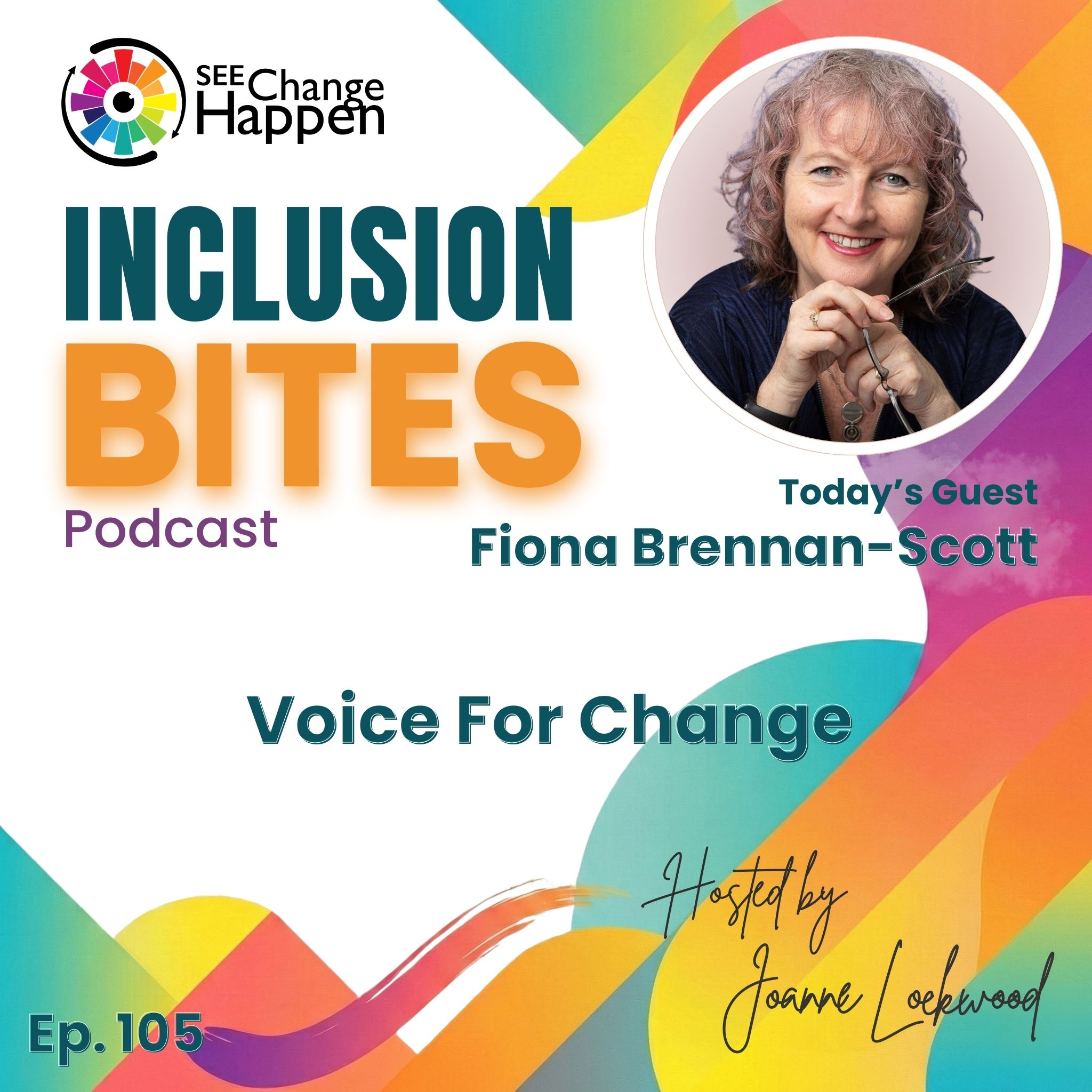
This episode explores the transformative power of listening, speaking authenticity, and the nuances of effective communication with Fiona's journey from drama teacher to voice coach, underscoring the significance of inclusion in every conversation.
In this episode of Inclusion Bites, Joanne Lockwood speaks with Fiona Brennan-Scott about careers growth confidence.
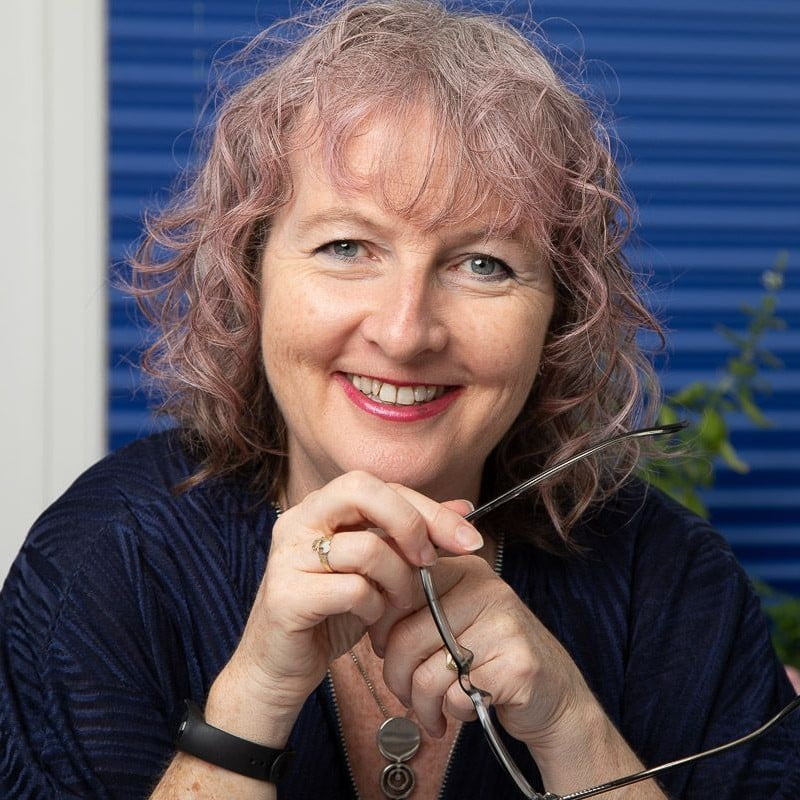
Hello, everyone. My name is Joanne Lockwood and I'm your host for theInclusion Bites podcast. In this series, I've interviewed a number ofamazing people and simply had a conversation around the subject ofinclusion, belonging and generally making the world a better placefor everyone to thrive. To join me in the future, then please do drop mea line to jo.Lockwood@seechangehappen.co.ukThat's S-E-E Change Happenn dot Co dot UK. Of course,you catch up with all of the previous shows on iTunes, Spotify and the usualplaces. So plug in your headphones, grab adecaf and let's get going. Today is episode105 with the title Voice for Change and Ihave the absolute honour and privilege to welcome Fiona BrennanScott. Fiona is a trainer, coach,speaker and author of BreathtakingCommunication. When I asked Fiona to describe her superpower, she saidshe can identify the strengths people have with their engagementskills and key changes that will betransformative. Hello, Fiona, welcome to the show. Hello,
Fiona Brennan-Scottguest
Joanne, and thank you for having me here. Absolute pleasure. So,
Joanne Lockwoodhost
Fiona, voice for change, how does thatresonate with you? I love the description. Thank you very much.
Fiona Brennan-Scottguest
I say in my book that our voicehas got a voice with a small v and a capital v, becausethe small voice is the physical thing,what's made in our voice box. But voice with a capital vis our identity. It's who we are. It's whatdifferentiates us from all other living creatures,because we get to use words and language toexpress ourselves and put ourselves out there in theroom. Oh, that's beautiful. I think that's really
Joanne Lockwoodhost
beautiful. I can relate. So much voice isso much more than just the noise and the soundand the waves that resonates in our ear. As you say,the identity expresses our happiness, our sadness, ourpassion, whatever it may be. I think that's truly beautiful. It also helps
Fiona Brennan-Scottguest
explain why there is so much fear around public speaking,because to put our identity out into a space is anextremely vulnerable act and we take speaking forgranted because we've been talking all our lives and we thinkeveryone should be able to do it. But actually, to stand up andspeak is sharing our story, our thoughts, ourfeelings with the world, and to be rejected, to bedismissed is an extremely painful act.So when I work with the client, I holdthe preciousness of that identityand seek to honour it in my work with them. So Iconsider it a very. It's almost emotionallysurgical to do that work and to help them have thecourage to grow and change and dare to achievetheir. To accomplish their full. Because when you are public speaking
Joanne Lockwoodhost
or standing up in front of a group, whether you're a leader,briefing the team, state of the nation talk, or leadinga project, whatever it may be, or professionally speaking, you areeffectively putting yourself out there. Your ideas and peopleare going to judge you. We're very judgmental species, aren'twe? How you look, how you sound, let aloneway we think and what we're telling people. There's a whole judgement there. Andif you're not used to that, that fear, and it's a real fear,isn't it? That of being judged or rejected, thatall comes into this public speaking error, doesn't it? Yes. And my
Fiona Brennan-Scottguest
mission is to level the playing field, because there's onlya small, select group of people, particularly in theUK, that are stepping up and speaking out,especially in government. And what if we could level theplaying field and give everyone the courage, whether it's gender, race,whatever identity group they belong to, to beheard and not fear the rejection? I thinkwe would have a true democracy wherewe would have people representing us who are goodpeople. That's an interesting saying. Talk
Joanne Lockwoodhost
about good people. Are people fundamentally good or bad?I think there's a perception that people are fundamentally bador out for themselves. But studies I've seen show that peopleinherently believe they are good people. Everyone believes they're a goodperson from their own perspective. No one wake up and say, I'm an evilperson, would they? They all believe they have a perspective, that they're doinggood for some reason. I think it's about capacity.
Fiona Brennan-Scottguest
I think we have the capacity for both. And we're shaped byour environment, by who loved us and how we wereloved or didn't love us. And so there's so manyinternal. There are so many externalfactors that influence who we become. Andgood or bad can be very moral judgments, so they're notnecessarily helpful. Yeah. So when you're working with your
Joanne Lockwoodhost
clients and your coaching, what are the key challenges? I mean, we talked about this,overcoming the fear, but what are the key things that hold peopleback fundamentally in their communications and their engagement styles?
Fiona Brennan-Scottguest
It's such a wide variety. Joe. I'm veryfortunate to work with a very diverse group of people.And if I think about the last couple of years,often it can be accents where people feel thatthey're not heard because of their accent. Andinterestingly enough, the people that really need the help aren't in the roombecause that's about audience perception and often aboutaudience education. So it can be about giving the personthe confidence to challenge people who aren't listening andto set people up for good listening and to challengewhere people are discriminating. And you can't do that without confidence andwithout the affirmation that I often give people tocelebrate their accent and understand that it's very mucha part of their identity to get back to what we openedwith. It's also across the board. I would say one of the main
Fiona Brennan-Scottguest
challenges, about 80% of my client base are inSTEM science, technology, engineering, medical,manufacturing, accountancy. And theyhave gravitated towards what they love, whether it'sfigures, engineering, scientific stuff, andthey've become really good at that. They've studied it, they are subject matterexperts. But actually, as they are promoted and I workwith either current or aspiring leaders, they find thattheir main job is now not about the thing that they studied, butabout leading people who are doing that and theyrealise they don't have those communication skills toeffectively engage their audience, their stakeholders,whoever that is, whether it's a conference, whether it's ameeting room and putting a presentation together and deliveringthat is something that terrifies them. And Ithink it's almost worse for someone who's a subject matter expertbecause they've become really comfortable and really confident inthat expertise and now they're feelingincompetent because they're not getting their message across.So most of my audience, most of myclients need the tools and techniques to close thegap between being competent, beingvery competent in their field and being confident atcommunicating that. Yeah, because there's a huge gap between
Joanne Lockwoodhost
knowing your stuff and being able to communicate that in a way wherepeople can understand it, resonate with it, take something away from it,take action themselves. Yes. And interestingly
Fiona Brennan-Scottguest
enough, the people I don't draw as clients is the people who lack selfawareness, because there are an awful lot of people out therewho aren't aware that they're not good at that. Andsadly, they're in front of meeting rooms andaudiences because of their expertise, but they're noteffectively communicating and it becomes the job ofthe audience to decipher and interpret the key message.And that can be quite exhausting if theperson speaking isn't making it easy for them. Yeah, you got
Joanne Lockwoodhost
to be able to turn complex informationinto bite sized chunks that I always saythat a Daily Mail reader could understand. The average age, or I believe a DailyMail reader's reading age is about eleven or twelve years old. So you got totry and remove the buzzwords remove the acronyms. And again, you talk about the selfawareness. If you're not aware that you are falling into lingo andjargon and assuming a level of knowledge,then that's where you leave people behind. You're not always speakingto your peers, you're speaking to educate, or speaking to get a thoughtacross. Yeah, I find that hugelychallenging. It's about so much more than the words, though, Joe,
Fiona Brennan-Scottguest
because a lot of how we communicate is about ourbody language, about making eye contact.It's a dance between the audience and us,where only one party is speaking, but we can listen andwatch and have that conversation with our audiencethrough our engagement and picking up on their bodylanguage and their facial expression, but alsohaving body language and facial expression of our own that weare perfectly capable of doing in a one to one. But whenwe get to stand in front of an audience, something happensand we do unnatural things with our body and voice.So I would say that those words are important. Theyare essential. The arc of our talk, theuse of stories and data effectively is very important.But our body language and our tone of voice, how wemodulate our voice is key in terms of that engagementand that dance. It's the rhythm, it's thetexture, it's everything else above andbeyond the words themselves. Yeah, it's how you make people feel, isn't
Joanne Lockwoodhost
it? We always say this adage, people remember the facts and figures,but they always remember how you made them feel. And it is. It's aboutgenerating that connection, that engagement, thatemotion, all those kind of things is a well knownphrase. Facts don't change people. I can tell you allthis data, I can tell you not to smoke, I can tell you not todrink, I can tell you not to drive too fast, and you'll just dismiss thatand go, yeah, but I can rationalise that I'm safe,it'll be okay for me. But until you get the feeling of those figures andthe impact it can have on you, you'll never take action. And that's, Ithink, what academics and people are trying to communicate, bigticket things like the government and all this, they've got to findthat a feeling, haven't they? Yes. To quote Simon Sinek,
Fiona Brennan-Scottguest
emotion trumps reason, and that happens everytime. And in terms of the work that Ido, a lot of my clients will be very cerebral.And when we're very cerebral, our voice is in theupper resonators. And if we're not vocallyconnected with our gut and our breath isn't connected withour gut. We're not going to connect with the gut of ouraudience, which sounds a bit hideous, but basicallythe gut is the emotional centre of the body. So wehave millions of neurons in our brain, but we have hundreds of thousands ofneurons in our gut. And getting the breathso that we're emotionally connected and our words areemotionally connected means that we can really engage ouraudience. And that below the waterline workis very much foundational in terms of what I dowith every client. So we can all do the. Well,we can read about and do work on presentation andhair and makeup and all the outward.Not trivia, but it's external, it's above the waterline.But the real work happens below the waterline. The foundationwork, the posture, the breathing, the vocalcontrol, breath control and being truly engagedwith yourself. I like to use an analogy of a cello ora double bass. If we were to say that playing a cellois about the strings and the bow, that's only half thestory. The real story is the craftsman whohollowed out that wood, who created aninstrument that resonates. And when the bowstrikes the strings, that whole instrument resonatesand beautiful sound fills the space and our body hasthat capacity. I just related to the story. You're saying
Joanne Lockwoodhost
there. I went to see the film the colour purple yesterday,the modern one, again, Steven Spielberg was involved withit. And I could spend all day talking to youabout racism. I could spend all day talking to you about patriarchy andmisogynistic behaviour and how black women are doublyoppressed through racism and through oppression, through misogyny.I could tell you that all day and it would not resonate. You go, yeah,whatever this film, it took me on this journey.I went through anger, I went through pains,compassion, happiness, joy, hope,disillusionment. Hopes and dreams were dashed andthen rebuilt. I was taken through all these emotions, through story, throughmusic, through engagement. And at the end of it, I came out and go, Inow understand racism. I now understand into the intersectionof misogyny against black women in a waythat I had never been able to describe it before. And I will now holdthat with me for the rest of my life, because I've really engaged with it.So the power of that story and that journey it took meon transcended two basic facts. That'sall it was. And it explained that to me in a nutshell,in a way, that I was crying at the end. I was absolutely crying myeyes out. It was so engaging. So you're right, it is around how do wecommunicate a simple or one thing or two things that youneed to get across in a way that people can resonate with that and takeit away and take action. Yes. And I had a
Fiona Brennan-Scottguest
very interesting conversation around story withsomeone in the last year who looked at me andsaid, you like to tell a story, don't you? Andsadly it was a criticism, not a compliment.And I thought about it and a month later wehad another conversation in which I'd been atthis meeting and I decided to justsay very, very little and to see whatthat played out like and just observe. And afterwardsthe person said, oh, quite a patronising person said,you did so well. And I said, well, Iactually had a think about what you said and the challenge for meand in terms of inclusion, Joe, I'm the only nonenglish, non privileged christian person in the group,so I'm different on three levels. Andalthough I am relatively privileged and I said, you know, I had tothink about what you said about stories and the problem isI'm irish and irish people love a goodstory. And sheoh, ok. And I said, and the other problem is I'ma. You know, Jesus was the beststoryteller. He just told the best stories ever.So I guess culturally and in termsof my faith, I'm just addicted to stories andI really like them. But it was just sointeresting to think howothering people can be done in such a subtleway. But actually we need to embrace ourstory. We need to embrace who we are and realisethat it's okay to be who we are and to live that.
Joanne Lockwoodhost
I used to run an it company and I was always usinganalogies, metaphors, stories, whatever it is, to illustrate points. Andmy ops director came up to me, said, I love when you say that.It's so colourful. I can picture that in my mind,the way you explain that with this metaphor, this story, I neverrealised I did it. But the more I think about it is because I thinkvery visually, I think in pictures, I think in not just pictures,full action movie in my head, I can playout an entire day ahead of me, imagining the entireday and putting everything in boxes and from the right from packing my handbag toputting my coat on so I can go through this checklist and I can doall this through a story in my head. People talk aboutmemory, these people who have huge memories, they invent a storyaround to remember things. I create a story in advance of what I'mgoing to be doing and I act out that story for the day andamend it as I go. So when I'm thinking aboutrecalling information, I've always associatedwith a story. A feeling, a metaphor. Something's inthere. So when that feeling pops into my head, I've gotaccess to that story. And it comes straight out as my way oftranslating my brain storage out to theworld through this story that I've told. I may not remember theexact words, but I remember the story around it. And then thewords pop out. So I think, for me,it's something I never realised I did until now. As a professionalspeaker, I'm on stage and someone asks me a question or somethinghave happened, or I'll suddenly say something and then ping. A storypops into my head. And suddenly the story gets woven into what I'm saying outof nowhere. And people alwayssay, wow, I loved how you wove stories into that all the way through,because it makes it so much more interesting, doesn't it? A story is a very
Fiona Brennan-Scottguest
economical way of communicating. I mean,poetry is the ultimate economy, but it can beobscure and it can take time to unpack. So a story is a beautifulin between way of economising. If you think aboutyou going to see the colour purple in 2 hours, youunderstood a lifetime and generations ofproblem in one evening. So itis incredibly powerful. And don't get me wrong, I do get people who lovethat storytelling side of me. But it was interesting towatch it in the exception rather than the rule, where somebodydidn't really appreciate that.
Joanne Lockwoodhost
I get it completely. I used to run it companies.I've been in it, well, probably five, six ofmy life, if you like. My adult life, that's my career. SoI've got very used to being very black and white, very onoff, very binary about things. Work doesn't work. I was anelectronics engineer. It either worked or it didn't work. So
Joanne Lockwoodhost
you get used to speaking to people in that sort of language.And then when someone can't see the fault in acircuit, because they haven't be able to divide the circuit in twoand work out whether the fault is left or right, of where you've dividedit, and then you do left and right again, left and right again, till youget down to a few millimetres wide. And it has to be in that line.So I think very clearly about half splitting and narrowing thingsdown. But that doesn't work for people who don't have that logic. So you haveto be able to step back and tell the story around it. Okay, we haven'tgot a picture, but we got sound. I can hear you, but Ican't see you. That must mean there's something wrong with the vision. Okay, so what'swrong with the vision? So we can ignore everything to do with sound. We justlook at the vision. So you have to just describe it differently andtell that story. It's a real challenge to say you workwith people who are leaders and experts intheir field, but not necessarily develop theircommunication style and skills and voice, if you like. Yes,
Fiona Brennan-Scottguest
and they are. I'm so fortunate that I've worked with fabulouspeople over 23, going on 24 years andsuch a wide variety of disciplines, and evengetting to help people with wedding speeches. Joe, which is alot of. Did. My
Joanne Lockwoodhost
daughter got married two years ago and I had to write her speech and Iwasn't too daunted as a professional speaker, but I was kind of moredaunted the fact that everyone knew I was a professional speaker. So I had tobe doubly good and humorous, entertaining, not too embarrassing,taking it to the edge, not over the edge. There's a whole lot of dynamicsin there, isn't that? You got to play with. There's a double whammy, because one
Fiona Brennan-Scottguest
of the toughest audiences is the audience that has knownyou all your life or who knows you personally. So you had the doublewhammy because you had that, plus the fact that peoplehad very high expectations. And I think that is one of the problemswith public speaking, which I've touched on already, isthat people think, if I can talk, or even if you're verytalkative, you must be able to speak, butthere's quite a difference. And, in fact, in someways, introverts make better actors because they'rebetter at inhabiting a character, because they'reused to seeming less in public,because there's a lot that's going on beneath the surface,whereas an extrovert has to, and I speak as anextreme extrovert, has to shelve a lot of themselves anda lot of what people see first before they becomesomeone else. Yeah, I've noticed that on chat shows. I'm a big fan of the
Joanne Lockwoodhost
Graham Norton Friday night show on the BBC in the UK, andyou see famous actors. Tom Cruise, I think, is agreat example that I always think about where you put him on asofa and you start to have a conversation with him and he doesn't seem tohave anything about him. You suddenly realise that everythingyou think or you know about Tom Cruise is actually aPersona of a character he plays. And when you see these peopleoff script just being themselves, many people don'tnecessarily live up to that belief you have of them for the charactersthey play. I always think about some of the actors,and I'm the same. I'm a raging introvert, really. Even thoughpeople would say I disguise it well. I really want tohide after events. I want to get out there, do my stuff and run away.I don't seek the limelight in that way, but I can put myselfinto that zone and act in an extroverted wayor an outgoing way or an engaging way.I think you say it's a myth that everybody who gets on stage is anextrovert. A lot of us, the cohort, professional speakers, Iknow there's many of us who sort of all hide in the corner after usgoing, thank God that's over. Can we go home now?It's a real challenge, isn't it, to put yourself out there, give a part ofyou. That's what you do. I will say I'm ripping a part of me outof my chest and giving it to the audience. And if I don't come offstage absolutely exhausted and given everything,I can't hold something back from the audience because that's selfish.I got to give everything I've got. It really drains you after a performance.So huge respect to actors or people who dostage shows day in, day out, doing two performances a day. And that mustbe really exhausting to give that part of you all the time. Yes, it
Fiona Brennan-Scottguest
is. And I think I also feel more exhaustedafterwards. I'm always pumped up and excited beforehand,and afterwards I feel quite drained. One of the biggest challenges I haveis that my superpower, to use the wordyou used at the start, is enabling andempowering other people to shine. Somy preference is to be a director in a person'slife rather than to be the actor myself. Sogetting up on a stage and doing a keynote for meis a challenge because I'm talking about the thingthat I want to help other people to do, but being that personmyself. So it's quite a contradiction,really. And because I'm an extrovert, peopledon't find it quite difficult to believe and understandthat that's a reality. But it is. It'sso rewarding. For instance, David Duffett, who won lastyear's speaker factor, I had coached him and just thejoy of watching him up there doing his thing and being brilliant.And the year before with Hilary Briggs, exactly the same.Just the joy of seeing them accomplishtheir potential and smash it and go. I was a part of that.I helped release. Well done. Thoseexquisite abilities. That's my job. Well done.
Joanne Lockwoodhost
They both did a fantastic job. I mean, if anyone listening that's not aware,we're both members of the professional speaking association and we have an annualcompetition for emerging speakers called speaker factor. And it's allabout people who are stepping out their comfort zone to deliver a five minutetalk on stage in front of their peers and being judged andmarked on various criteria. Engagement,stagecraft, all those things are part of it. So, yeah, it's a dauntingtask. I've taken part in it many years ago. I did really badly at thetime, but, yeah, it is a trial in front of yourpeers, isn't it? And a real character building exercise. Yes. And the
Fiona Brennan-Scottguest
economy required to say somethingreally impactful in five minutes is a huge challenge.20 minutes is easy, but five minutes,that's hard, that's tough. I did my initial kind of
Joanne Lockwoodhost
evolution at toastmasters, and Toastmasters was always about the five minutetalk, how to get in, come up with three points, closeit, summarise and get out before the red light cameon. It was always drummed into me. So, as you say, fiveminutes can be easy. 15 minutes is kind of that middleground where you got loads to say, but you haven't got too much. You haven'tgot too much time. I find that if I'm not careful, 45 minutes toan hour is like, push the button, I'm in flow and it justcomes out now. So, yeah, 45 minutes to an hour is easier. But, yeah,15 minutes, 1015 minutes is that middle ground where it's kind of.I haven't got time to explore all this. I've got to really kind of summarisemy point down here. So the ted 18 minutes is
Fiona Brennan-Scottguest
perfect. That's the sweet spot. So one of thethings I do, which a lot of people probably don't know,is that I preach. I don't like the word preaching.It sounds very preachy, but Ido that. It's a talk at a church from time totime, about every six weeks, andI aim for 15 minutes so that it's 18 minutes, which isprobably something I could pass on to your listeners, is thatyou need to allow 20 minutes, 20% of your time,to be empty in your practise, because when you getin front of a live audience and you're doing that beautiful dance withthem, your pace, your pause, the dynamic of how youspeak changes and if you've been given a set amount of time and youhaven't allowed 20% for that, you're going to runover. And it's exquisite to have therelaxation of that capacity to justgo with it and make it this communication in front of youraudience and with your audience. Because there are few thingsworse in public speaking than someone who rushes tosay all they have to say in the hope that they get their messageacross and say everything they want to say in the time they've beenallowed, when in fact, it should never be about that.Because as an audience, our processing speedhasn't changed. With technology, we may be able to doeverything faster, but we still process and absorbinformation at a certain rate. And if the speaker doesn'tdeliver at that rate, we're going to lose them. Yeah,
Joanne Lockwoodhost
I sometimes find. But I'm on stage and I'm. I don't know, in themiddle, at some point in the talk, I could feel myselfwanting to close at some point. Maybe it's the audience,maybe I feel like I've given them enough at this point and I'vegot them engaged and I think, well, hang on a minute, if I go aroundthat cycle again and introduce another topic, they're not ready for that. I think youjust get that feeling sometimes. You think, actually, now is a good time to closethis and re summarise, go to Q A andnot overlabel it, isn't it? Label it. And I think I found that over thetime. I was doing a talk in Newcastle a few years agoand I had. I reckon I was probably a third of the way. No, twothirds of the way through the slides. And I thought, no, that's enough,that's enough. I know what slides come in next and I just treated it asa conclusion. And so I re summarised and said, right, let's getA-Q-A. You've been a fantastic audience and nobody knows whatyou're going to say next. Nobody knows what you're going to do, what slidesare missing. So you just go to close and you can do that whenever youwant and don't be afraid. And as you say, people try to. Cram too muchin. That's beautiful, Jo, because that sounds to me
Fiona Brennan-Scottguest
like you were connected with your emotional core, whereyou had this instinct, and you were also tuned into the room and you weretuned in to the emotional response and theconnection with your audience that brought you to that place. And soyou had the courage to be unselfish and to bring things to aclose, and no one is going to criticise youfor being too short. I've never heard it happen. And alsothe Q A is a gift to the audience because you know that everythingyou say at that point is going to bespecifically addressing an area of interestfor some of the audience. And I believe in doing thesame. I think an extended Q A is always adelight because it becomes that conversation and it has thatdynamic and it changes things up. And when youknow your subject, your topic, when you are anexpert, you know that nobody can ask you a question that youcan't answer. And actually, if they do, you're absolutelydelighted because it's a learning opportunity and you can say, I haven'tbeen asked that before and I haven't even thought about it.I'm going to go and find that out and come back to you. Or youjust think on the spot and come up with an idea and then say, whatare your thoughts? Have you ever thought anything aboutthat? So that's a delight. I don't know if you'refamiliar with my book, but I'm also a trained time tocertified coach. So I trained in time to thinkabout six years ago. And the strength oftime to think is very much about presence and listening.And I've written a chapter in the book called considercreating a thinking environment. So what ifas a speaker, we created a thinking environmentwhere the ten components of a thinking environment are present?So an environment of encouragement, a place where we acknowledgefeelings, a place where place matters, and places about howwe show up in our appearance that says to the other person, youmatter, but also a place that acknowledges the challenges that theenvironment might present to the people there. A place where there'sdiversity and equality, a place where there'sease and attention and appreciationand the other components that I won't rattle off.But what a dynamic environment if we can create a thinkingenvironment where people are learning. I mean, why wouldn't you do that?
Joanne Lockwoodhost
Yeah, the word that's jumped into my head as you're talking there isrumination, the ability for people toruminate on what you just said. You have to buildin pauses or moments of reflection, rhetoricalquestions, whatever it may be, and allow it to sit with the audience.And you as a speaker have to be comfortable with that silence, or have tobe comfortable with holding that stage, allowing people toruminate on that before moving on to the next point orsegueing, bringing that with you. I think we want tojust hit people sometimes like we're banging peoplewe're driving content. Next slide. Next slide. Next slide.But the ability to pause, reflect, scanthe room, just watch people's reactions. You can see people nod or makingnotes. So it's allowing people to do that without bombarding them. And Ithink what you said there is the key. There is. It's almost likevirtual listening. You're not actually listening to what they're saying, but you'retrying to listen to what they're thinking and where they are with you,so that you're judging how you're delivering bywhether they're ready for more. I think that's part of it as well, isn't it?
Fiona Brennan-Scottguest
Yes. One of my favourite quotes is during thepause, the meaning goes on. And that was shared withme by Joan See, my first drama teacher in South Africa.And last year I heard a quote from Dubusi whichsays, the music is what happens between the notes.And I think that concept of silenceand time to think, time to processis just exquisite because it shows respectfor our audience, doesn't it? Gives them time to consider.That's powerful. Yeah. I remember seeing a professional
Joanne Lockwoodhost
speaker at one of the speaking events andshe stood up. She gave us, I think it was 40, 45 minutes talk. Atthe end of it, I thought to myself, she's only actually really told usone thing. And see, took a whole 45 minutes to talk about that onething. And it's beautiful because it was presented fromdifferent angles. There were stories, there was whys in there. It wasn't overlycomplex. It would just take away this one thing about how people interact.And it was such a simple thingand it wasn't overly complicated, but I had time to explore that from multipledifferent angles. And I thought it was a real good example of not trying todo ten things. Just get that one point,land it well, weave in all the aspects toit. But that's your takeaway, that one thing. Oh, that's brilliant. So youcan do it. I've also been known, when I've done a talk
Fiona Brennan-Scottguest
at church, to finish up a few minutesearly and just say, I'm just going to allow a fewminutes. I've even asked a musician to just gently play the guitarfor a few minutes, to allow people sit with theirthoughts and make a note or draw a picture.And that feels right. Sometimes it's almostlike having a bubble bath with a message,where you get to sit and soak and enjoy andappreciate and make it your own. And I think that'swhere the respect comes in, is because you're delivering a message,but your audience needs to make it their own andapply it to themselves. And one of thethings I say to my clients is, start with the end inmind. Start with your audience. What do you want them to think,feel and do as a result of your message? How do youwant them to respond? And if you keep that front and centrefrom the very moment you've been asked to deliver thattalk, you won't lose your audience and you will gain their respectand you will impart something of value. Andtime is so precious. It's the only thing that's finitein terms of currency. If you're going to take 20 minutesor 45 minutes of people's time, make itworthwhile, add value to their lives. Yeah, I
Joanne Lockwoodhost
do use, think, feel and do. Those are the keythings for me. And also focusing on the takeaways. Think,feel and do. But also, what's the real nub or the essence of why I'mhere? And write the talk,or think about the talk backwards for the moment, people leave. Wheredo you want them to be? Recognise that they're busy people, that if they're notcareful, they'll move on to the next thing immediately. And thenwhatever you've said will go straight out of their head. So you got to tryand leave them really clear instructions. I want you towrite this down, or if you take nothing else away from today'stalk, take this away. So you got to find that essenceof the thing you want it to remember. And, yeah,it's a skill to think that way. And often you start at thebeginning or the PowerPoint slide or all the information you want to givethem without distilling it down to those that nub orthe real crux of it. And also the opposite can happen
Fiona Brennan-Scottguest
because sometimes we can extrapolatewhere one word or one phrase the speaker sayssends us off on a tangentbecause of the place we're at in our lives or what we're experiencing,we can go off on our own tangent, but actuallythe speaker has facilitated that. Soit's not holding on too tightly tothe impact that we're going to have, but actually having an idea of theimpact we're hoping to have with our audience.
Joanne Lockwoodhost
Yeah. And I think some of that you get fromnetworking with the audience. After you, you listen to the feedbackor people always want to say, oh, wow, I loved you. That was brilliant. Ireally love the way you said this, or this bit stands out for me andyou come away going, wow, I didn't realise that bitwas the impactful bit, then you realise that when people keep telling you thesame thing, or that bit, that bit, it's like, right, I have to rememberthat chord and put that in every tune sort of thing. It'sthere, isn't it? Isn't that the power of inclusion, though? When
Fiona Brennan-Scottguest
we're inclusion, we give people permission to do thatas a speaker because we've recognised upfront thediversity and equality of our audience.And I love the time to think. Definition of equality.It's that even if we have different roles, moresenior, more junior, even if we're different agesand have different life experiences, when it comes to our thinking,we are equal and equally, and what we have, our thoughts areequally valuable. Yeah, I talk a lot about
Joanne Lockwoodhost
that and around perspective and opinions, and weall have a perspective, we all have an opinion, we don't have to be rightor wrong, we just have to have our view of the world. Andrecognising that other people have their own view of the world, their ownperspectives, their own opinions, is healthy. And Ithink we too often want to clash on arguingabout outcomes rather than perspectives. If we can understandwhy someone thinks something or how someone came to that conclusion,or their lived experience that led them down that path, isn't thatenriching to learn about people in that way? Yes. And if we
Fiona Brennan-Scottguest
embrace difference, we will spend as much time as possiblearound people who think differently to us and who are asdifferent as us as possible, because that's the only way we're going togrow. Yeah. I did a talk the other day in
Joanne Lockwoodhost
London to a group of marketing professionals and I was talking to one ofthe delegates at the end.He was a man, he was kind of in his probably late50s, but he said to me, how. How do I have conversationswith people who are. Who are different? I'd be reallyworried about offending somebody. I'd be really worried about drawingattention to an attribute in the example he gave is, whatif someone in the audience I was having a conversation with only had onearm? What do I do? Do I go and say, sorry about your armor happened to your arm? I said, well, actually, why don't you have aconversation as if they had two arms or if they had no arms, whatever itmay be, have a conversation as a human being. And then ifthat person wants to share with you about their arm, they will.If they don't, then it's actually about your curiosity, not about them.It's all about you. So you got to separate your curiosityand what gain do they get out of this by explaining theirlife to someone who is curious? So I said, you just got to haveconversations, and if you have that emotional intelligence and that culturalintelligence and compassion, then you'll be able to have betterconversations. But to focus on an attribute of somebody and wantto be curious about it is quite insulting. It's almost likeit just reduces them to that one thing. Without seeingthat, you could spend all day talking to Stephen Hawkinabout his wheelchair and his voice synthesis, or you could talk to him about theplanets and his theory of the universe. He'd much rather talk about theuniverse than his emotion neurone disease. So, yeah, it's kindof working where people are in that conversation, isn't it? That's
Fiona Brennan-Scottguest
beautiful. Yes, absolutely. You're supposed to say something else there so I could
Joanne Lockwoodhost
keep the podcast going. I've never hit deadend of this podcast. Remember my quote during the
Fiona Brennan-Scottguest
pause, the thinking goes on, becauseI know it doesn't work that well for a podcast. But in terms of aconversation, it's always good to be comfortable withsilence. And I think that's something that people are very uncomfortablewith generally, because we live in a society of interruption, don't we?
Joanne Lockwoodhost
I'm just practising the silence.
Fiona Brennan-Scottguest
Your sound has gone, jo. Oh, I can hear myself. You can't hear
Joanne Lockwoodhost
me. Oh dear. We're practising silence even more now.I'm going to tell you a story, see if you can get back to this.And one of the things I find is that when we'relistening is kind of an underrated skill. And I think what happensis when we're communicating, we're oftencommunicating to change someone's view or to tell them our viewor our perspective. How many conversations do you have that don'tinvolve telling somebody what you think, oh,I love this chicken. Did you see that on telly or that filmI saw the other day? Or. The conversations we have tend to be abouttelling somebody else our opinion. And what happens then iswhoever's on the other end of that conversations tend to react with, well, myview is, or app didn't like that. Or no, actually, I prefer the salmon.I've had the chicken. We get into this debate and itbecomes a perspective thing, and we often want to fixpeople. If you tell me that you're not feeling great today, you've had a bitof a tough day, you were running late. I'll start talking to you abouttime management, or how can I help? Or can we back the pressure off. Sowe always want to fix. So I tell you something, you either want to argueback with me or I want to fix you. But we never hold that spacefor just listening and letting it ruminateand just hearing people. You don't need fixing. You justwant someone to listen and maybe smile, maybe turn thehead, tilt their head slightly, maybe give you a virtual hug, whatever it maybe. But you don't need me to fix you. When I transitioned from being a
Fiona Brennan-Scottguest
speech and drama teacher to a voice and speechcoach, I looked for the least prescriptive coachingmethodology, and I found it in time to think.And that what you've just talked aboutdescribes why I chose it, because it was aboutlistening not to understand, listening not to respond, butlistening to ignite. And so the openingquestion in time to think is, what would you like to think about, andwhat are your thoughts? And the principle of time to think is that you'relistening generatively to see where the person's thinkingwill go and trust where their thinking will go. But oneof the aspects of contracting is I will not interruptyou, even in silence, because sometimes we do some of ourbest thinking in silence, and I will not give you my perspectiveunless you ask for it. And this acknowledges the fact thatwe are the authors of our own best solutions,that I can have ideas, I can have suggestions, butactually, you have got the best possiblesolutions and perspectives andideas, because yours are going to come outof your life, experience, your perspective, your world,and you have the solution. And all you reallyneed is someone to hold the space while you discoverthat. And we spend so little time ruminating,to use the beautiful word you use earlier, to think,to explore. And there's something generative about doingthat with another person. When someone listensand holds the space for us, it becomes very creative andgenerative in a way that if we're on our own,we're not as good, I guess we're not as selfcompassionate as the patience and compassion anotherperson can show when they're holding that space for us. And it'sabsolutely exquisite what happens in those space.
Joanne Lockwoodhost
Someone shared a technique with me that they use, or they'dheard used in a company, and it's called rubber ducking.So the concept is that you can solve most of your problemsjust by saying them out loud and expressing them, so they becomeout of your head. You formulate them into thoughts that come out of your voice,out of your mouth. So the concept of rubber ducking is thisorganisation had this rule. You weren't allowed to ask for help on a technicalchallenge or whatever the problem was, unless you talk to the rubberduck first. So around the office, they put rubber ducks. Everyone used tobring their own little bath time rubber duck in different characters and whatever, they putthem out in the office and you'd see people going up and standing in frontof the duck, having a conversation with it. And then most of them go,solved it got light bulb moment. They're going to sit down and get on withit. And sometimes when you're talking to someone who's justlistening, it's that active thought and I thinkI do these listening exercises in one of my workshops where you have fiveminutes each and you're not had to say anything apart fromthank you. Please tell me more. That's your only response ifthey freeze or stop. And what you end updoing is you end up going very superficial, and then you startgoing deeper and deeper with each iteration where you got to try and think ofsomething else. Then more thoughts pop into your head. So by the end of fiveminutes, you've really gone deep on this. And just allowing someoneto just do that without feeling, oh, that's the uncomfortable silence,or, I need to fix you, or I need to solve that problem. Just. Thankyou. Tell me more. Thank you. Tell me more. And you just bring it outand you bring it out at the end of it. The feedback I get is,wow, that was so cathartic. That was wow. I've never gone that deep. Wow.Never thought about that terms. And when things will pop into my head that I'dnever thought about before. So again, not having to respondor not needing someone to respond allows you to do that rubberducking, if you like, and just talk to the ether and just keepgoing. It's like that next 5 miles on thetreadmill. The next 5 miles are the ones you don't want to do, butsuddenly you get to end if you go, wow, that was so productive. You just
Fiona Brennan-Scottguest
reminded me of a habit I have. So I've beenmarried for going on for 32 years to the samehusband, and I often solve problemsjust by saying aloud. You can just start sayingthem aloud and I solve them. So he's my rubberduck. You've just made me realise I'm married to arubber duck. But it alsoreminds me of, and I don't know who the author of this is, but thefive levels of why. So if you ask why fivetimes, you'll get to the truth. So if someone says, I'm sorry, I waslate I missed the bus. Why did you miss the bus? Oh,because my breakfast conversation ranover. Why did your breakfast conversation? And then you get to thetruth. And when I started studying time tothink, I was reminded of that. Butit's far gentler, because five levels of why can sounda little bit like an interrogation. Yeah, it can.
Joanne Lockwoodhost
Simon Sinek's book start with a why, isn't it? Is it Simon Sinek?Yes, that's all about the why. And I challenge people when I talkabout diversity. Inclusion is you've got to have your own why. Why does it reallymatter to you to think more diversity, more inclusively? Why does it matter? Because ifyou don't understand your why, it will be inauthentic, it will be superficial,it won't be sustainable. So you've got to try and get it embedded into yourcore about why you believe something. I think encouraging people tothink deeply about that is important. And Iuse Chat GPT and one of the prompts I have is use thefive wise method to take an idea and then drilldown each one until you get to the essence of it right at the end.And it's a very good technique, as you say, to drill down to ideate.We can use problem agitate solution as another one, feed that into ChatGPT and it comes up with that sort of thought process. But I usethe five whys to try and drill down to the nub of it. So,
Fiona Brennan-Scottguest
in terms of why is inclusivity and diversityimportant? When I pivoted from being a speech and drama teacherto a voice and speech coach, I expectedeveryone on Harwell campus. I lived down the road in Harwellvillage to be my client because they're all inscience, technology, engineering, some manufacturing.And it took me five years to get my first client onthere. And I also thought I'd have amajority of females, because there is a lackof female representation in senior leadership and80% of my clients in the first two years were whitemales. I'd always had people coming to me, even when I was a speech anddrama teacher, through word of mouth. But when I startedjust doing that, I was delighted that I hadclients, but disappointed about their profile,because I thought, I'm not reaching the people that reallyneed the help. And obviously the people coming to me do need the help andI'm giving it to them. But actually, where is thediversity? And I really didn't know what todo about it, but I must have started doing something right. AndI think it's how I showed up on my social media, and innetworking I mostly use LinkedIn andI do a lot of networking because within two yearsI started measuring. I looked again. I don't like tomeasure, it's not really my strength. And I relookedat my client base and realised I had onemore female client than I had male clients. And I was getting arange of diversity that I hadn't before. And Ido think it seeps out through your skinand how you speak and people start hearing somethingthat makes them feel like your door is open tothem. But I don't know quite what it is now. I think it's all
Joanne Lockwoodhost
part of your personal brand, for want of a better phrase.I saw someone the other day talking about their chakra. It's all about that innerenergy that you have and that alignment, how it resonates,how people feel that you're their kind of person, whatever it may be.
Fiona Brennan-Scottguest
There'S a connection, possibly values. And invalues of lockdown, Michelle Mills Porter wasvery good at helping me identify mycore values. And through that I was able to put myvalues on my website. And I imagine that alsowas helpful. But I honestly don't think youcan fake it, because I don't think you can either. I don't know what Idid. I think those values are important. The authentic. You can't just
Joanne Lockwoodhost
put something on the website. I want to be this, I want to be thatpeople can smell out in authenticity. So it has tobe a core of you who you are, your core values, yourdrivers, your mantras. And people have to say that about you as well.So it's not just what you say about yourself, it's what other people say aboutyou. And I talk about this when we're talking about employers and recruitment marketingand their branding and stuff. Are you trying to recruit peoplewho into an organisation that you want to be, or are you trying to recruitpeople in an organisation that you are? So it's really important to try and havethat alignment between who you are and what you say you are andfix that first and not try and be inauthentic about it, and thenkid people in and go, actually, this is not the place I thought it was.You've lied to me. And then you just walk out the back door. So, yeah,it's about being very open. So the people you are dealing with, the people youare engaging with, are the people who want to engage with you because they alignwith you. And that comes down to that below the waterline stuff. One of
Fiona Brennan-Scottguest
my favourite quotations is from the little prince by Anton deSanto Zupare. And a fox says to the little prince,what is essential is invisible to the eye,and that's about authenticity and aboutcaring deeply about what other people maynever see. Yeah, there's another quote
Joanne Lockwoodhost
which I thought, I didn't know if you were going to go that way, butdon't get upset with a lion for eating the antelope, it's what lionsdo. You can blame the lion for being a lion,but it's what it does. We try and blame people for who theyare and sometimes it's just their behaviour and you can'tchange their behaviour, so you have to sort of mitigate it or understandit. And I think sometimes we get very upset when peoplearen't behaving in the same alignment as I amor we are, or the way we think. You just say, well, I can'trewrite your rule set for you, I just haveto hang out with other antelope. It's fine, I'm cool with that.
Fiona Brennan-Scottguest
Yes. It reminds me of. Did you see the crying game when it cameout in cinemas in the. It's an incredible film.I don't know how it would be now, more than 20 years, it mustbe 30 years later. But the crying game. ForrestWhitaker is the main actor and he tells a story ofa frog and a scorpion and they need to getacross a river and the scorpion can't swim,and he asks the frog to carry him on his back and hesays, you'll sting me. And he says, no, I won't,I promise. And they're going across the river and atsome stage, or maybe they're just on the other side, orthey've just landed, the scorpion stings the frog andas he's dying, the frog says, why did you do that? And he said, it'smy nature, it's what I do. I have neverforgotten. Very profound. Very profound. But you have no,it's a very south african expression to go, you have to.But I highly recommend the crying game. I actually do want tosee what it's like today and I can't say why, becauseit'll be a spoiler if I were to,but a very remarkable film and everyonein the cinema gasped at the exact same moment, whichis why it was a wonderful. You got me intrigued. Now I'm going to have
Joanne Lockwoodhost
to find it somewhere. I may have seenit. That was 45 years ago, wasn'tit? 80s? It's really scary. No, it
Fiona Brennan-Scottguest
must have been in the 90s because I saw it withAndrew when we were either dating or married. We got married
Joanne Lockwoodhost
in 87, so 37 years this year. Oh,
Fiona Brennan-Scottguest
wow. No, 1992. Your daughter was born.
Joanne Lockwoodhost
Fantastic. Fiona, it's been amazing. Wecould rabbit on and chat all day. I'm sure we could. It'sbeen fascinating. We've had a great chat before we went live and we're havinga great chat now and I can carry on. But how can peopleget in touch with you? It's LinkedIn website, your book.Tell us how we can find you. Sure. So, yes, I am active on
Fiona Brennan-Scottguest
LinkedIn because I made up my surname. I am the only FionaBrennan Scott on LinkedIn, so very easy to find. Mywebsite is bespoken.orgUk. My number is778-085-6043and my book is breathtaking communication. It'savailable, you can get a signed copy from me or youcan listen on audible, where I read thebook. It's also available on Kindle and fromAmazon. Breathtaking communication withbreathtaking as one word, which isn't a fantasticspelling, but it just looked better. And I'm a fan of Gerd ManleyHopkins, who was very good at making up words that didn'texist because they just sounded right. Yes. And you then
Joanne Lockwoodhost
know that you own that word and if anyone else uses it, they know theytook it from you. So I'm a great believer in creating your ownlanguage, as long as you explain it, obviously. So thank you. It's a
Fiona Brennan-Scottguest
pleasure. And thank you so much for your invitation. It's been a joy speakingwith you, as always. Thank you. Obviously, a huge thank you to
Joanne Lockwoodhost
you, the listener you've tuned in, you got this far. I'm really proud of you.Thank you. If you're not already subscribed, then pleasedo subscribe to keep updated on future episodes of the Inclusion Bites podcast.That's B-I-T-E-S. If you're loving what you're hearing, and I hope you are, please tellyour friends and colleagues. Share the love. I've got loads of other guests linedup over the next few weeks and months, and I'm sure you'll be equally inspiredby them. And of course, if you'd like to be a guest yourself, if you'relistening to this or you have any feedback, then please drop me a line tojo.Lockwood@seechangehappen.co.uk.Tell us how we can do better, if we can. Finally, my name isJoanne Lockwood. It's been an absolute pleasure to host this podcast for you today.Catch you next time. Bye.
From Fixing to ListeningThe Artistry of Inclusion in Voice CoachingCommunicating With Impact and Authenticity
Joanne Lockwood is joined by voice and speech coach Fiona Brennan-Scott to explore what it really means to find your “Voice for change” — not just the sound you make, but the identity you bring into a room.
Together they unpack why speaking up can feel so vulnerable, how judgement and fear show up in public speaking, and what helps people build confidence when they need to communicate as leaders or subject-matter experts. Fiona shares practical insights from her coaching work, including supporting STEM professionals to bridge the gap between competence in their discipline and confidence in how they present it.
The conversation digs into the craft of engagement: using breath and posture, telling stories that land emotionally, simplifying complex language, and creating space for audiences to think. They explore the power of silence and listening as an inclusive act, including approaches like “Time to Think” and the “rubber ducking” idea that speaking a problem out loud can unlock solutions.
Along the way they reflect on authenticity, values, and the subtle ways people can be “othered”, as well as how inclusive communication respects different perspectives and helps people feel heard. The episode closes with Fiona sharing how to find her work and her book, Breathtaking Communication.
“but actually, as they are promoted and I work with either current or aspiring leaders, they find that their main job is now not about the thing that they studied, but about leading people who are doing that and they realise they don't have those communication skills to effectively engage their audience, their stakeholders, whoever that is, whether it's a conference, whether it's a meeting room and putting a presentation together and delivering that is something that terrifies them.”
“It's about so much more than the words, though, Joe, because a lot of how we communicate is about our body language, about making eye contact. It's a dance between the audience and us, where only one party is speaking, but we can listen and watch and have that conversation with our audience through our engagement and picking up on their body language and their facial expression, but also having body language and facial expression of our own that we are perfectly capable of doing in a one to one.”
“And I think that is one of the problems with public speaking, which I've touched on already, is that people think, if I can talk, or even if you're very talkative, you must be able to speak, but there's quite a difference.”
“you need to allow 20 percent of your time to be empty in your practise, because when you get in front of a live audience and you're doing that beautiful dance with them, your pace, your pause, the dynamic of how you speak changes and if you've been given a set amount of time and you haven't allowed 20% for that, you're going to run over.”
“And so you had the courage to be unselfish and to bring things to a close, and no one is going to criticise you for being too short. I've never heard it happen. And also the Q A is a gift to the audience because you know that everything you say at that point is going to be specifically addressing an area of interest for some of the audience.”
“I thought, I'm not reaching the people that really need the help. And obviously the people coming to me do need the help and I'm giving it to them. But actually, where is the diversity?”
Transitioning from teaching drama to coaching in voice and speech, underscoring the value of listening and space in dialogue.
The significance of "rubber ducking" as a strategy for problem-solving and the art of posing effective 'why' questions.
Strategies for creating diverse and inclusive client relationships in coaching practices.
Mastering the art of timing and utilizing pauses in public speaking for maximum audience engagement.
Techniques for delivering impactful messages with clarity and ensuring that they resonate with and add value to the audience.
The essential role of emotional, cultural intelligence, and compassion in forging meaningful communication.
The effectiveness of storytelling in transmitting powerful messages and the influence such narratives have on audience connection and memory.
One thing to remember
The key learning from the "Voice For Change" episode is the vital importance of communication as a tool for inclusion, understanding, and empowerment. By focusing on the power of listening, asking purposeful questions, valuing silence, and storytelling, individuals can create an inclusive space that elevates diverse voices and fosters meaningful connections.
Questions this episode helps answer
How do you think "rubber ducking" can benefit individuals in their personal and professional lives?
Fiona mentioned the significance of asking 'why' to understand deeper beliefs. Can you share a time when asking 'why' has led to a breakthrough in your understanding or approach to inclusion?
In your experience, how has the concept of leaving 20% of time empty impacted the effectiveness of communication and engagement with others?
Storytelling is a powerful tool for communication. Can you recall a story or metaphor that profoundly affected your perspective on diversity and inclusion?
With the power of silence being discussed, how can we create environments where silence is embraced and viewed as a constructive element in communication?
Considering the emphasis on one key takeaway in messaging, what's the most impactful takeaway you’ve received on the theme of inclusivity?
Explore topics
Ideas from this episode
From Fixing to Listening
In an exchange brimming with insights, we dove into the subtle art of conversation, a practice too often muddled by the impulse to repair and resolve rather than to truly hear one another. Fiona Brennan-Scott shared her transformative journey from a speech and drama teacher to enlightenment as a voice and speech coach.
The Artistry of Inclusion in Voice Coaching
As we navigated the nuances of spoken words, Fiona illuminated the essence of diversity in her practice as a voice coach. The revelation of an unexpectedly varied clientele unravelled a narrative of an organic quest for inclusivity, resonating with her core clientele.
Communicating With Impact and Authenticity
Our colloquy took a turn towards the heart of impactful communication, encapsulating the truth that we are often remembered not for the words we choose but the sentiments they stir within others. Fiona and I delved into dissecting the power of storytelling and how narratives like 'The Colour Purple' pierce through collective consciousness, leaving indelible emotional imprints.
Learn
Frequently asked questions
What is 'rubber ducking', as introduced by host Joanne Lockwood?
'Rubber ducking' is a method for problem-solving that involves speaking problems aloud to an inanimate object like a rubber duck. The practice doesn't require the listener to respond or provide solutions, allowing the speaker to hear their own thoughts and often find clarity in the process.
Why does Fiona Brennan-Scott emphasize listening in her role as a voice and speech coach?
Fiona moved from speech and drama teaching to voice and speech coaching to focus on the importance of listening. She believes that holding space for others to express their thoughts without interruption is crucial for effective communication and personal connection.
How does Fiona Brennan-Scott define the concept of asking 'why'?
Fiona discusses the significance of asking 'why' to uncover the essence of a belief or an idea. This approach seeks to understand the motivation and purpose behind actions, aligned with the philosophy presented in Simon Sinek's book 'Start with Why'.
What are the considerations for inclusivity and diversity in Fiona's coaching work?
Fiona values inclusivity and diversity, which she addresses through her unexpected client demographics and her pursuit of reaching a more diverse audience. Her coaching is aimed at understanding and tailored to the varied backgrounds and needs of her clients.
Can you explain the significance of the 20% empty time during speaking engagements?
Fiona highlights the importance of allowing for 20% of time to be empty when speaking, which permits reflection and absorption by the audience. It also helps manage the dynamics of live presentations, ensuring the content is well-paced and engaging.
How does Joanne Lockwood approach audience engagement and retention during talks?
Joanne encourages focusing on one key takeaway when delivering a message to enhance audience engagement and retention. She believes this helps listeners connect with the core idea and remember it long after the talk.
Share this episode
Heard something worth passing on? Send this conversation to someone who needs to hear it.