Cynthia Fortlage explores the complex tapestry of gender equity, historical roles, and the societal journey towards understanding and embracing the full spectrum of gender diversity.
In this episode of Inclusion Bites, Joanne Lockwood speaks with Cynthia Fortlage about workplace culture systems.
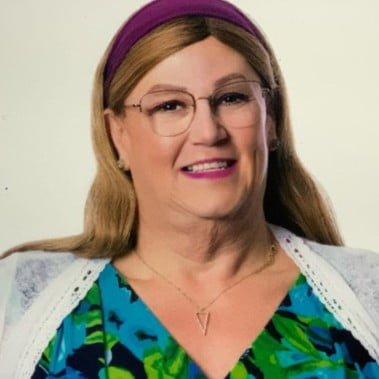
Welcome to inclusion bites, your sanctuaryfor bold conversations that spark change. I'm Joanne Lockwood,your guide on this journey of exploration into the heart ofinclusion, belonging and societaltransformation. Ever wondered what a true, what it takes to createa world where everyone not only belongs, butthrives? You're not alone. Join me as weuncover the unseen, challenge the status quoand share stories that resonate deep within.Ready to dive in? Whether you're sipping your morning coffeeor winding down after a long day, let's connect,reflect and inspire action together.Don't forget, you can be part of the conversation too. Reachout tojo.Lockwood@seechangehappen.co.ukto share your insights or to join me on the show.So adjust your earbuds and settle in. It's timeto ignite the spark of inclusion with inclusionbites.Today is episode 109 with the titlebeyond binaries and I have the absolute honour and privilege towelcome Cynthia Fortlage. Cynthia is an award winninggender diversity speaker, consultant and writer, and when I askedCynthia to describe her superpower, she said she's one leaderwith two genders of experience. Hello, Cynthia, welcome to theshow. Hi Jo. Thanks so much for having me on the show. I'm
Cynthia Fortlageguest
excited to be here with you today. Fabulous. So, Cynthia, beyond the
Joanne Lockwoodhost
binaries and your. Superpower, tell me,
Cynthia Fortlageguest
you know, the work that I do today with organisations isfocused on really dealing with all of the issuesthat cover the space of gender diversity. And it's not
Cynthia Fortlageguest
gender identity, it is howdiverse gender is. AndI talk about, from a historicalperspective, 10,000 years of understandinglanguage and history, where clearly10,000 years ago cultures knew that gender wasnot binary. Yet we obviously have a lot ofconversation today about, quote,the binary of gender, when in fact it's actuallynot. Even though in my own personal story, Ialways describe it as, quote, flipping my binarybecause that was what was right for me. And thatinsight coming from the place where Iwas, which was when I came to this lifeepiphany, I was a C suite working executiveoverseeing technology for ainternational organisation in North America. Hencemy accent. And that journey to whereI am today has been strewn with a whole bunchof leadership roles and responsibilities.In fact, it may interest the audience to know that Iactually learned to fight for women's rights before I ever learnt tofight for LGBTQ plus or trans rights.And that very much influences thelenses by which I look at the challengesthat organisations face. And those challenges that Italk about are not just within the LGBTQ plus or transspace. But the issues that impact women, that,again, relate to. For two and a half years, I was learningto fight for women's rights across all of Canada, notjust the LGBTQ plus ones, but all women.And therefore, when I became national leader ofthat organisation, I was bringing a voice to allof women's issues. And so that gives me a very uniqueinsight as well. Also the fact that I havenever met another C suite level executivewho has transitioned on the job. I'm still looking,
Cynthia Fortlageguest
I've met senior people, but never someone who actually has aC suite role, as I did. And there's some veryunique characteristics that I find come with thatrole. That gives me a unique insight intocorporate organisations and especially at the leadership level,that really needs to be factored in when we talk about roles andresponsibilities of leaders and what does that look like when we talkabout corporate cultures and how that transforms? So I've been veryfortunate to do this work since about 2017,and I've been fortunateto deal with almost 500 companies in over30 different countries to date. I am based here inLondon, in the UK, and I amslowly growing my network and my connections and beable to speak with diversity specialists, HRspecialists and those that may have challenges within theirorganisation where gender is impacting theiremployees and they're just not sure what the next step forward is.And I bring that depth and breadth of insightin order to help those organisations move forward.
Joanne Lockwoodhost
So you talk about gender. So for our listeners,how would you define the term gender? What does that mean?Because there's lots of misunderstandings around sex, around gender. So whatis gender? Well, I mean, let's break down what it's
Cynthia Fortlageguest
not. It's not what today, people usethe term sex to talk about, quote, biological sex,which the inference is genitalia.And the whole idea is, it's not that. That isone aspect. I describe sex as an act betweentwo consenting adults. So we have thataspect. So gender is the innatesense of who we are, but alsohow society perceives us and putsupon us the roles and expectationsof that perceived gender. So in my case, Inormally get treated as a woman in society, which ishow exactly I see myself, and therefore I see thatas in alignment. But that also means that the oppressionthat women in the corporate space and in everyday lifeencounter is the same experience that I have. Andso this idea of gender is notfixed based upon a body part. Itis centred on ourselves, of how wesee ourselves, but also how others are seeing us froma societal level and of course corporatecultures are a microcosmof societal cultures and I don't believe Ican quote change an entire society. So I work withorganisations to try and change and help them change one ata time. You talked about this concept of gender
Joanne Lockwoodhost
being innate. It's not oursex as such, as how we see ourselves, how the world sees us, how wealign. There's also another phrase I've heard, socialconstruct, and that's applied to gender. So how wouldwe marry a gender and social construct together? What doesthat mean? Great question. The key is to realise
Cynthia Fortlageguest
that a social construct is of course something thatdoesn't actually exist. It's being created bysociety who believes it to be true, but it's actually not. AndI'll give you a couple of simple examples. The first isprior to the 1940s every baby that was born was putin a pink blanket. Pink. Yet todaywhen we talk about colours, the idea that pink is forgirls and blue is for boys is a social construct.It's not true. Somebody made it up and somewhere it
Cynthia Fortlageguest
stuck. Probably through the introduction in terms ofin the hospitals. But that's just one example. Another isthat when we refer to children and we referto boys and girls. Well if you go back into18 hundreds and before, the fact is withinhouseholds having slaves, the word boy was used torefer to a male slave, not toa male child. In fact allchildren had a form of girl is what they werecalled. So society has advanced language, wehave changed the use of that language. We'verepurposed the word boy to describe a malechild in this case. And along theway we have somehow come to believethat these have always been. When in fact manyof these things have only existed within the last fewhundred years, probably within 600 or less years.But when we talk about the societies of humanbeings, we talk about histories that are 10,000 yearsold or older so they're not new.And it just shows that language is ever changingand therefore our social understanding of what thesewords mean is also constantly changing.
Joanne Lockwoodhost
Yeah, I'm a big fan of the work thatI often refer to as the gender box. And this is kind ofsocietal's role, expectations of one'sgender. And it has a lot of roles, doesn't it? The gender box. Itsays if you're a woman you must behave like this, if you're a man youmust behave like that. And the thing that I always think about isthat I always think of gender is proportionate or directlyentwined with time, space and civilizations. Sothat the expectations of that gender box for a man,for a woman, for whatever is different today in2024 than it was in 1820, 41724, different in China, different in India, different in SaudiArabia, different in North America. Exactly. It's the constructwe've created within the society we're living in right now, isn'tit? Oh, it is mean. You know, to take your example a
Cynthia Fortlageguest
little further back, if we look at Cleopatra, whowas a pharaoh in Egypt, yet pharaoh was anassumed male role. So how was this woman all of asudden had this role as pharaoh? Right. It was completelycounter to their time,to the change. But the other aspect isthat when we talk about these aspects andthinking that everything is binary, black andwhite, one, two, on, off,whatever version of a binary acronym that you want to think of,ones and zeros for those that are in the computer industry, the reality isthat what people keep forgetting to factor into thisconversation, if you black out kind of all theperceived aspects and only focus in, say, from a biologicalperspective, because a lot of people go there, the challenge is from abiological perspective, absolutely. Everybody I talk toforgets the intersex community. Now, intersex peoplerepresent about 2% of any country'spopulation. Now, the key is many of them do not know theirintersex until they actually have a medical encounter thatrequires the discovery, usually from a geneticanalysis, that they're intersex. Now, that means that out
Cynthia Fortlageguest
of the about seven physical characteristicsthat are biological in our body, within the intersexcommunity, they are completely varied. And you know what? It makes completesense, because when we look at allaspects of a human being, tell me whataspects are binary? Because when we talkabout whether it be skin colour or hair colour, eyecolour, we talk about our height, our size,but we're not this homogeneousbinary group. We are so diverse andthe spectrum is so wide that at the end of the day, thefact is that biologically weare very diverse. And from a humanbeing perspective, that is represented within theintersex community, that shows that all of theseaspects assumed to be binary, in fact, are not.And from there, we add on the layers ofpeople's innate sense of identity, as well ascomponents of sexuality, the privilege thatcomes with that, when we talk about power and privilege from anallyship perspective, but how are peopleoppressed, which is how are they perceived withinsocieties? And all of these factors may be seen orunseen. We are faced withhelping folks wake up to the fact that this isso much of a spectrumwhen it was originally perceived as simply a binary.Yet that's only in the last few hundredyears, not in the totality of theexistence of human beings. And the reality isthat it's not that more people are becoming known as
Cynthia Fortlageguest
that. And everybody uses the study ofleft handedness where at one point it was illegal and then it wasconsidered, well, if you write or use or dominant with your lefthand, then you areworking with the devil, and that's the devil's hand. And whenwe got rid of all of those societal biasof perceiving those things as untrueand they were just a way to classify andbox a particular part of the population, therewas an increase, quote, in the people that identifiedas left handed when it was perfectly legal to do so, and they weren'tnecessarily shamed as such. And when they did that,the numbers plateaued out and they plateaued out around the10% mark. And so we know that within probablya number of these aspects, there'sprobably, quote, the population, about 10% fit in.So when we talk about, for instance, the LGBTQ pluscommunity as a whole, based upon the2022 census in the UK, that represented about9.2% of the population. So it's kindof there. So to say that the entirepopulation of gender diverse people is strictly the0.5% that was quoted is probablyan understatement, but it's probably an understatement that some people just didn'tfeel safe enough in order to make that declaration. And Icertainly remember my own personal journey. That wasnot a simple journey to get to that point before I could everliterally utter those words. It didn't happen tillI was 50, and I did not seemyself represented when I looked in a mirror. I did notsee myself reflected till I was 52 years old. That's
Joanne Lockwoodhost
picking up on another phrase you said earlier, isgender equity. I look back, obviously, I'm not this old,but I look back through history and wesee that men, women, male,female, in terms of sex, in terms of gender, havehad very kind of fixed rule sets imposed on them.And there's almost been a concept that men aresuperior and women are less or areinferior, and that's been kind of reinforced in thegender roles that have evolved to where we are now, butmaybe even more apparent with the disneyfication ofgender, Snow White and the seven dwarfs view of theworld. But we wind that back to victorian times in the UKand beyond, those very fixed rules about womenwere incapable or perceived incapable of doing certain roles, weren't they?So where does that come from, do you? I mean, you
Cynthia Fortlageguest
know, to your point, all we have to simply look at, to understand whateven know victorian era. And that, just look at the movie MaryPoppins. It very much demonstrated thoseexpectations. Mr. Banks was a banker,right, and his wife was bucking the trendand she was fighting for the right to vote. Yet if wetrace back the history of when did all of these things kind of change,it really correlates with colonisation andthe realisation that colonisation on its own, whichthe UK and England was not the only countrycolonising the world, but when thosecolonisers went into these foreign landswhere they had much different understanding ofgender, they also brought religion, and it wasreinforced within religion. And so when we talkabout colonisers, we really can't separate it from the conversationof a religious understanding orlimitation. Now, when we talk about that, I've got myown unique history with it. I was born in Belfast, NorthernIreland, and I was a Protestant.But unfortunately, the troubles in the early 70schased my family away. And so I grew up in Canada, where Iacquired this wonderful accent. And in doing so, Iended up meeting this wonderful person and we got marriedand I converted to being a Catholic. And in fact, Iwas so much a Catholic, I even taught catechism to adults.Now, that showed me a. The hugeamount of similarities that were brought between, eventhough there was really just kind of a coupleof the aspects of how each grouppractises the religion that separates them. But they weregenerally very similar. When we start to gobackwards in time, if we look at, well,today, a lot of people want to quote the books they use.Well, which book is that? Because you end up having,of course, the Old Testament. Well, the Old Testament is theJewish Torah, and then we have the NewTestament that was put together. And if we talk about from amuslim faith perspective, not only is itthe culmination of the Torah, thereis no New Testament to it. So it's theTorah and aspects of the Old Testamentfrom the Christian Bible, along with theirown specific historical practises. And whenI see that happening, it's like, oh, my gosh.The similarities of the points of origin and thesebooks are not a single book. They are aculmination of many different writers frommany different lands, creating thestories, recalling the stories, not in themoment, in time. Some of it was hundreds of years
Cynthia Fortlageguest
later. And the fact is that we know that through theDead Sea scrolls and so forth, that through a number of finds,there have been multiple quote ofthese chapters, books that have been found historically,that through the process of, quote, creating the books thatare used, they just opted not to use certain parts.And to me it was intriguing, certainly from a christianperspective, given that was my background, that many ofthe books that were created by women were not included.None of them were included in the final product that we see inuse today, not the least, which was there was a rewritefor the evangelical community in the 1940s. There's awhole documentary that's out there that talks about this, and itwas a reinterpretation. And the introductionof basically same sex relations are a big nono when that's not actually in the original text.So we have seen this manipulationof what we believe to be the truth that hashappened through, you know, people are just doing it to,quote, create the advantage. So that's why within, say,the Catholic Church, we still don't see female priestsand being able. You can have lay women practisingand helping with service, but they cannot beordained. Yet we have seen other religions, suchas Church of England and others who now aremuch more open and they're much more inclusive of realisingthat carrying the word carrying. Thisinterpretation is not restricted to aparticular identity. It is actuallymultifaceted. And perhaps in the futurethat we will see rewrites and reinterpretations that willbring in a much more blended understanding,even though that's not where we're at today. And again, this isnot history. That's a day in the making or a year in the making.This has been hundreds of years in the making. And that's whywe assume it to be as itis, binary, when in fact none of it actually is.
Joanne Lockwoodhost
Yeah, I think you probably trace it back even further. Youthink about the roman empire. The menwere generally off to work, I. E.Fighting swords, shields, defending or attackingwomen, childbearing, nurturing, caring. And thosegender roles are starting to establish, before the birthof Christ, the mythical sort of like zeroad sort of time. Yeah, absolutely. Sorry. You keep
Cynthia Fortlageguest
going. Yeah, I don't think it's modern
Joanne Lockwoodhost
Catholicism or modern Christianity that is the.These gender roles have been ingrainedin many societies, just down to the fact that manywomen bear children. Therefore their role is morenurturing and home based. Many men are thehunter gatherer, the killer. They go out, and you can almost see thatmirrored in animal wildlife typeroles as well, where there are kind ofevolutionary gender roles. Maybe sometimesin the lions, the females do the killing and the males dothe lazing around. But overall protect and procreate. So there's slightlydifferent roles, but there are generally fixed roles that been evolved.And I guess as a human species, we fell into that kind of,that same sort of thinking, I guess, in our prehistoric times.
Cynthia Fortlageguest
Yeah, I don't think in prehistoric it was, quote, asarticulated in the same way. I mean, I'mrereading Mary Beardy's feminist manifesto, kind ofunderstanding the power of women.And when you look at that, she makes an amazingstatement. That was news to me when I first read it.When we go back to about 4000 bcein the greek world, there wasa greek philosopher who wrote theoriginal, if you will, role of womendocument. So that puts it at about 6000 yearsago. And literally everything you just talked about iswhat was embodied in that document and it'sfrom there. So if we want to trace it back, at least from awritten evidentiary based process, itprobably started 6000 years ago because the romanempire came after the greek legend. SoRome was basing itself on all of thispreviously articulated role andresponsibilities of thegenders within that perspective. And yet itwasn't true. It was just in that case thatphilosopher's his opinion of what it should be. Butit's been taken as well. That must be what it's like. And thereforethat's how we see society today. And then around
Joanne Lockwoodhost
the time of Darwin, where science was becomingkind of evolved, scientists,male scientists, tried to look for evidenceto prove history, if you like. And I think there werestudies where people, men and women, were having theirskulls measured and their brains weighed after deathto prove that the male cranium was larger, therefore the malebrain was larger. Therefore it must be more superior to the female brainbecause the female heads are smaller, the skulls are smaller, and the brain is wayless so. Therefore there's the proof that male brains are superiorbecause they're bigger. Well, if that's true, then if we go all the
Cynthia Fortlageguest
way back to some of the prehistoric peoplesand so forth, they had largerskulls and larger brains, but that did notmake them necessarily smarter and so forth. Andagain, it's just this advancement. And one of the aspects that wehave to be careful of is that when you start readingreports and research, you really have to kind of question, well,what was the question they were trying to answer? Because it'sreally convenient to ask the question and get far enough back to getenough data that proves your point. Well, then you don't need to go actually chequeall the other data and we stop and then we create aninterpretation. And when that becomes dated and again,tens of years, hundreds of years, thousands of years old.It's no longer questioned when, in fact, when you becomeaware of this perception that there'sthis disconnect from this modern interpretation, fromthe historical perspective of human beings,you realise that there's a massive disconnect that isdisadvantaging people today because of what's happenedbefore. People haven't changed, they're still diverse. It'sjust our understanding has become limited becausewe have gone back to your initial point, we have gone back tothose boxes when those boxes were never true in the first place. Yeah, I
Joanne Lockwoodhost
think I read a report, it was the World Economic Forum, thatevery year they produce, amongst other reports, the gender equityor gender equality guide or report. And Ithink if you compare where we were now to preCovid, gender equity has actually gone backwardsby, I think, ten or 20 years. I think before COVIDit was 99 years in the western world to achieve gender equity, or inthe world, and now it's like 120 years. So Covid setback the advancement of equity around genderby 20 or 30 years, just by the fact that the experiencepeople had during COVID impacted womendisproportionately harder for various reasons, such as childcare,home admin, the man being as a perceivedbreadwinner, and the higher earner needing more access tothe table, the desk, the free time to not bebogged down with the children. So we talked about inequity of thepast, but getting equity in the future is a realuphill battle. 100 od years for equity. I mean, really, do we have to waitthat long? I use the comparison.
Cynthia Fortlageguest
First of all, if we think of it, there'sbeen equal pay legislation in the UK for slightly over50 years. And yet we know fromthe reports that we see that we're notseeing it right. It's still an 83 pence to the pound forwomen. And again, not all women are equal. If you are ablack woman, you are making less than that 83pence. If you are perhaps of south asianor of hispanic origin, you are making even less again.So we know that even within women, there is not anequality to that, let alone that the women's rightsmovement is well over 150 years old. And while
Cynthia Fortlageguest
we're in the fourth iteration of feminism4.0 and fighting for our rights associated withthat, I look at as an interestingstatistic was the population of black people withinthe UK is about 11%. And again, that's usingthe census from 2022. What wasintriguing is I was reading a report that said, in order to getparity in senior leadership, which is alot of the work that I do with organisations, if we want toget that parity for black people in that role,by the way, they need to hit two more people to begiven the role to hit parity. Based upon the currenttrend of how many leaders actually make it to that mostsenior level and are black, it's going to take about235 more years. So the wholechallenge of equity, I would suggest to you, forall marginalised people, women just happen to be the largest group ofmarginalised people. But for all marginalised people,when we start looking at the statistics from that perspective,it creates very horrific storiesto reflect on, which is why the importance oforganisations need to do the work todayto change it. Because we know, for the most part, we don't seeit happening within society or governanceof society. What we do see isorganisations who are taking a stand andsaying, we got to do something about this. And wefundamentally believe it as a core value of ourorganisational culture, and they start to dosomething in order to move the needle forward. Andin doing so, when enough organisations actually dothat, they also will move the societyneedle forward in the same regard. So society isalways trailing to the most leading organisations, but atthe end of the day, nobody's doing it perfect and it's always a work inprogress. So you talked about the society there and the
Joanne Lockwoodhost
workplace. You can't escape society and the patternsin society. But if you look at just, I suppose,aspirations, the aspirations youngwomen have in their teens, theydon't aspire often. I don't want to saya stereotype, but often they don't aspire tobecome scientists, leaders, whatever.They aspire to be mums. They aspire to be doing lowlevel, low paid, unskilled work in many cases, whichis why we often see many women in those roles and again, impactedby Covid. So how do we change? We talked about moving the needle. How dowe move the needle in creating a society where young women andgirls aspire to their potential? Well,
Cynthia Fortlageguest
a couple of things. First is, I would challenge a bit of thelanguage that you used in making thereferral, but I'll put it in context. When we thinkof that conversation, the challenge isnot that low level work has been done, it's thaton the basis of feminism 4.0, it hasin advancing the feminist movement, whichincludes all genders, by the way, which is why men are welcome inthere, to help move that needle the key is to realise thatfeminism 4.0, the quote unquote newelements are inclusion, which would include womenlike me and many others in thatdefinition. And secondly, the intersectionalitythat comes into play when we look at those factors.A woman choosing to stay homeand become a stay at home mom or white,that's not low level work. That is her choice. Thatis what the power of feminism has created, isthe ability for her to choose to do thatif she so chooses. If she doesn't choose that,then we get to. You were talking about some of those industries whichfall under the stem st, e m, orsteam. The inclusion of the a, depending upon how youdefine that particular marketsegment. And when we look into the stemspace these days, the reality is that there aremany careers in there that are not gearedfor the roles and responsibilities that are putupon all women, and especially thoseyoung women who might be mums orstarting out, perhaps a married life. And in doingso, it is society that is creatingthe devaluation. The jobs themselves are not of lowvalue. It's that there hasn't been. And that's the importance,from a societal perspective, when we talk aboutcreating societal expectations of a livingwage, that is to removethat bias associated with thatwork. And it's getting to places like aliving wage allows everyone tobe able to hold their head high and not be doing,quote, menial work. It's not menial, ithas value. And a value has been assigned as theability to live within society. And in doingso, whether that is stay at home, whether thatis go to work and make some more money,whatever that is. That's really someof the big challenges from a gendered perspective thatwe face. And we have to get rid of these biasesthrough education and awareness andrealising that there are some women doing workthat they don't want to be doing because they don't haveanother choice, because of something like not getting,having a living wage forces them to have to make othervery difficult decisions in their life. And it in no way demeansthem as a human being, nor the work they're actually doing,regardless of the perception. It is our ownbias that's creating that perception. It's not anactual fact. It sounds easy. It sounds
Joanne Lockwoodhost
easy. Everything sounds easy. Doing. It's the hard part.So what are the barriers? Why aren't we makinga significant dent? Fourth wave feminism hasbeen around ten or 1215 years, I guess, since Istarted talking about it. Even third wave feminism, we haven'treally, as you said, moved the needle. What are the bigbarriers? What's stopping organisations and men and empoweringwomen and driving this forward? What's the barriers? Well,
Cynthia Fortlageguest
the barriers are bias and these perceptions that we weretalking about that believes the world's supposed to look or workone way. And that's why in alot of groups that I'm involved with and certainly workingwith a lot of women's ergs, brgs,employee networks, the conversation abouthow to bring in male allies in support of,not to diminish the male role. I mean, at the end of theday, every organisation should have a cultural understanding oftrying to create an inclusive workspacewhere every employee belongs, that includes their men, theirwomen and every other personthat may not fit within those definitions. Andso the reality is that what we have to dois get together to start overcomingall of these biases and perceptions that hold usback and the realisation thatwe have to start shifting it. And again, Iwould suggest to you that at a sociallevel of society at large, that's hardto do, really hard to do. Thegovernment's part, whatever the government is, it's nota question of politics, it's a question of are the policies inplace that are creating the supportsnecessary to actually move the needle on thesethings? And in doing so,organisations are much more at the forefrontof having the flexibility and the ability to actuallydefine it. So we have seen manythings change across many nationsby looking at leading organisations that haveinfluenced government, by being early adopters ofchange. And by doing so, they kind of shine a lighton how to do it by figuring it out. No one's doing itperfectly. So that just means even the early adopters are still learningand adapting on how to move it forward. But if youdon't have an intent to do it, the conversation never starts andyou go, oh, this is too difficult. Well, why are we going totalk about it if it's so difficult? Because, well, that's like lookingat Mount Everest and going, well, that's kind of tall, I don't want toclimb it. Well, until you actually try and get to base camp,which is already putting you, I think, a fewthousand feet up, you haven't even begun thejourney. I always use the quote in a lotof my work that one of my favourite quotes is a journey of 1000miles begins with the first step. But if we don't take the first step, thejourney never begins. And the problem is we take the proverbialone step forward and half a step back because,oh, hang on, everybody was upset about that one step.
Cynthia Fortlageguest
We have 999 more steps togo, but we're fighting over the first step and thatprevents us organisations, because they'remicrocosms, can create that changemuch easier. And in doing so we get enough organisationsdoing that, that can create the influence to takethe next step. And it is a journey of steps. It's ajourney certainly well beyond the years that I have left on thisplanet. But I feel that I am calledto do this work in order to move the needlejust because of the disparity that Iencountered by simply flipping mybinary and realising that one day I wastreated one way and the next day I was treatedso marginalised that I was struggling to have my voiceheard, even though I had a table around the executivetable, or the fact that I'm the subject matter expertin the room and yet because of my gender I get completelyignored. Or the fact of the moment we all walkout our front door and not feelingsafe. It's not about walking down the high street in the middle of theday surrounded by people or riding thetube. It's every aspect of life andwe are impacted because of our genderin every single instance and theassumed rules that were put upon us,and that's what we're having to overturn it. I can certainly tell you thatas woman over my 50s, learningthat I'm becoming invisible within the corporate space,certainly as an employee, was absolutedespair. It wasn't that I became less useful orless smart or less productive, I justbecame invisible and I was no longer seen as an asset.Yet that doesn't happen to men in their 50s,they're looked at for their leadership and so forth. So that's justagain those gendered perceptions that aren'treality. Women have not become lessvaluable, they have not become less productive,they may work differently. Things like the menopause certainlycause women to have to work differently.If a younger woman, I don't know, probably in her twenty s,thirty s, she may end up having childcareresponsibilities and social and don't forget that in between there you havethe sandwich generation who are not only looking after potentially children,they're looking after ageing parents. At the same time,where's the adaptation to ensure that we're getting full value?Especially when we talk about levelling up and wanting to get all ofthese people working. Well, guess what? You can'thave a homogeneous singleway that, quote, everybody works, everybody is different,everybody has different requirements. And that's really where the equityquestion comes in, it's how are we equitablyaddressing all of these diverse and uniqueneeds? It doesn't mean you need 3 million different ways to doit, but you can't have one. Andwe see that challenge today definitely in the corporate space wherethere's all this quote, demand to return to the officekind of working because of many reasons. Some have
Cynthia Fortlageguest
validity, some don't. But the ultimate reality, like manybusiness decisions, is it's driven by money. Many of these corporationshave signed long term lease rental contracts withproperties. The property market is a huge valuationthat underpins the entire businesscommunity. And to go to where we were duringCOVID and realise that oh my God, we could actually have thesecompletely distributed workplaces and we don't actuallyneed this physical space had such a hugeeconomic impact that thequote cost of living crisis and so forth we see today isnothing compared to what would happen if the corporatefinancial markets began to fail. And that's really the level we'retalking about. And it's how do we keep moving away, how do wekeep doing? Well, let's not force everybody back to the office, let'sallow choice. Some people want to, some don't. Maybe it's aone day a week or a two day a week and you work it out,it's not always a Wednesday. Maybe this person can do it on theMonday and the Thursday. Why do they have to be there? You know what Imean? You start to have all of these differentaspects. And again, I'm not being overly prescriptivebecause every organisation is different, their employeesare different. The idea is every grouphas to look at what their people needand create the necessary solutions for them.And it's not going to be uniform for every company,everywhere, with one blanket perfect answerwrapped up and tied with a bow. Yeah, I completely agree. I mean,
Joanne Lockwoodhost
a lot of your thoughts on RTO return to office mirrormy own. We talked about bias,ingrained bias, centuries andcenturies, millennia even, of genderedexpectations, gendered roles. So our leadersof today and leaders of tomorrow have to have this, of a cognizance of thisbias, of this inequity,baseless and foundless inequity that exists between genders. So whatelse? If you were talking to an organisation around firststeps, what can the inclusiveleader of today, who's focusing theirinitiatives on? We're talking about gender today. Obviously there are othercharacteristics, but focus on gender. What sort of steps should they be puttingin place or should the organisation be thinking about today? Well,
Cynthia Fortlageguest
the first place to start with is, do they have the data? Right. If you'regoing to make organisational level change, it helps youfocus your efforts if you have the data. Many organisations are notcollecting the data, many organisations have incomplete dataand those that are trying to collect data are still getting veryhigh. Rates of did not disclose, I e. Employees havenot decided to disclose it. And typically thatcomes down to the psychological safety they feel withinthe organisation in order to actually make those disclosures. Andso if it's not truly a safe workplace fromtheir perspective, then you're not going to get that information
Cynthia Fortlageguest
disclosed. And therefore, how can you actually measure whether or not youadvance know, it's akinto, I'm sure your listeners are aware of in thenews. It was on the BBC News last night, I think it was, andthey were talking about the NHS waitlists and how all the people thathave been referred to specialists are no longer counted onthose lists, yet they're still actually waiting for cancer care,for heart treatment, for some very serious healthconditions. And so it hasn't actually gotten better, because nowwe're muddling with the numbers. And so let's justcapture the numbers and you're not going to get the numbers unlesswithin organisations, unless you create safeworkspaces, which is an aspect, an outcome ofthe work companies do to create intentional cultures.So we have to go back even to the beginning of that and look, well,where do organisations, once they're trying to collect the data,when they're not getting the data? The answer is, it's a question ofcorporate culture. And where in the culture is there a disconnect? Itcould be. They say everything right in the whole bit, ifthey're like many organisations. And all you have to do is read alot of the Labour tribunal reports that come out.One's definitely related to gender, I typically read quite a few ofthem, and in doing so, what we see is there'sa very common practise of, oh, well, an organisation did a greatjob defining their culture and they had training on their culture andthey launched their culture project and the whole bit. And thatwas it. It was like, well, this is the project for this month, this quarter,this year, they did it and it's one and done. Well,a culture is lived every single day, I always say. A cultureis defined from the top down, but it is lived inexperience from the bottom up in an organisation. Andso the work to create an intentional culturecannot be a one and done. Itexists as long as the lifespan of thatcompany. So when they begin a project, if that company isgoing to be around for 50 more years, they have 50 more years ofwork in order to keep creating that intentional culture andensuring that every person that experiencesthat organisation or enters that organisation or leaves thatorganisation can talk about that cultural experiencethat they wanted. That's what creates psychologicalsafety. And obviously there's many sub aspects. Iam not a specialist in psychological safety, but I have done somework specifically related to the transgendercommunity within workspaces and how tocreate psychological safety while preserving psychologicalsafety for everything else. And the fact is, it's very complex, it'snot simple. There's about 14 different layers to itand that's kind of the work that organisations have to go through. Andthat is where I come in. And in each organisation, once we kind of geta baseline, it's about guiding the organisation through thisjourney that is not one and done. I always say asa consultant, I can help them define it, I can helpthem start to deliver the education, but I can'tlive an organisational culture for an organisation. They haveto. So I can help put them on the path and thedirection, but if they're not living it, they're going to deal with it. And guesswhat? The tribunals have found that where there are grossviolations typically ruled against the organisation, it hasbeen that an aspect of culture has not been continuallyreinforced and trained and retrained through thelifecycle of an employee. Again, it's not one anddone. You have to do this ongoing becauseyour culture of your organisation is going to mature,much like your understanding of diverse gendersmay mature. And in doing so you have to reflect thatin the language and interpretation of your culture. Andso it's not one and done. And as we go through that
Cynthia Fortlageguest
cycle and somebody says, oh, well, I want to address it forwomen and I want to address it for blackor ethnic minorities or any particular group.Whatever they're focusing, they're going to learn something and that has to bereincorporated back into the culture and that'show they will slowly create psychological safety.That gives the data. And in doing so, they've actually moved theneedle in doing that because they've been doing thework. Before we measure it, they had to do it. Andto do that, I mean, there's a whole other conversationabout the data and what data do you gather and soforth, but I'll leave that hopefully that gives you asense of how we go after this ratherlarge challenge, but not insurmountable I mean, we're human beings, we've donesome amazing things. I don't see this as anything less than that. Are
Joanne Lockwoodhost
men, thanks, willing and able and ready to stepup and do what it takes? Is that part of the challenge? We can talkall days around women's rights, women's movement,women's having these conversations. But if time has shown asanything, in order to make change, it has to be enabled by peoplewho hold power and privilege correct and generally in society. Men,white men, white, straight men, hold power and privilege. Correct.And as a woman, you have toknock on the door gently and be invited in. If you try andknock on the door heavily or kick it in, you get repelledas someone who's crazy or someone who is subversive. Sowe need fundamental societal change where people who holdprivilege see it as their responsibility. Sexism is a maleproblem, racism is a white problem, homophobia is astraight problem. So we got to try and shift where we seethe challenge. And women talking around oppressionisn't moving the needle, because men need to start recognisingthat conversation and have men involved. That's the challenge we face.
Cynthia Fortlageguest
Exactly. Until we start to realise ourprivileges as human beings. What I call making theunconscious conscious. Until we start to recognise thatelement, you can't change it because, see, the process is you first of all haveto make the unconscious conscious. Then you have to accept theconscious thought, good or bad, and then you candecide to change it or not. And then you actually have todo something. And so even that's not a one, twostep, that is three or four steps in order to actuallyget moving to deal with it. Andif somebody is at the top of the food chain, and certainly up tothe age of 50, I was aperceived white, heteroseman. And I enjoyed every single one of thoseprivileges because I was in the executive suite,I quote, had made it, and I had the salary andthe cars and the house and the holiday and the bank accountand everything else. But as Maslow talks about,I wasn't self actualized by achieving that point in mylife. What I did was realise, oh, my gosh,there's a huge gap. And that caused me to have to reflect,well, that exercise, not because of theirgender or questioning their perception of theirgender, but simply being awhite, cis het male, socisgender, heterosexual male, you're probably carryinga huge bunch of power and privilege that manyothers aren't. And until you recognisethat and are willing to do something not to give away whatyou got. But to uplift others, to be in the same space,then that's part of the challenge. And that was one of my learnings,was the idea of what does itmean to move the needle forward and to advance a bit,quote, within society, because even within my,quote, marginalised part of my identity, which Iconsider tertiary to the work that I do. The realityis that I still carry a great deal of privilege andI carry privilege that many others who have travelled asimilar journey to me do not. And I realise that when I'm out in
Cynthia Fortlageguest
society and I don't getmisgendered, I don't get name called, I have neverbeen, thank goodness, physically attacked, butI do get impacted the way other women do. I havemen who try and put theirpower over me to show that they are, quote, sexuallysuperior or so forth andcreate advancements that I didn't ask forin my personal space or that I'm trying to getfrom point a to b and they feel they get tointerject because, well, it's just convenient for them. Toobad, so sad. For me, it's both an aspectof safety for me, but for that person,they don't even recognise the privilege they're demonstratingby doing that exact kind of behaviour. And until they're willing torecognise that behaviour, that's the challenge. And that only comesfrom education and awareness raising, whichis a great deal of what I do with organisations because there'sstill a great deal of education and awareness raising that needs tobe done. And just because someonehad a gender diverse speaker three years agoand they've talked about that topic, they've been there and donewell, things change, things advance. And so whenare you doing the reeducation part, as much as we talked aboutdoing it, with your development of your intentional culture and trainingyour employees, bringing in the training that keepsyour people open and growing by learningis also a key aspect of that. And that's an areawhere know, just ask learning and developmentprofessionals, they'll tell you that, know, the economygets difficult and the business is hurting, they're one of the first budget thatgets cut. Fascinating. Fascinating. Yeah, Cynthia,
Joanne Lockwoodhost
that's absolutely amazing. I can't believe we've been chatting for over an hournow and it's been absolutely fascinating. Thank you. You're welcome. And I'm sure ourlisteners have got so much from this. So how can they get in touch withyou to find out more about the work you do and to maybe reachout and say hi? Absolutely. Well, connect with me on LinkedIn.
Cynthia Fortlageguest
Please mention that you heard me on this show with you, Jo. Theother one is they can go to my website, which is triple w dotcynthiafortlage.com. All one word.The name's in the description. So yeah, just go to triple wcynthiafortledge.com. You'd be able to connect with me,find out more information, and would love toengage in a conversation. If you've got a question that mightbe burning after this conversation, please reachout. Thank you. Thank you.
Joanne Lockwoodhost
As we bring this conversation to a close, I want toexpress my deepest gratitude to you, our listener, forlending your ear and heart to the cause ofinclusion. Today's discussion struck a chord.Consider subscribing to inclusion bytes and become partof our ever growing community, driving real change.Share this journey with friends, family and colleagues. Let's amplifythe voices that matter. Got thoughts,stories or a vision to share? I'm all ears.Reach out tojo.Lockwood@seechangehappen.co.uk.and let's make your voice heard. Until nexttime, this is Joanne Lockwood signing off with a promiseto return with more enriching narratives that challenge,inspire, and unite us all. Here's to fostering a moreinclusive world, one episode at a time. Catch you on the next bite.
Historical Context of Gender RolesEmbracing the Spectrum of Gender DiversityGender Equity in the Workplace and Society
Joanne Lockwood is joined by gender diversity speaker and consultant Cynthia Fortlage for a wide-ranging conversation about how binary thinking has shaped society and workplaces, and what it takes to build cultures where people can belong.
Cynthia unpacks what she means by gender as an innate sense of self as well as a set of social expectations, and explores how language and norms shift over time. The discussion challenges common assumptions about sex and gender, draws attention to biological diversity including intersex realities, and reflects on how colonisation and religious interpretation have influenced gender roles and inequality.
They bring the conversation into the workplace, looking at why progress on gender equity remains slow, what COVID revealed and exacerbated, and how bias shows up in pay, progression and everyday safety. Cynthia argues that organisations can be leading forces for change, especially when they treat culture as an ongoing practice rather than a one-off initiative.
Practical themes include the need for psychological safety to enable disclosure and trustworthy data, the importance of continuous learning, and the role of allies and those with power and privilege in shifting systems. Cynthia also shares elements of her own leadership journey, including transitioning while in a C-suite role, and how that experience informs her work with organisations around the world.
Watch
Watch the highlight
A highlight from this episode — Cynthia Fortlage on unpacking gender diversity beyond the binary.
“if we look at Cleopatra, who was a pharaoh in Egypt, yet pharaoh was an assumed male role. So how was this woman all of a sudden had this role as pharaoh?”
“And everybody uses the study of left handedness where at one point it was illegal and then it was considered, well, if you write or use or dominant with your left hand, then you are working with the devil, and that's the devil's hand.”
“Well, if that's true, then if we go all the way back to some of the prehistoric peoples and so forth, they had larger skulls and larger brains, but that did not make them necessarily smarter and so forth.”
“And so the reality is that what we have to do is get together to start overcoming all of these biases and perceptions that hold us back and the realisation that we have to start shifting it.”
“It was on the BBC News last night, I think it was, and they were talking about the NHS waitlists and how all the people that have been referred to specialists are no longer counted on those lists, yet they're still actually waiting for cancer care, for heart treatment, for some very serious health conditions.”
“I have men who try and put their power over me to show that they are, quote, sexually superior or so forth and create advancements that I didn't ask for in my personal space or that I'm trying to get from point a to b and they feel they get to interject because, well, it's just convenient for them.”
The historical establishment of gender roles and the influence of the Roman Empire and prehistoric times.
Critique of biased scientific studies and historical interpretations that contribute to gender inequality.
The setbacks in gender equity during the COVID-19 pandemic and ongoing challenges like pay disparities.
The importance of organizations in implementing changes to foster gender equity in society.
The impact of colonisation and religious doctrines on societal perceptions of gender and sexuality.
Personal narratives that highlight the journey of gender identity and the challenge of binary thinking.
Actions to create an inclusive workplace culture and the roles men can play in furthering the cause for equality.
One thing to remember
The episode "Beyond Binaries" with Cynthia Fortlege unravels the complex tapestry of gender identity, societal roles, and the importance of inclusion within the historical and modern contexts. It underscores the necessity of dismantling binary thinking in gender and embracing the spectrum of human diversity, advocating for proactive roles that individuals and organisations must take to foster gender equity and celebrate all forms of identity.
Questions this episode helps answer
How have historical interpretations and biased scientific studies contributed to the perpetuation of gender inequalities, and what steps can we take to challenge these narratives?
In what ways have religious texts and teachings been manipulated to exclude women's contributions, and how has this impacted the perception and roles of women in society and within religious institutions?
Cynthis, could you elaborate on the concept of the "gender box" and how this framework has limited our understanding of gender diversity throughout history?
How has the COVID-19 pandemic set back efforts towards gender equity, particularly regarding pay disparities and representation, and what measures are necessary to recover and advance these efforts?
What are the implications of acknowledging that there may be more gender-diverse individuals in society than previously estimated, and what changes does this necessitate in both societal attitudes and policy?
Can you provide further insight into your own journey of realising privilege and how this awakening has influenced your work and interactions in society?
Explore topics
Ideas from this episode
Historical Context of Gender Roles
Our dialogue began by peeling back the layers of history to understand the evolution of gender roles, tracing them from prehistoric times through the impacts of the Roman Empire and the Victorian era. We unravelled the complexities of how historical interpretations and biased scientific studies have reinforced gender inequalities, overshadowing the diverse roles women have held in various societies.
Embracing the Spectrum of Gender Diversity
We deep-dived into the reality of non-binary and gender diverse individuals, examining how the binary perception of gender is a social construct, not solely determined by biology. We discussed the existence of the intersex community and the growing acknowledgment of a spectrum of gender identities, which evokes the need to look beyond conventional binaries.
Gender Equity in the Workplace and Society
The realm of gender equity, exploring how events like the COVID-19 pandemic have influenced the progression of workplace equality. We talked about the economic and societal hurdles faced by women and gender diverse individuals, from pay disparity to caregiving responsibilities and their representation in leadership roles.
Learn
Frequently asked questions
What does 'Beyond Binaries' refer to in the context of this podcast episode?
'Beyond Binaries' refers to the discussion surrounding the recognition of gender diversity beyond the traditional male and female classifications. It includes an exploration of non-binary, genderqueer, intersex, and two-spirit identities, challenging the notion of a strict gender binary.
Who is Cynthis Fortlege?
Cynthis Fortlege is a gender diversity speaker and consultant who has worked with over 500 companies in 30 countries. With a background as a C-suite technology executive, she now focuses on gender diversity advocacy and education.
How did historical events shape our current understanding of gender roles?
Cynthis traces the establishment of gender roles back to prehistoric times, Roman Empire influences, and notably, the Victorian era. She discusses how events such as colonisation and the formation of religious doctrines shaped the societal perception of gender roles.
Can you explain the impact of COVID-19 on gender equity?
The COVID-19 pandemic caused setbacks in gender equity, particularly exemplified by increased domestic responsibilities falling on women, and widened pay disparities. Cynthis addresses the challenges that have arisen due to the pandemic's reshaping of the workplace and society.
What are some challenges that women face in religious services?
Cynthis highlights the historical exclusion of women from significant roles in many religious institutions, such as the absence of female priests in the Catholic Church, and the exclusion of women's writings from religious texts.
How common is the intersex community, and why is it significant?
The intersex community represents about 2% of any country's population, making it more common than many might expect. Recognising the existence of intersex individuals challenges the binary view of gender and emphasises the diversity of human biology.
Share this episode
Heard something worth passing on? Send this conversation to someone who needs to hear it.