Why Love, Respect, Connection and Acceptance Matter
A conversation with Ling where we talk about her experience with Mental Health and Wellbeing and how we can create environments for people to speak out.
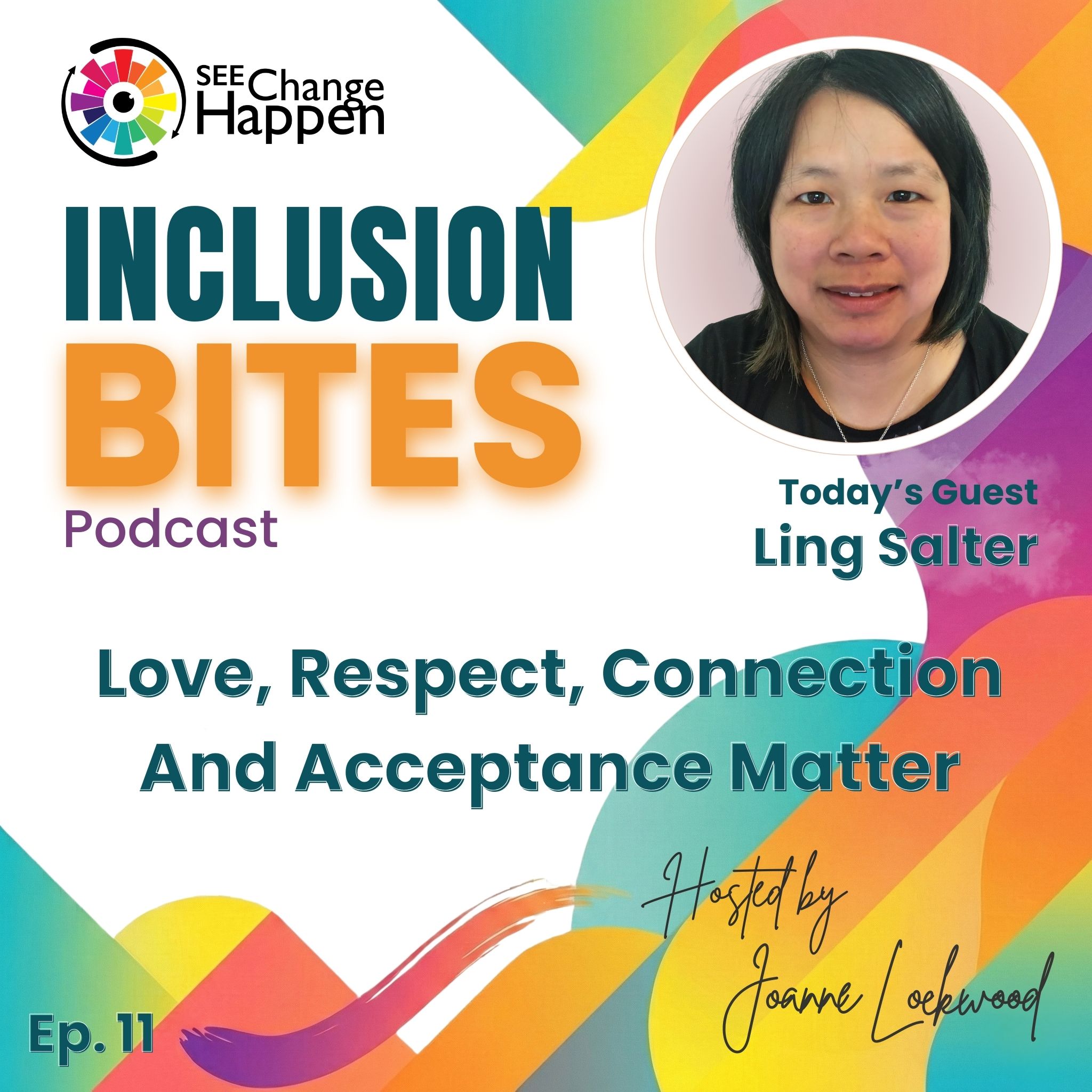
In this episode of Inclusion Bites, Joanne Lockwood speaks with Ling Salter about mental health wellbeing trauma.
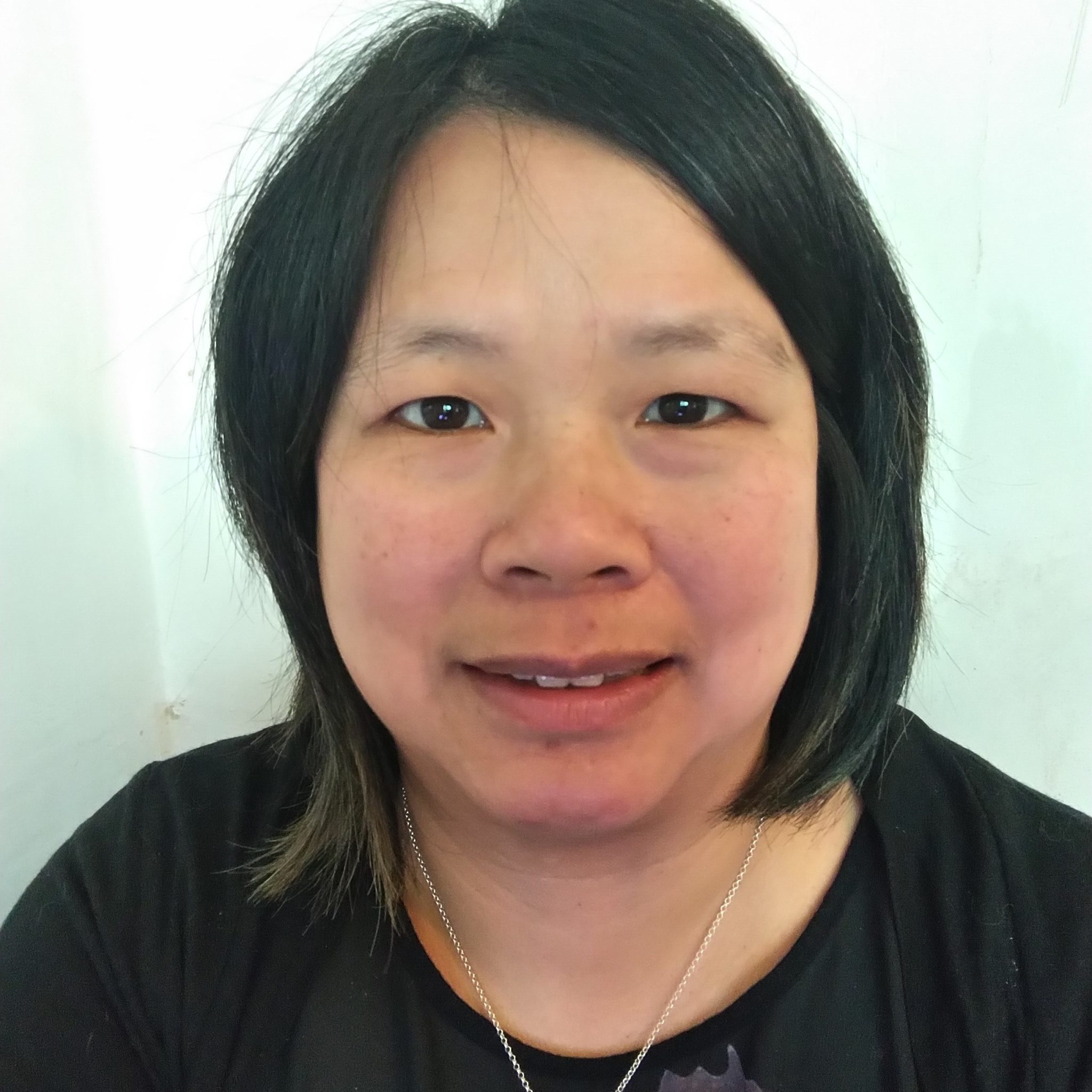
Hello, everyone. My name is Joanne Lockwood and I am your hostto the Inclusion Bytes podcast. In this series, I will beinterviewing a number of amazing people and simply having a conversation aroundthe subject of inclusion, belonging and generally making the worlda better place for everyone to thrive in. If you'd like to joinme in the future, then please do drop me a line tojo.Lockwood@seechangehappen.co.uk. That'sseechangehappen.co.uk.You'll be able to catch up with all of the shows on iTunes, Spotify andof course, all the usual places. So plug in your headphones, grab adecaf and let's get going. Todayis episode eleven with the title why Love,respect, connection and acceptance matter. AndI have the absolute honour and privilege to be joined by LingSalter. I met Ling online through my localRotary Social Innovation Club and Ling describes herself asa formal mental health nurse of Chinese descent, living in the UK,striving to thrive during this period of change,disruption, whatever you want to call it. It's an unprecedented time.It sure is. So I asked Ling to describe her superpower andshe said her vulnerability and being able to connect withher purpose in a compassionate way.So, hello, Ling. Welcome to the show. Hi there,
Ling Salterguest
Jo. Hi.
Joanne Lockwoodhost
So tell me, why does love,respect, connection and acceptance matter toyou? Well, Jo, they're
Ling Salterguest
very big concepts therethat all of usneed to a large extent, in differentquantities. Whether we describe it as love,acceptance, belonging,whatever spear we look at it upon,it's really important becausewe want to be included. Right?
Joanne Lockwoodhost
Yeah, for sure. And I noticed the word belonging thereand I really feel a connection with that wordand it means so many things to so many different people. But it's about beinglistened to sometimes, isn't it? Yes.
Ling Salterguest
And really being listened to,being heard sometimes is quiterare. When we all like to talk,talking is great and how we articulatesort of how we see things in our world.That connection comes about whensomebody else who reallyis listening and being attentivegets you right. And that is wherethe connection happens.
Joanne Lockwoodhost
It does, and I completely relate to that. You say you're a formermental health nurse, so you must have come acrossexamples where a lot of people's mental health wasimpacted by not being listened to, maybe didn't have agency,didn't have any power decision, and you must have come across thosechallenges working with people. Yes, definitely.
Ling Salterguest
Certainly. I spent mytime working in prison, which isa very challengingplace for the people who areincarcerated and it's very chaoticand quite a lot of time. There'snot a lot of opportunity to connectin the way that you wish toreally facilitate for that personto be heard. There's a lot ofshouting and verytransient interactions, which sort of arevery immediate, where they're calling you to meeta particular need. Whereas actually,in life we have needs that we mightnot articulate. Just at our firstinstance. It takes time to actuallyexplore and find out.Sometimes when you experience a mentalhealth issue, there's a disconnect.So almost opposite to theconnection. And refinding whatyour purpose is and yourpassion, what means a lot to you.Yeah, it takes time to find that out.
Joanne Lockwoodhost
So I'm just thinking as you're talking now, I'm thinking about this andthinking, so if I'm not being listened to bythe people that matter to me,but I do get listened to by other people, am I more likelyto join a different crowd? Sowhere I feel this sense of value? So maybe in prison, if I'mnot being listened to by authority, but I am beinglistened to by anarchy, if you like, I may bemore form an allegiance with people who in that other tribe.So by the impact of us ignoring people and not givingpeople the ability to express and being hurt, then we're allowingother people to steal their attention, if you like. Is that what's kind ofhappening? Sometimes? Yes. I mean, that happens quite a
Ling Salterguest
lot. Areas where people aredisaffected, say, byauthority or places that wethink we know that we trust, well,they're not meeting our needs. Right? So ifthen another group or entitycomes by which actually are able to attendto us to a certain level, thenwe can swap allegiancies quite quickly, becauseall of us are trying to serve ourselves to a certain level.Even if we're wanting to give. Well, if you want to giveto someone, you still have to have the means to be able to do it,right? And so you can't do that, then you're going togo to a place, wherever that is, sothat you can do that. Simple as it doesn't matter whether thatplace is known for whatever kind ofsubject levels, we can swap.Yeah, connection is so important, but connectionwith kindness, which perhapsisn't really spoke about as much,I think is even more important becausewe're social beings. We want to try andget along in life andpromote the good within each other.
Joanne Lockwoodhost
So you mentioned well being in there. So well being is all partof not physical wellbeing. There's also the mental health well being,isn't it? And we always associate mental health as being anegative, don't we? Because you can have good mental health and bad mental health orpoor mental health. It's not all mental health is bad, is it? Somaybe there's a stigma around just saying mental health because itimplies there's something wrong with you. So how do we change that narrative andreaddress that and make mental health seem a positive thing?
Ling Salterguest
Yes, I think for myspeaking on a personal level, theword mental in itself,when we even just say the word mental, ithas negativestereotypes. So hencepeople talk about their emotionalhealth or their well being, and they'rereally part of the same things.Sometimes some people don't like talking about their emotions, theirfeelings, thinking, well, what purpose hasfeelings got to do with life anyway?How you feel is how you feel. And sometimes wemight denyhow we feel, whichactually feelings have ahabit of actually coming back. Soparticularly negative feelings, if we try to suppressthem and we don't attend to them, it will process themin some way, they will come back withouta doubt. So
Joanne Lockwoodhost
as you're talking, I'm thinking thatyou said the word mental has got negative connotations. And we always think aboutstraitjackets, we talk about asylums, we think aboutall these images of the past whereadmitting to having poor mental health is a realstigma and allowing people to open up without feeling thatshame, feeling of failing for not being able to handle something intheir life, it's a very hard for people to do. I mean, I knowfrom my own experience, four or five years ago, I was goingthrough a dark time in my life, and I was veryreluctant to share how I was feeling with people. I wanted to fixmyself, because sometimes you don't have the tools, do youdon't have your own tools within you? You need a lifeline or a way ofcommunicating out of it, don't you?
Ling Salterguest
Yeah, that's very true.When we're in a bad place, it'svery easy for us to disconnect withothers, and we want to protect ourselves.When we withdraw and we don't reach out to others, in away, we think that we're protecting ourselves.I'm dealing with this even if I'm not dealing with it verywell. I'm dealing it with itinternally in my own little world, right? So nobody needsto know that I'm dealing with this, even if I'mstruggling. And in a way, the longer we leaveit, the harder it gets to reach out. Wouldn't you
Joanne Lockwoodhost
say for sure? Yeah. It becomesa kind of self fulfilling prophecy. I'm not feeling great, thereforeI don't feel great. And we do less exercise, we communicate less,we withdraw into ourselves, don't we? And I'maware that male suicide amongst the ages,or is it 25 to 40, is the highest proportion of suicidesin any demographic. And there's still astigma about being male and being weak, isn't there? Being able to talk about it?
Ling Salterguest
Yes, there is this perception thatmen in particular. Well, if you talk, mendon't cry, those types of stereotypes.And that actually perpetuates theproblem, because if they're not able to articulatehow they feel or be able to reach out forsupport, that support can just be aconversation. And from that conversation isconnection. And that's why it's soimportant. Well, it's important to me, butthe wider message, it's important toothers. And how. Well,the first port of call, in the sense of reallyreaching out to another personand accessing,allowing someone else tosort of a ringside seat to what you're experiencing,that makes sense. Yeah. I
Joanne Lockwoodhost
hear the expression a cry for help. And manypeople say that when people attempt to commitsuicide or attempt suicide, thatit's a cry for help. And they really want someone to listento them, which is why, I guess, Samaritans and services like that, andmaybe your own service are just someone who can listen. And that's what they reallywant. They want someone who can just not judge, not have anopinion. They just want to create a space where they can talk andbe heard. Yes. And part of that
Ling Salterguest
listening is also with compassion, with thatkindness, with that carethat actuallyyou matter.What you're going through in your head is verydifficult right now. However,you as a human being, your lifematters. Quite oftenwhen people get to a place of feelingor contemplatingsuicide, they are wantingtheir suffering to end.Okay. And theirsuffering at that point, for them,is all so consuming. That'sovertaking, sort of like the whole life.But that isn't all of them. What I'm trying to say isthat their suffering is one area of theirlife. They'recoming from a point of view of deficiency,where actually they have lots of other things intheir life that is valuable,but it's covered when they're in that space.
Joanne Lockwoodhost
It's quite tough being a human being these days, isn't it? With social media,if you cast your mind back 1520years, if someone didn't like you, they had to eitherwrite you a letter, tell you face to face,or maybe put something nasty on the note support at school.But generally you knew who that person was, or at least you knew roughlywhere they were. But now you've got no redRess, because anybody in the worldcan say something about you that's not nice,anonymously, without any recourse. And it must be really toughto be a person who's growing up with body imageissues or identity issues,to be able to put themselves out there into this world that's so judgmental.
Ling Salterguest
Yes. The Internet in particular,the mention of the Internet, how great, how it'sevolved. We have access to moreinformation than we ever have done previously,and how we communicateusing the Internet. But the flip sideis the Internet is less forgiving in thesense it doesn't allow us to beforgotten. Certainly whenthe misdemeanours, that I'm sure, Jo, you could relateto this, the things that we've got up to, perhaps in our younger days,and things that.The things that we've done that maybe we're not proud of. Butnowadays, if those things are so muchmore, our lives are so much more under thefocus with social media and the Internet.And the Internet doesn't allow you toforget, because somewhereit's stored on a server and it can beaccessed. If somebody really wants to dig, they'll findit.It must be very difficult to reinvent yourselfif that's what you're wanting to doin your life. Yeah,
Joanne Lockwoodhost
back when I was young, I'm not quite as old as Noahin the Ark, but I'm in my mid 50s now, which is oldenough. If you wanted totake a photograph, you had to find your camera, which probablywasn't with you. It's probably at home. You'd have to cheque you, hadsome film in it, maybe find a flash gun orcube or something, then go and take a photograph. Then you'd have to wait foryou to finish the reel of film off and then post off the bootsor take it off for developing, and then two weeks later you might get thefilms back. So it's very difficult to sort of take a nastypicture and post something online or post it anywhere. Whereasnow every moment can be captured. Everyone's got a camera,everyone's taking selfies, everyone's solive. There is no way of hiding and having downtime, evenif you're having a quiet moment. MosT people would have a camera on their phonewith them or be in the background of someone else's shot.It's terribly difficult to switch off, isn't it? Yes. And
Ling Salterguest
I think it can be veryoverwhelming, what youjust described there, Jo. Well, that's you. You doing it.And if you were to replicate you, your actions, sortof up and down the country, internationallyand on particular platforms. Can you imagine?Well, no wonder all of us are feeling a bitbombarded with the amount of contentand lives and choice. Andsometimes that choice is great when weall like to have choice and autonomy and how we choose toengage with certain things, but then suddenly there's thisdeluge. It's a bit like a menu,when if you go into a restaurantand you see a menu of choices, of differentfoods, and great, you've got variety there, youwant to have variety. But if you were presented with a menu that wasjust crammed full of different starters, mains,desserts, you're takingforever to make a decision. Andit's a bit like that online. It can be very difficult tothen stand what. What stands out. When I need to look, I needto look through and see what's there, then choose, andit's the same. But it's so hard
Joanne Lockwoodhost
to get off the bus, to use an analogy,where all of your belonging, all of your inclusion,all of your circle are in this crowd.And for you to protect yourself, you have to step out into a worldwhere all your friends aren't. You've lost that connection withpeople. So in order to fix yourself and back out, you've almost got to golonely. Where do you find supportfor people who turn themselves off? Because by definition, if you've turnedyourself off of social media, you're not online. Andhow do we connect with people? How do we form new clubs of peoplewho want to switch off, who want to not be online at the time. Howdo we connect people like that? I
Ling Salterguest
think ultimately it reallyis you grounding you in thesense how you.You know, you have to know within yourselfwhat your purpose is, your passionis, and go from that standpOint,from the perspective of knowing yourself and knowing whatyou're about, then how youengage with what your passion andyour purpose, the vehicles of how youengage with that becomes a lot easier in termsof whichareas, which areas,which groups that might look like.And yeah, if you arefulfilling your purpose isn't justabout goals, because lots of people talkabout specific goals. And then obviously whenpeople can't meet those goals, they get really disappointed becausethey, oh, well, I didn't achieve X, Y and Z.However, purpose and passion go a lot deeperthan that. And it isn't a prescribed way to say,well, you should go to theseplatforms and not these platforms. It isn't a straightsort of yes, no issue.It's about finding what works for you.
Joanne Lockwoodhost
Do you think that in this unprecedented time,as everyone keeps calling it, I think one day it'll become a precedent. Won'tit become the norm? One day we'll get there, we'll stop talkingabout. We don't talk about the Roman Empire as being the norm anymore. So Ithink one day we'll get used to the idea that we are living in realityagain. So do you think peoplehave similar, different mental healthchallenges now? Is this lockdown makingsome people worse, or is it helping? What do you think?
Ling Salterguest
Well, it happened in different stages.When the lockdown first happened,there was a lot of shock. Peopledidn't know what they were doing with themselvesbecause all their routines of whatthey knew they were. I mean, if you've got a diary or a schedule,you've got plans. And they were all kind ofmean. Did that happen forsure. For I land.
Joanne Lockwoodhost
I was in Amsterdam the week before,and when I landed, the world had changed. I didn't get the memo. I wasaway at the time. I got back on the Friday the 13th andeverything had changed. And I was wondering what happened. And I threw myselfa pity party for a few days. I had to mourn the loss of everythingI had, the loss of my stability. Butone of the things I think the class of one of my superpowers is myability to move into Acceptance very quickly and to be ableto bootstrap myself out of that doom andgloom very quickly into. Okay, dust myself down. What's next? Let's get backon. Let's carry on doing stuff. But that's part of my ownresilience, which I appreciate. Not everybody has. And you have togo through that grieving stage, that loss, don't you? Theseven stages of grieving. We still have to go through that. We'll haveanger in there. We'll have denial. It's not real. OrI can't see zombies outside killing, eating people.It's this just hidden thing. Is it real? So I guesspeople were denying it. To start with, yes.
Ling Salterguest
There certainly was a difficulty accepting,which you mentioned you were able to come toa level of acceptance of where you were fairly quickly.For some people, it would have been a real struggle to acceptthat things completely changed. Andbeing angry, being lost, beingpitiful, and yet therewere others that suddenly the flip side wasI heard a lot about mutualaid, the certain sort ofresponses, certain sectionsof the community that come togetherand put togethersupport locally. And then you hadthe things like the clap for carers, that sort of wasn'ta seed of an idea. And then it justliterally spread throughout the nation.Every Thursday you go out and clap. Andall expected thisresponse in terms of thepandemic getting worse.But for ourselves, it wasjust a huge tidal ofdisruption. Now, some people lost all of their work and thenat the other end of the spectrum, if we look at it like a spectrum,others that were just super busy anddidn't have time to even rest.So there was a big disparity, if youlike, in those two groups. And then there was this dialogue aboutwho was classed as vulnerable and who wasn't. And soall of those concerns, there werelots of things, but individually, we're alltrying to negotiate that periodof uncertainty. And ushumans, we like things to be certain.That's why we have diaries, we plan things, we make sure thatthings happen at certain times. Andwe're still now unCertain, aren't we, in that we don'tknow if we're going to have this so called secondspike and things can getcancelled or changed verysuddenly. For example, the Spain quarantine,it seemed to have happened overnight.
Joanne Lockwoodhost
Yeah, for sure. I mean, people stranded in Spain, peopleabout to take off, people who booked holidays recently, peoplewho booked holidays in advance and told thatyou're covered on insurance up until this date, anything after that date, you're not covered.And suddenly that's come into play. And I think peoplegot into this acceptance and now a lot of people havenow found their safe space again inthis, wherever we are. And I think there's anew anxiety about the unlocking.The government was so effective in warning people about public transport, inwarning people about enclosed spaces, in warning people about closed contactand warning people about making sure their officers are safe. And so nowpeople are being asked to go back to work. There's now an anxietyabout using public transport, there's now anxiety about being in anoffice with people and face masks and the fact that offices aren'tthe warm, safe place they used to be. They've all changed. You go backthere, there's plastic screens and sanitizers and things that aren'tfamiliar. Maybe some people are on furlough, maybe the work's changed, maybethe customers have changed, maybe business is struggling or busy.So we've now got to adjust from thestatus quo of lockdown and the certainty we had aboutbeing safe at home to now make ourselvesvulnerable again by unlearning all of these things we've justlearned about keeping ourselves safe. And now we have to trustpeople again. And that must be causing lots of people anxiety that you must becoming across. Yes, well, you mentioned
Ling Salterguest
having to trust, andalmost that goes back to connection again, whereyou're relying on something outside of yourself,essentially, to either work orthe information that they give you is going to keep you safe.So we're coming back to that place ofwell before we're told tostay indoors, to stay safe and wash our hands andall the measures. And we're still in that processof adapting because almost thatit's like an era where pre COVID seemedages away, right, and now we'regoing to another sortof phase of where, okay, lockdown iseasing. We don't know for sure how that lookslike, okay, we might know that we need to wash our hands more. We knowthere's more screens, we know we need to observe socialdistancing where we can, but we don'tknow. Well, are the events that we want to go to, are theycoming back? Are the arts coming back? Ourtheatre coming back? Our films, how we watchfilms, are they coming back? All thegatherings that perhaps we used to just take forGrant, we book to go somewhere.Even life has got more complicated again.If you go to a venue, they expect you tobook because you can't just walkin. Because the track and tracething, if you're close proximity with others and you think, well,if I go somewhere and then they contactyou, somebody contacts you and says, oh, you've been in close proximity withsomebody that's been affected, then do you haveto then remember where you've beento, then pass on the information to theauthorities so that they can contact other people thatyou've been, so that the wholething becomes a big. And you can't keep track of itand sort of like, isn't it just easier just to stayindoors then if wealways keep ourselves to ourselves? Well,that has itsadverse effects, especially socially.We have found thatthe adverse effects to our mental health and our well beingfrom being apart, we'vebecome less happy as individuals. We're not functioning aswell because the other things that normallykeep us well, we've been denied.
Joanne Lockwoodhost
Yeah, I'm looking at the news like everybody does ona. I don't look at it on this or a daily basis. I don't thinkmy mental health would stand looking at the news too often. But what I'm pickingup on is look at some of the big corporate decisions, sayairlines mothballing or scrapping their fleet of seven,four seven and other long haul flights. Basically,their message is saying we don't expect air travel to recoverwhatever, certainly not for 24 months,two years. We look at the film industries.Disney and other big film producers have indefinitelypostponed the release of some of the blockbusters that were scheduled for this year. Indefinitelypostponed to me, says twelve to 18 months is kind of indefinite, isn't it?That's kind of a long time. So they're saying that
Joanne Lockwoodhost
they don't see film revenue going back to cinemas anytimesoon. Wewere living in a world where we thought lockdown will come to an end, andnow we're realising that this lockdown is going to be, or thevirus is going to be with us for at least 18 months, till we geta vaccine, till we can prove the vaccine works. So we're going to have tobe cautious for a long time. That's going to change all of our ways ofhuman interaction. We spentdecades of evolution going fromcubicles and offices to open plan spaces. Bankswent from environments where there's all security conscious to openplan, no screens, because we started tovalue face to face human contact. And now we're almost winding theclock back 2030 years, where we're putting barriersbetween humans again. I was at the checkouts, I think it wasPrimark at the weekend, and there's perspective screens between thesetills. There's now a bigger queue to get in the shop than there is atthe tills. And that's quite a saying something. In the old days, you used toqueue for like, half an hour at the tills in Primark, but now you queuefor half an hour to get in and the tills are empty. Sowe have to relearn different things. Andwe're now learning what times a day it's better to go shopping,so you're actually better off taking a half day during the week and going shoppingat 03:00 p.m. On a Thursday afternoon because it's empty, whereas tryingto go Saturday morning, you're queuing in a place. We have to relearn all thisstuff. So this must be having. I would considermyself a fairly resilient and adaptable person, but there must be people whoare really struggling to come to terms with this andbring this back to well being and mental health. And when yousee these messages coming out of large organisations, and governments. It'sreally difficult to plan for the future. As you said, we all have diaries wewant to be able to plan. You can't really plan on what you're doing inSeptember. You can't really plan what you're going to do for Christmas. Now can Ihave my family? Can I have my family? Someof these things we just can't plan anymore. I
Ling Salterguest
think our plansas a whole might evolvearound staying closer, staying much morelocal to ourselves that maybe don't necessarilyinvolve travel at this stage.I watched a little input over the weekend about allthe provisions they've put into airports. For example,the sanitization of all the touch points like onescalator rails and trolleys.And they have remotetemperature monitoring of people. So totry and spot people who might havea fever or a temperature, which all those measures isto make the airport more safe. Okay.However, ultimately it doesn't stopanybody getting on a plane. Once they're on that plane, you still could be satnext to somebody who's got COVID. And that
Ling Salterguest
is one of thosemean we've all flown where ona flight. I'm not sure aboutYu Gi oh. But I'm more adverse to cattle class, as it were.The economy class, where people are bunched veryclose together. And the concept of the wholeseating plan is they are trying to sell asmany seats as possible to makethe flight viable, to even be in the sky.So the numbers of capacityis an issue and that goes across to whether it's a planeor whether it's a restaurant, in a business or a theatreeven. Okay, in theory, these places canopen. But is it financially viableif in a theatre you've got to spreadeverybody out and you're taking perhaps30% of people if theycome, if they want to come,and it will take a long timeto build that back up. Butthe costs of running theinfrastructure for like a theatre or plane company,huge upfront to have that.Yet there is uncertainty aboutwhether those businesses are still viable, even if they can opennow. That has animpact on all of us in how we live ourlives. Someareas are still yet toreturn. If you want a tattoo, for example, you can't getone. You can't even have
Joanne Lockwoodhost
your eyebrows done or your laser orwaxing still, can you? I think there's still personalthings. Any personal contact in your face is hard, isn'tit? Yes. Okay. As a
Ling Salterguest
consumer, you think, isn't it inconvenient that I can'taccess these things? However, for the person,the business, providing those services, it's their livelihood.
Joanne Lockwoodhost
At a time when they've got no income, they're having to invest in PPE, theyhave to invest in screening, they're having to change the capacity and theorientation of their premises to cope with people.And without any real knowledge of who's going toreturn, even if people are allowed to return, who's going to.I haven't had my nails done now for like, four months and I'm thinking,I've got out the habit. I could probably wean myself off it oreven learn to paint them myself. Now, will I goback? And some people are saying, well, I've let my hair go greyand I quite kind of quite like the badger look. And maybe people are goingto sort of say, well, I'm taking this opportunity to go natural. I've always wantedto grow my hair out, so now here's a chance. So Ithink we're going to change our habits for some of these businesses. The coffee shop
Joanne Lockwoodhost
culture we were developing. Will we go back to thecoffee shop culture? I went to the pub on Friday for a couple ofdrinks in the evening, and a pub that normally has a capacity oftwo or 300 was probably about 20 people in thereand there was room for more. It wasn't like that was the capacity.So people are just not going to the pub, people are not going to restaurantsanymore, and you can't just turn the tap on. If youtalk about theatre, you're going to have to have all that timeto get theatre itself. Probably some mAintenance, probablythings need doing to it, plus all of the support staffneed to be brought back in, the actors and performers needto rehearse and come together as a troupe, and that could probably take three orfour months. So you can't just say, oh, we're going to have a theatre productiontomorrow or a new film tomorrow. There's probably a six month,eight month lead time for when you start to be able to do something. Whichis why, I guess people are saying, well, we can't make a decision aboutlaunching this or doing that because we don't know where we're going to be inJanuary. We need to have some certainty. And there is no certainty, isn'tthere? I think sort of
Ling Salterguest
habits is a very interesting one. Andso from that, there could be newopportunities in the sense, well, when lockdownhappened, almost the things that most, it really didfocus on what reallyof some of the businesses we really, at that point,valued the NHS, the NHS effort. Whereas before,from a government point of view. They voted so many timesnot to give public sector workers a pay rise and things likethat. And suddenly, week to week, we're clappingfor carers and that focus on theeffort and that there was this spotlight that was put towardsthe really valuing people who were keepingthe country going. And not to say that,well, having your nails done isn't important, itmatters. But justwhat really kept peoplegoing, what people really needed at that pointwas, yes, if I fall ill withcoronavirus, that I would get the due treatmentand I can still get tobuy food or have food. I mean, the mutual aidthings. A lot of community groups would give you a foodparcel if you were. You could geta food parcel delivered to you whilstyou're still remaining indoors, if you not have themeans. Not everybody has that support networkthat will say, can you get this forme? However, the other flip side is, the positive is thatactually people have become more neighbourly. Andbefore, where I didn't know my neighbours quite so well,getting to know them better now, because people bandedtogether to cheque on people, cheque on theperson that's living on their own or checking on just more because wewere all locked down, we kept ourselves, but we thought,well, can we just cheque to make sure,even if it's through a text or a phone call, is that personokay? Has that person got everything that they need? And that, again,goes back to connection? Yeah, no, it
Joanne Lockwoodhost
does. Absolutely. For sure. I was looking at your websiteearly this morning before we came online,compassionatecupper. Co. UK. And I loveyour ethos, says, listen without judgement, explore whatis possible, motivate towards positive change andguide you in the direction you want to go. So what inspired you to launchcompassionate Cuppa and as a socialenterprise, why is being a social enterprise important toyou? Yes, well,
Ling Salterguest
compassionate couple, the name wasreally inspired, again, through connection and compassion,how when we chat, we have thatconnection and talk andcompassionate Cuppa really is sort ofinspired from really helpingpeople who are going through a difficult time intheir life, but help them in theway they want the help or the support,because quite often with mental health services,they worked quite a lot, a long timein mental health and socialcare, where theservice is what it is, whether it'swithin housing, within the National HealthService, and it is what itis, and there'll be obviously different interventions andtherapies and medication obviously plays part of it withinmental health services, and that's it. Andsometimes you mightfind that, well, for a lot of people, they'veexperienced all of those things and still haven't foundwhat's worked for them. So the creation ofcompassionate Cuppa is going from the basisof the approach has to be adapted to you. Sowhether you prefer a certainmedium, spoken in a certain way,certain ideas, it's reallylistening and finding out, exploring. Becausenot everybody knows immediately what theyneed, we might think. Butwhen we complain about something, usually it's aboutan underlying need that's unmet.And so finding that out and finding what's possible.So, quite often we might think it's asituation that needs changing, but we might not be able to change thatsituation. So, actually, sometimes it might meanchanging what's going on in our heads.And you eitherchoose to accept or not accept. Those are very sort ofclear things. But the place of acceptance issomething that. Well, only if I just tell you, Jo. Oh, well, you should justaccept this. Well, you're not saying, oh, yeah, right, Ling, I'll just acceptit just because I told you, Jo, youracceptance will come about in your own way.Would you? Oh, for sure, yeah. You can't
Joanne Lockwoodhost
tell someone as to accept. You can't demandrespect. There's a whole lot of things. All you can do is be thebest person you can be, have conversationsand discuss things so that you can form your own opinions.Because if you take other people's values andviews and just agree with them, then you don't bring them intoyour own psyche. You don't bring them into your own sense of self, do you?And I think it's very important to absorbthese ideas, and so they become yours.So you accept because you do, not because someone told youto. Otherwise, you'll do it begrudgingly or you'll do it throughtolerance, not embrace thosethoughts. I think unless you're willing toadvocate or stand up for your thoughts, then maybe you don'thold them that strongly. Yes. I mean, when
Ling Salterguest
other people speak, it is about thatresonance foryou to accept. There is a level of agreement, a level ofunderstanding, a level of resonance, level of synergy thathappens. And it's the samein life, what we'reexperiencing. Sometimesit is very difficult to accept thesituation as it is because,well, the situation isn't conforming. If you liketo how we would like to, or preferto. And we then startfighting. We start that fight where we're trying to changethings to make it fit. Quite a lot of
Ling Salterguest
time we're trying to engineer it. AndsomEtimes, yes, the situation can bechanged. And we caninfluence and change that to make that happen. Andsometimes it's actually about the dialogue that we'represent. If we've got very unrealistic expectations,then surely adjustingour mindset can be morehelpful for us, more self serving andrealising which bit, whether it's a situation or whether it's inour head, sometimes that can be quite a challengeto identify. And so I might beexploring that with someone when I'm working with them, whatis possible, because sometimes we're talkingabout this situation and actually there's nothing in that situation that canbe changed. So it only leaves that personthe subject whereand if possible, to change something about them so thatthey can feel differently, so that they can move on.Because quite often we might be talking about the pastthat's already happened, or maybe the fears forthe future that hasn't happened yet.We sometimes will fear lots ofthings that aren't yet to happen and, well,none of us have got that crystal ball for sure.Knowing, well, what you fear might not actuallytranspire anyway. And if you put a lot of energy intothat fear, it just grows.
Joanne Lockwoodhost
Yeah, I've come across the acronym CIA. Soyou think about what you change. If you can't changesomething, if you can't make a difference, thenyou have to think about I, which is influence. If you can't influence something, youcan't make a difference, then you have to accept. So stop worrying aboutthings you can't change. Stop worrying about things you can't influence and move toaccept and accept and adapt to whatyou can do and what you can't do. Because if you get stuckin fighting things you can't change or fighting things you can't influence, thenthat's kind of when your mental health will suffer. But if you can move toacceptance or adapt around those things you can'tinfluence or change, that's when you can start taking or having agency andhaving power over yourself. Power of yourself gives you freedom. If youhave freedom, your freedom of choice, freedom of decisions, freedom of what you're going todo next, that's when your mental health can be elevatedand you feel that passion and purpose again. If you live in a world whereyou're always fighting against what you can't change or can't influence,that's when you lose that agency, you lose thatsense of freedom, which is what can bring you down, inmy humble opinion. Yes.You formed compassionate cuppa. Youformed as a social enterprise. Was there a reason you chose it to be asocial enterprise. Was that a passion behind? Oh,
Ling Salterguest
right. Well, it's interesting thatyou asked that, Jo, because in a way,I didn't realise thiscompassionate copper was always a social enterprisein the sense that it was a servicewhere I wanted to other people to benefit. Itwas really more about, it's not all about LingSalter and what I can do,okay, what I can do is what I can do, but it's what I cando for you, for the individualin that pivot, that purpose ofcompassion, helping somebody to alleviate theirsuffering, was always the forefront.And within the social enterprisesphere, if I call it, it was reallysort of the passion and purpose that was forefront, which is great. And I thought,well, actually, yes,I want to earn money in that process. Butreally the social change, the socialimpact that I'm making is actually even biggerthan compassionate cuppa in itself.If I'm saying to you, Jo, that your mentalhealth and well being, well, that everything that you do andsay comes from that placeof having mental health and well being,then for me it's just soimportant. All the other issues arise fromhaving that. If we don't have that, we don't
Ling Salterguest
have health. If we went back tothe stigmas of usingthe word mental, well, we,without mental health, there is no health,because everything that we think, do andsay stems from our minds, our agencyand our autonomy happens from withinus. It starts from within. Andif we're lost within ourselves, how do weassert ourselves externally?That's why it's so important. Andyeah, I want to make compassionatecuppa. I see the concept of thiscompassionate community, whichmay take some time, because perhapssociety values. If I had this shiny,blingy product or somethingthat I can hold and show you, Jo, that would kind ofsay, da Da, this is the final product that kind ofsays, right, I'm going to buy that, then that wouldbe really kind of a quick sale.And us humans,we really value instant gratitude. We want things right now,and our mental health isn't something thathappens in an instant.It's a journey. It's a process.And when you'reexploring with someone in their journey, that takestime. And I'm working. If, like at theother person's pace, they may be rushed,they may feel rushed, and I'll try and keep up with them in that case.But other timesit takes time for them to process and findout what it is that is important to someone andwhat the things would really help them move forward.That's not going to be a half an hour conversation?
Joanne Lockwoodhost
No. And I think you're completely right in your outlookthere. We see so many companies now talk about consciouscapitalism, social profit, allthis. They're trying to retrofit their corporatesocial responsibility into their existing business model. And I think it's really important torecognise organisations such as yourselves, who, from the ground up, arefocusing on social capital first and foremost andwell being of people, well being of society. I completely admirethat. We got only a few minutes left to go inthis and I'm really keen to ask you about Reiki because Inoticed somewhere I read that you are getting involved with Reiki now. I thinkyou're a Reiki practitioner, so how do you bring that into yourwork as well? Well, it's more at this
Ling Salterguest
stage, a hobby in the sense thatI practise Reiki now. Reikimeans it's energy work.It's a Japanese practisewhere you're harnessingthe energy of the universe to heal,and that both is with physicalailments or emotionalimbalances, shall we say. AndI had a really bad issue withmy hands, really painful wrists, and to thepoint. I swapped my car in the space of ten days. It was like, Icannot drive a manual car anymore, I had to drive an automatic. So it'slike, if I don't do this, I won't be able to drive. And myability to grip things, I gave up washing up andputting the Hoover around the place, things like that. It got
Ling Salterguest
very bad and I went through all the medicallines and I was offered a hydrocortisoneinjection, which steroid, and I was like, Ibacked out of it right at the end, thinking, I don't really know what's wrongwith my wrist, but this injection is just apainkiller and it's not going to help.It's more like a plaster. If it wears off after six months,where does that leave me? And so I went back toReiki. I bumped into it quite afew years ago and I thought, it's not going to do me any harm ifit doesn't work. It doesn't work. And it took along, I seemed to really take to it. Andwhen I finally got to a stageof recovery with my hand, a lot less pain stillthere sometimes, but not as bad. I trainedand so I'm a Reikipractitioner, but I don't, at this stage,charge for the Reiki healing that I give topeople just because I'm tryingto develop compassionate Kappa at this stage. And I thinkin time I will bring Reikiunder that umbrella. But Reikihas made a big difference tohow I can get about my day froma physical perspective, the hands. So, yeah,that's how that came about.
Joanne Lockwoodhost
Well, many thanks, Ling. I mean, we've chatted away for an hour. Icould have probably carried on talking for another couple of hours, in fact, before wewent online, we ended up chatting for both of us beforehand. So you're a veryinspirational person and I love your personal values and what you're trying to do withcompassionate cover. And I'm sure everyone who's listening will takemuch inspiration. There's lots to ponder there. So apart from your website,compassionatecupper.co.uk how can people get in touch with you?
Ling Salterguest
I'm on Facebook as compassionate Cuppa andI'm also on LinkedIn andTwitter, but on Twitter as compassionCuppa because they don't allow long handles. But it'sbeen an absolute pleasure and honour tomeet and chat with you, Jo. So thank you very much.
Joanne Lockwoodhost
Brilliant. And just so the listeners are clear, Cuppa isC-U-P-P-A Cuppa in that way. Brilliant. Well,a hoosh. Thank you to you and for you, the listeners, for tuning inand sticking with it. I hope that you'll subscribeto keep updated on future episodes of the Inclusion Bytespodcast. That's B-I-T-E-S. Please tell your friends, please tellyour colleagues. I have a number of exciting guests lined up that I'm sure
Joanne Lockwoodhost
you'll be inspired by over the next few weeks and months. And remember,if you'd like to be a guest, then please do let me know. I welcomeany feedback and suggestions you may have tojo.Lockwood@seechangehappen.co.uk.Tell us about future shows. Tell us how we can improve. So, my name isJoanne Lockwood and it's been an absolute pleasure to host this podcast for youtoday. Catch you next time.
The Impact of Stereotypes and Men’s Mental HealthThe Overwhelming Nature of Social MediaKindness and Compassion in Supporting Mental Health
Joanne Lockwood is joined by Ling Salter, a former mental health nurse and founder of the social enterprise Compassionate Cuppa, to explore why love, respect, connection and acceptance matter for wellbeing.
They discuss how being truly listened to can create connection and belonging, and how disconnection and unmet needs can contribute to distress. The conversation examines the stigma around “mental health,” why reaching out can feel difficult, and how compassionate, non-judgemental listening can be a first step toward support.
They also reflect on the pressures of an always-on online world and the added uncertainty and disruption brought by COVID-19—from lockdown and shifting routines to anxiety about returning to workplaces and public spaces. Ling shares how her approach focuses on meeting people where they are, exploring what’s possible, and helping individuals reconnect with purpose and acceptance. The episode closes with Ling’s reflections on Reiki as a personal practice that supported her recovery from physical pain, and how it may complement her broader wellbeing work over time.
“Connection is so important, but connection with kindness, which perhaps isn't really spoke about as much, I think is even more important because we're social beings.”
“You have to know within yourself what your purpose is, your passion is, and go from that standpoint, from the perspective of knowing yourself and knowing what you're about.”
“We know there's more screens, we know we need to observe social distancing where we can, but we don't know. Well, are the events that we want to go to, are they coming back?”
“We have found that the adverse effects to our mental health and our well being from being apart, we've become less happy as individuals. We're not functioning as well because the other things that normally keep us well, we've been denied.”
“And suddenly, week to week, we're clapping for carers and that focus on the effort and that there was this spotlight that was put towards the really valuing people who were keeping the country going.”
“The creation of compassionate Cuppa is going from the basis of the approach has to be adapted to you. So whether you prefer a certain medium, spoken in a certain way, certain ideas, it's really listening and finding out, exploring.”
“If we've got very unrealistic expectations, then surely adjusting our mindset can be more helpful for us, more self serving and realising which bit, whether it's a situation or whether it's in our head, sometimes that can be quite a challenge to identify.”
“If I'm saying to you, Jo, that your mental health and well being, well, that everything that you do and say comes from that place of having mental health and well being, then for me it's just so important.”
“Without mental health, there is no health, because everything that we think, do and say stems from our minds, our agency and our autonomy happens from within us.”
“It got very bad and I went through all the medical lines and I was offered a hydrocortisone injection, which steroid, and I was like, I backed out of it right at the end, thinking, I don't really know what's wrong with my wrist, but this injection is just a painkiller and it's not going to help. It's more like a plaster. If it wears off after six months, where does that leave me? And so I went back to Reiki.”
The impact of stereotypes on men's mental health and the importance of articulating feelings and seeking support.
The critical role of non-judgmental listening in mental health support services.
Challenges of growing up in a judgemental social media landscape and managing the effects of constant online presence.
The struggle to find downtime and make choices in a world overflowing with online content.
The importance of grounding oneself in purpose and passion, especially when disconnecting from social media.
Reflections on the mental health challenges during the lockdown and the importance of community support.
Exploring the significance of Compassionate Cuppa in providing personalised support and promoting wellbeing in society.
One thing to remember
The episode, "Why Love, Respect, Connection and Acceptance Matter," underscores the critical impact of empathetic communication and support in mental health. It highlights the need for love, respect, and acceptance to foster a sense of belonging and highlights the detrimental effects of stereotypes, particularly on men's mental health. The conversation also delves into the complexities of navigating a digitally pervasive society and the significance of grounding oneself in purpose and passion amidst such challenges.
Explore topics
Ideas from this episode
The Impact of Stereotypes and Men’s Mental Health
The conversation commenced with Ling Salter sharing her insights on stereotypes and their detrimental impact on men's mental health. We delved into the importance of articulating feelings and seeking support amidst a climate often marred by judgement and stigma.
The Overwhelming Nature of Social Media
Ling and I reflected on the pervasive impact of social media, particularly its overwhelming nature and the challenges it poses to mental health. Our discussion traversed the terrain of navigating an incessantly connected world and finding moments of reprieve from the digital deluge.
Kindness and Compassion in Supporting Mental Health
Delving deeper, our conversation spotlighted the roles of kindness and compassion in mental health support. We discussed how these elements are fundamental in providing effective support to individuals grappling with mental health challenges.
Learn
Frequently asked questions
What impact do stereotypes have on men's mental health?
Stereotypes significantly affect men's mental health by discouraging them from expressing their emotions and seeking support. Ling Salter highlights the harmful nature of these stereotypes, stressing that being able to articulate feelings and reach out for support is essential for mental well-being.
Why is non-judgmental listening important in mental health support services?
Non-judgmental listening is vital as it provides a safe space for individuals to share their struggles without fear of judgement. Joanne Lockwood underscores the importance of such an approach, particularly in services like Samaritans, where empathetic listening can be life-saving.
How can we support individuals who may be contemplating suicide?
Individuals contemplating suicide often feel overwhelmed by their suffering. Ling Salter recommends offering compassion, kindness, and a non-judgmental ear to help alleviate their distress and encourage them to seek professional help.
What challenges do people face in a judgmental social media landscape?
Growing up in a judgmental social media environment can be daunting, as negative experiences and criticisms often remain online permanently. Ling Salter and Joanne Lockwood discuss how the constant online presence can be overwhelming and make it difficult to find downtime or switch off.
How does the lockdown affect mental health and daily routines?
The lockdown has led to significant mental health challenges, disrupting daily routines and creating an atmosphere of uncertainty. Both Ling Salter and Joanne Lockwood reflect on the initial shock of the pandemic and the anxiety surrounding the easing of lockdown restrictions.
How has the pandemic impacted businesses, particularly in travel and hospitality?
COVID-19 regulations and uncertainty have hit businesses hard, especially in the travel and hospitality sectors. Ling Salter highlights challenges such as adapting to new consumer habits and maintaining financial viability in a turbulent market.
Share this episode
Heard something worth passing on? Send this conversation to someone who needs to hear it.