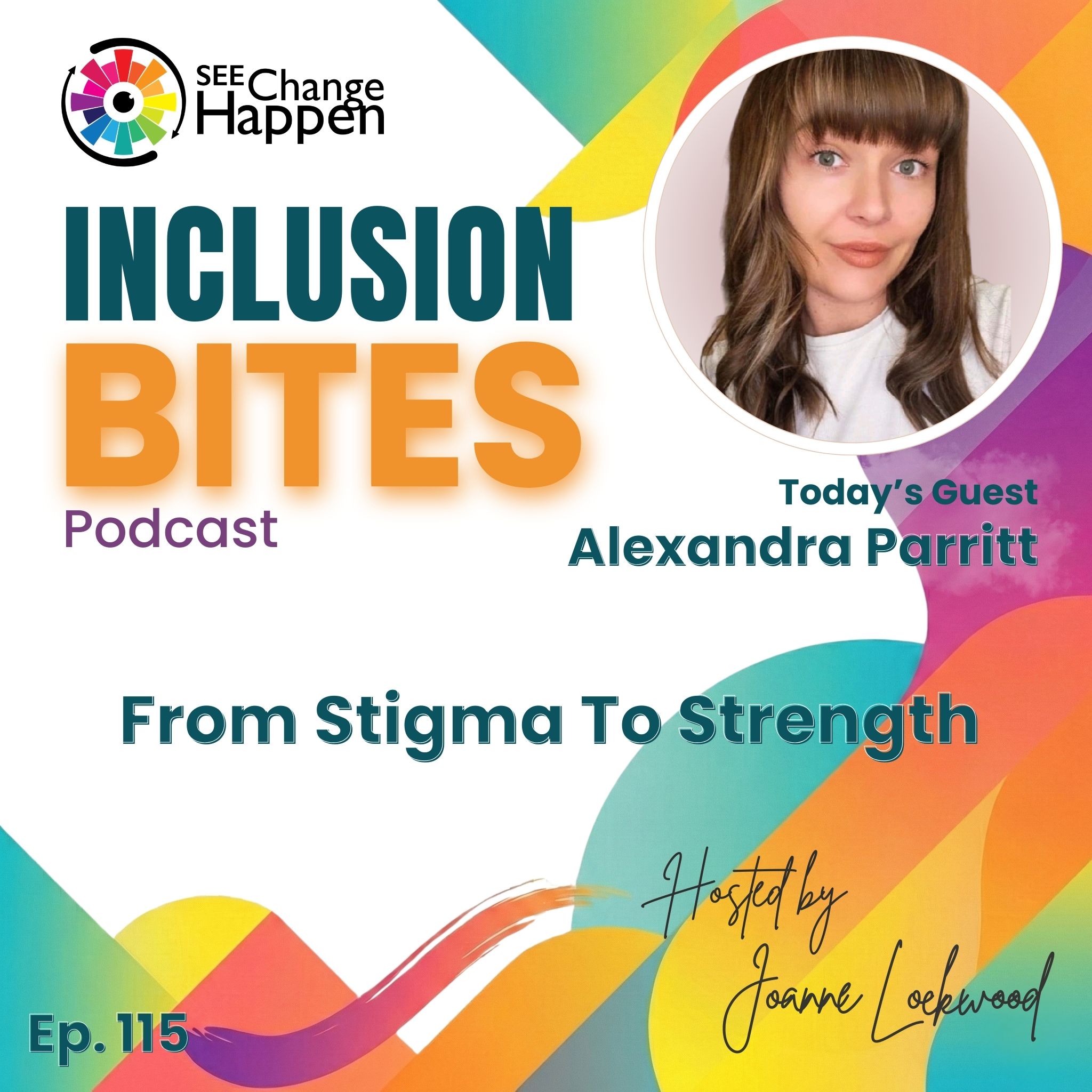
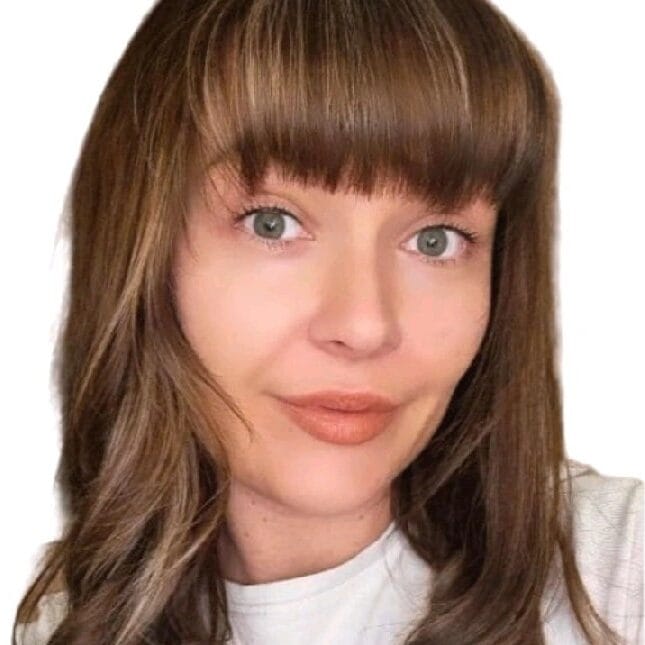
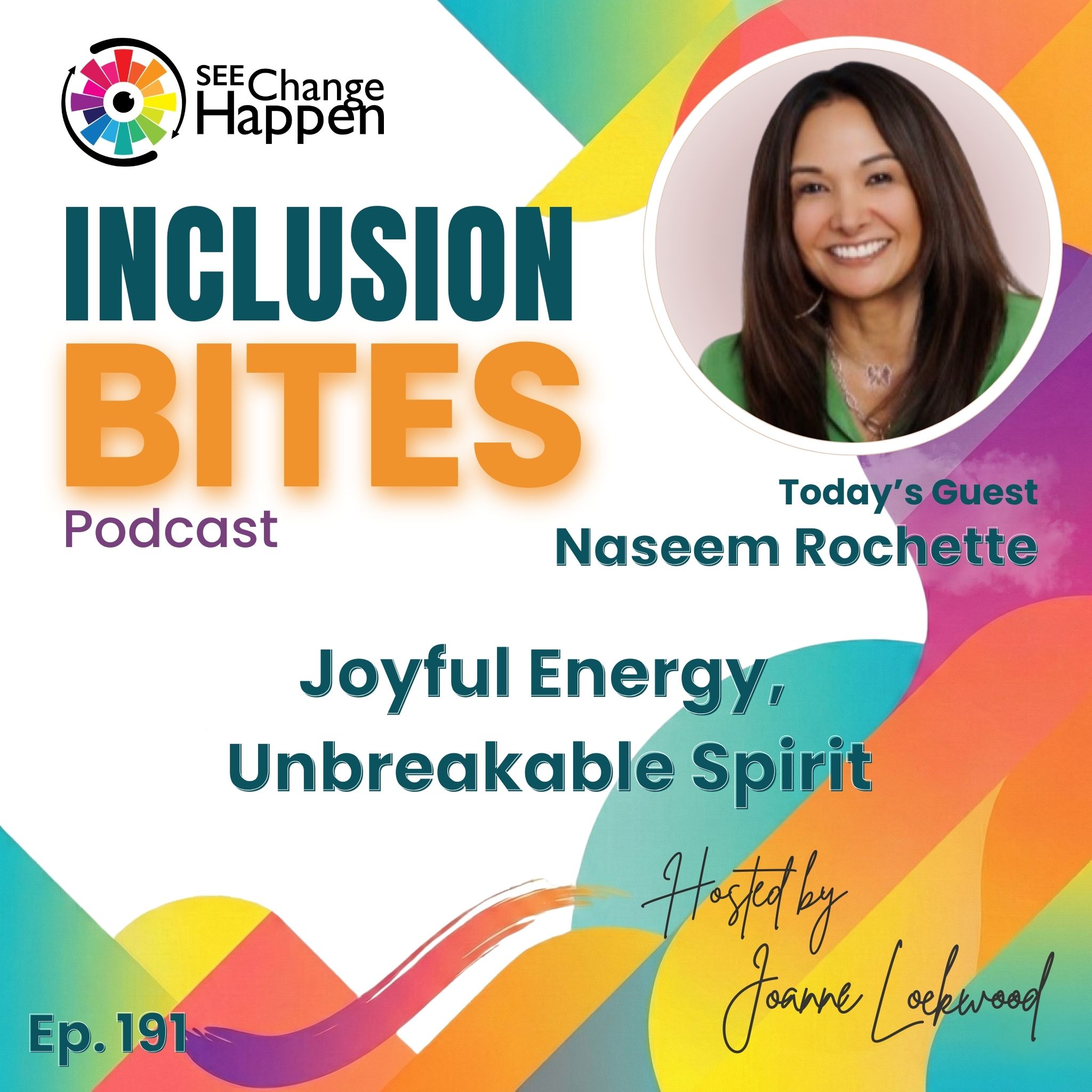
Alexandra Parritt unravels the journey from stigma to empowerment, reinforcing the significance of inclusive environments that honour neurodiversity and mental health.
In this episode of Inclusion Bites, Joanne Lockwood speaks with Alexandra Parritt about mental health wellbeing trauma.
“If you meet one person with autism, you've only met one person with autism.”
Explore
Navigate this episode
Joanne Lockwoodhost
Welcome to Inclusion Bites, yoursanctuary for bold conversations that spark change. I'm JoanneLockwood, your guide on this journey of exploration into theheart of inclusion, belonging, and societaltransformation. Ever wondered what it truly takes to create aworld where everyone not only belongs butthrives? You're not alone. Join me as weuncover the unseen, challenge the status quo,and share stories that resonate deep within.Ready to dive in. Whether you're sipping your morning coffeeor winding down after a long day, let's connect,reflect, and inspire action together.Don't forget, you can be part of the conversation too. Reach outto jo.lockwood@seachangehappen.co.ukto share your insights or to join me on the show.So adjust your earbuds and settle in. It's time toignite the spark of inclusion with Inclusion Bites.And today is episode 115with the title from stigma to strength, and I havethe absolute honor and privilege to welcome Alexandra Parrott.Alexandra works in sales foran HR tech company that introduced the 1st team basedpsychological assessment tool to the talent market.When I asked Alexandra to describe her superpower, she said it isher empathy and fire withinto make the world a safer place, one step at atime. Hello, Exandra. Welcome to the show.
Alexandra Parrittguest
Hi, Jo. Thank you for meeting with me. That was a a groovy littlesong, that. I like that. Thank you. Yeah. I,
Joanne Lockwoodhost
yeah, I've recorded it a few years ago. I was supposed a few months ago,and it's, yeah. I I quite enjoyed that now. Yeah. Because gets the guestand get a bit jiggy before we start. Isn't it? Yeah. Very soothing voice as
Alexandra Parrittguest
well, actually. Thank you. Yeah. People have often said I've got a bit of a
Joanne Lockwoodhost
late night radio voice. Who cares?Is that your dog your dog's joining in the the podcast as well? Well, she
Alexandra Parrittguest
does like to get involved, to be honest. In in any form of conversation Ihave, she likes to have her say. And and why not? You know, I I
Joanne Lockwoodhost
think the the views of dogs are highly rated interms of mental well-being, care, and, weknow they can improve people's just wholewhole feeling of well-being, don't they? So yeah. And she gets Why not?
Alexandra Parrittguest
Jo Yeah. Maybe she liked the music. Maybe she liked the intro. Maybe that's
Joanne Lockwoodhost
what set her off. Sowe called this episode from stigma to strength. Tell me a bit more about yourselfand and what what your passion is. Thank you. So, yeah,
Alexandra Parrittguest
I suppose there's a few different angles from the stigmato strength. One that's personal and then one that's relevant to theneurodiversity movement, which I am a hugeadvocate of. So from a personal perspective,I've I've grown up with a lot of stigma associated with mentalhealth and specific mental health condition, and Ireally wanted to use all of that negative energy tocreate something positive. And as you said earlier, try and make the world asafer place so that individuals that do face a lot of stigmafeel a little bit more safe and welcomed and included.And that's why the neurodiversity movement really stood out to mebecause I was looking for a communitythat believed in the conceptof turning negative stigma into something positive and seeingthe strengths out out of something thathas had a real negative impact on people's lives.And I was hoping that, you know, someone like me could belong to acommunity like that, and I didn't know what neurodiversity was or meant or what theumbrella term covered. So rather than justsort of googling it, I decided to sign up to a degree in itbecause that's the best way to learn about something and tounderstand myself and others better. So, yeah, Istarted the degree in January. I think, oh my gosh. That was awhile back now. Yes. To learn a bit more about neurodiversity.
Joanne Lockwoodhost
So you you mentioned that you yourself haveexperienced negative mental health for a lot of your a lot of your life.Mhmm. We find that there's still that yeah. We we this this is somestigma to strength, this episode, but there's a lot of stigma aroundmental health, neurodiversity, anything that peoplecan't see, touch, and feel sometimes. You know? People don't arenot aware. And I'm I'msure you probably experienced people saying, well, you don't look like you've got a mentalhealth condition or a mental health challenge. So people judgingyou, I guess, from from that, are they? Yeah. I think that's, there's
Alexandra Parrittguest
there's this definite strength and weakness that comes with masking and camouflaging,which is a a topic that's very very prominent in theneurodivergent, world. And, yeah, it canwork well in a sense that you really think that you can just get onthrough, and no one's gonna see the real me. So they're just gonnawe're just gonna get through this to the point where, yeah, you either get oryou don't look like you have x y zed. But and I thinkat the same time, kind of unrevealing the taking off themask, you think that people are gonna question your capabilities?Because in the world of business, people are often seen as just a number ora revenue generator, you know, a product of performance,and anything that has stigma associated with it comeswith that that feeling or thought or that bias thatthat hinders your capabilities rather than seeing the strength behind.So yeah. As the world moved
Joanne Lockwoodhost
on, yes, You mentioned, I think, in the show notes, you were 19, wherethere was was first sort of uncovered, and you wereable to talk about it and and not without giving your age away. That soundslike a few years ago. And I would talk to you guys. Do youdetect a different a different attitude in the workplace today? Depends which
Alexandra Parrittguest
workplace you're in, I think. Some some are still miles behind.Actually, my the founder of the company sorry. I'm trying to fiddle with apen subtly, and I just threw it across the desk. The founder ofthe company I work at now was actually the first person that Iwas open to about my mental healthbefore joining and in the interview process. Helped that he's apsychologist and has a background in CBT and therapy andthings like that, so I just naturally felt confident and comfortable enough tospeak to him about it. But I do think that there are still workplaces thatare miles behind, and it is not the workplace. It's the individuals that you interactwith each day. Each of them will hold their own thoughts andfeelings and bias and can make anentire workplace difficult because of that. Mhmm.
Joanne Lockwoodhost
Does does your work impact your mentalhealth, or is it a way of, Idon't know, having an outlet to do something different and distract yourmind? Sometimes being busy, having anactivity, engaging in something can can positively impact yourmental health. But having a stressful job or havingcolleagues or a lack of psychological safety can make it a morenegative experience. So are you do you find work as a positive experiencegenerally? It's an interesting question because, in
Alexandra Parrittguest
neurodiverse in the neurodiversity world, they often talk abouthow the environment around an individual can impactthat individual. So they could either have a really negativeexperience. So let's say someone with ADHD or someone withautism or a mental health condition, They could join an environmentand have a really positive experience and still have that condition, or they canjoin an environment and have a really negative experience, but they're still an individual withADHD and autism. So it's almost like it's not the condition thatis causing just causing that. It's the environment around themand the people around them. And I was actually always toldwith my mental health condition to to not have a stressfuljob. Try and find something that's not too fast paced, not too stressful,and they certainly would have included sales in that worldof fast paced and stressful and a hinder to mymental health. But, again, I think it's it's less about the jobrole and more about the environment around you, And thatThomas Armstrong speaks a lot about ideal jobs forthat will make make an individual with ADHD or autismthrive because of their strengths, so their strengths would make them great at thisjob. And I think that's still a key element of, actually, the workingenvironment around them is what can impact them, notnecessarily the job itself. Yeah. I agree. I mean, even though I I
Joanne Lockwoodhost
work alone well, so my wife and I work together, but, yeah, we we wewe're a micro business. But but I'm also,involved with the professional association, and I chair the board.And I'm very keen from a cultural perspective is that people can canbring that that whole self to work. That's I hate that buzzword because Oh, I
Alexandra Parrittguest
know. People wouldn't doubt me. What's that mean? What's that mean?
Joanne Lockwoodhost
Yeah. Bring yourself to work. But I'm very keen that if I'mhaving a a bad week or I'm having a bad day, or I just saystop, I can't, it there's too much buzz in my ears, toomuch noise. Just better press the pause button and say, look, give me give mea couple of days. I just need to sort this out, sort my life out,get this back on track. I can't over I don't wanna overload. So havinghaving working with people around you where you can just without have to go intodetail, just say, give me 5, give me a day, give me 2 days. JustI'm I'm I'm here. Just give me some space. You don't you do offer tohelp me. I'm I'm I'm fine. Just need to say, okay. I'm hereif you need me. Bye. And it's it's it's so when you talk aboutthe environment, the the colleagues, the environment, the culture in which youwork, it's it's better to have those conversations without them beinghuge conversations all the time, isn't it? Just knowing that that's not another anxiety you'vegot across. A 100000%. My colleague from
Alexandra Parrittguest
my previous role, worked for SAP, and my colleague, HannahOakford, she was the one that actually spoke about making the worldlike, different corners of the world a safer place, and she also had a taglineof bringing your worst self to work. Like, we want you to feel like youcan bring your worst self to work. And I suppose that is a spin onthe authentic self because there's nothing worse thanhaving, you know, something that's going on, whether there's Joanne actualthing going on or it's just a feeling that you're sat in, and you're reallytrying to force yourself to work and force yourself to play this,you know, play this role or have this mask on.Actually, I've I've experienced that myself. I I lost my mum 2 years ago, andI'd just come back from maternity leave. And I wasso stressed. I was like, I've just taken maternity leave, and I've just comeback. I can't then take off any more time forcompassion leave or anything. I wanted to take time off before she passedbecause I knew it was happening. And, actually, the workplace, itwas a brand new manager that had taken over whilst I was on mat leave,and he was like, this is just a job at the end of the ofthe day. Like, we're we're just selling software. You take thetime to do what you need to do. And II'd never sort of I hadn't had many managers before that. Butjust that one sentence that they said to me, I knewthat I didn't have to worry because, you know, that thejob was was irrelevant at that point. Ideally, as asalesperson, you just come in and you start making revenue, but it was the managerand the working environment around me that made me feelsafe. And and, yeah, that was invaluableat that point in my life, for sure. Yeah. I could completely relate to that.
Joanne Lockwoodhost
About a year well, just over a year, probably or 14 monthsago, all four of our parents, soMarie's mom and dad, my mom and dad, had aspell in the hospital. And at one stage, we hada parent in different wards on different floors of the samehospital, and we were visiting them up and down the lift. AndJo just if if if we had both been working foran employer, we both kind of felt that we wouldhave pushed their patients probably tothe edge. Because at some point, you have a job to do, and and nomatter how flexible an employer can be, they also haveto there has to be some boundary somewhere, doesn't there? And whatbut the ability to just get up and gonow when when we needed to without having to explain.So it gives obviously, we we had income challenges. We had toearn a living as a freelancer, as a as a self employed person, but wehad we weren't constrained by somebody else'srule. And when Marie's mom eventually passed awayjust over a year ago, we she was able to take all the time sheneeded, and we as a family were able to do that. She could able tosupport her dad and and work and so on. And we we just we sathere one night, and it's apparently Jo difficult workingfor an organization. Or or the organization that Marie used to workfor especially because they were well, I'm not saying they wereterrible, but they just weren't very progressive. They weren't maybe kind ofa a rule based HR world where this is the rule. This is what youget. Any more than that, it's unpaid or it'sconversations about, are you going back to work? So, yeah, you're right. The environmentplays a huge thing, and not having to have that worryis is hugely, supportive of it. And I I think
Alexandra Parrittguest
as well, like, the the experiences that we're covering are experiencesthat anyone can have, whether they've got a mental health condition or neurodivergentor not. And it's the concept that inclusion really is anindividual led world because, you know, youcan try and be inclusive to people with mental health conditions and to people withneurodivergent conditions, but then there's so many things that canhappen in one's life that will completely change the courseof their life, and and they will need some leeway and breathing spacefrom their employer. And you can't preempt or preplan for that. Youhave to just, you know, work with each individualas an individual, which is the same for the the neurodivergentworld, to be honest, because I think there's I cansee things happening in the world, but it's still verymuch focused on a stereotypical profile ofwhat an individual with ADHD looks like, for example. And there's afamous quote, and I can't, for the life of me, rememberwho said it, but it's this quote itself has stuck with me, that ifyou meet one person with autism, you've only met one person with autism,and you can extend that across the neurodiverse space. And I think,again, there's so much focus and energyand effort to be neuro neuroinclusive as a workspace, butthey're really just looking at the conditions underneath the neurodiversityumbrella umbrella rather than the individuals. And if you take a stepback, it's like, okay. Yes. It's a different space to learn about, differentworlds to learn about. They're still individuals with their own individualexperiences and challenges. Not everybody not everybody with ADHDneeds a fidget spinner, for example, and then they're gonna be absolutelyfine. It's it's an individual'sjourney. Yeah. Although I
Joanne Lockwoodhost
I went I I sat in on a a training session or no. It wasa it was a workshop day with another company once, and they put outfidget spinners and and tactile play toys, thosesort of things, on the tables and then and I found myself with a fidgetspinner. And what I realized by the end of the day is because I hadthe fidget spinner and I was playing with it all the time. I didn't pickmy phone up. Jo I kinda learned or realized tomyself that my phone had become my fidget spinner. The playing withit, the the the reclusing into it, the the the rhythmic, thedoomscrolling, whatever it may be. I I found out, Ross, I didn'tappreciate that I needed to have that kind of something in my Joanne.The fidget spinner worked. And my wife, Marie, she she says II I play with my nails a lot and clicking them and and and sortof she said, oh, I'm always fiddling my nose. She she keeps saying, stop it.Stop playing me now. Stop playing me. I said, well, no.I can't promise not to stop playing around now because it kind ofmy brain wants to do it. And, you know, I'm not saying it's stimming oror or pitch particularly in that sort of air in that sort of zone, butit's definitely I I've got a need to have something going on.I don't know. That that that's very similar to having a, as I say, somesort of stimulation or something for the brain. When thebrain's idle, it needs something to be doing in the background. Otherwise, it just runsaway or just, like, crazy. So Yeah. Yeah. I completely relate to that. And
Alexandra Parrittguest
having a lab the art really have a fidget spinner, to be honest, because II did I've I've learned to fidget below the cameralevel, so it's not obvious, But I do it with a pen, and the penflies. So to be honest, I probably could do with investing in 1.
Joanne Lockwoodhost
Yeah. And, yeah, when I was growing up, peoplewould sit there and doodle in their notepads, wouldn't they? They'd be drawing alwaysdoodling something, always writing something when the teacher's talking. What are you doing? I'm justdoodling. What are you doodling for? Pay attention. It's like but that's the same sortof thing, but we just didn't have an appreciation of this needfor the the brain to have a another outlet somehow. And,yeah, I've actually, look at my desk. It's messy, and I've I've got I've gotthese dice, which you you know Yeah. If you're listening to the podcast, youcan't see them. But they're 2. They're fitness dice, and one's got the number ofreps on it, and one's got the exercise you have to do. So if youroll the dice, it says how many crunches you gotta do. Not that I woulddo, but I I often sit and play with these. Well, a couple of Duracellbatteries on my desk because I'm often playing with these Duracell batteries. But it'sit it is. It's having that that stimulation as a as aproper toy or or something else. And, yeah,when you raised that and mentioned it, I completely relate to it. Yeah. No.
Alexandra Parrittguest
Exactly. And I think, there's a lot of there's a lot of ways that wecan make the working environment more inclusive toeveryone because the whole working from your desk, 9 to 5,in the office 5 days a week, you know, expected to dox, y, zed. Everybody works in different ways.Everybody's brain needs different things. And that'ssort of the main concept of neurodiversity, isto look less at conditions and traits and more atthe value in having diverse minds and different mindsyou're excluded, sort of thing. And I do thinkworking environments are a little bit more flexible than they were because we're sat atour desks at home, fiddling with whatever is on ourdesk. I I I do
Joanne Lockwoodhost
wonder. You know, we talk about people who have neurodivergencyor neurospicy, whatever whatever phraseyou you people say these days. But I often wonder who who isneurotypical? Who is that one person on the bell curve of normalitythat is typical? What does what does what does neurotypical mean?I I'm not die I haven't been diagnosed with autism, ADHD. I don'tparticularly think I've got an extreme case of anything if I haveit, But I have traits and go, yeah. I dothat. Yeah. I do that. But I wouldn't want todeclare myself or identify the origin.But I often think, well, what is it, really? Is itjust this broad spectrum whereeverybody's on it somewhere, and it's just towards the edges,you have different different needs? And we just have to make sure that we're treatingpeople fairly, because who is typical? Who is normal thesedays? Well, I think that's a really good point because I think outside of the
Alexandra Parrittguest
self advocacy groups of, say, individuals with autism, whichare thriving communities that are doing incredible work andsame with ADHD, dyslexia and everything I feel like neurodiversity is asocial movement that is finally battling against the sense of norm. And the more battlingagainst the sense of norm. And the more reading that I do in this degree,the more that I'm like, yeah, actually, what is normal? And where dideven come from? Why do we always have to fit in this box? AndProfessor Amanda Kirby and, Melanie Francis, they have a Do It Solutionsorganization and they said, we're all neurodiverse. They make thatstatement because, yeah, neurodiversity is the concept of us allhaving different minds operating in different ways, thinking, feeling,behaving, And and and that's that'show, you know, the world thrives. If we were all the same, gosh.Well, we Yeah. Long conversation, would we?
Joanne Lockwoodhost
No. And, you know, you think aboutthings like Myers Briggs and those sort of personality testing and dyspophobia.Whether you're a fan of those or not, you know, the concept ofintroverts, extroverts, all those kind of theories, Carl Jung and allthese sort of people. You think about this sort of personalitytypes. And I know you work for a psychological assessment organization.But that really is just realizing that people's brains thinkdifferently. And we're trying to we're trying to work out thisis your type of thinking style. This is your type of personality.
Joanne Lockwoodhost
What role is gonna work best for you? Where are you gonna struggle? And Iguess what you're doing in your psychological testing around teams is which starsare gonna clash, which stars are gonna accelerate each other,group think, challenge, stand out. So it'slooking for the dynamics and team to get a balance. So I thinkneurodivergency is is just recognizing what we've been talking all alongabout these different personality types and different interests and how we react to theworld. And, yeah, I I I fully accept there are people whohave, on the ASD, who havemore extremes, more complex needs, moresupport needed. But most people are kind of ableto come with life or whatever the way they do once they understandwho they are. And I think some of that is just down to self acknowledgement,isn't it, where you you figure out what who you are, whatmatters to you, what impacts you, how you can support yourself, and then how youcan advocate for what I need with others. I think that have it creating thatvoice, isn't it? Yeah. I mean, growing up in a world of stigma, you
Alexandra Parrittguest
lose that sense of self advocacy and self esteem. It's something that we really haveto work even harder than others on to to build it up.And I've actually heard some amazing stories outside of the workplaceof individuals that have more extreme forms on the ASD spectrumand,a nonverbal and have autism, and and they have beenplaced in an environment that has been adjusted to themand it's had an incrediblypositive impact to the point where some, not that this would work for all,but some children that are non verbal with autism have evenspoken and said a word when they've been placed in anenvironment that is sort of adjusted and built aroundthem. But, yeah, in terms of the personality test,it was strange. I was doing reading for my degreein neurodiversity, and it was the first time that my bothworlds came together because there was information about personalitytests and the concept of the norm and and how this all came about. Andthe Myers Briggs personality test in particular, the origins ofit were questionable.I really had no idea where they'd all come from. I suppose you don't just
Alexandra Parrittguest
sort of sit back and think about that in a in a day to daylife, And it was really just testingthe how safe the organizationwould be to hire this individual from a kindof mental health perspective. Andit it did get me thinking about how accessible and inclusive someof the personality test world is. I mean, we go from thebig five and I think I've kind of joined the company with amore inclusive, accessible lens of trying to make that talentassessment space a world where you can have, like,strength profiles and not look at whether an individual'sgood or bad or if they're right or wrong or can or can't perform ajob, which is what most competency based assessments do.But as you said, it's it's being more strategic in in the worldof hiring and selection. And looking at the team that you have todayand the different kind of personalities and preferences andvalues, thinking, okay. Actually, let's let's findsomebody that's a little bit different in terms of their traits and characteristicsand their values to to create a more diverse let's sayyou might have a whole team of the same job role, let's say sales,but you're not going to want everybody to have exactly the same approach to thatjob. And when I went through the assessment,I was lower on the scale of emotion control, which actually means I'm morepassionate and dynamic than calm and confident and stableapproach, and I was very low on outgoing because,me, I like cup of tea, puzzle book, bed by 9PM, which isn't ideal for the world ofsales and networking, unfortunately. That'd
Joanne Lockwoodhost
be great if you wanna be a fantastic mom. Well, yeah. Exactly. It's it's
Alexandra Parrittguest
just necessary, I think. I was like that before I had mytoddler, but,but, but it was, you know, it wasn't an assessment tosay whether I was good or bad at the job. It's just one lens inan overall profile of, well, I just spoke like this to the thefounder and about my mental health, and he saw something in me.
Joanne Lockwoodhost
Yeah. It's if you've if you've got a whole team full ofoutgoing people who are highly drivenand go getty, you'll end up with a whole alpha crew all kindacompete with each other and conflict and and and not be supportive. So you needa balance of of types Absolutely. Especially when you wantpeople doing a support role or a,well, attention to detail type role, those kind of things. So you doneed different personality types, and people tend to gravitate. Buteven, I mean, I'm I spent most of my life running anIT company. I've been in electronics. And I used to think I had ahigh attention to detail. And what I discoveredwas I'd like there to be detail, but I don't want to be the onethat does it. So I have got attention to detailin the outcome of others. Whereas for me,I actually don't like doing the detail. And that's really is it but it tookme best part of 55 years to realize that.When I people used to say, well, you got a really high attention detail. AndI've got high attention to spotting when detail is not done. Yeah.I'm actually not the person. I'm not the person. I'm an 80% person. I'ma person that is good enough. Let's let's just let's just go with it. That'lldo. We'll figure it out. Whereas, you know, if you really have ahigh attention to detail, you're the 99.999% person. That's notme. Mhmm. And it took me a long while to figure that out. Now Ihave. I'm kinda comfortable with that because I go, yay.I get it now. And and I I I just like I've justdone now, I share that with people and say, I don't have ahigh attention to detail myself, but I I expect high level of detail in others.And I look out for it. So, yeah, it'syeah. I think understanding self is really important as well.
Alexandra Parrittguest
No. Absolutely. And I think that's a journey that a lot of individuals have togo on regardless of, you know, whether they have a neurodivergent condition oranything, and it's I I think a lot of people haven'tbeen on that journey. So whether you're looking at it from the perspective of thosethat are getting late diagnosis and going on this whole reflective journey of, ohmy gosh. This all makes so much sense now, and thinking back on how they'vebehaved. I think even if you don't have thatbefore I joined this workplace, like, I found myself at a completecrossroads where yeah. So a lot of very big life events hadhappened, and I was suddenly like like, who what what do Iwant? Who who am I? Like, what do I value? And what do I wannado with my life? And and all this kind of stuff, which 9 times outwell, I mean, at least 50% of the time, if you're looking for a newrole, you might well be in that headspace because yourcareer takes up most of your life. And I really just I'd never reallylooked inwards in that sense of of what can I bringto the table, but what do I also want?And I was actually googling tests that could just tell me, like,what's my dream career? Like, what do I want? What do I value? Because Ijust sat there with an empty notepad, like, I don't know. I've never really thoughtabout this. So before I even came towork where I work, the recruiter I was hadbuilt up a connection with sent me the assessment because they sort ofrun through all candidates through it. And I I got the the report because whenI tried to Google it, I yeah. You take the whole test, and then youhave to pay for it at the end. I was like, well, I don't wannado that. So, yeah, I just got this report, and it it just had itall there for me. And I was like, oh my goodness. You know,31 years, and I've never really taken the time to think,what what do I want? It's always about, well, can I do I have theskills? Do I have the experience for this company to wanna hire me,and do I have what they want? I've never thought aboutwhat what do I want? And it's,it's quite quite mad that we never really take the time toto reflect on ourselves like that. Well, here's a question for you, though. Goodness.
Joanne Lockwoodhost
So what what do you want? What what is your have you figured that oh,yeah. You see? So what what does it tell you about yourself that youdidn't know before? I think it it kinda gave me
Alexandra Parrittguest
my profile of of sort of what I bring to the table.I always knew what my weaknesses were and what I couldn't do,but I hadn't ever looked to anything in a positive light. And andthis is very, very, like, neutral in the way that it presents traits andscales and and characteristics in that there is no good orbad either end of the scale. And, actually, theemotion control one was interesting because I always thought from a mentalhealth perspective that perhaps I don't havethe correct way of managing emotions forany kind of fast paced job because that's what I was always told.And then I realized, okay. Maybe I'm not calm andstable in my approach. I can just sort of, like, you know, fluctuatewith the stresses of sales. But, actually, if you look at thatfrom the terminology of passionate and dynamic,it really starts to give a bit more oomph and it give us giveyou a strength trait rather than something that I always saw as a weakness asa result of stigma. And and and that was something that I wasnever able to to do myself. Yeah. Looking at the kind ofwork values as well, like, what I what I kinda wanted from a from acompany, I never really knew. I just kinda looked at the benefits that companiesoffered. Money, holiday, health care.Yeah. And then I realized that that stuff actually wasn't thatimportant because I've had a lot of that before and and wasn't necessarily happywithin the working environment, hence why I joined a start up because I definitelydid. You don't join a start up for the benefits. That like, that's for sure.You you join it because of the the team environment that you'rejoining and the kind of values that they have and the individuals.
Joanne Lockwoodhost
Jo get shit done as they say. It's it's kind of fast paced, isn't it?You're not no no huge layers of bureaucracy. It's it'severybody trying to drive change forward quickly. It's it's kind of startupmentality, isn't it? Yeah. It's a completely different world. I've not been in this
Alexandra Parrittguest
world, and I was a very big company mentalitybefore, and I love the fluidity ofthe start up world. And, actually, if anything,if I was advised away from the fast paced kind of job role and Iwent for sales, I certainly would have been advised away fromthe the dynamics of the start up world, but I just don'treally like to listen to people's advice sometimes.
Joanne Lockwoodhost
That's a good thing. Yeah. Because, I always say we don'tlisten to ourselves enough, and we want we need validation.We need someone to say, yes. You can go for that. It's that that sortof imposter syndrome, limiting beliefs. Sometimes we need permission, don't we? Yes.
Alexandra Parrittguest
Absolutely. Like, is this the right thing to do? Joanne, why I Googled.It doesn't help. I don't recommend that, by the way.
Joanne Lockwoodhost
But it's chat GPT now, can't we? Oh, yeah. Yeah. Put put put your stuffin there and go, what what what should I do? Here's a bit of me.
Alexandra Parrittguest
What what should I do with my life? Yeah.
Joanne Lockwoodhost
I'd Yeah. Just try that later. See what itsays. But I I've tried electronics. I've tried IT, and now I'mtrying HR, EDI, speaking and training consulting.So yeah. Well, it's something you truly believe in. Yeah. It
Joanne Lockwoodhost
is. It's I've I often talk about Ikigai, the the Japanese artof finding a happy life, which is where you try to find those quadrants whereyou Jo, what what the world needs, what I'm good at, whatI get paid for, but also what I what trulyinspires me. And I I always found that I could do 3 of them, butI never found that thing what truly inspired me, the passion. Andnow I've got something I'm good at, the world needs, and I've got passion for,and I'm and I'm okay at it. Jo, yeah, but bringing them alltogether, you find that sweet spot. And I always say that if youif you find that that magic sweet spot in the middle there,work that never feels like work again. You know, I don't I don't need toretire because I'm doing what I love to do. Yeah. And
Alexandra Parrittguest
bad. It's it's not as you if you blend that in with,
Joanne Lockwoodhost
sufficiency and not gluttony. So we're not lookingto have more than we need. We always work on what we need, thesufficiency. And we're not we don't need bigger, faster, stronger. We justneed good enough, what keeps us going, what makes ushappy. And she bent those together. It it it's really helped mymental health, my stress levels, where I'm not trying to chasesomething all the time. I'm going, it's okay. I can I can Ican free wheel downhill for a bit? I'm cool. Doesn't matter. I cansay, well, take the pressure off. Or, Jo, I'm out. Don't need todo it. It's immensely empowering as well to be able to have that thatsort of self, yeah, self self empowerment to sayno and stop and I'm off. Yeah. Absolutely.
Alexandra Parrittguest
And and, exactly, like, being at a cross roads, it itfeels impossible to find something that fitsall of those angles. And and taking the degree inneurodiversity was something I never thought I'd do because I was like, look. I've alwayswanted to study psychology, but I've got a family now, and I needto stick with the job that pays. And how onearth am I gonna pay for and fit in a degree and change mycareer entirely? Because I thought, well, gonna have to be apsychologist then. But this just sort of came my way where itblends the world of psychology, sales, andinclusion and accessibility. I mean, I brought that myself. I was like, I'm onlyjoining if you allow me to join with this lens of how we can makethis world more inclusive. Just as yousaid, where where you're you're sat today, where you're you're finallycombining all of those together, Yeah. That's that's sort ofwhat happened with me. And, you know, not everyone it's very difficultto get to that place, isn't it? But I think the first step is actuallyunderstanding what what drives you and what are you passionate aboutand Yeah. Yeah, really reflecting on yourself first. I
Joanne Lockwoodhost
think I I grew up as a as a Gen x personwith that mindset where you would kind of hadthis expectation of a job for life or a job for long term. It waskind of a career was 10, 20 years type thing.And without, again, without casting any judgment onyour age, I would suspect you're probably a millennial. And that
Alexandra Parrittguest
me. Oh, not at all. Well, on the on the cusp.
Joanne Lockwoodhost
And there's a very much moretransactional work concept these days where youwork is is part of your life, not the only part of your life. You'renot sucked into it. You you want more outof it than just the money. And I think I I grew up with that,you know, want wanting bigger, faster, stronger, and it's it's getting off thatbandwagon. I think I'd like to think yeah. I'd like to think that inin 5 years' time, you you you have the flexibility in your own head tosay, actually, it's not working for me. Let's try somethingdifferent. And you you you will have that empowerment notto feel obliged to to stick with what you decided when you left school. AndI think that was kind of my parents when I I left school tojoin the Royal Air Force Electronics Engineer. And when that didn't work out after3 years, they were kinda like, but what are you gonna do now? It'slike, I I I don't know, but I'll figure something out. And I kindafell into IT. So and I gave that a go for a while, and thenI fell out of love with that. And I I felt soempowered by not hanging on to something that didn't makeme happy. And I think that's what we're gonna try and focus on is iskeep looking at what makes us happy and what fulfills us, whatdrives us. And then you'll get we talk about discretionary effortand going the extra mile and and putting our passion to things.That's really where we wanna put people, isn't it? Yeah. And it is interesting that
Alexandra Parrittguest
you mentioned that concept of you, like you start a pathand you have to stick to that path and that path you know, because itstarts from sort of school, doesn't it, when you've gotta whittle down your subjects andthen do some further education in a more specific subject, and then you've gotta godown that path that's related to that. And the amount of people that stick tothat path is is very little, but those that really trywithout actually wanting to, it it has aprofound impact on them. And, yeah, it's it's interestinglooking at the different generations. The talent world is always trying to do that, lookingat Gen z now in the early career space and the talent that they're bringingin and what's important to them. And I think even, yeah,even less so is it that they they have to have acareer to get by and they they're questioning the corporate space.They're questioning the corporate jargon and being sold to by businesses.They wanna join a business and be part of the conversation, whereasI suppose before, we're much we're very much like, well, this is our this iswhat our space in the business, and we must not go outside of that spaceor question why we're stuck in that space orand and the empowerment, the level of empowerment has increased witheach generation, I think. Yeah. So
Joanne Lockwoodhost
COVID had a huge impact on on the world,probably outer space as well, no doubt. But, yeah, it had a huge impact onthe world, how people perceived the world of work,well-being. And we're now 40 years pastit. And we're starting back, aren't we? I do think we're starting back into kindof can't do it that way anymore. No. No. Can't do it. We're having aCOVID apnesia or is it Yeah. Yeah. No. I
Alexandra Parrittguest
I'm noticing that very much so, especially with, like, the actual working environmentof of there was a lot of, companies thatkind of went down the path of flexibility, flexible working interms of where you could work and and when and, you know,things like that. And that that was positive for the majority ofthe neurodivergent community in that they could sort of work in an environmentthat worked for them. Then to be thrust backinto you know, the hiring process where you've gotta comeon-site in person for the interview, putting them in an environment that's gonnastress them out incredibly. And then in a workplace, right, well, that's yourdesignated workspace and desk, not thinking about any kind ofadjustments. It does seem like we've gone very much backwardseven though we we were in that flexible workspace worldnot long ago, and, you know, it seemed to be working out pretty well. Andour company is trying to reel back that control of of putting us allin this box. Yeah. And and noteverybody's not every individual or individual'sbrain can work and thrive in in that particular environment. So,yeah, and and it's not it's not inclusive or flexible for a lot of otherpeople either. So, yeah, it's been a very interesting conversation,hasn't it, in the workplace? Yeah. We we see a lot in the
Joanne Lockwoodhost
news from often our politiciansdriving this we've become too woke. We've become toowoke. Yeah. We've got too many snowflakes who want the world tobend over backwards for them. You know, the the majority of people just wanna geton with stuff and wave our British flag around, and andwe're we're we're I think I saw it the other day. We're pandering to smallminorities. We have to bend over backwards to keep them happy. We've gotta stopit. And that that seems to be the pervasive kind of political messageat the moment, doesn't it? Yes. It think I
Alexandra Parrittguest
developed a twitch in my eye as as you spokeabout that. I I I just think that,it can be a reflection of thethe great work that these minority communities are doing toself advocate because a response like thatmeans that our kind of workis getting somewhere and it's irritating those that want that sense ofnorm and that that this is the the way that the world should workbecause the only reason they would react like that is that we are beingheard of not as much as we should be, but,the royal way. And and things are happening and changes are happeningadjustments are being made. I don't even like the word adjustments, to behonest, because adjustments suggest that you're bending over backwardsfor these minorities, whereas adjustments arevery much enablers and should be seen as just standard practice.But, yeah, they do seem to be fighting back onthe great work that things like the neurodiversity movement are doing,but I think I think it's a sign ofof of the success that these communities are having, actually. Yeah.
Joanne Lockwoodhost
I I think if you look back in history where where change happens,it's as a result of people really comingtogether, really starting a movement for change, and then we see theinevitable backlash. We we saw it. We still see it aroundanti racism in the US and in the UK, the belief thatthings are better now. There's not things aren't necessarily better.They're they're different, but the fundamental's still there. And Ithink you look at the LGBT community, there'sstill stigma around being gay, being a lesbian, beingbi, and also almost certainly being trans these daysis better. But it's still a long way, I guess, when wetalk about people with poor mental health, well-beingneeds, low socioeconomic state status, educationalchallenges, neurodiversity, all those things.
Joanne Lockwoodhost
Again, the the typical person is going, well,hang on a minute. What about me? What about me? Why not? I can't belooking. You know, I'm I'm I've got needs too. I thinkthat's that's the rise of the the incumbent, if you like, the person withprivilege saying, I feel my privilege is being eroded. Andthat's that's the danger, isn't it? Where it's trying to involve everybody in theseconversations and not I'm a great believer that we can't we can'tremove marginalization by marginalizing somebody else. We can'tfurther inclusion by excluding others. It's trying to havethese weak conversations as you described it and,moving things forward and shuffling up, takingtheir space ourselves, recognizing that fairness is aroundeverybody having a bit of a look in. It's a bit like thethe, the baggage collection at the airport, isn't it? You youif you look at the the people behaviors, there's these people will stand rightnext to the collection belt staring down the down the beltlooking for their suitcase. And there's the other people who who get off theplane last, who goes to the toilet, who wanderaround, have a drink, talk to their talk to their family, and thenlook over the top and go, oh, my case is here now. Walk straight up,put on, like, a toilet, and walk off. That that's me. That's what I do.Yeah. So I'm not I'm not pasting it because you don't get outany quicker by standing there waiting. You just stress yourself out. SoI think what we need to do is encourage everyone to get off the planelast. Well, no, I actually don't because I wanna get off the plane last.There's no there's no there's no benefit to rushing on the plane orrushing off the plane. So it's just It's on human dynamics,
Alexandra Parrittguest
isn't it, really? Yeah. But I do I do truly think, you know, you've gotyou've got 2 worlds at the moment. You've got the world of talent where there'sa very, very obvious skill shortagein in so many areas, and then you've got individuals thatare just not being given the opportunitiesto have the kind of the right education needed or given anyopportunities in the place of work. And they're saying, well well, how about us?Why don't, you know, why doesn't the world think aboutthings in a different way and look at at wideningthe talent pool and making somenecessary progress to include more people,and then you've got the people in the middle like, well, what about us? It'slike, hey, you're already in the world of work. There'sso many Jo much opportunity for people to beupskilled, reskilled, enter the world of work, But adjustments arenecessary because the the world isn't is not builtto be inclusive, and it should be. Yeah.
Joanne Lockwoodhost
I I think, you know, it's it's right that if someone says, well, whatabout me? What about us? Whoever that may be. And byremoving social stigma from a lot of the things that are stigmatized,flexible working, talk about mental health,parental leave, shared parental leave,both both parents involved in bringing up their child on a on an equalfooting, that will allow people to say, well, what about me?To say, I actually wouldn't that benefit you as well? And they go, well,yeah. But but I I don't want it because there's a stigma.What we're trying to do is remove stigma and have conversations about these thingsso that you are part part of the the people benefit from this aswell. You could say, oh, stop. Push the button. Hang hang on a minute. Iwanna I've gotta pick my child up from from here. I've gotta go to theschool play, or I've gotta it's it's my my turn to to be in chargeof shopping and and food today or or whatever. Go listen tomy child read tonight, so I can't stay late. By removing thestatements, we're we're actually creating a world where everybodycan succeed. And I'm a great believer that I am part ofeverybody. So if everybody if everybody succeeds, that that's meas well because I'm everybody as well. And I think that's what we gotta tryand do is what I'm saying. Not just about you and your minority or youryour your particular characteristic or lived experience. We're just trying to make it betterfor everyone, and you everyone as well. You're in there. Absolutely.
Alexandra Parrittguest
I don't think our mindset is particularly common, though,because I'm exactly the same. You know, I advocate forworlds that I do not understand thelived experience of those worlds because I do notidentify as that, but I advocate for everyone to have thesame opportunities and the same safety. And,you know, I just I can't see why anyone wouldn't,but I don't really understand how you wouldn't want the world to bea better place for everybody. I know it sounds really lame and cliche, but, Ithink that's it's not adjustments for minorities.It's opening up the talent world and the world of work andopportunities to anyone and everyone because everybody deserves a fairJoanne. Businesses are going to benefit from it. You see these socialmobility projects now. Where were they years ago?Why were they not part of the conversation? So something'shappening. Something. Very slow, though, isn't it? It's all very slow. Isn'tit? I was the World Economic
Joanne Lockwoodhost
Forum. They published their gender equity report. They do it every year. And Ithink the last one is still predicting bestpart of 80 odd years for gender equity in the westernworld. If you I think if you look at globally, it's a 160odd years. And in certain parts of the world, it's 200 or plusyears. And we can imagine, you know, South Asia, Middle East, there's allplaces, China, Russia, Afghanistan, you know,all these places where we can see gender equity going backwards. Andit's, who wants to wait 80 years? I mean,who who wants to wait 40 years? Who wants to wait 20 years? Who wantsto wait 5 years? And it's it's it's the frustrationthat the pace of change is glacially slow sometimes. Andyou can only see it by looking backwards to see how far we've come. We'rewe're a different world than we were in 19 sixties than we were in 19fifties than we were in the 1800. But you look forward, youthink, wow, that dot on the horizon is so small. It's so far away.And we've gotta kinda keep the faith that every step forward is a step forward.And, yeah, the reflection of where we come from is is is hugelyimportant. It keeps us keeps us motivated, baby. Well, I think that's
Alexandra Parrittguest
as well change the goalpost is always moving for change because the goalpostof where we wanna be and where we think we should be is alwaysgonna change With the more individuals that speak up abouttheir experience and their stigma and their challenges, you're like, oh, yeah,no, we should include that in the conversation Jo that the goalpost is always changing.It's always going to feel far away, but as long as you're moving towardsit and not backwards, then you'resucceeding. You're making an impact. And and that's what's important. Absolutely.Wow. In each shot. We could we could we could carry on we could carry
Joanne Lockwoodhost
on for another hour, I'm sure. So, Alexandra, tell us a bit about howpeople can get in touch with you because I'm it's a fascinating conversation. I'm surepeople would love to catch up and find out more about your your views of
Joanne Lockwoodhost
the world. Yeah. Yeah. If anyone wants to listen to my views of the world,
Alexandra Parrittguest
I've got so many, but I also like listening as well.Yeah. So I, on LinkedIn, I'm Alexa Carter292. I had to look up my URL earlier because I I don't often,plug that, but, I speak a lot about mental healthinclusion, the the assessment world. I work forMy People Group, and I'm working on tryingto we're bit of a disruptor in the assessment space, but I'm trying to makeus more neuro inclusive and more accessible. We've done some amazingwork with some companies on doing that, and I'moften just do you know what? I'm not often behind my desk. I'm often workingfrom my sofa. Don't tell anyone. Usually sat nextto my dog working on my sofa. I just thought I'd come to my studyfor the podcast.
Joanne Lockwoodhost
Wow. Actually, honestly, I mean, I'll let you into a secret as well.Sometimes, I I deliver training in my pajamas.
Alexandra Parrittguest
Not that. But I'd but I put a hoodie on. Yeah. Yeah. I I I
Joanne Lockwoodhost
I I I I've never worn a hoodie today. I have got dressed. So andthat's the that's the flexibility of of working from home.What what I wear isn't affecting my ability todeliver anything. It it just affects your ability to perceive me as someonewho's who is worth listening to. So, yeah,sofa, office. It it's it's about productivityand output, not how you how how you deliver that. Still gets the
Alexandra Parrittguest
job done, doesn't it? Still gets the job done. So
Joanne Lockwoodhost
maybe we'll have another chat in the future around getting thejob done no matter where you're sitting. And I'm all for
Alexandra Parrittguest
wearing as well. Theo Smith was talking about that not long ago. And, youknow, what you wear doesn't define you. So I'm all for that.Theo, if you're listening. Yeah. As
Joanne Lockwoodhost
a transgender woman, I can relate to that completely. Yeah. What was deemedprofessional for me 10 years ago is is different today.So, yeah, it's it's completely relative to time andspace. I would say it's a bit of a TARDIS thing from Doctor Who whereit's all time and relative dimension in space. Our sense ofself, our identity, who we are, how we perform is all isall is all a Tardis, and it's all relative. Well, there's another
Alexandra Parrittguest
episode for you. There is. Alexandra,
Joanne Lockwoodhost
thank you. As we bring this conversationto a close, I want to express my deepest gratitude toyou, our listener, for lending your ear andheart to the cause of inclusion. Today'sdiscussion struck a chord. Consider subscribing to InclusionBites and become part of our ever growing community,driving real change. Share this journey with friends, family, andcolleagues. Let's amplify the voices thatmatter. Got thoughts, stories, or a vision to share?I'm all ears. Reach out to Joatseachangehappen.co.uk, and let's makeyour voice heard. Until next time. This is JoanneLockwood signing off for the promise to return withmore enriching narratives that challenge, inspire,and unite us all. Here's to fostering a more inclusive worldone episode at a time. Catch you on the next bite.
From Stigma to Empowerment in the WorkplaceInclusion Through Individuality and Shared HumanityShaping a World Free from Societal Stigmas
Joanne Lockwood is joined by Alexandra Parritt to explore how stigma around mental health and neurodiversity shows up at work, and what it takes to shift from merely coping to finding strength. Alexandra shares how masking and stereotypes can shape perceptions of capability, and why psychological safety and supportive management can make the difference between a workplace that harms and one that enables people to thrive.
They discuss neurodiversity as a movement that challenges rigid ideas of “normal”, touching on ADHD and autism and the importance of focusing on individuals rather than assumptions or one-size-fits-all adjustments. The conversation also looks at how working patterns, flexibility, and the everyday environment around someone can amplify or reduce stress.
Alongside Alexandra’s experiences, Joanne reflects on identity and authenticity at work, including her perspective as a transgender woman and how expectations of “professionalism” can change over time. Together they make the case for inclusion that benefits everyone, and for practical culture shifts that remove stigma and open opportunity.
“And that's why the neurodiversity movement really stood out to me because I was looking for a community that believed in the concept of turning negative stigma into something positive and seeing the strengths out out of something that has had a real negative impact on people's lives.”
“And I think, again, there's so much focus and energy and effort to be neuro neuroinclusive as a workspace, but they're really just looking at the conditions underneath the neurodiversity umbrella rather than the individuals.”
“we're all neurodiverse. They make that statement because, yeah, neurodiversity is the concept of us all having different minds operating in different ways, thinking, feeling, behaving.”
“I've actually heard some amazing stories outside of the workplace of individuals that have more extreme forms on the ASD spectrum and, a nonverbal and have autism, and and they have been placed in an environment that has been adjusted to them and it's had an incredibly positive impact to the point where some, not that this would work for all, but some children that are non verbal with autism have even spoken and said a word when they've been placed in an environment that is sort of adjusted and built around them.”
“I've kind of joined the company with a more inclusive, accessible lens of trying to make that talent assessment space a world where you can have, like, strength profiles and not look at whether an individual's good or bad or if they're right or wrong or can or can't perform a job, which is what most competency based assessments do.”
“And I was actually googling tests that could just tell me, like, what's my dream career? Like, what do I want? What do I value? Because I just sat there with an empty notepad, like, I don't know.”
“And then I realized, okay. Maybe I'm not calm and stable in my approach. I can just sort of, like, you know, fluctuate with the stresses of sales. But, actually, if you look at that from the terminology of passionate and dynamic, it really starts to give a bit more oomph and it give us give you a strength trait rather than something that I always saw as a weakness as a result of stigma.”
“The amount of people that stick to that path is very little, but those that really try without actually wanting to, it it has a profound impact on them.”
“I just think that, it can be a reflection of the great work that these minority communities are doing to self advocate because a response like that means that our kind of work is getting somewhere and it's irritating those that want that sense of norm.”
The environmental factors influencing the experience of neurodiversity and mental health in the workplace.
Significance of psychological safety and its role in employee wellbeing and performance.
The importance of being oneself at work and the societal shift toward flexible working practices.
Why it's crucial to see the person beyond the label and avoid stereotype-driven assumptions.
Strategies for organisations to champion inclusivity and support diverse communities effectively.
The influence of historical movements on current inclusion practices and the continuous evolution of workplace standards.
The intersection of personal fulfilment, career choice, and cultural change, and how these factors drive empowerment and satisfaction in professional life.
One thing to remember
The episode "From Stigma to Strength" on The Inclusion Bites Podcast underscores the indispensable value of creating empathetic and flexible workplaces that recognize individuality and empower people to thrive regardless of neurodiversity or mental health challenges. The significant takeaway is the profound impact that an inclusive culture can have on personal wellbeing and professional productivity, emphasizing the importance of challenging stigmas, fostering psychological safety, and prioritizing one's whole self in the work environment.
Questions this episode helps answer
How does the environment within a workplace contribute to the experiences of individuals with conditions such as ADHD and autism, and what changes can organisations make to support these employees better?
In what ways can businesses move beyond the stigma associated with mental health and neurodiversity to foster a culture of strength and empowerment for all staff?
Can you share an example where a more inclusive work environment made a significant difference in an individual's personal and professional development?
How can organisations implement practices that allow employees to feel safe bringing their whole selves to work, including taking necessary time off for mental health without fear of judgment?
Alexandra talks about the importance of treating people as individuals rather than labels. Can you delve into some strategies companies can use to achieve this personalised approach?
Joanne compares professional standards to the TARDIS, the iconic time machine from Doctor Who, reflecting on the relativity of identity. How can this analogy help us reshape our understanding of professionalism in the workplace?
Explore topics
Ideas from this episode
From Stigma to Empowerment in the Workplace
Diving into our candid dialogue, we peeled back the layers on the stigma attached to mental health and neurodiversity in professional settings. We grappled with the realization that the work environment plays a pivotal role in either exacerbating or alleviating these stigmas.
Inclusion Through Individuality and Shared Humanity
As our conversation progressed, we delved into the essence of humanity and individualism, asserting the criticality of acknowledging each person as unique, beyond any label or diagnosis they may carry.
Shaping a World Free from Societal Stigmas
Our dialogue reached a crescendo as we dissected the inert societal stigmas that shroud concepts like flexible working arrangements, mental health considerations, and parental leave, pondering the paths towards an environment unencumbered by these biases.
Learn
Frequently asked questions
FAQ Title: Understanding Inclusion and Neurodiversity in the Workplace
What is the primary focus of Episode 115 of The Inclusion Bites Podcast?
The episode, titled "From Stigma to Strength," features guest Alexandra Parritt and host Joanne Lockwood discussing the journey from stigma to empowerment, particularly in the context of neurodiversity and mental health within the workplace.
How do Alexandra Parritt and Joanne Lockwood describe the importance of the work environment for individuals with conditions like ADHD and autism?
They explain that it is not just the job role, but particularly the work environment that greatly impacts individuals with ADHD, autism, and similar conditions. A supportive and understanding work environment can significantly enhance the experience of neurodiverse individuals.
Why is bringing one's whole self to work essential, according to this episode?
Bringing one's whole self to work is crucial as it contributes to authenticity and psychological safety. Joanne underscores that employees should be able to take time off when needed without having to justify their reasons, which fosters a more inclusive environment.
What analogies are used by Joanne Lockwood to explain societal dynamics and fairness?
Joanne Lockwood uses an airport baggage collection analogy to illustrate taking turns and fairness in society, as well as the relativity of our perceptions of identity with a reference to the TARDIS from Doctor Who.
How do Alexandra Parritt and Joanne Lockwood advocate for inclusivity in the workplace?
They stress the need to focus on individuals rather than conditions, challenge stereotypes, and support neurodiverse employees in bringing out their strengths. They also emphasize the importance of productivity and output over dress code and physical location when working.
Can you share a personal story discussed in the episode that highlights the value of a supportive working environment?
While specific personal stories are not detailed in the summary provided, the episode touches on how a supportive work environment is invaluable, especially during personal challenges, with both Alexandra and Joanne sharing insights from personal experiences and observations.
What is the stance on gender equity and inclusivity expressed in this episode?
The conversation highlights frustration with the slow pace of change and the continual shifting of goalposts for achieving full inclusivity and gender equity in the workplace.
How can I engage with Alexandra and hear more about her work on inclusion?
Alexandra invites listeners to connect with her on LinkedIn to discuss mental health inclusion and neurodiverse-friendly assessments. She is passionate about creating more inclusive spaces and advocating for diverse communities.
What does Joanne Lockwood encourage listeners to do?
Joanne encourages listeners to subscribe to Inclusion Bites, share their thoughts and visions for inclusivity, and reach out to make their voices heard in driving real change.
How does Joanne Lockwood relate to the podcast's theme of inclusion and personal identity?
As a transgender woman, Joanne Lockwood reflects on the evolving notion of professionalism and authenticity, acknowledging the importance of self-identity and its relativity in personal and professional settings.
For more insights and to listen to the full conversation, don't forget to tune into the episode on the Inclusion Bites podcast webpage: The Inclusion Bites Podcast.
Share this episode
Heard something worth passing on? Send this conversation to someone who needs to hear it.