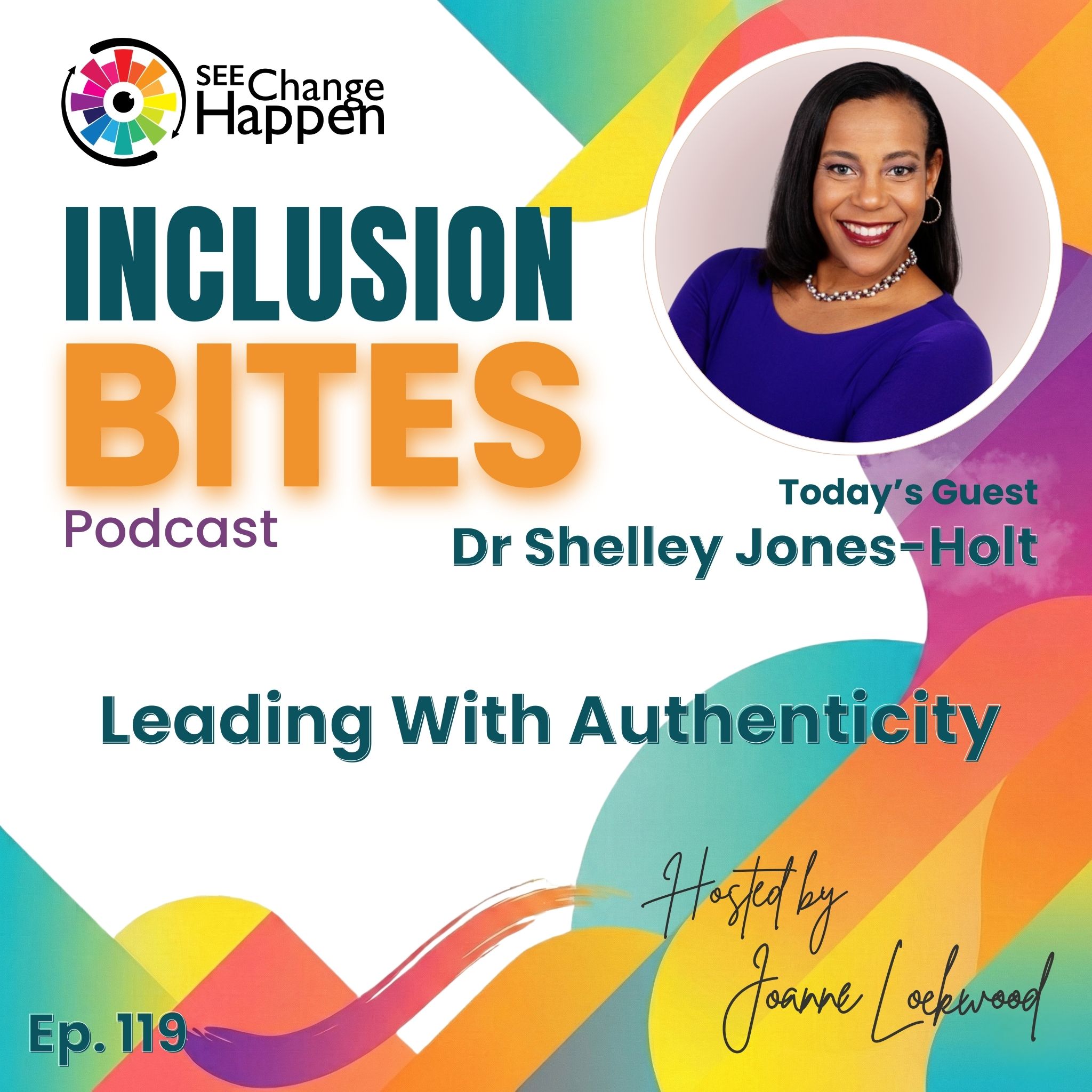
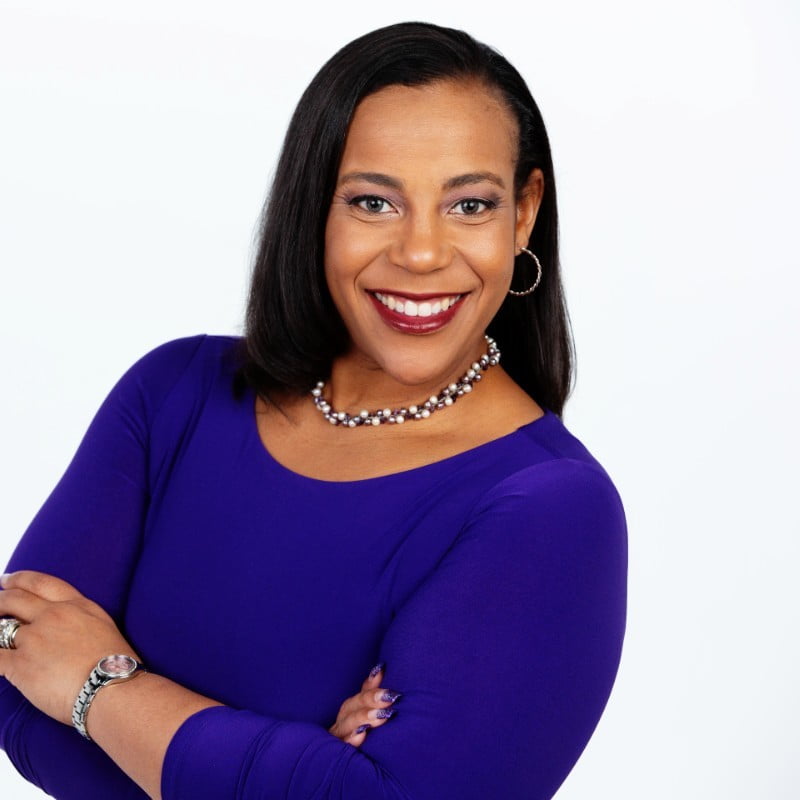
Dr. Shelley Jones-Holt explores the potent blend of authentic leadership and cultural curiosity that is essential for inclusive environments and personal liberation.
In this episode of Inclusion Bites, Joanne Lockwood speaks with Dr Shelley Jones-Holt about inclusive leadership management.
Welcome to Inclusion Bites, yoursanctuary for bold conversations that spark change. I'mJoanne Lockwood, your guide on this journey of exploration intothe heart of inclusion, belonging, and societaltransformation. Ever wondered what it truly takes to create aworld where everyone not only belongs but thrives?You're not alone. Join me as we uncover theunseen, challenge the status quo, and sharestories that resonate deep within. Ready to divein. Whether you're sipping your morning coffee or windingdown after a long day, let's connect, reflect,and inspire action together. Don't forget,you can be part of the conversation too. Reach out tojo.Lockwood@seechangehappen.co.ukto share your insights or to join me on the show.So adjust your earbuds and settle in. It's time toignite the spark of inclusion with Inclusion Bites.And today is episode 119 with thetitle, Leading with Authenticity.And I have the absolute honor and privilege to welcomeDr Shelley Jones-Holt. Shelley is a courageous leadershipcoach, author, and speaker. When I askedShelley to describe her superpower, she said, it is herability to bring people together that thinkabout the world and have experienced society differentlyand creating a safe space for them to be authentic with each otherso that they can take brave actions together. Hello,Shelley. Welcome to the show. Thank you for having me,
Dr Shelley Jones-Holtguest
Jo. It's awesome to be here. And number 119, that has
Dr Shelley Jones-Holtguest
to be a special number. Maybe we'll play those numbers or something.
Joanne Lockwoodhost
Oh, yeah. Completely. There must be some sort of fentui or some sort of alignment of the planets that, that's our numbertoday. Jo, yeah, absolutely fantastic. So, Shelley, we were chatting in thegreen room before we came on, and we were talking about a lot of things.And the thing that came out of it was about being authentic, this authenticity.So how do we lead with authenticity? There there
Dr Shelley Jones-Holtguest
are so many ways, and I have to say that part ofthe reason that I love the title leading with authenticity isbecause so many times we we experience leadership wherepeople are, quote, unquote, trying to lead. And thisidea of leading with authenticity, it implies thatyou are enough, and you are amazing just as youare, and there shouldn't be a different way that we need to showup to be, quote, unquote, authentic. And somany times people feel like they need to almost fake authenticity or theyneed to, you know, oh, I'm trying to lead in this way. And it's like,well, just be yourself and be honest and open andtransparent with what it is you're trying to do. And trustthat if you are open and honest and transparent,people will will feel that, will feed off of that, and that'show you will grow people to follow you. And it's also how you'llbuild other leaders. Confident, authentic leaders breedand build confident, authentic leaders. And in this world rightnow with the way things are, there are so many peoplethat are leading from a place of fear, or they're leading from a placeof of feeling the need to pleasethe hierarchy or please certain people in order to get opportunitiesthat I truly believe that those who are truly at theircore authentic leaders, they're such a rare art form thatthose are going to be the leaders of tomorrow because they don't have to thinkabout what it is they're doing. They're just being. And then as a result, theylead from a place of being. So leading with authenticity,it it requires courage, which we're gonna talk about in a moment. And there area lot of courageous things that we can do to lead, not justin the places we work, but leading where we live, leading where welearn, and leading where we earn in a way that we can be proudof that will truly change the world. So this idea ofcourageous authentic leadership is very near and dear to my heart, and I dobelieve it authenticity or better yet,the pulling off the cloaks of fear to to reveal authenticitycan be learned, which means that we're gonna have to unlearn some things to getthere. Yeah. I completely agree. I think I'm a great believer and
Joanne Lockwoodhost
advocate, but leadership is a skill and a skill that could bedeveloped, nurtured, and learned as something we have to developalways. We can't just I'm a leader now. I stop. It'sabout continual improvement. When we look at leadership modelsof past, though, we are often authoritarian,ego driven. How and maybe some new leaders orpeople emerging to the leadership field may be role modelingdifferent behaviors. Jo how can we make sure that we we are authenticand not ego driven? Oh my goodness. Well, first of all, I
Dr Shelley Jones-Holtguest
would say that we have to recognize when we're beinginauthentic and the and the triggers that willcreate that in in in that lack of authenticity, if youwill. And so knowing that when you get intoprickly situations, when you get into difficult situations,unsure situations, or you're dealing with people who are different fromyourself that you typically may not may feel alittle bit of trepidation with dealing with. And being honestand open with ourselves about that will help usrealize, oh, I may have a tendency to be inauthentic inthis place and space. Now that I can recognizethat the propensity to be inauthentic, I can be intentionalabout interrupting that that feeling, that thought, and figureout, like, what is my authentic place and space in this? What's my do Ihave questions that I wanna ask that maybe I'm a little embarrassed about? How canI go about doing that? I think one of the biggest things that wecan do, I operate using Dominique Ruiz's 4 agreements,and it's something that I use. I help to help people build that safespace with one another. And if you're unfamiliar with thethe, Four Agreements from Dom Miguel Ruiz, it's abook I highly recommend everyone have a copyof. It's one that I give my chill my own children. I have 8
Dr Shelley Jones-Holtguest
of them when they turn 13 almost as a rite of passagebecause growing up black in America or black in the world, period.They're going to have to find ways to deal with theinternal challenges that the external world will will bring them.And so it's it helps them to find that center ofauthenticity early so that when they get in those pricklysituations, they can identify that it okay. This is gonna be asituation where I'm gonna struggle to not be a pleaseror to do what I you know, the system wants me to do as opposedto what I know is right by the people and recognizing that the systemsometimes will have us do things to people that are not good for people,but they're good for the system, which is a whole different conversation,but that's one of those situations that can lead to inauthenticity.If you have a foundation in being impeccable with yourword, which is the first agreement, Not to take anything personal.Recognize that what other people do is not about you.That is about them, and they have their own burdens that they're gonna have tofigure out. Being able to not make assumptions andinstead have the courage to ask a clarifying question,or as we like to say, have the courage to grill that beef up andeat it because it has to do with you. And if you don't have thecourage to ask, then you need to let that go. Right? Andthen the 4th agreement is just doing the best you can and recognizing yourbest is gonna be different moment to moment, situation tosituation. Your best is gonna be different if you've just experienced atrauma or a death or quite frankly if you're just tired.Your best is gonna be different, and we have to learn to forgive ourselves inthose moments. Being able to walk in those agreements is gonnabreed authenticity because I if you're doing something,I'm not gonna take that on as something that has to do with me. I'mgonna continue to be me. Speaking light andpositivity into myself even when I make mistakes. That's aboutme embracing the learning process of growing and being a a differentperson tomorrow, a better person tomorrow than I was yesterday. Theability to not make assumptions and either say to myself, either I'mgonna have a the courage to you know let's say I'm meetingsomeone for the first time or go up and have that conversation,or I may have a question about someone who is different and comes from adifferent cultural background. Do I have the courage to ask? You know?Hey. Do you mind sharing with me a little bit about, youknow, your story around whatever versus all the assumptionsand predictions that we make automatically, and then we act onthem and get embarrassed when we commit microaggressions.Right? So it's it's a way of being, and I thinkbringing in building authenticity issomething that happens long before we get to the job, long beforewe get to interacting with other people. Itstarts in childhood. It starts in how we're raised, andthat's at where I really do believe our leadership conversations need toshift into how we're growing and developing our young leadersof today who, if you've turned on TikTok orSnapchat, you realize they have no problem being authentic andtelling you about yourself or themselves for thatmatter. And that that's one of the challenges, isn't it? The the
Joanne Lockwoodhost
word authentic means being true to yourselfand some of your your values and some of the driving forces.But it's not licensed to sayand speak anything in in with the you know, usingit's but it's my authentic truth. I deserve to be able to say that. That'snot what it's about, is it? No. Not at all. That to me,
Dr Shelley Jones-Holtguest
that's, you know, taking authenticity to a place of beingmean and evil spirited. So being if yourauthentic self means that you wanna harm other people, then quitefrankly, there is something going on with you and your internal self thatrequires, you know, medical intervention because that's not anatural state and a naturally positive, healthy,productive way of being. I mean, if you wake up in the morning, you know,trying to figure out how I can harm people and hurt people's feelings withmy words today because they disagree with me, like, get somehelp because that's not the way that, you know, qualityauthentic debate happens. Now I could have differencesof opinion. I can have differences in experiences,and I can share my differences in a way that is stillrespectful and in speaking your truth. So the other setof agreements that I didn't quite talk about come from a a afriend of ours by the name of Glenn Singleton who wrotea a book about 30 years ago that he has, you know, reachedinternational fame called courageous conversationsabout race. And what he speaks about is the needto stay engaged in the conversations, to speak yourtruth, and speaking your truth can be done in a waythat's respectful and positive. I can speak about racializedexperiences being a black woman in America and how people whoidentify as white have caused harm historically andcurrently without then pointing at every person who I thinkidentifies as white and talking about how they owe me orthey did this, that, and the other. Those are very differentconversations. I can speak about history and its impact onfolks or even my current experience even if someone ofthe with someone who shares an identity with those who Imay see as villains in my story. But I don't haveto insult the other person or and they don't have toaccept responsibility or blame or shame for that. It's mystory. And there are people of African descent that havebeen the villains in other people's story. I don't take that on.
Dr Shelley Jones-Holtguest
And so, again, this idea that I can be authentic, I canspeak my truth, and even if it harms other people, well, that'swhere you have to wonder, like, why would you wanna speak your truth in away that harms? Now if it impacts someone and theymay take offense to it or they may feel some kind of way about it,that's very different from intending to cause harm andbeing disrespectful or or in any waywhat's the word I'm looking for? Irresponsible, if you will, with yourwords. And so this idea of speaking your truth does not comewithout consequence. This idea of being your authenticself does not mean that everybody is going to accept itand and be willing to, you know, kinda tolerateyour truth. So you gotta be think about situate what we callsituational appropriateness. So the truth thatI'm going my true self around, let's say, my grandparentsversus my true self and authentic self around my girlfriendsversus my true self when, you know, I'm with someone who I just metand we're having, you know, a semi professional, semi personalconversation, is gonna be very different, and that'sokay. You know, we sit I think people mistakespeaking their truth with, oh, I don't have to take responsibilityfor it afterwards, or I can also be situationally inappropriate,and that is not the case. Leading with authenticity meansI'm also aware of my surroundings and my impact on thosesurroundings, and I want my truth to uplift. If I'mtelling a story about you know, let's say, I often tell the storyabout how I left the plantation when I left the, you know, w two worldand what that meant for me. And for some people who are stillthere, they may go, oh goodness. Well, I'm still on thethe, quote, unquote, plantation. Does that mean she looks down on me? And it's like,it has nothing to do with that. That's my story. That was myexperience. And I am allowed to walk in itauthentically. And guess what? There are some people like my husband wholoves working in his w two world. Work it out. Thatthat works for you. They're just different parts of our stories.So when we talk about leading with authenticity, I think thereis a certain responsibility we have to be consciousof because it does not mean that you just get to say whatever you want,do whatever you want, and mistreat peoplein any way you want because that's just being irresponsible and quite franklymean and evil, and that's not what we're about. You mentioned a couple of
Joanne Lockwoodhost
things there. 1 was this, w two, and youmentioned leaving the plantation. Can I can can you unpack a bit ofthat? Because, it's not a phrase that I've heard of and many of our listenersprobably wouldn't have heard of those. So absolutely, Jo. I do
Dr Shelley Jones-Holtguest
I knew I was gonna lobby that one up, and I knew we're gonna haveto dunk that one. So I often will speak aboutas an entrepreneur, and and I really do appreciate the freedomsthere, but also there's a lot of responsibility, I must say, that comes with beingan entrepreneur. I became an entrepreneur afterworking about a little under 25 years in the school system herein America. And the reason I called it theplantation, it's not, you know, just a, you know, a funny term. Butwhen you think about what plantations meant to this country, whatwas expected in plantations in this country, They for somepeople, they were a source of a lot of income. They were the source ofgreat generational wealth. They were the source of happy memories,and there was definitely an expected hierarchy or a systemichierarchy when you were on the plantation that everyone knew. And if youviolated it in any way, there were measures that would be takenregardless of race at this point to keep people inline. And, unfortunately, many people don'tmay may find it difficult to face the fact that our schoolsand sometimes our workplaces operate in much the same way.And these spaces with their unwritten andwritten rules can be very oppressive topeople who don't fit the mold or who think differently orimagine us in an educational system, someone who'svery autistic. And and I said r with a artistic with anr. And, you know, they express themselvesvery creatively, and yet the system is verytraditionalist. You take these tests. You answer these questions. You show me yourknowledge in this way. Well, there are systems that atplay in the educational system very much like in the plantationthat are not healthy for everyone. I was one of those people that didnot necessarily have the the always the healthiestexperience. Although I was very successful on the plantation, whatit did for my my psyche and my mental health wasdetrimental much like, you know, our plantations of the past. So the reasonI called it the plantation is because it gives people a veryclear connection to the systems and the rules that operatedand the way people then experience things differently. And, you know, if youdid well in the PlayStation, you receive society's rewards, whether itbe financial, whether it be societal. But if you didn't do well onthe plantation, you didn't weren't allowed society's rewards.And part of my efforts to liberate myself from theplantation, it's also the mindset you have to have to survive and thrive inthese spaces. In order to survive and thrive on the plantation, peoplewho look like me had to operate in ways that are oftentimescompletely counterintuitive to who they are, counterproductive to theirpsyche and well-being. And, I mean, not that you would have any kind ofunderstanding of what that would mean, Jo, because, of course, you've been inspaces where if you're the only or if you're different, that'sgoing to impact you, especially if you know that thatdifference is going to lead to you having struggles with beingsuccessful. And so when I left the plantation about 5 yearsago, I have to say there was a period of time where leaving thatw two security, leaving the benefits,and I'm talking about the health benefits, the medical benefits, the visionbenefits. Like, there's all these benefits that they give you with staying safeon these plantations within the system. That the minute you comeoutside of that, they're like, yeah. You can leave, but you gotta take care ofyourself on your own. It's kinda like what happened in, you know, the 18sixties with the emancipation proclamation. It's like, okay. I'll free you, but now yougotta go figure this out on your own. And all of thesedifferent scenarios diminish and deplete,sometimes create barriers to our abilities to leadauthentically. And so it after I left, I had a periodof time where I had to figure out, like, who am I? What is itthat I really wanna do? Because the only me I knew professionallywas the me that had to survive in these spaces. And soleaving that, you have this whole other world was like, I don'thave to, you know, do whatever that is. I don't have to I don't haveto have a traditional workday. I don't have to start my day at 7 AMand end it at 5. If I wanna start my day at noon and itends at 8, like, I can do that now. And so this even somethingas small as that, being able to say not feel guilty to takemy kids to school or pick them up and take those breaks in time. Orin the evening time, I'm gonna split out my day for how I'm gonnawork so that I can put my family first as opposed to,well, the boss said I have to be here during these times, and I haveto do x, y, and z. So, you know, I can't pick you up orI can't go to this event. To me, that's all away of living that keeps us from the freedoms that we saythis country and the world is all about. Excuse me. You mentioned,
Joanne Lockwoodhost
as bless you. Sorry. You talked just lookingback a bit to authenticity again. You you mentioned, you know,you're you're you're a mom. You've got your friends. You've got your girlfriends. You've gotyour you've got your work. You got 8 different you got 8 children, I thinkyou said. And presumably, each one of thosechildren is a unique human being, and they have their ownsensitivities and their own ways of talking to them. So when we talkabout being authentic, there's a danger that you areperceived as inauthentic because you're wearing these multiplehats and you're swapping between characters. So whichone is the true you? And they can all be the true you.They're just different versions of you. Yes. It's the thecore of you is your values and your coredrivers that are the key factors of your authenticity.The fact you have to be situational, and you you talked about interms of intent and impact, it's aboutcontext. You have to understand the context in which you're operating andcommunicating. So how how couldleaders recognize that needs to switchhats and to switch personality types to be situational?
Dr Shelley Jones-Holtguest
Well, I think, first of all, in order to understand that, you have tounderstand that equity is one of my core values. And I defineequity using the Jeff Duncan on doctor I'msorry, doctor Jeff Duncan Andrade version, which is equity isgetting people what they need, when they need it. And with his permission,I've added in the way they need it delivered. And soat my core, if if I am leading a situation, whether I'mleading a multimillion dollar organization,whether I'm leading my business or my nonprofit, whether I'm leadingthe girl scout troop or my sorority, or whether I'm leading myhome. My goal as a leader is toserve. Right? And so my and so in order toserve someone, you have to find out what they need. Imagine if you wentto a restaurant and the and the server just came and said, I got you.It brings you whatever it is that they just wanted to bring you because that'swhat they were serving that day. You feel like, well, why you give me a
Dr Shelley Jones-Holtguest
menu? Why did you like, what am I doing here?Right? And that's often the times the way people experienceinauthentic or kind of blanket leadership, if youwill. It's that people have these ideas of what they believeleadership should be, and then they go and be that thing.Or even worse is they'll get their ideas ofwhat leadership should look like from those that they're not leading, I eyour higher ups. So you have some boss or somebody who's tellingyou this is what your people need. If you ever have a boss that's tellingyou what other people need, first of all, run. Because, you know, it's like,where is the data, the information that I can actually get what mypeople need and be able to provide that to them?If you're truly leading for service, for equity, and getting peoplewhat they need, when they need it, in the way you they need it delivered,the first thing you'll recognize is that everybody doesn't even receiveinformation the same way. First, they don't need the same information or thesame support, and they're not gonna receive it in the same way. So I'll takeit to something as simple as parenting. Yes. I have 8 kids. 6 thatI birth, 2 are my free gifts with purchase. But I'll tell you the waythat I sometimes have to talk with my 30 yearold and the way that I have to talk with my 7 year old whohave very different needs of me is different from what my 23year old who's in law school needs. So I might pick up the phone,and my 23 year old needs to have a conversation about managingstress because he's in the middle of finals. And so he's gonna, youknow, wanna tap into that part of mom that is saying, hey. I need tomanage stress. Like, what tips do I have? I'm also dealing with somebody whohas his own stresses and trials and tribulations.You kinda remind me of him, Jo, sometimes because he does. He wears theblack nail polish, and he's just so different and eclectic.But, you know, he's his own man, and that's but he also hashis own challenges. I am as his mother, at at thatmoment when he says, mom, I need this, I need to figure out a wayto get him what he needs. Conversely, in the next 15 minutes, my7 year old could come in. And all he wants and needs is tofigure out what he needs to do with his chores to get that little, youknow, box of Pringles that he wants. I know. So it's very simple to please7 year olds. He's like, mom, did I did I do all my chores? Itook out the trash. I did this. I did. Can I have my Pringles inmy, you know, 15 minutes of video game time? So theconversation is very, very different with him. Now I'm gonna flip,and 15 minutes later, I'm now talking to my 30 year old. Shewants to talk about life and maybe some things that are happening at work or,you know, some things that are happening in her current relationship or, youknow, whatever it is. Again, I have to put on a different hat. Shemay even be talking about, oh, I'm thinking about buying a house. What does that
Dr Shelley Jones-Holtguest
mean? Gotta put on a different hat. My point of beingauthentic leaders is that if you're gonna be an authenticleader who is based in equity, you have toknow the people that you serve and do what's necessary tomeet those people where they are and get them what they need when they needit in the way they need it delivered. As a superintendent, myassistant superintendents had different needs than some of my directors,than some of my principals, and some of them are meant to serve each other.And so sometimes it's a matter of building up whether it's skills,whether it's capacity, whether it's courage, whatever it isthat people need to build within themselves, you've gotta look at, okay,what are the skills or capacities they need? That's one piece ofinformation you need in order to lead with authenticity. And then how did thewhat part of me do they need? How do they need me to deliver it?How does it need to be said? How are they gonna receive this in thebest way? Perhaps what experiences that they had that Imay need to take into account? Because the way that, let's say, I'mgoing to support my my very strongwilled yet Muslim leader who is just coming out ofRamadan, and so she may be a little disjointed at work because she's hada hue like, kind of when we when those of us who are Christian comeback from Christmas break, you wouldn't want your boss then come and say,okay. Now what's going on with this 10 point project that you've been off for3 weeks? And, you know, give you a little bit of time to kind ofget acclimated. So the way I'm gonna approach that person, let's sayright now, may be very different from how I approachan equally competent, but might be a little bit moremousy and a little bit more sensitive in their receipt of information from theboss. So the way I'm gonna approach my strong will leader who's comingout of of a religious celebration, and soher mind might not be fully focused. He might little little bit a chance toacclimate versus the way I'm gonna approach my person over here whohas a very different personality. And they may need the same thing.Let's say they need the same training or they need the same, you know,cultural connection that I need to help them make. But the way I'm gonnaapproach one person is gonna be very different how I'm gonna approach the other.I might or might not do it together. These are the pieces ofauthentic leadership. She's gonna need a side of doctor Shelleythat meaning the person who is a bit more sensitive, Ican't come directly at her. I might have to explain the situation and tell astory and help her see how she's capable of doing thisand really able to do this well, and then, you know, kinda drop on her.And these are the things that I want you to work on. This person heremay want it. She very strong willed, very direct. It's like, just give itto me, and I'll figure it out. So I might come in. It might bea very much quicker, shorter conversation, be directly to thepoint. I need you to work on how you're talking with ourcustomers who may have strong accents. I've noticed on a few ofyour calls or your conversations that you may you tend to get a littleimpatient with people with accents, so I need you to think about that. Nowshe's got something to think about. Could have the same recommendation orthought or conversation with the this person over here, and I'm gonnaapproach it very differently. I'm still me. I'm stillleaning with authenticity, but my approach is the words Iuse, the trainings that I do are gonna be totally different becausemy 2 people have very different needs. And I think that's a piece thatpeople believe. If I'm not doing giving people everythingthe same way, which is equality, it's not equity,then I'm not being authentic. I'm not, you know, whatever it is that the storythat people tell in their heads. And so I think this piece aboutunderstanding your audience is huge. Go ahead. Yeah. To pick up on
Joanne Lockwoodhost
that, you talk about your the different people in your team. We haveto, as a leader, recognize you know, youtalk about equity, and equity is not just around someone having adisability or workplace need. It's also about equity aroundpersonality types. Some people need to be bought into conversations.Some people need to have the dial turned down a bit. It will yeah, giveother people the microphone for a second, or other people need tohave a more emotional, less logical connection. So as a leader, we'realso expecting not only this this contextualswitching between different modes in different parts of our life, but alsothe context around the different personality types and different needsof our team to get the best out of each one of them. So, again,how do we learn these skills? How do I mean, it's we we wesay that leadership is a skill to be nurtured and developed. So whatcan, an aspiring leader who listens to this podcast todaythink about how can they they can bring those skills to play in everydaylife? The first thing I'll say to folks is get to know
Dr Shelley Jones-Holtguest
the people that you're working with and not just their skillsets and what's on their resume. Who are they as humanbeings? And the reason that oftentimes this iscounterintuitive is because to go back to that plantation conversation.On the plantation where we are, you know,sometimes creating automatons and Autobots and you're expected to dothis, that, and the other, then personality and uniqueness isnot valued. You're you're you know, how you feel about something isnot a value. What is a value is your productivity.Well, what we have learned since then about people is thatpeople are more productive in environments where they feelwelcomed. They feel appreciated. They feel like people know them, where theyknow that the exceptions that they bring with theirexceptional personalities and such and and their exceptional situationsare going to be considered and appreciated. And that's how you're
Dr Shelley Jones-Holtguest
going to get folks. You know, I often get people who will ask me, well,Shelly, you know, you can get the folks that really do want towork with you. And I'm like, yes. Because they know I believe in them, andthat same person knows that if something is going on in their liveswhere they need an exception or they need someone to understand, I wantthem to feel like they can come to me and let me know, and wecan work through that. And so I would say to anynew leader or any leader who's looking at shifting their ways or your teamis just not quite operating in the way that you would like themto, I would ask them, like, what do you know about your people? What doyou know about their likes, their dislikes, what it is that motivatesthem and moves them? I think we've gotten into this space thatCOVID has really illuminated for us where youknow, I remember hearing this even when I would started working. You know? I knowit was only 10 minutes ago, but but, you know, over 25 years ago, whenI started in the workforce, it was, you know, when you come to work, youneed to be a professional, and you need to do things like this, and youneed to wear your hair like this. I remember getting mybraids done once, and then getting called for an interview.And my mentor now my joy, I had just paid $200 to get myhair braided, and then they called me, like, a week later for aninterview. And my mentor was like, no. You have to now take that$200 hairstyle out and wear your hair a certainway for the interview. And I just remember being devastated. Like, what in theworld does my hairstyle have to do withme being capable? I mean, I went to Berkeley for for goodness sake.Like, really? This is what we're worried about? Andthe truth of the matter was it was very true. And so, you know,now we're getting into a place where people are no longer going tobe comfortable just showing up and doing what you tell them todo. But if they know you know them, if they know you care,if they know you're concerned about the fact that they come to workto create a living for their family, not the other way around thatthey're working and then they have these lives on the side. If we cancreate spaces like that, they're getting to know one another. Storytellingis a huge piece of new leaders orpeople that wanna lead with authenticity. Find out people'sstories. And when you find those stories out, you'll understand whatmotivates them. You'll understand what's beneath them. You'll you'll know theireven their favorite coffee order or their tea order. Like, maketime to get to know folks because the time you spend on thefront end getting to know them, I promise you, mark my words,you will get that back on the back end in the amount ofproductivity that they will have because they're gonna work for you. Justlike my babies in school when I would teach, my kids would do wellbecause miss Jones was asking them to, not because they love math.Many of them couldn't stand math, but because they wanted to make meproud, they would do these things, you know, and make sure that they didwell. Your people in your that you're leading are areoftentimes the same way. They would do well not just because it's,you know, the right thing to do, but because they they appreciate you as theirleader, and they wanna make sure that, you know, you look good, they lookgood, all the things. But you may have taken a couple days to getJo them in the beginning. You talked about, yeah, your hair being in braids.
Joanne Lockwoodhost
You've been to Berkeley and and so you you're you're a grown up. You'rea grown up, aren't you? So you've been around a bit, you know, off onand off the plantation. You've been around a bit. So what we end up doing,and this is not specific specifically around leadership, we endup covering or masking or hiding part of our identity,and which can be a problem because it becomes verycumbersome in our in our cognitive load. You know, we we thinkabout psychological safety as a concept. The principalfoundation layer of that is inclusion safety, not having tocover, mask, or hide who we are, so wecan let our authenticity out. Okay. Contextual,we can't speak everything. We have to have a reasonable adjustment here toto what's polite. But it's a it's a I mean, presumably,you've you've faced this this need to passas well, probably in terms of notbeing too much of a black woman. You know, the angry, shouty blackwoman, the stereotype that you probably hear all the time. Yeah.And, of course, as soon as you raise your voice, you're playing into that tropeand stereotype and people and you'll say, oh, I've gotta minimize. I'vegotta not speak out. I've gotta hide myself. And
Dr Shelley Jones-Holtguest
that's the mental I call them the mental gymnastics. That's themental gymnastics at Invisible Work that many of ourminoritized people are doing on a daily basis thatquite frankly, it leads to lack of effectiveproductivity. If I have to spend a a portion of my timetrying to figure out which side of me you wanna see and howto become that person even amidst microaggressionsand people saying and doing things under their breath. Because believe me,the same things that happened to folks in high school and middle school, we hadthat one person that was, you know, bothering you, but not but the teacher didn'tsee, and so all they see is you blow up. The same kind ofnonsense happens in the workplace, unfortunately. Ithappens in schools. It happens in community meetings. Like, as my son wouldsay, people will people, and they're just gonna, you know, do their peoplething. And so as leaders, if we canmodel and bring to the table this idea that I want youto come as your best self. And so whatever the conditionsare in this space that we need to create to bring out yourbest self, let's do that. And you seemany companies nowadays that are considering that when Googleand I'm not saying Google is the epitome of, you know,an ideal company when it comes to they're still on their journey, let's justsay. Right? But when Google first came out and they had, youknow, childcare and ping pong tables and workoutgyms and all of these different amenitiesto make people feel comfortable in the space and be most productive.There were a lot of folks that were like, oh my goodness. They're just wastingmoney and throwing it away and all of these differentspeculations and opinions about that. Well, nowadays, folks arerealizing if I want folks that are gonna be creativelyminded and that creativity might come to themat 11 o'clock at night, I want folks to feel likethey can do that and bring that creativity to the table. I don'twant all of these barriers and impediments to get in the
Dr Shelley Jones-Holtguest
way. And what many leaders have to realize is thatoftentimes you are the biggest impediment to theauthentic leadership you seek. Meaning that if you're not showing upauthentically, if you're playing the game, if you're playing the role, if you'replaying into the system, one of the worst things we can do asleaders is when we're explaining something to someone about a changeor something they need to do is use the crutch ofpolicy or that's the way we've always done it as a way toconvince people that this is the right thing or the the correct andappropriate path moving forward as opposed toinstead say, okay. This is the problem that we have to face. How canwe best approach this together, and what do you need from mein order to create the the the optimal environmentalconditions to make this happen? That's a very differentapproach than here's the project, here's the policy, here'sthe expectation, you know, here's the deadline, Makethat happen. Right? And and so we have to have this ideaof authentic leadership being something that starts withus, and it starts with us pulling off that cloak of vulnerabilityand being able to say to to a team, which I've said many times, hey,folks. This needs to happen because, you know, we've seenthe data. We've seen the the metrics. This change needs tohappen. Now how we go about doing this change and thetime frame that we work this in, this is where I need your thoughts andyour creativity because I don't want this change happeningto now ripple effect into other issues. Will youall take this on and help me look at different possibilities, and thenwe'll be figure out how we're gonna move forward together versushere's the change that needs to happen. Here's what I expect you to do.One is a much more dictatorial inauthentic approach that doesn't takeinto account the experiences of those closest to the work. The other one ismuch more vulnerable because I don't know what they're gonna come up with.I am not in control. I'm literally handingover control to those thatare, you know, closer to the work. Again, fosteringthat authentic approach to leadership bymodeling it as opposed to just talking about it. There's a word you used
Joanne Lockwoodhost
earlier, which I Joanne feel the undercurrents of it in in ourconversation at the moment. It's it was microaggressions.And this mask and covering, meeting societal expectations, andhaving to be inauthentic for somebody else is alsopart of a living up to the microaggressions that have been put onyou. So can you explain to people, maybe you've not heard that expression,how you perceive what a microaggression is and how it manifests sometimes?
Dr Shelley Jones-Holtguest
Absolutely. Absolutely. And so in order to understand microaggressions, there's2 other terms that folks have to understand. 1is stereotypes, and the other is implicit bias.So here's how this this train goes. Wehave stereotypes about people who are different than ourselves.We also have stereotypes that are about thosewho are like us. So me being, you know, just to say a few ofmy identities, I identify as a woman. I identify asChristian. I identify as being a descendant of the survivors ofthe middle passage, which ethnically would be considered AfricanAmerican. So these are just a few of my identities.Right? And there are also stereotypes or beliefs that peoplehave, whether they be about women, about African American women, etcetera.And stereotypes, many folks think that, you know, oh, if it's apositive stereotype, it's good. It's a it's a okay thing, and thenegative stereotypes are the only bad things. Here's the deal.Any kind of preconceived notion about who a person is thatdoes not take into account that individual is not okay.It is considered wrong. It is bad. Is it unhealthy? Right?So stereotypes, no matter if they are the positive stereotypes,like, you know, Asians are good at math and black people are good atathletics, again, those Joanne be very negative because if you happen to beof Asian descent and not good at math, then what does that make you? Right?If you happen to be of African descent and you're not as good at athletics,then what does that mean? And so stereotypes,all of which are not good, but everyone does this.So we all have to fight against these stereotypes that weare taught and are are are exposedto at very early ages. The reason we have to fight againstthem is because unchecked, your stereotypes lead to implicitbiases. And these are unconscious beliefs that we haveabout people who that may or may not becorrect. But if you are if you do not check yourimplicit biases, which are unconscious again, it's that unconsciousthought that when brought conscious, sometimes you feel a little bit of shame around.Like, oh, okay. I know black all black women, you know, are not angry,but I just saw this lady who was a little upset, and I went tothat angry black woman trope. Right? I gotta check my biaseson that because just because someone is of African descent and happens toa female and gets upset at the situation does not mean they're an angry blackwoman. Just be and and so and you can go do that with any ofthe stereotypes that literally lead to implicit biases.When we have unconscious or implicit biases that we have notchecked, we act on them. And where the and oftentimes, weact on them unconsciously. This when those actionsoftentimes are clouded in this idea of wanting to bepositive. So it becomes a compliment that is cloaked inthe stereotype. So for example, I've actually hadpeople say to me at a meeting where I did not speakor I spoke very measured, they would say, oh my gosh. You speak sowell. You're so measured and calm in your demeanor. Whatthey're really saying in that microaggressive comment is, I havestereotypes about Lockwood as being loud and angry andand uncontrolled, and you did not fit thatstereotype for that box. Congratulations for not fitting mybox. And not realizing that that microaggressivecomment is actually an insult cloaked in thefact that I don't fit your stereotypes and unconscious biases.They cut microaggressions can appear very, veryinnocent. For example, saying to a woman who's blonde, oh mygosh. You're so much smarter than I thought you would be.
Dr Shelley Jones-Holtguest
So, basically, when I walked in here, you thought I was a dumb blonde.And because now I've opened my mouth and it's and helped you see that Idon't fit that stereotype, you believe that that's a complimentaryaction that I've made and have decided to go the extra step ofmaking that compliment, which is actually microaggressive because itreminds me that when I walked in here, you didn't think I was anintelligent woman, and now I had to prove myself once again.And so microaggressions are one of the most dangerous types ofactions that go unchecked, unnoticed, and quitefrankly uncalled out in the work in schools, in workplaces,and all kinds of arena. It's a simple I had one that happenedtoday. My daughter was getting her braces off. And the womanwho appeared to identify as white and I could tell she was trying toconnect. Right? So let me just give you that preface. I coulddefinitely tell she was working to connect, but in the course of connectionwith my daughter who's 14 and me, every other word wasright, girlfriend? Oh, girlfriend. You're gonna be fine. And and so after awhile, I'd say, well, she's yes. She is a girl, but she's not your friend.I'm not understanding why you're using that term. Oh, well, I wasusing it as a term of endearment. For whom? Right? And sountil I brought it to her conscious level, she had to face the fact,well, you're black women, and I thought that that would be a way to connectas opposed to saying, hey. As black women, what's the best way I canconnect with you? Because I don't wanna be insulting, but I tend to call peoplegirlfriend. So I don't want you to be offended by that and think that ithas something that's racially motivated behind it. Because when I saw her go to theother clients, she didn't call them out now. I'm one of them, girlfriend. Soit what it it was actually a way that you believed.Again, a way that she thought she was connecting, but because I'm consciousenough to understand it, you it was definitelymicroaggressive. Now did I wanna make a big scene? Absolutelynot. But these microaggressions are are differentthings that remember I talked earlier about the mental gymnasticsthat oftentimes minoritized populations have to go through. So now Ihave to sit there and process the fact that every third word is a microaggression.And, you know, so any mistake that she made is she made a little mistakeone time. I'm like, oh, okay. So is that what because you sitting up here,you know, dealing with girlfriend as opposed to, what do you call her, trust fundbaby? Like, what what what are the the different terms thatwe have for people based on their identity. Right? Andso, again, often innocent, often notintending to cause harm, but they are the result of implicitbiases that have gone unchecked, that are the result of stereotypesthat you've learned over the years that have gone unchecked. So the solutionis we have to check our biases, which means we have to check ourstereotypes and really be conscious of the ideasthat we have about people who especially those who are different, that wemay act on unconsciously and can lead us to being part ofthe problem versus part of the solution. Does that help, youthink? Yeah. I yeah. I think that's a a pretty good summary of,
Joanne Lockwoodhost
yeah, my understanding of my questions as well. I was also thinking asyou're talking around leadership, asleaders, we're also led. So we we we play both roles. We'llwe we lead and we we we are we are led. And notevery great leader is good at being led. Is is that'salso a skill to make yourself as easy to be ledas possible because sometimes we we put all theresponsibility for our management and ourand to be led on the other person, whereas I also think as,having spent 60 odd nearly 60 years on thisplanet, I recognize that part of that responsibility is also mine.I Joanne be I can be easy to lead or difficult to lead.And, and I want to make the the job of my leaderas simple as possible. And maybe that's me playing intoa bias. If I'm easy to deal with, I'll get morefavors. I'll get more influence, and I'll be Yep. I'll be have have haveopportunities. So as leaders, we wannawe wanna encourage our people to be led well as well, don't we?
Dr Shelley Jones-Holtguest
Absolutely. I often say, as a leader, you are the leadfollower. And if you can wrap your mindaround that, it go kind of goes back to what the example I gave ofhow we present problems or challenges to our team.Am I presenting the challenge with me having thought am I am I upperlevel team, if you will, having thought of all the solutions and thenbringing it to our down level folks to implement,then you, I mean, you might call that leadership, but it's actuallydictatorship. You're dictating to people what you wanna have done, and then you wantthem to do it. Leadership is a bit different. Leadershipinvolves bringing out the best ideas from those closest tothe work and creating the pathway. The reason you're in front isyou're paving the way and making the environmentsafe and palatable for folks to come and do thereal work. The best example I Joanne give, and I just realizedwhat this work with is is curling. So you think about theperson that's pushing the the big disk thing. I don't know what these things arecalled. So forgive my language, those of you who are laughing at me that arecurling experts. But there are some people with some brooms in the front,and then they're pushing this big round donut looking thing Stone. With a
Joanne Lockwoodhost
stick stone or something. Yeah. There you go. See, I knew I wasn't out
Dr Shelley Jones-Holtguest
of the word. So Yeah. So the bro the brooms are making room for thestone and the person there's someone behind the stone that's pushing thestone forward. So you would think that the person who ismost important in this, not to say that there's, you know, levels ofimportance, but one would think and and focus on the person who's moving thestone. I would argue the people that are leading and paving the wayand make and are really critical to this process are the peoplein front with the brooms. Right? Especially the one with that firstbroom because you noticed that there are 2 brooms that are going this way. Ifthat first broom doesn't clear out enough of the debris orwhatever it is that they're clearing out on the ice to where that secondbroom is doing more of the polishing and paving the way for the stone tocome down, no matter which way you wanna work this, thatstone is not going to be able to move. Right? That person withthe first broom is the leader. So the leader technically that isn'tdoing the biggest part of the work. I mean, isn't doing what most peoplenotice as the most important job, which is moving the stone because that's the thegoal is to get the stone across whatever threshold. Imean, don't I'm not gonna act like I understand the sport. I just watched itand went, that's what leaders do. Right? But that first person with thebroom has the most important job. They are the leader ofthis effort. They're gonna tell you what direction to go. They're gonna assessthe ice in front and go, oh, maybe we need to go a little bitmore to the left or a little bit more to the right based on whatI'm seeing. Like, they're going to clear that path as best as theycan. So then that person, that vice leader, if you will, that second leaderthat's coming by, they're gonna follow the path of the first one becausethey're not gonna clear a different path. They're gonna go right behind that first person,and then the stone has to follow in that direction to bemost effective. That's exactly what leadership is. It's it's clearingthe way for the real people that are closest to the work to do thatwork, and we have to be out in front, butalso know exactly what's necessary in order to do that. Yeah. And just
Joanne Lockwoodhost
picking up on your current analogy there, if you actually watch whathappens, what happens is the, they have astrategy meeting. They're Yes. They do. The thegroomers and the the thrower, they'rethey're working out what their game strategy is. They they look at they look atthe problem. Right? We're gonna lose. What do we need to win? We needto move that one out the way. Exactly. We set our 1here and put a block in there. Well, this is a block shot. This isan attack shot. So they're having this little strategy meeting. So the the entireteam is behind the mission. Yes. 1st who launches thestone, knows how far they want how hard theywant to to to shove it or something to to deliver it. And then theas you say, the the 2 brushes are trying to angle it to get thetrajectory onto that final drop spot on there. So that's theit's it's not a one person thing, but as you say, there's a leader therewho's taking responsibility for the steering based on the trajectory,based on the plan. And, yeah, it's a it's a complex mission, notjust throw it and hope. Throw it. Exactly. And
Dr Shelley Jones-Holtguest
so when we talk about leadership, you know, I have to say youhave to be that person that is willing because let's say that the personin front, that that leader doesn't agree with where they orthe person who threw the stone throws it in the wrong direction. You're gonna haveto change course immediately, and so that leader has to be theone to do that work. Again, not to beat up the curling analogytoo much, but when we talk about lee knowing how tofollow, that is such an important part of leadership andand being able to trust your team when they tell you this oris or is it going to work. Oftentimes, as a coach anda consultant, I go into teams, and I'm usually coaching theleadership. And one of the first things I ask them is, who is the experton what we're trying to solve? And they'll and often times, they'llpause. I'm like, we need to get the expert on the call for whatever thisproblem's got. You're the leader, but you may not be the expert. Right? If
Dr Shelley Jones-Holtguest
we're trying to solve a problem that has to do with your humanresources team, well, then who is your human resources expertthat can help us understand a little bit more about what's happening on theground level to ensure that we have a very clear picture of what weneed to move forward. And then part of a great part of, ofa integral part of leadership is then going back to those frontlineworkers and those frontline folks and having those conversations so thatthe decisions you make, you know, are reflectiveof the needs of those closest to the work. And that so that would bethe last thing I would wanna kinda bring about is that leadershipis nothing but decision making. And thedecisions we make around people, aroundhow do we move forward, around how we treat how we createthe culture of how people are treated. Those decisions are some of the mostcritical parts of leadership, and sometimes we have people that are leavingthose decisions on the table or by the wayside. But the decisionsyou make are very critical, and if you can make decisions in the bestinterest of those that are following you, you'll always have people, right,willing and able, to follow your leadership. That takes us back to one
Joanne Lockwoodhost
of the first words you said at the beginning, which was, courage.So as leaders, you know, you said that as aleader, decision making and inspiring, pointingpeople in the right direction, using the using the brushes to get the stone inthe right place. It take it takes courage because not everyone's gonnaagree with you. No. How do how do aspiring leaders preparethemselves for that? Well, again, I go this is where the academic
Dr Shelley Jones-Holtguest
in me goes to what is the definition of courage. And socourage literally mean being courageous, literallymeans, Webster's definition, pushing pastfear. That's what courage is. And so in order topush past it, you gotta be able to identify it. And so that it itcase me back to what I was saying in the beginning, knowing yourself, knowingwho you are, knowing your triggers, and knowing yourfears. Right? Yes. I do a lot of workon diversity, equity, inclusion, leadership all across andwith a lot of different identities. Right? And there is this thoughtprocess because you work in this space that has to doaround leadership and, cultivating spaces thatare healthy and productive for diverse people that I knoweverything there is to know about every diverse identity. Well, let me be veryclear. I am still on the journey to liberation myself, and there areseveral identities I'm still learning about. For example, many ofus, at least in the calif in California and me being newto the Michigan area, I had no ideaabout the Muslim holiday of Eid. No clue. Noclue it existed. I knew about ram I had heard the word Ramadan.Let me not say I knew about it. I'd heard the word Ramadan. And evenas a school leader, I knew it was a religious event. I knew and Iwas more concerned with what people need. And to be honest, I really didn'tlearn too much about the event because I'm like, okay. Tell me what you need.What is it? How is it that I can best serve and help? Well, beingon this side of it and not having to lead the organization, I had timeto really learn about the the celebrationand what it meant. And my kids actually go to a school that ispredominantly Muslim. So they had, you know, last Wednesday off. Theyhave different holidays that, the traditional Christiancalendar, which at first, I'll I'll admit I was like,oh my goodness. Like, a random Wednesday that they're off. Like, what's going on here?Well, when I started to delve a little bit deeper, I'm like, oh my gosh.This is amazing. This is wonderful. Again, I wasn'taware of what I didn't know. I didn't know my own thegaps in my own thinking, my own experiences. But because I'm aperson who's open to learn, I was able to find, you know, thiswhole other appreciation for culture I did I didn't recognize,but I also knew I had a lot to learn. Right? That's one exampleof what you know, being a leader really is about knowing yourselfand knowing, you know, the areas that you may not be as familiar withand doing the work of learning those. I've also, as a leader, I've beenvery transparent about the growth that I have in the area of ourLGBTQIA populations. I'm still learning. Right? Iidentify as a heterosexual woman. That means I don't understand allof the different letters and what they mean and how people's experiencescould be shifted based on where they sit and how they experience theworld. That's an area of growth. I'm very conscious and openabout it. If folks wanna help me learn, I am on the journey to learn.That's not anybody else's responsibility, though. And so,to teach me, it's my responsibility to learn. So if weare truly going to be those folks that wannacreate that the world that we wanna see, we have to takeresponsibility for our own learning and our own triggers and recognize you'regonna make mistakes. It's not it's not if. It's when youscrew it up, quite frankly. And how can you apologize ahead of time and go,you know what? I used the wrong term. I used the wrongpronoun. My apologies for that. I am on the journey. I'm really dedicated to
Dr Shelley Jones-Holtguest
growth and learning. How we, you know, create thoseenvironments where we speak our truth and are able towalk in that. That's where the true leadership, I think, isgoing to sit for the future. And the more that we can get peoplecourageous enough to not just admit what you know, but also admit whatyou don't know and push past the fear of, oh, I'm gonna be judged orthey're not gonna see me as a leader or whatever fears that you, whatever storyyou've written in your head that you're the victim of, because that tends to bewhat we do. We we are so all of us can be the victim ofour own story. Whatever that story is, push past it.Lead from a place of courageousness and find your authenticitythere. Find who you really are in that place of courageousness, and Ipromise you, you'll always have people ready and willing to follow yourleadership. Geri, thank you. Absolutely fantastic. What a
Joanne Lockwoodhost
conversation. Thank you so much. How do people get ahold of you? Well,
Dr Shelley Jones-Holtguest
I am definitely on LinkedIn, so please follow my LinkedIn.I'm also on Facebook at doctor Shelly JonesHolt. You can find my company, Leadership Legacy Consulting,online at www.leadershiplegacyconsulting.com.I wanna help you build a legacy of your leadership that youJoanne be proud of. What will people say about you when you leave?What will they say about you when you have the impact you'vecreated on the space? Will people have to survive your leadership, orwill they thrive because of your leadership? And so we talkabout courageous leadership development, coaching, and support. That iswhat we do. And we are firm believers that leadership,it happens where you live, where you learn, and where you earn. And sobecause of that, the fact that leadership, authentic, courageousleadership begins at home, we also have our nonprofit, whichis Family Legacy 5. You can reach us onlineat familylegacy5.com or on ourFacebook page, family legis our Facebook group. I'm sorry. FamilyLegacy 5. And this is where we focus on courageousfamily leadership that leads to our children beingthe people that we know and that they can be. And so give me acall. I'd be happy to help you. If not, you know, forservices, but just to have a chat and to get to know one another. I'mopen to that as well, and it's been great getting to know you, Jo. Thanks,
Joanne Lockwoodhost
Shelley. As we bring this conversation to aclose, I want to express my deepest gratitude toyou, our listener, for lending your ear andheart to the cause of inclusion. Today'sdiscussion struck a chord Consider subscribing to InclusionBites and become part of our ever growing community,driving real change. Share this journey with friends, family, andcolleagues. Let's amplify the voices that matter.Got thoughts, stories, or a vision to share? I'mall ears. Reach out tojo.lockwood@seachangehappen.co.uk,and let's make your voice heard. Until next time, thisis Joanne Lockwood signing off for the promise to returnwith more enriching narratives that challenge, inspire,and unite us all. Here's to fostering a more inclusive worldone episode at a time. Catch you on the next bite.
Authentic Leadership and Self-AwarenessThe Journey from Restriction to FreedomStorytelling as a Leadership Tool
Joanne Lockwood speaks with leadership coach Dr Shelley Jones-Holt about what it really means to lead with authenticity, and why “being yourself” isn’t a free pass to be careless with impact. Shelley argues that authentic leadership starts with honesty, transparency, and the courage to ask clarifying questions instead of making assumptions—especially in moments of discomfort or difference.
They explore how authenticity is shaped long before work, including childhood conditioning and the habits people learn to survive in rigid systems. Shelley shares a metaphor of “leaving the plantation” to describe exiting restrictive workplace and education norms, and how that shift can require relearning who you are once the rules and hierarchy no longer define your behaviour.
The conversation also examines equity as a leadership value—getting people what they need, when they need it, in the way they need it delivered—and how that requires leaders to adapt their communication style without becoming inauthentic. Along the way, they discuss psychological safety, masking, and the “mental gymnastics” minoritised people perform under stereotypes and microaggressions.
Shelley unpacks what microaggressions are, how they arise from stereotypes and unchecked implicit bias, and why they can be so damaging even when framed as compliments. The episode closes with a practical call for leaders to know their people, use storytelling to build connection, and lead with courage by admitting what they know—and what they still need to learn.
“It helps them to find that center of authenticity early so that when they get in those prickly situations, they can identify that it okay. This is gonna be a situation where I'm gonna struggle to not be a pleaser or to do what I you know, the system wants me to do as opposed to what I know is right by the people.”
“This idea of speaking your truth does not come without consequence. This idea of being your authentic self does not mean that everybody is going to accept it and and be willing to, you know, kinda tolerate your truth.”
“My point of being authentic leaders is that if you're gonna be an authentic leader who is based in equity, you have to know the people that you serve and do what's necessary to meet those people where they are and get them what they need when they need it in the way they need it delivered.”
“I would say to any new leader or any leader who's looking at shifting their ways or your team is just not quite operating in the way that you would like them to, I would ask them, like, what do you know about your people? What do you know about their likes, their dislikes, what it is that motivates them and moves them?”
“Leadership is nothing but decision making. And the decisions we make around people, around how do we move forward, around how we treat how we create the culture of how people are treated. Those decisions are some of the most critical parts of leadership, and sometimes we have people that are leaving those decisions on the table or by the wayside.”
The essential balancing act between authenticity and responsibility in conversations and leadership roles.
How one's transition from traditional systems to entrepreneurial ventures can underscore the necessity for mental liberation and a counterintuitive approach to success.
The transformative impact of embracing authenticity on personal growth and the development of potential leaders within an organisation.
The pivotal role of continuous learning and unlearning in the quest to reveal a leader's authentic self.
How to cultivate authentic relationships in leadership by adhering to the four agreements highlighted by Dom Miguel Ruiz.
The importance of storytelling in understanding team members' backgrounds and motivations, furthering an inclusive and productive work atmosphere.
Strategies for leaders to check and challenge their biases and stereotypes to foster a culture of equity and effective contribution.
One thing to remember
Authentic leadership is not only about being true to oneself but also about nurturing an environment where others feel seen, heard, and respected. In this episode, Dr. Shelley Jones-Holt discusses how true leadership embodies the courage to embrace and respect cultural differences, encourages continuous self-improvement, and emphasizes the significance of equity in leadership roles.
Questions this episode helps answer
Can you elaborate on the concept of "leaving the plantation" and how did this transition impact your approach to authenticity in your leadership role?
How do you maintain the balance between being authentic in your leadership and retaining a sense of responsibility and respect, especially when delivering difficult messages?
In what ways do you think the oppressive dynamics of certain work environments hinder authentic leadership, and how can one liberate themselves to create more inclusive spaces?
Could you share some strategies or examples of how leaders can challenge themselves to unlearn behaviors that mask their authenticity?
What are some common triggers of inauthenticity in leadership, and how might recognizing these improve our ability to lead with integrity?
How do you incorporate Dom Miguel Ruiz's 4 agreements into your leadership practices to build authentic relationships?
Explore topics
Ideas from this episode
Authentic Leadership and Self-Awareness
Our dialogue commenced with the crucial concept of authentic leadership, fostering a space where leaders are encouraged to be genuine and transparent. The intricacies of genuine leadership, the idea of wearing numerous hats, and the impact of such leadership on mental health and team dynamics were deeply explored.
The Journey from Restriction to Freedom
We traversed the personal and professional pathway of 'leaving the plantation,' a powerful metaphor relating to escaping oppressive traditional systems. This concept illuminated the transformation that happens when moving from restrictive environments to the liberating realms of entrepreneurship and self-direction.
Storytelling as a Leadership Tool
Our encounter also embraced the potent instrument of storytelling within leadership, extending beyond transactional interactions to build authentic connections and appreciation for team members' unique backgrounds and motivations.
Learn
Frequently asked questions
Why is authenticity important in leadership?
Authenticity in leadership fosters trust, promotes open communication, and creates an environment where people feel comfortable being themselves. Dr. Shelley Jones-Holt emphasises that authentic leaders are genuine, transparent, and courageous, which allows them to build other leaders and encourage growth through a foundation of truth and respect.
Can you explain the term "leaving the plantation" mentioned by Dr. Shelley Jones-Holt?
"Leaving the plantation" is a metaphor used by Dr. Shelley to describe her journey from a restrictive and oppressive traditional work system, such as the school system, to the freedom of entrepreneurship. It symbolises her emancipation from environments that did not foster or celebrate authenticity and mental well-being.
How does Dr. Shelley Jones-Holt compare schools and workplaces to historical plantations?
Dr. Shelley draws parallels between the dynamics of schools and workplaces with historical plantations, noting how both can have a negative impact on mental health. She suggests that these systems often require individuals to operate in ways that are counterintuitive to thriving, thus reinforcing the need for liberation and authenticity.
What is Dr. Shelley's take on the balance between authenticity and responsibility?
Dr. Shelley states that authentic expression should be balanced with responsibility and respect. While it is crucial to speak one's truth, it should not be done in a manner that is mean or harmful. This balance is key to authentic conversations and leadership that encompasses empathy and understanding.
What does operating using Dom Miguel Ruiz's 4 agreements involve in building authentic relationships?
Dr. Shelley mentions the application of Dom Miguel Ruiz's 4 agreements as a means of fostering authentic relationships: being impeccable with your word, not taking things personally, not making assumptions, and always doing your best. These principles help to create a genuine connection and understanding with others.
How does Dr. Shelley Jones-Holt view storytelling in leadership?
Dr. Shelley advocates for the power of storytelling in leadership as an approach to comprehending the backgrounds and motivations of team members. Storytelling helps in recognising the uniqueness of individuals, facilitating an environment where everyone feels valued and motivated.
Share this episode
Heard something worth passing on? Send this conversation to someone who needs to hear it.