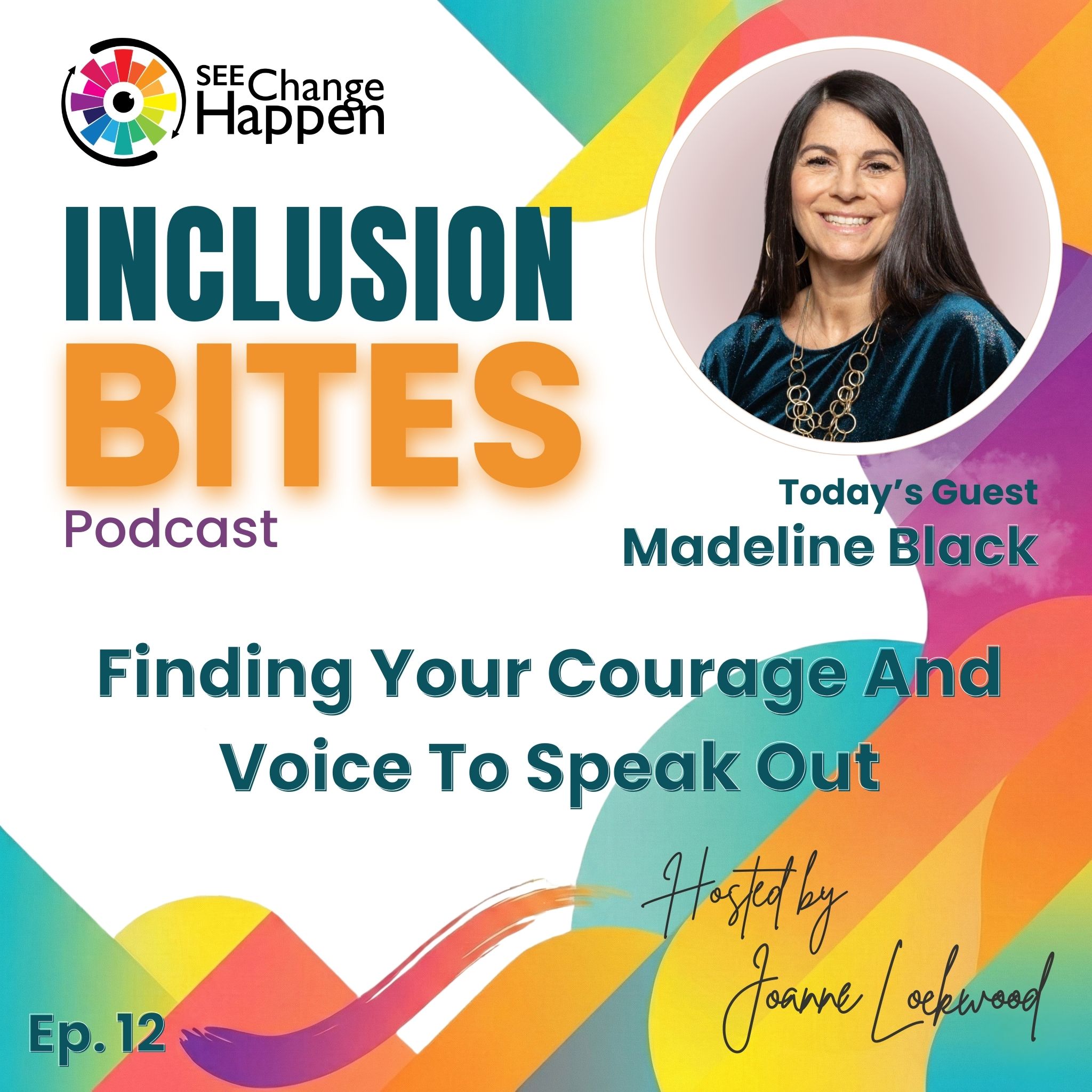
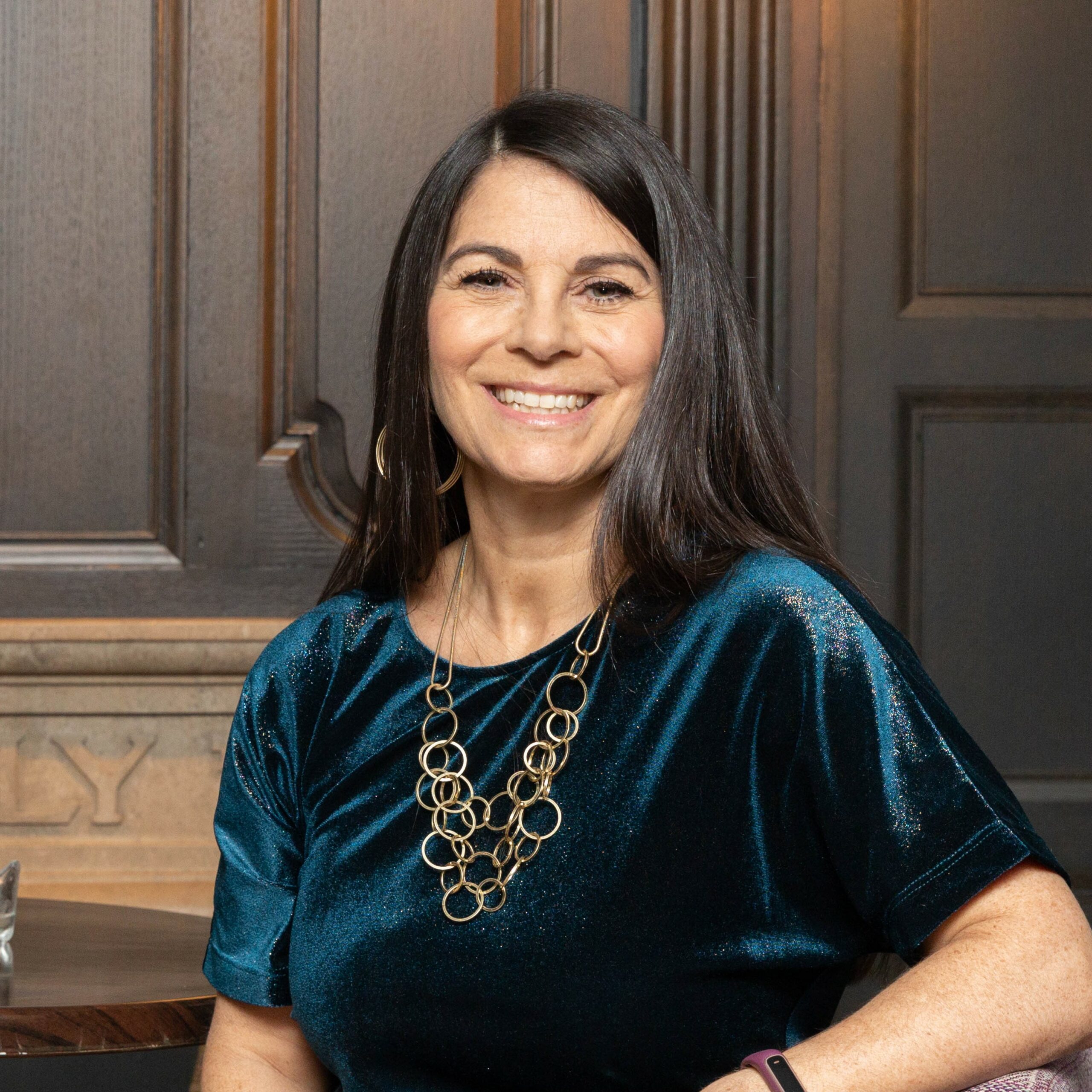
I caught up with Madeline who is a survivor of a gang rape she experienced in her teens. She talks very candidly about how she found the courage to overcome shame and speak out.
In this episode of Inclusion Bites, Joanne Lockwood speaks with Madeline Black about lived experience identity.
Hello, everyone. My name is Joanne Lockwood and I am your host forthe Inclusion Bites podcast. In this series, I will be interviewing anumber of amazing people and simply having a conversation around thesubject of inclusion, belonging, and generally making the worlda better place for everyone to thrive in. If you'd like to joinme in the future, then please do drop me a line tojo.Lockwood@seechangehappen.co.uk That's.seechangehappen.co.uk. You'll beable to catch up with all of the shows on iTunes, Spotify, and of course,the usual places. So plug in your headphones, graba decaf, and let's get going.Today is episode twelve with the titlefinding your courage and voice to speak out. And Ihave the absolute honour and privilege to be joined by Madeline Black.I met Madeline at an advent annual convention. The professionalspeakers in Coventry forward places. Madelinedescribes herself as someone who speaks out against sexualviolence to end shame, stigma and thesilence, and to help others find their courage and voice,too. I asked Madeline to describe hersuperpower and she said her voiceand ability to speak out. So, hello,Madeline. Welcome to the show. Hi, Jo. Thanks for having me
Madeline Blackguest
on. Amazing. Thank you for joining
Joanne Lockwoodhost
me. So, tell me, finding your courage and voice to speak out,what does that mean to. You know, for years, it was my
Madeline Blackguest
shame that silenced me. I was so ashamed of my history, myown story, that I just assumed if people knew that they wouldn'twant to know me, they would be horrified. They would look at medifferently. But finding my voice to speak outis really stepping into that shame and not really worrying nowwhat their opinion will be of me and speaking out anyway.
Joanne Lockwoodhost
Shame is. Yeah. I've listened to a lot of Brene Browntalks, and she talks about difference between shame andvulnerability and all these other aspects. And shamecan almost destroy people. Can't it really affect their mentalhealth? Absolutely. It really took away my
Madeline Blackguest
voice, my ability to speak, and it silenced me for years. It tookme 35 years to share my story publicly.A long time, really. Shame is just a horrible,horrible thing to hold on to.
Joanne Lockwoodhost
Yeah. I still talk to many peoplewho, for whatever reason, don'tfeel able to speak their own truth. We talk about this, bring your whole selfto work, but there's still much of our personalities that wejust don't feel able to bring to work. And we're soconscious about how people will see us negatively by sharingthis inner secret, don't we? Absolutely. The fear of being
Madeline Blackguest
judged by others is huge. And actually, I'm apsychotherapist as well. So the judgement is often really what we do toourselves. The judgement is really coming from us. But then,sadly, also with stories of sexual violence, we're not supported bysociety because we have so much victim blaming and rape culture thatdoesn't help women or men to come out and share their storieseither. Yeah,
Joanne Lockwoodhost
I see a lot of this and we still have these debates on the newsand the press about the rightsof often the woman,not always the woman, but often the woman who is notbelieved or there's doubt.Her credibility or their credibility is oftenquestioned by the circumstanceof how that occurred. Rather than seeing them as a person, they're seeingthem as a person wearing certainclothes or in certain situations and almost attributing theblame onto putting themselves in danger. Absolutely.
Madeline Blackguest
But lacey underwear, lacey thongs does not causerape. 100% of all rapes are caused by rapists. Because we knowthat babies in nappies are raped, women and burkers are raped, boys areraped. It wasn't their clothing that caused the rape. At the end of the day,it was the rapists, the perpetrators, who made the choice. I wasrecently just been asked to be a patron of another organisation calledjustice is now an english organisation and they are working tocampaign against rapeness being used within the criminal justicesystem. Because for that very reason the judge will say, well,you were wearing a lacy thong, whatever, what do you expect? And no, it's nothingto do with your clothing. So I'm really pleased to be part of that, butreally sad that this is still going on, this rape culture, thisvictim blaming society that we live. In,
Joanne Lockwoodhost
do you think this stems back from? I'mthinking to bring it into context, all the midwife, that kindof post war fifty s and sixty s wherepeople didn't really express themselves until rock and roll came along. Peoplegenerally dressed conservatively. Anybody whodressed less typically, more flamboyantly,was seen as somebody to be ashamed of,had to be a good little boy or a good little girl and dress smartly.And anybody who was maybe more flamboyant was seen assomething not to aspire to. And that bad things happen to those people. Do youthink it's rooted in that? It still comes down to judgments, doesn't it, at the
Madeline Blackguest
end of the day, or this idea of how we have to conform and bea certain way. You can wear whatever you like. If you walk down the streetnaked, that's not an invitation to rape you. I don't knowwhere it stems from. But sadly, it's not just been around since the1950s. Rape, sexual abuse, sexual violence has been aroundfor a long, long time. We have many, manychanges that need to happen. So it
Joanne Lockwoodhost
sounds to me that what you're saying and what I'm hearing isthat it's almost the rapist is trying to justify theiractions, almost like trying to depersonalise it. It wasn't me. It wasn't myfault. I was made to by what they werewearing. This is what they're trying to disassociate themselves with the act.
Madeline Blackguest
Absolutely. And they're not taking any personal responsibilityfor something that they chose to do. I never invitedto be gang raped at 13 or three more times before I was18. I know now it was nothing to do with what I was wearing,drinking, smoking, where I was hanging out. It was down to theperpetrators of those events.
Joanne Lockwoodhost
I think another part of it is language as well, because I'm very conscious about.You weren't the victim you were the target of. So you're nota victim, are you? You're the person it was done to. Guess, technically,
Madeline Blackguest
legally, I am a victim of a crime. But I don't mind that word. It'sokay, it doesn't impact on me because I guess victim also implies that you'reweak. But, yeah, a crime was committed against my body, so Iwas a victim of a crime. But I also know now that I'm not mybody, I'm not the things that these people did to me.And that took me a long time to work out as well. For years, likewe said at the start, I was so ashamed. I felt soterrified of people finding out that they would justbe disgusted because it left me feeling soworthless. I thought I was contaminated, that I could spread thaton to someone else, even if by touching me. But I realise now thatthat's not true. But that took a lot of work, a long time, to findthat out. But this is a combination of the
Joanne Lockwoodhost
perpetrator disassociating themselves by pushing theblame, the system itself, notsupporting you in a respectful way,by trying to analyse whether you could have been the court. Did you invite thisby what you're wearing, behaving? So you're transferring all of thisresponsibility, going, maybe it was me. Everyone's telling me itcould be me, maybe it wasn't. And that must be the hard thing to breakout of. Yeah. And I was also the first time, I was very young, I
Madeline Blackguest
was only 13, it was the late 1970s. And I thought, well,we both lied about where we were staying. I had another girlfriend involved in thenight and we'd met boys. We bought alcohol and we stayed in anempty flat. My friend's mum was away and we just thought we'd get intotrouble. And also, they were very violent, the two youngmen who chose to rape me that night. And they threatened me. They told methat they would kill me if I spoke out. And after some of the thingsthat he had done, I believed them. So that silenced me as well.For years, I was always looking over my shoulder, always worried that theywould come back and find me. It must be
Joanne Lockwoodhost
very frightening because it's a way of silencing you and takingyour power away again, isn't it? Absolutely. And I do believe it
Madeline Blackguest
holds us back when we can't speak out. It just completely shut medown. And so much so, I guess it's almost like self harmin a way. I developed anorexia because what we don't speak about, it's gotto come out somehow. It has to come out. I always think whatwe don't speak about leaks out of us. I developed an eatingdisorder. I became suicidal. I attempted suicide. Was ina children's psychiatric ward. I used drugs and alcohol,really, to numb out, to stop thinking and feeling. Myfamily didn't know at the time, and Nick named me the ice maiden because Ipractically stopped speaking as well for about three years. So, yeah, Ishut down. I guess I imploded rather than exploded.
Joanne Lockwoodhost
And it's still happening in a different sort of way onlinetoday, isn't. I mean, it doesn't have to be physical rape. I mean, okay,rape is rape, and that's rape defined. But there are ways one couldbe abused, thought made tofeel insecure online. And that's as powerful yourmental impact as a physical act, isn't it? Yeah. I look at all
Madeline Blackguest
these female mps that get themost vile tweets sent out to them just from doing theirjob every day, wishing them dead, wishing them that they're going to beraped and swearing at them, and they don't deserve that. They're just goingin to do their job. Whatever political side you believe in,they're not there to be a target for all of this hate, this onlinehate. Sometimes social media is brilliant, and sometimesit's just a vile place.
Joanne Lockwoodhost
Oh, for sure. And as soon asyou lift the edge of the carpet up and look underneath,there's a big success problem. I was on LinkedIn, Ithink, the other day, and I think a mutual friend of ours James McKintyposted something on LinkedIn abouthow women, often women, mainly women,are being chatted up or having inappropriatecomments made on the LinkedIn and other professional platforms.And I've seen many of these posts in thepast. And when you read the voices of the women andthe people who've been the targets, they have a very similartheme. And youdon't know how much stalking has gone on before thatpost, how often that person has gone onto other profiles,said the same things, and the debate was around,should I, as a woman, should you as a womanpull that out publicly? Should we? Just
Madeline Blackguest
about a year ago, I had so many inappropriate messages sent to me. Dickphotos, all sorts. It was horrific. And I thought LinkedIn is meant to be aprofessional platform. Now I deal with it very differently. I had onejust the other day who wanted to get to know me better offline, and here'shis WhatsApp number. So I told him that to f off. And I toldhim, this is a professional platform. Go and downloadTinder and leave me alone. And I just blocked him. But I shared thisstory and I had about five or six different messages, inappropriatemessages, and I can't tell you how many womencontacted me and how many men as well, good, supportive men. And itwas viewed about 125,000 times, this post. It was a coupleof years ago, and so many people had thesame story. And just because it's a professional platform, there'strolls everywhere, there's chances all over the place. Itdoesn't make any difference. I naively thought it might have done because it's supposed tobe professional. But no, they're everywhere. They
Joanne Lockwoodhost
are. And what surprised mewas some of the menplaying devil's advocate. They put it, they were playing devil's advocate, sayingit was unfair of a woman to publicly name and shame somebodybecause isn't that reverse harassment? And I said,why is that reverse harassment? You're saying I should have dealt with that privately?I should have kept that secret, our dirty little secret, should I? Andsuddenly I'm now the one to be blamed for saying, no,I'm not going to tolerate this. Had you not wanted me to call you out,why did you send me the message? You weren't prepared to show that message toyour wife, your mother, your children? Why would you send it to me?
Madeline Blackguest
Maybe it's time for me to do another post. I've got a few messages I'vetaken screenshots of before I told them where to go. Yeah,
Joanne Lockwoodhost
it's quite right. We should always call it out. Always.I've been chatted up on eBay. I remember advertising something forsale and somebody who came second in thebiding messaged me after saying, if the first person drops out, I'dbe willing to step in. Please let me know. And I thought I just said,thank you. No problem. About an hour later, I got anothermessage saying, forgive me for saying this, but I think you lookgorgeous. I'd love to take you out for. Areyou serious? Just ebay chat up. An eBay chat up? Youthink, is there nowhere you can gowithout being the target of this attention? Andit really is quite frightening, isn't it? Yeah, it is.
Madeline Blackguest
There are chances everywhere, really. But I dobelieve in the good of people. On the whole, people are really good.And that is what I try to put my attention on and my focus at,because there was a time as well where it wasn't just my shame thatsilenced me, it was my fear. Fear was mybest friend and we walked side by side for years and it really restrictedmy life. So I guess finding my couragewas also facing all of my fears and finding my voice to speakout, because fear really crippled me for a long time.
Joanne Lockwoodhost
Can you cast your mind back and remember, was there a triggering moment thatallowed you to step forward into courage? Was theresomething that allowed you to unlock that? Was it a gradual process? I think it
Madeline Blackguest
has been gradual. So I worked at Women's Aid for about 14 years, and Iworked at rape crisis as a volunteer for about six years when I moved toGlasgow, Scotland. And I remember taking part in acampaign not that long before I found my voice publicly. Andthey were doing a campaign called this is not an invitation to rapeme. And the journalist said, could he put up my photo and my name? Oh,no, that just felt too big. It just felt too huge.But when I was contacted by Marina from the forgiveness project,which is where I first shared my story publicly six years ago,actually, in September, she said, you can be anonymous. And at thatpoint, I thought, I am tired of being ashamedfor a crime committed against my body. So Ithink it has been a gradual process. And I had heardsomebody else. We call ourselves stories from the forgiveness project. I had heardanother story. She was going to prison to meet theserial rapist who had broken into her home while she was asleep and hadraped her. Her two year old was asleep in the room next door and herhusband was away in hospital. He only stopped because the knife broke. Hewould have killed her. And I just thought, you know, gosh, if she can sitopposite this man in prison for a three hour meeting. Then I am going toshare my photo and my name. And it actuallywas the scariest thing I ever did, but the best thing I ever did.Because you can't eradicate shameby hiding in the shadows. You have to step into the shame toreally go, well, fuck it, this is me. I don'tcare who knows anymore. This is who I am. And sostepping into the shame, doing the things that I would have run a million milesfrom years ago, that is what grew me. That is really what justshattered the shame completely. And ultimately then found mycourage. That's so powerful. I'm
Joanne Lockwoodhost
just listening to you there, thinking some of the words you usedthere, it was about before you letyourself find your courage. You were effectively living two lives. Youhad the public Persona and your inner Persona, and you wereout of alignment. You had to double think. You had to sort of work outwho you were, what you could share, what you couldn't share.I can't relate to your experience, per se, but I know what it's like tohave two voices, two heads, two thought processes, and thatpower disalignment of being that one person in public going,I'm proud of who I am. I'm not ashamed of who I am anymore. Ican shout and say everything I want to. I have no secret.I'm not keeping a secret for anybody anymore. You getme? And that is a really empowering thing. And I listened to what you're sayingthere, and I'm just.My emotions. I guess
Madeline Blackguest
people saw me. We're great at wearing masks. And I alwaysfeel like maybe I was a bit of a swan, that everything was fine andgreat, in control up above, but underneath, I'm paddling like crazy just to keepup. That's really how I think of how I lived those years. And it wasfake. I had this fake smile on my face. I wanted to be the perfectmum, partner, homemaker. But, yeah, underneath it,I was terrified of people finding out. And now lifting thatis like. It's so freeing. It's like, brilliant. Now I don't need to hideanymore. And a lot of my friends, some of them that did know, theydidn't know all the details, and they didn't know that it was near fatal. Theydidn't know the level of violence. So putting that outthere, it just really cutsall the chains that really tied me down and stopped me fromgrowing. It's much more freeing from this side to reallyjust say, this is me. This is everything that you need to know.
Joanne Lockwoodhost
Yeah, I'm almost welling up here. This is really powerful.When I talk to people, when talking about DNI, incorporates, in diversity, inclusion, belonging, we always talk. One of thepowerful ways of doing this is through storytelling.I may not be able to have your exact experience, but if I can buildthis empathy bridge, if I can start to relate somehow to yourlived experience, then I'm going to be able toencompass what you're saying into my sense of well being and my sense of psychemyself. And it's not. So I feel sympathy for you, so Ifeel empathy from you and I build strength from your strength. And Ithink by telling your story. And I really am not a fan of the wordrole model or the term role model, but we have to recognise thatpeople do look to people for inspiration. If they can, Ican. They've made it. I can make it. And that's the relatableexperience.I'm sure you hate being called brave. It'sa title awarded rather than a feeling you necessarily have. Bravery ishindsight at the time, you're just doing what you do.But, yeah, I'm sure you've given a lot of people, you've passed thecourage on, if you like. Yeah, it is an interesting word, brave, because I don't
Madeline Blackguest
want to be considered brave. I'd like it to be normal that we can allspeak out and be okay with who we are and beaccepted. But I realise a lot of that journey was a personal journey. Ihad to be okay with who I was, and I had to accept myself. AndI can't undo what happened to me. But it's kind ofa paradox, because in some ways it's clearly shaped my life, but in otherways, it's not who I am as well. The real essence of whowe're all born with, that fire in our belly, whatever we are, whateverour experience is, nothing can change that. And that's what I really believe.But like you, I do believe in the power of sharingstories. And Marina, who is the founder of the forgiveness project, she hasthis beautiful expression. She doesn't call us storytellers, she calls usstory healers. And I've just felt that healing power ofsharing my story. Whether someone's been raped or not, there'salways something that we can resonate with someone else. I've just felt it so manytimes. And that what really inspires me tocarry on speaking out, it motivates me just to. Not for meanymore, but what it can do for other people now, to unlock their ownpotential, find their own voice and share their stories,speak out. Do you find
Joanne Lockwoodhost
sometimes that your storyis you? You are your story. And sometimes it would just be nice to beMadeline for a while. Just be Madeline, just berecognised as a psychologist or wherever youare, rather than being. I don't want to beeither the engine Jones esteem anymore, or Joe the trans person. I just want tobe Joe the lockwood, Joe the person, Joe the trainer.
Madeline Blackguest
Get that? But I realised my story had the power to help other people.So when I think back,it doesn't feel like me anymore. That person that I speak about.I've done a tonne load of therapy, a tonne loadof speaking therapies, body therapy. I feelso healed. And in fact it's actually grown me now. I thinkthere's post traumatic growth rather than post traumatic stress disorder. I thinkI've grown from my experience, so I'm okay withthat. It's fine. People, you can't stop how people see you. They're going tosee you however they want to. But as long as I'm okay with who Iam, I think now that's taken me to this grand old age to getthat. But that's really all that matters.
Joanne Lockwoodhost
Yeah. I'm just reading back on your superpower.It's your voice and ability to speak out. So your lived experiencehas given you this superpower and through thissuperpower, your purpose and mission in life, if you like. And it's something you'renow rising to and using. I talk aboutprivilege as being something you shouldn't be ashamed of. It's how you wield it.And you're using your privilege of strength and characterand wielding that for the good of society. Absolutely. Yeah. I mean, like
Madeline Blackguest
I say, I wouldn't wish it on anyone, but I wouldn't undo it now becauseit really has taught me a lot. I mean, it's shown me,and I can see it in everybody else, that we're all so much stronger thanwe think we are. And really okay. I needed a lot of support toget past a lot of the issues that I had. I lived with PTSD foryears and wasn't even aware. So many fears, phobias,anxieties. But at the end of the day, once I had worked it andworked it and worked it, I saw that I had a choice and I couldchoose to stay in my past or Icould choose to grow from it. And that's what I chose to. So we allhave a choice and we can get past anything that happens to us, wereally can. So you did a
Joanne Lockwoodhost
TEDx, if I remember rightly, I did, yeah. Glasgow,was it? 2000 people in a big theatre somewhere, was it? Yeah. I don't know
Madeline Blackguest
if I'll ever be doing that again. It was2100 or something like that. So again, itwas one of the most terrifying moments of my life. Even though I hadspoken on stages before, it really was pretty intense,because Glasgow, I didn't know. I know now, is one of the top ten onesin Europe, so it's a really hard one to get into, so I felt reallyproud that I got into that one, but they weren't sure aboutmy story to start with, and then they were obviously really behind me. Butonce I walked out onto the stage and I stood on that red dot, Ijust thought, it's not about me speaking now, it's about who's listening, andthat just centres me and grounds me, and it gave me thestrength to share my story. Andeven if I just help one person, I think, well, that's my job done. Andstraight afterwards, I was contacted by a head teacher who I've now had a lotof contact with, and one young woman in the audience that was withthe school party started to cry after she heard me.She got very triggered. And cut a long story short, she had been rapedby her uncle three years prior. I've now met the young woman who isextraordinary, she's fabulous, and she said she would never have spoken out,but she saw me standing there with no shame and being proud ofher past and she said it gave her hope. And I think, well, that'sit, that's my job done. I was just there for you that day. But, yeah,a lot of people do still contact me after my ted. So, yeah, I'mgrateful that I had that platform. It was brilliant to have aTEDx. Yeah, I haven't done it yet.
Joanne Lockwoodhost
Maybe one day I've just got to find my why. But you found your whyand your message of passion. But you're so right.It's the small things. You bump into people, maybe you're at aconference, maybe you're in a different scenario and someone come up to you and say,can I have a quick word? And they say, I saw you this, or Isaw that, I watched this, I saw your YouTube, I heard you speak. Andjust to let you know, in my particular case, my daughter's transor my husband come out and by listening to you has given mesome hope. And you think, wow, that's that one person that youwanted to change the life of, and these peoplefind you and they put effort into seeking you out to tell you theirstory. I'm almost in tears. I'm sure youare. When you hear people's stories as well, that it's such an incredible feeling toknow you have made that difference to one person, isn't it? It's amazing.
Madeline Blackguest
One of my best examples. I've been interviewed by fabulous people, obviously,yourself included, but I was interviewed by Sir Trevor McDonald, which is a hardone to beat, I know, for BBC Radio Four. And to cut a longstory short, once the programme had been aired, it wasthe most amazing thing. My friend Sandra, who works for theforgiveness project, told me her mum had been listening. And to cut a very longstory short, that day she ended 64 years of hersilence when she told her daughter that she had been raped too, as a teenager.And she had never told anyone up until that moment. She said it'sbecause she heard a woman on the radio who understood how it was, thatshe felt guilty and ashamed and thought it was her fault. And I had madeher realise that it was never her fault. She had nothing to be ashamed about.It was down to the perpetrator. And she found her voice thatday. And I believe that courage iscontagious. It was somebody else speaking out that helped me findmy voice and I just really intend to use my voice. I just feel likeI'm a vehicle or a vessel for helping otherpeople find their courage and their voice. And that, to me, everytime I speak, I think of my friend's mum. Because there's so many peoplethat have just put themselves into theirown prison of silence that can't speak outbecause of their ashamed or they're fearful or they're worriedabout being judged. And she broke out of that. And my friendsaid there's every chance she would have taken that story to the grave and she'dhave never known about it. And that breaks my heart, thatreally does, yeah. And that's the why,
Joanne Lockwoodhost
isn't it? That's the why, absolutely. That is my why.I often tell this story. It's about one person alone.When they speak out is often called a snowflake. They fallto the ground, they're insignificant. They melt when they hit thetarmac. But you put a billion people with voicestogether, they become an avalanche. An avalanche has power. An avalanchecan move mountains. An avalanche can cut throughand be heard and be reckoned with. So we all needto come together with our voices. And not melt as a singlesnowflake. Become that avalanche. Starts with a single snowflake, really, though,
Madeline Blackguest
doesn't it? We just have to gather them on. Come together. Yeah,absolutely. Come together and start with being a
Joanne Lockwoodhost
snowball. Start with being a bigger snowball and get themomentum. It's just like that because the ripple
Madeline Blackguest
effect of me speaking out. One friend now has started a blogand she's now inspired other people to speak out. And it's the ripples ofwhere it goes, and we never know where it goes as well. Sometimes it's yearslater, someone can sit. So yesterday, actually, I was out hillwalking with some friends, which we started to do since lockdown, and we meta couple of young girls that were like, my kids age. They were like 25and 27. And one of them found me on Instagram because I put a postup about this knock hill summit we climbed. And she said, I knowyou. I didn't realise I had my hair pulled back and no makeup on. Yesterdayshe said, I've been following you on Instagram for years and I've read your book.And this happened to me, too. I didn't realise when I was chatting to you,that was you, and she said, I watched this podcast with you and she wasjust like, yeah, she suddenly could tell mebecause she knew my story and she went into her details with me justthis morning on Instagram. So, yeah, it's interesting.It really is. That's really powerful of love, isn't it? Because
Joanne Lockwoodhost
people often know so much about you by reading your books and your TEDx. They'velistened to your interviews and things. And when you meet people, they've got somuch warmth for you because they feel like they know you really well. Andit's kind of a strange feeling sometimes that someone knows you that well and youdon't know them. Yeah, I'm used to it. But I do, obviously, write
Madeline Blackguest
about my husband and my kids in my book. So Stephen gets quiteawkward. Oh, Stephen, I want to just give you a big hug. You've just, whata guy. And you supported her all this time, and he's like, oh, okay.Or some of the reviews on Amazon they'll mention do.I used to say that I thought he was an angel sent to save me,because at the point in my life when I met him, I was really ona path of self destruct. And I often wonder if I hadn't met himat that point where it would have gone, I would have gone on to harderdrugs or something else. My self respect, my selfesteem. My self confidence was really bad. But,yes, people get very excited when they meet him and he's like,he can't cope. But, yeah, it's cute.
Joanne Lockwoodhost
So we're topically end ofJuly and 2020 here, as we're having this conversation, and Ithink we'd have to be living in a cave if we didn't realise that Covid-19was around us. And the world changedsignificantly in March for most people. And I think we'reboth aware that it's having a significant impact onpeople who are in a home environment, living in a toxic environment.Domestic violence, domestic abuse, not justwomen, but also when we think about lgbt people living in an environment that's notsafe for them, it's a big challenge. Are you hearingstories now from people? I'm also a patron for
Madeline Blackguest
a scottish organisation called say women, and we support young women that have beensexually abused and are facing homelessness because it's no longer safeto stay at home. So Pam, the CEO and myself spoke veryearly on on the radio because they were launching a grantscheme to get some more money to add extra services to the service theyalready provide. And within the first three weeks of lockdown, 16women, 14 women and two young girls were murdered at the hands of theirpartner. So I think, for anyone, life was tough before. It justgot a whole lot tougher. I think when we're outof lockdown completely, I'm in Scotland, so we're kind of a little bit behindEngland. The calls to the national abuse helplineto rape crisis. The need for refuge is just going to go up.It's just going to be. Yeah. For a lot of people, home is not asafe place. It really isn't. And I'm grateful. I hadmoaned a bit because I had my house suddenly busy again. I realised I gotused to my peace and quiet. I quite liked it. Suddenly had a husband,home and two kids. But actually, now I'm really grateful for this time. It'sbrilliant. But, yeah, I have to recognise, we have to see that forhome, a lot of people, it's not a good place, it's tough. It'sreally tough out there. Yeah. And it does worry
Joanne Lockwoodhost
me sometimes when you listen to the corporate voice, if you like, saying,oh, this new way of working is going to be great for our company.We'll have people working from home, working remotely. People love it.We get so much good feedback. But I think when we go back to thisinclusion, belonging sort of focus, that sometimes we're not hearing all thevoices, or we're not putting those voices into enough context,amplify them to make sure those concerns are listenedto and addressed. Things. I
Madeline Blackguest
have a friend who teaches it, and she said most of herstudents don't have access to the wifi. They're maybe refugees. They don't have alaptop. They don't have the need to do the classat home. She spends all this time preparing lessons. Normally have 30 people inperson. She might have one or two that turn up. So it'shard for her and it's really hard for them. And she said she's heard alltheir back stories. They all have struggles and their prioritiesnow are undercut after their family or their brothers and sisters.And it's not easy. It's a lot of challenges,whatever this is bringing. And it's also hard for peoplewith their mental health because everything's uncertain. And we like tothink we're in control, but we have to get okaywith not knowing, and that's really tough for people. We don't know how this isgoing to look, when it's going to end, if it will ever end. Maybe we'llalways be impacted on this in some way.
Joanne Lockwoodhost
But going back to the title of the show, finding courage and the voice tospeak out, it's really important that wecreate permissionor allowing people to have that voice, because if wedon't hear them, their voice will be buried.And what worries me is because the way the employmentmarket, the, the way, way the jobs are at the moment, a lot of peoplehave been made redundant. A lot of businesses are closing, a lot of airlines, entertainmentevents, all shutting down. So maybe people are going to put up withmore because of they're worried about their job.They're more like to suffer part with an employernot treating them fairly because they know that there's no job. Sothat person's going to be loyal. So it does take a lot of privilege andcourage to be able to stand up for yourself, knowingfull well that could impact your employment status.
Madeline Blackguest
Absolutely. Because I can't imagine right now if you lose your job, it's a goodtime to find another job. It must be really worrying for people just thinking,well, I just put up with it because it's better the devil you know, really,isn't it? So, yeah, it's finding a balance, really, isn't it?
Joanne Lockwoodhost
And the workplace was your source of refuge often, wasn'tit? You had ally support, friends, and for.
Madeline Blackguest
Kids as well, for a lot of children that were forced to stay athome, that are getting abused or neglected at home or they only got their onecooked meal when they were at school. It's been tough on children aswell. It's a really tough time.
Joanne Lockwoodhost
Is there an answer?There's no magic wand here. Can you think ofanything that employers could start doing? How do they engagewith their teams and their staff? I guess that really depends on what the
Madeline Blackguest
employer is like to start with. If an employee withheart and they care about their employees, then, yeah, youlucked out. If it's someone that just wants you to produce the numbercrunches or get the figures up, whatever, and doesn't really care about you,yeah, it depends if there's heart in your organisation or not.
Joanne Lockwoodhost
It's the pulse, it's the corporate values and culture, isn't it? That's theinfluence. Absolutely. And if those aren't there to start with, then it's
Madeline Blackguest
going to be tough. It's going to be really tough.
Joanne Lockwoodhost
Do you think we'll come out of this in a year, six months? Are youseeing this as a kind of forever thing now? You know what I think of,
Madeline Blackguest
like, 911? I mean, my youngest one is going to be 19 nextweek. And I said, you know, it used to be a time, Leila, where wenever used to take our toiletries in little plastic bags. I used to have agreat big carry on toiletry box filled to the brim of100, 500 mils, whatever. Really? I've always knownplastic bags. Could you take bottles? So, in some way, Iwonder if we'll always have to have our temperature taken if we go to arestaurant or always have to leave our details, or there's going to be somethingthat will just become normal, because now you don't even question it. You buy yourlittle bottles, you fill them up, you put them in your plastic bag, you fly,whatever. Not that we're doing much flying at the moment, but I wonderif it's always going to impact on us in some way. But,yeah, it's a bit surreal at times. It's likeliving in a science fiction movie. It really is. When we look back,I often think. It'S a bit like the. It's like the Will Smith movie, isn't
Joanne Lockwoodhost
it? The zombies and everything. We look out the window, there are nozombies. It's like the same thing, butthere's nothing visible to hang thiscrisis on, this invisible virus. But
Madeline Blackguest
I think it shows. I mean, in the beginning, for me, the environment wasintense and I'm meant to be a motivational speaker and I reallystruggled. I thought I gave up working as apsychotherapist. I'm going to put my energy into speaking and I did not feelmotivated at all. I was really struggling andI think that collective energy was hard as well because I think I had myown stuff. And then you feed into the collective fear out there in thecommunity and collective anxieties. And I had a lotof people messaging me about their anxieties, people with unprocessedtrauma that was getting triggered and new memories resurfacing.But I think now, I don't know if I speak just for me, but Ifeel like we've got used to it now and we're adaptingand we've got used to this change. Not saying that we like it, but justshows you that we are adaptable. And yes, that was the initial traumawhen it first came in, but we have grown into it and we'regetting used to it. Doesn't mean that I particularly like online working. I haveto be honest, I much prefer a live audience and people,but it has its points as well. I can wear my tracky bottoms and myslippers and nobody needs to know, just pop down from myroom upstairs. It has advantages as well, but I think itmight impact us, on us for a long time to come.
Joanne Lockwoodhost
I think you're right, definitely think you're right. AndI think just the change of attitude we're now havingtowards interactions with each other, ourdefault position is almost of mistrust for people around us rather thanwhere we were before, maybe trusting or not evenconsidering our personal space. What do you mean by that? By mistrust?Well, if someone's not wearing a mask,worried about them, if someone's invading our personal space,we're now thinking, well, I've got elderly parents. If I mix with people, if Iget on a train, am I worried about my surfaces? Am I worried about pittingsaround me? So we're kind of starting to mistrust and feel insecure, I think.
Madeline Blackguest
We're living in Scotland, we all wear our masks. I mean, it was mandatorybefore England and we all kind of socially distanced to a whole, but, yeah, no,I understand. Sadly, my mum has been diagnosed with canceragain after ten years and so I'm really worried, as we'reopening up, I don't want to spend too much time with other people becausethen Sheena has to be shielded again if she goes through radiotherapy.I understand what you mean and I think we're all going to become germaphobes.We're going to become so obsessed my hands have never been so clean theamount of gel that we go.
Joanne Lockwoodhost
The early march, I was in Newcastle on a Monday,then I flew to Amsterdam for three days and by the time I got backon Friday the 13th, the world changed mid flight. I didn't getthe memo or something. No one had told me that by the time I gotback, everything was different. And I remember coming back on thetrain and phoned my wife up and said, look, I'm cominghome. I've got notified that I may have been in contact with someone who mayhave been in contact with someone on the virgin train on the way to Newcastle.This is the early stages of track trade before it was official andwe had to have this conversation about, should I come? So if Icome home, I've now bought anything I have with me having spent threedays in the aeroplanes and conferences and things, I'm now potentiallybringing something back into the home. So I almost feltlike we had to negotiate permission for me to come back. Andhow is that going to impact my wife? How is that going to impact thosearound me? How would that impact her ability to look after her parentsaround my elderly parent? So suddenly it's not just about me,it's about my impact on others. And I went to London tohave my hair done and do a few other things two weeks ago and I'mthinking as I'm coming back, I've been on the underground, I've been on a train,I've been here, I've been there,okay, with a mask on. Butnow I've now brought an environment back with methat wasn't in our household before. So what's my impact on our familyunit? But it's hard. Do you want to just hide away
Madeline Blackguest
completely or do you want to get back to some kind of normality as well?And I guess we're going to have to risk being exposed to it at somepoint. Yeah, it's very hard. So in the very beginning, wehad a lot of families in my own immediate family that wasaffected by it. My aunt died of COVID my brother inlaw has myeloma, which means that he had only just had asecond stem cell transplant. So he's not allowed out at all. He's not beenout for about three months and he's just been allowed out to go walkingnow. I think at the end of July, he can still go out now, butthen he'll still have to shield. He'll still have to be two metres apart fromeveryone, which he might have to stay like that until he gets a vaccine. Somy two, lots of our parents are both in their eighty s. One setis better behaved than the other set. But we were cooking and lookingafter all these people, not cooking, doing all their shopping. Soit's really tough. And then I'm thinking, well, I'm going to the supermarket. I've touchedsomething, I could potentially bring it to them. And we were trying to protect them,but we could drive ourselves crazy, really, couldn't we? Yeah. We
Joanne Lockwoodhost
double think about everything, don't we? Yeah. We went to the cinema acouple of weeks ago andI forget what we went to see now, but what we went to see. Andthere was about five people in the entire cinema. Yeah, it doesn't appeal to
Madeline Blackguest
me right now. No, it was an empty experience.
Joanne Lockwoodhost
All these things that were familiar, like going shopping, when you goshopping, it's not a nice, comfortable experience.So all of that, all those brain chemicals that we got pleasure from bydoing these things, spending money, enjoying ourselves,trying on a new dress, buying something nice to wear.Where are we going to wear that nice thing? We're not going to go party,we're not going to the pub. So you go to the shop. I was holdingthis dress up thinking, I love this dress. I thought, I'm never going to wearit, not this year. There's no point buying it. Tracky bottomsand some slippers would be nice. Well, my first trip out
Madeline Blackguest
was to Tiso, which is an outdoor shop, and I bought some walking boots. Thatwas really exciting. And some waterproof trousers because I'm doing more hill walkingand walking outside than ever before. But it was so exciting to go andbuy something and I needed a new rucksack and I got someplasters for my blisters and it was like, yeah, this is really exciting to go.That was the first time I'd been in a shop for about four months, otherthan a supermarket or a pharmacy, and spent some money. Butyeah, to go shopping there doesn't really appeal to me. But it waslike quick in, try my boots on and then get out as quickly as possible.
Joanne Lockwoodhost
Yeah, I'm spending most of my money these days ongadgets and technical and remote speaking stuff andpodcasting and mics and things. That's my fixbecause I'm actually using them and buying lots oftops and no bottoms because, as yousay, just trackies and stretchy pants are fine. No
Madeline Blackguest
slippers. Every time you stand up you think, oops, sorry, I just
Joanne Lockwoodhost
hide away from the camera, just shuffle away.So you wrote your book. Was that before or after the TEDx?
Madeline Blackguest
That was a little while ago now. So unbroken has been out sinceApril 2017. So I wrote it like a year or two before, but thepublishing process takes a while, so I was very lucky.Just before lockdown, it had been recorded, so it's nowavailable on audible. And in Januarynext year, 2021, I'm going to be translated into Italian. Soit's amazing because it's like three, three and a half years old, we nearly fouryears old, and that I can still get all these otheroptions to happen. But, yeah,unsadly my story is not uncommon. It's astory of many, many people. And it's, I guess, the kind of book that willnever go out of fashion. Because every day,somewhere on our planet, a man, a woman, a child will be raped orabused.
Joanne Lockwoodhost
That's a heavy sentence to hang on, isn't it? It is,
Madeline Blackguest
but it's the truth.
Joanne Lockwoodhost
So what's your optimistic view of the future?How's the world going to change for the better? Or are you stillpessimistic about the future? You know what? I never really intended
Madeline Blackguest
to be a speaker. I always call myself an accidental speaker. But Irealised that my voice really is my power that will help otherpeople. And I've always just gone with the flow. I did have atantrum about remote speaking in the beginning, I have to be honest. But I've nowdelivered a couple of keynotes at some onlinenetwork events or conferences. And it was okay. It was actuallyreally good. It wasn't as bad as I thought. So there is thatfuture. But I'm still very happy to just go with the flowand just see what comes to me. I've beenlucky. I choose to speak. I don't need to speakto support myself. I have another source of income.I look after some properties for my mum so that Ifind secure financially from that point of view. But Ispeak because it comes from my heart. And so I will always find a wayto speak out, share my story, to help other people find theirvoice and their courage.Fantastic. So how can people get hold of you if they want to make
Joanne Lockwoodhost
contact? What's the best way for them to find you? Well, I have a website,
Madeline Blackguest
madelineblack.co.uk, and I am on allthe social media platforms apart from TikTok. I can't really get toTikTok. No, I've not sourced that one
Joanne Lockwoodhost
twitch. I haven't sauced either of those two.Awesome. I'msure to everyone who's listening today, that there's so much there to takeinspiration from, to take couragefrom as well. So a huge thank youfor your time today, for sharing your story again, andalso to the listener out there who's tuned in and gotthis far, thank you very much. I'd ask you to keepsubscribing to this podcast and to future episodes ofthe Inclusion Bites podcast. That's bit yes. Tell your friendsand colleagues, because I'm sure they would love to share this story aswell. I have a number of other exciting guests. You
Joanne Lockwoodhost
think Madeline's powerful? I mean, I've got some other powerful storytellers andspeakers lined up as well that you'll definitely be inspired by over the next fewweeks and months. And if you are one of those people that has astory and would like to be a guest and to share with the listeners,then please let me know. And as usual, I'd welcome your feedbacksuggestions tojo.Lockwood@seechangehappen.co.ukhow we can improve the show or other topics we can cover.So my name is Joanne Lockwood. It's been an absolute pleasure to be your hostfor this podcast today.
The Shift in Interaction Norms and Personal SpaceThe Prevalence of Abuse and Silencing TraumaImpact of Remote Working and Inclusivity at Work
Madeline Black joins Joanne Lockwood to talk about what it took to find the courage to speak publicly about being gang raped at 13, and how shame and fear kept her silent for decades. She describes how victim-blaming culture and gaps in societal and justice-system support can reinforce that silence, and why shifting responsibility back to perpetrators matters.
Madeline reflects on the long-term impact of trauma, including disordered eating, suicidal feelings, anxiety and PTSD, and the gradual process of healing through support and therapy. She shares why stepping into the shame and telling the truth of what happened helped her reconnect with her sense of self-worth and authenticity.
The conversation also explores why speaking out can be contagious: how public storytelling can create connection, inspire others to disclose their own experiences, and build empathy. They touch on online harassment, the increased risks of domestic abuse during COVID-19 lockdowns, and the need for workplaces and communities to create conditions where people can be heard safely.
The shift in social interactions and the heightened sense of mistrust in the post-COVID-19 world.
The importance of safeguarding personal space and the complexities of caring for vulnerable family members.
The societal issue of abuse prevalence and its far-reaching impacts on individuals.
The role of personal acceptance and storytelling in overcoming shame and mental health struggles.
The impact of COVID-19 on those in toxic home environments and the urgent need for support systems.
The power of speaking out against harassment and the gradual process of finding one's voice.
The significant influence of one’s voice in creating broad societal change and collective impact.
One thing to remember
The episode "Finding your courage and voice to speak out" of The Inclusion Bites Podcast, hosted by Joanne Lockwood with guest Madeline Black, centres on the transformative power of finding one's voice after trauma. Both speakers underscore the journey from silence precipitated by abuse and societal shame to the empowerment achieved through storytelling. They tackle the challenges of a post-COVID world, the persistence of rape culture, victim-blaming, and the necessity for inclusive support systems.
Explore topics
Ideas from this episode
The Shift in Interaction Norms and Personal Space
Our dialogue kicked off with an exploration of the shift in interaction norms and personal space, an issue that has become particularly pressing due to the ongoing COVID-19 pandemic. The pandemic has reshaped our approach to social engagements, invoking a heightened sense of mistrust and concern for personal safety.
The Prevalence of Abuse and Silencing Trauma
Delving into one of the heavier topics, our conversation navigated the harrowing prevalence of abuse and the often-crippling impact of trauma. As a society, we're confronted with uncomfortable truths about domestic violence, abuse, and the consequential silence that many victims endure.
Impact of Remote Working and Inclusivity at Work
The topic of remote working, especially its impact on inclusivity within the workplace. The pandemic has forced many to adapt to remote working conditions, bringing to light new challenges and necessitating a rethinking of workplace dynamics.
Learn
Frequently asked questions
What changes in social interactions have been observed due to COVID-19?
COVID-19 has led to a default position of mistrust among people, particularly due to concerns about mask-wearing, personal space invasion, and the potential impact of interactions on vulnerable family members. This shift has redefined how people engage in everyday activities like going to the cinema, shopping, and even new spending habits.
How has the pandemic affected the victims of abuse and domestic violence?
The pandemic has led to an increase in domestic violence cases, with 16 women and 2 young girls murdered by their partners during the first three weeks of lockdown. Those in toxic home environments, including LGBTQ+ individuals, face heightened challenges. Remote working may exacerbate exclusion and mental health difficulties, and there's a growing concern for the need for refuge and support once lockdown eases.
What personal experiences does Joanne Lockwood share in this episode?
Joanne Lockwood reveals her traumatic experience of being raped at 13, the ensuing years of fear and silence, and using anorexia, suicidal thoughts, and substance abuse as coping mechanisms. She discusses the importance of overcoming shame and finding the courage to speak out, highlighting her work with organisations like Women's Aid and Rape Crisis, and sharing her story publicly through platforms like the Forgiveness Project.
What is the significance of the conversation about abuse, victim blaming, and rape culture in society?
The conversation underscores the pervasive issue of victim blaming and rape culture, where survivors are often judged based on their clothing and behaviour. It explores the detrimental impact of such attitudes on mental health and societal perceptions. Joanne and Madeline stress the importance of challenging these norms and supporting survivors in their journey towards healing and justice.
How does Joanne Lockwood view the role of storytelling in overcoming trauma?
Joanne Lockwood emphasises the power of storytelling in building empathy, strength, and personal acceptance. Sharing her past openly has been liberating for her, and she believes that everyone has the strength to grow from their experiences. The ripple effect of her story has inspired many others to find their voice and courage.
What impact did Joanne Lockwood's TEDx talk in Glasgow have?
Joanne's TEDx talk in Glasgow was a turning point where she felt immense pride and the potential to help others. She recounts how a young woman in the audience, who had been raped by her uncle, gained hope and courage from Joanne's story. The talk has had a profound ripple effect, enabling individuals to end years of silence and find their strength.
Share this episode
Heard something worth passing on? Send this conversation to someone who needs to hear it.