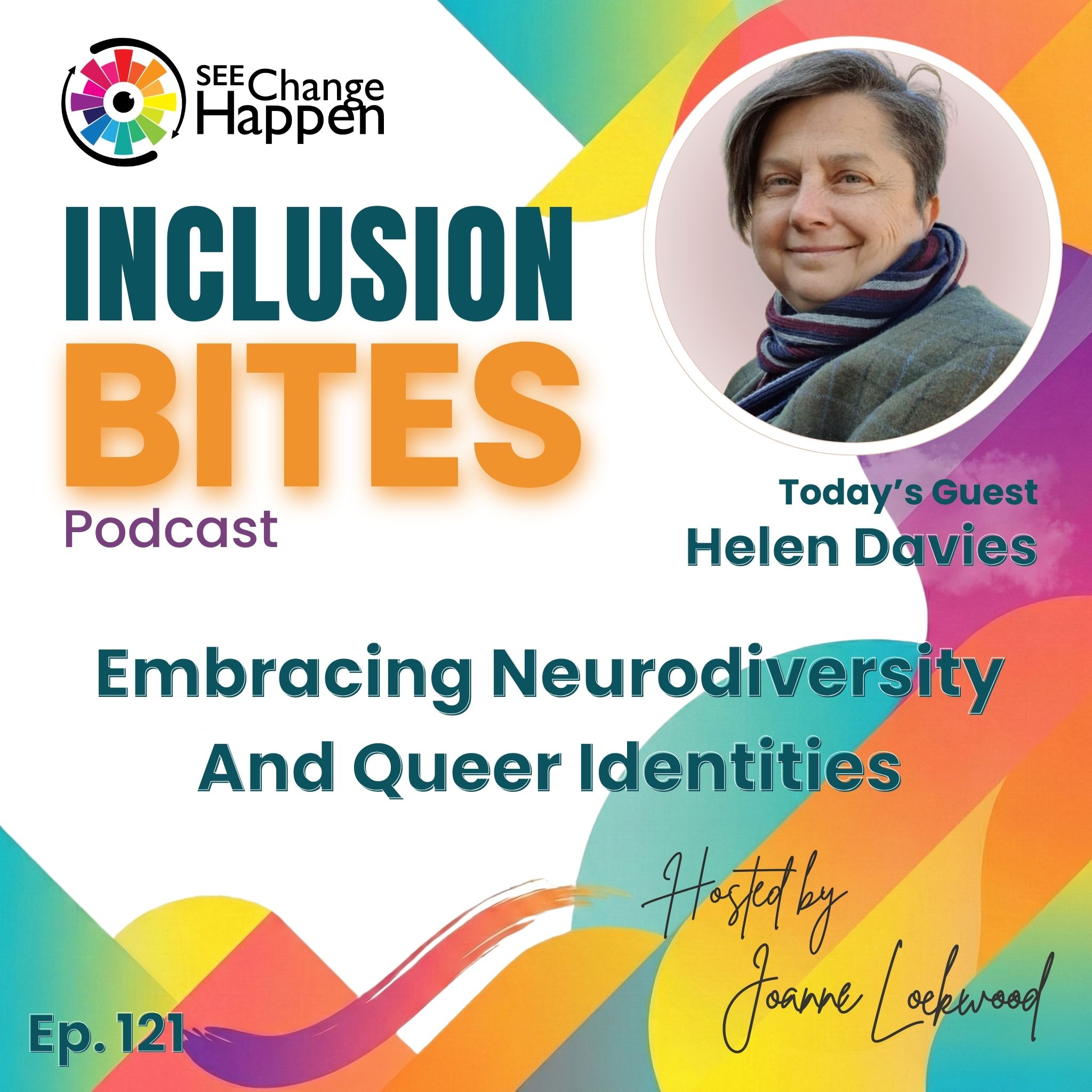
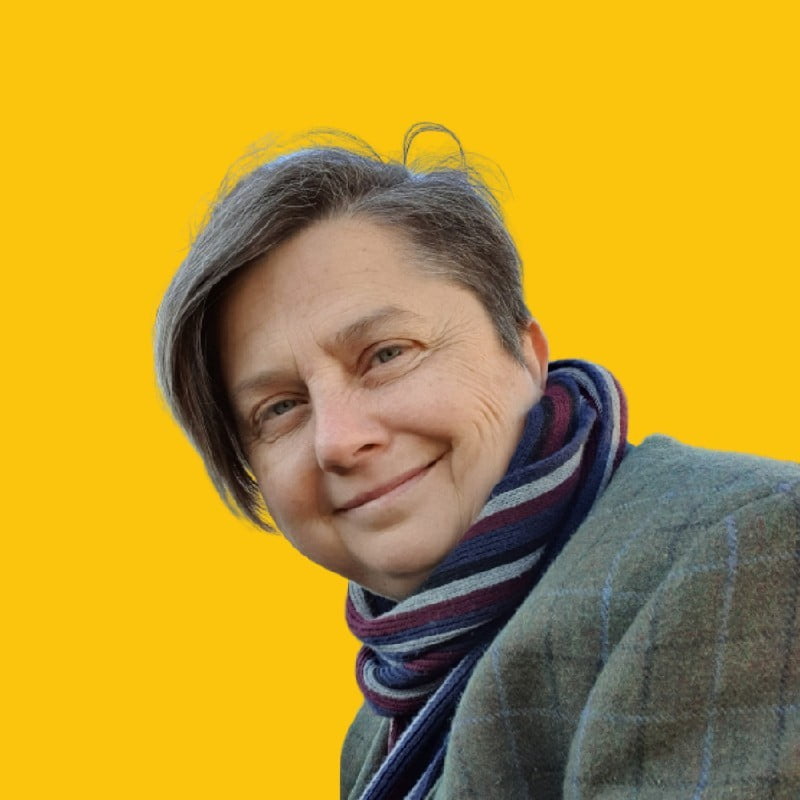
Helen Davies explores the intricate intersections of neurodiversity and queer identities, shedding light on the nuances of self-expression and the vital role of inclusive environments in fostering a sense of belonging and authenticity.
In this episode of Inclusion Bites, Joanne Lockwood speaks with Helen Davies about lived experience identity.
“I have noticed that there's a very high prevalence of neurodiversity within our queer communities.”
Explore
Navigate this episode
Joanne Lockwoodhost
Welcome to Inclusion Bites, yoursanctuary for bold conversations that spark change. I'm JoanneLockwood, your guide on this journey of exploration into theheart of inclusion, belonging, and societaltransformation. Ever wondered what it truly takes to createa world where everyone not only belongs butthrives? You're not alone. Join me as weuncover the unseen, challenge the status quo,and share stories that resonate deep within.Ready to dive in? Whether you're sipping your morning coffeeor winding down after a long day, let's connect, reflect,and inspire action together. Don't forgetyou can be part of the conversation too. Reach out tojo.Lockwood@seechangehappen.co.ukto share your insights or to join me on the show.So adjust your earbuds and settle in. It's time toignite the spark of inclusion with Inclusion Bites.And today, it's episode 121with the title, Embracing Neurodiversity andQueer Identity. And I have the absolute honor andprivilege to welcome Helen Davis. Helen supportsneurodivergent in adults and the organizations theyare in. When I asked Helen to describe her superpower, she said,she has both a superpower and some Kryptonite.And she thinks that having ADHD has helped her live morethan one life. Hello, Helen. Welcome to the show.
Helen Daviesguest
Hi, Jo. Really fantastic to be here. Thank you. Yeah.
Joanne Lockwoodhost
Brilliant. We've had a bit of trouble in the green room. We've been all overthe place. We're into Zencast and out of Zencast and back into Zoom.
Joanne Lockwoodhost
So these never go smoothly. But welcome them. I'm glad we finallycan see and hear each other, which is amazing. So,Helen, embracing neurodiversity and queeridentities, Tell me a bit more about what you do and how wecan do that. Yeah. I mean, yeah, in terms of that specific
Helen Daviesguest
point, I've noticed that there's a very, very high prevalenceof neurodiversity within our queer communities. I'm notsaying you have to be queer to be neurodiverse, but there tends to be alot of people in neurodiverse who are queer. And so Ithink that that that therefore, as well as all the colors of arainbow and the various identities that we have, that isvery much part of the intersection that we also have and share.And practical wisdom supports neurodivergent adults, as yousaid, and in in all their glorious diversity,including about sex and gender as well andsexual orientation. So I myself are genderfluid, and I think it's really important for our queercommunity to know that there are safe spaces to go where theycan, you know, disclose about their neurodiversity and actuallyget some help if that's what they need. You mentioned, yeah,
Joanne Lockwoodhost
the the intersection of neurodiversity, ADHD,ASD, and Yeah. Queerness is is quiteprevalent, you might say. Yeah. But I and I don't wanna dive too muchinto talk about the CAS report because that's Oh. That's been said a lot.But that that seems to conflate the issue as being,if you have neurodiversity, then you're not genuinelygender dysphoric or or trans. But you're sayingthere's a there's you could be both, and it's not a problem. You
Helen Daviesguest
can easily be both. And I you know? And I'mpart of the trans community, so I can very much consider both.And one didn't cause the other. I happen to beboth. Yeah. I have. Yeah. There'sa rabbit hole, isn't it? That whole cast report. I I think myconcern is having had been lived in undersection 28 when I first came out, And I remember therepression. I remember you didn't know if you say, if you were queer,that you, you know, if you get lose your job, you, you weren'tcertainly wouldn't mention it at school. You'd, you know, you'd get your head kickedin at certain places. You know, you have Jo really watch yourself.And I had thought we'd moved on decades, but itfeels like literally that's reversing. And I guess I am veryconcerned for our trans young people who arehaving this level, I think, of institutional prejudiceand transphobia, quite frankly. Yeah.
Joanne Lockwoodhost
But one one thing I'm you work in the NHSor with the NHS or around the NHS. Yeah. We know that servicesare underfunded. They're stretched. Is it justthat trans people have have crept up stealthily and quickly,and and they're not geared up to support in the genderservices. Well, yeah. I mean, I guess, I also
Helen Daviesguest
should add, as a caveat, I'm speaking as part, a person in thecommunity rather than in my role. Of course. Yeah. That's an
Helen Daviesguest
important distinction to make Joanne carry out these days. But I Imean, I I there's certainly a lot of, yeah, cutsthese days and refocusing on what we're doing, trying to catch uppost COVID and all that kind of stuff. I think there's somefundamental philosophy, philosophical differences. So if you'rein a community and you want to, you know, you feel it's your rightand your choice to change, you know, to towards thebody that you actually feel is actually your true self.That's a choice and and a wish. And I think the trouble is isthe a lot of the model in some in the gender services,there are more model, which is about you have to prove that you're trans enough,that you want it enough, and you have to live a certain way for acertain amount of time, which isn't about choice. That's about provingyou tick enough boxes to warrant that proceedthose procedures. And so that's like a fundamentalphilosophical difference of looking at usit and yeah, unfortunately giventhe current CAS report and the other changes, it doesn't look like it willchange towards what we would prefer, which would beus to have agency over our own bodies. Yeah. I mean, we had the same
Joanne Lockwoodhost
with the Gender Recognition Act review, the Scottish oneblocked by 35, the the one that Theresa May tried toget going in 2018. It's kind of just at the point, yeah,I, and maybe many others felt that the timewas coming, the time was right, I thought, wow, it's lookingoptimistic. And then suddenly, the last 12 to 18months. Yeah. And I th I think that's the
Helen Daviesguest
hardest thing psychologically is we it felt like we were gettingsomewhere, you know, genuinely did. And then you'relike, suddenly like the whole rug's been like whipped away.And then some, and, and I know that people are very concerned aboutthat Equally, there's a lot of people in the healthcare professionwho are very much, you know, allfor inclusion, you know, on all levels, includingabout transgender services, who are wanting to make a difference, who arelooking at inequalities. So health inequalities is alsoreally actively being looked at, and, actually, I'm a clinical director fortransgender health care. There's not a lot of well, I don't know if there's anyoneelse who is. And, you know, that's because, you know, we,we very much care about health inequalities, where I work aswell. So I think there's there's much to do. It
Helen Daviesguest
feels like it's an uphill bath. So and butthere is there are places doing awareness training,trying to support people, putting in locally commissionedservices for GPs, for annual health checks, doingdifferent, like better initiatives to try andreassure the community that there are places where they can goand actually feel like they can get the care that they deserve. Becauseequally, I wouldn't personally want to go to any healthpractitioner who has a problem. You know, I don't it's mutual.No. I don't wanna see them. They don't wanna see me. And and, you know,officially you would, you know, no one would say that that there are there arethese practitioners who are transphobic, but I think we cansee that, you know, just as if we wish there wasn't otherprejudicisms, there are going to be people in such a largeworkforce where that, where that's going to be the case. But a lot of,lots of work is to done to try and,you know, say that's not acceptable. And I'm part of agroup of people who are 100% committed to make a differenceto our trans community, as well as all the other people whoneed inclusion and deserve inclusion. So that's in termsof my health care side of things. I'm a I'm a great believer
Joanne Lockwoodhost
that inherently people are good,and inherently people feel they're doing the right thing. And thatjust because their view is different, have adifferent perspective, different lived experience, doesn't mean to say that they're a badperson. I think sometimes we what we do is we jump to this polarizeddebate Mhmm. Of you're over there and I'm over here. If you don'tagree with me, I I I won't accept you. And if you don't agree withme, I won't accept you either. We end up being so far apart, we can'tactually have conversations, I think. That's what we're seeing in society at themoment. It's this real polarization of perspectives.And without whilst forgetting that everyone all peoplereally want is for everyone to have a good life. And Yeah.I guess people are are worried, scared, confused, don'tunderstand, whatever it may be. Yeah. And, you know,
Helen Daviesguest
all those things that you've also discussed, obviously, you know,They it's been, issues like, you know, like I said, goingback to section 28 to the homophobia, to the aidspandemic that happened, you know, I remember those times vividly. Iremember nursing the, you know, some, so thisreally lovely patient who was sadly an AIDSvictim and he got a lot of homophobic. And Iwas there because back in the day, the basically the night staffweren't paying enough attention. So his partner paid for a private,you know, nurse to go and support his partner overnight. And thatthere were completely misunderstandings. And back then, people worriedthat they're gonna die from catching this. And now you're back in theday, it was like seen as the gay disease initially and stuff like that.So, you know, sadly, these difficult times have been here at differentpoints. But when we look at neurodiversity as well, people,you know, it's another area of where people can feelexcluded, where people can feel different. And that's thecrossover, isn't it? You know, sometimes you can feel like you don't fit in oryou're not accepted for and that there's some prejudice againstyou. And I I when I think back to mytwenties, I can tell you now, there's no one year would've disclosed I'm dyslexic.I'd have thought I wouldn't get a Jo, bit like I wouldn't have disclosed Iwas, like, queer. It's like, no. You're alright. I want I needed work.
Helen Daviesguest
Jo. So there were a couple of things you just didn't disclose, you know,or if you did, you didn't like discreetly. Andinterestingly, I came out as being queer, you know, over thedecades a lot quicker than I came out as being neurodivergent,because it genuinely felt career limiting for a very long time.My you know, there's and even now, you know, you speak to people, they arefearful. Some people have bad experiences when they come out ofbeing judged and some seem to find themselves suddenly being performancemanaged out of jobs. There's a lot of misunderstandingabout neurodiversity and actually the benefits it can bring aswell. You know? And so that's why, you know,I've, I've really been avidly trying to addressin, you know, inequality all my life, obviously, in inhealth care. But I also I felt it was really importantto deal with the inequality about being neurodivergent. WhenI worked at City University as a lecturer there, I madea point of saying I was a dyslexic tutor. Becauseat that point, you know, it was you you knew that people mightfrown upon you if you said you're a teacher in dyslexic, youknow? And, and so there are I feel I mean, I look atthe journey I've been both in the newer divergent world and the queer world, thereare so many synergies. There really are. And, yeah, Jo. Andso that's what practical wisdom is particularly supporting people who are neurodivergent,but or importantly, I also think the organizations, like yousay, I agree with you. I don't think in people inherently bad,they might be misinformed that I want to help raise awareness.I want to help, you know, help change people's perspective forfor the better for inclusion around, but particularly aboutthe, ND world. You mentioned at the beginning, you you you
Joanne Lockwoodhost
would call yourself queer, genderqueer,gender fluid. Yeah. People have people have heard the termtrans woman. They've they've come into use to the term trans man.They didn't believe trans man existed until recently. Youknow? Yeah. I know. Well Trans women are obviously spot us a mileoff and then don't like us. So yeah. And we've heard about term nonbinary recently that, again, people are kind of not sure about.So how would you describe your gender fluidity? What does that mean toyou? Yeah. Well, it's interesting because initially, I I was
Helen Daviesguest
like, oh, I like non binary. I'm not sure I have a particular, youknow, gender I could read there. And then I found I was like, actually,Jo. Probably gender fluid is actually a better description.The thing is is that I'm I'm 54. I'm not gonna say I'm old, butI'm older. And back in the day, you didn't have all these different terms. Youdidn't have all these different labels. And I, you know, I just kind of didn'tthink about it until many decades later. And then I waslike, oh, yeah. You know? And Brighton's got a very fantastic Brighton andHoe Joanne Pride. And it I'm it made me reallythink about it when I got involved with that a little bit more. And Iwas like, oh, yeah, actually. But interesting, I alsofelt really shy. I did not want to come outagain. I felt doing it once was fun enough. And I
Helen Daviesguest
did know that whether it was nonbinary or gender fluid,that that, like, gender nonconforming was definitely me. I'dnever felt that I was all one or the other. I just justdidn't. And we you know, back in the day, we used to be called tomboys.And and, actually, in some ways for for me personally, that reflectedthe the the richness of having both gendersreally that I identified with. And that, and that is how I dofeel now. Interestingly, she go on websites and ifyou, you even go to different women's events, you know, like,am I allowed anymore? You know, it does that happen? Iactually found I never used to worry about that. And I've been involved withwomen's rights and issues for like decades. And then now I findmyself nervous. And if, unless I see that trans womenare welcome and so are people who still self identify,you know, who are gender nonconforming, then I don't go, youknow, I'm like, and I know that there's a subdividein our own communities about things as well. And I've justfound it's more complicated being gender fluid. Like,people don't know what to do with you. They just don't.Let alone which toilet you use to bake.
Joanne Lockwoodhost
Oh, use that one at 10 o'clock in the morning. Use that one at 3o'clock in the afternoon. It's obvious that or or whatever. Whichwhich one's free? I mean, just just pick a door.Yeah. So I I remember dealing talking to a ayoung person, when you say young,early careers or in their twenties a couple of years ago,and they identified as, nonbinary. Mhmm. They were pretty pretty supportive
Joanne Lockwoodhost
of the Women in Tech Forum in their organization andacross the world. And and they've then got thismessage from the organizers or the people who ran it,say, we understand, yeah, you you you're now you're anon binary. Unfortunately, that means you're no longer allowed torepresent and speak on our stages because this is for women. Yeah. Andshe she we had a good chat about this. And I and I said, well,it it it really is a a struggle. If you're assigned female at birth, youstill have an allegiance to, from a historic point ofview, to sensitivities of women. You understandsome of the the growing up issues that that women have.If you're assigned male at birth, you it'sreally awkward. So if you're not if you're not careful, thewomen's network could welcome assigned male at birth people who arenonbinary. If you said women and nonbinary and gender fluid people are welcome within ournetwork, then people get really freaked out, but you're not a woman enough. Yeah.If I let if I let you in, someone who identifies asso I'm feeling a a fine man at birth could come in in stealth orsomething and then take out space and take us out. So it's really complicated,all this tentative body stuff, isn't it? Very complicated. It's yeah.
Helen Daviesguest
Yeah. And it's difficult. I mean, but it's not just that, even ifyou think, for example, so I'm dating somebodywho is a woman. So, so if I'm genderfluid, does that make me straight when I'm feeling masculineand lesbian when I'm not Do you know what I mean? It'slike, do I change between that throughout the day? Otheramusing things like we have father's days and mother's days And, like,my my my child was saying to me, but you're both, aren't you? Iyeah. And they were like, oh, should I get you a father's day card? Theywere like, why not? I said, because I do the work at both.You're a single parent. You certainly do. So it it's justinteresting because but things are so binary that you justyou regularly do not fit in inin in in so many boxes. But there there are
Joanne Lockwoodhost
people, as we know, out who are trying to enforce the frigidityof this binary. And I I I I understand it. Yeah. As a womanmyself, I understand how women have had toovercome oppression, marginalization, discrimination, lessopportunities. So there's a real desire to make sure that we don'tlose what it is to be a woman Yeah. In all ofthis Jo that we we lose the the momentumof equality and equity that we still lack in society. Soit's it's about that. That's that's the real struggle. Yeah.
Helen Daviesguest
And and I and I know because I I you know, I I haveheard people with their different perspectives asto, you know, what they think about that and how hardfought it was to gain any grounds on women's rights. Youknow? And and I I know that that's felt felt verystrongly in certain sectors. And I think that that's verydifficult because I don't want to diminish the struggles that people had,but equally I will, or, you know, trans women are women.That's, that's my point of view. I'm not changing that. It'slike you said, we we're going to have opposing views with some people and it's,I guess, it's how we deal with those opposing views. Yeah. And the
Joanne Lockwoodhost
government don't help. But but you don't need to comment on that, obviously. But yeah.It's, Yep. It is. It's just a struggle at the moment. It's,over opening the paper, you know, scrolling through news reports on yourphone. It it's everywhere. Jo, yeah. Can we talk a bit aboutyour your neurodivergence? How it how youhow did how did you I mean, you obviously realized at some point in yourlife, you were queer, genderfluid, trans, however you wanna describe yourself,at some point in your life. When did you first kinda figure out thatneurodiversity was a thing as well? Was that kind of early on? Well,
Helen Daviesguest
yeah. So even in primary school, I knew I found thingstricky. And I think my dad even had a chat with ateacher and said, you know, I think I think my daughter is, youknow, dyslexic. And they went, yeah, probably. And they were like, but wedon't like to pigeonhole kids. So therefore they didn't.So we did there was no assessment. I got extra lessons, which theycalled remedial lessons, lovely title. And,so I was that, you know, special education needs kidat primary school. And I went to secondary school. Andwhen we they moved, they were like, oh, let's not put her ingrammar school. She won't do very well when she'll struggle. So then theyput me in the comprehensive, which found by me, by the way. But,and so I went there and I remember being in the bottom set foreverything, but getting the classes really quickly and then sitting therebored for hours, like so long. And all my schoolreports would do better if they applied themselves or didn'tdaydream. You know, but actually it was so boring because I gotit really fast. I just couldn't write it very clearly. I didn't know how
Helen Daviesguest
to access my written side of things and,and, sequencing as well. It's not, it's not justabout spelling mistakes. It's I actually understand thingsfast, the kind of writing it down and saying it back toyou in a linear fashion has taken a lot of workbecause my thinking like is I used to Jo, I don't even thinkstraight. So my thinking is all over the place, but I can actuallymake connections that other people can't, youknow? Yeah. So it was interesting. I didn't actually getmy dyslexia diagnosis until my mid twenties WhenI went to night school for a high nationalcertificate in business and Joanne, and they didassessment then. And even before the assessment, they were like, oh, we don't think you'rethat dyslexic, but you know, let's do the assessment. And then she just came out,she went, oh, actually you'revery dyslexic because the threshold of how I wasachieving to what I could be achieving was huge. So thehigher the frustration zone, the more it is a disability,basically, because you're not reaching your potential, whatever that be foryou. But at that point I'd already passed mynursing exams. And I can tell you now, I only got intonursing because there was an entrance test. I hadbugger all qualifications. I didn't do very well at school. I've got inon an entrance test by, a winning and a prayer.And then I was with this fantastic nursing set, many of themfrom Southern Islands. And we just talked, we talked all the timeabout all the conditions about what we were learning.And I didn't know that all those chats were helping mepass my exams, because I can tell you reading was doing nothing. It wasn'tretaining at all, but I could recall all those conversations.And that's how I managed to pass my nursing. And if that not happened, Iwouldn't be here with you now. I'm not a big reader.
Joanne Lockwoodhost
I I I found that I was if I try to read a novelor a nonfiction or or sort of a fiction or something, I'd be reading thepage, and I get to the bottom of the second page, and I go, I'venot I haven't got a clue what I just read. It would just it wouldjust I was I could read the words, but it just wasn't coming in. Yeah.But I'm but I can read technicalor things that are nonfiction, where I'm looking for instruction or looking stuff upor reference information. Because my eyes are able to scan the page really, reallyquickly, lock on to what I'm trying to find, and go, right. Got it. Ican extract data pages very quickly, but Ican't I can't read all the fluff. It's just like Yeah. That.Just get me to the paragraph I need. So I can relate to that.Yeah. Reading reading just doesn't work for me either, really. But
Helen Daviesguest
No. And, I mean, now you have to read all the time for everything. SoI read when I have to, and I can I got taught how to speedread, so you can pick up, do what you said, but I had to betaught that? And that that did help, but it doesn't help me retain it forages or anything like that. You know, I have to really work at that. Butluckily, you know, starting off a career in nursing, cause this weekis 36 years being a nurse. Yeah.So I was like, you know, I, Ilearned by doing, you know, I, most of my careerhas been emergency care, which really fits with an ADHD profileas well. Cause we love drama. We love excitement.And so that's, it works then, you know, cause I'm on adrenaline, I'mexcited. You're, you're kind of going to the next thing. You're purpose driven,You know, you're literally about trying to save as many lives as you can, youknow, making a difference. So I hadn't didn't realize, and it was sheerluck that actually being in the NHS was the best thing for my neurospicybrain going. So, basically, it's all this stimulation and stuff. Yeah.
Joanne Lockwoodhost
High high adrenaline and downtime and high adrenaline again. So Yeah.
Helen Daviesguest
And I I loved it. I mean, I absolutely loved it. I I was, youknow, I used to you you buzz. You properly buzz. It's exciting. It'sreally interesting. But also any good department is actually wellorganized. So you it's not just you also have to be able to organize ata high level, like your patients. And, and some of them, my roles were quitesenior where you were overseeing like bed management for anentire hospital. And then the cardiac arrest leak would Jo, and you'dhave to, in the middle of that, go and respond to a cardiac arrestand then pick up again, getting back to the bed bed allocation.So, you know, you had to also be able tounderstand enough structure and organizing as wellas the the kind of the more physical elements of healthcare. I noticed from, reading some of the show notes that you put together for
Joanne Lockwoodhost
me in advance that you you mentioned imposter syndrome. AndYeah. Tell tell me how that manifests. Is that is thatin your gender, in your identity? Is that inyour neurodiversity, in sorry. In a spiciness, or or is itevidence? In a lot of things. Like, being a parent,
Helen Daviesguest
Am I effing it up? I really worry about feel guiltyfor nearly everything. But in in inso for example, in my, you know, clinical work, I'ma clinical director and I'm actually gone up thescale. We have these band things and it goes 9 and then itgoes higher and I'm higher than a 9, which only there's not thatmany of us in the country, really. So I'm pretty senior nurse.I still think I'll be found out soon.Right? And you kind of yeah. You just think,oh, you know, and and you're like, well, maybe there's, like,nothing special about me, and anyone could do this job.And you kind of think I mean, I forever feel grateful for where Iam, but you're you you kinda worry, did you did you earnit? You know, did you do enough to get where you are? Yeah. There's abit of worry about that. And, you know, bearing in mind I now, like,run a neurodivergent support company, you know, it took me acouple of years to feel confident enough to callmyself an expert because I was like, but there's so many other people who knowso much more about it than me. You know, what if Idon't know enough? Luckily, now we've helped a few 100people and we got really good feedback. I'm like, oh, it'sokay. Maybe I'm alright. So it's things likethat. It's not always about knowing everything though, is it? I mean, I I always
Joanne Lockwoodhost
say that I don't have to know everything as long as I I've got amethod or a methodology. And people often describe me asconsidered and measured because I've got a brain that willthink about sequences and how I would achieve something. I don't have toknow everything. I've got a phone. I've got Google. I've got other stuff. I canI can assimilate lots of information and rationalizeit and give an opinion that I believe in? So andI respect other views as well. So I think if you balance all that, andyou don't necessarily need to be an expert in everything. Justyou just have to know one thing more than somebody else is what I wassaying. Yeah. Yeah.
Helen Daviesguest
Yeah. And, and, and I think as my whole life has been livedexperience being neurodivergent, you know, I got a psychology and counselingdegree. You know, people have been my hyper focus. Like I said, that's36 years of working with people, you know, you know, I'm qualifiedlecturer as well. You know, I I'm actually doing quite a lot of things thatreally helped make me a good coach andtrainer. And, and so I do now feel quite comfortablesaying I'm actually really good at running workshops. And like you
Helen Daviesguest
said, I don't need to know everything, but what I can do is, is Iknow the things in terms of what to deliver about the awareness, thecommon struggles that people have, the common things that help people.And you can take people on a journey because it's about the people before you.It's not like, you know, all about me. You know, the whole point isit's about supporting them and their understanding. And, you know, whenyou've got 1 in 5 or 1 in 7 people in neurodivergent, you can guaranteewherever I go, there's gonna be a few people out there, Whether they discloseor not is another thing. So it's about creating safe environments forpeople to feel that they can actually talk about it or or they cansay they know somebody and what these issues are Jo thatthey're more out in the open. And that's my gift because I genuinely,am accepting nonjudgmental and care. You know, I I want to createthese environments and I want to support peoplebe empowered to to thrive, whatever that looks like forthem. Yeah. I I get that. I I I was at a conference the other
Joanne Lockwoodhost
week, and I was chatting to this, this lady overcoffee and just chatting away chatting away. And and towards the end of the conversation,she said, oh, and I'm, you know, a divergent if you'd hadn't noticed.I had noticed. We've been chatting we've been chatting for15 minutes. I haven't said a word yet. You were just goinggirlfriend all over the place. She's a wonderful person, awonderful conversation. And, yeah, and it'sif you let people speak, let people share stories about themselves,you find out a huge amount. I mean, it's fun to me. It's I lovedoing this podcast. You know, I can have conversations with people I'd never have conversationwith. But, yeah, impostor syndrome, it's I I think I'm I'vebeen doing this this role now for about 8 years. Mhmm. And Itransitioned about 7 and a half, 8 years ago.
Joanne Lockwoodhost
And I think in the early days, I was I had I had this massiveimpostor syndrome about saying the word we, as in wewomen or Uh-huh. Talking about, you know, as a asa as an insight rather than an announcement. And that that took me ages.And I still when I say those sort of things, I still have thiskind of looking around me if I'm in public there. Did anyonegive me a funny look by saying that? And so that that would probably I'llprobably never get rid of that. But, yeah, but being in EDI space,again, it's it's justevery day you improve. You continue learning. When you look over your shoulder, you lookback and think, wow, 7 years ago. Believe me, I've come a long way. Butyou look you look down at your feet, you think, I haven't moved. And it'sit's that's kind of that kind of thing, isn't it? And then as you say,believing people are gonna call you out there. Oh, they're far better than me. They'refar good. Yeah. They they call you. They just feel nice. It's all it's allfluff and bluster on on social media. They're they're just the same as I am.Yeah. They're trying to figure it out as well. So There's a lot of trying
Helen Daviesguest
to figure it out. Yeah. Yeah. I mean, having seen, you youtalking in the public spaces, I mean, like, you're youknow, I I really love your approach and your story's socompelling, you know? So I'm really glad that you're in the space where you arein EDI and you are sharing those things. And, and youlike, particularly, you can bring me, like you said, that open to aconversation about it to help people, you know, along theirunderstanding journey. So I think that's very powerful, really. Yeah. Because
Joanne Lockwoodhost
people are people are also scared of getting it wrong, aren't they? Oh, you mustas you're a devoted person, genderfluid person, a queer person Yeah.People must be really kind of wary around you. It was,like, hyper hyper kind of concerned about did I get that wrong? Yeah.
Helen Daviesguest
You can definitely I have. It was interesting. I have been in somemeetings where we're trying to look at different inequality stuff, and andpeople, yeah, like proper nervous and and almost saynothing because they don't want to say something and get it wrong andand being really worried about that. And andthat's unfortunate because if people are that worried, then,you know, that's all that they're focusing on instead of the difference that theycould make, because they're, you know, they're open to thinkinga certain way, and they could actually make changes that are morewelcoming or make a difference to the client group that they'rethey're actually, you know, feeling a bit nervous about getting it wrong for.
Joanne Lockwoodhost
That that reminds me of when we started talking before you before I press therecord button. I was saying, just checking your pronouns, and you and youjust sort of shrugged your shoulders at me and said, Annie. I went, how canI work with Annie? I said, actually, Eddie, that's fine.That's fine. I thought, you mean, I have to make adecision about the pronouns I use for you. Yeah. Alright.Yeah. Oh, okay then. Okay. Where is she? That's fine if you're happy with that.It was then so I wasn't nervous about asking you. I was kinda bouncing withthe call. It it wasn't a problem, but I can imagine people who areless used to those type of conversations would have been really kind oflike, oh, my God. What do I do now? Yeah. And
Helen Daviesguest
if you're being particularly cruel, you could bounce it around. That'd be quite funny, butI haven't. But yeah. It's like Is she? Tell me what Isshe? Hey. No. She Let's see what happens. Just confusepeople. Yeah. I, yeah, I genuinely don't don'tmind actually. Jo, yeah. But that, you know, obviously it's such a personal thing,isn't it? Cause also, you know, I've got, you know, I've got friendsand know sometimes they're identifying as they, and she,and other times that it's just they and that, you know, they, itcan flex. So even with the same person, I think you can be ona journey that it can, it literally can be fluid as well. Sojust checking in is always handy, isn't it? Yeah. No. It's it's always good to
Joanne Lockwoodhost
ask. I've I've got a a a professional friendwho I've only known as a as a woman. Andthen probably a couple of years ago, they announced onFacebook or LinkedIn that they were non binary, they, then,pronouns. And I've got a lot of friends who know this person, and it's reallyconfusing for them because it it took because they knew them before intheir previous life and assigned their birth life. So they've they've gonethrough a transition from male to female to non binary.And they not all of them got the memo about the non binary.So there's there's there's still they're still proud of themselves getting it right forsaying she when they've known them as he. Andit's it's and I'm sort of correcting and doing this all the time. It's like,hey, can you see people look at me go, yeah. What? It'slike, their brains are being blown out. And it'sYeah. It is it is it is kinda tricky forfor people outside of our echo chamber, isn't it? This Well, it depends.
Helen Daviesguest
Is I thought that. But if you speak to any 20 year old,they don't find it tricky. Yeah. Yeah. That so I do also thinkthere's, like, there's a certain threshold inthe ages. Like, we we are making a meal of it,But but actually, the twenties were like, what? Like, they nip in andout all all that language and have even more expanded language about itthat, you know, I I mean, I'm never gonna be cool with the kids ingeneral. So but the you know, the they really don'thave the same complexities we do about it. They justdon't, which is A lot of its learned behavior, socialization, that
Joanne Lockwoodhost
Yeah. Colonialism, religion. Well, that's kind of you can blameeverybody. Blame the Romans. So are the Romans.
Helen Daviesguest
Yeah. The Romans. Yeah. What they have done for us? That's Monty
Joanne Lockwoodhost
Python. Yeah. I I don't think our average listeners probably heard of Monty Python ifthey're switching it gently. So you mentionedyeah. I don't wanna pry, but you mentioned that you got a family. Andyou mentioned about your not only are you queerin terms of identity, but then that that means your sexualitybecomes a a kind of a moving target as well. And I I often jokewith my wife about this as well, becauseit doesn't really matter to us. You know? You got acensus form. You gotta tick a box. You know? Which is why I I tendto use pansexual because it means you can't I don't have totell you anything. It just means anything's possible.My my wife tends to use bisexual, but only because it itit makes more sense to most people that she's a woman who wasmarried to a Joanne, who's now married to a woman. And it kinda it allowsthem to go, okay, I get it now, without calling herself a lesbian. Because she'snot gay. She's also bi. Because she she'llshe'll she'll ogle The Rock on telly as much as she will,me, if you like. So Yeah. Yeah. Jo, yeah, she'sshe's kinda open to, all interactions. But, yeah, it's,it's really hard when you try and map this into a 3 a 2 dimensionalscale, though, isn't it? Oh, it is as well. Because even if
Helen Daviesguest
chats that I've had with, like, my partner and they're like, oh, so whatdo you what is it okay to say we're girlfriends?You know? Or what are the term? And then we kind of went, oh,because, you know, kind of partner straight off on a few first few datessounds sounds a bit too heavy. Do you know what I mean? So this ishorrible. I was like, oh, I don't know. You know? And then becausethere isn't quite the the language or if it is it forme, like, it just felt a bit odd. I think somebody saidsomething like you can have, like, they friend or something, and Ijust friend or them friend. Yeah. Yeah. And I was like, nah.But, you know, but for someone else, that might fit. But it was sucha weird conversation to have. So yeah.It yeah. The I I don't think the language has caught up. Butlike you said, it it it's a tricky one to to navigate.
Helen Daviesguest
And it's interesting, in terms of when you say about socialization,I was trying to explain to like mychild the other day, you know, I can't remember how it came out, but Isaid, oh yeah, when I was younger, I, you you know, I did get abit of issues for, you know, for, for being a lesbian. He was like,why? I don't get it. Why would they mean? And ofcourse, like they've not come across that yet. You know, they don'tunderstand that at primary school age and like, well, well, why would you do that?Why would you exclude people or treat people different? And they're like, oh, that doesn'tsound very nice. And, and it's interesting, the ideasof young children, you know, where they are in this,you know, they're the until they're socialized, they're the kind ofnot then they just don't don't see it as an issue.
Joanne Lockwoodhost
Yeah. That phrase, hate is a learned behavior. It's notinherent. It's you know, we have biases and safety mechanism,protectionism, and all this sort of thing. But actually weaponize it is a is alearned behavior, isn't it? It's not a Yeah. Not inherent.
Helen Daviesguest
Yeah. Yeah. It's definitely. But it is quite interestingthough, is the other things that is quite in terms ofneurodiversity as well. There are different family norms on that aswell. So you might have Joanne entire neurospicyhousehold, but if they haven't bothered to have adiagnosis for whatever reason, they may not identify as that.And then you'll have other people who, you know, realizethat their child has just been diagnosed with ADHD.And then, like, oh, I have all those traits. Oh, does that mean I am?Because there's a lot of people from 30 plus who didn'tequally have that language or that level of interest when we were at school,you know. And so that's also changed over the decades as well. And so you'vegot a lot of people who you're realizing because of members of their familyor friends are getting diagnosis and they realize that they've got alot of those traits that actually may bethey have that as well. So so that's that's quiteinteresting because it's quite common for whole families to beneurodiverse, to be honest. Mhmm. There's a hereditary element toit. I'm certainly probably more is this
Joanne Lockwoodhost
is there equivalent of gaydar for neurodiverse? End endendal or something. Endal. I'm kind of Haven't seen it yet.
Helen Daviesguest
No. I'm kind of more hyperaware when I'm around
Joanne Lockwoodhost
people thinking, Ed, there's somecertain characteristics and certain ways of speaking, certainways of interactions and doing and all this. I thinkit's probably ASD or some level ofautism, anything. And then you just you didn't bothermentioning it. And then you you just learn to to put that into yourlittle toolset in your head saying, okay, that I need to make surethat I'm explaining things differently or just be prepared or Yeah. We're gonna have aconversation differently and or be prepared for a bit of hyperfocus or abit of bit of randomness going on here. Yeah. Butis there such a thing as as as this neurotypical we talk about?You know, this this bell curve of normality where the actualnormal bit is is so narrow. Is it everybody's on kind of some sortof diversion spectrum somewhere, aren't they? I mean, no one everyone could be
Helen Daviesguest
Everybody is different, but I think people who areneurotypical is a term obviously where it's a majority of the population.So when there is still 1 in 5 or 1 in 7 who aren't,then then they're the people who read theside of the curve, basically, in terms of whatever normal is. And so the otherthing is to think about is like to get a diagnosis, you have to havea full suite of the traits. So you could havesome new trait, new traits, but if you don't have a full suite, youdon't win the, win the Lockwood ND prize of thatlabel. But if you but you could still be chat you know,struggling. So for for example,I do, like, for we're supporting people who are on the waitinglist for autism and ADHD assessments. We'resupporting one of the the Kent organizations. And the top fourissues that both autistics and ADHD have is planning andorganizing, is attention and focus, harnessing emotions,and also managing sleep. They're the really highly prevalentproblems. That doesn't mean that other people in the population do not havethose challenges, but those are very common difficulttraits that they share, which is why we aimed at thoseparticular traits. So I I've also stepped away.It's like, I think labels are useful for heuristics, but I makeit a bit more simple. If you're struggling with this and youwant some support, that's what we do, you know, so that you cando it by the the challenge rather thana label. Do you, we talked about the full suite, and I
Joanne Lockwoodhost
I appreciate that. Yeah. You just say the the bowel curve hasupper quartile, upper percentile, and lower percentile, and the people in the middle.And it's extremely difficult, as you say, to get the fullsuite, you know, the the occasional chair, the the sofa,and the footstool to to to get your diagnosis. But then the waiting lists areincredibly long at the moment, aren't they? Gotcha. Mhmm.
Helen Daviesguest
Yeah. That's a really, really big challenge, which is why Fair Play toNHS camp because they're actually doing something about supportingpeople while they're on the waiting list. Because unfortunately, the need ismassively outstripped like the, the services that likesignificantly and that's everywhere up and down the country. So there therethat is also being looked at at national level. But in the meantime, Ithink it's really good that bases like NHS, Kent areactually supporting their communities and offering thingsto to support the waiting list as well. So I think, you know, applaud whatthey're doing. But, yes, they're astronomical waiting lists.Yeah. What worries me is that
Joanne Lockwoodhost
a lot of people are going undiagnosed. A lot of people areliving suspecting, as you say. I've I've metseveral people who ended up going through diagnosis because theirtheir child was being diagnosed. Yeah. And then as as thatprocess came to light, listen to how theclinician, physician was talking to this person around their diagnosis. They went,hang on a minute. That's me as well. That's me as well. That's me aswell. So we've got lots of older generation who arejust coming out now, aren't they? Yes. They really
Helen Daviesguest
are. They really are. And, and it's really quite a big thing forpeople. And, you know, it doesn't stop there when you actually find out youare, there's also a sense of loss of what could have hadhappened and didn't, or what should have happened, for example. So there's agrieving process with it too, because you suddenly think if I hadhelp, what would have my life been like? You know, so thatthat can also happen as well. And yeah.So it can be a tricky one and sometimes it can feel like it getsworse before it gets better. Because also having a diagnosis isn'tthe same as actually having support. You know,you you once you know where your specific issues are,then you can target that to try and get the support that you need.So, actually, the diagnosis does one thing, but, actually, you're then on ajourney to try and think about what things would help youspecifically. Yeah. I I often think I don't know if this is the
Joanne Lockwoodhost
wrong way or right way of looking at it. I I think if you lookat our prehistoric evolution, whenwhen was writing and mathematics a requirement in in, youknow, living in in those times? You know? I think, well,surely the weird ones are the people who who can read and write and spell.Because that's that's kind of a learned behavior. And who says being ableto, be able to read and write is is isour human norm? Communication, obviously, is. But,you know, we have people who are artistic. They cave paint. We have people whoare accurate. They could throw a spear straight. We have people who are good atnurturing. We have people who are good at this. And I think society is tryingto create these these constructs of normality. Mhmm. And,again, we're trying to fit people into these little boxes. And, again, I'mnot trying to get anything away from someone who has no divergent or ND oror whatever this whatever their their their superpower or super spicinessis. But we we we wanna fit people into definedspectrums of things rather than to say that, okay. Youyou you don't read about that great, but, hey. Wow. You're an amazing persondoing this, this, and this, and this. We're taught we often miss, isn't it? Yeah.
Helen Daviesguest
And I think that's, you know, you hit the nail on head about inclusivity.What if we actually just talk about the difference isnormal to be expected, you know, that actually we'relooking at what people's strengths are, the things that they find tricky,you know, and that we're just kind of managing to get everyoneto not just thrive, but, but alsowork in harmony with each other to, to do the thing, whatever itis they're trying to do at work or at home, or, you know, that,that they're actually it's embraced because, you know, the wholepoint Is about communities. That's what we did have in the katodes, youknow, you know, working together towards a common goal andsurely working towards together, like a common goal, like sustainability,for example, is definitely worthwhile ratherthan having many, many labels and advisoryapproaches. Yeah. I I suppose our humanity though is all
Joanne Lockwoodhost
about bias and stereotypes and our brain functions, how we process stuff.Isn't it? So as much as we could sit back here and be enlightened,I I know I know that I'm a judgmental person, the same aseverybody else. It's It's it's what you do with that judgment that matters, isn't it?How do you put that judgment filter in? How do you stop it coming outof your mouth or stopping it occupying your brain? And you can have
Helen Daviesguest
unconscious bias for sure. I I guess, you know, yeah,it's it's having some awareness and that that you might have anunconscious bias that, you know, you that you can think about,you know, inclusivity and what you're actively doing toembody it in the workplace, for example, or the club. It doesn'talways have to be just the workplace. There's plenty other organizationsthat we are involved with and institutions.So, yeah, I think it's just having awareness of those thingsand actually the function sometimes of these labels, whichis the other need for it is that it's a heuristic. It's a way ofdescribing things, you know, stereotypes are there for a reason, because there's acollection of things that come together that help in one wordhelped. You know, I say the word ADHD, then people get arough idea that that person's probably impulsive, might be a bit latefor meetings or, you know, they'll have a there'll be certain characteristics thatpeople associate with that term. And so it does have afunction in terms of that's perspective.
Helen Daviesguest
One of the things I think is important though, is I guess,is how you also find each other, how you find your tribe.Because if you feel like you're the only person, you know, not just the onlyguy in the village, but the only ND in the village, then you actually, youcan feel very alone and it can feel very difficult. And youalmost feel like you're weird and not validatedin who you are. One of the biggest outcomes that we hadfrom our, coaching that we did over the last, you know, 6months plus was that people felt validated and hurt.And that they actually, some of their ways of coping were actuallycompletely fine and actually really good and useful for them touse. I mean, the other thing that I'm wanting to launch andwe are launching from middle next month, so mid May,is we are launching something called the neurodivergent champion scheme.And I'm really excited about that because that's the whole idea isthat you can have neurodivergent people who arechampioning happy to be visible. You can have allieswho are happy to be visible, and that there's an emblem that goes withit, and they can put that on their web page, whatever their organization
Helen Daviesguest
is. They can, like, put it on their footer if it's just anindividual, you know, where wherever they want to display it. And then you canactually know that that person is, you know, ND orND friendly, and if you can approach them,because then you actually know that you feel safe. Becauselike I said, a lot of people don't feel like they can be out andthen they can actually got a safe place to go. So that's something thatwe're also gonna have a charter that people sign up to, but that's somethingwe're launching, yeah, very soon, because I think it's importantfor there to be visibility and for there to be role models and forpeople you can approach when you're, you know, not sure in your journey.
Joanne Lockwoodhost
It's kind of like the, pronouns. It's kind of like
Helen Daviesguest
Yeah. The flag. And we've also got,
Joanne Lockwoodhost
the sunflower landyards and things as well, haven't we, where we get peopleso it's it's allowing people. It's signposting forallies, to be an ally, to know where your safe spaces are.Yeah. And to help people interact with you in a more positive way, Iguess. Yeah. And the sunflower is great because, like, you can wear that the the
Helen Daviesguest
lanyards and everything to say, like, I need help or be aware that there's a,you know, there's an issue that might be a hidden disability. So I think it's,that's got a really important function. Many of my friends use thatas well. I think the neurodiversion champion scheme is kind ofakin, but different to that because it's actually saying, I'mproud. I'm neurodiverse. Come here.
Joanne Lockwoodhost
You can't see this, listeners. I've I've got my sunflowerleggings on today, and these actually have a acharitable donation when you buy them as well to support the course. Very good.But but it yeah. It is. I I I think this is what kindof worries people who are kind of not in the club,you know, not in the, not in the inner circle, not in the echo chamberof EDI, and neurodiversity, and and gender diversity, whatever it may bewith disability, is that that let's go back to this fear of getting itwrong. There's always there's always language. There's always protocols. There's alwayskind of signposting that goes on and say, hang on a minute. What about me?What about me? I've I've I've I've got needs as well. And it it'sand it all seems to be as they and I'm sorry for the language, butpandering to the minorities is kind of the language. We hear this all thetime, don't we? And it's Yeah. Yeah. It's not pandering. It's just going, how canI show you respect? How can I understand who you are? How canI what can I do to help? I think that's called equity,isn't it? Equity. Yay. Yeah. Yeah. Exactly.But the new generation, the gen z's, the gen alphas, as you said,they kinda got all this stuff. They got it off pat, and they they almostdo it like a little bio is when they meet each other. They go, hi.I'm Jake. I'm I'm trans, non binary, neurodiverse, ADHD,and Asperger's, and this, and the other thing. And they oh, okay.Cool. Yeah. Fine. Yeah. And they often equate it Jo ifyou're if you're old enough to remember modems. No. Dial up the Internet.Yeah? Because there used to be this screeching noise in there. And I that wasall this protocol of establishing how fast they could speak to each other ifthere's error correction noise kind of thing. And so that's what we're doing. Yeah. Theyounger guys are now sort of doing this little screechy noise to each other going,okay, I got it now we can now communicate. And Yeah. Us GenZ, Gen X, boomers and later millennials are It'skinda still trying still trying to connect at 1900 and and the the balltrade's wrong. Yeah.
Helen Daviesguest
Yeah. Yeah. And I think that's part of the languageevolving as well. Isn't it over time, you know, which is why,you know, 30 plus in a, cool, cool in the back footand beginning to catch up. Yeah. Oh, yeah.
Joanne Lockwoodhost
I'm starting to feel more in common with my mom these days. I I doGen Z's because I've kind of got used to being with mymum. I mean, well, how old do I? I'm I'm not far off60. So I've I've I've lived a fair bit and been to beperfect a few things. But yeah. And I I I find itrefreshing, though, just the younger generation, the attitude of society, the way it'sevolving. Mhmm. I I I kinda warm toit. It's it's where I wanna be. I I I wanna beonly 50 years younger again. I'm gonna go. This is this this world isgetting better every year. Yeah. No. I do love
Helen Daviesguest
the approach. And and when you speak to people, it's really great. And, you know,yeah, it it's it's really good. Not just the Brighton Bobblesthat does that. No. No. So
Joanne Lockwoodhost
you you got as well as being a clinical director, Joanne 9upwards, you know, one of the few in the country. So you got yourown? Is it a charity, Practical Wisdom? Is it charity or CIC? It's not for
Helen Daviesguest
profit. So yeah, or everything is clamped back in. Yeah. Brilliant.
Joanne Lockwoodhost
And so do you wanna just give us an update aboutwhat what it what it does and how people can get hold of you and,and interact? Yeah. So we we
Helen Daviesguest
currently, do a couple of things. So we support people on the waitinglist, and we can also support organizations as wellwith, particularly neurodiverse challenges. So we can run groups ordo evergreen products that support things like managingattention and focus, planning and organizing. LikeI said, the harnessing emotion, not many wanna doing that one.And also, you know, harnessing sleep, which is, you know, a littletricky to improve your sleep at times. So yeah. So we help with those. We've
Helen Daviesguest
got a few other courses coming online as well. So there there's thataspect, which is about speed supporting people, individualneurodiversity individually to thrive. So that's like our ND thrivesuite. And then obviously I do public speaking andawareness. I also do something that's for teams, which is about anorganization trying to get the best harmony they Joanne,out of their teams that is neuroinclusive because actuallywhen people aren't disclosing, if we make it a bit more neuroinclusiveall around, they win, but also you can enhance productivityoverall. So that that's kind of the natural rhythm thing wedo. And lastly is the neurodivergent champions scheme. It'sfree, and you can be completely involved with that. If you, as anindividual or your club or your organization is interested inthat, and you could you're happy to sign up to the charter, then you're you'revery, very welcome to be a part of that when we're launching thatas from mid May. And you can contact us onhello at practical wisdom dot UK.There's no cut no co. So it's fellow at practical wisdom dotUK. And, yeah, we're more than happy to help you.
Joanne Lockwoodhost
You're on LinkedIn. So Helen Davis. That'sDavis with an I e s at the end. That's it. Uh-huh.Written Davies, but pronounced Davis. HelenDavis. Practical wisdom, andsuperstar NHS above level 9, clinical direct.
Helen Daviesguest
Yeah. Who only got there because of all the help they got. So yeah.
Joanne Lockwoodhost
Yeah. And you're gonna get caught out one day and, and you'll you'llhold your head in shame for being Yeah. Just you. Sorry.I'm just me. That's okay.Helen, thank you so much. It's been an absolute pleasure to have a conversation withyou today. It is been an absolute Jo, and so so
Helen Daviesguest
lovely to able to talk to you. Yeah. Brilliant. Thankyou so much. As we bring this
Joanne Lockwoodhost
conversation to a close, I want to express my deepestgratitude to you, our listener, for lending yourear and heart to the cause of inclusion.If today's discussion struck a chord, consider subscribing toInclusion Bites, and become part of our ever growingcommunity, driving real change. Share this journey withfriends, family, and colleagues. Let's amplify the voicesthat matter. Got thoughts, stories, or avision to share? I'm all ears. Reach out tojo.Lockwood@seechangehappen.co.uk,and let's make your voice heard. Until next time. Thisis Joanne Lockwood signing off with a promise to returnwith more enriching narratives that challenge, inspire,and unite us all. Here's to fostering a more inclusive world,1 episode at a time. Catch you on the next bite.
Intersection of Neurodiversity and Queer IdentitiesChallenges in Healthcare and Support SystemsInclusion and Representation in Public and Professional Spheres
Joanne Lockwood is joined by Helen Davies to explore the convergence of neurodiversity and queer identities, and what it can mean to navigate both at once. Helen shares how common the overlap can be within queer communities, and why visible, safe spaces and informed support matter for people who may be unsure about disclosing or seeking help.
Drawing on her work in healthcare and her lived experience as a gender fluid, neurodivergent person, Helen reflects on barriers people face, from fear of being judged to the practical reality of long assessment waiting lists. The conversation also touches on how institutional approaches can create additional hurdles, including how people can be made to feel they must “prove” aspects of identity in order to access care.
Together, Joanne and Helen discuss how language and symbols such as pronouns and sunflower lanyards can support inclusion, why many people worry about getting things wrong, and how generational shifts are changing everyday understanding. They also explore imposter feelings, confidence, and the importance of community and visibility, including Helen’s work supporting neurodivergent adults and helping organisations become more neuroinclusive.
“I think the trouble is is the a lot of the model in some in the gender services, there are more model, which is about you have to prove that you're trans enough, that you want it enough, and you have to live a certain way for a certain amount of time, which isn't about choice. That's about proving you tick enough boxes to warrant that proceed those procedures.”
“Yeah. And I think that's the hardest thing psychologically is we it felt like we were getting somewhere, you know, genuinely did. And then you're like, suddenly like the whole rug's been like whipped away.”
“So and but there is there are places doing awareness training, trying to support people, putting in locally commissioned services for GPs, for annual health checks, doing different, like better initiatives to try and reassure the community that there are places where they can go and actually feel like they can get the care that they deserve.”
“And interestingly, I came out as being queer, you know, over the decades a lot quicker than I came out as being neurodivergent, because it genuinely felt career limiting for a very long time.”
“And like you said, I don't need to know everything, but what I can do is, is I know the things in terms of what to deliver about the awareness, the common struggles that people have, the common things that help people.”
“Everybody is different, but I think people who are neurotypical is a term obviously where it's a majority of the population. So when there is still 1 in 5 or 1 in 7 who aren't, then they're the people who read the side of the curve, basically, in terms of whatever normal is.”
“What if we actually just talk about the difference is normal to be expected, you know, that actually we're looking at what people's strengths are, the things that they find tricky, you know, and that we're just kind of managing to get everyone to not just thrive, but, but also work in harmony with each other to, to do the thing, whatever it is they're trying to do at work or at home, or, you know, that, that they're actually it's embraced because, you know, the whole point Is about communities.”
“And you can have unconscious bias for sure. I I guess, you know, yeah, it's it's having some awareness and that that you might have an unconscious bias that, you know, you that you can think about, you know, inclusivity and what you're actively doing to embody it in the workplace, for example, or the club.”
The prevalence of neurodiversity within queer communities and the critical need for creating safe spaces.
The impact of institutional prejudice and transphobia, especially concerning trans young people and their access to gender services.
Challenges surrounding gender identity and representation in traditionally gendered spaces, such as women's tech events.
The complexity of balancing the history and struggles of women while inclusively acknowledging non-binary and trans identities.
Strategies for managing unconscious biases and recognising individual strengths within professional and personal settings.
The role of symbols and schemes, like pronouns and sunflower lanyards, in signaling allyship and creating inclusive environments.
Addressing the generational divide in understanding and accepting diverse gender identities and sexual orientations.
One thing to remember
The central insight from the episode "Embracing Neurodiversity and Queer Identities" is the critical importance of understanding and respecting the intersections of neurodiversity and queer identities to foster true inclusivity in society. It emphasizes creating supportive environments that recognise and cater to the unique challenges faced by those who identify with these intersecting spectra.
Questions this episode helps answer
Helen Davies talks about the intersectionality of neurodivergent and queer identities. Why is it significant to address this intersectionality within diversity and inclusion initiatives?
During the podcast, Helen discusses the prevalence of neurodiversity within queer communities. How can workplaces better support individuals at this intersection to foster an inclusive environment?
Joanne Lockwood shares an incident of a non-binary individual being told they could not represent women in tech. What does this tell us about the challenges non-binary and trans individuals face in professional spaces, particularly in gender-specific roles?
Considering Helen's dual identity as neurodivergent and gender fluid, what unique challenges might people at similar intersections face that others might not consider?
Discuss the mention of underfunding and philosophical differences in gender services, as brought up by the speakers. How do these issues affect the access to and quality of support for trans individuals?
Helen shares her experience with impostor syndrome, intensified by her neurodivergence and senior role in nursing. How can organisations support individuals who might feel overwhelmed by such feelings, particularly those from marginalised communities?
Explore topics
Ideas from this episode
Intersection of Neurodiversity and Queer Identities
The fascinating intersection of neurodiversity and queer identities, highlighting the unique experiences and challenges at this crossroad. We discussed the visibility and representation of neurodivergent individuals within the queer community, and how these identities influence each other in both personal and societal contexts.
Challenges in Healthcare and Support Systems
The specific challenges encountered within healthcare and support systems, particularly focusing on the underfunding and philosophical differences in gender services. The conversation revealed significant insights into how these challenges affect the provision of care and support for transgender and non-binary individuals.
Inclusion and Representation in Public and Professional Spheres
Lastly, we tackled the crucial topic of inclusion and representation in public and professional spheres, focusing on the challenges and barriers non-binary individuals face in sectors like technology. This part of our dialogue was particularly poignant, reflecting on a specific incident where non-binary presence was contested in a women's tech forum.
Learn
Frequently asked questions
What is neurodiversity and how is it relevant to queer identities?
Neurodiversity refers to the variation in the human brain regarding sociability, learning, attention, mood, and other mental functions. It is a concept that highlights the inherent diversity of human minds. The relevance to queer identities comes from the observed prevalence of neurodivergent individuals within the queer community, often sharing experiences of feeling different and facing societal challenges.
Why are safe spaces important for neurodivergent individuals in the queer community?
Safe spaces are vital as they provide a supportive environment free from judgement where individuals can express their true selves without fear. For neurodivergent individuals within the queer community, safe spaces are essential to discuss and navigate their unique challenges at the intersection of neurodiversity and queer identity, fostering a sense of belonging and acceptance.
What are the main challenges faced by neurodivergent and queer individuals from institutions?
The main challenges often include institutional prejudice, which can manifest as lack of understanding, systemic discrimination, and inadequate support structures. Transphobia and ambiguity in institutional policies can especially exacerbate difficulties for trans and gender-fluid individuals.
How does gender fluidity complicate traditional societal norms?
Gender fluidity challenges traditional binary gender norms and classifications which society often uses to dictate behaviour and roles. Individuals who identify as gender-fluid can face difficulties fitting into these binary categories, impacting their social acceptance and self-identity.
Why is visibility for neurodivergent individuals important?
Visibility helps in normalizing neurodiversity and reduces the stigma associated with it. By promoting visibility through initiatives like the neurodivergent champion scheme, society can better acknowledge and accommodate the unique strengths and challenges of neurodivergent individuals, fostering an inclusive environment.
What can be done to support neurodivergent individuals awaiting diagnosis?
Support can be provided through increased awareness, better funding for diagnostic services to reduce waiting times, and interim support groups or services that help individuals manage symptoms and challenges associated with their neurodivergence. Some regions may offer specific programs through local health services to support those on waiting lists.
Share this episode
Heard something worth passing on? Send this conversation to someone who needs to hear it.