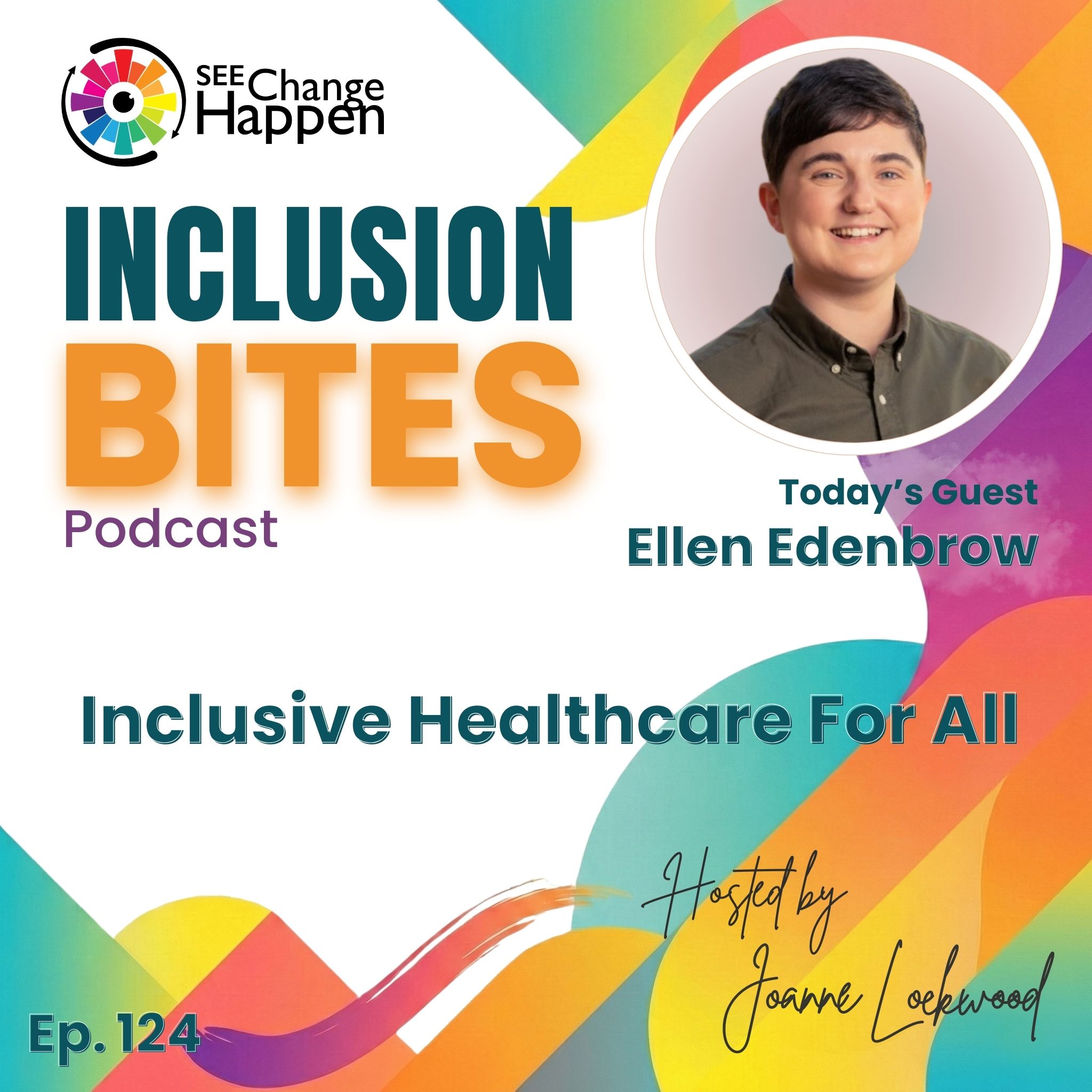
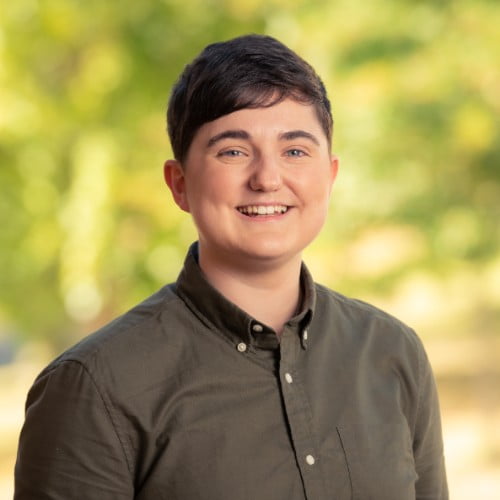
Ellen Edenbrow explores the critical importance of inclusive healthcare, emphasizing how I&D initiatives enhance patient outcomes and foster a culture of belonging across diverse communities.
In this episode of Inclusion Bites, Joanne Lockwood speaks with Ellen Edenbrow about workplace culture systems.
“We're not asking for much. We just wanna be seen.”
Explore
Navigate this episode
Joanne Lockwoodhost
Welcome to Inclusion Bites, your sanctuaryfor bold conversations that spark change. I'm Joanne Lockwood,your guide on this journey of exploration into the heart ofinclusion, belonging, and societal transformation.Ever wondered what it truly takes to create a world whereeveryone not only belongs but thrives? You're notalone. Join me as we uncover the unseen,challenge the status quo, and share stories that resonatedeep within. Ready to dive in. Whether you'resipping your morning coffee or winding down after a long day,let's connect, reflect, and inspireaction together. Don't forget, you can be part ofthe conversation too. Reach out tojo.Lockwood@seechangehappen.co.ukto share your insights or to join me on the show. Soadjust your earbuds and settle in. It's time toignite the spark of inclusion with Inclusion Bites.And today is episode 124with the title, Inclusive Healthcare for All.I have the absolute honor and privilege to welcome Ellen Edinburgh.Ellen and their wife offer bespoke IND training forhealth and social care sector people. When I asked Ellento describe their superpower, they said that they are part of 0.5%of the population, and not many people will ever know how thatfeels. They like to think that it gives them a unique time on thisplanet. Hello, Ellen. Welcome to the show.
Ellen Edenbrowguest
Hello. Thank you for having me on a very early Monday morning.
Joanne Lockwoodhost
And you just got back from Spain, Malaga, I think you said. Mallorca.
Ellen Edenbrowguest
So, but it's blue skies in Leeds. Not the same
Ellen Edenbrowguest
scenery, gotta gotta admit, but, still nice nonetheless.
Joanne Lockwoodhost
Well, it's lovely to have you here. So, Ellen, InclusiveHealthcare for all, tell me about what you do with your wife. So,
Ellen Edenbrowguest
in Inclusive Health, we launched it January 31stprecisely this year. So we are very new. We're very fresh.And I guess what we do in a nutshell, I guess our ourtagline is foster inclusivity, elevating healthcare.So I've done in in inclusion diversity world now forabout 9 years, which really is quite the early startof the I and D conversation in the UK. It still hasn't been aroundfor for long, and I kind of, maybe we'lltalk about it, but I've kind of bizarrely found myself in this world as manyof us do, who have been there from kind of the early years.But I've been in I and d in in many different sectors. Allsectors worked as a consultant and supported many different organisationsfrom charity charities to massive large global organisations.And when you marry a doctor, which is a good decision and abad decision, unfortunately, mostly bad, but it comes with some perks. I veryrarely need to go to my GP because I can get some great advice athome, but you, you hear a lot of things.And you meet a lot of other doctors and you hear a lot of moreof the things. And the old organisation I used to workwith used to work with NHS providers and trusts, but wenever could necessarily give those healthcareprofessionals, specialist, I and D training in terms ofgetting some learning and practicing that in a healthcare setting withreal understanding. And I thought, wait a second. I've got someone in my house thatcan help with that. And we just thought, why not give it a go? Ithink my dad was trying to get me to be self employed since I wasabout 18. And I thought, finally, I'll I'll I'll give it astab. And it's one of those things where you think, I'll give it a go.If it doesn't work, it doesn't work, but at least I've tried it. And look,my wife's a doctor. My wife's a patient. I'm a patient,we're all patients. Right? It is the one thing we have in life,and I think COVID 19 wasa great awakening call for many that have necessarily not hadhealthcare considerations or problems in the past where I thought it's allwe have. All we have in this life is our time and ourhealth. And there's so many people that feel like theycan't access healthcare. And of course there's, there's many barriers people accessin healthcare, but when it comes to inclusion, people's just identityis a massive barrier, with trust, with worry, with fear.And if we can help one patient feel includedwith a healthcare professional, they have a great conversation. And that means in thefuture, when they feel a lump or a bump or a worry, then they goback for a healthcare chat or a consideration. It could savetheir life, and our job is done, even if it's one patient. There's a lot
Joanne Lockwoodhost
in the press at the moment about IND, inclusion and diversity, equity,belonging. But we've seen, I think only this week,and where are we? Middle of May 2024.The UK is pushing back ondiversity and inclusion consultants in the public sector.They're cutting budgets and looking through department department saying, why arewe investing in IND? What's your takeon the the value that IND initiativesbring to organisations? I get well, firstly, I think I just saw
Ellen Edenbrowguest
even just this morning before jumping on to call that civil servants, I and Droles are getting scrapped or pulled back. The NHSbudget towards inclusion diversity initiativesis 0.04%. Of the whole budget.I think what's quite worrying and alarming is this stuff is lifesaving, but people don't see it as that. They still see it side ofdesk. And I think that's depending on thefacilitators that they've had, trainers that they've had, if they haven'tgot that message across in terms of just the benefit it givesand look, depending on who I ever speak to, I, I give them a differentsales pitch for inclusion, diversity. For some people it'speople's enough. The fact that they're making people's lives better is enough.For some people, you have to talk about how actually it makes them money. Butwhen it comes to healthcare, I and D initiativeswill save money and save lives.You know, in terms of specific, you know, smearprograms for trans and non binary people go into specific sessions for that, whetherit's trying to support people from people of color andpeople of communities in terms of donating blood or things likethat. It's life saving stuff.And I think love it's fear. It's fearthat privileged groups aren't heard about. And I oftenJoanne feel an energy. I've even had comments back that, well, I and d'sonly for certain amounts of people, certain groups of people that arequote unquote minority. I don't like that word. I prefer marginalized.And yes, there is sometimes a time and place to have specificoutreach to small percentage groups of people, especially when it comesto healthcare, you know, specific testing or opportunities that says,look, it's just for people of this identity, because we know they have fears andworries coming into a bigger and wider setting. But the downsideto that is when they don't have those spaces, they aren't gonna go for healthcareJoanne it's only gonna cost more for the future. There's a really interesting initiative atthe moment that the NHS are doing, and it's kind of the firstof the kind I've seen. There's something it's within ourhousehold as well. It affects us. There's something in the Jewish community calledthe BRCA gene. And it's, an increased,likelihood of getting cancer. My wife hasit. Other people in her family have had it, and shesits around 85% opportunity of getting breast cancer.Unfortunately, as a result of a half sibling, Anna will havelife saving surgery this year to reduce that possibility.That is an IND initiative, and there's a new program withinthe NHS, which basically says that they are gonna be doingswabs for people with Jewish heritage, Jewish grandparentsto see if they have this gene Jo they can do preventative treatmentbefore cancer comes and it's too late. That willsave so many lives. It will save so many families andrelationships and households from grief. It willsave children having their parents in their livesfor more years. Like, that's what we're talking about here. And I andd helps everybody. It helps parents.It helps carers. You know, it helps people from differentsocio mobility backgrounds. It is not just forcertain groups of people, but I think the media are doing a crackingjob of saying, Jo, it's I and d's only about me and you.This 0.5%, 0.1, you know, this 1% of thepopulation. And yes, there's a time and place where me and you needspecific time and spaces and health appointments, etcetera,but it is for everybody. And so much of inclusivehealth. Yes. There's specific things that my wife from a doctorside is gonna bring in from considerations, but she's aa trainee GP. She's working hospices at the moment. She's worked in at the moment.She's worked in pediatrics, respiratory, you name it, surgery.So much of it is just a communication. It's just asking the right questions.You know, she had an appointment as a GP. Someone camein with an with an issue with their with their testicles,and had never been asked about their sexuality and the relationships they had. Butfrom what they were describing, it was vital toknow who their sexual partner was and no one had everasked. And it was a guy in his late sixties and they just assumedthrough fear of offending someone again, quote, unquoteoffending someone by asking that question. It was a simple question of,are you sexually active? Who do you sleep with? What parts do youuse? That was a vital question to help thatperson. And that was no extra health care in terms ofdoctor or knowledge. It was just an open ended questionwith no fear and no worry, and that really changed thedirection that my my wife then supported him. And it madethings very clear of what those problems could be. That's all it was, was aquestion. That's it. It's all we're trying. That's part of the problem, isn't it?
Joanne Lockwoodhost
We we're we're lumping I and d,inclusion, diversity, diversity, inclusion, equity, whichever the buzzwords youwant to use, into kind ofactivist Right. Activities, hashtagtype activities, celebration activities. It's theparty that's going on, you know, organizing these things. It's it'svery infrequently equated to direct actionthe way you described there, where what we're looking at is root causeanalysis based on people's lived experience, people'sinherent characteristics, looking at the inequitythat they may be feeling in in a process, and they're makingchange to process to make sure they get equity. And that'sthe I and d good side. So when they're talking about in the in thenews, in the in the media, whatever it is about cutting these budgets back,what they're trying to they're lumping altogether in thisthis wokeness of society, costing loads of money toto promote minority people. Yeah. And and and
Ellen Edenbrowguest
again, it's it's whoever's leading that agenda is doing acracking job because it as I I'm sure you're feeling it asanyone listening that is self employed, you know, I'm, I'm fairly newto it. And people are saying it's blooming different this year. Thework is a bit different. You know, a lot of LGBTQ pluspeople, usually June saves them financially because ofpride and people are worried and people aren't getting the thecall outs that they thought they were gonna get. And it's very differentfrom from this year to last year, and I don't know what your experiences arewith that. So someone's doing a cracking job in terms of of of havingthat fear and worry. And, again, I think it's that division that we're askingmore, and I think a lot of people, that's the message they're receiving at themoment is that we're asking for above and beyond. We're asking for thisand this and that and that. We're not we're just asking forthe basics, the absolute basics, acurious question, or if a question needs to be asked andit's, it could feel a bit awkward, just the framing about that. Still askthe question, be like, I'm sorry. I've got to ask this. And, you know,even that awareness of the sensitivity around it, you know, we're we're reallynot asking for much. We just wanna be seen. And I know this sounds sillyin a bit of a you know, I I was just speaking to you beforewe joined this that I've just been away. We never book a hotel because offear and worry. I've had top surgery. I've got 2 scars on mychest. I wanna swim in a pool. I wanna lay out, and Iworry about how people look at me or perceive our relationship. So we always haveto spend more on booking somewhere private for us. Andwhen we booked it, we mentioned that we were celebratingour anniversary to basically see how the host will feel aboutus, to get a a vague idea, to be like, we're just putting out there,we are LGBTQ plus. And she gave us a bottle ofProsecco and said it was your it's your anniversary. And she remembered months laterthat I felt so seen and acknowledged in an island I'venever been. Even that was massive. Youknow? Even just to be like, I see your relationship, and I appreciate it,meant everything. Yeah. I I hear that comp I see what you're saying there
Joanne Lockwoodhost
completely. And I suppose I'm I'm old enough and uglyenough and resilient enough to not even think about that anymore. You know,my wife and I were in Bournemouth for a party weekend. Wechecked into the hotel. I didn't even give it a thought there'd be a problem.I guess I've traded off a 50 ofin hotels. And the thing is, I don't think I've changed.Obviously, I look different to other people, and our relationship with my wife has changedsince my gender transition. But I don't I don't feel differentinherently. So I I forget that I should have a problem, and therefore I don't,if you like if that makes sense. I don't I've never never socialized myselfinto into that sense of of self doubt, which means that
Ellen Edenbrowguest
Yeah. I wonder I don't see the problems. Without getting I
Ellen Edenbrowguest
feel like I'm gonna take you off Joanne a tangent now. I wonder if there'san element of I was raised as femaleon this planet and didn't really acknowledge my nonbinary identity until kind of mid COVID. So for many,many years, I identified as a woman on this Joanne. Andwith that, you are very aware of certain things.You know, I had top surgery coming on 2 years soon, andI can now post my nipples on Instagram, which was a really weirdfeeling because for years I was told I couldn't do that. And now I'm like,oh, my nipples are on the Internet. And I know that sounds ridiculous,but, like, I was I was told for years to hide myselfof what I could and couldn't do in society. And what's reallyfascinating is I used to get misgendered asa man a lot before my top surgery, andI've never had it once post top surgery. So I'm now flatchested, and I've never been misgendered as a manonce. And my wife has thinks it'sbecause I don't hold space. Istill, you know, that classic thing of men don't move out the way in pavements.They'll, you know, they they won't move out the way left or right. They justwalk in a straight line. My wife's really determined that now we walk in astraight line. We don't move out the way, but I still do. I don'ttake up space on the plane and spread my legs wide, as I saw aman doing the other day, and a woman felt so uncomfortable, she moved because itwas a half empty plane. You know, I'm re and and I
Ellen Edenbrowguest
that conditioning of me growing up of the space I should and shouldn't take,I think that plays in my mind when I still go on holidays, because I'veI've still got that fear and worry. I think there is on theplus side, you know, to other people in the community,some people may not see me as non binary, right? They still might thinkI'm a butch woman. But there's a privilege with thatbecause Wouldn't be as accepted, you know? So there are there are ups anddowns,wouldn't be as accepted, you know? So there are there are ups anddowns, but, we often look we we we didn't book a whole wedidn't book a honeymoon for quite a while, because we couldn't decide where we wantedto be. Because we think about not only we're also very aware of our whiteprivilege, you know, I there there was a friend of mine who went on ahoneymoon to a country where it's illegal to be LGBTQ plus. And I thought, whatare you doing? You know, just because you are safe as a tourist on thatresort, you're giving money to a country that if you were born there, you'dhave a very different life. So when we book a holiday, it's not justwhere's the weather, where is it nice. It's where will we beokay as tourists? Secondly, where would it be okay if we were bornthere? You know, Spain is now 5th in Europe in terms of being LGBTQplus. We're now 14th as a country. So I was probably saferin New York than I was here, which is quite scary when this ishome. Yeah. I know it's we we went to Melbourne,
Joanne Lockwoodhost
Australia, before lockdown, and Iwas very conscious about the route we took. Ididn't feel comfortable stopping off at Dubai Mhmm. With routeor flying Emirates. So we ended up going via Hong Kong because I decided HongKong was the least worst option to to transit through.I didn't wanna go through China. I didn't wanna go through Emirates. AndJo, yeah, I was very conscious of that. Jo, yeah, I am about where Ican go. I was born in Singapore. I know that Singapore now changedits law, and it's very much more LGBTQ friendly.But where I lived was in Malaysia, which is over the Causeway. And in Malaysia,it's still punishable by death, I believe, If you're queer,maybe Joanne. I don't know. Yeah. So it certainly is a a same sex coupleas we are now. That would be frowned upon. So, yeah, I'm I'm hyphen awareof the my ability to travel isnow different than it was. Oh. I I I was at a
Ellen Edenbrowguest
barbecue yes yesterday, and someone I know is moving toAustralia because of her partner's job. And they were talking about flyingwith guitar and stopping guitar. And I'm just like, youdon't you don't realize.And she is within our group. There's loads ofLGBTQ plus people, loads of non binary and trans people.And look, I appreciate to get to Australia. There's only so many places youcan stop and go in so many airlines, but. Youknow, it's, I, I see a lot of people just go into Dubai and there's,there's, there's numerous things going on over there, which aren't great. But yeah,it's, it's, it's, I think, being LGBTQplus, being trans, being non binary, you're so awareof your body in every space, to the point where Idon't think we realize just how traumatic and heavy that is because we're just soused to it. Yeah. But I was to what you said about your nipples. I
Joanne Lockwoodhost
mean, I I'm I'm more conscious about my nipples now that I yeah. I usedto fork on the beach for that show on, and now I wouldn't do that.And, and you talked about minimizing And whilst, as you Isaid, I'm old enough and ugly enough and resilient enough, but I I I minimize.I I let people pass on the pavement. I will walk out of theway. I will stop and let someone offer a manpass. And if someone opens the door for me, I'm I I I accept itwith grace. And the other day, I was I was checking to a hotel. There'sa big staircase, and I was I got up the first step, and this mancomes, oh, excuse me. Let me take your back upstairs for you.Great. Brilliant. How valid how validating is that? You see, when someone opened
Ellen Edenbrowguest
the door for me, and it's Joanne Malamore was like, nope. You first.I make a point of making them go first. But, yeah, it's it'sinteresting, isn't it? Like, the the the the the differenceof of of how we're experiencing a similar butdifferent journey. Yeah. I'm very aware that we're now talking aboutnipples, which is probably what what were you expecting on a Monday morning.
Joanne Lockwoodhost
Honestly, we we I've talked about all things on this, I've talkedabout, trans health care and surgery before, and we've got very detailedand what that means to people. Jo, yeah, now it's it'simportant that we these conversations are had because we shouldn't be embarrassed.And that's what happens when we look at conversations around things likemenopause. They've been buried for years. We we now needto have those conversations about menopause with an intersectional gendergender diversity lens on them as well. You know, the intersect of people are nonbinary Joanne trans trans feminine, trans masculine people, which isblowing people's brains out there. Well, I thought I had menopause sorted, but you've putanother dimension on it for me. And then we Right. We're gonna talk about genderneutral packaging and taking the femininity imageryaway from period products and and the whole,gynecological kind of process is excluding, you know, peoplelike yourself, people who are transmasculate, who haveneeds these services, and we're not careful what we're doing to experience people through thelanguage we're using. I mean, I am
Ellen Edenbrowguest
I've I'm turning 29, so I've I've had my secondsmear now, because of my age. It starts at 25.And first time was COVID, and I had amask and that an that anonymousness helped,with going for that other GP. But this time I chose specifically go to,an LGBTQ plus, kind of sexual health partnershipin Leeds as a charity that works with the sexual health clinic and they doa specific trans and non binary opening session. So youfeel acknowledged straight away and the only, you know, questions will be asked ina considered way. But what's, what's ironicis I'm, I'm also talking to my GP at the moment and trying to helpthem with their kind of trans policies and, and training and stuff. AndI was still getting calls from them with miss so and so, and I'm like,why why do I need a title? Also, I've been toldI got the call a week or 2 later after being at the GP, andand they say, oh, yeah. I can I can see you've had that Joanne it'scome back negative? So why are you ringing me again? And then that misgen like,why can't we how is this Ellen? Like, again, people thinkwe're being nitpicky, but lots of people don't like titles forlots of different reasons. You know, we we have our first name for areason. And, again, why do we need pinkpackaging for every sanitary product? You know, just apacket. Like, it it again, it it so muchit's like with disabilities. Was that famous littlecartoon image? It's been snowing, the snow on the steps and thesnow on the ramp, and they scrape the snow off the steps first. But ifyou just do it on the ramp, everyone can use it. You know, they wastalking about, if you think about on streets in the UK, theramps that go down with the bumps, that's for people to use to toto see where the end of the roads are, but it helps people with prams.It helps people that are elderly, maybe just use a stick with mobility or fordifferent reasons, mobility aids. It doesn't justhelp people that are like a wheelchair users. It helps so many more people andthat's inclusion and diversity. When we're changing these policies, we're not doingit. You know, I I've looked at so many policies and givensuggestions. It's completely intersectional. It's considering,it's advocating for fathers. It's people that adopt andcarers of all different ages, because caring now, I think Jo many peoplehave just assumed it's people with with children. But we didn't thinkabout the aging population. We're thinking about kind ofmillennials and now caring for their parents and loved ones. We'veall, I've always seen it from so broad, you know, even with inclusivehealth now. I think there's a lot of LGBTQ plus people,who do just specific LGBTQ plus training and things like that, but wereally wanted to broaden it. Don't get me wrong. I think as you'vekind of hinted with things at the moment, the mostinquiries we are getting are LGBTQ plus with, withhealthcare at the moment. And I guess for anyone listening who isLGBTQ plus, who has loved ones that are LGBTQ plus,you're hearing certain things in the media, but I promise you there's morepeople in health care that are trying to advocate this stuff than you are beingtold to believe. We are still getting a lot of interest fromtrusts, from health care charities that are wanting tobe proactive with trans and non binary patients.So try and not take everything. So for example, theNHS rainbow badge, for those that are listening aren't aware ofthat, You might have seen the badge. It simply started as a projectin which you just wore a lanyard. You put this badge on it that basicallyhinted that you will be considerate of LGBTQ pluspeople. It then became a bit more formal and people can do now a bitmore looking at the data and what services they do anddon't provide, to where with a bit more pride and reassurance of patients.And we've been told in LGBTQ plus history, not that February has beenscrapped. It hasn't fully been scrapped. It'sstill happening. It's just happening in a different way.So I'm also not saying everything's wonderful in the healthcare, but thereare a lot of people with reduced budgets, with reduced time.They are still trying their very best with this conversation and everytrust is different and every trust can kind of do theirown thing. So if that's kind of reassuring to anyone listening, Ipromise people are still caring about this stuff. Yeah.
Joanne Lockwoodhost
What you see in the the mainstream media thatis is right of center isn't necessarily is we know it'ssensationalized. We know it's blown up a promotion. It isworrying that the the pervasiveness ofthis kind of negative messaging is exhausting. I mean, you probably feelit. Maybe it's because of the way I set my search up and have Iopened things like MSN or these dashboards Yeah. Or the or thenegative articles I see day in, day out. And it's it's like a tone, youknow, it's almost like every time, so here we go again. Here we go again.And also the the Joanne communities, and Ihate we're not really community. We're just a group of people who happen to sharethe same oppression. That's kind of what goes on.We amplify the negative stuff as well. Have you seen this stuff on there? Haveyou seen I get more negativity out of some of the thetransgender forums I want on Facebook and I do if I if I didn't goon there. So I think to a certain extent, we are impacting our ownmental health by by amplifying some of thecontent within our own communities. And I think that that in a way,it's I've got, you know, put the filter on sometimes and not dive in there.
Ellen Edenbrowguest
Yeah. I mean, look, Lou, it's it's been an interesting time to setup this business with my identity of being non binary and with the newsin literally the past couple of weeks. We've had the CAS report come out.We've had news that they're thinking about doing private rooms for transpatients. Supposedly, again, I heardliterally just 2 weeks ago that new hospitaldesigns, they're looking at giving everyone a private room rather than theward thing. So, you know, that could be the future of that anyway, whichagain, I think would benefit everyone's health. I I I've actually I
Joanne Lockwoodhost
I I sent I sent the news about, you know, the they wanna keep wardssingle sex, Jo they if if you if you turn to a trans person, they'rethey're gonna put you in a private room. I was thinking, where's thedownside to that? I mean, I'm like I'd like to lie. I prefer I'm I
Ellen Edenbrowguest
I But, it depends, I guess, where those privaterooms are connected to if they're in, like, a women's section or amen's section, etcetera. And I I had my,
Joanne Lockwoodhost
gallbladder out during COVID, actually. I was I had to beswabbed and stuff, and they let me in. And they wheeled me into this femaleward. And then 30 seconds later, they wheeled me out, said, oh, you shouldn't bein here. This is a this is a women's ward. And I went, yeah.And where else will I go? And so I I started trying to question thisperson pushing me out out of the room with the on the trolley. And theybacktrack quickly and say, no. No. It's because you haven't had your COVID swap yet,so we can't put you in there. Alright. Okay. That's a better answer. I'm happywith that answer. So we're gonna put you in a private room. I said, I'mreally happy with that answer as well. You know, you can leave in this privateroom where you like. So having experienced thethe confusion by the staff around who I was,
Ellen Edenbrowguest
I don't think I even spoken at that point. I mean, they must have I
Joanne Lockwoodhost
don't know. Maybe they decided my brow ridge was was the wrong shape orsomething. So they they they decided who I was without asking me. But,yeah, I think if we're going to put people in private wards, we haven't gotthe capacity. And what it's doing is create this fear mongeringaround. You know, you've probably seen this as stats and data and freedom ofinformation requests. There's been there's been one complaintby a a cisgendered female about atrans person being on that ward. Yeah. There'd be more complaintsaround people who have a different ethnicity or faithcomplaining about other things related to their ethnicity aroundsomething that isn't gender related. And you think, we're making this stuff up. We'remaking these facts up for to scare people where no problemactually exists. The most scared person on that world will probably be
Ellen Edenbrowguest
the trans woman. You know, I amregularly scared to go to the toilet. You know? Iif I have to go into a toilet, Ialways try and talk as I go into the toilet so people can hear myvoice. So I don't get as much of a look. And again, that makes meuncomfortable because that's not how I wanna be representedand look and feel. But you youthere's there's so much again, it's a it's a terrible quote, butthere's a there's a rapper in America called Macklemore. It's not a great reference. It'snot like some incredible author, it's a rapper, but he says America, thebrave still fears what it doesn't know. And I think it's so true.People fear what they don't understand. We are ish1% of the population. So a lot of people think they've never met a transperson. They have, they've just not known it because they think we all look andsound and have to be a certain way. And as we know, that's not thecase, but people just don't understand. And I thinksometimes, you know, for, for those listening and if they have any budgetwith pride or they, they have a, an, an allyship or a privilegeangle that they can get a speaker in or something, just try and get someonetrans and non binary into your organisation this year. And justget people to unlearn some of their assumptions. We're just peoplewanting to go about, about our lives, who want a healthcareappointment about a bad back or a bad shoulder, who want to fallin love, adopt a cat, adopt a dog, have mates,have a job. That's it. That's all we want.We just wanna live. And if any, I can't wait forthe trans community to stop being in the news and it just be a bitmore quiet. I I, you know, I probably have a cry ona weekly basis, and I just think I justwanted it to be quiet. It just feels soloud. You know, there's incredible stats ofnewspapers doing 2 or 3 articles every day about trans people,and not one trans person writes them. I'm like, have you got nothing else
Ellen Edenbrowguest
to talk about? Like, the trans community right now are like, please talkabout anything else. Cost of living, conflictsthat are happening globally. Like, that's more important than us.We actually don't want this attention. We don't want this focus.And again, I think a big thing with inclusion and diversity,yes, the training's important, but sometimes just and I appreciatesome people are not are not sure about inclusion, diversity dates, and calendar, and Ithink it's tick boxing, but there's something to be said for showingjoy and celebration and normality. Youknow, just seeing people like me and you living their lives inhappy relationships with families and loved ones, and just be like, we'renormal too. We're not as scary as people make out.That's so valuable and so important. Youknow, showing black joy, showing disabled joy, you know,just showing how people live their lives and they're not scary.We're not scary people. You know, trans and non binary peoplehave a really interesting outlook on life and the world.And I think, I think we're possibly some of the bravest peopleglobally, because we have gone against everything we've ever been taught.No one ever taught us what trans was. Section 28 stopped a lot ofpeople in terms of their education, and prior to section 28,just wasn't around, and we're still seeing the impact of section 28 in termsof education. Right? We were never taught this stuff yet,we still deeply feel it. You know,I am very proud of being LGBTQ plus Ilove being gay with everything about me. But at the moment, Ithink I would if I could if someone said, if you could click your fingersand be straight, would you? Absolutely not. I love everything about being LGBTQ plus. It'sincredible that you meet people and you feel a connection tothem instantly, like no one else. It's that little look you give each other beinglike, I understand you and you understand me, although we've never met and I don'tknow your name, but we just get each other a little bit. But I thinkI would change non binary at the moment. If I could click my finger,just so I could just stop feeling so much at allturns and all opportunities. You know? You can't welcome aplumber into your house without fear or worry of misgendered. You can't go to Tesco
Ellen Edenbrowguest
without fear or worry. You can't go to the park or say hello to adog walker without fear or worry of just that misgenderednessconstantly, and, you know, it's it's everywhere. And that's how Icame to terms with my identity during COVID. We had these4 walls, and I thought, who the blooming hell am I to the world?Like, how do people see me, and how do I want the world to seeme? It was only when I wasn't out there in the worldconstantly, possibly hiding who I was,that I could start being who I was because of our without fear or worryof other people. And I think there's something incredible to learn about trans and nonbinary people. I think a lot of cisgender straight people could learn fromus in that. I think a lot of people, the the the theboxes of femininity and masculinity, they just feel like they haveto fit in them because they've not been told that they can do anything else.And I think people could learn a lot of just life skills in termsof attitude and outlook of just being authentic and brave,because we're incredibly brave people. We shouldn't have to be,but we are. Yeah. It takes a lot to press
Joanne Lockwoodhost
pause on your life, rewrite it, and then press play again.And it's like you're swapping track in the middle of, you know,you you fast forwarding to another another part of the album, starting toplay again. You go, hang on. All the beats are different. I was just justhumming along to that tune, and now it's all changed. It's all Yeah. Yeah. Itis. And and those around you, I often talked about my I've talked about mytransition. Was more about other people than it was about me.I kinda transitioned by spinning on the spot. Everybody else had thishuge arc to get over, to understand, to try andyeah. The world didn't change from my perspective. It still looks the same. And
Ellen Edenbrowguest
what's crazy is you didn't change. You're still making the same jokes. You'restill having the same opinions, like, maybe just an outwardlylook change, but that was it. You used to
Joanne Lockwoodhost
I've had this conversation with my wife many times, and she tells me not tobe so disingenuous that I haven't changed. And because I I have I actually Ihave changed a lot. My my our outlook on life, the way Iinteract with the world is is is different. The way I take up lessspace is different. Yeah. I I am I am I am a very different person.But that's through a lot of circumstances, not just Yeah. Expressingmy femininity. So I had to stop saying to people, I'm I'm the sameperson on the inside because people keep looking at me and saying, that's not bollocks.You know, you may you may think you may think you're the same person onthe inside, but we don't see it. We don't see it at all. And it'snot just how I look, it's how I am, which was very affirming ina way. Mhmm. If you don't mind me asking, in because we kind of hinted
Ellen Edenbrowguest
on that earlier, didn't we, in terms of me taking space andus thinking different things in different settings and holidays and outlooks.Do you think that was something you were aware of before transitioning?You you you had that awareness of that outlook of how otherpeople experienced the world, and you felt like youcouldn't go down that path because that was not what the world expected ofyou, or was it a real unawareness? I
Joanne Lockwoodhost
think I became resocialized, and I often say that thechallenge with transitioning, when you're growingup, you you learn, and you learn, you learn, you pickup information, you pick up information. But when you change transition orbecome non binary or out yourself as non binary, you youhave to unlearn and then relearn. So you have toforget some of the social constructs you've you've been brought up,the oxygen you breathe, and relearn again. So I I had tounlearn a lot of things I'd I'd I'd I'd I'd been awareof. And because most of mymy professional network and people I hang out with tend now to bewomen, I'm picking up thesocial construct of being female from them, and that isaround minimization. It is around the jokes, the humor, theconversations, the how how men are talkedabout and how women are talked about by men. I'm more aware of that.I'm more aware of the, and I don't meanthis in an absolute, the predatory nature nature that men often have withoutrealizing it. And they're not being deliberately, but I feel less safe in thoseenvironments. I see what happens when groups of men get drunknow. And I'm more aware for my safety than I ever was before.
Ellen Edenbrowguest
Right. So, yeah, I I am more aware of that, and I'm I'm
Joanne Lockwoodhost
conscious of it, which I was never conscious of it in inany shape or form before. I was satat dinner at Le Mans dinner probably a year ago, and itgot to about half 9 at the in the evening. And a couple of thewomen I sat next to said, oh, half 9. But the thing about goingin a minute, it's it's gonna get messy in here. It's gonna be there's drinkflowing. I don't wanna be on the last train. I gotta get on the underground.It's a bit late, and I'm a bit worried. If I leave it any later,it's gonna be too late. I need I need I need to get out ofhere and get home. And there was a real safety thing going on. I justsort of thought, wow, that that level of socialization has never been in myhead. I've never never thought, uh-oh. But then having saidthat, I've been on the late trains home some nights. I'm thinking, I actuallyfeel very worried now. Yeah. There was a drunkperson talking to me a bit, and then therewas some stuff going on. I thought, hang on a minute. I feel really, reallyunsafe because somehow I then internalized all that thinking,hang on a minute, this thing kickskicks off here. I'm not prepared to deal with this. I don't want to dealwith this. So, yeah, it's I became very aware of my own vulnerabilityall of a sudden. And again, that I think
Ellen Edenbrowguest
that can happen to people for different reasons at different times in theirlife, you know, and, but it's a really unique experienceat such a grand level for, for, for trans non binary people. I have areally interesting privilege when it comes to kind of things we've just been talking aboutin terms of, look, I, I came out at 14 asgay, 15 from, from the age of 2 or 3.I was saying to my mum what I wanted to wear and not wear. Like,I very much knew who I was before I was taught orlearned anything. And in society, I mean, there was norepresentation, but I still knew I wanted to wear that Buzz Lightyear tshirt and not that dress from like 2 or 3.And I've I've always been quite butch in my identity. I have quiteshort hair from from quite a young Joanne. AndI've never there's not one woman I don't know,trans or cis, that hasn't had an experience of some kind ofassault, sexual assault. And what's fascinating is that Inever have. And I think it's really interesting to talk aboutsexualization. I think because of my butchidentity, and I'm sitting down, but I've got a bit of a butch walkthat I don't even realize I have, I've never I'venever really been sexualized. Now the last time I was kind of sexualizedwas I wore the last time I ever wore a dress at university,I was in a hockey team, and there was, like, a sports night, and Iwore a dress, and that was 2013. And some ofmy male friends what was interesting is barely any of the men there was, like,6 hockey teams on the men's and the women's side. It was verybinary, obviously. And barely any of the men were interested in talking to me, becauseI was the only gay out person. So that I was nevergonna be someone they were gonna possibly have any relations with. So barelyany of them got to know me. And I really noticed that, compared toeverybody else, no one ever really spoke to me. But there was 2 or 3that still got to know me, And they changed that night. I was in adress. Their whole approach to me changed, it complete and I never wore adress again. I still worry and fear, you know, latenights walking down certain alleys I'm I, you know, I I would still avoid andand and I still check-in with my friends. But becauseI'm not not many men would be sexually attracted tome, I feel safer, if that makessense. So I I I've I've I'veI've grown up that way and I've been taught that and I've been around manyconversations. I've been really privy to so many people's experiences of it's
Ellen Edenbrowguest
getting dark and I've been really aware of that, But I'm in thisreally bizarre privileged group. It'sreally weird slither of because of my masculinity, I feel saferThat I won't but I there's still the worry that I'll get the the nonbinary transphobia side of things, but in terms of my body. And then that'sreally interesting because you kind of mentioned surgery earlier, and a really interestingreflection for those that don't know. So I had top surgery, had my, mybreast removed, and I went private because theNHS, it would take many, many years, and my mental health couldn't cope withthat. And I had to pay for a psychiatrist appointment. SoI had to pay for a stranger to speak to me for an hour toagree with how I felt about myself. And was I was ironic that he barelyknew what non binary was, but he was supposedly the professional.And I I remember he would ask me to repeat things inour call because he's like, oh, I'll let I'll write that down. I basicallywrote my own referral letter that the surgeon needed because the surgeonwas worried about being sued and things like that. And it's kind ofa they don't wanna do that, the surgeons, because I think they have a reallygood understanding, but they're just they're so much fear and worry at the moment. Theyhave to have that. And I thought it was really fascinating is because I wasremoving something that society has sexualized, I had tobe psychologically evaluated that if I was okay. Butif you want a bum lift, if you want a nose job, if you wantfiller, if you want a boob enhancement, none of that is done.People get their knees operated on to be taller.Right? A lot of cisgendered men have these operations to get their, youknow, hair lines done to make them feel more confident in their gender.Right? So many people do so many so muchstuff. I think it's just trans non binary people that say we have genderaffirming health care, which old language was thingslike sex change, but gender affirming health care is basically the ideathat people do things to feel more confident in their bodies. Andcisgender people do that too. Getting yournails done, getting your hair done. We all feel better after a haircut.People get filler because they're worried about their lips or Botox because their wrinkles.Everyone does gender affirming health care, you know,yet because I was removing something that's sexualized, I had to beevaluated. But people can change their bodies in many differentways, and that doesn't need to be checked. And, again, that's the sexualization thatcomes in with health care, which is really fascinating. Yeah. I think we
Joanne Lockwoodhost
we have to respect the fact that there are some peoplewho transitioning eitherbinary transitioning or non binary transitioning, is notright for them. We have to accept that it's not right for everybody. And I'mthe first one to say, if you don't need to, don't. Yeah. It's not it'snot a party. It's not one long gay parade that you're you'reriding a wave of of of unicorns and and andfluffy stuff all the time. It's real life, you know. If and if you don't
Joanne Lockwoodhost
need to, it's not necessary if you don't do anything. So I, you know, II'm hugely respectful of people who haveevaluated their life, their needs, what matters to them, and it'snot for them. I'm hugely respectful for that. And I also believe that everyone shouldbe given the opportunity to be in that questioning phase of their lifefor however long it takes and move forward or movebackwards or move sideways or do what they want. So I'm I'm actually I'mextremely protective of that right, but, yeah, it it does becomeproblematic sometimes when we're focusing on the the the significantminority of the minority who where who haveare litigating against health care professionals,claiming that they they were forced into a root wheninevitably actually, they they they must have liedthrough their health care evaluation in order to be taken seriously. I've been through psychiatricevaluations for to get hormones. I've been through psychiatricevaluations to discuss surgery and various other things.And they would only put me through if I if they putif they recognize that I understood I have informed consent. I understand theimplications. They're quite clear. This could kill you,that this could cause irreparable damage. You will never be able to reverse this.You will never be able to have have children again. Yes. I understand all thosethings. Yes. So you go through this really deep thing. And it's not justonce. It's you know, I've I think I've had 7gender identity clinic appointments to get to where I am,and they ask very similar questions. And it's it's not like they're week week inweek out. This is, like, years between them. I have to be verypervasive. I have to be I I can't just sort of say, oh, yeah, Iwant to do this next month. I can't. I I have to think I wannado this next decade. No one would if we had choice,
Ellen Edenbrowguest
no one would do this. We spend a crazy amount of moneyand time and energy, and we have to beso vulnerable. No one goes into this stuff easily. It'snot a, it's not a whim decision. Oh, I'm going to go onholiday next week. Like this is stuff that it's months, it's years in waiting, evenwhen you pay privately, you know, it's, it's not an easy decisionto go under the knife and have major surgery. You know, it's not something Ijust thought, oh, I fancy having a bit of time off work. I'll go andhave major operation, you know, loads of muscles cut.And, you know, like, it's not something and there's, you know, there's some crazystats have come out. Let's see if I've got them quickly on my phone. Butin terms of how many people regretsurgery, it is so slim, and I don'tcan't find the stuff, but it's such a small amount. More people regrethaving a shoe. Less than 1%. Less than 1%. Less than 1%. Yeah.
Joanne Lockwoodhost
Yeah. People regret having a haircut Right. More.Yeah. Having a treatment. Yeah. You say it's well,I had a I don't know if I was a psychologist around considering mymy future options or where I wanted to take myself. Andone thing they said, which I thought was really weird at the time, was thinkabout yourself in your old age when you're whenyou're then in a care home, in a nursing home, whatever.How do you want to be? Who do you who are you at that point?And I thought and I thought, And he was encouraging me to think about thechoices I made based on my later life. And Ididn't do anything about drama. I thought it was a bit cheeky and a bittransphobic the way he was talking to me. But I've recently, in the last 18months, been thrown into Sam's generation. Well, we've been looking afterour parents, our elderly parents in their late eighties and earlynineties, in care homes, in nursing homes. And it mademe realize that if I want agency over myself,I have to make those decisions today. Yeah. Because when I get to that pointin the future, I will have less opportunityto advocate for what matters to me unless I've made those proactive choicesMhmm. Now, not later. It really made merealize around some of the things I have to do around about formy advocacy and agency and self empowerment later, not fornow. And that I had a I had a similar
Ellen Edenbrowguest
moment, but reflection of question to myself in terms of when someoneasked that to you about what age Joanne what situation, who and how do youwanna be? I had that with, if we have a child and I wantto have skin on skin, cause I don't wanna carry, how do I want mybody to be? And I wouldn't I would feel like my babywasn't close to me if I didn't have my top surgery.Even my mum, like after seeing me out, you know,bandages off the first time was like, I wish I could have get, I wishI could have ordered this for you because it makes so much sense, you know?And part of her upset and worry about my surgery was, of course, toseeing your child go under major surgery, you worry and fear as with every operationthere's risk, but it was, she was upset that she'dbrought me into a world in a way that I wasn't happy with myself. Andthat was her upset. And I think what's interesting, secondly, is whatyou're talking about there is my work is work in the hospice at the moment.At the start of the year, we had our first, My my auntie was inhospice, and there was a lot of ableism with her care, withher learning disability, and that's an inquest at the moment. And we're looking at workingwith that hospice. And it reallythat is what there's something we're all gonna experience, right,is death. Unfortunately, only a small amount of people experiencehospices, and I don't know if you've had experienced hospices, but they're beautiful. Like, they'reincredible. Everyone, if they can't die at home, deserves todie in a hospice, because it's also so vital for everyone that'sleft, because that's what happens after. And those people that are left,like, hospices are incredible. I actually missed going in, which is a reallyweird thing to say, but I like, the next day after my auntie passed, Iwas like, I wanna go back. They also have great hot chocolates, butI missed it. And and we were thinking recently, like, if that'sme, even if I if I'm at a space where, you know, Ican't hear and I can't understand things anymore, if I'm if I'm gettingmisgendered in front of Anna, my wife, like, that will hurther. Like, that's health care. It's not just the patient.It's also those around them, seeing them, hearing them,seeing their relationships. You know, if you got a loved one onthe side of the bed, not being like, oh, is your husband coming in? Like,don't assume that. There's already enough going on. It's just gonna make themfeel like they're not heard or seen or respected.And I know there's that assumption, but don't assume it's2024. We can still ask open questions,and that's health care. Again, so much what we want to do withinclusive health is, yes, there's little you know, there needs to beimprovements when it comes to medical students, you know, in terms ofthe images that they see, you know, for skin cancers, it's always on white skin.Like that needs to be advanced. That needs to be improved on.But it's just the questions and the considerations thatcan change things. And it's just the tone and the approachthat can that's the trust. That's the bit where trust comes from, isn't it? Asa patient. Because you're Jo vulnerable with your healthcare. Right? Like you were saying, you just got wheeled out. Like, youwere laying down. Like, you couldn't stop it. There was no breaks for you. YouYou know, you're really vulnerable in health care because it's it'sit's other people prodding and poking you, and I feel so lucky tohave Anna to advocate for me who knows this stuff. But when you don't knowhealth care stuff, you're really putting your body on the line for people to makedecisions about you, and you lose all of yourown self. You know? So if I havesomeone else also see you when you can't make thedecisions or have even that's vital. And that'swhat inclusive health is about. It's just saying, look, have that awareness, havethat acknowledgement. Because if you don't, this is the impact. You know, we saw morepeople of color die during COVID. There were several reasons for that.They were more likely to have front facing public facing roles to put themat risk and stuff, but it was the comms. It was the messaging. Itwas not acknowledging what fear certain communities had overmedicalized spaces, because think about the colonizationof health care in the past and, you know, not having that awareness.You don't have to understand everything with I and d. To be anally, as I'm sure you'll admit, Jo and me, I do not know everything aboutinclusion and diversity. It's a blooming impossible. There's 8,000,000,000 ofus, but you can understand without having you can respect without havingto understand everything. I can respect someone's faith. I don't have tounderstand every single bit of the Quran, but I can respect that that person hasthat, you know, and there's good and bad with everyone. There'll bebad trans people. I don't like to admit it, but there will be, there'll benot some very nice trans people. There'll be not some very nice disabled people andMuslim people and x, y, and zed. Butthere's more good than bad, And it's just it's justhumanness. It's just seeing a person. There's always so much more in commonthan not. I I I'm a I'm a big advocate at what you say. I'm
Joanne Lockwoodhost
I have Joanne inherent belief that people are start offwanting to do good, wanting to be kind, and that in their mind, theyare. They're speaking through their lived experience, their lens. Theybelieve they're doing the right thing. And it's just that their theirperspective, their opinion is slightly different to mine.But we all want the same thing. As you say, there's more there's more thatunites us than than different differentiates us. So we've got to focus on the factthat, actually, we all want the same thing. Happy life,health, world peace. We all inherently want that, and we think we're doingit in our way. Yeah. And it's avoiding sort of weaponizingor discriminating for our own self tosomebody else, putting somebody else's down for our benefit, if you like.So yeah, it's, it's, that's all that's all the I and D is around. It'saround creating a culture of belonging. People feelwelcomed. They feel celebrated. They feel they can thrive who they are.
Joanne Lockwoodhost
And people will spot any inequities and give them the support they need to beable to succeed in that. And I think that's fundamentally what we're talking about here,isn't it? And it's not it's not about hashtags andparties and cakes and banners and marches and andchanging language to make people feel uncomfortable. It's just creatinga I always talk about adjective language. I'm not sure that's a word,additional language. So it's not you're not removing the word motherand chase and changing mother for childbirth or child bearer or whatever the wordsare. It's saying mothers and and mechanizing there are other people who don'tidentify as a mother. Not taking away the word mother, just putting themaking sure the the expansiveness of the language being usedencompasses everybody without creating an an other. We don't wannabe othered. We want to be anded. Or It's a bitlike all that fear. I mean, quite
Ellen Edenbrowguest
a few years ago now, it was kind of a big one. Oh,primary schools can't say Christmas anymore. And there was this like,all this fear and it's like, oh, we can't say mother's day anymore. No, noone's blooming saying that. Like, these communities areactually saying that. It's just, you know, I I saw recentlythat nearly like 60% of all journalists are privatelyeducated. You know, even just that in terms oftheir understanding of the world and their experience of the world when they'rewriting from a journalist point of view is wholly different to the majority of thepopulation. That's only one angle of a person's background andawareness. It's just to anyone listening,And look, the most people listening to this will be people that already get it,but all ads, and unfortunately, but there'll be people and weall have family and friends who who maybe don't get it to the same degree.And it's just opening their eyes to be a bit more criticalto what they're seeing. They're they're especially again, and this isthe importance of allyship. 99% of people are cisgendered.Those little 1%. We have done a lot. Don't get mewrong. We it's actually quite incredible, the the coverage of our movement.Yes. It doesn't seem positive right now, but the handful ofpeople that have have got that story out there and that language out there,it's rather remarkable what they've done, but we can'tchange that anymore for us now. We now need the 99%, andthat's in boardrooms. That's as a manager. You know, the women'smovement can't change without men. The LGBTQ plus movement can't movewithout the straight community, and that's that importance of allyship.We're here. So allies listening right now, book an LGBTQplus person. Doesn't have to be in pride. It could be another time. We don'thave to talk about being LGBTQ plus. We can talk about other things,recruitment training, you know, whatever it is. Buthaving an LGBTQ plus voice and just normalizing us isvital. Giving us a platform, you know, and and that's,that's also really important. We don't always just have to talk aboutthis. We can talk about other stuff and show thatawareness, but there's a time and place for us to talk about this too. And,yeah, this stuff benefits everybody. But I do sometimeswonder, do we need to change the language? I appreciate it was EDNI,then I and D and DNI, and it always changes, but it's got such badpress. Do we need to rebrand? What don't ask me whatto. What do we need to rebrand to make people realizethat this stuff benefits everybody? When we're looking at menopausepolicies, we are editing it to change it and help everybody.Perimenopause, for example, you know, wasn't really a thing thatit was always assumed it was people of a certain age. We're now realizing thatisn't always the case. You know, endometriosis and how thatimpacts people. It's we're not always doing it from one angle.You know, I'm sure that when you look at things, you're seeing it from manydifferent angles, even though you've maybe nobody asked or paid to do it from oneangle. You've said, actually, I've also seen this. I'd recommend this. Youknow, we are trying to just help everybody because especially,you know, moving to self employedness really, and COVID was a greatrealization that a lot of people spend more time in work than they do withtheir loved ones. Especially those that are still forced into offices.That's a lot of your life. And at the start of this podcast, I said,we have 2 things in life, time and health. It's really all we've
Ellen Edenbrowguest
got. And that was a choice for me to become self employed wasand I appreciate I'm only 28, and maybe COVID, I had an earlyrealization, some people don't have that until later life. And I was like, all wehave is time. And I feel very vulnerable with my healthbecause there's sometimes there's things that you you can't stop it. You can't preventit. We can look after our bodies as much as we can, but it's ablooming lottery. Isn't it? If we have good health or bad health, and we neverknow when that's gonna come, but it's a really vulnerable thing to be at. Soagain, if inclusive health can change one healthprofessional of how they see something or assume something inlater life, If that could save a lifeor build trust for a future life saving thing, you don't knowwhat impact that's gonna have. And so much of allyship is you neverget a pat on the back with allyship because you might never know theoutcome of your actions or your words, but I promiseyou people will feel it and will experienceit. And I remember one, theI did some training for a new job to a random organisation. I can'tremember who they were. And I got an email the next day from someone thatwas on that call that said, I joined your session yesterday. Job done.I could retire now. Didn't havethe money to retire, but I job done. I could retire now. Didn't have themoney to retire, but I've maybe helped one littleboy's mental health and that he feel like he can say, who is this? Justfamily. He can bring someone home that he loves. That family,maybe have a better unity in the future as a result. Thatthat's life changing. To several people, that could be lifechanging. Thankfully, they emailed me and told me that, and it stayed with me andit always will. But you may not get that email, but justknow that you feel it. Our Airbnbhost gave us that bottle of Prosecco, probably didn't realize how much it meant tous, but that'll stay with me, that there is hope. Ellen,
Joanne Lockwoodhost
thank you. What a what a conversation. I've really enjoyed How can peopleget hold of you? Tell us about your your company website, your LinkedIn profile. Howdo people get in touch? Yeah. So we're on ww.inclusivehealth.co.uk.
Ellen Edenbrowguest
You'll find us there on shock horror, but not many peoplehave the name Ellen Edenbrow. I'm rarity. Jo do check me out. I'm thereto find also Inclusive Health on LinkedIn. And look at the moment, we, as asyou'll probably know, Joe,And, look, at the moment, we as as you'll probably know, Joe, when you startedthis stuff, we're putting ourselves out there. We're not sure where we're gonna go andhow we're gonna get there, and we're kind of reacting to what peoplewant. Every charity, every trust, every organisation wantssomething different. We're doing it to spoke to to what they need, theirneeds, their wants. I'm also looking at building my own website at the moment,Ellen Edenbrow, because, as I said, I've worked in private sector. I've worked in charitysector, public sector. I've consulted with 28 businessesfor 2 years on everything that they're doing, andit's it's just again, it's it's it's talking about recruitment.It's talking about law. It's talking about your banter and your bullying, butjust having someone that's Joanne, non binary, giving that intersectionalityand putting that out there. But we're really excited with healthcareand It's it's really exciting to see, you know, I'mdoing a session soon and supporting people that givegroup and support to young people that are in families andcommunities with drug and alcohol abuse and supporting theirLGBTQ plus service users. Andthe the power of that's incredible of who who that's gonna help and how it'sgonna help. We're talking to hospices. So just giving people dignity totheir health care. Thank you once again. As we
Joanne Lockwoodhost
bring this conversation to a close, I want to express mydeepest gratitude to you, our listener, for lendingyour ear and heart to the cause of inclusion.Today's discussion strike a chord. Consider subscribing toInclusion Bites and become part of our ever growingcommunity, driving real change. Share this journey withfriends, family, and colleagues. Let's amplify the voicesthat matter. Got thoughts, stories, or avision to share? I'm all ears. Reach out tojo.Lockwood@seechangehappen.co.uk,and let's make your voice heard. Until next time, thisis Joanne Lockwood signing off for the promise to returnwith more enriching narratives that challenge, inspire,and unite us all. Here's to fostering a more inclusive worldone episode at a time. Catch you on the next bite.
Inclusive Healthcare and Trans Healthcare ExperiencesChallenging Media Narratives and Public PerceptionIntersectionality and Broader Inclusivity in Policies
Joanne Lockwood is joined by Ellen Edenbrow to examine what inclusive healthcare looks like in practice, and why inclusion and diversity work in health and social care is far more than performative activity. They discuss how small but deliberate changes in communication—asking open questions, avoiding assumptions, and using respectful language—can build trust and improve outcomes for patients.
Ellen shares insights from launching Inclusive Health with their wife, a doctor, bringing specialist inclusion training into healthcare settings. The conversation explores barriers people face when accessing care, including fear and mistrust driven by identity-based exclusion, and how budget cuts and negative media narratives can undermine progress.
Through personal stories, Joanne and Ellen highlight the lived realities for trans and non-binary people navigating healthcare and public spaces, including misgendering, assumptions in clinical settings, and the emotional toll of persistent scrutiny. They also touch on broader intersectional examples—such as accessibility and disability analogies, race and COVID-era disparities, and targeted health initiatives—showing how inclusive practice benefits everyone.
The episode closes with a clear call to action: allyship and proactive engagement matter, and inclusive healthcare practices can be life-saving by helping people feel safe enough to seek help when they need it.
“A lot of LGBTQ plus people, usually June saves them financially because of pride and people are worried and people aren't getting the the call outs that they thought they were gonna get.”
“We didn't book a honeymoon for quite a while, because we couldn't decide where we wanted to be. Because we think about not only we're also very aware of our white privilege, you know, I there there was a friend of mine who went on a honeymoon to a country where it's illegal to be LGBTQ plus. And I thought, what are you doing? You know, just because you are safe as a tourist on that resort, you're giving money to a country that if you were born there, you'd have a very different life. So when we book a holiday, it's not just where's the weather, where is it nice. It's where will we be okay as tourists?”
“I think a lot of cisgender straight people could learn from us in that. I think a lot of people, the the the the boxes of femininity and masculinity, they just feel like they have to fit in them because they've not been told that they can do anything else. And I think people could learn a lot of just life skills in terms of attitude and outlook of just being authentic and brave, because we're incredibly brave people.”
“I've been really privy to so many people's experiences of it's getting dark and I've been really aware of that, But I'm in this really bizarre privileged group. It's really weird slither of because of my masculinity, I feel safer.”
“Even my mum, like after seeing me out, you know, bandages off the first time was like, I wish I could have get, I wish I could have ordered this for you because it makes so much sense, you know?”
“I'm doing a session soon and supporting people that give group and support to young people that are in families and communities with drug and alcohol abuse and supporting their LGBTQ plus service users.”
The detrimental effects of sensationalist media on the mental health of transgender communities.
Challenges faced by non-binary business owners, including navigating healthcare developments like the CAS report and private hospital rooms for trans patients.
The importance of breaking down stereotypes and addressing societal fear of the unknown to better support trans individuals.
Inclusivity strategies that benefit everyone, using examples like gender-neutral product packaging and targeted health screenings.
Reducing healthcare barriers through respectful acknowledgment and tailored IND training for healthcare professionals.
The need for intersectional policies to ensure inclusivity considers varied experiences beyond the LGBTQ+ community.
Practical steps and ongoing efforts by the NHS and other organisations to advocate for LGBTQ+ inclusivity in healthcare settings.
One thing to remember
The most significant takeaway from this episode of Inclusive Bites Podcast, titled Inclusive Healthcare for All, is the urgent need for more inclusive and respectful healthcare practices that acknowledge and support transgender and non-binary identities. The episode underscores the detrimental impact of societal ignorance and systemic issues on the mental and physical health of trans individuals. It also highlights the importance of tailored inclusion and diversity (IND) training for healthcare professionals to create a safer and more welcoming environment for all patients.
Questions this episode helps answer
Joanne and Ellen discussed the sensationalism and negativity in mainstream media. How do you think this impacts the mental health of transgender and non-binary individuals, and what can be done to mitigate these effects?
Ellen highlighted the challenges of establishing a business as a non-binary individual, especially in light of recent healthcare developments. What support systems do you think can be implemented to help non-binary entrepreneurs thrive?
Joanne shared a personal anecdote about hospital staff confusion due to her identity. What systemic changes in healthcare are necessary to prevent such confusion and ensure better treatment for transgender patients?
The episode touched on the topic of unfounded complaints leading to unnecessary fear and misinformation surrounding trans people in shared spaces. How can society address and dispel these misconceptions effectively?
Ellen expressed the common fears and challenges faced by trans individuals daily and called for breaking stereotypes. In what ways can myths about transgender and non-binary people be effectively challenged in everyday life?
Both speakers discussed the need for broader media coverage on more pressing global issues, rather than sensationalising LGBTQ+ topics. What role do you think the media should play in shaping societal attitudes toward the transgender community?
Explore topics
Ideas from this episode
Inclusive Healthcare and Trans Healthcare Experiences
My conversation with Ellen Edenbrow opened with the critical issue of inclusive healthcare, particularly focusing on the experiences of trans and non-binary individuals. We explored the significant barriers and systemic shortcomings that often prevent equitable healthcare access.
Challenging Media Narratives and Public Perception
The sensationalism perpetuated by mainstream media, particularly in right-leaning outlets, and its detrimental effects on public perception and mental health, especially within the transgender community. Joanne's insight into these dynamics provided a stark analysis of how media narratives shape societal attitudes.
Intersectionality and Broader Inclusivity in Policies
The discussion naturally evolved to cover the vital need for intersectional policies in fostering inclusivity. Ellen and I examined the benefits of considering diverse experiences across various marginalised groups and the broader societal advantages of inclusive practices.
Learn
Frequently asked questions
What is the main theme of this episode?
This episode, titled "Inclusive Healthcare for All," focuses on the experiences and challenges faced by transgender and non-binary individuals in healthcare settings. The host, Joanne Lockwood, and guest, Ellen Edenbrow, discuss issues of sensationalism in the media, systemic problems in healthcare, and the need for inclusivity and diversity training.
Who are the speakers in this episode?
The episode features Joanne Lockwood, the host, and Ellen Edenbrow, the guest. Joanne is an advocate for inclusion and diversity through her company, SEE Change Happen. Ellen, along with their wife, provides tailored inclusion and diversity training for the health and social care sectors through their company, Inclusive Health.
How does the media impact the mental health of transgender individuals?
Joanne Lockwood highlights that sensationalism and negativity in mainstream media, particularly from right-leaning outlets, negatively affect the mental health of transgender communities. This creates an environment of fear and misinformation that exacerbates existing challenges.
What are the barriers to healthcare access mentioned in the episode?
Ellen discusses numerous barriers including identity-related issues that foster distrust and fear among patients. The episode also covers systemic issues like staff confusion regarding transgender identities and the need for respectful acknowledgment and gender-neutral options in healthcare.
Why are inclusive policies in healthcare important according to Ellen?
Ellen asserts that inclusive policies in healthcare can save lives and improve patient outcomes. For example, targeted health screenings for specific communities can identify and prevent severe health issues early. Inclusive practices benefit everyone, not just minority groups.
How did Ellen Edenbrow's COVID lockdown experience affect their self-perception?
During the COVID lockdown, Ellen had time to reflect on their identity and how they wished to be perceived. This period of reflection was significant for their clarity in understanding their non-binary identity and subsequently undergoing top surgery.
Share this episode
Heard something worth passing on? Send this conversation to someone who needs to hear it.