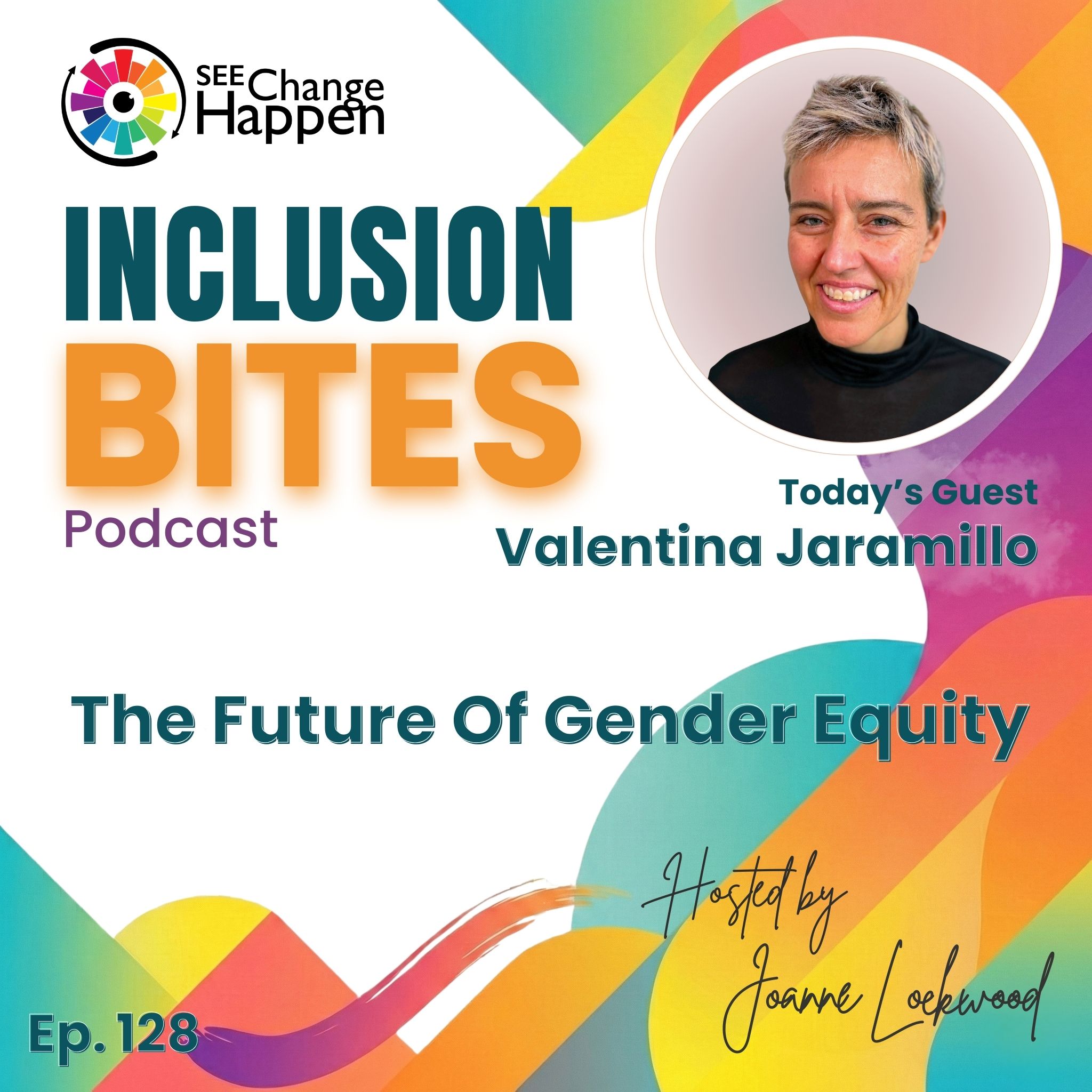
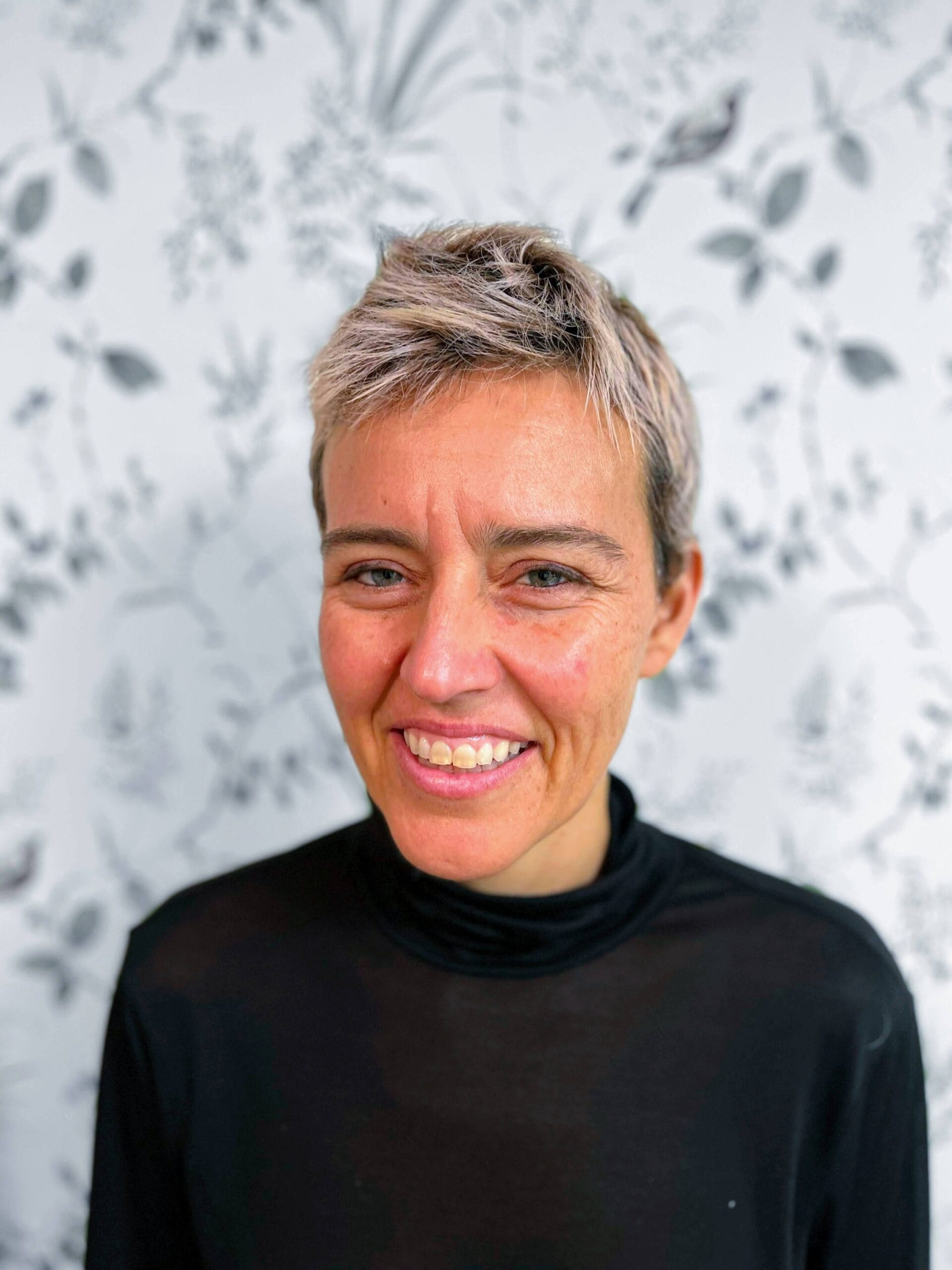
Valentina Jaramillo illuminates the future of gender equity by addressing the pitfalls of rainbow washing, advocating for genuine inclusion, and stressing the importance of pay equity and inclusive language to empower all gender identities in the wor
In this episode of Inclusion Bites, Joanne Lockwood speaks with Valentina Jaramillo about workplace culture systems.
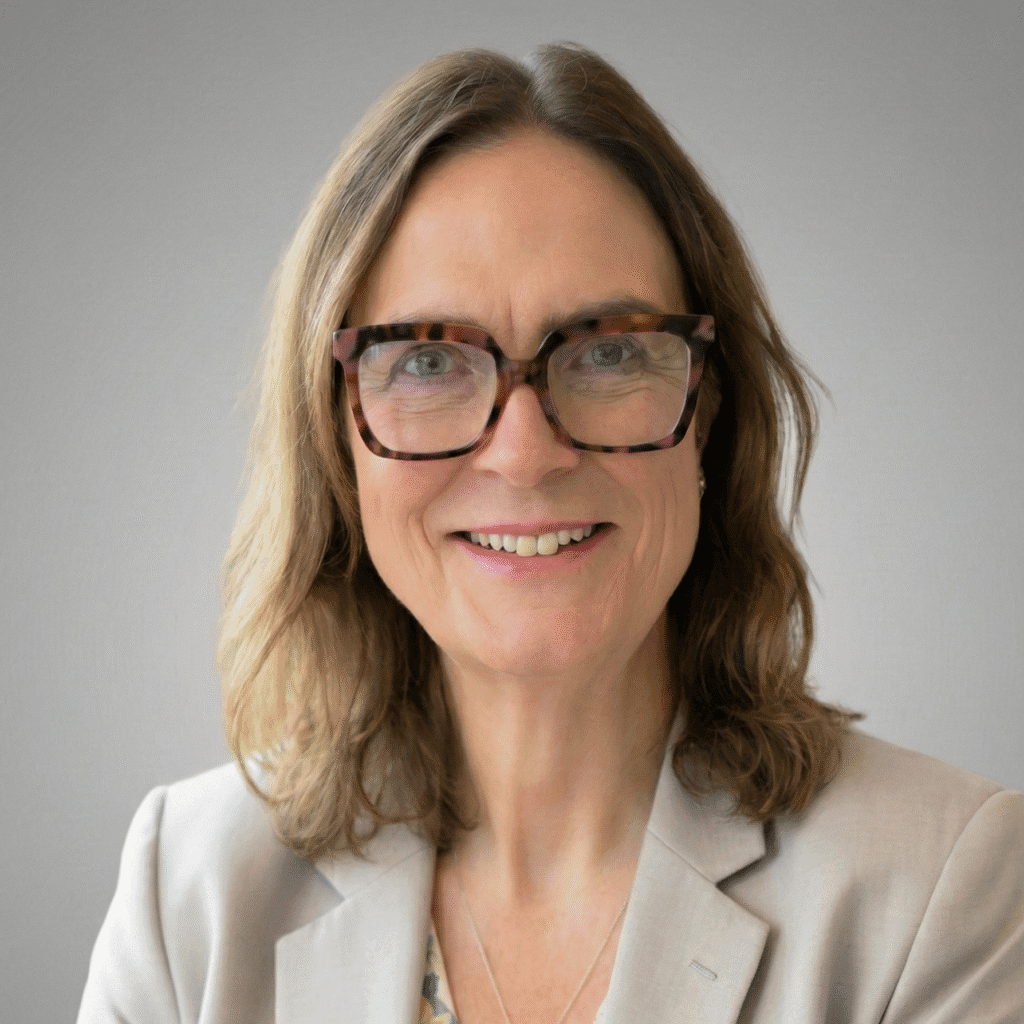
Welcome to Inclusion Bites, your sanctuaryfor bold conversations that spark change. I'm JoanneLockwood, your guide on this journey of exploration into the heartof inclusion, belonging, and societaltransformation. Ever wondered what it truly takes to createa world where everyone not only belongs butthrives? You're not alone. Join me as weuncover the unseen, challenge the status quo,and share stories that resonate deep within.Ready to dive in? Whether you're sipping your morning coffeeor winding down after a long day, let's connect,reflect, and inspire action together. Don'tforget, you can be part of the conversation too. Reach outto jo.Lockwood@seechangehappen.co.ukto share your insights or to join me on the show.So adjust your earbuds and settle in. It's time toignite the spark of inclusion with Inclusion Bites.And today is episode 128 withthe title, the future of gender equity.And I have the absolute honor and privilege to welcome ValentinaJaramillo. Valentina is an empowermentcatalyst and an inclusion advocate, acommunications expert, and dedicated diversity,equity, inclusion, and belonging practitioner Thepassion for creating safe spaces where everyonecan bring their true selves and develop their full return. When I askedValentina to describe their inspirational superpower, they saidthat their superpower is their honesty and using itto share their lived experience without judging. They would alsosay they are a good listener, creating a safe spacefor people to talk to them. Hello, Valentina. Welcome to the show.
Valentina Jaramilloguest
Hi, Jo. Thank you for having me. I'm so excited to be here.
Joanne Lockwoodhost
I am as well. It's great to chat to you in the green room andfind out that, I'd also been to several of the places you've livedin in the US. So, yes, quite fascinating. So, Valentina, the futuregender equity, tell me more about that. Yes. The future
Valentina Jaramilloguest
of gender equity definitely goes beyondthe binary and that means that it's not aboutjust empowering women but actually having allgenders represented. So I think the future ofgender equity is that when we hear those 2words, gender equity, we don't necessarily hearwomen and men, but we understand thatgender goes more than that binary, that thereare gender nonconforming, gender nonbinary, agender,that there is different expressionsand identity of gender. So that's what wewanna do. Use all these lived experiences andempower them to have diverse perspectivesand be the workplace be a place where everybody can thrive. SoI think this is where the the gen the future of gender equity Brilliant.
Joanne Lockwoodhost
Some of my listeners probably are unsurearound gender diversity when it comes tonon binary identities or agender becauseagender and non binary is often an umbrella term. It encompasses a whole loadof different identities as well, doesn't it? So could you explain a little bitmore about what it means to you maybe? Yes. Totally. I will
Valentina Jaramilloguest
first go a little 1 step back and needs to explain thatgender identity, gender expression, and sexassigned at birth are 3 different things. So genderidentity is the way we see ourselves. Gender expressionis the way we show up to the world, the way and this includes theway we dress, the way we talk, and many different things.And, sex assigned at birth is the sex that when we wereborn and they saw our genitals, the doctor saidthis is a boy or this is a girl and this is whatcommonly we see as gender, but it is not, so it isdifferent. And then when we talk about gender diverse people arepeople who don't necessarily subscribe or what it means to me, right, tonecessarily subscribe to this sex assigned atbirth as the only informationregarding gender identity. Right?So non binary, yes. And they also fall,from my understanding, right, or the way I see it, under the transgenderumbrella, which is basically not identifying with the genderyou were assigned at birth. And between inin the transgender umbrella, wehave people who transition or people who don't necessarilytransition whether clinically or or, justsocially. Right? And then there's people who definitely do not conformto any of those, known,let's say, categories. Right? Jo myself,I identify as gender nonconforming. When there'sa form and their only option is non binary, I will probably choosenon binary. However, the words nonconformingresonate more just because I don't wanna conform to any of those norms.Right? Any of those, like, societal norms that have beendescribed. Oh, you are a woman, so you have to be this, or you area man, so you have to be that. Whether it's the way youlook or even it has been taken even to characteristics.So they usually, being more compassionateor more sensible sensitive is feminineand being assertive and direct ismasculine, and I don't agree with that. Like, people can be anysort of things and it doesn't have to be directly related to theirgender. No. III get it. I understand it. In fact, I'd
Joanne Lockwoodhost
I actually, what I I don't understand becauseit's not me. And I often say this to people that I don't have tounderstand you. I just have to listen to you andunderstand that you know who you are, and that's all that matters. Idon't have to understand what being gender nonconforming is, what beingnonbinary means, what being agender I don't need to understand. I just need to understandthat you understand what it means to you. So I I haven't got to goany deeper than that. I just go, great. Fine. Fantastic. Happy tomeet you. Because a lot of people really want to try and they wanna tryand get it, don't they? They wanna try and analyze it. It's it'snot something you can analyze really, is it? And and it's just trusting
Valentina Jaramilloguest
people's experience. Right? I think you you said it correctly. Whensomeone why would you wanna deny me myidentity? Right? Like this is how I see the world and how I see myselfin this world. Jo when we meet someone and they tell us theyare agender, for example, which particularly meansthey don't believe in gender at all, not as any sort ofconstruction or anything. And that's their experience, andthey wanna use their name as their pronouns, or they don't wannabe referred as 1 or the other, or maybe they don't care how they arereferred as because it's a personal experience. We have no right on saying,nope. Sorry. You're wrong. You have to choose either belong on this box
Valentina Jaramilloguest
or that box or maybe these other 2 that we kind of made up.But you have to choose 1, and it's like, well, no. I don'tnecessarily wanna choose. And as you said, it's about respecting people, trusting them,trusting them what they telling tell you and believing them. Soif we wanna bring them back to the gender equity in thefuture, I think it's just about this. Right? Realizing that peoplehave different perspective, different identities, different experiencesof life, and this is what enriches them, and it's gonnabring in a lot of inform like, goodinformation or good ideas and good ways of thinking, different ways ofthinking to the workplace. And this will endup being better for the workplace because we already know by now thatdiverse identities in the workplace bringthey increase profit, they retain talent, theyincrease productivity. So we already know the benefits.Right? It's about just allowing ourselves to reallyinclude everyone and not just like, oh, because whenmen lead men lead, they lead this way. Or whenwomen lead, they lead this way. It's like, okay. No. Everyonehas their own experience and they're gonna lead thebest way they Joanne, so let's just encourage them to havethat journey. It doesn't have to be related because you're a woman, then yourcharacteristics to lead are sensitive,compassionate, soft. Right? Why?Right? Any woman can lean anywhereand it's just the way they truly feel it. Right? So I think byexpanding our vision of gender to that ofa spectrum and not just a or b or male orfemale, We just allow more diverse perspective thanlived experiences for people to choose from and just bringmore ideas and everything, like all the trueselves to work so that they can actually thrive. Do you find it,
Joanne Lockwoodhost
when you're working with organizations, companies, and they're talking about genderequity, a lot of it is focused aroundfemale empowerment. Do you feel lost in that in that language then?Because no 1 is is trying to separate genderbeyond the binary, and that's the that's the challenge, isn't it? Yes. It is, and
Valentina Jaramilloguest
I think it's a big challenge. So I think the improvement that has been doneon women empowerment is amazing for sure.I am glad it's happening. And Ithink if we just keep focusing on that, which is what's happening in a lotof places, it's the data they're collecting, it's the when you talkabout pay equity, you see the resultsagainst women versus men. There's still no even data ongender nonconforming or non binary or other genders out there.Right? So like with everything, when we focus on just1, we're leaving the other ones behind. If we are able to bothbroaden our perspectives and empower allgender minorities or all of them,women are gonna benefit. It's not that because we bring the other ones up,then suddenly women start losing all all what they thought. Right? Like, it'sthat's just impossible. They're gonna keep getting moreempowered, more opportunities, equal pay, and everything, whichmy question because this is what happens when you seethe work that companies are doing, the work that many internationalorganizations are doing focuses on women empowerment is super valuable.Like, don't get me wrong. I really appreciate that this work is happening.But then what's gonna happen in 2020or 50 years from here, we're gonna turn around andlook like, oh, there's a big disparity between men, women, and therest of the population. Right? And it's like,again, big mistake. Right? We shouldbe pulling putting everyone up trying to get to thatequity for everyone, and that's where I see theissue that it's not that conversation is still not happening. How do we change
Joanne Lockwoodhost
the language that we use to be inclusiveof your own identity whilst also recognisingthe work that's going on around the female empowerment, femalementoring schemes that exclude you by the very title of thatname? How how does an organization include you and youridentity in their programs? Because when someoneis the sex assigned at birth female, assigned gender at birth female,there's still some legacy challenges that peoplewill face because of their assignment at birththat they don't escape later in life by either transitioningor becoming gender agnostic or or or gender nonconforming.So you you still have some legacy traits thatyou you need empowerment with. So how do we make the language inclusiveto recognize what you need as well? It's a good question. And I think
Valentina Jaramilloguest
it it's also a tricky 1 because I'm not sure if ifit's just about the language. Right? So 1 of the things that I I knowthat happens in a lot of corporate or that started to happenis that the the the ERGs, the womenERD was suddenly kind of they they put all the other genders inthere, but it was kind of like, oh, we don't know what to do withyou, so let's just tie them up here. Right? And maybe that wasnot the strategic thing to do or if you're gonna do it, maybe it was,but do it consciously. Right? And, again, bearing in mind thatthere are things in which they can support each otherand, like, fight together or not fight, but, like,work to promote better togetherwhether they're and there are also things that, okay, these are very specific towomen and these are very specific to gender nonconforming peopleor non binary people. Right? So they can they canwork in some things together or not. But therefore, to thepoint of the language, I don't know if it's about we just need to callthem more gender minorities or because then we have thewomen who are like, okay, but we've been fighting this for so much. So look,I was born female and I identified femalefor a very long time because I didn't know better until I alwaysfelt like, oh, this is not where I feel, but I didn't know I had
Valentina Jaramilloguest
a choice. Right? So so Iunderstand I've been there. Like you said, yes, there are some struggles just by thefact of who we are born as female whenwe we and if we continue to identify as that. And ifnot, it's not like suddenly, oh, those things that used to happen justmoved over and I don't experience them anymore. Right? Then, theythey've never disappeared. And I think if we gettoo too concerned on the language, then we start to lose losefocus of the real world of the real work that we have to do.Right? So I I don't think everyone will ever agree becauseif we all call it gender we start to talk about gender minorities,let's say, there's probably gonna be a lot of women who are not happy aboutthat and about all the work they've done and they which we know already happens.Right? We know that there's no discussions already happening, andwe don't want that. Like, the idea is not, hey. I'm not here to fightyou. I really appreciate all the advancement and things that have happened forwomen because we needed them, and it's it'sincredible that they haven't happened before and with 2024, and we stillsee that the pay gap and we still see notas many women in the in the leadershiproles, like, so all good with that. And let's don't forgetabout the rest. Let's just see how we can bring them togetherwith our action. Like, we are we are all want each otherto thrive. Right? So if we start making more wires within the genderworld, I think we end up nowhere. Not sure if that answered the question. No.
Joanne Lockwoodhost
It's it's it's no. It does. It does. I I was talking toa Joanne masculine friend of mine the other day and he was sayingI've always noticed an acquisition of privilegelosing people would no longer perceive him or read himas female. And now he he's recognized that he'sgained privilege around a voice in a meeting,being listened to, being heard, feeling safer on thestreets, being treated in a kind of that broculture that sort of be called mate and including themale grouping. In fact, so much so that he he he recognizedthat women now perceive him as a potential threat.So he he has it really acknowledged the differenceof of how men and women are perceived in society.Have you have you seen something similar from your lens, if you like, from outsideof the gender? Bullshit, if you like. Yes.
Valentina Jaramilloguest
I have to say and and and it's sadbecause it's realizations I've had recentlythat that okay. As a as a perceivedwhite I am from Colombia. I don't see myself as white, butI understand I am perceived as white and I Ilived as a cisgender woman for many years. Istill had some more privileges that I completely lostwhen I came out as gender non conforming. And somewere very easy to notice just the fact that, for example,people don't see me as gender non conforming. They have what they have in theirmind and having people completely ignore when I say, yes. I'mgender nonconforming. My pronouns are they, them, and they keep she, she,she, and it's like, no. I'm not she. Like, can yourespect me? Oh, but they is plural. And I'm like, yeah. No. Theyis not plural, you know. Like, and all these things,oh, but you make it so hard. And he's like, take a deep breath. It'snot about you. You know? It's about me, but I'm so sorry I made ithard for you. Jo definitely andlately, some of those privileges that I'venoticed So I have my my CV, myresume, and I include my pronouns in my resume.And I've applied for a couple of roles, and I haven't gottenany responses. And I've read articles about that. It has been provenhow people who include their pronouns and it's they, thempronouns on their resumes don't get as manycallbacks, and I'm leaving it. And I'm like, seriously? Like, thisis reality. This is the world we live in. It makes me wonder,like, that's why, for example, doingstuff out in the world, putting out information, getting new clients, itjust makes everything harder because people are like, yeah. This, I don't understand,so I don't relate. So just go to what I know and I feel safewith. Right? This person challenges mightnot, like, my conceived way of seeing the world. Like,thank you, but I rather go back to what I know and I feelsafe. So yes. Definitely. I do think that definitely happens. Yeah. No.
Joanne Lockwoodhost
I I hear what you're saying about the, it's too difficult for people.They it's like, oh, come on. It's like, can you make it easy forme? It's like, well, hang on a minute. It's it's not for me to makeit and it does challenge people because people are so ingrainedinto their their way of speaking, their way of thinking. It'ssometimes hard to nudge people into a into a different orbit to think thinkdifferently because it's it is. It's it's too much effort. And,
Joanne Lockwoodhost
yeah. I think it it it itfrustrates me that we're in 2024. We've been talkingabout this for generations and centuries,and yet we're still ingrained. And people wanna put you back in the box,don't they? They wanna they wanna make their assumption, and they want to tellyou that they're right and and not listen to you, and thentreat you differently because you use those pronouns. AndI've actually heard recruiters. I go to a lot of recruitment conferences,and I speak to a lot of recruiters. And there's lots of anecdotes and storiesout there how some hiring managers, some recruiters will see pronouns onyour LinkedIn profile. And I've actually had people say, well, if I see pronounson someone's LinkedIn profile, their CV goes straight in the bin. And it's and it'snot just about they, them. It's any pronouns on a profile.It's far too woke for them to to Joanne, so they just, I don'twant that person in my organization. And throw it out the window. Andthat's the new you know, we saw that with racist typeremarks where people were looking at your photograph and saying, well, that that's not awhite person or that's not a woman or that's not a man orsomething, and then rejecting you from your photograph. Now they're rejecting you for your pronoun.
Valentina Jaramilloguest
Yeah. No. It's quite sad that it's, as you said, 2024 and these thingsare happening. And I guess that's why we we are here andthat's why we continue to do the work. Like, it's it's it's notthat hard. Right? And when you actually see people getting it and then they areable to get past their own head and limitation andsuddenly understand, like, hey, but that is not aboutme. It's actually about this person. So it's okay. I can call themwhatever they want. Right? Or I can just respect themand it's fine. They are respectful with me. And then you see achange. Jo, again, if I think in the workplace,we're missing that conversation still. You know? There's not not thatmany places yet, especially, I would say,more typically male driven industriesthat like oil, I don't know, cars, automobile,things like that that have been usually more,or have been running for a long time and everything, they it's still toonarrow minded. And they're struggling to get women paritythere, but they're forgetting about the rest of us. And 1 day,they're gonna just turn around and see, like, oh, oops. Again, we have to goback to 0 with this gender equity. So the idea would be to start havingthose conversations now. At least gathering the data. Right? Atleast at a minimum, like, okay. This is the data. These are thepay differences. This is the amount of people we have in the workplace. Theseare not, you know. So at least from there,especially because the generations that are coming are more gender diverse,you know. There's more queer people, queer engender, queer inin their sexuality. So it's just like they have to catchup. Organizations will need to catch up before it's too late. Do you find
Joanne Lockwoodhost
sometimes that you have to put yourself back in the boxfor situations where you're travelling, you're doing something,and it's just it's just too difficult to to push onwith who you are and you end up conforming to someone else'srule set because you kinda have to. Do you find thatoften? Yes. And it's sad and and it's
Valentina Jaramilloguest
hard. And I I last year, we were travelingin Southeast Asia and for the whole year withmy with my wife, and we met alot of people. And, definitely, there were places in in which wewere hanging out with westerners. Right? Peoplewho were supposedly educated, digital nomads, all thesethings. No clue or understanding or even thedesire to understand what their gender nonconformingwas or is and that they could use they, them,pronouns. And it was like, okay. But if this is like, oh, she hasshe and she and she I'm like, I'm not she, they. Completely
Valentina Jaramilloguest
oblivious and I don't wanna change and I don't wanna make an effort and whatever.And there there was a moment, there were places in which we weren't stayingfor long. So there was a moment in which I you know what? Thisfighting is not even worth it. It's not worth it. I was very lucky thatI have my wife and she was doing the fighting most of the time.She was like, they go by them. They go by they them andexplaining the differences, and she's an amazingperson in the way she explains it and has all the patience and all thelove and does it. And at some point, she came to me and she toldme I cannot do it anymore. And I was like, well, believe me. Thathappened to me too. You don't have to. You know, do it when you feellike it and when you feel resourced. But it's a fightthat we cannot keep going. And back in the US,where you would think, like again, many of us think, oh, we'rehowever you you wanna call it in a developed country or something. And,again, very many circumstances, I find myselfquickly just deciding, you know what? I'm not gonna give it this fightand I try especially if it's short, quick Joanne fast conversations, I try tojust yeah. Whatever. I'm not gonna fight you. But it's the
Valentina Jaramilloguest
the the importance of, like, inclusive language, companies, restaurants. I goto a restaurant with my wife and everyone's ladies, and it's like they shouldtrain their their people to say good morning, good afternoon, goodevening, everyone. You know? Like, there's so many ways to call people withoutgendering them, and we should be doing much betteron that and still not happening. Jo, yes, thathappens a lot. Many situations and and what I do what I do is Ihow much energy I have and how long the to to givethe the explanation, to try the other person tounderstand, make them understand how long is the interactiongoing to be, and if it's going to be more meaningful and it has apossibility of a relationship, a friendship, or something, then it's like,okay. I'm gonna take my time and I'll try it for x amount. Ifat certain point, they just don't get it. He's like, thank you, but I don'twanna be your friend. Right? Continue this relation. And wherethey're very short interactions, it's like, okay. Whatever. Just assume thebox smile because whatever. Yeah. I
Joanne Lockwoodhost
I'm I'm pretty determined to correcteverybody that gets it wrong. I mean, it it it happens enoughfor it to be annoying. And you you say, my wife,she's a a fierce defender, and she'll she'll growlat people and and, she'll she'll fight back. And Jo,yeah, it's it's not as nice to say, you deal with this 1. I I'mI'm just gonna go and sit sit down. It's it's over to you. But, yeah,I I guess as a as a as a trans woman, a binary transperson, where where it's easy for someone it's easy for me tosay, actually, it's madam or actually, it's not so or it's notthis. It's not and and I can lock them onto a a femalegender. It's much easier than or I imagine it'smuch easier for me is for you to say, actually, Jo. It's notshe. It's they. And they go, what? And there's a must bea real kind of they just look blank at you, I'm sure. Yes.
Valentina Jaramilloguest
And and I think it shouldn't happen to you to to you either. I
Joanne Lockwoodhost
know. So I think But it does. Yeah. I know. I know. But it's
Valentina Jaramilloguest
like yeah. Well so I think even if we useinclusive language, the people would avoid those circumstances.Right? Because if we just generalize foreveryone, like, we we avoid making morepeople uncomfortable. Right? So or hurting people because it actuallyhurts. That is the reality. It is. And every
Joanne Lockwoodhost
time I'm it's often I find it when I'm commuting by trainand you're standing on the platform, and they they announce the trainor they say, ladies and gentlemen, the train now arriving or ladies andgentlemen this, ladies and gentlemen that. It is we're so ingrained certainly inBritish culture. I'm sure many English speaking countries,there's this ingrained politeness of having to say,ladies and gentlemen or sir, madam, where actually,as you said, you can just put a full stop earlier.Hello, full stop, or good morning, full stop. You don'tactually have to continue the sentence on with sir, mad, or anything else. You canjust say, how are you? But people are so ingrained with the language Joanne there.That's that's the challenge. It's it's getting people to step back and think, Ican move the full stop. It's that easy. Yes. Well,
Valentina Jaramilloguest
language is a big thing and I think and what people seem toforget is that languages evolve the same as culture. Right?Google and googling was a world a word that didn't exist andit's now used and we all understand what it means. You know? Sothere's a lot of words that many words that just came appearingas things were made and appeared. I need I by this, Idon't mean that we just appear. Right? But we are starting to to nameus and be present and be here Jo people can get used to different things.It's not like, oh, no. Sorry. Jo that language is a
Valentina Jaramilloguest
very particular thing. I I am from Colombia. I was born inColombia, and we speak Spanish, and it'seven more complicated because it's a gender language.And so the struggle is even harder because when you ask,they ask is for people to use something that is completely new,which is using not a or o as they're used to, butusing an e or maybe even an x. Right? And people arehaving heart attacks and, like, oh my gosh. What's going on? What are youdoing, ruining our language? And it's like,not necessarily. I I had the pleasure of readingan article this weekend that my mom sent me from Colombiain which the actual director of of,are writing my stream from the institute InstitutoJose Cuervo, which is the lang the language institute in inColombia. He is actually explaining why theirtheir course and why the institute the their instituteis advocating for inclusive language in Spanish, whether it's anx instead of a or or o or an e, andit's just because language evolves and it changes. Andthe more we can open it up, the more inclusive we're gonna be and themore open we are to life and to people experiences. So it was kind oflike, oh, okay. A little of oflove came through that article. But, yeah, it's justabout wanting to change and about I seriously, I I sometimes,like, why is it so hard for people? Because the only thing I'm asking themlike, I'm a person and I want respect the same as you do and thesame as they do. Right? So it's just like, okay. You wanna becall if you wanna be call or if your name iswhatever. My name is Valentina, and people come and call meJo. Well, no. My name is Valentina. What can Ido? You know? Please call me Valentina. So it's kind of thesame thing. Right? Like, it's just respect for each other and seeing eachother for who we are and just letting us bewithout especially if we're not harming anyone. Right?
Joanne Lockwoodhost
Yeah. I mean, I was talking to someone the other day, I think, and theywere saying that English is a really difficult to let learn language to learnif you're learning it as a second language or third language. It'sreally complicated given all the rules and or the lack of rules sometimes, all theduplicate words and spellings. But it must be really hard as aas a person who is gender non conforming, living in a genderedlanguage world. You know, you've mentioned the and I'm not sure if this isSpanish or Portuguese, but it'sdepending on if it's male or female. And everyverb and noun is kind of gendered, and you havechange the ending. As you said, o or a. I was talking to someone inPoland, and the Polish language also has constructs like that.And even what you can call yourself has to come off alist the government provides. You can change your name. And it has to endin an a if you're female or not an a. I think it'san a a or not common what what it is if you're amale. But there is no kind of rule set around non binary or gender nonconformingbecause you have to has to be on this list or this list. Yep. Yeah.And it's And and Polish so my wife is Polish. That's a
Valentina Jaramilloguest
coincidence. Ah, okay. So they have but they atleast have a new term, like, a a neutral term. Soso which they use for things, which is not a goodexample, but at least they're used to. Right? They either for babies,it's the neutral. And, again, yeah, the nouns and everythinggets gender, but at least it's a concept that exists.They kind of understand that neutral term. In Spanish,origado is Portuguese, but it's the same Portuguese French, they're all genderlanguage Joanne you have to thereis not that possibility, right, so people are like,well, Jo. That just doesn't exist or it sounds funny or yeah. It soundsfunny because it's a new word. I guess I didn't I'm thinkinga cellular phone probably sounded funny at the beginning when we just started usingthem. And now cell phone is super common and everyone knows what a cellphone is and no 1 would even think about questioning whydid was it called cellular, you know.
Joanne Lockwoodhost
Jo It's quite it's quite easy in English to write a a genderneutral email or or statement. I mean, theintro I read out today is gender has they, them, theirpronouns throughout it. If you were to write that inin Spanish or another gendered language, how could you Joannehow could you do that? Would would that work? So that's the
Valentina Jaramilloguest
struggle. Right? Because in English English, yeshas genders in the does it has she and he and in the pronouns,but, the the if let'ssay, if it's a pretty boy or a pretty girl, pretty is stillthe same. Right? In in Spanish,if if you if you wanted to say the the actual andlet's put another example, Height.Right? A tall girl or a tall boy, it'stall. Right? In Spanish, it'sor Joannefor gender nonconforming, well, the they wanna put ane or we would put an e, But it's somethingthat all until recently has not been used. Itis trying to be more and more and more and more installedand depending again, II1 of the reasons I have ahard time going back to my country is because of the language and because thepeople that surround me there, notnecessarily the most woke people, andI have to change it. However, I do have a group of friends thatare very woke, and they do their effort, and they do it, and by now,they're used to. My wife is fluent in Spanish, and maybejust because she's it's not her first language or whatever, but she never gets itwrong. She always use constantly.She even corrects me if I make a mistake.Right? So, again, I mistakes Imake mistakes too, so it's not about that. It's about the intent of wantingto to try something different. And the excuse is like, oh, that'sjust crazy. That doesn't exist. That's not grammatically correct oranything. And if yeah. Again, language evolves. It doesn't mean it cannotchange. These things were not talked about before, and that's why I had ahard time growing up in Colombia because this was not a possibility. Youknow? When I I was born, they told my parents this is a girland this is a package of the way I wassupposed to be just because I was assigned a girlwhen I was born. Right? And it never felt right.It never did, and neither did men, boy.Right? But I never knew there was thisI can be just anything and it doesn't really matter. I don't have tobe this or that and prescribed as this orthat. And my own experience at some point, Ithought, okay. I'll conform to being a woman but in my ownterms. And I that kind of did it for awhile until the day I was able to find out,like, I it doesn't matter how old I am. This iswho I am. I felt seriously out of abox, and it was the happiest day of my life. Just like,oh, I don't have to conform. It's their problem. And Iwas 40 years old and who cares? This is themoment I'm free, you know? Like, I'm actually out of acage. And if you cannot handle it, sosorry. Right? And this has been a journey to get to this pointof not apologizing for being who I am. Right? Ornot, but actually just being myself. When when you were saying that
Joanne Lockwoodhost
that, you you misgender yourself, get it wrongyourself, I was I was laughing on the inside because II often misgender myself, and it's you know, youlive for 40, 50, 60 years of your life with a certainphraseology and and and rule book in your head, which is why II'm very tolerant of others because I I'm I'm not perfect withme. And, also, I would like yourwife, my wife is probably more accurate than I am. She gets itright all the time, and we sometimes joke about it. I go,duh. If it doesn't make you less valid,the fact you get it wrong yourself doesn't make you less valid. And I've I'veheard people say, well, you're not really a woman then if you keep getting itwrong. I went, I am. It's just it's linguistic. Somesomersaults. You can't our brains aren't always able to toto pivot on this stuff, and I which is why I completely understand peoplewho struggle because I I struggle sometimes. Not often, butoften enough. Yeah. I think it's about making the effort. I think that's what the
Valentina Jaramilloguest
key and that's what I try to teach people. But I think that's where that'swhat the other hard part. We and corporateworld and everything, it wants to be so perfect Joanne people want to just getit right every time and everything that they rather not doanything. Right? So you know what? This is too hard. I'm not even gonnatry. Because what if I make a mistake? What if I hurt this person? Whatif I get it wrong and I misgender them? And it's like,no. What I try to tell people, particularly with me, I just wannasee that you care and that you try, not that you decide tochoose what my identity is. Right? Like, if if youwe're talking and we're amused by mistake, say shewhatever. Turn day and move on. Nothing nothing happens.Right? We all may make mistakes. Even even I makemistakes when I talk about me in Spanish and, like, it happens.So it's not about that, but it's about the intent about people. Like, okay.I see you. I respect you, and I'm gonna do my best to try.Right? And we know that there are lots of ways for people to get betterwith pronouns, like practicing what,with my wife a long, long time ago beforeany even I transitioned that we would just namegender things at our house just to get used to using the differentgenders. Right? And just they they they they they, and we wouldjust practice and then you start getting it into your head. So it's it's aboutthat, but it's the intent. And I think this is kindof the idea with gender equity. We can makemistakes still, but let's all go to allow everyone to thrive.And yeah. Okay. You made a mistake. You learned thelesson. You're trying. Let's go to the next. You know? Let'sstart to talk to have these conversations. Let's stop being afraid. Like,we exist and we are part of the the corporate corporate worldtoo, and we wanna work and we wanna have an impact, so justinvite me to the conversation. Right? Invite us to the conversation. I think
Joanne Lockwoodhost
1 of the trickiest things my wife and I and alsomy family, I suppose, had to deal with was how to refer to mewithin the family. So we got married37 years ago, so we were married a long time. And I wasalways a husband. So when I when I transitioned,we started Marie got to a point Marie is my wife. We got to apoint where she couldn't refer to me as husband because it just lookedridiculous. We're in a shop or something. Oh, and my husband's she gotshe she just found it awkward herself, but she just couldn't do it.So then we started using well, she started using the word partner.And then she found that that didn't reflect how she sawme, because partner often is associated with being notmarried. Or so she wanted to reinforce the fact she wasmarried. So she now uses wife purelybecause it it describes that that we're married, and she feelsquite quite stay for that. My mom calls me her daughter,which is quite good, but my our 2 children call me dadbecause it's fine with me. It doesn't actually bother me that much. Andand if it makes them happy and our relationship is strong,really doesn't matter. So, yeah, it's it's a really crazy environment where mywife's using she, her pronouns. Our daughter's using the odd he,him, and dad. And it's kind of it's a whole mix of stuff going on.And it's he just has to Jo, it doesn't matter sometimes, doesit? No. It doesn't matter. I and I think that's
Valentina Jaramilloguest
that would be the idea, right, to get to these places where it doesn'tmatter. And that at work, it doesn't matter and we can all justbe, but, unfortunately, I don't think that's where we are because I stillthink, well, there's a lot of hate out there forpeople like us. Right? There's a lotof unconscious bias that people if if you have a CV that has yourpronouns, whatever they are, I'm just gonna throw it away. If I see it onLinkedIn, you are also not valid into my part. You know, like,all these things. So until we don't finish, like, ordon't do the work, unfortunately, I think itwill still matter. So it's this tricky how how to get to thatbalancing where it doesn't matter. Right? Yeah. There's some quite sort of the work you're
Joanne Lockwoodhost
doing with organizations then in, in promoting gender equity andalso the the DEIB consultancy you're doing withorganizations. So what sort of are the priorities you're working on at the moment?
Valentina Jaramilloguest
I so I work definitely on on helping them get theirgender equity strategies, and to beinclusive in their gender equity strategy. With many, what we arestarting to do is just have that conversationand to to start gathering thedata. Right? Because many of theI've been working mostly with nonprofits, and they'renot huge but between, yeah,medium or small nonprofits. And they don't have a lot of thisdata on their own. Many don't even have gender nonconforming employees, butthey do support gender nonconforming people or gender nonconformingpeople come to like, part of the people they help or work with, andtherefore, they just need to be aware and know these things. Sogathering the data, making sure that they are using inclusive policies,that people use inclusive language for everyone, that trying toto start to build even in these small spaces,that ground start. Right? So that when it keeps advancingand they hire end up hiring someone that is gender nonconforming, thatperson's gonna be happy and actuallyhave no issues entering the workplace because it's been set up forthem. Right? It's been an easy transition. And,also, at the same time, making sure that they have andthey're complying and getting better even with theirwomen gender equity. Right? Like, with the women in powerand all these things that we know. AndI try to advocate, and this is because a personal experience, a lot forgender neutral restrooms. It is a simple thing, but itis also not a simple thing. So just making sure ifthere's ways in which these organizations can implement those,especially the ones that have, like, these facilitiesavailable for their customers or the people they support. Sojust having these options. But I think whatI mostly work with is the policies,making sure that all the language is inclusive, that they havepolicies to cover all the spectrum and thatthey don't you know, like pregnancy, it's covered foreveryone. You know? Like, these kind of things that they don't saywomen health, but, like, reproductive health. Things thingslike that because not only women can get pregnant.Right? So that they all these sort of things are inclusiveand the strategy. And, again, the collecting of the data becausethere is no that not a lot of data occurring. Do you find that
Joanne Lockwoodhost
do you find that changing the language like thatalienates women who have a traditionist view, and theycan get quite angry around rewriting traditionally femaleterms like pregnancy and and childbirth andmotherhood and birthing, all all this all the language aroundmenopause as well. Very traditionally female gendered, and thenwhen we start to rewrite that language, I've I'veexperienced many women getting disenfranchised and gettingangry by trying to erase their femininity. How do you howdo you kinda get around that? Well, I think, unfortunately, this
Valentina Jaramilloguest
is part of the of, the oppressive systemsby showing that if they remove the word that thatwomen let's say, that women are only women and that what gives them thepower is that they are the it's women health and this istheir thing and this is their status, but this is the part of the oppressivesystem. If you are not this, then you don't exist. And it's like, Jo. Youare equally feminine and you've got your power and you stilljust realize that it is reproductive healthbecause it can be other people whose gender isnot women, right, and I thinkit's kind of a hard 1 because it does happen and it isalso sad that it happens because that's not the purpose.Right? Like, the the purpose when we advocate for usinglactating rooms instead of the maternity room at work,It doesn't mean that we don't want women there or anything like that. Right?It's just like, let's broaden our minds. However, oppressivesystems wants us to believe that. And again, I do believe that the thepatriarchy and the oppressive system wants us tokeep fighting because if they make us fight against each other,they call the power. Right? Whether we unite and we are all like,yes. It's reproductive health and,lactating rooms and all these words and we just tryto change language to be more inclusive,they're gonna start losing and losing and losing their power,and I'm not sure they can handle it. So I think it'sabout that. Yeah. III agree. But I do I do see
Joanne Lockwoodhost
or hear lots of people getting worriedabout the erasure of what it means to be awoman. And a lot of the vociferous Joanne trans rhetoric isoften directed at at trans women for being seen asinvaders into female spaces as being threats. And it's so it'sit's this is concertedvoice of of anti transness, if you like,around trying to protect what it means to be a woman, and that's that's partof the challenge, isn't it? And when we're trying to take gender out of theequation, there are people trying to force it back in. But I would ask those
Valentina Jaramilloguest
people because I think when I don't know how many people have really asked whatdoes it mean to be a woman and get an answer that is, you knowor or a man for that matter. Right?And and it ends up being a social construct. Right? Like,if you if you really go through the work, it's a social construct.And you can choose to this is how I identify and it's fineand it's beautiful and everything. But to people who are using it,in this case, women who are using this rhetoricagainst trans women, it's like, seriously? Like, whatwhat part of your femininity is being aggravatedbecause of a trans woman? I understand that there's a bigrhetoric around the bathrooms. That's why I say it's it's a simple 1, butit's not so simple because of the danger the women are in, and it'slike, what are you talking about? Like, seriously? Ithink it's, oh, I forgot hisname. The comedian South African comedian, NoahTrevor Noah. He has a great sketch in whichhe talks about, like, seriously? Are people just waiting out therefor for for the bathroom to see who goes in? Like, it doesit's not gonna happen. Right? There and what actually
Valentina Jaramilloguest
happens is that there's a lot of transgender women beinghit, tortured, aggravated,etcetera, for having to use a bathroom that does not align withthe sex that they that they choose. Right? So Ithink it's the opposite and and I know this rhetoricexists, but my invitation to these people would be justlike, what part of the femininity is attached toa transgender fem like, femininity? The the relationship forme, I don't see it. So I would invite people to just reallytry and see why would they affect it more or not. And thesame with using reproductive health andmenstrual products. You know?Just I I think that when we do better for a specific group, wedo better for all. Right? When 1 of the underrepresented groups,we do better for everyone. Yeah. We've we've seen loads of studies out
Joanne Lockwoodhost
there around the pink tax. Your yourfemale products generally are moreexpensive per ounce, aren't they? You know, if you wanna buywomen's shaving foam, it's the same shaving foam as men's shaving foam. Itstill got aloe vera in it. It still got the same stuff. It's just gota pink pink label on the outside. It costs more pink razor blades,pink pink anything. It's got it's more expensive proportion. So it's amarketing thing. But, yeah, you talk about social construct. It's also a marketing construct, isn'tit? That we we're trying to sell to specific people with abrand, with a with a kind of visual representation, and the world's kind of gearedup around that kind of that binary product.
Valentina Jaramilloguest
Yeah. It's sad. And and again, systems of oppression,capitalism is 1 of those. Right? And it's about we wanna sellmore, we want more money, who cares about your liberty and your right to be?This is what money is, what rules, and I think this is partof the things we we need to change and take into account.Right? Hey. You can sell whatever you want for whatever priceyou want, still respect people. Right? And you I'mI'm I'm probably sure that they can come up with a lot ofother marketing ways to charge us more for products.It's just gonna take creativity. So maybe they should embracediversity because it sparks creativity and they willfind other ways to to market us, not based onthat construct. Talk about marketing there. You know, we're smack
Joanne Lockwoodhost
bang in the middle of pride season, you know, that, rainbowseverywhere, people celebrating their love. But it's kind of a lot of it ispink washing. A lot of it is performative.So what do you how do you call it out? How do you how doyou work with organizations to make them a little bit more authenticaround their, their advocacy, if you like? I think that the key thing
Valentina Jaramilloguest
is that they so pride shouldn't be and we've seen it andwe've said it a lot, but pride shouldn't be just about June orwhatever month because, for example, here in Atlanta is in October, but what you know,like, it shouldn't be around June or about that particular month.So I believe that companies who are doing the rightthing are doing it all through the year, not just changing their logosthe 1st June and then changing themback. Right? That you actually know these companies arewalking their walk all the time constantly. You see themadvocating for their employees. You see posts on LinkedIn. You see theirpeople. You you see them hire different diversity. You seethat the people who work at this company have their pronouns onLinkedIn. You see that they that theyare doing courses. They're trying to learn. These people aredefinitely wanting a changealso. Right? And these companies want that. And I think thethis year, it was clear that manypeople it was rainbow washing and it is still because manycompanies dropped their support and we were able to see I don't knowwhat your thought is, but I think that even on LinkedIn, there's lessand less companies who just change their their their logo topride logo. I'm surprised. I go watchingtheir accounts and everything, and I haven't seen as many as, like, let'ssay, 2 years ago, everyone who had the pride flag on their ontheir logos. Right? So it's about thewe end up knowing, right, who just puts out a product onon on pride, and then you'd never see them therest of the of the time. Right? Or you never pride?
Valentina Jaramilloguest
Like, what's that? They you look at their at their board andeveryone is white cis men. No 1 puts theirpronouns on their on their on their LinkedInprofiles or anywhere in their websites. So I think we by now,we can start to notice and really see those companies and ifthey haven't figured it out, and they willprobably start to see it in their revenue also because and in the way theyattract people and talent and retain their talentbecause, and again, every generation is becomingeven more queer. Right? Like, Gen z Gen z,it's more queer. I don't know what it's like 3 out of 5 orsomething to be considered they consider themselves queer.So it's gonna have to stop the the rainbow washing. Right? Wewanna see the real thing and real action and that you are committed.And another thing, I think, which is important, and I know it's happening inthe UK and here in the US also, there's a lot of backlashpolitically right now for the community. And I thinkcompanies who have power, because they do, and here in the US,companies are allowed to lobby, They should be lobbying for fortrans and LGBTQ rights and notjust for how to sell more. You know, but they shouldactually be lobbying forour rights. Yeah. No. I I yeah. I agree.
Joanne Lockwoodhost
And it's I'm I'm quite charitable when it comes to,companies changing their logos because for me, it itcommunicates in 2 directions. 1 is to the outside world, to the public,to their customers, to to part of a marketing brand, but alsocommunicates internally. So I'm thinking abouttheir their queer staff, their trans staff, their non binary staff,looking up and seeing their company has takenthe initiative to change their logo to they feel seenand heard and amplified internally. So I'm I'm quite charitable thatorganizations that do it at the bequest, if you like, oftheir staff network, the ERG, their pride network, Ithink it's a good thing because it it shows that they're being heard and listenedto and being amplified. It's ones that do it where they're they're literally trying tosell product off the off the back of it. But I think if it's authenticand representative of their staff, I think I think that's a good motivation.And I also recognize that it takes a lot of people to change a logoon a company. Marketing, sign off, communicationsYeah. Legal. Yeah. Just think about the number of people that have to get involved,change the company's logo, and I think for them to have done that, as they'rea big global organization, they must have put some effort into it internally.So I I respect the effort it takes, provided yousay, there's some authenticity about that. It's not just not just for June,not just for July. It's it's 365. And,yeah. But IIII do have a lot of empathy for for whatorganizations are trying to do. I'd rather they did thatand show allyship to their staff than not do it at all or or sayto their staff, no. No. No. We can't do that. Jo, yeah, it's it's tryingto balance it out, isn't it? Yeah. Yeah. And I agree that it has to
Valentina Jaramilloguest
be authentic, but I think employees inside know. I thinkprecisely it's them who know whether that company was authenticor not. Because if I work for a company, I'm an LGBTQIAidentified person, and I work for a company that suddenlychanges their their logo to Pride to the Rainbowlogo. Right? But I don't see anyone represented. Iactually am closeted because I don't feel safe. No 1ever asked for pronouns. None of the things. Then,you know, like, the it's not authentic. And those people, those employeesare the wanna the ones who are gonna let us know, right, that that that'snot the truth. And when you work for a company who changesthe logo and you are part of the community and you are like, oh, yes.Here, they see me. They value me. But not because they changed the logo, butbecause the ERG is strong. They invest in us. They all thesethings. And he's like, okay. I'm happy that they do it, and I'm proud towork for this company. Right? So, again, it's kind of companies thatretain their talent and all the things we know that happen whenthese things are authentic and not just to check a box. Jo if you
Joanne Lockwoodhost
have to come up with 1 yeah. You got magic wand, what would youchange? What would you what's your what would be your top priority for anorganization to think about around gender equity? What was your thoughts?
Valentina Jaramilloguest
If I if I had a magic wand. Well, I think differentdefinitely, we there's a lot to do around,still pay equity for everyone,not just white cisgender women. But actuallybecause if you see the numbers and differences between also whitecisgender women when they will get parity toblack cisgender women oror Latino cis cisgender women. The numbers are completely different.What about transgender women? What abouttransgender men? What about gender nonconforming people? Soreally, really parity and transparency ofpayment for everyone. Like, it it shouldn'tbe biased by any characteristic thatis not basically talent and what you do at work. Right?Productivity. And I think there'sbig opportunity also in injust getting starting to gain the data. Right? So I would
Valentina Jaramilloguest
suggest people the same that they started to work with gender,with women equity. Iwould do for all other genders and starting to have this talk andinvite conversation and people to to have the actualconversations. I think sometimes it's just people are afraid, again, like wementioned before, to to be to make a mistake orto not say the correct thing. And I would just askorganizations to not be afraid to have those conversationsbecause by talking is the only way we will learn and make an advancement.Right? If we if we decide that we need tobe perfect before doing anything, we don't do anything. Right? So it'sbetter to just start and have those conversationsand and start the work even if your company don'tor you are not sure if your company has a gender nonconformingperson on in in your on your staff or not. That's a
Joanne Lockwoodhost
great great proof of advice and, and grace great starting point ifyou're not there already, so thank you. Valentina, how do people get a hold ofyou? It's been a fascinating conversation. Yes. Thank you,
Valentina Jaramilloguest
Jo. So people can get a hold of me in onLinkedIn. They can find me with my name, Valentina, and my lastname, Jaramillo, so altogether. And Jothat'sJ-A-R-A-M-I-L-L-0.And, yeah, just on LinkedIn. That's the best place to to find me.
Joanne Lockwoodhost
Thank you. A fascinating conversation. Thank you.As we bring this conversation to a close, I want toexpress my deepest gratitude to you, our listener,for lending your ear and heart to the cause ofinclusion. If today's discussion struck a chord,consider subscribing to Inclusion Bites and become partof our ever growing community, driving real change.Share this journey with friends, family, and colleagues. Let's amplifythe voices that matter. Got thoughts,stories, or a vision to share? I'm all ears.Reach out to jo.lockwood@seechangehappen.co.uk,and let's make your voice heard. Until next time. Thisis Joanne Lockwood signing off with a promise to returnwith more enriching narratives that challenge, inspire,and unite us all. Here's to fostering a more inclusive world,1 episode at a time. Catch you on the next bite.
Rainbow Washing vs. Authentic SupportAddressing Pronoun Usage and ResistanceInclusive Language and Gender Equity Policies
Joanne Lockwood is joined by Valentina Jaramillo to discuss what the future of gender equity should look like when it moves beyond a strict women-versus-men framing. Valentina explains key distinctions between sex assigned at birth, gender identity, and gender expression, and shares why gender equity must include nonbinary, agender, and gender nonconforming people rather than leaving them out of workplace strategies, data, and programmes.
The conversation explores practical barriers that show up in everyday working life, from resistance to using they/them pronouns to the ways people are pushed back into binary assumptions. Joanne and Valentina also unpack why inclusive language matters, what it can look like in practice, and why organisations need to build environments where people can be respected without having to repeatedly justify their identity.
They examine organisational responsibilities in more depth, including gathering better data, building inclusive policies, and addressing areas such as pay transparency and equitable pay across genders. Valentina also highlights the importance of thoughtful facilities provision, including access to gender-neutral restrooms, and discusses how gendered language in policies and benefits (for example, around reproductive health) can unintentionally exclude.
Finally, Joanne and Valentina look at performative corporate support during Pride, the difference between rainbow washing and sustained action, and what authentic allyship looks like across the year. The episode closes with a call for organisations to keep learning, have the conversations even when it feels uncomfortable, and commit to meaningful change rather than checkbox inclusion.
“We should be pulling putting everyone up trying to get to that equity for everyone, and that's where I see the issue that it's not that conversation is still not happening.”
“So 1 of the things that I I know that happens in a lot of corporate or that started to happen is that the the the ERGs, the women ERD was suddenly kind of they they put all the other genders in there, but it was kind of like, oh, we don't know what to do with you, so let's just tie them up here.”
“He is actually explaining why their course and why the institute is advocating for inclusive language in Spanish, whether it's an x instead of a or o or an e, and it's just because language evolves and it changes.”
“Gathering the data, making sure that they are using inclusive policies, that people use inclusive language for everyone, that trying to to start to build even in these small spaces, that ground start.”
“And again, I do believe that the the patriarchy and the oppressive system wants us to keep fighting because if they make us fight against each other, they call the power.”
“But to people who are using it, in this case, women who are using this rhetoric against trans women, it's like, seriously? Like, what what part of your femininity is being aggravated because of a trans woman?”
“I think we by now, we can start to notice and really see those companies and if they haven't figured it out, and they will probably start to see it in their revenue also because and in the way they attract people and talent and retain their talent because, and again, every generation is becoming even more queer.”
The issue of "rainbow washing" by companies and the importance of authentic support for the LGBTQ+ community.
The need for pay equity across all genders and promoting transparency in workplace salaries.
Challenges faced by individuals using preferred pronouns and the lack of acceptance in professional environments.
The importance of inclusive language and its impact on creating comfortable and welcoming spaces.
The necessity of gender-neutral restrooms and policies in organisations.
The impact of traditional gender roles and the importance of dismantling oppressive systems.
The significance of broadening women's empowerment initiatives to include all gender minorities and fostering a more inclusive future.
One thing to remember
The episode "The Future of Gender Equity" underscores the critical importance of authentic support and inclusive practices within organisations, advocating for genuine involvement in the LGBTQ+ community, pay equity, and the use of inclusive language to foster a truly inclusive workplace.
Questions this episode helps answer
What are the main indicators that a company is engaging in "rainbow washing" rather than genuinely supporting the LGBTQ+ community?
How can organisations go beyond surface-level gestures to offer authentic support to their LGBTQ+ employees and customers?
Why is transparency in pay and pay equity crucial for fostering gender equity in the workplace?
Discuss the implications of recruiters disregarding candidates who list their pronouns on their LinkedIn profiles. What does this say about inclusivity in hiring practices?
How can individuals and organisations work towards better understanding and using inclusive language, even in languages that are inherently gendered, like Spanish?
What are the potential impacts of not including gender-neutral restrooms and inclusive policies within an organisation?
Explore topics
Ideas from this episode
Rainbow Washing vs. Authentic Support
In our inspiring chat, Valentina Jaramillo brought to light the pervasive issue of "rainbow washing" by companies, emphasising the need for genuine action over superficial support. We delved deep into how businesses often change their logos and tout support during Pride month but fail to follow through with meaningful, substantive actions that benefit the LGBTQ+ community.
Addressing Pronoun Usage and Resistance
A particularly illuminating segment of our conversation focused on the challenges related to the use of preferred pronouns and the resistance faced from various quarters. Valentina shared experiences from their personal and professional life, including moments of misgendering and the struggle of using they/them pronouns while travelling.
Inclusive Language and Gender Equity Policies
Our dialogue naturally shifted toward the importance of inclusive language and comprehensive gender equity policies within organisations. Valentina passionately advocated for initiatives like gender-neutral restrooms and the adoption of inclusive language, recounting the difficulties of pushing these changes in gendered languages such as Spanish.
Learn
Frequently asked questions
What is "rainbow washing" and why is it considered problematic?
Rainbow washing refers to the practice where companies superficially show support for the LGBTQ+ community, such as changing their logos to rainbow colours during Pride month, without enacting tangible policies or actions that support the community. Valentina Jaramillo highlights that this undermines genuine support and can negatively impact employee morale and retention.
Why is authentic support important for the LGBTQ+ community within organisations?
Authentic support demonstrates genuine commitment and fosters an inclusive environment, which can significantly improve employee morale and retention. Valentina Jaramillo emphasises that involvement in community activities and transparent policies are critical for creating a supportive workplace.
How can companies ensure they are genuinely supporting gender equity?
Joanne Lockwood and Valentina Jaramillo recommend several strategies, including ensuring pay equity for all genders, maintaining transparency in pay structures, and fostering open conversations about gender equity in the workplace. Implementing inclusive policies and actively engaging with the community are also vital steps.
What are the challenges regarding the use of preferred pronouns in professional settings?
Valentina Jaramillo and Joanne Lockwood discuss the resistance faced by individuals who use non-binary pronouns, such as recruiters disregarding candidates with pronouns on LinkedIn and the general lack of effort to use inclusive language. These challenges reflect a broader lack of acceptance and understanding.
How does British culture impact the adoption of inclusive language?
Both Valentina and Joanne touch on the ingrained politeness in British culture, which can make it difficult to change existing language habits. They stres the importance of being intentional and respectful in using correct pronouns and inclusive language.
How does inclusive language evolve in gendered languages like Spanish?
Valentina notes the challenge of creating gender-neutral statements in Spanish, given the language's gendered structure. They discuss ongoing advocacy for inclusive language, which includes using neutral terms and overcoming resistance from those hesitant to change.
Share this episode
Heard something worth passing on? Send this conversation to someone who needs to hear it.