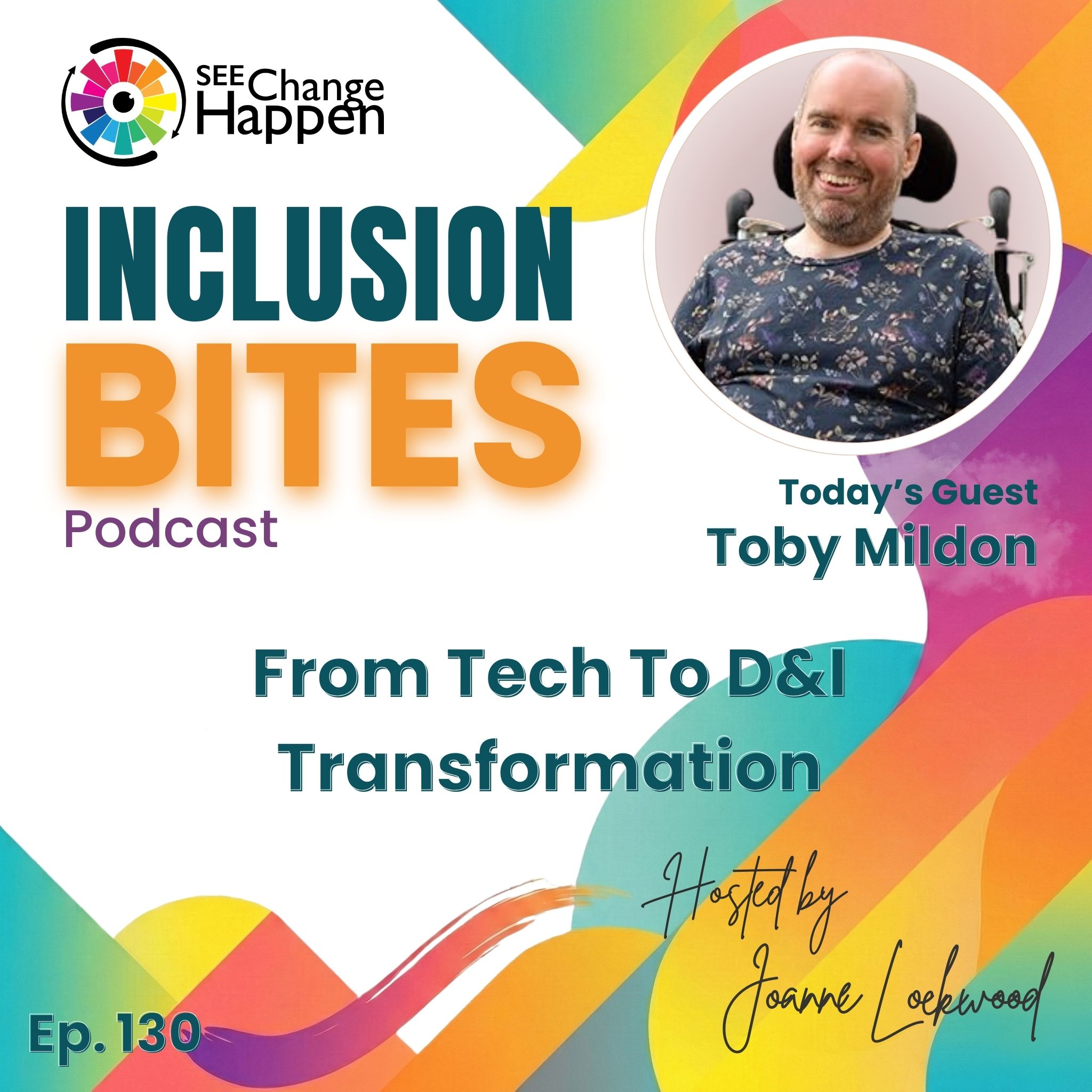
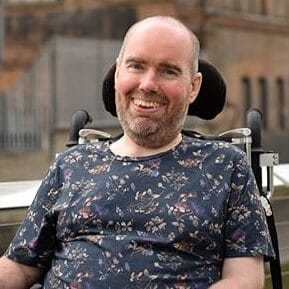
Toby Mildon explores the transformative journey from technology to diversity and inclusion, underscoring the importance of understanding emotional motivations, challenging biases, and fostering a truly inclusive workplace culture through practical an
In this episode of Inclusion Bites, Joanne Lockwood speaks with Toby Mildon about workplace culture systems.
Welcome to Inclusion Bites, yoursanctuary for bold conversations that spark change. I'm JoanneLockwood, your guide on this journey of exploration into theheart of inclusion, belonging, and societaltransformation. Ever wondered what it truly takes to create aworld where everyone not only belongs but thrives?You're not alone. Join me as we uncover theunseen, challenge the status quo, and sharestories that resonate deep within. Ready to divein? Whether you're sipping your morning coffee or winding downafter a long day, let's connect, reflect, andinspire action together. Don't forget,you can be part of the conversation too. Reach out tojo.lockwood@seechangehappen.co.ukto share your insights while you join me on the show. Soadjust your earbuds and settle in. It's time toignite the spark of inclusion with Inclusion Bites.And today is episode 130with the title, from tech to d and Itransformation. And I have the absolute honor and privilege to welcomeToby Mildon. Toby is a workplace inclusion specialist.And when I asked Toby to describe his superpower, he saidthat he takes the scariness out of EDIand makes it practical and easy to implement.Hello, Toby. Welcome to the show. Hi, Joanne. Thanks
Toby Mildonguest
for inviting me along. It's lovely to be with you today. Yeah.
Joanne Lockwoodhost
We met. I think we met many years ago at theNational Cybersecurity Centre near Victoria in London, didn't we? No. I think that'sfirst time we actually met in person. Yeah. It was donkeys years ago,
Toby Mildonguest
and then I think I realized that we we're also both
Toby Mildonguest
fellows of the Royal Society of Arts, so I spottedyou on their website or that, you know, they've got a databasedon't they of of Yeah. Fellows and, yeah, and thenwe I know that we've had several cups of tea at RSA Housein London. We have. Yeah. We have. That was
Joanne Lockwoodhost
PC, wasn't it? Pre COVID, So back in the old days. That that was
Toby Mildonguest
pre COVID when it was perfectly acceptable to meet somebody for a cup ofcoffee. Yeah. It was. Now we Yeah. Now we have to socially distance
Joanne Lockwoodhost
all. We do it online or do it on Zoom. Yeah. So, Toby,tech to DNI transformation. Tell me more about what you doand how you take the scariness out of EDI. Yeah. So
Toby Mildonguest
that scariness out of EDI actually was some feedback that we receivedrecently from 1 of our clients. They said thatwe we take a lot of the the anxiety and the fear outof talking about EDI, which we see a lotwith senior leaders and businesses. They're they're they're worried about sayingthe wrong thing, causing offense, causing embarrassment. They'reconcerned about a cancel culture, particularly if they're a senior leaderwhere they where they have got status in the organization.But in terms of tech to DNI transformation, Ithink it's based on my personal experience, which issimilar to yours, really, and that when I left university, I spentthe first half of my career working in technologyand working on tech transformation projects. So I wasan IT consultant for Accenture. I then moved into health caretechnology, implementing software into hospitals, andended up at the BBC as a technical project manager on theredevelopment of the news website, the development of what is now theBBC Sounds app, and lots of accessibilityprojects. And then I pivoted my career when
Toby Mildonguest
I was at the BBC. I mean, between you and me, I was I wasgetting a bit bored working on websites and apps, and I used towork really closely with the management team of our of our technologyand engineering department. And they were concerned at the time aboutthe gender imbalance that that we had in tech compared to therest of the BBC where there was a a bit more of an even gendersplit. And they created a plan to get more womeninto technology, initially, and they needed a projectmanager to run that plan. And I put my handup and volunteered to do that. It started off as a parttime job, 1 day a week, and then I quicklyrealized it was actually a full time occupation. There were some really valuablelessons. I I quickly learned that diversity waswas much bigger than women in engineering, thatthere are many other aspects to diversity that needed addressingin the corporation. And, yeah, and so that that's howmy transition happened. Yeah. I I
Joanne Lockwoodhost
had a similar epiphany. I think when I started doing this work aroundEDI, I thought it was all about me when I started, all about this1 sort of micro bit, and then you realize it's actually about everybody.And I was the phrase I always say is if everybodycan succeed, everybody is welcome, everyone can thrive, I'mpart of everybody. So that benefits me and people and all people.And we don't need to narrow it down just to 1 specific strandor thread or characteristic, and it's important to create theculture where everyone can succeed, isn't it? Yeah. I think a lot
Toby Mildonguest
of organizations, though, begin with those single strands, unfortunately.It's 1 of the misconceptions that I think you and I need to bust inthe work that we do. There's there seems to be this kind ofsiloed thinking or certainly a hierarchical approach toEDI. So a lot of organizations say, yeah. We've got an EDIstrategy. Our focus right now is on gender oreven they might even say, well, it's women in technology or or womenon boards. You know, they they really narrow it down, and andnext quarter, we'll be focusing on people of an ethnic minoritybackground. And then the year after next, we're going to save the whales, andthen we may eventually get around to disability. We're not sure yet because wewe're not sure that disability is a priority. So we have thosekinds of conversations. And like you say, actually, inclusion isis a lot more holistic because we are all diverse. We'rewe're we're based in the UK. We live in a very diverse country.Diversity exists on our doorstep. It's a consciousact about whether or not we allow that diversity into ourorganizations. And so, therefore, like, the work theconversations that I like to have with my clients is how can we shifttowards making sure that we're creating equity? Because oncewe've created that equity, then we can make sure that we've got a quality ofopportunity. Then we can focus on building that cultureof respect, inclusion, and belonging. Andat that point, we're going to be in a much better position to attract, recruit,and retain diverse talent in the organization, which isthe ultimate goal for many organizations. Yeah. I think part of the problem
Joanne Lockwoodhost
sometimes is we're we're using our own biases and stereotypesand perceptions of people or individuals to make anassumption around their challenge. Yeah. Peoplemaybe look at me and my particular identity and characteristic and make an assumptionas to what what matters to me or what I think is important. I'msure you get faced with people who look at you and say, I think Iknow what Toby's challenges are. But really beneath the surface,our challenges are subtly different than what people expect, aren't they? Definitely.
Toby Mildonguest
I mean, people people look at me with a physical disabilityusing an electric wheelchair, and, yeah, you're right. They make all sorts ofassumptions. 1 1 of my diversity heroes is VernaMyers. She was 1 of the her books was 1 of the first books thatI read when I was entering the EDI space,and she so and if anyone doesn't know Werner, she's an Americanlawyer by background. She was until recently head ofdiversity inclusion at Netflix. She's done a couple of really good TEDTalks. 1 of her TED Talks is called Leaning Into Our Biases, andin that, she says that our biases are the stories that we make up aboutpeople before we get to know them. And I just I I love using thatdefinition with clients because it's just so easy to understand.And what she's getting at is that you're right. It's these thestereotypes, the assumptions, or the presumptions that peoplemake about you on the surface without really getting to knowwho you really are. Yeah. I'd say 1 of the biggest terms I have
Joanne Lockwoodhost
is being left handed. You know, that excludes me for farmore in life than being trans, you know, being left handed. You know? Yeah. Ioften talk about it. You know? You can't see that in me, but yet it'sbeen a barrier all of my life. Yeah. I've had to adapt and overcomeby being kind of ambidextrous. Yeah. I like that left handed
Toby Mildonguest
example because 1 of the metaphor is it ametaphor that I use? It's the diversity iceberg. So you cansee 10% of the iceberg poking above the waterline and the these areall visible characteristics. But 90% of the iceberg ishidden beneath the waterline, and these are our kind of invisible,non apparent characteristics, and often they're not thetraditional types of diversity that we might think about. It's otherlike you say, it's other things like, are you left handed or right handed? Theworld has been made mostly for right handed people, sothere's a bias there in terms of right handedness, but it could all be otherthings. Are you an introvert? Are you an extrovert? Did you grow up in thecountryside or in the middle of the city? These you know, all of thesethings shape our outlook on life, our experiences,and and things like that. Yeah. I think what you've you picked
Joanne Lockwoodhost
up on there is if do you fall into the default, yeah, inpeople's blinkers, in people's mindsets? You know? I'min a arguably, a same sex relationship. It's almost impossible tofind mainstream greetings cards from Sainsbury's or, youknow, Clinton's or something like that. You walk in and say, I wanna find aa card for my wife on Valentine's or for her birthday. And it'sall cishetronormative imagery. I've got afriend who is is black, and he finds it extremely difficult tofind Christmas cards or greetings cards with black representation on it. It'sall white imagery, and you think it's these little things where you're youdon't fit into that default category. And I'm not gonna use the word normal. It'sjust the default in people's heads that you become unconsciouslyexcluded when people aren't thinking about your need. Yeah. And
Toby Mildonguest
that that those are really good examples of howproducts have been designed out of bias. Sothe people that are designing those greeting cards havetheir own innate biases and they're just not thinkingabout the diverse representation of characters ongreetings cards, and we see it everywhere. We see it in TVprograms, film, books.A tiny proportion of children'sbooks include disabled charactersor characters who are are not white, basically.And if you're a kid and you're reading these books, it's sending you amessage that it is kind of creating the uttering message. It'sit's saying you you're different. Andyeah. Yeah. And, was it somebody said to me the other day, there's a famousquote, you can't be what you can't see, and that's whyit's important that we make sure that we've gotdiversity in organizations. Because if you, you know, if you if you'reaspiring to get to the top of your industry or the top of yourcompany, if you don't have those rumble, you youyou can't be what you can't see. Yeah. And that feeds
Joanne Lockwoodhost
into sort of like the, the environmental classof microaggression where you don't see yourself represented in themedia, in imagery, in the world. Therefore,you're constantly oppressed by being anoutsider or other, aren't you? Yeah. And and you start to
Toby Mildonguest
internalize those biases. So when I did my firstunconscious bias training when I was working at the BBC as as a participant,not not as a trainer, I I did the Harvard ImplicitAssociation test, and I found out that I was mildly biasedagainst disabled people, which I wasshocked about initially. And then when I startedlooking into why I had this bias, I couldunderstand my own internalised ableism becauseI've grown up in a world that's been designedlargely by non disabled people. As a disabled peers person, I'vehad to kind of fit into that mold. And growing up, there wasjust a lack of visible disabled role modelsin high up in business, in politics, ineducation, in the film, TV,books that I read. When I worked for the BBC,we we did some research, and we found out thatdisabled people were more likely to be portrayed asvillains, victims, and heroes than non disabled people. SoI grew up thinking that disabled people would eitherbecome a a Paralympic hero, a James Bond villain because most ofthem have a disability or or it's some form of disfigurement ora benefit cheat because those were the messages that the Britishmedia were putting out into society, andand these messages then enter the back of your brain as thissecret silent script, which then influenceshow you interact with people in adult life.In my case, it it means that I've got this mild biasagainst disabled people. It's interesting you mentioned James Bond. I I
Joanne Lockwoodhost
often use the James Bond analogy in in all my train that Ideliver, and it is. You know? We we define James Bond,the character, as good, ideal, protector,white male, straight, womanizer, hero,perfect body figure, and then he's a the baddiealways has some kind of disability or facial disfigurement or aforeign accent or what all these stereotypes kick in. This isgood. This is bad. And it's no wonder. And then we we did the samewith Disney and female and young women portrayal.This is good. This is bad. This is how women behave. This is how menbehave. And we get bombarded with this all the time, don't we? Yeah. We
Toby Mildonguest
do. We do. And and it shapes it shapes ourbiases, and ourbiases are formed through the cultures that we grow upin the grow up in and the experiences that we have,and it affects us on 3 levels. It affects usin how we think and how we feel and how we act,and it's a lot harder for us to change the way that wethink. So our focus really needs to be onhow we act and and to change our behaviors to be more We've
Joanne Lockwoodhost
seen a a lot. I'd say the last 18 months, I'veseen it a lot more. There seems to be this pushback againstwokeism for whatever that may mean. Yeah. It's almostlike people who have been marginalized for generationshave finally started to achieve equity in society, inthe workplace, and their lives. And now people are saying, hangon. We've gone too far. What about me? What about what about me, theable-bodied white person? I'm being left behind. Yeah. And
Toby Mildonguest
we're getting this pushback because it's threateningto them. There's a lot of people who think that if they don'ttick I'll be quite blunt with you, you know, if they if they don't ticka diversity box or boxes, that theywill be at a disadvantage, that somebody will overtake themin their career. That's not what we're trying toaccomplish as as, you know, as per asthe professionals that you and I are. I think we're we're on amission to create more equity in society. And what do wemean by equity? It's about seeing the individual,understanding what disadvantages they do have, andtrying to close the gap so that we do create that equality. Because wewe don't we don't have equality out of the box, unfortunately.You know, we live in a society where there isn't equality, so weneed to focus on closing the gap. And that that means starting with equityand giving people the resources and the support that they needto actually help them compete on a level playing field because wewe're not competing on a level playing field at the moment. Oh, this is also
Joanne Lockwoodhost
this myth of meritocracy, isn't it? And I again, to to quotesome government rhetoric, and I've heard it fromthe the new government before they got in and the old government in the UK.Because we're this episode recorded just just post the general election.Where's this is this belief or that this mantra around theywanna promote and support hardworking family? What is ahardworking family? I mean, we we that that's laser withbias and meritocracy and stereotyping andtrying to create pictures in people head of what a not hardworkingfamily is, a family that wants to work, but calm, or whatever it maybe. Yeah. So it's meritocracy, belief, and myth is isrampant in all areas of society. It is. It is. And
Toby Mildonguest
there's a lot of organizations that say, well, we have a cultureof meritocracy. That kind kind of commentusually comes from the in group or the majority groupwho do believe that there is meritocracy because their experienceis that there's fairness, that there's equality, that the bestperson gets the job. But what they don't understand or they II just don't think it's in that kind of sphere of awareness yet.This, you know, this is a lot about the work that you and I dois that there are people in an organization that don't share that sameexperience, that don't have the same type ofprivileges that the in group hashad, whether that's access to education, speakingEnglish as a first language. There's a whole number of privileges thatwe hold that that, yeah, that create that. And I think talking aboutprivilege, a lot of people get quite defensive about it as atopic because a lot of people think, well, you know, I had towork really hard to get to where I am now to myposition in the company. And thing is nobody's disputingthat. You you you did work hard to get to your currentposition. The thing is there's about it's about having an understandingthat not everyone was gifted with certain thingsin life that helped accelerate that journey.So I'll just give you a personal example. Like, I've got somebodyon my team who's got the same disability as me.Thing is I grew up in the UK. He grew up in South Africa.And my privileges are that I grew up in the UK whereEnglish is my first language, where I have access to free healthcare, access to free education. The NHS has saved mylife for more than 1 occasion, and the health care that I've received fromthe NHS has enabled me to go off to university and getgood jobs and things like that. Whereas my colleague growing up in South Africadidn't have the same access to education as I had. He didn'thave the same level of qualifications, which held him back. It meant that hewasn't able to access employment, didn't have access to the sametype of health care as well because they have an insurance system over inSouth Africa. It's very expensive to have the spinal surgerythat that we've both had. Sojust the very fact that I was born in the UK, which I had nochoice over, that was outside of my control, has actuallyafforded me many advantages that have effectivelygiven me a leg up in life. And that's what we whenwe talk about privileges privilege, that's what we're really talking about here.It's about the the gifts that you've been giventhat help you that help give you a leg up. Yeah. I I
Joanne Lockwoodhost
often talk about privilege being a bit like a pension fund.The earlier you've paid into it, the more it's worth as you gothrough life. And your friend, his pension pot didn'tstart accruing value until maybe his thirties,twenties thirties. Your privilege meant that you weredepositing into your pension fund from from year 1.So therefore, no matter how much this person now hassome of the privileges of society, you will never catchup or they'll never catch up to you because you paid in 30 years earlier,and you'll you've accrued more privilege as a result of that.
Toby Mildonguest
And I think that's what we've got to remember is that, also, privilege is not
Joanne Lockwoodhost
around that you can't succeed. It's justharder to succeed because of and part of your identityor upbringing or characteristic. Yeah. I I'm yeah. I really like the
Toby Mildonguest
way that you put it. If it's okay with you, I'll I'll pinch that anduse that with some of the conversations that I have with with companies. Feel
Joanne Lockwoodhost
free. No. I I mean, quote me all you like. I'm happy to be quoted.So yeah. But, yeah, it it is. It's it's that's the challenge. I you know,III saw something once at someone else's quirk. I remember who itis now. That when you're used to privilege,equality feels like oppression. And I think that backs up what you were saying wherepeople are so used to breathing in the air around them. They don't seehow smoggy it is a mile away or whenthey're looking down. And I saw another great analogy where it's ait's a it's a if it's a it's a it's a terrain map.People with privilege are on top of the mountain looking down.Everything looks a very short, small distance. When you're at the bottom of the mountainlooking up, everything is enormous. The valleys,the the navigation between 2 points is is extreme, whereas you whenyou're at the top, it looks like 1 step across. So, again, it's yourperspective on your environment also. Isis it impacted by by your privilege and and your youryour your status in society? Yeah. Yeah. I agree. I agree. But you mentioned rightat the beginning around this fear of getting it wrong,this saying doing the wrong thing, and it creates this paralysis.And, you know, I when I do surveys in my training and myspeaking sessions, 1 of the biggest barriers is the fear of getting itwrong, and you you highlighted there as something you've observed. What what do you thinkcauses the fear, and what do you think we can do to Yeah.Take the scariness out of EDI, if you like? So a lot of the fear
Toby Mildonguest
of getting it wrong is damage to, I think, your reputation,particularly with senior leaders. I've talked to a lot of senior leaders, I think,where they're suffering from imposter syndrome.III was working with a Fintech organization, andwe do a lot of EDI surveys, you know, where we go in and wewe ask employees how they feel in the business, whether they feel likethey're included or and whether they feel like they're included or that they belong ornot. Anyway, to cut a long story short, themajority of people in the organization, regardless of identity,said that they felt that they did belong in the in the organizationwith the exception of LGBT colleagues.And so we we took that that information back to 1 of thecompany directors, and he said to me, that'sreally interesting, but but who am I as a straight bloketo be talking about LGBT matters in the in theorganization? So he didn't understand his role in itand then after a conversation, he did understand the importanceof supporting and being an ally for LGBT stuffeven though he didn't identify as being LGBT himself. He, you know, he Ithink there was a lot of fear about not understandingLGBT matters using the rightlanguage or the wrong language, that kind of thing. But after a conversationwith us, he did understand the importance because as as a companydirector, he he's response helping to create the right culture in thebusiness and and and making LGBT staff feel likethey they belong. I think also in it's it's recognising how you can
Joanne Lockwoodhost
use your privilege, isn't it? And I think that's what people are scared of. Theexample I always use is the men allowed women to vote,And that sounds quite provocative and offensive if I say that.But that that was a reality in 1918. Men held all the seatsin parliament. Yeah. Men were the only people that could vote,and it took an act of parliament by men, okay, withpressure from suffragettes and women's movements to change thelaw. So privilege has to open the door. So menhave to men have to tackle sexism. Able body people haveto tackle ableism. Straight people have to tacklehomophobia or or or transphobia or biphobia.White people have to solve or tackle racism. So we need the people whohold those privileges to open and to also make the change, don't we? And Ithink Yeah. But often, I've I've seen situations. Iand there's a a person I know who who's a man who talks aboutmenopause. And I've seen people on LinkedIn, on Twitterattack this person saying, well, you're a man. That's that's all women need, a mantalking about menopause. It's like, hang on a minute. We need to create awareness foreverybody here. Yeah. I think what you're talking about there is,
Toby Mildonguest
is quite important. You need you need people withinto enforce change from within,so an inside out approach.That's not gonna happen without outside in pressure.So you were saying about, when women voting, the theoutside pressure was coming from suffragettes and, you know, othermovements. But like you say, that change would not have happened unlessthere were people on the inside who were actingas allies or sponsors, advocates of change.And it does sadden me when you've gotpeople on LinkedIn who are advocates. Soyou've got men, for example, who are raising the conversationabout menopause in the workplace, for example, and they arebeing an ally and they're advocating for for support and change and thingslike that, and then they're being attacked. That that doessadden me. And it's not it it happens in in allstrands. It happens around LGBT rights. Ithappens around championing disability rights and things likethat. That was that I think it was probably 18 months ago or
Joanne Lockwoodhost
so, maybe even longer. There was, that incident with ladiesand Lady Susan Hussey and that the black charitylady, Ngozi Filani. Lady Susan Hussey was a,I think, part of our Queen's household orsomething, and she kept asking this Ngozi, where where was shefrom? Oh, yeah. I remember that. She got berated for it.And I the thing I took away from it wasthat education should have been the outcome,not public vilification. Yeah. Yeah. My my criticism of thePalace, excuse me, or the firmwas they weren't creating the right awareness training. They weren't equippingtheir representative with the tools, if you like, toconverse cultural intelligence, we we would probably call it, wouldn't we,around different people's identities and how to haveconversations that aren't necessarily triggering, but also recognizingdifference between intent and impact and then being accountable for that. That that'swhat didn't really occur at the time. It was kind of a poweringon in the face of this, discomfort.
Toby Mildonguest
Yeah. Yeah. It's interesting because I I do wonder ifwe look at something like the royal family andthe palace or or the firm as as you put it,I do wonder. They they probably don't approach EDI inthe same way that that businesses do.And, yeah, I mean, they they are at the end, you know, they they shouldoperate like a like a business or an organization because theyare representing people. They shouldprobably go through the same type of training and andhave the same kind of EDI strategies as as you wouldexpect 1 of the FTSE 100 companies to have. Yeah. Because that they
Joanne Lockwoodhost
they hold our global reputation in their in thepower of their words. And to be charitable, I I'dlike to think that the the current king and the slimmed downmonarchy or the slimmed down firm, to me,tend to resonate with a more contemporary communicationstyle and openness and inclusion culturethat maybe the generations of the past. We we were probably stuck in the Victorianera or the Edwardian era for too long. Yeah. Yeah.But going back to the sort of fear of getting it wrong, so a lotof it is the nervousness of, you know, as being responsible for bigorganization, knowing full well that someone's gonna lambaste you forthose errors. Yeah. I've mentioned the phrase cultural intelligence justnow, but you you're probably well aware that that startswith the drive. You know? That kind of I need to find outmore. I need to do better. But then how do we get people to toto find that why, to find that drive in the first place? So the the
Toby Mildonguest
why is really important. And to to to borrow the words ofSimon Sinek, who wrote the book, start withwhy. You have to begin with the why. And I thinkif you're a senior leader, you need to identify 2 whys.There's the why for your business, and then there's your why.And your personal why is what's going to to motivateyou. Thinking about the business why, it's very easy for us tokind of go on to Google or chat GBT and type in why is diversityinclusion important to my business or my industry.And you get back the generic responses like, wow.It's good for profitability. It's good for employee engagement. It's good for decisionmaking. It's good for creativity creativity and innovation andall that. And you can go out and you can read the thethe 4 I think it's 3 or 4 McKinsey reports now, which arekind of the were worth reading about the business case behindEDI. But you have to translate that into thewhy for your business. So when I talk to people inhealth care, very often, the why is about delivering betterpatient outcomes, a safer health care service,minimizing errors, and things like that. That that's thewhy for health care, for example. When I worked for
Toby Mildonguest
a when I worked with a Fintech organisation, their why wasto expand their user base, so they primarilyworked with entrepreneurs by providing banking servicesto entrepreneurs, and they they realized that entrepreneurs are a very diversebunch of people, and they wanted to speak to that audience, and they wanted togrow their their user base. So the why,you have to understand what your why is for your businessand then communicate that throughout the business.Equally, you need to understand your personal why. Sometimes thiscomes naturally to leaders that I talk to. So I talk to loads ofleaders who they'll they'll say to me, I'm really interestedin inclusion because my mymy kid has just come out as, you know, as gay,for example, and they and and nowthey're they're thinking about how their kid is gonna fitinto the workplace culture of the future,or they might say, well, my kid's just been diagnosed withwith autism at school, and I'm worried aboutwhether they're going to be able to access employment in the future. So those seniorleaders are driven by or motivated by, say,that kind of thing. But in the absence of that, I think it's reallyimportant that you identify what your personal why is. It couldbe a a values based why. It could be a practicalwhy. So yeah. It's almost I'm gonna use the
Joanne Lockwoodhost
word sad that you have to have an eventthat knocks or dents your privilege for you to realize thatyou had the privilege in the first place, and now you're awareof the needs of others. And Yeah. I say it's sad, but
Joanne Lockwoodhost
I I've I also had that epiphany myselfsome 10 years ago when I embarked on my own gender transition.I suddenly got it. The world changed with that 1 act forme. You you were obviously born into yourworld and have experienced your why,you know, your pension pot of privileges and, all discrimination hasbeen built up for many years. My mine suddenly arrived on my doorstep atthe age of 50. And I looked back and thought, wow. 50 years, I haven'tcared. And then you just gotta put that shame and guilt away and go, thatdoesn't help anybody and go, can I do tomorrow? What can I dotoday? What can I do right now? Yeah. Yeah. It's not until
Toby Mildonguest
something happens that's brings it into our sphere of awareness thatwe that we take action. I think that that's for anythingin life. I think quite often we we sail through life,for example, not thinking about our own health. Sowe we drink things that we shouldn't be drinking.We eat food that we shouldn't really be eating. We put onweight. We live with that because it's not debilitating.It's not healthy, but it's not debilitating. And then you have a heartattack, and you end up in A and E, and the doctor says, oh, youreally should start looking after yourself. You really should starteating healthily, and it takes an event like that to,to knock you, and it it just shifts it from that kind ofother than consciousness into your consciousness. Consciousness is where the actionhappens. Yeah. Is it? Yeah. Complete. And that and that's the fundamental reason
Joanne Lockwoodhost
why McKinsey stats don't work. Accenture,PwC, whatever stats you Deloitte's, whatever reports you're gonna read, they don'twork because we eat too much, we drink too much, we drivetoo fast, we we touch things, we we poke around stuff that weknow we shouldn't, but we do. The facts don't change people. Ithas to be something has to get through our armor,into our psyche, into our consciousness to go,now I get it. And that's the challenge, isn't it? Going from reallyunderstanding, understanding your why, not just knowingis the right thing to do. Well, the why has to be an emotional
Toby Mildonguest
connection, and this is something that Simon Sinek talks about. Andhe he talks about how difficult it isto connect with the why because it is an emotional thing. It's reallydifficult for us to put the why into words. When you lookat his model, it's like a bull's eye chart. You know? So you've gotwhy in the middle, you've got how, and then you've got what onthe edge. And he says, the what is dead easy. And andloads of people, they they know how to do the what. They get excitedby it. They just go ahead and they do loads of the what. They doloads of stuff. And in terms of the world that you and I work in,that looks like raising so running lots ofdiversity and inclusion events and designing yeah, implementing lotsof EDI initiatives and things like that, and they get very excited byby that without understanding, actually, what'sthe strategy behind that, which is the how. Are we doing the rightthings? Are we doing the things that are actually going to make a difference?Are we getting good value for money? Are we gonna get a return on investmentwith our activities? But in the middle, it's thewhy, which is the emotional bit. That's really, really hard for usto articulate because it's a feeling in a lot of
Toby Mildonguest
cases. Yeah. III and I also find it's a good challenge to people to say,
Joanne Lockwoodhost
okay, you want to have gender greater equity, gendergreater parity. Why? Why is that? Peoplelook at you as if say they're looking also looking at me as they say,well, you should know. You're an idiot expert. You should know why. And I said,I I do, but I I don't I need to know why you think it'sa good idea for your business and for you personally. Is it isit just because when you're at the IOD dinner, you cango, yeah, we're positive gender pay gap, or is it because youactually believe it's gonna benefit your organization at all levelsand your customer experience and your shareholder value. And andand not only that that as a reason, butalso understanding how it contributes to delivering thatROI, isn't it? That's that's the important thing. Not just having thisbalance sheet expectation of of success. Yeah.
Toby Mildonguest
Exactly. Okay. I'm going, yeah, going back to this this woke
Joanne Lockwoodhost
anti wokeism pushback and, you know, this mood that we're we're seeing at themoment, we'd part of part of the pushback oftenis is organisations aren't realising this ROI, returnand inclusion, return on investment, however you wanna describe it. Why why isthat? Why aren't people realising the ROI? It's because they don't know
Toby Mildonguest
how to track it. I had a really interesting conversation. 1 of the first II've got my own podcast, and 1 of the first episodes I ever didwas with, Peter Cheese, who's the chief exec ofthe CIPD, Chartered Institute of Personnel and Development.And there was 1 thing that he said in that interview that really stuck withme was that a lot of people working in HR arelacking commercial skills. They don't know how to talk businesslanguage. They don't know how to go to a boardmeeting and speak business. And quite often, there'sAAA disconnect because board members are like,oh, it's just that, you know, there's HR fluffy stuff. Like, let them get onwith the HR fluffy stuff. And then the HR people don't know how tospeak the the corporate commercial language.Part of that is about your business case. And whenlet me give you an example of, like, what I think what is really powerful.I I do a lot of, like, ETI, you know, surveys with companies and thingslike that. My favorite question is and I thinkif I if I could just have 1 question in the survey,like, this would be it. It's, are you thinking of leaving thebusiness in the next 6 months because you don't feel respectedfor who you are or that you belong. And then you answer,yes, yes, but for other reasons, maybe,no, prefer not to say. And then what we do is we correlatethat to salary data, and we run that through our cost ofattrition algorithm, and we can calculate cost ofattrition. And just as an example, we'd we I did this with a
Toby Mildonguest
company, data company. They employed about900 peeps. Small number of people were seriously thinking ofleaving the business. And we ran it through the algorithm, and it wouldpotentially cost this organization 1 and a half £1, 000, 000.So if you take that number to a CFO and you say, look. Wegot 1 and a half £1, 000, 000 on the table. Should I just throwthat out the window, Or shall we invest £30, 000to try and retain these people to give them agreater sense of belonging? Like, is that a good return on investment? I think mostCFOs will go, hell, yeah. You know? Let's put 30 grand intothis and potentially save, you know, save ourselves 1 and a half £1, 000,000. And that's the kind of data, that's the kindof commercial conversations that we that we should be having.
Joanne Lockwoodhost
Yeah. I I did a lot of work in the recruitmentsector, and I I'm always saying to the people I'mcommunicating with, you don't start your recruitment projectby all all the stuff where you are now. You don't the first thing youdon't do is write job description. What you do is you you you recruit withretention in mind. So your first objective has to be retention. So whathelps you retain good people? Belongingness, culture,values, removing toxicity, psychological safety.So unless you get that bit right first, why do you wanna putmore fish into a dirty tank? They'll just get fed rot and die. Soit's really trying to drill home to people. Retention hasto be your your top priority. Because if you get your attention right, lesspeople will leave. They'll be more willing to recommend you. People will seeyou as a fantastic company. They'll wanna join you. They'll wanna stay. They'll wanna bepromoted. It becomes self fulfilling prophecy. But if you start notcaring about why people are leaving, they would just keep leaving. You just bring themin through this revolving door, and it will just cost you Definitely.Increase tenure by by by 10%, as you say, saves savemillions. Yeah. And and leaders can think
Toby Mildonguest
about what we would call the employee value proposition or the employerbrand, and there's 3 if you imagine a pyramid, there's kind of 3 levels tothe EVP. So at the bottom, you've got your your basics. You've got yourhygiene factors, so things like, you know, pay, number ofhours, that kind of thing. The middle layer is benefits,so access to health care, access to gym membership,company car, you need to make sure that those benefits are inclusive, for example.So my personal example is that I've worked for many companies with free healthsorry. You know, with private health care. I'm immediately excludedbecause they won't touch anybody who's got preexisting healthcondition. So I'm like, well, that's that's no that healthcare benefit's no good to me. They they didn't think about havinga health care policy, and they are available, by the way. Thatcovers preexisting health conditions where I couldhave benefited from private health care. And then at the top of thepyramid, you've got all of the aspirational stuff, and this is things like,you know, connecting people with your values, connecting people with your yourpurpose and your mission and things like that. It's it's kind of Hertzberg 2 factor
Joanne Lockwoodhost
theory 101 mixed with a bit of Maslow, wasn't it, really? That's what we're talkingabout. As is always the case, it's always a mishmash of
Toby Mildonguest
existing models. We're just Yeah. You know, re re you know,repurposing them. Yeah. With an EDI lens, I think we often use
Joanne Lockwoodhost
things like Hertzberg and Maslow and and these other kind of models.But as soon as you start shining an EDI lens on them about well-being, actuallysay this is the hygiene. Mhmm. This is the motivation.And if if hygiene's 0, motivation you can motivate all you like, but hygiene's0. The performance are gonna wane, and and the environment's gonnasuck. I'm sorry. Yeah. Yeah. Beanbags and pizzas on Fridayisn't gonna solve isn't gonna solve toxic workplace where people feel bullied ordiscriminated. That's funny. I worked for an organization and I I used to work with
Toby Mildonguest
the well-being, the person responsible for well-being. And,companies are like you know, companies are saying, oh, we're really worried about people's mentalhealth and well-being. So we're gonna provide access toan employee assistance program. We're gonna provide free counseling therapy.We're gonna have these, like, lovely breakout rooms where you can relaxin a pod or something like that. You know? And then he was saying, but,actually, if you're if you've got a bad relationship with your manager,if you've got too much work to do and that is stressing you out, thatthat that's the thing that needs addressing. Like, the beanbags and thethe the free coffee in the office and the free basket of fruit and allthat kind of stuff just won't cut it. It's the you need togo back to the the root cause. Yeah. And I don't wanna get
Joanne Lockwoodhost
political, but if you I look back at how I was viewingthe country 6 to 8 weeks ago or the last 2years, I found this being this dark cloud of oftoxicity, not just because I'm a trans woman, but there was just ageneral feeling of not wanting tosupport the wider community. There was almost this dark cloud of of of anyonewho's marginalized or a minority needing equity was beingpushed out. EDI initiatives were being thrownout the door. The this anti won't this came in, reinforced by the mainstreammedia. And I I can say to people, I'm I don't care about the economy.I don't care about mortgage rates. I don't care about interest rates. I don't careabout Ukraine. I don't care about Rwanda. What I care aboutis waking up not feelingunsafe as a human being in my society.And I woke up on Friday morning thinking, regardlesswho's who's in government, I that's why I want to change. I wanna wake upnot feeling that I and my friends and people I knoware feeling worried about their existence and right to exist, and Ithink that's that goes down to the corporate level as well. You know, if you'vegot that feeling, you're not gonna respond. You're not gonna perform.
Toby Mildonguest
Yeah. What you're saying really that it reminds me of something because I interviewedsomebody on my my podcast called Cynthia who's a trans woman,and she was saying that 1 of the we were talking aboutprivileges earlier, weren't we? 1 of the things that she realizedwhen she she kind of talks about the first time that she steps outsideher front door and walks down her street, shefelt unsafe as a trans woman.And she took for granted, maybe I don't know if that's the rightword or not, but I think she until that moment,she didn't she wasn't aware of offeeling unsafe. And and like you're saying, like, you want youthe there's been there's there's been a lot of negative politicalrhetoric over the last conservative governmentand certainly in the the general election campaign. I think a lot ofpoliticians have tried to create divisions ratherthan unity. And, yeah, I mean, just wanting to wakeup in the morning and feel safe, I think, is a abasic a basic need that,yeah, that's really important. I mean, you know, when I when I wasthinking about who to vote for in the general election, actually, I was mythe my decision was purely based on which politicalparty I thought would do a better job for disabled people. Iwasn't even thinking about the economy or anything like that even thoughI should. As as an entrepreneur, I should be thinking about the, you know,the the economy policy economic policies, but I thought, yeah,the conservative government have done such a shitty job fordisabled people over the last 10 years. Disabledpeople are there's increase in disabled hatecrime. There's, you know, disabled people that are out out ofwork. There's so much inequality for disabled people inBritish society. I'd say, you know, the number 1 thing for mewas about supporting disabled people, helping them live their bestlives. Yeah. Just trying to get us up all Mhmm. Several layers on Maslow's
Joanne Lockwoodhost
hierarchy. Get us off the bottom and the second rung out, but into thestart creating a belongingness and a and a spirit within us.
Toby Mildonguest
And Yeah. And that's what leaders in business
Joanne Lockwoodhost
have to recognise. That is that it's just that icky, cloudy,dark feeling that people have. And I don't know if you'veseen the film inside out or inside out 2. Yeah. Yeah. That's what I'm
Toby Mildonguest
saying. I'm a great fan of that analogy because I always used to have this
Joanne Lockwoodhost
little angry red man in my head driving everything, and then suddenly I foundjoy, and joy took over. And I think what'shappened for me on Friday 5th July wasjoy started flying the plane flying the plane again. And I'm I'mhoping that is long lived, not short lived, and it's notjust a honeymoon thing, but I'd like to see that we have this differentattitude in society about inclusion, safety, supportingpeople. Yeah. Because Yeah. To be honest, the economy is the economy.It's not like you can do in a in a world economy these days. Youcan't do too much. You can tweak it a bit bit like the latestcompetitor did. You can tweak it a bitand and crash it and and send the market scurrying, butbroadly with the Bank of England and other people with the fiscal controls outthere. You can only tweak the edges, really. It's about it'sabout it's about the culture you're trying to breathe in the country that's that's gonnalift people, create productivity, and up our GDP, andall those things. It's the culture. Yeah. It's boosting
Toby Mildonguest
innovation, creativity, and we we get betterinnovation, better creativity with diversepeople working on the problem. You know, 1 of myclients, they're a they're a consultancy in the energymarket, and they're they're very much moving into the renewable energyspace because that, obviously, that's a the future inachieving net 0 and things like that. And diversity and inclusion is really important forthem because they've realized they cannot solve a big problem likeclimate change and achieving net 0 if you've got the same bunchof people working on the problem falling into groupthink. You need tohave those diverse experiences, perspectives, etcetera,etcetera. And it will just you know, if every company tookthat approach, then it will help I think it really helpboost our economics. Yeah. Because
Joanne Lockwoodhost
belonging is all is all around alignment of vision and values, isn'tit? And if we look at the important thingsfor many people today, it's it's feeling safe, feeling included, it'spsychological safety, but it's also alignment withthe planet. If you look at Gen z, I'm sure Gen Alpha aregonna be like this on steroids, and even some younger millennials have reallyfocused on environmental sustainability recycling. So thewhole language about getting people back into work, making people work twiceas hard again and not coming down and commuting long distancesis against where society was moving in the last 3 or 4 years. I thinkwe need to go back to this recognizing we gotta look after ourselves and theplanet. Yeah. That's very heartening. Also, there's almost, like,
Toby Mildonguest
very industrial revolution language. It's like, let's get everyone into factories,churning out widgets, working really hard 9 to 5.We live in a different world now where where where theworld of work has changed. We're we're a lot more creative. We're a lotmore innovative. People are not expecting the same job for lifelike they used to. They want portfolio careers. They want a lot more
Toby Mildonguest
autonomy over the way they work, whether that's working in, like, the gigeconomy or working as a self employedfreelancer or something like that or and there'sdefinitely a trend, and we see this with younger people, of wanting towork for businesses where you've got values alignment.There's some really interesting research that is suggesting Gen zed,for example, are choosing to work for companies with wheretheir values are aligned, and they're actively avoiding those companiesthat don't have a values alignment. So those companies that arenot speaking to the younger generation values, a lot ofit around a fair society, a lot of it aroundgreen greenness and saving the planet, they're missingout on that on that talent. Yeah. I I have the
Joanne Lockwoodhost
privilege of working with people who wanna work with mebecause I'm a I'm a polarizing person being transgender.It means that I turn people off, and they don't they don't knock on mydoor. So, generally, people who do knock on my door know who I am andwanna work with me. So I find it really good. So my values tend toalign because I self declare, if you like. So Iguess Gen z is the same. You put it out there and say, I don'tI don't need to be something to everybody. I need to be Marmite. I needto I need some people to hate me and some people to like me. Let'swork on the people who like me and love me and celebrate me for whoI am. That's that's where we wanna be, isn't it? Yeah. Absolutely. Toby, it's beenabsolutely fascinating. I can't believe the hour's up already, and, we had a good chatin the green room beforehand. How do people get a hold of you? The the
Toby Mildonguest
best way is to find me on LinkedIn. I create lots ofcontent every week. Just connect with me on LinkedIn, drop me amessage, we can chat over there. And you've got a book and you've got
Joanne Lockwoodhost
podcasts and other stuff as well, haven't you? Yes. I've actually got 2
Toby Mildonguest
books now. So my first book is called InclusiveGrowth, and my second book, which came out very recently, iscalled Building Inclusivity. They're both available onAmazon. I've got a podcast called the Inclusive Growth Show, whichyou can find on Apple Podcasts and all of the otherlovely platforms that are out there. And I interviewlots of interesting, fascinating EDI experts,including yourself, Joanne. So so yeah. Yeah. Gogo and find Joanne's upside with me. Fantastic. Thank you so much. And,
Joanne Lockwoodhost
I'll put all links to all of the stuff I can find on in theshow notes. And, it's been an absolute pleasure spending this hour with youhaving a good chat. Cool. Thanks, Joanne. Thanks for inviting me.As we bring this conversation to a close, I want toexpress my deepest gratitude to you, our listener, forlending your ear and heartto the cause of inclusion. Today's discussion struck a chord. Consider subscribingto Inclusion Bites and become part of our ever growingcommunity, driving real change. Share this journey withfriends, family, and colleagues. Let's amplify the voicesthat matter. Got thoughts, stories, or avision to share? I'm all ears. Reach out tojo.lockwood@seechangehappen.co.uk,and let's make your voice heard. Until next time. This
Joanne Lockwoodhost
is Joanne Lockwood signing off with a promise to returnwith more enriching narratives that challenge, inspire,and unite us all. Here's to fostering a more inclusive world1 episode at a time. Catch you on the next bite.
The Emotional "Why" in Diversity and InclusionThe Role of Privilege in Driving ChangeCreating a Culture of Inclusion and Safety
Joanne Lockwood is joined by workplace inclusion specialist Toby Mildon to explore his path from technology transformation into equality, diversity and inclusion work, and what it takes to make EDI feel practical rather than intimidating.
They unpack why so many leaders feel anxious about “getting it wrong”, how that fear can create inaction, and what helps: clearer organisational purpose, emotional connection to the “why”, and a focus on behaviour change over simply knowing the right facts. Along the way they challenge siloed approaches to diversity, discuss bias and representation, and reflect on how privilege and the myth of meritocracy show up in workplaces and wider society.
The conversation moves into what effective, measurable inclusion looks like in practice. Toby shares how organisations can connect inclusion to commercial outcomes such as retention and attrition costs, and why culture, psychological safety and a credible employee value proposition matter more than surface-level perks. They close by looking at shifting expectations of work and values alignment, and what inclusive culture needs to deliver for people to feel safe, respected and able to belong.
“They said that we take a lot of the anxiety and the fear out of talking about EDI, which we see a lot with senior leaders and businesses. They're worried about saying the wrong thing, causing offence, causing embarrassment.”
“I quickly learned that diversity was much bigger than women in engineering, that there are many other aspects to diversity that needed addressing in the corporation.”
“You can see 10% of the iceberg poking above the waterline and these are all visible characteristics. But 90% of the iceberg is hidden beneath the waterline, and these are our kind of invisible, non apparent characteristics, and often they're not the traditional types of diversity that we might think about.”
“When I worked for the BBC, we we did some research, and we found out that disabled people were more likely to be portrayed as villains, victims, and heroes than non disabled people.”
“A lot of organizations say, well, we have a culture of meritocracy. That kind kind of comment usually comes from the in group or the majority group who do believe that there is meritocracy because their experience is that there's fairness, that there's equality, that the best person gets the job.”
“The NHS has saved my life for more than 1 occasion, and the health care that I've received from the NHS has enabled me to go off to university and get good jobs and things like that.”
The necessity of a significant event to raise awareness for diversity and health issues and inspire meaningful action.
The struggle of connecting with and effectively communicating the emotional "why" behind diversity and inclusion initiatives.
The challenge of tracking return on investment (ROI) in diversity and inclusion efforts and the importance of speaking the language of business.
The significance of retention and creating a positive work culture, beyond superficial perks.
The importance of addressing root causes such as relationships with managers and workload for fostering inclusivity.
The impact of political rhetoric on marginalised individuals and the need for a safe and supportive corporate environment.
The role of privilege in addressing systemic inequalities and the necessity for allies to drive change from within.
One thing to remember
The pivotal learning from this episode is the profound importance of understanding the emotional "why" behind diversity and inclusion (D&I) initiatives. Both Toby Mildon and Joanne Lockwood emphasise that to truly inspire action and bring about meaningful change within organisations, it is crucial to connect with the deeper emotional reasons that drive D&I efforts. This understanding helps to overcome superficial approaches and fosters a genuine culture of inclusivity, safety, and belonging.
Questions this episode helps answer
In the context of the episode, how can significant events catalyse greater awareness and action on health and diversity issues?
Why is understanding the emotional "why" behind diversity and inclusion actions critical, and what strategies might organisations use to connect with this effectively?
What challenges do organisations face when attempting to track ROI in diversity and inclusion initiatives, and how might these be overcome?
How can HR professionals improve their commercial skills and language to better communicate the business case for diversity and inclusion?
Toby talks about the employee value proposition (EVP) and employer brand built on basics, benefits, and aspirational values. Can you describe these components and why they are important?
How do Hertzberg's 2 Factor Theory and Maslow’s hierarchy apply to the discussion on workplace culture and inclusion?
Explore topics
Ideas from this episode
The Emotional "Why" in Diversity and Inclusion
Understanding the profound impact of recognising and articulating the emotional "why" behind diversity and inclusion initiatives. We discussed how uncovering this emotional reasoning can drive genuine and lasting change within organisations.
The Role of Privilege in Driving Change
The complex topic of privilege and its influence on equality, diversity, and inclusion. Toby and I weighed the importance of recognising privilege and leveraging it to advocate for systemic change within organisations.
Creating a Culture of Inclusion and Safety
Our dialogue extended to the importance of fostering a culture of inclusion and safety within the corporate environment. We discussed how a supportive work culture not only boosts morale but also drives productivity and innovation.
Learn
Frequently asked questions
What is the significance of understanding the emotional "why" in diversity and inclusion (D&I)?
Understanding the emotional "why" behind actions in diversity and inclusion is crucial because it connects individuals to the underlying motivations and values driving their commitment. This alignment ensures that efforts are genuine and impactful, rather than superficial or tokenistic.
How does the return on investment (ROI) apply to diversity and inclusion efforts?
Assessing ROI in D&I involves evaluating the financial and cultural benefits that come from implementing inclusive practices. This includes reducing employee attrition, enhancing workplace morale, and fostering innovation. Commercial skills are essential in HR to articulate the business case for D&I and to demonstrate the tangible benefits of investing in an inclusive environment.
What are the three levels on which the employee value proposition (EVP) and employer brand are built?
The EVP and employer brand are built on three levels:
How do Hertzberg's 2 Factor Theory and Maslow's hierarchy relate to workplace culture?
Hertzberg's 2 Factor Theory and Maslow's hierarchy highlight the importance of distinguishing between basic needs (hygiene factors) and motivating factors. Addressing basic needs such as job security and fair treatment prevents dissatisfaction, while focusing on motivation factors such as recognition and career growth promotes job satisfaction and engagement.
How does negative political rhetoric impact diversity and inclusion in the workplace?
Negative political rhetoric can create an atmosphere of exclusion and fear, impacting marginalised individuals and eroding the sense of safety and belonging in the workplace. It's crucial for organisations to promote inclusivity and support to counteract such external influences.
What is the myth of meritocracy, and how does it affect diversity efforts?
The myth of meritocracy is the belief that success is solely based on individual effort and merit, disregarding systemic barriers and privileges that affect people's opportunities. In reality, not everyone in an organisation has the same access to resources and opportunities, which can perpetuate inequality.
Share this episode
Heard something worth passing on? Send this conversation to someone who needs to hear it.