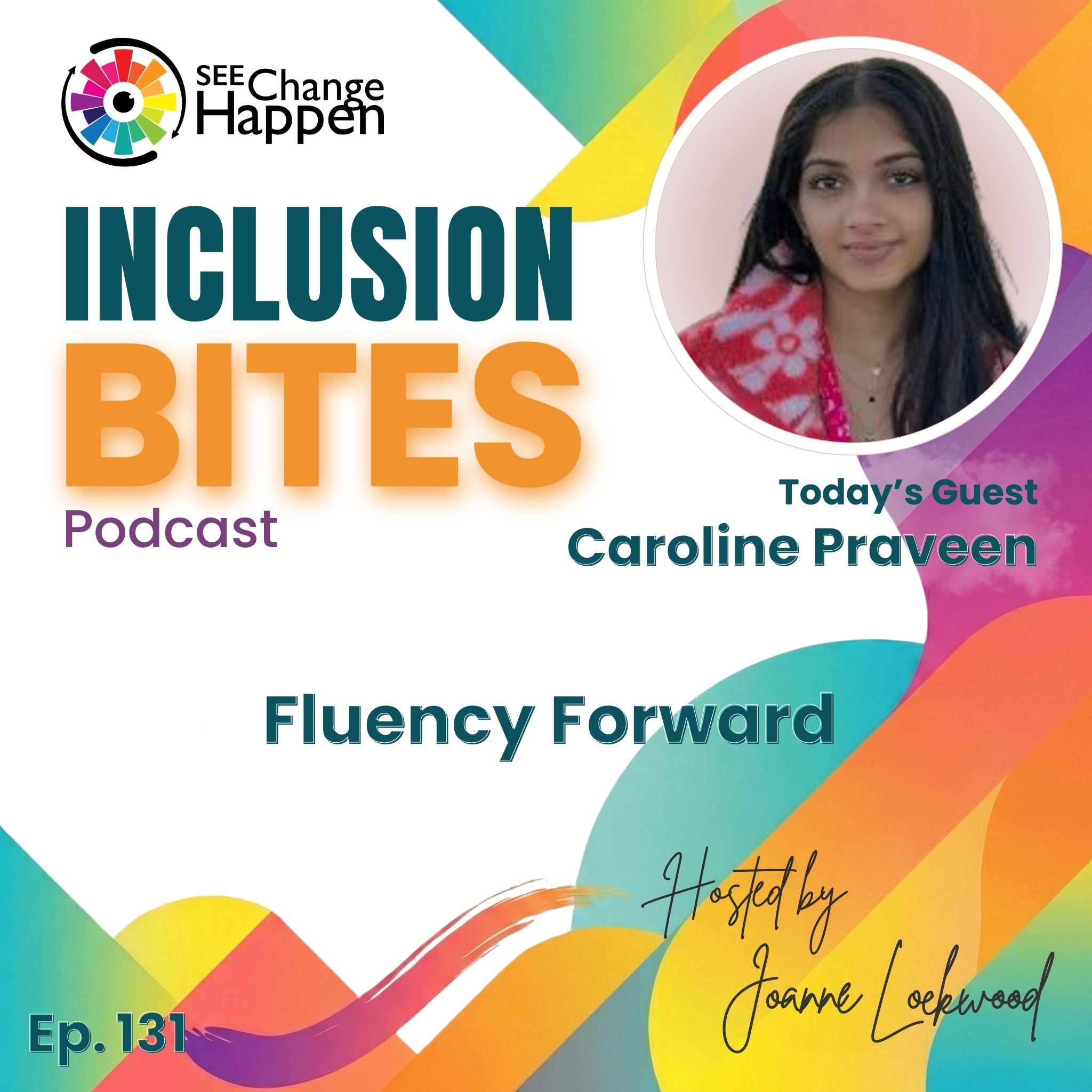
Caroline Praveen explores the profound impact of learning English on immigrant identity, the fight against societal biases, and the transformative power of cultural integration and empathy in supporting displaced families in Pittsburgh.
In this episode of Inclusion Bites, Joanne Lockwood speaks with Caroline Praveen about lived experience identity.
“I really just struggled to kind of like myself and be happy with myself.”
Explore
Navigate this episode
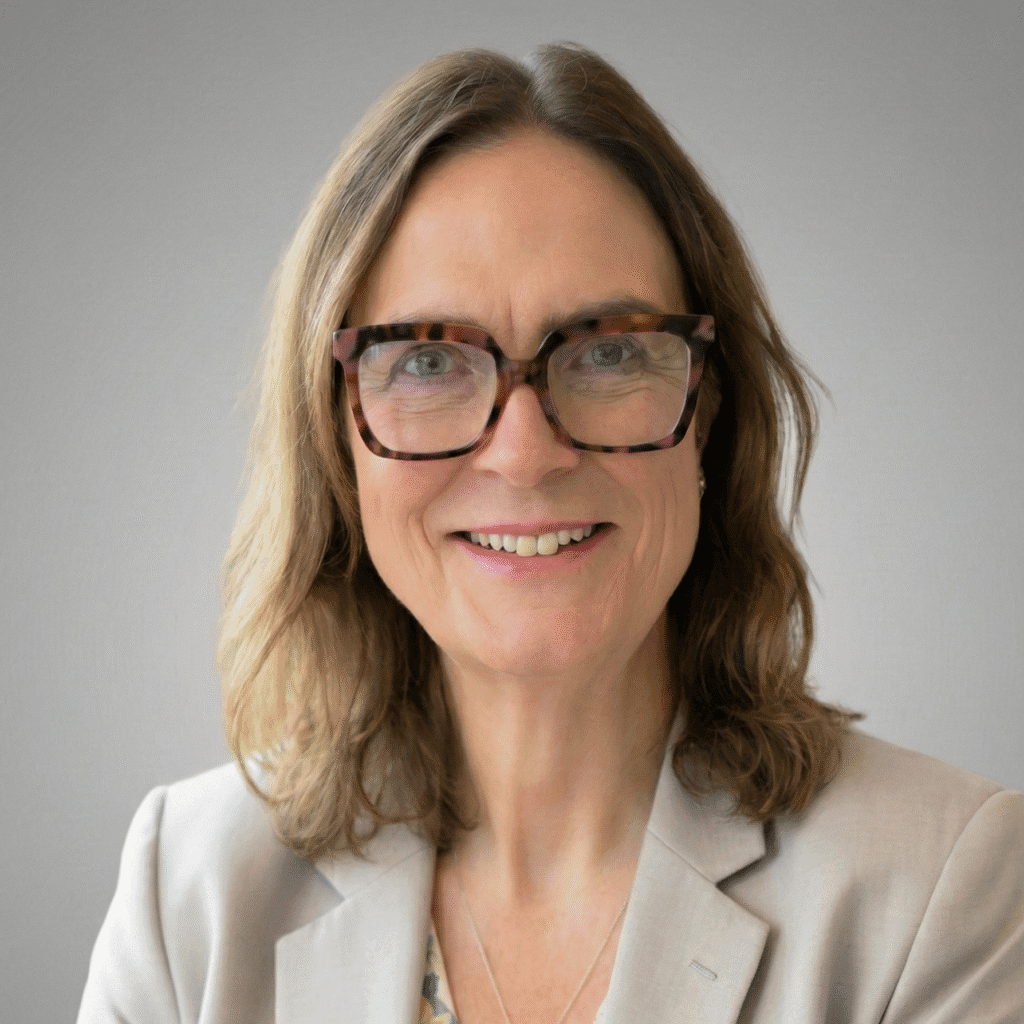
Joanne Lockwoodhost
Welcome to Inclusion Bites, yoursanctuary for bold conversations that spark change. I'mJoanne Lockwood, your guide on this journey of exploration intothe heart of inclusion, belonging, and societaltransformation. Ever wondered what it truly takes to create aworld where everyone not only belongs butthrives? You're not alone. Join me as weuncover the unseen, challenge the status quo,and share stories that resonate deep within.Ready to dive in. Whether you're sipping your morning coffeeor winding down after a long day, let's connect,reflect, and inspire action together. Don'tforget, you can be part of the conversation too. Reach outto jo.lockwood@seechangehappen.co.ukto share your insights or to join me on the show.So adjust your earbuds and settle in. It's time toignite the spark of inclusion with Inclusion Bites.And today is episode 131 with thetitle Fluency Forward, and I have theabsolute honor and privilege to welcome Caroline Praveen.Caroline is the founderFluency Forward Foundation, lots of f's in that, that promotes educationin underprivileged areas of the world. And when I askedCaroline to describe her superbowl, she said it is her relentlessadvocacy in her dedication to improving livesand her unwavering commitment to positive change.Hello, Caroline. Welcome to the show. Thank you, Jo. It's glad to be
Caroline Praveenguest
here. Excellent. And you've got a lot of f's in Fluency
Joanne Lockwoodhost
Forward Foundation, don't you? I do. It's not so fluent.Excellent. So, Caroline, tell me more about fluencyforward and what that means to you. Yeah. So that's an
Caroline Praveenguest
organization that I started about a year ago just basedoff of my own experiences and kind of mydesire to make a change for the people that I know areexperiencing the same thing that I've gone through.And right now, my efforts are kind of twofold. For 1, itfocuses on working with localimmigrant and refugee refugee children in Pittsburgh.These children are from, like, Afghanistan, Syria,the the Congo, Venezuela. There's so many countries,and they've all come here just looking for a better life,but are currently confined to a more disadvantagedcommunity. And right now, I'm kind of just helping themwith their English language skills and also helpingthem to appreciate their culture while alsolearning about those of their neighbors. And the other thing that I'mdoing is I am raising money to promote education. Soone of the more notable things I've done recently is I'vehosted this fundraiser where I kind ofpromoted it as a cultural kind of event, and Ihad more than 200 attendees. We raised about $4,000.We had 3 sponsoring organizations. We showed up in the news. It was areally great time, and we donated all the profits toanother NGO that donates the money tochildren in rural India. That's fascinating. You said
Joanne Lockwoodhost
at the beginning there that, you wanted to help people to overcomesome of the challenges you'd faced yourself. Do you wanna talk a bit more moreabout to the listeners around the challenges, who you are,your background, and some of the the you know, you obviously had to overcome somechallenges. So what what those in particular? Yeah. Of course.
Caroline Praveenguest
So I am from India. I was born there, andmy parents moved here to the United States withthe kind of goal of creating a better life for myself and mybrothers in terms of education and just opportunities in general.So we came here when I was pretty young, butI didn't have an amazing grasp of English at all.And once I started going into school, I kinda just shutdown. I was pretty much I was a very confident kidin my native language, which is Malayalam, a South Indian language.But once I kind of transitioned to English, I just kind oflost all aspects of my personality and wouldn't askanyone for help, wouldn't reach out to anyone. And that really affected menot just academically, but socially and internally. Soas a kid that can't connect with the classmates sitting right next toher, I really just struggled to kind of likemyself and be happy with myself. And I thinkthe biggest issue there is that there was no kind of,like, miracle for that. There was nothing that saved the day and madeeveryone accept me or made me extremelyfluent very fast. It was kind of just I had to deal with it. Ihad to spend a long time kind of perfecting my English, and fromthere, it just improved. May I ask what age you moved to the US?I came here so, essentially, I started schoolingand started to truly learn English around 5. Around 5.
Joanne Lockwoodhost
Okay. Because your accent sounds typicallyAmerican to me. It it you you obviously acquired English at avery young age. Mhmm. So you're very you're extremely fluent.I guess that comes from living living in the country for a long timenow. So you yeah. You you've grown up with it. What what were the biggestchallenges you found? I mean, you talked about your your lack of selfconfidence because you're obviously nervous about pronunciation. Youhave to double translate in your head. Your whole mind isyep. You can't dedicate your mind to your personality. Youhave to dedicate your mind to the translation. So how how did thatmanifest itself? You know, you said you you were you lost confidence.How did you find a way to regain that over that?
Caroline Praveenguest
Yeah. So I mainly lost confidence ina lot of school and just extracurricular settings. Iwasn't able to connect with anyone around me, and the wayI kind of regained that is really just with time, whichis the really unfortunate thing, and that's kind of the reason that I'mdoing everything that I can today. Because I, myself, I did have toendure it for several years and until I gotthis accent that we're talking about right now. And from there, it was kind ofa switch, really. It just switched, and Ino one was weird to me. No one was kind ofdisaccepting of me, and it would it just became a lot better. You kinda went
Joanne Lockwoodhost
from an outsider with a broken English,non native, if you like, accent, to being an insiderwhere you're fluent and your your Americantwang, if you like, is the same as everybody else's. Exactly. And that's why
Caroline Praveenguest
kind of on this inside now, I'm really hoping to kind of breakthat barrier and bring more of those outsiders in without all of thosestruggles. You you mentioned you're working with people
Joanne Lockwoodhost
from across the globe who are are migrating to the USfrom Afghan to places in Africa. What are the biggestchallenges they face? Are they fleeing are they fleeing war zonesand discrimination if it could be,or are they voluntarily migrating for better lives?
Caroline Praveenguest
So the majority of the children that I work with arefleeing some kind of war. So a lot of them are from Afghanistan,Syria, and Congo, which are kind of war drivencountries right now. So first of all,you have to deal with kind of their traumatic experiences. A lot of themare very young, so it's not debilitating yet. Butyou have to first address that, and then you also have to addresstheir developing English as well as kind of teachingthem to be able to accept other people from other countries. Yeah.
Joanne Lockwoodhost
Because we we assume that all people who migrate or whoare minorities are gonna necessarily be friends with all the other peoplewho migrate. Exactly. But they're they're just a stranger toeach other as anybody else. So they would have their own biases andand hang ups. Do they do they come with their families, oror many of these come alone? They the
Caroline Praveenguest
most of them that I know do get to come with their families, butthey're coming from a very underprivileged background despitehaving maybe some sort of wealth in their native country, they comehere with little to no success, and they're livingin more of these desolate places around Pennsylvania.
Joanne Lockwoodhost
And I I would assume, therefore, that the family itselfare probably not great English speakers. The parents may not have ahigh high competency in English. So this the people you're working witheffectively become the family translators, I guess, and the the family breadwinners insome cases. Yeah. Actually, I remember one of the girls
Caroline Praveenguest
that we kind of talked to every once in a while. Shewas telling us about how she can't come to our sessiontoday because she needs to go to her little sister's doctorappointment. So I was asking her why she would need to go to hersister's doctor appointment and because I wanted her to stay, of course. Butshe kind of explained that if she wasn't there, even thoughher English is broken, it is the least broken in her family.And in order for them to have any kind of successful appointmentor schedule anything, she needed to be there. Yeah. So that's that's another
Joanne Lockwoodhost
burden on a young person when they're trying todevelop themselves through their childhood, enjoy, have fun, growand learn. They have this pressure and burden of supporting thefamily from a translation point of view. And andif you're in a big family, that could be a lot of people you're responsiblefor. Yeah. Exactly. So yeah. Yeah. I suppose the otherside to culture is the modern world is not justspoken language. There's also we're we're very muchemail, text, WhatsApp, Snapchat, social media,online, IT. You you've gotta be quite tech savvy. Iassume that many of the people that come these days maybe don'thave advanced technology in the same way that, you know, you haveevery day in your life now. So you've gotta overcome the thespoken language, but also understand thethe nuances of of online communication as well, Emily.
Caroline Praveenguest
Yeah. I think digital literacy is a really big problem that they have toface on top of everything that they're already enduringas, like, as we as a really,like, nation and country and around the world. Aswe all kind of become more into digital literacyand especially, I think, with the influx of COVID,I think we've all really kind of turned to our devices andreally focused on Internet communication. But if you'retalking to these refugees who have just left atraumatic environment and are trying to even stay on their feet,digital literacy is not their biggest concern, whichmakes sense, of course, but it's definitely a disadvantage tothem because there are so many opportunities online that they'll just neverknow about. Yeah. Yes. Interesting. I I suppose
Joanne Lockwoodhost
also combined with that, you've got, I'm gonna say I use the word poverty. Idon't mean to say people have no money. I'm just trying to say that theymay not have money to invest Mhmm. In Internet connectivityand tech. And it's it's they become in a modern world, it can become veryisolated if you're not in an online you know, you youcan't order food. You can't go to the cinema. All these things are booking online.You need money. Most of it is online cash now or electroniccash. So there's a whole load of literacy you need todevelop beyond just the spoken language. And tech can help you,kinda. You've got, yeah, with AI. We talked about Chat GPT before wewent live. You can take photographs now and translatemenus on you know, Google Translate will take a photograph and live translate. You canlive transcribe television or or someonespeaking to you. So there's a lot more technology now to help people overcome theshort term barrier, but they they probably don't really help ifyou're trying to learn the language because they almost give you a shortcut ratherforce you to have to learn the language. Yeah. Absolutely. I
Caroline Praveenguest
think in a way, it can be good that we have thesepeople kind of, like, originally or, like,inherently learning the language. But I also think, like like you said,it's a very isolating feeling to not be able to connect with,for example, a Facebook community of people from your sameregion natively. And I just thinkthe, like, the isolation both geographicallyfrom everyone they've ever known and their isolation digitally, itjust piles on. How hard is it to
Joanne Lockwoodhost
stay culturally attached? You know, you talked there about the distance between youryour family, probably extended family still in India. You wannakeep in touch with grandparents or cousins and other peoplewho are maybe not digitally connected. And this must be really, really hard to keepin touch and share your stories bothways. Yeah. It is. And I think it really does affect the
Caroline Praveenguest
kind of relationships, which is horrible when you think about it.These are, like, my grandparents that I don't get to talk to as often.So when we try to talk to them, first of all, we have to usea different kind of phone service that will go overseas.2nd of all, the connection is horrible. We're yelling into thephone, getting frustrated, just trying to explain little things that are goingon in our lives, and the infrequency of it kind ofmakes it hard to speak freely. Because if I'm talking aboutwhat happened in my day, I have to preface it with, oh, this is this.This is this activity that I'm doing. And I think just the fact thatI don't get to see them and all these children don't get to seethem is just horrible for the relationships in general. Yeah.
Joanne Lockwoodhost
Yeah. And, yeah, that must be really tough because where where you're where you'reliving now, you just FaceTime, you wherever you Google, meet eachother, wherever you whatever you do. And you can see each other whenever you needto. And but when you've got a cultural difference in that way, it must behard. But yeah. So the the people that, you youhelp, and and that's right from a young age, right from theyou know, your sort of age was 4 5, 6 years old all the waythrough to teenage and young adults, I guess. Yeah.
Caroline Praveenguest
They are of every age I can imagine, really. I thinkthe youngest is probably 2, and I thinkthe oldest is maybe 15. And we're all just kind ofcongregated in one area. We don't really have the abilityto kind of separate based on age or anything. We just try to caterto everyone's needs based off of where they are kind of withintheir education. People have said to me that English isn't a terribly easy
Joanne Lockwoodhost
language to learn for someone who's not a native speakerbecause you tend to pick up a lot of the complexity ofEnglish just by absorbing it and being around people and getting to feelto actually learn it is a is as a as a second, 3rd, or4th fifth language is extremely difficult. And I've heard people a lot of peoplesay that speaking English is a privilege that shouldn't be underestimated.How did you find it? Yeah. I agree honestly. Like,
Caroline Praveenguest
even in retrospect right now, the way that I'm able to justform sentences and we're having a conversation, certain complexities init aren't they just aren't there in other languages. A lot more things arestraightforward in the different languages that I've learned ormaybe these refugees have learned. And justcoupling that with an inability to actually learn English with learning avery hard language in itself has to be horrible. I I knowmyself, and it does help that they're children, so youhave that kind of cognitive ability to learn more easily.But then you have to think about the parents, you know, because they're in thesame boat, but their brain is 25 years older.
Joanne Lockwoodhost
So how do you find yourself now? Are you stilltranslating in your head, or or have you managed to flip the switch where youthink in English now? I've managed to flip the
Caroline Praveenguest
switch, fortunately, but it kind of affectsme the other way around now. So now when I'm trying to speak in mynative language, I have to think in English first, and it'sa lot more broken, which is I don't know. Itit really affects your kind of security and your own identity because Istarted off with one language and was really gluedto that one, and I use it to communicate with all of my family.But now it's kind of lost. Yeah. Yeah.
Joanne Lockwoodhost
So I was talking to someone many years ago who was not anative English speaker, and I was asking them they were very, veryfluent. I became we we agreed that the best way of telling is if youhave to do a a mental arithmetic in your head, do you which whichnumber set do you count in in English or your or your native language?And you have to you have to get to that point where you're so competentand you think your language, you're not translating it. That's a real it's a realmust be really tough because I I've never had the need to learn another languagein that detail. Yeah. That's honestly true. I remember talking about
Caroline Praveenguest
something like that with my parents who obviously came here around the same time asme. They still do think in our nativelanguage, and every time they speak, they do have to translateit. So I'm lucky because I learned English at a young age, so it'skind of hardwired into my brain. But for them, it's justa constant battle trying to communicate with anyone in theworkplace, in the grocery store, at the movie, justconstantly having to having to translate in their head exactly what they wannasay. Yeah. You probably see them fighting for the words and
Joanne Lockwoodhost
Mhmm. Trying to, yeah, get the sentencestructure. Yeah. Yeah. So do you do you have much support in thecommunities? You say you live in Pittsburgh and you deal with people all oversort of outskirts of Pittsburgh where the properties, I guess, and the environment ischeaper to live, I guess, out of the city. Are there governmentresources helping people? I mean, I mean, I I guess the immigrants wereto come over, and you must come over by some sort of government program.
Caroline Praveenguest
Yeah. Yeah. I think a lot of theserefugees, at least, because they are seeking asylum,they do come through certain governmental organizations,and there are some more in Pittsburgh. There's, forexample, there's the Jewish Council, which doesn't necessarily focuson Jewish people, but they focus on immigrants and refugees in general.And I've been able to work with them. They do a a lot, really.They will do everything from enroll your child inkindergarten from help you to kind of fileto get your citizenship. And I think without those kind oforganizations, which I really hope to get there one day, but they'revery funded, very, like, well secure organizations. I thinkwithout them, these refugees, these immigrants would actually be lost.
Joanne Lockwoodhost
Yeah. I mean, being a based in the UK, looking at what'sgoing on in the news, the political climate in the US in someareas doesn't appear very welcomingto non native Americans, for want of a better way of describing it, orin in its own right, what is an what is a native American? And wego back 200 years. It's not what we imagine today, is it? It's,the indigenous population of America is completely different to the current population of America.So is it is it tricky to navigate that sort ofpolitical societal undercurrent of ofof, if you like, of Native Americanfeelings? Yeah. Honestly, it is. I think
Caroline Praveenguest
you make a really good point. We think of what the average American is,and it's not even the original American people. It'snot the people from this continent, which says alot, but I think right now,I at least haven't experienced too many kind of microaggressionsor racism in general because, 1, Idon't have any kind of prevailing accent, and, 2,I think the the way Asiansare treated is a little bit more durablein some ways. I think it's definitely damaging, but I alsothink that if I were of a different ethnicity, Ithink my experience would be a lot more difficult. The I'm
Joanne Lockwoodhost
gonna phrase it. This is not very polite way of saying it, but you're agood immigrant. People you're you're kind of you're an acceptable viewof of an immigrant because your skin is you're you're not you're notblack American. You're Asian American, which is a a completely different sortof privilege, if you like. Yeah. It's kind of the
Caroline Praveenguest
different facets of racism in general. You have this, like, goodfor a lack of a better way to say it, like a good immigrant orsomeone that is kind of stereotyped forworking hard or being in computer science orsmelling. Like, those are all very damagingto my identity, but they are not life threatening.So I think I am kind of lucky in that waywhere you have other people that are accused of so many worsethings. Yeah. Because you you said in in the show notes your aspiration is to
Joanne Lockwoodhost
be a doctor or or follow a medical career. Andyour ethnicity gives you a positive bias,because people would expect someone of Indiandescent to be a doctor or be in that kind of you you always havethat that positive, yeah, so the positive bias,you know, help you help you in that that respect, I guess, and andyour, I would say, perfect English with a with an American accentis is also gonna help you. I suppose then youthen you end up in this as you I think you you hinted to thisthis dilemma in your head around your culture versus youryour current status and almost having to, I'm notsaying, deny who you your your upbringing. But you have to youhave to ride the fast train, don't you, if you'd like to take advantage ofsociety? Yeah. I do. I kinda have to override
Caroline Praveenguest
who I was in the beginning in order to be successful here,which it's amazing that I have the opportunity to be hereand accomplish so much. I think that I would be nowhere where I amif it were not for the country that I live in. But it's alsosad to think that in the process, I've had to kind of give up apart of myself. Yeah. It yeah. It
Joanne Lockwoodhost
is. It it's it must be really frustrating. How do because,obviously, we're here, we're talking about you. What's your experience of working withthe people you're helping? Do they have similar dilemmas? Are they are theyare they are they learning English in the same way you have and developing?
Caroline Praveenguest
Yeah. They I think they're honestly in a worse situation than Iam. I was able to learn Englishthrough kindergarten and so on, but I had atleast some kind of prior knowledge while I was in Indiabecause they did teach you a little bit. So although I was reallystruggling, I wasn't clueless. A lot of these students arecompletely clueless, but more than that, they comefrom a more disadvantaged background than I do. Socoupled with a worse understanding of Englishand very limited resources to actually kind of combat that, Ijust think their experience is even worse, and I I feel absolutely horrible.I'll talk with these children, and they'll just tell me aboutdifferent things that have been going on in their lives. Like, forexample, there's this one boy that always comes as always comes upmaybe 15 minutes earlier to help us set up. So he'llcarry he's 6 years old. He'll carry around the tables. He'll set up thechairs. He'll put down the snacks. He'll do everything just tohelp out, but mainly with the intention of beingable to talk to me. And I really appreciate that alot, and I think it's really important to build that kind of rapport withthese different students because they have so many things to talk about. Andsome of them are not so good, and it's good that they kind of havean outlet to talk to. Yeah. Because you you see a lot of this on
Joanne Lockwoodhost
the news, and it I I don't pretend to have an understanding ofhow the everyday true lives of what's going on, just the news versions.But someone like Afghanistan, Taliban,how it's unsafe to be a a a young woman oror even a woman of any age and also a youngchild, you know, young adult in a in a country that isso dominated by a religion thatprevents anybody but men really having anysuccess or privilege in life. It must be really tough to live in that environment.
Caroline Praveenguest
Yeah. And it has to be worse, really, kind of movinghere and seeing that switch. I mean, it'sfreeing in a way, but, like, for example, the Afghanistan toAfghan children that I'm dealing with, the woman, for example,they don't even believe themselves that they have the rightto the education that I provide orthe conversations that we have as a group. Yeah. It it it reminds
Joanne Lockwoodhost
me in some respect around the book, Handmaid's Tale or the film, TheHandmaid's Tale. You get so indoctrinated aroundthe parameters of your life. You could become socialized into this very narrowview of who you can be. And then coming to America where,basically, yeah, the American dream is you can be who you wanna be providedyou fit in my box. Yeah. It's it's far moreempowering than it is maybe coming from somebody's country. Yeah. And I think it's kind
Caroline Praveenguest
of debilitating in a way to start fromthis horrible place of origin and comehere. You have all these opportunities, but you don't even believe inyourself, really, that you deserve them or that you have thecapacity to achieve anything. Within the communities you're you're
Joanne Lockwoodhost
helping, is there visible role models? Are are you are youable to show people succeeding in the environment in abit? Yeah. I I I don't know Pittsburghspecifically or the environment. I I guess it's majority. Is it a whiteor a black kind of area? Is it? It is. I would say
Caroline Praveenguest
it's a majority white area, but I would say thatthe kind of, like, dispersion of minorities is notlacking in any way. So it is nice tosee certain kind of role models within just the sessions thatwe hold. So, for example, there's this one girl who was a little bit olderthan most of them from I think she's from the Congo orshe's from Ghana. I couldn't tell you. But she haslearned a lot. She's very she's very smart, naturally. So she'slearned a lot from what we've talked about. And becauseshe's gone through so much herself and she has that kind of sympathy,she does go out of her way to help everyone else that's kindof struggling. So in a way, I see myself inher. Yeah. Could we talk you know, I I talk
Joanne Lockwoodhost
to a lot of people around, yeah, limiting beliefs in imposter syndrome,And and this must have nothing compared with the limitingbeliefs in imposter syndrome you and other people you're workingwith have faced. It's hard to I mean, I know how how hard it isto overcome my imposter syndrome about a number of things. It must be reallyhard to find that belief because you have to you have to kind of trustyourself, believe in yourself before anyone else will believe in you. Because it'sit's it's really tough. And if you've if you've got no anchor pointof success or you're you you can't evencan't even leverage success of your family because yourfamily are potentially worse off than you. So you've got nohistory. You've got no second generation or third generationor grandparents or people in this country that you can kinda call on. You youalmost you really are starting from scratch, aren't you?
Caroline Praveenguest
Yeah. And another way that kind of affects everythingcomes to schooling and kind ofthe college application system and high school applicationsystem. Because, for example, I'm first generation in the UnitedStates. I know hardly nothing about theprocess of applying to college because I'm doing that right now. Sowe find ourselves asking We're lucky to have a community. We're wefind ourselves asking older people, how does financialaid work? How many colleges can I apply to through the commonapplication?Concept of having this community. I have a community to talkto about these kind of concerns, but these childrendon't necessarily have anyone that they can identify with. Yeah. The
Joanne Lockwoodhost
only relatable experience I could use for my own lifeis I'm of a generation where my parents and my wife's parentsare are elderly now. We're going through the process of sortingout care, nursing homes, end of life, and it'scompletely a territory that I've I've got no experiencein. And the people I'm of the similar sort of agehaven't been through it either because their parents are probably maybe a little bit youngeror haven't got to that point yet. So it is really hardnavigating something where you have you've got no nothing to hangyour hat on if you like, nothing to anchor on, and you have to pickup as you go along. So it must be hugely challenging, let's say, for youand the others. You're helping to get thatcultural awareness. That's kind of what it is really, isn't it? It's the cultural awareness.The the stuff that people just know. Yeah. I feel like there's some things that
Caroline Praveenguest
no matter what, you just you can't teach in a way, which is horriblewhen you think about it, but it stems under the same problem that I dealtwith. Once you're here long enough and you're kind of immersed longenough, you do have to deal with the issues for severalyears before not only that you learn English, butyou pick up on all little subtleties. You pick up onthe sarcasm, the idioms, the even the way weform sentences in the slang. Yeah. A lot of it is
Joanne Lockwoodhost
culture based around television, films,media, as you say, casual social interaction at schools andcolleges, wherever. You just kind of pick it up, don't you? You kind of know.I mean, if if I was 17 years old againliving in the US, I'd have no idea about sororities,varsity, you know, college etiquette, you know, all this kind ofonly what I see on the films, and I can't that's because that's completely detachedto my view of my upbringing in schooling. You know, I even I can't evenrelate to the curriculum and theschool structures of people in the UK because I'm 40plus years out of school. So, yeah, it's, Iguess I could see the challenge there of trying to create a relatableidentity with with the culture you're trying to live in. When you ask someone toexplain it, they go, but it just is because you kinda know it. You justit just is. You you never thought about having to explain whatthat meant to somebody because it you don't have an explanation. It's just something thatexists. Exactly. You don't know why is there? Yeah. And I
Caroline Praveenguest
I think I'm lucky in a way to kind of know all ofthis now, but like you said, there's some things that I just never even thinkabout to talk about. And I think thatjust kind of stems from the kind of, like, national identity thatI've had to kind of put myself into, like we said,become an I insider. As an outsider, it's hardto see anything about that national identityand pick up on the little cues like the etiquette, for example.
Joanne Lockwoodhost
So we we live in a a global economy now. Wewe travel, we communicate online. The world has kindof shrunk a lot in the last 10, 15 years. COVID probablyhelped to shrink even further. We can now communicate by default withanybody anywhere in the world that has the right to end up. But there's afeeling the world is effectively becoming more divided. We're becoming moreparochial, more kind of protectionist, more isolatedin our cultures, and more fearful ofof of outsiders. So how how can wethink about becoming more connected in this global work globalworld and, relating to different people's experiencesbetter? Yeah. I think you're
Caroline Praveenguest
you're absolutely right. I think the more that we becomeconnected as a world in general, it'sjust more and more opportunities for this kind of conflict. The closer youput people of different mindset and different backgroundand of varying levels of stubbornness, themore you see this conflict and everything kind of blow up.I think the way to kind of combat that reallyhas to be to target everyone's underlying mindset.The only reason that you see certain policies orcertain acts of discrimination from organizations or evengovernments in general always stems down tosomeone's mindset or several people's mindset, which is a veryhard thing to change. I think it's very difficultto tell someone, hey. What you're thinking iswrong. It's discriminatory, and it needs to change.It's kind of accusing in a way. And I think especiallyin America, to be told that what you are thinking is wrongis a very hard battle. And justonce there's a way to kind of symbioticallyrepair that kind of mindset within a lot, a lot a lot ofpeople, you can start to see some kind of change.
Joanne Lockwoodhost
Yeah. I I I often say that you can't confrontprivilege head on and because what happens,people with privilege will just recoil. They'll get defensive.They'll shut down, dismissive, or start using waterboundary and and, and just denying people's experience. Soit's it's it's exhausting sometimes to have to do the education, theconstant reminders, the subtle. Remembering to be quietishand not not too loud, because if you if you're too loud,people will react badly. And so it's a real struggle trying toget your voice heard and and to get change out of it, isn't it?
Caroline Praveenguest
Yeah. Absolutely. But you want to be a I think you said in the show
Joanne Lockwoodhost
notes you want to be you want to be a doctor. So what sort ofmedicine do you wanna study? I honestly don't know what kind of
Caroline Praveenguest
medicine I wanna study. I think once I goto medical school, experience a pain in medical school medical school, first ofall, but also go through the rotations andkinda just get a better understanding of what I'm dealing with, I wouldhave a better understanding of what kind of field ofmedicine I'd wanna go into. I just know in general that I dowant to go into medicine because I always have,but recently also as I've begun this work tocombat the health disparities that I've been seeing. That's interesting. Yeah.
Joanne Lockwoodhost
Health disparities. Yeah. Because, again, privilege does lead todisparities in in in medication, education,and sanitization in the communities we live in. We saw it in COVID as well.So what what sort of health inequities have you come across so far?
Caroline Praveenguest
Yeah. I think the biggest thing that I've seenfirsthand with the people that I'm working with has to bethe lack of quality care for people from asocio socioeconomic background. For example, one ofthe boys that comes to our sessions, he isactually the same student that will help us come set up in the morning.He one day, he came up to me, and we werejust talking as normal. I handed him a table, I think, to setup because he's kind of accustomed to that. But he kinda justlooked up at me and kind of shook his headno in a way that kinda contradicted his generaldemeanor. He's a very lighthearted kind of character I've seen,and I knew something was wrong. I just didn't know thatI'd see a ginormous abscess onhis arm and another one on his teeth. And it just comesfrom the lack of access to health carein general, the lack of access to hygiene. Yes. That that's
Joanne Lockwoodhost
another another factor as well, isn't it? And health care inthe US isn't cheap either, or so? No. Not at all. It it
Caroline Praveenguest
fully depends on what kind of the health care plan that you haveand the insurance that you have, but it's very hard to get an insurance planif you don't have an established credit score, you don't have anestablished source of income. No. As I mentioned, I'm a
Joanne Lockwoodhost
a native English speaker. I've I've spoken English all my life.The only language apart from a bit of French and a bit of German andSpanish when on holiday. What how would you kind of adviseme to create environments where people have we calluse the expression broken English or English developing English wherethey're they're they're not as competent and confident in it? How canI best help somebody without without putting too much pressure on them? What whatsort of techniques would you use? Yeah. I think that's a really good question, and
Caroline Praveenguest
that's something I've thought about a long time, kind of bringing thesenative English speakers into the sphere of work I'mdoing and just instilling a sense of empathy. I think, firstof all, it does relate to empathy, which I can tell you have, which isgreat to start off with. But I think just, like, inan actual environment when you're dealing with someone whois kind of struggling to form their words, the biggest thing is not tobe kind of demeaning in the way that you deal about it. A lot ofpeople, they are trying their best, but if you're talking toa 30 year old male and speaking to them likea child, their ego will be hurt. You have to kind of considerthe fact that even though they aren't able to expressthemselves like a fully developed adult, they are a fully developedadult with the same thoughts and same feelings that you might have just in adifferent language. So I think the biggest thing is notto kind of act like their children. Talk like talk ina very kind of demeaning way and just enunciate very slowlyand put on this kind of baby voice. I think that's the most damaging thingsomeone can do. I think it's more important to justtake your time. Let them have their time, not reallyshow any kind of judgment, but also not try to beso overinclusive that it just becomes kind ofhumiliating. There's a huge difference between how
Joanne Lockwoodhost
people can express and talk than how theylisten and understand, isn't it? There's a huge huge gap there. So what you're sayingthere is if I try and overcompensate to help them, it's patronizing,it's unhelpful because they're used to listening topeople speaking English on television, shops, and. Thefact they haven't mastered the skill themselves to speak it doesn'tmean that they can't understand. Is that is that what you're saying? Yeah. Exactly.
Caroline Praveenguest
And it also goes back to kind of their field ofexpertise if they do have a job. So I've talked to a couple peoplethat are in the field of science asimmigrants and refugees. They have such an amazingunderstanding of what they're doing, and they can communicatethat really well in English better than you and I couldprobably. But once they start to talk about something that doesn'trelate to work jargon or just, like, in general,you really see that switch in the capacity of theirEnglish. I think what what you're saying there is don't use childlike language.
Joanne Lockwoodhost
Don't overpronunciate. Don't don't be deliberately kindof assuming that they don't understand.Speak calmly slowly, but not overly slowly.Give the person time to respond. And if they are struggling with their words whenthey're trying to speak back to you, do you allow them to to continue tooffer help or suggest a word or wait for them to give you a cue?
Caroline Praveenguest
Usually, I think they'll give you some kind of cue ifthey've thought about what word they're looking for for a long time and they justhaven't gotten anything, they'll kind of look to you. And I think Ithink you'll be able to tell. At that point, yeah, it's fineto help them out and just kind of offer different things that youmight think they're looking for. But, otherwise, I think the best thing isto let them take their time. They know what they want to say.They just don't have the words to form it, and that's a very difficultthing to deal with. So I think being patient and just taking thetime to let them do their thing is it reallydoes a lot for them. Yeah. Because many many people will start by
Joanne Lockwoodhost
apologizing that their English isn't very good. And I'm thinking,well, my my Spanish or my German, my French, or mymy whatever language you said at the beginning you speak,my my mine is nonexistent. You know, yours is your English is farbetter than my my my interpretation of your language. So, yeah,it's but I I suppose that's the human nature. Youwant you want to be better, and thereforeyou you tend to apologize. But I I think we need to encourage people toto not apologize, be proud that they're actually succeedingin in communicating, and and I shouldn't judge them for that.
Caroline Praveenguest
Exactly. And I feel bad because some of these people willapologize for their kind of broken English, but thenthey'll talk to you with everything being understandable. It'sjust slight differences in the grammar or the pronunciation,but they're still speaking in a way where you understand everything they're talkingabout. Yeah. And I think we can be quite bad at active
Joanne Lockwoodhost
listening, can't we, as as a as a human species? So I thinkit's also incumbent upon me as the listenerto actually give that person attention, give them eye contact,smile, encourage them, show understanding, and say,actually, I missed that. Can you you did you mean this? So you can alwaysrepeat. And they go, yeah. That's exactly what I said. And, yeah, I I thinkit's just it's it's it's good communication as well, but we get quite lazy.
Caroline Praveenguest
Yeah. Assuming people understand each other, it's like, it's
Joanne Lockwoodhost
too difficult for me. Again, perfect. We're just pushing it back, aren't we, andputting the burden. It must be quiteinspiring for you to see people who arecoming together in the community you help from different backgrounds,different native languages, allspeaking, communicating in English, and growing in the culture thatin Pittsburgh in America and starting to becomepart of the new America, if you like, and growing into thatmust be really, really inspiring for you. Yeah. It makes me feel like
Caroline Praveenguest
I've actually accomplished something, and I'm actually making adifference in, essentially, the lives of the childrenthat I was just maybe 10 yearsago. So I think that I'm really grateful when I seethese kind of children developing that I've leveragedmy own experiences and my own struggles to take the burdenoff of someone else. And it's as you're saying, it's not just the children.
Joanne Lockwoodhost
It's their entire families. And Right. The next generation.So you you're you you are you are building a new life forthese people through or enabling their new life through whatyou're doing for them. Yeah. And a lot of these people
Caroline Praveenguest
have been almost eternally grateful to meand the people that I work with that have helped them. Like,the parents, for example, they I am a teenage girl,but they are so indebted to meand the work that I've done for them. They regard me as someone thatthey can go to for advice and for consolation, andI'm really happy to be that outlet or thatsource of comfort for someone that's not even my ownage. Yeah. Where's the world going, do you think? Are we gonna become more
Joanne Lockwoodhost
united, or are we gonna end up in more division for a while?
Caroline Praveenguest
Honestly, I want to say that we'll come willbecome more united, but I think the way things that are the waythings are looking right now, at least, it's notlooking very promising. I think the more that nationsget into contact with each other or the more thatglobalization becomes more prevalent and you see this influx of immigration,it's always been a kind of negative reaction. But I think thatwith time and just getting used to it at least, Ithink that it can become a more inclusive environment. It'sjust right now with, forexample, all of the different racial protests that have been going on in theUnited States for the past couple years during COVID and I thinka little bit after that. I think the United States and a lot ofother countries that accept a lot of refugees or people seekingasylum are in a really tense kind of state becausethey have to consider themselves as a nation, but also considerthese people that are just looking to better themselves. Sois it similar of an environment in the UK, would you think? I'm
Joanne Lockwoodhost
probably not best placed to be an authority on that. But,yeah, I I guess what happens is you end up with somethinghappens and then there's acceptance, acceptance, acceptance, And then you get to apoint where the incumbent people push back sayingthe the minority is getting too much time now. They're getting too much attention,getting too much investment. What about me? Then I thinkit's pulled back a bit, and then you have to grow back again. So it'salmost like a step. You go forward a bit, back a little bit, forward abit, back a little bit. And I think and that's frustrating. You know, you don'twanna wait 20 years, 30 years, 40 years. I mean,
Joanne Lockwoodhost
women as a woman, I don't wanna wait 70 years for equity inin a workplace or equity in the world. As a minority, you you want youwant you want a voice now, and it I think whatever wedo, we'll never be quick enough for forpeople who are marginalized or voiceless or unheard, And it'llalways be too quick for people who have the privilege or or ordon't embrace change. And I think it's trying to find the right speed wherewe alleviate frustration, and we also prevent peoplebecoming threatened and feeling challenged. But I I'd like to think,I'm I'm assuming your your your generation, Gen z, you'rethat young. We're seeing an emerging generation nowwhere inclusion is more default. I I don't wanna generalize. I appreciate it. Noteverybody has that view. But whether it's yoursexuality, your gender, your ethnicity, your beliefs, whatever they maybe, people, in my opinion, seem,as a Gen Z, more open to that that kind ofnatural state. So maybe we need yourchildren to be the 1st generation of people who grow up in aworld where change has already occurred. You're you'reyou're still in a environment where you're wanting change to occur. Hopefully,your generation can can create that change that the nextgeneration, the gen gen alphas and the gen betas will face when they comethrough. Yeah. I agree. I think the environment that
Caroline Praveenguest
a lot of people in gen z have been raised in has been moreinclusive inherently, and that's been amazing, really. I think I thinkthat's absolutely true. The way that people in gen z kind ofview for example, mental health, They actually view that as avalid concern. They prioritize that in a lot of instances,whereas someone that's older and maybe more close minded mightnot actually think of that because that wasn't really a prevailingissue or a topic of conversation when they were growingup. So I would fully agree. I thinkas we grow as a generation and then the generation after usalso grows in this more inclusive environment, there willdefinitely more be more room for inclusiveinclusivity. Yeah. Let's let's hope and,
Joanne Lockwoodhost
and, well, pray that I I often say that isa I don't know if you've ever seen the video. It's by Accenture, and it'scalled inclusion starts with I. If not, check it on YouTube.And, one of the messages that comes out of that for meis that inclusion starts with me, with I.And you may not be able to change the world on your own. You maynot be able to influence everybody. But as it says, you could be the one.You can take responsibility for changing who you are, for how you show up, howyou communicate, how you're inclusive, the empathy you show forothers, and hopefully you could become an influence on those aroundyou. So I would think, you know, change yourself. Be the personthat can that brings that change. Be the person that,can influence, and keep keep holding the rope. You haven't gotta youhaven't gotta pull the rope. Just hold it. Just just hold the rope asan ally, as an advocate, whatever it may be, and andjust keep nudging the world and keep nudgingit. I think if we all did that slowly, thenthat would would spread like COVID. It would affect everybody. That's what we want.We're gonna want we want this modern thinking to be a better of aworld to be a better place, and it's not all capitalismand and exclusion. So I find that happy harmony, isn't it?
Caroline Praveenguest
Exactly. Yeah. It always does just go back to ourindividual mindsets and just the belief thatin order for change to be incited, that everyone has todo something simultaneously, which is just not at all true, but that'sa belief that I know a lot of people hold. You're absolutely right. As longas you are doing something to impactthe way that you're acting and just influence your mindset,your kind of discriminatory kindof, like, background or any kind of beliefs that you mighthave personally, you are making asubstantial difference in the environment for these people thatare looking for some kind of inclusion. The planet's a big deal at the moment,
Joanne Lockwoodhost
isn't it, as well? It's not just the people. It's the planet. Oh, yeah. Yeah.The world, the climate, the sustainability. And again, you look at what's goingon in some of the developed come well, as a whole or developed countries. Whatdoes that mean? The polluting countries or the the the countriesthe industrial nations that are polluting. And we're seeingIndia, China, Russia, Soviet, even the US nowMhmm. Ignoring climate change targets. We're seeing world temperaturesrise. We're seeing a pushback on belief that the climate's an issue.And I'm I'm great I'm very mindful that I'm talking to you as aas a young person. This is your planet, and it must be extremely frustrating tosee what what my generation before have done to it. And,we're not leaving it at the best place, are we? Exactly. I think it kinda
Caroline Praveenguest
goes back to that kind of stubbornness that a lot of peoplehave. Even as a nation, kind of denying theexistence or the prevalence of this climate change andthe effect that pollution is having on the environment just becauseit benefits them as a nation interms of profit or appearance in general.
Joanne Lockwoodhost
Yeah. As you was talking then, I was just thinking that, in thesame way you you and people in your communityhave had to travel the world to come and find a new home inAmerica and the US and then learn about the cultural differencesand the language, all this. I'm in the same position as a a aa Gen x person tolearning about the modern culture of climate andland planet protection. I don't know the lingo. I don't know how it works. Youknow? Yes. I'm thinking about electric cars. I'm thinking about renewables.
Joanne Lockwoodhost
I I have to I have to think twice about, can I recycle this? Youprobably just pick up and go stick it in the green one. It's fine. Stickit in the brown one. And I'm trying to look at the packaging. I'm stilltrying to interpret because I'm not a native climate person, so I haveto translate my interpretation of this as well. Sothat that gives I suppose that gives me a perspective of what it's like havingto relearn the environment I live in, and that's maybe that's the barrierthat people are reluctant to to relearn,to to pick up the new lingo, to pick up the new culture, to pickup the new understanding. They're so fixed in their mindset. They're sticking with what theyknow. And I think you andyour communities that you're working with have had changeas part of your lives inherently for as long as you can remember.And maybe one day you'll become ingrained in 20 or 30 years' time,And and then the next generation, the gen c's orgen f's or whatever they will be, will come along and go,god, you're you're stuck in old ways of thinking. Okay. Hang ona minute. How did I get old? How did I forget? Yeah. It
Caroline Praveenguest
definitely is kind of cyclical in a way. Butlike you said, like, you're able to relate it to the concept of climatechange and kind of imagining the kind of issue that other peopledeal with, I think it always just goes back to the concept of sympathy.A lot of people, regardless of what generation they're in or what age they are,some people do have sympathy, some people don't. And you still see thiswithin my generation. So I think as longas the almost like the ratio of the amount of people that arewilling to understand what's going on in the world, how the world ischanging, and not just stick to their mindset andtheir point of view, I think that we're on a goodtrack. I like that. It's it's the ratio. So Yeah.
Joanne Lockwoodhost
Taking my be the one saying, it'sabout tipping the ratio, isn't it? It's about Yeah. Keep nudging it,and eventually the scales will tip. That's what we're looking for here, isn't it? Exactly.
Caroline Praveenguest
1 by 1. Focus on the ratio. 1 at a time. Yeah.
Joanne Lockwoodhost
No. I like that. It's really good. Caroline, it's been a fascinatingconversation. I've loved chatting to you. And, without I Idon't wanna be patronizing, but you you you tracked me down. YouGoogled me. You found me. You applied, and now you're here.I think it's amazing. You know, as a young person, you've gotsuch a great command of of English with your accent. You've obviously achieved a lot.You're doing a lot in your communities, and I've got so much hope for youand desires for you to succeed in whatever you choose to do, whether it's inmedicine or or carrying on in what you're doing now. You're gonnabe incredible, and and I I wish you every success. So how could people geta hold of you? They the biggest thing that they can do is visit
Caroline Praveenguest
my website, the fluency forward foundation dotorg, where I have a lot of opportunities foronline volunteering or actually in person sessions thatI con I conduct with these immigrants and refugees.And the other thing that anyone can do really is reach out on LinkedIn.My LinkedIn is just my name, Caroline Praveen. And I'vereceived a lot of kind of business inquiry inquiries that way.And just being able to have that kind of conversation 1 on 1 withanyone about the kind of work that I'm doing and the kind of work thatthey want to be involved in has been life changing for alot of people that I've talked to. Alright. Thank you so much. Yeah. Thank youso much for having me and for being so open minded tokind of understanding the plight of someone completely different from you. I thinkit's people like you that are actually helping to make thispositive change that I'm so desperately working towards. Thank you.
Joanne Lockwoodhost
As we bring this conversation to a close, I want toexpress my deepest gratitude to you, our listener, forlending your ear and heart to the cause of inclusion.Today's discussion struck a chord. Consider subscribing toInclusion Bites and become part of our ever growingcommunity, driving real change. Share this journey withfriends, family, and colleagues. Let's amplify the voicesthat matter. Got thoughts, stories, or avision to share? I'm all ears. Reach out to joe.lockwood@seachangehappen.co.uk,and let's make your voice heard. Until next time.This is Joanne Lockwood signing off with a promise to returnwith more enriching narratives that challenge, inspire,and unite us all. Here's to fostering a more inclusive world,one episode at a time. Catch you on the next bite.
Language and IdentityChallenges Faced by Immigrant ChildrenGlobal Unity and Inclusion
Caroline Praveen shares how moving from India to the United States as a child reshaped her confidence, sense of self, and connection to her mother tongue as she learned English. She describes the long, uneven path from feeling like an outsider to becoming fluent, and the unexpected cost of that fluency: struggling to speak her native language and feeling a shift in identity.
Joanne and Caroline explore what language barriers really mean in day-to-day life for immigrant and refugee families, including the pressure on children to translate for adults, the added challenge of digital literacy, and the isolation that comes from being cut off from familiar community and culture. Caroline also explains why empathy and patience matter so much when speaking with people who are developing English, and how well-meaning overcompensation can become patronising.
The conversation broadens into inclusion, mindset change, and the realities of bias and stereotyping, including the idea of “good immigrants” and how different forms of racism show up. Caroline reflects on working with children who have fled war, the role of local support organisations, and the resilience she sees in families as they rebuild their lives. The episode closes with a call to individual responsibility: small, consistent actions can shift the “ratio” toward a more inclusive society.
“Right now, I'm kind of just helping them with their English language skills and also helping them to appreciate their culture while also learning about those of their neighbours.”
“But if you're talking to these refugees who have just left a traumatic environment and are trying to even stay on their feet, digital literacy is not their biggest concern, which makes sense, of course, but it's definitely a disadvantage to them because there are so many opportunities online that they'll just never know about.”
“The closer you put people of different mindset and different background and of varying levels of stubbornness, the more you see this conflict and everything kind of blow up.”
“You have to kind of consider the fact that even though they aren't able to express themselves like a fully developed adult, they are a fully developed adult with the same thoughts and same feelings that you might have just in a different language.”
“I think the more that nations get into contact with each other or the more that globalization becomes more prevalent and you see this influx of immigration, it's always been a kind of negative reaction.”
“The way that people in gen z kind of view for example, mental health, They actually view that as a valid concern. They prioritize that in a lot of instances, whereas someone that's older and maybe more close minded might not actually think of that because that wasn't really a prevailing issue or a topic of conversation when they were growing up.”
“So I think as long as the almost like the ratio of the amount of people that are willing to understand what's going on in the world, how the world is changing, and not just stick to their mindset and their point of view, I think that we're on a good track.”
The cognitive and emotional impact of learning a non-native language on personal identity.
Challenges faced by immigrants in navigating societal and political landscapes post-immigration.
The plight of disadvantaged immigrant children striving to learn English while adapting to a new culture.
Effective community support strategies for non-native English speakers, emphasising empathy and patience.
The importance of cultural awareness and the struggle to adapt to a new national identity.
Insights into governmental and non-governmental support for refugee and immigrant education.
How individual actions and collective empathy drive real change and promote inclusion.
One thing to remember
The episode "Fluency Forward" on The Inclusion Bites Podcast underscores the intricate link between language, identity, and inclusion. By highlighting the struggles and triumphs of non-native English speakers—particularly immigrants and refugees—the podcast advocates for empathy, patience, and proactive engagement to foster a more inclusive society.
Questions this episode helps answer
How does Caroline Praveen describe the impact of learning English on her ability to speak her native language, and in what ways has this affected her sense of identity and security?
What are some of the primary challenges that immigrants face when thinking in a non-native language, and how do these challenges extend to navigating societal and political undercurrents?
How does the perception of certain ethnicities as "good immigrants" contribute to racism and privilege, and what biases are associated with this perception?
Caroline shares stories of working with disadvantaged immigrant children in Pittsburgh. How does she describe the impact of language barriers on these children and their families?
The podcast mentions governmental support (or lack thereof) for refugees and immigrants. What specific challenges do non-native English speakers face in this context, according to the discussion?
Joanne Lockwood and Caroline Praveen discuss communication and language barriers. What strategies do they suggest to improve understanding and communication between native and non-native English speakers?
Explore topics
Ideas from this episode
Language and Identity
In my conversation with Caroline Praveen, we embarked on an exploration of how learning English has affected her ability to speak her native language, impacting her sense of identity and security. This exchange delved deep into the personal ramifications of language acquisition and the broader implications for immigrants navigating a new cultural landscape.
Challenges Faced by Immigrant Children
Our dialogue then turned to the formidable barriers faced by immigrant children, particularly those from war-torn regions like Afghanistan, Syria, and Congo. Caroline recounted her experiences working with these children in Pittsburgh, highlighting the unique obstacles they encounter in their educational journeys and social integration.
Global Unity and Inclusion
Finally, our conversation navigated the topic of global unity and the pursuit of an inclusive world. Caroline and I discussed the slow pace of change for marginalised groups and the resistance that persists, yet we found a glimmer of hope in the inclusive mindsets of Generation Z.
Learn
Frequently asked questions
How has learning English affected Caroline Praveen's ability to speak her native language?
Caroline Praveen discussed how her immersion in English has led to a diminished fluency in her native language, impacting her sense of identity and security.
What are some challenges immigrants face when thinking and communicating in a non-native language?
Immigrants often struggle with thinking in a non-native language, leading to difficulties in communication, which can complicate their ability to navigate societal and political undercurrents in their new country.
What role does governmental support play in the lives of refugees and immigrants?
Governmental support is crucial, but often insufficient, addressing only some challenges faced by non-native English speakers, including language barriers, economic hardship, and access to essential services.
How do biases and privileges affect the perception of immigrants?
Certain ethnicities are perceived as "good immigrants," which carries inherent biases. Racism and privilege are prevalent issues that affect immigrant experiences and opportunities.
How do language barriers impact disadvantaged immigrant children and their families?
Language barriers significantly impact immigrant children, making integration into the educational system challenging. These barriers often force children to become translators for their families, affecting their own educational opportunities and social development.
What is the Fluency Forward Foundation, and what does it do?
Fluency Forward Foundation, founded by Caroline Praveen, focuses on improving English skills and promoting education among immigrant and refugee children in Pittsburgh. It also raises funds to support educational initiatives in rural India.
Share this episode
Heard something worth passing on? Send this conversation to someone who needs to hear it.