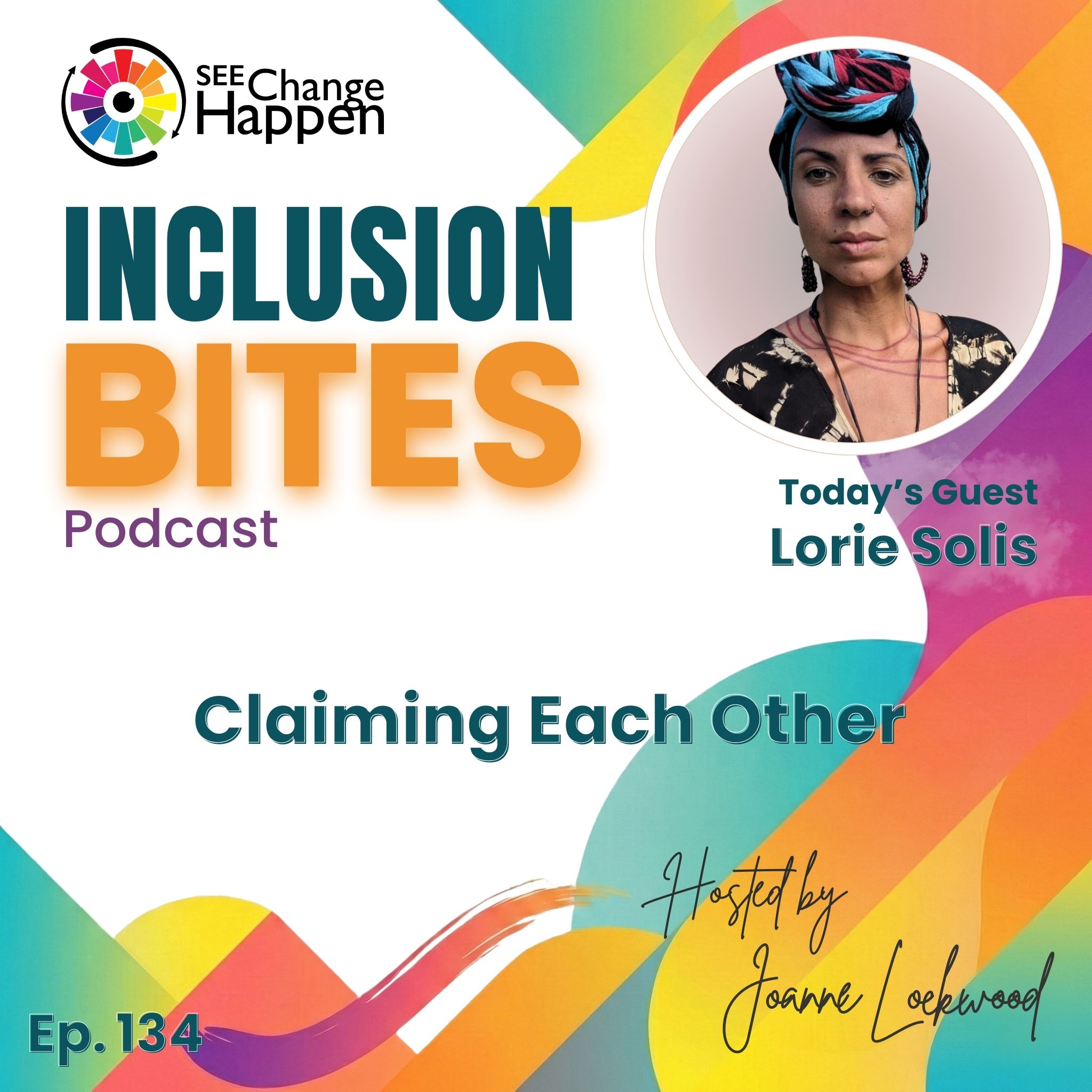
Lorie Solis explores the generative potential of conflict, the significance of somatic healing, and the complexity of embracing mixed heritage and ancestral practices to foster belonging and connection across divides.
In this episode of Inclusion Bites, Joanne Lockwood speaks with Lorie Solis about lived experience identity.
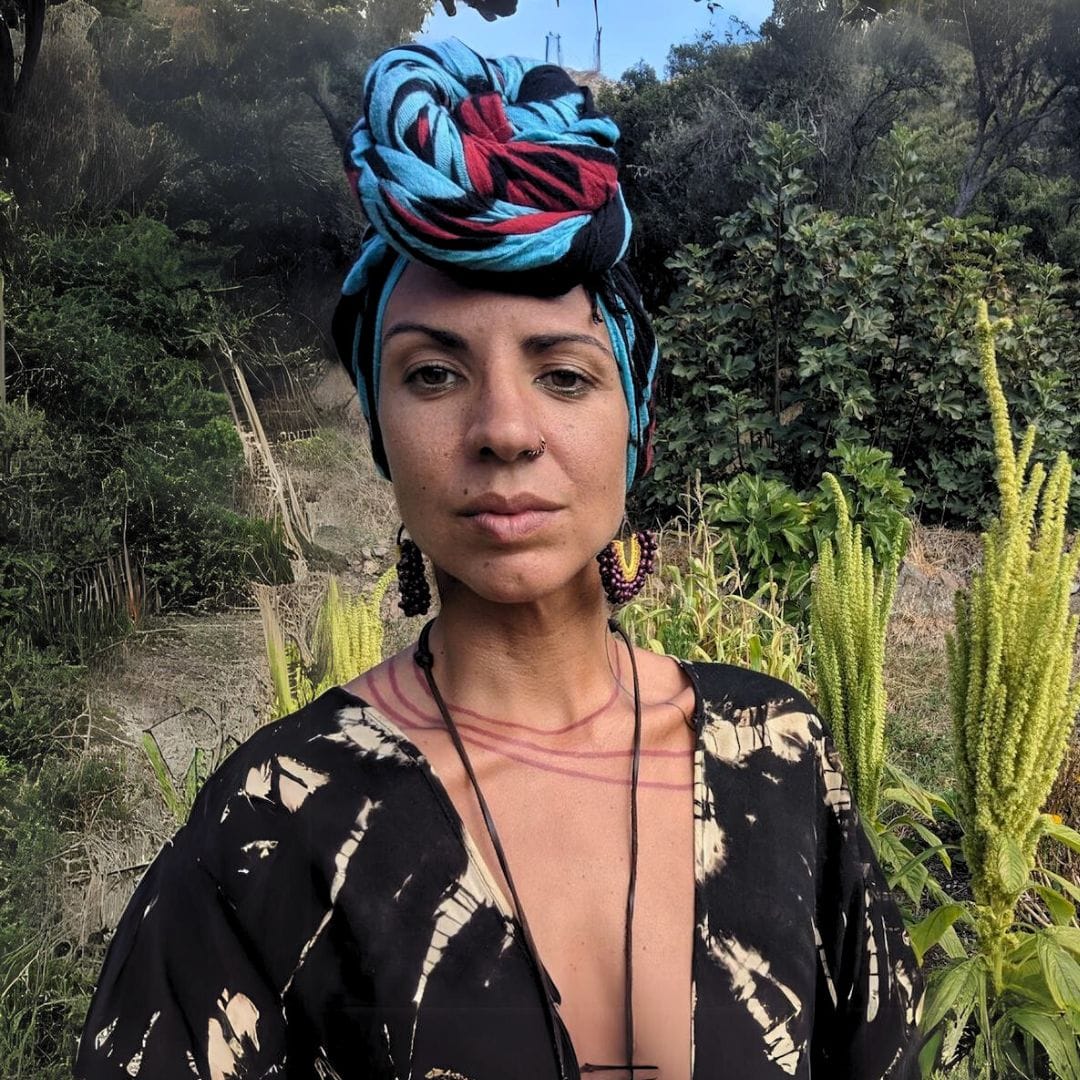
Welcome to Inclusion Bites, your sanctuaryfor bold conversations that spark change. I'm Joanne Lockwood,your guide on this journey of exploration into the heart ofinclusion, belonging, and societal transformation.Ever wondered what it truly takes to create a world whereeveryone not only belongs but thrives, you're notalone. Join me as we uncover theunseen, challenge the status quo, and sharestories that resonate deep within. Ready to divein? Whether you're sipping your morning coffee or winding downafter a long day, let's connect, reflect, andinspire action together. Don't forget, youcan be part of the conversation too. Reach out to jo.lockwoodseachangehappendotco.uk to share your insights, or to joinme on the show. So adjust your earbuds andsettle in. It's time to ignite the spark ofinclusion with Inclusion Bites.And today is episode 134with the title, Claiming Each Other. And Ihave the absolute honour and privilege to welcome Lorie Solis.Lorie is a somatic trauma worker. That's easy foryou to say. Body worker, educator, herbalist, and healer.And when I asked Lorie to describe her superpower, she said, she is adynamic woman, and has gifts of sight on manydimensions and can see quite well in thedarkness. Hello, Lorie. Welcome to the show.
Lorie Solisguest
Hi, Joanne. Thank you for having me. Absolute
Joanne Lockwoodhost
pleasure. Absolute pleasure. So, Lorie, tell me more about claiming eachother and somatic healing. Claiming each other
Lorie Solisguest
is what I'm calling both a personallife work that I'm in at the moment and as wella methodology and training that I've developed andteaching people at the moment. And it's really aboutresilient relationships, building resilient relationshipsacross divides in conflictkind of when we least expect it, when conflict comes up within our mostintimate circles, especially whenthings are really important conflicts, not just kind of run of themill mundane conflict, but really chargedpolitical, personal, ancestral, intergenerationalmaterial that comes up in our intimatecircles and how to handle that with care, with reverence,with skill to heal it in thecontext of that relationship, and to build resiliencyfor, yeah, for more skillful, compassionate relationships.
Joanne Lockwoodhost
It's interesting. I I love the way you frame that. It inflict whether it's political,personal, or or or other dimensions. What's the rootcause of conflict? Where where does it where does it come from?
Lorie Solisguest
Oh, man. I wish I knew a really definitiveanswer to that question. I I think of conflictas a creative force. I like to think of conflictas a generative potential for something, a healing that wants tohappen, the emergence of something new that is intelligent inits own way. So So I get curious from a somatic perspective ofhow we protect ourselves from a conflict. You know, theperception of threat. So it's something that we want to avoid orsave ourselves from. But to kind of alter ourperception, to recognize the opportunity,the calling, the potential, that it is an intelligentcreative force that wants to happen through us. So where doesit come from? I don't know. Maybe this innatecreative intelligence of the cosmos may be manifestingthrough us. I don't know. I I think
Joanne Lockwoodhost
about, as I was saying, is that you can't challengeemotion with logic. And a lot ofconflict is is comes out of emotion because we becomeemotionally connected with something. Yes. It's hard for us to let go of thatemotion and that and that feeling, isn't it? Yeah. And I really
Lorie Solisguest
I love that, actually. You know, I'm I'm curiousabout kind of courageous conversations and tacklingdifficult content from a really logical place, likedebate skills, how to have solid conversations from amore rational, logical place with people you disagree with.That's one thing, and it's super important. Claiming eachother, I think, more embraces the emotionalcharge, the reality that we are emotional beings aswell. And when conflict comes up, there when itthreatens, right, for example, our personhood, our dignity,our safety, our sense of belonging, that it's veryrational that that has an emotional charge.And so instead of expectingthat emotional content needs to be rational or needs tolook in some other way in order for us to engage with it. I'mparticularly devoted to being in theemotional content in a respectful and good way. I've
Joanne Lockwoodhost
never heard of the term somatic before. Can you enlightenme? Great. Somatics is a field
Lorie Solisguest
of study and practice thatdeals with the body mind as a unifiedwhole. So as opposed you might have heard of,like, mind body medicine, for example. So asopposed to cognitive approaches where we are just talking itout and it's the more logical and reframing or body basedmethods alone, like maybe body work. These it kind ofjoins these things. So it asks us to engage ourwhole neurobiology in order to alignour ideas, our words, ourthoughts with our values, and live accordinglyto become who we want to become in the world, to be who weare meant to be. Does it make sense? Completely at at at one,
Joanne Lockwoodhost
aligned, you say, truly authentic interms of your your values, who who you are, how people perceiveyou. Exactly. And it's hard you maybe have heard
Lorie Solisguest
people have this conflict. I mean, I've had it. Maybe you've had it where it'slike the mind is saying one thing and the body feels something else. There'sthis kind of sense of split, or we feel ambivalent howto be in our authenticity in a world that doesn't alwaysallow us to live by our values fully. Sohow do we reconcile this ambivalence inside of ourselvesand ourselves within the context of the largerworld. So Maddox is about this, of using our mind bodyintelligence to make decisions, to be inour agency, knowing that we are not in our agency with alot of the world.
Joanne Lockwoodhost
I I came across the, was it the Japanese art of a happy life, theikigai, 4 or 5 years ago. Andit really summed up for me that I was missing one of the core, oneof the four pillars of it which is find something thatbrought me true joy and happiness personally. I was doing things tomake money, I was doing things because I was good at it, I was doingall the other things. When I looked back on it I thought hang on aminute, I'm not getting any joy out of this, I'm going through it becauseI do. It's really hard though to stop andstep back from that and really reflect and then say hang on a minute,to go forward I need to go forward with something that brings me joy aswell and is that part of the healing process to try and figure out whoyou are? For sure. I think for some people, that's a big part of the
Lorie Solisguest
healing process is to explore the various statesof our embodiment, of our human embodiment,and to see where there may be gaps in those experiences.So I definitely resonate. I think I kind of knewpleasure. I knew contentment. But for me, joy was kind ofan elusive experience. I think I couldrecognize it in other people, but then feeling like,this one I'm not so familiar with. Andunderstanding my barriers to that,And then what does it mean for me to embody joy, not basednecessarily on what I see in other people and what I think that means,but from a body, like, what does it feel like? What is joy onthat intimate level inside? So it's definitely, I think,a part of healing is to allow ourselvesthe exploration of the range, the possible range of ourexpression. We pick up all this baggage in our life, don't
Joanne Lockwoodhost
we, from an early age where and then suddenlyexpectations, responsibilities and pressure andsocial constructs kick in and I hope you we allkind of fit into this image of what we're supposed to be rather than whowe as you say, we're trying to find this alignment. Often sits outsidethis societal expectation, doesn't it? I suppose so.
Lorie Solisguest
I always kinda felt that I I think I had a inmy family of origin, I felt such a senseof acceptance and belonging for who I was, which I've come tosee maybe just in the context of my work because I work with a lotof people who have not experienced that. But it does feel likemaybe somewhat of a rarity. And as far associetal expectations, in many ways, I could meet those,but in other ways, I just couldn't. And so I feltin a way, although constrained in some ways,also liberated. Like, I can't I cannot meet theseexpectations. There's no way. So I I'm notsure I should even try, really. You know?
Joanne Lockwoodhost
Yeah. No. I I I agree. And I've I've been in a fewthings recently where I've realised that what I was doing wasn'tbringing me joy. And, but it's likewalking down a one way street, you think, oh, I'll just I'll get to theend, I'll get to the end, I'll get to the end and you realise there'sno end. It's just an everlasting straight. Andsometimes having something nudge you halfway down that roadsaying, come on, or the rules change or something changes and youlook back and go, you're so worried about letting go of it and then yourealise that once you've let go, you realise that was the rightthing to happen at that particular time in your life. And rather than feel thedisappointment or the failure or anything else you did, you go, actually,I was done with it anyway. I took joy from having thecourage to step out. Yeah. And it does take courage,
Lorie Solisguest
doesn't it? Even when things aren't working, quote, unquote, there'sstill, like, a comfort in the familiarity of the path that we've beenon. So to kind of sidestep or reorient adifferent way into the great unknown, it does take courage. It'sscary. Can be. Yeah. You mentioned
Joanne Lockwoodhost
at the beginning, when we we talk about here, it's it's in relationships. Andsometimes relationships, whether that's intimate orcasual, conflict does arise because we're so invested in keeping thatrelationship happy and healthy that things go unsaidor things we we say too much sometimes as well, don't we? Yeah.
Lorie Solisguest
Absolutely. When I say intimacy, I don't just mean, like,romantic or sexual intimacy. I mean this, like,sharing ourselves and our authenticity with each other, andbeing, as you say in your show, as a sanctuaryfor our unique boldness, which I dothinking is inclusive of our vulnerability. That has something very much todo with our boldness. And,yeah, I do believe that conflict is inevitable on some level.And once again, I believe that it is a generative forceto to learn and grow andbelong together in ways that are more profoundthan we may be stepped into the relationship realizing that wewould be tasked with figuring out together.
Joanne Lockwoodhost
Yeah. I think we we can sometimes we could be over invested in our belief.That's I think that's when the conflict that's where conflict escalates, isn't it?Where conflict is, I want to watch thistelevision programme, you want to watch that television programme. It's minorconflict. It's just disagreement or bickering. But when we become really,really invested, it becomes a kind of deal breaker. That's where the conflict startsto escalate up, isn't it? Absolutely. And deal breakers, I
Lorie Solisguest
mean, they're real too. Right? And with claiming each other, it's not forme to say or decide what peopleshould or should not tolerate in their relationships. You know? But inthese last years, we've seen a lot of deal breakers around really bigtopics around the pandemic and around the me too movement andBlack Lives Matter and trans liberation andPalestine, Israel. There's these huge things in our world, and I haveseen that people in our we, I think about,like, us and them. Who is in our us?There's a lot of diversity in that space of thought, And I'mvery curious about how we encourage each other'sgrowth and authenticity and open mindedness,which may result in a change of mindthat may make us uncomfortable with each other, and howwe can potentially stay in belongingtogether and create this sanctuary. Can we createsanctuary together when we start to realize that weare having very different experiences and thusperceptions about some really important things? We
Joanne Lockwoodhost
get very invested because of our our lived experience, don't we? Sowhen we look at the I mean, where are we now? This is October2024 we're recording this. The hostilities inthe Middle East are escalating slowly andsurely, well actually quite rapidly with missiles beingthrown and people being assassinated andbombed and whatever. Both both sides are arenow claiming the the right to berighteous here. It's really hard for someone like myselfwho is has no lived experience on either side,to have an opinion other than trying to crowdsourceas much information as you can, wanting everyone to just deescalatebecause there is no future in conflict. Yes. It's how dowe move past these things? You know, I've been investing my
Lorie Solisguest
time, energy, my devotions in my community.I've always been very politically active on grassrootslevels in the states. But my activism or what I considermy activism has really moved towardsfocusing on my community scale relationships.So in the community that I live in, I am inclose relationship and contact with Israelis andPalestinian people who live here in Portugal.So I definitely have my opinionsabout the situation. I have my perspective frommy limited investment. I am not Israeli nor Palestiniannor Middle Eastern. And yet, I have chosento, in the spirit of claiming each other, kind of curb thattendency we can have to enter into debate or opinionsharing, or here's my perspective to centeractually the emotional content, thethe grief, the care, the trauma of the people from,quote, both sides who were sitting with me and sitting in front of me.
Lorie Solisguest
And that challenges my opinions sometimeson who I think Israelis are, for example, and what I feel about theIsraeli government to sit and care togetherand to be let in to their unique vulnerabilities.It's really a privilege. And I've sat with people andcared with people about many topics thathave challenged some previously held convictions. Like you're saying,we hold really we hold really tight to our convictions based on ourexperience. And I'm still this kind of person who ofconviction. And I wanna let myself bechallenged for the purpose of being in good relationship with the people aroundme. And that's been a lesson, I mean,I'm changed many times over, and this is whatclaiming each other is really about, is letting ourself be held in thechallenge and acknowledging that thingsare a bit more complicated than we sometimes need them tobe when things get intense. You know, thetendency when there's conflict or when things start to get intense, we start tonarrow in. The options start to feel really limited, like you're eitherwith me or you're against me. And we can't always reconcile, I'm withyou. I just feel differently about this thing.So it's like making that space, and this is where the somatics come in, howto actually make greater capacity in our mindbody to be able to contain that complexity and theuncertainty of that, which is very intimate. It contains thethreat. It contains the hope. It contains all of it.Right? How to sit in that and let it be generativefor ourselves individually and potentially the relationship. Yeah. I I
Joanne Lockwoodhost
often talk about the fact that I I don't have to agree with youropinion or belief, but I can empathise and understand yourwhy. Why do you believe that? Why is that your opinion? What is yourbackground? And then I can sit there and work it out with you and go,I see why you would believe that. I still I still have a different view,but I now empathise with why you believe something, which I think we we manypeople don't really invest the time into getting that deep withpeople. They just wanna challenge the answer, not look at the workingout. It's really a skill. You know, I appreciate
Lorie Solisguest
the it's a skill that I think we can practice. I'mnot sure that a lot of people have received, like, relationshiptraining on this kind of conflict level, if at all,maybe. So, you know, I'm trained in first aid and inpsychological first aid, and I was a civilian first responder. And Irealized, like, you know, if there's an accidentor a fire, our basic training for protectionis probably to run away for survival. Right?And I I see this also in relational conflict. Our basichuman training is this fight, flight, freeze. We have these tools atour disposal. But to be the person who runs intothe burning building or to run towards whatever emergency itis, it requires some extra training and some extraskills to be confident in your capacity to handle yourselfand whatever else in the uncertainty.And this is very relevant to the training of claiming eachother. It just acknowledges, okay, we have our basic trainingto be in generative conflict together in reallyserious topics that thatinvolve our histories, our lineage, our embodiments. We need wemight need some extra skills for this one, some extra training.So this is where my work comes in. I mean, you you mentioned the
Joanne Lockwoodhost
word lineage then. I noticed from the the bio you sent infor the show around your indigenouslineage, First Nation, is that how you describe yourself as well?
Lorie Solisguest
American Indian, indigenous American. And
Joanne Lockwoodhost
you you had a you've got a really long description with hyphens in it. II couldn't pronounce all of this. Do you want do you want aAfrotainer or something? Is it? I don't know what I
Lorie Solisguest
wrote there, but I can give you the quick hyphenated spiel ofmy makeup Go for it. If you're curious. Go for it. No. No. I'd
Joanne Lockwoodhost
love to find out more about you. Sometimes it changes based on what I'm connecting
Lorie Solisguest
with. I would say Afro, Taina, Chicana,Lipan, Apache, Texan.
Joanne Lockwoodhost
Yeah. Most of that. Boracua? Was it the wrong one?
Lorie Solisguest
Boriqua. This is the indigenous name for what is now knownas Puerto Rico, Puerto Rico, and the Caribbean. And the Taino peopleare the indigenous people of Borikeng. So Borinquenis the name the indigenous name of of Puerto Rico, and then theindigenous tribes there are the Taino people. You've grown up with that
Joanne Lockwoodhost
lineage and the stories of your ancestors, and you're connectedto the From both of them. Earth, if you like. Definitely. Planet in adifferent way. I definitely feel that this has held
Lorie Solisguest
me, this connection to ancestral practices from both sides ofmy maternal and paternal lineages. And itdefinitely informs, I think, my personal capacity forcomplexity and to reconcile what sometimesfeels like irreconcilable differences.How I've been able to literally embody that hascertainly served me in my work to bring thatto others and to practice together. I've heard people use the word
Joanne Lockwoodhost
decolonization before. How does that resonatewith you and the work you do? When you say decolonising, that'sremoving colonisers from your life orfrom your viewpoints or? Okay, I'm curious what you
Lorie Solisguest
understand it to mean, if you wouldn't mind sharing. I suppose
Joanne Lockwoodhost
decolonising, so I start from probably the theopposite side. So for me, colonization is an unwantedperson taking over your space, for want of a better way of describingit. I come to your country. I come to your house. I wantto take over. I want to steal your resources and expectyou to live the way I want you to live. It's probably how I woulddescribe sort of colonisation, so I guess decolonisation isreclaiming your power. Get out of my house, get outof my country, get out of my head, let me live my lifewithout your view of the world imposing yourprivilege, your beliefs,as some sort of power and control over me. I suppose it's the way Iwould probably frame that without a better definition.
Lorie Solisguest
Yeah. I think when you speak to indigenous peopleacross the globe, decolonization necessarilymeans land back. So there's land back movements toreturn lands stolen land from indigenous peoples. And thisis important because indigenous peoples' lifeways,their lifestyles, their spirituality, the food, everything is so intimatelyconnected to land. And so without access to land, people are notable to selfactualize their own liberation.So that is a component and a very important component ofdecolonization. Now from a somatic perspective, youmentioned a lot of things of decolonizing our minds, ourbodies, our relationships. And this is about examiningwhere kind of dominant narratives andpowers that be, whether it be from a legal and statestandpoint to the medical establishment, have determined forus what is acceptable, what is ill, what ispathological, what is allowed.
Lorie Solisguest
What what are the boxes for it to be checked only? Right? Inall of the ways. So decolonization for me isabout a deep dive into my beliefsystems and how I embody them, where those came from,and purposely reconnecting to my indigenouslandscapes. Literally, the land looking to land,animals, ecology for wisdom that appliesto what might seem like it doesn't like relational conflictor pull it the political sphere because it is interconnected.And, you know, all people are indigenous tothis earth. We all come from indigenouslineages. And so I'm very passionate about this kindof not just decolonization, but reindigenizationof ourselves to our mind bodies, and howto work that in the healing of our relationship,which I think broadens the potential fora deeper level of acceptance of each other even in ourdifferences. Right? It allows for that complexityand that space for that quaking of theunknown inside of us can really be held when we contextualizeourselves in more. We're not justalone. It's not just me and you trying to figure out thisissue between us. Right? We are held in a larger scopeof of lineage that I believewants to see us thrive together because life wants tolive. Life wants to live. And I think that we arefaced presented with challenges towards that aimto for thriving for thriving,for sanctuary building. And that doesn't mean that the whatthen do we do is not necessarily made clear.But when I have found that when we couldn't connect tothat deeper fabric of intelligence,that informs us of what to do in a different waythan we're when we're kind of just on the human, just on thepolitical, just on even the interpersonal.I found that it's a limited scope of perception to enter intoconflict with. So something as simple as maybenot simple, but, yeah, remembering in the moment.The moment when we're presented with conflict, literallyconnecting with our felt sense. But there'smore going on around us than we maybe realizeat first glance. That there's a living, breathing worldaround us, that our ancestors may be present with us.This can inform our decision making process.What we choose in a conflict resolution process might beinformed by our perception that is actually moreinclusive than just what's right in front of us inany moment. Does it make sense to you? How are you feeling about it? It
Joanne Lockwoodhost
does. As you're talking, I'm I'm kinda thinking, I feel a bitenvious because as a as a white queer woman living in theUK, I don't have any sense of connectionto a lineage, an ancestry. Myancestry really is my parents.No real connection to my grandparents. I certainly wouldn't goback to William the Conqueror orRoman invasion or anything back 1000 of years. So myconnection really is, is of the moment. And I often think of my familyas being my parents and our children, rather than going backin history. And I listen to what you're saying there about spirituality, theconnection, the traditions that are being brought down that are important toyou. I feel a bit envious and jealous that you've got something youconnected with something bigger whereas I'm sure many peoplethat I mix with in the UK have a very similar disconnection withthe history. They don't feel this lineage.Yes. It's almost empty here that you're because of your indigenousoppression of old and the past, thatoppression has caused you to be protective of what you hadand fight back for it. So I'm quite protective of myqueer heritage now. I'm more protective of that than I wasbefore but if you're straight, you're white, you're male, you'rethis, you're that, you are the majority and therefore you never consider whatit's like to lose something or have to hold on tightly to something to stopbeing taken from you. Nothing. Is that what you're saying? The thelineage and the history and the spirituality you're feeling is thatthat the fact you had to refight and hang on to what you've had?You know, I think I would have had to do this. And I, you know,
Lorie Solisguest
I live in Europe now, and the conversations arounddecolonization are different than in the states. And this has opened mymind a lot to a lot of variousperspectives around things that I have held dear aroundqueerness or race issues. There is a kind ofvery American centric narrative sometimes. Andso to open my perspective to what Europeans feel about thishas been really fascinating. And people from all peoplefrom across the globe come from peoples who havebeen colonized, including Europeans even though, right, it's farther backin the historical data. So there might be some, what I wouldsay, somatic amnesia from the mind body. It's hard toconnect. I don't remember. It's been so long ago.And, of course, there's also some hesitance to connect forwhy? Why connect to the colonizer lineage?Right? But even in that, there is more complexity.There is resiliency, there's wisdom,there's landscape, so it doesn't have to beancestral lineage in this way. You know, I I when I dosomatic decolonization work with people that don'thave names, places, dates, don't have access to that data,we go into the mind body, and we trust the wisdom of thatwith curiosity to see what kinds oflandscapes are we really drawn to. Where do wefeel at home? Where do we feel welcomed?And even greater communities of care, like queer community,has its historical lineage through over theworld over. You know, we have always hadqueer people across the globe and every tradition,right? So if that's our access point to lineage, I thinkit's very rich and profound and can connect usback in a way that's like, I'm not alone. I could neverbe alone even when I'm feeling lonely. And I think
Lorie Solisguest
this is important when we're in a moment of conflict because conflict canfeel like disconnection from someone I love andcare about that's saying they love and care about me, but yet they'rethey're presenting some opinions or material here that's makingme feel uncared for, unseen. Right? That cancreate this loneliness and isolation. And this is where traumacan really set in, is in this prolonged feeling ofdisconnect, of isolation from fromcare. So I think connecting, like, connecting ourselves even if wefeel disconnected from the person sitting in front of ustemporarily or perhaps, you know, into the future,to know that we are held connected beyondbeyond the superficial. And that the present what's in thepresent moment is still more complex and dynamic than whatmight meet the eye on the surface level. And this is itmight sound you know, there is a kind of esoteric, andit is spiritual. Right? And the somatic process isreally about landing it in a very practical way. How how doesone connect? How does one feel these things? How doesone apply what they feel then to a difficult conversation?And this is what the training is about. It's about landingthese ideas into the mind body so that we'reactually living it. We're embodying it in a way that feels authentic tous individually and that makes sense in the context of ourrelationship and the life that we are wanting to create for ourselves.
Joanne Lockwoodhost
As you're speaking there, you talked about being alone and beinglonely. And as you were talking, I was listening to you and it sort ofpopped into my head. I finally understand why there's a difference.Lonely is a feeling. I feel lonely. Aloneis a reality. It's a situation you're in. So you canbe alone and still lonely. You canbe in amongst people and still be lonely if you haven't got that sense ofbelonging. Because if you don't feel connected with the environment you'rein, no matter how many people are there, you're going to feel alone. You're goingto feel lonely. And it's finding that thattribe, that that crowd, that group,that environment where you feel part of it.So you don't feel lonely, you feel engaged andcommitted and belonging. And I think, I've listened to that. That really justpopped out into my head as you're talking. I've really tried to orient
Lorie Solisguest
myself more truly towhat I perceive is reality. And What Iperceive is that we can never be alone. For me, it's just nottrue. Like I am part of this interconnected whole.And so this invites me to be more precise with my language,because I notice not only what my languageindicates about how I'm feeling. So if I find myself sayingI'm alone, this is like an existentialstate of being where I am feeling disconnected fromeverything that I know darn good and well that I'm connected to,but I'm not feeling it. And this informs me of, oh, I'mnot feeling these connections. Here's what I can do based on what I've learned inmy somatic practice. What's happening is I'm feeling
Lorie Solisguest
there is a difference of feeling lonely, but I could never bealone. And this is thereality for many people right now is that we are lonely.People are lonely. It's this epidemic they've said of loneliness. Andso I get very curious as people are learning about how toget out there and how to build community and find their tribe, which is awhole work unto itself. Can we still feelconnected in the here and now while we're out there doingthis work of addressing our loneliness? Can we know thatwe're not alone and, like, root intothat medicine? And how does that inform? Becauseonce we go out there and find our tribe, we're probably gonna find someconflict. And soI don't want our relationships to be so fragile. Our very innateneed for safety and belonging and dignity. Right? We'll bechallenged in ways that we don't expect, I think. So So I want there tobe space for that nuance. Yeah. So that when we feellonely, we don't have to get into the existential, I amalone. No one gets it. I am, you know,uniquely abandoned by the intelligence of the world.It's I just try to remind myself thatit's maybe ecologically not true. But you you
Joanne Lockwoodhost
must have had to when you when you so youbrought up in Texas, you got Puerto Rican ancestry and backgroundand indigenous lineage, all this all the various aspects of youridentity. And you just picked everything up, flew5,000 odd miles and ends up in Portugal. Did you dothat literally as a lift and shift, or did you have familyor friends, or you just went, hey. I've I've had enough of you checking out.Let's figure it out as I get there. I think it was a long time
Lorie Solisguest
coming. It was a bit of both. Afteryeah. In 20 from 2012till 2017, I had a series of tragediesin my life and very challenging experiences.And that within the political climate of thetime, I was feeling really increasingly unwell.And I had been, yeah, somewhat used totraveling, so kind of open to moving around and exploring.I've gotten married, and my partner was also kind ofopen to it. We had had a child, and that personwas still young. So we're like, we could pack them up and go.And I think we just took a chance. You know, I needed somewherethat felt safe. And I always you know, I'mnot someone that kind of considered myselfafraid, But I have been, and Iam. And I feel like I never really understood what itfelt like to be safe until I movedsomewhere where there are no guns, where violence is atan absolute minimum. Like, nothingfor me. This is how I experience it, and I'm a bit of a hermit.And so my experience maybe is notthe same for everybody else, understandably. And yet for my
Lorie Solisguest
healing my own nervous system, my own traumasthat were coming up in that period before we left.To have a space, like, literal spaceand time to be with those thingsgave me the opportunity for healing on a level that I didn't even knowthat I needed. And I'm not sure I wanted to know at the time thatI needed, but I think that was the opportunity. So evensome of the stuff around colonialism, like, I live veryclose to the 1st slave market here inEurope. I didn't know this was here and I didn't know that on somelevel I was being asked to move to Europe to heal this discrepancybetween my internal colonized and colonizer. This was not part of ourconversation when we were talking about moving here.And today, it's very clear that this was part of theopportunity to be here, which of course also informsof this work of of acknowledging that weare expansive beings and the 2 boxesdon't do it for even most of us, dare I say.
Joanne Lockwoodhost
Export Portuguese people were one of the bigcolonisers at the time. You know, Spain,Portugal, France, United Kingdom, the Dutch.
Lorie Solisguest
Of course. We all, sailed sailed the 7 seas and
Joanne Lockwoodhost
and exported our values and stole resources. And, yeah. And
Lorie Solisguest
this is this is who I'm surrounded by, all of these nationalities thatyou've described. Yeah. This is whoI'm with. And, you know, the truth is I, of course, also have Spanishcolonial blood, should I say, as descendant froma Puerto Rican woman. And my dad is also Mexican American andnative, you know, American. This is the Spanish colonial influenceis certainly something I'm close with, but it's not something I claimed. We kindof we had our own identities that were more statecentric or, like, relevant to us, and I realizedthat there was definitely some disclaiming that was happening, somejudgment, some ostracizing of some of our people.And so in our lineage. So what it meant for me to be hereand as well reintegrate and claimthat part of my line, that partof my history to feel that I do belong here on the Iberian Peninsula aswell on some level has been really fascinating because I am a guest in aforeign land in a way. And at the same time, Ihave very real rootson the Iberian Peninsula that have alsohelped me in this work of steppinginto this. It can be a very volatile spacewith people, where 2 seeminglyopposite things are wanting to be reconciled,but it can feel very dangerous sometimes. That so the
Joanne Lockwoodhost
the Hispanic, Latino part of your identity probablymeans more to you coming from the Statesthan it does to the indigenous population of Portugal and Spain, that they justare. Whereas you feel that connection, whereas they just hadit all their lives maybe. Maybe. I mean, I feel that people are
Lorie Solisguest
proud of who they are here and that have a connection to cultureand history and lineage. There is a kind of establishedsense of who we are. And in thestates, it's interestingly mixed because we do have a kindof Americanness about us.Even in Texas, where I'm from, we are many people are very proudlyTexan, which is unique to the rest of the country.And in that, we're still the melting pot. There are still people fromthe descendants of enslaved people. There is indigenouspeople all around us all the time. There you know, there's people from allover the world. So I don't know. Ido see that people, especially when we open the conversation or thepossibility for people to connect towho they feel they are in the context of lineage orland or ancestry. I've seen that people are a little bitsometimes hesitant to go there. I think there's some, like,tension around identity and lineage and ancestry,and I'm very curious about that. And yet when we can open it from aplace of curiosity and resilience,I think it's beautiful to and importantto connect with the complexity of our ourlineages. Right? Not just, oh, you're from the colonizer lineage? You'reout. Like, it's not it's not so simple. And, of course,people don't wanna connect in that way or feel welcomed into theconversation. It's not it's not generative.Right? And maybe that's sometimes where people are. I think whenthere there might be a time in people's in our liveswhen options do get limited, when we feel hurt or scaredor threatened, or we're just redefining our boundaries for ourselves. Like, this iswhat I'm opening myself to, and this is what I'm not open for.You know, there might not be that space forcomplexity and curiosity and all those things. I think that canthat's okay too. If we can be transparent about itand still be compassionate, I think it's timereduction, to be honest with each other about where we'rereally at and what kind of complexity or not that we canreally be in. And I trust that. I trust that it's inservice still to somebody's becomingeven if I don't like it, even if I wish there was more space forsomething. You know, when I hear a no or, like, this ismy limit for this conversation, it's important for me torespect that. And that, I think, is still part of of thegenerative process also. But moving to Portugal,
Joanne Lockwoodhost
with your lineage and background and history of family, itmust have inherently had a sense of belonging because as you say thatthe culture I guess of Portugal, Spain areaisn't too dissimilar to I guess the Hispanic Latino culture, you probablycame from the same religious type familyvalues, very probably similar. How do you keep in contact though withyour indigenous American, if you like, culturebecause you're now separated by 5 or 6000 miles.Yeah. Do you do you miss that that element of your identity? I do.
Lorie Solisguest
I do miss it, and sometimes I can feel very lonely. I I havenot yet met another Puerto Rican indigenousChicana, Lipan, Apache person yet. And if you're out there,call me. No. I can feel verylonely. And yet, I feel like mypractices, my somatic ancestral practices, you know,as an herbalist, growing and makingmedicine, growing food, being with the landscape,communing with plants and animals. Thelandscape here, the bioregion is very similar from where I'm from inTexas. And I find that really interesting because I can see some of thespecies that I know from Texas. They are endemic. Theirindigenous origin is from the Iberian Peninsula. And thisconnects me. You You know, I have contacts with people fromthe states, and this thank God for the Internet these days andfor even social media, which allows me to feel connected. Butreally the most profound connectioncomes from the mind body, from the somatic placeof knowing that I am connected. And I'm someonewho's chosen to live kind of as an edge worker. I'venever been smack dab in the middle of any one of thecommunities that I identify with with queer communitywith it. I'm always on the edge of these of of the inbetween space. And that can feellonely. That can feel like I'm being misunderstood. That canfeel like I'm a threat to one side or the other. Andsomehow that has been my path and calling and my choice.So including my own needs aroundconnection. Yeah. It's I really take that as my ownopportunity and responsibility to practice, not just, like, go findit, but to embody it, to embody the knowing that I amconnected no matter where I am. Yeah.
Joanne Lockwoodhost
That's very powerful because you you've got thatdeeper sense of self at a in a level, not superficial level. I can Ican feel that? And say even though you can feel lonely inplaces, you've still got that that inherent connectionwith the world, with the earth, with the land, andthat transcends distance as well. And that's the
Lorie Solisguest
medicine, you know, because I, through all these practices, havecome to know myself intimately and also through being willing tocome to know myself through the experience of people I love, whichis a whole another thing. Especially when they're not likeme of being willing to know myself through their eyes.And I know that when I start to feel lonely ordisconnected, that can lead tocrabiness, resentment, some hostility, somebitchiness. Right? And then I'm more apt to createconflict. When I when what I need is connection.I'm I'm starting to, like, create this conflict in myself and feed that,and then I'm creating with other people, and I'm seeing that no one getsme, and all these people blah blah blah, and, you know,I'm creating this whole situation. And this I get curious about becauseI feel like there's my opportunity for the healing that Ineed. And I can't always see it in the moment, of course, because sometimesI'm just neck deep in the conflict. And I have toact it all out. And then later on, I'm like, man, I missed the opportunity,and now I have to go repair. And that's part of it too.That's part of it too for sure.
Joanne Lockwoodhost
Yeah. Yeah. Sometimes it's so much easier to coach than it is to do,isn't it? It's For sure. You know the techniques, and I'm suredespite knowing the techniques, you find yourself, as you say, having to reflectafterwards and go, could have been better there. Could have triedsomething different. And that's part of it. I think we're so also
Lorie Solisguest
repair, relational repair, we're not so trained in andperhaps practiced in. That's so much part ofit. And as a kind of edge worker, I feel like I'vehad a lot of experience in making mistakesin an effort to help and show up and advocate. And it's like, oh, thatwasn't quite it. And so how to be in that repaircycle, which is part of building resiliency, whichmaintains dignity and belonging. I've had a lot of experience and withlots of different kinds of communities. And sometimes itfeels lonely because I I need that too. I need that.I don't think I've always received it as skillfully as I liketo hope that I give it. And I've realizedthat there's a skill on the other side too of, like, allowingmyself to be connected with imperfectly. Like, letmyself be loved imperfectly. And that hasbeen a deeply humbling practicefor me. Even though the people I'm around are maybenot relationship, you know, workerslike I am, they don't have the same skill set, and they're not doing itjust like I would do it. They're doing it in their own way. Andlet me acknowledge that. See it, feel it, and receiveit has been really important for me.
Joanne Lockwoodhost
Well, I'm in a I'm in a situation. I can feel thelittle quake developing, just little ripples and the bit ofjudgment. How can I put myself in a mindsetwhere I'm receptive to thinking, hang on a minute, this is going to escalate,the conflict is going to grow? How can I start to deescalate? How can Iwhat techniques can I use in conversations or in thinkingto to help me deescalate? Thank you for asking this question. It
Lorie Solisguest
really brings us to the, like, practical. It all sounds great.What do I do? And I just wannasay I love this moment when we feel that quake. Because in me, I canfeel like, man, I could really destroy this whole thing.Like, or maybe there's another option.So somatically, one thing I this is thefirst step of my of the somatic first aidprotocol. So there's claiming each other is the name of it, and then we havethis acronym, claim us. What do you dowhen there's a conflict? Claim us. It'sabout holding both of us in reference and care, not just me oryou. It has to be me or you. And the first step is what Icall connect to love. It's the c l. And practically, weexplore this for many different ways because what that means canbe many different things. One thing I find reallyeffective is literally to sit back in your chair.If you it's not uncommon that when conflict starts yes.See, I see you just getting comfortable.Does it change something for you when you kind of sit back? Do you noticea change in perception? Yeah. Ready to
Joanne Lockwoodhost
engage. Yeah. Yeah. Thinking actively leaningin. Yeah. But then when you sit back, do do you notice that something
Lorie Solisguest
slightly changes as opposed to the leaning in when you sit back?
Joanne Lockwoodhost
Yeah. Probably less focus, maybe, moremore drifting, whereas leaning sitting up, leaning in.I'm here to here to do, here to think. Yeah. I saw you as
Lorie Solisguest
well, like, move your neck. You were you kind of oriented. Yousaw the space around you. Your eyes moved around.So when the conflict starts to happen, it's normal that westart to, like, lean in and narrow in with our vision, andit has this kind of intensity about it. And maybe wedon't intend this kind of threatening posture,but we're picking up on it because we're mammals, and that's what we do.Right? So when we notice in ourselves when conflict starts tohappen, it's like, oh, I start to narrow in, all of my senses come in,I'm leaning forward, something's happening, I wanna be engaged.
Lorie Solisguest
Still keep that orientationtowards engagement, but literally sit back in your seat.It it canremove in our own mind body. It repatterns this embodiment of threatto this openness of possibility. It'slike, okay. Something serious is happening, and I wanna be here for it.But let me embody something a little bit morerelaxed, open for possibility. Thisengages the dorsal vagal part of our nervous system, which innervatesour back body. Right? Isaw this this chart of theblended states of the nervous system, and they had theembodiment of intimacy as the blendedstate between dorsal vagal life threat, like you're about todie, dorsal vagal shutdown, And ventralvagal, safety and connection. You're gonnadie, and you're in deep connection. And I thought this wasamazing as a as a suggestionthat this is what embodiment intimacy is.And it reminds me of this when we sit back of, like,okay. There's a threat. Something's happening.And I'm gonna sit back and be open to the connection. So We'reengaging both all of the parts of our body, hopefully,in a way that immediately gives us another optionrather than going into conflict in a kind of typicallyaggressive kind of way. And that gives us pause. It can it gives usan opportunity for pause. Right? When I sawyou turn your neck and look around,that's when we can look around like, oh, there's more. We can start to connect.There's more here happening. I'm in this room.It's 12 o'clock. Right? The conflict moment doesn'tbecome this humongous thing that's all encompassing.Gives us a moment to pause and feel into what isbeing asked of me. What is this other person experiencing?What do I maybe need in this moment? And that pause,I think a lot of harm reduction can happen inthat pause to ourselves, to the other person.Right? And then there's then there's the whole rest of theprotocol after that.But, yeah, I'm really passionate about this simplemovement of leaning back a little bit, whichyeah. There's someone who has been told that I can besuper intense. I think has helped otherpeople handle me and my intensity. If Icould just sit back and communicate from that place. So that servedme quite a lot. Must be hard trying to find
Joanne Lockwoodhost
the right angle of leaning back. If you're not careful,you communicate a kind of a not interested or whatever oryou're boring me or I'm not taking youseriously. Whereas if you lean, as you say, lean too far forward, you're inthreat mode, you're hyper engaged. It's just trying to findthat that right spot for you, isn't it? So that you'reattentive, not disrespectfully not bothered, if that makessense. Sure. And I think that, like, freedom to
Lorie Solisguest
adjust is important. Sometimes in conflict, we start to get reallytense and rigid. So if I lean backand I realize, actually, that's not it either. I can I cansit back up, you know, or someone might say, like,are you not engaged based on what they perceive?Right? We can always be in the adjustment. I think that's part of ouradaptability. Yeah. Right? It's being flexible ina moment when things start to feel more rigid.Can we do both? You know, I really callupon paradox in a way, like, urgency, momentsof urgency. I think slowing down is a congruentresponse to urgency. Right? If there's a tension in thespace, can I bring ease into my mindbody so that I can hold that tensionin a good way? I always try to, like, bring in in my mind bodysome balance based on what I'm perceiving. Okay. Something's tense.Let me ease up a little
Joanne Lockwoodhost
bit. I'm just going to What are you feeling about this? How are you feeling?I'm feeling good, actually. I feel my mind's popping all over the place. I'm thinkingabout all things we've just been talking about. I'm going to have to listen backto this episode in a minute. And if anyone's listening, please give it arewind and have another look. Have another really great stuff going on here. Lorie, it'sbeen amazing talking to you. We had 20 minutes in the green roombeforehand as well. So we've spent a good hour and a half together. So it'sjust fantastic. How could people get a hold of you? I mean, I'mgonna check you out on LinkedIn straight away. You can come find me
Lorie Solisguest
in the southwest corner of Portugal and come hang out with me inthe woods at our place down here. You canfind me online at claiming each other dot orgor in my personal practice personal professional practice atsomasantum.org as well. Yeah. Andthen the socials and the things, I'm on there.
Joanne Lockwoodhost
Fabulous. So you're Lori, l o r I e.Mhmm. And you'reSolis, s o l I s. Solis, s o l I
Lorie Solisguest
s. And, you know, we're opening the may I say something aboutthe training? Yeah. Go for it. Yeah. Please do. Yeah.We've just opened the spring cohorts of the claimingeach other somatic first aid training, which is startingin January. It's a 12 weektraining. It's been accredited by the complimentary medical associationin the UK. There's 3 cohorts available,and we have 2 that are being delivered right now and in person here inPortugal and one online globally. It's going beautifully. So Iinvite anybody who's really curious about generative conflictin a way that, yeah, promotes resiliency andhealing to to join us or to reach out if they're curious and wantswant to know more about it. You asked me a question in the show
Joanne Lockwoodhost
notes. Have you heard about research that selfidentified conservatives were found to have enlarged amygdalas?What's the theory then to the when you hold these extreme views, youtend to have an heightened sense offight, flight, and fear, reaction mechanisms, the amygdalakicks in? I note that this is what this the conclude
Lorie Solisguest
this is what the conclusions are, right, of this research or the lines thatthey were drawing that people who have this kind of leaning in theirideology are maybe coming from a more externalthreat oriented place. And people with more,like, liberal or progressive views are they're activated with theirinsula in the brain, which is able to actually handle more complexitywithout the perception of external threat. So I was gettingcurious about this because I want toopen my I want to open this work across the spectrum ofpeoples, and I find that maybe who's drawn toit? Maybe are more people who maybe are more leftleaning already or maybe a bit, you know, left of center.And I really wanna reach more people.And that research gave me interestinginsight from a somatic perspective. Right? When I studythe nervous system, we we do nervous system study in thetraining. I think it's really important to be able toaccurately assess in ourselves and then somebody else what ishappening. And there's a lot of moralizing of people'semotional states, like looking down on fear and judgingthat. And I think it's really important to be respectful
Lorie Solisguest
of of whatever people are experiencingand care about that. If somebody is afraid for somethingimportant about their values, about their own life, aboutsomething they care about, To be curious about that,I think, is very important in the process of cominginto a place of good relationality and not escalating itand destroying everything. So it gave me just a,yeah, a moment of consideration for howI might speak to people or be with them without assuming thatthat's what everybody's experiencing, who has this purse you know, has thesechoices around their ideology. No need to assume. Butit did make me curious, and I was wondering if you had, Idon't know, what you felt about that. I'm now curious as well. I
Joanne Lockwoodhost
think, should we leave that with our our listeners?What do you think? Lorie would love to hear what you think about this. Soyeah, let's, let us know. Do people with extremeviews or have enlarged amygdala, a senseof justice, a sense of fight flight of fear, a sense of losingsomething, protectionism, whatever it may be. So, yeah, it's,love to hear from you. So, Lorie, thank you so much. Ireally appreciate your time. Thank you. I really appreciate you.As we bring this conversation to a close, I want toexpress my deepest gratitude to you, our listener, forlending your ear and heart to the cause of inclusion.Today's discussion struck a chord, consider subscribing toInclusion Bites, and become part of our ever growingcommunity, driving real change. Share this journey withfriends, family, and colleagues. Let's amplify the voicesthat matter. Got thoughts, stories, or avision to share? I'm all ears. Reach out to jo.lockwood@seachangehappen.co.uk,and let's make your voice heard. Until next time. Thisis Joanne Lockwood signing off with a promise to returnwith more enriching narratives that challenge, inspire,and unite us all. Here's to fostering a more inclusive worldone episode at a time. Catch you on the next bite.
Slowing Down in UrgencyUnderstanding Political Views and Brain StructuresDecolonisation and Reindigenization
Joanne Lockwood is joined by somatic trauma worker and educator Lorie Solis to explore “Claiming Each Other” — Lorie’s approach to building resilient relationships when charged, values-led conflict shows up in our closest circles.
Together they unpack somatics as a whole mind-body practice and how emotional charge, threat responses, and a sense of dignity and belonging shape the way we argue, withdraw, or escalate. Lorie shares practical, body-based ways to create more capacity in moments of tension, including how to pause and de-escalate before conflict takes over.
The conversation also moves into lineage, identity, and decolonisation. Lorie reflects on her mixed ancestry and what it has meant to reconcile both colonised and coloniser histories, including how relocating from Texas to Portugal created new space for healing, reflection, and re-connection to land-based practices. Joanne explores her own feelings of disconnection from ancestry and how community, including queer lineage, can offer a different route to belonging.
Throughout, the episode returns to the possibility of staying in relationship across difference — treating conflict as potentially generative, practising repair, and learning how to be connected imperfectly while remaining rooted in values, care, and authenticity.
“I have seen that people in our we, I think about, like, us and them. Who is in our us? There's a lot of diversity in that space of thought, And I'm very curious about how we encourage each other's growth and authenticity and open mindedness, which may result in a change of mind that may make us uncomfortable with each other, and how we can potentially stay in belonging together and create this sanctuary.”
“I have chosen to, in the spirit of claiming each other, kind of curb that tendency we can have to enter into debate or opinion sharing, or here's my perspective to center actually the emotional content, the the grief, the care, the trauma of the people from, quote, both sides who were sitting with me and sitting in front of me.”
“I'm still this kind of person who of conviction. And I wanna let myself be challenged for the purpose of being in good relationship with the people around me.”
“Decolonization for me is about a deep dive into my belief systems and how I embody them, where those came from, and purposely reconnecting to my indigenous landscapes.”
“Where do we feel at home? Where do we feel welcomed? And even greater communities of care, like queer community, has its historical lineage through over the world over. You know, we have always had queer people across the globe and every tradition, right?”
“So I think connecting, like, connecting ourselves even if we feel disconnected from the person sitting in front of us temporarily or perhaps, you know, into the future, to know that we are held connected beyond beyond the superficial.”
“To have a space, like, literal space and time to be with those things gave me the opportunity for healing on a level that I didn't even know that I needed.”
“And I know that when I start to feel lonely or disconnected, that can lead to crabiness, resentment, some hostility, some bitchiness. Right? And then I'm more apt to create conflict. When I when what I need is connection.”
“People with more, like, liberal or progressive views are they're activated with their insula in the brain, which is able to actually handle more complexity without the perception of external threat.”
The technique of "somatic first aid protocol" to manage conflict by engaging different parts of the nervous system.
The launch of the "Claiming Each Other Somatic First Aid Training" and its benefits for personal and professional growth.
Understanding the research on political views and brain structure to better comprehend differing nervous system responses.
The importance of self-awareness and relational repair in mitigating feelings of loneliness and disconnection.
The influence of societal expectations on personal authenticity and the courage required to deviate from ingrained paths.
Reconnecting with one's ancestral heritage through the process of somatic decolonisation and reindigenization.
Practical tips for building community, addressing conflict constructively, and fostering a sense of belonging.
One thing to remember
The episode "Claiming Each Other" with guest Lorie Solis illuminates how embracing conflict as a creative and generative force can lead to more profound connections and personal growth. By adopting a somatic approach, individuals can navigate conflicts with greater ease and understanding, fostering resilience and empathy in both personal and professional relationships.
Questions this episode helps answer
Lorie Solis discusses the importance of slowing down in response to urgent situations. How do you think this approach can transform our reaction to everyday stressors and tensions?
The episode touched on research showing structural brain differences between self-identified conservatives and liberals. How can this knowledge influence our approach to political and ideological conflicts?
Lorie Solis introduces the somatic first aid protocol as part of her "Claiming Each Other" training. How can somatic practices and training aid in resolving conflicts, particularly those that are emotionally charged or politically sensitive?
Both Lorie and Joanne discuss the importance of relational repair in maintaining connections. What practical steps can individuals take to repair relationships that have been damaged by conflict?
Lorie emphasizes her strong connection to her cultural heritage and how it shapes her work. How important do you think it is for individuals to explore and connect with their own heritage in the context of inclusivity and conflict resolution?
Lorie discusses decolonisation and reindigenisation as means of reclaiming power and connection to ancestry. How can these concepts be applied in everyday life to foster a more inclusive and respectful society?
Explore topics
Ideas from this episode
Slowing Down in Urgency
During my conversation with Lorie Solis, we explored the intriguing concept of slowing down amidst urgent situations. It sounds counterintuitive at first, given the natural impulse to accelerate responses when tension mounts.
Understanding Political Views and Brain Structures
Our dialogue also took an intriguing turn towards the relationship between political views and brain structure. Based on existing research, we considered how conservatives and liberals might differently engage their amygdala and insula, respectively.
Decolonisation and Reindigenization
Another deeply enriching part of our conversation centred around decolonisation and reindigenization. Lorie shared her journey of reconnecting with her American Indian heritage, experiencing the complexities of embracing both coloniser and colonised identities.
Learn
Frequently asked questions
What does the term "slowing down in urgency" mean as discussed by Lorie Solis?
Lorie Solis explains "slowing down in urgency" as an approach to handling urgent situations by intentionally slowing down in order to bring ease and maintain balance. This method helps individuals manage tension more effectively and respond with greater clarity and composure.
How can listeners connect with Lorie Solis for further information?
Listeners can connect with Lorie Solis physically in Portugal or through her websites, claimingeachother.org and somasantum.org. She is also available on various social media platforms for further engagement.
What is the "Claiming Each Other Somatic First Aid Training"?
The "Claiming Each Other Somatic First Aid Training" is a 12-week course starting in January. Accredited by the UK Complementary Medical Association, it is offered both in-person in Portugal and online globally. The course focuses on equipping individuals with skills to handle conflict and emergencies through somatic practices.
What insights does the podcast provide regarding political views and brain structure?
Research discussed in the podcast suggests that self-identified conservatives may have larger amygdalas, which heightens their fight or flight responses, whereas liberals might engage the insula more, allowing for complexity management. Lorie Solis examines these findings from a somatic perspective, focusing on understanding nervous system responses without moral judgement.
Can emotional responses and conflict be beneficial in relationships?
Yes, Lorie Solis and Joanne Lockwood see conflict as an opportunity for growth and deeper connection in relationships. Conflict, when navigated mindfully, can lead to relational repair and the development of skills to connect better, even when not perfectly executed.
What is the "somatic first aid protocol" or "claim us"?
The "somatic first aid protocol" or "claim us" is a technique introduced by Lorie Solis that focuses on maintaining care for all parties involved in a conflict. It begins with the step "connect to love," which may involve physically leaning back in one's chair to engage different parts of the nervous system and view possibilities beyond immediate conflict.
Share this episode
Heard something worth passing on? Send this conversation to someone who needs to hear it.