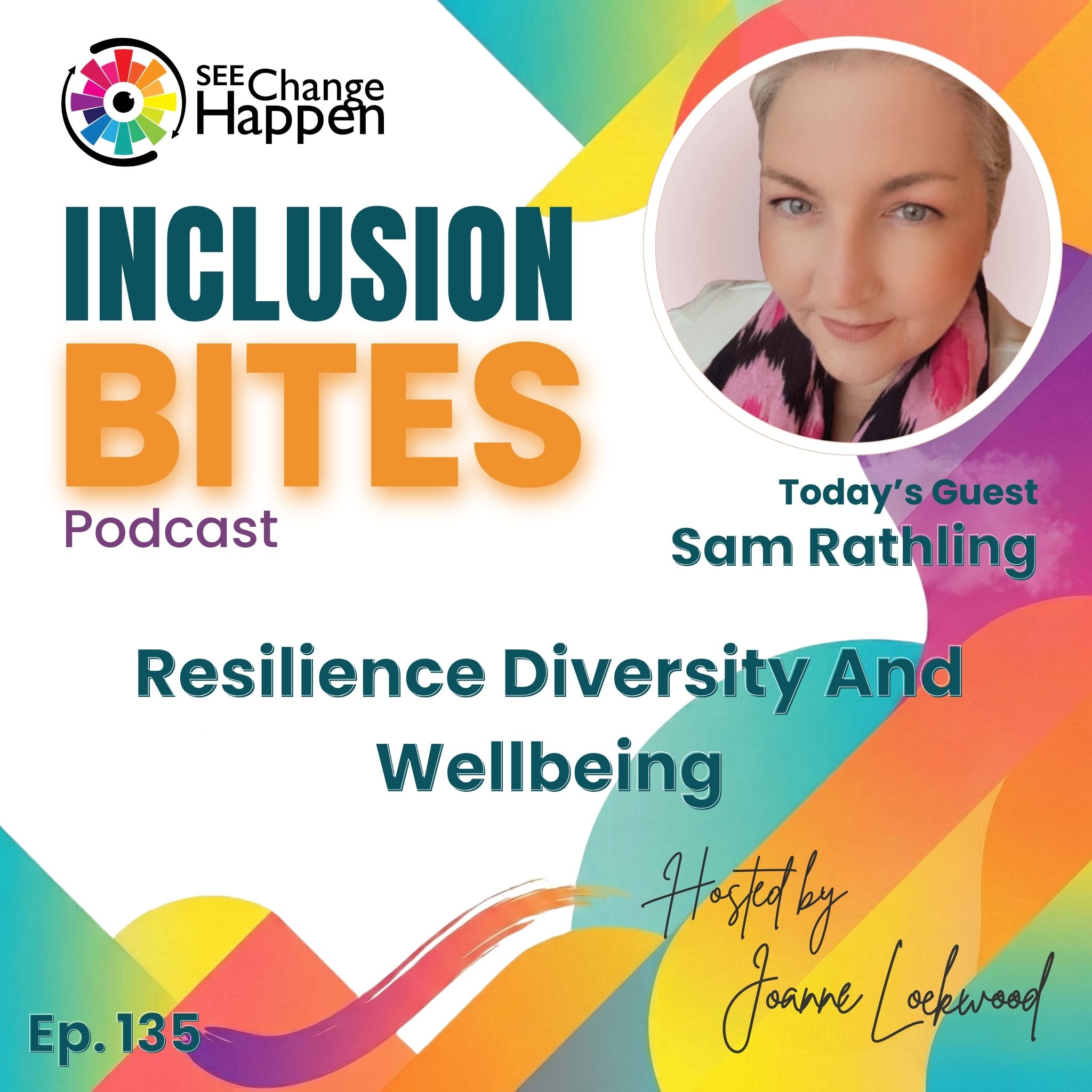
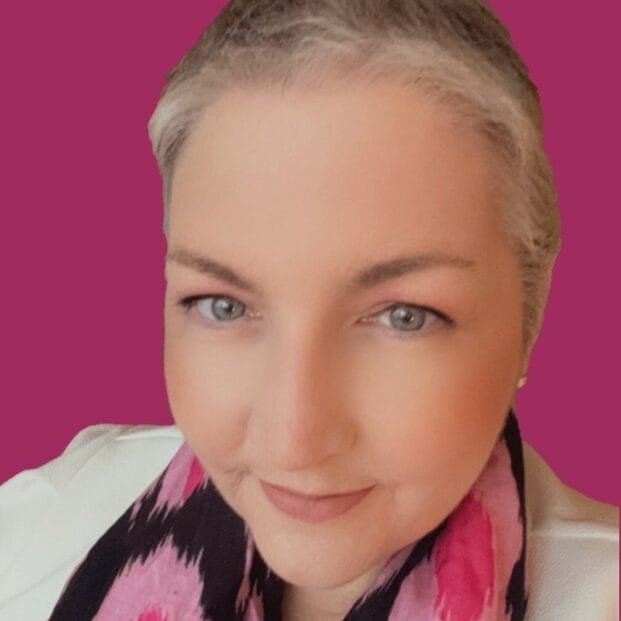
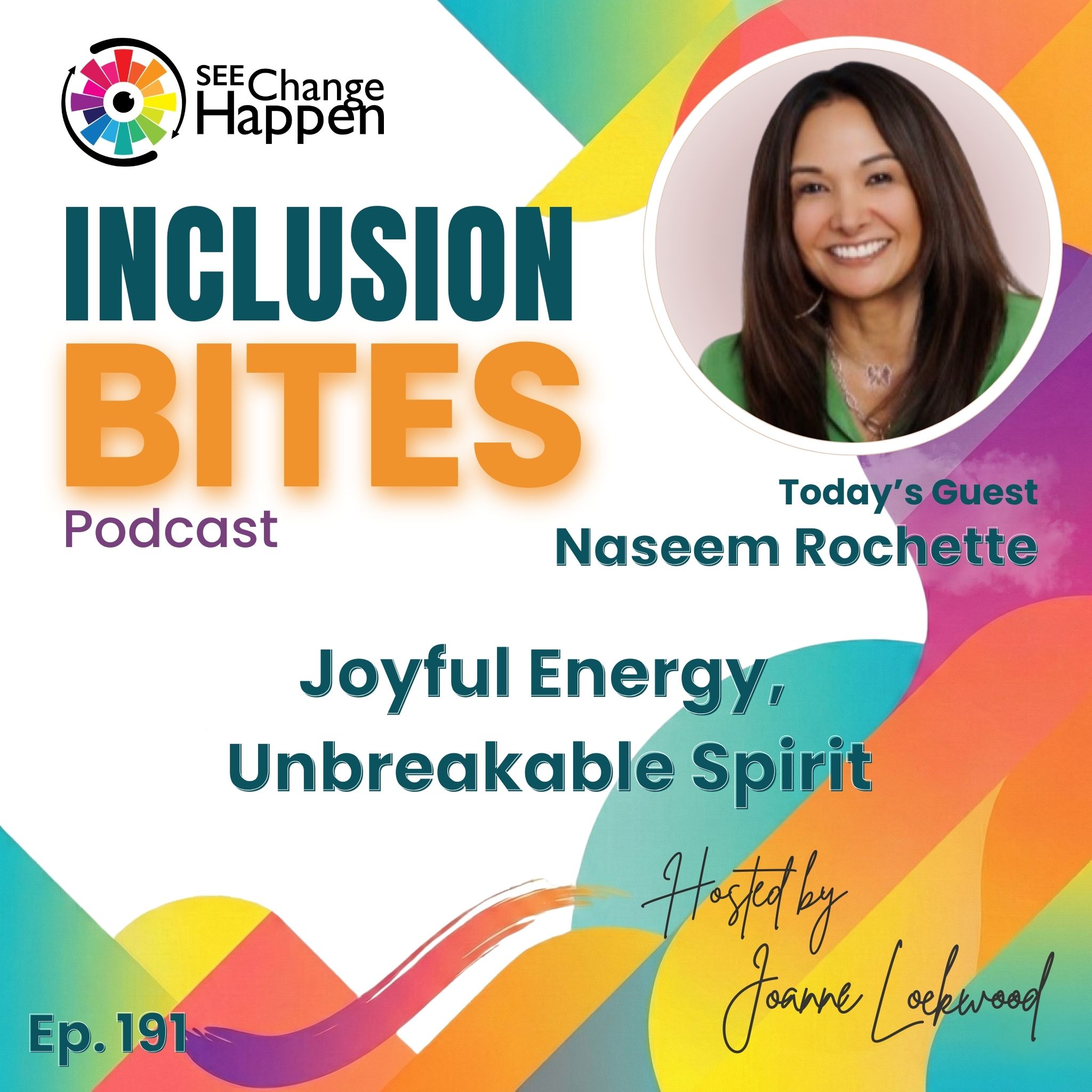
Sam Rathling shares her inspiring journey of overcoming cancer, highlighting the power of sobriety, authentic social media storytelling, and the importance of health vigilance, all while balancing her role as a single mother of neurodivergent children
In this episode of Inclusion Bites, Joanne Lockwood speaks with Sam Rathling about mental health wellbeing trauma.
“I think you are strong because you have no option to be strong because you literally are just going through the motions.”
Explore
Navigate this episode
Joanne Lockwoodhost
Welcome to Inclusion Bites, your sanctuaryfor bold conversations that spark change. I'm Joanne Lockwood,your guide on this journey of exploration into the heart ofinclusion, belonging, and societal transformation.Ever wondered what it truly takes to create a world whereeveryone not only belongs but thrives? You're notalone. Join me as we uncover theunseen, challenge the status quo, and sharestories that resonate deep within. Ready to divein? Whether you're sipping your morning coffee or winding downafter a long day, let's connect, reflect, andinspire action together. Don't forget, youcan be part of the conversation too. Reach out to jo.lockwood@cchangehappen.co.ukto share your insights or to join me on the show.So adjust your earbuds and settle in. It's time toignite the spark of inclusion with Inclusion Bites.And today is episode 135 withthe title, resilience, diversity, andwell-being. And I have the absolute honour and privilege towelcome Sam Rathling. Sam is a LinkedInand social selling expert, a cancer survivor,and a thriver. When I asked Sam to describe hersuperpower, she said, I'm also known as resilientrathoming. I've been through so much adversity,and resilience is definitely a superpower.Hello, Sam. Welcome to the show. Hi, Jo. Thanks so much for
Sam Rathlingguest
having me. It's great to be here. Absolute pleasure. I'm really
Joanne Lockwoodhost
excited to, have this conversation. We met
Joanne Lockwoodhost
probably 4, 5, 6 years ago, first time at a ProfessionalSpeaking Association conference, I think. We did indeed, yes. I remember it
Sam Rathlingguest
before. So Sam, tell me a bit more
Joanne Lockwoodhost
about your resilience, the diversity andthe well-being. Gosh. Where do I start? I think we have a lot to cover
Sam Rathlingguest
on our conversation today. But, I think a little bit about mein terms of my background, I've been through quite a lot of different challenges,both business and personally, in the last number of years. So I'm asingle mom to 3 children. I have an 11 year old, a15 year old, and a 17 year old. All of them have someform of neurodivergence, so I'm quite a champion ofthat side of things. My son, Oscar, has ADHD, Asperger's,and ODD. My middle child, Maya, has dyslexia, and myyoungest child, Liliana, has just been diagnosed with ADHD. So I havequite a lot of experience working with neurodivergence, particularlywithin children. I'm literally 1 year onfrom finding out actually this week was the was the week that Iwent to the GP having found a lump in my left breast.And this week that we're recording this episode is theyear anniversary of me going to the doctors and thenobviously getting diagnosed with breast cancer. So I am now through mychemotherapy, radiotherapy, and surgery. I'm I'm on the other sideof now my next 5 years of treatment, so obviously that's been a challengeover the last 12 months to deal with. And, yeah,quite a lot of different things in business, you know, few financial issuesaround businesses, hostile takeovers, you know, justvarious different things that I've gone through over the years. So I definitely call myselfresilient raffling for quite a few reasons.
Joanne Lockwoodhost
But just for anyone listening, we're we're recording this mid October2024. Yeah. So I think I remember seeing on Facebook that youwere ringing the bell after your last chemo session a few weeks ago.Is that right? No. It was, end of June 30th
Sam Rathlingguest
June I rang the bell because the very next day I did the race forlife. I didn't actually run. I walked very slowly. It was like the last oneround in about 1500, but I still did it. So yeah.So that was a moment, though, ringing the bell after all thatbrutality and what my body had been through. And, I think alot of people think, though, that the bell ringing is kind of theend, but it's really not the end at all for most people. It's it'sa milestone definitely, but there's a lot ofemotional and psychological trauma that comes with a cancerdiagnosis and a cancer journey. So I've still got another 5 years ofmedication and treatment and I'm on some quite brutal medication at the moment,which does still mean I'm immunosuppressed and I have to treat it like I'm stillin chemo. But the drugs are amazing now and I'm still here and I'm verygrateful that I am still here to share my story and raiseawareness and particularly given that it's October and it's breast cancer awarenessmonth, So that's another poignant thing. So, yeah, been alot. Been through quite a lot over especially over the last 5 years, I'd say.They've probably been my hardest 5 years if I look back on my life.
Joanne Lockwoodhost
Yeah. Yeah. When you go through something like this,there's a a propensity, if you like, tosay wow, you're brave, you've all this. And I'vebeen through phases in my life where people have said use the brave word tome. And it's a well meaning because it's coming from a point a positionof wanting to say the right thing, wanting to show some empathy, wanting to showsome compassion. But when people use it to you, it'skind of like, I'm not brave. I'm just doing what I had to do.Yeah. Bravery is looking back over your shoulder going, wow. That was a journey. You'renot brave at the time, are you? No. I think I think you are strong
Sam Rathlingguest
because you have no option to be strong because youliterally are just going through the motions. So you have totrust the process and, like, for the whole time that from diagnosisto, you know, going through everything when you're literally your whole lifeis determined by hospital appointments and waiting rooms and everythinggets put on hold. You're just literally it's almost like being on a rollercoaster that you didn't ask to get on and you cannotget off from. And you come off of itagain and then you're just literally thrown into the ether because there is literallyno support beyond, like, the physical treatment. Like, thethe the job of the doctors and the nurses and the chemo ward is toget you through that. But once you're through it, it's like you're you're kind ofthe appointments stop and the you feel like you're in a safe zone the wholetime that you're going through treatment and you've got lots of appointments because that's what'scontrolling your life, and then suddenly all of that stops. And it'slike, okay. What's next? Because now I'm in this I'm still
Sam Rathlingguest
being treated, but you're not in that you're not on the roller coaster anymore. You'reyou're kinda off the roller coaster, but it's like, okay. What do I do next?And speaking to lots of people that are goingthrough the same journey as me through online groups and physical groupsthat I go to for support, I find that there's a lot of challenges aroundpeople returning to the workforce, like, who have been through a cancerdiagnosis. And I run my own business, so I've worked all the way through.But a lot of the people I speak to who have been through that journeyand then are either returning part time or full time to theworkplace are finding navigating thatparticularly challenging, not because of them, but because of the people around them. And theircolleagues just don't know how to handle the conversation,and they don't know how to integrate with that person and speak to that personbecause of what they've been through. And I I think that's a big area thatcompanies need to face up to given that there are so many people beingaffected by cancer right now. I think it's a bigarea that needs to be addressed because if,you know, if I was working for a large organization, I had totransition back in. I mean, my my own friends don't even know what to sayto me. Some of them have disappeared off the face of the planet. That's justwhat happens. But then coming back into the workplace or coming back in todeal with relationships that you've had before you were diagnosed, I think that'sa big area for organisations to be aware of. Yeah.
Joanne Lockwoodhost
I probably get that, that awkwardness people must feel aroundyou. I guess I'm privileged because I'm the podcast host here. I feelI have a right to just ask questions. And ask questions. Many peoplemany people in in in your personal life are walking oneggshells. Do I sit a vine thing? Do I sit, what have I what haveI? I don't know how to talk about it. Do I do I draw attentionto the cancer? Do I talk, the brave comment? Or what do Ipeople walk away because it it's scared of getting it wrong, aren't they? Yeah. They
Sam Rathlingguest
they, a lot of the time, just don't know what to say, so they prefernot to say anything at all. Whereas I'd rather someone just say to me, like,I literally don't know what to say to you and just start the conversation thatway. I get quite a lot of messages. Obviously, I'm on LinkedIn a lot, soI get a lot of messages. People just going, look, I'm following your story, butI just don't know what to say to you. And I'm like, that's okay. Notmany people do know what to say. But at least you've said somethingversus, you know, completely dismissing you or ignoring youor, you know, only checking in because, you know, I have thatversus, you know, you never check-in on me before. So it's it's interestingthe different dynamics that happen around you in terms of you know, I havebest friends that have literally vanished. You know? They don't knowhow to handle it. And I think part of it is people notwanting to face up to their own mortality, and they just don't know how tohandle it. So instead of being there and stepping up, theystep away, and then they disappear. It's like, where did you go?
Joanne Lockwoodhost
Trying to give you space to recover, but not sure how toget themselves back in again, I guess. Yeah. And I and I have reached out.
Sam Rathlingguest
I've extended an olive branch to a couple of them who I know, you know,like, they have life going on as well. I get all of that. But youthink it doesn't really take much just to drop a text to go, how youdoing? But I'd rather that thanradio silence, you know. It's interesting. A friend of mine, had,
Joanne Lockwoodhost
he passed he passed away, unfortunately, a couple of years ago. He hadintestinal cancer, 2 tumours. And I went to visit him in thehospital in probably the last3 or 4 months of his life. And I tried to be as upbeat aspossible, but I also realised that you want to try and find abalance in line between being laughing and joking. Not too sombre,not too sad, but also respect the fact he was veryexhausted. He didn't have the strength to engage in a hugeconversation. And it was, I wouldn't say I felt awkward, but I felt it wasa really strange situation to be in. And my mother-in-law has been throughpalliative care, eventually passing away. My father's innursing home at the moment, going through sort of some tricky times.And it's somehow really difficult to try and find those relatable conversationalexperiences to talk about though. Yeah, you're worried about your life, andI'm worried about it's it's the fact it's raining outside. It's adifferent different sort of priorities, isn't it? It is. I think I think the best
Sam Rathlingguest
way to handle those is just to ask the person. Everyone's different. And just tosay, look, you know, how do you want me to show up today? Because Ican be happy. I can be I can tell you jokes. I can make youlaugh. I can just be here and not say anything. Like, how do you wantme to show up for you today? And I think just asking the personbecause they will be they will have good days, bad days, ugly days. They'llhave days when they just wanna sit and they just want some company. They'll havedays when they wanna ignore the whole world. So I think it's just about askingthat question and just being really open and having that chat with them to seehow they want that's how I would handle it. Not having been on the otherside of it. I would want someone to say, you know, how are you reallytoday and how do you want me to show up for you today? And thenyou it's less less uncomfortable. Yeah. No,
Joanne Lockwoodhost
I get that completely. Yeah. When you were going through some ofthis, you must have had obviously, your ownmortality came into the front of your mind, you suddenly realised that I'm not forever,I'm a bit broken, and I may not be getting fixed.What were the biggest fears going through your head at that stage? Are presumably your3 children, your business, your family? Yeah. It was
Sam Rathlingguest
hard. I actually wrote myself a letter. I'm gonna get a bit emotional. I wrotemyself a letter after I'd been to the doctors, and I'd been toI'd found the lump, and I I didn't know what it was at that stage.So I didn't know what stage it was, how aggressive it was. Was I riddledwith it? Like all these things, like when you're in this limbo period, when youare in the unknown, your brain just goes into this overthinkingthe world's gonna end literally, your life is gonna end and you might only haveweeks left. But I didn't know that at that point. So of course, as a
Sam Rathlingguest
single mom, like, that for me my biggest concernimmediately around my mortality was, like, what what are thewhat's gonna happen to the kids, you know? So I wrote myself a letterand it I read it back the other day actually, And it's about 5 pageslong, and it's all about that. It's all about the fear of the unknown, andI don't know what's gonna happen and all those kinds of things. And II guess we all know at some stage we are going we're not gonna behere forever. Right? But it really does bring it to the forefront. I mean, myfamily are all over the world, so dealing with this with my mum and dadin Portugal and my sisters in Australia and New Zealand, like, I literally haveno family around me, physically around me. They have been in a coupleof times over the last year, but I've generally kind of prettymuch done it mostly on my own with 1 or 2 really awesomefriends and my kids. But the biggest thing for me wasreally the children and just having everything in placefor them and it really did kick me into gear in terms of making surethat I had had and have everything in place for them because,yeah, you literally are staring your own mortality right inthe face. That period of time when you don't know what you're dealing with,all those times when you're in that limbo period, they're the hardest because you youjust don't have a plan. You don't know what's gonna happen next. As soon asI found out what was happening and I had my plan and I'd met withmy oncologist and I was like, right. Okay. It's gonna be this and this andthis and I'm gonna be okay, hopefully. It waseasier. But there was a couple of weeks in that early literallya year ago, right in this week, actually, a year ago today,was that. That was all going through my head. So it's very hard. Did you
Joanne Lockwoodhost
give your, tumour a name? Yeah. Larry the lump.Larry the lump. Oh, I love it. Is that is that part of the processwhere you're encouraged to name it, to to see you're devil or you're a beast,is it? I don't think you were encouraged necessarily. There's very little, like, they
Sam Rathlingguest
just give you leaflets. They're like, you have breast cancer. Like, here's someleaflets. Go and read them. It's literally like there's nomental, psychological support unless you go looking forit. There are charities out there that provide it, obviously. I mean, there's someamazing ones out there. But I needed to humanize it and make itbecause I I told my older kids first when I was being tested becauseI when I didn't know what it was, I said, look. This is happening forme. I need you to kind of be a bit, you know, flexible with me.I mean, I might not be myself right now, but I didn't tell my littlemy little girl. She's 11, but she's got ADHD, and she's quitechallenged. She like, I'm her world. She doesn't have any contact with her dadwhatsoever. So I didn't want to speak to her about it until I knew forsure what I was dealing with. And I called it Larry the lump when Ihad that conversation with her because I literally was like, Larry'sgonna leave the building. And her her defense mechanism ishumour. So which has been amazing because she's kept me laughing all the way through.But she's like, mum, are you gonna have a bald egghead? I'm like, yes,I probably will. I'm gonna lose all my hair. And she's like, really? She's like,can I lose mine as well? I'm like, would you do that? She's like, ofcourse, I'd do that, mum. So my 2 girls actually shaved their hairoff. We did a fundraising event for Cancer Research UK, andthey both shaved their hair off. And they were 11 and 14 at the time,
Sam Rathlingguest
and I thought that was amazing. Like, my kids just doing that withme. You know? And they're at secondary school. They're not in a school where, youknow, that they're that age where image is everything. And for them to do thatwas amazing. But, yeah, I think calling my lump, Larry,just made it a bit more, like, easy for me to have the conversation becausethat it was about removing Larry, and Larry went on holiday to America getto get tested and packed a suitcase. And we had all those little conversationsbecause they test the tumor to see to see ifyou will benefit or not from chemotherapy. So my tumor went all the way tothe States to get tested, to get a score out of a 100 as towhether or not I would need to have chemo or not. So again, that wasan 8 week wait. And things like that just, you know, you've had thesurgery. It's out of your body. Now you're waiting to find out if you're gonnago into 6 months of chemotherapy or not, but you have to wait 8 weeksto find that out. So it's it's those those periods are the hardestwhen you don't know what the next thing is. What was the hardest thing for
Joanne Lockwoodhost
you coming to terms with? Was it having losingyour hair? Was it the surgery? Was itbecause steroids make you bulk up, change the shape of your face and things.What what happened when you looked in the mirror? What were you seeing? I hate
Sam Rathlingguest
I hate the mirror. I still do. I think the hardest thing for me wasthe chemotherapy. The surgery I found, I actuallylike the surgery because that for me was like the physical removal of thecancer. So I was like, okay. It's out of me now. So thatwas good. So I didn't mind the surgery. I had a lumpectomy, nota mastectomy. So I did I went into theconsultant saying, take them both off. Like, get rid of it. Like, you know, justtake them both off. I don't care. Like and she she said to me, Sam,let's just take the emotion out of this and talk medical facts and I cansave your breasts and give you surgery and radiotherapy, and it will haveno difference in the outcome. So we decided on a lumpectomy, so Ididn't have, like, major it was a major surgery, but it wasn't, like, asbig as, you know, taking both of them off. Andwhen it came to the most brutal part ofit was definitely the chemotherapy. I was not I wasphysically prepared for it. I knew it was gonna be hard. I knew I wasgonna lose my hair. I knew all of that was gonna happen, but I hadno comprehension of just how difficult and what atoll it was gonna take on my body, but and my brain interms of my mental resilience that had to go through that. Justthe the the fact that you're literally voluntarilywalking into somewhere where you know they're gonna inject this awfulstuff into you that's gonna make you feel so sick andreally ill. I put on 15 kilos with the steroids in 9weeks. It's a lot. My face is all puffy. I lost myhair, like all of that stuff. I'm just so tired all thetime. And I've just made a video the other day, actually. It's up on myInstagram, my TikTok, of my year end pictures. It's about a 3 minutevideo. And you can see the difference in, for me, from when I first wentinto surgery to all of the chemo. But I think that I diddefinitely hit a wall. There was about it was about the 4thround out of 6 and I hit a wall and I looked in the mirrorand I took a picture of myself and I never thought I'd share it, butI have. And that picture for me is, like, the epitome of,like, the worst time in my life ever. Like, I've justI just felt so awful. But I'm through it now. You know? I'm through theother side of it, and I hope I never have to go through it again.But now it's about risk of recurrence and keeping it away. So I'm onlots of different drugs and tablets and and medicationsto prevent it from coming back. So I'm now onhormone treatments and targeted therapy. So I'm on, like, an oral chemotherapy,but I also have to have 5 years for hormone treatments, which means I'm medicallyinduced into menopause now, which of course brings all of the things thatcome with that as well on top of the side effects of the drugs andeverything the other drugs. So it's a lot, butit has meant that I've had to really justhandle everything that's thrown at me. And life carries on. I still haveto get my daughter to the athletics track 4 times a week and still haveto get the kids to school and I still have you know, do life.You can't just put your whole life on hold. So I think the biggest thingfor me was managing all of that whilst you're feeling theworst you've ever felt in your life and battling through thewhole thing. Presumably your your kids
Joanne Lockwoodhost
must have matured immensely in the last 12 months.And I I would like to think surprised you with their theirlevel of maturity that's come out. Yeah. 100%. What's something to be noticed? I'm so
Sam Rathlingguest
proud of them. I mean, myself and my eldest son were having some challenges acouple of years ago. I ended up off the back of himkind of going off the rails a little bit thinking I need to get ahandle on him and decided to go sober. Like, we have that incommon, sobriety. So I'm nearly 700 days sober now, whichwas about 10 months before I got diagnosed actually. But I have noticed a massiveshift in his maturity. You know, he looks after me, he makesbig cups of tea without being arsed and he hugs me lots. Youknow, he wasn't hugging me a lot because he's a he was a 16, 17year old boy and he was doing his own thing and whereas he's now alot more caring, he's got an amazing girlfriend and I see him being like thatwith her now and it's amazing to see him doing that. So I think he's
Sam Rathlingguest
definitely matured a lot And his perception of the world asa teenage old, you know, 70 year old boy is everyone's invincible. Andclearly, I think he realizes now that, you know, not everyone is invincible.But I think his level of maturity has been so impressive, especially withall the challenges he's had in his life with him beingmixed race, bullied in school, neurodivergent. He's got alot going on, that boy. And the fact that he's handledthis so well and amazingly has been great. My middle daughter Maya,she's been an absolute trooper. I mean I was my mum had breast cancerwhen I was a teenager, so I do relate to how I felt. I mean,I I literally went turned into party girl. Like that was my way ofhandling it. I was not there and I feel bad now because I know whatmy mum was going through now. And I'm like, wow. I really should have probablybeen there more for my mum at the time. But, obviously, she had my dadand she had a, you know, an amazing, loving husband to support her through it,but I kinda went off the rails a little bit, and it really derailed me.And I think looking at my kids, like, that could have happened to them. Itdidn't. And Lily's just been, you know, my youngest. She's just beenshe just keeps me laughing all the time. She makes jokes out of everything, andshe she really, like, she really doesbring humour into the whole thing and she just makes me look at. She'll lookat me and she'll literally she I showed her my picture of my worst dayand she just she laughed so hard. And I was like, it'snot funny. And she's like, but it is, mom. Look at you. So,yeah, it's it's one of those. They all all handed it slightly differently, but I'msuper proud of all of them. I really could not have got through it withoutthem. Like, they've just been amazing. Even your worst day,
Joanne Lockwoodhost
it's best than not having that day at all, isn't it? So Actually, a
Sam Rathlingguest
100%. I mean, I'm it's it's so hard because, like, you talk about it andyou think, well, I'm so grateful because, you know, my sister losther best friend to cancer whilst I was being treated. And I had totell her, knowing that her her best friend was dying in NewZealand. And I'm like, it's just, you know, a couple ofmy other friends or people I know through athletics, they've lost friends. So I know4 or 5 people that have died from breast cancer who I don't know necessarilypersonally, but they're connected to my network. And I think, well, I'm still here.And, you know, it's one of those. It's like,I mean, I'm glad I I mean, I found my lump. I was 47 whenI got diagnosed. If I had waited for a mammogram, they don'tstart screening until 50. I had done a mammogram 2years prior and it had shown nothing at all. So my tumour had grown veryquickly. And I was checking myselfregularly because my mum had breast cancer and she actually had breast cancer twice andshe also had ovarian cancer. She's still here. But everyone Iknow personally that's had it is still alive. It's the people that of peoplethat have lost people. But but for me, I was just like, I needto check myself. And if I hadn't been checking myself, I wouldn't have found thelump and I wouldn't be I don't think I'd I don't believe I would stillbe here. Like if I'd have waited for my screening and not actuallybeen checking myself every month. So I have it in my calendar and anyone listeningto this, please, please, please check yourselves. There was breast tissue in thebreast, in the collarbone and under the armpit. It's not just theso go watch a YouTube video and go learn how to check yourself because itcan happen to anyone. Everyone thinks, oh, it's never going to happen to me. Butit can literally it's not discriminative at all. It can happen to anyone. We've seenthat with very high profile people, obviously, being diagnosed withcancer over the last year. So, yeah, it's one of thosethat's just I feel, you know, sograteful. And I you know, you go into the chemo ward and you're in there.It's like a meat factory. There's like 60 chairs in there and you're literallyyou're just like in. And as soon as some one person leaves the chair, there'sanother person in there and it's just it's like another pandemic that'snot being seen. It's there's so many people going throughtreatment or going through cancer. And I mean, just the one
Sam Rathlingguest
little chemo ward that I go to, they see 2,800 patientsa month and they have the stats up on the board and it's like, wow,like 2,000 and that's just a tiny little I live in Derby. It's not abig town. It's not like it's a town. It's officially a city, but it's notthat big. But 2,800 patients going through chemo everysingle month in that ward Like and you sit there and you're in this you'renot in a you know, you're literally in a big bay and there's 6 chairsover there and 6 chairs over here and you're literally opposite each other and yousome people wanna chat, some people wanna sleep, some people wanna just, you know, notbe there at all. It's just it's quite a fascinatingexperience to go through it and just really see behind thescenes of what is really happening, you know, in this.It's it's so many people, though. Yeah. And
Joanne Lockwoodhost
I a couple of years ago, I got the, the poo testkit through the post to do, and I put it on the side and thought,oh, I'll do this. So it looks a bit complicated. I had to get myselfin the right frame of mind for it. Eventually, my wife nagged me,Marie nagged me. She said, no, no, no, no, dagged me, that's the wrong word,just nudged me and said, come on, do it. And I thought, oh, I haveto post it off. And then Marie got hers a couple of years later,and she, again, I had to push hers because it's kind of thisreluctance to sort of get yucky with it and dip it into the pooand send it off. And she did it. And then about a month later,one of our friends posted on Facebook that she'd done thepoo test, and it came back positive. Andyou suddenly think, wow, I was laughing and joking, that invincibility,it would just be whatever. And suddenly someone you knowdoes it, and it's an adverse result, and you think, wow, if Idid, if that had happened in reverse, but we found out about her first, Iwould have just done it straight away. Yeah. So we've got to think, it's notit's not only breast cancer, there's No. All sorts of
Sam Rathlingguest
cancer. All sorts of cancer. Yeah. You know, the main thing is, if anythingis unusual to you or not normal, like, thebest thing to do is just to go get checked because 9 times out of10 is not gonna be cancer. It's gonna be something else. But if anythingis abnormal in your body, like, just get to know what your normal is because
Joanne Lockwoodhost
it would be any part of your body, obviously. You know? But things
Sam Rathlingguest
like, you know, when I told my friend group that I had breastcancer, they were like, oh, yeah. I should get mum you know, I've been gettingthose letters through about getting a mammogram or, oh, yeah. I keep getting asked forthe you know, to go for a smear test or whatever it is. Like, allthese things that you just put off because life is busy. And then it tookme getting cancer for my friends to go, oh, yeah. I'll book that mammogramnow or I'll get you know, I'll start checking myself or you know? And Ithought, wow. If that's just my friend group, how many other people out there arejust not are ignoring letters? And the amount of women I sawin there with cervical cancer that were ignoring their letters, it was,you know, amazing. And one mother and daughter came into the chemo ward, actually, and
Sam Rathlingguest
they were in there for the first time. And you can always tell when it'sa first timer because they only let you bring a guest on the first timeyou go. The other times, they're too busy. You can't actually take someone with you,so I knew it was her first time. And she said, oh, yeah. I kepttelling my mum to go and, you know, go for her smear test, and sheshe ignored it for 4 years and they found a tumour the size of anorange in her cervix and it's like she just because she didn't go andget checked. So if you are listening to this, obviously, like, you know, I'm abig champion of raising awareness, but the earlier they find anything,the the more they can do to help you. If you leave it or ignoreit or deny it, then it could be too late. So anything that'sabnormal for you on any part of your body, just go get it checked, please.
Joanne Lockwoodhost
Yeah. And if if you're a man listening to this, you know, copper fill, youknow, it's a particular prostate cancer because I'm
Sam Rathlingguest
talking to both. Yeah. Both. Men can get breast cancer too. Men can get allsorts of cancer, as can women. So, again, it's just copper fill of all yourbits. Whatever bits you've got, check them out. I
Joanne Lockwoodhost
think you're right in saying, even if you've got like a cyst, and it'sonly a cyst, get it checked out, go for the mammogram, whatever it may be,and then understand what your what your normal is. Normal is. Yeah.
Sam Rathlingguest
Exactly. Yeah. 100%. I mean, I the only reasonI I mean, obviously, I do check myself all the time, but I just happento be wearing something different to what I normally wear to go to bed. SoI could only find like, I just grab, like, a really tight white t shirt,And I'd never normally wear a white tight T shirt to bed. Like, that's notwhat I'd normally wear in bed. But I put it on, and then I waslying back on my pillows. It was about 30 degrees. And because I wore waswearing a particularly tight top, my breast was splayedin slightly a different way. And I was like, oh, what's that? And Ijust thought, oh, I didn't feel that before. And it my tumor was the sizeof a walnut. Like, it was 2 and a half centimeters, and it was rightat the very top. But if it had been buried anywhere, if it wasn't righton top of my left breast and it was somewhere underneath, like, Iwouldn't have felt it or wouldn't have found it. But, thankfully, like, that white Tshirt literally saved my life. But I found it on a Friday night, and, ofcourse, the GP was closed. And I'm freaking out all weekend. I'm like, I needto speak to GP. I need to get to GP. And I literally rang firstthing on the Monday morning and booked myself in that day. Andit's a very quick process once they do suspect anything. It's it's veryquick in this country. So I think we're very great I'm veryblessed that we have the NHS and the staff have been amazing.And once you're in the system and you're you're going through it, like, it theydealt they dealt with it so quickly. But, yeah, I just can't thank themenough. I wrote the all the staff in the cancer ward and thechemo ward, a beautiful poem that they've got in their staff room now,and I bought them in a massive hamper full of, like, face masks and chocolatesand coffee and, like, all these nice snacks because there's so many people in there.Like, I've probably interacted with over 200 staff in the journey.So I just, yeah, I just felt like I needed to do something for thembecause they're so amazing. You mentioned in in that that you,
Joanne Lockwoodhost
you stopped drinking 700 and something days ago, you said, I think.
Sam Rathlingguest
Yeah. And, what what was the the trigger? Because I
Joanne Lockwoodhost
also stopped drinking a 10 10 days ago,I think I am now, alcohol free. Just curiousabout what was your motivation? Waking up with ahangover one day, or? You know, most people do think
Sam Rathlingguest
that it is that, but for me it wasn't. I felt like I had Ihad quite a major incident happen with one of my kids. Wewere away in Bali on holiday and all my children were withme. One of them had decided in his wisdom that he would giveaccess to my house to all of his mates and all oftheir mates. I came back to a crime scene and 27teenage boys had moved into my property and had destroyed it to thepoint of no return and it was awful and it was justI don't know why he chose to make the decision to say yes, of courseyou can use my mom's house while we're away. The police raided my house whileI was in Bali and yeah, it wasn'tfun. I got a phone call from the police onNew Year's Eve basically saying there was nothing they could do. They had 4 anda half hours in my house, got all the forensics they needed and basically decidedit wasn't worth them spending any energy on it becauseit was just a bunch of kids. And they they had access to the housebecause he gave them the key safe. And I just thought, I have totally lostcontrol here. So they they didn't break in as such.
Joanne Lockwoodhost
They had legitimate they were given access? No access. And I got the phone call
Sam Rathlingguest
from the police and I just thought, something's gotta change. AndI felt like I lost control of a lot of it wasn't that theonly thing, but there were a few other things leading up to it. We hadbeen clashing quite a lot and I just felt like I had no emotionalcontrol. I had noticed I had been drinkingmore and more to handle the challenging relationship with my sonleading up to that. I just thought and it was New Year'sEve and that's the one day of the year when you'd thinkthat. I thought this is going to send me one way or the other. Ihad been noticing I had been drinking more and more on myown in the evenings and I was using alcohol todull a lot of the challenges I was having with that relationship,which is now amazing. But back then it was really tough.I just was like, something's got to change. I took the calland I knew I was going to hit the bottle or somethingneeded to change. I don't know what it was. I don't know why I decidedin that moment. It was about 6:30 on New Year's Eve and I thought, no.I I literally have to get control back of my life and back of mykids, and that's when I made the decision to gosober. Yeah. I think for me, it was, just a realisation that
Joanne Lockwoodhost
I was I I I've been drinkingsince probably the age of 13. Many of us drink from our teens,don't we? I spent a few years in the Royal Air Force, which didn'thelp. That was kind of a training ground on how to drink. And Ithink that sort of set the pattern. And I wasregularly drinking too much from the age of 17or 18. And in my 30s,I joined a club. And that clubheavily revolved around drinking. Going out anddoing stuff, travelling around. And I think it just became ahabit. And I realised I didn't like the person who I was. Itwas my gender transition, I fixed onepart of my identity that wasn't working for me. And I realised there was anotherpart of my identity, which is this alcoholdependent person and I'm not going to debate whether I was an alcoholicor alcohol dependent or just propped up by alcohol, however you want todescribe it, but I was certainly propped up by alcohol. Andit led me to make decisions I wasn't proud of. It put me insituations I wasn't proud of. It made, rather than gohome when the bar shut, I'd be trying to find somewhere to get anotherdrink. I remember being in Estonia on a speaking gigand we managed to find a kebab shop in Estonia thatserved alcohol at 4 o'clock in the morning. I was in Melbourne,Australia and we found a service stationat 5 in the morning, we were selling alcohol in the bottle, and we wentto the service station, bought alcohol, and carried on drinking. It was like, you wakeup from these things and think, why did I not go to bed? I do
Sam Rathlingguest
that. Yeah. No. I was the same. I definitely resonate with alot of what you've just said there. I worked for a drinks company. That wasmy training ground. I worked for Diageo for 4 years andliterally sold alcohol. Alcohol was my life and I learned how toreally cope with drink very, very well. But I hadtoo many moments of bad decisions,blackouts, like not remembering 3 hours of an evening and I'm like, whatam I doing? So I think I definitely was usingalcohol to numb the pain of quite a lot of things. I've gone through areally challenging divorce. I have a toxic relationship with my ex.We went from having a really amicable fiftyfifty arrangement with the children to mehaving them 247 and him literally disappearing off the planet.So absent father, step you know, then I'm handling all of that plus growing abusiness, plus COVID, plus all these other things and I'm like, that was my copingmechanism. Definitely, 100%. So Iresonate with all of that and I didn'treally have a lot of control over that. I would go out but I'd go
Sam Rathlingguest
out out and I'd really go out. I'd be able to drink alot. Out out. I really would have to drink a lot inan out out session, but then I found myself drinking on my own in theevenings and having a you know? And I'd open a bottle of wine, but bottleof wine would be gone. It's like you know? So I feel like itwas a combination of things, but I feel muchbetter now that I don't. And I think, well, maybe there's a reason why itall happened now because 10 months later, I got diagnosed withbreast cancer and my liver was probably in the best condition it could befor handling, having to deal with all of that. So I think insome ways, I'm glad that all of that stuff happened because if I hadstill been drinking, maybe I wouldn't have found the lump. Maybe I wouldn't havebeen as aware. Maybe I wouldn't have been ableto cope with the treatment and the chemo as well as I did. I mean,I know it was brutal, but, you know, I've come the other side of itand I'm I'm out the other side of it now. But, I mean, if anythingwas gonna turn me back to drinking, it would have been a cancer journey anda cancer diagnosis and I didn't. I haven't touched a drop since then. SoI'm quite proud of myself that I managed to handle allof that, all of the chemo and everything without without alcohol beingat my side because I think it would have definitely played a partmassively if it had been 1 year earlier. That's quite a thing you're just saying
Joanne Lockwoodhost
there, that you've you've come out through this and youhaven't needed to use alcohol as a crutch to get you through this. So ifyou'd have if you'd have kind of half stopped or cut down, itwould still be in your life. But once you make a decision that it's nolonger in your life, it's not the crutch, it's not the support mechanismyou turn back to, is it? No, definitely not. And, you
Sam Rathlingguest
know, I have friends that have gone through the same journey as me and thatwas that that was their coping. They'd go in, get their chemo, take theirwristband off, go over to the shop and buy 2 bottles of wine and downit so that they could then go into a deep sleep for 2 daysbecause that's what you have to do when you've had chemo. Like, I would sleepat 18 hours, like, straight after a chemo session and just not come out ofit. I'd go into my, what I call it, called it my hibernation. ButI have friends that would literally go into their hibernation and do itthrough drinking copious amounts of wine before they went into hibernation. But Ithink, if I'd have actually been still drinking when Igot diagnosed, I don't think I would have handledit as well. Like emotionally or physically, I thinkmy sobriety made a massive difference to my treatment, Ibelieve. I've kept in touch with you mainly
Joanne Lockwoodhost
from a distance through your social media posts and you mentionedyour photo montage that you posted recently and I remember seeing that lastweek or week before whenever it was. And I was struck with just the powerof those photographs, those images, andhow, I don't want to use the brave word, but how it meant somethingto you to say this is me, this is who I am, this is whatI've come through, and I'm owning this. And I've had a lot of strength inthere, a lot of ownership. But you are, by definition, a socialselling expert. And we know that personal brand, howyou present yourself on social media, has to be has to have alevel of humanity in it. It's not all me, me, me. It's got to beauthentic, isn't it? And that's, that's the key we're talking about here. Yeah, absolutely. I
Sam Rathlingguest
actually did a session with some clients the other day and we talked about,I I gave 13 different words to them tothat make up the power of a personal brand. And a lot of them arelike, well, my content's not working or I'm not getting much engagement. I'm like,well, score yourself on these things. Like, score yourself on these13 words. And one of them was vulnerability and authenticityand, you know, it's those kinds of things that draw people towards you. And Ithought long and hard about whether or not to share my journey on social media,and I I knew I was gonna do it in some way, shape, or formbecause that is who part of who I am. Sorry if the dog's barking inthe background and there's madness going on outside. Sorry, Joanne.Don't say That's right. About me being on the show. So, yeah, vulnerability,authenticity are key. And the more you can showup as a real human being in through your social media, the morepeople are going to be drawn to you. I don't talk about everything. I mean,half the stuff I've shared with you on here has never gone near my socialmedia. Right? Some of the stuff we've talked about here, I would never in a1000000 years post about. But, you know, I think I
Sam Rathlingguest
did talk to my business partners and we and I said, look, I really feelstrongly about talking about this because I have a following and I have a voiceand I feel like I can do some good through the bad, through fundraising,through raising awareness. And I think, well, if someone out there that chose not todo business with me because I'm going is really important becauseit will it does draw the right people towards you and it does attract clientsand it does show that you are human. And I probablydo it to not to the extreme, but probably more than most becauseI talk about everything that I've been through, all of the things I've the adversityI've been through, my sobriety journey, my cancer journey, my failures in business,all sorts of things. My kids and their neurodivergence, I talkabout that a lot. When I did a post about Oscar last week and howhe's come through bullying and, you know, through his challenges throughneurodivergence and how we've our relationship has come through the other side. And that posthas had a 160,000 impressions, which is a lot on LinkedIn at the moment. Thealgorithm does not do that these days. The amount of amazing things that havehappened off the back of that one post about his neurodivergence and hisdifferences and his bullying and all of those things. You know, he's been gifteda car by a lady who didn't know me. He's been invited in for 2days in in Google's headquarters to learn AI with Google, which is amazing.And he's been offered mentoring by some incredible,really, really senior people within the AI and generative AI and data compliance.And, like, it's just amazing what's happened off the back of just one poston LinkedIn that was me being vulnerable about about,diversity and neurodivergence and all these things and racialbullying and things like that. But the amount of amazing, incredible things that havehappened to him and to us since we posted about it isamazing. But I could have chosen not to share that, but I felt it wasimportant because his story is very inspiring to a lot of people.The amount of people that were like, I got bullied. I resonate withit. The lady from from Google was like, that's my story and mybrother's story. That's how we went through school. Andit's incredible when you do share those vulnerabilitiesand real authentic things about the things that are going on for youand you have gone through, the right people step towards you. And Ithink it's important that we show up on social, not justas the professional mask, but like actually really who are you?Because that's what really connects us as human beings.A lot of people forget that behind every social media profile is a real humanbeing, and it's that authentic connectivity that you can get through through yourposts that will inspire others and inspire them toreach out to you. I often say to people that the difference between
Joanne Lockwoodhost
AI writing something and a human writingit is the human has a soul. AI hasno soul. And without getting spiritual about this, you cantell the difference between artificial, because it's justheartless, there's nothing in it, there's no feeling in it. And weneed I always think inclusion was all about feelings, howwe connect with people, it's all about feelings. And if we're not careful, what wedo is we sanitise everything down to what people shouldsee about us. And pre filter everything. Sowe're almost taking the ability for people to get to know us. Andpeople buy from people, don't they? 100%. Yeah. I mean, I teach this all
Sam Rathlingguest
the time. I mean, I work a lot with salespeople in big corporates and businessowners when I'm doing my, you know, training and talking about social selling.And it it really is that people are so scaredto show up that way, or they just don't know what to post or howto post. And I'm like, just think about just what you champion. Like, get behindyou probably care passionately about 3 things outside of work that youwould be happy to talk about so you don't have to share every deepest secretthat you've got or every, like, everything that's happened to you, but just think aboutwhat you can champion. What do you stand for? What do you wanna get behind?What do you actually care about outside of you being a salesperson or outsideof you being a business owner? Because those are the things if you can bringthem to the newsfeed. They're the things that will connect you with other people, whetherit's, I know, you're training for a marathon or you're going through, you know, somemental health challenges or you've your kids or whatever it is. Like, justtalk about things that are real and human outside of you being that professional.And amazing things happen when you do that. Yeah. A friend
Joanne Lockwoodhost
of mine that I've known for many years, she posted on LinkedIn recently,after hiatus of about 6 months, that she's got brain tumour.And it's apparently, from what I gather,untreatable. And so she's now living with aan expiry date, for want of a better way of putting it. Although we allhave expiry date above our head, we just don't know how soon that is.She's also been through a challenge with achild gender transitioning as well. So there's a huge amount going on in her life.And she's always been very authentic with sharing that side of her. Butshe gets a lot of trolling and hate and pushbackby showing that personal side. Did you get anything pushed back to you?You know, the this is not allowed on LinkedIn crowd coming in? I
Sam Rathlingguest
I've never had genuinely never had any trolling,hate, whatever. I've never had it. My business partner gets it quite a lot, buthe's very opinionated and very divisive on purpose on hispost. But I have never had it. I've always I think because of theway that I obviously, obviously, over the years, I've become quite a goodstoryteller, and I think the way that I wordthings and the way that I structure things in a way that it's not justabout that, it's also got lessons or whatever it is in there, I've neverhad hate on anything, on any social. Like, I've never had to deletecomments. I've never had any nasty inbox stuff at all. I've never hadany accusations about anything. And I don't know why. I don't I think
Sam Rathlingguest
LinkedIn is quite a professional platform anyway, but it's unusual foryou to get that kind of thing. I've never had the whole like, oh, whyare you showing this on LinkedIn? I mean, obviously, I'm a LinkedIn expert, so Idon't generally tend to get that too much, but I've just never had it. AndI don't know why. I think because of the way that my personal brand isand I give so much value as well around the topic of LinkedIn and socialselling that I think people don't mind me also sharing my other side of thingsbecause I also do it in a way that it is inspirational topeople rather than it just being a attention seeking thing. Do you knowwhat I mean? It's I think I'd do it in a way that is probablya little bit different to others maybe. I don't know. Thinking about the the
Joanne Lockwoodhost
takeaway from you know, what are you gonna take away from this? What what's thewhat's the impact on you on how you think or feel or something?Yeah? Yeah. Other than just woe is me. It's Yeah. Exactly. Woe is me,and this is how you can Exactly. Take yeah. So I think
Sam Rathlingguest
that's how I always like to angle. I always try and find a lesson orfind a something that people can take away from the post that isgonna help them in some way rather than it just being, like, this is happeningfor me. You know? Yeah. I think that's probably it. I don't know. Yeah.
Joanne Lockwoodhost
I I always remember the, the broadcaster, Chris Evans, saidyou've got to be kind of Marmite. Half the world's gotta love you and halfthe world's gotta hate you. Because once you'vepolarised people, that that sells. You know, people have become ravingfans of yours. Yeah. Whereas if you try and be spam and bland and andsomething for everybody, it never quite hits the mark, does it? No. It
Sam Rathlingguest
doesn't. And I think a lot of people do show up as the boring versionof themselves. Like, you know, you meet someone on Zoom or one to 1, andyou say, oh, they're amazing. And then you look at their online social presence, you'relike, that's not you at all. Like, that's just boring and dull. Like, why areyou not showing up as the, you know, the person that you are? I'm nottalking to you directly, obviously. But just when you meet people, you think, wow.Like, why are you why are you not bringing that to the like, that's theperson I wanna see on the newsfeed. And ultimately, you gotta remember why peopleare on social. They're usually on social because they're bored or they're trying to sellsomething for their own selfish reasons. So if you're not entertaining,inspiring, educating, like, you know, they're just gonna scrollpast you and you're just gonna be like in the boringness of most people's posts.And people wonder why they're not getting traction on their posts. It's because theyliterally are boring. Like, they're showing up as the most boring version ofthemselves. They are. Yeah. I remember
Joanne Lockwoodhost
I I was doing a pitch for to some speaker bookers once, and andone of the feedback they got was they're not sure about me because I Ididn't come across with any personality. And I thought, blimey.Yeah. Normally, I ooze personality. I'm kind of jokey. I'm I'mbouncy. I'm all over the place. I thought, you're right. When I when I wasin this mode, my brain was in be professional, befocused, be this, be that. And the only thing I wasn't being was me.
Sam Rathlingguest
You. Yeah. And it's learning how to just lean back and
Joanne Lockwoodhost
relax and and be yourself. And I found myself doing thatmore, doing online training recently, where think in the early stages, theCOVID days, we were trying to be very professional, very kind ofup. But now I'm very much more lean back, more relaxed, morecomfortable in my own skin. And I feel thedifference in me, and I think the audience feel the difference when you can showup as well. Yeah. I I think it makes a big difference. Like, how you
Sam Rathlingguest
the more you are you, the the more you show up as your authenticself and not this mask or this professional image that you wanteverybody. I think that that really has having, youknow, done that more and more obviously recently. You know, themessages I get, all the people that step towards you think, well,anyone that doesn't want to work with you is not gonna step forward anyway, andyou wouldn't want to work with them. And, you know, if they can't handle youas you are, then why would they want why would you want to do businesswith them in the 1st place? So I think you attract the right type ofpeople by doing that and you deflect the people that you just wouldn't at all.
Joanne Lockwoodhost
Yeah. I mean, I I often think it's it's my my superpower is the abilityto polarise people. You know, you either like someone who's trans or you don't. Andso I very rarely get people who want to talk to me who don't likeme because they tend to bother. So it cuts down half the sales forceactually. Sales process, I love that. But peoplewant to when people want to engage me, they they know who I am andthey want to engage me. So I thought, my job is done. So in away, it's it's if you if you knew what yourpersonality type was that was able to do that with people, if everyone knew hadthis little sticker on their forehead and go, this is my type of person andif you don't like it go away. If you don't like it go away. You'd
Sam Rathlingguest
save yourself a load of time. It does, yeah. I don't get
Joanne Lockwoodhost
tyre kickers. Yeah, people don't just try and, oh, blobby,oh, you're trans, I never realised. It's like,So yeah, it's, yeah, I say it's asuperpower, and I think owning it. Yes, big time. You've just got to ownyourself, haven't you? Own yourself, yeah. Yeah. Definitely,
Sam Rathlingguest
for sure. And I I think that's if I was to get my kids tolike, I think I've only really got that in the last fewyears. I think instilling that in my children early on,I'm like, just be you. Do you. Even my 11 year old, like, she's soamazing. Like, her personality is brilliant. I'm like, don't ever change. Like, just beyou. Like, you're so brilliant. And she's she's such acharacter and I just never want her to lose that or to feel like she'sgot to show up any different to how she is. She's like, mum, if theydon't like me, they don't like me. You know? It's just she's you know? Iwas worried about her getting bullied because my my son got bullied quite heavily. Youknow? They're mixed race. She's, you know, she's quite loud. She's ADHD.She's quite disruptive. Do you know? And I think I don't actually want her tobe any different. And if people have approached she's like, people got a problem withme, mom. That's fine. It's their problem, not my problem. I'm like, yes. This isgood. And she's 11, and I'm like, I wish I'd had that confidence and that,you know, I don't care what people think that young because and I feellike I hope I've instilled that in her in the way that I parent her,obviously. But, I just think it's brilliant, you know, the way that she showsup and the way that she is being you know, going to secondary school isa big deal for an 11 year old, and I don't think she's gonna haveany issues. No. It doesn't sound like it. And and
Joanne Lockwoodhost
she's got a fantastic mom who's, right there with her as well andand and some siblings. So, yeah, it's, Some of the siblings who've been there and
Sam Rathlingguest
done it. So, yeah, it's all good. And not only got the t shirt, they've
Joanne Lockwoodhost
had the police wrapped. I know, right? Without everything.
Sam Rathlingguest
There's not much we haven't gone through to get us so good.Why can't we go to the hospital? It's a crime scene. Yeah. I mean,
Joanne Lockwoodhost
the circle of people we hang out with, you know, having a good story isalways good things. It elevates to It's always good to have good stories. Always
Joanne Lockwoodhost
have good stories. I mean, we, as I say, we first met, Ithink it was 20 18, 2019, I can't remember which one of theconferences it was, but in an hour we've just spent together, I knowmore about you. You're a fantastic human being thatI've loved spending this time with. It's been, I talked with you in the greenroom at the beginning. I was like, around about 55 minutes in, I'll say somethinglike, what about what an inspirationalconversation is. And when we get there, I'll mean it. And I mean it, Iabsolutely mean it. This has been a really funhour. Obviously some serious topics. But getting to know you betterhas been absolutely fantastic, and I really appreciate your time today. Well, thank you for
Sam Rathlingguest
having me. It's been great. And, I look forward to, yeah, listening back to theepisode. But how can people get hold of you?
Joanne Lockwoodhost
Where where where do you hang out? Yeah. Where do I hang out? Well, obviously,
Sam Rathlingguest
I hang out on LinkedIn mostly. So that's gonna be the place there's only 2Sam Rathlings in the world, and only one of them is a girl. So I'mquite easy to find, really. The other one's a IT CEOin America that won't connect with me.
Joanne Lockwoodhost
And your your business is was it Pipeline 44, if I remember? Yeah. So the
Sam Rathlingguest
company is called Pipeline 44, but we have a couple of brands underneath that. SoI look after the social selling teams brand. So I do a lot of workin corporate, working with sales teams, and we have the Social Selling Academy,which is for business owners who want to learn to get results from LinkedIn aswell. So yeah. And you've got got a couple of books, and I actually own
Joanne Lockwoodhost
both those books physically and on, in Kindle, I think, because you're doingdeals on Kindles. So I've got them both ways. But, yeah, you've got a coupleof books. Yeah. So linked inbound and linked outbound, so they go hand in
Sam Rathlingguest
hand. Linked outbound is kind of probably more advanced than forpeople with Sales Navigator and who are doing a bit more kind of outbound insales and prospecting. Linked inbound is kind of LinkedIn 101. So if you'rebrand new to the platform or you just wanna get started or you just wannakind of really amplify what you're already doing, then LinkedIn Bound would be the placeto go. So yeah. And they are bestsellers, aren't they? They are Oh, yes.
Joanne Lockwoodhost
Heralded heralded in the business community as asgreat resources. Yes. They are. And, yeah, I wrote the
Sam Rathlingguest
LinkedIn Bound in 2019, but I have a 2023 updatededition. The platform changes a lot, but the methodology is in there don't.So I wrote them specifically in a way that it whether the algorithm changed orthe platform changed or, you know, it's it's more about the methodologiesbehind how you actually build your brand and get results and actually sell onthe platform. So yeah. But what's next for for Sam
Joanne Lockwoodhost
then? Obviously, Carry On Living is is is on high on the list.
Sam Rathlingguest
Number 1, I think I've definitely shifted my priorities in lifeand my focus, and I've thought long and hard about, you know I'mvery much a go getter, goal setting kind of girl. And, you know, this year,I'm just like, just get through to the end of the year. My next bigthing is I'm heading off to New Zealand and Australia for 4 weeks,which has been the thing that's kept me going through this year, to be honest.All my family are meeting up. My sister's getting married, so I'm going off traveling,taking the kids to go and spend Christmas in the year in Australia and NewZealand, which would be amazing. And I think for next year, I think it's verymuch about just recalibrating and getting thebalance right on my life and obviously health beinga number one priority and not sweating the small stuff asmuch as I used to. I think it's definitely about living for every dayand living for every moment and just not putting too muchpressure on myself to achieve all these amazing things that I alwayshave on my goals list. I'm like, it's enough right now for me to justbe here, be present and have fun and create memories with thechildren. That's really my focus right now and obviously get throughmy next 5 years of treatment, but I'm still here and I'm still kicking andI can't wait to continue to add value and give back and justhelp as many people as possible with what with my knowledge and expertise. Thank
Joanne Lockwoodhost
you, Sam. Absolutely amazing. Thank you. Thanks.As we bring this conversation to a close, I want toexpress my deepest gratitude to you, our listener, forlending your ear and heart to the cause ofinclusion. If today's discussion struck a chord,consider subscribing to Inclusion Bites, and become partof our ever growing community, driving real change.Share this journey with friends, family, and colleagues. Let's amplifythe voices that matter. Got thoughts,stories, or a vision to share? I'm all ears.Reach out to jo.lockwood@seachangehappen.co.uk,and let's make your voice heard. Until next time. Thisis Joanne Lockwood signing off for the promise to returnwith more enriching narratives that challenge, inspire,and unite us all. Here's to fostering a more inclusive world,one episode at a time. Catch you on the next bite.
Resilience Through Sobriety and Cancer JourneyAuthenticity and Vulnerability on Social MediaHealth Vigilance and Early Detection
Joanne Lockwood speaks with LinkedIn and social selling expert Sam Rathling about what resilience looks like when life becomes dominated by hospital appointments, uncertainty, and recovery. Sam shares her breast cancer diagnosis and treatment journey, including the emotional impact, the physical toll of chemotherapy, and the lesser-discussed challenge of what happens when treatment milestones are reached but psychological support still feels limited.
Alongside cancer, Sam discusses her decision to become sober and how sobriety changed her ability to cope with adversity, parent through crisis, and stay grounded through treatment. The conversation also touches on family life as a single parent of three neurodivergent children, and the importance of connection and practical support during prolonged periods of stress.
The episode closes with a candid look at authenticity in public life: why Sam chose to share parts of her experience on social media, how vulnerability can build genuine community, and what workplaces and colleagues often get wrong when someone returns after serious illness. Listeners are left with clear encouragement around early detection and a thoughtful challenge to show up as a whole human being, not just a professional mask.
“And this week that we're recording this episode is the year anniversary of me going to the doctors and then obviously getting diagnosed with breast cancer.”
“You have to trust the process and, like, for the whole time that from diagnosis to, you know, going through everything when you're literally your whole life is determined by hospital appointments and waiting rooms and everything gets put on hold.”
“So of course, as a single mom, like, that for me my biggest concern immediately around my mortality was, like, what what are the what's gonna happen to the kids, you know?”
“And I mean, just the one little chemo ward that I go to, they see 2,800 patients a month and they have the stats up on the board and it's like, wow, like 2,000 and that's just a tiny little I live in Derby.”
“If I'd have actually been still drinking when I got diagnosed, I don't think I would have handled it as well. Like emotionally or physically, I think my sobriety made a massive difference to my treatment, I believe.”
“When I did a post about Oscar last week and how he's come through bullying and, you know, through his challenges through neurodivergence and how we've our relationship has come through the other side. And that post has had a 160,000 impressions, which is a lot on LinkedIn at the moment. The algorithm does not do that these days. The amount of amazing things that have happened off the back of that one post about his neurodivergence and his differences and his bullying and all of those things.”
“Just think about just what you champion. Like, get behind you probably care passionately about 3 things outside of work that you would be happy to talk about so you don't have to share every deepest secret that you've got or every, like, everything that's happened to you, but just think about what you can champion.”
“It's definitely about living for every day and living for every moment and just not putting too much pressure on myself to achieve all these amazing things that I always have on my goals list.”
How maintaining sobriety can significantly aid in coping with severe health challenges, like cancer treatment.
The importance of sharing authentic experiences online to build a meaningful personal brand.
Leveraging vulnerability to create genuine connections that resonate with the right audience.
The necessity of regular self-checks and early intervention for breast cancer detection.
Strategies for dealing with online interaction challenges, including handling conservative responses to sharing personal stories.
The emotional and practical aspects of navigating a cancer journey, from discovery to treatment and recovery phases.
Practical advice on teaching children to embrace authenticity and resilience, despite life's hardships.
One thing to remember
This episode of The Inclusion Bites Podcast titled "Resilience, Diversity, and Wellbeing" profoundly underscores the importance of authenticity, vulnerability, and resilience in personal and professional life. Sam Rathling's journey through breast cancer and her commitment to sobriety exemplify how embracing one's true self and facing challenges head-on can cultivate deeper connections and inspire others. Her experiences stress the importance of regular health check-ups, emotional transparency, and genuine engagement on social media to build a supportive community and maintain mental and physical well-being.
Questions this episode helps answer
How did Sam Rathling's decision to remain sober throughout her cancer treatment impact her physical and emotional health compared to her friends who used alcohol to cope?
Joanne Lockwood highlighted the influence of Sam's authentic social media presence. How can sharing personal and vulnerable experiences online help build a personal brand and foster genuine connections?
Discuss the significance of Sam Rathling's storytelling approach on LinkedIn. How did her son's story about overcoming bullying and neurodivergence resonate with and engage her audience?
Sam Rathling emphasises showing one's true personality online rather than maintaining a purely professional facade. How can this approach positively influence one's audience and detract those who wouldn't align?
In the episode, Sam shares a poignant moment of breast cancer discovery. How can regular self-examinations and awareness about early detection save lives?
Reflect on the common challenges people face when trying to communicate with those undergoing serious illnesses. What strategies can be employed to engage empathetically and effectively?
Explore topics
Ideas from this episode
Resilience Through Sobriety and Cancer Journey
Sam Rathling kicked off with an intimate sharing of her battle with breast cancer and the strength she drew from her decision to maintain sobriety throughout. Sam’s journey is nothing short of inspiring, as she highlighted the profound impact of staying sober on her emotional and physical well-being during chemotherapy.
Authenticity and Vulnerability on Social Media
The world of social media and personal branding, where Sam shared her insightful strategies on using platforms like LinkedIn to cultivate an authentic and engaging presence. This segment unpacked the importance of sharing genuine personal journeys to foster true connections with audiences, drawing from Sam's own experiences and anecdotes.
Health Vigilance and Early Detection
Our dialogue also stressed the critical necessity of health vigilance and early cancer screening. Sam’s insistence on regular self-examinations and prompt attention to bodily changes underscored a powerful message about the life-saving potential of early diagnosis.
Learn
Frequently asked questions
What inspired Sam Rathling to discuss her cancer journey on the podcast?
Sam Rathling shared her cancer journey to highlight the importance of resilience through adversity and to inspire others going through similar experiences. She also emphasised the significance of early detection and maintaining sobriety for better coping during treatment.
How did Sam Rathling cope with her cancer treatment without alcohol?
Sam Rathling found that remaining sober, which she decided to do after a pivotal personal incident, allowed her to manage her cancer treatment both emotionally and physically more effectively. This is in contrast to others she knew who relied on alcohol to cope.
Why does Sam Rathling believe in sharing personal stories on social media?
Sam advocates for using vulnerability and authenticity as key elements in building a personal brand. By sharing genuine experiences, one can create meaningful connections and resonate with the right audience. Her own stories, including her son's experiences with bullying and neurodivergence, have had a significant positive impact.
What is the importance of being 'human' on social media according to Sam Rathling?
Being 'human' on social media involves showcasing values and passions that go beyond professional roles. Sam stresses that this human touch fosters real connections and helps individuals to engage authentically with their audience.
How does Sam Rathling approach online trolling?
Sam has not experienced online trolling, which she attributes to her storytelling approach. She believes in providing valuable and engaging content that inspires rather than seeking attention, which helps maintain a positive online presence.
What advice does Joanne Lockwood give about handling interactions with people going through serious illnesses?
Joanne Lockwood suggests that it's better to acknowledge uncertainty in what to say rather than avoid engagement altogether. Directly asking the individual how they would prefer to be interacted with can help in maintaining supportive communication.
Share this episode
Heard something worth passing on? Send this conversation to someone who needs to hear it.