Katie Allen explores the intricate balance of intention versus impact, urging for mindful language use and deeper understanding to foster genuine inclusivity, while emphasising the evolving nature of identity and the role of authentic conversations.
In this episode of Inclusion Bites, Joanne Lockwood speaks with Katie Allen about lived experience identity.
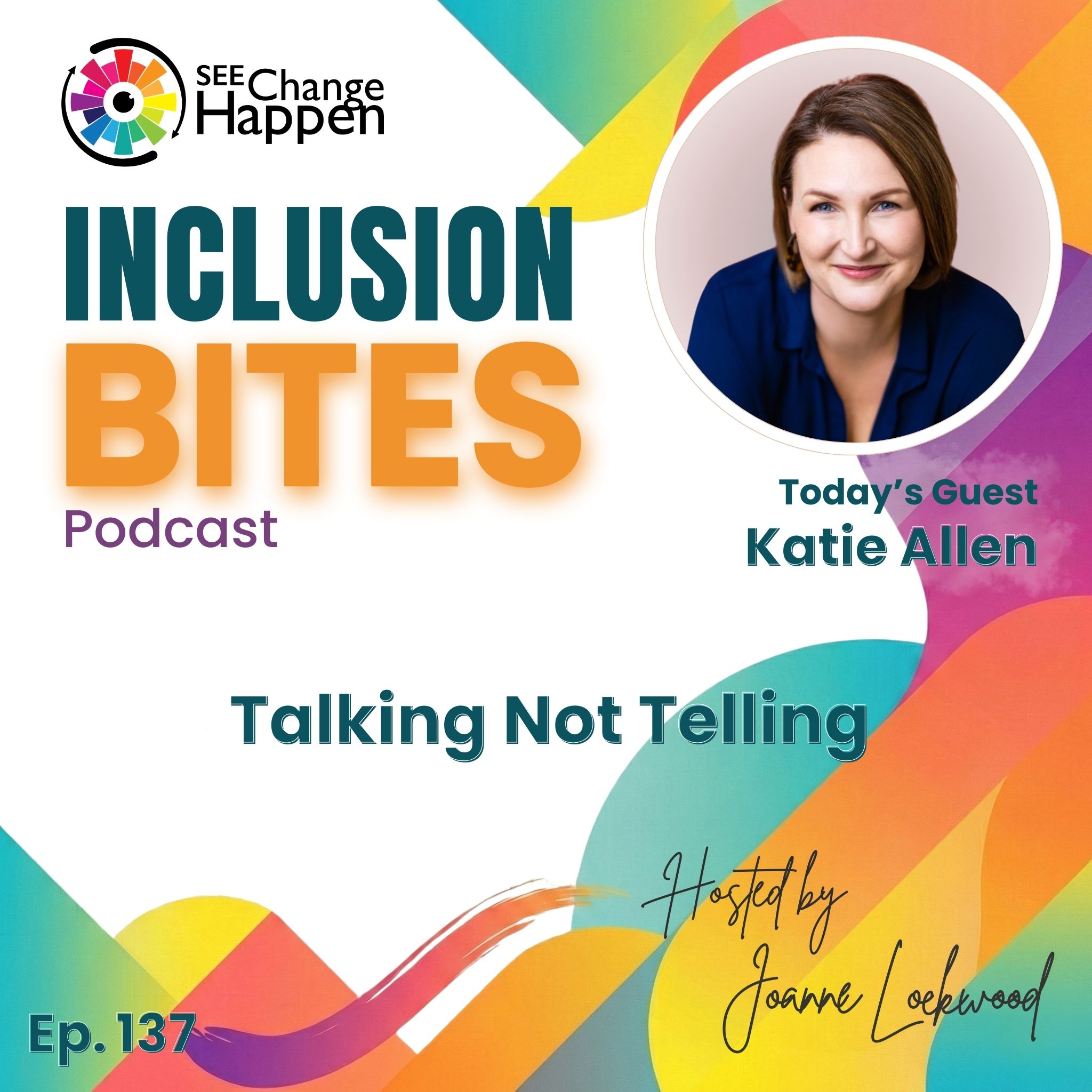
Welcome to Inclusion Bites, your sanctuaryfor bold conversations that spark change. I'm Joanne Lockwood,your guide on this journey of exploration into the heart ofinclusion, belonging and societaltransformation. Ever wondered what it truly takes to createa world where everyone not only belongs butthrives? You're not alone. Join me as weuncover the unseen, challenge the status quoand share stories that resonate deep within.Ready to dive in? Whether you're sipping your morning coffeeor winding down after a long day, let's connect,reflect and inspire action together.Don't forget, you can be part of the conversation too. Reach outtojo.lockwood@seechangehappen.co.ukto share your insights or to join me on the show.So adjust your earbuds and settle in. It's time toignite the spark of inclusion with InclusionBytes.And today is episode 137 withthe title Talking, Not Telling. And I have theabsolute honour and privilege to welcome Katie Allen.Katie is a specialist confidence coach and inclusionconsultant. And when I asked Katie to describe her superpower, shesaid she loves rummaging around in greyambiguity that everybody else hates. Hello, Katie. Welcometo the show. Hello. Thank you for having me along. This is
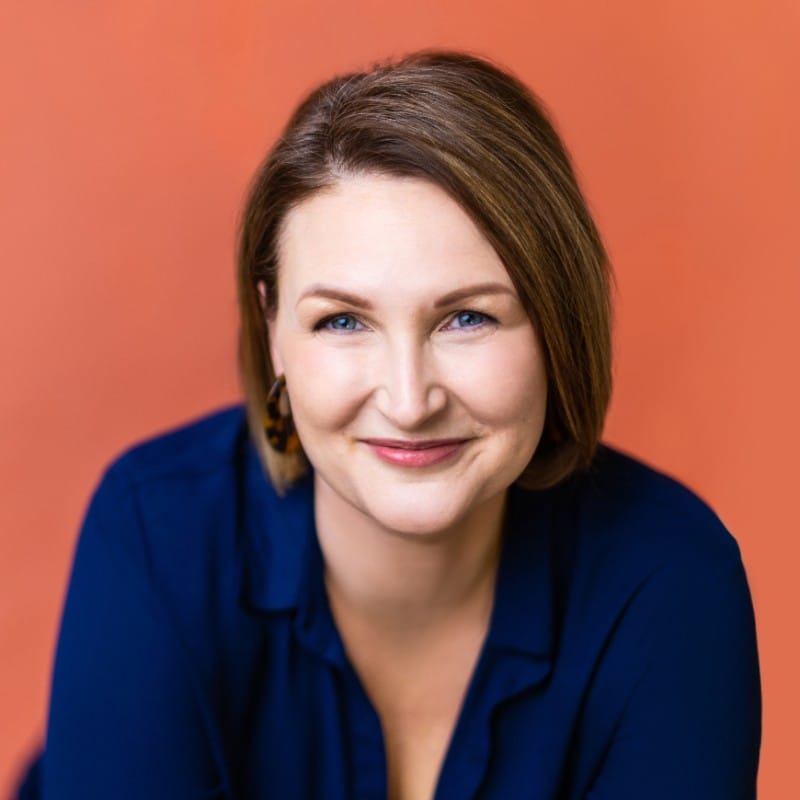
Katie Allenguest
amazing. Absolute pleasure. And I
Joanne Lockwoodhost
know if you're listening here today, you don't know this, but we've just spent anhour in the green room chatting away. We've. We've had a fantastic conversationand I almost wish we'd recorded some of it, but we've still got loads moreto talk about. I'm sure there'll always be things to talk about. Yeah.
Joanne Lockwoodhost
Yeah, for sure. So, Katie talking, nottelling. Tell me more. Absolutely. This. It's
Katie Allenguest
become one of my almost like, lifebloodconversations now, especially in the work ofInclusion, because it's one of those things. Things that I find whenever I speakto people about the work that I do, everyone gets that sheepish little look. Don't.Then they're like, oh, are you. Are you going to come and tell me allthe things I'm getting wrong and all the ways I need to be better?And that's just not my style. I would much ratherhave conversations. It's like, this, isn't it? I just want to sit down withpeople. I want to talk to them and understand,like, what's going on for you? How do you see the world? This is howI see the world. And how can we grow together? So it'sreally become, like, the heart of everything I do. I just want to talk topeople and not. And not be telling everybody what they're getting wrong and start aconversation that inspires some action. Yeah, I, I really resonate with
Joanne Lockwoodhost
that. You know this. You walk into a room sometimes as anEDI dei, whatever specialist you want to call us, and people go, oh, no, it'sthe inclusion police. We can't. What we're saying, we can't tell any jokes. We gotta.We gotta do this. And it's like, no, no, I'm a human being. Ilaughed, I pass wind. I'm a human being. Ijust want the output to be positive for peopleand not at someone else's expense. And that's what we're trying. That's what we're sayingreally is exactly. Somebody else shouldn't be less than, because you are morethan. Absolutely that. And then I often find one of the
Katie Allenguest
barriers to being able to have those conversations comesthrough when people aren't really sure about what they can and can't say. So thenno one says anything at all. And then. And then nobody really getsthe opportunity and, you know, rummage you around in the grey areas of ambiguity,right, to just dump all of the stuff that's going on in our brains outon the floor and just pick through it so we can say, okay, Iknow that you see the world this way, but have you thought about, if youwere someone else, it could feel like this. And people havethat moment of like, oh, I didn't realise that. I didn't. I didn't see itthat way. And, and just making that space for people to just, yeah, rummage aroundin all of that crap that we all bring with ourselves so that we canjust make better, better conversations and have better interactions. So why do
Joanne Lockwoodhost
people get stuck in this ambiguity?How do they get themselves into this vortex of confusion then.
Katie Allenguest
Yeah, it's a really good question because I don't think that it'sthe same for everybody, but certainly in the work that I dowith leaders, it comes from this place of our own frames ofreference that we spend. We spend so much timekind of, you know, surrounding ourselves with people who are likeus, you know, because we see the world the same way and we have similarexperiences and maybe we've got the same hobbies and we gravitate naturally ashumans to people that are like us, and we don't get theopportunity to understand difference, to understandpeople that have got different frames of reference or maybe have differentexperiences or opinions. And it's interesting thatwhen, when you speak to leadership teams, we talk about psychological safety, right?And if you want to have A conversation about something business, about the salesforecast or about this, then, you know, it's really easy to create a space wherewe can speak up and challenge. Then you say, okay, how do you feel abouthaving a conversation about racism? Nope, nobody wants to havethat conversation. All of a sudden the psychological safety is notthere. And for me, that's. That's super interesting becausehow can you, as a leader implement your strategy whenit comes to inclusion if as a team, you aren't prepared to have thoseicky conversations that make you feel nervousand a bit, you know, a bit afraid? So if you're not willing to stepout of your comfort zone and have that conversation, how can you put actions inplace and expect the rest of your organisation to do it? So again, for me,it's about those frames of reference, bringing it back in and making sure youcan have that informed conversation. Are people worried about
Joanne Lockwoodhost
getting it wrong or they're just worried about being wrong?
Katie Allenguest
Oh, good question. One or both. Right.Because certainly what. What I seeis some people are very wedded, aren't they, to the idea of that, the factthat there is a right and wrong. Right. And actually, nine times out of10, there's no such thing as kind of right and wrong. It's justopinions and feelings and experiences and weget so hung up on the fact that we have to be right because itmakes us a good person. I'm doing air quotes for people listening. Like, it makesus this good person and we get so held to this label oflocal. I'm a good person and I don't want to say that thing because ifsomeone judges me, then I'm getting. I'm going to get cancelled and that'll make mea bad person. And it's really unhelpful becauseactually we're all. We're all just ordinary. We're allimperfect human people and we are going to getthings wrong. Does that make us bad? No, it justmakes us human. So I find that such an interesting thing.But, yeah, the difference between. Yeah, being wrong and saying thewrong thing, I think we. We tie those twoconcepts together, don't we? As if they are the same thing. Andactually, I don't know that they are. I think we can. We can makemistakes, we can be wrong and it can be okay. Like,it's fine. I've had people try and defend
Joanne Lockwoodhost
their beliefs and I'm not saying there's anything wrong with their beliefs,but they form this. They hide behind what we call goodintent. I meant well, but theyoften don't understand the impact of their opinions,their judgement, wherever it may be. Yeah,
Katie Allenguest
I wholeheartedly see that too. And I agree with you that there isa difference between intention and impact, for sure. Andit doesn't mean that you can't have your opinions, it doesn't mean, youknow they're yours. You, you live the life that you want to live. However, theminute anything inside your brain becomes a behaviour, it has thecapacity and capability to influence and harm someone else.And you are accountable for that. Like, that's on you.You get to make a decision as to whether that's a way that you wantto interact with the world or not. And you have
Katie Allenguest
to understand that you might approach something with the best of intentions.And I think we, you know, often we can have that analogy of like abroken arm, can't we? If you, if you bump intosomebody and they end up with a broken arm, like, you may not havehad the intention to bump into them, but you did. And, you know, thefact that you didn't intend to harm them doesn't make their arm any less broken.Like, it's still the outcome. So it's just about understanding those two thingscan exist at the same time. So you can have good intentions and you cancause harm and, you know, it's what you then do with it goingforward. Will you intentionally then continue within the worldbreaking people's arms and saying things that are harmful, orwill you learn from the fact that that thing happened and you're like, actually, I'mgoing to do something differently as a result of that experience. I think that's the
Joanne Lockwoodhost
important thing is when we are being accountable for thatimpact, it's what do we do with it, isn't it? That's the critical thing there.And I think what? Well, it costs usnothing to change. You know, if I learn that a word or a phrasehas negative connotations is problematic, it doesn't cost meanything to modify my language, learn something new. But too many peoplego, it's just so difficult. You can't say anything these days. Oh, comeon, it's just a snowflake. Yeah, it's.We have these big debates about whether something is racist or notracist. And if someone says to me,well, that's racist or has a racist connotationsor colonialism or whatever it may be, I won'targue about it, Go, really, come on, it's not. I've googled it. I've lookedin the dictionary and it says quite clearly on page two, it's not racist.And then we're not getting another thesaurus out or another this out or anotherthis, and trying to prove we're right, that I'm not racist, ratherthan saying, oh, I never realised the impact of that. You're right. Let me, letme look into that. But for now, I'm going to park that and not usethat phrase ever again because it doesn't cost me anything. I've just learned,and I remember there's a particular word used in the song the MightyQuinn where they talk about the Eskimoand it was played on Radio 2 and I tweetedRadio 2 saying, you do realise that that song you just played on theradio has the word Eskimo in it, which is deemed offensive by manypeople. I never heard it played on there again. I don't know if they tookwhat I said, but, yeah, if you learn that that wordis offensive to many or is problematic,use a different word, avoid it completely. It cost younothing. Absolutely, absolutely. I can completely agree. And
Katie Allenguest
it's interesting in that we haven't. It's a choice, it's a conscious choice touse the language that we use. And again, I certainly know in havingconversations with people, if you, if you talk to anyone who puts togethera sales tender and you say, do you know what? If you use the wordinvestment instead of cost, that you're more likely to geta positive outcome and people go, oh, that's. That's good, we'll do that. Absolutely. Becauseit's got benefit for you. So you can change your language. Absolutely.When you think it makes sense and you can see the benefit for you. Soif somebody else said, actually, you know, using this word instead of that word hasbenefit for me, or, you know, is. Is better than somethingelse, why can't we just accept that? Like, okay, sure,that's what you're telling me. I'll believe that. I'll believe that to be true becausewe have no problem believing it elsewhere.
Joanne Lockwoodhost
And. But language is so ingrained in oureveryday conversations, in our, in our heads. We become very familiar with the way wespeak and we, we often use the same phrases and, and,and base words often. And there's a lot of it is basedon, on colonialism, racism, life is onableism. A lot. The words we use, you know, we throwin words like, I'm a bit OCD at the moment. You know, no one's abit ocd. It's a, it's a clinical diagnosis. I feel a bitcrazy right now. All these kind of things. And we're using this word in everydaylanguage without truly understanding how that can impactothers. And that's, that's the challenge we've got to overcome, isn't it?Being open enough to reflecton our choice of language and how we can improve that?
Katie Allenguest
Yeah, totally. And, and again that comes back to frames of reference, doesn't it? Andthe fact that we are all products of our environment andyou know, the things that we've maybe grown up sayingprobably aren't the types of things that we're saying nowadays. And it's just aboutrecognising that think language will always change, it will alwaysevolve. Even now I get confused because we can usefiguratively and literally interchangeably because literallysometimes means figuratively now. And that's okay because that's just the way it's gettingused. And it's, and it's, it's just language andlife evolves, right? And we get
Katie Allenguest
on board with it or we don't. And sometimes it's just recognisingthat because something comes as second nature or that's just how our brainsprocess and how we think and the way we refer to things. Beingopen to hearing it when someone else says I hear that differentlyto you or did you know that we don't use that wordanymore and for this reason and it's just about being okay with itand not being so wedded back to that being right and wrong. Isn't it liketo being right that we have to go back through? Well, the dictionarydefinition of the use of they means multiplepeople and therefore it's like really, really Is that what, is that whatyou're going to hold on to the dictionary definition? Or how about someonehas expressed to you that, you know, they want you to use a gender neutralpronoun in reference to them because that's what feels right for them. Whywould we, why would we withhold that from them? Just because the dictionaryhas something for you. Like is that what we're going to do? But we're living
Joanne Lockwoodhost
in a world now where everything we're just talking about here we'll have peoplelistening today and hello, thank you for listening. Who arenodding their heads and going, yeah too right. Maybe we've gotpeople listening, going, God, this sounds like a load of woke BS to me.God, just get a life, you snowflakes. You know, start,let's get in the real world here. Just get on with stuff. Solve the firstworld problems. Not these, these, these issues we're facing. Sowhy, why why should people care? I mean, and that's a
Katie Allenguest
good question, right? Because you don't. We don't have to careas humans, I guess if your life is so beautifuland comfortable that you don't get misgenderedand you don't have people using language that isutterly offensive to you or your existence,then fantastic, that's, that's great for you. Doyou want to continue living in a world where it's allgood for you and screw everyone else, essentially? Like, do you want that?Or do you want to be able to have conversations and communicate withpeople in a way that really opens up, you know,a community to you? And even if just purely for selfishreasons. Right. If you are someone who is responsible for an entireorganisation, do you really want to be viewed as someone whois an immovable object, or do you want to be viewed as someonewho really gets what it's like, as an employer, whoreally understands the people that work for you, that reallyunderstands how your clients and your customers see the world?Like, do you want to be able to engage with people in thatway, or do you want to stay completelywedded to your own frame of reference and just live thereand live in that bubble? It's a choice, isn't it? You can step outside, youcan learn about people who are different to you because those people willbe in your personal circles, they will be withinyour employee teams, they will be on your customers, they'll be in your supplychain. People exist all around you. Why would we notengage? You were saying just at the beginning of the podcast
Joanne Lockwoodhost
when we started talking, that thedanger is, if we're not careful, is that people live in their own livedexperience. So, you know, we look at the.Some serious well known influences in this world. I would.My personal opinion is that they're negative influencers, people like Andrew Tate.They live in a world, an echo chamber, where they have a belief thatthey're doing the right thing. They have anopinion around masculinity andfemininity, that men are superior, womenhave their place for whatever theiropinions are that I find abhorrent. But they have abelief system and they have a followers and they're not going tochange, are they? And when you polarise your views in that way,it's very difficult to try and get around the table and have aconversation. So how do we start to chip away at the edges of thepeople who are unsure or beinginfluenced? Yeah, and I think that for me is the.
Katie Allenguest
The audience that I am most drawn to in the conversations that I have,because, yeah, there are. There are definitely people who are immovableobjects in this world, and the likes of Andrew Tate are one of them inthe sense that they believe what theybelieve, and it serves them to double down on that harder andharder every time, because that's their brand now. So even if someoneshowed them information that could change their mind, they're never going to dothat because they've built a brand on what they're doing andthey play on. My belief is they play into that, because when youhave got, you know, the. What I believe to be the majority ofpeople, and I guess in Andrew Tate's audience, we're probably talkingyoung men who feel that their place in theworld is being either threatened or somehow feels likeit's shifting and they're not sure how. When you are part of thatgroup and you, you know, everyone's telling you thatyour identity doesn't matter anymore. There's no place for you be quiet, because we'regoing to give voice to everybody else. And then you've got someone like Andrew Tatewho's going, hey, come on over here, because I see you. Ican. I can be someone that you can look up to. I mean,it's. It's, from my perspective, pretty horrifying. But I can also understandwhy people gravitate towards that, because it's making space. It's makingspace for someone to flow in, to feel seen and heard and tr. Truly, whenit comes to the work of inclusion, my perspective at least, is likeinclusion is everybody, and it's just not at the expenseof anybody. So it's really about how are we makingsure all of the people that might be feelingunwelcome, I guess, in spaces that they once were just naturallywelcomed into, how do we. We maintain their presence and maintainthem in the conversation so that they don't have to look to role models likethe Andrew Tates of this world to feel seen and heard. How will we make.Again, back to those conversations. We need to be talking with one another,especially around, you know, masculinity, becausewhen we talk about, you know, the. The hard kind of patriarchal systemsthat we're. We're living within, like, that harms men,too. Like, that's. That's not. That's not a gender thing. It's a. It'sa. You know, it's harmful for everybody other than thevery few people that it was designed to benefit. So we haveto kind of change the narrative so we can have a conversation aboutpatriarchy is bad for everybody practically.So how are we making sure that we are understanding whatthat means and rallying against that? So it's not about anti men, it's aboutanti the system that harms everybody, if that makes sense. Yeah, it was a great
Joanne Lockwoodhost
example and I've been watching it evolve over LinkedIn andother people talk about online on last Friday's episode ofGraham Norton and there was two, twomen, I, I can't remember the names of the people involved, but there were twomen talking about Hollywood superstars, talking aboutdoing some training about self defence and they were using a mobilephone as part of their self defence mechanism. And I think one man said theother man who would use their mobile phone to defend somebodyoff. And then the woman who was on the panel, also a Hollywoodsuperstar, chipped in and said, well, actually this is what women have to think aboutall the time. Whatever object they've got to hand, it becomes a potentialdefence weapon. And most, most women will hold their mobile phone in adefensive way if they need to beat off an attacker. And she turned to theaudience, isn't that right, ladies? And the whole audience erupted in applauseand it's certainly resonating on LinkedIn becausewe, many people see the world through their own blinkers. They don'tsee from a male patriarchalperspective, they believe they're great people, they feel that they're inclusive, theydon't feel that they're, they're toxic masculinity or anything like that, but theydon't really see the lived experience of others. And that's, that's, we've gotthis gap, isn't it, this empathy bridge we've got to try and create. Yeah, absolutely,
Katie Allenguest
absolutely. And, and I think it, I've seen that clip too and I think it,it's a brilliant demonstration almost, isn't it, that the silence of the rest ofthe panel are just stunned into when she says, like, actually when, whenyou're a woman, that's something you have to think about. And it's that moment oflike, oh, oh, here we are making a joke about it, but, oh,okay. And, and that I think that's hugelyimportant because if we aren't sharing our experiences and reallyunderstanding, you know, the world was created in a certain way, you either fit thatmould or you don't fit that mould. And if you don't fitinto the mould of, you know, of what success or what safetylooks like, it can be really terrifying. But that'sdamaging for everybody. Who doesn't fit into that mould? So ifyou then play this out, if men are supposed to be like, well, who needs,who needs a mobile phone to defend themselves? It's like, actually,a lot of men would probably also be looking for the first thing they've gotto hand as a defence. So here we are making light of, you know. Oh,yeah, guys don't need, you know, to think about weapons for defendingthemselves. Well, they probably do. If you're going to get attacked, you're probably not someonewho's going to naturally, you know, have been trained in jiu jitsu and be ableto leap into action. Like, no, you're going to want to absolutely peg itto find safety or you're, you're going to be in fight mode and you're goingto do the best you can with whatever is to hand. And makingjoke of that is really just reinforcing that narrative, isn't it? Of, you know,yeah, we're dudes, we can have a fight. Like, can you and should you. I
Joanne Lockwoodhost
know that often what we, what we don't do is we don't think about, youknow, we're talking about the other person's lived experience, the other. What the other peopleare going through. And we, in theEDI space, in corporate or wherever we're working, we often talkabout the power of lived experience, the power of storytelling, thepower of lifting to other people's experiences. And I remember whenI transitioned seven or eight years ago, I started to realiseI didn't have some of the lived experience that manyof my female friends had. And it became apparent when Iwas sitting, having lunch or having a drink or having a chat with people thatthere was a whole load of lived experience. I was completely blinkered to as aman. And I've also realised thatas a white person, I'm blinkered to theexperience of black, brown, people of colour. And there was an incident of a yearor so, 18 months, or whenever it was about a young, young girl who wasstripped, searched by the police. She was on her period. They're searching formarijuana, believing she'd hidden it inside her.And as a white person, I was completely oblivious tothis story, but every person who I knew who wasblack was hyper aware of this type ofconversation. And it just shows that, you know, we live in our echo chamber,even though we, as an inclusion consultant, you know, I'm sure you are yourself, you'revery aware of trying to keep your knowledge out there, butwe listen to the news, we listen to don't we, we don't hear the communitiesamplifying because we're not in those communities. How do we, how do weencourage people to. I call, we're touching on here. We're talking about cultural intelligence,aren't we? How do we build up that cultural intelligence? Yeah, yeah,
Katie Allenguest
absolutely. And it, because it's the frequencies that we tune into, isn't it? That, youknow, when we, we listen and I can'tremember the, the acronym or something rather, but the piecewithin our brain that really listens out for things like our name and things thatare relevant to us that mean our interest gets piqued. Andthis, this is it, isn't it? It's the frequency with which we listen tothings through our philtre, through, through our frame of reference.And it's about how do we broaden that? How dowe have conversations with people that are different to us, toun, to ask and to understand different experiences, toyou know, our echo chambers that we live in, which is, let's face it, ispretty much our social media. Are we just following people who are just like uswith the same experiences as us that went to the same school that we did,you know, or how are we looking for content andinformation to help educate us about experiences thatexist outside that? Because that's all within our control, isn't it? Because, youknow, social media, it's a designed algorithm to give us more of the things thatwe click on and we, you know, we linger on soactively go out there and look for experiences that are different to yours totry and understand, to become tuned in because you, yousoon very quickly start to notice it. I know now, like when I'mwatching tv, you just.I'm a huge fan of things like Love is Blind and Married at First Sight.Like they're my absolute guilty pleasure. I love them. But actually I thinkit was in the Married at Fireside Australia. You see overthe seasons the absolute misogyny that exists within a lot ofthe goings on. And it doesn't get called out in theearly seasons, it's just the way that people treat each other.And it's now in the more recent seasons, you know, the so called, theexperts that sit on the sofa and help guide these young couples thatare going through or you know, whatever age couple that are going through theirrelationships, they actually will now stop conversations and call people out to say,actually do you understand how this, you know, how you're speaking to your partner, partnerand they really highlight it and make people face into the discomfortof these conversations because media isbecoming savvy to understand, actually we have to see more of this.And, and we, you know, it's, it's becoming more availableand open to us in the things that we consume in our social media, withinthe TV programmes that we watch. You know, I'm a huge fanof things like Heart Stopper. That's a new season of Heartstopper that's just come outon Netflix, which is. I, I wish there had beenTV programmes like that out when I was growing up at school, because it isthe most non dramatic andbeautiful high school drama TVprogramme that you're ever going to get. And it follows a group ofLGBTQIA teens through their education. Andit's beautiful. It's absolutely beautiful. It's a gorgeousrepresentation. And I'm going to use the term queer love, because as anLGBTQIA plus person myself, I'm okay with that term. But I also understand theremight be people listening who are not ok, okay. Or comfortable with the term queer.So I would like to acknowledge that it's not about you. It's a term I'musing for myself. And I love, and I loveseeing that played out. Just, you know, the beauty ofLGBTQIA plus kids and their experiences. And in thismost recent series, they have a character in there that really resonates with me becausethey're developing an asexual character. So for me to see that played backout on screen again, I just wish that had been something I couldhave seen growing up because it would have made me get to my own realisationsa hell of a lot sooner than I currently did. But again, it's allabout frame of reference, right? Because we didn't talk about those things when I wasat school. You know, it was all. Being gay was anabsolute slur. So it just. You just didn't have thatconversation. How are we having more conversations with each other? How are wechallenging our perspectives? You know, I could go on. I mean, for me,TV is a big, A big thing. I'm again a fan of Grey'sAnatomy and I remember several years ago, the scenewhere Miranda Bailey sits her son Tucker down. And MirandaBailey is a. Is a black surgeon and her son, therefore,is a black child. And she, she sits him down and has to have theconversation about if you get stopped by the police,this is what you have to do. And she is veryexplicit around, this is how you have to behave, this is how you have tomove slowly. This is what you have to Say you need to be polite, donot run away. And this whole list of things and it really dawned on meas, like, I don't have children myself, but I don't recall any of my friendshaving to have that conversation with their children because they're all white.So I was like, okay, that's not even something you wouldthink you would have to do. And yet, you know, as you were saying,I speak to my black friends, they're like, yep, like,absolutely. This is, this is not, this is not a surprise that this,that this would, would feature in a TV programme. Andhow are we engaging in things that really make us. Iactually want to use the term awake, so make us woke inits true sense of the word to what is happening in thelives of other people. Yeah, I feel like I've gone on a bit there, soplease come. No, no. As you're talking there about the. You
Joanne Lockwoodhost
say a lot of our information, our feed is from social media. Wetend to be our affinity bias, our people who are part of oursame social groups, etc, we make it worse because when we start seeing peoplewho have different views, we either get angry withthem or we block them or unfollow them or mute or whatever we'regoing to do or start a post inwar on their feet going, you're wrong. So we end uppolarising ourselves even more and building our armies, don't we?Me and my mates are going to come and take you and your mates onfor your belief. Social media promotes that,that, that petrol on the fire experience, doesn't it? It
Katie Allenguest
absolutely can do. And also it canbe a force for good as well. I think it just depends on how youconsume it and how you engage. And again, you know, thereare people that I'm not going to engage with on social media.You know, I'm perfectly happy. I'm a bit Marmite for people.Some people really dislike my content. That's okay, they don't have to follow. That's whatthe unfollow button is for. Right. You don't need me in your feed. No worries.Don't look. If you come in my comments abusing the people that do likemy content, I will, I will block you. That's like, you know, no problem.However, there are also people who I know that lurk a bit and are abit curious because they see what I post and they're like, oh, I don't understandthat and I'd like to have a conversation with you without gettingblocked. And that's what I'M absolutely here for
Katie Allenguest
because that is those moments where we, we have theopportunity to learn where we can engage with people to get differentperspect perspectives. So I'm, you know, I'm never interested inthe Donald Trumps of this world. And you know, for example, everything that's, that's goingon with the pre election stuff is for me personally,pretty horrifying and divisive and intentionally so.However, there are going to be people that mighthear what's coming out of that camp and think, okay, I can see how thatmakes sense. But they're still left with some questions and they'rethe people that I want to have conversations with because I want to know whatis it that resonates with you? What is it about your experiences and yourworldview that is leading you down a path where youcan, you can see merit in some of this content? Becausefor me, it's about, I want to understand you. I want to understandhow you've arrived, where you've arrived at, what are your experiences that areshaping that and really listen and then engage in adialogue. Again, we're talking, not telling, right? And then engage in thisconversation. And okay, and this is how I see the worldand this is how I feel when you share those views. And here issomething that to me, you know, is at odds with whatyou're thinking and how can we have a conversation about that andnot coming at it from a place of I want to change your opinion. It'sjust I want to offer you a different viewpoint and see how that feels toyou and see what you might want to take away fromthat. And for me, that again, that's one of the most powerfulopportunities, I guess, that are available when we, you know, we have people who areprofessional speakers and a lot of people speak about their lived experience andI think that's hugely powerful because when someone has taken time to crafttheir story and their experiences and they're willing to share it with you and deliverit with you, you can learn a lot from that. And you, you don't haveto engage, you don't have to ask questions. You can just listen, listen tosomebody else's experience and think, okay, that's different to mine.What, what does that make me feel now? Like, has thatchallenged any of my beliefs? And, and sit. You know, for me,I treat everything as data. So emotions are data. So when I'mfeeling completely jarred by something or if I, if Ifeel myself getting defensive like that, that feeling in your stomach when you're like,oh, I don't like this. For me, that's data. I'm like, okay, why am Iresponding that way? What within me and my value system is beingchallenged and, and I try and sit with it before I respond aswell, just to think, okay, that's interesting. I think I'mfeeling a bit, feeling a bit emotional, feeling a bit sick, feelinglike I might want to punch this person. Okay, what's going on for me, youknow, never gonna do that. But sometimes I get the feeling of like,oh, not, not a fan of yours. But I sit with, I sit with thediscomfort and think, okay, what specifically is it? Which of my values are beingchallenged? Which of my, my beliefs are being challenged and is thatfair? You know, am I notlistening to them? Because I've immediately made a judgement becauseof these, you know, these physical feelings and emotions that happening tome and how am I going to make some space to actuallylisten to what they're saying so that I can make an informed decision? Becausethat decision might also be, no, you're not my cup of tea. I think, I
Katie Allenguest
think I'll pass. And, and that's okay because I'm, I'm, you know, there are, thereare hills that I will not die on. But also, youknow, I, I like to understand that have I really listened to thisperson? And if I have, and I can,especially in one to one conversations, if I demonstrate and role model thatlistening, I kind of feel obliged to listen to me. Then when I decide Iwant to start wanging on about how I feel about things. And I knowthat if I can just plant a few seeds of thoughtwith people, they in my experience, dotake it away. And I've had people come back to me, you know, weeks afterconversations and said I was thinking about that thingand actually I then had a conversation with. And they speak to other people andget other opinions and you see a shift and I think, I'll take that,that's good enough for me, that that's improved a conversation for someone else somewhere downthe line. Yeah, I often respond to people with, I don't owe you an
Joanne Lockwoodhost
argument. I saw a great analogy. So I think this one posted on LinkedIn, Ican't remember who it was now, but they described it as, you turn up atmy doorstep with your muddy boots on and you walk through my living roomstomping your mud throughout my house and you expect me to be happy withthat? Yeah, if you want to have a conversation, take your boots offand sit on my sofa and we'll have a cup of coffee and talk aboutit. But don't try and stamp your views all over me and expect me tobe. To want it. So it's got to be a kind of respect. Anda few times I'll just say to people, I don't owe you an argument. I'mnot trying to justify who I am. I'm not trying to get into a debateabout fundamentals here. We're polar opposite on these viewsand beliefs. I'm happy to have a conversation about why you think something,but not what. I don't talk about what you think, just why. Tell me why.What scares you, what you're worried about, what's the thingthat keeps us apart on this? And it's trying tofind that common shared vision and commonshared values that maybe we. Maybewe turn left or turn right at the end of the road. But fundamentally, we'reboth human and we want the same things. Happy life.
Katie Allenguest
Absolutely. And as a build on that as well, I think that forme, is there one of the most powerful roles that people can play asallies. And I mean, like true allies. Not the kind of. Like, I went onan allyship training course once, and I know some words to say, likereal allyship, where people are willing to step upor step back in that. I know that, you know,I'm, you know, for, for those that are listening, like, I'm, you know, I'm agenerally smiley white woman. Right. I'm. I'm pretty wellaccepted in most spaces and, And I use thatto my advantage. I'm not going to hide from that. Like, I can. I canhave conversations with people that other people perhapscan't, because I'm pretty much. What's the word? Kind of unassuming.I'm a little bit disarming and, and people threatening. Yeah, I get it.People say things to me that are a bit more honestabout how they feel that they won't say to some of my other associates whodo the same work that I do because they don't want to offend them. Butfor me, for some reason, you know, people open up pretty quickly, and I'mokay with that. Because you can say something offensive, I probablywon't be offended. It doesn't make it any less offensive. And I will help youunpack it. But that's okay. I'm totally all right for you toget that out at me and then we can have a conversation. And I seethat as my role as an ally in the sense of I want toHelp have those conversations with people when thoseconversations don't cause harm to kind of the groups thatwould be affected if it was them having to then I guess, like youwere saying, argue for your own identity. Like, no one should have to do that.
Katie Allenguest
So I'm perfectly happy to have all of the conversationsabout, you know, anti racism and transawareness because I'm like, I, I want to be ableto not speak on behalf of, but stand upfor my friends in those communities who experiencethe harm because it doesn't personally impact me.So I can take that heat. And, and I think the morewe have conversations about different experiences, themore that, and especially for people who are in leadership positions like,you have a responsibility to be an ally to peoplelike that is that is your job as someone who is looked up to asa role model within a business, like, absolutely. And with. And within your families andyour communities, like you, we have a responsibility as rolemodels. But that does involve doing that uncomfortable work of.We have to understand this stuff to begin with. We can't just sortof, I, you know, I've, I've got a few sentences I'llchop out, I'll trot out, and then if somebody challenges me on them, I'm abit lost after that. It's like, no, you have to understand where you're coming fromand what your viewpoint is and where you stand so that you can standthere. You, you mentioned earlier, and you hinted on it just
Joanne Lockwoodhost
now around queer community. You see yourself as part ofthat. And you, you talked about how recognising the factthat some people find the word queer triggering,pejorative or brings back uncomfortable memories ofpast oppression or violence, discrimination, whatever it maybe. I often frame it as the difference between an identity and alabel. So I, I am versus youare. So I am queer in my outlookand my Persona and my characteristics, but I'm not a. Youare queer. Don't call me queer, but I'm happy to be it.I think when we think about the difference between identities and labels, don't label me,don't stereotype me, don't put me in a box with the queer onthe outside. I'm in. I'm happy to stand with my friends and weare queer together, and that's, that's our power. But don't label meand weaponize it. And I think that's, that's the key there, isn't it? Yeah,
Katie Allenguest
absolutely. And, and also I think, and this is where thelanguage piece gets tricky again, isn't it? That not all words workfor all people and we have to be all right with that. There is nohard and fast rule that, again, getting rid of the good and bad label. Justlike if somebody would. Like, if someone is speaking about me and they want tomake reference to me and they make reference to me as queer, I'm fine withit. I would absolutely say that unless you've had expresspermission from anybody else, don't do it. Like, if you're not talking about yourselfand you. You haven't had it expressly, expressly made clearthat it's okay. Just avoid any language that could beloaded in that way. For me, that's it. Because, you know, you may getit right, you might not. So let's err on the side of you probablywon't, and choose something else and learn to saylgbtqia. There is about as many characters as a numberplate, so you can probably get it right with enough practiseand say out loud a few times, you'll get there. Which is why I tend
Joanne Lockwoodhost
to prefer the word queer, because I think it's more inclusive. Whereas if you startalphabetizing everything, you always end up missing somebody out. And Ithink rather than having the QAA + *, whatever it may be. Yeah,
Katie Allenguest
yeah. Sometimes I just think queer is a more inclusive term because it doesn't.
Joanne Lockwoodhost
Anybody who wants to fit into that label, they self identify. Yeah,
Katie Allenguest
absolutely. But then, you know, for some people, it's. I also have friends withinthe community who. It really. It really does. Itreally does make them feel a certain type of way. So I also know, well,I won't even use that word about myself in their presence because I know howthey feel. And again, you know, it'snot that. It's not that hard to say lgbtqia, but if you only get asfar as lgbt, like, you can definitely remember that.Like, it's like HSBC or what, like, whatever. You know, you can. Youcan definitely. You can definitely remember lgbt. If that's as far as you get.We all know what you mean, so that's okay. If you canget further, if you get all the way to QIA plus, thensomeone like me who is in the A plus category, not just my grades atschool, then I feel seen.So as much as I agree with you in. In the sense of, actually, ifwe can use the word queer in a community sense, it justmean everybody, and that's grand. But actually, there is something to be said about thespecificity, because I know if anybody gets as far as Saying A plus, I'msafe because they've done the work. And for me that's a big signal.And it's small. It's really small, but it's a huge signal. But they know what
Joanne Lockwoodhost
the A stands for. They're just trotting it off. Is it allies?Asexual. Yeah. And it does mean asexual.
Katie Allenguest
And if you don't know what that is, go and do some work on itbecause it's very important. So you've given me a segue there
Joanne Lockwoodhost
to ask you about your asexuality. As, as you said earlier,you're a, a white woman. You appear to be blondeat the moment. I guess that's your. Yeah,you've got a fair complexion, a big smile. So you arekind of girl next door passing, aren't you? Yeah, totally. Oh,
Katie Allenguest
100. And to muddy the waters ofpeople's expectations, I'm also in a relationship witha, a straight man. So, you know, on, on the face ofit, there's nothing to see here, which I always find reallyfunny because that I, I get. People make comments to me like, well, hang on,asexual. But haven't you've got a boyfriend, haven't you? I'm like,yeah, I know. Funny how that works because it'sso for me and, and even within the queer community, it's such amisunderstood sexual orientation. And it is an orientationand to be clear, it's. It's around the absenceor the kind of. I don't want to say I hate the word lack, butit's around. I don't experience sexual attraction in the way thatmost other people would, would describetheir experience. So I, I've never really understoodwhat getting horny meant. Like, I thought it was a thing. I, I nowknow, having spoken to lots of my friends about it, I don't get horny. It'snot a thing. That's okay, right? But it's just theassumption is that everybody, and certainly within the media as well, this is a bigthing. Like, it's just that. But everybody, everybody does that. Everybodyexperiences sexual attraction. It's just who you're attracted to that changes.And that's not true because I don't experience sexual attraction.Now, in addition to that, I'm not aromantic, which is ifI was aromantic, I would also be someone that doesn't experience romanticattraction. What I am is pan romantic, whichmeans my romantic attraction is not bound by gender. So it doesn'tmatter to me the gender of a person. I can be romantically attractedto, that's fine. But it's, it's based very much more aroundemotional, intellectual attractions. That's what, that'smy thing. But I'm still not gonna. Well, I don't want to be toocrude about it, but I'm still not going to experience sexual attraction. I'm just, I'm
Joanne Lockwoodhost
going to dive into this conversation a bit further if you don't mind. Yeah.So for clarity and it's nice tohave the opportunity to sit with a self declared asexual person and askthem this question on a podcast. So it doesn't mean to say thatyou're, you don't enjoy sex, it just means thatyou don't experience horninessor attraction physically to somebodywho you meet in passing. But you, you stillhave an active sex life. Yeah, exactly, exactly
Katie Allenguest
that. So there is again, there's a difference between sexualattraction and pleasure and there's a difference between pleasure andlibido. So all of these things are different things. And thisis, again, this is something I find really fascinating because asan asexual person I've done the work inunderstanding how my brain and my body work and where theywork in tandem and where they work in, in opposition.However, what I have realised ispeople who are allosexual, which is the opposite of asexual. So peoplewho do experience sexual attraction tend to not goany further than that. It's just a case of I fancy
Katie Allenguest
you, will you be my partner? You know, maybe it takes youa few dates to get to the deed, but then it all, it all hingesaround the importance of like sexual compatibility. Because if you don't have that, you'refriend zoned. And I'm like, is that, is thatreally the be all and end all of your relationship? I don'tthink it is. I think there's so many multiple layers that tend tobe considered as secondary, whereas in myrelationships they are certainly more at the forefront. Because I'm not,I'm not driven by the, the sexual desire side. I'm more aboutlike, how funny are you? How smart are you?
Joanne Lockwoodhost
Like, you know, I do the soul mate stuff. Yeah. BecauseI want to spend my time with you. Yeah, yeah, yeah. I'm investing in you.
Katie Allenguest
Yeah, yeah. Which is it? And also, you know,having, having spent the last, well, I don't know, all of the yearsthat I've been sexually active. Like, I also understand objectively,for me it's something that is pleasurable. I also know asexual peoplewho have absolutely Zero interest in it. It don't find it sexpleasurable at all. That's okay too, because some people canbe sex positive and some people can be sex repulsed. Like, it's all totallyokay. But you, I think you explain that by saying
Joanne Lockwoodhost
that your sexuality and your,how you interact and attract to people is, is a different than yourlibido. Yeah, absolutely. And as a build on that as
Katie Allenguest
well. You know, even if you are a straight person, if you are. If Iwas a straight woman, I wouldn't be attracted to every, every man.Like, you know, there are just different things about different people that makesomeone attractive and, and we all have that. It, you know, it'sjust for me, I notice them differently. Does it cause your
Joanne Lockwoodhost
partners any confusion? Do you have to explain it to them in the same sortof way you explain it to me? Yes, is the honest answer.
Katie Allenguest
I had to have my most recent partner. We had to, we had to havethe chat, which is, I recognise that you're a cisgenderstraight man. And luckily he's fairly wellversed in some of these topics because he was a follower of mine on LinkedInto begin with. Sounds good, but. So he knew I was acecoming into the, into the conversation and I had to kind of have the,the explanation of, in being in a relationship with me, wewill be in a queer relationship. So you're still astraight cisgender man. Like, nothing about you changes, butthe nature of our relationship is a queer relationship.And how do you feel about that? And that was a big conversation andluckily we ended up, you know, we're a year down the line now. We endedup in a place where that all was okay, but for me it was veryimportant to understand that because, you know, again, if I was a bisexual person,just because I'm in a relationship with a straight man doesn't now mean I'm straight.I would still be bisexual. It just happens to be thatI'm in the relationship with a specific person. And so this, it's the same forbeing ASOL or any other orientation. So if you were listening, Ace.
Joanne Lockwoodhost
Ace is the kind of accepted abbreviation for asexual. Aceor asexual. Yeah, yeah, yeah, yeah. I've. It'sinteresting that my own relationship with my wife Marie here, obviously we got married
Joanne Lockwoodhost
1987. That's a while ago. 37, a bit years ago.And to all intents and purposes, and infact to ourselves, we were a straight couple. A man marrying awoman. And then the rules changed about 10 years ago and now There's atrans woman married to a CIS woman. And Marie had toreinvent her own sense of self and maybe it helped unlocksome of her deeper thoughts around her own sexuality. And shenow describes herself as bisexual, which makes go to the cinemaand watching TV quite interesting because we're, we're both trying to work out whichone's fancying which one. You know, it doesn't matter if it's a man or, youknow, the rocker's got his shirt off. Bradley Cooper'syeah, looking great today, or whether it's LadyGaga performing or something. So we almost look at each other.I know what you're looking at. No, I know what you're looking at. It's likewe could, we can share more of a spectrum. So I would describe myselfas, as pan. Probably. Probably morepan romantic than anything. You know,I, I'm happy to, but I'm more asexualwhen it comes to other things. So, yeah, I'm notnecessarily sexually attractive, but I'm sexualcurious, if you like. I, I appreciate looking at people, but not in a, adesire way, but in a kind of appreciation way. So it's like the
Katie Allenguest
aesthetic attraction because that's also a layer of attraction. That kind of. Yeah,aesthetic attraction and asexuality is, is. It exists onmultiple planes because there'll be people who would. Who fall under the asexualbanner who would be demisexual. So it's like they may notexperience sexual attraction generally, but once they have a deep emotional bond withsomeone, that is something that becomes present for them.And the opposite is also true. There are people who do experience sexualattraction up until the point that a deep emotional bond might be forming andthen they're out. It's not, it's not a thing for them anymore. So it, itexists in all of its multiple planes. This is also woke, isn't it? I knowit's amazing, but one of my curious things is like.And maybe I'm overstepping, but don't you think that yourrelationship. Because when you get. I find when you get into these nitty grittyconversations with the people that you're in a relationship with, like, it all comes outright. You talk all kinds of stuff. And I find that that levelof communication in a relationship just makes the relationship better. Once you've reallygot into the weeds of all of this stuff, like you can talk about everything.
Joanne Lockwoodhost
Yeah. I would say that one of the things I found most liberating around mygender transition is that I no longer have any Secrets.There are no fundamental secrets in my life. You cannot blackmail meanymore. Because I'm not saying radicalcandour, but it's kind of. I, I don't have to hide anything.I've told the biggest secret in my life. I've, I've, I've exposed that. And you'reright. When I have conversations with my wife, I'm not hiding anything. I'm not, youknow, she knows who I am. We're not trying to hide anything. And she knowswho we are. And you, we, we have some really goodfun. BELLY LAUGHS Often because wetruly are connected at that sort of cerebral level. Yeah.Yeah, okay. We've married 37 years, but I genuinely feel that we're, we're closer nowthan we've ever been at that intellectual level, but as soulmates,as true life partners that havehad two children together and spend our lives together and want to spend the restof our lives together. So, yeah, you're right, it is a lot more deep.I'm not trying to pretend or hide something. I'm not living alife where I wish I had something different. I'm living the life Ilove. I think that that comes from being openly honest and be ableto talk about anything. Absolutely. And again, it's coming
Katie Allenguest
back to talking, isn't it? If we, if all spaces werespaces where we could have conversations like this, where we could justhonestly be ourselves. I mean, I hate the word authenticity, butthere is no better word than it. If we could just be whowe each are without the pressures of society,without the judgement of others, we just get to be like. I feel like thatwould be. That's. That's the kind of beautiful world that I want to live inand that's why I do the work that I do. I noticed, I was just
Joanne Lockwoodhost
reading the show notes as you're talking there, and one of the things you putin there was you want to reach more people with your message ofcuriosity, of accortion and I. E. In quotes. Screwperfectionism. Let's just talk. Yeah. So,yeah, nobody has to be perfect, do they? There's no such
Katie Allenguest
thing. There is no such thing as perfect. Because inwhose eyes? By whose standards? Like, it'sall, like. We're all just messy, imperfect,complicated, complex beings. Like, let's just, let's justbe. We're throwing away billions of tonnes of food every day because the
Joanne Lockwoodhost
apple isn't quite round, the banana's too straight,it's got a slight knuckle bruise on it. Yeah, we should beembracing Ugly fruit imperfection in each other and in whatwe eat. 100% love the metaphor, Katie. It'sbeen absolutely fascinating. I said to you before we went live that I would sayat around this time that how much I do enjoy the conversation. And itsounds a bit inauthentic when you say it up front, but yeah, honestly,I've thoroughly enjoyed the conversation and it's been a lovely opportunity toget to know you better. And I'd always wanted to ask you about yourasexuality. So it's going to help you to pry.
Katie Allenguest
We can have. We can continue it as well after. Yes, we can continue
Joanne Lockwoodhost
after. And you're going to invite me onto your podcast, so I'm looking forward tothat. And then you could put the spotlight in my eyes and say, come on,Joe, tell me about who you are. I look forward to that. But yeah. So,Katie, how do people get a hold of you? I'm sure there are loads ofpeople out there listening who want to find out more. Yes. So I am Most
Katie Allenguest
active on LinkedIn, so you can search me on. There is Katie Allen or KatieAllen consulting. You'll find me under both. I am. I do have brownhair, so I need to update that image, but you can't miss me. I've gota big orange circle. I'm also have my website,KatieAllenconsulting.com and yeah, I'm. I mean, I.I'm a talker, as everybody will know. So if anybody wants a conversation,please feel free to slide into my DMs. I'm always happy to have a chatbecause I. That's how I think we make the world better. Respectfully, slide into your
Joanne Lockwoodhost
DMs. Always sounds a bit smutty. That doesn't slide into my dm. Sliding. It's all
Katie Allenguest
good. We both know I'm not attracted to anyone, so it's fine. Yeah. So
Joanne Lockwoodhost
no point sending dick pics, is there? No. No. Really? Yeah. If
Katie Allenguest
any. They're not doing anyone anything for anyone. It's definitely not me.
Joanne Lockwoodhost
Yeah. Katie, thank you so much.
Joanne Lockwoodhost
As we bring this conversation to a close, I want toexpress my deepest gratitude to you, our listener, forlending your ear and heart to the cause ofinclusion. If today's discussion struck a chord,consider subscribing to Inclusion Bytes and become partof our ever growing community driving real change.Share this journey with friends, family and colleagues. Let's amplifythe voices that matter. Got thoughts,stories or a vision to share? I'm all ears.Reach out to jolockwood@seechangehappen.co.uk andlet's make your voice heard. Until next time, this isJoanne Lockwood signing off with a promise to return withmore enriching narratives that challenge, inspireand unite us all. Here's to fostering a more inclusive worldone episode at a time. Catch you on the next bite.
Intentions vs. ImpactEvolving Language and InclusivityAsexuality and Relationship Dynamics
Joanne Lockwood is joined by confidence coach and inclusion consultant Katie Allen to explore what it really means to “talk, not tell” in inclusion work. Together they unpack why people get stuck in ambiguity and fear saying the wrong thing, and how psychological safety can disappear the moment a conversation moves from business topics to subjects like racism, identity, or gender.
They dig into intention versus impact, accountability, and the everyday language choices that can cause harm—even when someone “meant well.” The conversation also looks at echo chambers, polarisation on social media, and how cultural intelligence grows when we actively seek out perspectives beyond our own.
A significant part of the episode centres on lived experience. Katie shares her identity as asexual and panromantic, explaining different forms of attraction and how asexuality is often misunderstood—including within LGBTQIA+ spaces. Joanne reflects on how transitioning changed her understanding of gendered experience and highlights how blind spots can remain around race and policing.
Throughout, the focus stays on curiosity over perfectionism: creating space for respectful conversation, learning, and changing behaviour when we discover our words or assumptions have negative impacts.
“Then you say, okay, how do you feel about having a conversation about racism? Nope, nobody wants to have that conversation. All of a sudden the psychological safety is not there.”
“The likes of Andrew Tate are one of them in the sense that they believe what they believe, and it serves them to double down on that harder and harder every time, because that's their brand now.”
“Are we just following people who are just like us with the same experiences as us that went to the same school that we did, you know, or how are we looking for content and information to help educate us about experiences that exist outside that?”
“I want to understand you. I want to understand how you've arrived, where you've arrived at, what are your experiences that are shaping that and really listen and then engage in a dialogue.”
“You can just listen, listen to somebody else's experience and think, okay, that's different to mine. What, what does that make me feel now? Like, has that challenged any of my beliefs? And, and sit. You know, for me, I treat everything as data. So emotions are data.”
The concept that good intentions do not negate the potential harm caused by one's actions.
The importance of accountability for the impact of one's language and actions.
Strategies for adapting language to avoid harm and improve personal and professional outcomes.
The evolving nature of language and the significance of respecting individual preferences.
How listening to diverse perspectives can enhance communication and inclusivity in leadership.
The role of storytelling and lived experiences in learning and reflection.
The impact of social media algorithms on reinforcing echo chambers and the need to seek diverse voices.
One thing to remember
The crucial lesson from this episode of The Inclusion Bites Podcast is the importance of mindful communication. Katie Allen and Joanne Lockwood discuss how the careful selection of language can foster mutual understanding, respect, and inclusivity. They stress that being aware of the impact of our words, even when intentions are good, is key to creating a more inclusive environment.
Questions this episode helps answer
Katie Allen highlights that good intentions do not negate potential harm. Have you ever experienced or witnessed a situation where someone’s well-meaning actions caused unintended harm?
Joanne Lockwood suggests that changing language costs nothing but can prevent harm. Why do you think some people resist modifying their language in the name of sensitivity and inclusivity?
Katie Allen compares using inclusive language to terminology in sales, aiming for better outcomes. Can you think of instances where adjusting your language led to more positive results in personal or professional settings?
Katie Allen speaks about the evolving nature of language and the significance of respecting individuals' preferences, such as using gender-neutral pronouns. How can linguistic flexibility contribute to a more inclusive society?
Both Joanne and Katie touch upon the challenges leaders face involving limited frames of reference and the need for psychological safety to discuss difficult topics like racism. How can organisations create safer spaces for such conversations?
There’s a discussion on the term "queer" and varying comfort levels within the LGBTQIA+ community. Why is it crucial to obtain permission when identifying someone with potentially loaded terms?
Explore topics
Ideas from this episode
Intentions vs. Impact
The conversation with Katie Allen highlighted the crucial difference between good intentions and the actual impact of one's actions. By using the analogy of a broken arm to describe unintended consequences, Katie emphasised that even well-meaning actions can cause harm if not carefully considered.
Evolving Language and Inclusivity
Our dialogue also delved into the continually evolving nature of language and its implications for inclusivity. Katie Allen emphasised the importance of being open to updates in language so as to respect and acknowledge individuals' preferences and identities.
Asexuality and Relationship Dynamics
Katie Allen shared her personal experiences and insights as an asexual individual, clarifying common misconceptions and discussing the nuances of asexuality in relationships.
Learn
Frequently asked questions
What is the main takeaway from Katie Allen's broken arm analogy?
Katie Allen's broken arm analogy explains that good intentions do not negate the harm caused by one's actions. Just as saying "I didn’t mean to" doesn’t heal a broken arm, unintended consequences of our words and actions can't be overlooked simply because we didn't intend harm. This underscores the importance of considering the impact of our behaviour on others.
Why does Joanne Lockwood emphasise accountability in language use?
Joanne Lockwood stresses that choosing words carefully to avoid harm is effortless and reflects respect for others. She criticises resistance to changing harmful language as dismissive of others' valid concerns, often labelled as "snowflake" issues, and advocates for a more considerate approach.
How can adapting language benefit personal and professional interactions?
Katie Allen believes that language can be tailored to both avoid offence and enhance communication efficiency, akin to terminology use in sales. This adaptive use of language is particularly crucial for leaders aiming to engage diverse groups effectively, fostering an inclusive atmosphere.
How does language carry connotations of prejudice, and why is awareness important?
Joanne Lockwood explains that everyday phrases can harbour colonial, racist, or ableist connotations. Awareness and reflection on our language help us challenge ingrained biases and promote a more inclusive communication style that respects all individuals.
What are Katie Allen's views on evolving language and respect for preferences?
Katie Allen emphasises that language is dynamic and should adapt to reflect current understanding and respect for individuals' preferences, such as using gender-neutral pronouns. Clinging to outdated dictionary definitions often disregards the evolving needs of communities.
Why should people care about language sensitivity, even if they aren't personally affected?
Katie Allen argues that while someone may not feel impacted by insensitive language, adapting one's language promotes better communication and inclusivity. Understanding different perspectives helps build stronger connections, particularly important for leaders.
Share this episode
Heard something worth passing on? Send this conversation to someone who needs to hear it.