Why is it so hard for women to get into the boardroom
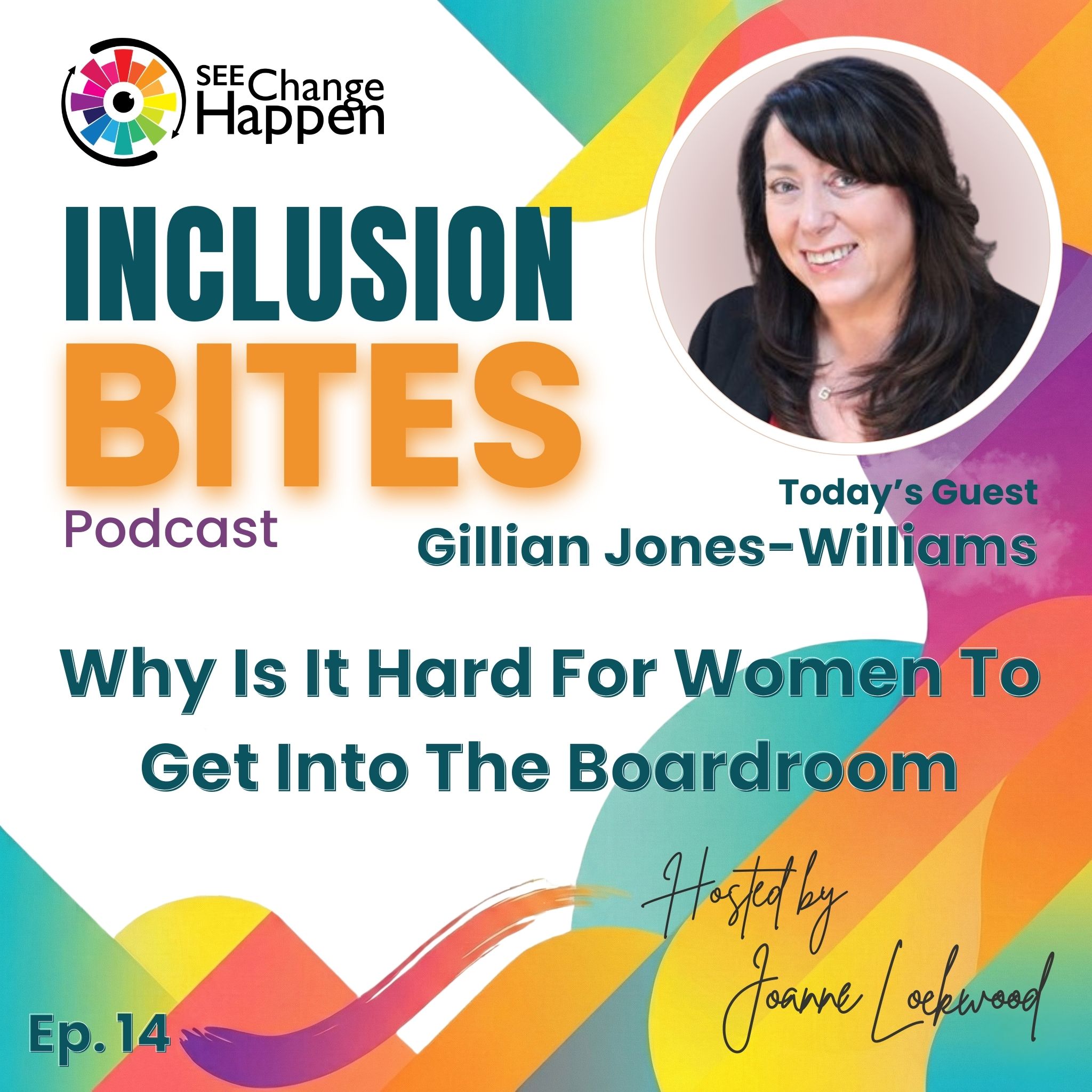
Gillian explores some of the challenges women are facing in the workplace on route to the boardroom, and the compromises that still seem to be prevalent to balance family life and career success.
In this episode of Inclusion Bites, Joanne Lockwood speaks with Gillian Jones-Williams about careers growth confidence.
“It's not necessarily about your technical expertise.”
Explore
Navigate this episode
Joanne Lockwoodhost
Hello, everyone. My name is Joanne Lockwood and I am your host for theInclusion Bytes podcast. In this series, I will be interviewing a numberof amazing people and simply having a conversation about the subjects ofinclusion, belonging and generally making the world a betterplace for everyone to thrive in. If you'd like to join me in the future,then please do drop me a line tojo.Lockwood@seechangehappen.co.uk. That'sseechangehappen.co.uk. You'll be able tocatch up with all of the shows on iTunes, Spotify and, of course, all theusual other places. So plug in your headphones, grab adeca and let's get going. Todayis episode 14 with the title why is itso Hard for Women to get in the boardroom? And I have theabsolute honour and privilege to be joined by Gllian JonesWilliams. I first met Gillian many, many moons agowhen I was her business's IT support consultant. That's going backa bit. Gillian describes herself as someone who works withorganisations to help them move away from focusing ondiversity and truly engaging in creating an inclusiveclimate. I asked Gillian to describe hersuperpower and she said her superpoweris inspiring people. Welcome to the show,Gillian. How are you? Hello, Joanne. I'm very, very good and thank
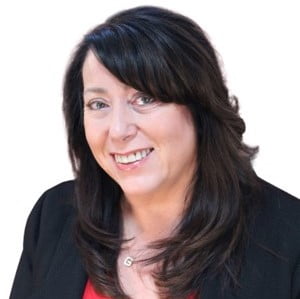
Gillian Jones-Williamsguest
you so much for inviting me. And, yes,I really do hope I inspire people, particularlywomen. It's a massive passionfor me, watching women develop. I'vebeen running my business for 25 years and I've had the privilegeover those 25 years of coachingmany, many women in senior positions andtwo senior positions, and I've listened to theirchallenges, I've tried to help them work with theirorganisational culture. I've listened to theirinner inhibitors and I think I've gotto the point where I'm now understanding a bitmore about, potentially, why this is sucha struggle for women. And just to put some context, beforewe start talking about it, I saw somefigures from a report by Deloitte's last year, whichtalked about the fact that globally, there was only justabout 16.1%of women on boards. And what was evenworse about that, that was only a1.9% increase since2017. So if we carry on at the rate we'regoing, it might be 30 years before there's actuallygender parity in the boardroom, which is shocking, isn't it?
Joanne Lockwoodhost
Completely. And stats. I'm almost appalled atwhere a lot of companies think it's a great target to aim for25% women or 30% women. I think surely the target should be50% or nothing, really, don't you think?
Gillian Jones-Williamsguest
Yeah. And also I have to wonderwhether there is a little bit of sneakiness going on. I'm sure it's not deliberatein nonexec roles as well at the moment,because obviously if you have a non exec on the board, are we reportingthat as part of the female makeup of theboard? I guess it depends on whether the
Joanne Lockwoodhost
nonexec is being paid or if it's a voluntary role. So many non execroles, expenses only, aren't they? Yes,
Gillian Jones-Williamsguest
absolutely.
Joanne Lockwoodhost
Do you think it's a man problem ora woman problem? Do you think that men are making it hard or do youthink that women are being turned off by those rolesbecause they just don't want to get engaged in that kind of work?
Gillian Jones-Williamsguest
Yeah, I think it's both. And Ithink both of them need to be tackled. I stillthink that there does exist a lot of prejudice about the factthat women cannot take on that rolewholeheartedly immerse themselves in theresponsibility and the workload of a board member,particularly if they have family to look after.So I think that there is some unconscious bias going on there and I thinkthere's some conscious bias going on there. But I also thinkit's to do with two things for women. Oneis how they feel, and we heara lot about impostor syndrome and things like that at the moment,but also about how well organisationsare prepared to set up aprogression, plan a career path and really prepare them, because the stepup from senior manager to board member is a very,very big and different one. And there's a lot of preparationthat I think needs to take place.
Joanne Lockwoodhost
For me, I see a lot of women in theirlate twenty s to mid 30s, quite rightlywanted to take time out for their family, and that islost time, because that's the peak part of your business growth, yourprofessional development, isn't it? And that's where you establish yourcredentials. And quite rightly, women are establishingtheir credentials as a great parent. And why does it have to bea choice made? Absolutely. And I think that's
Gillian Jones-Williamsguest
very outdated, isn't it, when people think it has to be eitheror. And of course, there's another issue nowadays is that oftenwomen are leaving it until they're 40, so maybethey're establishing more of their career. I mean, when I had mychildren, I was 30 when I had my first child, and I remember themidwife sprinkling my notes with Primagravido, which meant elderly first mother, andof course, nowadays that's sort of almost the norm, andthen going up to 40. And so women are getting agood chunk of experience and work donebefore that age and then maybe going offto have their families and comingback very quickly. But perhaps one of the issues about thatis that people don't perceive that you'reready to be on a board until you're in your 40s.They want people to be older, andmaybe that's coinciding with family time.So if they're thinking, no, 30, 35, still a bit young,can't have you, you won't be able to stand up tosome of the larger, more dominant male counterparts.And then when you're older and having children, that again makesyou worry, well, can you take on a big role when you've just had youngchildren as well? So there's lotsof, I think, views aboutwhen is the right time, the right age, and why can't a womanin her early thirty s be on a board.
Joanne Lockwoodhost
For sure? Absolutely. I often see thatacross genders where there's this perception that you have to be of a certain age.Did anyone tell Mark Zuckerberg he couldn't have found amultibillion dollar company at the age of 1816 or whatever? He did. And welook at a lot of these startups in tech. These wereformed by young people in their teens and early20s. No one told them they couldn't be a director at that age.So why do you have to have time servedoften? Maybe you become entrenched in yourviews. Maybe people have thisbias to perceive. You must have done 30, 40 years with an accountancyor legal background to be a good board director.Yeah, it's not true, really, is it? Not true at all. And I think
Gillian Jones-Williamsguest
one of the other things that they'remissing is a bit like, as you go up a leadership ladder aswell, is that it's notnecessarily about your technical expertise. Thatis what's going to make the difference on the board. It's more about youremotional intelligence, your ability to lead, your ability togalvanise people into action, havecharisma, vision. Andwomen do bring a huge amount to the boardroom interms of their negotiating skills, in termsof their financial acumen. Maybe that comes from years of budgeting,I don't know, and their emotionalintelligence in terms of bringing abalance to a board. And I'm going to talk quite frankly,Joanne, I have worked over the last 25 years, as you can imagine,with a huge amount of all male boardsand it's quite a tough environment to be inbecause they tend to set themselvesinto quite a club there that it's almost very,very difficult for new people to come in and feel comfortable withas well. It's different nowadays, butcertainly 25 years ago, you can imagine the statswere very, very different too.
Joanne Lockwoodhost
And I think the makeup of the board sets thetone for the organisation, doesn't it? So if the board is allmale, it's setting the tone for the organisation.Therefore, when women join in the junior ranks, they'realready in a world that is male dominated, they're already in a world that isdesigned by men, for men. So the flexibility,as you say, the EQ, a lot of that stuff isn't pervasive in theorganisations at the junior level either, is it? So we're designingthis. Why don't women succeed? Because they're not committed. Well, they'renot committed in a male dominated world. They're committed in thebusiness world, they can deliver, they can work, as we know,but they don't want to be men, they want to be women. Andthat's what men want men to be. Men. They don't want women to be womensometimes. Is that part of the problem? I do think it
Gillian Jones-Williamsguest
is, and I think that thewider sort of diversity angle here,starting to lose some of their shackles about ourunconscious bias and our view of how aperson should be and what a person should look like. I mean, if I askedeverybody to close their eyes and imagine aboard of directors, they probably would struggleto push the women in there in their visualisation becauseof so many years of programming them. And that's notto criticise people for it, that's how it alwayswas and for a lot of people being brought up that way. And maybewhat needs to happen is for ambitious womenwho believe that they could be a board member and want tobe a board member before they accept a job, they shouldreally examine the makeup of that boardat the time, even if it might be ten years away fromwhere they're going now, and they might need to dothat. They should perhaps ask that and say, could you tell me what your boardis made up of and how diverse itis? What are your targets?
Joanne Lockwoodhost
What are you looking, how are you looking to change that? How are you goingto evolve that? Do you think it's good enough as it is and maybe askthem if they're happy with it? I guess those are questions, aren't they? Yeah.
Gillian Jones-Williamsguest
Yes. It must be tough
Joanne Lockwoodhost
being a woman going into a boardroom maybenewly appointed and you're the only woman. That must be really daunting.
Gillian Jones-Williamsguest
Yeah. You'd have to have a certain set of
Joanne Lockwoodhost
resilience within you to be able to cope with that environment, wouldn't you?Is that some of the challenge of getting the second woman onto the board? Becausethe first woman has to be comfortable in that environment? Or maybe it'sjust not that easy getting the first woman on the board, let alone the second,3rd or fourth, or even trying to get the mix of 50 50. There mustbe a real challenge. It is a real challenge and I think for the
Gillian Jones-Williamsguest
first woman on a boarD, that can be really,really hard for them. And I think this is where impostorsyndrome really does tend to kick in. I haveheard stories still of, even at portlevel, them being asked to get the coffee or are they goingto take the minutes in this meeting? And when you aresurrounded by powerful malecounterparts, finding it quite difficult tostand up and just say, actually, I think that John couldtake the minutes or Mohammed can take the minutes or something likethat. So I think you're absolutelyright. The first woman on the board has to be veryresilient, has to really be able toget their voice heard, has to be able to havethat gravitas to be accepted. And of course,I'm lucky. I'm very, very tall. I've always beenquite a big bird, if you like, and so thereforeI can make my presence felt just by being in a room. Butfor those lucky women who have petitefigures or are more quietly spoken and things likethat, then they've got a double challenge, haven't they, now?
Joanne Lockwoodhost
Because, yeah, we talk about bias again,the tone of voice, the power in your voice, yourstature, all those things add credibility to your authority, don't they?And if you say, if you are a woman who hasa softer voice, more considerate in the way you speak and a slighterframe, you're not seeing it as an alpha. And that'swhat people are looking for on boards, aren't they? Yeah. And particularly
Gillian Jones-Williamsguest
then, if you add to that, if they have quite anintroverted character and they prefer tolisten and make very good,succinct summaries of things as opposed tous extroverts who will just waffle on about anything all the time, thatperception might then be that they're not adding as much valueto those people who are talkingsignificantly. So you're absolutely right. That'sone of the things that I coach women quite a lot on, is thatprojection and voice, how they should lookwhen they're trying to get their point heard,what to do if they get cut off by people, or if other peopleseem to pick up their ideas and go, yes, that's brilliant. Even though two minutesago they hadn't really taken any notice of their idea.And it's all stuff which really they shouldn't haveto worry about, having earned thatplace on the board. Everybody on a board, maleor female, should be accepted for what they bring to the tableand who they are, introverted, extroverted, et cetera. But I dothink that women have to work extra hard tobe able to get that hearing and getnoticed, or people just form a perception of them.
Joanne Lockwoodhost
Yeah, I suppose I come from the view that,rightly or wrongly, that one of the key attributes of a boardmember is gravitational presence.And there are many women who don't necessarily have that gravitas and presence,but have the capability. And we're judging people on thatgravitas and presence rather than their insights, as you say, theirEQ, their decision making criteria, their ability to teamwork,their ability to represent the voice of half the population, forexample. We don't value those attributes, but we do valuethis bear pit type machoism of being a fight,your voice. And that's what we're valuing more than those softer skills, aren'twe? Yeah, absolutely. And I think that was a really interesting thing you
Gillian Jones-Williamsguest
said about gravitas. I'vecoached many, many women and when westart the sessions, they say, my boss hassaid that coaching would be useful for me because I need to bemore assertive and I need to have more gravitas. And I talk tothem for a while and I think, actuallyyou appear to have a good level of gravitas andassertion. So I'm struggling here to seethe perspective from your boss. And then I say, oris it that your boss has interpreted assertion foraggression and therefore theywant you to be more like them? And they think about it, andmost times they say, yeah, thinking about it, because they're very shouty bang the table.And that's not how I get things done. So theperception might be that gravitasequals verging onto theaggression. And I've worked with someboards, I remember one very, very clearly, and I thinkthat they get habitualized into their own behaviour andthen it's very hard for them to take an outside lookin. And I remember once I was running a team day, the next day andI had dinner with this board and the HR director, who was a fairlyquietly spoken person, and it was so fullon and the challenges were coming, even though I just joined veryquickly, what's your background? What do you do all over the place? Andeven as quite a strong character, I thought, whoa, this is tough.And I said to the HR person, are they always like this? And shewent, what? What do you mean? And Ithink they were so habitualized to the way they spoke to eachother and the level of noise, they couldn't see what itfelt like for other people coming in, kind of this.
Joanne Lockwoodhost
Bombastic banter sort of thing.Do you think beauty bias disproportionately affects women? Do youthink that women are more successful the moreattractive or the more feminine they are,but they're not valued for that femininity. They're successful.Men want women to be attractive, but they don't want women to be attractive andbossy, if you like. It's kind of that double edged sword, isn't it?
Gillian Jones-Williamsguest
It really is truly a paradox, I think,when you look at diversity,and of course, the fact that women alreadystand out by virtue of being a womanand then can get criticised for that look.And really, it's hard for them eitherway, because if they try and behave femininely,then people will accuse them of being toomuch that way, or trying to use their feminine charms to do things, orif they go the other way and try and wear suits and look very, verymasculine, that doesn't work either. And for me, I think it's soimportant that any woman who is considering being on aboard there is authentic. I think it's quitepossible to be feminine and still have gravitasand still be there, and they've got to be who they trulyare, because it's a hard enough job being a board memberwithout having to try and pretend to be something that's not reallyyou, isn't it? But I
Joanne Lockwoodhost
just think a man, say, who is a little bit rotundwith a shirt that doesn't quite button up on the belly,a collar that's strangling them, red rosycheeks with lots of hair coming up their nose and ears and big bushyeyebrows, is seen as a jolly good chap andlots of life experience. Whereas if a womanwasn't kept and presenting in a veryattractive way, that would be very negative. But to a man being a bitunkempt, a bit, a bit kind of not that desirable,if you like, it's not a problem. Men aren't judged on their beauty, are they?They're judged on their gravitas only.
Gillian Jones-Williamsguest
Yes. And certainly, if I think back over theyears, how many slightly scruffywomen with a tattoo, certainly with no hairgrowing out their nose. But have I seen in the boardroom,and I must admit, when I look at the board members that I've coached andworked with, they have generally beenvery well presented, and I suspect that's becausethey felt that they needed to beto do that. And actually, I'm thinking of a couple of occasionswhere I've coached people and their bosses have toldthem, or even me, that they needed to think about theirdress sense and the way that theydressed. And those bosses have been women as well,which has been quite shocking. Who said they need to change theway they dress or maybe even dress more femininely? Soit's not always the men thatcause women to change their appearance,for sure. To be fair to men, though, if you look at some of
Joanne Lockwoodhost
the very visible public male leaders,most of them are, well, they understand their own personal brand,the value of looking smart, and their appearance doesmatter. So I guess men are starting to do that. Maybe not our current primeminister, that. Was just going through my mind when you said that.
Gillian Jones-Williamsguest
But then if you look at Rishi Sunak, you would say, absolutely.
Joanne Lockwoodhost
Yeah. So men do understand about the necessity for personalbrand being groomed. So I think we're probably evening up thechallenge now in the boardroom that both genders need tohave this professional brand image, be ready to be on cameraanytime sort of thing. So I kind of think it's only fair.We're talking just before we got online about one of the challenges women in their50s face, which is, as we talked about, the Mword, and that is right at the time where women are looking tobe successful in the boardroom, in the senior part of their career, andmenopause is right in the middle of their life. How do you help womenwith that? Well, there is so much help that I
Gillian Jones-Williamsguest
think women need with the menopause, and the first oneis to be able to talk about it, becauseit's only really been in the last five years that thatword has been allowed to be banded around. Before that,it was a real taboo. And I think for that reason, a lotof younger women even didn't really know what that was allabout unless their mothers had told them. But it affectswomen massively in the workplace. Andjust a few things which could impact, particularly in the boardroom, is thelack of sleep. That might be because of night sweats and things likethat, the losing the mind, theemotional fog that comes from lack of sleep and almost thehormones changing, the lack of selfesteem, which comes throughout that period for many, manywomen. And because for everyone, it's different.And then you've got other physical symptoms aswell, which can make it very, very difficult for themto feel comfortable in the workplace. And certainlyit's something that I think all managers need to beprepared to talk to their women when they get tothat age or they're having things. And let's say when we say that age aswell. Actually, although 51 might be the average agefor women, often it can start anytime. From age 36onwards, women can become perimenopausal. Sothere's a lot of things that can happen, and that could be one ofthe reasons why they perhaps don't feel asmotivated. If they're tired all the time, they're drained, they're beginningto worry that they're forgetting things, they're having these hotflushes, they're embarrassed about it. So that reallycould impact upon, I think,going into the boardroom. Yeah.
Joanne Lockwoodhost
And as you're saying, there's still this stigma aboutbeing in your menopause. It's been aloss of fertility, a loss of womanhood, a loss of all these things. Andcoupled with the hormonal changes and psychological changes and thephysical changes is a whole sense of loss of well being, loss of self, isn'tthere? You feel like you've lost your best years.
Gillian Jones-Williamsguest
And there's the other thing. And this goes for men and women aswell, in terms of ageism. Andat what age should we start saying, well, they're55 now, so maybe not recruit them into boardroom,need younger blood, or this, that and the other. And coming from awoman of a certain age here, and I think to myself, I'm still the managingdirector of my own business. I still drive it, I still come up withideas every day. I'm not planning to retire in the nextfew years. So why do we have to thinkabout age when we're looking at that?It could be any age from a younger woman to somebody stillin their 60s, who's got a lot of value to add.
Joanne Lockwoodhost
I think also now we're in this kind ofCOVID coexistence of a world. Therequirement to move, travel, meet, fly, commuteeverywhere is different. And there are roles that people can performnow more adequately, whatever agethey are. So ageism, I think, should be less of a factor.But are there enough? The conversely, we're in a world wherethere's less jobs, less roles around.So we've got the younger generation emerging, trying to get into the workplace.We've got older generation who have maybe been made redundant from what they weredoing. There's a whole load of generations now looking forwork. And who does the employer lookto? The voice of experience and age or theyouthfulness of growth or blend?Both can be a tough choice for them. It is a tough choice and I
Gillian Jones-Williamsguest
would hope that they would go for the best person forthe job. And actually that's one of theresponses that I gave to somebody recently. I was doing awomen's presentation and one of the questions at the end was,how do you deal with a man who says, I bet theywill employ you because you're a woman? When I go for apromotion. And that was the answer I said, is to just lookthem squarely in the eyes and say, I'm sure that they will choose the bestperson for the job. But I think you're so rightin thinking aboutthe new world and COVID and what this meansto everybody, really, but particularly women, becauseif you think about it, the reasons why women werenever promoted, such as ability to traveloverseas, well, as you rightly said, well, that doesn't really count anymore. We're not goingthere. Not accepted in certain cultures. Well, that might have been ifyou're in the same room, but we're not necessarily in the same roomnow needing to work flexibly, be at home. Well,now working from home can be seen as a productivity enhancer.And we're really going to start challenging people in the futurewho say, you can't work from home now thatwe've had to work from home from five months. So a lot of these reasonsare being kind of knocked out of the ballpark. And forme, I've been wondering lately I've beenworking on something which I call virtual visibility,levelling the playing field, because is thisgoing to be the catalyst thatnow affords women more opportunities oris this going to remove some of theleg up that they were beginning to get? Because now that we'reall remote and maybe we can't goto the pub on a Friday night, which if you have children you couldn't dobefore. Well, you can go to the pub on a Friday night now and bringyour children virtually, can't you? Sure.
Joanne Lockwoodhost
And bring your children into the conference call at six in the evening if youhave to, because of time zones, you have to have an eveningconference call. You could do that now, it's not a problem. Everything has
Gillian Jones-Williamsguest
changed now and I think whatever happensin the next six months to 18 months,working from home and flexible working is going to be a massive topicfor everybody to think about and how muchthis happens. But with it brings anotherchallenge for women, because if they really, reallywant to get noticed, to be pushed up theladder, they have got to look at this virtualvisibility now, because it's so easy to get lost in ascreen of 20 people. Even moredifficult sometimes to get a good hearing than if youwere physically in the room. So if they work at itand have a good strategy for it and accept that they need tobe more visible and do more networking, as I said, it could be that theplaying field is being levelled a bit. Yeah,
Joanne Lockwoodhost
I hear that. I also hear that lots of studies are now showing thatwomen have also been disproportionately impactedby working from their home environment in terms ofchildcare, responsibility, care and responsibility, home admin,working in multigenerational homes with elderlyparents, maybe, or even working in homes where they'reof a certain faith, where culturally women's roles aredifferent. So it's not all sweetness and light for women at home,is it? No. And I think that's the difference between the
Gillian Jones-Williamsguest
COVID world and the returningto the workplace phase, because whilstwomen were working from home during COVID they stillhad a massive responsibility. Even if I think theirpartners were helping out with homeschooling and things like that, Ithink so much of it fell to them. And if you've got a four yearold who's clinging on the door screaming, but I want Mummy, and Iwant Mummy, it can be really hard.And the feeling of guilt for women. I've done a lot of webinars duringthis period to help people cope with relationships athome and staying motivated while working at home. And guilt wasone of the things that they brought up a lot in termsof trying to look after the children, be there,obviously not being able to go to school and do their work at the sametime. So I think this period has been tremendouslychallenging. However, they must make surethat when the children do go back to school, when they don't have to dothis anymore, that they can really maximisethe benefits and get that visibility up again.
Joanne Lockwoodhost
Yeah, for sure. And I'd like to think thatwomen would have also required even more life skills as aresult of it. Another string to their bow in termsof multitasking. Yeah, they have. It'spower up, isn't it, yes, for sure.But, yeah.The women you speak to more anxious about going back to a physicalworkplace, or do you not think that's gender specific?Everyone's kind of got a bit of anxiety about going back on the train orback into the workplace. Yeah, I think people
Gillian Jones-Williamsguest
of both genders are anxious aboutit, but certainly for women,and it's a really difficult one at the momentbecause if your boss wants you to go back to the workplace,as many of them do, but your children aren't at school, there aren't somany school clubs open. It's more difficult to get childcare.We don't know if we're suddenly going to have another mini lockdown or a majorlockdown or anything like this. And I think the uncertaintycauses a lot of anxiety. And what that does is it meansthat people just kind of focus on what they have to, I. E. The work,and maybe thinking about their career and what they need to bedoing to promote themselves is something thathas been put on hold over this period. For a lot ofwomen, I think they've simply been just getting by and getting through theday because it has been so busy for them. Forwomen who don't have children, it might have been very different. It might havebeen much more of a time to think. Actually, I can stop and reflect andI can perhaps do some more self development. So I thinkthere's very, very different experiences, butcertainly a lot of anxiety.
Joanne Lockwoodhost
Yeah, I've seen that. People I speak to, they're kind ofcomfy now. It was a big shock to have to pull up yourdining room chair and work from home, but now people are kind of used toit and settled in, aren't they? I suppose as a human species, wekind of get used to our status quo. And it's been long enough nowwhere we've got a new status quo, where we're now comfortable,and then to go back onto the train, back into the office, it's like, oh,that's different again. It's maybe like being out of work for six monthswhen you go back, it's a real culture shock to your system again, isn't it?Trying to get back into the rhythm. We've gone back to the office this week.
Gillian Jones-Williamsguest
We went back yesterday, but on the proviso thatnobody has to go back. We've gone back because we wanted toand we're lucky enough to have separate offices in a big space.And so everything is in place for us. So we're very safe there and weall drive to work but my team certainlywanted to go back, and I wanted to go backsometimes, but on other days, like today, when I'm doing callsall day, then there's no point in me driving to the office just tosit and do that. I'm not going to interact with anybody. So I think wehave to take a much more common sense approach to itand allow people to choose.
Joanne Lockwoodhost
I think you're right, and I think it will certainlyunlock the can do of flexibleand non rigid working practises.And I think that's going to be the good thing that comes out of this.I still do see a lot of companies almost likefocusing on the fact they're going to get back into the office, they're going tobring everyone back into this big, expensive office they've got, or this bigasset without necessarily considering the feelings of theindividuals. Because the office won't be the same, will it?We know that you've got hand sanitizers on everydesk everywhere, signs everywhere, stickers on thecarpet. You're having to wipe down things. Sothis place that was friendly and warm and safe, you goback there. It's now this really unfriendly,dehumanising kind of environment. I went to thecinema the other week and it put me offgoing back because it's so not the experience I wanted. I went tohave my hair done and it wasn't enjoyable having my hair done. Itput me off going for my nails. So all these things that I used todo because I enjoyed the experience havegone, we can't enjoy that experience anymore. And it's sodifferent, so true. And I think that
Gillian Jones-Williamsguest
this is going to be something that women really have to thinkabout because it's going to interfere into their thought process.Everything that they always knew in terms of I'm working hardat this role, I'm getting my visibility up, I'm getting on goodprojects, I'm hoping that they're seeing me as aprogression, as a successor and I'm going to progressthat they're hoping that all of this is going to happen. And then suddenly youhave a five month interruption, which takes a lot of thataway. And then, as you said, when they do go back, ifthey go back, or if they partially go back, the experienceis so different, it might start challenging them about, is this whatI really want and does this stillwork for me? And I think it's always right to bechallenged and to think about it because the experience ofhaving to home school and look after children for four orfive months and be there could make women feel oneway or the other, they might have absolutely loved it and thought, I'm really missingdoing this and this is so great. Or they could just bethinking, I really want to spend more time backin the office. And I have had some women who say, I cannot wait formy nursery to open. I need it. I really do needit. And that is the whole point, I think, for women aswell, is never being judgedbecause some people have viewsthat you can't get it right. If you work, you're not agood mother, and if you don'twork, then you're no good technicallyor intellectually or something likethis. And so it's something which I think webattle with through the whole of our life. I've got two children and we battlewith it the whole of our lives. Is certainlywhen children are very, very young, is never feeling likewe're doing a good job. I'm not being a good wife or partner. I'm notbeing a good worker. I'm not being a good mother because I can't pay attentionto these things. And that will have been exacerbated
Gillian Jones-Williamsguest
during COVID So I think that women do need totake time to regroup. Remember that it was a uniqueexperience that they had. And think about whatlessons do they want to learn and what does that mean forthem in their career. There's one other thing I'vebeen thinking about, Joanne, as you talked about why women don'tprogress so well. And I think it'sbecause you tend to have a bit of abell curve here, where you have maybe 20%of women who have always wanted children arevery home caring. They know that they'll want to stay at home or just geta simple job, which means that they can spend lots of time with their familyand they're not being overly pushed atwork. And then you get about 20% who either never wantchildren or sadly, may not be able to have children. But then in themiddle, there's the 60% who are transitional and theymay or may not want children. And what sometimes happens isthey coast, not deliberately, but they might be25, 26, 27, just got married and they think,okay, probably I want to have children in two years. So I won'tworry too much about the fact that I'm not getting promoted because when thechild goes to school, I will. Andthe problem is that they don't make their career plans.And managers are really, really badabout sitting down and having conversationswith women which allow them to talk about where children feature,because we've made it so PC in the offices now, they're afraid tosay, do children feature in your plans? And how can we stilldevelop you around it? Yeah, I
Joanne Lockwoodhost
agree, because the reaction could be, how dare you askme about children? It's none of your business. Rather seeing asa positive way of showing an interest anda genuine manager or leader helping you develop yourcareer. And you're right, there is a lot of fear by menof asking the wrong questions or things seem to be inappropriate.There's a lot of fear there. Yeah, certainly. Yeah, understandably so. I mean, the
Gillian Jones-Williamsguest
PC police have got them on high alert all thetime. So I think it needs to come from twoways. I think it needs to be that women areencouraged, and there are very few women who go to theirbosses with a fully formed career plan. A lot of mendo, but not many women. So women need to be encouraged towrite that maybe 510 year plan and think about, what do I need togo and ask my manager for now and to feelcomfortable in saying to them, of course, at somepoint in the next five years, I might want her to have children,because none of us know if, when,et cetera. However, I do want to progress tosenior management, and therefore I want the developmentand to be able to have that conversation, becauseif a woman brings it up, then it feels better for themanager to speak about it. And thenthey couldn't be accused of discriminating. Ifa woman says, look, I think I want to go and have a baby inthe next couple of years, but then I will want to come back and Iwill want to progress, then the manager can talk to them and say,what they can't do, obviously, is to start planningand discriminating or excluding thembecause they know that that's what's on their mind.And I think basically any manager who has a womanworking for him who is between the ages of20 and 50 has to expect that they may atsome point want to have a baby or have ababy, maybe not near the50s. I've worked in places where
Joanne Lockwoodhost
when a woman in her late 20s gotengaged, suddenly all the men in the office started asweepstake on when they would have a baby and leave. Right. So it's likethis is real kind of expectation that engagement is asignal for, we got three years now and then shouldbe gone sort of kind of attitude. And that could be career limiting as well,can't it? People prejudging somebody and sexually discriminating
Gillian Jones-Williamsguest
if you're listening to this and you're doing a sweet statethat needs to go in the bin. It does, obviously. Yeah,you're absolutely right. All sorts of things like that happen. And I thinkfor women, it's a very, very frustrating thing anyway,that people start asking them all the time, isn'tit? Because you don't know whether they've got a condition which means thatthey can't have children, whether they just really don't want to, butfeel embarrassed because they feel they should say, oh, yes, I wantone. It's a very delicate situationfor people to say, when are you going to have children?So it's something to be avoided at all costs.I think. I've got a good friend who got
Joanne Lockwoodhost
engaged purely because she was sick and tired ofpeople asking her when she was going to get married. So she'd beenwith her partner for, I don't know, 20 od years, and there was justthis expectation, when's the wedding? When are you getting married?They had this engagement of comedians, basically, so she could sort ofsay, look, we're engaged right now, shut up, sort of thing. It was almost likethis way of stopping people asking her what she was doing, whether she wassingle, was she settling down? Yes. And it can be really frustrating, can't it?I guess women have theirown clock and they have their own family needs.Maybe it's often easier for women to sort of say to other women,well, I'm maternal, why aren't you maternal? It's almost likesharing that kind of. That common thoughtprocess and that, as you say, can be quiteill judged where someone doesn't want to have a family or worse, or they can'thave a family for various reasons, they may. Have just
Gillian Jones-Williamsguest
had a miscarriage and not told anybody about it.So, yes, I think it's a subject that needs to be approachedwith care, but I think, again, a bit like the menopause, it's another subjectwhich we should be able to just be much more open withat work in terms of discussing it, and it shouldn'tbe something which is a concern. Andif you think about it in terms of discrimination, like this story that you've justtold, nobody would go up to a man in the workplace andsay, oh, so you got a girlfriend, when are you going to get engaged?And likewise, if a manhad just got married, they wouldn't go and say to him, so when are yougoing to have a baby? It'ssomething which, if we want equality and thingslike that, and I do a lot of work oninclusivity and conscious inclusion, things like that. And what I don't ever wantis for workplaces to become so sterile that people can't sayanything at all. But judgingand taking clues from other peopleabout things is really, really important. But it is aboutthis same approach to men and women.So the career plan thing should be equal?Very much, I think. Yeah,
Joanne Lockwoodhost
I've just made some notes here as we're talking, and one of the phrases thatkeeps popping in the DNI space is bringing your whole self to work. We alwaystalk about this, bring your whole self to work and being one trueself, being authentic and all this. And often that'sangled at sexual orientation or gender identity,about being express your sexuality. But actually it's a whole lot deeper thanthat. When we talk, we're talking just now, we think about mental health. We thinkabout the whole childprocess, menopause, conception,IVF, miscarriage. The whole reproductivecycle of the human race is one of those things that canimpact not just a woman's mental health, but often a woman's mental healthat various stages in her career. And she doesn't feel ableto bring her whole self to work and talk about this. That's one of thechallenges, isn't it? It's so stigmatised. Women talk aboutwomen's needs. Yeah, it's such a good point.
Gillian Jones-Williamsguest
If somebody has got polycystic ovaries or somethinglike that, it's not something that they're going to bring up overlunch in a mixed group or something likethat, but that could potentially be on their mind all thetime or thinking about things. And I thinkfrom my experience of talking to women, if they feel that the time isright for a baby and they're trying for a baby and it's not happening forthem, that becomes all consuming as well.Yes. And it's very difficult. It's not something that they want to goand talk about in mixed groups. It might be, they might confidein someone. So I think you're right, Joan,as we're starting to delve deeper and deeper intowhy don't women get in the boardroom?There's a lot of things that perhaps men would neverbe thinking about that would get in the way. Yeah.
Joanne Lockwoodhost
And it still held a stigma and shame, and men areuncomfortable talking about women's issues.That ends up pushing and submerging into impact people'smental health where people don't, can't talk about it, and it's a sign of weakness.If you had a situation in your life that's in a sign of weakness. Anddespite the fact that most men will have wives, daughters,sisters, all having their own challenges that they should be fairlyunderstanding, but often they're not, are they?Victorian men talk about men things men don't want to talk about women'sthings. The oldway of men weren't allowed to go to the birth because it's far too. It'snot something that men. To get involved for them.
Gillian Jones-Williamsguest
Let's face it, I don't think I've ever, ever heard aconversation from a man who has come into work and talkedto a colleague about his low sperm count.Maybe they do golf or something like that,but it's not something necessarily. That would be a matterof conversation, would it? No. Even having a
Joanne Lockwoodhost
vasectomy isn't a dinner table conversation for men.It's kind of like that you have as well. I didn't realise you'vehad. It'sone of those sort of hidden secrets that people don't tend to talk about. But,yeah, I guess it's to stop. Men just don't talk about those kindof personal issues in the same way, which is supposed to be known. Male suicideis high as well for men can't talk about their ownfeelings. But, yeah, both genders have theirown needs and their own mental health concerns, whichwe should be encouraging people to talk about and bring the whole stuff to work.
Gillian Jones-Williamsguest
Yeah, absolutely. From everybody. So we talk about getting women
Joanne Lockwoodhost
to the boardroom. Yes, we were
Gillian Jones-Williamsguest
on a medical show there for a minute. No, but
Joanne Lockwoodhost
this is all part of the challenges. Yes. Thatwe talk about these obstacles when we talk about male privilege. It's not that menput these obstacles in Women's way, it's the fact these obstacles are in women's way.And how can men help women amplifywomen and boost women so these obstacles don't become limiting andthis is the challenge we face, isn't it? So I see some organisations who arefocused on mentoring schemes and accelerationprogrammes, then I hear pushback from men say, well, that's not fair. Why arewomen getting all this amplification and I'm not? Don't I deserveit? What do you say to that? Well, we get this all the time
Gillian Jones-Williamsguest
because we have a women's development programme called RIse.Now I'd like to make that very clear. It's not a women's leadership programme,although we might talk about a leadership style on one of the modules,because I don't believe that women should be put on women's leadership programmes.I think they should go on leadership programmes with men, but becauseof everything that we've talked about today, this is whywomen need to have a programme on their ownand certainly in other organisations where we've had that pushback from men. So,great, let's do a men's programme. So let's look at what content theyneed and we'll have a men's programme. And we did, we separated them and didit, and that's absolutely fine if they want it for the right reasons. If it'snot malicious obedience, you've got one. So I want one. But if there's agenuine need there, yeah, go forit. But don't just knock the fact that womenhave got one. Think about why do you want one?Because everything that we've talked about, I think, demonstratesthe amount of tears and emotions that we'vehad on programmes where we've talked about howdomestic abuse has affected their ability to assertthemselves, how they're being bullied in the workplace. Not suggestingthat men don't get that, but it might affect a woman differentlyabout childcare, abouthormones and other things which are affecting their workand all sorts of things like that. So that's what I say to that, Joanne,I'm very, very strong about it. Yes, completely
Joanne Lockwoodhost
agree. Completely agree. The other thing I was interested to get your opinionon is I work a lot with talent acquisition andrecruiting teams and a lot of vendors who are promoting theseunbiased recruitment processes. And I say that'sfantastic, aspirational. Love the idea of giving everybody a fairchance. But how do we level the playing field? If we alreadyhad a level playing field, then debiasing the future is fantastic.But when we're sitting at 70% men, 30% women, whatever thestats are, if we hire in an unbiased way, that willnever change because we're hiring at a fair proportion,we've actually got to put some positive action in there. How doesyour unbiased recruitment process allow for positiveaction? How do you get more women into your funnel toguarantee you're going to get more women out of the funnel and then retain thosewomen so that they could progress? And they go, they look at me like I'mcrazy and say, well, isn't the objective to get the thing fair? I said, well,yes, it is, but we've actually got 1000 yearsworth of correction we got to do first, how dowe now target underrepresented communitiesin terms of ethnicity, in terms of gender, in terms of faith andthat was the challenge. I would say, you're so right. And I've got a really
Gillian Jones-Williamsguest
good example of that. Last year,an HR director was telling me they just appointed their new CEOand he was delighted to tell me it was a female. But theyneeded to have 80% more femaleapplicants to end up with an equal short list of menand women. So that'soften what needs to happen.
Joanne Lockwoodhost
Debias recruitment process doesn't help you in that. It's anirvana. It doesn't change the world. AndI keep challenging people and they look at me like I'm going crazy, saying, isn'tthis ideal? Yeah, well, it is a great ideal, but how do we fix theproblem first? How do we do action?
Gillian Jones-Williamsguest
Right up until, I think the shortlist stage wherethen, if you've given all those opportunities, it has to bethe right person for the job. And that'sthe important thing. Don't get me started on meritocracy.
Joanne Lockwoodhost
Who designs the meritocracy? It's often the incumbent orit's often the social construct of the environment you'rein. And when are we going to start designing meritocracyaround other skills? We're going to need another hour.When people say, we always hire the best person for the job. And I alwayssay, in whose opinion? And it's like, what do you mean in my opinion?Well, who says your opinion counts? Sowe judge women or we judge people of a minority characteristicagainst a majority rule set. Andyes, meritocracy. But let's examine the meritocracyand make sure that we've got our process and our JD and our expectations ofthe role right before we judge people against, oh, Fredleft, we need another Fred. Or we've got a Fred shaped hole. And that'soften what we do. We don't hire for capability, we don't hirefor flexibility, we don't hire for adaptability, we hire for timeserved proof, evidence of what you did in the past. And asevery share dealer knows, past performance doesn't guarantee futureinvestment returns. Absolutely. Just because somebody's performed well in another companydoesn't mean so they're going to perform well. So I could have a whole rantabout meritocracy, as I just have,and I think it's meritocracy and deBiase. Immigrant process isstacked against change. Yes, it's going topropagate the Social Security and I would challenge any organisation listening to thisis to answer that question, how are you doing this? I sawa talk by someone from Schneider Electric and the way they're targeting theircampaign and the hiring process to be really proactive in terms of hiringwomen. And they're doing some amazing stuff. And I think if you're anorganisation out there looking to change the way you work in terms of hiring women,look at Schneider Electric, they've done some fantastic stuff.But anyway, we're coming to the end of our hour together andwe haven't talked about your lockdown project, which isthis book you've written. Tell me about that. Oh, well, when I knew
Gillian Jones-Williamsguest
I was going to have to lock down and I needed tofind a way to become sane, I have to be honest, because we're a faceto face training company, we literally lost all of ourbusiness, as many did overnight. And it wasa terrifying time after 25 years.So I started to write a book on Covid. It was a diary, and itwas a daily diary of what it felt like forme to be locked down and my family and how to save abusiness. And you'll have to read the book to find outwhether it's successful or not, or just see whether we're still around.And every night, I wrote during the Prime Minister's briefingsand the number ten briefings, and during the day, every time news pingedup. So I have an absolute record of everythingthat happened on a daily basis. It's more from my point ofview, so some of it is humorous. Somebody read it recently and said, I
Gillian Jones-Williamsguest
have cried and laughed out loud at it. So I may have called BorisJohnson a few names in the book as I went through, but nowherenear as bad as the names I called Trump.And the reason I wrote it was that Iwant to publish it to raise money forthe members of the NHS staff,their families, who lost, NHS members whowere trying to save our lives, really, and to keep the memory of them alive.I'm feeling very concerned now that we seem to haveforgotten how much they did forus and will they really be remembered? And Ihope that if I can get the book out there, it will help people toread it and really remember that talk about levelling the playingfield and that's what the book will be called. Thatwas know. Suddenly nothing we had anymore mattered. How muchmoney we had didn't matter, how important we were, didn't matter. The onlypeople that mattered were the NHS staff, because nothing else was going tosave us. So that's why I wrote it.
Joanne Lockwoodhost
Yeah, amazing. Listen to what you're saying there. It'show quickly we forget and you think about Remembrance Day each year,lest we forget the fallen. Yet we'vestopped clapping for NHS. We've given SirTom a knighthood. All these things are nowbecoming faint memories as we move into through Black Lives Matter, throughpride, through all the other things we're doing now. We're talking about different elements ofCOVID and almost the NHS staff have faded in ourmemories to a large extent. And yeah, I think it's veryadmirable that we. In fact, I can't wait to read the book myselfand see if your laughs and giggles are the same as mineover that period. I think we all saw those briefingswith irony and trying to read between the lines of what they're really tryingto say beneath their fluff and bluster.But yeah, very interesting. Well, many thanks,Jillian. I'm sure our listeners, theone person is probably still listening to us. Hopefully you've made it to thethey. How can our special listener here get in touch with you?Your website is emergeuk.com. Yes,
Gillian Jones-Williamsguest
www.emergeuk.com.Or link in with me, Gillian Jones Williams onLinkedIn, andbe delighted to talk to you about all things women.One other thing to mention is that every year onInternational Women's Day, I go to organisations freeof charge and I do presentations for them to raise moneyfor a domestic abuse charity that I work for, Aurora NewDawn. So if anybody's listening and would liketo have something like that next year, again,that's something which we like to do as well. Soit's been really great talking to you, Joanna. Thank you forbeing such fun. It could have gone on forever, couldn't it? We could have gone
Joanne Lockwoodhost
on forever. Yeah. And in fact, what listeners don't know is we were talking forabout three quarters an hour before we started recording, sowe could probably carry on for another couple of hours. But a huge thank you.A huge thank you. And to our listener who's stillthere, hopefully still there and not turned off yet, thank you for tuning and listening.Please do subscribe. Keep up to date with future episodes of theInclusion Bites podcast. That's bites. Please tell yourfriend, I'm sure our one listener has more than one friend. And your colleagues.I have a number of exciting guests lined up, but I'm sure you'll all beinspired by them over the next few weeks and months. Also, remember, if you'd liketo be a guest, please let me know. I'm always looking for more people tocontribute. I'd also love your feedback and suggestions tojo.Lockwood@seechangehappen.co.uk. Tell me aboutwhat you'd like to see on future shows. How we can improve. So, finally, myname is Joanne Lockwood, and it's been a pleasure.
Joanne Lockwood is joined by Gillian Jones-Williams to explore why women continue to be underrepresented in boardrooms, and what needs to change for progress to accelerate.
They discuss the structural and cultural barriers that keep leadership teams male-dominated, including bias in perceptions of “gravitas”, expectations around age and readiness, and the experience of being the first (or only) woman in a board environment. Gillian shares what she’s learned from years of coaching senior women, including the extra work many women feel they must do to be heard, taken seriously, and assessed fairly.
The conversation also covers career planning and progression, including how organisations can better prepare women for the jump from senior management to board roles, and why “debiased” recruitment alone may not shift outcomes without deliberate action to widen and rebalance candidate pipelines. Alongside this, they touch on workplace realities that can materially affect women’s confidence and performance, such as menopause, stigma around reproductive health, and the unequal pressures many women faced during COVID-era working.
Gillian also shares her lockdown project: a diary-style book capturing the day-by-day experience of COVID-19 and the effort to keep a business going, written with the aim of raising money in support of NHS staff and their families.
“I'm very, very good and thank you so much for inviting me. And, yes, I really do hope I inspire people, particularly women. It's a massive passion for me, watching women develop.”
“And of course, there's another issue nowadays is that often women are leaving it until they're 40, so maybe they're establishing more of their career.”
“It's not necessarily about your technical expertise. That is what's going to make the difference on the board. It's more about your emotional intelligence, your ability to lead, your ability to galvanise people into action, have charisma, vision.”
“I do think it is, and I think that the wider sort of diversity angle here, starting to lose some of their shackles about our unconscious bias and our view of how a person should be and what a person should look like.”
“Well, there is so much help that I think women need with the menopause, and the first one is to be able to talk about it, because it's only really been in the last five years that that word has been allowed to be banded around.”
“And then suddenly you have a five month interruption, which takes a lot of that away. And then, as you said, when they do go back, if they go back, or if they partially go back, the experience is so different, it might start challenging them about, is this what I really want and does this still work for me?”
“So, yes, I think it's a subject that needs to be approached with care, but I think, again, a bit like the menopause, it's another subject which we should be able to just be much more open with at work in terms of discussing it, and it shouldn't be something which is a concern.”
The imbalance in female applicant shortlists compared to their male counterparts and the inherent biases in recruitment processes.
Designing recruitment and meritocracy systems that prioritise capability and potential over past performance.
The impact of discussing sensitive topics like miscarriage, menopause, and reproductive health on workplace inclusion and mental health.
The role of leadership in shaping inclusive organisational cultures and addressing unconscious biases.
The effects of remote work and the COVID-19 pandemic on women's career progression and visibility in the workplace.
The importance of emotional intelligence and diverse skill sets over technical expertise in boardroom dynamics.
The societal and organisational challenges women face in balancing family responsibilities with career aspirations and the need for flexible working solutions.
One thing to remember
The challenges women face in ascending to the boardroom are multifaceted, involving biased recruitment processes, societal pressures, and workplace culture. Achieving gender equality in leadership will require robust efforts to correct these biases, promote merit-based hiring, foster inclusive discussions around sensitive topics like reproductive health, and provide flexible working conditions that cater to varying personal circumstances.
Questions this episode helps answer
How can biased recruitment processes be addressed to increase gender balance in leadership positions?
What impact does the representation of women in boardrooms have on the overall workplace culture?
How can organisations support women in navigating the challenges they face when entering male-dominated environments?
What can companies do to promote an inclusive work environment where women feel comfortable discussing reproductive health and personal issues?
How can men and women in the workplace challenge the stigma around discussing personal issues, such as infertility or menopause?
What proactive steps can be taken to target underrepresented communities in the workforce and promote gender equality?
Explore topics
Ideas from this episode
Careers Growth Confidence
Change & Transformation
Confidence Self Worth
Resilience
Authenticity
Belonging
Learn
Frequently asked questions
Why is it so hard for women to get into the boardroom?
The struggle for women to get into the boardroom stems from various factors, including gender bias, lack of representation, and traditional stereotypes about leadership. Our podcast examines these issues in-depth, including the impact of age-related biases, family responsibilities, and the perception of board members' required expertise.
How does the podcast address the stigma around discussing women's reproductive health in the workplace?
With insights from our guest, Gillian Jones Williams, and host, Joanne Lockwood, we tackle the stigma surrounding women's reproductive health issues in the workplace. We delve into the impact of this stigma on women's mental health, career progression, and overall workplace inclusion.
What are some challenges women face in male-dominated boardrooms and remote work environments?
Our discussion explores the challenges women encounter in male-dominated boardrooms, from facing unconscious bias to managing virtual visibility and childcare responsibilities in remote work settings. These conversations highlight the evolving dynamics for women in the workplace and the need for inclusive, flexible approaches.
How does the podcast address the impact of the COVID-19 pandemic on women's career progression and work-life balance?
We address the specific impact of the pandemic on women's career progression, including the challenges of balancing work and family, the anxiety around returning to physical workspaces, and the implications for career planning amidst societal pressures and judgement.
What insights does the podcast offer regarding menopause, ageism, and beauty bias in the workplace?
Our episodes delve into the impact of menopause on women's workplace experiences, addressing ageism, beauty bias, and the changing dynamics of self-care activities in the workplace amidst COVID-19 restrictions. We also discuss the broader implications of these issues on workplace inclusion and equality.
How does the Inclusion Bites Podcast aim to promote workplace inclusion and belonging?
Hosted by Joanne Lockwood, our podcast focuses on interviewing individuals and experts to provide insights into topics related to workplace inclusion and belonging. We aim to foster open discussions and offer practical solutions to promote a more inclusive work environment for everyone.
Share this episode
Heard something worth passing on? Send this conversation to someone who needs to hear it.