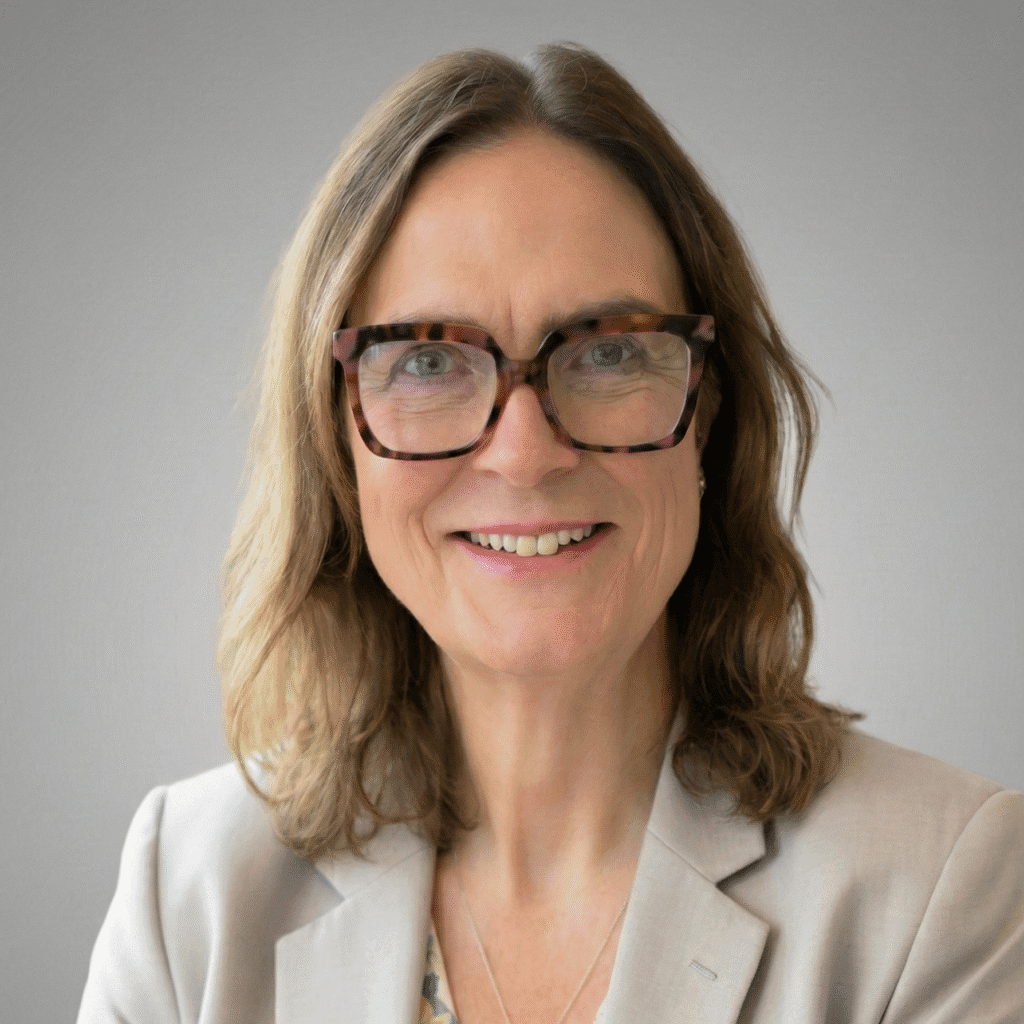
Welcome to Inclusion Bites, your sanctuaryfor bold conversations that spark change. I'm Joanne Lockwood,your guide on this journey of exploration into the heart ofinclusion, belonging, and societal transformation.Ever wondered what it truly takes to create a world whereeveryone not only belongs but thrives? You'renot alone. Join me as we uncover theunseen, challenge the status quo, and sharestories that resonate deep within. Ready to divein? Whether you're sipping your morning coffee or winding downafter a long day, let's connect, reflect, andinspire action together. Don't forget, youcan be part of the conversation too. Reach out tojo.lockwood@seechangehappen.co.ukto share your insights or to join me on the show.
Joanne Lockwoodhost
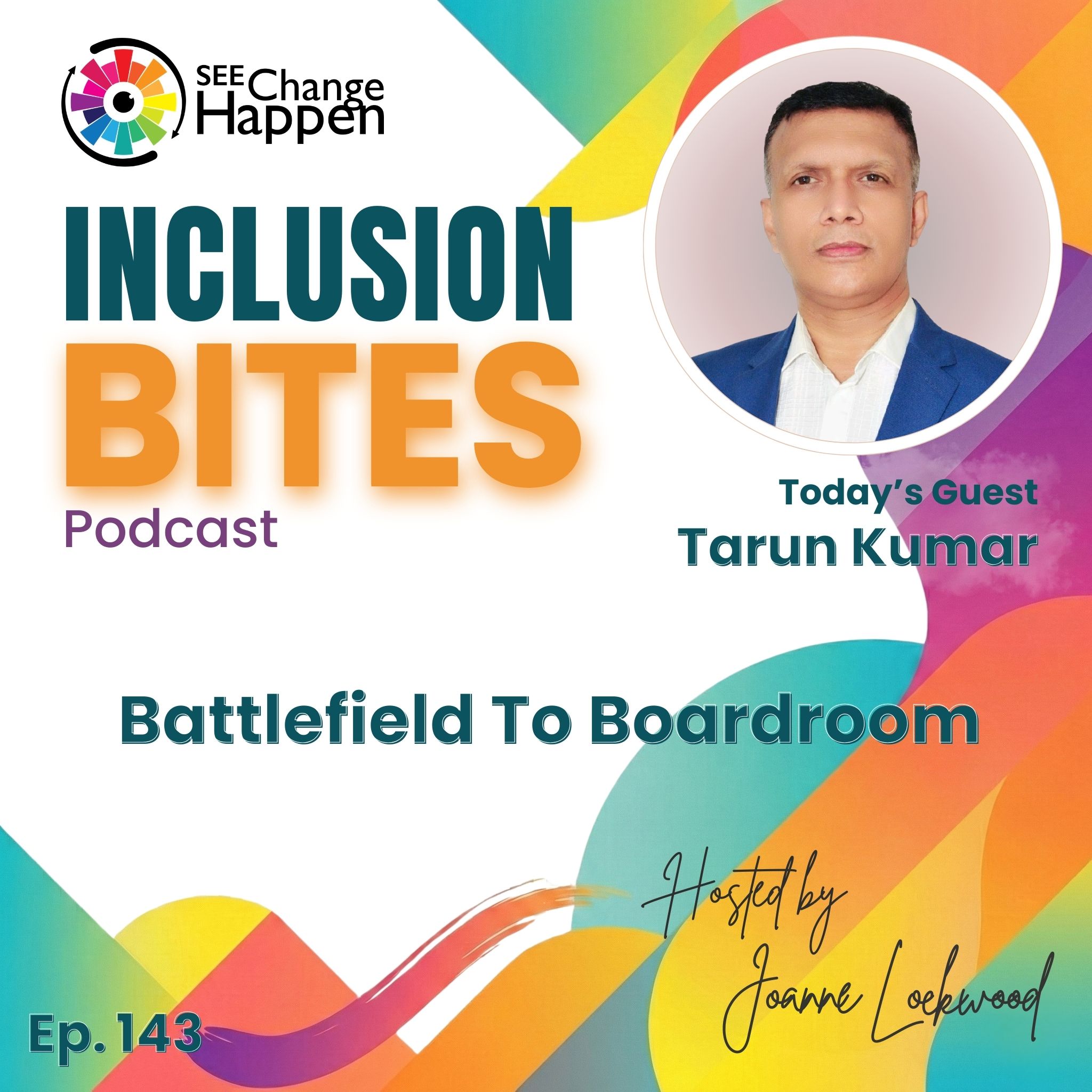
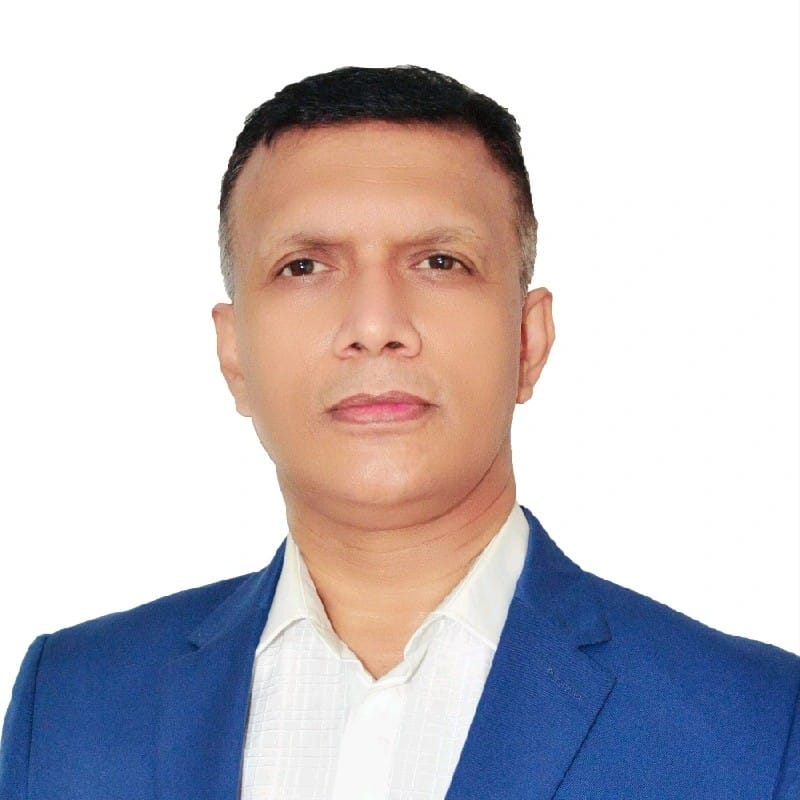
So adjust your earbuds and settle in. It's time toignite the spark of inclusion with InclusionBites. And today is episode143 with the title, Back andField to Boardroom. And I have the absolute honour and privilegeto welcome Taran Kumar. Taran is aformer army officer and battle survivor.He is now a leadership coach and start up mentor who inspiresprofessionals and organisations to unlocktheir potential. When I asked Darren to describe his superpower, hesaid that it is transformingadversity into opportunity by empoweringindividuals to lead with purpose and resilience.Hello, Darren. Welcome to the show. Thank you, Joanne, for
Tarun Kumarguest
inviting me to this lovely platform of yours. Pleasure is allmine. And you're tapped everywhere in the world
Joanne Lockwoodhost
you are. You're in India. Is that right?
Tarun Kumarguest
Absolutely. Nowadays, India is in the talks.And I come from a place called Ahmedabad, whichhappens to be the city from where our primeminister Narendra Modi comes. And it's a beautiful part of theworld. You must visit once to India because that issomething which should be there on your bucket list. It is. It is. I've,
Joanne Lockwoodhost
ticked off Melbourne, Australia, and the south coast of Australia,and I I need to explore more of Asia. And, India isdefinitely up there on the list. Yes. India is a very
Tarun Kumarguest
diverse country. We have so many languages,so many different cultures, and that's why we callour country to be a perfect example of unityin diversity. And as a country, you've gone through a massive
Joanne Lockwoodhost
transformation over the last 50 or so yearspost colonial. And you've got a new country up, really, aren'tyou? In fact, you know, every country that comes out of a
Tarun Kumarguest
colonial mindset takes time for thatthing to get over. And India was no exception forthat. However, our forefathers,the people, those who fought for the independence of our country,they had a grand vision about India. And they ensuredthat we carry out our progressthrough something which is so keenand that we discussed that in this diverse world,there should be a lot of inclusivity. And westarted including the industrial revolution, how thefactories would come up. India was once upon a time knownas in our lingo, we call it as abird, which was made of gold. And that's why Columbus,Vasco da Gama, they all came to India just to explore thisbeautiful country and know, and that's why we got invadedalso. So it is no exception, but then whenpeople plunder, they loot, they do not leave you in the rightstage or right state. And it takesalmost couple of generations for a country to reviveitself. And now we are on an upwardlymobile phase. I can assure you that, weare progressing by leaps and bounds, making our impact felton the world and being a very peaceful nation.You will find that we have friends almost everywhereacross the world. You're the fastest growing economy in the world. Is thatYes. It's not. Yeah. Yeah. Yes. We are the fastestgrowing economy, and it is certainly related to the populationthat we have. So we can do lot of in house consumption.And at the same time, we have the abilityto support other countries. Today, we are growing inagriculture. Today, we are supporting othercountries through technology. Indian brains, youknow, they are ruling most of the top notch technologycompanies, Johan. What do you say? No. I've I've seen
Joanne Lockwoodhost
the rise of of Indian expertise over the last 20,30 years. At one stage, we were outsourcing to you,and now you you have the expertise and you're selling it back to us.
Tarun Kumarguest
Yes. So life has taken a complete circle. I would saythat. And now there is a value exchange that ishappening. People in our country, they are pretty serious inwhatever they do. It's not only about fun. Itis about value addition. And that is something which isvery intrinsic to Indians in one way or the other.All five fingers are not the same. So you may happen to have interactionwith some who are not aligned to this thought, butmajority of people you'll find when they're working for corporations or whenthey're leading, heading these corporations, their entirefocus is on growing that organization.And when you grow, your own growthautomatically happens. From my understanding, India has
Joanne Lockwoodhost
a very hierarchical society withthe caste system and different structures and hierarchywithin the population. Is that somethingthat's evolving away, or is that still quite rigid?
Tarun Kumarguest
No. In fact, that is how it has been projected.We are very open. You know, every society has gotcertain castes. Every society has got certain people who aresupposed to perform certain tasks in theolden days. And those profession, they still continuebecause that is how they get recognized in the society.So India was no exception to that rule. Andsomehow people, theyinched up the ladder. They were notstanding static wherever they were about 100 years back.But the way the narrative was built up, I would say, Juwon,that was not in line with the actual picturethat India represents. So we are prettyopen about lot of things. And, yes, in certain parts,I would not be hesitating in accepting that, thisparticular problem persists, but then there are givers andtakers everywhere. So there would be naysayers whowould not agree to everything that's happening right. Sothey would like, same thing to continue. But, yes,India is changing in a big way and comewhat may, whatever the world may say, we areno longer the same, country of snakecharmers or the country of elephant riders or the whateverway people used to talk about it. We are now a technologicalpower. But you're a, space superpower blasting of
Joanne Lockwoodhost
satellites, planning moon missions, everything. So yeah.
Tarun Kumarguest
Yes. In fact, the Indian Space Research Organizationhas grown by leaps and bounds. It issuch a satisfying feeling to saythat over a period of time, we were dependent on thedeveloped nations for our surveillance, for our weatherforecasting and other things. And especially when itcomes to defending the sovereignty of your country.And that is the time, most of the people, those who werein power, they realized that we ought to have our own systems.And because of a non aligned nature today, whatever weare doing is purely for the growth of thecountry. Mhmm. If being a military man, I can tellyou that my interests are not expansionist innature. If you are not coming onto my toes.But if you push me, then I must have the ability to push youback. In the modern world, in our connective world, in our
Joanne Lockwoodhost
technology dependent world, we need GPS.We need accurate time signals, which is delivered by GPS. Weneed Internet connectivity. And I guess India is no different.You have to have control of those assets yourself. Otherwise, you're dependent on otherpeople. No. That is that is very important for your own
Tarun Kumarguest
survival. Otherwise, in the event of some kindof, I would say calamity, in theevent of some kind of, problem with your neighborsand somebody else is controlling and all your equipment goeshaywire or it is not giving you the right inputs, yourentire military effort would go in vain. So it is veryimportant for any nation to be self relianton these aspects. Then only you can defendyourself. When you do not have this kindof a fear that what if in the eventof something going not the way you have designed andsomebody stops this data coming to you?Because most of your equipment is data driven. Most of your longrange weaponry system is all about how do you fix thosecoordinates? And those coordinates, how do you get you get them through these GPSs,through satellites? And this concept
Joanne Lockwoodhost
of single time is is critically important. You've got to be within millionth of amicrosecond accurate. Otherwise, all business transactions,banking transactions all time. Everything goes for a 6. Everything goes for
Tarun Kumarguest
a 6. And over a period of time,we have realized one more thing. And that isyour economic independence determinesyour military might. If you're economicallysuperior and you want to maintain that independence of yours,you ought to have a strong military and not the otherway around. So that is very important for us. Help help me. I'm curious
Joanne Lockwoodhost
here. If I think about the UK, NorthAmerica, maybe even the US, And I think about some of thechallenges that businesses and society face froman inclusion perspective. Yeah. We think aboutgender. We think about ethnicity, race. We think about disability. We thinkabout LGBTQ plus as kind of thebig high level things. What do you think are the challengeswithin your own country, economy and commercearound that? Well, I would say that there is a
Tarun Kumarguest
presence of differences within given settings,whether it is concerning race, gender,age, sexual orientation, disability. But then at the sametime, we are open to the inclusiveopportunity that the same environment extends.It's about creating a space where any individualor group can or feel welcomed,respected, supported, valued. They canparticipate fully in the nation building process. And thatis so important for the growth of any community organizationor nation for that matter. So we are no different.Yes. There are certain challenges. There are certain challengesin terms of, I would say, the legalprovisions, which are existing, because obviously we are anoffshoot of the colonial era. However,we are also open to amending those laws. We areopen to accepting these people into the mainstreambecause ultimately we cannot grow if we arenot having participation from all walks of society.
Joanne Lockwoodhost
So you've got many, many states. I think would you say39 states or 30 20 29states. You've got a a large number ofdifferent languages and different religions. Is there a isthere a kind of historical pecking order,priority, privilege amongst language, amongstwhere you come from in the in within the continent orthe religion you have? Is there an inherent power baseamongst certain languages and religions? Well, no. When the
Tarun Kumarguest
Indian Constitution was enshrined, although at not that point intime, but later on, the word secular got incorporatedinto the Indian constitution and we still maintainit. We have a largerpopulation base of Hindus, but then Hinduism,apart from being a religion, it is a way of life. It is,we are very tolerant in our outlook. We celebrateevery festival with the same fervor and without anymalice, without any doubt thatwe love celebrating festivals. We lovecelebrating the thing called humanevolution on this planet. And for that, I have toenjoy what my neighbors are doing. I cannot bejealous of when they are celebrating and only be concerned about myown celebrations. I cannot be thinking that whateverthey believe in is not right. I have tounderstand why do they believe in thatthing? And is there a way I canlearn from their perspective? And that is whatHindus do. In fact, you will notfind any Hindus who are out inthis world converting the rest of the population.Give me one instance of people fromHindu religion or the Hindu way of life.People themselves come and they lovethat feeling. They love that joy. They love thatfreedom. They love that oneness with the nature, with theGod because of which they say that Iwould love to be an ISKCON devotee or I would like tobe doing Hari Rama, Hari Krishna, whatever. These are
Tarun Kumarguest
all, you know, we have got more than 33,000gods and none of us is forced to follow 1 God. Means Ican I follow so many gods because ultimately we believe inone thing that there is one supreme and somethingthat keeps us all in a state in which weare when things are there, which we do not understand, howdo we try and understand them? By saying that there is somesuperpower which is controlling all these things. Otherwise, we aretrying to control most of the things. We are trying to, do theDNA understanding. We are trying to do how we canbuild embryos in the deep state,cryogenic things means we are trying to, interferewith the way the God has created this planet.Because we want to understand that, and that is where our inquisitivelylies. Today, there is a lot of questions that are being asked onartificial intelligence. Whether it is right or wrongmeans whether it will overtake the human race or not. Why? Becausethere are so many things which we do not comprehend. We do notknow whether they are going to be a bane or boon. And that is soimportant for us to understand that in our iterativeprocess, if things go right, we take the credit.If things go wrong, then whom do we blame for? Then we say that,oh, God. Yeah. God is the, excuse for things going wrong. But I
Joanne Lockwoodhost
think that's beautiful. I think, as you said, you're not trying to convertpeople. You're saying, this is us. Come with us if you wish.Yes. Celebrate with us. Come and visit. Whatever. It it it it's nota you say, you're not trying to instruct people,but just Yeah. Exemplify being a goodhuman. We we don't tell them that my religion is superior to
Tarun Kumarguest
yours. We never say that.We always accept that there must be something good if you're following inyour religion. I would love to understand that.I have studied in a Christian school, but then that was my wayof getting exposed to that particularcommunity. And it never interferedwith my belief. And being a military man, Iunderstand one thing, Joanne, and that is the religion of mytroops is my religion. I do not own my religionor I do not wear my religion on my shoulders. Ialways follow the faith that my soldiersfollow because that is something that binds us together.So if I happen to command a Muslim unit, thenI will read namaz with them. I will not shy away from doing it.I will not say that. No, this is not right. Or this is not correct.Or they are infidels. No, I will follow whatever,because my ultimate goal is to bindwith my people and face the commonchallenge that is there in front of us. But whenit comes to me praying to the God inmy own private space, then I'm free to do whatever I feel like. I think
Joanne Lockwoodhost
that your your leadership mantra that you've just explained in there isis very powerful. Too often, we find leaders wantto dictate the culture ofhow their their team should be. And what you'redoing is advocating the leader adapting to the cultureof the team and enriching that rather than dictatingthat. You know, there is always a resistance to change, and
Tarun Kumarguest
there is a management theory about it. Why I'mtalking about which is the bigger force out here. It is the culturewhich is already prevailing. So as a leader, you are1. As officers, you are just a handful,but your soldiers are far too many. So what is important isthat I understand where the faith of my soldierslie. And it is in the mostdifficult circumstances I have seen that it is thisfaith which helps you come back fromthe brink of defeat just by believing inthat faith, by holding on to that faith, which is notjust by held by a thin hair. Andthat is that can change the way we look atlife and death. We look at success and defeat, andit is so important for us to understand that ultimately, what isimportant for me is that my team, our purposeshould win. And as long as that purpose is for the largergood of the organization nation and not for theselfish ulterior motives, it's alwayssuperior to any other force. You you mentioned you're a military man, and we've
Joanne Lockwoodhost
called this episode, the battlefield to boardroom.What got you into the military originally? And what what were you doing? What wasyour trade or profession? Okay. So
Tarun Kumarguest
I was a hotelier. I did my hotel managementand I was working in a luxury hotel. And while I wasgoing around this hotel business, I was a sales executive.I used to sell my property and interact with big businesshouses, tell them that why they should come. And, Jun, ifwe go back 35 years in time, hotelindustry was not everyone'scup of tea. It was a privilege of veryfew and 80% of the people who wereusing 5 star hotels, luxury hotels, theywere from very affluent backgrounds.And the corporates used to frequent thesehotels and getting them on board,staying in a hotel where you're, you would becharging them know about $100 a night. Those dayswas a big ask. So you can imagine that while doing all thesethings and being successful. Lot of time we used tohave internal discussion and, I was a little bit of a gymming kind ofa guy. Not too much into gymming, but I had a good built and otherthings. I used to play a lot of sports, football, especially.So my colleagues used to say that, why don't you join army?So that propelled me to appear for the mostdifficult exam. That is the Union Public ServiceCommission exam. And I did not prepare for it. I justwent applied for it. And during my, I wouldsay I took a vacation. I took leave.I went on the weekend. I appeared for that exam.Luckily, I got through. And then I cleared the mostdifficult part of the selection process that is calledas SSB. SSB stands for service selectionboard, and that is considered to be the toughestpsychological, physical, and a mental challenge that one has to gothrough. And if you make it there, then infact, most of the corporates, you'll find it that Deloitte, the bigfours, they take, veterans directly intotheir streams. They don't go through multiple levels ofinterviews. Why? Because they have already gone through that kind ofthing when they were inducted into thearmy or the armed forces. So I went through that. Ithink that was the best decision that I took because it openedup vistas of opportunity. I could playsports. I could get into adventure. I could fire.I could skid. It means you ask me, I, you coulddo anything. The sky was the limit, whatever you wanted to followyour dream, you could do it there. You wanted to be asailor. You wanted to navigate the world. You wanted to swimacross the English Channel. Means you just have to opt forit. And then you realize thatmost of the time, we are limitedin our expression of things because of our limitingbeliefs. And that was the big gamechanger. And when I got injured, when I was mortally wounded,I realized that how life passes through you.And I was a youngster. I was just about in my midtwenties. So it had a very profoundeffect on me. And thereafter I realized thatI have to do something meaningful. Soobviously when you come back from such encounters for good or forthe bad, you change. I take it that I probablychanged for the good because my outlook towardslife changed a lot. I became moreunderstanding, more empathetic, more relatable topeople because I had seen that what happens whenyou are very coarse in your dealing with people. You're very selfishin your dealing with people. You're very, very limited in youroutlook when dealing with people. You're always eyeing them with suspicionthat probably they may be lying. What if they are not lying and they'reasking you the right thing? But then I do not have anyability to measure that. My onlyability is to give them an opportunity and prove themselveswrong. So I tried doing that. And over aperiod of time, you have a spoken reputation that this particularofficer genuinely helps people. So my soldiers,
Tarun Kumarguest
they stopped lying to me when it came to applying for leave and all thosethings. This started in fact, when I volunteeredfor a difficult operation and I went to my Pelton and I saidthat I wanted these many people who could volunteer for asmall team operation, I was so blessedwhen 5 people raise their hands. You know, it imposesthat kind of confidence in you as a young captain That whenyou're going for a operation where you are not toosure whether you would come back alive or not, at least outof a company strength, there are 5 people whoare willing to go with you. And it is abig ask. Today, if I ask somebody,would you be willing to lose $500for me? I think many people won't do it. Althoughthey know it that even if they lose it, they have ample opportunityto make those $500 back. But wecan't talk in the same vein about life. Once lifeis gone, you can't get it back. One bullet and you're gone.
Joanne Lockwoodhost
Just wind back what you what you said. I've picked up on it that you,you said mortally wounded. Clearly, you you you didn't die, but, youwere significantly wounded in in a battlefieldsetting. Is that is that right? Absolutely. Do you wannacan you tell me a bit about the conflict or the circumstance or or howyou were injured? Are you are you happy to talk about that? Yes. Yes. Why
Tarun Kumarguest
not? Actually a couple of days back, we were in a highaltitude area sitting at about close to 20,000 feet.Life was very difficult out there. And then there were a lotof eyeball to eyeball contact and firing was going on and a lot of thingswere happening. And in this melee, a day prior,one of our post was attacked,and one of our post officerwas mortally wounded. He did not survive.So we were having that kind of a retaliatory shoot and all those things. And,
Tarun Kumarguest
you know, in the military, it is very important to keep the morale motivation ofyour boys alive. You have to get backin some time frame or the other. Otherwise, your, soldierjust start feeling at a lower ebb. Sowe were doing that. And while doing it,especially when you're fighting at subzero temperatures, what happens isif you get hit, till such time somebody doesn't tell youthat the blood is oozing out or something you don't get to know. So Iwas had multiple injuries andluckily, splinter went through my shoulder and gotlodged between my heart and the ribs. 1 was bang onmy spinal cord and there were multiplethere on my right portion of the body. Andthe best part was every time I was trying to make an effort,the blood would come out. And the moment it gotconnected to the environment, which was subzero, it would freeze.So and we were at an isolatedpost where we were just I was there with my the small teamof myself and 3 more soldiers. I could not vacatethat post. So only one personwalked with me. And especially if you're walking after a day'sbreak, you know, in the snow, you go almost thigh deepbecause snow has become very soft.So every time you're taking a step, your thigh goesinside. And I had to get down almost2,000 feet below to the point where the next postwas. And from there, people would have come and evacuatedme further to get down to that post because I was in aposition and the firing was still going on. I had towalk and walking at thosealtitudes with these kind of injuries was an herculean task. You've got
Joanne Lockwoodhost
the cold, you've got the lack of oxygen, you've got the terrain,and you've got incoming enemy fire. Absolutely.
Tarun Kumarguest
Everything was against you. And yet you have to godown because if you stay there long enough, you might get intoa position from where bringing you back to aposition from where you can get evacuated would be just nextto impossible because later in the night,the wind starts blowing. It's almost like freezing todeath temperatures. And if the blizzard goes outand you will lose your way, you might get into the enemy territoryrather than going into your own territory because everything is white.So it's so difficult and your ropes, whichever youhave, where you can hold them and get down, they all getcovered with snow. So you lose out on somuch. So you want to make it back. And certainly, we all wantto live. So there is no denying that fact. SoI came down to that post, and then Iwas made to sit on a stretcher. They offered me somejuices and other things to make up for the fluid loss.And then a body of troops of about 8 soldiers, they carried mebecause now from that altitude, once we come down, the biggest challengein the glaciated terrain is that there would be a lot ofcrevasses. And if you have survived under the under the
Joanne Lockwoodhost
snowfall, you you do the snow step on it. You don't know You don't know
Tarun Kumarguest
how far would you go. So those are the kind of challengeswhere you have to come out of. Andit is really remarkable. And that's why it is so important.And I always talk about this thing thatthose people, they never knew me. The people, those who were down below, theywere not from my regiment. They were not from my body oftroops. But the only threat that binded us togetherwere, was that we were from thesame uniform. And that is what I always tell peoplethat in the military, when people ask methat how you people bind so well together, I saythat we are all brothers from differentmothers. Or sisters from another mister. They also say, yeah. That'sAbsolutely. Very, very powerful. I mean, I just whilst you're talking now, I
Joanne Lockwoodhost
was Googling away next to me. So you areoperating at around 20,000 feet. Everest, as anexample, is 29,000 feet, if I were to know. And basecamp is about 17 a half 1000 feet at Everest. So you areoperating 2 a half 1000 feet above the level ofEverest base camp Mhmm. In a hostile battle environment,in the snow. This is not and in all in all these conditions,trying to live and survive. Yes. And there's no other alternative.
Tarun Kumarguest
You have to. And the most important thing is thatwhen as a young commander, youhave 3 soldiers who are looking up to you. They may be muchmore elder to you in age,but when it comes to the leadership,they are looking up to you. And that is wherethe test of time comes. And you have to rise like phoenixfrom the ashes. Means you give them whatever youcan learn from them, but still they will look up to you.And if you're not there, they will feel lost. You're you're injured.
Joanne Lockwoodhost
As you said, you've got shrapnel lodged between your shoulder blades, yourribs, your heart. You've got something in your back. You're dripping blood. Theblood's freezing, and you've got to get off the mountain. You've got toget down to a level before there's any chance of rescue. What'sgoing through your mind? Are you how's your mind set at that point? Is itsurvival mode? Is it worry, panic? How are youcoping mentally? One thing was very clear,
Tarun Kumarguest
Joanne, and that was that if I have lived so far,probably I will live another day. The only thing is thatI was not too sure of the kind of internal injuries that werecaused. What kind of things were happening inside? Howfar deep the damage was? Means what I'm tellingyou was something which I got to know when I was evacuatedby an helicopter from the base camp. And whenmy x-ray was done, that is the time when the doctor told me that thereis a splinter lodged between these places. And you werelucky. And it is just that right in the beginning, I've shared itwith you. At that point in time, when the blood was oozing out and mybody was aching, I was not too sure. I had pulled outthese splinters and these metal pieces from my body, which werevisible to me, but there were couple of them which were not.And I was not too sure how the damage was or howdeep the internal injuries were and how fatal those weregoing to be. And yes, when you start losingblood at these altitudes where yourheart in any case is pumping at a much fasterrate because of the altitude effect. There is acertain thing that happens. So if you are not in your right senses,if you're not keeping yourself happy, gay, and probablyin this kind of survival mode that I am going to sail throughthese difficult times. You'll realize that mostlypeople, they don't die of injuries. They more or lessdie of the shock effect. So I was aware of those thingsand I was trying to keep myself motivated. I wassinging. I was humming something. I was doing all kindsof antics. Probably people were thinking that he's going through, he'shallucinating or something. But the only thing that was there in my mindwas that will I be able to meet my parents?Will I be able to meet my fiance? Will I be able tolive my life hereafter? You're in the helicopter. You finally feel a sense
Joanne Lockwoodhost
of safety and relief that you're you know, the helicopter
Tarun Kumarguest
came the next day. Because in the nighttime, in theglaciated terrain, there is no flying because everything iswhite. Yes. So it's only during the daytime when you can light acandle and they can see the smoke coming.And then they will be able to land. But in the nighttime, it's so difficult.So I had to sail through the night, and Igot injected 2 injections of morphine.Otherwise, one injection is good enough to put you to sleep. They say that theygenerally give 2 a 2 to an elephant. Soat that point in time, I was in such an heightened state ofanxiety, or whatever that The adrenaline,
Joanne Lockwoodhost
your fight, flight. Was there. I was fighting.
Tarun Kumarguest
I mean, somewhere deep within, I was not letting myself go off tosleep or rest properly because Iwas fearing probably if I'll close my eyes, probably I'll close them forever.Maybe that fear was there at the back of my mind without knowing theimpact that was happening. So I was fighting from insidenot to get, and the second injection was given by thedoctor when we reached the base camp. The first injection wasgiven at the place where I came down. The secondinjection was given by the doctor at that place. And then he said thatbrother sleep because I am not supposed to give you the3rd injection. That could be fatal. So,but then this is how our human body and the human mind is.We behave very differently at timeserratically. Or even if it makes some sense to us,others may not get that sense because what is going through usis happening in a split of a second. And we are tryingto understand a lot of information, collate that information andtry and understand that. And the survival instinct is at itspeak. So you want to live anotherday and probably fight a successfulbattle another day. How long was the recovery? So you must have done some
Joanne Lockwoodhost
physiotherapy, some rehabilitation. You were Yes.In a bed for a while? Well, the moment I was taken to
Tarun Kumarguest
the hospital, there was a field hospital at the base camp.So the doctor said that we have to perform your surgeries here. Actually,these metal objects which are inside, they have the potential ofspreading. So they don't want the infection spreading in the bodybecause there is gunpowder. There is a lot of things which are there inside you,and they wanted to take out those metal, objects. And the other thing wasthat in high altitude area, Joanne,the recovery is very slow because there is lack ofoxygen. So in the absence of oxygen,you'll find that what happened is that one injury was in thejoint where my thumb and the rest of the fourfingers where we actually have a grip, which helps usgrip. So there, I had an injury where it had piercedthrough. So they were joking and telling me that now you'll not be requiring acup and a saucer. You can drink your tea from this place itself.But another important aspect they told me was that they would not like tostitch this place. Because if they stitch this place, ifthey put, the stitches out here, then the movementof my thumb and the ability to grip willget restricted. I'll I'll may not be able tofire again very effectively, hold the weapon very effectively.And later on in life, because we are not going to be in army forever.So when we come out of army, it will also impede in our otheractivities. What they did was that from my thighs, there wasskin grafting that was done at that altitude itself by thedoctor, the surgeon. However, I was there foralmost a month taking antibiotics to the tuneof almost, 8 injectionsevery day, and they were painful. And they weregiven to us through that intravenous. So when you were sleeping andwhen somebody would be injecting that intravenous, no. So it was, like,almost cold. So it was such a painful thing, no, thatcold injection getting into your bloodstream thatyou'll get up. But the important thing was that after 1month, doctor told me that either you're going to live with thisinjury forever or some miracle is going to happen.So I requested him. I said that I've already spent considerabletime at this altitude. And I think now I'mfit to travel. So how about discharging meand let me go and get back to the normal playing fieldsand probably some recovery would happen? He said, yes. That's agood idea. And they recommended my discharge. Although the levelof recuperation that the injuries have done was very minimal.But against all advice, they said that probably that is the only bestoption available, and you won't believe it. Within25 days down below, most of my injuries got healed. Andtoday, people only look at the scar, and they feel that what isthis nasty scar that you have at thebase of your thumb between the joints that plays?But as you can see, and as you can, my hands areperfectly fine. And I can hold the weapon. I canfire. I can throttle somebody. I can do whatever I cando. The steering of a wheel, I can catch holdof a stick. Otherwise, all these activities would have gotbadly impacted. Eventually, you you left the
Joanne Lockwoodhost
army, the forces, and now you're working with businesses andusing your prior battlefield and army andservice career to sort of influence how you work in the businessworld. Is that right? Yes. What happened is when I
Tarun Kumarguest
was trying to find my own sweet spot inthis corporate world, there was a lot of learning that had come outwith. Now the most difficult part for anymilitary man is how it is relevant to thecorporate world. I was also grappling with the same thingbecause in the military, everything is pretty much understandable.But in the corporate world, what I've seen is that people, they struggle tounderstand that. How can I make use of thismilitary man? What can I givehim? And most of us, we end up doing no as a security consultant,close protection, this, that, but I can be used inso many ways. You know, the biggest challenge thatcorporates have is that they do not have aculture of trust and teamwork.I have seen that at very close quarters.Everybody who's working out there, they want toget over each other. They will not hesitate by pulling therug under their colleague's carpet. They can stabsomebody in their back. They can do almost everything unthinkable,which otherwise people won't do just to progress themselves intheir civilian career or in their organization.Because one man's meat is another man's poison. There are very limitedvacancies. There are very limited space. And hence the only way you can doit is not by projecting yourself in theright light, but by hook or by crook.So you will not hesitate by taking someone else's credit.Someone has put in the hard work, but in the end, you'll show it asyour own. You'll do all those nasty things. And thenyour organization is saying that we would like to be afortune 500 or a fortune 100 company. Howcan you be that with this kind of a workculture? And you you use the word culture there, and that that's it comes down
Joanne Lockwoodhost
to that as well where we often, in a diversegroup of people, we tend to be, as you were saying, pulling indifferent directions where your background in the battlefield isyou're pulling together for one common purpose, to stay alive Yes.To achieve the objective or whatever it is. And we lose that inthe civilian world where we're we bring our ownour own needs into the room, if you like, rather than the collective need. In
Tarun Kumarguest
the corporate world, what happens is that there is acommon goal. In the military also, there is a common goal.Unfortunately, in the military, I'm aware of whatmy, when I was a platoon commander, I knew what my commandingofficer's goal was. In the corporate world, many atimes, the production department doesn't know what challenges the salesdepartment is having. In corporate world, many a times,the corporate vision is not passed down tothe lowest player in thefood chain of that corporate organization. And that iswhere the disconnect happens. Because you're only talking inyour own comfortable groups where you feel you'rerelevant. But how do you percolate yourmessage down to the people? How do you give them your visionwhere your company is going to be in next comingyears? How do you tell people that this is what youare planning for them? There is no such communication thatis happening. You are supposed to be coming there,spending your time, adding to the profitabilityof the company. That is your only goal.If you are not adding profitability to the company, you do notexist in their scheme of things. There are so many organizationswhich are I call them as, nonrevenuegenerating. They are the ones which are eating revenues,but they are so important for the growth of that organization. For example,let's take, HR, finance,security, but then you arenot giving them their due. Over a period of time, peoplehave started exerting themselves, and what was important was that howdo you build an inclusive structure? You cannot say thatthey sit in the office, you know, we are the ones going out. Itis not only about revenues, although somehow,it is a fallacy that most of the organizations, they only givelot of credence, lot of support tothe verticals, which are generating revenues.
Tarun Kumarguest
I understand that revenue is the solepurpose or is very important in their entire scheme ofthings. But then there are other organizations who canequally help by reducing expenditurebecause they are the ones who are eating into expenditure. So there is oneone person who is feeding everybody, but then other people, they have to alsoreduce their appetite. So if they can reduce theirappetite, that also adds torevenue generation. How about doing that? Sopeople don't understand that they can also look at revenuegeneration by inculcating technology,by using lot of things which are alreadyexisting rather than getting people from outside. Why don't you promotepeople from your own organization? Why are you not taking action in the righttime frame before it's too late? Because once aperson is gone, now your 6 month cycle is going to build.And within those 6 months, you will be losing a lot of revenue. There'll bea lot of pressure on other people. And in the bargain, they will also beleaving or quitting the jobs because they cannot handle thatpressure. So if you had acted in the right timespace, and that is so important, but then organizations,they don't look at it in that metrics. Theirentire focus is on I should begenerating more profitability. Profitability is important,but then there are n number of ways where you can reduce your expenses,and that also adds to your profitability. Yeah. I think it it's
Joanne Lockwoodhost
using a sporting analogy. You know, if you look at think of football,the person who scores the goal is not the best person to save thegoal, to take the corners, to do the throw ins. And Yes.It's all about valuing people equally for for theirskills that they bring to the party and not saying, well, I'm more important becauseI make something. Why more more important because I designsomething or I clean something up? It Yes. Like, you know,
Tarun Kumarguest
like, the example that you gave. In a football, striker is not veryimportant. The team is important. Mhmm.If striker is not able to score, but your defenseis not good, then you will end up getting lot of goals.And if the your opponent defense is good, how goodyour striker may be. If they are not letting him score goals, then you areon the losing end. So corporate must also understandthat we are not alone inthis organizational setup. We are working in acollaborative environment where every personis like a thing on a chessboard.You should know, you know, on the chessboard, what happens whenyou play the soldier, the soldier can go to the other end, andthey can make the queen come alive. So that is the rolethese soldiers are playing. So if you usethem appropriately, you can be in a very strongposition over a period of time. So you have toshift your focus only from profitability to developingteams, developing a culture of fostering aculture of inclusivity from all endsso that people, they feel partnering inthe growth of an organization and not feeling that when it comes toacknowledging their support in the organizational growth, theydon't even get a mention. You mentioned chess and the soldier at the
Joanne Lockwoodhost
pawn as a piece. Some of it is about having the beliefthat you can become a queen one day. You're not sat on thatback row. Everyone's jumping over the toy of you, running around theboard. You know that if you put in the hard work,put in the focus that you can achieve, that's sometimes what holds usback. Isn't it? Jean, during pandemic,
Tarun Kumarguest
I happened to give a talk to a big multinational company.And my essence of talk was securityis a game changer. Because when everything closed, the onlypeople holding the fort were the security guys.Because your assets need to be protected. Peoplestopped coming to offices. People stopped coming to theirhuge those workspaces. No? 40,000square feet of space. It's all lying idle. And then it remainedidle for almost a year plus, 18 monthsbecause there was a culture of work from home. And then the discussionstarted on whether we should continue with work from home or to do it. Andso security people were working there. So I saidthat who's the first person when a visitor comes toany premises? Who's the first person thathe engages with? So the VP,everybody said security. I said thenwhen he's lost in the lobby, whom does he reach out to? Theysaid security. I said, when he wants to get on afloor, whom does he reach out to? Security. When he'sleaving the place, whom does he reach out to? Security.So security happens to be the first and the last point ofcontact with the visitor in a premise. And you aresaying that security is not integral to your businesscontinuity. Please rewrite your books.You go to Disneyland. Security is not just doing security.They're also acting as guides. They're also acting as navigatingpeople where to go. They're also acting as informationbooth, walking information booth. People come and askthem, can you help me? I want to go this place. He'll say yes. Here'syou have to go. So you cannothelp them. Now imagine if that security person turns around andsays, I'm supposed to be standing here. I'm not supposed to give you anyinformation. Where do you get additional people from?You go to certain places, you'll find that security is doubling up,tripling up as multipleinformation, reception, everything means they are not sitting behind the reception,but they are doing almost everything that is to facilitatethe work culture in that particular setup. And thatis so important. Why can't we do it with otherback of the house organizations or verticals?We can do with them also. We have to make them relevantinto the whole scheme of things. We can't just neglect them.No, you're only supposed to do the bookkeeping of accounts. No,they can give you some valuable inputs about how financesshould be held, how you are using your finances, how you haveused it in the last quarter. What has been the progressin previous 5 years, how you canleverage that information to grow your business thisyear. This is the time when we grow business.This is the time we start developing our business because they haveall the data that this is how the salesstarted increasing. And if you start deriving those datasand not letting it stay with the sales team or the productteam. In fact, once during one such visit to a
Tarun Kumarguest
manufacturing facility, I realized thatanother good example that I'm sharing with you. The sales team had the capacityof selling x amount of products in aday and x amount of products in a month.However, Joan, theywere not able to sell the same kind of thingover a period of time. So what happenedis I can so at thatparticular place, what I realized was that the sales team had the abilityto sell particular quantity of items in a monthon a daily basis. And the production team had the abilityto produce certain similar kind of items in amonth. Now the beauty of this entire exercisewas that the production manager or the project managerbecame a bit more enthusiastic and he startedproducing things in overdrive. Much beyondthe capacity of the sales team to sell, although he was doing agreat thing by increasing the productivity, but in thebargain, instead of making more revenues,company was investing more in their warehousingbecause they had to now stack these items somewhere. So it wasincurring losses for the company. And thisparticular thing of exuberance on behalf of this productionteam was actually leading company to disaster.So when we were having this interaction, I said that, look, youhave to understand. And that is where the interaction betweenthese two teams is very important. Similarly, someplaces, a production team creates aproduct. The sales team gets the first handfeedback from the consumers, but the production team doesn't listento that feedback. So they are busy creating something unique,which is not required by the sales team to sell in the firstgo. And the feedback of the sales team is not being listened to bythem. Hence, there is a big gap that is existing. And becauseof this big gap, what is happening? You have an overhang ofinventory. So production team is saying that sales is unable to sellthis beautiful product that we have created. But, friend, nobodywants this product. Please listen to the voice of the customer. These are thekind of things that and, you know, why I talk about thisbattlefield to boardroom things is because there are 2things, 2 aspects that I do when I'm leading my meninto battle. 1 is that I give them orders.Orders are very formal instructions I give them.But before we get into the battle, there issomething called as briefing, which is very much informal.
Tarun Kumarguest
And during the briefing time, my order group peopleand the key personals who are supposed to behandling their teams. They're all part of that particular discussion,and they are free to challengethe plan that has been made. And why do we doit? We do it because none of usas commanding officer or as leaders want to have blood ofour own soldiers on our hands. So we have to take thattough call. So we give them that opportunity, that find fault in myplan. And as a team, let's resolve it outhere itself. We are not going to leave it to that we will startdoing it. But the kind of iteration that we do on thatplan while having this kind of an informal discussion,one thing I realized on the very first contact with the enemy,Joanne, the best laid out plan goes for a6. It's pretty true. Buthow hard you have worked? You work on nnumber of contingencies. You work on n plus one contingencies, andthen you realize that it is n plus 1 plus 1 that nowyou're forced to look into. So how do you come out ofthat sticky situation? You come out of that sticky situationbecause you have taken a deep dive intoit. You know, and as a commander on ground,now you are well aware of the kind ofdecisions that you are supposed to make. And in the battlefield, weare operating in time and space zone. So I am supposedto take a decision which is much faster thanmy adversaries' ability to respond. So if Ido that, I happen to be the winner. And that
Joanne Lockwoodhost
that's the key, isn't it? Because in the same way that your plan doesn'tsurvive first contact, the enemy's plan doesn't survive first contact.So it's how you adapt, how you change, and howyou interpret that that change that wins the day, isn't it? Exactly whatyou're saying there. Absolutely. Adaptability. And in the
Tarun Kumarguest
corporate world because most of the corporate world is taking the terminologiesfrom the military sense. Like, they talkabout, I want to grab this much of market share. Now grab isa military word. I want to penetrate into this region. Penetrate isa military word. So they are always using thejargons which are more or less taken from themilitary way of life. And when you're doing it, you mustunderstand that how well you have planned. If you're only looking atone particular aspect and that happens to be the profitability, thenyou will lose sight with other important aspects,which can help you bail out of a sticky situation. Andthat is so important. So involve everybody into your corporateboardroom, make everybody plan those things.I happened to come across a very interesting thing recently onLinkedIn where one dog food companyrecognized one of their housekeeping staff for carrying out abeautiful display of their products,which led to immensegrowth in their, off the shelf offerings.And that opened my eyes to one thing, and this is somethingwhich I always tell people. When you're openlyinviting your staff, yourpeople from different verticals who are working in thesame space, they may be having some very fantastic ideas which can beput into practice. You can give them okay. Thisparticular shelf would be made by the finance department. Thisparticular shelf will be made by the housekeeping department. And this particular
Tarun Kumarguest
shelf will be made by the retail department. And then you'll see thatretail department is using their line ofthought, which is very much aligned to the way things are taught to them inmanagement schools. Whereas the sales, whereasthe housekeeping department and the finance department would be doing it from atotally different approach. They would be looking at it. What is it thatpeople from our line of work they would be lookingat? What is it that is going to appeal to people? And in thebargain, we'll see that these two streams will have morepeople coming and picking up stuff fromtheir shelves Then what they would be picking up from the shelf of theretail stores. That's a very high possibilityarea just by inviting people from differentverticals to come and participate. And they also start feeling thatlook, I'm relevant in this organization. And it gives a challenge tothe teams which are already working there. So this kind ofinvolvement of people from different verticals canlead to a very cohesive team buildingwhere people can provideinvaluable advice to others. And nobody will say, youknow, it's not your job. It's my domain.No. It's everyone's domain because this is our company. And this has
Joanne Lockwoodhost
been absolutely fascinating conversation. And for you to haveto share some of the well, there's very personal intimatedetails about your injury, your, your time in themilitary, and then how you've applied that learningto the corporate world as well. And, you know, use both those exchanges and thoseanalogies. I think it's been really powerful. So how comethe listeners, how come the people listening and tuning in today gethold of you? What's a good way to make contact? Well, I'm
Tarun Kumarguest
generally known as force multiplier on LinkedIn andeverywhere. I have my own website, which is force multipliers.in.And if somebody's wondering what force multiplier means, itmeans that it gives you the ability of achievingfar greater things with than withoutit. So in the military parlance, if I haveto destroy a squadron of tanks and tanks are supposed to be very potentforce, I just need to have one attack helicopter.And that one attack helicopter happens to be the forcemultiplier. So that was putting the things in the rightperspective. You can also reach out to me on Instagram whereI'm, again, force_ multipliers.My email ID is tarun@forcemultipliers.inbecause I'm from India. And most important is that I havemy own podcast, which is known as Bulland Hosley.Literally in English, it means in high spirits. And the reasonwhy I do this podcast is because I'm hugelypassionate about the concept of human brilliance.We are all brilliant in some way or the other. And if we canbring that thing to life, there is a lot to learn fromalmost each one of us. Like Ibenefited a lot in the bargain today, Joanne, by having thisconversation with you, How to ask intelligent questions andrather than having a interview kind of a thing, howabout having a conversation? Thank you. I can't wait to listen back to this and,
Joanne Lockwoodhost
thank you so much for your time. And, it'd be fascinating to get to knowyou as well. So thank you so much. It was indeed a pleasure. Have a
Tarun Kumarguest
wonderful day. As we bring this
Joanne Lockwoodhost
conversation to a close, I want to express my deepestgratitude to you, our listener, for lending yourear and heart to the cause of inclusion.Today's discussion struck a chord. Consider subscribing toInclusion Bites and become part of our ever growingcommunity, driving real change. Share this journey withfriends, family, and colleagues. Let's amplify the voicesthat matter. Got thoughts, stories, or avision to share? I'm all ears. Reach out to jo.lockwood@seechangehappen.co.uk,And let's make your voice heard. Until next time. Thisis Joanne Lockwood signing off with a promise to returnwith more enriching narratives that challenge, inspire,and unite us all. Here's to fostering a more inclusive worldone episode at a time. Catch you on the next bite.
Recovery and ResilienceTransition to Corporate CultureInclusivity and Team Dynamics
Joanne Lockwood speaks with former army officer and leadership coach Taran Kumar about his journey from hospitality into the military, and later into the corporate world. Taran describes what drew him into service, the selection process, and the leadership lessons he learned by leading troops in extreme environments.
He recounts a high-altitude conflict in which he was seriously wounded, the realities of survival and decision-making under pressure, and the recovery process that followed. The experience reshaped his outlook, deepening his empathy and reinforcing the value of trust, morale, and shared purpose.
Bringing those lessons into the boardroom, Taran contrasts military cohesion with corporate environments where distrust, competition, and poor cross-department communication can undermine performance. He argues for more inclusive structures that value so-called non-revenue roles, involve people across levels in planning, and create space to challenge plans before execution. Through practical analogies—from football, chess, and security during the pandemic—he offers a clear case for building teams where everyone is recognised as essential to long-term success.
“There are so many organizations which are I call them as, nonrevenue generating. They are the ones which are eating revenues, but they are so important for the growth of that organization.”
“The production manager or the project manager became a bit more enthusiastic and he started producing things in overdrive. Much beyond the capacity of the sales team to sell, although he was doing a great thing by increasing the productivity, but in the bargain, instead of making more revenues, company was investing more in their warehousing because they had to now stack these items somewhere.”
“We'll see that these two streams will have more people coming and picking up stuff from their shelves than what they would be picking up from the shelf of the retail stores.”
The challenge of demonstrating the relevance of military skills in the corporate world and overcoming initial struggles.
Observations on corporate culture, including issues with trust, teamwork, and communication across hierarchies and departments.
The crucial yet often undervalued roles of non-revenue generating departments and their impact on organisational success.
The chess game analogy to highlight how every role within a company, no matter how small, is essential for achieving overall objectives.
The necessity of personal belief and progression within an organisation and how fostering this mindset can drive growth.
The benefits of cross-vertical involvement for team-building, ensuring every domain contributes to the company's goals.
The need for economic independence to strengthen military power and the importance of maintaining sovereignty during crises.
One thing to remember
The primary takeaway from this episode of "Inclusion Bites" is the importance of translating military values such as teamwork, clear communication, and inclusivity into the corporate world. Taran Kumar’s remarkable journey from battlefield resilience to corporate adaptability underscores how fostering a culture that values every role within an organisation can lead to long-term success and a more cohesive, effective workforce.
Questions this episode helps answer
How did Taran Kumar’s determination to be discharged early despite medical advice impact his recovery process, and what lessons can be drawn about resilience and self-belief from his experience?
What specific challenges did Taran face when translating his military skills to the corporate environment, and how can organisations better recognise and utilise these skills?
Taran discussed the lack of trust and teamwork in corporate settings compared to the military. What steps can companies take to enhance trust and foster collaboration across departments?
Taran advocates for a shift from focusing solely on profitability to nurturing inclusivity and team development. How can organisations balance these priorities effectively?
How do Taran’s analogies of chess and football help illustrate the importance of every role within a corporate team, and what practical steps can leaders take to ensure all employees feel valued?
How does the belief in personal growth and progression within an organisation impact employee motivation and performance, and what strategies can leaders employ to foster this belief?
Explore topics
Ideas from this episode
Recovery and Resilience
In our recent discussion, Taran Kumar shared his remarkable journey of recovery and resilience, detailing his experiences from the battlefield to his eventual discharge. The conversation was nothing short of inspiring as Taran reflected on his rapid healing and the physical challenges he overcame.
Transition to Corporate Culture
Another focal point of our conversation was Taran's challenging transition from the military to the corporate world. His experiences highlighted the stark differences in teamwork and organisational culture between these two environments.
Inclusivity and Team Dynamics
Our dialogue culminated in a deep dive into the importance of inclusivity and teamwork within organisations. Taran drew from his military experience to advocate for a more inclusive and cohesive work culture.
Learn
Frequently asked questions
Who is the guest on this episode of the Inclusion Bites Podcast?
The guest is Taran Kumar, a former army officer, battle survivor, leadership coach, and startup mentor.
What injuries did Taran Kumar sustain, and how did he recover?
Taran Kumar sustained multiple injuries, including one that lodged between his heart and ribs. Remarkably, he healed within 25 days despite being discharged against medical advice. His approach included maintaining a positive mindset and an eagerness to return to normal activities.
How did Taran Kumar transition from a military career to the corporate world, and what challenges did he face?
Taran found it challenging to translate his military skills into the corporate sector beyond traditional roles like security consultancy. He observed significant issues in corporate culture, such as a lack of trust and cohesive teamwork, which were starkly different from the military environment where clear communication and coordinated efforts were paramount.
What key points did Taran Kumar make about corporate culture during the podcast?
Taran stressed that corporate culture often suffers from poor communication of goals and a lack of collaboration between departments. He highlighted how non-revenue generating departments, though crucial, are frequently undervalued. Taran advocates for inclusivity and teamwork over a sole focus on profitability.
How does Taran Kumar draw parallels between corporate roles and a game of chess?
Taran compares corporate roles to chess pieces, where each role, regardless of perceived importance, is crucial for the organisation's overall success. Just as every chess piece has its significance, every employee contributes to the company's achievements.
What strategies did Taran use to lead effectively in the military, and how do they translate to corporate environments?
Taran prioritised his troops' faith and adapted to their needs, fostering a strong bond and unity. In the corporate world, he applies this by promoting inclusivity and valuing every team member's role. This leadership style, focused on genuine care and support, helps build trust and reduce deceit amongst team members.
Share this episode
Heard something worth passing on? Send this conversation to someone who needs to hear it.