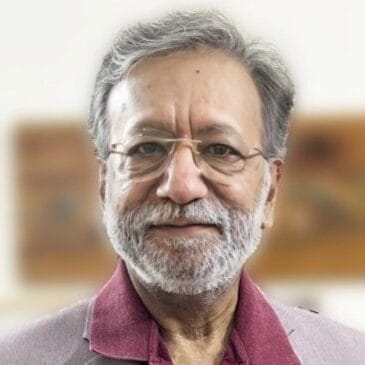
Sandeep Gupta explores the complex relationship between inner and outer worlds, highlighting spirituality's universal journey, ethical organisational frameworks, and the significant influence of balancing love, mutuality, and self-preservation.
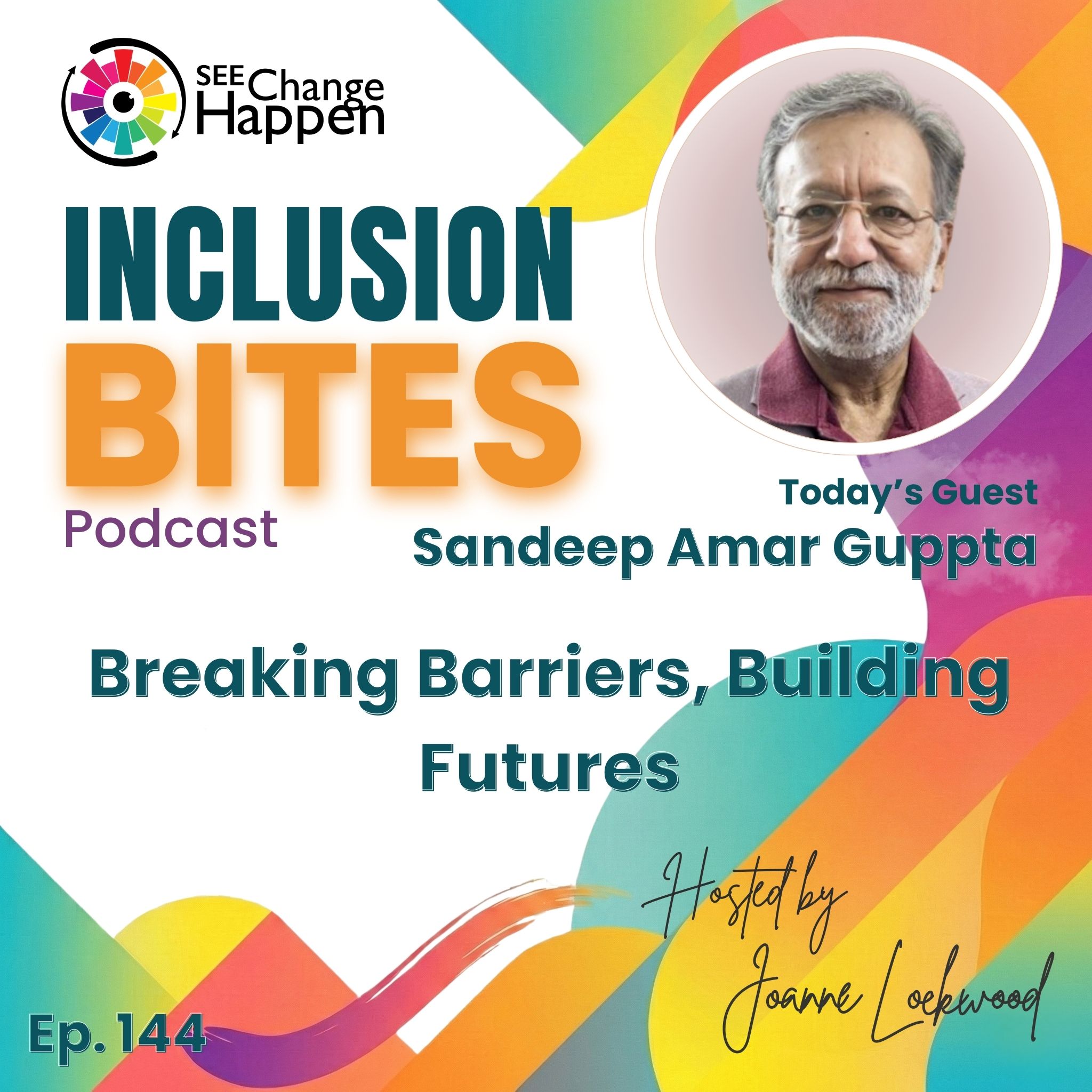
In this episode of Inclusion Bites, Joanne Lockwood speaks with Sandeep Amar Guppta about inclusive leadership management.
“What does it take to break inhibitions? One thought and one step.”
Explore
Navigate this episode
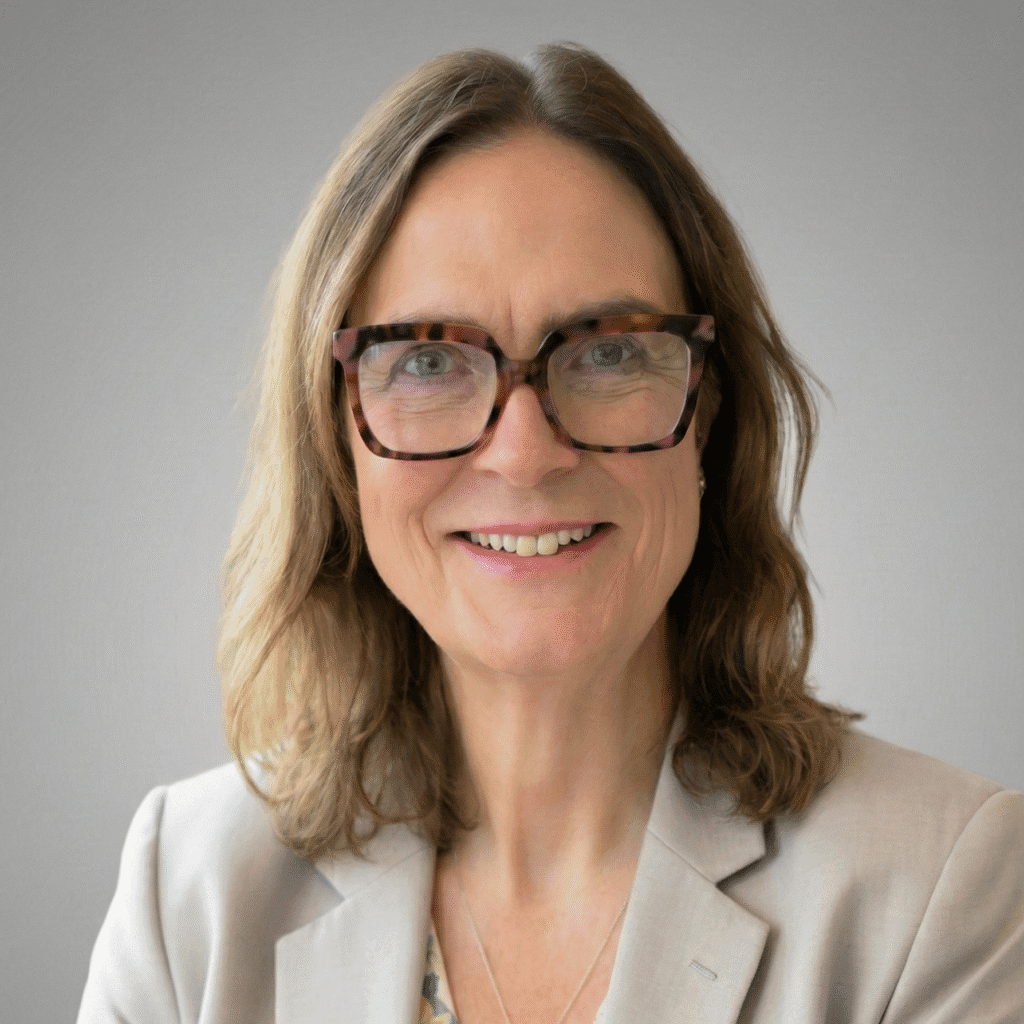
Joanne Lockwoodhost
Welcome to Inclusion Bites, your sanctuary forbold conversations that spark change. I'm Joanne Lockwood,your guide on this journey of exploration into the heart ofinclusion, belonging and societaltransformation. Ever wondered what it truly takes to create aworld? Remember, everyone not only belongs, but thrives.You're not alone. Join me as we uncoverthe unseen, challenge the status quo andshare stories that resonate deep within. Readyto dive in? Whether you're sipping your morning coffee orwinding down after a long day, let's connect,reflect and inspire action together.Don't forget, you can be part of the conversation too. Reach outtojo.lockwood@seechangehappen.co.ukto share your insights or to join me on the show.
Joanne Lockwoodhost
So adjust your earbuds and settle in. It's time toignite the spark of inclusion with InclusionBytes.And today is episode 144with the title Breaking Barriers, BuildingFutures. And I have the absolute honour and privilege towelcome Sandeep Amar Guppta.Sandeep is a transformational coach and speakerwho empowers leaders and professionals to overcomegrowth barriers and create meaningful futures through anintegrated approach blending spiritual insight,human potential and economic strategies.When I asked Sandeep to describe his superpower, hesaid it is his ability to bridge ancientwisdom and modern thought in order to unlockhuman potential. Hello, Sandeep, welcome to theshow. Hi, Jo. I'm very excited to be here. Thank
Sandeep Amar Gupptaguest
you very much for inviting me and I lovebeing here. Thank you. We were chatting in the green
Joanne Lockwoodhost
room before we went live that I'm based in the UK and you'rebased in which part of India? I am based in the
Sandeep Amar Gupptaguest
northern part of India, the capital of India. That's NewDelhi. And at present it is cold andgetting colder, but nothing like what you experience inUK. This is about 10 degrees where I am in the south of the UK.
Joanne Lockwoodhost
What's New Delhi like at this time of year in December? New Delhi this
Sandeep Amar Gupptaguest
time would be something like 14, 15, goes downto approximately 8, 9 in the early morning hours.But this is the pattern, you know, which continues whilewhere you are, the temperature will continue to fall.It won't fall so much as far as Delhi is concerned,but we do have the Himalayas where it's snowing. It goes to minus30, 40. But Delhi, where I am,is quite comfortable, you know, in the winters. India itself is
Joanne Lockwoodhost
almost a continent in its own right. It's a massive country.We often don't appreciate it when we're in the northern hemisphere. Just think about it,it's down there somewhere, but really It's a massiveplace in its own right with a massive population. Wasit 23, 20 something states within, inIndia? Well, 32 states,
Sandeep Amar Gupptaguest
you're right. India is a veryancient country, one of the oldest traditions ithas and it has everything right from the mountains to the seas to thedeserts to the forest to the rainforest.Diversity of culture. All colours are here. Andsurprisingly, let me tell you one thing, you know, Indiabecame a hotbed for clinical trials, youknow, a couple of years back. Why? The genetic compositionof India has got genes from virtually all theraces across the globe in India.So if you, you know, evaluate a drugin the Indian subcontinent and in, in, and in India inparticular, you can be rest assured it is goingto work at least in 60, 70% of theworld population. So India is a fantasticcountry. A lot of history, a lot of colour, a lot ofromance, a lot of movies. You name it and we haveit. Well, I'm not necessarily a fan of the
Joanne Lockwoodhost
Bollywood, but I'm well aware of the Bollywood culture,the dance, the colour, the vibrancy.I'm a great fan of Indian dancing. That's the way people move their fingers andtheir arms and they get with the rhythm. And I'mtransfixed sometimes watching Indian dancing because it's soculturally different to Western dancingand move. It's a, it's a very deliberate dance, isn't it? I thinkvery rhythmic and transfixed sometimes.
Sandeep Amar Gupptaguest
Well, I've seen dance anywhere in the world is transfixingif done inherently. We aremade to move inherently. Excuse me. Asfor the ancient Indian wisdom, what is flowing inside us? Itis the sound waves. And why do we dance?When we align or the sounds in the external world, theyalign with our internal sounds. Dancing is automatic, Ibelieve, world over, be it in the Africa orUK or anywhere, dancing istransfixing if done properly. Yeah, I
Joanne Lockwoodhost
agree. Even as long as you in your head whenyou're dancing, you have this vision. I think it doesn'tmatter what you look like when you dance, it's how you feel on the insidewhen you dance. If you let yourself feel for that freedom,let go of the shackles of expectations. Dancing is a way oflosing yourself into the rhythm of the music or the mood, isn'tit? You're absolutely right, Jo. And let me share a recent experience.
Sandeep Amar Gupptaguest
You know, when I was young, I was fond ofdancing and I would dance at the every opportunity, you know,but as our societies are, when you grow up, you say,oh, you should not dance, you should not do this, you should not do that.That was very much prevalent in a certain segment in India.So every time I would go to a party, every time I would hear goodmusic, internally, I felt like dancing, but somethingused to hold me. So despite wanting to dance, Iwas not dancing. And I think this happens to a lot of people.On the 29th of the last month,I was invited to a party. There was a dance floor and thehost said, you got to dance. And I was wanting to dance, but something washolding me back. Inhibitions. And then I said,I got to do it and I went and danced and people said, you dancedwell. So, you know, I. I'm going to write a post on this thing. Ijust got the photographs today. What does it take to breakinhibitions? One thought and one step.That is all. Yeah. Thinking and then take action effectively, isn't it?
Joanne Lockwoodhost
Yeah, yeah. And you know, when you
Sandeep Amar Gupptaguest
said thinking and taking action. Let me share another veryimportant example which I give. I'm using the word important,the relationship between knowledge andaction. It's the relationship of a bullet and a gun. If you're indanger, I give you a bullet, it has got no value.If I give you a gun, don't give you a bullet. Again, it has gotno value. But the moment I give you thegun and the bullet, it becomes. Becomes powerful.
Joanne Lockwoodhost
It changes the skill to fire it and the skill and knowledgeto fire it as well. That goes. Yes, that is
Sandeep Amar Gupptaguest
true in the skill. But what I'm trying to sayand why was I drawn to your podcast or thistalk? Inclusiveness. And this is oneexample of inclusiveness where you bring knowledge andaction together, you make them inclusive, you becomea powerhouse. Yes. Yeah, I think you're right.
Joanne Lockwoodhost
Without action, they're just thoughts, they're just dreams,they're just want to be. Action turns them from thoseinaction into something tangible, something that can change,create, develop. And I think we see that too much.Everyone wants. Without the action, it just becomes a
Joanne Lockwoodhost
dream. That is true. That is true. And in my work, in my
Sandeep Amar Gupptaguest
practise as a breaking growth barrier or a transformativecoach, this is the main thing. I find thatpeople are capable, they have all the potential,but something is holding them back.And when you help them to remove what is holding themback, they unleash their potential. But the question isidentification of what is holding them. And I findthat most of the people, or majority of the people, and even thecoaches to a large extent, falter over here. They don'trealise we live in two worlds simultaneously. Theexternal World, which is the world in which we are born, webreathe, take actions, results manifest for us.And our inner world, our inner world of love, our inner worldof aspirations, our inner world of beauty,values, experiences, consciousness, etc. Etc.Our inner world drives that external world. A lot of
Joanne Lockwoodhost
what you're saying there relates tospirituality, doesn't it? It's the inner sense of self, ourinner peace, our inner happiness. And something that I think is lost in the Westernworld often is spirituality. We get confused betweenreligion and spirituality and being in connection withourselves, with our surroundings, with the people around us. How do youstart to understand that aspect ofyour culture? And how do you use that cultural element to sortof develop your thinking in terms of business? First of all,
Sandeep Amar Gupptaguest
I would like to make a small correction. The west has notlost spirituality. West is equally spirituallike the East. Only thing is, spirituality is a spectrum.You might be standing on a starting station, I might bestanding on a station which is much more advanced. But youare also journeying. So am I. That is the east andthe West. Spirituality is an inherent part of thehuman existence. Now why do I saySuzhou? There are three words.Spirit, spiritualand spirituality. You agree with me. We all havesouls. Yeah, I'm not religious, but I believe that I have a soul.Yes, you have a soul. I'm not talking of religion, I'm just nottalking of religion. And spirituality and religion, they're two different things.You have a soul. That is the spirit. That is the spiritin whatever. It getspoured, it's got poured in the human body. So the humanbody becomes spiritual. And when we humans withthe soul in our body, we start walkingfrom gross selfishness. Me, me, me,I, I, I to grossselflessness. We are us.This journey is called spirituality. Why? Because what are thecharacteristics of the spirit? Love,mutuality, refulgence, intelligence, wisdom,good for all. And what are the characteristics of the body?Selfishness, organic satisfaction,organic survival and organicmultiplication. The body does not know a fourth thing. This is the waynature has made us. And in between the body and thesoul is our mind. The thoughtprocess which keeps on oscillating betweenthe body and the mind and reactsdepending at what was its positionwhen the external stimulus comes in. If the mindwas focusing more towards the body, when there's a stimulus,your reaction would be selfish. And if themind was more towards the soul, your reaction would beselfless. So if you map your thoughts and actions for24 hours, you will find inconsistencyin them. I think you can tell when an organisation or
Joanne Lockwoodhost
an individual as a soul operateand it's, I think for me a soul goes beyond the content,a restraint. It's soul is a bit, it's about your inner self, your inner truth,your inner being, your values, your brand, what you stand for.Just your whole essence and purpose in life comesout of your soul. And I often see this where I'm dealing with peopleor, or organisations where they don'tconnect that humanity to their actions.And I see great examples when people do that andI feel rewarded by interacting with those people. Jo,
Sandeep Amar Gupptaguest
an organisation like the human body is divided inthree parts, the soul, the mindand the body. Similarly, an organisationis divided in three parts the people. They are the soul of theorganisation. On top of the people is the culture of the organisationand on top of the culture is the business, thetransactional business which we do buying, selling,reporting, controlling relationships.Now the people, theirvalues, their thoughts, they drive theculture of the organisation and the culture of the organisationdecides and drives whether the businessstrategies are ethical or so the challenge arises, youknow, in modern day management is theydon't integrate the three, you got to integrate the three,you got to look at the larger picture, the whole picture. You've gotto apply systems thinking, see what is impactingwhat and then take actions inbusiness also know the chaos theory equally applies. But thentoday, unfortunately, our managers and leaders are so shortsighted, they're so impatient,they want profits, they don't want to create valuefor society. And if you're ethical, which means you gotthe right culture and the right culture means if you have theright motivation and the right people in yourteam, then you start building value forthe society. And now you'll agree with me,Jo, there are no free lunches. If you give something tosomeone, they would respond. So when you add value tosociety, you enter avery different league of business. Look at Apple, they added valueto society. Look at Disney, Walt Disney, he added valueto society. Look at Google, they added value tosociety. How can leaders in
Joanne Lockwoodhost
organisations reconnect with this innerconsciousness and awareness? Because I think sometimeswhat happens is we get caught up in our day to dayactivities. You mentioned becoming short sighted, becoming impatient,becoming target driven, becoming financial outcomedriven and lose sight of the people. How do westep back? And when we, you know, hopefully werealise one day that we have lost sight, how do we stopand go back, figure it out again? Before I answer that question,
Sandeep Amar Gupptaguest
let me share a very important empiricalresearch results. You see, because of physics, chemistry,the science which we have been following for the last hundred years.We have become very data oriented in our thoughtprocess. Anything subjective has takena backseat. Now, to get that subjectiveness back, I would liketo present this data. It's a research done bySisodia Raj. Sisodia wasa professor in Wharton School andthe research is called Friends of Endearment. Now whathe did was he selected around 60odd groups across the world which comprised of theS&P 500, the companies which were there on the S&P500 and companies which also fell in the great togreat Brit Greater index. And he shortlistedthem on the basis of the humanvalues they were following. If they were following humanvalues in their business strategies, he shortlistedthem. So he made a group of 60 odd companies who werefollowing human values and business strategies and then hedid an analysis of the valuation which they hadachieved. Visa, Wiz S&P 500 averageand the good to great average. Jo, you'llbe surprised. These companies who were following human values, theyhad grown by 15x over a period of 10years in comparison. Why? I offer asimple explanation for that. We got tolook at business differently. What is business? Businessis a socioeconomicrelationship between three sets ofpeople. Relationship between three sets of people.And who are the three sets? The peoplewho establish the business, the owners, people who supportthe business, workers, banks, stakeholders.The third set, people whoconsume the services and the products of the business.These are the three sets of people who come together and make a businesssuccessful. And why does a business becomesuccessful when these three sets are together?Because they are helping each other to help themselves. This is veryimportant. They're helping each other to help themselves.
Sandeep Amar Gupptaguest
And since business is a socioeconomicrelationship between three sets of human beings,so anything and everything which applies to a human being would alsoapply there. I ask everyone a simple question. You go to Harrods, it'sthe world renowned store, right? You buysomething from there, you say, I've got it from Harrods. Ifthe sales girl or the sales manmisbehaves with you, shows you up,says, this is not a store for you, will you go back toHarrods? You will not. It's happened in India,like the Indian kings, you know, they were very richwhen they used to go to England or Europe. Like this is a caseof, I think the Collier king of Collier. He went toEurope, went to the Rolls Royce showroom, he was shooedaway. Hey, hey, man, brown skin, go away, go away, you can't affordit. He was insulted. Then he said, buy allthe cars in the showroom and tells us, ADCmake the payment in cash. The salesman was taken aback. The managerwas taken aback. They used to sell one car amonth. Now here's a man standing saying, okay, buy 50cars. And in front of them he says, now use them topick up the waste in my kingdom.So obviously the Rolls Royce guys got disturbed. They said, whatare cars which are supposed to be the premium cars, luxurycars, only the who's who use themand they are going to be used as municipal vans to pick up the trashof the city. They came and said, sorry and all that stuff, you know,and he said, okay, okay, I'll not do it. But this was an example ofrelationship going bad or making a relation, notfocusing on the relationship. So personally, I believe whateverapplies to human beings equally applies to businesses. Anecdote
Joanne Lockwoodhost
story it's basically saying that youhave to value people and the relationshipbecause that is your brand, what your organisation standsfor and how it will be judged. And if you treat peoplebadly, you treat your customers without respect,then that sets the value of your brand. So when wetalk about these various initiatives in business, diversity, inclusion, allthese buzzwords we talk about, it's about howwe treat people, how we make people feel aboutourselves as an individual and ourselves as a brand, as anorganisation. And it's what we stand for, which is part of whatyou're saying there. Because if a Rolls Royce istreated as a rubbish collection, it shows that's thevalue you associate with that brand. And that came from theway you were treated by the person you dealt with, not by theorganisation, but by the person you dealt with. Because they set face offthe brand, don't they? You're absolutely right. You're absolutely right. And the other thing
Sandeep Amar Gupptaguest
which leaders got to recognise,are they playing a game for immediate results orare they playing a game for long term results? If they're playing the gamefor immediate results, they could win,they could be rewarded, awarded, everything. But what happens tomorrow?You know, surprisingly, I was reading somewhere, Google,when they have the meetings, they don't talk on the numbers, they don't talkabout money, they talk of what value would they be adding in thecoming year to the product andpeople? Yeah, I think
Joanne Lockwoodhost
what we often do is we focus on the wrong output.What are we trying to add? Is it just shareholder valueor as you say, aboutcreating something that's valuable to the world, the human species? It's
Sandeep Amar Gupptaguest
actually both, you know, within the organisation, you've gotto Create value for each other. Values you see, like a house.You don't. A stack of bricks does not build a house.You need cement or glue to put the brickstogether and then it becomes a house. So in the teamenvironment, you need ethics and valuesto bind people together into a team. You see, a person whois straightforward, believes in honesty, believes intruthfulness, believes in transparency. Do youthink the person can work with someonewho believes in nothing of these? Not really. Even if he or she takesthe job, that will only be temporary because theneeds might be surpassing, their needs might be surpassing, must beso pressing that they accept the job, but they leavethe company at the first option. And leaders got torealise one thing, that losing a millionpounds for a dollars isnot so bad into losing a good worker. Yes,
Joanne Lockwoodhost
yes. It's like the military thing, isn't it? A plane is replaceablebut the pilot is not right. Exactly. This is a brilliant example.
Sandeep Amar Gupptaguest
I remember hearing one of the topindustrialists of India in our management conference,he said, when I make a loss of 10 million,I don't sleep for 10 nights. But when my senior managerleaves me, I don't sleep for 10 months. People said,why? He said, you're forgetting one thing. He was the guy whowas producing the results for me. He has leftme and joined someone else with him. He hastaken all the trade secrets of mine. He knows exactly myweaknesses and strengths. To retain my position, I will need towork double and triple because now I also need tocounter what he could do, which makes the situation more complex anddifficult. So the system, you know of the pink slip.I don't like your face. Here's the pink slip. It'shaving its own repercussions. I'm a great believer that
Joanne Lockwoodhost
inherently human beings arepositive, want to contribute, want to do a great job, want todo great work. And it's often down to how they'retreated, how they're interacted with. It sets thetone of their own sort ofcommitment and how they interact with organisations. I often feel thatwhilst the person has a knowledge that is valuable,I always see it as a personal failure if I'm notable to work with that person for a positive result.And it's not, as I say, it's not selfishly about what they. Theirskills and knowledge. It's about the human side. I want thatperson to succeed and if they're not succeeding, what can Ido to change that? It's kind of the attitude. I Now let me take it
Sandeep Amar Gupptaguest
as if a leader was asking Me this question, right? Whatcan I do to change that thing? The question is, how are youconnecting with the person? Now let me get some neurobiology. Theprefrontal cortex, which is the executive brain, theamygdala, which is the emotional brain. Now what happens?I am entering the cabin and I know my boss shoutsat me, it causes pain. Now,since we are hardwired to avoidpain in any and every circumstance,the prefrontal cortex shuts off, amygdala takesover. That's the emotional brain. And the emotionalbrain knows only three things. Fight,flight or freeze, turn on. My boss isgoing on for half an hour. You did this, you did that. You should havedone this, you should have done that. You are a fool. Blah, blah, blah, blah,blah, blah, blah, blah. Nothing is registering becausemy prefrontal cortex is shut down.If the leader realises this thing,recognises this thing and says, okay,come in, let's have a talk, as you rightly saidearlier and says, okay, Sandeep, the targetwas this. You could not achieve it. But whatever you have achieved,that's great, tell me the reason of how can I helpyou? What should we do so that the next time you will achievethe target? Because his ranting was also to achieve the target.The goalpost is not shifting. Only the style ofinteracting with me is shifting. Let me share alife example with you. There was a company, they hiredme to help them to bring the right energies into the right place. Theywere at 800 million.That was their turnover. They wanted to increase theturnover to 1600 million in oneyear. And there was a market, there was a market,but this 100% growth had rattled theentire team. Because this team was coming from agovernment setup where 5 to 10% growth wasa growth to celebrate and party. So when we went there, sowhat they told us, me and my team, thatlook, the energy is very low. You do something,give them a motivation, talk, do this, do that, et cetera, etcetera, and make sure that they are full ofenergy. So we went there, we usedcertain techniques and then we realised the power. The problem is not theenergy is low, the power is. The problem is something else.People are not feelingwanted, people are not feeling apart of the organisation. People are not feeling beingheard, they are not feeling important. So we got
Sandeep Amar Gupptaguest
them into a room, used a lot of techniqueswhere we got them to define theirvision, their mission, theirvalues, as a collaborative team where eachand every member of the 32people, 32 people team participated.Now, this thing did three things. Jo Number one,it created a bond between the 32 people. And since thebond was created and sub teams were created and they were helping eachother, so the probability of something slipping between two chairsand no one bending to pick it up got eradicated.Since the values, vision and mission were created bythe entire 32, they became committed to it. And I did avery simple thing. I said, okay, you guys tell me, what are thestrengths of your organisation? So 5, 6, 7,8, 9, 10 strengths came. I said, okay, brilliant.Every day you come to office. Yes, Sir. Give me three strengths whichyou bring to office. So now 33 people intothree was 99 strengths were above.Well, some would be duplicate, et cetera. Or earlier they said10 and now they were unique for 35 or 40strengths. Say look guys, if you join hands, it's not 10, it's35 strengths you have. And with 35strengths, can you achieve the 100% growth?Yes, we can. And they achieved 90%of that. That's a huge, huge thingto celebrate. This assignment was done around two yearsback. I was talking to the CEOthe other day. The energy is still high. So whenyou bind people together, you show them a path. You don'tmicromanage, you treat them well,you give them a good culture, a good atmosphere. People perform.And the manager's got to understand when someone commits a mistake, heor she knows that they have committed a mistake. So don'trub it in. You mentioned in some of the notes you put together before the
Joanne Lockwoodhost
show about you called it total worldlinessas opposed to un worldliness. How do you frame thatabout? There are three words.
Sandeep Amar Gupptaguest
Worldliness, gross worldliness. You only think of thematerial, nothing else than the material. And you can go to anyextent to achieve that material. Sovalues, love, mutuality, nothingcomes into play. If need be, you could kill, you could rob, you could doanything to achieve the material. That's the grossworldliness. On the other hand is grossunworldliness. Now what is that unworldliness? Hey, I don'twant it. You first. You. No, no, no, no. I'llsacrifice, I'll sacrifice, I'll sacrifice. No, yougot to protect your self interest. So that is grossunworldliness. And the third thing is a betterworldliness where you balance both the things. You come to the centre
Sandeep Amar Gupptaguest
point, the midpoint, where youapply the principle of selfpreservation, self protection, selfdefence. When I say this thing, it does not allow me toharm anyone, to protect myself and create a world on the basis oflove, mutuality, where there's an opportunityfor everyone to educate themselves, tolive healthy, to work, to unleash theirpotential and live peacefully and happy. Iknow this might sound like a utopian idea,but then we got to have a goal to movetowards to do something. So this is the reason I say better.Worldliness is my goal. The problem we face as a human
Joanne Lockwoodhost
species often is these. You mentioned the,the amygdala, the fight, flight, freeze, the vagusnerve. Our human psyche is geared upagainst self protection and when we feel threatened orwhen we experience things that are outside of our control,we retreat back into this defensive mode.In our business world, in society,ourselves, before we become. Before theamygdala kicks in basically before. Or we become emotionally driven.
Sandeep Amar Gupptaguest
Well achieving a hundred percent state isimpossible. But yes,controlling yourself is possible. And theentire Indian ancient wisdomfocuses around this thing, you know, they are, it's a fourstep formula, you know, which I propose.Number one, attention management. Learnto manage your attention. Learn to manage your attention. Because without your attention,without focusing on anything, you cannot do anything. Attentionis fundamental. Once you learn to manage your attention, learn toobserve properly. Now Jo, you would say we areobserving properly. I know there's a book over there and there's acat over there. When I say observe properly,observe externally and internally. Because wheneverthere's a thought, there's a stimulus, there's somethingfirst. It manifests and reacts internally. It's an internalbodily reaction which manifests externally. Forexample, if you don't, you don't like someone and that personis approaching, is coming towards you, you'll have astrange feeling, some part of your body would twitch or would get,what should I say, might just get agitated,your heartbeat might start running fast, whatever it could be. And
Sandeep Amar Gupptaguest
then you greet that person with uswith a grumpy face. Nowso this is the observation part, right? Or you know you're going to blow up,you're going to shout because your heart has started beating.Now between the beat, between the beating of your heart andshouting, there is a small gap. So the thirdstage is pause. Put your finger on the gap. If youobserve between the internal reaction and the externalmanifestation, there's a small gap, that ispause, practise pause. Now the pause could be fora fraction of a second, 100th of a second. Catch thatpoint and when you catch that point,amygdala opens the doors, lets go ofyou and the prefrontal cortex receives the stimulus.And now you say, okay, now you say that look,I was angry with this guy for what he did in 1960.But today is 2024. The man could havechanged, the woman could have changed. She might be coming witha proposal for me. That is the prefrontal cortex thinking, the fight isnot over over here. The fourth point isacceptance, which is the mother of everythingexcept reality as it is without any riders, withoutany justifications, without any excuses. For example,I have failed in an exam and Jo says, sandeep, tellme, how was the result? I cannot lieto Jo. Right, that's a Jo, I failed.You know, it was bad luck what had happened. I'll cook up astory and tell Jo, this is the way we accept reality.99.9% cases, I say,Jo says, what's the result, Jo? I have failed.Be real now. The act of failing is causing mepain. I'm not hardwired for pain. Soautomatically I start thinking ofwhy did I fail? What can I do so I don't fail again? Whereas inthe first case, bad luck, I met with anaccident. I slept, I was having fever. I am shiftingmy attention from the act of failureto something else and I never find thesolution. So therefore I call this thingAOPA formula. AndI've learned it from life. I've learned it from life. So ifa person follows this thing, practises this, I can assure theperson 60 to 70% catch of theamygdala. What Cease. I'm a disciple of
Joanne Lockwoodhost
that thinking as well. So I would. I'm a great believer that Ihaven't failed an exam. I've learned what I didn'tknow. And I also the personalaccountability. I could, I could do, do better, I can learn better, I could bemore prepared, I can learn more. So, yeah, I always think of ashumans, we don't learn through getting things right,we learn through mistakes, we learn through trial and error, we learn throughsituations. And as I often say as a youngchild, we don't learn to walk the first time we standup, we have to fall over, we have to bang our head,we have to hit our knee, we have to cry and scream and be pickedup by a mother. And then we learn about balance.Then we learn about moving on a foot in front of the other foot. Andthen we become proficient enough to be able to run. And we don't runfirst time. So everything we do in life should be seen ascontinual learning and enhancement. If we see failure as asetback, we should see failure as an opportunity. And I know that'svery cliche and very easy to say but we have to makemistakes to learn, to grow. I totally agree with you. You don't have to
Sandeep Amar Gupptaguest
make mistakes. You make mistakes. You see, because you intentionally. You nevermake a mistake, Jo. It's only in hindsight yousay that was a mistake because at that point of time, when you took thatdecision, it was the best decision which youcould have taken based on the facts. Available at that time. That was the decision
Joanne Lockwoodhost
you made. So it's not a mistake. It's only when
Sandeep Amar Gupptaguest
you have grown in wisdom, you have grown in intelligence, you have grownin experiences, you look back and say, hey, I committed amistake. Mistake is a wrong word. No, you never made a mistake. You willmake a mistake. If by looking back you don't learnthe lesson, that will be a mistake. Becausethat time you did not have the resources. Today you have the resources,resources of experience. This is what I mean. I agree. Yeah,
Joanne Lockwoodhost
it's. I think if we all were able to frame it that way,because one of the other things I find in the work I do is thatone of the biggest barriers is the fear of getting it wrong or the fearof upsetting somebody or the fear of not having all the answers.And it can hold us back, create limiting beliefs. But also from aninclusion, from a culture perspective, people are so worriedabout upsetting somebody else that they're not.They almost back away rather than engage and have a conversation. I thinkthat's, that's a challenge we've all got to try and overcome is put ourselvesinto that stretch zone or put ourselves into a position wherewe, we can deal with discomfort. What you're saying is absolutely right.
Sandeep Amar Gupptaguest
You know, as coaches, right,we know that we need toconnect with the heart. And you can connectwith the heart only when you discard. The element ofjudgement in your judgement is a product of the brain,of the mind. So first of all, we got to. That's the, that's whatI do. Discard judgement. Open your heart.No one has done any mistake. They've experienced certain thingswhich might have worked for them in the long run, might not have worked forthem in the. A lot of things I did didn't work for me. When Ilook back, everything worked for me because those mistakes werewhat gave me the insight what I should do, what I should not do.So. Okay, now coming back to your question. As coaches,I always say, open your heart, connect with the person, be agood listener, just listen and listen to them. Andthere have been times, Jo, where my clienthas spoken to me for an hour andall I'VE done is five, six times. Tell memore or that's all. But let me share a case withyou. There was a client, that girl called me for one hour. She kept onranting on the phone, this is this, this is this, this is this, blah blah,blah, blah, blah, blah blah. I kept on saying.And she said, sir, what is your assessment? I said, you don't have apurpose in life. She got very angry, she banged thephone down, okay, after 10 days she callsme sir. I was thinking, you are right, I don't have a purpose in life.
Sandeep Amar Gupptaguest
Would you help me to work on my purpose?And today I think I must have done anumber of sessions with her. She's a changed person. And I'm alsohelping her in setting up a business because I'm a charteredaccountant, right? So I understand the business dynamics. And she has become a sort ofsay permanent client of mine as on date. So somewhere, you know, wecoaches need to get out of thatfear of displeasing the client becausetruths are hard to swallow. But at the same time we got to bepolite, we got to be diplomatic and alltruths need not be told at the same time or at the wrongtime. We got to be mindful. Is theclient prepared way tolisten to that truth at this point of time or no? I knowprobably certain coaching philosophies would say no, this is not done. Butthen whatever serves my client,whatever helps my client, I think that's the best philosophy. Eventually
Joanne Lockwoodhost
you're a charged accountant by profession of law, duerespect, a long standing, you've been in the game a fair while.How have you seen the world ofcommerce and work evolve over the last 20 or30 years? Okay, let me give the story of last 40
Sandeep Amar Gupptaguest
years. I became a chartered accountant in 79. The world wasvery different. We didn't even have the calculators then. So you can,in today's terms, it was very primitive. I used the word primitive. You know, whenI became a chartered accountant, I asked myself, why have you become achartered accountant? The traditional practise does not enamor you, does not interestyou. Those were the days in India when management consultancy was comingand I jumped at it. I'll answer your question also, right? Andsoon I realised while working with the best,that the best of projects, best of strategies, best ofeverything fails. Why? Because of one manwho's driving the project or the problem. So that got meinterested into the human dimension. Now when we come to the humandimension, there are two things very important. Excuse me, there Are two things veryimportant for the human being to unleash itsfull potential or live by his or her full potential.One of the values, aspirations, dreams, selfmanagement tools and techniques which come fromspirituality. Because human beings are amicrocosm of the macrocosm that's on one side, on the otherside, yes, it knocks. Youneed money to survive. And this is the reasonI say we live in two worlds simultaneously. If our inner worldgrows without a support ofthe external world, we become lame ducks.Anyone can come and kick us and kill us. And if ourexternal world grows withoutcorresponding growth of the inner world, we becomeman eaters. We'll do anything for survival.So now this is where the spirituality, human potential,economics came together. And I being a chartered accountant, that made it mucheasier for me. So I say, okay, I understand the top line, I understand thebottom line and what happens between the two lines,right, I can help you in that. So spirituality
Sandeep Amar Gupptaguest
and economics, when they come together, that is the timehuman beings flourish. If the church,the temples, the everyone priests, they wantmoney because that is the way life functions. Nowthe question is whether they're greedy or not, that's a different thing. So I'll notbring that into it, otherwise I'll keep going on and on. Now coming tothe transition, the journey, how the businesses have changed. The way I'm looking atit, 80s, it was all about the bottom bottomline. How much profit have you made, period?This was a year of turmoil because subjective thought,subjective thinking, consciousness, awareness was all thrown outof the window in the 80s, 70s, 80s, 60s.And if you go back to the 1960s, therewas an article in Harvard Business Review, itis okay to cheat in business. So that was thescenario that then the repercussions came.Then I saw the triple profit line coming in.Planet people profits. Then camethe technology age, the 90s,2000s. So we have, we moved from the industrial era tothe information era. Everything changed, started changing. Computerscame in, SOPs started being developed, SAP came intopicture. Big organisations came in to producecomputers. And after the computers
Sandeep Amar Gupptaguest
came the information, they came the knowledge age.Today knowledge is the most important and whenever a new wave comes,it comes like a tsunami. It disrupts a lot of things, but atthe same time it also constructs a lot of things. So I've seen thetransitioning from the industrial era to the ITera, to the knowledge eraand now to the virtual reality. When I started my practise,I had to count the numbers, run my fingeron the line of numbers and count manually Today,AI gives me the power to cheque the way Jo iscounting his numbers while he is 7,000, 8,000 milesaway from me. Yes, now the question comes. 70% of thepeople suffer from the ostrichsyndrome. When changes happen, they fail to end. Why?They love their comfort zone and their mind says, come on,sleep. It'll pass, it'll pass. Nothing is permanentin the world. It'll pass. Mind doesn't tell them that. Look, gentlemen, you arestanding on step one and what this wave is doing istaking you to step two. Step two will pass, but then it'lltake the person to step four and you'll be left behind.And to catch up, you've got to get out of your comfort zone, you've gotto shun the ostrich syndrome. You've got to look around, acceptreality as it is. And now let me come to the presentday thing. This, all this mental challengeswhich we are facing is I believe, who has said this is acentury of mental challenges,mental issues, mental epidemic.Why? Because 90% peopleare dissatisfied with themselves. I'll say they are dissatisfied withthemselves because they don't know who they are, what they want.They are just copying what their friends do,what their icons do, what the rich do andthey're emulating. They got to recognise who they are. And let me tell youone thing is that every human beingis absolutely unique and willalways be unique. Do you know the reason, Jo? From the moment
Joanne Lockwoodhost
we're born, our lived experiences, the people we interact with, ourDNA, everything diverges.
Sandeep Amar Gupptaguest
Exactly. The set of parents, right? The set ofparents are unique. Their set ofparents were unique. Their set of parents were unique. Their set of parentswere unique. If you keep going backand this uniqueness will not replicate going forward, there mightbe people like you, but notidentical to. They will not be your clones.
Joanne Lockwoodhost
That takes us back to what we said at the beginning around ourspirituality, our soul. Our soul is unique.
Sandeep Amar Gupptaguest
Yes. Who we are. Yes.I usually ask people, I said, what is. What is something absolutelyunique about you? I can do this. I said, okay, if you can do this,so can I. How come you're unique or I gotthis strength? Okay, if you have, so does Jo, sodoes, so does Jo has. So what is so unique about it?So does Sally has, so does Rita has. I sayyour strengths and weaknesses are unique and you've got to keepon upskilling your strengths and reducingyour weaknesses. They say, why? I said, allopportunities are in the external world. They're constantly going up,up, up. Becoming more complex, more complex, more complex. They gota. They got a certain demand of strengths and weaknesses. Now yourstrengths and weaknesses are not matching those demands.What is going to happen? Either you'll fail,you'll not succeed, or your businesswill slow down or your growth will slow down or totally cease if youwant to restart it. You got to work on yourself. You've got toenhance your strengths, upskill yourself so you can stretchyour hand and capitalise on theopportunity which exists, which is offering itselfto you. And deep. What an amazing conversation that I can
Joanne Lockwoodhost
carry on talking to you all day. How can people contact you? How do people
Sandeep Amar Gupptaguest
contact me? Okay, you see, till that time, till Covid had not come. Okay,I'll be very honest. I had my own circle. I've beenpractising for 40 years. So people knew about metoday, my old contacts, they contact me,they contact me through LinkedIn, they contact me through mywebsite and they contact me through word of mouth. AndI believe that the word of mouth is themost potent and the most important. I agree. I
Joanne Lockwoodhost
agree. Because it only means if someone is saying, okay,
Sandeep Amar Gupptaguest
you can go to Sandeep or rely on Sandeep. It means I havemade an ambassador. What of that person? An ambassador for me.And this boy or girl, or man or woman would speakto as many people as possible withoutI pushing them to speak. So yes, definitely you got to bevisible on social media, which I am. Slash inslash. Sandeep Guppta. DelhiSlash. I got a YouTube channelby Sandeep Guppta Live. My website isguptasandeep.com and as you rightly sitin the morning, I speak, I, I coach and I trainon growth and transformation and I help business leaders,businesses and individuals in identifyingbarriers, breaking them and creating meaningful futures forthem, their families and society. Nadeep. Thank
Joanne Lockwoodhost
you so much for your time and it's been an inspiration listening to youand sharing time with you today. Thank you. I really loved it. Thank
Sandeep Amar Gupptaguest
you very much. You were a brilliant host.
Joanne Lockwoodhost
As we bring this conversation to a close, I want to expressmy deepest gratitude to you, our listener, for lendingyour ear and heart to the cause of inclusion.Today's discussion struck a chord. Consider subscribing toInclusion Bites and become part of our ever growingcommunity driving real change. Share this journey withfriends, family and colleagues. Let's amplify the voicesthat matter. Got thoughts, stories or avision to share? I'm all ears. Reach out tojo.lockwoodchangehappen.co.ukand let's make your voice heard. Until next time,this is Joanne Lockwood signing off with a promise to returnwith more enriching narratives that challenge,inspire and unite us all. Here's to fostering a more
Joanne Lockwoodhost
inclusive world one episode at a time. Catch you on the next bite.
Spirituality vs ReligionOrganisations with a SoulLeadership Insights and Employee Wellbeing
Joanne Lockwood speaks with transformational coach and chartered accountant Sandeep Amar Gupta about what it takes to build businesses that grow without losing their humanity. Together they explore the relationship between the external world of actions and results, and the inner world of values, purpose, and consciousness.
Sandeep distinguishes spirituality from religion and frames it as a universal journey from self-centredness towards selflessness. He connects this to organisational life, describing businesses as having three interlinked layers: people as the “soul”, culture as the “mind”, and operational activity as the “body”. The conversation challenges short-term, profit-only leadership and argues for systems thinking, ethical strategy, and long-term value creation.
They also discuss practical leadership behaviours that shape culture: how fear-based management can trigger threat responses and shut down learning, why supportive conversations improve performance, and how co-creating team vision and values can increase commitment and results. The episode closes with reflections on learning through setbacks, adapting to change, and aligning individual strengths with a rapidly evolving world of work.
“The genetic composition of India has got genes from virtually all the races across the globe in India. So if you, you know, evaluate a drug in the Indian subcontinent and in, in, and in India in particular, you can be rest assured it is going to work at least in 60, 70% of the world population.”
“It's a research done by Sisodia Raj. Sisodia was a professor in Wharton School and the research is called Friends of Endearment. Now what he did was he selected around 60 odd groups across the world which comprised of the S&P 500, the companies which were there on the S&P 500 and companies which also fell in the great to great Brit Greater index.”
“You go to Harrods, it's the world renowned store, right? You buy something from there, you say, I've got it from Harrods. If the sales girl or the sales man misbehaves with you, shows you up, says, this is not a store for you, will you go back to Harrods? You will not.”
“So somewhere, you know, we coaches need to get out of that fear of displeasing the client because truths are hard to swallow. But at the same time we got to be polite, we got to be diplomatic and all truths need not be told at the same time or at the wrong time. We got to be mindful.”
“Two things very important for the human being to unleash its full potential or live by his or her full potential. One of the values, aspirations, dreams, self management tools and techniques which come from spirituality. Because human beings are a microcosm of the macrocosm that's on one side, on the other side, yes, it knocks. You need money to survive.”
The significance of recognising and balancing the 'dual worlds' of external actions and inner values.
The universal nature of spirituality and its distinction from religion, dispelling common Western misconceptions.
The idea of organisations possessing a soul, where inner truths, values, and purposes shape humane actions.
A critique of modern management practices and the call for systemic thinking, with examples from top companies.
The importance of integrating people, culture, and business operations in organisations for sustainable and ethical growth.
Practical applications of the AOPA (Attention, Observation, Pause, Acceptance) formula for personal and professional development.
Viewing failures as learning opportunities, and the impact of positive and negative brand experiences on customer loyalty.
One thing to remember
The most important takeaway from the "Breaking Barriers, Building Futures" episode of The Inclusion Bites Podcast is the integration of spirituality and systemic thinking into organisational leadership. Sandeep Amar Gupta advocates for organisations to operate with a soul, characterised by inner values and human-centric approaches. This holistic perspective, spanning individual self-awareness to ethical business practices, underscores the need for long-term strategies focused on societal value rather than short-term gains.
Questions this episode helps answer
How does Sandeep Amar Gupta describe the relationship between the 'external world' of actions and results and the 'inner world' of love, consciousness, and values?
Joanne Lockwood and Sandeep discuss the Western conflation of spirituality with religion. What are the key distinctions they make between spirituality and religion, and why is it important to understand these differences within an organisational context?
Sandeep introduces the concept of an 'organisation with a soul.' What characteristics define such an organisation, and how do these traits impact its operations and societal contributions?
According to Sandeep, modern management is often short-sighted and impatient. How does he propose addressing these issues through holistic thinking and systemic approaches, and what examples does he provide?
Discuss the three-part organisational structure analogy Sandeep uses (body, mind, and soul). How can integrating people (soul), culture (mind), and business operations (body) help create ethical strategies and drive long-term value?
How does empirical research, as cited by Sandeep, support the idea that companies embracing human values achieve significant growth?
Explore topics
Ideas from this episode
Spirituality vs Religion
During my enlightening conversation with Sandeep Amar Gupta, we delved deep into the Western misinterpretations surrounding spirituality. Sandeep passionately underscored the essence of spirituality as something universal and distinctive from religion.
Organisations with a Soul
Our dialogue transitioned into the intriguing notion of organisations possessing a 'soul', characterised by inner truth, values, and purpose. Sandeep and I unravelled how this concept goes beyond mere corporate social responsibility, embedding ethical strategies and humane actions into the core of a business.
Leadership Insights and Employee Wellbeing
A critical part of our discourse touched upon leadership styles and their impacts on employee wellbeing and organisational success. Sandeep shared enlightening insights on the importance of nurturing a positive work environment, steering clear of micromanagement, and fostering a culture of support and trust.
Learn
Frequently asked questions
What is the 'Dual Worlds' Concept?
The 'Dual Worlds' concept, discussed by Sandeep Amar Gupta, refers to the coexistence of the external world, characterised by actions and results, and the inner world of love, consciousness, and values. Sandeep asserts that the inner world directly influences the external outcomes.
How does spirituality differ from religion, according to the podcast?
Joanne Lockwood and Sandeep Amar Gupta discuss the common Western misunderstanding that spirituality is synonymous with religion. They clarify that spirituality is universal and distinct from religion, representing a journey from selfishness to selflessness, while religion typically involves structured beliefs and practices.
What does it mean for an organisation to have a 'soul'?
An organisation with a 'soul' is one that embodies inner truth, values, and purpose, which are reflected in its humane actions and ethical strategies. Such organisations integrate people (soul), culture (mind), and business operations (body) to create societal value, as characterised by the metaphor of the body, mind, and soul used by Sandeep.
What is Sandeep's critique of modern management?
Sandeep criticises modern management for its short-sightedness and impatience, advocating for a holistic approach that considers ethical strategies and societal value creation. He calls for systemic thinking and highlights the success of companies like Apple and Google as examples of this approach.
How does research support the integration of human values in business?
Sandeep cites research by Sisodia Raj, demonstrating that companies embracing human values achieve significant growth compared to others. This underlines the importance of viewing business as a socio-economic relationship among founders, supporters, and consumers.
Can you provide an example of how brand experience impacts customer loyalty?
Sandeep illustrates this with a story about Rolls Royce and an Indian king, showing how a negative experience, such as a disrespectful encounter, can harm a brand's reputation. This demonstrates that interactions significantly impact customer loyalty and brand value.
Share this episode
Heard something worth passing on? Send this conversation to someone who needs to hear it.