Samta Datta explores the profound impact of genuine connections, the importance of maintaining authenticity in personal branding, and the evolving cultural perceptions of success and gender roles within familial and professional landscapes.
In this episode of Inclusion Bites, Joanne Lockwood speaks with Samta Datta about lived experience identity.
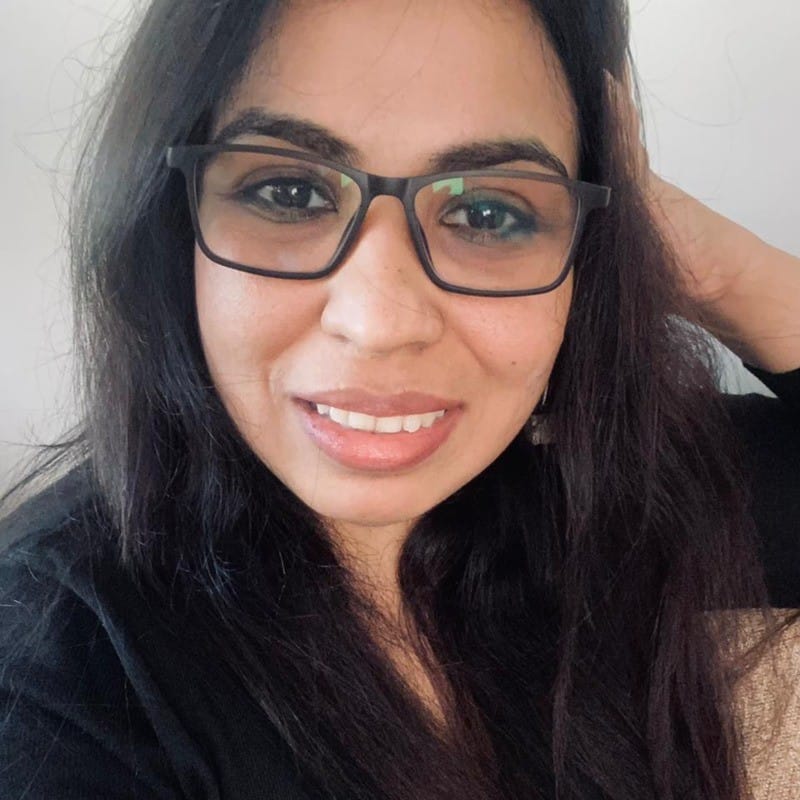
Welcome to Inclusion Bites, your sanctuary forbold conversations that spark change. I'm Joanne Lockwood,your guide on this journey of exploration into the heart ofinclusion, belonging and societaltransformation. Ever wondered what it truly takes to create aworld? Remember, everyone not only belongs, but thrives.You're not alone. Join me as we uncoverthe unseen, challenge the status quo andshare stories that resonate deep within. Readyto dive in? Whether you're sipping your morning coffee orwinding down after a long day, let's connect,reflect and inspire action together.Don't forget, you can be part of the conversation too. Reach outtojo.lockwood@seechangehappen.co.ukto share your insights or to join me on the show.So adjust your earbuds and settle in. It's time toignite the spark of inclusion with InclusionBites.And today is episode 145with the title Genuine Stories,Empowered Connections. And I have the absolutehonour and privilege to welcome Samta Datta. Sam isa brand marketing consultant who uncoversauthenticity and amplifies diverse voices,helping individuals and brands shine by tellingtheir unique, impactful stories. When I askedSam to describe her superpower, she said that it is makingconnections, whether it's between people and theirtrue selves or between a brand andits audience. Sam, welcome to the show.
Samta Dattaguest
Thank you so much. That's lovely. Lovely to be here
Samta Dattaguest
talking to you, Joanne. Pleasure. I understand you're
Joanne Lockwoodhost
from Mumbai in India. Yes, I
Samta Dattaguest
am, very much. Have you been here or are you planning to come hereanytime soon? I've never been to India, but every time
Joanne Lockwoodhost
I talk to somebody, they say, you must come. So I've got plentyof invites to meet for meals, coffees and give me some sightseeing. So,yeah, I will come to India one day, definitely. Yeah. Hopefully,yeah, hopefully, yeah, hopefully. Very soon, Very soon. Yeah, very soon. Very soon.Yeah. I'm just looking for an invite that's going to pay me, to behonest. That'd be the real. If there's a conference or a speaking opportunitythat someone's going to pay for my plane ticket, I'd love to come, but anyway,I will come regardless at some point. So, Sam, let's find out a bitmore about you. So Genuine Stories empower connections. Where did that comefrom? That came from my
Samta Dattaguest
entire experience of working in the world andon myself. Yeah, I mean, as I. As Iwas working over the number of years that I have on the brands thatI have, I think one thing that I have collectedbeyond the experience of what you do as yourjob is connecting with People understanding them,understanding their insights, theirpain points, their passion points. And from there,I realise at the end of it, no matter how much knowledge youhave, how much value you have to offer, if you'renot able to connect from that, you know, withthat person, nothing that you haveis appealing. So for me, connections area very, very important part of how we exist and coexist in the world.And that connection begins with connecting with self.So, yeah, as a brand person, yes, that's something that I doas my day job, but the real job isto connect, to connect from oneself and to connect withothers. Connecting is a very human thing, isn't it?It is. There's absolutely we going back in time, back
Joanne Lockwoodhost
to our prehistoric, our Neanderthal, the evolution of the humanrace. We thrive through building connections. We're not aloner species, are we? We need company, we need to meet withpeople. We are tribal by very instinctive
Samta Dattaguest
nature of ours. And I think that gives us a sense of security.Connections give us a sense of security and is a part ofour psychological makeup. So itindeed is something that we, we thrive in.So connecting is very, very important. And that's why, you know, if you see allaround the world, the institutions that thrive arebased on connection. So, I mean, that's.And you know, in. Even in my experience, Jo, what I've learned is, youknow, when you connect, whether it is brand or whether it is people or whetherit is strengths, that's when you really grow. If you'renot able to connect, you are not able to grow, you know,so connection is very, very important to the progressof anything. Of course, we all went through that Covid
Joanne Lockwoodhost
time several years ago where the way we connectedchanged overnight, didn't it? We were, we were living our livesand suddenly the rules changed. Even for you. Nomatter where you were in the world, everybody was affected somehow.
Samta Dattaguest
Yeah, yeah, it is, it is. And it kind of, you know, it's a weirdthing because we were so isolated, the desire or thepull to connect was much more deeper. That's when, you know,if you see how the digital wound reallyhappened, happened in Covid and if you were actually seeing, youknow, the travel industry kind of going off the chartstoday, it is because of COVID because, you know, peopleare like, there is one life to live and we need to live it andwe need to experience everything. So let's travel, let's do everything. So,you know, that that entire formal fear of missing out, allthose, those basic human needs are kind of atthe forefront of our existence today because of the deepisolation that we. We all kind of encountered in Covid. And the fearof survival linked with very much the fear ofsurvival because in its very nature, Covidwas so isolating. Yeah, we changed the way
Joanne Lockwoodhost
we interacted. We went from being hugging andshaking hands and kissing each other to having Zoom orteams or Google Meets. We went online. We connecteddifferently. And I think we had to learn how to fillthe energy between us differently as well. Indeed. Absolutely. We had
Samta Dattaguest
to. We had to kind of like learn and figure out how dowe. How do we make sense of this new world that we areencountered with? How do we. How do we engage here? And whilewe all. I mean, bravo to. To all. All of ouradaptable skills that we. We kind of moved in veryfast on that one. But it kind of also gave rise to a lotof mental issues because connection is so deeplylinked to our psychological safety that. That,you know, the way the mental issues came up after that isunprecedented. So, yeah, you know, that's. That's also something thatI have really seen at our end of the world that,you know, a lot of mental issues kind of came up during and after Covidbecause of the acute isolation and the acute way of.Because digital connection, no matter how much connecting it is, it isnot tactical by nature. So how the tr. How the energy kind oftranscends here is much different than how the energy transcends whenyou meet somebody in flesh and flesh and blood.So, yeah, to be adapting to that, it did have a kind ofa deep impact on people. And also it gave riseto the entire, I think, the pet industry,globally, you know, the connections. We were so. Wewere so deeply longing for connection that, you know, wewent beyond the human connection and the pets and theentire industry kind of boomed during that time. Yeah, I
Joanne Lockwoodhost
never realised. I suppose for most of my life I didn't realise justthe power of touch. It really occurred to me in the last,I think probably six to 12 months that I startedreally feeling the energy transfer both ways.Just by holding somebody, by hugging somebody, by being close tosomebody. It's not about the words, it's not about. It'snot sexual or anything like that. It's. It's a pure energy transferwhere that warmth and the two spirits almost combine in thatenergy. And I. I find now that I can be silent.I can be quiet and start to feel down, but as soon as I maybehaunt my wife or give my daughter a hug, I suddenly feel thatinvigoration coming over me where that exchange of energy hasmade all the difference. Beautifully put. Like, beautifully put
Samta Dattaguest
because it is therapeutic in nature, come to think of it. Ifwe are, you know, how we are createdin the womb and how we kind of,you know, cascade down to the life that we have today, from thatpoint is all about, is all about touch andnurture and it is all about that energy exchange. And no matter where weare, the closest we feel to safety is our mothers,right? Or anything. Mother Nature. That's why we call it MotherNature. Because the minute you start connecting back to your roots, that's whereyour energy transfers are the highest and, you know, you feelnourished the most. So in that sense, you're absolutely right.The way energy kind of transcends, you know,it is, it is so. It isso lucid in a certainway also, come to think of it. Right, because,you know, we thrive on it. It's so much silent also,like you said, you don't need to speak a word with that connection. You know,it just kind of open, opens you up in that sense. So.Yeah, yeah, you're absolutely right there. You
Joanne Lockwoodhost
mentioned psychological safety. And I, I sometimes think about,or I think about psychological safety. It's, can I trust mewith you? Are you going to listen to me? Are you going to respect me?Are you going to amplify me? Are you going to make me feel good aboutmyself? Or am I going to be damaged by talking toyou, by being with you or being around you? So I thinka lot of this comes subliminally, so you don't. You're notalways aware of it. You feel someone's energy, you feel someone'spassion and you can just tell when you're interacting with somebody, whether they'rea you person or they're not a you person. So I always find it's very,very important when you're trying to create space for people tocreate a positive energy space or a positive vibe space, so that whenwe are interacting, I know that you can trust me and I know you could.I could, I can trust you in that conversation. You know, the strange part here
Samta Dattaguest
is I used to think that way. Exactly. And whilethat is partly true, and then while that iscertainly important for us to feel and that is,you know, implicit in the way we behave and how we trust, if youstart living a little more intentional life, yourealise maybe, you know, you. You have to do that in ameditative state, that maybe you will never find that kind of hundredpercent, you know, Psychological safety inmost people. But as long as you can deal with,okay, I'm not certainly a hundred percent psychologically safe in thisspace, but if I, I know how to get around this,you'll be able to open up more. Because what happens is,you know, if you keep looking for psychological safety inenvironments, chances are you're not going to find much of it. Because weall get defensive, right? And after a point we're all veryguarded and defensive. We, you know, in, in, in, in the, in thehaste of guarding our own self, sometimes we are not able to be providers orholding that space, as you said. But, you know, if we move
Samta Dattaguest
over from that point to say, okay, even if I'm not 100% safein this environment, in this, I know how to get around it andlive a little more intentionally with our ownenergies powering us, I think we can move pastthat. But you're right for the initial bit, you know, youknow, whether that is your person or not, you know, whether you'll be able tohold that conversation or not, or whether how much you need to open ornot and, you know, how much can you move forward with that person or thatthat's very, you know, intuitive in all of us and we formconnections basis that a lot of the work that I've done, youknow, with consumer work that I've done where we kind of try tofind people's security, desires,aspirations for the products, for the lives that they lead in,um, you know, a lot of times we realise thatit is there, there are very few basic human emotionsthat most, I would say, businesses or brandsare relying on and building on. Youknow, while we do a lot of consumer work, we just realise thathuman insights and the fundamental truths remains sostrongly ingrained across geographies thatit's very difficult to kind of go past that.It is very difficult. So, yeah, I mean, there is a dichotomyin our existence in that sense that, you know, it isso deeply ingrained, while at the same time we are always pushingourselves to be more powerful and live a very, very intentional life.
Joanne Lockwoodhost
Yeah, you mentioned brand there. And when we talk about, when we think about brand,we often think about a company or an organisation or aproduct. But we have our own brand as well, don't we? Our ownvalues. Because brand comes down to values. It's how we alignwhat. It's the things that turn people on or turn people off, all those kindof. And that has to be authentic. I mean, we mentioned authenticityalready because people could tell when you as aperson or you as a brand or you as an organisationare not authentic, you're pretending you're puttingmessaging out there that doesn't align. And that's worse than putting nobrand out at all, being insincere. True, true,
Samta Dattaguest
true. Yeah. You know, let me take a stepback and kind ofgive my, a little view on that. You know, when, when weuse the term brand, somehow it is a very,you know, commoditizing of a certain thingand ourselves also, you know, I mean, the whole, thewhole, right now, the whole jingle aboutyour personal brand. And while I'm totally on to have acertain sense of self and identity there and authenticity there, whenwe use the term brand, it is, it is commoditizing in a certainway. But how I look at it, you know,is that you are a strong brandor you are a strong identity in reflection to others,actually are more of yourself, youknow, you are not a brand. Okay, if I work in personal branding, Ican't say, okay, you know, oh, Jo, I love you. You know, tomorrow, let's makea brand out of you and let's polish this side of you and let's make,you know, give you five of these things to do and then, you know, youwill be an iconic brand and I'll make you an opera.No, no, no, that, that's very inauthentic, right?The space. Yes, please. Why not? Absolutely. But youknow, that's very inauthentic. For, for me it is. When youbecome more of who you are, when you end upowning more of who you are, you are astronger brand. And when you don'tlive by the judgement of beingbought by people, you know, then that's when you are astronger brand. So I think when, I mean,when I say, you know, helping peoplebecome a stronger brand, I mean helping people becomea stronger sense, developing a stronger sense ofself rather than, you know, giving them a playbookof saying, okay, this is how you need to be authentic, these are the fivethings you need to do. That's no matter how good theyare, they are not authentic. If you just can own upyour own unique strength, and I believe everybody hasthat, the more you own up, the more youshine. And let's not fix what's notbroken, let's not try to be fitting in the world of.And painting a perfect picture. Owning up your more ofyourself is becoming a truebrand. That's my $0.02 there. Have you heard
Joanne Lockwoodhost
of the term catfishing or catfishing on socialmedia? On dating profiles. Yes, yes, I have.What you're saying here is if you're not careful, what you end up doing ismisrepresenting yourself either with a fake image, a fakePersona, fake personality, whatever it may be, which is effectivelycatfishing. When you meet me in person, I'm not the person you thinkI am from what you've seen already. So that, that's where the authenticity comesin. My online, my visiblepresence, my brand, if you like, aligns when you meet me as well. Becausetoo often, I mean, I watch chat shows, movie stars,they come onto the. They come onto the chat show and you realise your hero,movie star isn't the person they vote the character theyplay. But that's how you see them as this character they play in themovie. Really, them as a human being have differentvalues, different beliefs. And so sometimes, if you're not careful,you live your public Persona without it truly being you. Oh, my God,
Samta Dattaguest
you kind of nailed it. You really did nail it there. Because you knowwhat the byproduct ofcreating a very strong quote unquote,personal brand or having a strong Persona or having a starquality to anybody for that matter, is thatbeyond that success or beyond thatidentity, you become a personalityand you lose the person. Like you saying,catfishing, right? What happens is so many times you end upbehaving like how you're supposed to behaveversus owning up your authentic self.And, oh, my God, if you're successful at that, you will have tokeep. You have to perpetually be on stage all thetime. And that's. That's not good. I think we
Joanne Lockwoodhost
see famous people through history burning out.You know, go back to Elvis Presley, go back toall these big names through time that you think about all these people thathave taken their own lives, they've had breakdowns, they'vedrugs and drink, alcohol, they're trying tokeep themselves in their brand Persona and they need thesedrugs effectively to keep them there. Because it's unsustainable,isn't it? Exactly. Absolutely. You know, because
Samta Dattaguest
at the end of the day, you know, that's why I have alittle bit of a. I take it with a pinch of salt when I usethe word personal branding. Because what you're trying to do isbasically stitch together a mask for yourselfthat you need to hold on then and put on forever. And that'sactually so counterto, you know, that's actually the opposite of what you're trying todo here. The idea is to own up a little moreof yourself. The idea is to develop courage to be alittle more of yourself, not to have the perfectcouture and wearing it out. That's not the idea here. Theidea here is to be a little more of who you are, allowing yourselfa little air and time and space, because otherwise, how many, howmany commodities can you really have? One would be plastering on animage and the other one and the. Then the other one. And how long canyou keep up the show? Yeah, I've. I think,
Joanne Lockwoodhost
well, I've probably been through this evolution myself andI realised that it's important to just live one life.If you're trying to live two lives or you have to translate everything in yourhead. Yes. Who am I talking to? What story have I told in thepast? How have I got a smile? How have I got to show up? Andit becomes so exhausting. And when you let that go, lifejust becomes simpler. Just love me or hate mefor who I am, not for who I'm pretending to be.
Samta Dattaguest
True. True. And that's at. The journey begins withself. Here the journey begins with allowing yourself toown that up. Because as we evolve as humans,there will. There will be many, many aspects of ourselves thatwe'll develop. And that could be leavingbehind something and getting into something.And no matter how successful my past tense was atthe end of it, it was a past tense. You know, youneed to move forward and find the new you and then buildthat up. And that's the circle of life. Why do you think people
Joanne Lockwoodhost
are so scared or fearfulabout showing their true selves? Sometimes they think they're goodenough. They don't think people are going to like them. Well, there a lot of
Samta Dattaguest
reasons, I'm sure I. I don't see. Alot of times when we are young, our sense of self is not developed andwe see ourselves through other people's eyes, be it siblingsand parents and. And grandparents andfriends and crushes and boyfriends andgirlfriends and thatsometimes, you know, like I read somewhere,when you. When a parent ismean to a child, you know, knowingly orunknowingly, the child does not endup becoming mean to the parent. The child endup in hating themselves. So you're. If in yourfoundation, you've. You'vehad some experiences where youwere criticised, you were not strong at thatpoint to fight back, so you believedthem and their vision of yourself and you startedkind of cultivating that opinion and that hate forself while still loving the sourceof the hate or any kindof trauma that came in with that you know, but thathas shaped most of us. And yeah, one hasto kind of realise that, okay, this is the line andnow I press the stop button and I reevaluate andrecalibrate myself from here. Have you been through something similar
Joanne Lockwoodhost
yourself where you've had to discover who you. Are
Samta Dattaguest
many times, many times over. I am still, I'msure, doing that, you know, because I getvery guarded and I don't allow much opinions toflow in. Yeah, I could be very. And certainly that takesthat. I end up wasting a lot of time to let go of what needsto be and move on to the next because I'msomebody very, very. I would consider myself somebody very passionate. SoI end up investing or over investing myself in building something upand then it is very difficult for me to leave that and move to thenext and find light at the end of the tunnel as you moveforward. So yeah, I struggle with that myself. What advice
Joanne Lockwoodhost
do you give yourself when you, when you feel yourselfinto this dead end, you know, going dead, going into this tunnel? How doyou, how do you help yourself find the light? I'm a
Samta Dattaguest
person of very strong faith, so that hasreally helped me over so many years. But I do, Ido believe that nothing matters. Eventually nothing matters. Imean, whatever I'm building, whatever I'm doing, wherever I am, it'sall a game. Nothing would really matter. So enjoy it. Thisis what I've, I've Learned like last 4 years. This ishow I have kind ofmade it a little bit of my mantra that nothing really matters. So play iton, play it on the way you want to play it on becauseeventually, you know, in couple of years this will not make sense.Something else will become important and the priorities will keepchanging. So don't give it too much importance. If it's amistake, that's okay. Move on, make another one. The change is constant.
Joanne Lockwoodhost
It's about riding the wave, knowing that the right, the wavewill just keep floating us on and we'll find some new opportunities.If things don't work, we learn from it and wejust find the next thing. Yeah. And eventually
Samta Dattaguest
everything is a game. Nobody's going to, nobody's, nobody's keeping yourscore except you. So yeah,that, you know, you have to. Yeah, I suppose when we get
Joanne Lockwoodhost
to the end of the game, there is no more, is there? It's. We leavethis world and, and everybody else moves on without us and wejust cease to be. So you're right, we have a time on this earthand we go through many, many different phases of our life as a child,as a teen, as an adult. And we evolve all the time, don't we?
Samta Dattaguest
Yeah. And everything is a lesson. Everything is, is meant for you to learnsomething and move forward. Sometimes it comes in a form of a very painful eventand sometimes it comes in a form of a big ticket win. But at theend of thread, everything is a game, everything is an experience,everything's a lesson. You learn it, you share it, you enjoy init, you thrive in it, you burn in it and you move forward. That's whatI've learned. And there are many lessons still to be learned. Thereisn't any bottom line here. No. I'm a, a great believer
Joanne Lockwoodhost
that most of the reality ismade up in your own head and you create your own reality and yourbrain makes sense of stimulus from the world around you.And what you, how you interpret that is data. How, how youinterpret it and you can interpret anything positively,negatively, and it's how you frame it in your, in your head.
Samta Dattaguest
Yeah. Not always easy to reframe,
Joanne Lockwoodhost
but when you realise you have the power on how you seesomething. Yeah. And you can adjust the way you think,that's, it's, it's empowering and alsoliberating. It's very liberating because. Yeah, it is.
Samta Dattaguest
Because at the end of a Jol, you have to live a very intentionallife and you have to allow yourselfto endorse your power. You know, that is veryimportant. The power cannot rest in anywhere else except yourself.And when you do that, you create an intentional life. Youpolice yourself a lot more and say, okay, those thoughtsare not going to help me. That action is wasting mytime. That is a, not a meaningfulway to engage. You know, so you, you, you kind of develop yourown, you know, you became, you becomecreature of habit creations that serve yourather than the other way around. So and, and that, and there fromwhere the, you know, your behaviour kind of builds. Yeah, it is.
Joanne Lockwoodhost
And I, I, we talk about things like growth, mindset andopen mindedness and looking for the goodin people, looking for opportunities in, in the world. Allthese things allow you toexpand and move on from trauma, moveon from getting stuck into something. Not every, noteverybody has the mental capacity or mentalstrength or the privilege to be able to make thosedecisions. And we talked in the show notes, you mentioned the word inclusionand we're touching on brand becausewhen you're feeling excluded, when you're feelingdiscriminated against, when you're, you're not in the Majority,you're being pushed to the edges. Sometimes it's hardwhen you have that negative reinforcement in order actionsto better see a way forward. And it's veryeasy for me and maybe for you to say justit's okay, you can put it behind you. But not everybody hasthat privilege, do they? No, they don't. And sometimes we are meant to
Samta Dattaguest
experience a certain, a certain amountof pain. We are meant to experience that.That's very important for us. So I mean right now, if youwill tell me when I am going through that pain, that it is important foryou to go through that pain. I'm sure I'm not going to take this well,but the truth lies in knowing that sometimes it isimportant for you to go through that pain,for you to becomethe next you. You know, we're all in the process of becoming,not the CEO, the this or that, but inthe process of becoming. Becoming a. You know, we are becoming.We are always that evolving and becoming. So inthat sense, it is not easy. You are absolutely right. And sometimes we don't havethe agency to support us in any form or manner. Wehave to be. We are at ofthe lowest ebb. We are. We find our. But wefind our way. You know, we find our way, trust me. We find our way.We find what lessons we have learned. Wefind the way around it. I mean, I, I'm a person of faith. I foundmy strength through faith. You could be a personof action and you could find yourstrength in action, but we find courage. And that'swhy courage is a, is a very most important in my eyes asa virtue because courage keepsyou moving andbecoming the next version of yourself.That's. And that's, that's where I'm saying that, you know, coming back tothe brands and the way of the world, brands also cannotavoid negativity. The lowest ebb,the hate at times, but it is standing on yourcore at that point that kind of takes you to the next levelin the game. Yeah, I think as you're speaking
Joanne Lockwoodhost
there I was thinking of the word characterpopped into my head. And someone's character,the brand character, how yourespond to negativity orto positivity or situation is your character is howyou, how you show yourself in times of adversity,whatever it may be. So when we are making mistakes, it'show we respond to that mistake is our character, isn't it? Exactly
Samta Dattaguest
like they say, character is what you do when no one is watching,when the lights are off, you Know. Yeah. Thatintegrity, the character that, that really shines. Right. That reallyshines through. Through. And, and that is authentic. I mean, again, I, I wouldjust say in that moment also we cannot beself righteous and say that is a higher character thingto do and that is a lower character thing to do. If in thatmoment also that person wastrying to be more of who they were, I think their inner powerwould be stronger. And in that moment, if you are half hearted, halfbrained, trying to please everybody, no matterif you did the right thing, you disown yourself in this,in this whole action. I don't know whether it is making sense.
Joanne Lockwoodhost
Yeah, no, completely. Completely. Yeah. Whenyou're working with organisations, it's very easy, you know, tosell who you want to be. Not selling who youare or marketing or creating this brand about this Persona that you,you want to step into. Yeah. How hard is it to getbrands to recognise they need to changethemselves first before they try and step into this brand again? Thatauthenticity, aligning themselves. So if you're not careful what you do is you, youkeep chasing the dream of who you are and never actuallybeing that dream. Hand on heart, it is.
Samta Dattaguest
It, it is more for most times it isdifficult and I'll tell you why it is difficult. It is notdifficult because you know, youare you doing business with people who don't understandthis. No, they absolutely understand this and they understand it'ssometimes equally, if not more than how muchyou. In the world that we live in, if we areconstantly married to an Excelsheet and the bottom line and every year onyear we have to show a certain amount of profitability,it becomes very difficult, increasingly difficult.Sometimes your values will get shortchanged because the numbersbecome important. But if in the long run, if you seethe brands that have been able to hold the testof the time are the ones whohave either stood on themselves on those pillarsor have course corrected themselves. Soif you are somebody who is building somethingthat commands a certain amountof, you willunderstand this very easily and you will understand why itis important for you to hold on to it. But if you are somebodywho gets pressurised with the bottom lineway too easily, then it becomes a challenge, andrightly so. Sometimes it is challenging. I can't, Iwon't judge, but that's the truth of it. Bottom line has to be
Joanne Lockwoodhost
part of the equation. Because if you're, if your product, your brand,whatever you're trying to sell, whether it's you or the business,if it's not resonating, it won't sell. Therefore the bottom line will suffer.But I often think that we should be leading with. Weare leading people first, leading, and we talked about connectionfirst, building that resonance with somebody else.Then the bottom line should come as a byproduct. Whereas ifyou put the bottom line as the prime objective,then you try and fit everything intoinauthentically to try and achieve that bottom line. Whereas if you start withpeople first and generate profit and revenuethrough positive connection, then the bottom line will follow. Keep an eyeon the bottom line, obviously, making sure that you're spending the money in the rightplace. If the overheads are correct, if you have to leave with people, you haveto leave with connection. You have to leave with character and brand, in my opinion.
Samta Dattaguest
Yeah, absolutely, absolutely. I mean, I have nothingelse to add. You are absolutely right. And I wishand I pray and I hope that in times to come wehave businesses and peoplethat not just believe in this also walkthe talk, you know, because I think, I think the currentbusinesses, the new world that we are living in, the consumer isdissing, has developed a very strong voice and is dissing thebrands on these. On these parameters.Absolutely. So you can't just be the big brand and dumpyour waste somewhere in the world and,you know, wash your hands off it. Brands are being made to be moreaccountable, they're doing businesses. And yeah,the world is changing. The world is definitely changing. How I said
Joanne Lockwoodhost
earlier that I've never been to India as yet. How do you perceivethe way India does business versus maybe the Western orthe Eastern or the European sort of influences that maybe you see?Is other values similar or is Indian culture andethics different to the Northern hemisphere? TheAmericans, the British, the Russians. Good question.
Samta Dattaguest
Fundamentally, Indians are very familyoriented. Most ofour cultural value are very familyoriented. So the businesses that come fromIndia represent thefamily value system in the organisation farmore strongly. Not to say that necessarily they are good or bad, but thisis one. The family values get adaptedto the business far more strongly. And India is very bigto actually answer this one, because different regions have differentbusiness houses and different examples and different sects dobusiness very differently. So it's very tough to answer, butI'm trying to kind of put it all together tosimplify it. That is very strong. So you
Samta Dattaguest
will find, you know, if you look from the eyes of theNorthern hemisphere, as you were calling it, it might not bevery easily understood or why are Indiansdoing it? Why is everybody related to everybody? But you know,it's, it's that cultural family value kind ofcascades down to the business mosttimes. The other thing to actually lookin behavioural economics is that weas Indians, you know, are verycircular as people. I don't know whether it's making sense. Thewest, if I would say, fundamentally looksat everything as a linear line andhierarchy of sorts. So one step and, you know, you become, you joinan executive, then you become a senior executive, then you become amanager, senior manager and so on. And you know, the world islinear in weight approachessuccess, while in the context ofIndia, the world is very circular.So even, you know, in our practises, in ourfestivities, in our celebration, everythingis very roundabout. Everything just comes back to the same pointsomehow. So we aren't very linear. So we, the way we standis, we know, okay, even if you are standing ahead, we are all standing inthe circle. And as it moves, you might be ahead right now, but thecircle will move and I'll be ahead. That's a very fundamental, what doI say, ingrained value in Indians.And that is why they're very, they're taken to be very casualin most, in most areas, which might,Might not be true anymore. But I'm talking abouta very philosophical difference between the two. I don't knowwhether that really answered your question. But yeah, I, I was just
Joanne Lockwoodhost
using my limited knowledge of my stereotypes andbiassing to see that maybe the Western culture is morecapitalist and cutthroat. The Indianculture, in my perception, will be more collaborativeand more success of the whole ratherthan success of the individual. But then that's the stereotype thatI have no evidence for. Well, to a certain extent,
Samta Dattaguest
I would say that stereotype is correct inour language per se. The idea, theword success is not bifurcated aloneto the arena of work. The term, if youtranslate it to, I'm using right now Hindi, but if you translateit to a local language, the idea ofsuccess as translated is you are successfulwhen you are a good son, when you perform your family duties,when you perform. But that, I mean, I know when you performa holistic way of living,that's when you are successful. That's when you are considered,you know, successful. But I would say that would be quite similar to theway even Europe is, you know, at least Britain, if I'm. I'mnot mistaken. Because am I correct? Notcorrect. I think people want that. There's a belief that
Joanne Lockwoodhost
people see true success when you have everything. Butthen there's the Paradox that you can'thave everything. You know, we look at, let's talk about gender. Women are finding itvery difficult to have everything, a family, parenthood and careersuccess. And most women are put in a positionwhere choosing between career success and familymeans they have to choose and it. And then when they come backinto the workplace in their 40s, they're finding it hard tocatch up again. And we're seeing huge gender gaps because of thefamily responsibilities or lack of by gender. So Idon't know whether from a gender perspective in India, whetherwomen feel they have the opportunity to have bothfamily and career. I think if you
Samta Dattaguest
see, I would say, you know, the corporate, big citylife, metropolitan life, I would say this is so true for Indiaas well. It is quite true. There's a byproduct of a lotof things that has happened in last 30, 40years and the way the world has shaped up, fortunatelyor unfortunately, it's a struggle. It becomes a struggle pointand a stress point. And as women we aretold to, you know,your prime responsibility is your home. If you aresuccessful at the cost of your home, that's notsuccess. You're shamed for it rather so success. If itcoming at the cost of your primal, natural,quote unquote duties, then itis, it actually is used to shame you.So yeah, we are not living by the same rules for sure. Is society
Joanne Lockwoodhost
changing? Is it? Or is there still a lot of pressurefor women to do those traditional in quotes rolesin the family? Is it changing? Yes,
Samta Dattaguest
it is. But you know, the more things change, themore they remain the same. So what is happening is, and I think that'shappening over the, all across the world isif you were going to be put tothe point where you have to work all through your life and youknow, make careers as bright as your spouse, thenmore and more couples are not willing to have, youknow, the next generation more and more, you know, so you will cutcorners somewhere. You will have tobecause at the end of the thread, that is the limited energythat you live with. You cannot, you know, youcannot you, I mean, I mean that's what I'm seeing as a, as a, asa. I could be again very wrong, very right here. Butit's, it's the mix of how the society is changing all across.And what do you think? What do you, do you think that is also somethingthat you see in the west? There's a huge
Joanne Lockwoodhost
momentum, if you like, to allow women, I hate that wordallow or to promote women and to make sure that women have opportunities.But there's still this fundamental. You can't have everything.If you want to have children, you are the one who has children. If youwant to have a family, then you want to enjoy that part ofyour life. You want to enjoy your children, you want to nurture them and celebratethem. If you want to have a career, you have to make thatchoice. If you don't care. If we go back to that authenticity,that brand, who are you? And there should be nothingwrong with being a parent, being a mother, being a father, being however youidentify yourself. Absolutely. I wanted to put that first.But there, there's, there seems to be this belief you have to chooseand you cannot be a successful career woman whoputs her family first. In many cases, you know, there are obviouslyexamples where people could do that. But in the majority, women have to choosestill. And you're right, you're right, that's thechallenge. And, but that's also programmed into you from a veryearly age as well. It's ingrained. And men go out to work andbring money in. Women sort the house out and the, the home and thefamily. Men can go off and do what they want for most of theirlife knowing full well that there's a, themother, for one of a better phrase, is, is at home doing the work.Of course, you know, we got, we have same sex couples, we have twofemales, two men, non binary people, all different sorts of families outthere. But fundamentally one person has to have assumesthe responsibility for prime parent, if you like.
Samta Dattaguest
Yep. You know, it's so interesting that you bring this up because Ithink yesterday I was reading that Japanhas, I think next year they're starting on to makethe weekend a three day weekend because they want their populationto kind of have more children and they want to give theyounger generation a little more time and not be stressed out about work.So yeah, yeah, you know it. I think weare coming to a point where we are letting people, atleast most of us are trying to let people be as they want to be.You choose your, you choose who you want to be.And yeah, while I'm sure there will be struggles on theway, I think. We look at lockdown and Covid and
Joanne Lockwoodhost
work from home and isolation as a stressful time for many.But also it did teach a lot of peoplethat work could be done differently. You canhave a life, you don't have to spend two hourscommuting, you don't have to spend all this time in the office.You can slice your day up into bits, you can look after your children,you could do three hours work, you could look after your children a bit, youcould do three more hours, you could do three hours in the evening. So youcould slice your work up in different ways. I think the frustration isthat the world seems to be trying to revert backto the old way, the male way. They have to be in the officeway, the sort of incumbent methodology that youcan only succeed by being here, sort of, sort of mantra.I think that's what we're losing all of a sudden. You know, all these thingswe learned through Covid, we've, We're suddenly forgetting again. What do you think is
Samta Dattaguest
and what do you think is the consequence of that? I think it removes flexibility.
Joanne Lockwoodhost
I think, I don't, I'm not, I don't want to dictate toanybody about how you should work, when you should work. But what I'd like tosee is people have. Feel empowered to understandhow they perform best, when they perform best, whether that'sworking alone, working a team, working with people. And we started by talkingat the beginning about connection and getting energy from each other. So I fullyappreciate that we need to be able to get energy from people. So if weare living alone, it's not necessarily healthy to work alone as well.But if you have a strong family, you have a strong community, you can getall the energy you need from your community, from the people aroundyou and work doesn't have to be the provider of that energy. SoI think what we need to do is we need to think about what isimportant. Yeah. And going back to theoffice and working and commuting doesn't have to be the onlyanswer. But then we try and create this environment of fairness.Well, if I have to come into the office, you have to come in, weall have to come in, treat everyone the same. Whereas if we canrecognise people have different skills, different strengths,neurodiversity, different needs, emotional connections or evenliving environment, then we can, then we can create a world where peoplecan consume and contributein the way that works best for them. I think that's what we're losing. We'retrying to go back to a one size fits. It's all frustrating if you likeit is, it is. But an anti trend to that that I'm seeing
Samta Dattaguest
is that the younger generations areredefining what success lookslike for them. They are not buying into the oldidea of success and they are redefiningit. So if you may say the gig economy or the way that we wantto work. And I think that's very fundamental to how youoperate. You know, the process. I mean working four day or five dayor working in a corporation or as a freelance. I mean all ofthat is fundamentally coming from how we havedefined success in our own heads and how we chase after all ofthat. But the younger generation is opening that upand saying I'm not going to subscribe to how youhand me down the rules of success because I'm going to make itmy way and I'm going to make tools around itthat and I'm going to make take a lot more technological supportfor it. And I'm not going to judge you or judge anyone who taketechnological support or think them. They aredefining the successes on their own terms. They are not takinga hand me down approach of thesuccess parameters. And which is greatbecause they are coming with new ways.They're supported by their technology, they're supportedby tools that makes their life easier. They can traveland work from anywhere. They can earn money without reporting to a certainstructure. They can be much more community, they can put themselves outthere. And that's the new way of,the new way that the next generation has defined success.
Joanne Lockwoodhost
Yeah, I completely agree. I look at my daughter andshe has a job, her husband has a job. But they also, they're setting uptheir own online shop, they're starting to push other staff,they buy and sell clothing on online stores, they've gottheir own fashion brands, they're pushing out.And it's just what they do today. You can create aglobal businessfrom an iPad in a bedroom without anythingelse. Something I couldn't have done when I was younger because you didn't have theaccess to market. But now we've got all the tools,graphics, design, branding, we've got Marketplace, we'vegot Instagram, we've got social media, we've got all these different products.
Samta Dattaguest
And certainly the good part is, I mean I would say thatmy generation, I would say is still being judged on being usingthese tools and using the supportthat we get from technology. But my generation is judging the samegeneration using this much support. But I mean I'm likethey're getting a year's job donein a month, so what's the problem here? Andthey don't want to work 240 days in365 days. They want to work much less. Andyeah, why not? I mean I'm
Joanne Lockwoodhost
nearly 60 and I'm embracing this New technology. I'membracing new ways of working because I don't want to dowork all day, I, all night. And I want to rapidly buildsomething and get to market with something really quickly. So yeah, and I use thetools I can. I, I embrace AI and some of theother startups. I'm a great believer in lookingaround for different solutions and if I can shave a corner off, if I canget quicker from A to B, I'm going to do that. I think in times
Samta Dattaguest
we should remove, I don't know, but we should remove theshame of using technology to its optimum.I'm like a lot of chat, GDPwriters or self. I mean, they shouldn't. I mean,you know, classically, if you haven't thought of a thought, it's not yourthought. You know, that approach is, does notfind its way through this generation. No.
Joanne Lockwoodhost
And it's hard to have original thought. Even when youdo, you Google it and you figure out someone else has already had thatthought, then you don't know whether it was your thought in the first place oryou'd heard it from somebody else or you'd seen it somewhere.So where is original thought? We look at theworld and civilizations have all evolved invery similar ways with similar outcomes, yet notconnected. You know, the wheel was invented by everybody, notby one person. Housing, roofing,cooking, all evolved independently in different partsof the world, with different flavours, different spices. But fundamentally, as ahuman species, we evolved through great ideas.So who has the first thought? It's hard to say who tosay exactly. So I think it's how it's. I always believe it's how you interpretit. Your spin, your brand,your beliefs, you know, all the things we talked about earlier. Your character, whatever youbring to it, how I give you my thought, you know you talked about psychologicalsafety earlier. Yeah, I talk about psychological safety frommy perspective and I give you my view of it.Fundamentally, it's still the same thing, the concept, but howI. The story I tell, the feeling, I give youthe angle, I come up with. That's my bit of it. Based onanother idea. If that's all chatgpt, that's how AI isdoing it, then you justgotta take that and put your personality on top. Sam,it's been an absolutely fascinating hour. We could talk. We could talk. It's. I'mlooking you on video here. I can see it's got dark. When we started talking,it was daylight. So, yeah, look at it. You're six or sevenhours ahead of me. I think so, yeah. It's just after lunch for me butearly evening for you. So how can people get a hold of you? They can
Samta Dattaguest
get hold of me on my Instagram and LinkedIn. That's where I'm at.Or they can write to me at 'SamtaDatta'. That's my first name and second nametogether '@gmail.com'. i talk about brands, marketingpeople building and personal brands and I train as well.So that's where I'm at. Samta
Joanne Lockwoodhost
Datta is S-A-M-T-A and thendata is D-A-T-T-A. Yeah, yeah,Fantastic. I'll put your LinkedIn and Instagram on theprofile and the in the show notes. So if you're looking for that, peopleshould just reach out and have a connect. Is that okay? Absolutely. I'm
Samta Dattaguest
here to help everybody. Sam, it's been fascinating.
Joanne Lockwoodhost
Thank you. Absolutely has been fascinating. Thank you so much for your time and
Samta Dattaguest
this lovely interaction. As we bring
Joanne Lockwoodhost
this conversation to a close, I want to express mydeepest gratitude to you, our listener, for lending yourear and heart to the cause of inclusion.If today's discussion struck a chord, consider subscribing toInclusion Bytes and become part of our ever growingcommunity driving real change. Share this journey withfriends, family and colleagues. Let's amplify the voicesthat matter. Got thoughts, stories or avision to share? I'm all ears. Reach out tojo.lockwood@seechangehappen.co.ukand let's make your voice heard. Until next time, thisis Joanne Lockwood signing off with a promise to returnwith more enriching narratives that challenge,inspire and unite us all. Here's to fostering a moreinclusive world one episode at a time. Catch you on the next bite.
The Evolution of Human ConnectionAuthenticity and Personal BrandingCultural Differences and Perceptions of Success
Joanne Lockwood is joined by brand marketing consultant Samta Datta for a wide-ranging conversation about why genuine connection matters more than polished branding. Samta shares how her work centres on understanding people’s insights, pain points and passions, and argues that real resonance starts with connecting to yourself, not constructing a marketable persona.
Together they unpack authenticity in both personal and professional life, including the risks of “catfishing” yourself through an online identity that doesn’t match who you are in real life. They discuss how maintaining a performative persona can be exhausting and unsustainable, contributing to stress and burnout, and why owning your values and character is a more durable path.
The episode also reflects on how COVID changed the way people connect, the impact of isolation on psychological safety and mental health, and why touch and in-person energy can feel uniquely restorative. The conversation broadens into social expectations and work-life pressures, including the challenges women face balancing career and family across cultures, and how younger generations are redefining success through technology, flexibility and new working models.
The central theme returns to alignment: whether you are an individual or an organisation, connection and integrity need to come first, with commercial outcomes following as a byproduct of trust and genuine relationships.
“No matter how much knowledge you have, how much value you have to offer, if you're not able to connect from that, you know, with that person, nothing that you have is appealing.”
“If you start living a little more intentional life, you realise maybe, you know, you. You have to do that in a meditative state, that maybe you will never find that kind of hundred percent, you know, Psychological safety in most people. But as long as you can deal with, okay, I'm not certainly a hundred percent psychologically safe in this space, but if I, I know how to get around this, you'll be able to open up more.”
“We realise that human insights and the fundamental truths remain so strongly ingrained across geographies that it's very difficult to kind of go past that.”
“In the world that we live in, if we are constantly married to an Excel sheet and the bottom line and every year on year we have to show a certain amount of profitability, it becomes very difficult, increasingly difficult.”
“It might not be very easily understood or why are Indians doing it? Why is everybody related to everybody? But you know, it's, it's that cultural family value kind of cascades down to the business most times.”
“If you were going to be put to the point where you have to work all through your life and you know, make careers as bright as your spouse, then more and more couples are not willing to have, you know, the next generation more and more, you know, so you will cut corners somewhere.”
“I'm not going to subscribe to how you hand me down the rules of success because I'm going to make it my way and I'm going to make tools around it that and I'm going to make take a lot more technological support for it.”
The essential human need for connection and its evolutionary and psychological roots.
The impact of the COVID-19 pandemic on interpersonal connections and mental health.
Observations on the surge in pet ownership as a response to emotional needs during isolation.
The significance of living authentically and the consequences of maintaining public personas.
Cultural differences in business practices between Indian and Western contexts.
Societal pressures and the evolving perceptions of success across cultures.
The role of touch and energy exchange in fostering therapeutic connections and psychological safety.
One thing to remember
In Episode 145 of Inclusion Bites, titled "Genuine Stories, Empowered Connections," Joanne Lockwood and Samta Datta explore the essential human need for connection and authenticity, especially in the context of brand marketing. The episode underscores the importance of genuine interactions, both in personal branding and broader societal structures, emphasising that authenticity leads to stronger relationships and, ultimately, a more inclusive society.
Questions this episode helps answer
Joanne and Samta both emphasise the evolutionary and psychological significance of human connection. How have your personal connections evolved post-COVID, and what role does physical touch play in your mental wellbeing today?
Samta criticises the notion of personal branding as potentially leading to inauthenticity. How do you balance the need to project a personal brand with maintaining your true self?
Discuss the mental health impact of isolation during the COVID-19 pandemic. How did this period alter your methods of maintaining connections with others?
How do family-oriented business values in India influence the approach to branding compared to the more individualistic approach seen in Western cultures?
Both Joanne and Samta acknowledge societal pressures that affect career and family life decisions, particularly for women. How have you navigated these pressures in your personal or professional life?
Psychological safety in the workplace is highlighted as critical. What strategies do you employ to foster an environment of trust and respect among your colleagues or team members?
Explore topics
Ideas from this episode
The Evolution of Human Connection
In my conversation with Samta Datta, we delved deep into the concept of human connection, particularly in light of the transformative impact of the COVID-19 pandemic. We explored how the isolation enforced by the pandemic altered the ways people interact and the profound psychological and emotional ramifications of these changes.
Authenticity and Personal Branding
Samta Datta and I explored the critical intersection between authenticity and personal branding, delving into the pressures that come with maintaining a public persona. We discussed the often unsustainable nature of creating a personal brand that deviates far from one’s true self.
Cultural Differences and Perceptions of Success
Another enriching part of our conversation revolved around cultural differences in business practices and varying perceptions of success. Samta provided fascinating insights into how India’s strong family-oriented culture distinctly shapes business values, contrasting with more individualistic approaches in Western countries.
Learn
Frequently asked questions
What is the primary focus of the Inclusion Bites podcast?
The Inclusion Bites podcast, hosted by Joanne Lockwood, delves deep into fostering inclusive cultures and nurturing a sense of belonging within society. It aims to challenge norms, inspire significant change, and provide actionable insights through engaging conversations with various changemakers.
Who was the guest on Episode 145 and what is their background?
Episode 145, titled "Genuine Stories, Empowered Connections," features Samta Datta, a brand marketing consultant from Mumbai, India. She is renowned for amplifying diverse voices and forging strong connections between people, brands, and audiences.
How has the COVID-19 pandemic affected human connection, according to the episode?
The pandemic significantly altered human connection by increasing reliance on digital interactions due to isolation. This shift heightened mental health issues and underscored the importance of physical touch and interaction, leading to an increased sense of disconnection from the world.
What is the impact of maintaining a public persona on personal well-being, as discussed in the episode?
Both Samta and Joanne emphasise that sustaining a public persona can be exhausting and unsustainable, often leading to burnout. Authenticity is crucial, as trying to uphold a manufactured image can result in losing one's true self and mental fatigue.
What are the cultural differences in business practices between India and Western countries according to Samta Datta?
Samta highlights that Indian business practices are deeply rooted in family-oriented values, which contrasts with the more linear and hierarchical approach observed in Western cultures. Success in India often involves fulfilling familial duties and embodying holistic living.
How do Joanne and Samta view the concept of success differently between Western and Indian cultures?
Western perceptions of success tend to be more individualistic and capitalist. In contrast, Indian culture views success as achieving familial and holistic fulfilment, a perspective also mirrored in some European cultures.
Share this episode
Heard something worth passing on? Send this conversation to someone who needs to hear it.