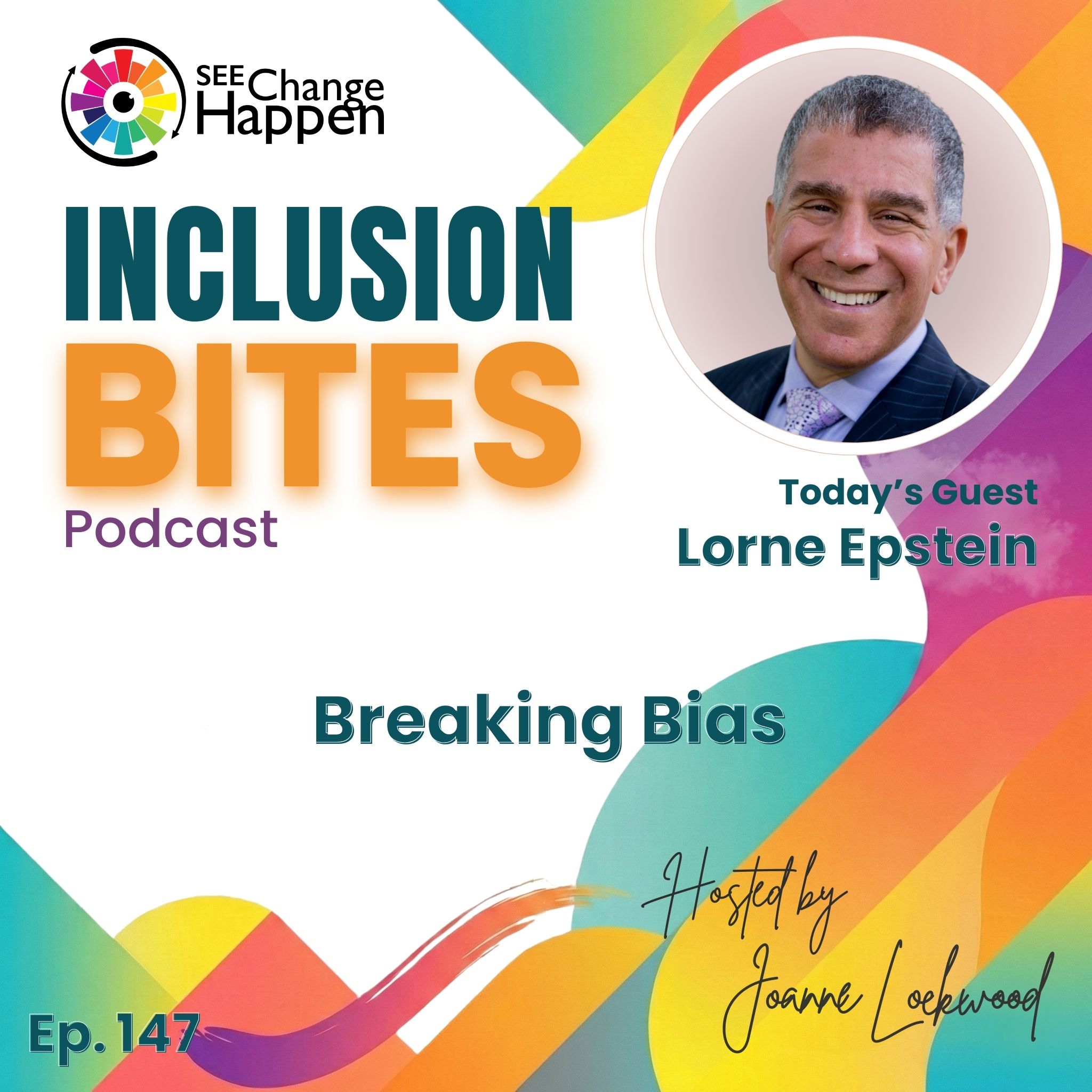
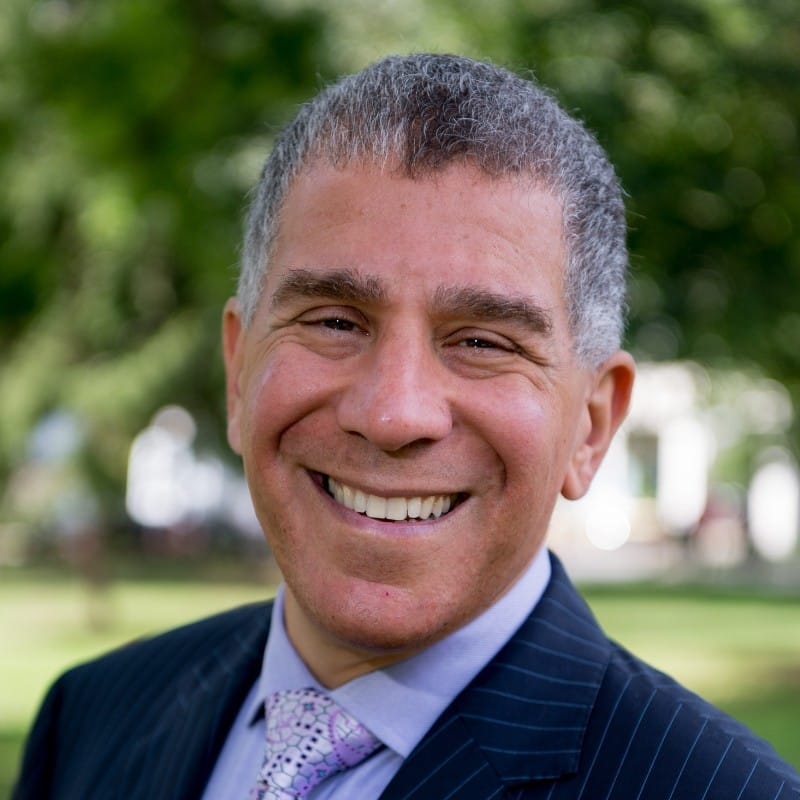
Lorne Epstein examines the impact of awareness on biases, the power of human goodness, and strategies for fostering inclusivity, rooted in a belief in our shared desire for peace and safety.
In this episode of Inclusion Bites, Joanne Lockwood speaks with Lorne Epstein about workplace culture systems.
“We all want to be cared for and loved and connected.”
Explore
Navigate this episode
Joanne Lockwoodhost
Welcome to Inclusion Bites, your sanctuaryfor bold conversations that spark change. I'm Joanne Lockwood,your guide on this journey of exploration into the heart ofinclusion, belonging, and societal transformation.Ever wondered what it truly takes to create a world whereeveryone not only belongs but thrives? You'renot alone. Join me as we uncover theunseen, challenge the status quo, and sharestories that resonate deep within. Ready to divein. Whether you're sipping your morning coffee or winding downafter a long day, let's connect, reflect, andinspire action together. Don't forget, youcan be part of the conversation too. Reach out tojo.lockwood@seechangehappen.co.ukto share your insights or to join me on the show.So adjust your earbuds and settle in. It's time toignite the spark of inclusion with InclusionBites. Todayis episode 147 with thetitle, breaking bias. And Ihave the absolute honor and privilege to welcome Lorne Epstein.Lorne is a social scientist, keynote speaker,facilitator, and has been transforming workplaces for over2 decades by teaching people how to recognizeand reduce unconscious bias. When I askedLorne to describe his superpower, he said, helping professionalsuncover and mitigate their biases.Hello, Lorne. Welcome to the show. Hi, Jo. Thank you so
Lorne Epsteinguest
much for having me. I'm on 147.
Joanne Lockwoodhost
Yeah. I'm so 147. Where's that time gone? We met. When
Joanne Lockwoodhost
did we meet? It was 2019 on Amsterdam, was it? Yes. It
Lorne Epsteinguest
was 2019 in Amsterdam, so that's 5 years ago.
Joanne Lockwoodhost
Yeah. Long time. Wow. It was unleashed, if I remember rightly, the HRconference. Yeah. Yeah. That was great. That was great. That was a lot of fun.
Lorne Epsteinguest
I really enjoyed kind of seeing the the EuropeanHR market, and it was it blew me away. I mean, people werejust so great, very friendly. You know, stillcrazy like the HR people here, but it was it was nice.
Joanne Lockwoodhost
At that conference, you were you were doing live interviews, and I was a gueston your show, if I remember correctly. Yes. Yes. So, like,
Lorne Epsteinguest
in 2015, where I live, they opened up a public radio station,and I got a radio show, and I made it all about jobs. And Iwas just doing it as a side thing. It was just for fun. There wasno money because it was a public station. And andthen, like, the last year or so, I started figuring out ways to make money,and one was to get sponsorships and go to shows likeUnleash and interview folks. So I did that for about ayear or so, and then everything kinda went to to shit because of COVIDand, you know, the whole anyway. So, yeah, that's how wemet. Yeah. We did. We touched base, if that's not too
Joanne Lockwoodhost
cliched as an expression, a few times early in COVID. Youreally got into the unconscious bias and you were yeah. Your business tookoff in that way, didn't it? Yeah. Yeah. It was kinda wild. I had
Lorne Epsteinguest
built I had, a federal client. A federal governmentagency was a client of mine. I was developing their their nationalhiring strategy, their diversity hiring strategy. And while I was doing it,their head of HR asked me to build them an unconscious bias workshop. AndI've been doing experiential training for decades, so I did. I did itfor them. They loved it. And since then, I probably did it, like,30 or 40 times. Just as 2020 startedin January, an old college professor of mine suggested,why don't you submit it to this experiential learning conference in Philadelphiaand get some feedback? And I'm like, that sounds great. So I applied and itgot accepted, but I also applied to graduate school. I was going toget a master's degree in organizational development, and I got accepted. Butthere was a conflict on that date. My teacher said, well, you can't you can'tgo to the conference. You have to come to class. Why don't you just dothe workshop for the students and get feedback? I said, that soundsgreat. So we set it up, and the school had advertised it. It was gonnabe on campus. And next thing you know, we have COVID. And inApril of 2020, instead of doing it in person, we did it on Zoom. Ihad a 140 people from around the world in this workshop, andit just took off. People wanted more. So the next month, we had a 100and since then, over 50,000 people have done these trainings.
Joanne Lockwoodhost
Oh, I think I actually crashed into one of your workshops inthe in the early ones. It was the first or the second. I I satin on one of them, the early ones, I think. Was it fun? Itwas great. I thought it was great. I mean, we I mean, the experientialside, we're in breakout rooms. I met some people, have great conversations.And, yeah, it was a it was my first probably my first experience ofdoing that online experiential type training where you're just going into breakout rooms.I think it probably helped me get confidence in doing some of my own workshopsonline as well. So that's yeah. Cool. Awesome. That's great. I love that.
Lorne Epsteinguest
I love hearing how the work that we do makes adifference for people. It's not something that, like, naturally happens. And it'sfunny you should say that because I I know that I make a difference topeople. It's like I love people and I want to just support them inin having better lives. About 4 weeks ago, I wastraining almost a 1000 people at a hospital in Ohio.And midway through my sponsor,who is the CHRO, we were walking across campus and she said,oh, you remember this woman where we had a little bit of,you know, we had some challenges with and she came to my officeafter the workshop, and she gave me a thumbs up. And she said,that's the kind of training that we need. And I just my heart justmelted. I just stopped. And I'm like, I got all warm andfuzzy, and I'm like, oh my god. This is great. This is like,you know, my my, wonderful life moment ofit actually something is actually happening. But, you know, like,
Lorne Epsteinguest
you know and I was telling you this story earlier. There's, like, all this otherstuff that has to occur for that one little moment. Like,3 weeks ago, I was speaking at the HR HR Visions inLondon, and I gotten there on a Monday. I got4 hours of sleep because the time changed to the workshop on Tuesday,got 4 hours of sleep to do the workshop on Wednesday, came homeBy the end of towards the end of the flight, the plane got just crazyturbulent. I got so sick that they took me off byambulance, went to the hospital for about 3 or 4 hours,got fixed up. Next morning, I get up. I do another workshopfor a client on Zoom, go to class, pick up myassignment, go to the airport, fly to Michigan because the next day, I'm traininga 100 doctors. And, like, all that wasgreat because of that fun little, like, I know somewhere someone's gonna golike, oh, that was that was really good. That made a difference in my life.Have you had that experience? Yeah. I I've had an in
Joanne Lockwoodhost
flight issue, and I'll tell you about that. When I find my in personal oreven my online workshops, are you doing your discovery call with the client, or you'rejust about to go into the room and do the training? Quite often, they theytake me to one side and go, Jo, just just so you know, there's acouple of people who are really anti. They're kind of really negative. They're they're realtroublemakers. They they don't wanna get involved with this inclusivity'srubbish or mumbo jumbo that's on it. I said, that's brilliant.That's what I want. I don't want everyone to go in there and agree withme. I want people in there who are gonna be feisty and testy becauseit has two purposes. 1, is it gives an example of the problemwe have to the people who are who are positive so they actually hear this.But, also, the I found the people who go with those reallydeep struggling ideas, they come out with the most change. Often, theycome up to me after I shake my hand or give me a hug orsomething and say, say, that was so powerful. Wow. You've really opened my eyes tothis. So that's where you really find you've made the difference. But nudging people whoare already there is the echo chamber. It's it's not with the satisfaction. It'sthe moving people from a to b where you can clearly see change hasoccurred. That's where the empowerment comes in. Yeah. I love that. Like, there's
Lorne Epsteinguest
a a lot more people like, I love people. I just met I met abunch of coaches. So I did a training from a company called Lifespringback at 92, which was my big kind of transformational moment ofseeing my own power and letting go of the wounds. Andcoaching wasn't a thing then. And now so many people do that. And Iknow that it's, like, the benefit they get. The why is they justwanna connect and help people. I think a lot of people listening to the showare like, you know, like like, that's what they wanna do. They just want tomake a difference. Yeah. They do. I mean, I've gotta
Joanne Lockwoodhost
give you my wellness story now on on a plane. So I was I usedto work for a bank in the UK, and this bank was a private bank.They had branch offices all over the world in very niceplaces, Beverly Hills, San Diego. And this particular occasion, Iwas I was doing IT. So I was an IT tech, effectively, rolling outsystems. And this this particular gig was, NASA, Bahamas.So I flew from London, and in those days, be it pretty sure I wasused to fly via Miami, and then you change it Miami, and then you goMiami, NASA. The mid flight, the plane hadan emergency landing. I think it was someone had a heart attack. So wewe had to land in Gander, in Newfoundland. We I don't know if you've everif you've had an emergency stopover in Newfoundland, but basically, theplane does a really rapid descent and suddenly you're it landon this airfield in the middle of Newfoundland, middle of nowhere. You look out thewindow. You can't see anything. It could be absolutelywild landscape, and they they get the person off. And, of course, when they're onthe on the tarmac, they have to turn all the air conditioning off or theor the flight, They're in flight entertainment. You're basically sat there, and you'resat there for, like, 3 or 4 hours because they can't get a flight pathto take off again. So you're stuck there until they can get another air trafficcontrol slot. And they walk walk around handing out these these packs ofsandwiches. And I had a prawn sandwich, ashrimp sandwich. And about just before we landed inMiami, I'm starting to think, oh, I really don't feel good. I'm really notfeeling this anymore. And, you you know, you when you have that sort of kindof throughput, you can tell what did it to you. You can't you really sothat your brain knows what it was and I think either that's aprawn. That's definitely prawn that's given it to me. So I get to Miami andI'm literally my sweat is pouring off me. I'm sweating. I'm sweating. I getthrough passport, managed to find the toilet. So I'm at, unfortunately,both ends. And, you know, I hit and I was sweating and I wassweating. And then because we had this issue with the thethe the landing in, Newfoundland and myflight to the Bahamas was then we had I had missed my connection. We hadto get another connection or something. When I got to the Bahamas in this state,I was missing my luggage. So there Iam in Nassau, Bahamas in the temperatureI can't remember what time of year it was, but it was hot. The Bahamasis generally hot anytime we go there, but this was hot. And I turn upwith no luggage. I get to the, I I was sharinga, like, an Airbnb equivalent in the nineties, whateverit was. Yeah. It was a a flat with a load of people also workingfor the bank. And someone ended up lending me this T shirt, and I Ilooked like, I don't know, this T shirt, like, 3 sizes too small, butI had to have something called this Christmas I had no luggage. I remembergoing to sleep that night in a in a room, and all I could hearwas mosquitoes. It was like they were dive bombing me. I waslike, All night, all all I could feel is mosquitoes everywhere. I had no luggage.I felt awful. I felt sweaty. So I feel I feel yourpain, that turbulence, and then having to go to work that that day, covered inmosquitoes with food poisoning and their luggage in the barns.Wow. It's a glamorous life, isn't it? So I
Lorne Epsteinguest
thankfully, that's scary. That's scary because you were, like, far away fromthings. But thankfully, my wife was there. It was just a few hours andI felt fine. Like that whole experience, what it soundstumultuous, I say it's like it was a great week and it'sI love my job. Like, I love that week because I lovemy job. But, yeah, I get it, man.That's, I get that. That's, it's scary being 6anyway. Yeah. I don't know. In a foreign
Joanne Lockwoodhost
country and you've got all this stuff to do, you've got to get onto anotherplane. I mean, Miami is a big airport if you've got to go from domesticto internal, international to domestic. It's a long walk and I was feelingI had no luggage and I was sweating and I was I yeah, it wasjust the whole stress. When did you feel better? Did you get better, like
Lorne Epsteinguest
quickly or was it like I think by the by the next morning I was
Joanne Lockwoodhost
I was I was okay again, and they they they managed to find my luggage.It was on the next flight. I went back to the airport, and there itwas on the carousel, picked it up, and had ashower and a change and put some clothes on. I was fine again. But, yeah,it was a, probably about 12 to 24 hoursof of stress I didn't need. Wow. Yeah. It sounds
Lorne Epsteinguest
like it. So what got you into doing later. We
Joanne Lockwoodhost
would we would jet skiing later. So sorry. I wanted to ask, what got you
Lorne Epsteinguest
into doing this show? What it
Joanne Lockwoodhost
was, but I I was having conversations, you know, because I I started thebusiness in 2017. I I foundmyself having lots of cups of coffee. You know, you go to London, you goto you're networking. I I'd stack the coffees up all day, so I'd go meetpeople at this cafe, meet people in this cafe, meet people. I was having thesegreat conversations with people trying to build my network up. And then I started doinga few online meets and Zoom calls in the the early days. AndI we'd finished the Zoom call, and we'd have this really great conversation. I'd say,I wish we'd recorded that. I wish we recorded that. And that's how itit it came, really. I I decided that all theseconversations we're having should be captured, and we can actually turn them into something. SoI I decided pre cov this is pre covid. I wanted tohave have conversations. I and I use the podcast as a way of networking, havingconversation with people, and capturing these stories for for posterity,for for historical reference, or just to to share with other people.So that that's what started it, really, just that desire to shareconversations. Awesome. To make a difference.Make a difference. Absolutely. To make a difference. And Yeah. And to andto and to feel that there's a purpose beyond just a chat,which which goes into the ether, and it gets forgotten. Because I have one ofthese brains that is, I find it very difficult toremember certain things. Like, if I go to the cinema, thenext day, I really I've forgotten half the film. I don't remember what it was.I if I meet people, I forget their name really, reallyquickly. And because, again, you're doing so many Zoom calls, so many meetings. I meetI meet hundreds of people a month, and you can't remember everybody.And I found that I was having this conversation with people. Oh, yeah. It's goodto see you again. I go, okay. Go on and remind me. Where did wemeet before? And yeah. And this is just a great way of having conversations,and I still do it. I still I I thought I've got on LinkedIn sometimesto invite people onto the podcast. They say, we did that last year. Did we?Sorry. You're quite correct. Yes. We did. Yeah.I've got I I have got one of these memories that is is very goodat certain things, but very bad at other things. I I think my brain justoptimizes out and says the separation between need to rememberand and doesn't matter. And if you fit into the doesn't matter pile, Iwill never remember that conversation again. But you we also had lasting impressionbecause meeting you in Amsterdam all those years ago and,keeping in in loose contact, not active contact with each other. I get yournewsletter. I see you doing stuff on on LinkedIn and stuff. So I guess you'veyou've penetrated into the must remember path. That's
Lorne Epsteinguest
funny you should say that because, a year and a half ago, I started anothermaster's in cognitive neuroscience. And this past semester, in fact, just lastweek, I had my final in neuroscience of memory and learning.And so I learned very diminutiaabout how the brain works around memory and learning. Yeah. And we're not our brainsare not all the same. Right? Particularly around memory and learning. Andthe the the parts of our brain that do a memory, it'sit's it's really unclear. Like, there are some things that are clear, but somethings are just like in every class I've taken, usually sometime during the class, theteachers, like, shrugs their shoulders and says, and we don't know. Yeah. There's loads
Joanne Lockwoodhost
of stuff, you know. I I will be able to pull something out of mymy my memory somehow, and I'll plucksomething out. It'll be a random fact or an anecdote orsomething, and I'll just drop it into the conversation. And my wife will look atme and go, you heard that yesterday, didn't you, on that show? And Iwent, yeah. She said, you're making it sound like you know what you're talking about.I said, well, I just I just hoover up knowledge, and then I I Iknow when to spit it back out again. But I I couldn't tell you howI remember or why I remember. It just becomes a nuggetthat gets delivered onto into my tongue and out of my mouth at the rightmoment at the right time. But you asked me about it now, I wouldn't reallyremember what what's that at. Really? But you're probably really
Lorne Epsteinguest
good at making matches because when we have a memory, it getsbroken up and stored in different places. So the visual component of thememory would be stored in one part of the brain, and another part of thememory would be stored in another part of the brain, like a database. Right? Andthen there's, like, something that links it all together, and thenthat occurs, and then it can bring back it brings back the memory or itcould bring back parts of the memory.
Joanne Lockwoodhost
Okay. So it's a bit yeah. Random retrieval. Yeah.So indexed. Yeah. It's indexed. Yeah. Right. And another thing I
Lorne Epsteinguest
learned was that we can we can well, we our brainextinguishes memory. Right? So we don't remember everything that happens.Imagine if you remembered everything that happens. Right, you could be veryhard to function. And so there's a whole system in our brain that allows usto extinguish memories, which is really important for people with PTSD anddepression and other mental illnesses that you can actually.Cause your brain to not remember something. You can weaken thoseconnections. Yeah. I've noticed that our daughter's,
Joanne Lockwoodhost
what, 32 years old now. And when we get together, youknow, you do the reminiscing, don't you? Humans like telling storiesof the past and reminiscing and and bringing things. The way our daughter tells astory about our holidays or an event we did, and shehas a different memory than I do. And sometimes I'll go, no. I just don'tremember that at all. And I'll say, oh, what about this? And she said, Idon't remember that. So we've we've all latched on. This is part of the biasand, the way our brains work, isn't it, where we we store emotion with thesememories. We store feelings, and different things resonate with us. And and ifthey're if they're not memorable, we just, as you say, purge them. Don'tstore them at all. Yeah.
Lorne Epsteinguest
Yeah. Some things are just too, like, not interesting to store.
Joanne Lockwoodhost
Yeah. But to other people, they're they're they're meaningful. 100 to
Lorne Epsteinguest
say. But you you get the same in
Joanne Lockwoodhost
crime. You know, police asking for photo fits andall recalling what did the perpetrator or the bad guy look like. Andeveryone everyone has a different view. Everyone remembers, yeah,the color of his jacket was blue, and everyone said, no. No. It's green. Andno one said, no. He didn't have a jacket on at all. And everybody makesthis stuff up about they they rewrite their own memories, aren't they? Yeah.
Lorne Epsteinguest
There's a reason for that because, you know, we one of the things that's greatabout our brains, and this is getting to the conversation around bias,and why we have biases, is that we fill inthe blanks. Right? If I tell you threepieces of information, you'll connect them and make up a story.Right? Like when you watch a movie, they don'tusually show you every moment of like the protagonistday. But, you know, you think like, oh, they went from here to here andyou in your in your mind, you go, can that make sense or how theydid it? And that's how we havethese biases. And because they're unconscious, we're not aware ofthem. They're always occurring. You know, if you drive bysomebody's house and you look at the house and yousee there's a car and there's a middle aged guy washingthe car and a little child helping. Who'sthe who's the guy? It'sdad. Right? That's the father. Probably. And yeah. Right. And that the littleperson's the son. And if there's a woman who's about the same age, that's probablythe mom. And, like, if there's an older older woman, probably thegrandmother. Right? So we make all these things up so we can make sense ofthe world. You know, the brain that we have is, you know, version10 of hominids. You know, we we're about 300000 years old,homo sapiens, but we're not the first version of hominids.And and the brain that we have was created not just the brain, but thebrain and all the nervous system.Parasympathetic nervous system, the somatic, all the nerves in our bodywere created when the world was really dangerous. Right. It was, you know,dangerous 300000 years ago. So when you think about, well, if it's dangerous, whatdo we do? We have a brain that is super responsive todanger. And and even though we don't have those kindof deathly fears now, we have psychological fears. Right?But the primary reason for your show is that people feel like theybelong because not what happens when somebody doesn't feel like they belong.
Joanne Lockwoodhost
Whether at their comfort zone that buzzwords like psychological safety, theythey feel part of something, they feel strangers, they feel theirfight, flight, freeze mechanism is is there, or they're hyper alert, all these kindof, as you say, the the parasympathetic nervous system's kicking in, the vagusnerves triggers, adrenaline's flowing, everything. You just feel uncomfortable. You don't feel youcan relax, all those kind of feelings, isn't it? Yeah. Yeah. It's the same thing
Lorne Epsteinguest
that we felt when a lion was coming after us.But now it's I don't feel like I belong in this group or I thinkthese people don't like me. Yeah. You're not
Joanne Lockwoodhost
gonna give your best self, are you? What what you're gonna do is you youeither wanna run away or hide or or justkeep looking for the exit. Yeah. Or attack somebody.Yeah. Or attack somebody. Yeah. Exactly. Yeah. You you you you on that defensive modeall the time, aren't you? I always I always think about it as, thatold sitcom, Cheers. Remember the Canadian Canadiansitcom with Cheers? Where Yeah. A bar where everyone knows your name.That that always conjures up that sense of belonging. You walk inthere. You got your stall. You got your friends. They know your name. Theyknow your drink. You just fit back into it like you wereonly just left, and it could be 3 years later. You just pick upwhere you left off. And that's that's how I feel aboutbelonging, that coffee shop that you know it's your coffee shop.And if you go to the other coffee shop, the other end of town, it'sjust not your coffee shop, is it? The chair is not as comfortable. The beansaren't as aren't as nice, that they're not roasting at the same. You justknow that where you feel that sense of sense ofrel where you can relax and let yourself go. So you're in
Lorne Epsteinguest
England, you have that with pubs. Right? Yeah. People
Joanne Lockwoodhost
have their their their preferred their local, their preferred place after work, whatever.Yeah. I I used to I used to have a place like that in Zurich,
Lorne Epsteinguest
actually. I was working out at the the same bank I was working out. We
Joanne Lockwoodhost
ended up in Bahamas. I worked in Zurich for about 8 or 9 months, andI was going out flying in and out every every weekend. And on theThursday night before we flew back on the Friday, we always used to go andhave a night in the old town in Zurich. And there's a bar,hotel called the Adler, which is Eagle in translation from German.And we and it was a piano bar. So we used to go there. Wewe get there about, I don't know, 11 o'clock, 12 o'clock at night after beingdoing the old town and doing the bars. And we walk in there, and therewas this big, gregacious barber that it was always there. He hadmassive, big, wide, red braces on, a big stripy shirt.And we walk in, he'd look at us, and he'd point his finger and go,it's there. You walk out to the bar. There's your double focus and tonics onthe bar waiting for you. The piano kicks in. We all sat there at thepiano. We're singing along, and that was our place. We were thereevery Thursday night every Thursday night for everyyear. Wow. And we we we'd end up flying with a hangoverthe next day because it was that good. We're getting to 4 in the morningor something. But, yeah, that was our that's our belonging. So, yeah,pubs, yeah, bars, pianos, sing songs. Yeah.
Lorne Epsteinguest
Yeah. And so how do we I think probably the question you think about alot is how do we how do we make where we are a place ofbelonging, right, that people can not just like, when you would go to thebar in a way, the bar key created thisplace. Right. You are open, but the bar key created theplace. So, like, how do we how do we ownourselves, own our power, own our the way we can createcontext and create that where we are no matterwhat. Right? I I think sometimes the what I find I have to
Joanne Lockwoodhost
do is is nudge people to have that visual memory ofwhat belonging feels like, which is why I always use the coffee shop or thatstory about the bar in Zurich about, cheers and those sort ofthings. Trying to get people to think about what belonging means tothem. And that's once you get into that zone, you go, actually, I know whatbelonging feels to me. And then you go, right. Okay. Now weunderstand what that feels to you. How do we createthat feeling for others? So I think that's that's what we're gonna try and do,create these relatable experiences. Otherwise, we're just trying to manufactureour version of belonging. Everyone has their own sense, don't they?
Lorne Epsteinguest
Yeah. That's true. I think, like, when I'm on when I every time I've spokento you, Jo, over the last few years, I always feel like this is asense of belonging. And I think in part, I feel accepted by you.Like, I don't think for me, it's like, I think I could say anything. Idon't think you're gonna judge me or judge meharshly. And, I mean, I think I I experienced you as justhaving an open heart. Right? I think those are the ways of beingthat as humans, we we are when we wanna embrace folks.
Lorne Epsteinguest
And I know before I've met people, I know I've had my backup. Either I'vehad a judgment about them and like no matter what they say, I'm probably goingto judge them. But when I don't, that gives the opportunity, the spacefor for connection and intimacy, like notphysical intimacy, like, you know, just that emotionalintimacy. And sometimes I think what happens isthat someone would meet, you know, someone meetsme. And without me saying anything, I make theway I look or the way it triggers in them something to either besafe or not be safe. And that's where this gets reallyinteresting, right? Like, so what is it about the person that you're about to seethat triggers your sense of safety without them saying anything?Whether it's founded or unfounded. Because sometimes it could be founded. Like, I grew upin Brooklyn, and I know some streets. Like, if I was walking down thestreet, I would like I know it's scary. It's probably dangerous.But we still have that. Right. And we don't take a momentto pause and just kind of consider, like, what do I really know? What doI know about this person? Like, what can I say? Will they harmme? Can they harm me?
Joanne Lockwoodhost
Yeah. I don't know about you, Bai. I I mean,we're we're we're effectively solopreneurs. We're we're we're we're we're we'redelivering. We're selling. We're relationship building. We're we're we're keeping our businessgoing. And we know that people buy from people,so we've gotta be a people people first per personin order to create relationships, in order to build trust, in orderto or is it so I I'm very conscious about and I I usethe expression as part of my my my sales pitch, if you like, aboutcreating positive people experiences. So what I'm trying to do is always
Joanne Lockwoodhost
create a positive experience with people I meet, and that'sthat's kind of how I try and encourage people to treat others.If you go in with the end in mind and the end in mind isa positive experience, then the journey is likely tobe with that as a destination. You're more likely to achieve it. If you goin with a grumpy, frowny face, bit dismissive, notinterested, no eye contact, don't care about the other person's experience,then it's not gonna go positively, generally.So I say I always try and go into conversations with a warm, openheart, a smiley, open expression, gauging totry and treat everybody like an old best friendeven if I've met them for the first time. And it just creates that tryand focus on creating that warmth from the off,really. Yeah. They Break down the barriers. Jo, I think that is that
Lorne Epsteinguest
that's one of the keys is, like, you have aprimary value. Right? The like, your values and yourprinciples are what everything sits on. We all have values and principles. The things thatdon't change, the immutable. And you have a value ofthat. Right? So if that is your value, then ofcourse you're going to come to the conversation in a particularway. Like I have a story I share in myworkshop, right? Where where I walked into a storeand a guy came up on my left, turns down the aisle. It was adrugstore. He reaches up, grabs something, and as he grabs it,everything comes tumbling down. And I see this, andI judged him harshly, really harshly. Right? And Ikeep walking. I realize he's behind me. I'm getting to the cashier.And in my mind, I'm thinking, and now I have to punish him. So whatI'll do is I'll go slow. And this whole dialog in my head tookabout a second and a half. And as soon as I realized I wanted toharm him, I stopped. I stopped. And the only reason Istopped was because I have a bigger commitment to notharm people, like ever. Right. No matter what, I will notharm somebody consciously. Right. So I can be aware. So that kindof brought me out of my kind of my mind. And I wasable to then ask myself questions like, 1, doI know he picked it up? No, I don't. Maybe he did. Maybe he wasin a rush. Maybe he has a sick kid. Maybe I could have been helpfuland let him get in front of me. And then I came to, does iteven matter? And I'm like, no. It doesn't matter.You know, like, when I'm driving and people do crazy things, I just let itbe because it doesn't matter. I don't beep. Idon't react because it doesn't matter. Like, it's, youknow, and so that's like and everyone has to kind of come to theirown values and principles about how they want to be in the world and howthey want to experience people and how they want to have people experience themselves.But I think generally speaking, we're social beings, right? We're here tobe together. We're here to live and die together. We succeedtogether. Right. And that that kind of Ithink that's an immutable truth about human beings is when wetap into that, that we all want to do good. We all want tobe cared for and loved and connected.Then whatever is true for us about that and however that principle evolvesitself, manifests itself, then we have a world wherepeople do feel like they belong. But you have to realize, I mean,
Joanne Lockwoodhost
you obviously appreciate this, the person you were having that I've gotto police this person and and and tell them what I think.They have their own perspective of that incident, as you say. They may have beenrushing. They may have a a sick person. They may not even notice. They didn'trealize they were doing it to you. They were in their own world. And soyour perspective of what occurred is different to theirs. They seemed totheir reality was different to yours. And as you said, most people arekind by default. And it's adifference in perspective or where where what's going on in the worldthat that differentiates how you perceive something. And I think that's that's I always holdthat to heart. Yeah. I don't have to be right because I'm not always right.I'm not I don't I just have my perspective, and it's up to you.Me telling you what I feel is, yeah, it's important sometimes, but I don't haveto win. I don't have to be right. Yeah. Those two things you said, I
Lorne Epsteinguest
don't have to be right, I don't have to win, are key. Like, theyare the steps. You have to embrace that. If you want to createbelonging, you have to embrace that. And I think that comes eitherwith, you know, maturity or wisdom, or you were lucky enough to be born ina culture where people didn't want to be right more than they wanted to beloved. But I know where I live. A lot of people just want to beright. I mean, I live in a world where people want to be right versusbeing loved. Right? You look at war, you look at poverty, youlook at inequitable situations in our world. It's about people beingright versus people being loving and kind.
Joanne Lockwoodhost
The example I often give to people is I've I've been married for over 37years, and you don't stay married but I wanted to be right.Either of either of us either of us, you know. You don't say happily
Lorne Epsteinguest
married. Oh, we are happy. Yeah. So happily married. If people couldbe unhappily married for 50 years, they'd just be tolerating each other.
Joanne Lockwoodhost
Yeah. Yeah. So you've got to if you're holdingholding that prisoner of of righteousness, and youwanna say but you don't, yeah, maybe. But yeah. No. It'shaving children, having you know, having maintaining relationships all your life. You know, youyou learn what's important and what's not important, and somesome conversations just aren't necessary. You don't have to havethat. You don't have to tell somebody what you believe, because it it won'tchange what they believe. And, again, what you talk about what the world we'reliving in right now, there's a lot of perceptions followingthe, presidential election in the US and what's going on in otherparts of the world right now. What are you talking about?Yeah. That that that that little incident that occurred in November. Yeah.
Lorne Epsteinguest
Well, that's Oh. Yeah. I I know what you're talking about.
Joanne Lockwoodhost
Yeah. The the earthquake. Yeah.
Lorne Epsteinguest
Yeah. So there are a lot of perspectives. You know? I I I
Joanne Lockwoodhost
as a as a Brit, most Brits I know can't understandwhy anyone would vote in the way they did. Yet,what, 75,000,000, 76,000,000 people did. So you haveto understand that there is a perspective out there that says this personis the best person, and the other person wasn't. So I can'tjust dismiss that and say 74,000,000 Americans are are stupidbecause that's not the case. They're intelligent human beings. The case. Yeah.
Lorne Epsteinguest
Yeah. Yeah. I mean soI think talking about that is,you know, a lot of things. So it I'm5089, and so I was born in 65. And in myexperience of America in that limited time, thethe country economically had a huge boon after World War 2,where you had a lot of people in the country in what was called themiddle class. And people could have good lives. I mean,just good lives where one person worked or, you know, like in theeighties, then it started getting worse when then 2 people had to work.And the people in the in the middle of the country or certaincertain economic groups were not properly supported, notproperly fed. We had an exodus of jobs. A lot of jobs left thiscountry. And so all these things had an impact onpeople. Like, their lives are not better. Right? Even though somepeople's lives might be better because they were economically betteroff. But a lot of people's people in this country, it's like they're they're notbetter off. So, yeah, I mean, there's that reality. You can't deny thatreality. You can't say that that's wrong because it's notright. And, I I havefaith in people and in inAmerica that we I think the worst thing we ever experienced wasthe civil war. I don't know the real civil war, right, wherewe had bifurcation of the country and we got through that. And I thinkwe'll get through this and we'll be better off for it and theworld will be better off for it. I I believe in people. Like, I believebecause you you you can have ideas. I get that.But people bottom line, we wanna be loved. We want peace.People want to be cared for and safe. And thatI think is going to pull us through. I know it's completely like people willbe listening to this and saying that I'm an optimist, but I thinkI'm a realist because I think that's what human beingsfundamentally are. And where I sit, I can look at thenews, which is a really horrible filter to see the world through,because the news is filled with skews what's actually going on tobenefit the news. Right? But when you when you get to meet as many peopleas you and I have, and Jo, you said you meet hundreds of people amonth. Would you say most of the people you meet are good people?
Joanne Lockwoodhost
Sure. For sure. Yeah. Right. And I imagine most of the people listening would be
Lorne Epsteinguest
like, I'm a good person. I want to be a good person. So, like, thatis my that is the pillar I stand on when I when I can say,you know, with a certain amount of confidence that we're gonna be great. It's gonnabe great. Well, I I I go on
Joanne Lockwoodhost
LinkedIn, as we do, and I see people who haveless than positive views about transgender people, people likemyself. And they're not bad people. They they have aview. They have a a reason for them for theirbelief that is based in their own lived experience, their own referencepoints, their own needs. So it's it's just a they're nottrying to cause harm. They're just trying to create a world thatworks in their image, if you like. I I I I'm trying to just createa world that works in my image. So we just gotta reference the fact thatI I spent time looking at other their their posts about other things they talkabout, and you can see they're trying to do good in the world. Yeah. Sowhat you're gonna try and do is is is is is see the good inpeople. We have a diff a different perspective on one one onetopic, but the goal is the same. Yeah.
Lorne Epsteinguest
Spot on. Spot on. I mean, it for me, it was like 10 years ago,if you would have said, well, what is diversity? I would have been like, well,it's, you know, what I can see. You know, the skin color, your gender, yourage. But like, oh my god. Now it's like a completely my mind hasopened up. I have new distinctions. I know more that, you know, the things
Lorne Epsteinguest
that I can see are more important. How we learn, how we deal with conflict,all of our styles are way more important as as far aslike having a solid team or what we call diversity or a diverseworkplace or an inclusive workplace. So language, I think, is really key. Like,if if if you're I think if anyone is suffering in the world,look at your language, look at your thinking, and kind ofexamine and see, like, what am I what do I know about what it isthat I'm doing? And I think one of the one of my greatest one ofmy superpowers, I didn't write that down, is that I am truly a lifelong learner.Like, I'm getting a master's degree in cognitive neuroscience. And I got to tell you,sometimes I wonder why, because it's so freaking hard. Because it'sbecause it's hard to make those new neural connections. It's hard to learn.It's hard to learn. Right? It's easier to not learn than it is tolearn. But it's the only thing that willprogress us, right, if we keep learning.And that takes work. So we we talk about these biases, and
Joanne Lockwoodhost
and we also talked about perceptions and perspectives, and inherently we'reall kind. And how and we also talked about belonging.How can we nudge people to becomeawake, to be conscious about this? Yeah. That's a great
Lorne Epsteinguest
question. I get that a lot. I mean, often, like, it my sponsor who's, like,the head of HR will bring me in and they'll be like, hey. My myexecutive team, they're so biased. Fix them. Okay. First off, peoplecan't be fixed because one, they're not broken. And 2,like, when the best thing to do for any of thisstuff is what I and I'll make it super, like like assimplistic as possible. Raise your own levelawareness in every way possible. You can't raisesomeone else's level of where I I do this professionally. I am afacilitator. I can do this because I have done this for a longtime, and I don't tell people anything. I just create a context.Right? So it's a very nuanced approach. Changing someone's mindis probably the hardest thing to do, but it's the hardest thing todo. And the best thing for you to do, if you're interested, if thisis at all of interest to you, is to work on your own thinking.Is to be like, okay, in a week, I'm going to be thinking differently aboutsomething that I think about now. And now that is theway to have a world that works. And, you know, often that'swhat inspires other people. I know that to meis what inspires me. Like my mentor, when I read my mentor's book, I'm like,oh, yeah, this is this inspires me. I love this. Howard Ross is my mentor.He's been doing this kind of work for 30 years. Andthen, like, specific things are like, you know, like real basic things is tobreathe. Right? You can just inhale, count to 4, hold yourbreath, count to 4, let it go, count to 4. You just dothat whenever you feel like you're like. Andit will what it does is it it shifts the energy from youramygdala, which is like your fear response center, to your prefrontalcortex. Right? So your prefrontal your your your amygdala getstriggered. It goes back to your hippocampus, brings that memory forward. You're inthis state that you talked about before. That breathingwill redirect your energy to your prefrontal cortex, which is where all the good decisionmaking comes from. So those are like 2 things. Another thing I tell people dois stand up meetings. So there was this a group of surgical teams inChicago, and and what they started doing was, you know, theycome into the surgery, and and they go around the room and they'd say theirname, and they'd say what they're doing. So it'd be like, my name's Lorne. I'mthe anesthesiologist, and we're going to cut this guy's leg off. And you go aroundthe room. Right? Like that real quick. And the reason they did that was becausesometimes they would cut the guy's arm off. Right? And soin in a surgical room, that's really bad. Butdoing that, when teams have small teams have to make a decision, an importantdecision is to come together and have a quick,like, okay. What are we doing here? Like, particularly for interviewing, like, gettogether or, like, we're gonna hire somebody or we're gonna fire somebody or we're gonnapromote somebody. Decisions where it's actually important. It's importantto kind of come together really quickly and understand. Andthen the 3 things I think to remember for all, like, decisionmaking that really has, I'm gonna add 4.These 4 things. 1 is timing. Right? So how muchtime you allot to make a choice is superimportant. And this isn't like I'm going to McDonald's or Burger King. This is,you know, investment choices, important choices,particularly repeatable ones, is to look at the outcomeof a decision. And if it worked, look at how much timeyou gave yourself to make it or your team to make it andsee if there's a trend. Right? So if there's a certain amount of time thatworks great, because we've all made decisions too quicklyor taken too long. So timing is really important.And the second thing is information. So when wewhen we make decisions, we we make them based on what we know, tacit knowledge.Right? Except a lot of the times we make it decisions, bigdecisions based on information outside of us. The information that's coming tous, data that's coming to us. And that information has tohave 2 components. 1, it has to onlyaddress the question that we're asking and no morebecause our human brain isn't really good with data and numbers.Right? Second thing is that it has to have ethic it hasto have provenance. Like, is it true? Do we know it's true, whatever is comingto us? Is it true information, and does it address thequestion? Those are the 3 things. And then the 4th is ourbody. So our physical body is what how wefunction, how our brain works. Right? We like, for instance, if your ifyour tryptophan is low and your serotonin then goes down, you're not gonna make thebest decisions. So are you hydrated? Are you rested? Areyou like, is your physical body in the right state to make this reallyimportant decision? Because if it's not, then your brain will notoperate optimally. So those four things are arereally important around, like, kind of truths around decision making.
Joanne Lockwoodhost
Yeah. One of the things I've always, excuse me,tried to do is, check-in where people are atbecause we can make assumptions about someone'sreadiness to receive information or to communicate when,as you say, we've gotta make sure that they're in the right headspace, ifthey're feeling safe, they wanna they're ready to engage, their amygdala isall fired up, ready to fight. Yeah, just checking on people sometimes,and having that, how are you doing? What's going on in your life? Where areyou with this? Because if we don't do that, we're trying to meet logic withemotion sometimes, or our readiness on 2 different planes, and we can endup falling out because we're not ready to communicate. And so it's establishing thosecommunication channels first and then lookingfor this positive outcome and being committed to the positive outcome. Evenif it even if it's a negative topic, it can still be deliveredwith a positive outcome. Even make us so redundant or firing somebody,they still respect you for the way you handled it. Yeah. A 100%. I
Lorne Epsteinguest
think that's true, a 100%. And that takes a lot of work. Like, you youhave to have, you know, the conversation before you have the conversation to makesure that you can have that conversation. Like, hey. When things aren't good,like, I always think, like, hey. It's not the the like, when things are great,everything's great. But I always ask, like, when I when I was working in corporateAmerica, it's like, okay. What do we do when things don't work out? How Howdo we handle problems? Because that's when things gosideways, and that's when people feel bad.Or you could say something or do something that would make somebody feel bad. And,you know, that's like that's like good for work. That's not good for life. It
Joanne Lockwoodhost
it's not. And I talk about having challenging conversations, and we havethousands of conversations all the time. But we only remember or get anxious about theones that are challenging because they're out of our comfort zone. We're we're having toeither deliver bad news or correct something. And what what are we worried about?We're worried about how the other person's gonna react. We don't we can't predict.Or if we can predict, often we're scared to have those conversations. And,you know, I often talk often talk about the the fear ofgetting it wrong is this biggest barrier to inclusion, biggestbarrier to to world peace. We're so invested in ourown sense of rights, aren't we? Can I tell you that's so there could be
Lorne Epsteinguest
more spot on? And and I think I know where it came from. I thinkit comes from high school. Like, I don't know what high school was like inEngland, but here in high school, and it doesn't happen before highschool, but in high school, if I raise my hand to ask a question orhad an answer and I got it right, what do you think mymates say? Party pants or
Joanne Lockwoodhost
Exactly. Teachers pant. Yeah. If I raise my hand and I got it wrong,
Lorne Epsteinguest
what did my mate say? Yeah. Idiot. Dunce. Yeah.
Joanne Lockwoodhost
So you're right. The last my primary institution of
Lorne Epsteinguest
learning, the palace of learning, and I can't ask aquestion. I can't raise my hand because I'm always afraid. Fear of judgment,
Joanne Lockwoodhost
isn't it? Yeah. Sorry. Fear of judgment. Fear of we're going tobe judged negatively. Yeah. And the fear of not belonging.Not being alone. Yeah. Yeah. Yeah. And so that's where it all comes from.
Lorne Epsteinguest
It's all comes from all that other that history stuff, that way backstuff. And if not high school, maybe before high school.
Joanne Lockwoodhost
We talked about earlier about things we remember, things we don't remember.We generally don't remember things we get right. It's thingswe get wrong or things where we have to learn or change oradapt. Those are the met those are the learning outcomes. Getting things right,we could go on for half our life getting the same thing right every timewithout realizing we're doing it until the one day we get it wrong, and wego, ah, now I get it. Yeah.
Lorne Epsteinguest
Yeah. Because when we were formed, the way our brains were formed was in adangerous place where, you know, the outcome of you gettingit wrong way back then was you die.Right? The outcome of you getting it right was kind of like, okay, whatever.Yeah. Like the stimulus was just so much stronger if you messedup. Yeah, and you know, what
Joanne Lockwoodhost
child ever learns to walk first time with the firststep? They don't, they fall over, they bang their head, they scrape their knee. Youride a bicycle, you fall off, you think I'm not going to do thatagain. And you learn very quickly by making mistakes. We have tocreate workplaces and society where people canfail safely. Right. And you can see this in children. Like what I'm
Lorne Epsteinguest
saying about where there's a transformation, where we're like, kids have no problembeing wrong. If you ask a bunch of 4 year olds, how many of youcan sing? They'll all raise their hand. You ask a bunch of 40 year olds,how many of them can sing? Maybe 1. Right?Everyone can sing, but kids are afraid of failing because no one judgedthem. They didn't have so you can see it somewhere in that developmentperiod where kids go from, like, being this joyful, litup, exuberant, I'm just gonna be, like, whatever I am, tothen, like, all of a sudden, buttoned up, shut down, controlled,scared. I don't want anyone to see me. I'm afraid of being judged.I mean, it's I'm laughing. It's I shouldn't laugh because it really is very sad.But you can see it. We can all see it. Even if you don't havekids, you can see kids. And at some point along their development, itjust they become like the rest ofus. Yeah.
Joanne Lockwoodhost
I went through a phase in my life where I was doing a lot ofkaraoke, and Ican't sing well. I can sing, we can also, as you say, we can allsing. I know I can't sing well. I was thrown out of the school choirbecause I had a a very, bad tonality, if youlike. I I and that's how I sit with this bank, actually.It was it was Chinese New Year Chinese New Year, and we were in HongKong. And we went to the Hong Kong Bankers Club, and they had a akaraoke night at the Hong Kong Bankers Club. And I remember standing on stagesinging something to this room full of bankers,all all pretty drunk, And I just sung my heart.I I and I've I'm a great I I dokaraoke quite often. I have no fear of beingterrible, but I love the ability to havethat freedom to express yourself and pour your heart into somethinglike no one's listening. And I think it's it's taught me to not get caughtup in your own fear of failure. Just go and sing karaokesomewhere. No matter how much you hate doing it, go and do it. Shout atthe scream at the top of your voice on a straight corner, wherever it maybe. Just get it out there and overcome that fear.
Lorne Epsteinguest
Yeah. I mean, the you know,fear is the is the thing to be afraid of. Right?The only thing that fear is fear itself. Right? That is the and andthat stops us stops us from growing. It stops us fromdoing the right thing. Stops us fromlike things where, oh, I should say this to that person. Oh, no, I'm afraidthat they may. Even though you, yeah.Yeah. And I guess one way to do it is to just freaking do itand, you know, balls outand have the experience. To say to
Joanne Lockwoodhost
somebody, you'll be okay,doesn't always fix the problem, does it? It's Yeah. It's so ingrained. I I Italked to our our daughter about this, and she's got some anxieties. And so,look, imagine yourself smiling and being proudof yourself afterwards or every time you're going into something you're you're you have afear or anxiety about, capture that moment and capture how youfeel when you've done it, and then replay the difference that it wasunfounded. And it's all very well for me you have to have those coaching techniques,but it's not so much not so easy for people to step up and andand enact it. It still takes a, an open mindset andgrowth mindset to do that. Yeah. That's true. And I think, like, if you
Lorne Epsteinguest
really wanna give, like, okay, this is what I would do with someone,is start small. Right? Start in, you know, within their comfort zoneand build confidence, because confidence can be built. Right? So that youcan if if you're going from, I don't wanna be in front of people,start with, you know, being in front of 1 person. Andthen, you know, more people. Like, I wrote a book,some years ago. And I've been writing, as you know, all my life, and myteachers would read my writing. But when I gave my book to people, I was
Lorne Epsteinguest
so embarrassed and ashamed because of the nownow people could judge what I wrote. And it wasjust super scary. Right? I mean, it was just I didn't know how scary itwas going to be. So I think, you know, that that happens where you justkind of fall into it or you can take small steps. Youknow, and figure out like, well, what can I do that is a little scary,but not as super scary? And keep building on that to build confidence. I mean,that's that's just a like you're talking about, like, what could people take away fromthis conversation? Now, there's no one answer for that, butthat it's a way to approach the problem in general offear, right? That we can overcome our fears.
Joanne Lockwoodhost
And I think some of it is down to calibrating your senseof success as well. Because Yeah. Yes. We can get hung upwith perfection. If we calibrate successes, no one's done. If you're if you're ifyou're a pilot or a brain surgeon, nobody died. That's success, youknow, you may not have had the perfect outcome, but the person had a theworst case was something this person was gonna die on the table. The best caseis they've got they've got a slight numbness in their face or something, or they'vegot a numb finger still, but but, actually, on a scale of things, they'realive. So success is relative, isn't it? It's a calibrate of success.
Lorne Epsteinguest
Yeah. I'll share a recent failure that was that was really traumatic tome. So I got my first master's about 2 years ago.2 years ago. 2 years ago. And I was I did sowell, I was inducted into an honor society. I got As and Apluses. I started my master's in neuroscience a year and a halfago. I got As and A pluses. This semester, our midterm.Right? I was flying back from some place, and I came to thetest tired and I flunked the midterm.Like, I had never failed. I haven't failed a test since I was in highschool. And it was really difficult. Imean, it was like really I had a lot of shame and a lot ofembarrassment and a lot of like, wow, like, I must be stupidand feeling judgment from the teacher, whether she had it or not.And so to move past it, I just took itmore seriously, and I just studied harder. Like, I did more work. I didmore work. And I, you know, I aced the final, which was lastweek. But it was stressful. And but I knew, like, Okay, justpush through and push through. What was the worst thing that happened? Like, Okay, I'mnot going to fail the class. But look at where the for me, it waslike looking in the when I was in high school or before then, failingclasses, not doing well, feeling my parents' judgment andall that. That was still there. Even aftergetting great grades, it's still there. You mentioned your book, wanting that to
Joanne Lockwoodhost
be perfect and a a testament to your your knowledge. Howdid you overcome that? So I write my book
Lorne Epsteinguest
about the time that I meet my wife. And my mother-in-lawis a published author, and my father-in-law is a seriously published author and mywife is a published author. So when my wife and I met, she said thefirst thing she said on our first date was like, don't Google me. And I'mlike, Okay, like, all right, fine. This is 2,005. SoI meet her like 2 minutes later. I come to her house. Hermother's there. And she's like, Oh, mom, Lauren wrote a book. And she
Lorne Epsteinguest
pulls my book off the bookshelf and her mother grabs it and she's standing infront of me. And remember, I was already feeling nervous about people reading mybook and my my future mother-in-law is now thumbing through my book infront of me. It was I will never forget that. It was souncomfortable, you know, because after that, I read it again and Isaw all the mistakes and the grammar errors and stuff and like, you know,so so it was a real growth. Like, it was an opportunityto kind of be real with, like, okay, no matter how bad it is, it'sjust gonna be what it is. Right? It's just what it is.
Joanne Lockwoodhost
Yeah. Because I I've been hung up about I've got a couple of books inme, and I've kind of been hung up on thefear of judgment because, as you say, it's published. It's out there. You can't goodthing about talking and speaking for a living is is transient. You know? Once it'sgone, it's gone. And but one of the books I'm trying toI'm I'm in the middle of writing at the moment is based on the podcastseries, so trying to create poetry using AI from the podcast. And mymom is really into poetry. She's in poetry groups. She writespoems. She's been a real kind of consider I I I wouldconsider quite a a knowledgeable person around poetry.So I I I sent her a draft of of this of my book,which is 300 pages, 150 ish poems based withbased on the podcast series. And all Iwanted her to really say to me was, yeah. It's okay. I wanted to sayI I wanted to know if she'd read a few, and she felt like shecould read a few more. That's what I was interested in being. I didn't wannaexpect her to read the entire book. As she came back and she gave mesome poetry books, She said, I what I think you should do is you shouldread some of these poetry books because they'll give you an idea of how tostructure poems and the yeah. Some of the I said, mom, you missed the point.I'm not gonna rewrite these poems. I'm not I'm not after that level of feedback.All I wanna know is, is the book shitor not? That's all I wanna know. Yeah. Is it is it isit good enough? I don't mean it it doesn't wanna be a masterpiece. And shesaid, well, it'd be better off if you remove the capital letters at the frontof some of the sentences. I said, look, it's it's written by AI. I'mnot gonna edit the AI. The whole idea is I'm gonna give you raw AIcontent, and that's the USP of the book. It's written by AI, unashamedly.No. I'm not trying to human touch it too much. Right. So Iended up having to take the books about poetry from my mom because she gota bit offended, but I I wouldn't take her advice. So I've got them onmy shelf over there. So I'm gonna have to flick through them because I'm gonnasee it at the weekend. She'll say, how do you get one of the poetrybooks? Oh, yeah. Thank you. I really appreciate that. Of the United
Lorne Epsteinguest
States was written by very educated men,and it has grammar mistakes. It haserrors in capitalization, in punctuation, inambiguous, in all sorts of, like, spelling words differently.Redundancy. I mean, it's not like a well written document from, like,what someone who was an English person would say. But it is the founding documentof this country, which is, you know, a great democracy.That's like, you know, then read the Bible. Right? The Bible's got lots ofusually has lots of grammar mistakes. Well, and and
Joanne Lockwoodhost
conflicts of, of opinions and things. Yes. It's it's fullof contrand. Yeah. Yeah. Yeah. Yeah. So But it's
Lorne Epsteinguest
Unless everyone's gonna read your book, don't worry about it. Alright? No. And and I'mnot gonna but that but that's kind of my what I've kind of come to
Joanne Lockwoodhost
realize is I don't necessarily have a want to publish a book for you toread it. I wanna publish a book so I've got one. Yes. That's the objective.So I I've calibrated my my my success on having a bookis having a book. Not that you notthat the whole world thinks it's a masterpiece. So I've calibrateddoing it as being success. And maybe the setthe second book, maybe I'll calibrate that to being, I've done it, and it'sI'm proud of it, and etcetera, etcetera. CTO, the now that you've said
Lorne Epsteinguest
that, I am, like, so interested inreading your book. I was I'm doing it. I'mlike, actually, because I wanna how off was Jo'sperception of her writing versus my experience of herwriting? Yeah. Well, actually,
Joanne Lockwoodhost
I'll send you I'll send you a draft copy. And if it actually, if youlisten to this podcast, you'll be able to you'll be able to downloadit off of, Amazon or wherever very soon. But,yeah, I'll send you I'll send you I'll send you a draft. Yeah. Love that.It's unashamedly, it's mostly written by AI,and, you know, I I don't I cannot make it quiteclear. But you were the prompt engineer? Oh, yeah. I I was the promptengineer. I've curated it. I've fed it. I have tweaked it. I've tweaked the prompts.Yeah. Completely. It's it's it's my it's my voice in there. It'sit's definitely my voice. Yeah. Exactly. Yeah. Yeah. Which is I think that, like, if
Lorne Epsteinguest
we were gonna end the conversation of, like, people get to find theirvoice and use their voice and be powerful, because every human being ispowerful. Every human being has an amazingcontribution to this world that we live in.I think that's really the the bottom line of what I want. I think it'sprobably the bottom line of what you want And how we can make theworld better is everyone living of their best self, their their trueauthentic self. And that feeds back into
Joanne Lockwoodhost
belonging. We have a purpose. We have a valued. We're we'rewe're credible. People respect us. We have we have somethingmore than just ourselves. I think that's that's the belongingness where we feel part ofsociety, part of our family, part of our workplace. And yousay exactly what you're saying there. That's that's that's where we want to feel, isn'tit? Belonging. And I want I want to acknowledge you or Jill, because like
Lorne Epsteinguest
you, we don't talk a lot, but I see you on LinkedIn, and I'vegotten glimpses of your show. And I appreciatethat you are standing in the gap,Like where we are and where we could bearound every human being feeling included, experiencing includinginclusion. I think that's great because it takes a lot of courage. I mean,it takes a lot of courage, takes a lot of faith, takes a lot ofeffort, energy, money, time. Right. Butreally, it takes the core of who you are, which is your your values andyour principles to say, Okay, I'm going to do this. And there's nothing else Icould do because you could do other things, right, Jo? Like you could do otherthings. Right? But you don't. Completely. Yeah. But youdo this. Right? And I think people who do this kind of work, whostand in the gap between where we are as where they think we are,where we feel we are, to where we could be, I think that isthat's, like, the best work. Lorne, we've been chatting away for over an hour now.
Joanne Lockwoodhost
And, we met in the green room. We had a good chat there as well.It's been absolutely fantastic. Yeah. And a privilege, as I saidat the beginning, a privilege to have this conversation. I think your time toshare your thoughts and perspectives, and I've I've loved reconnecting with you, and it's beenamazing. So, how do people get hold of you?
Lorne Epsteinguest
Well, so I guess the the period is I so I've really kind of focusedon working with hospitals, in that I provide medicaleducation credits and to doctors, nurses. They can go to mywebsite, which is lorneepstein.com. That's the best way toreach me. You know, I do these workshops. I have a learningplatform where people can come and just do the workshops, like, 247, andwe're constantly adding to the content. You know, everything we do is academicallybased and, has efficacy. So I love working with people. Iand it's funny because when I went to HR Vision, like, I had this idea.Oh, wow. Like, I do work in Europe. That'd be kinda cool. So I don'tknow. Do most people who listen to your show, are they European?
Joanne Lockwoodhost
I would say predominantly European, but I I've got I've got guests from theUS, from Australia, from across the world. So, yeah, predominantly, I would sayEuropean. Yeah. English speaking European. People I mean, I'm sure there'll be a link
Lorne Epsteinguest
here, but I wanted to just kinda tee up that Jo has told methat in a couple of episodes, this show isgonna contain video, which is reallyexciting. So after a 150 shows is this right, Jo? That's
Joanne Lockwoodhost
right. We're gonna go we're gonna go video from a 151 onwards. Yeah.So you can see the people who she's talking to.And that's cool. That's cool. Bring it bring it to life because,if you're listening to this, we can see each other. We've got we've got camerason, and we're making gestures to each other. And I think what we're doingis, yes, radio and audio is a great medium for people whoare running, jogging, whatever, but, I wanna attract a new audiencenow who are watching, whether it's shorts, TikToks,reels, whatever it may be, or long form, just creating a adifferent sort of engagement. And that's that's the that's that's phase 2.
Lorne Epsteinguest
Everything. Yeah. Like, in our conversation like you would with anybody, like, when you're sayingthings that I agree with, I noticed my head's bobbing up and down, and I'mlike, yes. Yes. Yes. Pointing to, like, yes. That's exactly what you should be saying.That's exactly right. And that really does add to the conversation.Mhmm. Plus they can see my beautiful wife. See the that's my beautiful wife. Yes.
Joanne Lockwoodhost
I did wonder who that that was behind you. Yeah. Excellent. My wife
Lorne Epsteinguest
stopped the Pan American Highway from going through Panama. She lived with the indigenouspeople in the Darien Gap in the jungles for 4 yearsand helped them stop the World Bank and the International Monetary Fundfrom funding this road that was going to go through the Darien Gap. And itstill doesn't go through the Darien Gap, and that's because of her, my rockstar woman. Alicia? That's her claim to fame, that,
Joanne Lockwoodhost
human contribution to the world. I thought Mary made me a
Lorne Epsteinguest
contribution. Yeah. Mary made me a she she basically protected everyone elsefrom me, so I think that was her. Oh, she sounds like
Joanne Lockwoodhost
a real hero, and maybe she'd like to come on the podcast and talk abouther work in the, in the, in saving that part of the world then. Oh
Lorne Epsteinguest
my goodness. It's a great story. Yeah. She's lovely. She's she talks on values andculture because she knows all about it. I'm gonna I'll tap
Joanne Lockwoodhost
you up after we hang up here and, and get her details and see ifyou could persuade her to come and have a chat with me. Maybe maybe sheshe'll be one of my first video guests. Who knows? Yeah. It'd be fantastic.Thank you, Jolene. Thank you so much. It's been absolutely
Joanne Lockwoodhost
a blast. Thank you so much. And let me it goes to the outro. Thankyou so much. As we bring thisconversation to a close, I want to express my deepestgratitude to you, our listener, for lending yourear and heart to the cause of inclusion.Today's discussion struck a chord. Consider subscribing toInclusion Bites and become part of our ever growingcommunity, driving real change. Share this journey withfriends, family, and colleagues. Let's amplify the voicesthat matter. Got thoughts, stories, or avision to share? I'm all ears. Reach out to jo.lockwood@seechangehappen.co.uk,and let's make your voice heard. Until next time. Thisis Joanne Lockwood signing off for the promise to returnwith more enriching narratives that challenge,inspire, and unite us all. Here's to fostering a more inclusiveworld, one episode at a time. Catch you on the next bite.
Human Nature and OptimismAwareness and BiasInclusive Work Cultures and Belonging
Joanne Lockwood is joined by social scientist and facilitator Lorne Epstein for a wide-ranging conversation about unconscious bias, how our brains fill in gaps, and what it takes to build environments where people feel safe, accepted, and able to contribute.
They explore the relationship between belonging and psychological safety, including how fear of judgement can shut people down and drive defensiveness. Lorne shares practical approaches to interrupting reactive patterns, such as breathing techniques to move from threat response to clearer thinking, and simple team practices to improve high-stakes decisions.
Alongside workplace examples from training and leadership contexts, both share personal stories about failure, fear, and confidence, including lessons about learning, resilience, and redefining what “success” means. The episode closes with a focus on authenticity, continuous learning, and the everyday choices that help reduce bias and strengthen connection.
“By the end of towards the end of the flight, the plane got just crazy turbulent. I got so sick that they took me off by ambulance, went to the hospital for about 3 or 4 hours, got fixed up.”
“But when I don't, that gives the opportunity, the space for for connection and intimacy, like not physical intimacy, like, you know, just that emotional intimacy.”
“I think one of the one of my greatest one of my superpowers, I didn't write that down, is that I am truly a lifelong learner. Like, I'm getting a master's degree in cognitive neuroscience. And I got to tell you, sometimes I wonder why, because it's so freaking hard.”
“And so in a surgical room, that's really bad. But doing that, when teams have small teams have to make a decision, an important decision is to come together and have a quick, like, okay. What are we doing here?”
“The information has to have 2 components. 1, it has to only address the question that we're asking and no more because our human brain isn't really good with data and numbers. Right? Second thing is that it has to have ethic it has to have provenance.”
“You can see it somewhere in that development period where kids go from, like, being this joyful, lit up, exuberant, I'm just gonna be, like, whatever I am, to then, like, all of a sudden, buttoned up, shut down, controlled, scared. I don't want anyone to see me.”
“And I appreciate that you are standing in the gap, like where we are and where we could be around every human being feeling included, experiencing inclusion.”
The belief in fundamental human goodness and how it contrasts with negative media perceptions.
An evolving understanding of diversity, including cognitive diversity and diverse learning interactions.
Strategies for increasing personal awareness to address biases and reshape perspectives.
Practical techniques like breathing exercises and stand-up meetings to enhance decision-making and stress management.
The four critical components of effective decision-making: timing, information, outcome analysis, and physical awareness.
Methods to overcome fear and build confidence gradually by stepping out of one's comfort zone.
The significance of creating environments where people feel psychologically safe and can express themselves without fear of judgement.
One thing to remember
Lorne Epstein and Joanne Lockwood delve into the intrinsic goodness of people, the importance of diversity, and practical techniques to combat biases. They highlight that through self-awareness, continuous learning, and practical methods like breathing exercises and structured meetings, individuals and organisations can foster inclusive cultures and make more effective decisions. Their conversation underscores that understanding and addressing biases are essential steps in creating environments where all feel safe and valued.
Questions this episode helps answer
Lorne Epstein expresses a belief in fundamental human goodness. Do you agree that, despite what the news portrays, most people are inherently good?
How do you think incorporating diverse learning and interaction styles has enhanced our understanding of diversity?
Increasing personal awareness is important for addressing biases. What practical steps have you taken in your life to become more self-aware, and how have they impacted your interactions with others?
Lorne Epstein advocates for breathing exercises to manage stress and improve decision-making. Have you tried these techniques, and if so, how effective have you found them?
Epstein outlines critical components for effective decision-making, including timing, information, outcome analysis, and physical awareness. Which of these do you find most challenging to implement, and how do you work to overcome this?
The podcast underscores the importance of being a lifelong learner. How do you continue to challenge yourself to grow and expand your knowledge?
Explore topics
Ideas from this episode
Human Nature and Optimism
Lorne Epstein began on an uplifting note, centering on the inherent goodness of humanity. Lorne passionately argued that, despite the negative news we're often bombarded with, most people fundamentally seek love, peace, and safety.
Awareness and Bias
The discussion naturally transitioned to the subject of awareness and bias. Lorne emphasised the critical role of self-awareness in recognising and tackling our unconscious biases.
Inclusive Work Cultures and Belonging
Our discussion rounded off with a deep dive into the creation of inclusive work cultures and fostering a sense of belonging. We touched on the psychological safety necessary for individuals to feel secure and authentically express themselves without fear of judgment.
Learn
Frequently asked questions
What is the fundamental premise of human nature according to Lorne Epstein?
Lorne Epstein believes in the fundamental goodness of human nature, positing that most people inherently desire love, peace, and safety. He argues that despite the often negative portrayal of humanity in the news, individuals are generally good and kind.
How do Lorne Epstein and Joanne Lockwood define diversity in this episode?
Lorne and Joanne discuss an evolving understanding that embraces both visible traits and the ways people learn and interact. They stress the importance of this broadened definition in fostering inclusive environments.
What techniques does Lorne Epstein suggest for addressing biases?
Lorne highlights the necessity of increasing personal awareness and continual self-reflection. He also advocates for practical techniques such as breathing exercises to manage stress and structured stand-up meetings for clarity in decision-making.
What are Lorne Epstein’s four critical components for effective decision-making?
Timing: Allocate adequate time for making well-informed decisions.
Information: Use only relevant and verified data pertinent to the issue.
Outcome Analysis: Review past decisions to identify patterns and outcomes.
Physical Awareness: Include awareness of one's physical responses during the decision-making process.
How can individuals build confidence and overcome fears, according to Lorne Epstein and Joanne Lockwood?
Lorne suggests gradually stepping out of one’s comfort zone through small tasks to build confidence. Joanne recommends visualisation techniques to combat anxiety but notes that it requires a growth mindset.
What is Joanne Lockwood’s perspective on redefining success?
Joanne emphasises recalibrating the definition of success to avoid the pitfalls of perfectionism. She advocates for measuring success against realistic and achievable benchmarks.
Share this episode
Heard something worth passing on? Send this conversation to someone who needs to hear it.