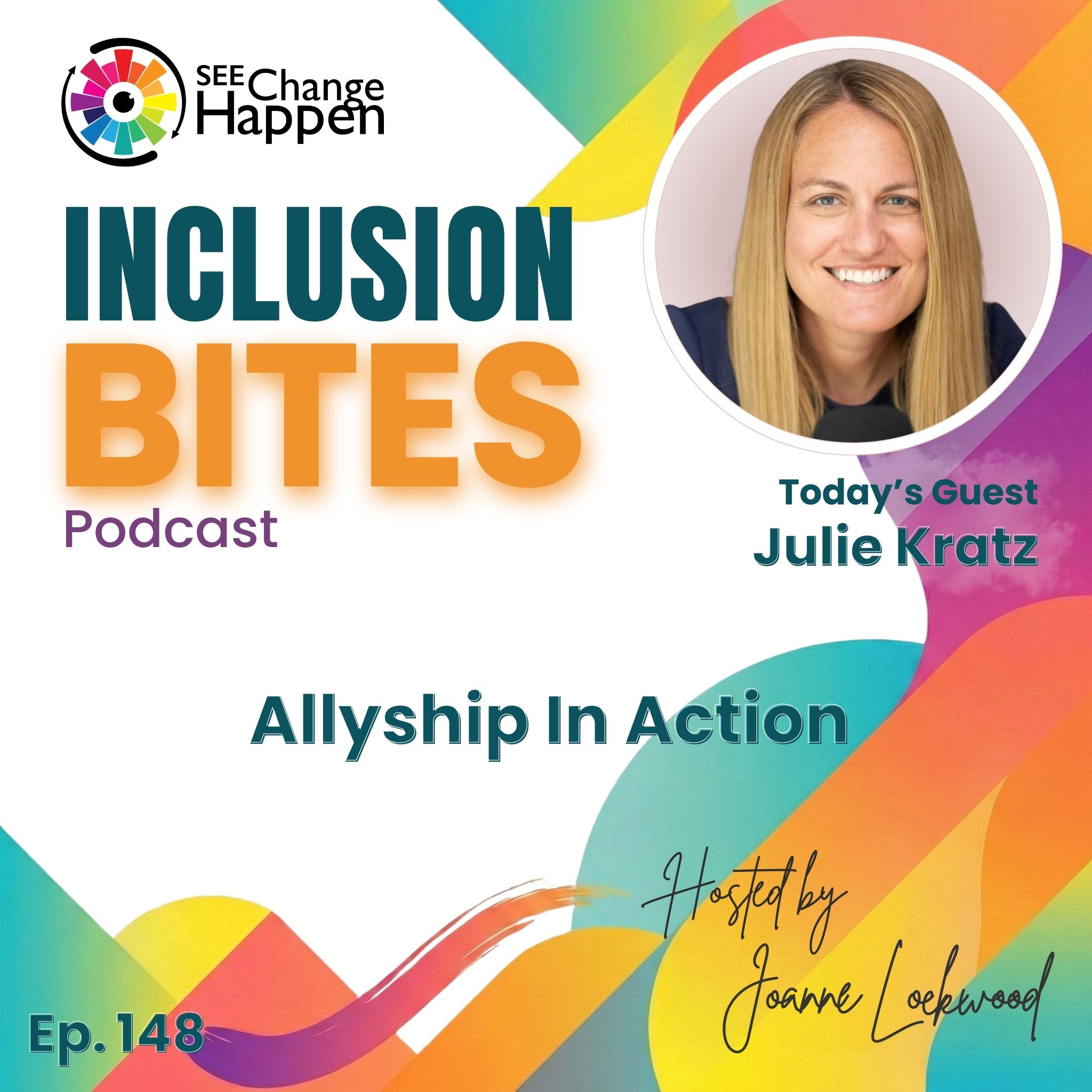
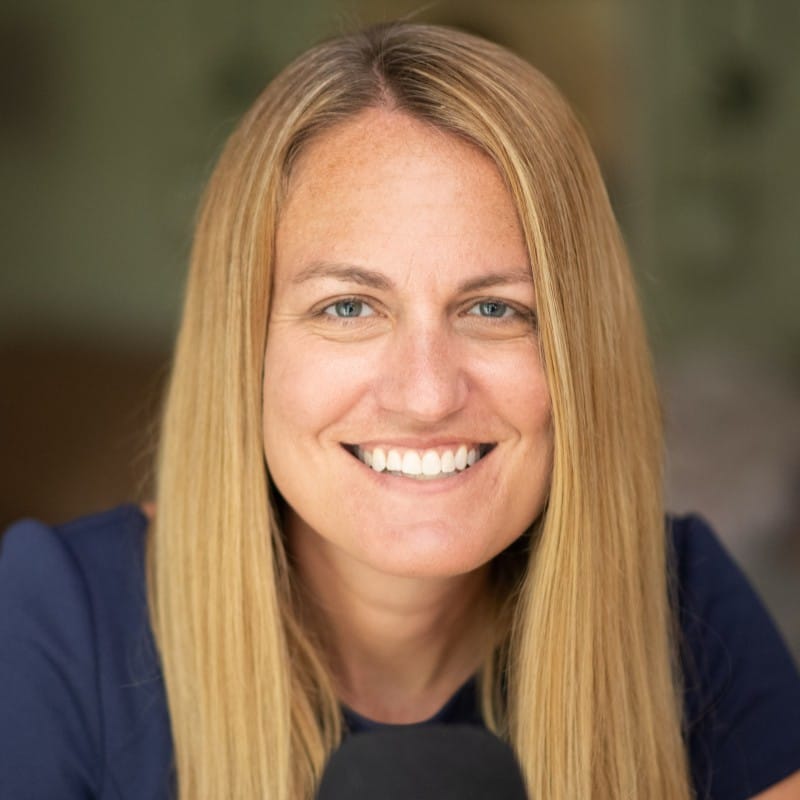
Julie Kratz dissects the core of allyship, emphasising the transformative impact of inclusive leadership, fairness, and the enduring significance of fostering genuine human connections within corporate cultures.
In this episode of Inclusion Bites, Joanne Lockwood speaks with Julie Kratz about workplace culture systems.
“The people that we need to care don't seem to care.”
Explore
Navigate this episode
Joanne Lockwoodhost
Foreignwelcome to Inclusion Bites, yoursanctuary for bold conversations that spark change. I'mJoanne Lockwood, your guide on this journey of exploration into theheart of inclusion, belonging and societaltransformation. Ever wondered what it truly takes to createa world where everyone not only belongs butthrives? You're not alone. Join me as weuncover the unseen, challenge the status quoand share stories that resonate deep within.Ready to dive in? Whether you're sipping your morning coffeeor winding down after a long day, let's connect,reflect and inspire action together.Don't forget, you can be part of the conversation too. Reach outtojo.lockwood@seechangehappen.co.ukto share your insights or to join me on the show.So adjust your earbuds and settle in. It's time toignite the spark of inclusion with Inclusion Bites.Today is episode 148with the title Allyship in Actionand I have the absolute honour and privilege to welcome JulieKratz. Julie is an allyship andinclusion speaker, consultant and authorwho helps leaders foster workplace environments.She is a Forbes contributor and TEDx speaker anddraws on her corporate experience to our organisationswith actionable strategies for allyship andbelonging. When I asked Julie to describe hersuperpower, she said it is her ability totransform allyship into actionable strategies
Joanne Lockwoodhost
that inspire inclusive leadership.Hello. Hello Julie. Welcome to the show.
Julie Kratzguest
Thanks so much for having me, Joanne. Absolute pleasure. We just
Joanne Lockwoodhost
chatted away for probably half an hour in the green room and burnt a lotof time. A fascinating conversation. I can't wait to bring some of that intothe conversation for our listeners today. So thank you for joining us. SoJulie, you have been on a journey fromcorporate and you've pivoted to become a leading voicein allyship and inspiring others. So what sparked yourpassion for creating more inclusive workplaces?
Julie Kratzguest
Great question. I So I spent 12 years in corporate before starting myown business nearly 10 years ago. So big year this year,10th anniversary. I never really dreamed of being an entrepreneur,but it was out of the necessity of myown difficult time surviving in corporate America. So I'm here in theStates and it's, you know, I'm sure similar in other partsof the world, but that sense of belonging,the sense of inclusion, having leaders I could trust and feelpsychologically safe with, just didn't exist.And I continued to think it was me and I needed tochange or it was the industry or if I get my mba, thenthings will be better. And no matter howhard I worked, I kept finding the same problemand Then it dawned on me when I had my daughter, I justcouldn't leave her to go to a workplace andwork that didn't. And this happens a lot to folks thatare caregivers, men and women and non binary folks likeit's you just realise yourpurpose of life is much deeper than a paycheck. And
Julie Kratzguest
she was a year old. I'm the primary breadwinner and tooka leap of faith that other people were having a similar challenge. I didand needed tools that I didn't have when I was a leader.And that's when next pivot point was born. Andit became quite obvious to me in the first few yearsas I spent time in the community and talked with folks especially of differentlived experience and identities from me thatwe needed allies. You know, us talking women, talking to each other aboutwomen's quote unquote issues which are societal issuesisn't helpful. Um, it's therapeutic. It feelsgood, you know, to rant in the moment but it doesn't reallyevoke change. And so how do we engage alliesin the conversation? It became quite clear to me that weneeded to broaden the conversation. And so that's really mylife's work. What I hope to leave the world with more allies in itthan I found. I like that, I really like that because that, that, that sort
Joanne Lockwoodhost
of aligns with some of my ethos if you like. I, I get frustrated thatI can't change the world. But what I came to realise was I can't changemyself and I can change how I show up and I canshow change how I influence those around me. Sothat's really the core of allyship really, isn't it? Isn't it justshowing up and being the best you, you can be.
Julie Kratzguest
Yeah, I think, I think that's thebasic premise of allyship. Thechallenge is the works evolved and you know, we can look at theyear 2020, right, and all the allies that came out.It was much more of a performance. What we would call performativeallyship is oh, I posted, I bought thething from the black owned business. I, you know, said metoo is wrong. You know, just. That's great.We absolutely need that. However, we needpeople to do more than that. And it's a big ask if you think aboutit. I've been on my own journey for the last 10 years.I regretfully have not always been the best allymyself. I said and done things that were inappropriate. Ihave said things that were not helpful and luckilypeople have called me in on that. And instead of getting defensive,which is kind of easy to do,decided to use it as fuel to get better. Andyou know, I think, Joanne, we've asked people, it's a big ask,I think, for what it means to be an active ally.And that's where we're at now as we head into 2025.Right. Like thinking about the political polarisation, you know, especiallyin my country, I'm deeply concerned about ourfuture. We need people in positions of power toshare their power. And that, that is like a realconundrum. Right? Like, because if you have power, why do you want to shareit? And we're seeing examples of people that they have power andthey want more power. It's like, don't you have enough? Like at somepoint, don't you want to share? Just for context. So you're,
Joanne Lockwoodhost
you live right in the middle of middle America, Indiana, I think it says you,you're in. Yes. And you mentioned 2020 and
Joanne Lockwoodhost
looking back, I mean it seems like yesterday, but also so far,so far back in time. It was pre Covid, at the beginningwe had George Floyd, which started the Black Lives Matter orreignited the Black Lives Matter. We had Harvey Weinstein and allthose other cases around the MeToo which sparked that in the USand some incidents in the UK as well.And then we had a lockdown and thatcreated this huge wellbeing vacuum where people,everybody was suffering in a, in a, in a differentway for common cause. Corporate America, corporate uk,corporate Europe, corporate everywhere. We think, how are we going to look after our people?And suddenly we saw all of this well being initiatives, peoplecaring about people suddenly because even the people withprivilege were being impacted by Covid. So suddenly they gotit. And here we are in 2025 and theworld's gone backwards again, hasn't it?
Julie Kratzguest
Yeah, it's like a step forward, two steps back. I justdetest that analogy, but I think that's verykeen to describe where we're at right now, that itevoked generosity and a shared experienceand a humility and a vulnerability in all of us because allof us were deeply affected. There wasn't a single human on the planet, likean extreme isolationist that didn't feel it right.But now it's led to us being more isolated andxenophobic and wanting to controlthings and it's almost like a whip effect.And I don't know what's in the future, but I haveto think the reason we're getting the backlash isbecause it's working. There wouldn't be a target onDEI if itwasn't achieving some success. You wouldn't bother withit. So it's a long game and I strugglewith that because I am a very impatient person. SometimesI think I just wasn't born at the right time. That I would have muchmore impact if we could be 20 years in the future where things would bebetter. But maybe now is the right time. Thistumultuous turmoil that we're in, kind of getting used toit, you know, I would have been alarmed 10 years ago to see news storieswe're seeing today. And now we're kind of desensitised,like, okay, yep, that's happening, sure, why not?But the silver lining to all of this ischange is happening demographically.It's demographics in our country for youngergenerations are. They are what they are. Mydaughter's generation, my daughter's 10, it is majority non white.That is a fact. And they will be entering the workforce much like Gen Zdid, with the expectation of a diverse and inclusive experience. Soyou can legislate around it. You can try to de.Knock. I don't even have indoctrin. The children were doing, they were notdoing whatever you can try. But it's happening andit's going to continue to happen. And so we just have to keep. Forme it's like keep that long view. 10, 20 yearsfrom now is probably the work that we're doing now willmanifest much later. Is that as you mentioned,
Joanne Lockwoodhost
that I'm sort of pondering in my head, is that, is that what's going on?Is it that the fact that the people in power, people have the privilege arebecoming the minority and they're almost like having to hack themselves in theirown little communes or I would in the UK world, I'dsay in their castle. I'm pretty sure in America you don't have so many castles.But I'm thinking about their in their old Norman Roman castles and puttingthe drawbridge up, hiding and saying, look, hang on a minute. If we stay inour castle and fight everybody off, we'll keep ourpower and privilege against the marauders and the unwashed.And the difference is that what's going on? Are people scared that they're losing theirright to govern, if you like. Yeah, I think that's exactly
Julie Kratzguest
it. There's a few falsehoods at play on theconcept of the zero sum game. This is a big problemwe have in capitalist societies where they're very much Iwin, you lose. I mean, we're taught that from a young age playing games. Ihate losing and someone else winning doesn't mean Ilose. Like generally speaking, when we make things betterfor the most marginalised, we make them better for everyone. Right. There's the curbcut effect for just disabled people like cut curbs.
Julie Kratzguest
It made it easier for me as a walker, a runner, astroller person, a bike rider. So it's,it's this zero sum game that we really have to cheque people on. How ismaking things better for someone else costing us? What is it costing us?And if you're in a position of power, I think is a really good gutcheque. I also think there is this laststand kind of narrative and I honestly thought wegot that over with first Trump presidency, but apparentlythere's more ammo ready to come out. Not to use aviolent analogy, but let's be honest, I mean it is,it does feel like to be white,for example. I think in, especially in America where we have not addressedour racial past, it is barely taught in schools, it is very muchlike slavery happened. We're good. Move on with yourlife. When you don't acknowledgeour problematic history, you're much more likely torepeat it. We know that's why we teach history.And so this whole. I have to take the. I needto hold on to the power as long as I can possibly holdon to that. And if that, I think in our country iswhiteness, those are the people in power. 70plus percent of C suite leaders, Congress, you know, youjust look at any body of power and this is really worldwide,but especially in our country is white andthat doesn't reflect the diversity of thepopulation. And I think too one lasthypothesis is I think they're worried that there's going to be somerevenge when the people you've kept down startto come up. Yeah, kind of like you think aboutrevolutions in Europe. I mean they're setting the conditions for thatto happen right now and I don't want to be a doomsday, butyou can't keep people down for so longbefore they don't revolt or resist. It kind of happened in South Africa when
Joanne Lockwoodhost
the white minority rule came to an end and the blackmajority took over. The black populationrepossessed the white farms, the white people becamemarginalised or correctly marginalised.The country was reset and there's that active purging of the whitepopulation out of positions of power in organisations andland seizures and everything. I guess there is a track record here of whathappens when the, the tide flips and so, yeah, Imean there's. Was it.Quoting US politics is probably not my strong point, but was it JFK saida rising tide floats all boats the same or something? Yeah,
Julie Kratzguest
that was. But that analogy is so, so true.
Joanne Lockwoodhost
That was a 1960s thing and I think we've, we've forgotten that. I,Richard Nixon, if I remember correctly, was trying to. Before he wastaken out of power, he was trying to get universal basic income. And if he'dhave carried on with his presidency, it may well be that US implementedUBI in some shape or form. And those were radical policies to createinclusive environments and recognising the population, it's way ahead of itstime. And now we've got Roe versus Wade beingoverturned and other things. In the us permanent action isprobably. Going to be gay marriage next. I'm not even going to be surprised.
Julie Kratzguest
Right. Tale though, isn't it,
Joanne Lockwoodhost
where they suddenly you're in a, you're in a same sex relationship and the nextday you're not. Right. You're not married, notmarried anymore. You lose all your benefits, lose your rights and everything. You can't,can't fly on that passport. Trans people, they can't drive anymore inFlorida because their past, their driving licence has suddenly been revoked.
Julie Kratzguest
Yep. Yeah, got it right,
Joanne Lockwoodhost
didn't she? Yeah. In the 1990s, I was like, wow, how did you see that?
Julie Kratzguest
Yeah, that's one of the disturbing shows that Iallow myself to watch because I have to be very mindful about doinginclusion work day in, day out, 40,50 hours a week is, as you know, it's a lot,it's very taxing, mentally hard on ourhealth. And Handmaid's Tale is one ofmy ones that I can get into for some reason because I think it'slike, are we headed in this direction? And that was my first thoughton November 6th when I woke up to the news.I was one completely shocked. Andthat just speaks to like the echo chambers we have here. I had noidea 51% of our country felt that way. Ijust didn't, I didn't think it was possible.In my home state, we overwhelmingly voted for him.In my county, luckily we went the other direction. Sowe're just all in our own spaces talking to each otherand not talking to the other groups.And this is how you get something like the Handmaid's Tale. Thisis how you get a reversal of rights when you see each other. As the
Joanne Lockwoodhost
enemy and dividing is finding thoseprobar and Those differences between you out. So suddenly you'repolarising women, you're polarising Hispanic and blackpeople, you polarising this. They go for him. Yeah,
Julie Kratzguest
hold your country's trash and you're rapists and youvoted for him. Like I, part of me wants to be like,you deserve this, like, you voted for this. See whathappens. And that's spiteful and mean. But that wasmy reaction for the first few weeks. And asI've, you know, now two months later, kind of marinated on it,it's, it's gonna be okay.The conditions, what's, what's interesting here in the States and I know we havea ripple effect across the world and luckily in the uk, where you're at, hopefullyyou're on the other side of this. So hopeful for y'all, but where we're at,
Julie Kratzguest
we're still here wrestling with thisis he's setting up the conditionsfor, at a minimum, a deepresistance movement, if not a revolution.And I don't use those words lightly. I don't think we're like civil war,but we're really marching up to something that's goingto be a very deep conflict. And we knowfrom the first presidency MeToo happened his first year.I don't think that's a coincidence when you have a known rapist andsexual harasser in office. And like you said, Black LivesMatter reignited. Granted, pandemic, George Floyd wasfuel. But would that still have happened ifBiden or somebody say, reasonable, but somebodythat's not, you know. Yeah, racist
Joanne Lockwoodhost
was in office? Maybe, maybe, maybe not
Julie Kratzguest
so. And most of the people in my professionare like, let's give it six months, let's see whathappens. I don't think people are going to take this. I justdon't. 49%, 50%of us, whatever it is, like, we're not going to take it.
Joanne Lockwoodhost
It's got Senate, it's got Congress, it's got everything, aren't they? I mean, there's nolegislative sort of boundaries now SupremeCourt, who's going to say no? Who's going to the military?
Julie Kratzguest
Right. Well, and that's another thing he wants to use. I mean, the slim marginin the House. Right. And not all Republicans are Trumpers.Right. So, like that the House has onevote to lose. So I, I doubt. And that,that's really a two year thing. So we'll have the two year elections, themidterms in what, 20, 26.So there's really two years to get things through. And even that's Going to beslim slum margins. I don't want to be dismissive of what's atstake here. I love my country and it'sdisturbing. The one thing we did learn from separatingfrom English power is to not let change happen quickly.So our founding fathers, as problematic as they were,did bake into our systems that you can't change thingsvery swiftly. So change takes forever here.So this might be the part that's like a good thing.
Joanne Lockwoodhost
The Constitution is so difficult, isn't it? Apparently it's so difficult you
Julie Kratzguest
can't add an amendment. I mean, we can't even get the Equal Rights Amendment amendmentpassed from the 70s for women. Like, that's just bonkers.It's not going to happen. Like, it, it takes so much to get amajority in the Senate or the House. So what can he do, though? Executiveorders. So I, I think if you're an immigrant in this country, especiallyone that's not fully legalised, there's some deep. I'd be verydeeply concerned if I were you and I empathisedeeply. I love immigrants. Every immigrant I've ever interacted withhas been a very positive experience. So I have no idea. People arefearful and we have a labour shortage. Like, what are we, what are we doinghere? Like, these are great workers for our economy.I don't, I don't understand that narrative. But what he is verygood at doing is creating fear of the other. And the othercould be black people, brown people, women, trans people,gay people. It's just you're the other. And if you're not,you know, the fit in that bell curve, like you said,the. And like, if you don't fit into this, like,prototypical type of, like, who's in power, white,straight, cis, able bodied man, then you're the other.The problem with that is, is that's a very slim part of our population.So you've got like, let's throw out numbers here, but I would guess60, 70% of people that don't fall into that boxthat aren't going to put up with this. So we'llsee. We'll see. What I do love about my countryis we love a good social movement and we will getone going here. So I have faithfully chosen theword resistance for this year. I can't wait. I will notbe starting a resistance movement, but if anyone wantsto, please email me. I'll do everything to support you. I just don't want tobe that person. Yeah, maybe. Rosa, the term resistance
Joanne Lockwoodhost
implies a struggle, a Fight or something. Maybefriction slow things down, create. Putsand in the ointment to grit things up a bit, to createnoise and to create great thinking is. I think it's what we're about asDEI practitioners, isn't it really? It's about stopping, pausing, thinking,reflecting, considering the needs of all,not just the needs of the one. It's a bit like Spock on Touchthe needs of the one. Many outrage the needs of the one, isn't it? It'strying to go back to that kind of altruistic view of the world.
Julie Kratzguest
And I think it just an understanding of what. Whatdoesn't benefit me can benefit me,if that makes sense. Like providing, like you said, like universal healthcare. Like we know everyone was fighting Obamacare back at.You know, I myself wasn't a huge fan of it initially. Now, as a smallbusiness owner with a family to support, I am so thankfulI have that and that that's not going away.He tried the first. It's not going to go away. So
Julie Kratzguest
when we provide for other people, we provide for ourselves. Like you don'thave to. I didn't have to even like individually benefit fromthat to recognise it's helping other people, it's helping oursystems be better to provide care and havesupport mechanisms for people because if they feel supported then they'regoing to be able to contribute more to society and thatbenefits all of us. Somehow that utilitarianism likethat has been lost that narrative and Idon't know how to change people's thinking or not even change toshift people's thinking. Like you said, it's just like these little nudges. That's whatI'm personally struggling with in the work right now. The people that we need tocare. Don'T seem to care, like we said,
Joanne Lockwoodhost
about providing things for others that don'tnecessarily seem to benefit us. Right nowI'm a week away from being 60and I benefit fromlifts and escalators andeyesight. My hearing is not as good as it was, I'm not as able,my hips don't work as they used to and all this kind of thing. SoI do like a good travelator from time to time. You know, I can't carrymy luggage all the stairs anymore. I'm not 25. SoI'm now benefiting from the infrastructure that society has put inplace for people who need it from a disability point of view,because I'm getting to the point where I'm now less. Describe myself as lessable, less Capable due to age. So we'll go skiing and breaka leg. Suddenly you are in need of support and healthcareand access. So it happens to us all.
Julie Kratzguest
On ageism is the biggest ism of them all. We're,we're fearful of our own mortality because the likelihoodof you becoming disabled at some point in yourlife is extremely high. Like it's almost inevitable.And so you're pointing that out. We don't want to think about that because it's,it's too scary to fathom, like our own vulnerability. And Ithink that's the heart of all the isms. We're too afraidof accepting thatit somehow challenges our own virtues or ourown self image. Andthat's deep stuff, you know, I don't know, I reflect on my ownjourney and I don't know how it shifted for me,but I often think like once you have that epiphany or eye openingmoment, you can't unsee it. I'm also curious, you know the people thatwatch the George Floyd video, right. Because we were stuck at home andyou see this video and it's. I never watched it so I, Icouldn't have. You watched that eight minute video.Something moved inside you. Some of it obviously blurred
Joanne Lockwoodhost
out sort of the actual foot on the neck facebit. But yeah, yeah, the eye can't breathe. Already at that
Julie Kratzguest
point. And when my husband showed it to me, I was pregnant, he put itin my face. I was like, I can't, I cannot watch that.And I was like, this happens all the time. Why do people care now?And that's, that's where we're at again. It's like whatcatalytic moment do we need? Like what does it take toget people's attention? I'm deeply curiousabout that. I don't know if you can manufacture it or plan for it.I think it's a spontaneous thing that happens just at theright time. So that's whyI'm kind of thankful that he's around. I just hate sayinghis name. Hopefully listeners, you know what I'm talking about. It
Joanne Lockwoodhost
brings January 6th, Capitol Hill. @ the end of hislast term that turned into a kind of arevolution, but nothing ever came of it. Locked a few people upwho are going to be released in a few weeks time. No doubt they couldbe given pardons. And you're coming,you're giving a licence for people to bear arms.
Julie Kratzguest
Yeah. And I mean you don't even have to look in our news cycle herein the US very often see the New Orleansterrorist attack or whatever we're calling it. You know,the cyber truck exploding or the Tesla. Yeah,
Joanne Lockwoodhost
yeah, yeah. Taking matters into their own hands, it's like
Julie Kratzguest
vigilanteism is just. I mean, hey, if youwant guns in people's hands, be prepared for the consequences,which I don't love. But we're just sodesensitised to all of these things, it doesn't even faze meanymore. The school shootings still get me. Because that's justextremely unacceptable for young people. It's crazy. It's crazy.
Joanne Lockwoodhost
As a Brit, you look at it and thinkthe zero sum game is that if people carryguns, I have to carry a gun. What we need is more guns toscare more people. So if I, if I don't have a gun, I'm more likelyto get shot. I just can't see that game winning.The bigger the gun. Everyone has a bigger gun. And at whatpoint do you stop? Apparently semi automatic rifles or automaticrifles, machine guns, rocket launchers are kind of Americanrights to bear arms apparently. Yeah, I don't see that one
Julie Kratzguest
changing. There's just too much, too much angst and money.
Joanne Lockwoodhost
Too much money. The NRA and all this sort of stuff has gotpoliticians. It's like the fossil fuel, petroleum oil, it's alltoo ingrained. Which is why climate change is being poo pooed. Because there'sno money in climate change at the moment. Because the people making batteries are theChinese, not the Americans. Right, yeah, that's the
Julie Kratzguest
whole thing too. Yeah. You look at again what's happening in LA right now.The city, I feel people. But a fire hasnever approached the city in this way before. And if climate change not real,then what the heck's happening? You know, it's, it'sinteresting the to me what we choose to accept,that's just like. Yeah, that's just the way it is. Kids getting shot up ata school, cities being burned down. Okay, that's just,
Joanne Lockwoodhost
that's desensitised. Don't you. It doesn't shock anymore. Is that theissue? Yeah. Oh totally. And I think
Julie Kratzguest
you know, to our DEI work, that's a big problem we have right now. Thenews cycle is these headlines. It's a clickbaitynegativity bias on ampedup human brain is wired to pay attention tonegative things more than positive things for our survival. Right. We had to scanthe environment. Sabre Tooth Tiger, you better be paying attention. Obviously
Julie Kratzguest
today that's not the same. But who are the predators? What isthe scare tactic? And these headlines, evenpositive stories. So at the time we're recording,McDonald's tracked on DEI, right?And I have people telling me this, like, that's actually true. If you look atwhat they did, they put things back in the franchise's hands, which.That makes sense, that the franchises should be reflecting their localcommunities that are probably very diverse and distinct. And they're stillsupporting their employee resource groups or affinity groups. They're still supportinga lot of the criteria. They just backing out of a couple things.
Julie Kratzguest
Everyone does that in any strategy, DEI or anycompetitive advantage strategy. You don't keep it forever, you shiftit. And so what if we shift the language to inclusion, belonging,culture, I don't care, call it whatever you want, just dothe work. And we're so busy defendingthe work that we're not doing the work that's onpurpose. Like, that is an intentional strategy that's beingused against us. And I just, after two years of enduring thisperceived backlash, had my secondbest year out of 10 last year as a DEI business owner,just refused to play into this narrative. So oneof the things I'm personally doing is I have a lot of PR people thatcontact me because they want to be on my podcast, my Forbes column,which is great, it's interesting to me, but they like to pitch negativestories. And I just started writing back, I'll take positive stories,please. And you know what it's changed is they started saying, like, I'll workon that, thank you for that feedback. Like, well, maybe they'll do that with otherpeople too, you know, like, I think we need to push back onthe pushback. I'm sick of playing defence, I want to play someoffence. I find myself doing that with my LinkedIn post. I did a
Joanne Lockwoodhost
poll end of last year, it said, DEI mustdie, yes or no. And it had the most engagement I'vehad on a post in many, many years. Because people really polarisedaround, yeah, dei's had its day. It's all this, it's all that, and everyone's going,no, no, no. And some people thought I was just rearranging the words. Iwas obviously d, I must die. But it is a play on words.But, yeah, you got the most. And just there was this polarisation occurredand it was. We used negative hooks. You say the headlines, people don't read thearticle, they read the headline and use their confirmation bias andtheir beliefs to extrapolate what that means without reading thedetail. And it's the tactic of the media to get the clicks to getthe shock, to get the awe. Totally. And it's working
Julie Kratzguest
and we're letting it work, all of us. You know, if I look through myLinkedIn feed for a pulse, it's the only social media I allow myself to consumeanymore for my mental health. It's still quite toxic. You know,people actively commenting, you know, it's like, why are you following meif you don't want inclusion? Like, stop followingme. That's on you. That's, that's, that's actually my superpower
Joanne Lockwoodhost
is because I'm, I'm not, I don't hide that I'm atrans woman. I polarise people. Therefore the people who I polarise, they don't want totalk to me, they just never contact me. I just don't get anyone phone meup. So the people who phone me are the people who want to talk tome and are interested. So I think it's a great marketing tactic. It's, it'sbeautiful. I don't know if you have Marmite in the us. It's like a Vegemitetype, really, kind of yeast extract and it's quite asharp, strong taste. And Marmite is known for being, you love it or you hateit. So we want to. In the same waythat the headlines you're saying are polarising negatively,actually speaking up as a DEI practitioner, saying, this is my values, this is whoI am, and encouraging businesses to do the same. Youpolarise and create your brand as inclusive. Yourbrand is this. That way you, you attract the people. AndI. Was it Dylan Mulvaney and was it Bud Light and people likethat? Oh, right, there's all this campaign and these other,the bra manufacturers that engaged Dylan Mulvaney as well. And, and allthis kind of all this shock horror about, oh, you can't do that. Andsuddenly Budweiser sales went down and everyone's going, oh, look,this is what happens if you support these woke causes. And it's like, theseheadlines aren't true. You know, this, this is, it's justmyths. Exactly how they handled it so poorly that led to that
Julie Kratzguest
decline. That was the problem. Yeah. Nothing to do with Dylan. Had everythingto do with the poor management of it. Like, if they should have held the
Joanne Lockwoodhost
rope, they should have stood. Stood their ground and should have said, we're positive aboutthis. Yeah. So what if you lose a few customers? Are those
Julie Kratzguest
customers you want? They can stay. They probably lost the customers because they threw
Joanne Lockwoodhost
people under the bus. They, they, they banktracked. If they just stayed states,everybody yeah, right. Yeah. So I think,
Julie Kratzguest
I think that's a great example and I also think some great case studies thathave come up as of late, again, more here in the States, butglobally, like Costco is one of our like warehouse brands, if you'refamiliar with that. Joanne? Yeah, yeah, we have Costco over here.
Joanne Lockwoodhost
Yeah. Okay, cool. No one's perfect, but they're pretty.
Julie Kratzguest
Inclusion is like a part of their strategy. And I was, it was so interesting.I was reading a New York Times article on them in like midDecember about how they, they're all aboutdeveloping their talent from within. So you start as an hourly workerand they pay a very competitive wage and the 20 something dollars, which is avery good wage here for hourly workers. And thenthey self promote through and they treat their people really well andthey have an intentional strategy around inclusion and diversity and theirhiring and promotion processes. Great. Nothing controversial.There's. Well then their shareholders come up withlike, I don't want any more of this DEI hiring, which I don't even knowwhat DEI hiring is to be. I'm not familiar. I don't know what it is
Joanne Lockwoodhost
either. No. So like setting goals. I don't know,
Julie Kratzguest
debiasing the process, like. Anyway, you're for a fair
Joanne Lockwoodhost
chance, apparently. Warner unanimously said, no, thank you.
Julie Kratzguest
We will be moving forward as planned. This is a part of our strategy andwho we are. It's aligned with our mission, our vision and our values, fullstop. American Airlines just did the same thing.So suddenly we start to see the tideschanging. Not to use like a metaphor, but like something'sshifting and is it coincidental that it's happening at the same timein our political environment? Shifting. So,you know, to kind of full circle on the silver liningwe were talking about at the beginning. I think, I thinkdei, if I had acrystal ball and some predictions, you're probably not going to call itDEI anymore, especially here where it might beillegal. I think you already pushed through an executive order. Not that you can'tdo DEI training if you work with the government. So, okay,we don't call it DEI anymore. It does not change the work.And as practitioners, I think we really need.I'm urging my clients and other practitioners, let's notbe so worried about the words we use. We've only been calling a DEI forlike the last five years. Is it that big of a deal to shift toa. What does it really mean? As, as you said just now, what is diversity?It's, it's a fact. You can't train People on diversity. It's justhappening. It's just a fact. It is, it just is. Yeah,
Joanne Lockwoodhost
yeah. Inclusion, you can train people on. And I,
Julie Kratzguest
if I were to really think about what I do for a living, that's whatI do, is inclusive, train inclusive, moreleadership training. But inclusion training, culture, work,belongingness, well. Being, psychological safety, all this kind
Joanne Lockwoodhost
of stuff. Yeah, you're really never doing the E. And I know the E is
Julie Kratzguest
really important and the systems have to change along with individual behaviour. But let's behonest, companies aren't doing a crappy job at equity.We can't even get pay equity. So. No,
Joanne Lockwoodhost
that's a lot is recognising someone who'sneurodiverse, autistic, has a disability, needs a littlebit extra help. And we do that for our kids in college and schools. Thisperson's got dyslexia. We need to give them special dispensation in exams orgive them something to help with screen readers, whatever. Our phones, our laptops, ourcomputers have little red squiggly lines under spelling mistakes now and theycan read stuff out. So equity is being built into ourinfrastructure anyway, so we're a lot more equitablein the systems we have. And that's what we're doing is making sure thatpeople can access fairly. That's equity. Not giving peopleany special rights. It's just floating theboats, I think. Where we lose people. And
Julie Kratzguest
let's be honest, I mean, we know this, there's research on this. This isa fact that the more educated you are, the more likely you are to supportinclusion, at least in our country. So there's an educationgap. And when you use acronymsand you use words like equity that people don't understand,just it's not an obvious word word we usevery often when you use words that people don't understand inacronyms, it creates fear. You're talking down to me, making mefeel like I don't know something and that's not a good startingplace. So ditching acronyms,focusing on inclusion, I'm okay with it. Honestly,Absolutely. Please don't mishear me on this. Like, it does not change the work Ido at all. But if the label, the packagingneeds to shift to make it more palatable and acceptable for folks andlegal, like country. Okay, let's justdo it and get it over with. I'm sick of talking about. I'm not a
Joanne Lockwoodhost
fan of D I, D and I D I B D I J, whateveracronym you like, because it's all about buzzwords andinput. I want to talk about the outcomes. What do we look? What's the outcomewe're trying to achieve fairness, a respect environments where people canthrive, people feel safe, they got trust in the process.They feel if they work hard and try hard and do the right things, they'regoing to succeed. It's not overcoming this bullshit BS ofmeritocracy and this belief that the dice and the bases are loaded. We gotto. That's where equity comes in, where we're offsetting privilegeand natural fairness. That's, that's a synonym to equity. I mean
Julie Kratzguest
there's more to equity, but fairness is a quintessential part ofequity. It's interesting that you brought that up, Joanne, becausethere's a thought leader, probably the most prolific thought leaderI follow in the DE currently as we call it the DEI space. LilyZhang. Yeah, follow themas well. They just posted abouttheir new book and it appears to be a fairnesstitle. So I was really intrigued by that because for tworeasons. One, personally I went through psychological safetycertification a year ago and they make you dothis values assessment. I don't make you, but you have to as part of thecertification. And off the charts, I am like off thecharts with fairness. Like fairness is something. If it is notfair, I don't feel psychologically safe.Wife didn't survive in corporate America. Right. Like makes sensebut they're underlying. Most humans arewired for fairness. You give a kid, two kids, different slices ofpie, they're like, that's not fair. I didn't get the same amount. Weare wired to appreciate fairnessand to want to share and things to be fair. So what if wepivoted to fairness? Come at me. Just like inclusion. What you wantexclusion, Come at me. I will defend that all day long.The tricky spot I'm in with dei, it's a little harder to, it's much harderto defend, to be honest because I have to first explain to you what itmeans, which that's a huge problem. So now I have to explain to you whatit means. So now I've made you feel like you, I know something you don'tknow and I'm somehow better than you because I know that, whichis not the way we want to approach this. And then you have toget people to understand how to do it. This multi stepprocess, if we just said fairness, inclusion,it really shortcuts all of that. And like either you want things that are fairand inclusive or you don't. If you don't I can't help you.Problem solved. I just want to believe that I can
Joanne Lockwoodhost
succeed on my own merit. That's what I want to know. Andif I need some help, I can ask for it and I'll be given it.That's, that's, that's what it's all about, really. And if I don't need the help,I don't get upset because somebody else gets the help. That's, that's really what we'retrying to do here. And whether that's in the hiring process, theemployee experience, stakeholder, the customer, whatever, wherever youare in the system and the queue, you just want to, you don't want tohave trust. Trust and fairness, it's gotta be there.You can say you're fair, but if I don't trust your fairness. So it'sbuilding trust. And that's about brand, it's about values. So all those good thingsabout that alignment, isn't it? Yeah. Well, I appreciate they use the
Julie Kratzguest
word help. Really interesting. This isprobably more of an American thing. We don't like to askfor help. That's being weak. Right. But what's interestingabout human beings as a whole is we're a social
Julie Kratzguest
species. We don't survive on our own. We would have never gotten to this pointof evolution if we didn't have each other in groups or tribes or whatever youwant to call them. Only the last 10% of our human history havewe not been hunting and gathering. Right. So it's is this wholeidea of, like, we had to one, to survive, provethat we were helpful to the group so the group would want to keep us,so we stayed safe, and we had to be willing to accept help from othersso other people could feel helpful. This is a deeply primal humanneed. That's what allyship is allabout, is being helpful. The research on itshows just like mentorship, it's not the mentee that reallybenefits, it's the mentor. It's the ally that
Julie Kratzguest
benefits, not the person that's being allied. Of course they benefit by, you know,disrupting barriers or making introductions or whatever you're doing.But the act of helping someone and feeling helpful isdeeply fulfilling. And so if we createdconditions where people could ask for help and people couldprovide help, we would all be better. But we have allthese, like, weird barriers around it, like thesepsychological triggers around it.And I'll be honest with you, as someone that teaches allyship,we usually teach what we don't, what we need, ourselves. I hateasking for help. I Hate it. It'svery vulnerable. And so it's just an interesting space that we're in. We haveto, like you said, be willing to ask for help and accept it. Something I
Joanne Lockwoodhost
learned, you know, I. I gender transitioned effectively 8, 9, 10 yearsago, and I spent most of my life being invincible.Being privileged, not feeling I needed as a man.Yeah. Not feeling I needed anything as a white man, as a perceived straightwhite man. And what I learned very quickly asa woman is that I am inherently morevulnerable. As a trans woman, I'm even more vulnerable. Andso I decided to rather reject that. I lent intoit and I embraced that vulnerability and Ithought I'm more. I'm more open to share about what.
Julie Kratzguest
What. What makes me happy, what makes me sad when I'm feeling
Joanne Lockwoodhost
worried. I'm more willing to reach out to people nowthan I ever was before becauseI haven't been. Having spent most of my lifeinvincible, now I'm not. I realiseactually I need help. I don't have that huge network ofprotection anymore. So I have to ask people and leaninto people when it's there. Especially when you're in a place that's not
Julie Kratzguest
safe for you. Like, you need allies around you,not that you don't. I think without trying to play
Joanne Lockwoodhost
a stereotype here, I think that women are inherently morecollaborative than men. That's.I've really embraced that side of it, where certainly inDEI or diversity work, or the work we're both in,it's not a competitive sport. We all want everybody to win and succeed.So it's an inherently more collaborative network of people I'm part of.So the collaboration, the helping, the working on each otherresonated with that more. So I'm more willing to, as I say,open myself up, be vulnerable and ask for help than I ever have been inmy past life. That's really. It's a really interesting
Julie Kratzguest
window, right, that you can seethis. Different sides of gender expression and identityand how that manifests and how people treat you differently. Andthere is a piece of collaboration. I mean, I think when you're not inpower, you know, you have to collaborate. You know, you can't get thingsthe same way you could if you have the power. And so historically,marginalised groups just learn to pair up andcollaborate. And that's funny. I was just reflecting on this with my peer groupthis morning is being a woman. I'm sothankful I was born a woman, I really am. And I don't meanthat, that I don't like men. I just personally lovecollaborating and I love talking about my emotions and havingdeep relationships without the scoffing of I'm whatever.I am so thankful, so thankful for that. I hear
Joanne Lockwoodhost
you, I hear you. I've discovered this, I've discovered this.This, this is the authentic person inside me reaching outand going, where's this been all my life? This is just my naturalway of being. It was never there before. It was just didn't see it. Itwas all masks by the, the hormones, the testosterone and everything else thatwas masking it up with maleness, if you like, covering all thisinner self that screaming to get out. Really.
Julie Kratzguest
Yeah. What an interesting perspective. When I think aboutthe most marginalised people and not that this is acompetition, but when you think about transpeople, just the rates of violence, the rates of oppression, therates of hate, it's extremely high for the transcommunity and I really feel such deep empathy.I also understand the fear that straight cisgender peoplehave about it because they don't understand it. And you and I were talking inthe green room about this. You're like, I don't understand it either. You don't haveto understand it fully to be supportive.Lean in. It's okay as, as we were saying, as I said before,
Joanne Lockwoodhost
just to contextualise it for people listening, it's. I don'tunderstand what it's like to be trans masculine. I don't understand what it's like tobe non binary. I don't understand, but I understand. In fact, I don't even understandme why or how or what it is. I just know that whoI am makes sense to me and I can't explain it to you or anybodyelse other than. It's like, it's like trying to imagine a fourdimensional object in three dimensional space. Ican't explain that fourth dimension, but I can explain the shadow. I canexplain how it is likely to manifest itself,but not actually draw a picture of it. And it's, it'sthat really, it's trying to explain something, a point of reference thatI don't have other than I am. And it's astrange, it's a strange thing. Yeah, yeah. I think it's just like a human
Julie Kratzguest
condition to want to know why, like how did that happen? I mean, kids dothis. I learned so much from my kids about curiosity and thething about really all the dimensions of difference that you don't have a livedexperience or a personal identity connecting to. You don't have to fully understand it.You're not going to. Right. Like, it's not your lived experience. So how. I can'twalk around in brown or black skin to understand how racism reallymanifests. You can see it from my whiteness and know that it's wrong.And that's, that's enough. That's. That's okay.Pay attention. The one piece of advice I always give people that want to bebetter allies is just keep your radar up. Pay attention. Like, lookfor unfairness, look for injustice and say something when you seeit. And it doesn't have to be this bold proclamation of you're a racist ora sexist. Say, hey, what you mean you said that? Like, Idon't understand why that's funny. Or hey, have you ever thought about it thisway? Or I used to think that too. Like, there's reallyeasy ways to call people in without shame andblame. So just for anyone listening, calling it in is. Calling it out is very
Joanne Lockwoodhost
much a big hands in the air, stop, shout, do not do thatshaming. Almost calling it out. Calling it in is. It's theeducation side. It's the, the persuasiveness. It's the explaininga better way. And people get defensive if theycalled out because they feel shame, they feel confusion where we call in,we invite people into the conversation and it's more productive.
Julie Kratzguest
Yep. Yeah. And a great thought leader in that space is Loretta Ross.She has a TED Talk and a new book out on calling in comes outin February. Listeners. So I'm, I'm excited about that. But majordifference and I think another course correction that's desperately needed in ourwork. Yeah, I agree. Too many activists
Joanne Lockwoodhost
getting angry and not enough people sitting around the table on the centre ground enlighteningand having productive conversations like we're having today, which isfantastic. Julie. We've been yakking on now for nearly anhour and a half. We burnt some of our allocated time up in the greenroom before we started recording, which is a lesson to learn for next time. Soit's absolutely fascinating. How do people get hold of you for you? You've got someinspiration here. Yeah. Yeah. Thank you for such a delightful,
Julie Kratzguest
refreshing conversation. This was really. I'm excited to share this one. So Ihave a Forbes column I post a couple times a week if you're interested, haveideas, people I should interview. Always happy to take suggestions there. Ilove Hot Topics, so cheque me out on Forbes. You know Forbes and Julie KratzK-R-A-T-Z. You can find me easily andnextpivotpoint.com sonextpivotpoint.com tonnes of free resources. Weway too much content there. So dig in. Youcan contact me through the website. Has all the info there. That's
Joanne Lockwoodhost
it. And well, I'll be making a pitch to be on your podcast and wecan have have another conversation and you're invited. Already
Julie Kratzguest
invited. We'll just find the time. Can't wait. Can't wait. So thank
Joanne Lockwoodhost
you so much and it's been an absolute pleasure andI'm almost sad that the conversation's ending, but you have to rush to anothermeeting. So, yeah, let's call it quits. Thank you, Julie. Part 2 Part
Julie Kratzguest
2 Be Continued Listeners. As we bring
Joanne Lockwoodhost
this conversation to a close, I want to express mydeepest gratitude to you, our listener, for lending yourear and heart to the cause of inclusion.Today's discussion struck a chord. Consider subscribing toInclusion Bites and become part of our ever growingcommunity driving real change. Share this journey withfriends, family and colleagues. Let's amplify the voicesthat matter. Got thoughts, stories or avision to share? I'm all ears. Reach out tojo.lockwood@seechangehappen.co.ukand let's make your voice heard. Until next time,this is Joanne Lockwood signing off with a promise to returnwith more enriching narratives that challenge,inspire and unite us all. Here's to fostering a moreinclusive world one episode at a time. Catch you on the next bite.
Evolution of DEI Terminology and its ImpactEquity and Fairness within Corporate StructuresThe Role of Allyship and Mentorship
Joanne Lockwood is joined by Julie Kratz to explore what “allyship in action” looks like when DEI faces backlash and misunderstanding. Julie shares how her own corporate experience led her to focus on belonging, psychological safety, and the day-to-day behaviours that shape whether people feel included at work.
Together they unpack how performative allyship can replace real change, and why simplifying language matters when acronyms and jargon create fear, division, or defensiveness. The conversation argues for focusing on outcomes—fairness, trust, respect, and access—rather than getting stuck defending labels, and it highlights the value of calling people in (not calling them out) to create more productive dialogue.
They also discuss the wider social and political context influencing workplace inclusion, including polarisation and power dynamics, and touch on how organisational leaders and brands can respond by staying aligned to mission and values. Listeners leave with a clearer, more practical framing for inclusion work: keep your radar up, notice unfairness, and take action that builds belonging over time.
“On ageism is the biggest ism of them all. We're, we're fearful of our own mortality because the likelihood of you becoming disabled at some point in your life is extremely high. Like it's almost inevitable. And so you're pointing that out. We don't want to think about that because it's, it's too scary to fathom, like our own vulnerability. And I think that's the heart of all the isms. We're too afraid of accepting that it somehow challenges our own virtues or our own self image.”
The critical importance of focusing on inclusion and creating inclusive leadership rather than solely on diversity metrics.
Simplifying DEI language to terms like fairness and inclusion to make these concepts less intimidating and more universally understood.
Strategic commitments from companies like Warner and American Airlines to DEI, despite opposing shareholder views.
Structuring equitable systems that provide fair access rather than special rights, addressing ongoing challenges like pay equality.
The impact of political and legal environments on DEI terminology and how the essence of the work remains unchanged.
The role of perceived vulnerability in societal 'isms' and the importance of normalising help and support within organisations.
Positive examples of successful DEI strategies, such as Costco's internal talent promotion and competitive wages, fostering a committed and inclusive workplace.
One thing to remember
The episode "Allyship in Action" underscores the necessity of moving beyond mere DEI buzzwords to focus on the core values of fairness, respect, and trust. Julie Kratz and Joanne Lockwood advocate for simplifying DEI language to foster greater understanding and inclusion, highlighting the significance of creating inclusive cultures, equitable systems, and the profound societal impact of allyship.
Questions this episode helps answer
How do you interpret the terms Diversity, Equity, and Inclusion (DEI), and do you feel they are sometimes misunderstood or misapplied in organisations?
What are the implications of some shareholders opposing DEI hiring practices, and how should companies navigate these challenges while staying true to their values?
Considering Warner and American Airlines' commitment to DEI despite opposing shareholder views, how can other companies balance shareholder interests with their DEI goals?
Julie Kratz suggests that the DEI terminology might change due to political and legal shifts but the essence of the work remains the same. How do you foresee the evolution of DEI terminology affecting its practice?
Julie Kratz emphasises focusing on inclusion, training, and creating inclusive leadership and cultures rather than solely on diversity. How effective do you think this approach is in promoting long-term organisational change?
Despite structural improvements in equity, companies still struggle with issues like pay equality. What are some practical steps organisations can take to address these ongoing equity issues?
Explore topics
Ideas from this episode
Evolution of DEI Terminology and its Impact
A deep dive into the evolving nature of DEI (Diversity, Equity, and Inclusion) terminology. Julie and I noted that while the terms might change due to political and legal shifts, the essence of the work must remain steadfast.
Equity and Fairness within Corporate Structures
The notions of equity within corporate structures, focusing on ensuring fair access rather than special rights. Despite structural improvements, equity issues like pay disparity remain prevalent.
The Role of Allyship and Mentorship
Julie and I delved into the critical role of allyship and mentorship in fostering inclusive environments. We reflected on how these relationships benefit the helper as much as the person being helped and the cultural shifts needed to normalise asking for support.
Learn
Frequently asked questions
What is the core focus of this episode?
This episode mainly discusses Diversity, Equity, and Inclusion (DEI) concepts, specifically critiquing how these terms are utilised and understood in the workplace. The conversation explores actional allyship, the importance of inclusion over just diversity, and the evolution of language within the DEI discourse.
Why is there opposition to DEI hiring among some shareholders?
Julie Kratz mentions that some shareholders oppose DEI hiring, possibly due to misconceptions about its implications and benefits. Despite this opposition, companies like Warner and American Airlines continue to champion DEI commitments, aligning them with their core values.
How important is focusing on inclusion in DEI work?
Julie Kratz emphasises that while diversity is a fact, inclusion is actionable and trainable. She believes creating inclusive leadership and cultures is crucial to meaningful DEI efforts, as it ensures all employees feel valued and respected.
What does the episode suggest about the future of DEI terminology?
The episode discusses the likelihood of DEI terminology evolving due to political and legal shifts. However, the fundamental essence of DEI work—promoting fairness and inclusion—will remain the same, irrespective of terminological changes.
What challenges do companies face regarding equity, particularly pay equality?
Despite structural improvements in workplaces, equity issues such as pay equality persist. The episode highlights the need for more equitable systems that provide fair access to opportunities without conferring special rights.
How can simplifying DEI language help reduce resistance?
By using more universally understood terms like fairness and inclusion, rather than complex DEI jargon, companies can minimise fear and misunderstandings, making it easier to gain broader acceptance and support.
Share this episode
Heard something worth passing on? Send this conversation to someone who needs to hear it.