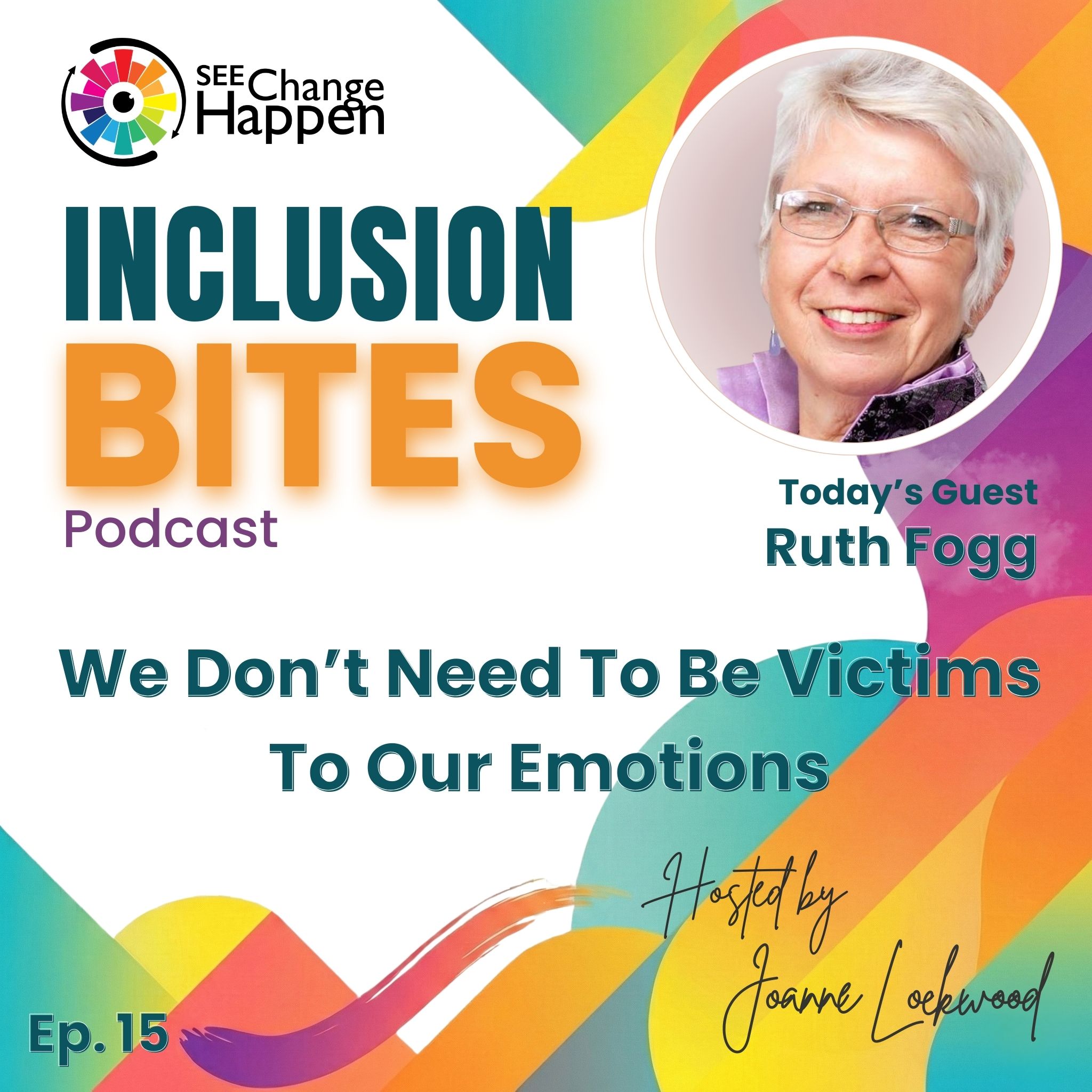
Stress! We don’t need to suffer and be victims to our emotions
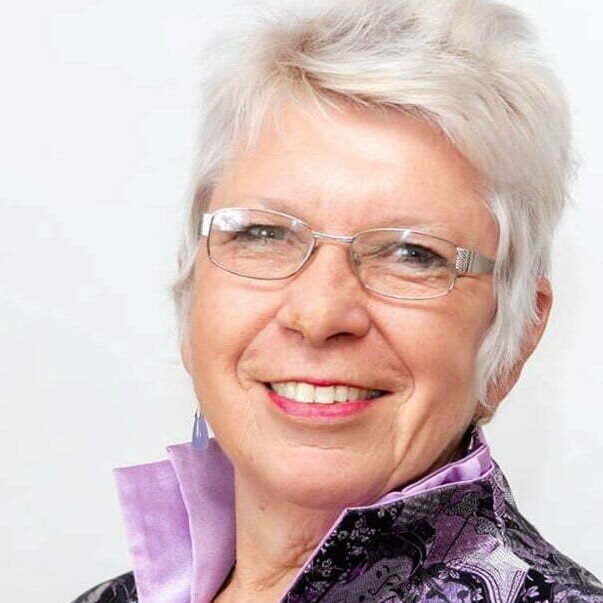
I chatted with Ruth where we talked about the challenges of carrying around stress in our lives and how we can find our own strategies to overcome this often stigmatised condition many of us face.
In this episode of Inclusion Bites, Joanne Lockwood speaks with Ruth Fogg about mental health wellbeing trauma.
“Stress kills and nobody wants to die before they need to.”
Explore
Navigate this episode
Joanne Lockwoodhost
Hello, everyone. My name is Joanne Lockwood and I am your hostfor the Inclusion Bites podcast. In this series, Iwill be interviewing a number of amazing people and simply having aconversation around the subject of inclusion, belonging andgenerally making the world a better place for everyone to thrive in.If you'd like to join me in the future, then please do drop me aline tojo.lockwood@seechangehappen.co.uk.That's S-E-E Change Happen dot Co dot UK. You'll beable to catch up with all of the shows on iTunes, Spotifyand the usual places.So plug in your headphones with rabbitika and let'sget going. Today is episode15 with the title stress. Wedon't need to suffer and be victims to our emotions. And I havethe absolute honour and privilege to be joined by RuthFogg. I first met Ruth at a regional meeting,professional speaking association about three years ago,and Ruth describes herself as someone who helps clients tounderstand why they are suffering from stress anddepression to eliminate negative emotions of their lives.I asked Ruth to discover her superpower and describe itand she said, lip reading, you never know thatshe's listening. So. Hello, Ruth,welcome to the show. How are you? Hello, Jo.
Ruth Foggguest
I'm fine. I'm actually quite excited todaybecause between within the next 4 hours, I'mgoing to become a grandmother for the first time. Soit's an absolute pleasure to share thatbecause I'm excited and I'm certainly not stressed. Sothank you for inviting me today. It's great to be here.
Joanne Lockwoodhost
Wow. Thank you for sharing that with me and the listeners. That's fantastic. You mustbe over the moon. Over the moon, yeah,
Ruth Foggguest
I am. But my son, sadly, is in Canada,so I can't jump in the car and go and be withthem. So, yeah, it's a bit frustrating, butwe will get out there as soon as quarantine is over.
Joanne Lockwoodhost
So I guess you were probably never goingto be with them or had you planned on being in Canada at thistime? Well, we were letting my daughter in law's parents
Ruth Foggguest
go out first and they've actually gone out today,but they have to quarantine for two weeks before they can seemy son and daughter in law, and then they have to quarantinefor another two weeks when they come back. So we're going to wait forquarantine to finish it. That's far too stressful for me and Iguess for them as well. But you could zoom in
Joanne Lockwoodhost
the meantime. So now we're living in this world where we can all be online.So you could probably have that long distancegrandparent experience via mobilewithout the hugs. I'll wait and see. Yeah, virtual hugs,
Ruth Foggguest
all hugs. But that's fantastic news. And
Joanne Lockwoodhost
if you suddenly have to hang up and disappear, I'll know what's going on. So,yeah, no worries at all. It makes a difference from anAmazon delivery. We have a baby delivery.
Ruth Foggguest
Okay. So, yeah, I'm glad it's been delivered in hospital,not by. Yes. You
Joanne Lockwoodhost
can never tell if they dropped it or not, can you? The parcel that isnot the baby. So both. Absolutelyamazing. Thank you for joining me today. I knowwe've talked in the past about your passion, which is around stress.So why do we often suffer and become victims to our emotion?
Ruth Foggguest
Basically because we don't understand what causesus stress. It's one of those thingsthat is present in everyone's life. At some point,especially recently with lockdown, people have found it reallydifficult. So most people can actually identifywith some form of stress or anxiety, which doesn'tactually mean they have a mental health condition. Stress is aneveryday thing. We have all sorts of daily hassles andpressures, things we have to deal with. But if weunderstand why we're stressed and what triggers ourstress and we know how to deal with it, then it's nota problem anymore. My strap line is positivesolutions for peace of mind. Because if you have peace ofmind, you're not stressed and you can cope withwhatever curveball life throws at you. And whenI say understanding what causes youstress, let me give you an example. I had ayoung woman who came to see me this week whosaid she'd had a panic attack last Saturday atChessington World of adventures, of all places. And shecouldn't understand why she'd had this panic attack. But whenwe explored it, all sorts of things had been going on in herlife. During lockdown, she'd had a bereavement.She was worried about going on toantidepressants because her mother in law andboth her parents were on antidepressants. So for her, it feltlike the norm. But in actual fact, the reasons that
Ruth Foggguest
they were on antidepressants were justified.One of them, her father, was a prison officer who had beenattacked by an inmate, and he had been quitebadly hurt and he'd been retired as aresult of this. And he was taking thejustice system to court because it had all been covered up, thisattack. So he, to my mind, was quitejustified in terms ofactually being stressed. And the mother inlaw was spanishand had been enslavedand abused as a child. So it's not surprising they wereon antidepressants. So when we explored this, my clientunderstood thatshe didn't need to be stressed at all. It's a very simpleexample, but when we look at ourpast, we can understand howmemories get stored in the subconscious mind.Now, we don't learn about the mind atschool, I have no idea why, but the mindis in two parts, the conscious and the subconscious.The conscious is about 5%. The rest ofit is the subconscious, so there's no competition.All our memories, thoughts, habits, behaviourpatterns, emotions, everything we've everlearned and our automatic body systems arein the subconscious part of our minds. So thingsbecome automatic, like learning your tables.Repetition and practise, it becomes automatic. We learnour fives, we move on to our sixes and so on. And learning todrive, we only think about it when we're learning andthen it becomes automatic. We don't think about it at all.
Ruth Foggguest
And this applies to everything that happens to us.So when you have an upsetting memory, it'sstored. And then when something happen that might beeven vaguely similar, thesubconscious goes, oh, I've been here before, I know what todo. And it gives us all those emotions back again,which can be very upsetting. So, for example,if you didn't like public speaking, or you were scared ofpublic speaking, when you explorewhy, it probably goes back to school days. Whenyou were asked to stand up and read to the class, youmispronounced a word, everybody laughed. And thatmemory is enough on its own to makeyou scared of public speaking. So it's understandingwhat's been going on and also about your attitudes, beliefs andvalues, because they too can have an enormousimpact on stress levels.
Joanne Lockwoodhost
I hear what you just said there, Ruth. One thing that's jumping in myhead is, is there a stigmaaround admitting you have stress? Andis that stigma sometimes worse in men or women?Because there's almost like this negativity around.People use the word I'm stressed out without really knowing what I'm stressed out means.But when someone talks about depression or stress in a clinicalsense, there's almost like this stigma that I'm not stressed, Ican manage my own stress, I know what I'm doing. Do you find a lotof that goes on? Oh, very much so. It's one of
Ruth Foggguest
the biggest hurdles that I have to overcome, becausepeople don't acknowledge their stress until they'redesperate or they're becoming ill. Andwe all know that prevention is better than cure, but yes, thereis an enormous stigma, but also there is adifference between pressure and stress. Pressure goesaway. So if you're late for a meeting, you're stuck intraffic. When you get to your destination, thatfeeling of stress goes away. And I'm saying stress andinverted commas here, but if you arestressed, it's because it builds up and it builds up.We absorb stress like a sponge, and if we don't wring itout, eventually we become ill. And there are anenormous amount of stress relatedillnesses. And if the illness isn't causedby stress, it can be made worse by stress. And80% of illnesses are connected to stress, andthat includes heart attacks, strokes,cancers, ibs, all sorts of things,which is obviously the extreme end, but it's much betterto deal with it as and when you can.
Joanne Lockwoodhost
Yeah, I saw a talk by someonewho's developed some technology around HRV heart ratevariability. And what they were doing was they weremonitoring ceos in high stress situationsand showing that their heart rate variability was indicated.Their respite from stress was so minimal throughout theday, they were even taking their stress into their sleep patterns.And they compared that between someone with high stress levelsand high stress job, compared with someone who had a low stressoccupation, who had low stress. And you could just see the difference between the redand the green graphs. Red being where your heart rateavailability is indicating high levels of stress. And some people have95% of their life inclusion sleep at this stresslevel. And some people obviously in less stress was like80% not stressed. And I guess that's what you're saying is we takethis stress into all of our lives, not just in that moment, isn't it?
Ruth Foggguest
Oh, absolutely. If you're stressed at work, you take it home.If you're stressed at home, you take it to work. Ifyou've had a bereavement, for example, you can't just park that whenyou get to the office. And so if we're stressed,we're stressed. And let's be brutal here. Stresskills and nobody wants to die beforethey need to. So it's about taking responsibility fordealing with your stress levels as and when they arise. Butfirst of all, you have to understand what it is that's causingyou stress, what are your triggers? And that's soimportant. If people don't understand why they're stressed, they're never goingto make sense out of it. And it's not always the obvious
Joanne Lockwoodhost
things, is it? It's not just work. It could be financial, somethingin the back of your mind, some anxieties about asituation or self imposed pressure that youcreate these expectations of yourself sometimes that you can'tovercome. Absolutely. And
Ruth Foggguest
also, as I said earlier, it goes back tochildhood. I have a set of russian dolls inmy therapy room and as you know, they all fit into eachother. And whatever we learn in childhood,walking, talking, we don't leave behind when we get to thenext stage of life. So whatever our experiences are, we takethem with us, good, bad and indifferent. And if you havea stress free life, that's great. But if you have a negativeexperience, think about if you have abump in your car for months afterwards, you're verycareful at that spot. Or if you see a similar car that bumped intoyou, because it's all stored in the mind and unless you know howto deal with it, it stays there. Another way oflooking at the russian dolls, of course, is that if a problemisn't dealt with when it starts, it's going to getbigger and bigger and bigger and bigger until italmost becomes insurmountable. And that's when the body shuts downand that's when we get stress related illnesses.
Joanne Lockwoodhost
Yeah. I mean, we're well aware that mental healthis starting to be recognised as one of the biggestkillers through not just suicide, butalso in the mental side of oneself,overtaking the physical side. And organisations are now seeingthat health and well being of their people, their staff, theirteams in this stressful lockdown situation is also criticallyimportant. So you must be able to give some insight topeople who are trying to help people who are remote working aboutmaybe the stresses they're feeling. Is that something you're doing?
Ruth Foggguest
Give them the opportunity? Yes. But as we said at the beginning,stress is perceived as a dirty word. You referredto the stigma. And there are healthy workingcultures and there are unhealthy working cultures.Unfortunately, most people are withinan unhealthy working culture. Youcan google well being culturesor companies that have well being strategiesand practical opportunities for theirworkers or their staff, but very, very fewwill actually come up. It reminds me ofmany years ago. I'm a speaker for the InternationalStress Management association and on Stress Awareness Day inNovember, we offer our services for free.
Ruth Foggguest
And I went to a national insurance company, I won'tname them and I put up their stress policy onthe PowerPoint and none of them had ever seen itbecause they were part of the problem. They didn't havelunch breaks, they got in early, left late, none of themwould leave until their line manager had left. They were part of anegative culture and they couldn't see it because it wasstaring at them in the face. And it needs somebody fromoutside to raise awareness and help them to understandthat it doesn't have to be like that, because we automatically,as human beings, want to move from pain topleasure. And this is the bit I don't understand because somany people seem to be quite happy wallowing in pain when theycan actually do something about it.
Joanne Lockwoodhost
I've certainly seen that throughout my career, where itbecomes the culture that you work until thelast person drops. You're there late at night, you get thereearly in the morning. There's almost this culture where anybodywho's not putting in those hours is seen as weak and youalmost have to absorb this stress. And then whenyou're out at the office, out of the working environment,you then take that with you and you take it into your family life. Andby taking into your family life, you're then bringing their stress levels up andit can become kind of endemic within your entire family as well. Not justthe person having the stress at work. They share that,don't they? Absolutely. I mean, I've had clients who
Ruth Foggguest
have come to see me because they're stressed at work and then I've said, well,could you take my card? Could you mention that I do training toyour HR? Oh, no, I don't want them to know I'm stressed.And a lots of people, when they go to the doctor forantidepressants, they don't want stress on theircertificate. But again, what? They're not realisingthat antidepressants are like a blanket when it's cold or a bottleof wine. The problem is still going to be there when you wake up thenext morning or you take the blanket off. So it's much better todeal with the root cause and clear it so that you're incontrol. Yeah. You mentioned there about going
Joanne Lockwoodhost
to the doctor and not wanting to put stress on the reason.In my career, I've seen many people being signed offwith stress and it's almost like a giggle in the office. It'slike, oh, did it all get a bit too much for you? There's almost likethis disbelief that it was really stressful.I mean, come on, we all have stress around here. What makes you sospecial? Needing to be signed off for it? And I think that's part of thecycle we got to break, isn't it? We got to take it seriously. We can'tjust laugh it off as something that is a weakness. It'sactually something that is taking oversomebody and needs to be treated, as you say, not just a bottle ofwine or a blanket to make it go away. Absolutely.
Ruth Foggguest
My particular strength is teaching self helptechniques, because you can tryand meditate, you canrun around the block and jog, but if you start offunhappy, you're going to finish unhappy. So again, youhave to deal with the causes. And when you understandwhat's going on in your mind and why and how and what,then you can work out what to do about it.And the way I deal with it is notby letting people have ten counsellingsessions, because we can talk till the cows come home, but if youdon't have any coping strategies, you don't move forward.So I work with three therapies which allwork on the subconscious mind. One is hypnosis, whichmost people have heard about, but they've seen people doing silly things on thetelevision, so they're very wary. But the example I give toeverybody is that if I were to put them in hypnosisand ask them to take their clothes off and run up and down the road,they would come out of hypnosis immediately, unless they wanted totake their clothes off and run up and down the road. So I think thatillustrates the point quite nicely. And hypnosisis, of course, one of the oldest healing methods known to man.And it feels like dropping off to sleep when theTelevision is on. There's a voice in the background, but you can't really bebothered with it, and it's very relaxing and it can getto the nub and the causes of the stress.So it's a great tool to have. And I offeraudios as part of that package. So if it was training,depending on what I was looking at, low self esteem,low confidence loss,childbirth, conception, whatever it is that'scausing the person stress, so that's hypnosis.And the second therapy I use is emotional freedomtechnique, which is better known as tapping. We tap on
Ruth Foggguest
meridian points, but unlike reflexology, whichalso works with meridians, we're actually verballyexpressing what the feeling, the emotionis. And because we have our feelings andour fingertips with us all the time, whatever arises,it can be dealt with there and then. Andthe third therapy I use is EMDR,which is eye movement, desensitisation,reprocessing. It's a bit of a mouthful and that involves eyemovement, and it's a very simple technique, which, again,people can use themselves. So it's importantto be able to deal with things themselves, andthat's quite empowering. So I very rarely see people formore than three sessions on a one to one. And obviously intraining, I will explain how the mind worksand look at stress audits and stress policies in theworkplace, if they're available. And then there is the opportunityto do workshops for whatever comes up from thestress audit. So it might be time management, for example, that's causingstress. It might be lack of assertion, might belack of confidence. I mean, it's such awide focuson what causes a stress, because what causesyou stress won't cause me stress and viceversa. Everybody's different and we all havedifferent stresses, different needs, different wants,different aspirations, and therefore everybodyneeds to understand for themselves. There's noblanket fix for everything.
Joanne Lockwoodhost
Yeah, I just talking now, I'm thinking the wordanxiety is popping into my head. Are stress and anxietydifferent? Are they two sides of the same coin? Does one cause the otheror are they completely different emotions?
Ruth Foggguest
That's a good question. I would say they're pretty much thesame. But anxiety is arecognised mental health condition.Stress is almost the umbrella for it.It's a very, very fine line, because ifyou're worried or anxious, you're going to be stressed.So it's hard to differentiate, to separatethe two. So someone has an anxiety attack
Joanne Lockwoodhost
where you see the stereotypical paper bag,sort of like trying to calm the breathing down.It's kind of within the stress umbrella. Something has triggeredthis anxiety that the brain can't cope withand the body almost shutting down to take you out of thatsituation. That's right. But again, it's
Ruth Foggguest
understanding why. So let's go backto speaking. If you are fearfulof speaking to a lot of people, it might bethat you are worried about what people will think of you,that you'll make a mistake, that you'll trip upa whole remit of reasons as to whythey're scared, which makes them feel anxious and they getpalpitations. But when they understand why they're scaredand they deal with it, then they're calm and in control.Calm and confident. Calm and in control. That's where weall want to be. Yeah. I've
Joanne Lockwoodhost
heard from several people that one of the greatest fears we haveas a human being is a fear of humiliation, being seento be less than who we are. And public speaking, you are kindof putting yourself out there on stage or upfront and people are then judging you. Buton not just what you're saying, how you say it, how you look, howyou move. There's a whole load of things going on in your head thereabout body consciousness, about self worth, self image, selfexpertise, imposter syndrome. So I can imagine that, yeah, it's a bigass for people who are not confident. Very much so.
Ruth Foggguest
And often in the workplace, inteams, some people have certain skill sets, othersdon't. Some are more ambitious than others andconflict arises and that causes stress andvalue systems. If in the workplacepeople are not aware of the vision of the organisation,going back to what I said about healthy workplaces and they don'thave joint values, then there's going to be stress. Now Isee lots of people who have relationship breakdowns andnine times out of ten it's because they have differentvalue systems. What's important to one is not important tothe other. And conflicting values cause enormous stress.So do conflicting beliefs. You only have to look at all the walls in theworld, all the major conflicts. They're caused bydifferent and conflicting beliefs and they all causeus stress completely.
Joanne Lockwoodhost
I often talk myself about when we're talking about inclusion andbelonging in organisations, it's about having clearly definedvision and values for the organisation so that you can then align yourown self with those visions and values, or not.And it may well be that your visions and values don't align and that's okayas well, in which case this is not necessarily the right place for you becauseI don't believe you can have passion and purpose without having clearlyaligned values. And you wouldn't bepassionate about working for a polluting company.If you're an environmentalist, there's no way you're going to want to give your all.So it's perfectly valid for people to have different values andrecognise the fact that this isn't the right place or the right environment. There's noshame in that, it's just recognising that. But many of us hangon to this, don't, that we force ourselves into this role that I'llcopart and that's we cover, we mask, we hide,we don't bring our whole selves to work. All these sort of phrases we hearbecause we're just living in the wrong culture, which is what Ithink you're saying there. Yes. And that
Ruth Foggguest
can trigger lack of self esteem, lack of selfconfidence, because again, the biggest issueI'm confronted with is I'm not good enough, I'minadequate. It doesn't matter what walk of life it isit's such a common feeling that people feel put down,maybe through childhood, maybe in teenagers they may have beenbullied, might have been a teacher or by parents,but when we're growing up, if we're told we're stupid,we'll believe it. I believed it. Not thatmy parents told me I was stupid, but because I was decaf, Ibelieved that I was daft. And it took meover 20 years more than that, actually,to realise, once I got my master's degree, that I wasn'tquite sedaft after all. But I'd grown up believingthat. And those negative beliefs can destroyus. They can stop us, hold us right backfrom achieving our own aspirations.
Joanne Lockwoodhost
So you mentioned you're decaf. I mean, thank you for sharing that, andI appreciate it. Doesn't define who you are, but it's part of who you are,part of a lived experience. So have you been decaf for most of yourlife? When did that occur? Well,
Ruth Foggguest
I was knocked down by a car when I was threeyears old. I was with my grandmother forthe day in Liverpool, and in the early 50s there weren't many carsaround, but I dropped my teddy bear, ran back for itand a car found me and I didn't knowat the time, but I'd actually fractured both ears, so the nerves aresevered. So I'm severely deaf in one ear and profoundly deaf inthe other. The severely one has beenrelatively recent, because with age my hearing isdeteriorating further, but it's an invisible disability, youcan't see it. I wear hearing aids, they're nice andsmall behind the ear. But when I was a child, I was given ahearing aid and it was the size of a cigarette packet and had toclip it on your belt or tuck it in your blouse. And I wasteased unmercifully. I hated it and Iwas borderline for the elevenplus, which meant you had to have an interview if you were goingto pass to go to grammar school. And I could see thepanel now talking about memories and how they affect us.And the lady in the middle of the two gentlemen hada hat on and I can't see her face, I can just see thatblinking hat. And she told me to my face, Icouldn't possibly cope with grammar school education because Iwas deaf. Now, that reinforced my belief that Iwas deaf and daft. Fortunately, my parents didn't believe itand they sent me to a private girl's grammar school. My mum wentout to work to pay for it, but I blew mygcses I only got two out of nine. Well, why wouldn'tI? I was daft, I was stupid, but Iwouldn't wear my hearing aid. So I think I did very well to get twobecause I must have missed an awful lot, and I couldn't tell you how mucheducation I missed, but I managed to get enoughexams to go on to teachers training college,and kids shout, so I was okay. Butthen I did a diploma in counselling skills and I had somecounselling, andit changed my life, it really did. So Iwas able to wear my hearing aid. So now I'm in ahearing world. But I would like to correct you on onething. When you said my superpower was lip reading,you said, you don't know what she's listening to. I'm not. That's thewhole purpose of lip reading. I thought you might be earwigging
Joanne Lockwoodhost
on conversations because you could read people's lipsfrom a distance. I was wondering if you were doing lip reading.Earwigging, if you like. Wow. Oh, it's a very useful
Ruth Foggguest
skill. It really is. Especially when I dida lot of youth work training. And I used to warn them, I said,look, watch it. I'm a very good lip reader. And they used totest me, and I'd sit at the back of the room and I'd join inthe conversation from the front of the room, and theycouldn't believe that I could actually tune in to such an extent.
Joanne Lockwoodhost
Yeah, it's a superpower, andit's like speaking a foreign language when people don't know you're speaking theirlanguage and you can tune into things thatpeople maybe don't expect you to, but, yeah, I appreciate it's not asuperpower you want to have, but it's a superpower you've owned andgrown. So I've been through your bio that you sent when we talkedabout this earlier, is that you've had a numberof phases of your life where you've probablyhad stress yourself. You mentioned about your parentsand your child, and there's a lot of things that you've had to cope withas a person, as a child, as a parent yourself. So how didyou feel like cope with your stress at the time?
Ruth Foggguest
Well, maybe I'll explain what it was at first. I'm anonly child and my father died verysuddenly, very unexpectedly, in 1999.And my mother had made it very clear to me thatif my dad died first, she wanted to come and live with us.So that meant we had to sell her house and ourhouse to buy a big enough house to accommodate her,well, that was okay. But then, at the sametime, and I think it was in a reaction to my father'sdeath, my oldest son developed chronicfatigue syndrome. So he was doingpart time schooling, then going to hospital school,and had long spells when he couldn't get out ofbed. At 14, I was carrying him to the toiletand at the same time my mother developed dementia. She had astroke and then went into dementia. And there was
Ruth Foggguest
no way I could cope with afull time team working management seniormanager in an education department in a London borough as head of a youthservice and be on call for a sickmother who kept escaping. And myson, my parents came from Liverpool and my motherwould try and get out of the house to walk home. And it was avery, very difficult time. So something had to go.So, fortunately, I'd got enough years in with myteaching and my youth work career to take earlyretirement. So then actually building on my master's incounselling psychology and my diploma in counselling,it was an easy choice for me to explore stress,mental health issues because I could work from home and I could behere and I could see clients asand when. It worked for me to work around everything. So,yes, it was a very stressful time. It wasprobably the most stressful time in my life. Buteventually we learned to cope. But I didn'thave the skills that I have now, which would have been veryuseful. Yeah, I would
Joanne Lockwoodhost
just, again, listen to what you're saying there. Andchronic fatigue syndrome, CFS, alsoknown as me, is a very also misunderstooddiagnosis as well, isn't it, people? You probably may havefound there's a lot of lack of understanding around that at thetime. It's only in more recent years hasthat been kind of understood in a more mature way, hasn't it?
Ruth Foggguest
Oh, yeah. I mean, traumais unbelievable, how post traumatic stresscan affect people. And that leads meinto, as you know, I've just writtenmy second book, which is called Tackling toughTimes. And for the listeners out there, Jo has verykindly contributed her story to this, becausetough times are tough. Sounds reallycorny, doesn't it? But it's very difficult to overcometough times without support and help. And we don'trealise the effect that they have on us at the time. Oh,well, it happened, so what? It's been part of your life,it becomes your norm and you don't realise that you canactually make changes. So I've got Joe'sstory, a survivor from thetsunami, who we both knowwho suffered incrediblywith mental health issues and physical health.We also have somebody whohas. I go goosey when I think aboutthis. It was a woman who, when she was13, was at her school sports day andshe killed her best friend when she was throwing thejavelin. The wind caught the javelin. The school hadn'tobviously put health and safety measures into place properly, butjust imagine living with that. I won't gointo all the different stories. You can buy the book whenit comes out, but tough timesare difficult. But thistoo will pass is one of the phrases that comes to mind. Butwhen we have sufficient support and help, it does make iteasier. Yeah. It's
Joanne Lockwoodhost
a powerful book you pulled together there, and I know boththose two women you mentioned and the storyabout the javelin, I've heard that one to one with her,and it's an incredible story ofmisfortune that has had an impact on her life ina very profound way and she's had to live with itand deal with that and read her book and read your book to find outmore about that. And it's a very powerful story and I'mimmensely proud you asked me to take part andhopefully any listen out there will find that book and we'llshare that where they can get hold of it in the show notes at theend. So I was going back to stress. This is what westarted to talk about, stress in the workplace. So you work with organisations.I think we've already said that one of the first things is to get peopleto admit they are stressed and that's a realisation because of stigma. Aswe talked about, this fear of being judged as beingless because you can't cope. Sharing weakness,does it affect people at all ages? Is there atypical age? I mean, can a five year old child have stress or is itmore of an adult thing? No, I see quite a lot
Ruth Foggguest
of children. Childrenmanifest their stress behaviorally. They don't knowhow else to deal with it. So they might not be sleepingbecause they might be scared of monsters orthey might be being bullied or teased at school and they can't copewith it, but they do find it very hard to express.So children love tapping eft,which I referred to earlier, but I also give them worrydolls so they can tell the worry to their dolland put it under the pillow. And I haveaudios of Merlin the magic monkey.And the child is taken to meet Merlin the magic monkey inthe magic forest. And Merlin takes awayall their worries. And I have yucky bugs,worry bugs, sleepy bugs. So stories thatchildren can identify with, and then the slightly olderage range, sort of ten upwards.Again, they love tapping because they can do it themselves and theydon't have to admit to their parents what's wrong. They don't haveto tell anybody, they can just get on with it. And for them, I'vegot a Harry Potter audio, so they go toHogwarts. And this is suitable for sort of year six,seven and upwards, depending on theirlevels of maturity. So, yes, children andteenagers especially, sufferterribly from stress and mental health becauseteenagers are trying to find their own identity and as we allknow, that can be quite challenging. And iftheir values are different to those of their parentsor their peer group, then that's when thetrouble starts. And, yeah, hence my first book,tackling teenage mental health. Thank you for that lead in.
Joanne Lockwoodhost
It's a pleasure. We've had loadsof conversations over the last couple of years at various events, andif I'm really, really honest, I never realised that you weredeaf until one particularinstance. You may have said it, but I never registered that you were deaf, becauseyou managed that very well in your life with your lipreading, with the way you interact with people. So I think it was only probablylast year's conference for the PSA where you came up to meafterwards, because I did a feature during my keynote aroundhow public speakers and trainers should be more inclusive about people whohave hearing. A parent or a deaf. And you thankme. I didn't associate you with being a decaf person,so you obviously have foundtechniques in your life through lip reading and interacting and a wayof. Way of getting on.But I also understand that one of the things that can happen when you haveno hearing, it does cause you to soar intoyourself. And I understand one of the triggers for dementia can alsobe deafness. So do you talk to people aroundthat as well? Not
Ruth Foggguest
so much, because I think ofmy disability as being one ofthe many hidden disabilities, becausethere isn't a white stick or a wheelchair or anythingto send out that message to say, hey, there's something wrong.And of course, this applies to people with asthma and allsorts of things. Diabetes. Great long list,isn't there? In termsof going into yourself, you tend towatch and try and listenmore than perhaps another personwould. Somebody said to me once,well, you're really rude, aren't you? And I said, what do you mean? Hesaid, well, when you talk to me, you look me in theeye, but when I talk to you, you look down at mymouth. So I explained why,but it can be misconstrued. Andalso, there are so many words in the english languagethat rhyme and often I get totally the wrong endof the stick. I can remember being at a social eventand it was a formal birthday party and I was sat next to ayoung woman. And as you do, you ask the question, what do youdo? And I swear to this day, she said she was a lapdancer, but she wasn't. She was a tapdancer, but it's a conversation stopperand sometimes it can be very embarrassing. Andalso, equally, when peoplerepeat things, if they mumble and I have to ask them more than once,it starts to get embarrassing and then they might say, are youdeaf or something? And when I say yes, actually I am,I feel embarrassed because they're cringing andit's one of those things that it can bequite challenging, but I have no choice. Thisis me and that's it, really. So I just deal with it asand when. Yeah, for
Joanne Lockwoodhost
sure, I'm a selective hearer, so I oftendrift off in my mind when people are talking to me and I don't hear.But that's more down to my lack of attention, so I have topractise active listening, otherwise my mind's off the fairysomewhere. But no,I think, as you say, it's a hidden disability, and in the workplace,we don't often consider people with these hidden disabilities and stressesin their anxiety limiting beliefs, impostor syndrome,as well as the physical disabilitiessuch as hearing or sight or whatever. And you say you don't have a whitestick, you don't have a little flag that says, move out the way, I'm deaf,please. But there are a whole lot of challenges around a lot of visualaudible cues. You hear a train coming here, a car coming, youhear a fire alarm, and people are going to be mindful of the fact thatyou may not be able to respond to those cues in the same way everybodyelse can. That's very true.
Ruth Foggguest
I recall I was in Washington in ahotel and I was on my own and the fire alarm wentoff and I was totally unaware becauseonce my hearing aids are out, that's it. I don't hear very much at all.And it was only the flashing light that alerted meeventually. And when I put my hearing aids in, of course there were sirensand goodness knows what. It was a false alarm, but it made merealise when I was the last person out of the buildingthat perhaps I was a bit more vulnerable than I'drealised. But, yes,it can be quite challenging. I mean, my husband said, watch orlisten. I don't like going out on my bike. I've tried to joinlockdown, but I can't hear the cars coming up behind me.And it's things like that. But you adjustand adapt. Do you struggle with
Joanne Lockwoodhost
phone calls or does your hearing aids workokay with your phone? Thank you. That's a challenge. At the
Ruth Foggguest
moment, I've just built two new phonesbecause for some reason, the hearingaids that I have are not compatible with my phones.So I'm running to answer the phone, taking my hearing aidout, putting the phone on boost, because otherwiseI get feedback. So, yes, it can bevery frustrating. So text is a good way to contact mebecause I will reply to that. Yeah. And I
Joanne Lockwoodhost
presume Zoom calls, where you have some videoso you can lip read like we're doing now. We're doing this with Zoom soyou can see my lips move as well, even though there's sometimes a bit ofa lag. But at least you got the visual. Yes, but
Ruth Foggguest
of course, in this age of face masks, it's anabsolute nightmare. I don't like wearing one myselfbecause I don't know what people are saying unless I'm familiar with theirvoice, which when you go shopping, is highly unlikelyand asking people to repeat themselvesis difficult. And when I say that,people don't quite understand. So we'll get the Google app, which is thetranscribe. But it's not what I'm saying because they canhear me. It's what they're saying, so I can't ask somebody,excuse me, hold on a minute. Get out. Google transcribe or takeyour mask down so I can hear you. Nevermind. I'll just have to get my husband to do all theshopping, so there's. Lots of education to do still
Joanne Lockwoodhost
on not only stress, but onother hidden disabilities. And I guess in the workplace, weget so caught up in our own lives, don't we? We get so caught upabout the sense of self, what we got to do, we often forgetabout other people's needs. And that, I guess, also contributesto stress. Yes, it does. And
Ruth Foggguest
I'm aware that I'm often tensebecause I'm straining to listen. So on the television, forexample, now, I very rarely watch anything that doesn't havesubtitles, but it's too stressful. I'm too tense,straining to, however loud it is. If the people on thetv are not facing me orthey're not speaking clearly, then I've had it, I'velost it. The same with plays. Musicals are all right because I don't needto know the words, but plays are very difficult tofollow. I've only got a very limited experience
Joanne Lockwoodhost
of hearing loss. Probably about1012 years ago, I developed what the doctors believe I had a virus oran infection in my ears and my hearingbecame very, very impaired for probably about sixto eight weeks while the virus infection cleared up andI suddenly realised how vulnerable I was. I couldn't hear things.My family laughed at me having the subtitles on the telly.People had to tap me on the shoulder if they're speaking to me. I justwas unaware of my surroundings and that was a bit of a wake upcall because I'd never experienced anything like that. So whilst Icannot know what it's like to be you, I've got a little bit ofinsight as to what it would be like if it was like that for meall the time. And I was fortunate that one day I woke upand my hearing was completely back to normal. One day it wasbad, one day it was perfect again, and it was aremarkable experience to have had. But now, tounderstand, just have that small insight on someonewith a deafness or hearing loss is quite incredible. And also,talking about going back to stress, which is the title of this,one of the reasons you asked me to contribute to the book is I've hada period of my life where I've held things inside and I'vedeveloped my own stress andit impacted my family, it impacted myself,impacted my well being. And it leads yousometimes to be not a nice person and you can't do anything aboutit. It's like somebody else is taking control of your mouth or yourbrain, and you don't want to be short,sharp or moody, but you can't doanything about it, can you? And that's how sometimes stress manifests are.
Ruth Foggguest
Yeah, because what the mind suppresses, the bodyexpresses. So if you arestressed, then you might have a tight chest ora tight throat, or you might be shaky, churningstomach, or you might be irritable. Your behaviour mightchange because it's locked in there andit needs to be released so that the mind and body are calmtogether and people forget about the mind body connection.The mind body connection is so important. Andunfortunately, I blame the NHS for this, because in1948, when it was created, they were talking aboutphysical well being, physical health, andmental health has got left behind. And nowI think mental health well, we know theconnection. Mental health is absolutely key and we needto do something about it. Yeah.
Joanne Lockwoodhost
I work with my local NHS trust in the communityengagement volunteer scheme and we were talking about this theother day about the lack of resources in mental health andhow it's the underfunded segment of the NHS still, and there's a lot ofpushback and I think with COVID with lockdown,there's been a greater awareness of the need to look at peopleholistically, not just physically, but also themental side, because poor mental health exacerbatesphysical problems and it can actually, by boosting thosemental health, they can almost cure themselves or be more positive about theiroutlook. And that's a skill that we talk aboutbedside manner, we talk about the doctors showing more empathy andgiving more time for people. And that's all part of rebuilding people's mental health,isn't it? Yes, it is, but sadly,
Ruth Foggguest
awareness does not equate to action. Anddoctors, bless them, only have ten minutes per client,so they can't listen, they haven't got the time,and in their defence, they don't have theskills to help people to move forward themselves. They don't havetime to train them how to deal with things. Andit's very sad. And I'm not surethat the awareness raising from thispandemic will actuallyresult in some action because we've been promised.I can't remember who the minister was, but last year they were going toput something like 30 million into mental health.But what does that mean? Are they going to train more counsellors, mentalhealth practitioners? If so, whyare cams, the children and adolescentmental health services waiting lists still six, eight,nine months? Teenagers are committing suicidebecause they can't see anybody and they're embarrassed, they'reashamed. It's reallytragic, for sure. Do you
Joanne Lockwoodhost
think the media could help more? We seedrama series on tv like EastEnders and Casualty, which are verypopular. They've recently done some highprofile characters with deaf who are deaf and theimpact they're having and they're running a story, I think the casualty at the momenton a deaf doctor and how they're coping. Do youthink the media is doing enough around stress and mental health,or are we still a long way from showing positive actionin terms of mental health in the media? I think
Ruth Foggguest
the media and the soaps are absolutelybrilliant at raising awareness of issueslike teenage pregnancy, domestic abuse, all the sort ofthings that they actually tackle, but they're not verygood at saying, well, this is what you can do if it'shappening to you. I think the BBC and ITV havea helpline at the end of these programmes sometimeswhen things are a bit distressing. But it would be interesting to seehow many people actually go on thesehelplines. I mean, we know that calls to childline haveabsolutely rocketed during this pandemicbecause families aren't used to being together allthis time. And if you haven't got a garden, you've got no meansof escape, then you are going to get on top of each other.And it needs some very specialparents to keep the peace throughoutfamily life. And it's so divorcedfrom our, say, normality, whatever, that what it used to be,that it does cause a lot of stress in homes.So, in answer to your question, no, I don't think the media is doingenough, but I don't think the media actually knows what to do.
Joanne Lockwoodhost
Okay, so we need people to sort of follow up on the whatnext? So people like yourself bringing that into the communities, bringingthat into the workplace, to say, right now you have the awareness,this is the next step, this is the action. So you talked about thisstress audit. You do. And so you would go in andyou would talk to various people, you wouldunderstand the stress profile of the organisation and then come up withthat tangible action plan as a result. Is that right?
Ruth Foggguest
Yes. Because it isn't until you actually start tickingboxes. Oh, yeah, that's me, yes. Thatyou realise the relevance of a stress auditand it's just a tick box questionnaire. I mean, it takes five minutesto do. Do you take work home with you, for example? That mightbe one of the questions. And you say, oh, gosh, yes, I do. And no,I don't work my contracted hours. And no, I don't see my bossregularly or whatever it is. And then it'sgraded so they can work out. And over a certainpercentage, then it's like, this is the red area.Do something about it. Or amber, be careful. Andgreen, you're chilled. Because we have different personalitytypes. I mean, that's a very obvious statement, but we havepersonality a, who tend to get very stressed veryquickly. They're the ones who are hyper and agitatedand they're fast moving and they can't sit still. Andthey're more likely to get stressed than personality B,who take things in their stride. It speak more slowly,they're much more chilled, they're far less likely tobecome ill in the workplace. So again, it comesback to understanding. I've lost the thread of the question.
Joanne Lockwoodhost
Sorry, it was just the impactof the work you do.There's obviously a cost to sickness and absence inorganisations. Do you have any off the top of your head statson the number of days we're losing through stress or mental health relatedillness? Well, let's just say before
Ruth Foggguest
lockdown it was something like12 billion pounds lost to stress, but perperson it's 1035pounds. So if, for example, youhave a company that's got 20,000workers, that's over 20,000 pounds that you'relosing in stress related sickness absence. Andof course, you've also got presenteeism. When people go towork when they shouldn't be really there, they're not wellenough, but they're scared to go off sick in case they lose theirjob, but they're not working to their full potential,so that loses the company money as well. Butthe statistics show that for everypound invested in some form of stress managementtraining, then it's a three pound return.So if a company has well being daysor they have company yoga sessionsor they do something, then happy people,happy places. If you're happy at work, you're going to befar more productive. If you feel valued andappreciated, your work is recognised and you'resupported, then you're going to be far moreproductive if the opposite is in place, thatyou're abused verbally or physically and you're nothappy and you don't enjoy your work. Not everyone can enjoy theirwork, but if you feel appreciated. Sorry, if you don'tfeel appreciated, you're not going to want to do it,you're not going to work or want to work hard.So it's a no brainer really, isn't it? It
Joanne Lockwoodhost
is a no brainer, yeah. And nobody on their deathbed
Ruth Foggguest
says, I wish I'd spent more time at work.
Joanne Lockwoodhost
For sure they don't. Yes, we'll all havethose regrets of things we should have done and could have done, andstaying late at work was not one of them. Yes, for sure.Well, thank you, Ruth. That's a great moment to finishon. I'm sure the listener, I'm sure there's onelistener out there who's been following along with this, will agree there'smuch to ponder and take inspiration from. So how can ourlisteners get in touch with you? Well, bearing in
Ruth Foggguest
mind what I said about using the telephone, the bestway is through email, which isRuth@stressworx.co.uk.And stressworx is all one word with an x on the end it's notK s, it'sWorx.co.uk.Please feel free to look at my website. There isfree relaxation audio on there and also anexplanation of how the mind works, so that might help yourlisteners to understand why they're perhapsstressed. Excellent. So
Joanne Lockwoodhost
get in touch with you, look at your websiteand maybe download the stress audioand destressing audio and just see if it'll help you relax.Brilliant. Well, thank you for listeners for tuning inand getting this far. Please do subscribeto keep updated on future episodes of the Inclusion Bites podcastthat's bites. Please tell your friends, tell yourcolleagues, get them to subscribe and listen to I've got a numberof exciting guests lined up that I'm sure you will all be inspiredby over the next few weeks and months. And also remember, if you'd like tobe a guest, please let me know. And I always welcome feedback andsuggestions to jo.lockwood@seechangehappen.co.uk.Tell me about what you want to hear on future shows or how we canimprove. So my name is Joanne Lockwood and it has been an absolutepleasure to host this podcast for you today. I look forward to catch up withyou next time. Bye.
Hidden Disabilities and Public AwarenessThe Cost of Stress and Mental HealthEffective Stress Management Techniques
Ruth Fogg joins Joanne Lockwood to unpack what stress is, how it differs from everyday pressure, and why it can build up unnoticed until it starts affecting health, behaviour, and relationships.
They explore how stress can be triggered by stored memories, beliefs and values, and why stigma and workplace cultures that normalise overwork can prevent people from seeking help. Ruth shares practical, self-help approaches she uses with clients and organisations, including education on how the mind works, stress audits, and techniques such as hypnosis, tapping (EFT), and EMDR.
The conversation also touches on lived experience, including Ruth’s hearing loss and how hidden disabilities can add strain in everyday environments, as well as the wider challenges of mental health support and prevention. The episode closes with ways listeners can access further resources and relaxation support.
“Well, I was knocked down by a car when I was three years old. I was with my grandmother for the day in Liverpool, and in the early 50s there weren't many cars around, but I dropped my teddy bear, ran back for it and a car found me and I didn't know at the time, but I'd actually fractured both ears, so the nerves are severed. So I'm severely deaf in one ear and profoundly deaf in the other. The severely one has been relatively recent, because with age my hearing is deteriorating further, but it's an invisible disability, you can't see it. I wear hearing aids, they're nice and small behind the ear. But when I was a child, I was given a hearing aid and it was the size of a cigarette packet and had to clip it on your belt or tuck it in your blouse. And I was teased unmercifully. I hated it and I was borderline for the eleven plus, which meant you had to have an interview if you were going to pass to go to grammar school.”
“And she told me to my face, I couldn't possibly cope with grammar school education because I was deaf. Now, that reinforced my belief that I was deaf and daft. Fortunately, my parents didn't believe it and they sent me to a private girl's grammar school.”
“And there was no way I could cope with a full time team working management senior manager in an education department in a London borough as head of a youth service and be on call for a sick mother who kept escaping.”
“Children and teenagers especially, suffer terribly from stress and mental health because teenagers are trying to find their own identity and as we all know, that can be quite challenging.”
“Somebody said to me once, well, you're really rude, aren't you? And I said, what do you mean? He said, well, when you talk to me, you look me in the eye, but when I talk to you, you look down at my mouth. So I explained why, but it can be misconstrued.”
The nature and challenges of hidden disabilities like hearing impairment, comparable to conditions such as asthma or diabetes.
Methods for dealing with everyday obstacles faced by individuals with hearing loss, such as phone call incompatibilities and the additional difficulties presented by face masks.
The importance of raising public awareness about hidden disabilities and the differing needs in workplaces and society.
Fostering a connection between mental health and physical health, alongside the consequences of stress on overall well-being.
Addressing the financial benefits and business incentives of investing in stress management solutions.
Effective self-help techniques, such as hypnosis and the Emotional Freedom Technique, for managing subconscious stress triggers.
The impact of workplace culture on stress, and how misalignments in personal and organisational values can lead to stress and decreased self-esteem.
One thing to remember
The episode underscores the profound impact of hidden disabilities and stress on mental and physical well-being. Ruth Fogg shares that recognising and addressing both obvious and hidden stressors in personal and professional environments can prevent serious health issues and foster inclusivity. The conversation promotes a holistic approach to health, emphasising the need for awareness and actionable steps in managing stress and supporting those with hidden disabilities.
Questions this episode helps answer
How can organisations take proactive steps to better accommodate and raise awareness of hidden disabilities, such as hearing impairments, within the workplace?
How can public awareness campaigns evolve to ensure that they not only raise awareness about issues like mental health but also lead to concrete actions and support systems?
Ruth Fogg discusses several stress management techniques, such as tapping and EMDR. How might these methods be integrated into a corporate wellness programme to better support employees?
Given the conversation on underfunding in mental health, especially post-COVID-19, what strategies could be employed to ensure sustained and effective funding for mental health services?
Ruth Fogg illustrates the connection between unresolved childhood experiences and adult stress. In what ways can workplaces address and support employees dealing with such deep-seated issues?
Ruth Fogg mentions her reliance on lip reading in social and professional settings due to her hearing impairment. How can organisations create more inclusive environments for individuals with similar challenges?
Explore topics
Ideas from this episode
Hidden Disabilities and Public Awareness
Our insightful chat began with Ruth Fogg sharing her experience of living with a hidden disability, specifically her hearing impairment. We delved into the everyday challenges and misunderstandings faced by those with disabilities that aren't immediately visible, and the critical need for greater public awareness and consideration.
The Cost of Stress and Mental Health
The pervasive impact of stress on both individuals and businesses. We delved into how stress, often exacerbated by unresolved childhood traumas, permeates through personal and professional life and the necessity of recognising and addressing this issue holistically.
Effective Stress Management Techniques
Various stress management techniques that Ruth utilises in her practice to help clients manage stress and anxiety more effectively. She highlighted methods that tap into the subconscious mind and provide tangible coping strategies, offering a refreshing perspective on handling emotional well-being.
Learn
Frequently asked questions
What are hidden disabilities, and why are they important to acknowledge?
Hidden disabilities are conditions that aren't immediately noticeable to others, like hearing impairments, asthma, or diabetes. Acknowledging them is crucial because individuals with hidden disabilities may face unique challenges that others might not be aware of, leading to misunderstandings and a lack of appropriate support. Recognising these can foster inclusive environments, both socially and professionally.
How can hearing impairments lead to misunderstandings?
Hearing impairments can result in mishearing words, leading to amusing but confusing situations (like "tap dancer" being misheard as "lap dancer"). Moreover, challenges in using incompatible hearing aids with phones, or understanding speech when people wear face masks, can exacerbate misunderstandings and communication barriers.
What strategies did Ruth Fogg mention for coping with hearing impairment?
Ruth Fogg employs several strategies, such as reading subtitles on TV and avoiding high-stress situations where hearing is particularly challenging. She also leverages her skill in lip-reading to aid communication in various settings.
What does the podcast discuss regarding stress management in the workplace?
Ruth Fogg and Joanne Lockwood discuss the high cost of stress to businesses and the benefits of investing in stress management. Addressing stress can improve employee well-being, increase productivity, and ultimately prove financially beneficial for companies. They also stress the importance of workplace cultures that support open discussions about stress and mental health without stigma.
What are some self-help techniques for managing stress mentioned by Ruth Fogg?
Ruth Fogg advocates for techniques like hypnosis and Emotional Freedom Technique (tapping), which interact with the subconscious mind to address stress's root causes. She also uses Eye Movement Desensitisation Reprocessing (EMDR), which can help individuals process stress and trauma.
How is stress related to both childhood experiences and unresolved issues?
Ruth Fogg explains that stress can build up over time, much like Russian dolls, with unresolved issues from childhood or past experiences adding to one's stress load. Addressing these issues is essential to prevent stress from leading to more severe health consequences.
Share this episode
Heard something worth passing on? Send this conversation to someone who needs to hear it.