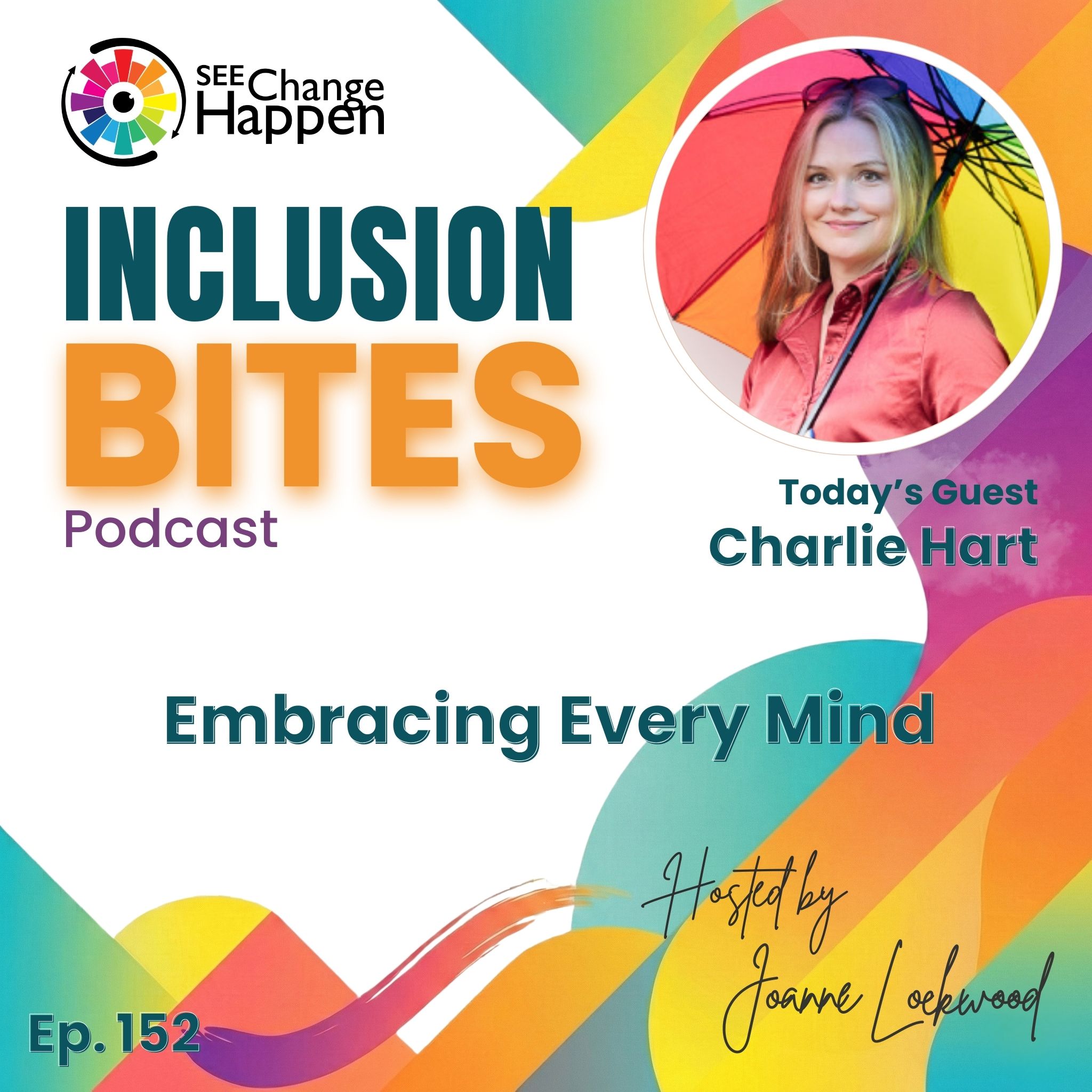
Charlie Hart unveils their personal and professional journey in championing neurodiversity and LGBTQIA+ inclusion, offering profound insights on accommodating diverse minds, and fostering an equitable, embracing, and truly inclusive workplace.
In this episode of Inclusion Bites, Joanne Lockwood speaks with Charlie Hart about workplace culture systems.
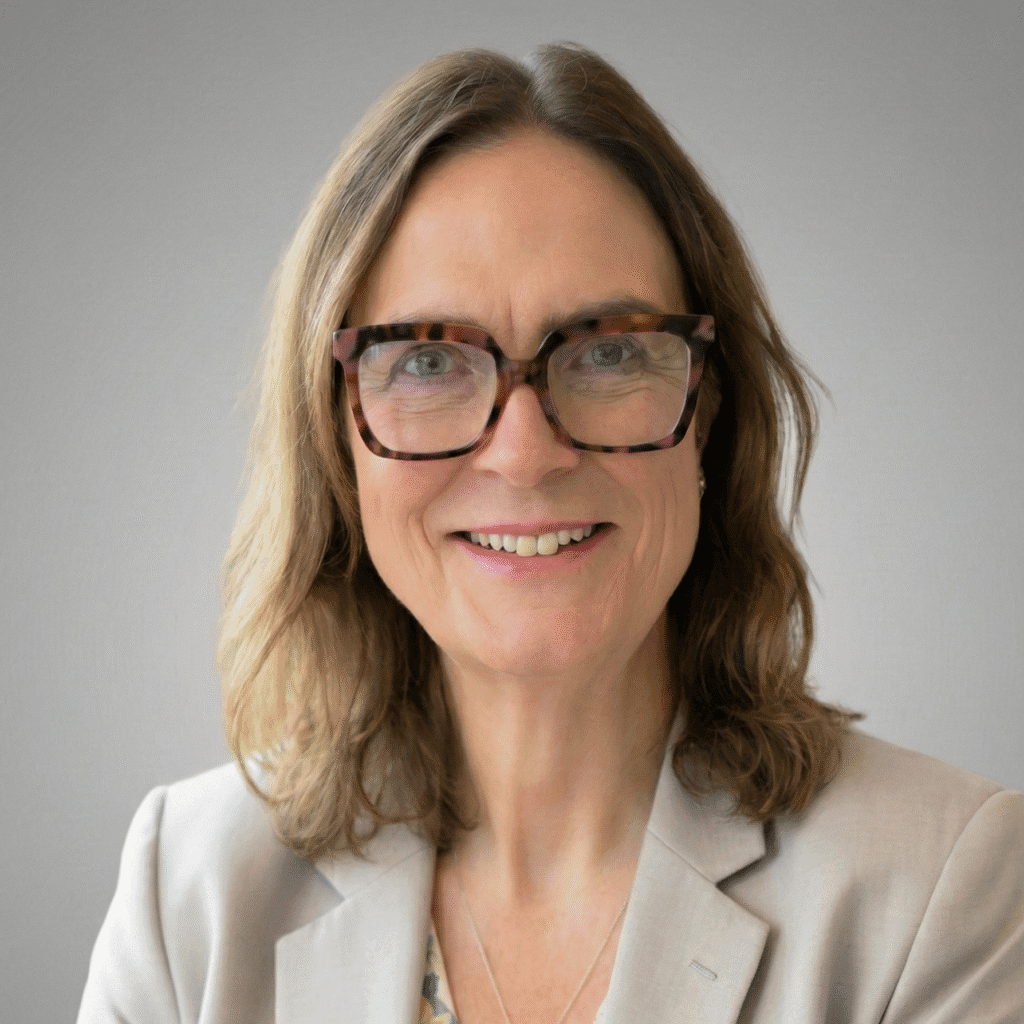
Welcome to Inclusion Bites, your sanctuary for boldconversations that spark change. I'm Joanne Lockwood, your guide onthis journey of exploration into the heart of inclusion, belonging,and societal transformation. Ever wondered what it truly takes tocreate a world where everyone not only belongs but thrives?You're not alone. Join me as we uncover the unseen,challenge the status quo, and share stories that resonatethe within. Ready to dive in. Whether you're sipping your morning coffeeor winding down after a long day, let's connect, reflect andinspire action together. Don't forget, you can be part of theconversation, too. Reach out tojo.lockwood@seechangehappen.co.ukto share your insights or to join me on the show. So adjust yourearbuds and settle in. It's time to ignite the sparkof inclusion with Inclusion Bites.And today is episode 152with the title, embracing every mind. And I havethe absolute honor and privilege to welcome Charlie Hart.Charlie, also known as awesome Charlie, and you'll find out in a minutewhy, is a neurodivergent keynote speaker championingneurodiversity and LGBTQIA plus inclusion in theworkplace. And when I asked Charlie to describe their superpower, theysaid, it's just their unwavering dedication to creating a betterworld for neurodivergent and queer youth inspired by their ownchildren and the Gen z community. Hi,Charley. Welcome to the show. Hi, Jo. Thanks so much for having
Charlie Hartguest
me. Yeah. We've talked about this for a couple of months, and it's I'm
Joanne Lockwoodhost
really honored you've come on today. I'm really excited to be here
Charlie Hartguest
because I've been following your work on LinkedIn for quite a long timenow. And then we met through the professional speaking association,and I'm really keen to get on this fabulous podcast,which I quite often listen to when I'm on a long walk. Oh, thank
Joanne Lockwoodhost
you. And this you have the honor of being the firstvideo version of this podcast. I mean, yes, it'll be published in audioonly as well on Spotify, iTunes, and the user places, but it's gonna be the
Joanne Lockwoodhost
first one we actually recorded the video as well. So, yeah, I'm excited by thatas well. So it's gonna be brilliant. Me too. Yeah. So,
Charlie Hartguest
Charlie, we talked about in the opening there about
Joanne Lockwoodhost
your work championing neurodiversity through your ownexperience and also out of your children and the Gen Z communityat large. What took you from where you were todeciding this was your your passion, your calling?
Charlie Hartguest
So it's quite a long story as you can imagine, but mybackground is HR, and I fell into that quite bychance. Analytical and projectmanagement side of HR and supporting the HR system,but I've tried to progress, and I ran intodifficulties with meeting behaviors. I was frequently overwhelmed,quite often getting burnout that looked like depression, and Ijust wasn't getting promoted through the ranks like my peers thatstarted at the same time were. Eventually, I eventually, I realizedthat my child, Iggy, my first born, wasautistic, and that so was I. Everything that helearned about his neurotype and the reasons that he struggledwith anxiety and getting overwhelmed and havingwhat was actually autistic meltdowns, but he hethought were anxiety attacks. Everything that he realized,I realized was true about me as well. So in2018, I went through the autismdiagnosis, and I discovered the neurodiversitycommunity online. So that to me, it reallysparked my interest. After 15 years offeeling like I was somehow broken, there was somethingwrong with me. There were I realized that there wasa concrete reason why I struggled with things that my peerstook for granted, and there were concrete reasons that Iwas losing my call and even tipping into burnout.And it explains so much about me. And then I discoveredthat actually neurodiversity is a thing. There aredifferences between each and every human brain and mind.We all process the world and its inputs. Weall think, feel, and respond to things uniquely.And that doesn't mean that some people are broken and that some aregood. It doesn't mean that some brains are correct andothers are wrong. It's a natural part of humandiversity, and it's advantageous. So like biodiversityin nature, neurological diversityin a human population, such as a workforce, isadvantageous. This really sparked my curiosity.And then I found out I have complex PTSD as well,which a lot of neurodivergent people have who are late diagnosedand have gone through society and work notunderstanding how to support their own needs. AndI also have ADHD, so I'm multiply neurodivergent.And yeah. So it's all I wanna talk about and write aboutnow. Yeah. So I quit my HR job 18 monthsago, and now I full time research,think, speak, write, createcontent about neurodiversity, inclusion, and acceptance,and I'm loving it. You you mentioned there that, you know, we all
Joanne Lockwoodhost
have our own unique minds. We all see the world through our own lens. Andthe way we we the way we think and act and feel. I've alwayswondered when the human species evolved a100000, 200000 years ago, however, we came from our prehistoricprimitive backgrounds. Who decided that we needed tothink in a specific way? So it's it's almost like the 21st century, the20, yeah, 2025 where we are now that said, thisis what we value, these calm, cool, collected,logical people. Yes. Our history must havebeen we needed people who had attention to detail. We needed people who werecreative. We needed people who could get on with stuff, people who aredid all these different things. So neurodivergent really is is partof our historic makeup, and we've just decided that this part is more valuablethan this part. Absolutely. Yeah. And it's,
Charlie Hartguest
this neuronormativity, this expectationthat we should think and respond to things in acertain way, it is a social construct,really, like gender. So I'm drawing parallels here. If you thinkback to caveman times, for example, it was superimportant that some members of the population brought upchildren and the others were hunter gatherers, but that doesn'tneed to be attached to gender. It's really about finding out what anindividual's strengths are and and what theirsupport needs are. So some people will be super good at some thingsand will struggle with others. And we can worktogether and collaborate and be greater than the sum of our parts.
Joanne Lockwoodhost
Yeah. We certainly didn't have toilets with signs on them a 100000 years ago, didwe, in in the forest and caves? We were Yeah. Wiping our bottoms on thenearest leaf probably or in the stream. Absolutely.
Charlie Hartguest
So it's it's just another social construct.And one thing that a lot of peoplemay not understand as well, even if they know a little bit about neurodiversity andneurodivergence, is that neurotypicalor normal, that's a construct ofthe dominant culture that you're operating in.It will be completely different between different countries. Anda lot of neurodiversity advocates are only seeing things through,a northern hemisphere white western lens, butit's far greater than that. Yeah. You mentioned also that, you know, you were late
Joanne Lockwoodhost
diagnosed and that that's as yeah. We bring gender into this. Thatwas it's a gender thing because because people who are assigned male at birthexhibit autistic ADHD neurodiversity indifferent ways than people assigned female at birth, don't they? They can do.
Charlie Hartguest
Yeah. I mean, I'm not gender conforming anyway, so Ipartially reject that. And, also, when you look through my schoolreports, they are full of evidence of ADHD. It's full ofstuff like, she's a really bright girl and couldreally excel if she would only fulfill her potential insteadof allowing herself to be distracted by herintense hobbies and interests, things like that. And if it was a boy, it wouldhave been picked up. So it isn't that my behavior was different.It's I think it's more that the diagnostic criteria areactually based around unruly, disruptive littleboys. So they don't see the
Charlie Hartguest
they don't see ADHD if it's less evident externally.They think it's about running around being hyperactive.Girls are more socially conditioned, I think, not to be disruptiveat school and to sit still if they're expected to and to notheckle the teacher, although I always did. So it's just,there are massive preconceptions about what's actually going on.If the person appears to behave be behaving, they're not toomuch trouble to the teacher. Nobody takes the trouble to work outwhat's going on inside of their minds. If they're running20 tabs and 10 of them arefrozen, we don't know where the music's coming from, and we can't stopit. Nobody sees that unless they ask us. They'll ask our teacherswhether we're disruptive. They'll ask might ask our parents how we are athome. But if you're a child and you're experiencing the world inthat chronically overwhelming way, nobody seems to really want toknow about it. Are you aware of what what age were you? Because I
Joanne Lockwoodhost
appreciate ADHD traits andthe autistic traits are different. Yes. And they exhibit themselves differently.And I I I know I've spoken to many parents of autistic children, andthey're very aware from the early, very early ages of their child in terms ofdevelopmental differences, learn to speak and read and vocabulary and thingslike that. They're very hyper aware of the the autistic traits.When did you become really aware of your your bouncytigger traits? You know, your ADHD, your your yourthe way your brain was white. Yeah. I think it's when I started
Charlie Hartguest
to really need as an adult to getoutside in the countryside and run or walk.Otherwise, I wasn't okay. It's at that point that I realizedthat I've got a hyperactivity that nobody else had hadpicked up on. And then the inattentiveside of my ADHD, I realized I have that whenI tried to repeat my HR professional qualifications. So Icompletely flunked to university when I was 19. I was a totaldisaster. I fell so hard off the rails, but I diddo my CIPD qualifications when I was in my earlytwenties. Moved back in with my mom, I did them. She was lookingout for me. I had a steady job. Everything was okay, and I got themdone. And then 20 years later, I thought I should probably do themagain because they're 20 years old. They seem quiteirrelevant. And I did that, and I was great. I, you know, I'm quiteclever. I can focus andbut only if it's something I'm interested in. It's not that I don'thave any attention. It's that I've got a veryinterest based motivation system. So in 2021,I thought, great. We're working from home all year.Some people have returned to the office, but we were refurbishing ours.And I knew that I got time on my hands. I thought I will domy postgraduate diploma in HR management. AndI absolutely flew through every subject that I was interested inand really, really struggled with the ones that I wasn't. To the extentthat it was right up against the deadline, and I was an absolutenightmare to live with. Just put things off and put things off and then snapto anyone that that interrupting me. But I Icould tell I got ADHD then. My husband had just been through thediagnosis, so I knew what the questions were. And all the way along, I wasthinking, yeah. Yeah. Me too. But then Iactually got diagnosed this year at the age of 48. It's been there allalong. I looked through my reports, and it's it's always been there. It's it's interesting
Joanne Lockwoodhost
because I love talking to people who who are a diverse ADHDbecause I'm trying to self diagnose myself and try to figure out if I haveautistic or probably not autistic, but certainly ADHD. Because I I havehyperfocus. I went through a phase in my when I wasprobably about 14 years old, probably a bit of puberty kicked in, and Ibecame completely unmanageable and still orsorry. Partially, completely so if you look at the left hand side of my reportcard, I was e. Look at the right answer on my report card, Iwas a. Yeah. There was no there's nothing in the middle. I was either fullon or completely disinterested and troublesome. Yeah. Asit's the science The ones you're interested in Yeah. Or
Charlie Hartguest
the ones you were Hyper gifted. Engaged in those. Yeah. The sciences, the
Joanne Lockwoodhost
maths, the, yeah, the the history, the thegeography, economics, all those kind of sortof more theoretical, you know, ethereal sort of things.Those were the kind of ones that I just was interested in. Yeah. And Iwas kicked out of class, and I was excuseme. I was told I was disruptive, and I I think I foundthat I I'm still there now. I'm either in or I'm out. If I'm inYeah. I I'm both feet. I'm I'm dissolved. I'm I'm pullingit apart. I'm ripping it to shreds. I'm turning it inside out, bringing it backtogether, turning it inside out again. If there's anything else, I'm just gonna, like,I procrastinate until it doesn't matter anymore. Just get rid of it.So, yeah, I've learned that about myself. I I never I never seen that asa a superpower or weakness or anything like that. It's just part of whoI've always been. Yeah. Exactly. I mean, I
Charlie Hartguest
don't really subscribe to the superpowers versusweaknesses kind of narrative becauseevery human has strengths, and we all have things we findharder or that we need support with or that we just don'tlike. So every human's got their own ways ofworking where they can thrive andand things that they'd rather not be doing or that they need someone to helpthem through. The difference is when you're neurodivergent,it can mean that the things you're good at, you're particularly good at,and the things you that you struggle with, you're you particularly struggle with.So rather than being a good all rounder, you have whatthey call in the neurodiversity industry is a spiky profile.So my observation skills are right at the top of the chart,my meeting behaviors right on the bottom, that kind of thing. And andeveryone has a profile that looks different, but particularly ifyou're autistic or ADHD, there will be things that you're shit hot atand things that you're constantly told you're not good enough at.Yeah. But it is from the dominant perspective, the dominantcultural perspective. Yeah. No. I get that. Because I also I mean,
Joanne Lockwoodhost
you've met my wife, Marie. I I also recognize that there's elements ofher personality, which should probably throughmenopause have probably become more exaggerated. So I know due to the herage, her her her hormone balance, other things where she's become muchmore I I describe as bouncy, bouncy, ticker sort of over various things.And but she also has a an inclination tobe slightly manic and slightly reserved. Soshe goes through this you can tell this cycle about certain things, and it's shehas to go into a hyperplanning mode, or she has to go into something else.So absorb it. Yeah. And it's different to me. And we wewe I think I've learned that how to bewith her and absorb spikes and the and the troughs andeverything else. And I guess my family have have adapted to me. But, yeah, itit's interesting talking to other people with their experiences. They're similar characteristics. It'sdifferent, aren't they? Dynamic, and me and my husband have the
Charlie Hartguest
same. So we're both ADHD.That is we're both autistic and ADHD,but he's been told that his autismisn't quite meeting the diagnostic threshold, which isarbitrary anyway. Let's face it. I'm not saying Iwould never say everyone's on the spectrum, but you can quiteoften notice ADHDers who havequite significant autistic traits, but wouldn't get through thediagnosis because the medical model wantsus to draw the line somewhere. But he he's ADHD,and everyone that knows him knows that he's autistic as well, despite whatthe clinicians might say. And I'm autistic,and it was a bit of a battle for me to get my ADHDrecognized by the medical profession, partlybecause it's very easy to think, well,everything that she's talking about could be a combination ofautism and complex PTSD and menopause.But, yeah, I think it's you can'tdraw a neat line around the autistic part of my brain andthe ADHD part. So there's no way of knowing if Ispend 10 hours doing a particular piece of work that I'm reallyengrossed in. There's no way of knowing whether that's meleaning into that monotropic flow state that autistic peopleget, which is where we get our highly focused specialinterests that are in the diagnostic criteria. There's no way of knowing whetherit's that or whether it's the ADHD hyperfocus. If somebody says something that makesme feel like crap and I have a meltdown, there's no wayof knowing if that is an autistic meltdown or if it's an ADHD,emotional dysregulation thing, a rejection sensitive ADHD, emotionaldysregulation thing, a rejection sensitive dysphoria reaction. I don't have 2 brains. It's just allADHD. Yeah. When you look at it like that,I I don't know many people that I would say were just just autisticor just ADHD. It starts to feel like it's allone spectrum. I was speaking to a lady on on this
Joanne Lockwoodhost
show the other day, and she was saying that her child isautistic. She has an autistic child. And it manifestsitself in her child as he is nonverbal. Healso has a very limited vocabulary, which so that's how it manifestsitself. So so that's how he is developing as anonverbal autistic child. Yes. How wouldyou describe your autistic because, you know, people listen to this show, hear theterm autism, hear the term neurodiversity, hear the neurospicy, neurospicy, all thesekind of buzzwords. What's different? Or where where where where is thesort of So I have the kind of
Charlie Hartguest
autism which doesn't come with intellectualdisabilities, and it doesn't come with a a language developmentdelay. That used to be called a Asperger's syndrome. They callit all autism spectrum disorder now.I don't identify as having a disorder, so I callmyself autistic. I don't think I'mbetter or more valuable to society than peoplewho are autistic and have intellectual disabilities.So I don't use terms like high functioning or lowfunctioning either. So it's justautism. Yeah. It's labeling people. Autism. We're saying.
Joanne Lockwoodhost
Yeah, high fashion, low functioning. Person with autism because it
Charlie Hartguest
goes without saying that I'm a person. And to me, ifanyone insists on saying, no. You're not autistic. You haveautism. You're a person with autism. To me, they aresaying autism is a bad thing, and you shouldn't makeit part of your identity. And I reject thatbecause I think it's a neutral thing, and it's anadjective. So I'm happy to be described as autisticbecause it's an adjective. If you say, oh, no. You can't use it like aa normal adjective. You have to distance yourself from it. That'stelling me they think that there's something wrong with being autistic. So justloads of really ableist with me. Yeah. I I think it's probably been
Joanne Lockwoodhost
inherited for the the physical disability community whouse with, don't they, as a as a kind of a it's evolved as akind of language. Yeah. The healthcare professionals,
Charlie Hartguest
it doesn't come from the community. No. It's a medical model
Joanne Lockwoodhost
versus the societal model of disability. Yeah. So
Charlie Hartguest
if you get taught person first language,it's usually because you're in a support role or you're adiagnostician or a teacher, or it's not because that'swhat the community have said they wanted. Back in the nineties, you might remember wehad this, politically correct thing where they changed a lot oftheir language and dress things up in flower euphemisms,and it really didn't do diversity and inclusionany favors at all. And one of the first communities that cameout of that saying no bollocks to all that was the deaf community.So in the politically correct is when people were saying, youhave hearing impairments and you should say you're hard ofhearing or you have a hearing impairment,Don't describe yourself as deaf because there's more to you than that. You're aperson person. It was the deaf community that said bollocks tothat. We're deaf. And they put a capital d at the beginningYeah. And became the deaf community. Theautism community were hot on their tails. Yeah.
Joanne Lockwoodhost
When I when I talk about adjectives or describing words or anything like this,like we're talking about now, is I tend to try and mix up the language.So I always say, a person with a disability or a disabledperson, almost in one sentence. Because I know there are some people who I whowould identify as 1 and one people who identify as so you try to beinclusive Yes. Cover all the terms possible. That's so
Charlie Hartguest
really great. Approach. Yeah. Capital d deaf is
Joanne Lockwoodhost
important to people who are born deaf. Yeah.
Charlie Hartguest
So I know other people who don't use I mean, there's Iknow a deaf speaker from the Speakers Collective who describes herselfas deaf with a capital d and another deaf speakerin the professional speaking association who says thatshe has profound hearing impairments. So it's never gonna be the same foreveryone, but you can look at what the communityasks for and want and prefer as a whole rather than justbeing learning about something in a training course and thinking, oh, yeah. That must bethe wishes of the community. Yeah. You'd never say someone has seeing
Joanne Lockwoodhost
impairment, would you? You'd say they were blind Yeah. Or hearing orsight loss or, short sighted, long sightedYeah. Or myopic or, glaucoma orsomething. So you'd say, yeah, you have sight loss or Yeah. You'reblind or going blind. ADHD is a funny
Charlie Hartguest
one because there isn't really a noun. There isn't really an adjective forADHD. So we use ADHD as aadjective, sometimes under noun. You might say, I'm anADHDer or describe yourself as ADHD, butthat's technically not correct because if you look at what it stands for, that'sjust grammatically nonsense. But still, a lotof us have done that just because we're trying to say it's part of ouridentity. It's part of who we are. It's how our brains are wired.So it's it's not something we can distance ourselves from.
Joanne Lockwoodhost
I've heard people use ND for neurodiverse, or I've heard people useneurospicy other terms. Yeah. I guess it's down to them, isn't it? Imean, it's not a totally down to them. I personally don't
Charlie Hartguest
like neurospicy because I think that itit it's kind of one of those euphemisms thatplays down our, quite real disabilities andsupport needs. But The trivializing joking about it, obviously.That's the word. Yeah. But, I heard from members ofthe global majority have said, actually, someAsian women, are described asspicy in a derogatory way. So it'sit could be potentially I don't know if problematic isgoing a bit too far. Potentially insensitive, culturallyinsensitive. But then I'm not gonna tell peoplehow to identify. So if you have got someone that does like to callthemselves neurospicy, that's fine. But if they buy me a badge that saysneurospicy on it, I'm not likely to wear it. So, I mean, youthe audience and and you are obviously aware that I I'm a transgender woman or
Joanne Lockwoodhost
a woman with a transgender history. That tome, the more I talk about it, that's just a difference in brain development. It'sjust a a different way of wiring up. Absolutely.
Charlie Hartguest
My blue wire is connected to my red wire, not not to another blue wire.
Joanne Lockwoodhost
So that's all it is really. It's a really good way of looking at it.
Charlie Hartguest
And, I mean, I think it is a neurodivergence as well. I think it's partof the neurodivergent umbrella. It's it's a brainwiring which is different from society's idea of typical.There's also a huge correlation. So if you'reautistic, you're far, far more likely to be transor non binary. If you're trans or non binary,you're way, way more likely to have at least someautistic traits, whether it's diagnosed or meeting thediagnostic threshold or not. So there's been quite a fewstudies done on this, and I'll send you those links for the show notesif you like. But, yeah, there's a hugecorrelation. So,this is one of the reasons why my niche, when I'm talking aboutneurodiversity inclusion, my thing that I get asked for more than anythingis I get asked to talk about the double rainbow, and that'san intersecting identity. It's when you're both neurodivergentand LGBTQIA plus. And I'mparticularly interested in that because I'm multiply neurodivergent.I'm bisexual or pansexual. I don't know which because both definitionsfit me. I'm gender nonconforming. So, yeah, I'm a woman,but I am also a tomboy and I don't reallyidentify as a woman. I don't know. But I'm more like George from thefamous 5, really. So it's me, but then it's alsomy kids. My, my first born, Nicky, he was he wasgay and gender questioning. He was autistic. He wasprobably ADHD as well. We don't know. My teenage kidsconstantly changing their gender identity because there's no hurry to work it out.
Charlie Hartguest
Is there? But, they've had all kinds of different names andpronouns. They are autistic as well, and the older one, I mean, has gotADHD too. And I've got transgender autistic peoplein my family as well, but I'm not going to out them because they're notpublic about it. So it's a very queer and autistic familythat I'm in, defying all the genderlaws. So this is my area of interest. And there'sreally no point just looking at one identity either because none ofus is a single issue human. I think it was AudreLorde who said that. She was a a blacklesbian feminist poet, and she saysthere's no such thing as a single issue human. Andanybody that is working in the diversity andinclusion space, it's really important to understand that we are a blendof characteristics. Some of them we're born with. Some ofthem are a response to our environment and our experiences,but we're all really complex. So you kinda need to look at thewhole package of the human. Yeah. I remember in my in my
Joanne Lockwoodhost
probably my thirties and early forties, I used to describe myselfas low maintenance. I think coming out as trans, I had tore rebrand myself as high maintenance. But maybe we all havea a perception of ourselves that we're we are low maintenance. But, actually, ifyou start asking people around it, they go, actually, no, and, actually, this and, actually,the other. Yeah. Oh, okay. That's part of a bit of emotionalintelligence, getting in touch with who you are, isn't it? Absolutely.
Charlie Hartguest
Emotional intelligence, there's an interesting concept. I know a lotof people who regard themselves as having really highemotional intelligence. But to me, I what I'm observing is alot of social scripting and saying the right things withthe right facial expressions because that's what we've learnedfrom other people, and it's like a chameleon behavior ratherthan a innate empathy. I've seen a lot ofautistic people being misunderstood as not being empathicand having low emotional intelligence when actually the reverse istrue. So it's really quite interesting tounpick that. Yeah. I I've noticed that because if you look at the the the
Joanne Lockwoodhost
stereotype of femininity, women are supposedto be more empathic and more empathetic, more more softer, more kind, moremore caring. And I thought, hang on a minute. I have to be all thesethings, do I? Then I then I kinda realized that I was, and I wasjudging myself unfairly. I I was just maybe putting a shell onmyself, stopping be being too caring and too empatheticbecause, you know, in my own world, it doesn't necessarily win you anybattles being Yeah. Kind, caring, fashion. Did you work in
Charlie Hartguest
tech before you got into I did IT and tech. Yeah.Yeah. So, it's kind of a a role whereyou're expected to be rational and logical and methodical andanalytical and all those things. Yeah? Yeah. But it doesn't mean
Joanne Lockwoodhost
that you haven't got creativity and empathy at the same time.I I think, you know, going back to what you're saying earlier about hyperfocus, thingslike this. You know, when I was deep in hyperfocus ona on a IT problem, you know, trying to rebuild someone's server in the middleof the night, working all night in a computer data center in a freezingcold with a coat on trying to fix something, I I didn't have any braincapacity for anything other than the problem. All of thisall the empathy, all of the human contact stuff was pushed to the edge,and I was beeping techie mode. And so I'm curious
Charlie Hartguest
some resources about monotropism. So thisthis is a theory. It links to that diagnosticcriteria about the highly focused special interest thatyou have when you're autistic, but it's it's way more thanthat. It's about being able to put the blinkers on andhave tunnel vision to the thing you're researching or the problem thatyou're trying to solve. And it's widely regarded as being anautistic trait rather than an ADHD one, but it looks a lotlike ADHD hyperfocus. I think you'd be reallyinterested to read that stuff. Yeah. We'd
Joanne Lockwoodhost
we'd we'd we'd discussed the idea of superpower earlier, but I I always saw itas part of my my technical skill isto better really get onto a problem. Yeah. My time in theRAF, electronic engineer, most of that course and that training was all about faultfinding, finding faults in circuits. And I wasvery good at working out, you know, half splittingin the middle, in the middle again, in the middle again, in the middle again,in the middle again, narrowing it down to sort of like a square centimeter. Igo, must be that component. So I was very good at that. Yeah. It wasa good designing circuits, but I was very good at finding out what's wrong withthings. I'm not so surprised. Yeah. Yeah. So my husband's doing that
Charlie Hartguest
now. So he worked in IT for quite a long time. He's doing anoccasional speaking event now, and he's a musician. But his hiscurrent hyperfocus is tinkering withelectronic things and fixing them. So he'd buya a secondhand amplifier that's sold asit's a really good amp, but it's a bit broken, and then he'll fix it.Teaching himself as he goes along, and he's done the same withrecord players and and laptops and all sorts. And Ithink that it's a special skill to know when tokeep digging, but to know when to leave it because you're just wasting yourtime after a while. But, when I worked in char and like I say, Iwas in an analytical role. I was supporting HR systems and projects.But I think one of the things I was particularly good at is getting tothe underlying cause of the problem. So I could help people in myteam pass error messages. I could find work arounds. I couldteach them how to do things. But ifthere's tough data I need to be able to establish where thelearning need is that's causing something to be input incorrectly,if there's an error message that keeps cropping up, I need to know where inthe process it's coming from or whether there's a glitch thatneeds to be fixed by the system vendor. And I justdon't cross it off my list until I've got to the bottom of it. Tenacity,
Joanne Lockwoodhost
that, dog with a bone. Yeah. You keep chasing it. Yeah. So I
Charlie Hartguest
think that's why in IT, if you look at IT with, like,this kind of service model where you've got the service desk people, and then ifit's something more technical that they can't they can't fix itthere and then they will refer it to a resolver group. Thatresolver group quite often has a lot of autistic people that arereally tenacious and excellent at problem solving.So what workforce what workplaces need tounderstand, employers even, is if you want the people withthose skills, then you're gonna have to nothave neuro normative expectations on how they getthrough the recruitment process, what support they need in therole, what their interpersonal skills are like, andthat kind of thing. You've won the best person for that job, not the bestperson at passing an interview and getting on well with their colleaguesand making the right small talk on a Monday morning. I I was at a,a mini conference once, and we were doing these sort of roundtable discussions that we
Joanne Lockwoodhost
were talking about. I think it was probably CultureFit or something like thatcame up. There's an owner of a of a business there whowas, I think, a technical or a SaaS platform, a cloud platform, something likethat. And he was talking about he has he basically said, I've got a coupleof members of my staff. They really don't wanna join in with anything wedo. You know, at lunchtime, when we wanna go to the pub, at lunchtime, whenwe wanna have a little bit of a giggle and laugh, all they wanna dois go and take their lunch, sit in their car for an hour, and thencome back. I said, I was thinking about firing them. They just don't get on.They're just not they're just not part of the team. And I thought, blimey.Yeah. What you're doing here is you're what you're saying is judging people byyour culture. And, you know, when people don't fit into yourdefinition of normal, and you're you're you're writing them off as being not teamplayers. You think, hang on a minute. These are probably your best resourcesat writing code and problem solving. And They'rerecharging themselves. How to think. Yeah. They are. Yeah. They're working in an
Charlie Hartguest
open plan office with the a lot of different noise goingon and and people asking them things and calls comingin, and they're trying to solve the problem. They've they've got alot of inputs. Then if they need to spend their lunch hourwithout those social inputs, at least, probably without thesensory inputs as well, if they've chosen their own sensoryenvironment that they can curate like a car, They'rerecharging themselves so that they can come back and be productive in the afternoon.That should be tremendous. It's a neuro normative expectation thatthey sit around and continue to do the peopling. Yeah. I I I
Joanne Lockwoodhost
had a clash with one of my team in the past where they wanted theradio on, and I couldn't stand any background ornoise or chat or something like that. It was like well, like, the radio justkept taking my brain off of the task. It's like, go away, Eva. Justturn it off. Yeah. And they but they needed it on because that's how theythought. So it's trying to find that that balance and Quite often it is.
Charlie Hartguest
So when you're looking at neuro inclusionin the workplace, it's quite often balancingconflicting needs. And when you do it in in thehome, it is as well. So I had that problem in the pandemic. I'dalready been working from home a couple of days a week, so my husband wasquiet on those days. But when the pandemic hit, I was working from homeevery day. And he liked music on and TV onat the same time, and I wanted neither.So we had to find our ways of co in cohabitingwithout wanting to kill each other, and we did. It just took a whilein the workplace. In my in my last, HR job,I was working from home all the time, but I had a manager who didn'tlike to type things into a chat or send a lot of emails.She had a lot of issues with her shoulders and her wrist aching,and she wanted to just ask me things verbally like we're in a normaloffice. So she dropped into Teams video calls with melike we're in an office, and she was just, tapping on my shoulderand saying, can you have a quick look at this? She was doing it allthrough the day. And I said to her, I can't work like this. It's sooverwhelming. And I started to send a a lotof text messages on Teams, and she was saying to me, I can't work likethis. It's hurting my shoulders and my wrist.So we work together, and we compromise, and that's what you've gottado. Yeah. Our son is, he
Joanne Lockwoodhost
he's an IT techie. He he was diagnosed as beingdyslexic in his early teens, andhe was given, allowances and exams and all that as well.But he he doesn't respond to text messages. He might not evenread them, me, or just say, haven't you responded? So, you know, I don't dotext. Oh, yeah. So you give him a voice note or you just ring himup. He'll answer the phone and reach out with you. But if you start texting,because probably it's the rest of the family, we have WhatsApp groups. And we wannawhat we wanna do is it pops out in the WhatsApp group. He coming aroundlater. He doesn't respond. Is he doing it or is he? So you have tosend him another one, which is a voice note, which he then responds to. Yeah.
Charlie Hartguest
We have So he's just learning. Similar issues. Yeah. So my kids, neither ofthem like making phone calls, but they're quite comfortableto chat to people online when they're gaming, and they're quitecomfortable to send voice notes and video notes. It took me a reallylong time to get used to that because I'd rather be typing. Seemsa bit funny now because I've been a professional speaker for 18 months,but I communicate a lot better in the written form. I hope all thefriends as well. They send me a voice note, and I'll listen to it, andI'm typing back to them while I'm listening to it. That's what I
Joanne Lockwoodhost
do. Someone voice notes me. I reply back by text. Yeah.Because I I I keep my phone on silent all the time. I don't itdoesn't make a noise. It doesn't squeak. LinkedIn,wherever I'm scrolling, all the videos, they haven't got subtitles. I'm notinterested. Even though I I'm also find it I Ithink I've I've got sight dyslexia as well. I find or maybe it's my myneurodiversity. I I don't know. I can't I find it really difficult to read vastamounts of text. I lose track. My brain wanders off halfway throughthe page. But I can consume little 2 or3 liners. No problem at all. One bite sized chunk, I can do that. Yeah.I prefer to text, not not voice notes because I I don'twanna turn the volume up. It's like, oh, go. You're invading my space. I could
Charlie Hartguest
always put earphones in to listen to a voice note because I just don't wannadisturb the people around me as well. But,sometimes I think when we get big blocks of text that it would beeasier to read it and pay attention to it if it was broken upinto, like, a you have a sentence and then a blank lineand then another sentence. So these are tips that you can getoff the British Dyslexia Society, I think they're called, website.They're aimed at people who are dyslexic, but it helpsas well if English isn't your first language, if you've got ADHD,all kinds of things. So you tend to find most of these neuroinclusiontips will make things better for far more people thanthey're intended to. Yeah. Whenever I'm writing
Joanne Lockwoodhost
articles and and reports, I always make sure there's a a good spacebetween paragraphs. Yeah. I'm I would do 2 spaces after a full stop tobreak the sentence up. I like I like some white amongst the black. You know,I like I like it to look, of course, all these things. You know? II like to capitalize the first letter of titles, things like this. And everyone'slike, no. You shouldn't do that. You shouldn't. It's just a capital at the beginning.I well, I don't read it that way. So yeah. Yeah. Sometimes it's just
Charlie Hartguest
aesthetics as well, isn't it? It's what It is. Looks pleasing to you. But,that's exactly it. It's about look how it is. It sort of look nice, isn't
Joanne Lockwoodhost
it? Yeah. There's some dyslexia friendly fonts that
Charlie Hartguest
are just not attractive at all to look up, but then there are others thatare. We've been going on a lot of tangents, haven't we? I went to aFuture is ND event about inclusive design and advertisingand creative industry, and I've picked up a lot of stuff about fontsand spacing and things. So I'm building like a mindpalace of information about neuro inclusion. Buta a lot of times you read something and think, well, that's gonna help everyone.And do you know what? That's what gen z want. They are theworkforce of the future. And if they've got preferred ways ofworking, preferred hours or flexibilityor media, all of these things, they're used toexpressing that preference and not being told, no, you've got towork in this place from 9 till 5, Monday to Friday, and do as youtold. It's they know how to advocate fortheir individual needs and preferences, and they're going to expect work tofit into their lives and not the other way around. Yeah. That that's that's
Joanne Lockwoodhost
definitely, what I'm hearing. Our childrenare are 30 seconds, so they're millennials, really. They're not they're notnot really Gen z. But even they have,different trace because I because I my background's tech. They werepretty tech included from day 1. They had all the gadgets. They hadphones early. They had, so as soon as it was available. So,yeah, they they weren't tech tech. So I supposefrom the age of 10, they were they were pretty tech included. So yeah. ButI I've seen a lot of examples. I've talked to people of of, yeah, thegen z age group where they have a different relationship withthe world because of the way they're communicating with each other. Yeah.
Charlie Hartguest
Definitely. And all these I don't know how topical I can be here, butof this idea of American theAmerican administration and big tech companies in Americaabolishing d and I DEI programs, it's soblinkered and counterproductive becausethose companies will die out when the workforce is made up ofGen z's. They are going to want to be able totalk about their needs and ideas and to have those needs met.So they're not gonna stand for working in a company thatdoesn't have that corporate social responsibilityand doesn't care about human needs and individuality andbeing protected from discrimination and bullying andall that stuff. They're gonna want more than that. Yeah. My my
Joanne Lockwoodhost
view is that people have latched on to the thenegative side of DEI initiatives rather than the positiveside. Yeah. I think what what people are trying to say is we want tostamp out the negativity around forced quotas andforced this. And I think we hey. You know, you you gotta find out Howmany people do that? They're kind of
Charlie Hartguest
behind the times with that view because we really don't do that. Imean, a lot of people in diversity and inclusion realize thatthere are minority groups that unfairly experience somebarriers to education, employment,progression, etcetera. But nobody's eversaying you can't have a job here if you're a cisgender,middle aged, white, affluent, heterosexual man.That's just never been a case. It shouldn't be for for sure. No. I mean
Joanne Lockwoodhost
Yeah. I always say that you can't have an inclusive environment byexcluding people. No. And you can't exclude the typical personeither. You have to include everybody in this. So it's about breaking down those
Charlie Hartguest
barriers rather than saying, no. We wantwe want a workforce full of people whoare not that a cishet white, middle class dude. I think
Joanne Lockwoodhost
some some of it for me comes down to defining more clearlythe meritocracy because meritocracy isn't alwaysbigger, louder, faster. Sometimes it's more I can neversay that word, empathic, empathetic. Sometimes it's about being better listeningskills, more team management skills, more more creativity. So some of thesethings are often excluded from the definition of meritocracy becausethey're not seen as valuable. Or they're you know, to quoteZuckerberg, we we need more masculine energy in our businesses. Actually,we need a balance of energy. Yeah. Not notlabelled masculine or feminine. We're labelled it. We need to change abandonthose labels as being a a neurotype, if you like, and think about theactual core skills people are bringing in, not soft skills, not hard skills. That's, again,labelling things in the wrong way. It's not the wrong system. Time though, hasn't
Charlie Hartguest
it? We've been talking about team dynamics. And though,you know, those team roles, I forget what they're called now. It's Belkinand all that stuff. For a long time, everyone knows that you needdifferent kinds of people to make a team work, and that somepeople need to have leadership skills, andsome people need to have the ideas, and others need to be the completerfinishers, and all that. Learned all about that over20 years. Yeah. Probably 25 years ago now, I did my HRqualifications the first time around. So I just I can'tbelieve we're even type a people, type b people. We've got Hertzberg. We've got
Joanne Lockwoodhost
all these things going on in the the HR psychology stuff. And Yeah. Yeah.People are people. And you're right. We need a we need a acolorful box of Lego to make it to make the fire station, don't we?Absolutely. So what what's the biggest challenge you're findingwhen you're working with, organizations? Where do they need toeducate most around, you know, your your field?The, you know, the neurodiversity, the ADHD Neurodiversity position.
Charlie Hartguest
Yeah. One of the challenges I've had is that they thinkit's a novelty, nice to have HR hot topic kind ofthing rather than something that really needs a lot ofthought. So it was to me, I noticed it gathering a lot of momentumbefore the pandemic. And then with thepandemic, we started to think about a lot more about the whole selfto work and psychological safety. So this isturning up to work. And if you're having issues because your kids are athome and they're anxious and you're trying to do a job athome school at the same time and there's a global pandemic, that you'renot just putting on a brave face and only showing a professional veneer, butyou can actually say what you're up against andknow that it's not gonna be used against you. Butthen we had the Black Lives Matter movement, and we'vehad me too. And it just seems
Charlie Hartguest
like the businesses are kind of latchingon to the current big thing and putting a lotof resources into that and then forgetting about the other stuff.And any kind of disability, neurodiversity,accessibility, that stuff's bubbling away,but it never seems to be particularly high on an agenda.So what I would like to see is that people realizethat your workforce is neurodiverse. Even if you think you don't haveany autistic employees, and every company will, but everyworkforce is neurodiverse because it is made up ofhuman individuals who think, fail, and process in differentways. So what we need to be doing is working out how toaccommodate each individual so that they can thrive in theirroles and that it isn't some nice to have. It isn'tsome tokenistic tick box exercise. It's just aboutensuring that you've got employee engagement and that everyone'sdoing a good job and that people aren't leaving indroves, that they're not having a lot of time off with with workrelated stress or depression. But everyone is okayand doing the best work they can. Andit's really not about doing nice things for disabledpeople. It's it's the right thing to do,and it's good for business because you'vegot employees who are engaged. They're doing good work. It'sgonna keep you out of tribunals. It's an absolute no brainer tome. Let's treat adults in the work forcelike like adults who can haveneeds and preferences and should be safe to voice them.Let's take them seriously. Let's meet their needs so they can thrive in theirroles. It's good for everybody. Not so much today, but in the past,
Joanne Lockwoodhost
I've seen branding, for want of a better way to describe it, branding neurodiversepeople in this superpower. We we don't like that word.Instead of saying, you need an autistic person to do that task because theywill be hyper they will be able to do this. And you're almost saying, well,if you're if you're an autistic person who isn't a mathematical genius,what's wrong with you? You know, you should be you should be like Rain Man.And it's almost like setting people up to being the stereotype of1 type of autism or one type of really helpful.
Charlie Hartguest
Yeah. So even, no, even with dyslexia, Imean, GCHQ, for instance, they did adyslexia hiring program because dyslexic peopleapparently have superpowers of, patternrecognition and, code cracking and all that. Not allof them, I'm sure. It's great to acknowledge the strengths that can comewith each neurotype, but they're always going to be individual to theemployee, to the person. So, yeah, I mean, that that would be my take on
Joanne Lockwoodhost
some of this is look into the person. Look intothe spec you want, and not everybody who is neurodiverse,ADHD, trans, straight, non bi whoever you want to describeyourself. But everyone's gonna fit that role for a tick box.I think that's what we need to do is look into the heart, but givethat person the opportunity, the equity, the tools, opportunities here.
Charlie Hartguest
Yeah. Exactly. Assume. Yeah. So let'sconsciously include people that have been previouslyexcluded. Let's break down barriers to inclusionand success, dismantle some systemic barriers, andgive everyone the chance to show what they can do, how they can contribute.But the other thing is, though, all humans have gotvalue even if they don't have a job. So isn't all about howmany of us are in the workforce? Yeah. It is. And I think I think
Joanne Lockwoodhost
you're right there. It is and and it's also aroundcreating aspiration. You have belief, trust in the process becausea lot of, when you're when you're not atypical, you you're on that middleof the line. You tend to see other people who are morecapable. You your imposter syndrome kicks in. You don't see anybody elsedoing it. The language around the the job role or the job specisn't doesn't shout out to you that they care about you. Sowe're actually creating barriers just in the language, the employerbranding, the recruitment marketing we're putting out there, not just not justsome of the other things that we turn people off. It needs to be all
Charlie Hartguest
big overhaul. And you see so many jobdescriptions even now that expect people to work autonomously.I'm part of a team to communicate effectively at all levelsand what other bullshit is there. Yeah. Yeah. Yeah. What's that mean? Do youwant to roll in a fast paced environment? Iread that and think, no. That means they're understaffed and badlymanaged, and it's overwhelming. That's not for me.Dynamic and fast paced. Yeah. They want young people that are full ofenergy that they can lean on more and put more pressureon. It's ages. Yeah. Some of that, as
Joanne Lockwoodhost
you say, ageist, some of that is is gender cosas as well.Yeah. Your typical cosas you say is a lot of dynamicsin those in those bland statements that we've just beencutting and pushing. And mask racism as well and
Charlie Hartguest
it's yeah. Good fit for culture. Is yourculture that you will go down the football on a Saturday afternoon and thentalk about it on a Monday? How many people is that gonna exclude?Does it actually mean that you have, better productivityor better innovation? I don't think so.Yeah. Yeah. I I I is the best wayto prevent innovation. I'm a person who's teetotal. I
Joanne Lockwoodhost
don't drink anymore. So talk about going to the pub or even putting on dinnerswhere alcohol is a is a is a major part of it. I'm alsodoing weight management. So wanting to go out for a meal andhave alcohol is, like, a double turn off. And it's, there there are many peopleout there, certainly the younger generation, whose lives don't revolve around alcohol and eatinganymore. But that's a very old school human thing, isn't it?
Charlie Hartguest
Yeah. So I I have a complicated relationshipwith alcohol, and it's generally not great to sayyou're only part of the team if you can go and work hard and playhard. Because I will drink too muchto cope with the difficult social situation and difficult sensory situation. Socialsituation and difficult sensory situation, andthen have all kinds of anxiety about how I might have comeacross, what wrong thing I might have said to the wrong person.And I just wake up full of dread. It's sonecessary. Got that t shirt myself. Yeah. That's one of the things that I realized
Joanne Lockwoodhost
that I was focusing on drinking too muchbecause I didn't know how to have fun or how to interact Yeah. Withoutthe alcohol. And then I I took the alcohol away and then found that, actually,I don't wanna be in this environment anyway. I don't like it. It's like, whatif I wanna be here with the drunk people? It's no fun. So I, now
Charlie Hartguest
I'm self employed. It's great because I just work in a way that suits me.If someone says, can we go out for a drink? I wanna pick yourbrains about a work thing. I'll say,decaf coffee, but, yeah, I'm not I now I don't mind a coffee. I don't
Joanne Lockwoodhost
mind a decaf coffee, but, yeah, I'm not I now selfexclude from alcohol focused events andfood focused events because I'm no good with either of those. I eat toomuch if I'm get your visit in front of me, and I'll drink too muchif it's there. So I find it because it's a dumb meal really quite
Charlie Hartguest
stressful with a lot of people. It's mostly the Skip.The noises, though, the competing noises. You know, someone's trying to talk tome, but I'm hearing 10 conversations at once. So Idon't think that's an an expectation to join into the
Joanne Lockwoodhost
conversation. Actually, sometimes I my brain just wants to shut off andzone out, eat my dinner, and stare into space. I'm quite happy with that sometimes.But you wanna I feel obliged to talk to you, then I feel obliged totalk to you Mhmm. And then feel obliged to contribute to the and I think,well, I was drinking. It was fine because my down cold just kicked in andkept me bubbly. But now it's just like, sorry. You're boring. I don'tmean that rudely, but I'm just not interested in having a small talkconversation anymore. It's I feel so much happier not.
Charlie Hartguest
Yeah. It's great, isn't it, when you canidentify what makes you tick and and what sort of massivedrain and just decide what's worth doing and what you're not gonna doanymore. Yeah. I again, you've met Marie,
Joanne Lockwoodhost
my wife. She has some social anxiety exaggerated bymenopause and COVID and isolation.But when you engage her in a networking situation,she is brilliant. She'll work the room. She'll form conversations. She'll go up to peoplewho are complete strangers and sell or or or or share.And I just can't do that. I can do it, but it's not my comfortzone. I just wanna go I just wanna go. I'm gonna sneak off now. It'sso sad. My comfort zone as well. You know? I'm quite confident
Charlie Hartguest
when I'm talking about things I know about, but small talk ishorrendous. That future is future is n daccessible design event. I mentioned I offered to help with that. And oneof the things that needed to be done is meeting people in reception andgoing up the lift with them to the conference room. AndI was just so tongue tied and awkward. It was ridiculous.But I wanted to help. So I volunteered to do things and thenthink, oh, this isn't me at all. But I can get up on a stagein front of a 1,000 people and deliver a speech, and I'll answer questions aswell, unprepared, you know, off the hoof. And I'm completelyfine with all of that. But going up up a coupleof floors in a lift with someone who I'm expectedto make polite small talk to, no. That'sso out of my comfort zone. But I take a turn withme to get out. Working. Yeah. Yeah. If you've already gotsomeone there with you, then it's easier to talkto additional people. So that's why you see me and myfriend, Lucy Hobbs, going everywhere together. Yeah. I I do like a a
Joanne Lockwoodhost
buddy at those sort of events, but I found the danger is if I ifI'm there with somebody I know and they're not particularly bothered aboutnetworking, we'll just talk to each other. Yeah. We won't actually do anything else. Soyou say, well, what are we here for? You know, I forced myself into thisenvironment, and now neither of us wanna be here. So we just should we gonow? Should we? We just sort of sneak off. But, yeah, it's which iswhy I picked a very specific yeah. You wanna leave
Charlie Hartguest
stupidly early, but without having to do a lot of goodbyes andreasons why. So just, like, quietly slink off andthen send people a text saying, I've gone.
Joanne Lockwoodhost
Yeah. Sorry. I I just I realized my train was coming and Yeah?Off. Yeah. Yeah. There's definitely a thing. You go in theentire room 5 times, so it never quite gets saying goodbye. It's sofreeing, to be honest, though, I think. When you when you can when
Charlie Hartguest
you feel safe to actually give people the real reasonand you don't think they're gonna mock you for it, it's so liberating.I got invited to a wedding, and the the person realized she'd invitedway too many people. She said, would you mind if you and I just cometo the evening do and not the daytime? And I said, do you know what?Neither of us really like weddings. Do you mind if we don't come atall? And and she said, thankyou so much for your honesty. Yeah. That's absolutely fine. And Ithought, we should've traveled to this wedding, spent a fortune, had amiserable time, probably had a row when we got back to the hotel.One sentence of honesty with someone that respects me for my honesty, andwe were spared all that. Yeah. I mean, I I find these days because
Joanne Lockwoodhost
people are are more aware of these these attributes andtraits of of people. I'm just quite comfortable saying, look, my myintrovert nature is is saying my batteries are flat. I need I've hadtoo much. You burnt me out. I've I've got no more energy to give you.So I I need to go and recharge. Sorry. I'm off now. Yeah. After anhour or so. Yeah. Often people said to me, wish Icould go as well. You know, we stick off together.But I'm more than I'm more than okay with having one to ones orsmall conversations with people. Well, that's not small talk. It's goodtalk in in very intimate conversation. I can like, look. We're talking now. I couldtalk to you all day, one to 1. And maybe even 3 of us, maybeI could do. But anything more than that where it becomesfree calling you have to really try to make it happen. It's like, oh, I'mdone now. It's like, bye. Yeah. Yeah. It's meant
Charlie Hartguest
to be interesting and fun, isn't it? Having a conversation, notsome kind of test of your interpersonal skills.
Joanne Lockwoodhost
It's like Game of Thrones networking, isn't it? Lastperson standing. Darling, it's been an absolute pleasure having achat with you. I can't believe we've been nattering away now for just over anhour. Yeah. Fantastic. Yeah. Thank you for being soopen, so honest, and, sharing with everybody. How can people get a hold ofyou? So you'll find me on LinkedIn under,
Charlie Hartguest
Charlie Hart or Awesome Charlie. Awesome with an AU forautistic because I'm openly autistic. Same thing on Facebookand Instagram, but I may well leave them. Who knows? I've got a website.Guess what? It's www.awesomecharlie.co.uk.And the YouTube channel as well. That that's about it. Andlet me guess that's Awesome Charlie. Yeah. Awesome Charlie.In AU. I'm on Blue Sky. So I've still got anaccount on Shitter with an x as I call it now, but Idon't use it. I just don't want someone to take over my handle. But,but I'm on Blue Sky as well, which is like that, butit's way friendlier and more inclusive. Butyeah. I'll stick all of that in the show notes underneath this, and
Joanne Lockwoodhost
you're gonna send, you're gonna signpost a a resource, won't you, which I'll,
Charlie Hartguest
so My ADHD brain can't remember what it was right now. Oh,monotropism. Yes. I will. Yeah. Anything
Joanne Lockwoodhost
that's in there, I'll I'll I'll share in the in the notes, and then we'll
Charlie Hartguest
It's the tension tunnels that give us the flow where we canreally, really get into our expertiseand change the world, really. If I'm really honest, I
Joanne Lockwoodhost
can't remember what you said you were gonna give me either. I just knew yousaid something. I play along and see see see if it becomes obvious after awhile. But, yeah, it's you learn that about yourself sometimes that you don't have toremember everything. You just have to have coping mechanisms. My favorite
Charlie Hartguest
ADHD advocate, doctor Ned Hallowell, he says, mythoughts are like butterflies. They're beautiful, but they fly away. Sothat that's my brain. Yeah. They do come back eventually.
Joanne Lockwoodhost
Yeah. Well, you know, they're there somewhere. You just gotta hunt them down, don't you?But you get your nest out and try to catch them. Johnny, thank you somuch. Thank you. As
Joanne Lockwoodhost
we bring this conversation to a close, I want to express my deepestgratitude to you, our listener, for lending your ear andheart to the cause of inclusion. Today's discussion struck calledConsider subscribing to Inclusion Bites and become part of our evergrowing community, driving real change. Share this journey withfriends, family, and colleagues. Let's amplify the voices that matter.Got thoughts, stories, or a vision to share? I'm all ears. Reachout to jo.lockwood@seechangehappen.co.uk,and let's make your voice heard. Until next time, this is JoanneLockwood signing off with a promise to return with more enrichingnarratives that challenge, inspire, and unite us all. Here's tofostering a more inclusive world one episode at a time. Catch you on the nextbite.
Neurodiversity and Inclusion in the WorkplaceChallenges and Misconceptions in Neurodiverse RecruitmentInclusive Social and Work Environments
Joanne Lockwood is joined by Charlie Hart (Awesome Charlie) for a wide-ranging conversation on neurodiversity at work, grounded in Charlie’s experiences of late diagnosis and a career in HR.
Charlie shares what it was like to run into burnout, overwhelm and “meeting behaviours” that didn’t match workplace expectations, and how discovering autism, ADHD and complex PTSD reframed years of feeling “broken”. Together they explore neurodiversity as a natural form of human variation, unpacking ideas like neuronormativity, interest-based motivation, hyperfocus/monotropism, and why common stereotypes (including “superpower” narratives) can be unhelpful or reductive.
The episode also looks at what inclusion can mean in practice: recruitment and job descriptions that unintentionally screen people out, sensory and social pressures in open-plan offices and team culture, and the need to balance different access needs in real workplaces. The conversation includes reflections on identity language and intersectionality, including explicit references to trans and non-binary identities alongside neurodivergence.
Listeners will leave with a clearer understanding of how modern work can shift from expecting people to fit a narrow norm to creating environments where different minds feel safe, supported, and able to do their best work.
“The difference is when you're neurodivergent, it can mean that the things you're good at, you're particularly good at, and the things you that you struggle with, you're you particularly struggle with.”
“If you want the people with those skills, then you're gonna have to not have neuro normative expectations on how they get through the recruitment process, what support they need in the role, what their interpersonal skills are like, and that kind of thing.”
“And I said to her, I can't work like this. It's so overwhelming. And I started to send a a lot of text messages on Teams, and she was saying to me, I can't work like this. It's hurting my shoulders and my wrist.”
“They are the workforce of the future. And if they've got preferred ways of working, preferred hours or flexibility or media, all of these things, they're used to expressing that preference and not being told, no, you've got to work in this place from 9 till 5, Monday to Friday, and do as you told.”
“If you're having issues because your kids are at home and they're anxious and you're trying to do a job at home school at the same time and there's a global pandemic, that you're not just putting on a brave face and only showing a professional veneer, but you can actually say what you're up against and know that it's not gonna be used against you.”
“Even if you think you don't have any autistic employees, and every company will, but every workforce is neurodiverse because it is made up of human individuals who think, fail, and process in different ways.”
The journey from HR to becoming a neurodiversity and LGBTQIA+ advocate.
Understanding the intersection between neurodiversity and gender identity.
The impact of late diagnoses of autism and ADHD on personal and professional life.
Strategies for fostering neuroinclusive workplace environments.
The importance of recognising individual strengths and support needs.
Misconceptions surrounding neurodivergent traits and capabilities.
The role of Gen Z in shaping future workplace dynamics and inclusion practices.
One thing to remember
This episode of Inclusion Bites, titled "Embracing Every Mind," features an insightful discussion between Joanne Lockwood and Charlie Hart about the profound importance of recognising and embracing neurodiversity in various contexts, particularly the workplace. Charlie shares their personal journey of being diagnosed with autism and ADHD later in life and details how these experiences have shaped their advocacy work. The conversation underscores the significance of understanding neurodiversity, accommodating diverse cognitive profiles in professional settings, and valuing individual strengths without resorting to unhelpful stereotypes or superficial labels like "superpowers."
Blurb #1: Understanding Neurodiversity
Charlie Hart explains the concept of neurodiversity and how everyone's brain functions differently.
Questions this episode helps answer
How does Charlie Hart describe the journey and struggles that led them to become a champion for neurodiversity and LGBTQIA+ inclusion in the workplace?
At what point did Charlie Hart start to realise their own neurodivergence, and how did it impact their career progression in HR?
How do the traits of ADHD and autism overlap and differ according to Charlie Hart's experiences shared in the episode?
What are some of the specific challenges Charlie faced being diagnosed with autism and ADHD later in life?
How do Joanne and Charlie discuss the concept of neuronormativity, and how is it classified as a social construct similar to gender?
How does gender play a role in the recognition and diagnosis of neurodivergent traits, according to Charlie's account?
Explore topics
Ideas from this episode
Neurodiversity and Inclusion in the Workplace
In my recent conversation with Charlie Hart, we delved deep into the crucial topic of neurodiversity and its integration within the workplace. Charlie illuminated their journey from the challenges faced in HR roles to becoming a neurodivergent keynote speaker, advocating for better understanding and inclusion of neurodivergent people in the workforce.
Challenges and Misconceptions in Neurodiverse Recruitment
Our dialogue ventured into the pervasive misconceptions surrounding neurodiverse recruitment and how these can be addressed to foster a more inclusive hiring process. We touched upon the often simplistic view of neurodiversity as a "superpower" and the pitfalls of such a narrative.
Inclusive Social and Work Environments
Charlie and I also explored the significance of creating inclusive social and work environments that cater to diverse sensory and social preferences. This includes rethinking traditional work-related social events and recognising the recharge needs of neurodivergent employees.
Learn
Frequently asked questions
Who are the host and guest for this episode?
The host for this episode is Joanne Lockwood, and the guest is Charlie Hart.
What is the main theme of this episode?
The main theme revolves around embracing neurodiversity, particularly focusing on autism and ADHD, and fostering inclusive environments for neurodivergent individuals in the workplace and society at large.
Why did Charlie Hart become passionate about neurodiversity and inclusion?
Charlie Hart's passion for neurodiversity and inclusion stems from personal experiences. Diagnosed later in life with autism, ADHD, and complex PTSD, Charlie realised the significance of understanding and embracing neurodiversity, partly inspired by their own children and the broader Gen Z community.
How does Charlie describe the concept of neurodiversity?
Charlie explains that neurodiversity acknowledges that every human brain processes information uniquely. It does not categorise brains as 'correct' or 'broken,' but rather celebrates the diversity of human thought as advantageous, akin to biodiversity in nature.
Does Charlie Hart prefer person-first or identity-first language?
Charlie prefers identity-first language, such as 'autistic person,' rather than 'person with autism.' They believe that describing oneself as autistic is an important part of identity and rejecting the notion that autism should be seen as a negative attribute.
What does Charlie think about the term 'neurospicy'?
Charlie is not a fan of the term 'neurospicy' as they feel it trivialises the real disabilities and support needs of neurodivergent individuals. They also mention that it can be culturally insensitive.
Share this episode
Heard something worth passing on? Send this conversation to someone who needs to hear it.