Saba Ali passionately explores the power of amplifying marginalised voices, the significance of intersectionality, and the urgent need for unity and compassion within the LGBTQIA community amidst challenging societal landscapes.
In this episode of Inclusion Bites, Joanne Lockwood speaks with Saba Ali about lived experience identity.
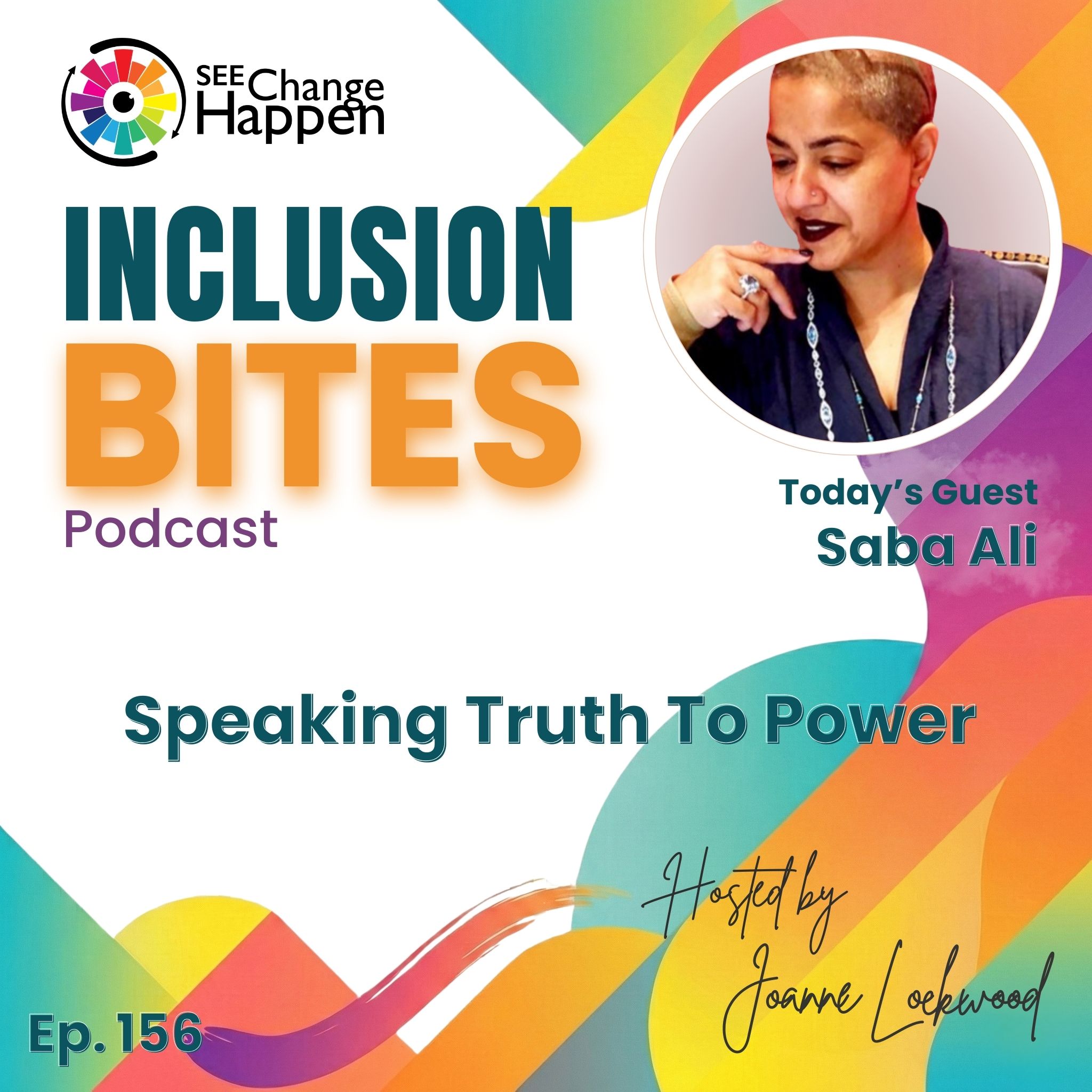
Welcome to Inclusion Bites, your sanctuaryfor bold conversations that spark change. I'm Joanne Lockwood,your guide on this journey of exploration into the heart of inclusion,belonging, and societal transformation. Everwondered what it truly takes to create a world where everyone notonly belongs but thrives? You're not alone.Join me as we uncover the unseen, challenge thestatus quo, and share stories that resonatedeep within. Ready to dive in. Whether you're sippingyour morning coffee or winding down after a long day, let'sconnect, reflect, and inspire actiontogether. Don't forget, you can be part of the conversationtoo. Reach out tojo.lockwood@seechangehappen.co.uk toshare your insights or to join me on the show.So adjust your earbuds and settle in. It's time toignite the spark of inclusion with Inclusion Bites.Today is episode 156, one hundred and fiftysix, with the title, Speaking Truth toPower. And I have the absolute honour and privilege to welcome Saba Ali.Saba is a public speaker, a critical friend who champions
Joanne Lockwoodhost
justice for marginalized communities, focusing on intersectionality,cultural abuse, and the lived realities of queer SouthAsian individuals. When I asked Saba to describe her superpower, she said itis her ability to amplify marginalized voicesinto institutional change. Hello, Saba. Welcome to theshow. Hi, Joanne. Nice to be here. Lovely to get you on.We we first met couple of years ago. We did both did a panel together,didn't we? An online panel, I think. Yes. Yeah. And, we bumpedinto each other at events like Trans in the City. I think the mayorof London had a had a event a couple of years ago. We bumped eachother there. And more recently at,Beyond Reflections, award night, where you won theaward. Hey. Go you. I
Saba Aliguest
did. I won,allyship for the trans community Yeah. Which wascompletely unexpected. But, yeah, very honored toreceive that, especially as it was chosen from the community.Yeah. I was thinking if you're up for an award, everybody else, no chance. Saba's
Joanne Lockwoodhost
got this. Thank you. Yeah. No. We we keep bumping it to each other,
Saba Aliguest
which is great. Yeah. It's always nice to meet Lovely. Like minded people. And it
Joanne Lockwoodhost
sounds like we're gonna be seeing a lot more each other through the RSA andsome of the events and the LGBT community within the RSA. So I'm really, reallylooking forward to getting involved with those things. Yeah. Absolutely. I,
Saba Aliguest
I have definitely got you penciled in for a few things.
Joanne Lockwoodhost
So if you listen to this and it and it floats your boat, if youdon't remember the RSA, firstly, join, become a fellow of the RSA. Yep. Andthen track either myself or or Sabi down, and we can,Saba down, and we can, get into that and and findand get you in, yeah, basically. Yeah. And I should add, actually, for those
Saba Aliguest
of you who don't know, RSS, the Royal Society of Arts.
Joanne Lockwoodhost
Education and commerce or something, isn't it? It's it's got it's got a long biton the end, which I never remember which way around it is, but, yeah, ofarts and something else. Yeah. So me and Joanne are both part
Saba Aliguest
of their, LGBTQIA network, which isdoing some amazing stuff. Very excited to be part ofthat. Which, I don't wanna focus on what's going on in the world too
Joanne Lockwoodhost
deeply to the moment, but there's a lot of stuff going on that we needto raise the the profile. So it's a bit a bitpooey out there at the moment. Is it for for queer folk? It's not great.
Saba Aliguest
It's not great. I think, I think that's one of the reasons actuallywhy I'm really championing what the RSA are doing because they area global community. So the network is a great global community. ButI think at the moment, it's so important for theLGBT plus community to kind of unite and get togetherand sort of try and put our differences aside and,you know, come together and work together. We really need to sort of support eachother. And even if that's only in small groups that, you know, we we needto be there for each other at the moment. That support and compassionis so important. Was there a a point in your life where you
Joanne Lockwoodhost
thought, actually, this is my calling. I wanna go andchampion marginalized voices, talk about intersectionality. What wasit apart from being a, well, at the time, a young black Muslim woman witha queer tendency, I guess? Apart from that, what's what got you into it?
Saba Aliguest
So my childhood lived experience is actually childabuse and cultural abuse. So I have norecollection of the first sort of nine, ten years of my life. Iknow it was very abusive. I have, like, the odd generallyhave flashbacks, but I had the odd recollection. And my motherwas my perpetrator, and I know that she had mental healthissues, and she's passed now. And there were quite a fewoccasions where, you know, she justwe're we're just she just didn't like me for whateverreason. She you know, like I said, she had her own issues. AndI was a seventies child, and in the seventies, there weren't really anysupport organizations or groups. You had ChildLine and theNSPCC, and that was it. But, obviously, growing up in areligious, conservative household, you know, what happened in thehome stayed in the home. It wasn't discussed outside thehome. And I think, part of the reason why I don't have anyrecollection of those early years is I just lived in fantasyworld. Like, I lived in a world outside in my head, sort ofaway with the fairies, and I didn't haveany support at all. It kind of led me downa strange path. You know, I kinda got into the wrong crowd, got into thewrong things, eventually got picked out of home because of drug abuse.But fortunately, I had people reach out to me, give me a lot of support.
Saba Aliguest
In the eighties, it was quite easy to late eighties, early nineies. You know,getting on the housing ladder was a lot different totoday. Priority, I managed to get sort of council housing. I mean, that'sreally in a nutshell. But what it kind of alwayswhat I always said is that one day, I really wanted to either help youngchildren or help women that were kind of in my positionwho didn't have a voice, who didn't have that support, but alsoto let them know that actually what happened to me was wrong. You know, itshould never have happened. And I think, you know, the more I've workedin advocacy and I've worked around sort of hatecrime, abuse, whether it's child abuse, domestic abuse,it's really made me realize that it's notacceptable. It's not okay. There's no justification for that kindof behavior. And especially being part of the LGBTplus community, that intersectionality, that's kind of where it comesin because for me, you know, I'm a woman. I'm a woman ofcolor. I grew up in a family of faith.I'm queer. I have hidden disabilities so that, you know, Itook so many different layers. There's discrimination against all those differentlayers. So when you break it down, it's a lot to deal with. And I
Saba Aliguest
think people in the community, I've met so many people that have eitherbeen disowned by their family or they don't get on with one of theirsiblings or their parents because of their identityor, you know, they get abuse from people at work or at schoolor it can be in any setting, and it's just not okay. And Ithink especially as women, especially as women of color,there is so much, there is so many layers ofabuse that we have to put up with, and so many people just suffer insilence. And I see it, and I hear it all the time in thecommunity. You know, people that will sometimes open up with meand will say that, you know, I haven't shared this with anyone before. I haven'tsaid this before. And, you know, I I I think myprivilege is that people feel safe and comfortable to talk to me. Butyeah. So I think just growing up with that livedexperience, understanding what it's like to be abused,understanding all the different kind of emotions, trauma, the way traumamanifests into illness. So, you know, I have complex PTSD. Isuffer with fibromyalgia, which is a trauma basedillness. It's understanding all those things, and it's kind of makingsomeone aware of who they are, helpingsomeone recognize who they are, love themselves, getto believe in themselves, and know that, actually, there is a wayout. If I can do it, you know, I've gone from sort of beingostracized. I mean, I have a great relationship with my brother and sister now.I've you know, I'm very fortunate that, you know, we've managed torekindle that. But I think, you know, lettingpeople know that I've been disowned by myfamily at one point, completely ostracized by my community. Mycommunity have nothing to do with me. They still don't know how to addressme or speak to me if they see me, which I kind of find quiteamusing in a weird way. But, yeah, being ostracized by the community,having nobody kind of, you know, being homeless, you know,a recovering drug addict, all those things,I've overcome all of those. You know, I've had years oftherapy. I've spent decades working on myself.So I know that with a lot of hard work and support, youcan overcome it. It's not easy, and it doesn't happen overnight.I mean, you know, this all happened to me in my twenties, and I'min my early fifties now. I'm 53. I'm not embarrassed to to to
Saba Aliguest
say I'm actually quite proud to say it because I never thought I'd get to53. So for me, it's really important to share that message withpeople that, you know, it's okay. You know, wecan get through this together. The most important thing to me is I runa monthly support group for a charity. I'm an I'm an ambassadorfor Avengers, which is for women and girls. And one of thethings that's come up for me that really came up for me in the lastsession we had a few weeks ago was most people that arevictim survivors or have had some form of abuse, they justwant to be listened to. They just want to feel some form ofcompassion. And I think in the community, we we'veconstantly got people telling us, you've gotta do this. You've gotta do that. This islaw is for you. You know? You can't do this. You can't do that. Butactually, nobody listens to the community. And I thinkthis is something that I do a lot of work trying to raise awareness asan ally for the trans community, especially. I'm verylucky that I have some really good friends that are trans women. And then,it's that the trans community, especially, just constantlyhas people speaking on their behalf, speaking for them, speakingat them, and actually knowing, you know, your voice needs to be listened to,your voice needs to be heard. So those are the things that sort of arereally important to me and what kind of brought me to where I'mat today in terms of using my voice.And where for the first few decades of my life, Iwas silenced, and I was told I wasn't good enough, and I was told notto speak, and I was, yeah, basically silenced. Iwill not be that person anymore. And I'm really proud to saythat I am a defiant woman today. I'm not afraid to speakup. And, you know, if you wanna call me a gobby woman, you can callme a gobby woman. But, you know, I've I've found my voice today, and Iwill speak up for all those women and all those other peoplethat find it difficult to speak up for themselves. So Icould Yeah. Especially as one of those trans women
Joanne Lockwoodhost
that you're allying to, It's it's it'sincredibly exhausting having to continue to do your ownadvocacy Mhmm. As standing up and and protesting or whatever it maybe. And there's so much, to quote the phrase, bettertogether, or I think it was a Brexit term. What's the question devolution term, wasit? Having allies to do some of that heavy lift toclear the path, to sort things out, to because privilegegives weight. And we called this speaking truth to power. As a transwoman in many spaces, I don't have power. And as a non trans person, asa cis woman, you have more agency in thatspace than I can. So to hear your voice in there allows me tosort of tuck in behind you and let you take the, the out who's inyour chest, knowing full well that whatever I say is gonna be usedagainst me, dismissed, talked over, or the same old tropes andand nasty remarks are gonna come back out. But you can still go, no. That'snot true. Yeah. I do, I do a lot of work today
Saba Aliguest
with the criminal justice system, especially with the police, as a criticalfriend. So that's basically speaking to themas a community member, not working for them, speaking to them,in an advocacy role, sort of suggesting makingsuggestions or, like, maybe reading something and saying, well, actually, you've missed thisor giving them advice on how to deal with the situation. One of the thingsthat I do quite a lot is I always make sure that the trans communityare included in it, but not just the trans community. Isat, for example, on the MET's LGBT independenceadvisory group for two years, and it was allmiddle aged white gay men. And I don't have anything againstmiddle aged white gay men. But if you're gonna represent London, whichis incredibly diverse culturally and inin so many other ways, it cannot be represented just bywhite gay men that are middle aged. You've gotta have youth. You've gottahave, you know, elders in there. You've gottahave all the different strands of the community in there. So, youknow, when I go and speak on a panel or if I'm going tospeak in a round table or in a scrutinypanel, I will make sure that I'm not just speaking as awoman. You know, I'm speaking as a woman. I'm representingdifferent communities, but I'm representing faith. I'm representingrace. I'm representing gender disability. Andbecause I you know, I I'm so intersectional myselfthat I I kind of do it without even thinking. So if I'm reading adocument, I will think, well, there's nothing about disability in this. Like,that's completely missing. And that would just come to me naturally, not becauseI'm necessarily thinking about it. It's because that's how it is. And I'venoticed, that intersectionality is a buzzword that'sused a lot at the moment. I think if you ask a lot of peoplewhere it came from, where the phrase was coined from, they wouldn't be able totell you that it was Kimberley Grenshaw and the meaning behindit, that it was, you know, civil rights word. And,you know, I don't know. People could look it up. They can do their ownhomework. Yeah. Well, you could tell you could tell it's a a
Joanne Lockwoodhost
powerful word because it's it's one of those words, along with microaggressions and other words,that the anti woke brigade throw up as going, this is a mumbo jumbo word.It doesn't it's meaningless. It's it's all about meritocracy and white people getting gettingthe jobs again. Yeah. And in fact, microaggressions is another
Saba Aliguest
one. It's something that, you know, I'm acutely aware when someonesays something, that's inappropriate because, youknow, I represent so many different strands and different,I was gonna say, label or hair labels. God damn them. I don'tlike being pigeonholed because I don't know who I'm gonna be or what I'm gonnabe each day I wake up. But, yeah, to me, it's justreally important to have that representation. Tome, representation is really important as I have all those voices, andI don't think it's fair that any one person can speak on behalf of awhole community or any one person can say, I'm an ambassador forthe trans community or I represent, you know, itit just doesn't work like that. But the other thing as well, I just wannaadd quickly, is there anything I doin relation to, say, for example, on the swooshy panel giving advice,I will always go and speak to, like, trans organizations orcontacts and say, look. This is what I'm doing. This is what do you think?
Saba Aliguest
Is there anything you want me to focus on? Is there anything you want meto particularly say? So I spoke at a couple of chemsexconferences last year, and in the end, I agreed with afriend of mine, a trans woman, who didrecorded a video for me so that she could actually speak from atrans perspective and the use of chems. So when Ispoke about it, I wanted to raise awareness of it,but it came from a trans person. And we did the same thing actually with,a black gay man. I got him to record a video as well. So youyou talked about that kind of privilege that, yes, I do have privilege. I dohave access to people in rooms. Is it when I go intothose rooms, I will also bring those voices with me. So quite often, thatmight be reading a statement out for someone or playing a video that someone'srecorded for me. So to me, it's really important that I'm representingcommunity, and I'm not there just representing cyber becauseI'm not an community. I'm just an individual. That's the amplification
Joanne Lockwoodhost
element, though, isn't it? It's it's making sure that you've created this space forpeople. You've crowbarred the door open. You've given a platform to somebody, and thenyou're there to say, go on. You can do this. I'm with you. Go gogirl or go boy. You can say or go them. And youcan that's what you need sometimes, you know. It's it's very lonelywalking out into the stage in a spotlight on your own, especially if you're comefrom a background where advocacy doesn't come natural. You're gonna walk away. And wesee it all the time where people say, I can't. I can't. I can't sayanything. I'm too nervous. What if I fumble my words? What if I think I'mstupid or an idiot or something? So having someone behind you,giving you that strength, giving you that belief, I think belief is probably a goodword there, that you are making sense is is so powerful. It's sopowerful. Yeah. So And that's what you do, isn't it? Yeah. Yeah. I mean, I
Saba Aliguest
know a lot of other people that do it. And wherever I have the opportunityto bring people into panels and groups and settings, Ialways do. I mean, I I coerced you to come and join the RSACircle Network and, you know, any opportunity I have where I canbring people in. Like, for me, collaboration is so important. Ithink, like I said, right at the beginning, working in silos just doesn't really getyou anywhere. That kind of, like, I want all the glory and I want allthe recognition just doesn't work. You know? You have to work in collaboration.We have to work together. It's just so much strongervoice. And if I can give other people opportunities, why not? I don't
Joanne Lockwoodhost
think, actually, you you coerced me. I think you just said,hey, Joe. I've got a cunning plan. Do you what do you think? I lovethe cunning plan. Let's do it. Yeah. It was I'm I've gotsomeone described as having the breaking strain of a kick. Yeah. Myresistance is very low on many things, and, I'm always up forsomething. You know? I all of my my mantras is, always sayyes because no exciting adventure ever starts with no. Yeah. Let'slet's do it and see what happens. Oh, gosh. I'm the opposite. You see, my
Saba Aliguest
favorite word is now. I it's one of the reasons why I absolutely lovebeing self employed and working for myself. It's just thatjoy in being able to say no. I just Yeah. I I get that. I
Joanne Lockwoodhost
get that. I I suppose see, I don't see those opportunities where I say noas a no. I I I I sort of say, well, that's not a goodfit for me or that's Yeah. I'm not it's all about what's in it forme. I'm not I'm not saying I'm I'm doing it for personal gain, but somethings that don't resonate, and I think, well and I've I've been like you. II've said yes too many times in my life. Yeah. It's through that mantra. It'sgot me into sort of personal stress and overload and no time for myself.So I suppose I I do pick and choose what I'm gonna do. But ifsomeone comes to me with a with a a credible, cunning plan and it soundsinteresting, I'm always gonna go. And so, yeah, don't worry. I'mI'm an easy target for you if you ever need if you ever wanna ask.
Saba Aliguest
I've made a mental note that's I'm only locked away. As
Joanne Lockwoodhost
a marginalized person myself, I guess, and coming from within marginalizedcommunities, there's a huge distrust of the criminal justice system,the police, politicians' power in general, really,especially at the moment where we thought things are gonna get brighter and sunnier witha change of government. It looks like we're recycling some of the same old tropes.Should people trust more, or should we stillbe doubtful and nervous? Oh, I feel like I'm taking a big
Saba Aliguest
sigh. I I really struggle with this because there were times when Ithought, should I really be doing what I'm doing? And then Ikinda think, well, if I don't do it, who else would do it? And thenI think, god, that's really conceited, and who the hell do you think you are?So I have this kind of constant battle with myself, but I think I'vehad other people say to me that I'm so grateful you do what youdo because I wouldn't do it. And I've had somany people in the community say I would not do what you do.But to me, you know,I do believe we need a police servicebecause, otherwise, I think there would be anarchy. And Ithink I'm lucky because I work on the inside.I've got to meet so many good police officers and policestaff, people that really genuinely do careand genuinely care about our community and marginalizedpeople and want to help. You know, I've seen officers in tears,you know, really upset when, you know, no newsbreaking broken, broken, broken,about, you know, like, when the Wayne actually, when the Sarah Everardnews broke, I saw officers in tears, like women are really upset,stuff around the barkingmurders. There was a lot of upset. And, you know, I've met a lotof LGBT officers and staff,and they genuinely care about their community. So in thatsense, I think I just think there's a lot ofwork that needs to be done. I think there's a lot around policingthat the public don't see and don't know. I think there needs to bemore transparency. I think the last governmentreally, really corrupt is probably the politest way Ican put it without using Morally and and in other ways as
Joanne Lockwoodhost
well. They really were. You know, they openly said that they
Saba Aliguest
were gonna use the LGBT plus community, the transcommunity, as a wedge issue, as, you know,culture, you know, gonna makea scene out of it and cause problems. And they did. You know? That thatawful, vile home secretary, you know, she changed thelaws just to make it difficult for trans people. And that's allthey talked about. All they talked about was what was in people's pants. They didn'tcare about the fact that people couldn't afford to eat or staywarm or, you know, put their electricity on, turn their lightson. All they cared about was what was in your pants. And to me, itjust beggars belief that peopleallowed that to be. Or when you think about, oh god. I can't believe I'mgonna even say the word Brexit. But when people be like, I'd rather lose myjob and not have any money, but not being you know, get my country back.You know? I just I just think I I don't know. I just don'tunderstand what's happening to this country, if I'm honest. You know? I I amI I do like politics. I do I mean, I really struggle with it atthe moment. As we we were saying earlier, I get so frustrated becauseI I am so interested in it. But then when we're in times liketoday, right now, I can't listen to the news. I can't listen toanything because it just it's not good for my mental health. But I think whenit comes to policing, you know, they've absolutely ruined it. And wehave and I am gonna say we have such a farright leaning media whoabsolutely twists headlines and the informationthat's put out there. It's completely misinformed,complete scaremongering, and the average person that readsthe news or listens to the radio is gettingincorrect information. So I think, you know, the police arestuck in a hard place, and it sounds like I'm trying tomake excuses for them. I'm not, but, you know, they'rethey're understaffed. They haven't got any money. They've had funding
Saba Aliguest
cuts, they've got more funding cuts that just happened, they'relosing officers, their long term officers are resigning left,right, etcetera, they're in a dire straits, youknow, and I really feel for them because people that, you know, I know anofficer who was there for thirty one years,person of color, really compassionate, really committed tocommunity, did amazing work with the LGBTQ plus community, Andhe retired, took took retirement because he was like, I just can't do it anymore.And people are losing faith, and that's because they've just been runto the ground. So in terms of why do I keep going back?Why do I keep doing it? I think because at the end of the day,our safety and our security is really important to me. Andthe few people that I have been able to refer and that I have putthrough to the police, whether it's been to do with stalking,domestic abuse, or transphobic or homophobic hatecrime, have actually been dealt with really well. And they've all come back to meand said, I actually can't believe how nice that officer was, or they actuallytreated me really well. So on mass, theycome across as evil. But one on one, when you getthat, you know, one on one, they've actually been, like, Iactually can't believe the police have been nice to me. So to
Saba Aliguest
me, that's what's important. You know, they have caught a few of the criminals froma few of the people that I've put through. And to me, it'simportant to have you know, if I can be a bridge and I can bea link between the community and them, to me, that's really important. And that's oneof the reasons why I started doing this work. And I kind of mainlystarted doing it because one of the things that I realized wasthat there are months when there is no transphobic hate crimereported at all. And I know that that's not true.And I know that when there's third party referrals for domestic abuse,there is literally no reports for transdomestic abuse or sexual assault, and I know that that's not true. Hate crimereports are really low. So to me, I want thecommunity to feel comfortable to report hate crime. I wantthem to report it. I want perpetrators to be caught. And the only waythat's gonna happen is if we can kind of build that trust and confidence betweenthe two. You know, the community need to be able to trust the police, andthe police need to be able to understand thecommunity to be able to speak to them, the community. I
Joanne Lockwoodhost
agree. Yeah. I think the trust is low because you don't believe there's anyrelatability there because you're Yeah. As a trans woman, as a as a trans man,as someone who's non binary, you see binary policeofficers. You see cis police officers. So you've got very low confidencebecause let's let's face it. Being on the front line as a police officer,as a trans person, that's a pretty brutal place to be as well. You you'vegot not only the discriminate against your uniform and who youare, but also your identity as well. So I guess any weaknessin terms of in the view of a perpetrator is a is an angle thatthey've got to overcome. So I see it's a it's a pretty brutal environment tobe in. I I get it. But I I reported to hate crime probably aboutsix months ago. For some reason, I get random emails afterI appear on GB News or do something on the media. I get people actuallytrack me down and start sending me hate mail emails. They actually write to me.I think it's brilliant. I think I've got I've created that much anchor in them.They actually write me an email, and they've taken the trouble to find my emailaddress. And I this one was very vitriolic, and it was very,very nasty. So I thought, oh, okay. I'll just go to online, hate crime report,cut and pasted it, put all the correspondence in there. And they sentan officer around to to have a chat with me. And, you know what it'slike? An officer turns up at your doorstep. They've got all their fluorescent gear. They'vegot their big belt with their cut handcuffs and their nightstickand their torches and their radio. They're quite an intimidatingYeah. Kids when they turn up at your door, say, woah. Can I come in?They think, blimey. And I feel intimidated already, like I've done something wrong. Yeah. Doesthat the way they speak, their tone of voice is very authoritative,isn't it, deliberately? And you're there's no empathy here at all. It's justI was sat on my sofa. I sat on the couch opposite. And Istart talking to him, and he and he immediately had empathy,had compassion. He was looking through the evidence. It's it'sjust so wrong. You shouldn't have to put up with this. This is absolutely abhorrent.We're gonna do all we can to take find this person and prosecute or whateverwe can do. And they left. I thought, wow. Despitethat hard, officious exterior, there was a person inthere that was there for me. Mhmm. And I Iit was sought by faith in that hate crime process. Justthe fact that this person was listened to me, actually listened to me. That's
Saba Aliguest
so good to hear, and I'm really glad you had that experience. One of thethings I kind of work with, I facilitate and advisewith new recruit sergeants, inspectors, and above. One above. One of thethings that we do sometimes say is, you know, the the youknow, in some situations, maybe they need to go, like, in plainclothes so that they're not intimidating as like likeyou said, if it's something that they're not comfortable with, maybe ask, youknow, does the individual want would would they prefer a manor a woman, you know, to attend, you know, to what what does thevictim survive or, you know, what what they feelcomfortable with. So, you know, and that tone of body language, youknow, it should be softer, and it should be, you know, more compassionate.But, you know and I, I mean, I always say, like, listen. Like, please justlisten to them first before you start filling out your forms andticking your boxes because listening is just the most important thing, andthat's you know? But I'm glad you had that experience.
Joanne Lockwoodhost
Yeah. I dare say if I was less mature,younger, less less robust, less resilient, less confident,I would have been very intimidated. And and that's not the person's fault. It's just
Saba Aliguest
No. Their persona the way that's how police are trained to be, isn't it? To
Joanne Lockwoodhost
be to be a vicious and and an authority and and aa figure that you're still dominated by. It's a uniform.
Saba Aliguest
Yeah. It's a uniform. How did you feel up towards them whenthey left? Did you I was I was very satisfied that I felt listened to.
Joanne Lockwoodhost
I felt that they they cared. They were they were gonna fight on my behalf,and, you know, they were gonna champion my cause. As it turned out, they trackedthe person down, and they said this person hassignificant mental health concerns. And whilst they're notstopping me taking it forward, they wonder what would become out of it. You know,this this person was yeah. Does this a lot sort of thing. You know, it'sthey they they didn't persuade me. Oh. I I wasI was happily guided to a conclusion where there was nothingpractical to be gained. This person was just boredmentally mentally struggling, and it was more likely to cause moreproblems for me by pursuing them because they were Retirement.Vengeance on that. Yeah. I was happy to I was happy to go with it.I felt a bit disappointed at the time that I wanted yeah. After they persuadedme that did I want to go to court? I went, yeah. Okay. Fine. II was then on this sledge wondering if this person was gonna do it again.Mhmm. Every time I appear on this show, is it are they gonna comeback? But, no, they haven't come back so far. But yeah. No. I I feltsatisfied, and I've reported other things in the past. I was asked to leave aa bed and breakfast in Blackpool because Oh, wow. Iwas potentially a disruption to the other guests, youknow, in black in Blackpool, of all places. You know? This is Oh my
Saba Aliguest
goodness. We've got we've got families here. You know? We've got families. What are they
Joanne Lockwoodhost
gonna think? How are you here? Wow.Luckily, I knew I knew a a police officer in the Blackpool area who,I think was on the Lago team at the time, whatever. That's what they usedto be called. And I reported to him, and he he went out a word.And sort of because I actually managed to record it, the whole conversation on myphone at the time. Feeling? And it's it's pretty brutal. It's like, they'regoing, well because I was there with my wife Marie, and Marie Marie'sstanding next to me. And I was with a group of other trans women aswell. We're having a weekend at Blackpool. We're we're all kind of very respectable,very chilled out. We weren't we weren't outrageous. And they said, we don'tallow all sex parties in there. I said, yes, a cis woman.If you're if you're playing the sex card, then we're not all set all onesex. Oh, yes. But you're disruptive. You're gonna be partying all night. Well, do Ilook like I'm gonna party all night? I was 50. So I just I justwanna come in and stay the night, have breakfast, and and do a bit andand ride the donkeys up the beach or anything. I was like, yeah. Did you
Saba Aliguest
ride the donkeys up the beach? No. I didn't. No. No. No. I was a
Joanne Lockwoodhost
bit too heavy. I was in excess of 20 stone. I think I'd have killedthe donkey if I did that. So I got I got a good a goodsatisfaction there because they asked me what does I want. I just said, look. Whatdo I wanna come out of this this incident? And it's it's always forme, it's education. Yeah. I'm not looking for vengeance. I'm not lookingfor someone to be punished or have their life destroyed. I justwant some education to occur, and the person just turns around and says, okay. Iget it. Yeah. And I get it now. And maybe it won't happen to somebodyelse. So that's all the outcomes I've ever wanted is just education.
Saba Aliguest
Yeah. Do you know what? I you're spot on, and I absolutely agreewith you is, I mean, I I'm a great believer in restorativejustice and kind of resolving conflict in a peaceful way.And sometimes, it's just alearning incident or learning piece for that individual.It's not about causing them distress or trying to makelife difficult for them. It's just helping them understand that actually what you've doneis not okay. And, you know, I'm a strong enough person. I can handleit. But the way you've behaved, if it was someone that wasalready suffering with some form of depressionor with suicidal tendencies or wasin distress and you behave like that, you don't know thedetrimental effects you could have on that individual, and that's not okay.So, you know, I I I love that, you know, you're strong enough to beable to do that, and I I really applaud you for that because a lotof people wouldn't do that. They'd want revenge. And I just think sometimesrevenge isn't always the best way forward. It really is making surethat person can see if they can see where they've gone wrongand why they shouldn't have behaved the way they're done. Because I think inthe short time that I've known you or or the few years that I've knownyou, I definitely know you wouldn't be up all night partyingor having sex parties as they say. Is that what happened? So I I I
Joanne Lockwoodhost
must have missed the invite to that one. Now I'veI'm I'm I'm too long in the tooth for, for that now.Yeah. I I do I don't even enjoy drag karaokeanymore. It's like Oh, stormy. Yeah. No. We we can't
Saba Aliguest
go there because that'll go down a whole another tangent, andI'll end up people will end up hating me if we start going down thedrug route. I do like my karaoke, though. I've I've I
Joanne Lockwoodhost
suppose since I stopped drinking, I'm I'm not as as outgoing as I was. Butwhen I was drinking, I was always grab the microphone and, and try anddo Jolene or something badly or, Suspicious Minds was my Alvis'favorite. That was always one of my go to, Suspicious Minds. Oh, wow.
Joanne Lockwoodhost
Because I was caught in a trap, a bit of Born This Way, a bitof Gaga, a bit of that kind of stuff. Yeah. All that kind of but,yeah, I I did like a bit of a sing like no one's listening, andthen the people who are listening wish they weren't because I'm I don't have avoice. I have a have a scream, which is a butI'm quite happy to express myself loudly and, have fun. Soyeah. But no. I I think sometimes we get we get we do get stereotypedas that that, the RuPaul Drag Race type actor the the characters from the nineteen seventies. And everyoneto their own. I'm not thinking against in fact, I embrace people who want toexpress themselves in using drag as a performance and anddressing up and doing what they do. Absolutely. I think there's some amazing people outthere taking that art forward andexpress themselves and challenging people's perspectives. You probably know DanielLisfeld. I met Daniel Yes. At events several years ago, and what hedoes with clothing as a performance, as an art. Yes. It'sabsolutely incredible. I think he is he is stunning, isn't he? And notnecessarily in a in a raw beauty way, but in a creation way. So thewhole everything is is bespoke. It's a different outfit each time, andit's incredible. It upcycles everything he wears,
Saba Aliguest
and you're a it's a working piece of art.
Joanne Lockwoodhost
Working piece of art. Yeah. And, yeah, I had I had a great night chattingto him. I think it was a a queer Britain fundraiser a few years agoI met. Oh, Yeah. And, I think I think because he's quite a tallperson. He's a very Tommy puts all of his outfit on,he's very, very tall with all this out. And I he was standing on hisown. And I just I guess, because he's a he's astatue of art sort of thing. So he deliberately wants to stand there. And Ijust never I started talking to him, and I and I spoke to him aboutan hour and a half. We're just chatting away and doing the canopies and thedrink and stuff. And it was yeah. I had a great hour with him, andI hope to get him on the podcast at some point. He keeps saying yes,but he he'll never manage it because he's such a busy person, haven't he? He
Saba Aliguest
is. He's done, we we've done some advocacy andcampaigning work together, in the past. So wewe've worked on a few projects together, because he does use a lot ofhis art for activism as well. But he's gotan absolute heart of gold, and he's sojust like you said, when you look at him, you just wouldn't imagine it, buthe's got one of the softest, most compassionate people,you or me, and Yeah. Absolutely huge, hugeally for the trans community. Really not afraid to speakhis mind. You know, he really says it as it is. Have a lot oftime Very well connected globally, though, isn't he? He's, yeah, done some
Joanne Lockwoodhost
work with rulers and leaders of Far East countriesand across America, and it yeah. He's he's had some amazinggigs, if you like. Yep. Yeah. And then he's incredibly well connected.
Saba Aliguest
He's introduced me to a few people as well. Yeah. He's amazing. Infact, he introduced me to Tine, Tine O'Connell, doingsome stuff with her. So she's, she does some incrediblestuff. She's a British historian.So I know she's writing a book at the moment where she hopes to launchlater this year on Malthref, which will be really interesting. So we'll haveto bring you along to that one when she launches that. Oh, I'd love to.
Joanne Lockwoodhost
I'd love to. So you're not coercing me. You're just offering me anopportunity to Oh, no. I'm just telling you. I'm inviting you. Yeah. I'm in. I'min. I'm in. Yeah. I don't know what it is yet, but I'm I'm in.
Saba Aliguest
Yeah. It'll be a book launch for her book, Malefrey.
Joanne Lockwoodhost
Yeah. That'd be fabulous. So going back to when we started this conversation, you weretalking about some of your early childhood trauma of your mum,your mother, and your home environment. I was a trustee ofAKT for a while, the formerly the Alberta County Trust, theLGBTQ plus human homeless charity. And some of the the statsthey came out with are homelessness amongst young queer people, especiallyyoung TQ people, is,disproportionate. And if you're black, intersectionally black, it's even moredisproportionate. A lot of people, even in 2025, arebeing forced out to the streets, living with families that are toxic.How can young queer people or anybody who's livingin that toxic environment get out? Because when we're when we'reyoung, our family is everything. Yes. And we don't know anybody else. It's, so
Saba Aliguest
difficult. I tried to run away from home when I was 15, but I gotcaught.And, yeah, it's it takes a lot. I mean, you've you'veeither got to be a absolute rock bottom to justwalk out the door and leave everything. As a young person, you don'tit's not like you, you know, you've got a job and other support and thingsthat are gonna provide for you. But to kinda literally justwalk out of your home and leave everything behind, that'sreally in a desperate state. There aren't many refuges. There'sthe, Outside Project and,or Star is it Star Support? Who,I think Star Support is the firstLGBT refuge that opened in London, which,sadly, Marie opened, and she passed away last year
Saba Aliguest
last year. And I remember speaking to her just before shelet me know that it it was opening. We both used to betrustees for Gallup. So I used to be trustees for Gallup, and that's how Imet Marie. And I remember her saying to me that, you know, they already hada waiting list, and they were full, and it hadn'teven opened. You know, Ithink one of the things that I'm really aware of and one of the thingsthat actually I speak to the I've spoken to the police aboutis, you know, where do we signpost young peoplein their time of need? Because there are no refuges orplaces for young people, especially ifyou're queer, it's even harder because you've got that intersectionality, you'vegot the homophobia, transphobia wherepeople You have the added fear of comingout or being your authentic selves around people.There've been incidents of young people that have left home because of conversiontherapy, because, you know, if they weren't conformed to what their familywants, then they're gonna be subjected to talk to I callit talk to therapy. I think conversion, it's not really converting someone.It's torturing them. Yeah. So it's it's a really difficult
Saba Aliguest
situation. And there there's just not enough support for LGBTplus people out there, especially the trans community andeven more so for people that are marginalized within thecommunity. So when it comes to disability, when it comes to faith, when it comesto race, you know, if you add that on top of it, it'seven harder. There's just nothing out there. Andit it it's a conversation I've had a few times with a few people that,you know, what support is out there? There's just there'snothing. And on the backof I think a few years ago, Gallup did some research,I think, when the whole anti transrhetoric really, you know, when excuse my French, but when shit hitthe fan a few years ago, there were refugeesthat were turning away trans people because it was causingproblems because gender critical people were turning up at theirdoors, or people within the refuge didn't want them there.So for the trans community in fact, this was abouteighteen months ago, because I remember we discussed it in a way day for Gallup,the trustees did, that, you know, for trans people, even more so whenit comes to homelessness, they have absolutely nowhere to go.So they either end up on the streets, they end up inpotentially could end up in sex work to get the money tokind of rent or stay somewhere or be in anaccommodation. But it's horrendous out there.It's really not safe at all, and there is nothing. You know,funding's being cut left, right, and center. Fund is being cut frominstitutions, let alone charities. It'sit's awful. There is nowhere for people to turn. You know? Weneed more support. We need more homes. We needmore, services to be able to cater andsupport these individuals because the situation's getting worse.And, I follow a lot of work that hope not hate do,just because I I sort of, I do a lotof stuff around hate crime. So and I'm really interested in the work thathope not hate do around the far right. And, you know,they said at the beginning of last year that there would be a rise ofthe far right and what they would do. And we we've seen that. Andwe've seen, you know, in the last kinda couple of months what's been happening inthe media. And it's you know, sadly, I don't think it's gonna get anybetter. I still think it's gonna get worse, especially with social mediataking away all the filters, and people seem to be more emboldenedat the moment. And Yeah. I don't don't wanna say the t word, butwith the t word back, it he's just given carte blanche for peopleto do and say and behave how they want. We've got leaders onstages doing Nazi salute, so it's not agood place. We we need support, you know, which is why to me,even if it's just meeting in a park or meeting anywhere ordoing online support groups, being able to just listen topeople, speak to people, knowing that they've got someone they can turnto and speak to is so important and why we need to come together. Weneed to sort of start working together. It's sad to me that I see
Joanne Lockwoodhost
many people in the communities where we share trans,queer are making public statements on Facebook about them pulling off theplatform. And, yeah, I mean, people worry that it's gonna become verytoxic, but there is a lot of good in the groups and theprivate chats and the environments there. So I'mreally keen, as I would call it, hold the rope. I'm not letting go. I'mnot gonna exit place by Facebook because there's so manysupportive groups, so many people out there that I know that they've got myback. We can talk about things. I think if we're not careful, what we endup doing is we end up being driven out of this supportiveenvironment by these big, glibstatements. I think what we should do is just stand inprotest and say, I'm not leaving anywhere. I'm not going anywhere. And I, hopefully,Facebook won't become a a tumbleweed zone for queer people because there'sa lot of a lot of private groups and communities out there that are safespaces. I hope so because I don't really use Facebook. I mean, I I
Saba Aliguest
haven't done for a long time. I don't. I can only manage one or twosocial media platforms. But I hope so because I think that that communityfocused community groups is so important at themoment. The word chosen family gets used a lot, and I think at thismoment, we need our chosen family. We need some few around us,whether it's groups of two or three. You know, you only need one personto listen to you to feel, you know, that the problem's halved. You know,I I I do believe in that saying that inner problem shared is problem halvedbecause I do it all the time and I feel better the minute I've letit go and released it. And sometimesit's not necessarily solving a problem. It's just being able to share it andtelling someone that, look, oh my God, this is how I'm feeling. And knowing thatsomeone's there listening to you, supporting you,it you know, it's it's enough in your time and need. Big scene unheard is
Joanne Lockwoodhost
so I often think about it. If you think about the the analogy, blowing intoa straw and blowing into a balloon. If you're blowing into a straw, there's nopushback, there's no back pressure. You've no idea if you're making a difference. But assoon as you pump into a balloon, you can feel it. So when you've gotsupport, you've chosen family, you've got people around you, even though it's justreflect, share you, have a hug, have a virtual hug,have a tell me more. It's it's a way ofreally allowing yourself to sort of have that human connection, thathuman contact, isn't it? Yeah. Definitely. How do you what
Saba Aliguest
do you do to sort of unwind or have downtime or lookafter yourself? Because, I mean, you do a lot ofstuff as well. So how do you Well, something
Joanne Lockwoodhost
wife, Marie, who loves me to bits, and we are soulmates and bestfriends, and we do lots of everything together when we're not when we're not doingwork and stuff. But we we work together. She's she's part of the business. Somy mom is incredibly supportive. Yeah. I when I transitioned eight, nineyears ago, she's become one of my biggest allies, and she'll advocate for me.My our two children and their their their partners, it wasn'tnecessarily get me and fully understand me that we have a great family. Sowe do Sunday lunches, we do family stuff, we go to the cinema. That's so
Saba Aliguest
nice. So I live in a very, very, very safe
Joanne Lockwoodhost
family unit. So and I and I have anincredible network of of of business friends who are alot of them are real friends, around the world that I've built over the lasteight or nine years. I'm incredibly privileged that II have that network, and I've got my my my my my real familyand my chosen family, and they're all together. And they're so,yeah, for me, is he I say, I'm lucky. I'm privileged.And I but I know many people who are isolated. Their their home life istoxic or there's a conflict there between who theyare coming out, having to behave in certain ways around certainfamily members. So, yeah, whatever I did write, I did write.
Saba Aliguest
That's so nice to hear, and it's so lovely to hear as wellbecause I think amongst all the doom and gloom, when you do hear positivestories, it it is uplifting, and it does kindof make you feel warm that there is that goodnessout there as well. It's not just all gloom, and people are
Joanne Lockwoodhost
So Marie and I want other people to feel that way. So it'sit's part of Marie's Mhmm. If you like, drive to to work with mein the business is to enlighten the worldthat it doesn't have to be doom and gloom. I appreciate for some it is,but we wanna rewrite that book. You know, the book that says you're gonna loseyour house, you're gonna lose your car, you're gonna be fine, you're just everyone's gonnahate you and always rejected. We said, no. No. We're not we're not we're nothaving that book. We're we're writing our own book. That's about how families cansucceed, how just because someone is comes out astrans, queer, gay, or whatever they come out as, It doesn'thave to be the end of their life. And we we should people hope eitherwith their traditional family or help with their chosen familyand of support because living the lie or living in a boxis is not not a future for anybody. They shouldn't have to live that way.
Saba Aliguest
No. Do you know you were reminded me actually of something that I I rememberhaving a conversation since a few years ago with someone, and they were saying,one of the things that we don't do as a community isactually celebrate people when they do come out or when they dotransition. We always mourn the loss that, like, you know, parentslost their child you know, their son or their daughter, but we nevercelebrate the welcoming of a son or a daughter once atransition's taken place or welcoming that someone's come out andcelebrating their true authentic selves. I think we need todo more of that in the community. We need to celebrate more and enjoysome of the times as well. I mean, Marie Marie often tells the story that
Joanne Lockwoodhost
when I when I transitioned, there was a real polarization between the supportI got, which is very, very positive. Everyone's like, you're brave, the big hugs,and go girl, all this other stuff. And Marie got the sadness.Marie got the, oh, it's, you know, not too old. You could getdivorced and find somebody else. Don't worry about it. You know,move on. She felt just, like, told her. No. It was, like, she even workedfor counseling with somebody who's just been out through this. Andthe counselor's almost, like, taken down the path of, I can help you get overthis relationship and move on. And we said, no. No. No. I want you tohelp me get into this relationship and make it work. But that was ten yearsago, so I don't know if the the counseling or support you get is better
Joanne Lockwoodhost
now. But, no, Marie if you talk to Marie, she always felt the one who'stwo steps behind. Everyone loved me and was or I didn't know what to saythough. It's like she was the bad smell, and I was kinda like the celebrity.So it really was a problem for maybe maybe it's just mypersonality type, but I kind of owned it quite quick quite quickly. Sobut, no. I mean, now that that's our that's our our drive is to tryand show that you can scam work. Justbecause I'm trans doesn't mean to say I'm I'm gonna fit all the stereotypes thatpeople can throw at me. I actually had quite a few trans couples
Saba Aliguest
where they have transitioned and stayed together. I think I know aboutfour or five, and they're really happy in their relationships.Because I guess you fall in love with the person, don't you? The insideof a person, not the kind of outside. I don't knowYeah. If that makes sense. But it is it is a big ask, you know.
Joanne Lockwoodhost
If you look at it, what you're asking someone to do is question theirwhole sexual identity as well. Mhmm. I I'd question my genderidentity, but my gender identity has a an outwardimpact on how they see themselves in public as two women ortwo men together, whereas they were seen as a a traditionalcouple. Now we're seen as a queer couple. So Marie had to come out asqueer, as bi, and she had to address her own sexuality.So everybody in a relationship Yeah. Wants or is able to orneeds to to make the change. So I can't understand why it's hard fortrans people and their parts to stay together because we're asking everybody to reorientatewho they are. I was bad enough for Phillip Schofield comingout in a in a relationship. So yeah. But it's a big big ask.I I think early on, I asked myself the question in my head, how wouldI feel if Marie transitioned? Wow. Could I could I cope?And I I sat there and I've I I would honestly openly say, I knowI would struggle. Knowing everything I know, I would struggle to come toterms with it. I'm not saying I wouldn't come to terms with it. Mhmm. Butit would take all of my personal Mhmm. Thinking andsupport to make it happen. So, yeah, it's it is a bigask. And I think sometimes you just think, hard transition. You'll getover it, and it'll all be easy. I respect the fact it's not easy. That'sit requires work, like anything. Well, she's definitely one to keep then.Oh, yes. No. She's buying. Don't it's not going anywhere. No. Hands off. Handsoff. Hands off. No. She's
Saba Aliguest
she's a diamond. The, Beyond Reflections event. I do remember.Yeah. She's really nice. Yeah. Yeah. No. She's, she's one
Joanne Lockwoodhost
in a million. She's my she's my one in a million or our. We sharewe share each other. So, no, she's fantastic. We we live, love, laugh. Weshout and scream and fight like everybody else. But, no, it's a it's a strongrelationship. That's what makes it fun. There'll be boring. Yeah. It was just all kinda
Saba Aliguest
flat lined and what I know. Yeah. You got to spice up a bit.
Joanne Lockwoodhost
Sarah, this has been an absolute fantastic conversation. Ican't believe we've been dashing for now. So, how do people get ahold of you? I you can get me, on
Saba Aliguest
Instagram or just Saba or Saba Celebrity Care.There's a whole other conversation for that name.Or you can get me on LinkedIn. It's Saba Ali and thenfollowed by f r s a.So I use LinkedIn quite a lot, so that's a good place to get me.And then you can find out more about who I am and what I do.
Joanne Lockwoodhost
Saba, s a b a, Ali Ali. And there aren't many ofyou out there, so it's probably easy to find you. Yep. Just look for
Saba Aliguest
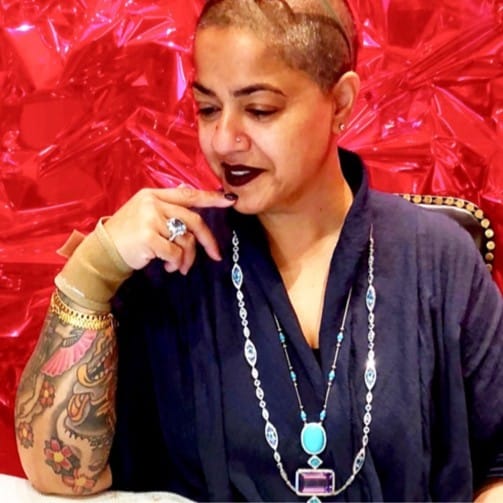
the kind of round head, sort of semi shavedhead, and it's Big glasses. Yeah. Yeah. Love your
Joanne Lockwoodhost
glasses. They're great glasses. Love them. Thank you. They're my computer
Saba Aliguest
glasses, actually. I've started wearing them. Otherwise, I get headaches becauseI'm I'm used to to taking, like, screen breaks. And Irealized that I'm sat on my computer for, like, four hours, and then I'm like,oh my god. I haven't moved. It's pretty bad. Wow. Thank you so
Joanne Lockwoodhost
much for your time today, and, look forward to catching you up at one ofthe RSA circles. And anybody else who's listening right now, if you wanna get stuckin, you've heard something here, contact Saba, and you'll find more about these circles andor the fellowship of the RSA as well. So, Saba, thank you. Thank you so
Saba Aliguest
much, Sean. I'd loved it. It's been brilliant. Thank you. Thanks, Jo.
Joanne Lockwoodhost
As we bring this conversation to a close, I want to expressmy deepest gratitude to you, our listener, for lendingyour ear and heart to the cause of inclusion.Today's discussion struck a chord. Consider subscribing toInclusion Bites and become part of our ever growingcommunity, driving real change. Share this journey withfriends, family, and colleagues. Let's amplify the voicesthat matter. Got thoughts, stories, or a visionto share? I'm all ears. Reach out tojo.lockwood@seechangehappen.co.uk,and let's make your voice heard. Until next time, thisis Joanne Lockwood signing off with a promise to return withmore enriching narratives that challenge, inspire,and unite us all. Here's to fostering a more inclusive world, oneepisode at a time. Catch you on the next bite.
Championing Marginalised Voices: A Journey of AdvocacyBuilding Trust Within Marginalised Communities and Law EnforcementThe Vital Role of Chosen Family in Providing Community Support
Joanne Lockwood is joined by Saba Ali for a wide-ranging conversation about speaking truth to power and turning advocacy into institutional change.
Saba shares her personal story, including childhood abuse and cultural abuse, periods of homelessness and addiction, and the long-term work of therapy and recovery that helped her reclaim her voice. She reflects on the impact of intersectionality in her life as a queer woman of colour with hidden disabilities, and why being listened to with compassion is often the starting point for change.
The discussion explores allyship in practice, particularly Saba’s work as a critical friend to the criminal justice system. She describes the importance of ensuring diverse representation in advisory spaces and bringing community voices directly into decision-making rooms rather than speaking over people.
Joanne adds her own experiences as a trans woman, including reporting hate crime and the difference empathetic policing can make. Together they discuss trust, safety, community support, and the need for connection and collaboration in challenging times for LGBTQIA+ people and other marginalised groups.
“And I think, you know, the more I've worked in advocacy and I've worked around sort of hate crime, abuse, whether it's child abuse, domestic abuse, it's really made me realize that it's not acceptable. It's not okay.”
“And I think especially as women, especially as women of colour, there is so much, there is so many layers of abuse that we have to put up with, and so many people just suffer in silence.”
“If you're gonna represent London, which is incredibly diverse culturally and in so many other ways, it cannot be represented just by white gay men that are middle aged. You've gotta have youth.”
“To me, representation is really important as I have all those voices, and I don't think it's fair that any one person can speak on behalf of a whole community or any one person can say, I'm an ambassador for the trans community.”
“I've had other people say to me that I'm so grateful you do what you do because I wouldn't do it. And I've had so many people in the community say I would not do what you do.”
“But I think when it comes to policing, you know, they've absolutely ruined it. And we have and I am gonna say we have such a far right leaning media who absolutely twists headlines and the information that's put out there. It's completely misinformed, complete scaremongering, and the average person that reads the news or listens to the radio is getting incorrect information.”
“So on mass, they come across as evil. But one on one, when you get that, you know, one on one, they've actually been, like, I actually can't believe the police have been nice to me.”
The significance of intersectionality in understanding and advocating for diverse identities.
The role of storytelling in transforming personal adversity into a platform for justice and change.
Challenges faced by queer individuals, particularly within the South Asian community, and how they navigate cultural expectations.
The importance of critical friendships in driving institutional change and the empowerment of marginalised voices.
Enhancing community trust with law enforcement through transparent dialogue and understanding.
Strategies for amplifying voices within marginalised groups to influence policy and societal attitudes.
Practical ways to offer support to those facing abuse or discrimination, including the power of belonging and chosen families.
One thing to remember
The episode "Speaking Truth to Power" on The Inclusion Bites Podcast highlights the profound impact of advocates like Saba Ali, who work tirelessly to amplify marginalised voices and contribute to meaningful societal change. Through sharing her own lived experiences and involvement in advocacy, Saba illustrates the complexities of intersectionality and the critical need for representation and support within marginalised communities. The conversation underscores the importance of listening, empathy, and collaboration as key components in fostering inclusion and driving change.
Questions this episode helps answer
How does Saba Ali’s lived experience influence her work in advocating for marginalised communities, particularly within the LGBTQ+ spectrum?
Joanne and Saba discuss the importance of intersectionality in advocacy. How does Saba define intersectionality in her role, and why is it crucial for genuine representation?
Drawing from Saba’s journey, what challenges do individuals face when coming from a background marked by cultural and child abuse, and how can these experiences shape their advocacy efforts?
Saba Ali mentioned her collaboration with the Royal Society of Arts' LGBTQIA network. How can organisations like the RSA contribute to global inclusivity and foster community cohesion?
The conversation touches on the role of allies in supporting trans individuals. How does Saba describe the impact of allyship in advocacy and what responsibilities do allies carry?
Reflecting on the episode, why is it vital for systems like the police to include diverse voices in advisory capacities, and how might this influence community trust?
Explore topics
Ideas from this episode
Championing Marginalised Voices: A Journey of Advocacy
In a recent chat, I had the privilege of delving into a conversation with Saba Ali, whose life's mission resonates with championing the voices of marginalised groups. Our discussion took a personal turn as Saba shared her remarkable journey from experiencing childhood cultural abuse to becoming a staunch advocate for justice and intersectionality, especially within queer South Asian communities.
Building Trust Within Marginalised Communities and Law Enforcement
Our dialogue transitioned to the nuanced topic of trust between law enforcement and marginalised communities. Saba shed light on her vital role as a critical friend to the police, advocating for transparency and building bridges between communities and the criminal justice system.
The Vital Role of Chosen Family in Providing Community Support
Finally, we turned our attention to the concept of chosen family and its significance within the LGBT+ community. As traditional family structures may at times disown or fail to support queer individuals, chosen families offer a network of unconditional love and acceptance.
Learn
Frequently asked questions
What is the main focus of this episode of the Inclusion Bites Podcast?
The episode titled "Speaking Truth to Power" centres around amplifying marginalised voices and promoting institutional change, chiefly through the experiences and insights of Saba Ali. It highlights intersectionality, cultural abuse, and the unique challenges faced by queer South Asian individuals.
Who are the speakers in this episode and what roles do they play?
Joanne Lockwood, the host, guides the conversation on inclusion and societal transformation. Saba Ali is the guest speaker, a public advocate for marginalised communities, who shares her personal journey and efforts in activism to amplify marginalized voices into meaningful change.
How does Saba Ali describe her superpower, and why is it significant?
Saba Ali's self-described superpower is her ability to amplify marginalised voices into institutional change. This reflects her commitment to raising awareness and advocating for justice concerning intersectionality, cultural abuse, and lived realities of diverse individuals.
What personal experiences has Saba Ali shared that influenced her advocacy work?
Saba shared her challenging childhood experiences with abuse and cultural restraints and how these experiences shaped her resolve to help others who have undergone similar struggles. Her journey from victimhood to empowerment serves as an inspirational narrative for her advocacy work.
What are the challenges faced by marginalised communities when interacting with institutional power or systems, according to this episode?
The episode discusses scepticism and lack of trust often felt by marginalised people towards the criminal justice system due to past negative experiences. However, it acknowledges positive instances where empathetic and respectful interactions with the police have led to satisfactory resolutions.
How does the podcast address support for young queer individuals, especially those in toxic environments?
The podcast highlights the scarcity of support systems for young queer individuals in distress, particularly those suffering from homelessness or discrimination due to their identity. It stresses the importance of community support, chosen families, and the need for more refuges and resources.
Share this episode
Heard something worth passing on? Send this conversation to someone who needs to hear it.