Why isn’t our public transport network accessible for all?
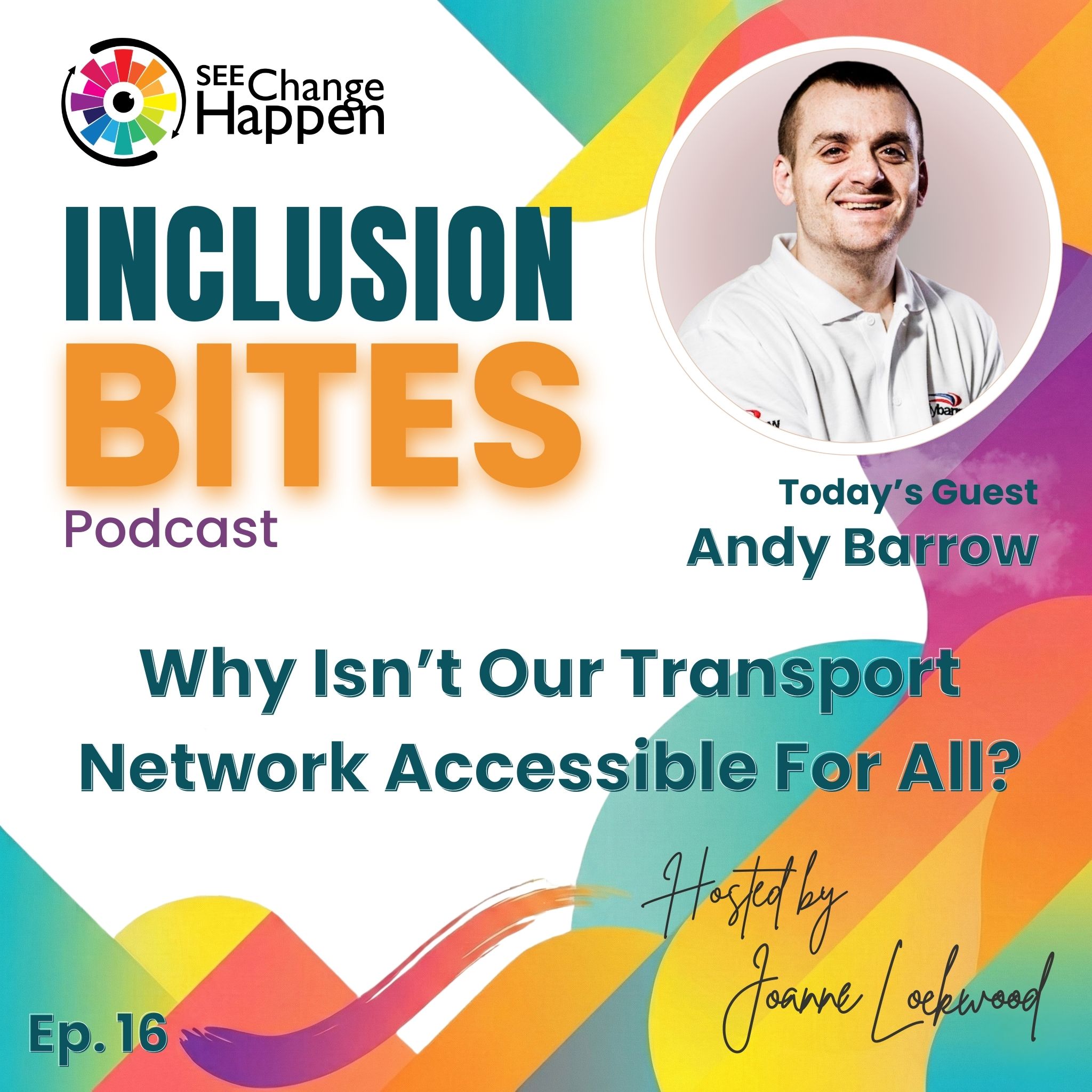
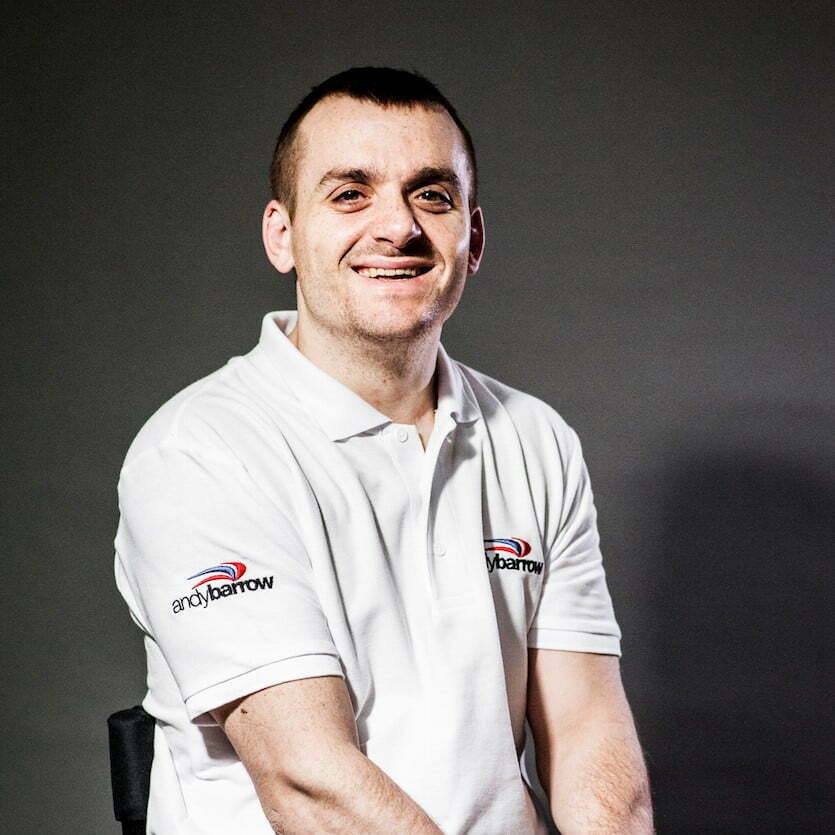
Andy is a Paralympian who specialises in creating accessible spaces. He joins us to talk about his work with the public transport network and the need for true accessibility for all
In this episode of Inclusion Bites, Joanne Lockwood speaks with Andy Barrow about workplace culture systems.
Hello, everyone. My name is Joanne Lockwood and I am your hostfor the Inclusion Bites podcast. In this series, Iwill be interviewing a number of amazing people and simply having a conversationaround the subject of inclusion, belonging and generally making the worlda better place for everyone to thrive. If you'd like to join mein the future, then please do drop me a line tojo.lockwood@seechangehappen.co.uk. That'sS-E-E Change Happen do Co dot UK. You'll beable to catch up with all of the shows and back episodes on iTunes, Spotifyand the usual places. So plugin your headphones, grab a decaf and let's getgoing. Today is episode16 with the title why isn't ourpublic transport network accessible for all? And I havethe absolute honour and privilege to be joined by Andy Barrow.Andy and I are both members of the Professional Speakingassociation and have met virtually a number of times over the past fewyears. Andy describes himself as an accessibilityconsultant for Southeastern Railway. He uses itsexpertise in teams and from his previous career as aninternational athlete and his experience as a worldtraveller to improve the processes and culture aroundassisted travel. I asked Andy todescribe his superpower and he said, gettinggroups of individuals to recognise each other'ssuperpowers and to work together to maximise theircombined powers. Sounds interesting.Hello, Andy. Welcome to the show. Hi, Joanne.
Andy Barrowguest
Fantastic to be here. It's very hot out. So lookingforward to getting out in the sun after we've chatted. Oh, yeah. It's
Joanne Lockwoodhost
a record breaking few days, middle of early August, isn't it? Well, yeah, early August.Still early August. Yeah, it's lovely. It's been a beautiful
Andy Barrowguest
summer all round, especially with the COVID backdrop. The weather we've had has given usthe opportunity to be out and about if we'reresponsible and enjoy that, Iagree completely. So tell me,
Joanne Lockwoodhost
why don't you feel that our public transport network is accessiblefor all and what can we do? It's an interesting
Andy Barrowguest
question. I think, firstly, I want to answer it by kind of splittingor at least caveatting sort of public transport. Ithink as a wheelchair user, as a person who's used awheelchair for a long time now, well over 20 years, I've beenvery lucky to sort of travel all over the place and sort of understand thelandscape a little bit. And there's certain aspects of thepublic transport system that are going to be very hard to makephysically accessible. If you take something like thetube, for example, is a victorian invention,it's going to be almost impossible to drop liftshafts into the kind of. If you imagine the tunnels underLondon as a ball of wall, if you're going to thread that needle with liftshafts, that's going to be very difficult. So what we're having tolook at is accessibility through assistance.So to answer your question through that prism at the moment,there's two reasons, and that is that theprocesses don't always give the staff trying to assist thepassengers the best possible chance of giving eachpassenger the assistance they need. And the secondpart is the culture. And that's basically the crux ofthat is perhaps the organisations or the staff notfully understanding the importance ofpeople being able to have these assistance measures in order totravel and navigate the world independently.
Joanne Lockwoodhost
Completely agree. I had an epiphany probablya couple of years ago, because when we got onto the trains, when we goton the underground, there's always accessible seats near the entrancejust by the doors, isn't there? So they're either embroidered into the seat so youcan tell it's accessible on the tube or the stickers. Certainly. My traincompany is southwestern and it's very easyto see which ones are the assistance chairs. And italways frustrates me to see people just sitting inthose by default, because it's the easiest chair. Okay, I'm not for 1 minutesaying I'm judging people because they may have a hidden disability. There may be avalid reason for sitting there, but we know often the personsitting there probably could sit somewhere else if theywished. They have options, and that puts theburden of responsibility onto someone with an accessibility needto have to ask them to move, doesn't it? And I always find thatcreates this awkwardness. It's a full train, and suddenlythe person with an accessibility need is having to do all of the hard workand confront and ask, andwhy can't we? As a culture, I think in Japan they have a culturewhere those seats are never occupied by peoplewho don't need them. Is a cultural thing. They wouldn't dare. We don't always havethat culture in the UK. Do sort of. There's a certain
Andy Barrowguest
politeness in other parts of the world that does dictate that.But then also if you look culturally at the other parts of the world, thereare differences in attitudes toward disability there. Some of thatis actually because people will be thinking, well, I don't want peopleto think I'm disabled, not for the right reasons, maybe forthe wrong reasons, because in my opinion, there's nothing wrong with having animpairment or disability. I'm not going to get into the whole.Some people don't like the term disability because they say it's the physical worldthat disables us. I'm impaired. Disability implies I'm less than.For me, that's semantic, but some people don't like the ideathat they might be seen as having a disability for that reason.So I think it's a difficult one.But I totally get your point of having to be theperson, to have the confrontation, to have the awkward conversation.That's a really difficult one. An easy example as wellwould be something. I don't take the bus as often,but I do take the bus. And if you have ever got on a bus,you will see the signs that say there's normally one space for awheelchair and it's wheelchairs orbuggies, and the sign just says, wheelchairs take precedentover buggies, essentially, and you're expected tohave that fight. So, in theory, if I got on abus and there was a young singleparent there, and she or he had,say, two young kids in a buggy, a furtherbaby in arms, I could actually get there and go, move, get out of theway, sort that out, fold the buggy up, do something. And for me,that's kind of not right.So we're expected to have that argument. And sometimes the rules are sorigid that it will be one or the other. I've seen people have to getoff the bus for that, rather than just kind of sorting itout with the driver's help. And sometimes the driverabdicates responsibility. That's for a whole other set of reasons.I'm sure the driver, he or she is kind ofpilloried all day, every day withthat thing. But the point is, it's left in the middle for people to sortout, and we don't really yet have thosetools to do that. And part of the reason I do this is so thatwe can all talk to each other and not be scared about saying thewrong thing or asking why peopleneed certain things. Yeah, I think that's important
Joanne Lockwoodhost
to remember that the. The driver, thepassenger safety representative, however they're described, they get a lotof stick by a lot of people and a lot of conflicting priorities. SoI certainly wouldn't want to cast any doubt in theirprofessionalism. But I've travelled with afriend of mine who uses a wheelchair, it's a poweredwheelchair on London buses allaround London, and I've seen the challenges sheexperiences, one getting the driver's attention.She's had bites. Just drive off, leave them on the curb without spottingher. Then there's the often she'll end up withthis driver whoI was going to say, grumpy kind of. You feel there's a big grudging. Thisis impacting his schedule, putting behind time,having to get out the bus, lower the ramp, allow myfriend to get on, and then when she's on, she has to fight her waybetween the people who are there. It's quite crowded. And then sometimes the driverwill say, next time, would you mind reversing in because it's easier then,or easier for who? Often we'redesigning these things for easier for everybody else, not easier for the person who hasthe disability or the accessibility needs. And just having spentmany, many journeys with her using public transport, I'vegot a lot more empathy for the needs of accessibletransport for people. Andnot everybody has the luxury of a powered wheelchair. We've gotpeople using manual driven wheelchairs ormanual push with their arms and not everybody has apersonal assistant or a carer with them. And there's always this assumption that ifyou have a disability, you're going to have someone withyou to help. But that's not the case, is it? No, it certainly isn't the
Andy Barrowguest
case. And this whole idea of publicconfidence in travelling, a lot of the reason Ido what I do is I've been very lucky, I've been very privileged tohave. Just the way the chips fell for me. I had an accident that changedmy life at 17, but then I got intosport and sport took me all over the place and it gave me a lotof confidence. And to use the word epiphany is a good word,I sort of realised a few years ago,okay, I'm helping myself, but I am helping other peopleas well, because for every person like me who maybeencounters a negative travel experience, gets a little bitannoyed, gets a bit angry, makes some phone calls, is a bit dogged about,it has the articulation, the education to maybe fire off aletter, argue the toss with the powers that be.There are many other people who just don't have the time,are not able to put that stuff together and remainemotionally, even while they're kind ofdelivering their grievance and lack theconfidence to either use the surface again, and worst of all,think it's their fault.When I have some kind of negative travel experience, always put myselfin the position of the person. My imagined person,who maybe doesn't get out very often, hasbeen building themselves up to make this trip, because either they are anxious aboutit or they're excited about it for a long time. And when it goeswrong, they kind of almost go home with their tail between their legs and arereally sad about it and take some time to get over that and think it'stheir fault. And that's kind of why Ido what I do, because I can.I can kind of have these arguments, hopefully on behalf of people. I don't wantthat to sound martyrish, but I feel like if you're in a position whereyou're okay, then you try to help otheralso, you know, for example, I'm lucky I have acar. I could just get annoyed. Get in my car. If I getreally annoyed, I could just get on Uber and get a taxi and go home.And some people don't have any of those facilitiesin my wheelchair. I have a tiny wheelchair. It weighs about twelvekilogrammes. It breaks down very small. I can pretty much get inany car. I don't need ramped access in a car. WhereasI suspect your friend that you mentioned as anexample would need a taxi with ramp access. And that has its own issues.A car of a certain size. So it all swings aroundabout. So we all have pluses and minuses. But I just feel like I'mkind of very lucky on this front, and I need to speak up forpeople who aren't as lucky but alsohave the perspective to be able to play both sides on this.To your point of drivers and staffwho sometimes get abused for just trying to do theirjob. My friend's been
Joanne Lockwoodhost
on a train, and when she gets to say she wants to get offat, there's nobody available to help her with the ramp.So then the train just basically closed the doors andgoes off. So she's now effectively being held prisoner bythe train company, transported somewhere she doesn't want to beand has to have that argument. She doesn't want to have that argument. She wantsto go home, see? Wants to have her tea. Now she's in a situationwhere she now has to get angry. She has to get upset. She has tostart talking to people. And it's again and again and again.I'm not sure how often it happens, but probably several times a year this hashappened to her. Yeah.
Andy Barrowguest
It's hard to explain that frustration. It's also hardto explain that anxiety that somethingmay happen. It's hard to physicallyquantify that.Everyone that's in a minority will have a. Have a similar thing. Youknow, whether it's you know, you know, a consequence of. Of their colour,a consequence of their gender. You know, everyone will have that understandingwho's not in the absolute majority. You know, what's. What's interestingfor me is looking wider at diversity, but for the fact that I happen tobreak my neck when I was 17, I'd be the absolute majority. I'm sort ofwhite, western male, 40 years old. And so it has givenme a different perspective. It's opened me up to a lot of differentcommunities to understand that. But back tothe transport. Yeah, that anxiety, I feel thatas somebody who I think is pretty confident,and you have that idea of, what am I going to do here? How amI going to get round this? And it's not a case of I can't travel,it's a case of, right, I'm going to have to get some people to breakthe rules, I'm going to have to enlist unsolicited help.
Andy Barrowguest
So I'm looking around for the platform for a couple of people who might bestrong enough to lift me onto the train, knowing full wellthat, what station am I going to? Is it a through station? By that Imean is it a station where the train isn't terminatingthere? So I have a finite amount of time to get my arm out ofthe door and stuff like that. The reason I work atSoutheastern is so this doesn't happen and so we canhopefully all turn up and travel asand how we want. Mistakes are always going tohappen, but for me also is howthose mistakes are dealt with. And I think a big frustration forpeople with disabilities on public transport is just the time that ittakes for you. Your friend, okay, she missesher stop. It's a pain, all right? But if it wasone stop and you got back straight on the next train and it was tenminutes and you were done, you'd be like, all right, well, that was a pain,but it was done a bit like, I don't know, forgetting where you parked orsomething like that, but it's when it mounts upand it's those time costs taken out of your dayevery single day, every single week, every singlemonth, every single year. I think there was a really interesting article a fewmonths back that likened having sortof a severe disability tohaving a job that equated to about 30 hours a weekin terms of your time cost just to live.That's not even transport. That's things like just getting yourself dressed and stuff likethat. And again, you want to be able to get all thisacross without martyring too much.That's always my angle as a person in a minority, because I'm a firmbeliever that you need to represent your minorityand whether you like it or not, you're an ambassador for it. So thebitter disabled guy is a really bad look. Can Ihelp you, sir? No, piss off. Why would you ask me for help?Blah, blah, blah, blah, blah. Because the next person may need help.
Joanne Lockwoodhost
It's interesting you mentioned this martyrdom and theangry minority. Here we go again. The angry minorities tryingto break the privilege wall down again. And all that happensis the armour goes up, doesn't it? The armour, the deflection, the waterbowery, the kind of, oh, come on, don't be a snowflake. It'snot that bad, really, just a little thing.As you're talking. I'm thinking about the guy on the plane, the one thathis wheelchair wasn't delivered to the gate or waslost, and they offered him apushed or an assistance wheelchair andhe said, no, that's making me disabled. I want choice, I wantadvocacy. What's your take on that? No, absolutely.
Andy Barrowguest
He's completely right. And I encountered that before I worked on thetrains. Aviation was where I learned, as an athlete, you travel aroundin large groups, okay? So you have support staff. I understandmistakes are going to happen. If you're travelling as a twelve person squad.Each person has two wheelchairs. That's 24 wheelchairs. Things are going tohappen. But if you're travelling on your own and your chair doesn't get brought toyou, that is massively disempowering and it'sembarrassing and insulting because you're sat there. You're like, Iam a world class athlete and I don't knowwhether there's a couple of instances. It happened famously to FrankGardner, didn't he, as the BBC correspondent? But it also happened to another guy whoactually dragged himself through the airport.And I've met him, he's a lovely guy, he's a wheelchair racer. He'sabsolutely huge as well. So he's built like theproverbial. And he was in a situation where he could drag himself throughthe airport. But even as a full time athlete,when I was, I'm sort of much more severely disabled than him. So that wasn'tavailable to me. But it's like, you're not going to demean someone ofour strength, confidence and power by saying, we're going to pushyou through the airport. That's not the way wewant assistance to work. We want to be empowered to be independent asindividuals. And I've taken much morein recent years in aviation of having thatconversation. But then I know my point of power. I know that if Iremain in my seat on the plane, I know exactly how much that costs theairline every single minute that plane is delayed. But oftenthe airlines get unfairly blamed for it because mostairports actually contract assistant servicesto an organisation that does it across the airport.So there are all these different dynamics atplay. But I find if you kind of remain politeand just talk about, say, look, this is thesituation, I'm not going to change until you bring my chairback. There's no problem. I don't mind the mistake, I'm justlooking for resolution. I'm not even too fast.Swift resolution isn't nice to have, but I know it's hurting you more thanme, but can we just move you into a corridor? No, you can't, becausethen you're going to forget about me. And it's just having those conversations aboutwhen people will take your wheelchair from you. And the idea of that aswell, the idea of what a wheelchair is, and it's not just a wheelchair, isso much more. It's very cliche to say it's yourlegs, but the simple fact of it isthat without the specific wheelchair I use,I'd be way less independent. We'll go back to your friendagain. If you put her in my wheelchair, it sounds like, as a power chairuser, she'd barely be able to push it. It's no use to her, it's apiece of junk to her. Me sitting in her wheelchair would beno more than me going, oh, this is kind of fun. This is a bitof a toy, but I don't need it. I can't drive it like you can.Probably going to crash it into everything, break something off it and break someone inthe process. These things are bespoke to us. We can'tjust change out of them. It's massively important.I mean, a good example would be, why don't you just wear someone else'sglasses? Joanne?
Joanne Lockwoodhost
Yeah, completely. One thing to say, and I talkabout this a lot, it's about. It's recognising thatyou should have a plan a, but also knowing that plan adoesn't always work. You don't get everything right first time and we allaccept that things go wrong. What I say to people, an organisationshould be judged by its plan b when it goes wrong,how do they step up? How do they put themselves out thereand say, sorry, Andy, this isn't rightfor you. Come to you and say, what canwe do to make this work for you? You say, thank you so much forasking. This is how I think we could solve the problem. Butorganisations trying to give you this one size fits all solutionbased on their perception of you without everinvolving you and giving you agency about the decisions, because Iknow my own personal characteristic. If someone says to me,Joe, Joanne, what is going to make you happy in thisscenario? Now I'll say, this is what's going to make me happy. This is howwe can get out of it. Thank you for asking. I reallyfeel so empowered again. And that must be the same for you.What's the plan b? Isn't it? Yes, definitely. We're back to our equality versus
Andy Barrowguest
equity, aren't we? What is your ideal customerservice experience? Somebody with the exact samedisability as me may have a drastically different outlook on the world and that isto be respected, I guess, within thebounds of safety.It's a really interesting point, and it was funny that actually, Ihave to say, for Southeastern, the reason I'm nowa consultant with them is because I had a bad experience withthem in the beginning and I wasn't happy with the way it was dealt with.But when we broke it down and I got in and I spoke to somepeople face to face, I said, look, I think I can help. And theylistened. So credit to them. Soif I were to take that in a snapshot of a 24 hoursperiod, it'd be like, oh, man, that was awful. Travel experience. If I take itin a snapshot of a two year period, I was like, wow. They listened tothe point where they're now allowing and empowering me to try and helptheir staff make life better for otherpeople with disabilities that use the network. So that planB is an excellent point. Yeah.
Joanne Lockwoodhost
I genuinely believe that most organisationswant to do the right thing. They believe they'redoing the right thing. There's this corporate belief that we've got ourpolicies, we've got people who will deal with this, we've gotour customer service team who are person centric. All these good words.And I do believe that most big, large companies do setout with the right intentions. But what tends to happen is like this chinesewhispers of intent. It gets dissolved down thechain and often it comes down to the one personyou deal with, and that person has the power of influence on making yourexperience fantastic or poor. And it's almostlike impossible for a company to predict that.What's your advice to companies in trying to make sure thatthe company culture really does permeate right down to theindividuals on the floor? I think it's a really tough one. I
Andy Barrowguest
normally refer back to my kind of sporting background as well. You have tolook first at how you treat the employeesin the company. We're almost getting to a point ofcompany culture and engagement. We're almost kindof switching subjects to sort of employeeengagement and giving them the understanding ofwhy is it important? Why is it important that every person with a disabilityshould be able to travel? Why is it important that everyone's gender should be respected?Why is it important that no customer or staffmember should be abused?Have a protected characteristic abused? It'sthat understanding. It's knowingwhy people aren't getting the message, finding out a bit more about them. It'streating them well in order that they then want to treat the customerwell, knowing it's also demystifyingfailure. And I'm a big one for peoplemust fail. Everyone has to mess stuff
Andy Barrowguest
up. All right? You wouldn't have learned to walk or make a cup oftea or write or get good at anythingif you didn't mess it up a lot. That is what life is built on.But failure is so frowned upon in some organisationalculture that people would rather avoid a problemthan actually deal with it. And if you get avoidance of failure, you getblame culture. And when you get that, you getemployees that don't feel empowered to be able to usetheir common sense to deviate slightly fromthe training they've had and see the wood for the trees, if you will.Because the bottom line with things is like, I'm a personstanding in front of you, or sitting in front of you, a person askingfor help. Are you going to be able to help me without hurtingme or you? If at some pointsome minor rules got bent somewhere along theline, we can maybe look at that next timeand see if you could do something slightly differently. But for now, we gotit done. If you don't have that, you have a staffmember looking at a person who needs help thinking, mymanager told me I had to do X-Y-Z-I valuethis job. What if I don't do x, y and zto the letter and I get the sack? What's worse?Annoying one person in a wheelchairor losing my job? So I totally see it fromboth sides. That's why it has to start from companyculture. We have to make it okay for ouremployees to make mistakes. Throughlearning or train. So they minimise the mistakes throughlearning on the job, which is where people like myself come in.People like yourself come in. If companies are lookingto. Sort of. Alter howthey view people and gender and trans culture,you can't just write it out of a manual. You need people who are livingthat experience to talk about their lived experience. And really importantly,why it's important that you should respect that.
Joanne Lockwoodhost
Completely agree. I think you've hit the nail on the head there. If yourculture of your organisation is one of COVID up, oneof it's the rules hiding behind the rules,then you can see that from a customer experience point ofview. It's where people feel empowered. They knowthat their organisation is going to back them up if they make theright decision, maybe for the right reasons,and go outside of the rules. I think you see that all the time inairlines. Airlines have a very open culture around safety.Safety is paramount. And airlines are very quick to speakout on issues where safety is concerned. People lookat their organisations and people sometimes accuse the NHS of being anorganisation where things are covered up and people don't speak out.So again, it's trying to look at those two cultures. And maybe if you're listeningtoday, what's your culture? Would you feel empowered togo the extra mile and make a difference to somebody? Or do you feel youhad to hide behind the rules, or there's too many layers of management and permissionto get, rather than saying, I can fix this for you, I can dothis, and it's that two cultures, isn't it? What
Andy Barrowguest
are the steps of having the confidence to be empowered as well? I think that'sprobably another conversation, how you have to treat people in orderto flourish within the organisation,and everyone uses their kind ofharmony for good rather than not. But it's interesting that you should mention theNHS. I mean, if anyone out there wants to read a good book, I thinkMatthew Sade's second book, called Black Box Thinking, actuallycompares directly the aviation industry andthe health industry, because herightly says, just about the most dangerous place to be in the world is ina pressure sealed tin can 40,000ft above theearth. If you make a mistake there,the consequences are fairly dire. So over theyears, the aviation industry has verypainfully broken open every crashin awful detail to be able to prevent it happeningagain. Whereas in the health industry, you've seen more and more coverup. So the advancement of that, and with particularreference to safety records, has been massively stiltedcompared to it. And it's that psychology, that psychology ofdissonance, of ignoring problemsthat he kind of hones in on, because that's his kind of thing as apsych and a sports psych. But it really isinteresting. It's interesting just how toxic blameculture is within organisations and how much it sort of stems anykind of creativity and progress.
Joanne Lockwoodhost
People sometimes are scared to say sorry, scared to say Iapologise, scared to sometimes own take responsibility,aren't they? I mean, I hear people use thephrase, it's a mistake,it's a mistake. So not. I made a mistake. It is almost likedepersonalising, pushing that away from them, not taking anyresponsibility for that. I didn't mean to.Well, you didn't mean to, but the impact was. So people oftenthink about intent is the only part of the equation. But impactversus intent, that's a whole big equation. We got to think about how does itaffect you as an individual? Isn't it? Absolutely. And I think you said it
Andy Barrowguest
earlier, I think nobody means to make a mistake. That's us going back to sportagain. People get frustrated with mistakes. That's in the past. We can't change it,actually, it's in sport. So it really doesn't bloody matter at this point intime. But I'm not going to get hung up on themistake. We'll talk about it after. But nobody means to make. No one'sgoing out there going, I'm going to make disabled people's days reallybad on the public transport network today. No one'sdoing that. But it's that feararound being wrong, getting it wrong, failing.And the consequences of that, whether it isjust the consequence to your ego or the consequenceto your life if you lose jobsecurity through it, is actuallyplaced a higher importance at the moment of getting it right.
Joanne Lockwoodhost
Yeah. So when I talk to companies and do DNI audits, oneof the questions on the questionnaire is, do you feel you can speak out withoutfear of recrimination? And that's a good way ofjudging a company culture. If you feel you can share anythingand no one's going to come blame you for that, they're going to take thatas good feedback. Maybe they're action, every item offeedback they get, but you can give feedback, givesuggestions without fearing that someone's going to look at you and go, oh, they're atroublemaker or they're being awkward. Yeah.
Andy Barrowguest
Feedback is really important. People having a right to reply, people havingpeople feeling like they've been heard,particularly within, say, employment rank people feeling like they'vebeen heard. And it's another important thingfor people in the employment rank to seethe managers and have access to them. When I work with the managers, Isay, you have to do your walk arounds, you have to go andmeet people, and you have to face the fact that as a manager, you mayget somebody coming up to you that needs to vent andwants to tell you something. That's why you're a manager. You have to wearthat. You don't necessarily need to act on it, because only a small partof it might be worth acting on, but people need that because then they feelheard and you feel like you're having a conversation and you're getting feedbackfor what is going on in the organisation. I thinkthat's really important, because only through that transfer ofinformation do we get the best possible outcomesto any problems that arise. And that's another thing with thetransport network, really. The information is out there on howto do this. Just at the moment, it's siloed and we'renot communicating properly, and we shouldn't feel awful about that.Every organisation is doing that. Every elite sportsteam strives to communicate the best they possibly can, to transfer messagesin the most efficient way possible in order to make the correct decisionsin split second environments. We don't have to do that in business, but wedon't get the time to practise and train like sport does. Butthere is a sweet spot. Yeah, for
Joanne Lockwoodhost
sure. I was thinking, as a change, then,do you think this is perception that disability, ordisabled as a word, it's a spectrum, isn't. I mean, wethink about LGBT, you think aboutblack people, brown people, people from all over the world,from various different ethnicities. We lump these people together as bame. Welump people together of different sexualities and genders asLGBT. And do we lumppeople together as disabled or with a disability? And onewheelchair person is like another wheelchair person? We design our services for this kindof. This middle person that doesn't reallyexist? Yeah, I think there is a tendency to do that,
Andy Barrowguest
but to sort of defend things likeinstitutions, buildings, public transport, there has to be thatkind of. We need to cater to the bell curve as much as possible.What we're looking to do is widen that out to all possiblescenarios. But, yeah, one person with a disabilityis drastically different to another. And where doesdisability stop as well? We're just nowfocusing in much more on hidden disability. We'refocusing in much more on mental health as well as physicalhealth. So mental illness as well as physical disability.But where does it stop? There's certain aspects of disability that haveabsolutely been eradicated in modern society as disabilities.And again, glasses is a good example. Okay, if I ask you totake your glasses off, you may well be able to navigate the world nearperfectly. Just the crossword might give you some trouble. But for anotherperson without their glasses, they're done. Forleft handed people, we've got someone like sevenyears. Yeah, all the best people are left handed, Joanne, so there yougo. But life expectancy, seven yearsless, 200 years ago, you're a witch.If you are left handed or 100 years ago, someone's taking the pen out ofyour hand. Is it a disability? Not anymore. Isneeding glasses a disability? Not anymore. Okay.In certain situations, is being a wheelchair user adisability? Not anymore. In fact, using a wheelchair is probably a damn site.Easier than having to walk on crutches and take every step and being in painfor some people, but it still isenough of a hindrance on our lives. So,yeah, to lump everyone in one category is kindof folly. What we're looking to do is bring it back toJoanne and Andy and what do you need? What do you need tomake things better today? What do you need over and abovewhat's there? And even what's the norm to make things bettertoday? What do you need to putyou at parity with everyone else travelling today?
Joanne Lockwoodhost
And this is where we go into this. People may have heard of the socialmodel of disability rather than the physical model of disability, isn't it? Or themedical model where it's society that makes you lessable to perform your day. Removingthese societal constructs of curbs. And we invented curbs,we can de invent them or create other ways of working. Or we'veinvented taps that turn on like this, we can reinvent taps that turnon differently, et cetera. Exactly. Everything like that. Things like
Andy Barrowguest
automatic doors and stuff like that. Andthe curb thing for me is always a really good example of empowerment.Because I've travelled a lot and worked a lot in Asia. I getasked, there's this misconception, this misconception that the west isfantastic disability and that Asia is very backward aroundit and it simply isn't true. If I had to draw onehard, fast distinction, I would say there's less empowerment in Asia. Andwhat I mean by that is if we spot there's a curb in the westand it gets to be a pain in the backside for whatever reason,eventually someone will come along, put a drop curb in and everyone will go abouttheir business. In Asia, what they may well do isstation two people by the curb to lift the person up overthe curb. The end result is the same, but it's very disempowering. We'renot teaching people to help themselves and that's what we want todo. I don't want people to need to help me. I want to be ableto go about my business as best I possibly can.That's something I'm able to do. There are always going to be people withdisabilities, mental or physical, that are goingto need permanent help and that'snever going to go away. That person to person assistance arounddisability, whether it is in the sphere of travel or not, is nevergoing to go away. So understanding what help people need,asking them if you're able to communicate with them whatthey need and understanding why they need it and how it makes them feel ifthey do or don't get it, is probably the important thing.
Joanne Lockwoodhost
I hear you completely and I think what I'm picking up from what you justsaid there is just going back to this plan b, isn't it? So, in theasian model of the curb, their planb is carry you. What we're trying to say in the UKis our plan b is carry you oncere engineer plan a so it works next time for you. So, yes, you canget away with it. Once a learning occurs,change occurs. Next time you access it, your plan a now works.That's what we're trying to say. We don't want plan b to be the defaultanymore. We want to learn and incorporate your needs into plan
Joanne Lockwoodhost
a. Learn and change. But then in some ways it's kind of
Andy Barrowguest
really interesting because in some ways, when I travel to kind offar flung places, I'm less fussed aboutaccess issues because also, maybethe absence of more of a planwhere that's concerned leads to people being far morehelpful and understanding. Certainly nobody in Asiahas ever told know I can't come into their nightclub because I might be afire hazard, or they can't help me up the steps because it's morethan my job's worth, mate. But that ties in culturallyas well, because in Asia, a lot of the time, there's quite a lot ofshame in failing. People are saying no, which is not an ideal thing,but I know that it's actually, if I want to go in that restaurant, it'sgot ten steps up to it. I'm going to go, can youhelp? And loads of people are going to come running and liftme. Now, that works for me specifically as a relatively light guy overrelatively light chair who is okay getting lifted doesn't feeldisempowered by that. Some people hate it, but I'm like, you know what? I wantto go up there. I want to get on that boat. I've been carried likea bride across more than one beach in my lifeand slung on a boat because I wanted to be on a boat. I wantedto get in the sea. It was the only way it was going to happen,and I'm okay with that. But that's the point. The conversationtook place and I said, can you help me do athing? And they said, yes, I can. And health andsafety is not in the way of that. We don't necessarily have thatluxury over there because we've put health and safety rules in place. But if we'vedone that, then we must be able to see people withinthose. So we need to kind of scramble and make ourplans a bit better again. But the key in those
Joanne Lockwoodhost
things you've just talked about is where the power resides. Thepower resides with you. Power of a choice. You're usingyour power of choice to enact what you want tohappen. And if you think I'm here, boat's there, I want to go onthe boat. There's a beach. The only way I can get on thereis give me a chiggy back, stick me on your shoulder, wherever you need todo, because I want to do it more than that.Because you're empowered. You don't feel you've lost dignity. Youfeel you've achieved your objective. In that case,you are a Paralympian. So you'vetalked about this throughout our conversation so far. So I'm sure I'm dyingto hear. Doingwhat? Where? How successful were you? Where did you go? Yeah, I
Andy Barrowguest
mean, look, my story is rugby through and through, so I was kind ofmining. I like sport growing up. Didn't mean I was any good at it. Justenjoyed team sport. Loved rugby sport for people of all shapes andsizes. There's a role for you on a rugby field. Unfortunately, I had a tendencytowards the more dangerous jobs in sport, so. Goalkeeper,wicketkeeper, front row hooker, brokemy neck playing rugby. Rugby is a very safe game.Incidentally, it's a freak accident. These things happen. Theystill do far less than they did. A good example of us making thingssafer and amending problems as best we can. But catastrophic injuries still occur.So I broke my neck. What that means for me is I'm paralysed from thechest down with limited use of my handsand a little bit of a deficit in my arms aswell. So, looking round for sports, what sport am I going to play? Obviouslywheelchair rugby, or murder ball, as it'sbetter known. So I started playing wheelchairrugby first out, started playing it reallyto get my confidence back, to find a team sport that I could play. Mylife had changed hugely at that ageto get physically fit with such a severe physicaldisability. About four fifths of my body doesn't work, because you understand howyour body would. I need to make sure that that20% worked as well as it possibly could for me to be able toachieve as much independence as I could in my life and doall the things I wanted to do. And I didn't know what they were, Iwas 17. But independence is really important. It feedswell, actually, into our conversation about why it's important that things areaccessible and people can move around on their own, because independence.So, anyway, start playing wheelchair rugby, get good at it.You like something, you play it more, you practise more. The harder you work, thebetter you get. All that kind of stuff. And it really took me around theworld, so I was very lucky. I went to three Paralympic games, a captain tothe Great Britain wheelchair rugby team for about five years, wonthree european gold medals. Sadly,never got over the line in a Paralympics or a world, so never didbetter than fourth. That is a bad place to finish, but there you go. Wouldn'ttake it back. I was lucky enough to go tofor my final tournament to be the London2012 Olympic and Paralympic Games, whichwas amazing. Just an unbelievable demonstration of teamworkand equality. Equity. TheParalympic game specifically is the biggest event for social mobility inthe world. It's huge. And in theUK, we're some of the leadersin showing strongrole models who happen to have disabilities.So it's done a lot for me and my life. Itlaunched my career as a speaker, first in schools. Itobviously gave me the knowledge within travel to do what I donow. So travel is kind of just a part of me. Istill speak as well.
Joanne Lockwoodhost
Wow. A real olympian,as you're talking now. It popped some of my head. So currently we have theOlympics that people know and then we have the Paralympics.So two weeks, then a week, then two weeks again.Could we not have them interleave? So we don't have twoseparate events? Or do you think it's important to have a separateevent? I think it's important for a couple of reasons.
Andy Barrowguest
The first one is you don't want it to lose autonomy or be seen assecond two. And now it has enoughmomentum to be a world event in its ownright and huge. And I think that is correct, that it's front and centre andpeople see fantastic world class sport from people who happen to havedisabilities. That idea of this is just disabled people havingto go. Died of death a while ago, and probably the final nail in thecoffin would have been London. If you know anything about sport, you know howhard these athletes work.They just happen to have a disability. The second is logistics.It's the biggest sporting event in the world, the Olympics,and it's represented by people from every singlecountry. So over 200 countries in the world, youhave an olympic village, houses x amount of thousands ofpeople. You can't really, logistically justincrease that by. The Paralympics is somethinglike 50, 60, 70% the size of the Olympics. You can't really justnearly double the size of that event, which is already huge andrequires its own village. We're talking about hosting27 simultaneous world championships. When we talkabout an Olympics, it's a bit of a scramble to just then goand host nearly 60. So for those two
Andy Barrowguest
reasons, I'm happy with it being its own separate event.What I would do is every four years, I would change theorder. So one, four years,Paralympics went first. One, four years, Olympicswent first. And there's pros and cons to being first or second. I think Channelfour spun it brilliantly in 2012when they put all their ad campaigns out that said, thanks for the warm up,meaning the Olympics, it was like, yeah, you guys were the curtain raiser, now it'sthe real stuff, so you can spin it how you want it. Andthe fact is that so many people, the Paralympics in London, soldout, the tickets were cheaper. I don'tcare about that. That's market forces. Tickets are going to be cheaper in parasport,they're going to be cheaper in youth sport, they're going to be cheaper in women'ssport. Is it right? Not necessarily. But does it get bums on seats?And if it does, that's fine by me. So it soldout. And I think a lot of people as well that were naysaying about theOlympics, saw how amazing it was and then scrambled and thought, I stillwant to be a part of that. I've never seen anything like it beforeor since. In terms of the adulation thatwe had as athletes, in terms ofthe spectator numbers, the crowds, people that just wantedto be involved. It was an absolute privilege andsomething I'll never ever forget.
Joanne Lockwoodhost
Yeah, I hear what you're saying there, and I think you're right.From having, again, it's about power and agency. It's your eventfor you.You and your fellow Paralympians are owning that eventas a celebration of you. And it's not about trying to be thesame as anybody else, it's about trying to be your own identity. And I thinkthat's extremely important. Language obviously, is reallycritical around this stuff. And we talked earlier about whether you're with a disability, havea disability, a disabled user, a wheelchair user orall these various terms complex. And one thing I was thinking about as you're talkingthere is that we have women's football, we have women'scricket, we have women's tennis and then we have football,tennis and cricket. I want to keepwomen's football, women's cricket, women's tennis, but I want to have men'sfootball. So what we don't have ismen or male or the privilege is the default. Therefore we don't need toprefix it. So we have the men'sfootball FA cup and we have the women's football FA or the Women'sFA cup. So they're both prefix.That way women's football isn't seen as the second best, it's justseen as women's have meant. Or there's a whole nother conversationabout degendering sport. But that's in a whole nother conversation. Let's not go intothat. But I think it's important that we don't recognise women as beingnot the default. As being second best. Yeah, absolutely.
Andy Barrowguest
I think it's a really good argument. I've had someinvolvement with the women's sport trust in the past and that point has definitelycome up and been made. Because to say women's football,then football implies that football is the real football.That's not right. That's absolutely not right. And you'll see that inathletics it happens by default. Intennis it normally happens by default, because it's away. Whose singles final is it? Well, it's the men'ssingles final or it's the women's singles final. And again,things like, as just mentioned, changing the order. Why not one year at Wimbledon,just have a women's final on the Sunday and the men's final on the Saturdaywas. What if it didn'tmatter in the first place? Why would it matter to switch it?I think it's really important to.I don't know about sort of degendering completely, because otherwise that's justconfusing. What am I watching if I'm not being told whether it's men'sor women's? So I'd rather you'reproud about your gender within the sport?
Joanne Lockwoodhost
Yeah, I think that was more about the conversation about whethernonbinary people had a non binary people compete insport. There's huge debatearound trans people, trans masculine, transfeminine people competing in their acquired gender and whether they havedisadvantage or advantages around their performance. There's awhole debate around that. There are many sportswhere people's gender is not actually deciding factorand so people can compete fairly. So those are the sports we should be lookingat saying, well, it actually doesn't matter if it's a woman's or a man's. Butthen there's also the argument that women still want to beproud and have their own event in the same way that you, as a Paralympian,want your own paralympic event, women want their own event as well.And that's quite right, but it's trying to work out how we createa freestyle, all style type event that people can opt tocompete in if they want to as well. It's very interesting, actually, that in
Andy Barrowguest
wheelchair rugby, it's actually a coed sport.We're able to do that by virtue of the classification system.Now, if you don't know what the classification system is, it's a way of uscategorising the diversity of your disability, not how goodyou are at the game, but basically in a physical sense, in a very physicalsense, how many muscles you have to play the game. And that hasto happen because otherwise it's an unfair playing field. If youwere a good example would be, I've said I'm paralysed from the chest down withlimited use of my hands and arms. People with a disability in all fourlimbs are eligible to play my game. So in theory, somebody could come inwho's just missing two legs from just below, just abovethe knee and missing their arms from the wrists. Thatperson has their entire trunk to theirdisposal and stuff like that. They can move and
Andy Barrowguest
they can navigate the court in an entirely different way. To me, so we haveto award points, numbers, so we cansay, you're worth this many points on the floor, because we have to draw thelines somewhere and that's how we are actually able to fitwomen into the male framework. Whether we get to a point where oursport grows and the women. There have been some women'sonly events, but at the minute, the women really enjoy playing themixed version of the sport. And it's just one of those happyidiosyncrasies about sport and disability and the way itworks that we can make that fit into the classification.Women play athalf a point less than men for their disability because we had a big conversationabout it and went through the well, if you're disabled, you're disabled, it doesn'tmatter. But we took into account your bone density, your fat tomuscle ratio, and we were like, actually, no, as a woman, you are at adisadvantage if you have the same functionality as a male. Soyou play half a point less, whichis really interesting, because in theory, in our game,the best possible team in an imagined future wouldbe four female players. Soit's a really interesting conceptand it's not here nor there. It's just a nicething to kind of think about and a neat little solution that we've made ina very niche part of the world. I
Joanne Lockwoodhost
said the same. When we look at whether we can level the playing field interms of men's sport, women's sport, or even making ittrans accessible, is learning from paralympics, learningfrom ways we can value each personas an individual and give. I mean, sport is a human right.Competing competition should be a human right. So we can allow everybody tocompete at their sport in the way they can, withoutfeeling discrimination or without feeling they've got to apologise forbeing a bit taller or a bit shorter. Absolutely. I mean, I
Andy Barrowguest
think it's really hard. It's really hard incompetitive sport, particularly where trans isconcerned. Sort of interested to sort of hear what you thinkabout where physicality is not the deciding factor,that's one thing. And then sort of wheelchair rugby, although the sport is a contactsport, it's the chairs that get smashed to bits. We have these special wheelchairs aroundus. We smash them to bits every 18 months. Direct person to personcontact. Howthis is where some people will get squeezed out juston the safety factor. To other people, not themselves. Yourown safety is your choice. And that's a reallydifficult one, because I'm looking and thinking specifically at rugby and aboutarticles I've read around sort of transathletes in rugby, and it feels really difficult. And if I'm honest,I don't know the answer. No, I don't know the answer
Joanne Lockwoodhost
either. I think from my personal view isthat there are lots of views, lots of opinions, lots of people totake into account and the best solution is to sitdown collectively and have an open discordand a constructive outcome for everybody.It's trying to move the bell curve, as you were saying, not just to benarrow, to try and widen that bell curve. So there's more peopleincluded, and if you don't fit the criteria, you understand why you don'tfit the criteria and there's a plan b.Maybe there's another competition for people who don'tquite fit this bell curve criteria. We've got another one thatcaters for these people and we do it differently. And I thinksomehow there's got to be a solution somewhere where everybody feelsthey're gaining and nobody feels they're losing. Yeah.
Andy Barrowguest
The Paralympic model isn't a bad place to start, although it's notwithout its issue, because we are seeingthings as a big thing going on in wheelchair basketball at the moment, whereby alot of the top classes, so we're going to say the most able classes, aregetting reclassed and some of those people are being told theyaren't disabled enough to play because they have minimaldisabilities. But there's no way those people are going to beable to compete on an equal footing in able bodied basketball. Yes, theyhave minimal disabilities compared to somebody like myself, in fact, compared to manywheelchair basketball players. So it's imperfect. There are going tobe people that get squeezed out. There are going to be people that fall onthe right side of the lines, people that fall on the wrong side of thelines. If ever you watch a wheelchair race, for example, andsomebody wins by a ridiculous margin,as a person with a slightly more trained eye, your immediatethought might not necessarily be, wow, they're so much better than everyone else. You're like,wow, there's quite a lot of function going on there. Not that they're in thewrong class, but they're the optimal level offunctionality for the class they're in. So there's always going to be that problem youhave it in rugby with, say, when you look atmaori players compared to, say, whiteplayers in New Zealand or anywhere around the world, for that matter,because of the lean muscle to fatratio and stuff like that. But that's theway you're born, and that's a difference nowthat comes up against trans. If you feel like you're born in the wrongbody. And
Joanne Lockwoodhost
sport often is leveraging every advantage you haveas a human being to win. Andelite male athletes, swimmers,sprinters, they're leveraging their bone structure,their muscle, their history, their background, their culture, all the things that make themthem, their mental attitude as well. So it's a combination ofbeing. Using your body and your mind towin at all costs is kind of the theory, isn't it? Soif we start denying people the ability touse their body to the maximum, then we have tostart classifying people who are fromdifferent continents, different racial backgrounds, and saying, well,hang on a minute, your children thinner, traditionally, than people from this country,and people in this country are generally more overweight,less sun, et cetera. So then we end up classifying everybodyand that becomes even less fair, doesn't it? That's the thing. And to use a
Andy Barrowguest
very controversial word in the best possible way, andthis has been sort of done before, the freak aspect is what makessport awesome. And it was another great channel four marketing campaignbecause it called the Paralympians freaks of naturebefore it called them superhumans. And then everyone got up in arms aboutit. Whoa. We call Usain bolt a freak of nature and it is anentirely positive label we give him. So they were just playing with thatidea of people's interpretation of whatfreak means. If you've lived an attitude all your life and you grew uprunning God knows how many miles every day or cycling up and down mountainsevery day. Yeah,your entire. Gosh, the words gone right out of my head. Your entire physiologyis going to be different. How do you think Sherpa in Nepaldrag rich people up Everest every single day? Not richpeople that aren't experienced, but Sherpa simply be able to just nipup and down like it's not a problem. And that'senvironment.It's a really complex and interesting conversation.
Joanne Lockwoodhost
And I think we'll let our listeners ponder on thatconversation and thought, maybe if you're listening and youhave an opinion, then do drop me a line and tell us about it. Maybeyou'd like to come on a future podcast episode and talk about yourperspective on this topic. Well, Andy,it's been absolutely awesome. I've really enjoyed this conversation. I can't believehow quickly the hour has flown by. And hopefully a coupleof listeners are still with us out there listening along, because I'msure that there's so much to take, inspiration from, so much to ponder. You'vegot immense amount of experience and you're doing some fantastic workto promote accessibility on transport and in the world.So how can our listeners get in touch with you? You got a website?
Andy Barrowguest
Yes. Simple for me. Cheque me out.Www. Dot andybarrow. Co. UK. So,Barrow Barow and you can findall my social channels on that. So through that website you'll be able tohit my Twitter, Facebook, LinkedIn and my emailis Andy at andybarrow. Co.UK. So pretty simple. It's pretty simple. And
Joanne Lockwoodhost
you're open to people just randomly connecting on LinkedIn or doing an inquiryfor speaking or consultancy, et cetera? Absolutely, yeah. Please do get
Andy Barrowguest
in. Know if you've enjoyed what we've said today. If you gotanything to add or you think I can help you, then yeah,please do get in touch. Thank you so much. Well, a huge
Joanne Lockwoodhost
thank you to the listeners for tuning in andsticking with it. Please share this podcast with your friendsand do subscribe to keep updated on future episodes of theInclusion Bites podcast. That's B-I-T-E-S. Tell your friends, tellyour colleagues. I have a number of exciting guests lined up andI'm sure you'll be inspired by them over the next few weeks and months. Ifyou'd like to be a guest, please let me know. I'd welcome your feedback andsuggestions on how we can improve the show. So drop me a line tojo.lockwood@seechangehappen.co.uk.My name is Joanne Lockwood and it has been an absolute pleasure to host thispodcast for you today. Catch you next time. Bye.
Accessibility Challenges in TransportCustomer Service and Corporate CultureEmpowerment and Independence Through Sports
Joanne Lockwood is joined by accessibility consultant Andy Barrow to explore why public transport still isn’t accessible for everyone, and what meaningful accessibility looks like in real-world travel.
They discuss where physical infrastructure is difficult to retrofit, and why assisted travel often becomes the make-or-break factor. Andy shares how poor processes and inconsistent culture can leave disabled passengers having to negotiate for basic support, from priority seating and bus wheelchair spaces to ramps not being provided at stations. Together they unpack how these situations create anxiety, remove agency, and add hidden “time costs” to everyday life.
The conversation moves from individual incidents to organisational responsibility: designing for equity rather than one-size-fits-all solutions, building plan B responses when things go wrong, and creating a culture where frontline staff feel empowered to solve problems without fear of blame. Andy also shares his personal story as a Paralympian and how sport shaped his confidence and commitment to independence.
Along the way they touch on how language and assumptions shape inclusion, and why listening to lived experience is essential if organisations want to build services that work for a wide range of needs.
“If you take something like the tube, for example, is a victorian invention, it's going to be almost impossible to drop lift shafts into the kind of. If you imagine the tunnels under London as a ball of wall, if you're going to thread that needle with lift shafts, that's going to be very difficult.”
“And if you have ever got on a bus, you will see the signs that say there's normally one space for a wheelchair and it's wheelchairs or buggies, and the sign just says, wheelchairs take precedent over buggies, essentially, and you're expected to have that fight.”
“When I have some kind of negative travel experience, always put myself in the position of the person. My imagined person, who maybe doesn't get out very often, has been building themselves up to make this trip, because either they are anxious about it or they're excited about it for a long time.”
“I think there was a really interesting article a few months back that likened having sort of a severe disability to having a job that equated to about 30 hours a week in terms of your time cost just to live. That's not even transport.”
“Everyone has to mess stuff up. All right? You wouldn't have learned to walk or make a cup of tea or write or get good at anything if you didn't mess it up a lot. That is what life is built on.”
“I mean, if anyone out there wants to read a good book, I think Matthew Sade's second book, called Black Box Thinking, actually compares directly the aviation industry and the health industry, because he rightly says, just about the most dangerous place to be in the world is in a pressure sealed tin can 40,000ft above the earth.”
“Feedback is really important. People having a right to reply, people feeling like they've been heard, particularly within, say, employment rank people feeling like they've been heard.”
“Certainly nobody in Asia has ever told know I can't come into their nightclub because I might be a fire hazard, or they can't help me up the steps because it's more than my job's worth, mate.”
“Women play at half a point less than men for their disability because we had a big conversation about it and went through the well, if you're disabled, you're disabled, it doesn't matter. But we took into account your bone density, your fat to muscle ratio, and we were like, actually, no, as a woman, you are at a disadvantage if you have the same functionality as a male.”
“a lot of the top classes, so we're going to say the most able classes, are getting reclassed and some of those people are being told they aren't disabled enough to play because they have minimal disabilities.”
The complexities of physical access and the required assistance for navigating public transportation systems.
The societal and cultural attitudes towards disability, and their effect on the use of designated accessible spaces.
Strategies for coping with the lack of empathy and understanding from fellow passengers and transport staff.
Steps towards removing societal barriers and incorporating accessibility into the initial planning stages of transport services.
The empowerment and independence gained through adaptive sports, such as wheelchair rugby, and their impact on social inclusion.
Challenges and considerations surrounding the inclusion of transgender and nonbinary athletes in sports.
The broader implications of the Paralympic Games for social mobility and the representation of people with disabilities.
One thing to remember
The most poignant lesson from this episode is the recognition of the deep and complex challenges faced by individuals with disabilities within public transport systems and the broader societal structures. The dialogue reinforces the imperative of fostering an inclusive, empathetic culture within organisations and among the public to facilitate accessibility and empowerment for all, regardless of physical abilities. Blurb 1:
"Discover the daily hurdles and structures that unintentionally exclude wheelchair users on public transport – hear how change can start with us!"
Blurb 2:
"From seats on the bus to societal barriers – join us as we explore the importance of empathy and empowerment in making public transport accessible for everyone."
Blurb 3:
"Learn about the integral role of company culture, fear of failure, and employee empowerment in enhancing accessibility for those with disabilities."
Blurb 4:
"Engage with the compelling stories of triumph and tribulation as we examine turning points from wheelchair rugby to the Paralympics in fostering independence.”
Questions this episode helps answer
What are the main barriers to accessibility in public transport that Andy Barrow identifies, and how might they be addressed at both a policy and an infrastructural level?
Joanne shares frustrations about the misuse of accessible seating on public transport. How can society foster greater respect and understanding for the needs of those with accessibility requirements?
Andy and Joanne discuss the importance of individualised solutions for people with disabilities. How can transport systems be designed to be more adaptable to the various needs of their passengers?
How does the fear of making mistakes amongst employees affect the level of service provided to customers with disabilities, and what cultural changes need to occur within organizations to rectify this?
The episode discusses the concept of a "blame culture" within certain industries. How does this impact the progress of inclusivity and what strategies can organizations implement to cultivate an open, feedback-friendly environment?
What experiences shared by Andy and Joanne highlight the necessity for understanding the spectrum of disabilities and accommodating varied needs beyond the 'bell curve'?
Explore topics
Ideas from this episode
Accessibility Challenges in Transport
In our rich discussion, we explored the poignant issues surrounding the accessibility challenges within our transport system. It's a part of daily life for many, yet there are persistent barriers that prevent it from being inclusive to all.
Customer Service and Corporate Culture
Continuing the discussion, we delved into the heart of customer service and its crucial role within the corporate culture, especially when it comes to catering to people with diverse needs. The art of delivering compassionate customer service isn't merely about script adherence, it's about authenticity, understanding, and, sometimes, the bravery to deviate from the norm for the sake of an individual's needs.
Empowerment and Independence Through Sports
Adaptive sports such as wheelchair rugby. We celebrated how sports create a platform for empowerment and self-determination, while also contributing positively to mental health and societal perspectives of those participating.
Learn
Frequently asked questions
Why is public transport not fully accessible for wheelchair users?
As Andy Barrow explains, there are physical barriers within the infrastructure of public transport networks that can make it challenging for wheelchair users. This includes issues like lack of ramps, non-adjustable ticket counters, and the requirement for assistance, which is not always readily available.
What are the cultural attitudes towards disability and how do they impact public transport accessibility?
Joanne Lockwood mentions that cultural attitudes towards people with disabilities vary greatly. In some cultures, disabilities are met with empathy and a willingness to assist, while in others, the disabled may face apathy or even hostility. These attitudes can influence the level of assistance and accommodation people with disabilities receive when utilising public transport.
What difficulties do wheelchair users face when asking someone to vacate an accessible seat?
Both Joanne and Andy discuss the discomfort and awkwardness that wheelchair users may experience when asking others to move from accessible seating. This is often exacerbated by a lack of awareness or disregard from those occupying the seats unnecessarily.
How important is employee engagement and understanding when it comes to accommodating individuals with disabilities?
Andy stresses the importance of prioritising employee engagement and understanding to accommodate diverse needs. Employees should be empowered to make decisions and should be educated on the ways they can provide effective and compassionate service to people with disabilities.
How can society better empower and include people with disabilities?
Joanne and Andy suggest that removing societal constructs and environmental barriers, such as curbs without ramps or inaccessible taps, would allow for greater inclusion and empowerment of people with disabilities.
What's the significance of the classification system in wheelchair rugby?
The classification system in wheelchair rugby takes into consideration the physical capabilities of players to create a balanced and inclusive environment. It is based on the diversity of disabilities, and not skill level, which allows for a coed sport where women can also participate alongside men.
Share this episode
Heard something worth passing on? Send this conversation to someone who needs to hear it.