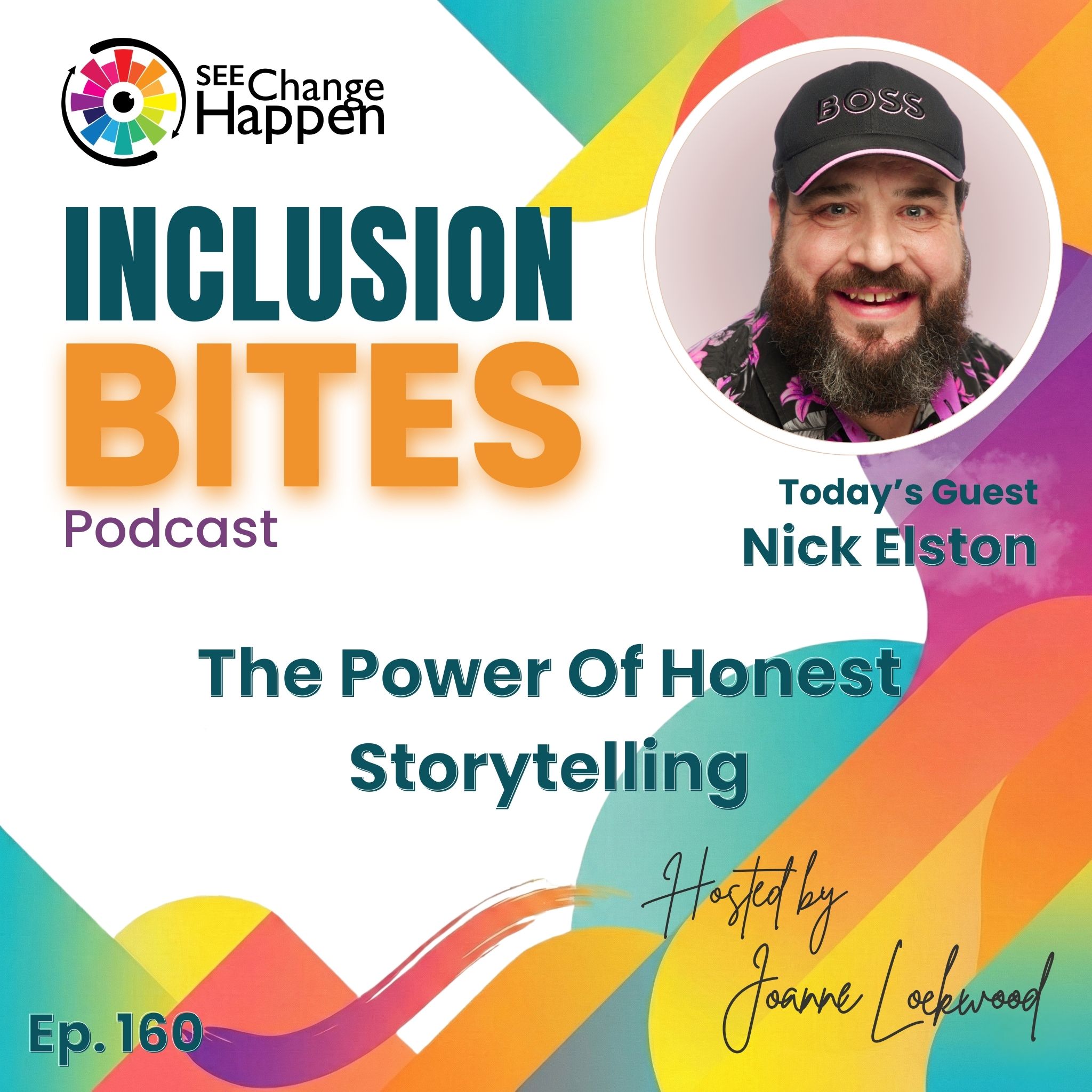
Nick Elston explores how honest storytelling and embracing vulnerability can transform personal adversity into powerful connections, ignite belonging, and inspire authentic conversations that challenge societal norms.
In this episode of Inclusion Bites, Joanne Lockwood speaks with Nick Elston about mental health wellbeing trauma.
Welcome to Inclusion Bites, your sanctuaryfor bold conversations that spark change. I'm Joanne Lockwood,your guide on this journey of exploration into the heart of inclusion,belonging, and societal transformation. Everwondered what it truly takes to create a world where everyone notonly belongs but thrives? You're notalone. Join me as we uncover the unseen,challenge the status quo, and share stories that resonatedeep within. Ready to dive in? Whether you'resipping your morning coffee or winding down after a long day, let'sconnect, reflect, and inspire actiontogether. Don't forget, you can be part of the conversationtoo. Reach out tojo.lockwood@seechangehappen.co.uk toshare your insights or to join me on the show.So adjust your earbuds and settle in. It's time toignite the spark of inclusion with Inclusion Bites.And today is episode 160with the title, the power of honest storytelling.I like it. Absolute honor and privilege to welcome Nick Elston.Nick is a keynote speaker, a transformational speaking
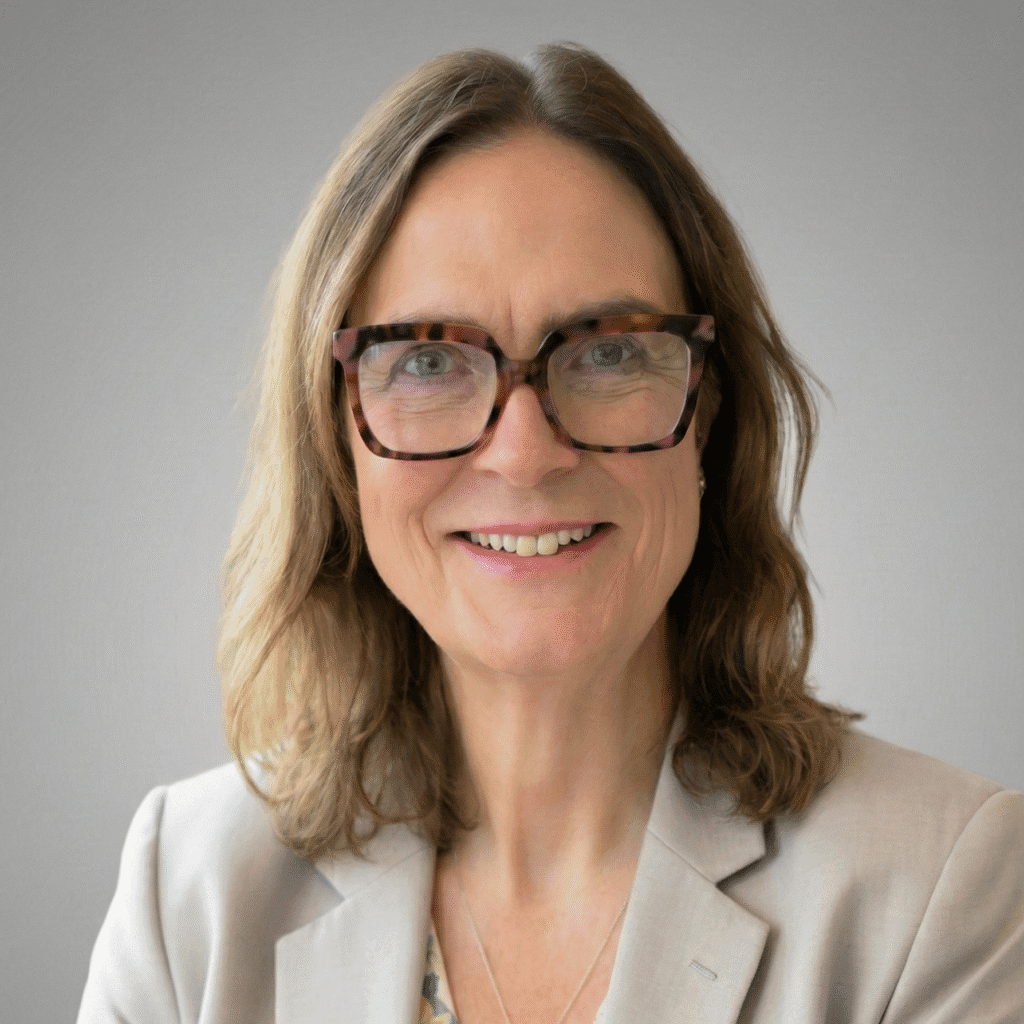
Joanne Lockwoodhost
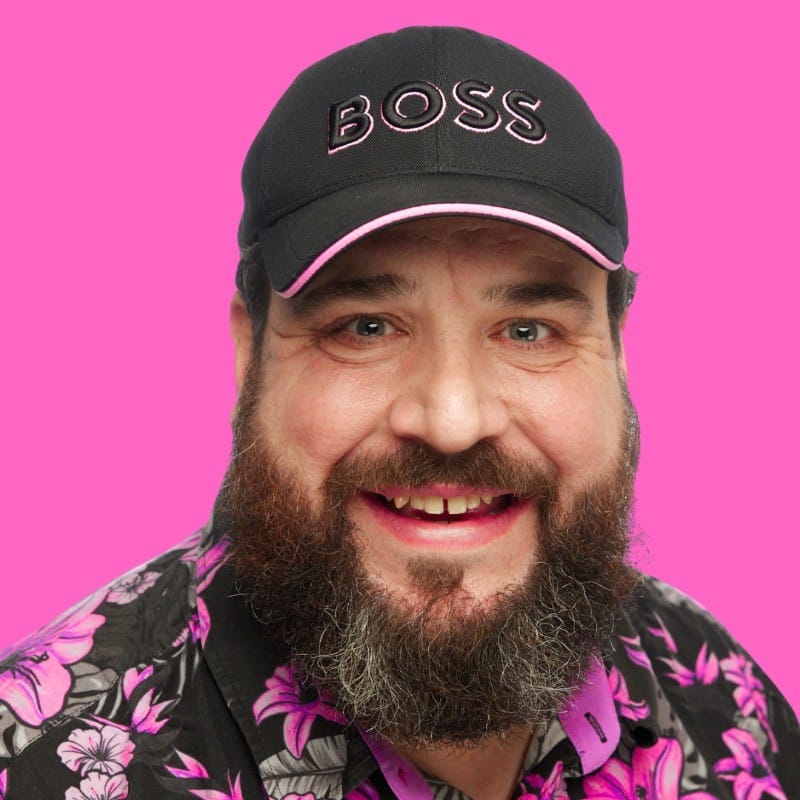
coach, and founder of Forging People. Andhe's dedicated to empowering individuals to embrace their voice, share theirstories, and foster meaningful connections through authenticcommunication. When I asked Nick to describe his superpower,he said that it is turning vulnerability into apowerful tool for connection and transformation.Hello, Nick. Welcome to the show. Hey, Joe. It's great to be here. Thank you
Nick Elstonguest
for asking me. Yeah. And we were just chatting just now, and,
Joanne Lockwoodhost
we worked out that we'd, we both write for HR's own andask how how we connected. Yeah. We do. Great
Nick Elstonguest
publication, and great to have met you along the way as well.18, we worked out from the from the LinkedIn connection buttons. Along time in the making, but I sure will make this worth it.
Joanne Lockwoodhost
We'll figure it out. Yes. I I think back in the early days when II just started in this field, I was clicking and connect on everybody that youcan find. So, yeah, there's probably a Well, I'm gonna pop you a random button.Yeah. I now use AI tools too for me, so I don't have to worryabout it. Yeah. Yeah. We've called this episode the power of honeststorytelling and, you know, looking at your what you do and yoursuperpower. How is the the storytellingbeing built for you, and what's the authenticity and thevulnerability? Yeah. Yeah. How do you use that as a strength? I think for me,
Nick Elstonguest
it comes from my own my own personal journey. So for context, the the nutshellversion, I have mental illness. I have obsessive compulsive disorder,which largely is managed nowadays, but I developed it back in mychildhood. And as I got older, left pretty much untreated because I am thatold. It was wasn't something that was treated the way it would be now. Itthen morphed into something called generalized anxiety disorder or GAD.And as I got older, it started to kind of really take over my life.In my professional career, I was running for around a decade ata really high state of burnout. And then I had a breakdown in02/2012. And it was at that point I started to usespeaking as a therapy. And what I found was,being able to share your experiences and your story and yourthoughts and your insights. And bearing in mind, I did this initiallyin a professional environment. We didn't do that in02/2012. What I found was, despite what you hear on thenews and popular media and social media, humans are essentially good. Go figure. Whoknew? Humans do wanna support you if you only tell them what you need.And what I found was by sharing my experiences with them in a, again, ina professional environment, people started sharing their stuff with me. AndI think for me, that's kinda where I learned that speaking without thefilter, speaking with authenticity and vulnerability, and why has that been hugelyhijacked since, to be fair? It builds a bridge of trust and connectionand depth with people far more than any superficial messagewere ever trained to deliver in professional environments for sure.That's where it started for me. I started to speak more and more about myexperiences. The rooms got bigger. The audiences got bigger. I started to travel the worlddoing this stuff, and the rest, they say, is history. But along the way, andin this spirit of honesty, you can only spend so long speaking about yourstory, especially professionally when it really took off before yourstory starts to own you again. And that's when I started to coach other peopleto share their stories. And that's really what's thrown me into the world thatyou operate in, into the realm of other people's experiences andhow we can be defined by those stories as anegative force, or actually we they can be a catalyst for positive change, and that'swhere it started for me. I hear you what you're saying there in terms of
Joanne Lockwoodhost
if you keep telling that story, it becomes all of you. If you don't carefor it, you end up living in the past because often these stories arehistorical. And there's a an old adage, isn't it? You speak from the scar, notfrom the wound, so you have to be kind of in a good place totalk about it. Yep. But I I go through phases of of telling my story,my journey, my canon, if you like, you know, where I came from and howI'm who I am, who I am. And over time, if you're not careful,it it does. It drags you back ten years.And sometimes it's hard to remember the story of the inaccuracy,so you have to use a facsimile of your story thatis relevant to the audience without necessarily being thewhole truth and nothing about the truth. A good illustration, andyou're pulling out key points, aren't you? So You're That's the challenge for people, Iguess. It is a challenge. And don't get me wrong. I still very much
Nick Elstonguest
use my platform, whether it be from the stage or from writing,as therapy. It makes HR people very nervous, but it's veryreal. I will share what's going through my head right now in front of alive audience. I think it's a really healthy thing. But that being said, asyou say, actually, the further you come away from your story, your experiences,especially if it's a, it's a real kind of big, kind ofpowerful, impactful moment in your life, you do see it very differently. Thecontext kind of changes. I think also because our lives haveother parts and players as well. So when you first start sharing your experiences, you'rekind of respectful of other people's thoughts on these things, that thestory can impact other people. That changes too the more that weget used to being more vulnerable. I guess my rule of thumb onthis is to treat your story as an evolution.So the same story that I told as therapyin 2,012 is the same story I get paid to speakall over the world delivering now. The one difference is it's changed with time. It'schanged with me. It's changed with experiences, with learnings, with connections.So if we start to see our story as a work in progress, we're notconstantly kind of reaffirming the story that we told initially. Yeah.
Joanne Lockwoodhost
No. I I yeah. It it it's also hard to keep telling the it couldbe quite boring telling the same story. You take oh, here we go again. Here'smy life. You know? I wanna spice it up a bit, or this time I'llput that in there. Sometimes it depends on who you're talking to and and whyyou're there and what they wanna hear, doesn't it? It does. And I think this
Nick Elstonguest
is the thing you see, that, no one cares as much as we think theydo. And I mean that in the nicest possible way, that you could be themost exciting a list celebrity, but after fifteen minutes of talkingto an audience, they're gonna wanna know what's in it for them. And I thinkthat's kind of the thing, really, is you're when you're when you're telling yourstory, it's about it's about showcasing thevalue of your experiences, not just your experiences. So,for example, whether it's through mental illness, transitioning, whateveryour experience has been in life, people don't really wanna be walked through thosethings, really. What they do wanna know is how did it impact you, how didit inspire you, how did it affect other people. They wanna have theexperience of going through those challenges without having to relive the the bits thatare already paying for in that sense. And I think once we start to dothat, and I like to see it as if you were to write the storyof your life, about 14 sides of afour is a fifty minute keynote. And 14 sides of afour is 14 chapters, 14 chapters as a book, a book as a business. Younever know when this stuff goes. But a great exercise for all of your kindof viewers and listeners right now, write the story of your life. But Idon't want you to write it from a first person perspective, not I did thisand this happened to me. I want you to write it as if Morgan Freemanwere narrating your life. And how cool would that be, by the way? Soas if a narrator were were actually kind of speaking about you, thenyou start to see the value of your experiences to your audience, and that's forme, it's the difference. That also protects you emotionally as well. Somany people decide to share their story, and it's so vulnerable, andit's so painful for that person to deliver it because they're not doing it froman audience perspective. They're doing it purely from a first personperspective. And I like that. And I think that tunesinto something my nan used to tell me growing up that if everybody put theirproblems into the middle of the room, you'd end up picking your own back becauseyou never know what other stuff what other stuff is going on with other people.And especially in professional environments because we mask it. How are you? Great. Thanks.How are you? Tell people to try telling people you feel rubbish.See how fast they run. Well, I think I've noticed in the, in the space,
Joanne Lockwoodhost
the EDI space, the speaking space, whatever, you know, where we both coexist,is that having a story or having a back you know, having a canon orwhatever is an end to the club becauseI've realized that people have I'm far more willing to share theirvulnerability, their their deepest secrets, their their pain points, everything,really authentically and really vulnerably because II come with my own membership card to thatclub. I was, you know, in the past, you know, you you describedyourself as a 47 year old white man at the beginning of this show oror just before we went online. I I was in thatposition thirteen years ago. I'm now a a 60 year old womanwith a trans history and a previous existence. Andin my old life, I didn't have a membership card to the vulnerabilitysort of power. Yeah. People would I I'd just be seen asa voyeur. But now I meet people, and I understand marginalization. Iunderstand the frustration of not having access to things, beingdenied things, being picked on, being bullied or abused orwhatever it may be. And I can relate to someone who is a person ofcolor, black, some person with disability. Obviously, I don't have theirstory. I I have that empathy bridge where I can go, Iget it. I get what you mean by vulnerability. They look back at me. Theygo, I know you get it. So that shared experience, isn't it? It
Nick Elstonguest
is. I think that the first ten seconds of any interaction withanybody, the two things that people strive for are commonality and community.Why are you like me? Even if you seem completely worlds apart, why are youlike me? And what value is it gonna be for us to have thisconversation, this talk, this keynote, whatever that thing is? I think that's a really importantthing to master, and I think you're quite right. There is a there's a commonthread between a lot of issues that we experience in life, whether itbe mental illness or pronouns, identity, transitioning,race, culture, sexuality. There's so many things that make us diverse andvaried in life. The common fact factor for me is belonging,And it's essentially kind of a big reason why I do what I donow is that it affects our sense of belonging enough to feel thatwe're marginalized enough to not have a platform, to not have a voice, tonot feel that we can step up. So for me, belonging is a commonthread in all this. People that have not always had the platform to
Nick Elstonguest
speak. And we can break this down into even just into thethe the man woman approach as well that why is it that Find Your Voice,the the conference that I run, that 80 to 90% arewomen, but then when we turn up at the conference events where it'sstadium and conference hall events, still most of the speakers are90% male. There are disconnects everywhere.And the only way that we correct disconnects is by steppingup, creating a platform, and finding our voices. So morepower to your elbow, to the other people that speak about culture and race andsexuality and all these other things that other people need to know about. But Ithink there's a there's a real big fear that we are losingthe ability to ask questions from those people as well. Sopeople that are not through going through the experiences thatother people have gone through, I think fueled by cancel culture and something wespoke briefly about before we hit record on this. I think we're really afraid ofasking questions for the fear of being canceled or being ashamed or or just sayingthe wrong thing. And I think that's something we we need tomaintain, the ability to ask better questions. I guarantee youthat so much I don't understand in this world because it's just not been myexperience. So you either blindly agree, notknowing what you're agreeing with, or you blindly disagree where all yourold generational biases run wild. Both are equallydamaging. For me, the bit in the middle is find people that have lived this,find people that know this stuff, and ask them for a genuine need toeducate or to be curious. And I guarantee, Joe, I've not been punchedonce. So that's a good sign. There's thousands of conversations about where people that arenot like me not been punched once. So that's my recommendation to everybody. I
Joanne Lockwoodhost
mean, I'm I'm I'm the first to admit I have an opinion on most things,but I also realized that my opinion isn't always safe. I appreciatethat it's my opinion. And there are certain things I I don't want to havean opinion on, and it frustrates the the pajesus out of people. When II say, I'm sorry. I don't really have an opinion on that. And they say,well, you must have an opinion. You must have thought. I said, well, I dohave some biases. I have some stereotypes, and I have some stories I could tellyou about it. But, really, I persuade me to give me give meyour thoughts. I I don't have a strong enough view to wanna express itto anybody. I think what happens in the world at the moment iseverybody is just feels licensed to express their opinions whetherthey're safe or not. I think you're right. I think there's it's the
Nick Elstonguest
reason I'm not on Facebook. I'm not on Instagram. I'm not on Twitter stroke x,whatever it's called at the moment. I'm only on LinkedIn, and that's kind of whereI hang out. Because of that very reason, I think there's so manyplatforms, which and it was interesting. There was a Harvard study done this manyyears ago that between 18 and 29 year olds, social media was the biggest sourceof anxiety. But in the same survey with the same demographic demographicfrom a mental health perspective, it was a bigger source of positive community for mentalhealth. So, actually, it's not the platforms per se. It's our immersion,our engagement in those platforms. People don't immerse well. Theywill end up doomscrolling or feeling worse. And that's why I left inMay 2020. I decided to leave social media. This wasjust after the pandemic and everything else, had started. And people that Iknew for decades were falling out on a public timeline, and there were really strongopinions flying around everywhere. I thought, I'm out. If you pick up your phone andtwenty minutes later feel worse, that's not a good place to be. And Inever went back. And I still exist commercially and personally, which is agood thing. People think you don't exist if you're not on those things. But Ithink you're right. It gives people a platform to share opinions thatokay. People are people are, I guess, entitled to an opinion.But it's how we decide to immerse in those things. If we feelsensitive about something, we will immerse ourselves in thatthing, and we damage ourselves. Or the other effect isthe echo chamber effect where we just surround ourselves with people like us and takethat approach that you're either with me or against me kind of mentality, which tome, again, is equally damaging. So social media is an interesting one for sure.
Joanne Lockwoodhost
Yeah. I'll take your opinion on something because,I don't know if you noticed but or realized, but I I I do someguest appearances on GB News, which is I did all know that.Yeah. Well, it's it's kind of as toxic as you as you get from afrom a an EDI professional, from a trans woman's perspective. And peoplecriticize me for feeding the beast, if you like.My my view is that if I'm not in the room,they can have that conversation anyway. Am I adding credibility to it beingthere, or am I taking the opportunity to say, hang on aminute. Here's another alternative opinion. And that's my view.So my my view is always go into the room, be a voice ofalternative in a very measured, very balanced, very calm, veryrational way just to counteract the myths because my rationalizationis I'll I'll go anywhere toxic if I'm given a microphone andand and will be heard, even if I'm shouted down or abused while I'm onthe stage, which has happened, just purely becausethere are people in the room who aren'thard right, hard left, hard ingrained, andthey they're open to hearing a different view. And I think we we owe itto those people to give them another voice, and that that's that's why I doit. So I don't know if you you've ever been in that situation where you've,had to walk away. Firstly, I admire your strength and resilience
Nick Elstonguest
because in the spirit of honesty, the and, again, we spoke about it before fora publication I used to write for. It was it was an extremelykind of toxic forum to the extent of our post around mentalhealth, and somebody would say, I don't believe in mental health. I mean, what thehell does that mean? I mean, that's all something we haven't got time to gothrough right now. But but it's, and I withdrew myself from that. So, actually, II would say this was many years ago, but I admire your strength and courageto do that. I personally I would say, like, I'm a reformed people pleaser, butI still get quite sensitive. And I think because I've built a business that'sbased on me, my personal story and stuff, I'm quite sensitive tothat. But I do agree there are environments that are, Iwould say, comparable to what you're doing, whereas I will go and work for alarge organization, get asked to speak to their teams and staff.And I know they're doing it as a tick box exercise. I know there willbe pushback. I know there will be people in that room that are usually andagain, without stereotyping, but generally, it's true. It's the the kindof the the middle aged, or just older than me, maybe male suited,booted, arms folded at the back. They're gonna be the people that aregonna say we don't wanna engage in this stuff. But I'd like you were saying,I'd much rather be there affecting potentially one person than notbe there at all. And I think that's that's the bit that you're doing brilliantlywell is that you're actually staying in that space.But interestingly, those arms folded, middle aged white guysusually, will come up to be afterwards and be the first people to open upabout their challenges. They don't wanna talk an open forum, but they very much wannatalk in a private format. But I think that comes from vulnerability as well thatif you share your experiences and your insights and your storiesunfiltered with honesty, you build trust and rapport withpeople instantly to the extent that I can walk in, and an hour later, I'vegot somebody opening up about their life experiences to me. It's an amazing thing. SoI think that's where, again, my vulnerability rocks, and you will be impactingpeople by what you do on TV news. Yeah. And
Joanne Lockwoodhost
I echo what you're saying about the the arms folded people in theroom. And I've I've had clients brief me beforehand saying, oh, you gotthis person, this person, and this person. They're they're really kind of hard to dealwith, and, you know, they're gonna be really argumentative and pushback, doubtingall this. Okay. That's fine. Is it you you know what I was? No.No. No. No. Because in my experience, what I found is, as you said,these people are the ones that wear change you know, you turn on lights. AndI always frame my my training, my talking is I I'm never here to tellyou what to do, what to think, what to say. That's for you. Change hasto occur in you. All I wanna do is turn some lights on, push thebutton, and encourage you to think. And if that if you come away from itthinking that you don't agree with me, that's fine. I don't have to be right.I talk about perspectives and opinions, and I'm very honest to say that whatI'm trying to do now is sell you my opinion. You have the right tochoose to to adopt it or not adopt it. So I can't tell you tochallenge your own views and opinions than by telling you mine.And you find that these people warm to you, and I'd say the the mostthe people you think are gonna be the most the toughest audience are actually thepussycats. Or if if they aren't entrenched,they do some of my job for me because they asked these pretty direct offoff the wall questions. And the whole room's going, blimey. I'm gladI'm not I'm glad I'm more enlightened than they are. Yeah. And sosometimes they do my job for me by by coming out with those tough questions.But, no, I've always found that most people, as you say, set offby being kind. Nobody grows up or wants to be a dick. And, generally, theydon't wanna look like a dick in the middle of the room. Exactly. And theydo come up afterwards and say, thank you. I've really learned something. Because
Nick Elstonguest
you're talking about something which is either sensitive to them orsomething which even can be considered as a taboo. There's so much generationalstuff that's been handed down to us as taboo. I mean, even things like grief.I mean, later on today, I'm running a webinar with a a counselor onon grief. And even with things like grief in the workplace, it's stilltaboo. Why is grief a a taboo element? And the only way that you tacklethese taboos is what you're doing is you're going in, sharing a story, sharing experiences.And I love the fact that what you're saying is very much like myself. You'renot solution focused in the way that you've got to do this. This is gonnahelp you. This is gonna fix you. This is gonna make you understand. You're givingpeople the ammunition to ask better questions of themselves. And Ithink that's where it stems from. As you say, nobody kind of grows nobodygrows up as a clean slate with that intention to be a dick to people,but that's usually been handed handed down just a generational belief.And, also, it doesn't mean to say that they're wrong. It just needs to theyneed to change the way that they think and feel and understand otherpeople's experiences and not like theirs. I have people sort of come up
Joanne Lockwoodhost
to me and say, I I I don't get trans. I don't getnon binary. And I go, that's okay. I don't either. I don't understand.If I could explain it and bottle it, I could flog it, but Idon't understand it. All I can do is rationalize and say, I just am. Idon't understand what it's like to be transmasculine. I don't understand what it's like tobe non binary because that's not my lived experience. I can tell you how Ifeel about me. You know? A sample size of one, Ican't argue about whether it's right, wrong, indifferentI can't give you a medical explanation. All I can say is there's some sortof neurodivergence where my brain is wired, and this makes sense.I can't expect any further than that. So I think when people try andask me to prove, I go, well, there is no proof. It it just is.Like many things, there's no How they kinda come to you kind of they come
Nick Elstonguest
to you to feel that, right, okay, prove me wrong, kindof mentality. It's like kind of very often if I take to the stage, like,they look at me like, okay, beardy boy, entertain me. Woah.Hopefully, I will, but that's not exactly what I meant, just to entertain you. Ithink it's but I think that's an expectation thing. And andalso, I like to explore, and I like the dynamicsof delivering at a mandatory session asopposed to one that people of of their food choice. That's an interestingdynamic twist as well. Because actually what you find is that youhave to I used to run pubs and clubs back in the day, and Iwas always told to train in my security training, go for the biggest guy first.So I I kinda take that same same approach now to to audiences.So if there is that one Gobby one or the one that's shouting at youa day or the one that they aren't folded, I go for them first. Thenkind of everyone settles down a little bit then. But the mandatory one makes melaugh so much because, actually, you can tell that they just don't wanna be there.They all be swerving at the fact that you're talking about such a personal experiencebecause it's been an experience of them. Even a fan is certainly I wasworking with, American Express with their, diversity teama few years ago now. We were talking about this very thing that actually veryoften why people come into these roles of representing asection of society or section of humanity is because they haveeither experienced that directly or indirectly themselves.But by nature, you then become more sensitive totake on the burdens and the challenges of everybody else. So,
Nick Elstonguest
actually, what it does, it increases the pressure on your own emotional well-being becauseyou are flying the flag. So, actually, if you look at mental healthchampions, for example, that by the time they get home, theyhave not only supported themselves, but 20 other people, and that's before they even gethome. Home is not always a good place.So I think that people like ourselves that are actually out therechampioning things, trying to create thought leadership andstuff, there's an element of we do need to be more selfish as well. Weneed to make sure that we protect our own energy before we putourselves into those situations. And I think for me, that's whyI know my kind of resilience threshold when it comes to pushback. Idon't get that much, to be honest, but, I'm in true admiration of you, Joe,for having a a lot higher threshold to put yourself in these situations. I mean,just GB News generally, that's that is an amazing place for you to gointo. I've got a tune in now. I've got, links.
Joanne Lockwoodhost
I I capture the video. I've recorded myself, and I've got I've got all theshows on. I've got I I got a greatest hits collection, andI actually you I did a speaker show reel for pride last year. Yeah.I clipped all of the intros. I'd like to welcome Joanne Lockwood. I'd like towelcome Joanne Lockwood. I had Jacob Rees Mogg. I had Al Widdicombe. I had,Patrick Christie's. I had all the kind of main presenters welcoming JoanneLockwood, and I thought it was a great little, pride showreelintro. And then I posted you know, like, people posttestimonials on their showreels. I posted all the testimonialsfrom x, all the negative testimonials. I was like, who doesthis bloke think he is with that deep voice? This bloke is wreckingsociety. This bloke is killing our children. I posted those as
Nick Elstonguest
Some big old week, guys. On on my showreels.
Joanne Lockwoodhost
Because, you know, if if you're gonna dance for the devil, you you're gonna you'regonna get you're gonna hit your ass put. This is it. I I I'm trying
Nick Elstonguest
to understand that rational leap between transitioning and you are killing ourchildren. Mutilating them, drugging them, ruining
Joanne Lockwoodhost
their their future, sterilizing them. Really? I I don't rememberadvocating with that. Friend of mine, Ollie, he's he's a
Nick Elstonguest
techie. So he he kind of thinks this way anyway. He's kinda very much lostin AI completely. But, he has this kind of phrase, if I say anythingthat people do that are just weird, he says people are idiots. So I willcaveat that some people are idiots. And like I said, there's a lot of peoplethat really don't deserve to have a voice, let alone find it. Well, the the
Joanne Lockwoodhost
thing is, you've got to respect the fact that people who we think areidiots don't think they're they're idiots themselves. You know, you you live within your ownsense of self and your own echo chamber. I'm putting myself out of here, but
Nick Elstonguest
people saying that you're killing their children, that's a pretty idiotic move, tobe fair. Well, the equation which is actually killing children, anda podcast would be a great way to come out with that. Yeah. Yeah. I'm
Joanne Lockwoodhost
advocating for it. I've had I've had people write me posted letters. They've somehowtracked me down, worked out where I live or my accountant,put a stamp on the envelope, and written it and and post it to me.And then, you know, oh, great. That's really lovely. Thank you. Or they find myemail address, and I get it in my info box every so often. This isa kind of, yeah, this kind of hate mail. But, yeah, it'sInteresting. The way I box it off is I treat it asgraffiti. You know, you're driving through a rough part of town, and there's spray painton all the walls, and it's got swear words. It's got this. It's gotyou go home, and you're this. And you just put your foot down and justkeep driving. So as far as I'm concerned, all these concerts, they're just graffiti. They'renot at me. They're just shouting at the world. I just happen to be thewall they're spraying it on. And they just wipe it off and go, well, youdon't know me. Yeah. You've got no idea who I am. No factin what you've said is so I can detach because it's notpersonal. They think it's personal, but it's not because it's it'ssprayed on the wall as far as I'm concerned. Interesting. Can I ask you a
Nick Elstonguest
question? I appreciate it. This is your show. Yeah. No. No. That's what I have.I get curious, you see. Would you say that the biggestchallenge, what to to you personallywas actual the the decision to transitionor the the announcing of that transition tofamily society and the muggles that are out there rightnow. And, again, I'm a big party lots of fans. I use the muggles verypositively, by the way. Yeah. The the toughest thing was, I think, coming
Joanne Lockwoodhost
out to myself, so accepting and realizingwho I and working out when it wasnecessary. So I always say that when it becamenecessary, it became necessary. Before it was necessary, itwas manageable. So it was that point when it became necessary.And then at that point there, I didn'tso much transition. The world had to. So I'mstill kind of the eyes still see the same as everybodyelse, but it was my brother, other mother inlaws, or my friends, or my reputation, or my career. Those are the people that
Joanne Lockwoodhost
I kinda got used to me. So, you know, you talk about we talk aboutthe the social model or the medical model of disability, it's society thatis the problem. And and for me, it was the worldthat had to realign its perspective of me, and all I had to do wasjust try try and keep being the best me I could so the world wouldalign in the way I want it to realign around me and to shift itby one eighty or something. So, yeah, that that was the challenge. Socoming out initially, I I did when I was drunk onFacebook. We talked about social media. So that kindof was ripping the sticky parts off pretty quick, and I then justwoke up in the morning and then owned it. And, yeah, I simplify it, butthat's that's that's the headline, the jovial kind of get the audience laughing typeheadline. But, yeah, my what what I realized very earlyon was the challenge wasn't me. It was the impact on myfamily, close family. That that was the hardest bit where I thought it was allabout me, but, actually, I realized it wasn't it was all about everybody else. Andthey needed more help than I did. And, because youknow, you see these things. You know? The first one is very good at this,you know, YOLO. If they're not with you, they're against you. You gotta geton with life and bugger them. If they're not up for it, you just walkaway. It's toxic. And I can see people who've done who've taken that attitude, andthey've they're walking alone. Whereas I I decide, well, II didn't want to walk alone. I wanted to be selfish and have what Ihad. And when that's your objective, you take adifferent approach. Now I always say, in order to be liked, you have to belikeable. In order to be loved, you have to be lovable. In In order tobe respected, you have to be worthy of that respect. And all thatwas I had the power in my in myselfto be likable, lovable, and and worthy of respect. Not anybodyelse. Everybody else could then take me.I've used this depression several times, like, escape to where the puck is going, notto where it is. If that's where I wanna be, that's where I go ahead.And don't expect people to come to me and just accept me for who Iwas. So that that was the important lesson, but a lot of that was forthe epiphanies and and realizations based onthe feedback from my my wife, feedback from my daughter, especially,who who gave me a a bit of a a mental slap around the faceand said wake up and smell the coffee. You're a dick.If you want us to see you differently, behave differently. Yeah.Interesting. Thank you for sharing that, by the way. I appreciate that. No. Aswe started diving a bit deeper, can I You mentioned your mentalhealth challenges? You mentioned your OCD. OCD is a is a is a aterm that's bathed around often. You you have people, oh, Igotta keep it there. Oh, it's my OCD. Oh, it's my OCD. Yeah. And,yeah, we obviously appreciate there's a difference between people stealingthat phrase for for the just that they don't wanna move their pencil two inches.So I like it to have their pen sway and align with align with something.But on what you had, can you just tell me or tell thelisteners, what is OCD Yep. From your perspective? I
Nick Elstonguest
think o so obsessive compulsive disorder. So OCD, I think much triviamanaged due to channel four is OCD cleaners, as you say, or I'm a littlebit OCD. It doesn't kinda work that way. It's very painful, frustrating condition. It's,so I developed at the age of seven, and I'm after witnessing a a familyaccident. And it was I think anybody's experienced anyform of mental illness very often. It can be chemical, of course, but very often,it comes from a very severe action, produces a very severe reaction.So OCD is the ultimate pursuit of the uncontrollable.
Nick Elstonguest
So how it manifested was I started to check gas, which is in sets ofthree, light switches in sets of three, locks in sets of three with that feelingof comfort is the desired outcome. But the other outcomewas and it's the fear that drives you is that if I didn't do thesethings, I would bring harm or even kill my family because the thesituation was family related. So therefore, it's kinda assumedprotection of the family through going through these checks and measures, whichsounds hugely irrational to to people that have not experienced that. ButI think there's something in that. The rationality goes out the window when obsession andcompulsion are thrown into the mix. So, so it's kinda like a routine you haveto do, and it kind of it fuels high anxiety.So through education, into my kind of teams,I was fueled by high anxiety. I I think that's the kicker though, really, thatyou can you see this a lot in professional life, and I write, like, alot about this in in kind of HR publications such as yourself and,that we can be highly successful and highly performing fueled byanxiety, but you can only run for so long until you stop, and thereinlies the problem. I also think that it's taught me a lotabout the way I speak, and like yourself in what you just said, I'm notsolution focused. So, actually, I don't share what anxietyand and obsession compulsion is. I share what it does. So do youconstantly ruminate on things that have gone wrong before, past relationships,past conversations, past decisions, and you replay them with a very real andvery current feeling of guilt and remorse and regret. And whatit does, it changes your narrative enough to start to then catastrophize what's tocome. So, again, you wake up that feeling of fear and dread of everything thatyou're doing. It's all gonna go wrong. And I think that's why inmy current life, and I focus so much on one thing, I don't coachpresentation skills. That's not really my thing. What I coach is transformationthrough speaking. You change your narrative. You change your experience. But itcame from OCD. And I think there's something in that and andfrom what you've brilliantly shared as well, Joe, that fromultimate chaos can come magic. From the biggest ofadversities can come the most exciting things. But let'snot beat around the bush here. Both of those things could have easily destroyed somebodyas well. And I think there's something in that that you the same thing thatcan be the destructive force in somebody's lifecan also be the catalyst for positive change if we only use it in theright way. And that's why I focus so much on narrative. Because I think forme, OCD is fueled by negative narrative. It's fueledby high anxiety, but also there's a word I'm struggling for here, intrusivethoughts. Are you are you aware
Joanne Lockwoodhost
that it is a falsebelief? Are you aware that you you you're you're trying to doubtyourself all the time going, I know this is wrong, but I can't stop myself.Is it a feeling of powerlessness that you can't override it? Yeah. I think certainly
Nick Elstonguest
and it has to be said with professional help, certainly in lateryears. It actually makes you kinda questioneverything in that sense. I always say to people now, one of the best thingswe can do is set out on a mission to prove ourselves wrong and actuallyrealize that most of the things that we get anxious anxious aboutnever happen. I mean, I use the example in 02/2012 after mybreakdown. I kept something called a worry journal. It sounds weird, but go with me.It's a really, like, messed up version of a gratitude journal. I wrote down everythingthat made me highly anxious or the byproducts of high anxiety, so, like, defensive andaggressive behavior. Jealousy and insecurity were huge in my world.Erratic behavior, sedgy lack of energy. And on day one, therewere a 28 entries. And two weeks later welcome toOCD. Two weeks later, I I kind of checked back on dayone, and of those of those a 28 things, absolutely none of themhappened. And the more that I started to prove myself wrong,when that pattern starts to come in, I can thenstart to change the narrative enough to say, actually, no, because it didn't it didn'thappen last time. It's the same as,I'm sure everybody here has had that feeling that they left the other on, theyleft the door unlocked. It's kind of like that on repeat in that sense. Butthe more that we start to kinda check these things if I'm tired and stressed,and the reason I say I have OCD even now, it it never goes.If I'm tired enough, stressed enough, shocked enough, I actually developed it againafter after having a road accident a few years ago, but I come back veryquickly. If I check something more than twice, I have to physically stop myself becauseI will fall back into that routine. I do a roadshow with an amazing,what I called my neuroboffin, Ellen. She she says that when we create anxietyabout things, we damage ourselves mentally, physically, spiritually, andemotionally as if it were actually happening anyway. So we'rekind of damaging ourselves multiple times about the same situation. So one of thethe main kind of points of what I speak about now is to factcheck our anxieties. And, actually, is thisfact, or is it the story that we're telling ourselves? And isit if it is the story that we're telling ourselves, we can change thatstory. And if it's facts, go for closure.I always use the example of the text message. So if you'veever had a row with somebody really close to you by text message, iMessage, orWhatsApp, the three dots causes far more anxiety than theactual end of that conversation. And what about the disappearing three dots?So much anxiety. But the end of that conversation is never that bad.And and this is the thing. We we were constantly assuming worst case outcomes.So my advice to to people listening and watching this today, setout on a mission to prove yourself wrong. You'll be surprised at how little actuallyhappens. Yeah. So I I I use that kind of
Joanne Lockwoodhost
expression. There's a a forecaster called Paul Saffo, and he coined the phrasestrong opinions are weakly held. And part of that is, yes, you're allowedyour opinions, but go out to the worldbelieving you're wrong and and and try to prove you'rewrong rather than start believing you're right, try to prove you're right. It's abit like that's what scientists do. They put a theory out there and they tryand prove each other wrong, and they they welcome criticism and peer reviews, and everyonewho's done a PhD has to justify their opinions with peoplesaying you're wrong. They have to stand up and defend it. So, yeah, mostpeople wanna be right. Most conversations are about selling my opinionto you, even if it's just, it's nice weather. I'm selling you thatbelief that the weather's nice, and you're gonna go, well, it's a bit cloudy.So you're you're you're giving me your opinion back. And you try and analyze aconversation that doesn't have an opinion or a belief in it. Does that happen?
Nick Elstonguest
Yeah. Very true. I mean, it's important to say that I I I do sharewhat I call lived experience playbook tips. So they're kind of they're not advisedby any stretch and not solutions. If you are havingthoughts which are intrusive or causes you pain or frustration,absolutely reach out for professional help. I would strongly recommend that, of course,as a clear morality and also for insurance purposes. That's that'smy disclaimer. But I think there's again, there's something in that with what we bothdo. We're we're there to share lived experience.I think for me, lived experience I was speaking at theCIPD workplace well-being conference last week in London, and one of themain drivers of the message there was lived experience being the perfect vehicle todrive engagement to help or to solutions or insights orcommunity, but it's not the answer. I think the worryingthing for me is I see a lot of people, especially in a mental healthspace, because that's a space I I'm in mainly. They're taking on thatresponsibility. We're helping people at their most vulnerable without thequalifications, training, or skills to actually help that person.I think for me, it's really about communicating ourniche and our, the reason why we'rethere. And, obviously, for both of us, it's kind of what we do. Wegive people our experiences. We give people our lived experience. We share what
Nick Elstonguest
works, what hasn't worked. And I think people really like that, but it's just avehicle to reach out for help. Our role is to get people to a pointof engaging in, for me, certainly, the theproper solutions. And for you, it was actually changingthoughts, changing minds. I mean, one of the things that I findpeople that have been through experiences in their lives find mostdifficult to start with is trying to engage with people thatdon't think like them and actually quite bluntly andand sometimes, as you say, abusively don't agree with them as well. That could bereally challenging sometimes. How do you deal with that? How do you deal withyou've mentioned kind of, like, the the letters and stuff that you get, but howdo you deal with the kind of the what I call the low level toxicity,you know, the the little pushbacks that you get? Do you ever get that inperson as well? I know this is your show, but I'm also very curious about
Joanne Lockwoodhost
it. No. No. I'm I I work I work on the the question. Imean, out of all of my experience, I've only ever hadone or two occasions where someone wasmade a point in one of my training sessions. They objectedto me using the word cis as a prefix.Cis is obviously a trans. And they gotreally empty about that word. And the fact thatI used gender identity or gender when I should have been talkingabout sex and the Equality Act, and and they said, I don't have a genderidentity. I said, that's great. I've got a lot of my friends who are nonbinary who don't subscribe to gender either. Fine. That really blew their brainsout. You know? I was agreeing with them in a in a way. But theycaught me unawares, and I'll admit now that I had to go out andhave a have a bit of a toilet break and recompose myselfbecause I was not used to dealing with that hostility. Butwhat disappointed me most was in a room full ofpeople, nobody spoke up.Nobody said anything. And afterwards, they all came up to me and said, oh, youyou okay? Were you okay? Then they they told me this personwas opinionated or awkward. They had a lot of trouble in the organization. Ithought someone could have briefed me. Someone could have just mentioned that. Someone couldhave pointed it out. Someone you know, the senior people in that room,could have addressed that with that person, and I felt hung out to dry abit. So, yeah, it has happened. But I suppose I'm better prepared because I alwaysgo into spaces. It's it's the there's a percentage of15%. Fifteen % of people have racist have sexistviews other than have views that are are off main kilter.Look at the bell curve inimality. There's always gonna be the 15% top,15% bottom. So I I always expect getting on a bus.There's 15% of the people not gonna like me. Walk into a room, I havea hundred people, 15 people in that room are not gonna like me. So Igo home with that kind of defense mechanism preprimed. Andmost of the time, 99% of the time, it's it's the anxiety thatthat never occurs. And I so I don't let it scare me. Imanage that anxiety by just knowing that I've got my plan b in my backpocket if it happens. Right? Now I can show you my plan b card. Iknow how to deal with that. I've got an exit strategy. And, generally, myexit strategy is don't engage the trolls. You know, if you feed the troll, thethe troll grows. If you give it oxygen, which is what I'msaying on TV news sometimes.No. One on one, people people don't. I had an incident where someonedoor stopped me. I suppose he was a politician term at a ata a festival conference. They wanted my opinion ontrans people in sport. I'm not a sports person. I don't doelite. I don't run. I maybe go do recreational swimming,go for, a bit of gym work, but I'm not a sports person. I don'thave a a strong opinion on on trans competition atall. I realize it's polarized. I realized thereare it's I can produce a report that says this, and you can produce areport that says that. And we're arguing scientific reports, andI don't know which is best. So this person wanted me toacquiesce to their view that it was all wrong. It was cheating. I said, well,look. I don't wanna argue with you. I it's not my specialist subject.There's there's there's balance of a view here. They go, please. They weredetermined to have an argument with the artist. I don't owe you an argument, I'mafraid. I'm sorry. And, talk about something else, but I don't owe you anargument, and I'm not gonna argue on this. So, yeah, that that's how I wouldYou need to answer on behalf of everybody, isn't it? Sorry. You brokeup. It's it's kind of like they want you to answer on behalf of the
Nick Elstonguest
whole community. Yeah. You represent every single trans person in the
Joanne Lockwoodhost
world. And, yeah, every every person that you've experienced is different, and it's in thesame way, your your anxiety or OCD is unique to you,how you experienced it. It must have been immensely frustrating for people wholoved and cared for you or knew you, having a a rational view ofwhat you're doing saying, come on, Nick. Can't you see this isyou know, can't you just hold your breath and try and cure your hiccups? Can'tyou just do everyone everyone's got a cure, haven't they? They have. And I
Nick Elstonguest
think has to be said. I come from a very loving family. I'm very luckythat way. Interestingly, my memory isn't great. I,I had to look back on NHS records to see kinda, like, the date ofdiagnosis and everything else that happened along the way, and I was speaking to mymy mom and everything else. So growing up day to day, I can't remember actuallyhow it felt. But as I came into the late teens, I I do verymuch remember that because, obviously, it's a very memorable period. But theywere great. But interestingly, I think, societally, which is why I asked you the questionabout kind of societal kind of expectations, you get labeledas something. And we do this, especially with kids. He's a warrior. He'ssensitive. And, of course, that reaffirms then the belief that I am like thatanyway. So it becomes kind of just part of the norm and part of whatyou do. When I first started to address this and and, again, for aprofessional help, I actually had to kind of speak to everybody and say, look.
Nick Elstonguest
If I ask you for reassurance once, answer me.If I ask you for reassurance again, don't answer me.Because if anybody here has had experiences of OCD,you'll know that reassurance lasts for about twenty minutes. SoI think people family have always been very supportive. Obviously, Igot Teresa, got counseling, everything else in my childhood. But I think it wasn'taddressed because of just the way that the medical services were not lined up then.I mean, I'm 47 now, so this is a long time ago. It was onlyreally when I started to address this in 02/2012, I started to make real kindof inroads using current day therapy,CBT, and lots of other things that are available now that just weren't available mainstreamthen. Do you perceive it was already innate within you and
Joanne Lockwoodhost
there was a trigger event that set it off, or do you think it wasa alert behavior later in life from a trigger event? Or do youthink some of your anxiety, some of your upbringing has kind of made youvulnerable to to developing this kind of mental healthchallenge? Great question. The trigger point was,
Nick Elstonguest
as I understand it well, obviously, I can't remember before that. But as Iunderstand it, the trigger point was the the accident with my my sister and andseeing that happen. I would saythat the the what I call flare ups since in a majorway have always happened at high points of stress. So there's an element of mewhich kind of feels that maybe that's my default setting that I go straightback to that point. It's but it's kind of like the you're trying to controleverything. And I think, again, that links in with just generalanxiety. And everybody that, that has that level of anxiety,you try and control everything and everyone, and that only compains the level ofanxiety you're experiencing because you cannot control anybody or anything, andthe pursuit of doing so will only create extra damage. So it's areally interesting one. Maybe that is my default setting. I kind of reference themnow as Indiana Jones mining cart tracks. They're always there. But if Iget shunted back onto them, I know it's come back quicker. I say Indiana Jones.I mean, I'm back to the exit now. Is that what you're saying? It's like
Joanne Lockwoodhost
a a nineteen eighties computer game where you're trying to wander around trying to findthe exit, and you know where the exit is. You turn left, turn right, turnleft, turn right, and there it is. Yeah. I love that reference, Joe. I'm a
Nick Elstonguest
big gamer myself, so I do love that reference. It's really cool. Is that I
Joanne Lockwoodhost
I I was just thinking about my own sort of the way I would handlethings. And I think over my life, I may have gone through moments in mylife where I was acquiring stress and pressure, and everything wasdoom and gloom. There's no way out. How do I cope with this? And thenI think I didn't do what you did, which is write down all these thingsthat you worry about and then realize they hadn't happened. I I think my brainjust was able to go, that's not real. That's not real. That's notreal. And I I think I've recalibrated my pressure valve, whereas it used tohave a high tolerance for pressure. And now it it blows really, really quickly. Igo, not worth it. It's like sticking a knife in a car tire. It justdeflates quickly, and I'm I have a quick I have a fucking yeah.Don't care. I'm out. Just poof. Not playing. Andit's, it's, allows me to sort of deescalate things veryquickly. Yeah. I love that. That's really cool. A friend of mine, Zoe,
Nick Elstonguest
she she says, I put it in front of the itty bitty shitty committee.
Joanne Lockwoodhost
And The brain is doing the Got ajar of fucks to give, which I I can't get one of them. That's pretty
Nick Elstonguest
cool. I've only got so many, and it's like, for special people, I have a
Joanne Lockwoodhost
a jar of hugs though, as well. So, you know, these are things I wannaget. Big fan of hugs. I'm I'm a big fan of that. That's cool. Ilove it. Yeah. I think put it in context that you, you know, whenyou wanna use fucks or spoons or whatever it is, you've only got so muchyou can give without it eating into you, isn't it? You know? I I'm notprepared to give you that fuck, I'm afraid. Sorry. It's notyours. I don't want it. It's mine. Yeah. There is. But
Nick Elstonguest
I think that takes a level of confidence and self esteem.I think when people go through an adversity or a huge periodof change, I think that actually two of the things that are impacted for alot of people are self esteem and confidence, that not feeling they have the rightto reserve your fucks in this sense. There's something really empowering about findingyour voice. I think there's something really empowering about being able to own your storyin a way that you've taken control of the narrative in that sense.I love that. I think that's such a cool thing. And when combined
Nick Elstonguest
with seeing what the value is in your story to other peoplebecause actually, interestingly, the values of other people may not be something you consider important.Maybe it's such a small part of your journey, but when you start to seeit from an audience perspective, there's something in your experiences, Joe, which reallyresonates with people. And interestingly and, again, this came up inconversation yesterday with, with a client that I could deliver the sametalk to the same audience four timesand have four different outcomes because if that one person in theaudience is going through a marital problem, they're gonna pick up on the bit whenI talk about personal relationships. Next time around, it could be a professionalproblem, and they'll pick up they'll ignore the other bit. So it's it's not aboutwhat we say to people. Trying to shatter our egos here. It'sabout the receiver. It's about where they are and actually what they wanna pick upfrom there. Yeah. How you make people feel? Yes. Yes. How you
Joanne Lockwoodhost
move them from a to b. It is. And I'm I think I'm the sameas you. I I stand on the stage, and I've got a start and end,and I've got a rough map of how I'm gonna get from start to end.Yeah. A lot of it just depends on who smiles at me. If I saysomething and someone smiles at me, I go, okay. We'll just go into that abit more. I'll talk to you for a bit. And I love that. Someone elsewill smile, and I'll talk to them for a bit. And it's Yeah. Different peoplewill smile at different times or not, and you just feed off the audience. AndI think that's the important thing. If I've got if I know I've got oneperson listening, I'm gonna keep talking to that one person. Yeah. I think it's
Nick Elstonguest
it's a musician thing. It's like you riff with your content. You you know what'sallowed in, so you stay in that. And I love that. That's really cool. Ilove that. Yeah. I mean, I've I've I've never done a
Joanne Lockwoodhost
TEDx because you have to learn it off by heart and practiceit and demo it. I don't do the same talk twice. I mean, I'veI've got the same themes. I've got my LEGO bricks that I can make afire station out of. But today, I might wanna make a racing car. You know?It's still the same bricks. Yeah. Yeah. Exactly. TED TED's an interesting
Nick Elstonguest
one. As a disclaimer, I do I do enjoy TED TED Talks, TEDx Talks, butthey do, as you say, follow the same kind of format and the same kindof outcome and stuff. I prefer more free flowing. So in the same waythat people like Toastmasters have an amazing space in the world for presentation skills andstuff, for me, it's it's finding somebody's voice andamplifying them. It's not about kind of this conveyor belt ofmaking rinse and repeat speakers and and the way that they deliver and the waythat they format. I'm very much like you, Joe, that I'll have a bigimage behind me on the screen, and then I'll work out where I'm gonna gowith this when I'm actually in front of people. And I think there's something init as well that you you've probably had the same experience. So there's things inmy head. Do a lot of thinking when I'm traveling and then creating, like, newtalks and stuff. And there's something I think this is gonna be brilliant. When Isay this, it's gonna be such a laugh. Be rolling in the oils. Nothing.
Nick Elstonguest
Tumbleweeds everywhere. And there's things that I've tripped over on the stage, which justwork because that it just on the and that stays in. Sothat's why I always say that your story is an evolution, that it evolveswith you and the world and the audience and society and Donald Trumpand everything else is experiencing in the world right now. They're they're all has anelement of it changes the way that our story is told. Doesn't make youryour story wrong. It doesn't make your story disingenuousor not original. It just means that you're adapting itto where you where your beliefs and where your thoughts and insights are coming fromthere. Yeah. My brain's I I think in in pictures and
Joanne Lockwoodhost
metaphors, which work in my head, they're not always working on people's heads. But II think I was on stage once, and someone asked me this question. So howdo you handle it when people areoverenthusiastic or whatever whatever the phrase was? And I said,well, I'd rather ride a bucking bronco than drag a nag.So at least with a bucking bronco, you've got some energy. You could you canwork with it. You can tame it. You can you can direct the energy. Witha nag, just towing it along, you you're doing all the work. It doesn't wannabe there. People come up to me after someone and someone, oh, I've written thatdown and drag you know, don't remember my a dragon egg. And it's just somethingthat popped into my head when someone asked me a question, and, it's become somethingI I I've used often. I like that. It's not not a
Nick Elstonguest
quote I thought I was gonna get today, but I like those.
Joanne Lockwoodhost
And I don't know about you, but you find yourself using these quotes. You thinkyou've made them up, and then other people use them. Have you listened to mystuff, or have I listened to your stuff, or was it just a a reallygood conversation? I I quite openly own own my,
Nick Elstonguest
kind of complete copying because they're usually country music songs. I'm ahuge country music fan. It's kind of my thing. I love, kind of, Nashville andeverything else. And, so a lot of my quotes andtalk titles are country music songs. I think, actually, by owning it, I knowthat I'm not certainly not playing any copy of somebody else I've listened to. ButI think you're right. I think that so the quote that I I love isevery storm runs out of rain, and and I use that the end of everytalk. But I kind of make a joke of the fact it'snot mine. I just it's a great country song by GaryAllen. Check it out. But I I think you can have 10speakers sharing the same sentiment from the stage and have 10 different impactsbecause it's not about what we say. It's about how we make people feel andhow you deliver it. And the genuine, authentic,vulnerable Joe that's sharing that statement will be very different fromsomebody else. I always kinda liken it to scripted sales calls. No. It'sjust in general. She don't buy into it. You you just you treat her withthe respect it deserves. Like, usually, you pull the cable out the wall.Or you see an amazingly polished speaker at a conference.Politicians are great in this. Amazingly polished, but you can't buy into it.You can't emotionally buy into it because you just know it's kind of, oryou see that kind of cell speaker at a conference, and they'll give you anamazingly polished talk. They'll run to the back of the room now. There's only 10,000pounds. They've lost you because it's disingenuous. And I thinkthat's the bit that we need to explore more people like you, Joe, whereyou are leading I call it emotional leadership and emotionalstorytelling. You're taking people on a journey throughfeeling what you're saying, not hearing the words per se. Ithink people will very rarely remember what I've said,but they'll know how I make them feel. And that's the bit that sticks withpeople. I don't get a secret. I very rarely rarely remember what I've said myself.
Joanne Lockwoodhost
It's it just it it comes out of a bit. My braincomes out of my mouth, but it doesn't go through the memory part. And it'sjust, I've taken to recording. I've got a mic I cliponto my lapel sometimes on my dress when I'm speaking, and I I transcribe itafter, so I can look back and go, oh, that was actually some good stuff
Nick Elstonguest
in there, wasn't it? Something like that. It's a great idea. Because usually I justend up slipping the videographer a couple of hundred quid to get the rawfootage. Actually, re recording my own is a good shout. That's a that's a greattip. Yeah. I've got an app on my phone, and I've got a little mic.
Joanne Lockwoodhost
I just clip it on and and just get my phone to record. And thenI I upload it into AI, and it transcribes it. It comes up with takeaways.And I I often give my That's that. Speaker booker I said, you know, II not only talk. I'll give you, an FAQ, a aterminology, and a and a and an output, a takeaways from this from mytalk. Yeah. Go back, drag and drop, puff cut it and paste it into Word,PDF it, and send off the speaker book. Yeah. Yeah. Send it to your audience.
Nick Elstonguest
But that's because you're creating an experience. You're notjust giving a talk. You're creating an experience where people getgenuine value from that. But, again, you see I mean, you I'm sure you've beenat these conferences speaking as well. You see so many speakers that just kinda likecome on and do the slides and the whole Chris Whitty thing and then goagain. And it's like what actually happened there. But we don't we can't rememberwhat he said or what was covered. But, okay, who's next? And I think that'swhy when you get somebody with genuine emotion comes on, it reallyenlivens the room. It really wakes people up because, actually, what you're
Nick Elstonguest
talking about is a human experience. And not people that have had the sameexperience as you very often, but people that want they're just intriguedby We have been brought up andfor generations on storytelling, good and bad, butBut it's the stories that we tell people. And I think your ability to changethe dynamic in the room is is absolutely a superpower becauseyou know it's true. When we've been in the open plan office and that reallyangry person walks in, that stuff ripples. When really happy person walks in, thatstuff ripples. You can change the environment with your words immediately, but it'sthe emotion that really people tune into. That's what they feel. Yeah. I can't waitto see one of your talks, no joke. Well, when we when we hang up
Joanne Lockwoodhost
this, we'll have to exchange some notes. Maybe we'll collaborate on something. Sounds good. Do
Nick Elstonguest
talk about that. Yeah. Nick, it's been an absolutely
Joanne Lockwoodhost
fascinating chat in a way, and, Love that. Thank you. It's nice to find akindred spirit, and Yeah. We share a lot of commonvalues, beliefs, and thoughts. And, yeah,and thank you for going deep on your mental health and your OCD. And I'veI have to admit, I was a bit curious, and I I I thankyour vulnerability for sharing it with me and the audience. So, yeah, thankyou. Bye bye. Likewise, Joe. Thank you. Lovely to meet you as well, and and
Nick Elstonguest
thanks to everybody else for tuning in as well. Who can get ahold of you?Nice and simple, just like me. B w w nick elston dot com. You'll findeverything on there. I'm not on Facebook, Twitter, or Instagram. Just if you are onLinkedIn, you can connect me with me on there for sure. And also
Joanne Lockwoodhost
look up your articles on HR's own training zone and publications such as that. Yeah.
Nick Elstonguest
Absolutely. Yeah. Stay tuned for those, and I'll be digging a bit deeper into yourarchive as well. So I really like the cut of your chip.
Joanne Lockwoodhost
Excellent. Let's get to easy turn as well. Carry on, Phil. Nick,thank you. Thank you. As we bring thisconversation to a close, I want to express my deepestgratitude to you, our listener, for lending your earand heart to the cause of inclusion. Iftoday's discussion struck a chord, consider subscribing toInclusion Bites and become part of our ever growingcommunity, driving real change. Share this journey withfriends, family, and colleagues. Let's amplify the voicesthat matter. Got thoughts, stories, or a visionto share? I'm all ears. Reach out tojo.lockwood@seechangehappen.co.uk,and let's make your voice heard. Until next time. This isJoanne Lockwood signing off with a promise to return withmore enriching narratives that challenge, inspire,and unite us all. Here's to fostering a more inclusive world,one episode at a time. Catch you on the next bite.
The Power of Honest Storytelling for Connection and BelongingUnderstanding and Destigmatising Mental Health—A Lived Experience PerspectiveCreating Inclusive Cultures through Empathy and Dialogue
Joanne Lockwood is joined by speaker and coach Nick Elston to explore what honest storytelling can unlock—for individuals, audiences, and workplace conversations that are often hard to have.
Nick shares how lived experience of obsessive compulsive disorder, anxiety, burnout, and a breakdown shaped his relationship with speaking, and why telling the truth without a filter can build trust and connection. Together they discuss the emotional cost of repeatedly telling a personal story, the need to let narratives evolve over time, and how to communicate with vulnerability without getting trapped in the past.
The conversation also examines inclusion in challenging environments: asking better questions, navigating fear of saying the wrong thing, and how authenticity can disrupt echo chambers. Joanne reflects on her own journey, including her trans history, what it meant to come out, and why being present in “toxic” spaces can still matter if it reaches those open to another perspective.
Listeners will come away with practical ways to think about sharing their story with boundaries, focusing on the value to the audience, and using authenticity as a catalyst for connection, belonging, and positive change.
“speaking without the filter, speaking with authenticity and vulnerability, and why has that been hugely hijacked since, to be fair? It builds a bridge of trust and connection and depth with people far more than any superficial message were ever trained to deliver in professional environments for sure.”
“No one cares as much as we think they do. And I mean that in the nicest possible way, that you could be the most exciting a list celebrity, but after fifteen minutes of talking to an audience, they're gonna wanna know what's in it for them.”
“The common fact factor for me is belonging, And it's essentially kind of a big reason why I do what I do now is that it affects our sense of belonging enough to feel that we're marginalized enough to not have a platform, to not have a voice, to not feel that we can step up.”
“I think we're really afraid of asking questions for the fear of being canceled or being ashamed or or just saying the wrong thing. And I think that's something we we need to maintain, the ability to ask better questions.”
“Very often why people come into these roles of representing a section of society or section of humanity is because they have either experienced that directly or indirectly themselves. But by nature, you then become more sensitive to take on the burdens and the challenges of everybody else.”
“So, actually, if you look at mental health champions, for example, that by the time they get home, they have not only supported themselves, but 20 other people, and that's before they even get home. Home is not always a good place.”
“One of the things that I find people that have been through experiences in their lives find most difficult to start with is trying to engage with people that don't think like them and actually quite bluntly and and sometimes, as you say, abusively don't agree with them as well. That could be really challenging sometimes.”
“I could deliver the same talk to the same audience four times and have four different outcomes because if that one person in the audience is going through a marital problem, they're gonna pick up on the bit when I talk about personal relationships. Next time around, it could be a professional problem, and they'll pick up they'll ignore the other bit.”
How embracing vulnerability in storytelling builds trust and deeper human connections within professional environments.
The dynamic nature of personal stories, and why continually evolving narrative ensures authenticity and sustained impact.
Strategies for using lived experience as a catalyst for education, empathy, and organisational transformation.
Techniques for managing the potential emotional toll of sharing difficult stories, such as reframing the narrative and maintaining personal boundaries.
The necessity of cultivating spaces where uncomfortable questions can be safely asked, promoting dialogue and reducing the fear of “getting it wrong” in inclusion work.
Recognising the universality of belonging as a cornerstone for inclusion, regardless of background or identity marker.
Why challenging conversations—both in and beyond the workplace—are essential for moving from superficial diversity exercises to genuine cultural change.
One thing to remember
The transformative power of honest storytelling lies in its ability to foster genuine connection, trust and inclusion by embracing vulnerability, evolving personal narratives, and amplifying voices that are often unheard in both personal and professional arenas.
Explore topics
Ideas from this episode
The Power of Honest Storytelling for Connection and Belonging
Reflecting on my recent conversation with Nick, I was struck by how authentic storytelling holds the key to deeper human connection and a sense of belonging—especially in a world that often encourages us to mask our vulnerabilities. Nick shared how his own journey with mental health difficulties, including obsessive compulsive disorder (OCD) and generalised anxiety disorder, led him to use his voice as a tool not just for personal therapeutic benefit, but also to break down barriers in professional environments.
Understanding and Destigmatising Mental Health—A Lived Experience Perspective
Another profound strand of our conversation revolved around destigmatising mental health challenges by sharing lived experience. Nick described his OCD not as mere “tidiness” or quirkiness (a common misconception), but as a painful, compulsive condition driven by deep anxiety and the need for control—an effort to protect loved ones even when it felt irrational.
Creating Inclusive Cultures through Empathy and Dialogue
Especially the nuances of belonging for those with marginalised identities. I shared my own experience of transitioning and the way it created a “membership card” to the club of vulnerability, offering me new empathy bridges with others who have faced marginalisation, whether due to race, disability, gender, or sexuality.
Learn
Frequently asked questions
What is meant by “honest storytelling” in the context of inclusion and belonging?
Honest storytelling involves sharing one’s personal journey, challenges, and breakthroughs with authenticity and vulnerability. On this episode, Nick Elston explains that speaking without a filter and turning vulnerability into a tool can foster trust and forge deep connections within professional and personal spaces. The focus is on narrating lived experiences in a way that connects with others, sparking empathy and understanding.
---
How can personal stories help drive inclusion in the workplace?
Sharing authentic experiences allows individuals to find common ground, creating a bridge of trust. Joanne and Nick highlight that when people courageously open up, others often feel inspired to share their stories too, which breaks down barriers and promotes a sense of belonging. Storytelling transforms hidden struggles into widely understood issues, supporting a culture where diverse voices are heard and valued.
---
How do you balance authenticity with emotional wellbeing when sharing vulnerable stories?
Nick describes the importance of ensuring one speaks from a place of “the scar, not the wound.” Storytellers should be mindful of their emotional state, ensuring they are not retraumatising themselves by repeatedly recounting painful events. He suggests viewing one’s story as an evolving narrative, adapting as the storyteller grows and learns, ensuring both authenticity and emotional safety.
---
Why is it important to make your personal story relevant to the audience?
Both speakers acknowledge that audiences are ultimately interested in what value a story brings to them. Nick advises narrators to shift from simply reeling off life events to focusing on the impact, learnings, and practical takeaways for listeners. Framing stories from a third-person perspective (think Morgan Freeman narrating your life) can help create emotional distance while highlighting the broader significance.
---
Can repeated storytelling risk trapping someone in their past?
Yes, both Joanne and Nick observe that without care, repeatedly telling the same origin story can anchor you in history and prevent personal growth. To avoid this, continually update your story to reflect your evolving understanding and to focus on how past experiences inform present actions and future aspirations.
---
Do all people respond positively to personal stories about difference?
Not always. Nick and Joanne discuss the reality of resistance or even hostility, particularly in professional or less inclusive settings. However, they assert that many who are initially sceptical or distant can become the most engaged, often approaching privately after a talk to share their own challenges. The act of honest storytelling itself builds credibility and opens doors to deeper connection.
---
Share this episode
Heard something worth passing on? Send this conversation to someone who needs to hear it.