Lindsay Mitchison explores the realities of disability, self-empowerment, and breaking societal moulds, revealing how confidence, community, and bold creativity can redefine both mobility aids and perceptions of thriving with difference.
In this episode of Inclusion Bites, Joanne Lockwood speaks with Lyndsay Mitcheson about lived experience identity.
Welcome to Inclusion Bites, your sanctuaryfor bold conversations that spark change. I'm Joanne Lockwood,your guide on this journey of exploration into the heart of inclusion,belonging, and societal transformation. Everwondered what it truly takes to create a world where everyone notonly belongs but thrives? You're notalone. Join me as we uncover the unseen,challenge the status quo, and share stories that resonatedeep within. Ready to dive in? Whether you'resipping your morning coffee or winding down after a long day, let'sconnect, reflect, and inspire actiontogether. Don't forget, you can be part of the conversationtoo. Reach out tojo.lockwood@seachangehappen.co.uk toshare your insights or to join me on the show.So adjust your earbuds and settle in. It's time toignite the spark of inclusion with Inclusion Bites.
Lyndsay Mitchesonguest
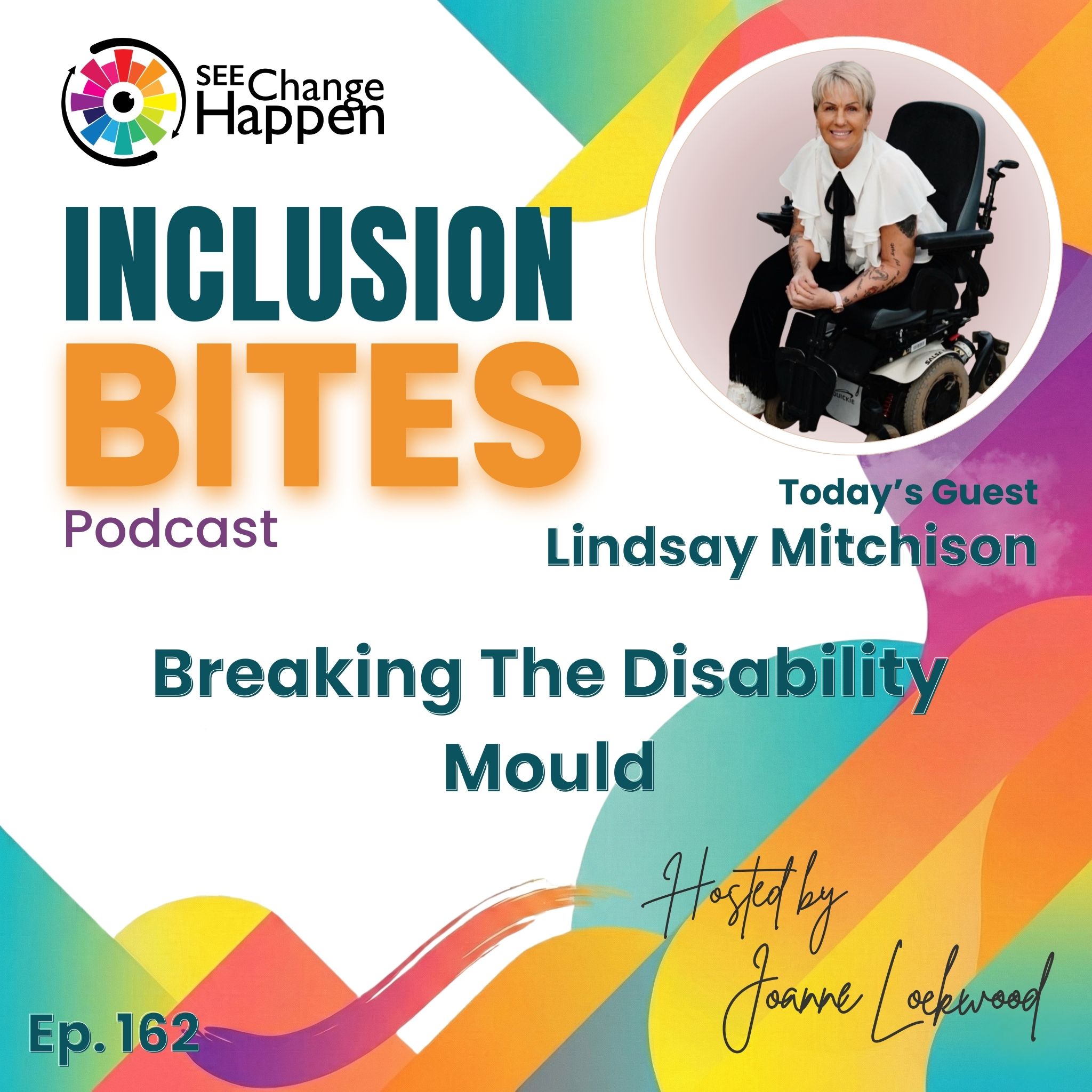
And today is episode 162 with thetitle, breaking the disability mold. Ihave the absolute honor and privilege to welcome Lindsay Mitchison.Lindsay is an award winning disabled entrepreneur and founder
Lyndsay Mitchesonguest
of Neowalk. They create stunning acrylicwalkistics to empower people with confidence andstyle. When I authenticate to describe her superbash, she said itis believing in possibility and empoweringothers to thrive beyond limitations. Hello, Lindsay.Welcome to the show. Hello, Jo. Thank you very much for havingme. How are you? I'm very good. So you're you're basedup north in The UK, and I'm down south as they say. Yeah.I'm in the frozen North. So it's a bit chilly up here, but,yeah. We we had snow last week, but a bit warmer this week. So, yeah,York's a lovely, lovely city. It is. I remember going tothe railway museum there as a child, and, yeah, I don't think I'vebeen back to York specifically, but certainly being around that area in the Yorkshire area.Beautiful part of the country. Yeah. Very friendly, aren't you? Upnorth. It was a love and We are. Dark, are they? Yeah. We're notwe're not ducks up here. You'd be, you'd be a pet or a mate. You'dbe, yeah. Now then mate. So whenwe've connected in the green room earlier, I was welcomed bysomeone who said hello. And I, you came on to the green and said, sorry,that wasn't me. That was my parrot. So I have a conversation with me inthe background. Yeah. That's my, that's my little friend,Blanco. He's my umbrella cockatoo. He's he has two words that he'sreally good at, which are hello and goodbye. So you you saidhello, and he went, hello. He's very, very sociable.And I didn't realize it was a parrot when I first sayhello and he came on, you wheeled yourself on. It was like, it says,it was, that was my parrot. So Yeah. He's just my assistant. He juststeps in when I need him to. So like a a a different version ofchat GPT sort of holds the thought for you.Anyway, para agent. He's, he's quitesociable, although he does like calling people bad boys. So if you if we'd kepthim in longer, he probably would have started saying, hello,So, Lindsay, you, you had a, a life changingshould I say event? Is that, is that event? Is that the right word? Yeah.Yeah. Yeah. Yeah. Yeah.Fifteen or two years ago. And you're now a globallyrecognized entrepreneur fueledwell, first of all, show it by sharing what happened and,what turned the corner to inspire youto to take control of your your life again? Yeah. I think that that'sthe word. It was taking it was taking control because this happenedto me. The, previous to me beingill, I was, I'd trained as a hairdresser. I washoping to set up my own business being a hairdresser. I was mum. I gottwo lovely kids. And I had always had arthritissince I've been a teenager, and I had surgery on the on one ofmy knees. And I contracted a catastrophic
Lyndsay Mitchesonguest
MRSA infection, which was at a time, I don't know whether you remember, whenMRSA was rife in hospitals. It it was it was all thatwas that was talked about. And I I contracted one during surgery. They stitchedme up, sent me home, and, it it burbled awayand really destroyed the bottom part of of my leg. AndI ended up having my leg amputated three years later. I lived with it foras long as I could because I'm a trier, and I thought, you know, Ican I can do this and see what I can salvage from what'shappened? But, yeah, I I opted to have my leg amputatedbecause all it was doing was holding me back, and I wasfacing an amputation in the future anyway. So I kind of tookcontrol back, made what had happened tome work again for me because I knew that with a prosthetic, I'd bemuch more active. I was I was younger. I was 43. And I knew thatwith a prosthetic, I'd be super active, which which I was. So theplan actually worked out because I'd be I became this I walked abouteverywhere with this prosthetic leg on, and I, trainedto be a circus performer. Does that sound silly? I'd I I gotoffered all this. I I had to keep working. So Ijoined an agency called Amputees in Action, and theyfind work for amputees like me. So I I started doing lots ofcrazy jobs like being a live casualtyactor where I would literally get placed into different situations witha a a leg that would be made with makeup to look like it hadjust been blown off. And I did work for the army,the SAS, all the blue light services, private security,all all sorts of people, lots of simulations.Did that. And then one day, I got this strange emailasking about doing something for the Paralympics, so I said yes aswell. So I became this kind of yes person who justwanted to test my limits. I just wanted to see where mynew limit sat because I knew that it was it was different.So, yeah, I started the business very early on as well. Istarted making the acrylic walking sticks very early on. But formyself, I made them just for me, and the the magichappened there. But, yeah, it's it's been a complicated journey the lastsort of twenty years. It's been very, very up and down, very up anddown. Can I ask us to to go back to that time whereyou were in hospital, you had your knee operation,and you you've been carrying, as you say, this arthritis for years anyway? So youare partially mobile or less less mobile, less active than you wanted to be,which is the whole reason you had it. How does the MRSA manifest itselffirst? Made you aware of it. So I was
Lyndsay Mitchesonguest
aware that my recovery wasn't going as well as it should be from the kneesurgery. Physiotherapists were saying, you probably shouldn'tbe in as much pain as you still are. I wasn't ableto move the knee as much. So they they were concerned that that something hadgone wrong. But then it manifested as, like, acellulitis, so lots of redness and swelling onon the skin around the knee. Then it manifested as blisters. It justkept getting worse and worse, and I kind of knew that something was going on.Plus I started to feel quite ill. So it but, yeah, it it sort ofbubbled away for about four months before I wastaken seriously by the GP in the hospital.And then they looked at it, and it was like, shit. There's somethingreally bad going on here. As you said, that was, at a time where theawareness of MRSA wasn't as heightened. The awareness,I think, was there. The control wasn't. So they hadn't managed toget it under control in hospitals. It was it was one of the thingsthat you got tested for before you went into hospital. Andironically, I caught it actually in a an Operating Theater, which iswhere you would think it would have been, immaculate. But, you know,there you go. I was I was unlucky. I was unlucky. Yeah. Sowhat was it like making that decision? I mean, you said you were at thepoint where you couldn't carry on, and you want to takeagency back for yourself, make that decision. It must have beenquite, I don't know, quite a stressful time for your children, for yourfamily, to know you're gonna go back. Because even though you're havingan amputation, I guess there's still a risk the MRSAmay not be removed at that time. Is it is that possibility? Yeah.It is a possibility, but that they were they were quite confident that they, theygot rid of all the infection at at the time when Ihad the last surgery for it. But really, because I was leftwith a a knee that I couldn't bend. I couldn't bend it literally, andit was very painful. I couldn't walk. It was really painful. SoI was already in use using a wheelchair. I was already using MobilityAid. I'd already lost it. Do do you do you know what I mean?People said that must be the hardest decision ever to choose to have your youryour leg amputated, but I'd actually already lost it. So the decisioncame a lot a lot easier. The the trauma I went through was losing theuse of that leg at the time I was ill. So three years later, Ijust couldn't wait to get rid of the thing because it was just holding meback, and I knew it was holding me back. So the decision wasn't ashard as you had. So you you already realized that aprosthetic would've been less pain or no pain. Yourmobility would've been improved. So you weren't losing anything.Yeah. Okay. Yeah. Everybody that I spoke tosaid because I spoke to a lot of people that that were amputees when Iwas doing my my research on what it would be like for me. And everysingle one of them said, you'll wish you'd done it sooner. Everysingle one of them. Yeah. Alright. I'm related, but I I knew of a friendwho had, a glossary bag fitted. And everyone went, oh,how terrible, how terrible this. And and they said, no. Actually, I wish I'd doneit sooner because it all the issues they had going on, it diverted obviously theirintestines, and and they were able to regain their life with a difference. Whereasbefore, they were trapped in this cycle of pain and inconvenience and andstress. Yeah. So that many times. Do the same thing. Youknow, seeing beyond the surgery andseeing what benefit it will have for your life. And Ithink if you research it enough and you talk to enough people, which II did, it kind of confirms it in your head that it'sthe right Mhmm. So you do feel a lot more confident goinginto it. What's rehab like? So you're presumably,you you stay in hospital for a short period,walking frames, physio, people helping you regain your your balance,your momentum, walking upstairs, downstairs, those kind of things. Yeah. How how long didthat part of recovery take? So I was in hospital for aboutfive days after the amputation and got home.Everything was a bit it was all a bit home wasn't really laid out forme anymore at that point because I was I was in a wheelchair while Iwhile I recovered in the house. And then phys physio is isreally quite quite instant and quite brutal. Itstarts the week after, and they get you up straight away. And youuse, a temporary prosthetics. So instead of havingone where you've got the socket made exactly for your leg,you use, it's an inflatable prosthetic.And she's called Pam. She's got it's a Pam aid, it's called. And they get
Lyndsay Mitchesonguest
you walking. So they get you straight up, and they show you exercises.And I was at physio twice a week learning to, to to walk,and it was intense. And it was but by then, the pain had gone, yousee, because I didn't have the leg there. It was completely differentsituation. And how kind of empowering to bestood up again. Because for a while, you know, for three years, I'dI'd spent a lot of the time sat down where people kind of look spiritover your head. And it was quite empowering to be, to be stood up andtall again, you know? So physio was hard. Rehab was, Iwould say it took me about five months to be walkingproperly on a prosthetic leg, but my God, I was off. I wasloved it. It was it gave me back my freedom. Yeah.So above the knee amputation, correct me if I'm wrong, is is more of achallenge to regain your balance, your stride than below the knee, because you're you'reobviously missing a joint. So you've lost two joint. Relearn. So you loseTwo joint. Yeah. Lose your knee and you lose your ankle. So with thebelow knee, you only lose your ankle. And I I sawpeople with below knee amputations coming in at the same time as me forphysio. And within two weeks, they were off. Like,you know, they'd they'd lost nothing. It was amazing to see.Above knee is a bit different because you've got to learn how to use thethe prosthetics that because they have knees that you've got to learn howto to control as well. So a bit bit more complicated.Exalston. Mhmm. And above knee amputeeuses approximately double the energy, asa an an ambulatory non or person twolegged. It takes twice as much energy for me to doanything as as it does for you. Especially thecognitive load of your brain trying to process that process that newmovement. Yeah. When we're when we learn to walk as as as infants, we thattakes us eighteen months to get the hang of standing up and moving. Yeah. Iremember being being in the in the physio because it was allindoors, obviously, and that they used to take us out into the corridor so wecould walk up a bit of a a ramp and. Then one day,they said, right. We're going outside, and it will be totally different. AndI'm like, yeah. Really? It's just outside. I'm used to goingoutside. It was terrifying because they made me walk ongravel. They made me walk on grass. They made me do some steps.The wind was blowing. The whole thing was just sodifferent to learning to walk inside, and it completelythrew me that it would make such a difference, but it it actually it itreally did. It's like you say, it's the overload. It's just overwhelming. Andbeing outdoors just added more more complication into thewalking process. But it it I mean, I mean, I I was I wasgood at walking. I really put a lot of effort into it because that wasmy goal. That that was the whole reason for the amputation because Iwanted to be able to I didn't want to be a woman withone leg. I wanted to be a woman with a prosthetic leg. That that waswhat I wanted to be. So it's redefining your identity, really. Youweren't a woman with a disability. You you're a woman who has a leg that'sdifferent. Yes. That was very much what my what my goal was.
Lyndsay Mitchesonguest
And you asked how how did I doit? What made me feel able to turn thatround? And I think it's it's belief. A lot ofit is self belief, but it's also belief in believing in who yousurround yourself with because they they give you powerto push through. They give you the the support. Look at this. Thiswas the first tattoo I ever got. It's gonna be backwards, isn't it? But itsays believe, and I got that just after theI I did it before Ted Lasso did. It was it was alanguage for his, but I think a lot of it is belief. It's self beliefand, believing in in possibilities, which is how youintroduced me. And I knew that it was possible for me to do somuch once I got rid of that that leg that had stoppedplaying as a team player. See, if you ride the clock back fifty, sixty,hundred years, false limbs, prosthetics, however you wanna describe them,were all such a social stigma, weren't they? People used to hide them. Theywomen wear long dresses and all. Men will wear trousers to cover them up completely.They look kind of blend them in. But I've seen influences onYouTube or on television where people are kinda owning the look. They don't have tobe looking like a human birth leg. Yeah.They're titanium. They're kinda glitzy. Yep. I mean, they're some ofthem are absolutely stunning. There's, a model called VictoriaModesto, and she's the one that famously might have seen an adverton TV where it was a perfect came to a perfect point.This this prosthetic leg, absolutely stunning. She's got some gorgeous legs.But, yeah, people people still want to hide them. Some people do. Inever did. They they gave me a leg that had a cover on it, and
Lyndsay Mitchesonguest
I took it home and ripped the cover off because it it just didn't therewas no point pretending it was a real leg. I just got rid of oneof them. And I just thought, no. Just accept it for what it is.It's a prosthetic leg, and it wear it and be be proud of it. Butthere's some absolutely stunning legs now. Really gorgeous. They cost alot of money. They do Yeah. Cost a few yeah. And theNHS, to be fair, they give you a leg that matches yourcapability. So when I was 43, they gave me goodlegs because I was younger. Whereas now, nah, not so much.Yeah. Because I'm 57 now, and it's tight.Yeah. Yeah. You're not gonna do much with it, Lindsay, are you really? So, youknow, it's not exactly a broom handle, but, you know, the the as youget older, they, they they give you less and less.They save you the super active people. So you haven't gotone of those, sprint blades that you see on the Paralympics? No.Would love one, but no. I I've asked, but no. No. I'mnot gonna sprint anyway. I wouldn't even sprint if someone was chasing me. I justwouldn't have. Take your leg off and throw it at them.Be the answer, wouldn't it? Come on then if you think yeah. But, yeah, the,the the NHS sort of it's got no money. I mean, let's let's betotally honest. It's it's on its knees. So, yeah, theythey allocate their money carefully. Yeah. I I'm I'm justhypothesizing. You know? It's fair and reasonable for the NHS toprovide you enough so that your quality of life isrestored roughly to where you were before. They're not there to give you more thanyou already had. So just maintaining that point of life. Okay?Yeah. Yeah. But they they definitely don't. The actual knees,some of them are microchipped. You know, they've they've gotlittle computers. They learn how you walk so they can help youback. It knows when you go on an uneven surface, you know, and itit it kicks in and helps you. It knows you're going downhill. And it yeah.Amazing, amazing technology. We've got to thank our veteransfor that because so many guys and girls were coming back from,you know, Afghanistan and Iraq that were amputees. So a lot ofthe progression with prosthetics has come around because ofthem, lad. You you said when you first came home from hospital afterthe amputation that you realized your house wasn't designedfor wheelchair access or for your mobility needs at the time. How have youfound society in the world at large going fromthat? I appreciate you went through a phase where you were less able because ofthe infection in your knee and everything. But you you must have found theworld less accommodating than you expected, or or did you expect it tobe a challenge getting on and off trains and buses and drivingand things like that? I mean, we're here to talk inclusivity
Lyndsay Mitchesonguest
because, you know, that's the name of your podcast. And I'm living ina world that isn't built for me. It's not it's notbuilt to accommodate my my needs. You know? Times you'llbe lucky, and you'll, you know, plans will go easyand train travel and all the rest of it. And you'll you'll go to arestaurant where there might be a toilet for you. But, you know, a lot ofthe time, it's just it's not built for people with mobilityissues. It's frustrating. I deal with it because there'sbigger things going on in life. You know, if there's a if I have togo to a public toilet, you know, hundred yards away if I'm in arestaurant, don't really care as long as I can go. As long as I don'tjust have to go on the floor. You know, I'm happy with that. There's biggerthings to complain about. I I would never make a fuss. What doesbug me are, dirty disabled toiletsat service stations where there's no other choice. You know?Because there's no there's no need. So I I have complained about things likethat. But, yeah, the it's just not an inclusive aninclusive world for people with, with disabilities. Not at all. Following upon what you say about the toilet association, what what what we just what whatgets me on my soapbox is you turn up that another door, they have thischeck sheet. This this toilet was last cleaned, and they have the hour slots. Andyou think, well, no one's no one's checked. It's like six hours or eight hours.In fact, no one's been there today. Or someone's filled in all the gaps, thesame signature all the way down. They go in there and think, nah. You've notbeen in there. Absolutely. No. I So can that? Really bugsme, really bugs me. And I I have complained about about that. I'vebeen on my soapbox about that. But generally speaking, Itry not to complain too much. I try not to get my blood grew upand, there's bigger things to complain about. But noteverybody is empowered to be an advocate for themselves or for others. And sosometimes if, if nobody does, then nobody, then it doesn't change. You have,you have to create change, don't you? No. You do. In York, I livein I live in York. A lot of the buildings are really old. So wheneveryou do sort of question, have you got a disabled Lou? Why haven't you gota disabled Lou? It's it's, planning. We're not allowed we're notallowed to do this. We're not allowed to do that. Yeah. Okay. It's probablya valid valid reason. I don't know, but it's one that's thrown aroundquite, We hide behind the jostle, don't we? It becomes GDPR. Itbecomes planning. It becomes, oh, no. We we we can't do that here.It's Lens plan. Yeah. But do you know what?I'm I'm always I'm capable enough to find a solution to most things. Imean, we're in socially, going out toilets areare generally a problem. So as long as I know that I'm somewherenear a public low, I can just and go and,and find one. Because I'm in a wheelchair I'm in a wheelchair now. I don'twalk very much. I I I I have other bits of me that are fallingapart now. So I'm in a wheelchair all the time now.So Oh, okay. That kind of changed life forme when I had to sit in a wheelchair all the time. But, you know,it's fine. I run my life. There's nothing I can't do frommy, from my wheelchair that I could do before. Nothing at all. Ican chase my kids, Tom. I can take my dogs for a walk. I cando you know what? There's nothing I can't do. Bang. Whatever's going on there. It'slike the parrot escaping. I've got one of my, they're they're big kids. I've gotone in the in the room. He works for me. Fantastic. Yeah.So what what can businesses, offices,society do? I mean, you talked to me about maybe more of a growth mindsetabout what what's possible. What coral organizations think about interms of accessibility? Because it sounds like you've gone throughseveral different stages for being active and relativelyhealthy to developing arthritis, to developingMRSA, to having a an amputation, go throughrehab, and then becoming a wheelchair user. So you've been throughan evolution. So you've seen different aspects where, to paraphrase,went from being able, partially disabled,to a wheelchair user, and there's a completely different experience for you in societyin that way. So what can people maybe learn from that? Eachstep is very much a hurdle that you've got to get over.So in connection with with the business, you know, I've beenthrough all those changes. I've been through that evolution. So whenpeople come to us and they talk about their disabilities, I can verymuch relate, and I can it resonates with me. Sothat's one of the reasons we're in such a good position to giveadvice and support to people in within our community. We havean amazing community. Got a very, very large community on Instagram,and we we do offer each other support. That's anotherthing as well, you see, because I'm part of the communitythat I serve. So my purpose, my
Lyndsay Mitchesonguest
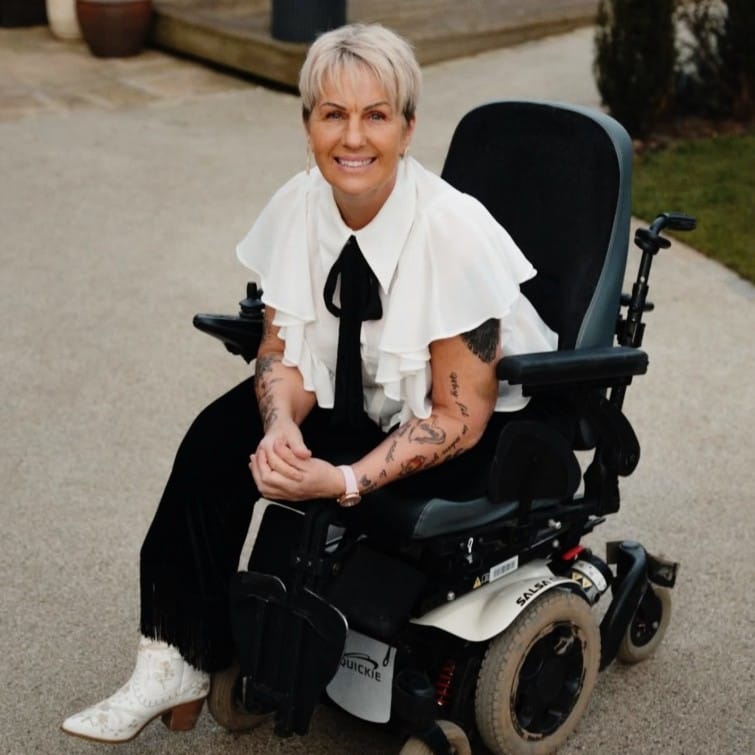
my why now is to serve the disabled community, eitherthrough providing mobility aids, advocating,fighting for people to help them thrive, andbe productive and happy and healthy. So all that,I see it from a disabled person's point of view. So it's it's quite aunique position to be a disabled creator, disabled entrepreneur.But to to go back, the the the wider world,I think, still needs educating a loton how to not label people with disabilitiesbecause instantly, I'm labeled. We're all I know we're all labeled, butinstantly, when people see me in a in a wheelchair, I'm labeledas weaker, less lessable, that they, you know, they kind of assume that you've got some kindof neuro thing going on as well, which isn't true. Youyou kind of viewed as less than. And it's whenI open my mouth and I start you know, it's when someonelooks over my head and says to my son, does she knowher PIN number for for her card? Exactly.How does that great. You know? And you it'll just say, well,I don't know. Ask her. You know? Or they'll look over my headand say, can she get out of her chair to get into a seat, likeat the theater? And again, talk to the person talkto the person with the disability. It's, andthat's that's an ignorance thing. That's someone not havingcome into contact with someone who's got a disability. That's just not knowinghow to do it. So I think if there was moreeducation for the younger generationsto meet more opportunity for them to meet people with disabilitiesso they they understand. I used to do talks inschools. I'd I'd I've done a few, and kids are great. Kids justwanna know if it hurts. Does it does it hurt? No. It doesn't hurt.Okay then. Right. Can I ask you a question, miss? What did they do withyour leg after they cut it off? That's where they go. Kids are very oh,they wanna look at your your prosthetic because they're the engineers of tomorrow.You know, they're and they would they wanna fiddle with it and see how heavyit is and, and see if you they just wanna play with it. Ithink the younger generation doesn't get that opportunityto interact with with many people with disabilities. Sowe've grown up into a generation of people that are just quite ignorant of howto, how to deal with it. Yeah. Sorry. My mind'swandering off here. I sometimes can't stop myself thinking about a humorous image in myhead and I'm thinking, well, what do you do with your leg once it's cutoff? I was thinking, well, maybe they take all the flesh off it, and thenyou you just get the bones back. So you get your foot and your yourleg bone. You can then mount it, put it in your mantle piece or something.Have a little I don't know whether this kid had, maybe he's known someonewho got their tonsils back in a jar. I don't know whether they were gonnagive me it in a big long jar or, you know?No. I suppose you don't I mean, we collect a lot of tat anyway inour lives. I mean, the last thing we need is a an old leg. Imaginehaving that sat by the fireside in a in a With afreezer. Oh, that'd be like something off Dexter, wouldn'tit? At Christmas, someone called, yeah, one ofrelatives, and I thought, oh, get joined at the freezer. Yeah. Don't not the oneat the bottom. That's my cockney leg. That one. Not that not the one withnot the one with the hairy toes. No.Yeah. So I was about to ask a bit more about your your movie career.You know, you're a one legged stripper. So you, there must beI mean, you you said yeah. After the Paralympic thing, Idid circus training to perform in the Paralympic opening and closingceremonies in London in 2012. So performedin all these different bits in the opening. And then in theclosing, I did a a big thing with, with Coldplaywith I mean, they're my absolute I love them. I reallylove them. So they were playing underneath me, and I was hanging underneatha motorbike on a on a trapeze. And this motorbike wentup a high wire. And it it was it was insane. It was one ofthe best nights. It it was great. But after that, I started getting
Lyndsay Mitchesonguest
opportunities for other circus things. Went to Brazil to teachcircus for a bit. That that was really fun to disabledpeople because they got the Olympics after us. So we werelooking at at helping their disabled people, you know,become circus performers as well. And then I got, I got offeredthis job as Peggy Sue, the one legged stripperin Bad Education, the movie with Jack Whitehall. And it was hilarious.I mean, I don't know whether you've seen it, but she was a bad stripper,so she didn't take many clothes off because as quick as she was taking themoff, the audience were throwing them back at her. So she was a really badstripper. But I remember at the time, I still had my dad alivewith me, and, he told everybody that I was a prostitute.And, no. I'm just a stripper. I'mnot not a prostitute. But, yeah, it was it was great fun. It was, youknow, I mean, that's on my CV forever now. Who wouldn't who wouldn't wantthat? Yeah. I remember seeing a a BBC documentaryseveral years ago now about Ellie Simmons. Yeah. And she wasconflicted around how people wanted to curedwarfism. And she said, well, I'm not broken. There's nothing wrong with me.I'm just a little person. I have different different size attributesto everybody else. But she was really conflicted because she was just sayingthat I've had a fantastic life. I've done things I've never dreamed of. I'vecompeted the Olympics at my level. I've flown around the world. I've got gold medals.I've done this, that, and the other. I'm I'm the person I am today becauseof who I am. And the benevolent sense that kick into peoplesay, oh, we should fix you. We should make this better. It's such a shame,and you're brave or you're sad. It's sad. Yeah. You must have had to putup with all of that. Yeah. Such a shame. Yeah. And I mean, one ofthe talks that I did at one of these schools that I mentioned, a littlegirl looked at me and said, do you do you likehaving one leg? And I all I could say to her was, well, I likebeing me. I like me. So, yes, Isuppose I do like having one leg because that's who I am.And, you'll never hear me say it's ruined my life becauseit it didn't. I mean, all these opportunities that I've had that cameabout because I chose I made the decision. I
Lyndsay Mitchesonguest
chose to lose that leg that then allowed me tobecome more active again. So I got I you know, these are these opportunitiescame along because of that. But, you know, it it hasn't ruined my life. I'mnot if I could would I go back and change it? No. I wouldn't. Iwouldn't go back and change because it's put me where I'm meant to be. AndI I really do feel like I'm doing what I'm meant to bedoing now. You know, helping helping other people with disabilities,being that connection between them and theirprogress, their thriving. You know, we're we're able to supportand to provide these these amazing walking sticks. Yeah.Empowerment tools. They're more than just walking stick. Yeah.I I I do a lot of talks. I've done some schools. Andone of the questions people have asked me is, you know, if you went backto your 10 year old self, now what you do now, what would you dodifferently? And I I'm with you. I I said, well, I like who I amtoday. I've got a fantastic family. I've got children. I've gotfriends. And if the butterfly wings flap differentlyfrom all that time ago, everything I know in reference today wouldn'texist as it does today. So I can't wish away Yeah.Who I am and who we are today. So, therefore, I would not change athing. I would just, maybe maybe leave a notesomewhere, say don't spoke. That's what and then but then Yeah. Justthink about what you said that there, though. Aren't welucky that we're able to say that? You know,you you like you. I like me. It's it'sI think it's a very lucky position to bein. It takes work to get there. It doesn't just happenovernight. It takes work, and it'll continue to take work.But do you do you think that's a reflection of,like I said about my belief, is it a reflection of thepeople that you surround yourself with as well?It is I think it is a privilege that not everybody has access to this.There's been times in my life over the last twenty, thirty, forty, fifty yearswhere maybe I wasn't in a positive place, but there's beena lot of times where the love of family, friends, people aroundme has made my life meaningful. And I think, yeah,that and for not everybody has that privilege. I recognize that is a privilege.We all have something that maybe we just don't appreciate it. Maybe having asignificant life event that you've had that I've had in my lifemakes you suddenly reflect about life in general, doesn't it?You you you don't think. Maybe you take life for granteduntil you realize that it's not predestined and preordained.You can actually take a step to the left and make a new path ifyou wish. Yeah. And some of that's forced. Some of that'syou wake up and go, hang on a minute. I don't want this anymore. But,yeah, I I think if we just carry on living their life for everybodyelse, a life of expectations and being, orlosing our own agency, then, yeah, we we will never be truly happy with ourselves.But, yeah, finding that passion and purpose, I think, we all need to do thatat some point. I think but, again, not not everybody
Lyndsay Mitchesonguest
will. Not everybody will have that that privilege of finding their their why.I know people talk about, oh, what's your why? But it itit's important. And when you do find it, it is like magic.I remember when because I first started making the walking sticksfor myself because I couldn't find a walking stick that Iliked. They were all yuck and old fashioned andhorrible. So I first started making the acrylic walking sticks for myself,and people were coming up to me and saying, who lovesyour walking stick? It's amazing. Instead of what happened to youor what's wrong with you? You know? Because that's another thing that people feel ableto to go up to someone with a disability and go, oh, what have youdone? Oh, what happened to you? And you're not gonna share. I'm notgonna share my trauma with a complete stranger. So, you know,politely just say, oh, I was ill and walk away. But I start that peoplestarted coming up to me and saying, I love your walking sticks. And that gaveme a real boost. It gave me a real, you know,it's it's switched the focus from my leg toI like your stick. And that that was the magic. That that wasthe that was the moment when I thought, god, I could I couldgive that to other people. Because if I'm feeling it, I'm very muchaverage Jo Jo public. If I'm feeling it, I know other people wouldget that as well. And that that was was the light bulb. That was themagic when I I decided this is what I'm meant to be doing. Yeah.It's why do we have to make functionalaccessories? Dull and boring. You know, we I'vegot my nails painted, a nice pair of shoes Yeah. Have a hairdone,nice clothes, nice jewelry, a brooch, maybe a nice ring, bracelet,whatever it is. So why shouldn't a a walking aid, awheelchair, whatever it may be, be part of your fashion accessory? AndI've I've seen people who have jazzed up cochlearimplants that aren't just boring bits of plastic. They're sparkly, and they're kind of anaccessory. Why why shouldn't we be proud of this? Hey.Look. This is my You know, early on, I had people say
Lyndsay Mitchesonguest
to me, what's the point? What's the point?And able-bodied people. And I thought if you had adisability, you'd get the point straight away. Because it wouldjust make you feel good. It would give you confidence. I always say, you know,give a give a man a walking stick or one of our walking sticks, andhe'll walk like Charlie Chaplin. But give oneto a person with disability, they'll look at it, and they mightcry and go, that is just beautiful.I really like that. I'd be proud to be seen with that. That'sthe difference. You know? But this whole what point? Peoplejust don't get it until they need it. Popped onto your website as westarted talking in the green room, and, I looked at some of the design.And as you say, they they look a bit different. They're not what I wouldsay as as a modern design, ergonomic handle. They look like a questionmark, a long elongated question mark. As you say, Charlie Chaplin spin itaround. It's a completely different style to what I've been used to seeing.So I'm assuming it's comfortable and functional. Yeah. It'sboth. I mean, you know, I mean, people I know because I use them. Youknow, I can I can fully, I as a percent, vouch for them because II used them for many, many years when I was walking? We'vehad people goodness. People collect them. People we havecollectors who've got, like, 30 different colors.It's quite a competitive challenge. We have a community. We have a Facebookcommunity group, and people go on there and share their picturesof how they store their walking sticks, you know, all the different colors.And someone will put on, oh, has anybody got a picture ofAurora out in the sunlight? And someone will go, yes. I've got one.This is mine. And, you know, they all help each other out. It's amazing. We'vewe've got a marketplace as well. We've got a a Neowork marketplacewhere people go on and sell their walking sticks. Somaybe as if they've got a color and they think, actually, it's not what Ithought or it's not I've I've used it, and I have no moreuse for it, then they sell it. So there's a a constant exchange,like a recycling thing going on as well. So they are very much acollector's item now, which surprised me.But I love it. Absolutely love it. People are proud of them.I imagine a bit like vented for for for walking aids. Well, well, well, well,well, well, well, well, well, well, well, well, well, well, well, well, well, well, well,well, well, well, well, well, well, well, well, well, well, well, well, well, well, well,well, well, well, well, well, well, well, well, well, well, well, I've, I I've fancya different one, and Yeah. Yeah. Let's trade this one in and get another oneback, sort of they go. Yeah. Anybody got a 36 inch, you know, starry skysilver glitter one, and someone will go, yeah. I've got one. I don't use itmuch. Yeah. And they they they sell. And it's thatreally it's that community side of it again, which is so important to usthat that has taken off. And I love that. I love, youknow, people all over the world. It's just that that singleinterest and passion that that they've got. And I've made friends allover the world that I've never never met. And it's it's a fabulousfabulous thing, that feeling of community because everybody is verydisconnected. As as someone with a disability, you may notwork. You may spend all your time at home. You know, you'll havedays. I have days where, I can't get out of bed than that. And itit's lonely. It's quite a lonely existence. So that thatcommunity side to it is is really important to us.You, you mentioned when we were chatting in the green room about each each ofthese walking as you is the near walks are made to measure it,so you don't sell them through distributors or anything like that because they're eachindividual. So how important is that to get the rightsize? Because they're not adjustable. Once they're made, they're made, aren't they? There's no adjustment.Yeah. Yeah. No. We have lots of, there's videos on thesite to show you how to measure. There's instructions, there'sthere's schematic those drawings to show you how to measure it. It is important.So you need to you need to follow those instructions.But we do also say that it's just a rule of thumb. It's the
Lyndsay Mitchesonguest
same instructions you would get if you googled it online or if you askeda doctor or a physio. It's the same. They're they're not our we haven't met.That's it's it's the industry standard for measuring the length of a walkingstick. But it is it is important that that you get the right height because,otherwise, you can end up with a shoulder like this if it'stoo long, or you can end up with a shoulder that's dropped if it's tooshort. And shoulders are precious. I know because mine are mineare knackered, so I know how precious shoulders are. So you need toit's, again, it's about preserving what you've got. It's about making makingsure that you look after what what you've got. So, yeah, there's lots of adviceon the, on the website to, to explain how to they're all madeby hand because I I did all this. I know I've got ateam now. I've got a team of 10 people now, But I used to doall this on my own when when sales were small. Then,yeah, I was everything. I was person who made them, posted them,social media. I was I'm marketing. I I was everything.Yeah. Happy days. I loved I loved that, but there's just too muchnow. I've I've got, a wonderful team now. I wanna share thesecret. How do you how do you make it's a lovely shape. Are they injectionmolded? Are they, formed tell you, butI'd have to shoot you. I won't tell anybody else. Just just shoot me. Noone's listening, are they? No. We heat them generally. It'sjust, quite a low heat because the acrylic willmelt and bubble if you try and heat it too quickly or toohot. So it's quite a low heat. And then they are they'remolded around some specially made jigs to get the shapes, to getthe handles. So, yeah, it's, it's notcomplicated. It's not rocket science as somebody once said tome, but it takes skill, and it takes real detail.You've got to have a real eye for detail to So in the early days,you would have gone through a lot of, lot of waste, I guess, playing withit, getting frustrated, throwing them across the room, going Yeah.Javelin. Yeah. Yeah. The the yeah. Trying to findthe right because it's the right temperature and right timing. So, yeah, Idid. But we've got a really slick workshop now. I've got a workshopat my at my home, at my house. At the at the back of myhouse, I had a building converted. So I've got an office and workshop inthere. So we all were together in there. So ifI'm ill, I'll be in the house, but the guys will knowthat I'm there. And if if they need me, they can come and they cancome and get me. I mean, obviously, I I have lots of days where I'mnot able to to take part in the work becauseI I live with a lot of pain. I live witha lot of fatigue every day. These are my daily struggles. So I'm I'm notable to show up for them every day, and I feel really bad when Iwhen I can't. But they they know me well enough now toknow if she's not here. There's a a good reason why she's not here.So your your your journey I I mean, I hate the word journey. It impliessome sort of linear path between a and b, but your your evolutionof of self is is still ongoing with health and orbecoming differently affected as you as you evolve.
Lyndsay Mitchesonguest
Yeah. So when I look forward, I see differentliving spaces. Although I'm very lucky because I haven't I haven't gotmuch furniture, so there's just a lot of space for my wheelchair and the dogsand the parrot, really. I live on my own, so I I can pretty muchjust make everything work for me. But, yeah, looking forward is abit scary because I don't know what it's gonna mean for mymobility, for my yeah. I don't I don't know for my care. I don't reallyknow what it looks like. Living for the moment, living for the day, and justenjoying and being grateful and thankful for what I've got, for whoI've got, and making the most of theconnection that we've made with with this community,and just trying to help help other people. And I'll keep doing that as longas as long as I can. Do you know what? I mean, eventually, if Ican't move very much, they still won't be able to stop me talking. SoI'll still be able to do this. Camera and a microphone. Yep. Dropmy name. Off we go. That's And a parrot, obviously, to answer the phone. Yeah.With a parrot on her shoulder. Yeah. So, yeah, I know the future'sgonna be different, but I'm just grateful for where I am and and what I'mable to do now. No one nicknamed you Long John Lindsayyet? I I you can be the first. What? Because I have theparrot. You know? It's it's just, is she joking? When I got when I gotthe parrot, I got divorced last year. I'd never been allowed a parrot, and I'vealways wanted a parrot. And it doesn't matter. Everyone that I've ever been with haskept, no. You're not having a parrot. You know? No. It's a stupid idea. Soas soon as I found myself on my own again, I thought stuff this. I'mgetting a parrot. So, Not stuff the parrot. It would stuff theparrot. It'd be alongside my leg, but it's it'sit's ace. He's a he's a little friend. It's a hobby.It's another interest for me outside of outside of work. But hecomes to work with me. He's got a cage in in the office, and hecomes through to work as well. But he's not allowed out because he likes tobite feet. So when he chases one of the guys, he he does lapsaround the office. He chases him. He's quite the character, and they love him inthe office as well. You you're saying, I think and excuse thepart, he's he's no spring chicken. He he's he's not young. He'snot. He's 47. Imagine that. Imagine all theprime ministers that bird's seen. Imagine In the space ofsix months, there was quite a few of them, wasn't there? Well, there was fora while, wasn't there? But, yeah, he's 47, but he could live tillhe's 75. We could kind of outlive eachother. That would be quite nice. He could be my life, my new life partner.Yeah. Oh, so do do you know any history of,where we came from? The, He was actually with the same personall his life, which which is quite quite sad, andshe became poorly and she died. So he hewas for adoption because he needed a new home. And I justhappened to press on the right button on that day, and, yeah, he came tolive with me. But he's he's ace. I love him. He's he's a complicatedboy. He's very you've got to reallymanage. He can be quite aggressive. So you've got to manage how youhandle him, but I absolutely love him. He makes me smile. He callsme Poppet. He'll look at me, and he says, hello,Poppet. He's very sweet. So, yeah, he's he's he's theman in my life now. Soulmate. Soulmate. Yeah.Yeah. Yeah. Yeah. No. I love him.What's next for the business? Is it just gonna carry on doing what it's doing?Is it is it gonna expand into new aids? OrWe're always thinking of new things that we candesign. I mean, the obvious one would be crutches. That could be something for thefuture. I don't know. That that would be a heavy investment,and it would also be a lot of r and d. So it would bequite complicated to do, but, yeah, I'd love to do it. We're constantlyjust trying to bring out new colors that excite people,new handle styles, new accessories, and just,keeping people interested. Again with the, with thecommunity side of it. We we want to encourage people to engage
Lyndsay Mitchesonguest
with each other. So there there's lots of facets to the business, but Ijust I just hope it's gonna keep growing and that we keepreaching the message keeps reaching people that thereis choice. You know? I I'm I'm not gonna push downsomeone's throat that that we're the best walking stick. For some people, we'rethe best, and for others, we won't be the best. But there is choice outthere. And I think for a long time, therethere just wasn't because designers just didn't want to tread there.You know? But there there is choice, and I think that's it's important forpeople to know. You've got Leboutin shoes, which are iconic,but they're not necessary for everybody. I mean, I would beabsolutely panicking trying to get a pair of those on on my chubby feetand, my weak ankles. I'd be, hoshing around everywhere. SoYeah. They're not so It's resonating with the community, isn't it? You found amarket where people want to be served in that way. And as yousay, it's probably not their only walking aid. They probably havemore traditional styles, but they've got they've got their party one or they've got theirSunday afternoon one or they've got their Saturday one. Why not? Why not? Peoplehave and I know this because, I mean, you've already touched on it, that I'vemy evolution has taken me through lots of different mobility aids.People have a whole arsenal of mobility aids. You know, you have thestick. You you'll have the crutches. You'll have a rollator. You'll have a walk,a buggy. You'll have an electric one. You'll have a wheelchair. Peopleuse different aids for different days because a lot of chronicillness is is very dynamic. So one day, awalking stick might be enough, but then the next, for no rhyme orreason, you need a wheelchair. So people have all these intheir where they keep them. My garage is full. You know, you you've it'sterrible. But people have different aids for for different days to to copewith how they're feeling. So yeah. And we want to continue tosupport to support people on that on their evolution asthey as they go through that acceptance. I mean, wetalked about your mom earlier, in in the green room, didn't we?A lot of older people even say, I'm notusing a walking stick because it'll make me look old and and, you know, oldfashioned. We we actually have a market. I think our oldestclient is about a hundred right down to children who are seven. Youknow? We we and for male, female,every in between. It's there's there's something atNeo. Yeah. And if not, if there isn't a stick, you've got thecommunity. You know? Is that Steve stigmaa generational thing, or is it just a person thing? Because,you know, you say I don't know what you're saying with a walking stick, isit? Is that changing younger people nowhaving a, I'm not saying Oscar Storis is is the ideal role model, but hecertainly glamorized prosthetics, didn't he? Yeah. No.Totally. Okay. A lot of other things went wrong with Oscar, but, he glamorized prostheticsand maybe he's made people like him and other Paralympians havehave made them kind of socially acceptable. Totally. Made themcool. I think it is generational, I would say. It's our ourgeneration and older generations, I think,are the ones that will point fingers in the street and say, well, whatare you using that for? You're too young to be using a walking stick. Youmust be putting it on. Because the other thing is, you know, I'm very Iconsider myself lucky. I've got a very visible disability. Peoplelook at me and go, yeah, can see why she's in that chair. But
Lyndsay Mitchesonguest
people look at a younger person who doesn't have a visibleillness, and they'll hurl abuse at them in the street and say,oh, you're faking it. You'd benefit dodger and allpeople get this. There's a lot of a lot of stigma associatedwith it, but the younger generation are changing thatby embracing and accepting mobility aids. I think it's an oldergeneration thing that will, pardon the pun, but itwill die out Mhmm. As, you know, the generationsget get older. But it's very unfair, isn't it, to behurl abuse at someone just because they're minding their own business, justwalking along using a walking stick.I I don't understand it personally, but, yeah, you're right. There are people who doit. And if you're gonna get abuse held, you wanna have wanna have a coolstick while you're doing it. You know, sort of bite me. I don't care.Whatever. Yeah. I hope people come back with some really goodgood comebacks at them. But it can be quite shocking when it happens to youbecause I still get people marching up to me and going, oh, what did youdo then? Like, really? I'm not. No.It was a shark. Go away. Did did you just leave? Yeah. I'm not gonnashare my my inner traumas with you. I I don't knowyou. I don't owe you any. Whistle sharp. I've sometimes saidthat. I was tuna fishing off off the Australian Gold Coast, and we went fora skinny dip. And, a great white popped up and, took myleg. It happens. I was I was picking cockles off.Yeah. You never know what's gonna happen here. Every time you say it, I'm I'mlaughing my head off. You're saying, I don't wanna tell my intimate story with acomplete stranger. I thought, well, but we've known each other what? Listen an hour. Andso we'll have this conversation. So I guess how you ask, isn'tit? We're friends, don't you? We're friends now. Yeah. We're friends.You know, if someone came up to me and and said,oh, I like your jacket. I mean, people do. I like your jacket or youcan I ask you a bit about your chair? Because my dad needs one orsomething like that. And then they might say, do you mind me asking?But what what happened? You know, there's ways to do it. But I've literallyhad people march up to me and say, what did you dothen? Oh, not the way to do it, is it?Is that just Yorkshire bluntness though? It could be. Yeah.Yeah. If you're wondering around London, people would just not even give you the timeof day walking around London, I guess. It's true, actually. Because I I come andvisit visit London a bit to do some work and, yeah, you never get stoppedin, in London, but up up here, yeah, you do. Maybe it's just it'sblunt, nosy Yorkshire people, maybe. Yeah. It'sit's almost it's almost impossible to stand out and be different in London because everybodyis so different, so cosmopolitan, that no matter how how offnormal you are, you're still normal in London. Yeah. Yeah. It's it's it's
Lyndsay Mitchesonguest
true. But that's isn't that good that you just that you want tostand out? And we we encourage people to that's one of our ourlogos is made to stand out, not to fit in. You know, and wewant people to be proud to stand out, and I think that that comes withusing a a walk in stick. Because, again, going right backto the good old days, that's what happened to me. You know, I wasI was proud to be be seen with them. It's ait's a give to give to other people, and I I love it. Lindsay, it'sbeen a a fascinating conversation. I've I've enjoyed your company and having having theprivilege of having a natter with you for the over an hour now. How canpeople get hold of you? How can people I've coffee share in the, having acoffee chat. I've got my lipstick mug and, yeah. So how can, people get holdof you? So we've got the website, which isneo-walk.com. We only sell sticks from our website. Soif you wanna buy one, you'd have to go to the to the website. We'vegot a phone number that I can't remember. It's on the website. So yougo to the website, but we do have a phone. So you can ring usand talk to us as well. And you can email us, the infoat neo hyphen we are going to the NADEXexhibition in Birmingham in, March. So
Lyndsay Mitchesonguest
next next month towards the March, we'll be there withthe all the team with all the different colors that we that thatwe have. So you can come along and see, come and see us, come seethe sticks. Where else will we be?Hopefully, we'll be appearing for some sort of communityevents later in the year at different locations around thecountry as well, where we're gonna try and gather people together fora natter. Because how valuable is it? Do you know what? Just gettingtogether for a natter. Meet people that you've meet peoplein person that you've met online, you know, and try and justas foster that community again. And,of course, you've got your online communities on Instagram, Facebook What?And you're on LinkedIn as well. And I put all of those details in theshow notes. And, and you still hang out on x a bit until, it becomesI never did. I don't understand. I never understood Twitter.Understood it less when it became x. Never understood him. Wouldn't wannasupport him in any way, shape, or form. No. No. I II've down downsized myself off those backfills completely now. So, yeah, Iget I get it. Lindsay, thank you so much. Been apleasure, Jo. Do you know what? It's been so lovely talking toyou, and conversations like this are so valuable.And it was a real it was a real honor to to sit and talkto you. Likewise. Thank you.
Joanne Lockwoodhost
As we bring this conversation to a close, I want to expressmy deepest gratitude to you, our listener, for lendingyour ear and heart to the cause of inclusion.If today's discussion struck a chord, consider subscribing toInclusion Bites and become part of our ever growingcommunity, driving real change. Share this journey withfriends, family, and colleagues. Let's amplify the voicesthat matter. Got thoughts, stories, or a visionto share? I'm all ears. Reach out tojo.lockwood@seachangehappen.co.uk,and let's make your voice heard. Until next time. Thisis Joanne Lockwood signing off for the promise to return withmore enriching narratives that challenge, inspire, and uniteus all. Here's to fostering a more inclusive world oneepisode at a time. Catch you on the next bite.
Redefining Disability and Empowerment Through Lived ExperienceBarriers to Accessibility and Everyday InclusionInnovation, Community, and Transforming Mobility Aids
Joanne Lockwood is joined by Lindsay Mitchison, an award-winning disabled entrepreneur and founder of NeoWalk, to talk about what it means to “break the disability mould” and reclaim agency after life-changing health events.
Lindsay shares the story of a catastrophic MRSA infection following knee surgery, the long period of pain and loss of mobility that followed, and why choosing amputation became a way to take control back. Together they explore rehabilitation, learning to use a prosthetic, and how identity and confidence can shift when you move from being defined by what happened to you to actively shaping what comes next.
The conversation also looks beyond personal experience to the realities of living in a world not designed for disabled people—from inaccessible spaces and poor facilities to everyday assumptions and stigma. Lindsay describes how community connection and visibility matter, why disabled people should be spoken to directly rather than about, and how assistive technology can be both functional and an expression of style.
Lindsay also reflects on building NeoWalk—creating bespoke acrylic walking sticks that spark confidence, invite connection, and help turn a mobility aid into something people feel proud to use. The episode closes with a clear message about choice, dignity, and belonging, and the practical need for society and organisations to remove barriers instead of hiding behind excuses.
“But, yeah, I I opted to have my leg amputated because all it was doing was holding me back, and I was facing an amputation in the future anyway. So I kind of took control back, made what had happened to me work again for me because I knew that with a prosthetic, I'd be much more active.”
“I trained to be a circus performer. Does that sound silly? I'd I I got offered all this. I I had to keep working. So I joined an agency called Amputees in Action, and they find work for amputees like me.”
“So you've seen different aspects where, to paraphrase, went from being able, partially disabled, to a wheelchair user, and there's a completely different experience for you in society in that way.”
“I think, still needs educating a lot on how to not label people with disabilities because instantly, I'm labeled. We're all I know we're all labeled, but instantly, when people see me in a in a wheelchair, I'm labeled as weaker, less less able, that they, you know, they kind of assume that you've got some kind of neuro thing going on as well, which isn't true. You you kind of viewed as less than.”
“I got offered this job as Peggy Sue, the one legged stripper in Bad Education, the movie with Jack Whitehall. And it was hilarious. I mean, I don't know whether you've seen it, but she was a bad stripper, so she didn't take many clothes off because as quick as she was taking them off, the audience were throwing them back at her.”
“Maybe you take life for granted until you realize that it's not predestined and preordained. You can actually take a step to the left and make a new path if you wish.”
“I first started making the acrylic walking sticks for myself, and people were coming up to me and saying, who loves your walking stick? It's amazing. Instead of what happened to you or what's wrong with you?”
“Living for the moment, living for the day, and just enjoying and being grateful and thankful for what I've got, for who I've got, and making the most of the connection that we've made with with this community, and just trying to help help other people.”
“But there is choice out there. And I think for a long time, there there just wasn't because designers just didn't want to tread there. You know? But there there is choice, and I think that's it's important for people to know.”
“Do you know what? Just getting together for a natter. Meet people that you've meet people in person that you've met online, you know, and try and just as foster that community again.”
Navigating the emotional and practical realities of amputation, prosthetics, and persistent rehabilitation.
Challenging the societal stigma surrounding visible and invisible disabilities, and the evolving nature of identity and self-belief.
The significance of design, function, and personal style in mobility aids as tools of empowerment and self-expression.
Real-world barriers to accessibility in daily life, from inadequate public facilities to inaccessible buildings, and strategies to promote inclusivity.
The role of community—both online and offline—in fostering peer support, advocacy, and collective resilience within disabled communities.
The critical impact of positive language, respectful engagement, and unlearning unconscious biases when interacting with disabled persons.
How businesses and organisations can adopt a growth mindset to address dynamic disability needs and embrace universal design principles.
One thing to remember
The crucial takeaway from this Inclusion Bites episode, "Breaking the Disability Mould," is that authentic empowerment and inclusion for disabled people come from agency, community, and visibility. By challenging limiting societal expectations, nurturing self-belief, and encouraging representation, we create an environment where disabled individuals not only belong but thrive—redefining what it means to live with, and not in spite of, disability.
Explore topics
Ideas from this episode
Redefining Disability and Empowerment Through Lived Experience
My recent conversation with Lindsay Mitchison, a dynamic disabled entrepreneur and founder of Neowalk, truly challenged the prevailing perceptions of disability. Lindsay shared an extraordinary account of her transition from living with arthritis to navigating life after a traumatic MRSA infection led to the amputation of her leg.
Barriers to Accessibility and Everyday Inclusion
Delving deeper, we tackled the realities of navigating a world that is not built for everyone. Lindsay’s lived experience as both ambulatory and later a wheelchair user exposed the persistent gaps in physical and social accessibility.
Innovation, Community, and Transforming Mobility Aids
Perhaps most inspiring was our exploration of how necessity can quite literally become the mother of invention. Lindsay, frustrated by the drab and clinical appearance of traditional walking sticks, began handcrafting bespoke acrylic designs—spawning the Neowalk enterprise and building a global community around stylish, empowering mobility aids.
Learn
Frequently asked questions
Who is the guest on this episode and what is her background?
The guest is Lindsay Mitchison, an award-winning disabled entrepreneur and founder of Neowalk. After developing arthritis as a teenager and later contracting MRSA following knee surgery, Lindsay eventually elected to have her leg amputated. She has rebuilt her life around adaptive mobility and self-empowerment, founding Neowalk to create stylish acrylic walking sticks ("walkistics") and championing confidence and self-belief within the disabled community.
What topics does the episode cover regarding disability and identity?
This episode explores the lived experience of becoming disabled through illness, the emotional and psychological journey of accepting a new identity, and the importance of self-belief. It also confronts societal perceptions and stigma, highlighting the need to shift from trying to blend in towards embracing individuality and pride in disability.
How did Lindsay Mitchison’s health journey impact her career and personal outlook?
Lindsay’s journey from arthritis, through a catastrophic infection and eventual amputation, forced her to reconsider what control meant in her life. She embraced new opportunities—becoming active with a prosthetic, working as a live casualty actor, participating in the Paralympics, and even training as a circus performer. These experiences reinforced her belief in possibility, adaptability, and the power of community.
What challenges does society still pose for people with disabilities?
Lindsay discusses how society remains physically, culturally, and attitudinally exclusive, with public spaces often lacking planning or flexibility for accessibility needs. She notes the stigma around visible mobility aids, poor disabled toilet facilities, and ignorance around disability—especially when assumptions are made based on appearance or mobility aids. That said, she highlights generational shifts in attitudes due in part to greater visibility of disability in mainstream culture.
What advice or insights does Lindsay offer to businesses and organisations seeking to be more inclusive?
She stresses the importance of not labelling or making assumptions about people with disabilities, advocating for direct communication with disabled persons. She encourages proactive education, exposure, and engagement—especially for younger generations—and challenges organisations to see accessibility as more than compliance, but as a vehicle for empowerment and dignity.
How is Neowalk different from traditional mobility aid companies?
Neowalk’s walking sticks are made to measure in colourful, stylish acrylic designs, offering both comfort and a sense of pride. Lindsay prioritises individuality, with sticks that act as fashion accessories rather than objects to be hidden. The company also nurtures a diverse online community, facilitating peer support and active engagement beyond transactions.
Share this episode
Heard something worth passing on? Send this conversation to someone who needs to hear it.