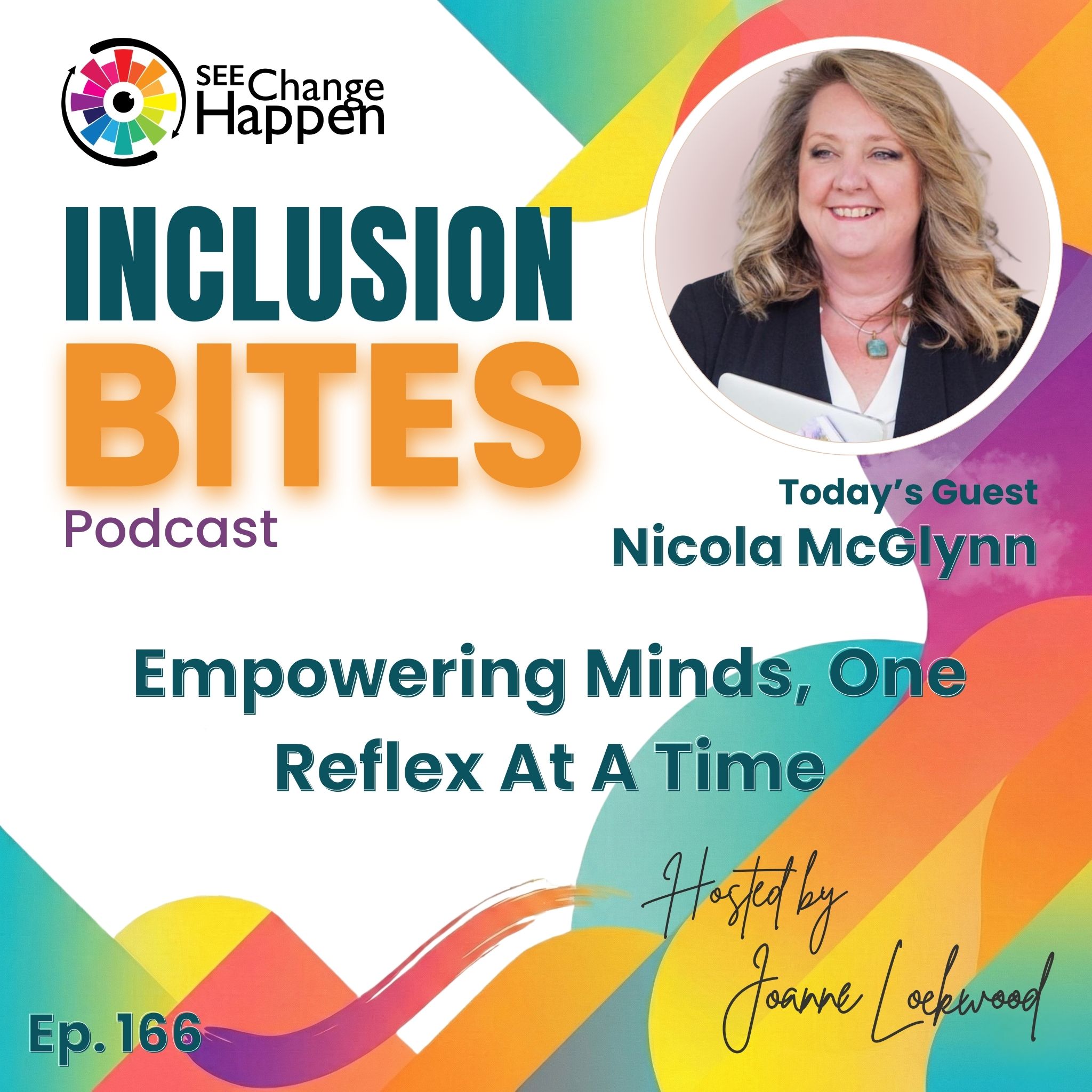
Niki McGlynn unpacks the hidden world of neurodevelopment, revealing how understanding primitive reflexes and movement empowers individuals to embrace their neurodiversity, unlock potential, and foster a deeper sense of safety and belonging.
In this episode of Inclusion Bites, Joanne Lockwood speaks with Niki McGlynn about mental health wellbeing trauma.
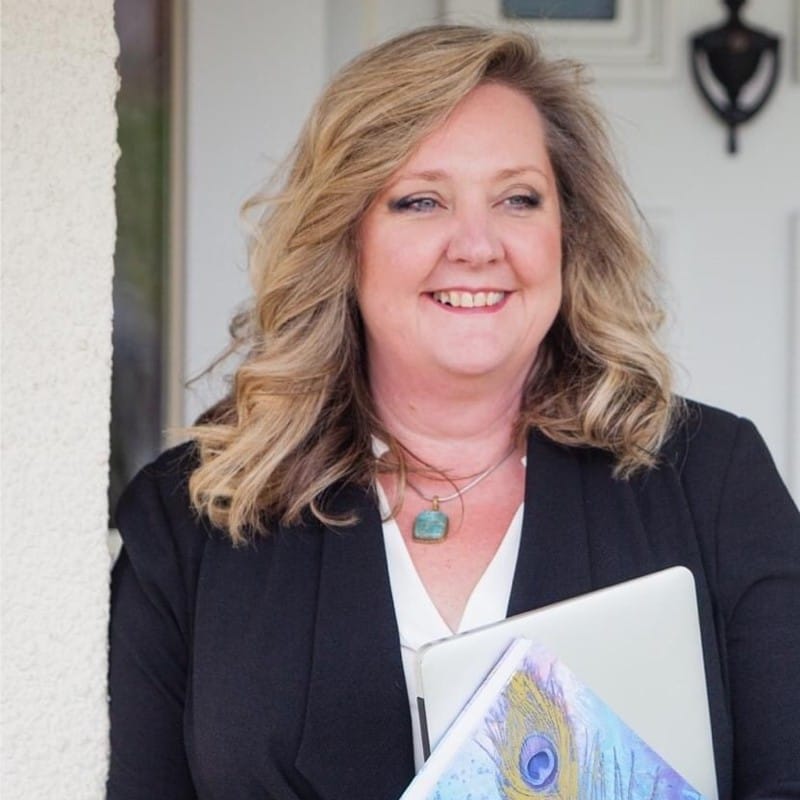
Welcome to Inclusion Bites, your sanctuaryfor bold conversations that spark change. I'm Joanne Lockwood,your guide on this journey of exploration into the heart ofinclusion, belonging and societal transformation.Ever wondered what it truly takes to create a world? Remember, everyonenot only belongs, but thrives. You're not alone.Join me as we uncover the unseen, challengethe status quo and share stories that resonatedeep within. Ready to dive in? Whether you'resipping your morning coffee or winding down after a long day, let'sconnect, reflect and inspire action together.Don't forget, you can be part of the conversation too. Reach outto jo.lockwood@seechangehappen.co.ukto share your insights or to join me on the show.So adjust your earbuds and settle in. It's time toignite the spark of inclusion with Inclusion Bites.Today is episode 166 with thetitle Powering Minds One reflexat a time. And I have the absolute honour and privilege to welcomeNiki McGlynn. Niki is a neurodevelopmenttherapist, trainer and ADHD coach,dedicated to helping people unlock their full potential through movementand understanding primitive reflexes. When I asked Niki todescribe her superpower, she says it is translatingneurodevelopment science into life changing movement strategies.Hello, Niki, welcome to the show. Hi, Joanne, lovely to haveyou here. Whereabouts in the world are you? So I'm based just outside
Joanne Lockwoodhost
Reading, which is about 40 miles west of London in a smallleafy town called Wokingham. Called where, sorry?Wokingham. Wokingham. Oh, I know Wokingham. I'm
Niki McGlynnguest
in a suburb of between Portsmouth and Petersfield.So. Okay. Oh, I never too far away.I wouldn't say quite a leafy suburb, but there are leaves andit is a suburb, but it's close. It's towny, I suppose,other than villagey. So, Nikki,your journey into neurodevelopment therapy. I think predictably, based on whatyou've written in your show notes, it's down to your own undiagnosed dyslexiaand adhd. So how do you get into into associated thiswith reflexes and movement? So
Joanne Lockwoodhost
really my journey was started with my daughterwho at age 12 was diagnosed withdyslexia and I was 40 at the time andbecame very obvious from her diagnosis that I had the sameissue. So I got a diagnosis and then discovered actually veryrecently that, that my mum had suspectedI was dyslexic when I was very young. But at that point mydad didn't believe in dyslexia. So kind of nothing happened.So. And it's very. I find working within thissort of neurodivergent world, that it's a very commonprogression now is that. Is that parents get their childrendiagnosed and then recognise their own issues. So she was
Joanne Lockwoodhost
diagnosed with dyslexia and then more recentlydiagnosed with ADHD just after the pandemic. And same thing, youknow, it's that greater understanding that we now have of howneurodiversity exhibits in women and girls and alot of that was discounted or not recognised until. Until very recently.So she got her diagnosis, I got my diagnosis and the rest is history.But I think seeing her really struggle at school andknowing how I'd struggled at school and at college and at university, Ididn't want her to have to deal with the same issues that I dealt withand, and I thought there had to be, there has to be something that Ican do to help her. So I started to look and came acrossthis whole world of neurodevelopment therapy, which ismovement based and really effective, andlearned some of the techniques to help her and it. And it made a hugedifference. And then I started to pursue it, learned howto practise with movement programmesand then eventually became a trainer myself. As you're
Niki McGlynnguest
talking now, I'm thinking our son, who was born in the early90s, we realised that hewas struggling to learn to read. I have to admit, as aparent, I was getting really frustrated with him. I didn't understand it. Therewas no obvious label sign on hisforehead saying, I'm different, I've got a dyslexic problem.We just thought that he was being awkward and not trying.And I remember going through flashcards in the Alphabet. Yeah,A for Apple, B for B and whatever, B for butterfly. And it'slike that, what's this? He wouldn't know. I said A for Apple. Andthen I'd put it down, I'd pick it back up again, ask him again withina few seconds, and he wouldn't, he just wouldn't be able to grasp it. Andit was really, really frustrating. It's so frustrating. My,
Joanne Lockwoodhost
my biggest issue with processing is I'm dyscalculic,so I can't do numbers, can't do numbers at all. But my grandfather was amaths teacher, so as a child I would have to go on a Sunday afternoonand have maths lessons with my grandfather and he wouldexplain things to me, which I. Which I understood, I thought Iunderstood. We'd go through it, it was fine. And then we'd go back to itand I would. Wouldn't have a clue. And I had the word stupid thrownat me on many, many occasions by my father and mygrandfather. And that's the conclusion you come to. One must be stupid,must be stupid. And all the other moving parts of beingdyslexic or adhd, those executive functionproblems of not being able to organise yourself, not being able tokeep your life organised, your home life organised, your schoolbag organised, all of that stuff you, you don't realise ispart of that processing condition. Soyou grow up feeling like you just. Yeah, a bithopeless. Well, the thing I came to realise was that
Niki McGlynnguest
it's not a kind of black and white thing. You don't. It's not that youcan't read this, you can't read that, or you don't know this or you don'tknow that. You develop coping strategies or you canrecognise certain patterns or shapes. You may not be ableto. You may not be able to understand that's an A, that's a B, that'sa C, or whatever it is, but you, you kind of know that's a word,you're reinforcing it enough times. So I think what was frustrating with our son washe wasn't stupid, he wasn't incapable of functioning in the world,it was just. He was incapable of learning his Alphabet,associating the letter with the object andthen. But he was able to follow along a reading book with you or somethinglike this. So that's where we were quite confused.
Joanne Lockwoodhost
Is often very advanced in people who aredyslexic. And of course now how they teach reading inschools is to use phonics. And dyslexic people can't work withphonics at all. They're far better off learning theold fashioned way of literally spelling out wordsand learning to recognise the shape of a wordis a much easier way for dyslexics to be able to learn.
Niki McGlynnguest
Yeah, because, you know, we read a book, we read something on the screen, whateverit is, we're not reading every letter, we're recognising the peaks andtroughs and the pattern of that word, aren't we? We can look at whole sentencesalmost and gather the essence of what it's trying to say without readingevery word. And that's something you call it speed reading, to callit development, you become very familiar. AndI have a real trouble reading novels because the way I pickkey bits out of sentences and I don't put any meaningor feeling in there, so I'm just getting facts. And I find it reallydifficult to absorb myself in something that's nonfiction orfiction, unless it's a technical or I'm trying toresearch something, in which case I can hyper focus and lift stuff out quite quickly.
Joanne Lockwoodhost
Yeah. So just at what point you look back at your life
Niki McGlynnguest
and you're seeing, seeing this about yourself, can you see instancesin your, in your own development where this jumped out atyou now with hindsight and you go, ah, that was that. Ah, that was
Niki McGlynnguest
that. Yeah. 100%. 100%. That whole, you
Joanne Lockwoodhost
know, the, the journey of people withADHD, which we really only starting to recogniseis this, is this all the different parts to it,things like rejection, sensitive dysphoria, whichis a sense that people don't like youor that you're being criticised or that you're not kind ofpart of it, you feel that rejection really, really acutely.And I look back now and I remember that soclearly. And I also so it so clearly in mydaughter where she would come home from school andsay to me that she, she didn't have any friends and nobody played with herat lunchtime. And I went into school and went, okay, what's goingon? This is a problem. And the teachers were like, well, no,she's, she's got this group of friends and she plays with this group of friendsand, and people were coming home for tea and she was going to people's housefor tea. So it didn't make any sense. And it was only later when Ilearned about this part of being neurodivergentthat it, that I realised that was what was happening. And the same thing hadhappened to me as a child, only I hadn't realised it. I went to people'shouses, fatigue, people came back to me, fatigue. But I felt likeI didn't really fit, that I didn't really have a lot of friends.But it's that perception, that whole point where your brainlies to you about, about the reality of what's on, going. Going on,
Niki McGlynnguest
inhibit you from engaging in social situations? Oris it just how you, or how was it how you remembered the situation?Did it stop you going in? Was it just on the way out? I think
Joanne Lockwoodhost
probably a bit of both. You know, memory is such an odd thing, isn't it?You know, what we remember isn't always accurate, butI think, I think there was a bit of both. I think that partly itstopped me being involved in things and partly My perceptionwas that I wasn't involved in things because that was how it felt.
Niki McGlynnguest
Yeah, I've seen people havesocial anxiety without any basis for that.It's just. It's become a kind of a habit or learned behaviour orexacerbated probably over. Covid reflex thing often.
Joanne Lockwoodhost
And this is the thing about primitive reflexes, whichnobody's ever heard of. Have you heard of primitive reflexes?Nobody's ever heard of them. And they're really. They'rereally, really fundamental and they really, really explain a lotof some of the behaviour that we see in people.Not necessarily just people who are neurodivergent, but more typically people areneurodivergent and it makes a lot of sense of why peoplebehave the way they behave. And since the pandemic, that I thinkhas become a lot more obvious. So wouldyou like me to explain what primitive reflexes are? Go for it. Yeah, go for
Niki McGlynnguest
it. I think. I think I'm fascinated to know. I'm sure that our listeners wantto know what it is as well. So primitive reflexes are movement patterns
Joanne Lockwoodhost
that babies make from conception pretty muchto about the first year of life. Andeach of those movement patterns have to express themselvesfully and then allow the brain to make certain connectionsand then they integrate back into your system, so they don'tdisappear altogether, they lie dormant in your system.So. And they fall into various categories. So the firstreflexes that develop are fear reflexes. Soyou have a fear paralysis reflex and a moro reflex.Now, the moro reflex some people have heard of, and it'sthat baby startle reflex. So when you have a babyand they're lying in their cot and there's a loud noise or youbump their cot or whatever, and they do that kind of fling their arms backand gasp and startle. That's a morrow reflex.
Joanne Lockwoodhost
So those two reflexes will havereally profound effects on our ability to be able tosocialise and function within society.Because although they're called fear reflexes, they don't make you frightened, but they stopyou feeling safe. If you don't feel safe, it's very difficultto be able to interact with other people, because fundamentally,you feel unsafe in the world. So the fearparalysis reflex will shut everything down. So if that's a veryactive reflex for you, it makes it difficult to make eye contact, itmakes it very difficult to interact with other people, itmakes it difficult to be able to speak out. So if you'vegot a child who's has selective mutism, often it's the fearparalysis reflex that sits behind that because it literally freezes yourvocal cords. So anything that you do that you find thatyou are unable to do even if you want to. Notprocrastination, but that sort of, you know, I really, really want to, but I can'tmake myself. Can often be a fear paralysisissue. You see it also in children andadults who are really, really good. You know, they're really, really good. They absolutelytoe the line because they don't want anybody to interfere with them.So they're the kids who do always do their homework. They don't get into anytrouble. They're always really, really well behaved because they don't want to drawattention to themselves. They don't want to get told off. They don't want to becalled out. They just want to be left alone.And within schools, that will often work reasonably well.It's, it can often fall apart when they go to university and that, that structureis no longer there. Or sometimes what you see are children who are really, reallygood at school and that fear paralysis reflex really holds them. And thenthey go home and then their moro reflex takes over. Now,moro reflex is associated with that fight flight state. Soif that's very active, then that's where you see people who havemeltdowns or temper tantrums or overly aggressivefor what you would see as no particular reason. You know, people who becomeaggressive because you looked at them or smiled at them. So, and thatcan often be that, that I don't feel safe in the world. Therefore my bestway to deal with that is to attack. Because if I get infirst and there are people who then struggle with change.If you have to, they have to move desks at work, they get very cross.If, if the temperature changes, they get very cross. They're not veryadaptable. And that whole sensory processing issuewhere people struggle with noise or too bright lightsor fabrics, often that's a mororeflex issue because that sensory processing isassociated with that sort of inability to process what'sgoing on in the outer world. That's fascinating.
Niki McGlynnguest
That's absolutely fascinating. As you're talking, I'm thinking, yeah,I get that now. So the borrow is the fight flight fear. It's a vagusnerve, adrenaline glands. Yeah. And you're at thisheightened state of stress. Find it. So when people, people go for help
Joanne Lockwoodhost
for, for, for, for those kind of issues,if those reflexes aren't addressed often, you only ever getso far with recovery. So if, if somebody has ptsdor complex trauma sometimes. What. Whatstops the recovery from those things are those fear reflexes that arereally, really fundamental in development that just sit thereand will stop people progressing forwards.
Niki McGlynnguest
Yeah, I'm just. I think about this, that obviously personal biases kickin the world around them, and biases we know are veryprimaeval. They're very designed to keep us alive, keep us safe, cut down ourprocessing time. But if you're mixing that with an inclination, if you liketo go into a defence mechanism quite quickly, then, yeah, we're going to be drivenby these biases quite heavily, aren't we? Well, it's a reflex, you know, it's like
Joanne Lockwoodhost
blinking. It's a reflex. You have no control over it.So often when people don't understand or you don't understand why thisperson's behaved this way, or you don't understand why you've behaved this way, it canbe that that reflex has just kicked in, you know,And I say often to people, we. We're wired for survival, not forhappiness. So even though we think we want to do this because it'llmake us happy, if our brain, if that real sort ofcaveman part of our brain perceives it as being dangerous, thenit won't let us do the things that we think will make us happy. Yeah,
Niki McGlynnguest
I mean, going back to what you're saying there, we were wired for that veryprimaeval caveman, fifties, hundred thousand years ago, when weevolved. Yep. Using. Using MicrosoftWord or logging on or writing a book or reading a book wasn't really partof the human design criteria, was it? It was cave painting, if you're lucky,or scratching surfaces or making notches in things. But we'reexpecting the human brain, the human diversity, if you like, tosuddenly all be in tune with the needs of today,when, evolutionary wise, this is like amillisecond in our evolution. Yeah, yeah. And that whole how we bring
Joanne Lockwoodhost
our children up now doesn't. Doesn't really helpwith neurological development. The brain develops through movement. So theless you move, the less your brain develops. The more you move, the more yourbrain develops. So with babies now, where babiessleep on their backs, lie on their backs under a baby gym, stay on theirbacks in car seats, they don't move around. They can't movearound in the same way that we used to do in big prams, thatwill have a fundamental effect. So after the fearreflexes, we have the development of neck reflexes. There's three neckreflexes, and those reflexes are the things that will help withreally good executive function, that sort of processing, reading, writing.Neck reflexes control eye movement. So if you've got a problem with trackingleft to right, that can often be a neck reflex issue.Organisation. Things like being able to godownstairs, things like being scared of heights. If. If there's. If
Joanne Lockwoodhost
your first neck reflex, which does this to your head,if that isn't well integrated, if you look down, what your bodywants to do is collapse. If that reflex is still active, your body wantsto collapse forward or hyperextend backwards.So what happens is when you look down, you feellike you're going to fall, because that reflex wants your body tocollapse because it's still active. Sopeople who have trouble with going downstairs or going downhill, oftenit's that reflex that's causing the problem. Or the other neck reflexturns your head from side to side. So again, if this reflex is retained,when you turn your head to the side, the side you've turned your head to,you, your arm and leg wants to extend out and the opposite arm and legwant to come in, so you get this kind of movement. So if you'redriving in the car with somebody and they. They look at theirsat nav, or they look over their shoulder and they suddenly swerve. That's why. It'sbecause this arm wants to come in, this arm wants to go out and theyswerve. Or if you're riding a bicycle and you look behind you, this arm wantsto go out, this arm wants to come in and you fall off your bicycle.So there's. There's lots and lots of issues that makes handwriting really difficult,because when you're looking across, when you crossthis central midline, this arm wants to extend. So you're trying to hold yourpen on the page and write. So often then what people do is they turntheir page around and kind of write uphill so they're not having to cross themidline. So. And then that also deals withorganisation and spatial awareness andtimekeeping and all of those things. Proprioception. Where.Where's my body in space? Where are my arms? Where are my legs? That kindof famous ADHD walk where people swerve around trying to avoidthings. That's often because of that neck reflex that isn't functioningproperly, to be able to give you that proper feedback about where your armsand legs are. So this neck reflex you're talking about here, we.
Niki McGlynnguest
We move on from it after about our first year, is that what you're saying?
Joanne Lockwoodhost
Less than that. Less than that, so this, this neck reflexis integrated by doing this movement, okay? So it integrates intoyour central nervous system, lies dormant. So if you've got ababy who spends all its time on its back, and particularly in a carseat where it can't lift its head properly, that reflexcan't integrate. So it sticks around. But if you've got a baby who'slying on its tummy and kind of do that, you know, nod, nod, nod thing,that's part of that integration process. And the sideto side one, one of the best ways to integrate that is breastfeeding. So youfeed on one side, flip the baby over, feed on the other side. So itlearns that it's got two sides and how to cross its midline, bringsits thumb into the midline, brings its foot into the midline. So
Joanne Lockwoodhost
that's, you know, lies on its tummy, picks up toys, brings them to itsmouth. So it's kind of learning that I've got two of everything.Learning to work its eyes together, learning to work its ears together so that youdevelop 3D vision, 3D, 3D hearing, binaural hearing,which you need, you need to have a dominant eye and a dominant earso that you can work out where sound's coming from, what, what you're looking at.So, so children who, who are, can't converge, whocan't focus, that's often a reflex issue. Seein the, the third neck reflex is still a neck reflex, but itaffects your core. So that's the, that's what we would call the crawlingreflex. So when you crawl, you learn howto learn how to accommodate with your eyes. So you learn to look near andlook far and be able to focus. You look down where you're crawling, you lookup where you're going. So your, your brain learns to do that process so thatyou can focus near, focus far, and focus your eyestogether. And then that helps with being able to focus at theright length to be able to read and write and paint and draw.And societies who don't have crawling as a developmental stage don'thave written language. So written language,fine art comes from being able to have the right focal lengthfrom crawling. So babies who don't crawl, babies whosit up and then get up and stand, or get up and walk, run.Because nine month old babies don't want, they run so they don't fall over.Babies at bottom shuffle often have those kind of focusimprovements. Wow, I'm fascinated by this. Let me just sort of translate
Niki McGlynnguest
it into my language. So what the baby's doing or the, in their earlystage of life are doing is what we're trying to do is calibrate our senses,our eyes, our hearing or whatever it may be with our musclesand movement so that we can understand cause and effect. If I do this, thishappens. My eyes need to compensate, I need to adjust by movement.So it's all part of that learning to drive a car type thing. It takesus six months to a year to become comfortable and spatially aware.That's all the newborn and the young, the toddler's doing is calibratingall these senses and muscle movements. And those muscle movements
Joanne Lockwoodhost
then allow the body and the brain to do thingsnaturally. So for instance, if you've got a child who's got aretained neck reflexes, so when they look downat their desk, they want to slump forward, they want to slump on the desk,put their hand on the desk, lie on the desk, and the teacher says tothem, right, sit up, pay attention. So you should be able to situp naturally without having to think about it. But if those reflexes are active,you have to make yourself sit up. So allof, all of your learning brain, all of your cortex,your prefrontal cortex is taken up with, I must sit upstraight and look forwards. So there's no spaceleft then for learning. Because the learning part of yourbrain is focusing on sitting up straight. Whereas if those reflexes areintegrated, you can naturally sit up straight because youare not fighting against that reflex that makes you want tocollapse. So we've never developed those as autonomous movements. They're conscious
Niki McGlynnguest
movements rather than subconscious movements. Exactly, rather. Yeah, yeah.So and because it's, that's taxing in the prefrontal cortexbecause we're actively having to think about, focus on it. As you say, Ihaven't got space for anything else in my prefrontal cortex because I'm so worried aboutwhatever I'm, whatever I've been told to focus on. Exactly, exactly.
Joanne Lockwoodhost
So I'm focusing, I'm looking at you, the teacher, I'm focusing on whatyou're saying. I can't look down and write because if I look down I wantto collapse. So I have to just, you know,keep my fingers crossed and stay upright and look upright. Sosame with the spinal reflexes particularly, there's a reflex called the spinalgalant reflex, which lives either side of the lowerspine. So that reflex, its job is to help you getborn and it's to help with the, with the kind of side toside movement. So if that reflex remains active inyour system, it stops you from being able to be still.You have to move. You have to move all the time.
Niki McGlynnguest
Fidgety bum, as we would say. Exactly. Bum. Exactly that. And
Joanne Lockwoodhost
that's a reflex. That's your spinal gland reflex. And itlasts all the way through if it isn't integrated. So. Andit makes it difficult to sit still. It makes it difficult to be still. Sothis is why wobble cushions and thingsthat allow children to move, allows them to concentrate, because ifthey're trying to sit still, their whole brain is taken up with sitting still.Whereas if they're. If they're allowed to move, their body can move, but theycan focus on what they need to learn. But that reflexalso interferes with your ability to listen. So I have childrenwho come to me who've had a hearing test. There's nothing wrong with their hearing,but they struggle to listen. Because in the womb,the spine helps to conduct sound up to the brain because your ears arefull of fluid. So if that reflex is still active after you'reborn, your spine is still trying to conduct sound up to your brain, andyour ears are trying to conduct sound into your brain, so it becomes overwhelming,so you stop listening. So those are the people who, if somebody drops a penat the back of the class, they've got to turn around and look. Or ifsomebody stands behind you, is. That most of us, really? No,
Niki McGlynnguest
it's hard not to override that. What's that noise? Isn't it? It's hard to. Hardto override that. Well, I find it hard.I have to bring it in. I have to bring it into my prefrontal corsetsto go, don't turn around, don't turn around. I mustn't turn around.I can resist the urge. But my inclination, I suppose it's a primal reflex,is to look over and say, is that a threat? Is that. Exactly. Do Ineed to worry about it? Exactly. Because you've got to be safe. So, yeah, so
Joanne Lockwoodhost
all of that, all of the fidgeting, being overly chatty,not being able to listen, not being able to pay attention,not being able to tolerate labels in the back of your trousers, not being ableto wear things that are tight around your waist, all of that is that reflex,nighttime bedwetting. If children are not able to control theirbladders beyond about the age of five, often it'sthat spinal galantic reflex that's causing the problem.So they have massive implications for children,but also for adults, and yet nobody knows about them andyou can encourage them to integrate at any age. So even if youhave somebody who is really struggling as an adult, youcan still do reflex integration and it makes lifeeasier. So you can recalibrate yourself later in life once
Niki McGlynnguest
you're aware of it. Absolutely. Obviously it's quicker in children because their brains are
Joanne Lockwoodhost
more plastic and things change much more quickly. They. Butabsolutely. An adult. Well, when you're an adult, there's adulting
Niki McGlynnguest
to do, isn't there? And it's finding time for these. These children activitieswhen you're just lying on the floor crawling. It's much easier to do that whenyou. When you've got no responsibilities of life and no one's judgingyou, it's, oh, what a good girl, what a good boy. Well done. You'resitting up. Oh, you've crawled across the floor. Isn't that cute? Try and do thatas an adult. People are going to look at you and go, what are youdoing on the floor? What are you trying to do there? I'm doing my crawling.
Joanne Lockwoodhost
I'm increasing my brain capacity. I've
Niki McGlynnguest
got issues with my neck reflexes. What I've got to try and do here iscrawl across the floor, look up, practise looking left and right without moving my arms,and I've got to make my bum stop hearing noises and pass it to mybrain. Exactly that. Exactly that. So I was being a bitflippant and a bit jokey there. So how. I mean, I'm hopingsomeone listening might be able to identify some of these traits. What can someone doin terms of, you know, just pick one of these reflexes at a time? Maybethe. How can people unlearn or retrain or recalibratethemselves in later life? So what you're. What you're looking to do is
Joanne Lockwoodhost
integrate those reflexes. So you want those reflexes toessentially become absorbed into your central nervous system.And the simplest way to do it is through movement. There's lots and lots ofdifferent approaches of how to do it. I believe the best way to do itis. Is to do it with the person as a whole, rather than pick outeach individual reflex. So you find movements that will work on thatwhole system and then target different reflexesas you need to. But that's what I do in my clinic and that's whatI train people to do. But also you can. There's lots andlots of information available online these days. It's becoming a much.Although nobody's heard of it, it is better understood than it was.So there's books, there's information online. Ifit's something that people are interested in, absolutely, you can find out information.I would always recommend going to aprovider, going to somebody who can support you becauseyou're working. Sometimes you're. Particularly if you're working with the fearreflexes, you can work with quite sensitive parts of your system,so it's better if you've got support for that.You know, if it's something that you want to explore 100%, you canjust Google it, Just Google retained primitive reflexes and see what comes up.
Niki McGlynnguest
So is it. Is it dance, is it yoga, is itactivities? I mean, just for people who may be thinking, oh, thatsounds. That's how I want to explore. What are they signing up for?
Joanne Lockwoodhost
So there are bespoke reflex integration programmes whichwill target those primitive reflexes generally. However,any kind of physical movement will improve the connections in yourbrain. So maybe not dance, which is a little bit sedentary,but. But yoga would be good. Dancing is good.Anything. Climbing is really good. You know, climbing is crawling on a differentplane, so. So, you know, climbing is great for beingable to get your brain to work, you know, and that whole being able tomove your arms and legs separately without your head getting involved.Brilliant. You know, climbing is fantastic for the. That.
Niki McGlynnguest
It's a bit like learning to drive again, isn't it? You spend the first coupleof driving lessons constantly aware of everything, looking over your shoulder,turning the wheel, instructor grabbing the wheel, saying, when you look over your shoulder,don't turn the wheel, it will listen. And then eventually, after three orfour months, you're off and becomesingrained into the back of your head. So what we talk about here is doingexercises, movements that allow you to build thatsort of brain image of yourself, your spatial awarenessof where your parts are, where your senses are, and connect those littledots in your brain. Is that what you're saying? Yeah, exactly that, exactly that.
Joanne Lockwoodhost
And of course, you know, as we get older, the other thing to remember isthat movement builds your brain. So staying activeisn't just about keeping physically fit, it's about keeping your brain fit as well. Butmovement will keep your brain much healthier than doing puzzlesand things, because it. Because it's building connections all the time,which is why things like dancing is really good. You know, whether you're, youknow, going out to a nightclub or whether you're going to a tea dance orlearning dancing like on Strictly, you know, thatrepetitive pattern, that sequencing pattern that'ssocial and enjoyable and relaxed will massivelyhelp. Your brain as we get to later life. I mean, I'm
Niki McGlynnguest
in my 60s now, so I don't know how that happened. I was turned around.I went from 40 to 60 without noticing.I've noticed that my sense of balance isn't what it was.My reaction times, my. Maybe my risk quotient's gonedown, but when I'm driving, I drive a lot slower and it stillseems fast, but I realised that I'm causing holdups in country lanes now. In thepast, I'd be the one pushing somebody else. I'm. I'm more reserved. Isthat part of the brain slowing down? Is that losing connection with myreflexes? Yeah, yeah. So it's. It's that as we age,
Joanne Lockwoodhost
reactions do become slower. Twitch muscles, which are the musclesthat stop you from falling, stop working as well.So. So all of that is part of that process. But you can. Youcan improve all of that. You can reverse it in some cases.
Joanne Lockwoodhost
Which is why things like yoga and tai chi and qigong are all really good,because they help to encourage your balancesystem, your vestibular system, and developmentally, yourvestibular system is the first sense that develops in thewomb. So. And often that's one of the things that we have tolook at where children's vestibular system isn't great, their sense of balance isn'tgreat, their cerebellum isn't. So cerebellum is the bitat the back of your brain, that sort of extra bit that. That helps withbalance and movement and memory and all sorts of things. And ifthat isn't working too well, then that's something that you can. You can work on.That's something we work with. We use a lot of spinning inchairs. Spinning in chairs is really good. So spinning is really good.So not spinning, you know, cycling, spinning, but spinning round and round is really goodbecause it helps to develop your vestibular system. Anything like thatis great. So you try to get your inner ear,
Niki McGlynnguest
or the little fluids in there, the little hairs, that movement going around. So youthen lock on and again recalibrating your senses. Yep, yep,
Joanne Lockwoodhost
yep, yep. So that whole thing, I don't know if you've ever come across theidea that you stand on one leg when you brush your teeth. Youever heard of that? Okay, so that's a really, really good thing to do. Really,really good thing to do as you get older. You stand on one leg asyou brush your teeth and then you swap legs as you need to. Need toStand on one leg at a time, but that helps with your balance, but italso helps with your bone density. So if you stand on oneleg, the more you use your bones, the denser they get. So stand on oneleg. It helps with your balance, helps keep you sharp and bright, andhelps everything else work, and it also helps with bone density.
Niki McGlynnguest
So it's all part of this use it or lose it mantra. Asyou get older, if you, if you sit down too much, you're going to losethe ability to be as agile and flexible as you once were. Sokeeping active, keeping, keeping the movement going. Which is why we see some people intheir 90s doing marathons and some people in their 60sstruggling. Yeah, yeah, yeah. And there is, There is part
Joanne Lockwoodhost
of that whole process of life is as we getolder, to kind of withdraw a bit more. That's. That's partof. Oh, that's just part of nature. We want to go out less. We wantto not drive as fast. We don't want to stay up as late. That ispart of that whole ageing process. And for some people it'sfine, and for some people it's not. But if you want to stay active andyou want to stay out in the world, then you have to do it.
Niki McGlynnguest
Yeah. You have to. You have to use it or lose it. And I, Iagree. It's very easy to. The opposite of FOMO is Jomo, isn't it? The joyof missing out. You know, you could quickly develop this. I don't care. I don'tneed to. I'm not, I'm not jealous anymore. I think that's. That's a Covid thing,you know, lockdown come out, that you think I've lost, Lost the impetus now,definitely. It's. I find it really interesting, actually, that if you do go
Joanne Lockwoodhost
out of an evening, Everywhere's empty by 10 o'. Clock.Everybody's gone home by 10 o'. Clock. And I think,I think that's. I think that's. That's definitely a post Covid thing.Definitely, definitely. But, yeah, people change their habits. Yeah, yeah. But when you lookback at the reflexes, that whole. Those fear reflexes, that fearparalysis reflex, that Moro reflex which stops you from feelingsafe, you know, all of a sudden for, you know, twoor three years, the world became a very, very unsafe place. And that'sparticularly affected children, that all of a sudden strangers wereunsafe, school was unsafe. It's. It's not safe tobe around other people. It's not safe to go to the park. So that's hada really profound effect developmentally on those children who have grownup through those years. But I think the same for adults as well is thatall of a sudden the world doesn't feel like a safe place. And then ofcourse you see what's going on across the world, you know, the rise of thefar right. And I think again, you know, that happens because peopledon't feel safe and then it makes other people feel, feel less safe. So wesort of end up in this self perpetuatingroute. I think we've also developed this fear of
Niki McGlynnguest
catching something off somebody else. In the past, you know, we wouldsend our children to chickenpox parties and we deliberately make sure that ourchildren were being exposed to as many coughs and sneezes as possible. Now we'refighting back against vaccines and saying they must be dangerous. Well,no more dangerous than the actual disease or the illness they're preventing.But we've become kind of this risk averse about everything. We'd rather stayin. If I got a sniffle, I'm going to do myself a COVID test. IfI'm a bit dodgy, I'll just keep out of Everybody's way. Whereas 10years ago we would just be out there gung ho, apologising.Yeah, yeah. So I think in some ways we're taking astep back here because our bodies are designed to reprogram themselvesfrom the environment. If we're not giving them all these threats and how canwe ever evolve to counteract them? We're just becoming. Exactly,
Joanne Lockwoodhost
exactly. This whole risk aversion thing has a, you know, and it's thesame with things like, you know, children's equipment inparks where slides aren't very slidy, swings aren't very swingy,roundabouts don't go very fast because everybody'sscared that they're, they're going to get hurt. But it's important, youknow, risk, risk taking is, is important in development.Children need to take risks. Adults, you don't learn through getting it right, do you?
Niki McGlynnguest
You have to hurt yourself to know what hurting yourself feels like. Kids
Joanne Lockwoodhost
bounce. I mean, when you're a certain age you do bounce. You know, if you're
Niki McGlynnguest
less than 18 months, you can fall off a bed and you just go. Bitof a cry, bit of a hug, rub their back. Every night it's raining again,nothing damaged, nothing broken. But now I remember going to thepark as a little un and down the slides and the swings andwe were trying to see how high we could get. If we could go overthe top and do a 360 on it. Yeah. Therocking horse. You'd be six of us on this rocking horse trying tosend it into space. It was like, I mean it must be horrendous. And theroundabout. I remember we used to have a game where we used to lay onit and put stuff, stuff underneath it, spin it around it. Somebody had to tryand pick up the thing that was underneath. Yeah. God knows what happened. That's so
Joanne Lockwoodhost
good. That's so good for the development of your brain.So good. But yeah, can't do it anymore. I know. Do you remember thewitch's hat? No, I don't remember that one. Is that the one that used to
Niki McGlynnguest
rock and sway in things? Yeah. Like a big upside down cone on a pole
Joanne Lockwoodhost
swung back and forward and bang against the pole.Got that in the stomach more than once. Yeah. I mean, I know
Niki McGlynnguest
we don't want anyone to become seriously hurt, die or whatever it may be.Cuts and grazes and a thoroughlygood learning exercise it sometimes needed.I don't remember any, anybody that I remember at that agecoming to any real harm. Okay. They may have had a black eye or agrazed knee or, or bit. Been a bit poorly when they crashed off their chopperbike at the time. A city chopper, bunch of those tiny wheels. Remember going downthis, this massive road near us with that really steep hill downwards. Andwe used to. One person had a chopper. We used to take turns and goingdown this hill on this chopper bike and I, I don't know, I'm going toguess we were probably getting up to 20, 25 miles an hour which is prettyscary on a bike anyway. But on a chopper where you got no stability onthat front wheel and the number of times we used to crash and burn offof that and just pick ourselves off and laugh our heads off and, and getgoing. Trudge home. Yeah, yeah, yeah, yeah, yeah. But now youjust wouldn't do it. You just wouldn't do it. And you don't see kids out
Joanne Lockwoodhost
in the same way, you know. And so one of, one of the best things,one of the best things you can do for brain development for children.Most adults can't do this because they feel sick, but they should. Arerolling down hills, log rolls down a hill. And Iused to live next to a park that had a great big hilland, and I never saw, never saw kids doing it.Never. Everybody's worried about dog poo now. But I say to peoplethat's what your washing machine's for get your kids running downa hill because it's, It's. It helps with that vestibularsystem because you're spinning. Proprioception is great becauseyou're. You're putting pressure on the body as it rolls over.You're having to focus with your eyes, your ears are having to work. It's brilliant.Absolutely brilliant. Brilliant for your interoception and yourexternal senses. It'sbalanced and vestibular is balance.Interoception is, am I hungry? Am I thirsty? Do I need to go to thetoilet? Am I tired? All of those things that thekids need to learn to develop. But when you're rolling down ahill and your body's, you know, sloshing round, that reallyhelps with the feedback to your brain. It's all aboutthe. I remember that your body's giving to your brain.
Niki McGlynnguest
I remember as a nipper, we used to take our go karts to the topof Portsdown Hill. It's probably. I look back at it and I think, how didI ever walk up all that way to top of Ports Down Hill? It musthave been. It's probably five miles from home. We used to wheel our go kartsfive miles up there and we used to launch ourselves off the top downthis grassy, steep hill on our go karts, chaining off for dear life.Somebody on the back, you know, pinning a pillion. AndI remember this one time we got to the bottom and we end up crashinginto the fence at the bottom of the. Of this hill and. And putting ourgo kart nose through the bottom of this fence. And they were coming out chasingus off. But, yeah, we were worried about hitting the tree. There's thesepark benches spread around, you know, over the top of a hill, you'dbe going, oh, mind the. Mind the bench. But, yeah, it's all part of that.Yeah. Risk your own go kart. Did you buy one?Say again? Did you make your own go kart or did you buy one? I.No, no, my father. Well, I say I made it. My father did. We madeit out of. He. He was a woodwork craft teacher. And so we took.We took old prams. Yeah, we had. We had. It was proper. Proper.I think it was an old wardrobe door or something. Or a wardrobe bill. Oldoak wardrobe that he chopped up. He cut. It was really styled like aracing car. Had proper movement, wooden front axle and everything.And it had these pram wheels. Wheels. Yeah, yeah.
Niki McGlynnguest
And what we soon realised was these pram wheels had, like, a quick releasebutton and you can take them off and put them back on, which is greatfor storage, but you'd be going down this hill and suddenly hear this click,click wheel would come off. It's like your wheel would head that way. And ifyou go straight down. So quick release wheels on a go kart werenot a good design feature, so we had to fix that one and put somesplit pins in to stop them coming off. But, yeah, I mean,we certainly did our neurological development back then. We were out active and,yeah, living in fear sometimes. So I do wonder when we talk about this
Joanne Lockwoodhost
massive rise in neurodivergent conditions, you know,part of that is 50% of the population couldn't have a diagnosis.So now we're diagnosing 20% of that 50%.But also I wonder if really thesymptomatology is now so much stronger because wedon't do those things anymore that would allow the brain to develop.So people are more dyslexic, have more ADHDsymptoms, have more autistic symptoms, because the thingsthat we would have done as children would have helped overall withbrain development. So those conditions were less obvious.
Niki McGlynnguest
Is some of that a boy girl thing? Boys being more rough andtumble, girls being more reserved? I'm not trying to implystereotypes here, but traditional girls were less out there, weren't they?
Joanne Lockwoodhost
I think so, but I think girls was certainly equally asactive, just in a. Maybe a different way. Yeah, ina different way. In a different way. Yeah. I have
Niki McGlynnguest
friends, little. We'd all climb trees, we'd all mess around, we'dall do stuff. So, yeah, I just wondered maybe the risk aversenesscomes more from a gender stereotypingor gender nurturing than. Which is why wedidn't see it manifesting itself in young women until morerecently when we were looking at different symptoms. I think it's
Joanne Lockwoodhost
just not a great understanding of howthose conditions manifested because I thinkwith. If you look at adhd, for example, youknow, there's three sorts of adhd. There's hyperactive, which is yourtypical naughty boy at the back of the class throwing chairs, andinattentive, which is your typical girl sitting,looking out of the window, daydreaming, and then combined.But I know hyperactive girls and inattentive boys. And I think itjust. It just shows up differently. And girls tend to be muchbetter at masking. So girls tend to be ableto, in social situations, be able to look atwhat everybody else is doing and copy that and. And changetheir behaviour so that it doesn't Show. And then when they go home,you know, the wheels fall off.And. And of course that causes problems because. Because when you're looking for, you know,if you have a daughter and you're looking for a diagnosis, it doesn't show upat school. So when. When the school sends a report back, they go, no, we'renot aware of any of this. Not aware of any of this behaviour. Well, no,because they're masker, you know, we need better education really,within schools as to how these conditions show up so that childrencan get the help that they need, so that they canfunction in society. Because neurodivergent peopleare incredibly important in moving society forwards.
Niki McGlynnguest
Yes, I suppose young boys, they're disruptive, they'retrouble, hard to manage, hard to keep doing something.They're most likely more likely to be a problem for the teacher.Whereas, as you say, a young girl isbeing quiet, relaxed, maybe not fully. Fullyliving up to her potential, but she's not disrupting anybody.She's seen as not a problem. Say again?Yeah, I can see that, because I hit puberty. Sorry?I remember hitting. I remember hitting puberty and. And turning into a completely differentperson where I became completely disruptive, completelyunmanageable in certain subjects, ones that I couldn't latchonto, whereas in the other subjects I was a model pupil.So I'm like that now. I'm either both feet in or both feet out.I can't do a bit in or bit out. I'm either. And I like tohyperfocus on things, pull them apart, put it back together 50 times.I go, right, I'm bored with that now. Move on to the next thing. Sowhen you look back later in life, you think you hear other people's stories,you go, wow, yeah, that sounds like me. Yeah, sounds like me. That sounds likeme. But it's never been a problem in my life. It's just something thatI've become aware of as being maybe call it a superpower, call it just partof who I am. And I now embrace that side of me going, ifI. If I realise that I'm in that kind of. This isn't really for me.I just get out quickly. I just don't bother trying to push myself because Iknow I won't be interested and I'll be focusing on some shiny object or asquirrel running down on the fence or something. Yeah. Which is
Joanne Lockwoodhost
great, isn't it? It's great that you have. That you have that ability to beable to make those choices now. So.And. And I think, and I think that's where,that's where it really works to our advantage. But I do thinkthat for a lot of people it's massively debilitatingnot being able to. Not being with society, not being able tomake friends, not being able to be in public spaces, not beingable to make yourself do things. You know, the procrastination
Joanne Lockwoodhost
of poor executive function is really crippling.Even if it's something that you think you want to do, if your brain hasdecided it's not worth it, then it's really difficult to overridethe. Not being able to organise yourself, not being able to pay bills, not beingable to, you know, all of these other parts to, to thosekind of conditions can be. Be really debilitating and that's really where we need tobe able to support people so that they can live up to their potential,so that they can do the hyper focus or the innovation orthe creativity that's so important, the human experience.
Niki McGlynnguest
Yeah, that's really interesting. Very interesting. I've got a couple of friendswho are. They can become very hyperactive. Youknow, one of the friends is. They start chatting andchatting and chatting and chatting. Okay, can we watch the film now? Can we watchthe telly? Can we focus on this? And they almost feel likechastise and they go, hmm. They shut down for a bit and they go. Thenafter about five minutes they go, see, I'm being quiet, aren't I? But bytelling me you're being quiet means that you must be hyper focusing on this partof your brain, complying to my, my request. And then all of a sudden not.
Joanne Lockwoodhost
Watching the film because all of their attention is on being still andquiet. Yeah. And then they, it bursts out again and
Niki McGlynnguest
they can't stop themselves and it's like. And you go, come on, come on. Goesinto this cycle continually where they, they're behaving,complying with a request and then suddenly they can't help themselvesand they want to be disruptive and it's almost like attention seeking, butit's not, it's. They've got this exuberance that they can'tkeep it in. And it's. I've noticed it in a couple of people thatI end up just laughing about it now. And it's, it's, it's who they are.
Joanne Lockwoodhost
Yeah, it's their spinal gland. You need to say, that's your spinalgland. You should sort that out. I'll get them to Google it and
Niki McGlynnguest
see what they say. Yeah, and look up a therapist or a practitionerwho can give them some guidance, because I suppose it also connects. You know, youtalked earlier about diet, regulation of intakeand movement and exercise, things like that. I guess if you're.If you haven't overcome all of these incongruences anddevelopmental learning and calibration, then you are going to beoff kilter in certain aspects of your life, aren't you? Yeah, yeah. And of
Joanne Lockwoodhost
course, we associate so many of those things with amoral failing. You know, if you can't wash up, if youcan't control your appetite, if you. If you can'torganise yourself. We see it as a moral failing as opposed to notunderstanding that. Actually it's a processing issue. It's a. It'sa neurological issue that's, you know, and if we support people in thatposition, then. Then it doesn't need to be a moral issue. It canjust be something that somebody needs support with. Well, our social constructs
Niki McGlynnguest
of society are telling us this is how you should behave. And itassociates shame or guilt or all theseunhelpful emotions get associated with it and you feel like a failure,not succeeding, embarrassed, whatever it may be. So, yeah, it'strying to normalise these conversations so that people understandthat they're just different, they have a different way of dealing with things. Yeah,
Joanne Lockwoodhost
yeah, yeah. And it's not wrong. And this is why there's such a hugesuicide rate associated with people, particularly with undiagnosedadhd. The mortality rate for life expectancy for people withADHD is much lower than it should be. Havingundiagnosed ADHD is a greater risk than smoking, you know, andyou think of all the. All the work we put into trying to stop peoplefrom smoking. So it's a serious, serious issue. Does
Niki McGlynnguest
that all key down to lack of social worth, lack of social integration?
Joanne Lockwoodhost
Well, children with ADHD are told off 20,000times more than their neurotypical peers.So there's a lot of shame associated with that. There's a lotof, I must be stupid, I must be a failure, I must be useless,I must be what's wrong with me? Why can't I.I should be able to. That's interesting. Yeah, I can see
Niki McGlynnguest
that as well. I think I saw something on. I think it was LinkedIn orsome article on one of the car news sites talking about howthis is correlation between entrepreneurship andnot being an A grade student. Becausebeing perceived a failure or having to try hard or notalways succeeding gives you better resilience, better adaptability,which is an entrepreneurial trait. Whereas if you're used to getting everythingright, your success comes easy. You've never experienced failure, which is what wetalked about earlier, about this development stage where you have to learn what failure feelslike in order to be able to cope and adapt. Where. And entrepreneurs tendto be neurodiverse. They tend to be people who have not succeededacademically because they've learned alternateways of interacting with the world that is benefit theirentrepreneurship, I suppose. But also people who are neurodiverse see the
Joanne Lockwoodhost
world in such a different way, you know, so that's where thatcreative thinking comes from. Being able to thinklaterally, being able to see patterns, being able tounderstand and often seeanswers very, very quickly. And they're also not very goodat doing what they're told. Much easier to be an entrepreneur,but it's to work. Prudential or
Niki McGlynnguest
a comedian. You look at most professional comedians, they have exactly the same traits,don't they? They see the world differently, they find different things funny, they seepatterns and stuff that are humorous often and not being governed bysocial contracts or rules of how you supposed to behave.Nikki, it's been absolutely fascinating. I've loved talking to you and I'm sure we couldjust carry on for hours. I've got so many more questions which they're more personalquestions, but yeah, I think we'll let individuallisteners contact you if they need to. So how can people get a hold ofyou? It's. My business is
Joanne Lockwoodhost
Organised Mind, which is an aspirational businessname because I don't have one and so I'm.My website is organised mind.co.uk and I'm on Facebookas Organised Mind. Instagram, LinkedIn. I'm on as NikkiMcGlynn, but I'm not very good at Instagram, soI don't. I'm a Facebook generation person.
Niki McGlynnguest
McGlynn. McGlynn. Yep. AndNikki. N I K I. Brilliant. Well, Nikki, it's been absolutelyfascinating to meet you. I'm going to make sure we're connected on LinkedIn and hoponto your Facebook in a minute and say hi. So, yeah, that'd be fun. Loveto keep in touch. Brilliant. Lovely talking to you, Joanne. Thank you so much for
Joanne Lockwoodhost
letting me come on. Thank you.
Niki McGlynnguest
As we bring this conversation to a close, I want to expressmy deepest gratitude to you, our listener, for lendingyour ear and heart to the cause of inclusion.Today's discussion struck a chord. Consider subscribing toInclusion Bites and become part of our ever growing community,driving real change. Share this journey with friends, family andcolleagues. Let's amplify the voices that matter.Got thoughts, stories or a vision to share? I'm allears. Reach out tojo.lockwood@seechangehappen.co.ukand let's make your voice heard. Until next time, this
Niki McGlynnguest
is Joanne Lockwood signing off with a promise to return withmore enriching narratives that challenge, inspire andunite us all. Here's to fostering a more inclusive world oneepisode at a time. Catch you on the next bite.
The Power of Primitive Reflexes in NeurodevelopmentMovement as a Foundation for Inclusion and WellbeingReframing Neurodiversity, Inclusion, and Shame
Joanne Lockwood is joined by neurodevelopment therapist and ADHD coach Niki McGlynn for a practical, science-led conversation about primitive reflexes and why they matter far beyond infancy. Together they unpack how early movement patterns help the brain wire up for attention, coordination, sensory processing and the felt sense of safety—and what can happen when those reflexes remain active into later life.
Drawing on personal experience of dyslexia and ADHD in their families, they connect reflex patterns to real-world challenges many people recognise: fidgeting, difficulty sitting still, trouble tracking text, overwhelm from noise or sensory input, social anxiety, and the way shame can build when these differences are misunderstood as “bad behaviour” or a moral failing. They also discuss the lingering impact of the pandemic on felt safety, risk aversion and social habits.
The episode offers listeners accessible ways to think about “recalibrating” through movement, from targeted reflex-integration approaches to supportive activities like yoga, tai chi, climbing and balance work. The overarching message is that better understanding of neurodevelopment can reduce blame, increase inclusion and help people of all ages find practical routes to thriving.
“He wasn't stupid, he wasn't incapable of functioning in the world, it was just. He was incapable of learning his Alphabet, associating the letter with the object and then.”
“Yeah, because, you know, we read a book, we read something on the screen, whatever it is, we're not reading every letter, we're recognising the peaks and troughs and the pattern of that word, aren't we? We can look at whole sentences almost and gather the essence of what it's trying to say without reading every word.”
“So what we talk about here is doing exercises, movements that allow you to build that sort of brain image of yourself, your spatial awareness of where your parts are, where your senses are, and connect those little dots in your brain.”
“In the past, you know, we would send our children to chickenpox parties and we deliberately make sure that our children were being exposed to as many coughs and sneezes as possible. Now we're fighting back against vaccines and saying they must be dangerous.”
“I think I saw something on. I think it was LinkedIn or some article on one of the car news sites talking about how this is correlation between entrepreneurship and not being an A grade student. Because being perceived a failure or having to try hard or not always succeeding gives you better resilience, better adaptability, which is an entrepreneurial trait. Whereas if you're used to getting everything right, your success comes easy. You've never experienced failure, which is what we talked about earlier, about this development stage where you have to learn what failure feels like in order to be able to cope and adapt.”
“They see the world differently, they find different things funny, they see patterns and stuff that are humorous often and not being governed by social contracts or rules of how you supposed to behave.”
The fundamental influence of primitive reflexes on learning, behaviour, and emotional regulation throughout life.
How undiagnosed neurodivergent traits often reveal themselves through generations, highlighting familial patterns and societal gaps in awareness.
The connection between early childhood movement, integration of reflexes, and the development of executive function, spatial skills, and self-regulation.
Practical impacts of retained reflexes in educational and workplace environments, including difficulties with organisation, attention, handwriting, and social engagement.
Movement-based and sensory strategies to assist both children and adults in overcoming challenges linked to neurodevelopmental differences.
The nuanced relationship between societal expectations, stigma, and the mental health of those with ADHD, dyslexia, and other processing differences.
Actionable steps to promote inclusion, such as normalising diverse learning experiences, supporting risk-taking in childhood, and advocating for tailored support rather than pathologising neurodiversity.
One thing to remember
The episode “Empowering Minds, One Reflex at a Time” reveals how fundamental primitive reflexes and movement underpin neurodevelopment, influence our lifelong learning, behaviour, and sense of safety, and how integrating these reflexes through purposeful movement can radically improve focus, emotional regulation, and wellbeing—regardless of age. The conversation underscores that many neurodivergent challenges, often masked or misunderstood, are deeply rooted in early physical development, reminding us that inclusion requires deeper awareness of, and support for, underlying neurological diversity.
Explore topics
Ideas from this episode
The Power of Primitive Reflexes in Neurodevelopment
Reflecting on my conversation with Niki McGlynn, I found myself captivated by the concept of primitive reflexes—those automatic movement patterns hardwired into us from conception through our first year of life. Niki described how these seemingly forgotten reflexes, like the Moro (startle) and fear paralysis reflexes, shape not only early childhood development but continue to impact our executive functioning, social interactions, and even behaviours as adults.
Movement as a Foundation for Inclusion and Wellbeing
Movement emerged as a recurring theme throughout our dialogue—not as mere exercise, but as the neurological cornerstone of development, learning, and ultimately, belonging. Niki emphasised that the brain develops by moving, and the less we move, the more we risk stifling essential neural connections.
Reframing Neurodiversity, Inclusion, and Shame
Our exchange underscored the deeply personal—not just clinical—reality of living with (and beyond) labels like dyslexia or ADHD. Both Niki and I reflected on family stories of late diagnoses, coping strategies, and the all-too-familiar burden of shame and misperceived failure.
Learn
Frequently asked questions
What are primitive reflexes, and why are they important?
Primitive reflexes are automatic movement patterns that emerge from conception and typically integrate within the first year of life. They lay the neurological foundation for higher-order brain functions, including socialisation, executive functioning, balance, and learning. If these reflexes fail to integrate properly, they may remain active, subtly influencing behaviour, movement, and even emotional responses throughout life.
How do primitive reflexes impact neurodivergent individuals, especially those with ADHD or dyslexia?
Active primitive reflexes can exacerbate difficulties commonly seen in neurodivergent people, such as challenges with focus, organisation, coordination, and social interaction. For example, retained reflexes may contribute to struggles with eye-tracking (affecting reading), posture, spatial awareness, anxiety in social situations, and processing sensory information.
What led Niki McGlynn to neurodevelopment therapy and ADHD coaching?
Niki’s journey began with her own late diagnosis of dyslexia and ADHD, which followed her daughter’s similar experience. Seeing the struggles both her and her daughter faced, Niki sought solutions and discovered neurodevelopmental therapy—focusing on movement and reflex integration—ultimately becoming a practitioner and trainer to help others unlock their potential.
How do retained reflexes present in everyday life, both in children and adults?
Retained reflexes can show up as difficulties in sitting still, concentrating, reading, writing, balance, organisation, and emotional regulation. Physical manifestations might include fidgeting, sensitivity to sensory inputs, poor posture, and awkwardness with tasks demanding fine motor skills. There can also be psychological effects, such as heightened anxiety or social withdrawal.
Can reflex integration still be achieved in adulthood, or is it only possible in childhood?
It is possible to integrate primitive reflexes at any age through targeted movement-based programmes. While children typically respond more quickly due to greater neuroplasticity, adults also see benefits with persistence. Activities might include bespoke neurodevelopmental exercises, yoga, dance, climbing, or even simple practices like balance work.
Why does modern childhood development sometimes lead to more pronounced neurodivergent traits?
Modern childcare practices, such as decreased unstructured movement (e.g., more time strapped in car seats, less risky play, and limited crawling), can hinder the natural integration of primitive reflexes. This can intensify issues related to neurodiversity, making traits like dyslexia, ADHD, and sensory processing difficulties more observable or acute.
Share this episode
Heard something worth passing on? Send this conversation to someone who needs to hear it.