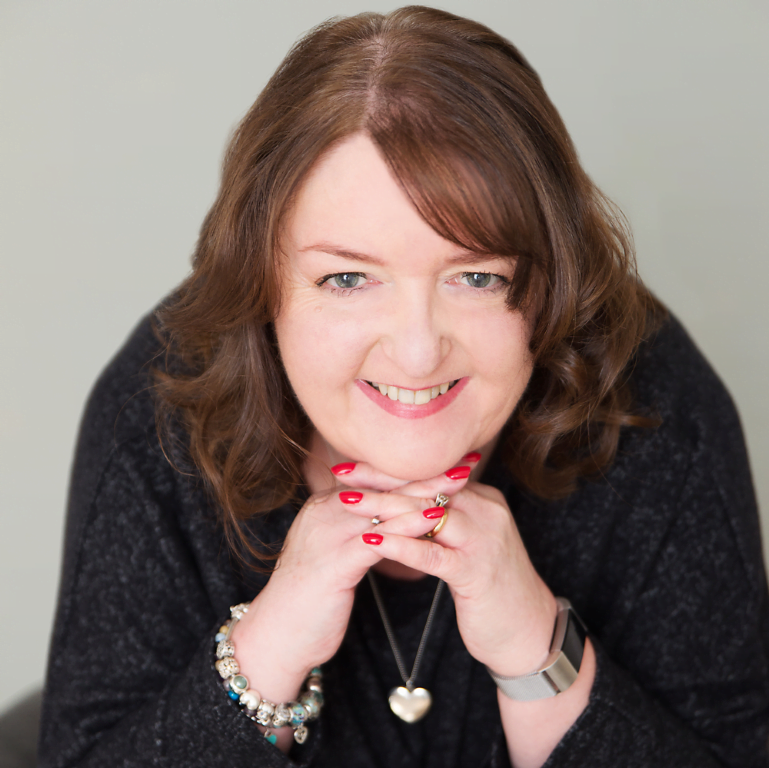
Jacqui works with in the space that is creating accessible systems of the future. Working with governments and the UN she is at the forefront in ensuring the future is inclusive for all.
In this episode of Inclusion Bites, Joanne Lockwood speaks with Dr Jacqui Taylor about workplace culture systems.
Hello, everyone. My name is Joanne Lockwood and I am your hostfor the Inclusion Bites podcast. In this series, I will beinterviewing a number of amazing people simply having a conversation around thesubject of inclusion, belonging and generally making the world abetter place for everyone to thrive. If you'd like to join me in the future,then please do drop me a line tojo.Lockwood@seechangehappen.co.uk.That's S-E-E Change Happen dot Co dot UK. You'll beable to catch up with all of the shows on iTunes, Spotify andthe usual places. So plug in your headphones, graba decaf and let's get going. Todayit's episode 17 withthe title leave no one behind, andI have the absolute honour and privilege to bejoined by Dr. Jackie Taylor. Jackie andI met online in a Facebook group for professional speaking, yetanother relationship borne out and forged bythe coronavirus lockdown. Jackie describesherself as one of the hundred global leaders 2019and in the top ten global Internetof things innovators. Shedoesn't just predict the future, she engineers, it's in cuttingedge website research. I can't wait to find out what thatmeans. I asked Jackie to describe her superpower andshe said, I build deep technology whichunlocks inclusion outcomes for all.Hello, Jackie, welcome to the show. Hi,
Dr Jacqui Taylorguest
Jo. Delighted to be here, speaking to you today fromsomewhere outside of. Oh, brilliant. I
Joanne Lockwoodhost
hope the weather's not quite as hot and sticky as it has been all week.
Dr Jacqui Taylorguest
Oh, my goodness, no. Much better today. And I'm lucky to be in mystudio, which is climate controlled, the rest of the houseisn't, but the studio is, so I would manage normally.But goodness me, it's been exciting times on allof that rushing around or trying not to. Wow, I'm so
Joanne Lockwoodhost
jealous. Ok, Jackie, so what do you meanby leave no one behind?
Dr Jacqui Taylorguest
Well, as a web scientist, and I probably should explainthat first, I've not always been a web scientist. Mycareer started as an aerospace engineer,but it was disrupted quite rapidly andrudely with the death of my mother. So I had to takesome time out in order to keep my family together and tolook at how life would carry on. So I tooka two year gap in that and reset mystudies after that. That, I would say,focused my mind beyond my own bubble. I think whenyou're in your pre 20s, you tend to bein your own sort of bubble, and when you havea traumatic incident like that, it tends to expose you to the factthat the world doesn't always run on parallel tracks or onunknown tracks, essentially. When Iqualified, I'd put together some cutting edgeresearch that actually looked at solving one of theproblems our aerospace industry had.It creates noise pollution for our society. And I'd workedwith engineers to produce new jet engine technology that reduced thatpollution. So even as an aerospace engineer, I was looking at thisfrom a societal point of view, and thatwas fantastic. My dissertation gavebirth to a brand new aircraft, and I didn't get to work on itbecause what happened there was I was female,and female engineers back in the day were very few and farbetween, and the client that bought the aircraft off plan was from the Middle eastand didn't need me influencing what happened with that planeinto the sky. So I found myself having done all thispioneering work with no career path.The MD of the aerospace company, Pilot friend ofmine, said, what we have here is somethingquite unique. Let's look at it in a different way. Isaid, that's great. He said, so, can you just go in and sort out allthose technologists who don't seem to do what you do? And thatbegan my career as technology can becreated, birthed, engineered. I was part of theinitial movement to create a movement in technological softwareengineering, engineers that actually said, don't build technology likethis, build it from engineering principles. And so Ilearned over 35 years ago nowthat actually what we can do is build technologythat includes everybody. And what that's calledis something called deep tech, deep technology. And that'ssomething very unique in the technology world. It's builtfrom engineering principles about my early work in andcareer in software engineering, but it actually includessome major scientific advances, and that's where Webscience came in. I'd never heard of it either. And TimBerners Lee introduced me to it because he made it up. Andso the combination of my engineering background and theweb science, the fundamental web science I've created,actually underpins the inclusion agenda.We deliver all across the world, and thatallows us to be able to build technologywhich is accessible andutilises a talent. Specifically. Originally was aroundGeneration Z, they're 27 to seven today, butas of my speech at Davos in January 2019,generation Alpha, they're 16 to six. So that'sme and that's what I do.
Joanne Lockwoodhost
Wow, you just name dropped in there bigtime, didn't you? You just chucked Tim Burns in there. That'sa bit of a powerful name drop right at the beginning of the podcast Kadushstraight into the mean. Washe must have been very influential at the time, or hashis reputation grown since you knew him? Was thisin the early days of the web? Well, we're speaking today on a
Dr Jacqui Taylorguest
podcast that you're going to send out to the world. And he,over 30 years ago, connected two technical protocols and said, how do ourworld. And that's the reason you can do what we do. We're speakingremotely. That's the reason for the fabric of how our societyis woven with the World Wide Web. But it was interesting, thisfundamental web science, which I'm not sure whether we get into, but wasaround levelling up the opportunitiesfor our young people, who at the time were 17 to seven,and the technology I built to leave no one behind.Tim said to me, he said, I found out what you've done,which is a scary thing. He tends to talk.He's very focused when he speaks. I found out what you've done. I need youin the Royal Society. It's the 20th anniversary of the web. We need to getthis thing moving. So it wasthe twelveth of March 2009. And, I mean, if TimMenzi asked you to go somewhere, you go, no idea what it was about. Iwent, and it's changed my life. Becauseif he was here today, what he would say is, the reason I did whatI did was to enable humanity tofind its own truth. That's what he says. He says that anywhere, if anybody everasks him the right question. And that was what he started thatmeeting out with. We were there for an entire day. And what he said is,you walked in here from all your disciplines. I was an aerospace engineer.But you walk out of here as web scientists. It doesn't matterwhat that means. It means whatever it needs to mean. Butin order to enable his vision ofhumanity to discover its own truth, we needed to includeeverybody. And in the 20th anniversary of the web for 20 yearson, what he effectively said was, I haven't managed todo that. We have 18% of the world online, and you lotare here to figure out how to change that. And sothat was eleven years ago, and now we have over 50% of the worldonline. We paste the build out of the webto give people access. There's more of itavailable than people are connected. So anybodychooses to be connected, they're in andbeyond 80% of humanity, it's slightly different. There'sa different piece to be done there, and that's the piece wework on now at my company, flying by and rain. But for 80% of theworld, connected, you can make a personal choice and you're inTim, we worked with him for eleven years.And that vision ofI translated that connect humanity to its owntruth, to in my view, what flying binary would do, my companywould do is work out how to develop the technology to makethat vision true and to leave no one behind. So that's whatI mean by inclusion. Wow.
Joanne Lockwoodhost
Yeah. As you're talking now, I'm just reflecting, I mean I'm inmy mid, well, still in my mid 50s, just about56, I think so, yeah. Mid fifty s. And mylife is inconceivably different to it would have been without theInternet, without the web. And I grew upin the early 80s. Well, Ellis core in the early eighty s. Andthe Web just wasn't a thing. Mobile phones, they weren't a
Joanne Lockwoodhost
thing. Phones. The best you have was a cordless phone in your bedroom thatconnected to a base station somewhere. And it's a big chunk of a brick. AndI remember getting into it, into computing, desktop computing, in the mid80s, just after the IBM PC launched, when there was, weused to call it IBM PC compatible because there were so many incompatiblesand Apple were still producing their own version stuff and there was no standardsof word processing units, there was no real standard of communication betweenpcs. We had things like the Gopher protocol and the earlySMTP protocols were coming out and all these varioustechnologies remaining niche about universities connectingthrough their own Internet type. Early stage ARPANET, I think it wascalled. In those early stages. That's right, communicator andthen Gopher seemed to be quite a leading kind of protocol. ThenHTTP and HTML kicked in,and that's when it started. Even HTTPs wasn't really a thing in the early stages.There was no such thing as trust and encryption becausepeople tended to trust each other anyway. It's only when the bad guys gotinvolved, really, that we had to start worrying about eavesdropping. Andbad guys have been responsible for a lot of technology advancements, but they've alsosnookered a lot of good ideas, haven't they? Yes, absolutely. And that's the work
Dr Jacqui Taylorguest
I do today as a web scientist. So I work on the dark web,which is where those people inhabit and essentiallywork in the cyberspaceto ensure that we maintain that vision of humanityconnected to its own truth, despite what you've just thephenomenon of the cybercriminals that you're talking about, despite that. So that'sthe work we do every day at fine binary. Yeah,
Joanne Lockwoodhost
I remember, I think I was about 14 and I was ingeography and we were set homework and it was called sheep farmingin Patagonia. And we had to write an essay on sheep farming inPatagonia. So as a 14 year old, what were myoptions? What were my options? I had to go to the local library, I hadto hunt through some research. I had no way of findingthis. And eventually I found a book, I think, with about a page in itthat was relevant and I think I got a d for itbecause I didn't perceive to do enough research. I spent days onthis and I think now I can whip the phone up my pocket, Ican type sheep farming in Patagonia. I will try this afterwards.And I can get articles and opinions and journalsfrom all over the world, not just from Argentina or SouthAmerica, that can give me the answers to myquestion. So when we talk about accessibility of data, accessibility of information,inclusion in terms of allowing people to communicate, we couldn'thave survived lockdown and coronavirus 30 years ago or even tenyears ago, could we? No, absolutely not. And it reminds me of Gen
Dr Jacqui Taylorguest
Alpha is who we build for today, so to unlock theirtalents so that they can bring their talents to the world.And it reminds me of a video that a mum sent me, which is actuallyon YouTube if you want to go look for it, where the mum gives herlittle girl a magazine, a hard copy magazine, and sheimmediately does what any of Gen Alpha do because they're a kinestheticgeneration is she swipes it, she touches itand she passes it back in seconds and says, it doesn't work.Mum replaces it with an iPad and then the child goes and doeswhat she's looking. And the thing aboutGen Alpha is there are first generation where they'reimmersed in what we've talked about. So I'm a baby boomermyself and essentially I've done thattrajectory. As I said, I was catapulted intotechnology against my will as an aerospace engineerand came back to now, well,eleven years ago when I met Tim, to the industrial Internet ofthings, which is what we build, that's what deep tech is. Andessentially that's because we are in asituation now where we can connectto do whatever we do. It doesn't matter what generation we're from, wecan. But Gen Alpha are a kinestheticgeneration that assume to be immersed in this stuff.They just have no concept of the idea, it's not available if they want toknow. And so I call the Gen alpha generation, the curiousgeneration, the previous generation, Gen Z, there areweb entrepreneurs, they're 27 to 70 days andthey influence 40% of the economic spend across the world.So they have introduced us to the explore space,but Gen Alpha introduced us to the curious space.So it's no coincidence that inclusion isbecoming such a pervasivefocus for lots of the world, because Gen Alphaknow no reason why it shouldn't be. And if you don'tbelieve know Greta Thunberg and her climate change thing is,why is all this nonsense going on? What on earth are you all doing?Let's just fix this. And so they are, in their kinestheticway, they will reach those resources which are everywhere. Andthe acceleration of the adoption of the web andbringing humanity on to be able to use its resources todiscover its own truth is an acceleratingphenomenon now. So for those of us that were preweb generation, even pre Internet generation, it's beena slow path. But for Gen Z and Gen Alpha, they know no different.So if you know anybody or you've reared somebody, as I have, who's27 or under, you know exactly what I'm talking about. You may havenephews or nieces, neighbours, children, you know exactly whatyou're talking about. What we at Joanne and I are talking about today,it's really interesting that that becomes and frames ourworld. And lockdown has effectively typifiedthe acceleration of all of that.
Joanne Lockwoodhost
Mean us oldies still have thisconcept of digital detox where we seem to.I've had enough now I need to reject this and sort of go offline fora month or so. But Gen Alphas and Gen Zhave this concept of detox because they're so immersed in the technology,is their channel, their world? Can they switchoff? Is that good for their health? I mean, are we living this 24 xseven world of connection? Is that good for our mental health?
Dr Jacqui Taylorguest
Well, it's an interesting question that, because it's a multifaceted question,and there's a number of ways of looking at it, but to boil it downto two essential ways ashumans, the human contact, which of course hasbeen a feature of this lockdown, in terms of our lack of it, or areduction of it, or our limitation of it, I thinkmost people would say we've understood our dependency on otherhumans as part of lockdown, because denying us those socialcontacts, or doing them as we are today, via a videoplatform, has very much defined things and we've understoodwe miss that social contact. So there's thatelement of it, but the other element of it is my work on the darkweb. Not everything we access onlineis something that is good for us, but how do we tell thedifference? And the answer is, you can't. And we can have a long debate aboutthat, but the reality of it is you can't. SoI, this week, have kicked off a newproject which is, based on the evidencewe've assembled, safeguarding our young peoplefrom the cybercriminals during lockdown. We call it thesocial Guardian and that's because they call it the social Guardian. JenAlpha have said, I feel we need a socialguardian to help us navigate when we are online,the unplug or not. I have many parents. I'veworked within lockdown where we've had this conversation. Don't wind themup by asking to unplug. Find them other things to do,and they will adopt the thing that works bestfor them. But what we now have is a phenomenon where the onlineharm we suffer isnot transparent to us. We don't know when we're suffering. So thesocial guardian is what Jen Alpha have helped me put together duringlockdown as part of that safeguarding. And we willeffectively. What we are going to do is build them an app basedon what we've been doing during lockdown to supporttheir mental health in order to createthis fundamental research which is very directedat the moment around Gen Alpha. But we are looking atthat some of the online harm that people suffered during lockdown,Gen Alpha suffered during lockdown, has been quite destructive.So it's going to be looking in the acute mental health care. Butobviously we will assemble the evidence and the means oflooking at everybody's mental wellbeing. Although we againwill be focused on Gen Z and Gen Alpha and how they cannavigate this world with their own options, butknow when it's not safe for them. And so to be able to configurethat from a personal point of view.
Joanne Lockwoodhost
Yeah, for sure. When I talk about inclusion and when wetalk to companies around doing inclusion surveys,demographics, when companies say, well, we've found it reallydifficult to get people to contribute or to share. My firstreaction is where there's a low trust environment, people won't trust theirdata with you if they don't understand what they're going to do with the data,what the reason, what's their why for giving you the data. So we're moving toa cyber world now where we can't trust what we see,what we hear. Deep fake technology. I'm sure you've got a lotof opinions on deep fake. We've got a lot offake news. World leaders arespeaking truth. That is fake. Socan we trust world leaders anymore? Can we trust that it's actually themspeaking? When we got AI that can voice synthesise,it's not like the old mission impossible. They're cutting bits of mag tape and stickingthem together to make the words. You just feed their entire speechrepertoire into an AR processor and you can then speak exactly like them,indistinguishable and deep fake. We can invent faces, we can makemoving videos now and actually synthesise. I mean, if you look at the last Starwars movie, Princess Leia, Carrie Fisher had already died,yet they had her in the film. Is there a future for actors? Do weneed actors anymore? Can we just synthesise our own actors and create ourown mean? How do we trust whatwe're saying? So, it's a really good set of questions
Dr Jacqui Taylorguest
and there's no simple answer, and we need a completely other podcast todiscuss that. But perhaps what I can do is try tocoalesce some of that concern and interestand excitement actually around that future. You'repainting the industrial Internet of things, which is what Ido as a web scientist. That's what we build, that's what we engineer,is something that has, since my Dava speech in2019, has becomeunderstood for the governments across the world.Initially, for me, it was to be appointed as an expert advisor tothe G 20. Now, G 20 are the member countries thatactually,they create 60% of the world's gdp. So they arethe core group of countries, collaborate together on an annualbasis. And throughout that, I first got involvedin 2019 and on one of themember countries, Japan. But then in
Dr Jacqui Taylorguest
the end of 2019, I was appointed to the group itself.And the reason for that appointment was partly what yousaid, and partly because the world's growthand how it's been moving forward has beenslowing and shrinking. And essentiallythe question they posed to me was, is there away of looking at this with a differentlens? And the answer is, of course there is. That lens is inclusion,because unlocking the talents of our future workforce,which is what they're focused on, the future, Gen Z and Gen Alpharequire very different interventions than what we have now.So I was able to, when we had ourdigital economy kickoff, which is the digital economies ofall of the G 20, in February in the Middle East, I was ableto put a global plan together with a4.4% growth for all of the countries to be ableto move forward on, but had to be an inclusionagenda. That's the only way they would achieve it. Now, if you cando that in the Middle east and you're interested ininclusion, there's nothing that you're looking at that youcan't do. I take you back to my earlierstatement, as I started as an aerospace engineer and didn't get my careerbecause the Middle east had bought those planes and didn't need a woman on board.But then I forward that to 2020 because I deliveredthat plan formally in February of 2020and I was in the Middle east telling themhow they will run their world and actually how the G20 will need to be orchestrated. So you take that whole thingand we are effectively flipping the model upsidedown. Now, be careful what you do, because obviously you getinvolved in this. There's an awful lot to comeout of it. What I would say is, anybody working on theinclusion agenda now, the timingis have. Because what happened after thatwas the United nations got in touch. I'm a science diplomat forher Majesty's government. I work with other governments that needthe sorts of interventions we're talking about, not limited to the g 20.And they said, we'd love that plan. And I said, thatwill be lovely, but that G 20 plan won't work for you. We havedifferent needs across the rest of the world. And essentially, theG 20 global plan is translated to national plans anyway.Do you know what I mean? There is an overarching agreement we will move forwardon a growth agenda using inclusion as our driver.But how you do that in the UK or Japan orAustralia is actually different, because each economy is different.And so I've been appointed an expert advisorto translate that to what does the UN need to doto drive its agenda forward? And the UN is actually very different.The UN is looking at a sustainable future, soit's not particularly focused on growth. It wants the future to besustainable, a better world for all. For those of you listening, ifyou haven't looked up the UN 17 sustainabledevelopment goals, sdgs do look that up,because whatever field you're working in, Iguarantee you that a core sdg is whereyou're working. One of the 17 butsecondary sdgs are the changes you're making.So now the UN has reset whatI call a new social contract. It turnsout that that G 20 digital economyplan was a Covid plan. I didn't know that. That's not why wedid it. We did something for three years hence abouthow we navigate the new growth agendas. But itturns out that because of COVID and1 billion people have worked from homesince we went into Lockwood, what I call the isolationeconomy. And it turns out that that actually acceleratesthat G 20 plan. So we've embeddedinclusion in a global plan for effectively now180 economies, 180 nations, notbecause we did that, not because any of the G 20 or UNteam are brilliant, but because we did the right thing,we took the right focus and circumstances. Thetiming of that was literally five weeksbefore lockdown, five weeks before thispandemic was declared as such. Find itfascinating that you do the right thingand people say the world moves to supportyou. Yeah, that's what's happening. We areall working in this arena. That world is now opening upto look at the lens that we use, and in my particularcase, leave no one behind to use that same lens.
Joanne Lockwoodhost
Technology is moving at such a rapid pace at the moment, as we know.And you're a technologist as well.I get turned on and sexy by technology. I love shinynew things. I've got a despite of gadgets here,most of them born out of the streaming community, which is definitely the Gen alpha,Gen Z stuff. It is. I'm right into that kind oftechnology. But is there a danger when we talk about leaving no one behind,that the gulf between generations is going torapidly increase where if you're not tech savvy, you'renot adaptable to a new thinking, thenyou'll become kind of obsolete in the demands of thefuture? I mean, there's a huge gap where people are Internetsavvy, are not Internet savvy, but in the future, we've got to be AIsavvy, we've got to be innovative, we got to be dark web savvy, we gotto be savvy against cybercrime, and we still see people having theirbank accounts empty, where they have too much trust of people online.So are we going to end up this massive gulf? How do we not leavepeople behind of my age, mid 50s, how am I goingto keep up? Well, I think one of the things that I need to
Dr Jacqui Taylorguest
be really clear about is it's changing for everybody. Technologyis my superpower. It's changing for me, too. So where we aretoday is only a signal of how far away we are from wherewe need to be and our future workforce. When I took that evidencebased G 20, the original piece I'd done for Davos,I actually did for the g 20 nations. 2 million youngpeople under the age of 36. So when you want to reachout and say, what are the. In ourcounterterrorism world, we have something called the wicked question, the question we need ananswer to that we can't possibly know. And we have technology thatwe call web intelligence. We can reach out to an individual, anyindividual on the planet, anywhere, and ask them a setof what we call wicked questions. And we did that. So we askedour future workforce, we said, the sorts of questions you're asking me, weasked them those questions. So, interestingly, 2 million people had theanswers across the world, and of those,2,040,000 actuallyknew where the problems were. And one of the issues thatyou're talking about there is how do we pace that forward?Was at the core of that. So where we are now iswe've done the work to look at how big that problem is, because youcan't solve a problem you don't understand. And so 80countries have volunteered their information, post the g20 work, and only 40 of those countriesare ready to make that change that we'retalking about. So of the 180 countries that are part of myUN work, only 40 are prepared to make thatchange. But this is the bit that might surprise you. We talk abouttechnology and, Joanne, you're a technologist in that you get deep dive, likeyou say you like shiny. I'm not a fan of shiny. I've got a wholeteam who are fans of shiny. But shiny is not my thing.Technology needs to get out of my way. I can breakanything and I've spent a career breaking tech, and so I'm the
Dr Jacqui Taylorguest
ultimate tester. If it gets off my desk, it can go live.But interestingly, the category of what we had toask across those 180 countries was whohas the skills? But the reality of itwas only 40 countries could say their digitaleconomies had the skills to copy a fileor to use email. So you're talking abouttechnologies that are way in advance from thatspectrum of how good am I with tech? Andso we have a whole programme that we're developingaround how do we bridge that gap? Anddigital skills becomes one of the corerequirements, because the earlyadopters, people who understand what we're talking about and think this isexciting and want to get involved and bring their businesses forward,I mean, I've personally got an intervention where I'm going tohelp a million entrepreneurs do exactly that and bridge thatgap you're talking about. To do that across 180 countries isvery different. So I think what I would say to anybody that'slistening is what we're talking about, is the coreof something very exciting, that for those of uswhere inclusion is our passion, this is actuallyan area to explore, but only in the context ofthe work you're delivering. And I talk about that in terms of thevalue in the inclusion agenda, the value that you're bringing tothe world, your contribution, if you canfocus this discussion around tech, around that.So, yes, you can go off in a myriad of directions. And do you reallyneed to know about some of the dark web stuff? Maybe. Depends whatyou're doing. But I'm effectivelyputting the collateral together.I'm putting the collateral together tohelp entrepreneurs work out which bits they're missingin order to deliver their growth agenda to meet this neweconomy, which I call the empathy economy. Inclusion leaveno one behind. I believe this new economy we've designed for theG 20, which un is adopting, is called the empathy economy.And I'm bringing those resources online. But in theinterim, I've got a bunch of free resources I want to give tothe community and your audience. In the meantime, if you can focus onthe value you're delivering for inclusion, and you can look at thecontribution you're making, if you can expand thatto deliver it online and get at least 10% ofwhat you do online, that's how you'rewellbeing, that's where your customer base is. Maybe we're stilldoing lots of offline and one to ones and all of that. You canget your business and what you do for inclusion to10% of everything you deliver, you are positioned for thisnew future I'm talking about. Yes,
Joanne Lockwoodhost
I can see that this may not be your field ofexpertise, but what I'm saying is there's thisanecdote that 80% of the jobs that will existin 2030 haven't yet been created. They haven't even beenconceived, which means that only 20% of whatwe're doing now will be doing in the future. Ithink, in a way, Covid probably has accelerated the obsolescence ofcertain things. We just take a simple thing like ordering a drink at abar. Witherspoons were kind of ahead of the game in the UK withthis app to order drinks at the table, and noweverybody's playing catch up. So a lot of the bar jobs we had,the casual labour jobs, which are often filled by young people, are nowbecoming obsolete. We're looking at maybe roles like recruiters, we're lookinglike junior solicitors, junior accountants. These kind ofroles are being replaced through either automation,online systems, AI, or end to endprocesses that don't need human interaction. What do we need, June? Solicitorsdoing conveyancing when half that processeffectively could be automated. So the challenge there is, if wedon't have a junior solicitor, how do we get a senior solicitor?How do we go from this world where we had tobuild our expertise through our career to become an expert? How do weget onto that pathway? So is there a danger here where we lose all thesejunior entry level roles through automation and we lose theability to be experts in the same way that a lot of us are losingthe ability to handwrite. We never start writinganymore. We're always typing stuff in. So how do we keepthe. Again, going back to the theme, leave no one behind. How do we giveopportunities to people and retrain them? How can we invest in people to give themthese new skills they need? Well, and it's a really good question, and that
Dr Jacqui Taylorguest
is exactly central to my United nationswork. And essentially where we are is we trainthe machines, because the thing that we need is for themachines to do what I call the heavy lift and shift. A lotof the intro work is actuallyat the beginning of a career, is real drudgery, but it doesn'treally require human intellect. So the automation of thatmeans that, why wouldn't we do that? Why should a human dothat? I'm just thinking on my feet here as to whether Ican say that I'm going to go for it. So, forexample, fake news. We havean AI that is trainedto understand thehuman emotions on the planet. What do peoplefeel now? The one that's in commercially available does20 of the 27. I'm not going to talk about the other seven, because Idon't think any of your audience are the cybercriminals, so we'll leave them behindbecause we don't want to inform them. So just the 20 humanemotions. And what it does is it consumes everythingthat streams. It mainly works on video,but it does also do some image processingand it does some text. It doesn't do much text becausemost of what's out there online is not text. And itliterally ingests that. Ittrains on 20 billion different things every singleday. So it gets smarter every single day. But whatit does is it's what's called advisory
Dr Jacqui Taylorguest
AI. And this is the new career path. The machine doesthe heavy lift and shift of what I've described. Everything that getscreated, 2 billion things every day, it learns that itlooks at that against what it's trained, and thenit outputs that for humans. The interesting thing aboutthis is that's where the exciting work is,because if I use an example of where this AI isused, if you are a local authority,you're in a local area in the UK, and you've got a big event goingon, you want to know where you should putyour resources thathave. You don't have endless resources, you want to putyour resources doing the right thing. You get the AIto take all the feeds from all the cameras, not looking at who anybodyis. I don't care who anybody is. But is there somethingemerging in part of your event space thatsays, get some people, mobilise them over there?And so the human is saying, well, in this event,that will matter. So, yes, get that squadof people over there. In this particular event, we've actually. It's anunconference event, and we've asked everybody to just go to wherethey're more comfortable. So in this event, the human says, no, don'tscramble a task force on that. So the machine's done all theheavy lifting. Shift. When you think about it in terms of fake news, andparticularly the arena I work in and safeguarding Gen Zand Gen alpha, the criminals are exposing ouryoung people to awful things. But thenhumans have to consume those awful things to know whether we should bring criminalcharges. What the machine does, is it because
Dr Jacqui Taylorguest
it doesn't have mental health problems as a result of consuming the awfulcontent that's out there in the world, and then it gives tothe humans that decide whether this matters, the contentthat is already classified, and it'll classify this contentas mentally acute, mental harm,or through a spectrum. And so actually, thepeople, we're able to outpace some of the criminals,for example, because people are now employed ondoing the classification, looking at theclassification that the AI has created anddeciding whether it matters to them today, usually becauseit's not a general set of things. What matters today might not mattertomorrow, but equally, if you can imagine that task force ofpeople that are taking the output from that advisory AI,if we have an inclusive group of people,then all of our human skills and talentsthat decide whether it matters, not just peoplethat have been trained through a linear career path, butpeople who are a bit more unusual, like Joanneand myself and any of you listening, we could be part of that,because we could say, well, to you that might matter, but to us it doesn't.So we start to be able to look at a lens on the world thatis including all of us and puttingit contextually. So, in this context, thisis what inclusion means, which is not the same as the contextwe looked at yesterday. So that's why we say most ofthe jobs that we're going to do, that we're doingnow, are no longer needed, because that advisory rolefor technology and robotics, because robotics is my area. Beingan aerospace engineer, that's where the machines willdo the heavy lift and shift the boring stuff, because they don't go on sick,they don't go to holiday, and providing they're in air cool conditions, they don't gettoo hot like we have today. But thenwe as humans, can bring a hybrid group ofinclusive teams to take thatadvisory from the machine and decide how we configure ourworld. So could we actually say that as we want to evolveour world, then we've got three steps to doit. And for now, we can understand this in thiscontext, but as we learn more about what works, we canexpand that. And what I say is, it's thehuman at the centre of theindustrial Internet of things is what delivers the newcareer path, where we leave no one behind. And peopleoften say, well, does that mean that we'll all work five days a week?Quite frankly, I don't really care how often we work, we should choosethose things. As we start to understand the things that unlock theworld that we want to create, then we will navigate thosejourneys. But I would say those linear career paths, which, forus, on an inclusion agenda, particularly me as a femaleengineer, stopped my career in its tracks. Now, Ifound another way in. As one of the top tenInternet of things innovators. I'm an aerospace engineer, so Icame back in because iiot is an engineering job.But many people would have lost that engineering career andnever found a way back. So there is an endemic problemwith the way our linear career paths are that don't reallyallow us to flex our talents. ButGen Alpha and Gen Z will just not tolerate that. They're like,well, that's a barrier I don't recognise, andthat's a door that's closed. Well, I'll dig atunnel. And so, actually, it chimes with the way inwhich Gen Alpha and Gen Z unlock it. So those 40,000people that literally challenged the G 20were, why have you not considered this for our future workforce?Why are you not looking at all these areas? And when you can speak toevery person on the planet that's connected, that's a compelling set ofevidence that means that the G 20 and the United nations listen,and I think we should let go of some of these ways of thinking ofthings. And the final point I want to make on that is when youpresent 2 million people's voices that are not normally heard tosomewhere like the G 20, actually, what they sayis, we're excited about that future. We're excitedthat 80% of the jobs that are being done now are no longerneeded, because look at the sorts of things we're going to get to do. Wecan create the world we all want to live in. So our futureworkforce is very exciting for those of us that have gotinvestments in a linear career path, possiblyless exciting. But if you're listening to this podcast, you understandthe impact that inclusion can bring and solving some of theworld's biggest problems, then actually, this is a call to armsto say, see what else you can do,what can you do? Like I said earlier, about bringing 10%of what you do online to deliver that valueto a wider population. So Iknow the arguments, I know it well. It's the core of my work. But quitefrankly, it's a backward looking argument in my view.
Joanne Lockwoodhost
Okay, so I'm listening to you. Obviously, thetheme is, leave no one behind and let's keep bringing us back onto thoserails. And used human humanity, those wordsquite often in what you were just saying. Just becausewe can, it doesn't mean to say we should.So, is this path towardsAI, technology, Skynet,whatever the technological nightmare could bebecause we can go this route, is it reallymoving the human needle forward in a way that makes our livesbetter? Or is it just creating a different version of thefuture than maybe going back to the earth,going back to a simpler way of life? We're just making it morecomplex because we can. Well, I mean, it's a
Dr Jacqui Taylorguest
brilliant question. And I go back to why Tim BernardLee created the World Wide Web for humanity to discover its owntruth. All I'm talking about is making thoseresources available. So one of the questions we'vetalked about Web 30 today, whether anybody else knows thatthat's in Web science world, that's what we've talked about. And whenwe signalled to the world, Tim came to London. He did an eventwith me was the 14 October2014. 9 October2014. And he came and he did event to announce thatWeb 2.0 was over. Most people need an explanation for what
Dr Jacqui Taylorguest
that was about. And he said, don't worry about it, she's staying she'll do thedetailed questions. But one of the questions he got when he did thatspeech was, do you regret it? Do youregret connecting those two protocols, saying, hello, world,and having the idea that humanity could discoverits own truth? And I must admit I was a little bit taken aback bythat question. And he was. And we sort of both looked at one another andthought about it, and he said, I think theunderpinning point we have going here is you thinkthat technology has created something that wasn't already there,but it was. It was there offline. All it's done ismade it visible, because the one thing that's important aboutwhat we're talking about here is the World Wide Web isa fabric of permanence. You leave a digitalshadow as a human thatallows you to be who youare on that resource.And actually what we effectively do is take thehumanity of who we are and create that. And I would sayduring this coronavirus, this pandemic,we've seen both. We've seen anuptick, a huge uptick in criminal activity, but we've seen ahuge uptick in humanity federating together,supporting one another. I would say everything we're talking abouthere, about leave no one behind, whether we do it with tech and the futureI'm painting or something else, it's there already. Thatactually is our humanity. That is what thatknow, I'm of the school. Call me Pollyanna. I'm of the schoolthat I have the evidence that says this is right as well. But I'm ofthe school that says the majority of the world is looking not just tofurther its own future, but has a social good or aphilanthropy about that. We don'tdo things to harm people. We obviously do things for ourselves, butwe not do them against other people. And the World WideWeb allows us, technology allows us to put part ofourselves and our values into what we do. And so Iwould say we'll navigate that. That's why I say at the g 20 and theempathy economy I've created out of that isaround that new social contract. We are renegotiatingthe social contract at a global level, whichbefore the web, we had no mechanism for. But because of thepandemic accelerating that future, we are nowrenegotiating that across the world. I'm personally only involved with180 countries, but it's happening everywhere.
Joanne Lockwoodhost
I was watching a programme on television last night, and it wasabout a group called, I think they call the Bandahof. They're a groupof a global community based in lots of differentcountries where they effectively cut themselves off for technology. Theyhave a religious core to their beliefs and why they canstay together. But they fundamentally are detechnologists. Theyhave no technology. They may drive tractors and cars and havesome. They're not completely isolationary. They do have telephones, but they don'thave pcs, computers, iPads or television. So allthose things. And I was just watching it, thinking what a simple wayof life they have. But they do havesome paralysed gender views. I mean, traditionally, the women will get involvedin cooking, cleaning, preparing, traditional kind of femaleroles. And the women there say, well, this is fine, this is what we likedoing. Okay? They've been socialised into thinking that's what they should be doing. And thedressing and the clothing they wear is very gender polarised and they'requite comfortable.They have a central bank account. They all produce for the commune, forthe group. Nobody earns money, nobody has any possessions, noteven the clothes they wear. They want a pair of shoes. They put in arequisition, and a pair of shoes arrives the next day. It's the ultimate online,in person Internet delivery. But without theInternet. Yeah. And it struck me that if we could get to asociety where we were allowedto live without having to worry about producing,or we were producing for ourselves in a self sustainable way, in acommunity, would that simple life be amazing?And does this advance in technology getus nearer to that Star Trek utopia of acurrency free world where everything is free andwe all have equity and we're all able to succeed together? Or is it goingto create more inequity by creating some who can and some whocan't? Well, I think, again, another good question,
Dr Jacqui Taylorguest
and it'll be what we choose it to be. We associate with ourown communities online. I mean, we are a community here discussing thistoday. And I think one of the things that gets me upout of bed in the morning is knowing that Gen Zand Gen Alpha have that ethos around who theyare. The G 20 takingaccount of inclusion for this was because 40% ofthe world's gdp is influencedby them. So that change has already been made.And if you, as an economy, need to decide whatyou're going to do next, you have to take account of the humans are makingtheir choice choices. And I would sort of argue whether you're doing it with technologythe way we've discussed most of this podcast, or doing it the way you've described,joanne, then that's fine. That's actually the right thing,because that's what this is about, making our choices.It's not about for me, it's not anything to do with ahomogenised version. This is a heterogeneousway of saying back to Tim's humanity, find its owntruth, and therefore choosing its own way, choosing theworld they want to live in. That's a heterogeneous piece wherewe all bring our own talents andneeds and we navigate it. And that's reallywhat I mean by that social contract. And it's different for usall. And for me, that is an inclusive world. Ifthat community serves itself doing for what it's doing, I mean, it makesits own choices and it creates no harm, andit's likely reducing the resourcesthe world needs because it's federating things the way you've describedit, then actually it'll be more sustainable, it'll be kinder to theplanet, it's certainly kinder to the community that choose to live thatway. And really, there should not be a onemodel, there's a multiple set of models, but it's around,how do we coexist? How do we collaborate?Say that community got into some sort of trouble and neededhelp. I would hope then it could connect. It had means ofconnecting to a community elsewhere or thesociety at large to get that assistance. But the ideathat they can live like that alongside the rest of us, doing it differently,brilliant. Isn't that what we're after? There willbe some elements of technology pressing the emergencybutton where perhaps they will need to navigate bythe world we've discussed. But if they cancoexist in that way with all the other things we've talkedabout, ideally, that's what, as a human condition, we'relooking for. We're looking for our place in the world.
Joanne Lockwoodhost
Social construct. We understand social constructs, we madestuff up, we could change it. Everything's kind of a social construct. Weinvented this. But Gen Alpha, Gen Z,millennials, baby boomers, these are social constructsof generation that are probably western focused,probably northern Europe or northern american focused. Does the conceptof a Gen alpha exist inAfrica? Does it exist in Beirut? After all thistrouble, do we have these same constructs ofgeneration across societies? And are we in danger ofaccelerating the growth of the haves and leavingthe haves nots, or leaving the parts of the world that wereunderdeveloped? How do we accelerate them and not leave thembehind? And that's really the core of why I
Dr Jacqui Taylorguest
accepted the expert advisor role to the UN, because if I'm toleave no one behind, that is the question that has to beanswered. But it's equally the reason why the G 20 plan could notbe fitted to the UN. Because the world is different. I'msomething called the world's first smart cities areintroducing something completely different into this. But what I dois, and what I did before this G 20 UN workwas actually as a science diplomat on behalf of the UK,sit down with governments about looking at the way they werenavigating their path. And essentiallythe biggest piece of work I did was in China. So I was inChina for two and a half years, working with the Beijing government, who hasits own view of the way their world they want, as we will all know.But interestingly, even in China, of the600 cities that there are, and there are more than 600,but there were 600 that they needed to change, everysingle one of those was different. In Russia, it's the same. InIran, it's the same. In Malaysia,in any of the polynesian populations,it's the same. The one common thing we have is wherehumanity gathers and creates itslifestyle, its communities. Every single one isdifferent. So my new work in the Europe,now the UK, has left Europe is around95,000 cities, 500 millionpeople, with 6700people looking to navigate that change.But that european intervention that we've startednow, the UK, is brexited, can't betaken and put anywhere else. So the work I doin somewhere like Indonesiaor Malaysia or anywhere in South America isfundamentally different. But the principles that we talkedabout today, they all apply. But what it is, isabout communities. So the communities in anyof the african nations, well, I never talk about Africa.I talk about them as the african nations, because whatever Imight be doing or saying in Ghana will fundamentally be verydifferent in Nigeria or Tanzania.But even within Tanzania, in East Africa,the communities in Tanzania are all different, because we, ashumans, are the difference. And that community you talked about aslargely unplugging from technology is a similarthing. There are millions of those communities across the worldand they've navigated their path. But I think we tend to,in the western world, think somehow that the developing nationsare behind. I'd like to remind everybody listeningthat China is considered a developing nation. It justuses a different model to our western one. And Japan, where I doan awful lot of work, is a western nationthat has many similarities. It has a westernphilosophy, but has many similarities to somewhere like Chinaor elsewhere like Australia. So Ithink the work I do, Isee the world as a connected ordisconnected community, and I very much workwith the. In the UK, 13% of ourpopulation is disconnected in the way we've talked about challengeby challenge or by choice. And it's important to me that whatever wedo in flight binary for the connectedcommunity, we must work out what the models and theresources and the intervention we can support is for thosecommunities that choose by choice or challenge not tobe connected. The fascinating thingfor me is to see this work go from what was theoriginal eight countries, the G eight, throughto now, the G 180, and seehow many more options we have. Nowthere's 180 countries instead of the original eight.And quite frankly, I learn more from the african nations thanI believe I ever teach, or I ever. WhateverI put there, they teach me 1000 fold more.So I think that, interestingly, if we treat it asa globalised society, but we look at it as a contextof communities, that's where we start to navigate itdifferently.
Joanne Lockwoodhost
For sure. Yes, it's fascinating, isn't it? As you're talking now,I'm thinking the future. We've talked about the kindof current we talked about the near future. Youtalked to me about Gen Alpha, Gen Z, and how we've got thesedefining characteristics of these generations and how they'remotivated. So we can't be far away from Gen Beta, can we?So what do you think is going to be the defining moment for Genbeta? What are they going to be bringing in, what their expectations are going tobe? Well, I mean, obviously I
Dr Jacqui Taylorguest
get my crystal ball out, polish it down and I've got evidence aroundthat, but I can give you a real life illustrationand an actual story around that, which I thinkencapsulates the answer to that. SoGen Z are the children of themillennials. So that's who they are. Andlargely they are the ones that arenow influencing 40% of the economic spend. So one thingwe know that Gen Beta will do will acceleratethat. They largely will be the cohort using the 8020 rule. They'll be where the direction of spend andinfluence is for definite. During Lockwood, I'vedone a lot of work supportingthe safeguarding of our children. Criminals
Dr Jacqui Taylorguest
were very prepared for the pandemic and the move online.That's where they work. So one of the things they've done,they have accessed our children. And so a lot of mywork has been around that,so I work with networks of people anddo this work that way. I'm sort of struggling a little bit, because there's stuffI can't say because obviously, I don't know who's going to listen to this,but I think that one of the network groupswho reached out in a bit of a flat panicaround something that happened with something that organisedonline, was around endof year get togethers, assome of Gen Alpha were transitioning from primary school tosecondary school in the UK. They were effectively, it's a riteof passage in the western world and in the UK. Andso normally, they would have a get together as a cohortand that had beeninfiltrated by criminals. So I worked with thiscommunity and one of the mums said to me, she's amillennial and she's raising Gen Alpha, andshe said to me, I sort of need some support. I know what you're goingto say. I'm like, ok, sam, tell me. She said,well, we got downstairs this morning to find all three of them. She'sgot triplets. All three of them sat there dressed, breakfasted. Therewere two pads, two pens on the table. Andmy husband and I came down, they weren't late or anything, it was still morningand we're told, sit down. You've had how manymonths now? How many months have you had to navigatethis new world and how well have you done? Not well. Andso sit down, you can have coffee later. Thisis important. And they were given two pads, two pens, and told to takenotes. And within the day, that household wasreorganised to the way Gen alpha needed tobe. And so ifchildren of the millennials can literally just reorganise an entirehousehold. And Sam was right, she knew what I was going to say. I said,you didn't stop them, did you? You didn't argue, did you?And she said, no, because actually, they had a point. Andif they had a plan, or they were going to help us put a planto make our family function together in this unusualsituation, we needed to listen. And sothose triplets, and they're six, I perhaps didn't saythat. So they're six and they have reorganised that household,and it turns out their teacher is a friend ofSam's. And so Sam told the teacher to say, I'mnot quite sure what is going to happen, but quitefrankly, this has happened to me. And the teacher, who is anamazing teacher, said, I'm going to get them to support the class. So she gotthe whole class looking at the next year that they were movinginto as part of their transition about what would you change about what thisschool is doing? We've had how many years putting this school systemtogether and what's wrong with it? And I think that'swhat it's at. So what will Gen B to do? They will amplifythat. It will be beyond thatbecause they are the children of Generation Z and GenZ started this whole thing offbecause they literally are biologically,as a generation, different. And I talk about these cohorts, whichare not western cohorts, they're global cohorts from a webscience point of view. So we are already preparingthe technology for Gen beta because I'mlucky enough to have great nieces and nephews that arealready telling me what they need. So I have donementoring sessions for my six year old greatnephew and he will launch his first business at Christmas whenhe's 7th because quite frankly, he just can'twait any longer to get this thing shifted.And my niece is really good at doing what she's toldand I think that's what Jen Beta will do, there's no doubt aboutit, because they see things very clearly.Inclusion is who they are and they want to.Making the world a better place is the reason they open theireyes in the morning and get on. So if curious is GenAlpha. I'm not quite sure what we call Gen Beta yet,but I'm looking forward to it. Me too. It sounds really
Joanne Lockwoodhost
exciting. And I think as long as we keep looking overour shoulder, making sure we're not leaving people behind, wethink inclusively and we bridge those gaps where people arestruggling and we don't speak always through a privileged lens andexpect people to keep up without the tools. As long as the government, theinfrastructure and people like yourself are still thinking abouteverybody, that's going to be the future. And didn't you tell me earlier thatyou produced some free resources for the isolation economy?
Dr Jacqui Taylorguest
Yes, as we came out of the isolation economy, alot of what I've talked about today is the mechanism we use to unlockit. But I realised that actually all of thissounds marvellous, but people need to do something now. SoI've created what I call the empathy economy because that's what I believe I'vetalked about to you today. And I've created somefree resources. Before I launched my initiative tosupport a million entrepreneurs to move wholly into thisempathy economy online I've produced some freeresources. I've also produced some resources withthe help of the mums that I've been safeguarding gen Alphawith around the Zoom platform, which is somethingwe call a cybersafe resource, whichis the way I've packaged what I've learned fromsafeguarding our children, and I'm packaging it out ashow to be cybersafe in our newpost isolation economy. I've got all ofthose resources and I want to make sure that a, you canconnect with me, B, you can actually have these resources as arecreated, and C, you can have some of the resources we've already got, all forfree. Because at the end of the day, we're talking about creatinga ripple around the idea. We're all deliveringvalue from an inclusionperspective to create the world that we all want to live in.And I feel it's part of my responsibility to pass those resourceson for you to all passon, because you are part of the early task forcemaking that change. And I feelprivileged to be able to do this podcast. I love the work that Joannedoes. Obviously, I'd delight to have met herknow dialogue, done all of this. But the reality of it is we areat the very front end of a change that is a global change.It's hugely exciting. So I feel it's my responsibility to pass thoseresources on and give you the means to get going. Andobviously I'll make sure that that means that you get updates withanything else that I create, because it's going to be downto all of us. This is a very big change I'm talking about. So it'snot just me and the people. I know you are all part of thatchange as well. Okay, so
Joanne Lockwoodhost
everyone's really dying to download these. Where do they find this stuff? Do they goto your website? Is there a link? Tell us. Well, exactly.
Dr Jacqui Taylorguest
So how do you do this, Jackie? That's tricky. So what I thoughtwas I've created something out of the safeguard because it's likethe tip of the iceberg. If I give you the start point, then younavigate it the way you want to navigate it. So I've created theresources with the help of the support of the mums of using theZoom platform. Now you may not use the Zoom platform, but you possibly knowother people that do. So you can just pass this on and it'szoom. So everybody knows how to spell that,Jackie. Now I'm a Jacqueline and that'sJacquionline, because that's what we've talked about today.Zoom, Jackie, Jacquionline. And if you go there, that gives you access to thecybersafe resource so that you can make any Zoominteractions. You have cybersafe anddo give that away to anybody in your community or anybody you know thatuses it. And then that gets you into my world, because,of course, I have a chance to do that without the cybercriminals knowing thatwe've done it. And then you'll get access to the otherresources that will give you access to the rest of it, because it's how Icreate the entry point. So Zoom Jackie online is theentry point. Excellent. Well, I'll put that in the show notes. I'll
Joanne Lockwoodhost
make sure I tag you in on fact, as soonas we hang up, I'm going to go and cheque that myself and find outwhat it's all about. I'm quite excited. Now listen to you. Well,thanks, Jackie. It's been an amazing. I mean, we could carry on talking for anotherhour or so, and I'm sure we're down this rabbit hole. We could branch offto so many different topics and still only touchthe tip of the iceberg, as we're saying. And it isan amazing talk we've had this morning.And I'm really excited that I'm sure the listeners arealso being mesmerised by listening to you and that have loads ofquestions. So can they get in touch with you on LinkedIn or can they connectwith you that way? Yes, using the Zoom
Dr Jacqui Taylorguest
Jackie online, it'll give access to those and you'll be able toconnect with me. And my wider work is shared onLinkedIn. The link is there. I do have an empathyeconomy Facebook group, where we can have safe conversationsabout some of the specifics, probably even more detail than we talktoday, because there are many pitfalls around all of this andwe individually have our own perspective, sothat's a safe space. And then I have again the ZoomJackie online. I have a page on Facebook, whichis called the Cybersafe entrepreneurs, where I will putinformation out there that I don't mind the criminals seeing,because it's always good to tell them we're onto them about how youcan become cybersafe of the new things. So, for example, yesterdayI talked about the origins of all of this work, because yesterday wasthe anniversary since 1939 ofwhen the pre resources before wehad the National Cybersecurity Centre in theUK of the people that moved into a place called Bletchley park.If you never visited, you should, because it's one of theamazing places. And it was the anniversaryyesterday of the move into Bletchley park. AndBletchley park is where some of these resources are,too. So all of that, the cybersafe page,if you cheque the Cybersafe Entrepreneurs page, which is part of theZoom download, cheque that out, you'll see all thegood stuff. And then the little insider Bletchley tip, as we callit, about how to get code breakers lunch. Because thecode breakers are the ones that effectively allowed us to win a warsuch that our democracy is able to have thisconversation, say, and the bit I didn't put on there, but I'lltell you all, is code breakers lunch is officiallysausage and mash, because that's what the codebreakers ate in order to help to crack theenigma code. If you've got onion gravy with that, that would
Joanne Lockwoodhost
be even better. You have to have carrots
Dr Jacqui Taylorguest
with it. And you go to hot four. If you go to hotfour to eat that in Bletchley park, that's the place that Alan Turing andthe team sat down to eat their lunch. And you can go sitwhere they sat and eat sausage and mash. Fantastic. That sounds like a real
Joanne Lockwoodhost
treat. So just remind people it's ZoomJackie online. And that'sJ-A-C-Q-U-I is it? That's right.Jacqui online.Wow. Thank you once again. Amazing.And also to the listeners, thank you for tuning in. Thank you forlistening. Your support is very appreciated.If you want to get in touch with me, pleasedo email me atjo.Lockwood@seechangehappen.co.uk. Iwould also encourage you to subscribe to keep updated on future episodes of theInclusion Bites podcast. That's B-I-T-E-S. Tell your friends, tell
Joanne Lockwoodhost
your colleagues. I've got a number of other exciting guests lined up over the nextfew weeks and months, and if you'd like to listen to this and you'd liketo be a guest on the show, then please do let me know. I'm alwayslooking for great, fantastic people to share their insight, and if you'vegot any comments or feedback, I'd also welcome that as well. Somy name is Joanne Lockwood, and it has been an absolute pleasure to beyour host for this podcast for you day, and I look forward to catching upwith you next time. Bye.
The Digital Divide and Workforce PreparednessInclusion in an Age of TechnologyArtificial Intelligence and Human Employment
Joanne Lockwood is joined by Dr Jacqui Taylor, a web scientist and IoT innovator, to explore what “leave no one behind” means in practice as technology reshapes society. Jacqui traces her path from aerospace engineering into deep tech and web science, and describes how the internet’s expansion can unlock opportunity when it is designed to be accessible and inclusive.
The conversation looks at how different generations experience the online world, and why inclusion must account for both the connected and the disconnected. They discuss the risks that sit alongside opportunity, including cybercrime, the dark web, deepfakes and misinformation, and what safeguarding can look like during lockdown and beyond. Jacqui shares work focused on supporting young people’s online safety and mental wellbeing, including the idea of a “social guardian” to help navigate online harm.
They also examine the future of work as automation and AI change entry-level roles, arguing for a model where machines handle repetitive tasks while humans bring judgement, context and diverse perspectives. Throughout, Jacqui frames inclusion as a global, community-by-community challenge, referencing advisory work with governments and international bodies and the need for practical digital skills so that progress does not widen inequality. The episode closes with Jacqui sharing free cyber-safety resources and ways for listeners to connect and learn more.
“No, absolutely not. And it reminds me of Gen Alpha is who we build for today, so to unlock their talents so that they can bring their talents to the world.”
“we've understood our dependency on other humans as part of lockdown, because denying us those social contacts, or doing them as we are today, via a video platform, has very much defined things and we've understood we miss that social contact.”
“That lens is inclusion, because unlocking the talents of our future workforce, which is what they're focused on, the future, Gen Z and Gen Alpha require very different interventions than what we have now.”
“What the machine does, is it because it doesn't have mental health problems as a result of consuming the awful content that's out there in the world, and then it gives to the humans that decide whether this matters, the content that is already classified, and it'll classify this content as mentally acute, mental harm, or through a spectrum.”
“Criminals were very prepared for the pandemic and the move online. That's where they work. So one of the things they've done, they have accessed our children.”
“I do have an empathy economy Facebook group, where we can have safe conversations about some of the specifics, probably even more detail than we talk today, because there are many pitfalls around all of this and we individually have our own perspective, so that's a safe space.”
The advancement of deep technology and its potential to inclusively connect talent worldwide.
Preparedness of global economies to adapt to accelerated technological change and the importance of developing digital skills.
The societal impact of artificial intelligence on job automation and human roles in the future economy.
The ethical responsibilities of advancing technology and the critical role younger generations will play in shaping the digital world.
The differences in digital adoption within diverse communities and the risks of exacerbating the generational digital divide.
Strategies to enhance online safety for younger generations, and the mental health challenges faced by Gen Z and Gen Alpha.
Approaches to utilise artificial intelligence for welfare without adverse psychological impact on human moderators, and promoting inclusivity in technology development.
One thing to remember
The central lesson from this episode of The Inclusion Bites Podcast is the importance of developing and embracing inclusive technology to ensure that no segment of the global population is left behind as the world navigates through the digital revolution. Dr. Jackie Taylor emphasises that with the advent of digital technologies, such as AI and the Internet of Things, it's crucial to create systems that are accessible to all, promote economic growth, safeguard mental health, especially during challenging times like lockdowns, and prepare the future workforce for an evolving job market.
Questions this episode helps answer
What are some of the key considerations when creating technology that is inclusive and accessible to a global audience, and how does Dr. Jackie Taylor address these in her work?
Dr. Taylor speaks about only 40 out of 180 countries being prepared for the technological future; what steps should the remaining countries take to bridge this readiness gap?
How can individuals and communities mitigate the risks of job loss due to automation, according to the insights shared by Dr. Jackie Taylor and Joanne Lockwood?
Based on Dr. Taylor's expertise, what is the role of AI in managing human emotional analysis, and how can this improve organisational resource allocation?
Reflecting on Dr. Jackie Taylor's mention of Bandahof, what are the potential pros and cons of choosing to live a life disconnected from modern technology?
Considering the generational impact of technology, what are the responsibilities of the older generations in ensuring Gen Z and Alpha adapt safely and effectively to technological changes?
Explore topics
Ideas from this episode
The Digital Divide and Workforce Preparedness
Delving into the topic of digital inclusion, our conversation shed light on the digital divide that persists in the current technological era. We discussed the need for countries to expedite their adaptation to changing technologies in order to harness the full benefits of the digital age.
Inclusion in an Age of Technology
Our enlightening exchange moved to the concept of inclusion within the sphere of technology, considering the philanthropic nature of humans and their desire to advance society. Reflecting on how this translates into the digital realm and impacts global connectivity and expression of values, we navigated through the possibilities of creating an equitable technological future.
Artificial Intelligence and Human Employment
Turning our attention to the intriguing intersection of artificial intelligence (AI) and human employment, we probed into AI's role in automating tasks once requiring human intellect. The boundaries of AI performance and future implications for job roles stimulated a forward-thinking discussion on the role of humans in future employment landscapes.
Learn
Frequently asked questions
Who is Dr. Jackie Taylor and what is her background?
Dr. Jackie Taylor is a former aerospace engineer whose career took a turn towards technology and engineering after her mother's passing. She is now involved in creating inclusive, deep technology and advises on global topics like the industrial Internet of Things.
What does 'deep technology' refer to and how does it relate to inclusion?
Deep technology in the context of Dr. Taylor's work refers to significant innovations in technology that are accessible to all and leverage global talent. It embodies the idea of developing technology in ways that ensure no one is left behind in our rapidly advancing digital world.
How many countries are prepared for the technological changes affecting the future workforce?
According to Dr. Taylor's discussions, out of 180 countries, only 40 are prepared to make the necessary changes for the future economy. This marks a considerable challenge for global readiness in adapting to technological advancements.
What role does AI play in automation according to the discussion with Dr. Jackie Taylor?
AI is seen as a tool for automating tasks that don't necessarily require the depth of human intellect, such as analysing human emotions and advising on resource allocation for events, thereby freeing up humans for higher-order decision-making.
What is the Bandahof community, and why was it mentioned in the podcast?
Bandahof is a group that intentionally lives without modern technology, adhering to a simple lifestyle with traditional gender roles and communal production. It was brought up during the conversation to ponder whether advancing technology will facilitate a more equitable society or create more disparity.
How has the internet changed Joanne Lockwood's life in contrast to Dr. Jackie Taylor's focus?
Joanne Lockwood reflected that the internet has profoundly altered her experiences from growing up in the 80s without it. In contrast, Dr. Jackie Taylor's focus is more on her work as a web scientist dealing with the dark web and maintaining human connections amidst cybercriminal activities.
Share this episode
Heard something worth passing on? Send this conversation to someone who needs to hear it.