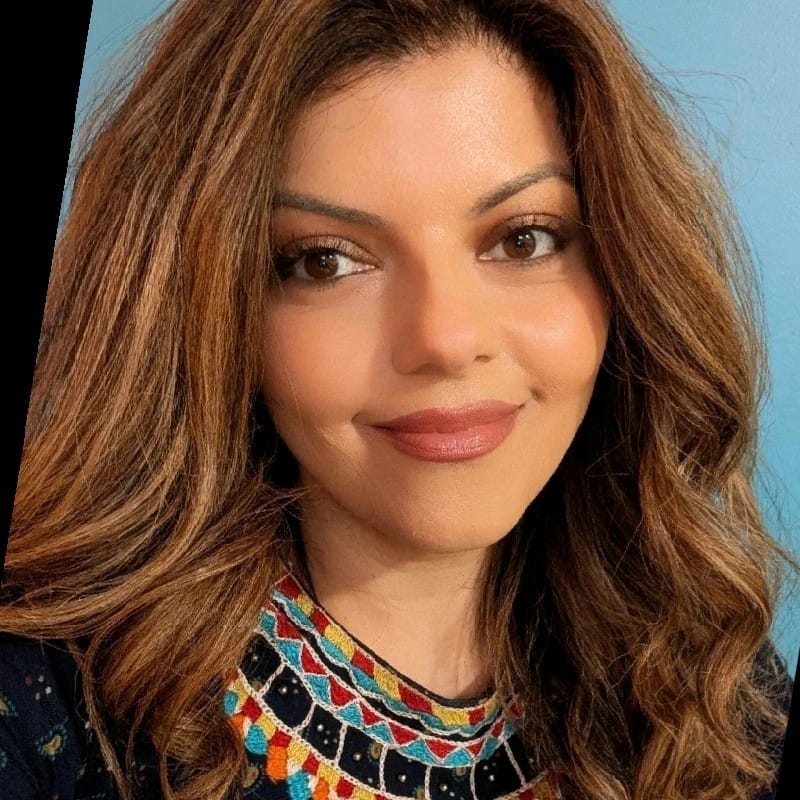
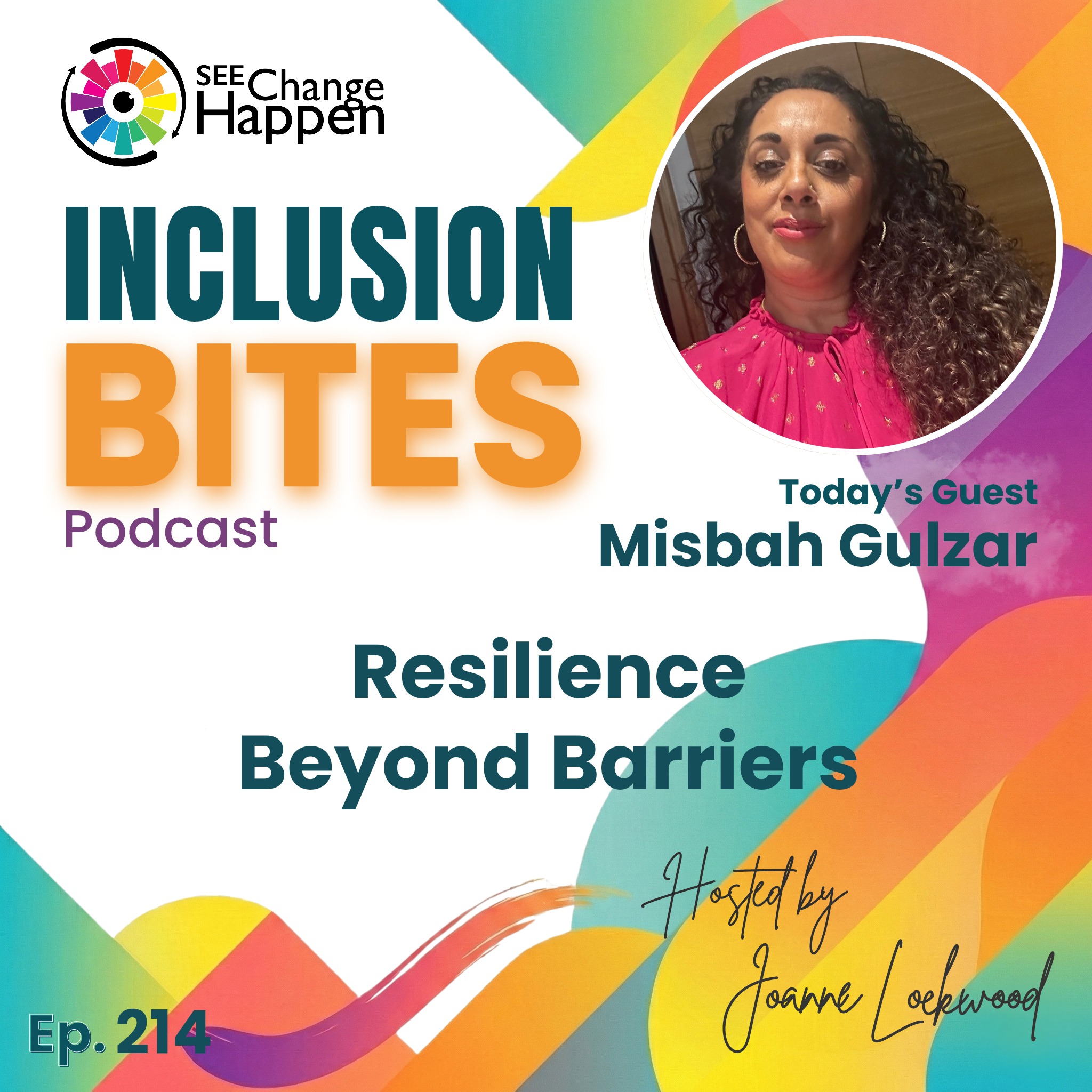
Mina Sharif explores the complexities of dual identity, the challenges and enrichment of belonging across cultures, and the profound impact of storytelling and compassion in fostering genuine connection and understanding.
In this episode of Inclusion Bites, Joanne Lockwood speaks with Mina Sharif about lived experience identity.
“The Taliban and their ideology is foreign to Afghanistan.”
Explore
Navigate this episode
Mina Sharifguest
Foreign.
Joanne Lockwoodhost
Welcome to Inclusion Bites, your sanctuaryfor bold conversations that spark change. I'm Joanne Lockwood,your guide on this journey of exploration into the heart ofinclusion, belonging and societal transformation.Ever wondered what it truly takes to create a world? Remember, everyonenot only belongs, but thrives. You're not alone.Join me as we uncover the unseen, challengethe status quo and share stories that resonatedeep within. Ready to dive in? Whether you'resipping your morning coffee or winding down after a long day, let'sconnect, reflect and inspire action together.Don't forget, you can be part of the conversation too. Reach outto jo.lockwood@seechangehappen.co.ukto share your insights or to join me on the show.So adjust your earbuds and settle in. It's time toignite the spark of inclusion with Inclusion Bites.And today is episode 171 withthe title Belonging Across Borders. And I havethe absolute honour and privilege to welcome Mina Sharif.Mina is a writer, media producer and passionateadvocate for building bridges between cultures through
Joanne Lockwoodhost
storytelling and empowerment. And when I asked Mina todescribe her superpower, she said that it is seeing theunseen and amplifying voices caught betweenworlds. Hello, Mina. Welcome to the show.
Mina Sharifguest
Hello, Joanne. Thank you for having me here. I'm writing,
Joanne Lockwoodhost
saying you're based in Canada, is that right, somewhere?
Mina Sharifguest
That's right. I'm in Toronto, Canada, where I. Where I was raisedas well and where I returned to in 2019.
Joanne Lockwoodhost
And you've just got a new Prime Minister.
Mina Sharifguest
Yeah, we're hopeful. Yeah,yeah. I mean, remaining hopeful is all anyone can dopolitically. Former governor of the bank of England, Mark Carney, isn't
Joanne Lockwoodhost
it? His economic background is quite welcome all the time. Sous Brits know of him very well. We used to see him on the newsregularly over here. So. Yeah. Well, good luck. Yeah, it's good luck. Thank you.Mina, your journey spans two worlds.So you grew up in Canada, as you just said, but you've also builtcommunities in Afghanistan. So how's that kind of experienceshaped your passion for creating culture and connection andbelonging across culture? Yeah, it's a wonderful question.
Mina Sharifguest
Thank you. I think my entire life might have been shaped bythat experience or by how I arrived betweenthese two worlds and that bridge that I live on. I was born inAfghanistan and I was raised in Canada. My familywere refugees in exile, as many, many Afghans are all aroundthe world. And I did not grow up necessarily assumingthat I would have a personal and direct connection to Afghanistan. The countryitself was Always really behind the headlines ofwar. And when I was growing up in Canada and as a child, I didnot necessarily have any problem with my identityor any feeling of lacking. But in 2005
Mina Sharifguest
I was able to go back to Afghanistan, initiallyas a volunteer, and I ended up staying for 15 years.And when that happened, I became someone who had a childhoodin Canada that shaped me and now a good chunk of myadulthood that was shaping me further. And Isomehow realised that I kind of live now between both worlds, neitherfully in the Canadian sort of childhood that I had beenbrought up with, not necessarily fully connected anymore, and neitherwas I fully connected to Afghanistan. And the way that people had beenborn and raised there might have felt. I felt that I was nowin the role of observer. Whether I was in Canada asa, you know, someone with an Afghan background or whether I was in Afghanistan withsomeone as a Canadian raised background. It really offered me a lot ofopportunity to see disconnects and to see where we couldconnect in ways that we aren't. And that's really just shapedthe path of, of many projects I've done and that I wantto do in my life. So I've spoken to many people over the years and
Joanne Lockwoodhost
when you are living somewhere outsideof your birth community, all those, all those roots or thatheritage, sometimes your own sense of culture becomesdiluted by the new culture. How longdoes it take you to become kind of bridged in that sort of security aboutwho you were and your heritage versus trying to alsoembrace the Canadian lifestyle as well? Right. Well, I think
Mina Sharifguest
that's going to differ for different generations. Right. It would really depend onhow much lived experience you have in your, in your country of origin to beginwith. Myself, along with many others, including in the UK and all aroundthe world, many of us have grown up without any accessto the country that we're originally from. And so we're really kind of creating ouridentity within, with bits and pieces, whether it's the example of Afghanistanis. Is going to include headlines as part of how we piece together who weare. War headlines. It's going to be stories that our parents share withus, it's going to be language and food and music. Butit's. And I, I had that. And I felt connected to who, you know, mybackground, what my background was. And I think once I movedto Afghanistan, I. That's when I realised, wow, there's actually a lotmissing when, when you're trying to piece it together on your own. Ithink a conclusion that I'm arriving at now is that we're notever going to be able to have the same connectionas maybe our parents had or that people that live in Afghanistan have to thatidentity. Nor are we going to have a fully like I belong herekind of feeling that a lot of times people in our host countrycan have. And what I'd like to see is that we, instead offalling into victimhood or anger about it, find a way torecognise that it's almost a new category andthat we are maybe blessed to be part of more than one world ratherthan ostracised from whatever world we're sitting in.
Joanne Lockwoodhost
So you're enriching the environment you're now in with all of theheritage and family andculture that you bring with you. Yeah, I think that's fantastic. So what, whatinspired you to go back after all those years? That's a
Mina Sharifguest
great question, I think. And I think that also has a lot to do withhow my experience may have differed from others. And I think the great part aboutit is I never planned to go back. And sometimes when things happenas a surprise, that way it you manage yourexpectations, you're not coming in with preconceived notions that othersmight have had. If I had been dreaming of going back my whole life, Iwould have had, you know, an entire upbringing of hopes andexpectations going in. I didn't, I went inreally with some ingrained stereotypes. I went in withthe expectation that I truly expectation that I wouldn't bewelcomed as much as I ended up being welcomed. And because of that, Ithink a lot of my, a lot of my experience wassurprisingly positive. And maybe that's why I was ableto sort of maintain that and see that wait, maybe thisdual identity and dual experience is asuperpower and not the worst thing that could happen to someone. Maybe we have anopportunity to really be a bridge between two worlds because weare part of two worlds. I suppose my, my perception of
Joanne Lockwoodhost
Afghanistan is, is extremely limited. Probably similar to yours before youwent back. I know of it likemany do, because of the troubles, because of the wars,either the American influence, the Russian influence, Talibanor various other bodies there. And most of my, I kindof, if I had to picture Afghanistan with my eyes closed, Iwould see a very rocky, mountainous desert type place withmen with Kalashnikov rifles running around in very sandysort of environments, presumably. AndI'm sure that I'm completely missing the real, real dayto day Afghanistan. You know, the towns, the cities, the people. But that's themedia Bias I have. That's the pictures I see all the time.
Mina Sharifguest
Absolutely. And, and I think this is where a wordthat I bring up a lot comes in compassion. I think thatit is the responsibility of those of us who want youto see Afghanistan more broadly to understand with somecompassion that that's the image that you were given and that that'snot a decision you made to think that of Afghanistan you didn'tdecide. I want to just picture Sandy, you know, drydesert and guns and men. That's what you were given. So I reallyapproach it now in a different way than I might have before where,you know, in my younger years I might have been defensive of. Why. Whywould you only think that of where I'm from when it's so different? And, andI think the time has done this for me and reallyjust reassessing. If I want to be positive about where I'm from andthe reality of how beautiful it is, then I have toremember that I came in with without knowing that how am I toexpect that anyone else should know it organically? And that includes peoplewho are of Afghan origin. It's not a message that I direct justat those who may not know much about the country.Our own, I would say Afghans in exile, thediaspora, however we want to. To label them, they've also hada limited access. I also myself had a limited access. So I reallylike to realise that fair enough, that's all you saw.That's. And that's not on you. And absolutely. It does not reflectthe day to day life. It doesn't reflect the day to day communities. It doesn'treflect the beauty or the positivity or the. Youknow, resilience is a word I don't really love, but you alsosee it from a place of Afghans are victims of war. But no, resilienceis also maintaining who you are and maintaining the strength of yourculture despite the war. And that's hard to seefrom what, you know, we've got access tobecause. In that, in that region of the world there's lots of countries
Joanne Lockwoodhost
with the kind of the stan ends, Kazakhstan,Afghanistan. There's lots of. That's kind of that region where you want abigger nation that's split into various countries orwe all very virulently independent. Afghanistan
Mina Sharifguest
itself has a history that's over 5,000 years old. So there wereempires that you could define if you go far back enough. But I thinkthat's to be said for any part of the world. The word stand justMeans land of. So it's, you know, when the UKhad a strong role in creating the Pakistan, for example,it was using the language that was similar to existing countries inthe region. I've learned something now. So Kurdistan,
Joanne Lockwoodhost
land of the Kurds. Afghanistan, land of the Afghans.Wow. I can feel completely educated now.
Mina Sharifguest
Well, let's not go too deep into the historical facts, because it's notmy. It's not necessarily my forte, but, yeah, just organically Ilearn as I'm part of it. So Afghanistan, over the
Joanne Lockwoodhost
last, As I say, 50, 60 years,has gone through a cultural evolutionand then due to various troubles and warsand regimes, it's gone in and outof freedoms for women, for girls. And we're currentlyliving in a time where a lot of the freedoms that women and girls haveexperienced for almost. Almost a generation have almost been takenaway overnight. And that must be quite heartbreaking for you. Yeah,
Mina Sharifguest
it's devastating because for many reasons, it's devastating. One,that it's a complete violation of their very basic right. Two, thatit's being, I think, labelled as some decisionmade by the community itself, which is not true. It's an imposedviolation of their rights. It's also being, I think, oftentimeslabelled as part of our culture, which it's not. And history proves that for me.I don't need to just. I don't need to just stomp my feet and say,
Mina Sharifguest
that's not who we are. Our history will show you that we had women inhigh positions of political power and ministers anda very good representation in society, oftentimes beforethe west did the right to vote very early. So, you know, thehistory can show you that our community supports women insociety when the atmosphere allows for it, when securityallows for it. War has always impacted women first andforemost in loss of rights. And Afghanistan, unfortunately,I wish it was even only 50, 60 years, we were going back a hundredmore of instability. We have pockets that we've had of,I would call it, breathing space for Afghan society,when and which has never meant that we were fully free and ableto sort of rebuild and be who we want to be. But let's say pocketsof security. When women could come out and attempt to re. Rebuild,rejoin society, those were in pockets. So when you look atpockets, you can look at it as the potential or you can look atit as, oh, they were just influenced by what. But that's not true, because nomatter who was attempting to control Afghanistan, when there was a bit ofsecurity, women were out. And now that we don't even have any security.Women are still out there demanding that they be heardand seen and given their, given their rights. Despite all the danger andlack of support, they're still out protesting. Are they being heard at all though?
Joanne Lockwoodhost
Are they making any difference at all or are they themen in society that are basically drowning them out? Well,
Mina Sharifguest
the men in society are either partof the oppressed community that they are and who. I,you know, I think we need to understand that there's a difference between who isoppressing Afghanistan from sort of that political space and, and thecommunity itself. The community itself includes men who are defending women. Itincludes men who want, you know, their wives and sisters and daughtersin school who, you know. So it's not reallythat. I don't think it's as necessarily nuanced as somepeople want to make it. At the end of the day, it's the laws anddecrees coming in from the Taliban that are holdingwomen in the position that they are society wise.That's not where it's coming from solely, absolutely at all. How were the.
Joanne Lockwoodhost
I can ask this question. I'm not sure I know it's the right question, buthow were the Taliban allowed to get this controlover the, over the region? How did that, how are they allowed? Because people musthave seen it coming. You said they weren't voted and
Mina Sharifguest
I can tell you that people and the communities,for the most part, I can't speak for everyone, no one can ever speak foreveryone, but travelled to a lot of theprovinces of Afghanistan. There are 34, I've been to 30. A lot of Afghans whoare born and raised in Afghanistan haven't seen as much of the country as Ihave or spoken to as many new women in different.Women and families in different parts of the country and different,with different livelihoods. And they feared the return ofTaliban the entire time because it meant. They knew what it meant. Theyknew that it was. That they wouldn't have changed and that they would be oppressiveas they had been in the past. It's also worth. We're not going to, you
Mina Sharifguest
know, hopefully go too, too deep into politics and how we got here. Butit is worth noting that the Taliban and their ideology isforeign to Afghanistan. They were not even schooled in Afghanistan,so we'll leave it at that. It is not something welcomeand they have not been voted in and how did they get there? Alsoincludes the role of Afghanistan's own unfortunatelyquite corrupt government and it also very much includes themany, many countries that came into Afghanistan under the guise ofsaviorism and said, we're here to liberate the women of Afghanistanand we're here to fight terrorism. And then suddenly changed their mind anddecided none of that was important overnight and left. Sothere's a lot of, I think, hands involved in how we got here.Unfortunately, it's not just straightforward. It's this guy's fault how wegot to this level of a person. It's just everybody's in a sense,really. It was a quite a messy, messy buildup.
Joanne Lockwoodhost
See, I'm assuming you must have many friendsstill there living under this rule. Are you able to communicatewith them or is their communication shut down? No, in this day and age, we
Mina Sharifguest
have the Internet, we have the phone. It's not. They'renot. Yeah, no, they've got the means to communicate. Yeah,
Joanne Lockwoodhost
no, sorry. I wasn't suggesting that they were suddenly some backwardssociety, but I was wondering what controls were in place. Internet restrictions.Are women allowed to use technology? I don't know how it works in the household.I mean, out in the street, I guess there's enforcement. Butinside households, is it a fairly free regime? Well, a regime
Mina Sharifguest
is separate from a household. A household makes its own decisions, and theregime are the decrees that are being imposed from. Fromhigher, you know, levels of power. Those are two separate things.So what they decide for you is a decree, and it's a law. And itmay represent how you have to present outside of your home. It is notreflective of decisions that people make in their home. It never hasbeen. Okay, so most people are allowed to carry on
Joanne Lockwoodhost
their home life and their private lives outside the gaze, ifyou like, of the people in the street with the freedom to epiphone.
Mina Sharifguest
I don't. I wouldn't phrase it that way. I would say that women are confinedto the homes, and I wouldn't assume that theirown family is saying, we don't want you reading a book. So, you know, they'repotentially reading a book in the house, but no, outside of the home. Thedecrees are not in their favour. I kind of imagine that the
Joanne Lockwoodhost
government, if you like, would shut down Internet communications,television broadcasts, and control it, I.
Mina Sharifguest
Think might have goals like that. But the decrees don't work overnight. Andyou have to remember that people, other countries, like the uk, like Canada, like theUS For a. For a moment there was, I thinkI use the word pretending, pretending to monitor them, pretending to care abouttheir violation of human rights. From the UN to the, you know,superpowers of the world, they might Be putting on a show here and therein how slow things move. But they're, they're playful. Theirdecrees are announced on a regular basis. I believe today they announced thatwomen are not to be on radio anymore. Initially it waswomen and men shouldn't be on radio together, and now it's women gone altogether.Wouldn't. I would be open to being corrected on that, because I just sawthat today. But the list is. Is horrendously long of thingsthat they have announced. But announced is different thanimposed. But you still don't want to live in a country where the law saysyou're not allowed to go to school, the law says you're not allowed to bein a park because they can enforce their laws. Theydo. Yeah. It's. I have no point of reference to understand how
Joanne Lockwoodhost
or why people think this way. And it's, It's a, It's a really. I'msure many of the people listen to this, don't understand how,how you can oppress somebody so greatly.
Mina Sharifguest
Ask this when we're thinking about what is a cult? What does acult do? How is a cult reach the point where they're a cult andthey are oppressing their own members and they're oppressing and theywant the entire society to live like them. It's not different.
Joanne Lockwoodhost
Yes, I hear you, and you're right. I. I guess I've never lived in thatsort of environment where my fundamental rightto walk down the street is being questioned. Okay. As a, As a trans woman,I feel that there's some people out there that probably want that of me, youknow, to hide me, to erase me and to, to eradicate me. But law
Mina Sharifguest
protects you. Yeah, the law in the UK certainly
Joanne Lockwoodhost
does. I mean, the law in some other countries probably wouldn't, but yeah, it's. Yeah,it's. It's even worse when the law activelylegislates against you is the issue, isn't it? And that's. That's what we're seeingin Afghanistan right now with the women. It's a great way to put it.
Mina Sharifguest
Absolutely. Yeah. Where you think they were there to protect you, they're actually there
Joanne Lockwoodhost
to do you the harm. And, yeah, it's extremely sad.And I don't want to spend the entire episode just talking about that, because Iknow you're a bigger person than just an Afghani ora person with Afghani history and spending many years there.So what does excite you these days? I would say that after Afghanistan fell
Mina Sharifguest
to Taliban, just, you know, to segue from it, it was, was in kindof what I would describe as an emergency state. You know, tryingimagining that they're only gonna last six months. But we've gotta help the people thatare there and the people who are in immediate danger. And in my case liferight now, I think I'm just, we're now almost at four years andI'm, I'm just grounding into what do I do with thisand what do I do when I look at this as long term,as potentially long term. How do we continue to support,continue to recognise emergencies when they are emergencies.But what does it look like for me to betterspaces of understanding both of Afghanistan likewe're having in this conversation today of Afghanistan society, ofAfghanistan's women also just, you know, supporting people inthe healing that has to happen when they've, they're now inexile or when people are meeting an Afghan who is newly inexile. How do we, you know, support that connection? How do wecontinue to support the, how do wecontinue to support how people have looked at Afghanistan?You know, from before the Taliban to after the Taliban? It doesn't matter. We've alwayshad that label of war torn country. And that'snot something that I can even put on the Taliban alone. That's somethingthat I put on lack of information and lack of curiosity andlack of sharing of information. So that's, that's where I'mmore focused now because that's something tangible that I can make a differenceto and I can't change who's in power in Afghanistanand I, I don't want the stress of that always on me.So I try to make an effect where I can make an effect.
Joanne Lockwoodhost
So you work with people who've beenforcibly disenfranchised, relocated, fleeingthe country. Do you have much memory of when you firstarrived in Canada as a, as a refugee, stroke immigrant,how you felt at that time in terms of yourloss of reference to the culture, lots of reference to your language.How long did it take you to adapt? Say that would be more my parents
Mina Sharifguest
story because I was too young. So you know, I'm trying to absorb howthat was for them to a point. And I think I saw more of theafter effect of that of having to conform a lot andhaving to be maybe being too sad to talk about the things theymissed. It took them a long time to really open up about the positive sidesof the country to me outside of home life,meaning, yes, we had the food, we had the music. They, we loved the culturebut it was painful for them to discuss the lives that they'd left behind. Thattook a long time, and I picked up on that, that that was difficult forthem. Like I said, I was too young. So I arrived here. By the time
Mina Sharifguest
I was four years old, I was already in Canada and in kindergarten. So Iwouldn't say that I was affected by the actual transition to the extentthat an adult or an older child would be. But I had always,in looking back, I had never had it acknowledgedfor me that I am a child of a first generationdiscovering a whole new host country. I had never been acknowledgedfor my personal loss of, you know, not having a.Not growing up somewhere that my parents even understand. I didn't haveguides to tell me what a Canadian upbringing is and whatlife is going to look like. I think a lot of people in my position,which, again, there are millions of Afghans alone, never mind of otherbackgrounds, we really do have to fend for ourselves. And there are layers ofguilt because we're so lucky while our parents had to flee,and we're so lucky while other people still live in war. And werarely take the moment or that time to say we had itbad, too. Not getting caught up in that victimhood andfinding a place where we feel powerful, that's where. That'swhere I want to sort of be part of that narrative, because I. Always consider
Joanne Lockwoodhost
it to be a extreme privilege to have been raisedand brought up in the country in which I was born, with a language, witha culture where my parents resided. To suddenlyfind yourself transported effectively the other side of the world,where your, Your. Your language is not understood, you don't understand theother language. Maybe, maybe you've got some understanding of English or French,whichever part of Canada you're in, but it's not inherently partof your first language. Also, you've probably left behind acareer, a profession. You could be a doctor, a lawyer,a plumber. You could have abusiness that you've left behind. And suddenly you've come into a country witheffectively nothing. And it's actually not. It's actually worse thannothing because you haven't got all the things you were used to. You're almostnegative what's going.I mean, I can appreciate that people are going, wow, at least I'm safe now,and safety is a big factor. But how hard is it for someone toreally grieve, if you like, for their former life?
Mina Sharifguest
That's so beautifully asked. Thank you so much. I mean, I. Again,in the context of how my Family got here. My parents are the ones whofelt it. However, being that I came back to Canadafrom Afghanistan and could not return, I felt a degree ofwhat they had felt. I wouldn't call it the same thing, obviously, because I hadroots in Canada to return to. I wasn't coming here to start life completely brandnew. However, I lost everything that I hadbuilt for myself, the career path that I had wanted, which was tostay in Afghanistan. I had no intention of moving back to Canada permanently,ever. Never wanted to. With due respect to Canada, I love it here, but thatwas my path that I wanted for myself. And, you know, evendown to my belongings are still in Afghanistan, I didn't get to,you know, pack them up nicely and relocate. There was an element of exilein my experience as well, and it's quite overwhelming. It'sreally, really difficult to feel a connection to whereyou are now. And in your mind, you realise, intellectually,you realise, I have to start connecting to where I am now. I will notbe back there for the foreseeable future. But thatconnection is sometimes so difficult that you decide it's betterI just don't think about what I used to have. It's better. I just don'tthink about it and focus on gratitude. And I'm so glad I'm safe. And letme just. Let me just perform well here so thatI'm accepted and welcome here, because I do want to show gratitude for mysafety, I do want to move on. And I don't knowthat we really give ourselves that time to grieve. Any of us, not my experienceor my parents or the ones who are born and raised here, who alsohave a version of that whole of identity, I don't know that we give ourselvesthat chance. And that's a lot of what I speak aboutin workshops that I do. Let's recognise that even ifthe newcomer doesn't recognise it themselves yet.
Joanne Lockwoodhost
So when you're running workshops, when you're working with, I guess,Canadians, trying to enlighten them to helpother Afghans, other people from other parts of the world who've been displaced torelocated, how do you advise people toembrace other cultures and create that feeling of belonging?Because that's what people want to feel, isn't it, when they come into a countrythey don't belong at all, and then they have to go through this transitional phasewhere they start to feel supported. So how can people help?
Mina Sharifguest
Yeah, well, when I do workshops for, let's say, service providers, peoplewho already work with newcomers, refugees I mean, I'm working, working with a prettycompassionate group at that point. Like they have the empathy. I think sometimes what isskipped over is when someone moves here from, let's say, Switzerland,we have to realise that that's quite different than someone who's seekingrefuge from a war torn country or from a violentsituation. And fortunately in Canada and the west,oftentimes the process is the same for everybody. So youwelcome them, you show them the ropes and you call it a day. And whatI'm asking for is, especially with youth, to really showanother layer of compassion for what they've hadto, you know, the fact that they didn't leave with the same kind of choicethat some others might have, the fact that they might havecertain traumas that they need to address and that weneed to incorporate into that welcoming and it's for the betterment of everyone. It's notlike, hey, do them a favour, they're sad. It's more so, you know, asa society to have a coming from a place of healing and mentalhealth. We want that for our host country as well. We wantCanada to have teenagers who integrate in a healthy way,not teenagers who suppress all of the trauma that they've seen,only to grow up, you know, unable to reallybecome a member of society that is, is functioning from amore healed place, feeling more welcome, being allowed to acknowledge what they'vegone through. So that's like a missing element that I acknowledgewith service workers. When I work, I speak at class classrooms and like auniversity gender studies class, it'll differ. And they usually come withsome, essentially always come with some, wanting to understand and beempathetic. And that's the greatest first step. I don't think I would even be willingto speak to a group that I don't feel has that first step because thenI'm just talking at you. You want to have your stereotypes about usand you want to stick with them. I will allow it. Go for it. I'mnot here, I don't have that kind of energy. But when someone wants to learnabout, you know, what are they? What had, what did they face, what did theylet go of, what did they lose? What do they fight for? Do they evenlike their country? Aren't they just happy to get out of it? Like, what's thereto like about Afghanistan? Those kind of conversations make me happy because that'swhen I can make a change in how someone views the people ofthe country I'm from. And those are questions going through my mind as well, at
Joanne Lockwoodhost
the moment, you know, it's. I was, I wasn't actually born in the uk, butI was, I was born with my parents being in Singapore at the time.But I, I relocated back to the UK when I was a year and ahalf. When I was over in Singapore, I lived in the community of other navalpersonnel, if it's all right. Whilst I've always feltthat I was never a native, I've always been a native, if that makessense. I've always had this identity of being born elsewhere. Even second,third or even fourth generation migrants, immigrants stillfeel that connect with their motherland or fatherland, however you want to describe it,and that's really important. How doesCanadian culture, if you like, embrace the Afghan culture and allowthe people who have come into these communities tostill express themselves? Or is there a lot of inherent repressionand bias, if you like. I think systematically Canada is quite
Mina Sharifguest
good. I don't think it's perfect, I think there's lots of room to grow. ButI think it's. Canada describes itself as a mosaic rather than a meltingpot, which is beautiful. I think the intent is quite good. Asfor how communities actually sort of take charge inlearning about each other, take a more active role in thathealing process for newcomers, that there's a lot of room forimprovement there and that's where the change really happens. Iappreciate, you know, acknowledgment of our holidays from the Prime Minister.Sure, great. But it's not, it's. It's very beautiful. Andthe symbolism of it, I didn't have that growing up. I know it means alot. I know seeing us on TV shows and inprogramme, it's great. But I do separate, systematicacknowledgement of these cultures to the actual day to day lifeand how we are embraced and how much we learn about each other. And Iprefer the more grassroots sort of, you know, let's look at howwe're actually accepting each other and learning about each other and that there's somuch room to grow in that I don't know that we make an effort. Andagain, I will repeat, this includes people who are from those countries.This is not like, you know, white people don't love Afghans and I'mmad about it. No, I mean even Afghans don't know about Afghanistan and that couldbe said the same for other similar countriesor anyone who's left their country of origin. And it's not a blamething, it's that we don't have the access and we don't Ask thequestions. And we don't know that. That's our responsibility. We haveto. We don't learn. Just. You can't depend on media to teach younuance. It never will. You meant to the media there. So when you in
Joanne Lockwoodhost
Afghanistan, I believe you were involved with media, is that. That was yourprofession, if you like, in Afghanistan? That's right. So I mostly was
Mina Sharifguest
working in educational programming for children. So I did the Sesame street forAfghanistan for a while with, developed a show that highlightedchildren from different provinces and highlighted the Afghan Scoutsprogramme that was with boys and girls. So a lot of children andeducation focused content, but also PSAs thatsupported public service messages. So basicallyhealth and safety and all that kind of stuff. It was a. Somewhere betweenadvertising and educational content and, you know, touching base on manyof those things, radio and television mainly. Have you been
Joanne Lockwoodhost
able to bring that skill back into Canada? Are you stillinvolved with the media? To the extent that I
Mina Sharifguest
want this kind of connection fostered. I do speak and Ido attend events and I am on media at times as well.But I do think my path is a little different from what peopleoftentimes just want to repeat. They want to have a roundtable where everyone's sayingthe same thing. And I. That tires me out quite a bit. I really wantto say, I don't always want to talk about how did we getto this terrible state. I don't always want to talk about what is thepolitical solution. I want to talk about just between us, leave the systems out ofit. How are we connecting to each other? And that's not always super welcome onmedia, is it? People don't want to talk about that grassrootsconnection as much as they want to talk about overarching,simplified conversations. So let's dive into that now, then. That's.
Joanne Lockwoodhost
That's. That's where your passion is. We already are. Yeah, yeah.Let's go deeper, let's go deeper. I mean, where do I start? Wheredo I start? Because I. I know very little about the culture, Iknow very little about the faith, the. The. Thelanguage itself. What's important other than what I'm fedon the media and the news, which, as you say, it's very biassed,it's very polarised and it's there to tell a particular story, to get a particularoutcome. How can I, as, as a. Asa white British person living in the uk,understand more and have more empathy for the plightand how to help and support when they're in this country? That's.
Mina Sharifguest
That's Wonderful of you to ask and I. I hope anyone listening cansee that. I thank you. And I hope that anyonelistening to this can see that. That is a pressurethat I see on you as someone who's not Afghan andnot, you know, knowing much about it, Afghan in this instance, but again, of allvisible minorities or however you're labelling them. Labelling. Labelling is importantto, to consider because from your side of, of it, where youdon't know much and you want to learn, it can be scary. It can. Therecan be a fear of being labelled as, you know, this person's ignorantand they look down on us and they, they are, they're froma colonising background. I know that that fear is, you know,ingrained subconsciously in people. Even when they want to be welcoming,they also are met with a lot of anger from peoplewho haven't felt welcome, you know, in their lifetime. So that's something that I thinkneeds to be acknowledged. And the people who are being asked questionsare equally responsible. They need to let go of the.They need to create a space of welcoming. If you don't want to
Mina Sharifguest
be asked anything about your culture, you can't be angry that someone doesn't knowabout it and vice versa, if you're not going to have the courage to askabout something, you can't decide, you know, the country.So everybody's got a role to play. Everybody needs to sort of step upand say, the media can't just handle this for me. If I wantto learn about other people, I need to ask about them. Now, how do wedo that? Respectfully, first of all, I guess know your audience if you're.If. Or know who you're asking. I think there's some personal response, personalgauging of if I were to come across someone who's justanti Canada and I hate it here and they've ruinedmy. I'm not going to talk to them about connectivity because they, they don't wantto. They want to be angry at, at their commute, an entirerace, for example. I can't help that. But if I can see that there'sroom and I see, for example, you, Joanne, you're curious. You want to know.It's my responsibility to make that space welcoming for you. Andit's your responsibility to sort of think of what you want toknow, kind of be a little specific about it, so that you're nottasking me with an entire, like, you know,centuries of history to teach you. Tell me everything. Yeah, tell me everything.
Joanne Lockwoodhost
Yeah, yeah. Yeah. So there's some moves you can make. I mean, I guess
Mina Sharifguest
one way to say it. What if I wanted to learn about Sudan? I don'tknow much about Sudan. I know that there's, you know, a lot of turmoil inSudan. I don't know much about it. If I were sitting in front of someoneSudanese, I might have some questions about, you know, whatdoes your culture look like? What are some of your favourite parts about your culture?What was your personal experience? This kind of thing. But I wouldgo online and look at maybe some youtubes ofSudan. What does it look like? We have a lot of accessin this day and age that we didn't have before, right? There areYouTubes and YouTube videos. There's content creators that arebased currently in the country we're talking about. So why not, like,look at what they're doing, See what they're doing. It's available in English. Learna recipe, if that's what you know, sort of connects you to aculture. These are beautiful, tiny ways that make animpact on you. As someone who's curious. You feel connected nowto Afghanistan. You've watched a video of one of our greatest meals and dishesand watched a family cook and, you know, they're small moves.You don't have to become an overnight expert in Afghanistan tosatisfy the role of acompassionate person towards Afghanistan, of a supporter of an ally.It's that openness that matters. There can be a danger that you become
Joanne Lockwoodhost
overly benevolent, where you have this biasassumption that these are poor, helpless peoplethat need your charity, your support, and if you'renot careful, you end up coming across as this person who is verypatronising in, whilst trying to do good,that they end up missing the point. How can people. Iappreciate what you said. There is. Do your research, do the listening. But people areoften scared of getting things wrong that they know they don't know and they'reworried about their conversation and putting their foot in it. So they say what theythink is a nice thing. But the nice thing is actually more patronisingby trying to be helpful. And that's fair. And that's fair. And that's why, like
Mina Sharifguest
earlier I said, you know, there just has to be some bravery. You have toask. And you can. You can put a disclaimer in the beginning, like, I don'twant to be, you know, patronising when I ask this. I don't know anything aboutthat. What is that? Like, you asked me in that way and I was notat all offended because in all fairness, that's all the access you've had.Again, responsibility both ways goes both ways. I need to be open tothe fact that you didn't have access to the information. You kind of need torealise that. Yeah, you can't. You can't lead with your. The information you've been given.You can't lead thinking like, well, what I saw is this on tv. Sothat's when it becomes patronising, when you're asking with an ideaalready in your head. Have more of an open mind. So that it leaves roomfor me to say, well, this is what it's like versus medefending Afghanistan against those ideas youalready have. Does that make sense? You know, kind of come in with an openslate. That usually kind of changes how the conversation goes.But as far as sort of that condescendingsaviorism that paints us all as victims. Ooh, that's anepidemic. Yeah, we have. We deal with a lot of that.
Joanne Lockwoodhost
Yeah. And I'm sure. I'm sure you do it. I'm sitting there having aconversation with you. Knowing. Knowing what I don't know and knowingthe. What I do know is laced with bias. Yeah.Images in my head. I know all of that. I know that I'm noteducated and I know that everything I want to ask is going. Hang on aminute. Is going through a filter in my brain saying, don't be silly. No, no,don't be silly. That's a bias. That's an assumption. That's all this. But I'mvery used to having conversations with people where I don't know. So I havethis filter in my brain that says, let's just sanitise thatquestion before it comes out my mouth. I don't always get it right. Don't alwaysget it wrong. But, yeah, it's important that when you are tryingto engage and respectfully help people, you have to understand that that personis not helpless, they're not unintelligent. There's almosta superiority of intelligence, isn't there, where someone's language is different,someone's background's different. You're talking about people here who are verycapable, very intelligent, professional, academicallygifted people who are. Their only fault is they've been displacedthrough no fault of their own. And so we have to recognisewhen we're trying to offer help and support, they want their value back, don't they?They want to. They want to feel that passion and purpose again. They wantto go back to some of those skills they already had. So how can weengage people? Because I See examples, I'veheard examples where in the UK people have been displaced. There were doctors, there werenurses, they were very good roles. And now they're doing cleaningjobs. And now they're doing this because people only see that side of them.They're not seeing into their heart and soul, just their perceptionof them. So that's what we need to help people get over,to understand these people are fully functional, professional, credible humanbeings who've just been picked up and dropped somewhere else. And now theyneed your allyship, if you like, to seeinto their heart, not to invent a story for them.
Mina Sharifguest
And, you know, there's a simple solution to that, is ask them about themselvesand don't task them with teaching, you know, orspeaking for their whole country, because no one would ever ask that of someone inthe uk. You know, like, what does everyone in the UK feel about this? Whatdoes everyone. You know, it's just, there's a, there's a lack of dignity in thatwhen you're, you're. Because you're, you're essentially grouping everyone together,which is another version of a stereotype. If I sit here and tell you Afghansare all resilient and all of them dislike the Taliban,that's not even fair because I'm imposing me.So if we could just, I think, approach people in generalconversation, we're even outside of this Afghanistan conversationwe're having. We need to ask people about their personal experience ratherthan these broad, all encompassing, hey, tell me all about your countryand how everyone thinks and feels and experienceslife. Tell me about your experience in life. It will enlighten you.
Mina Sharifguest
Because I have a Afghanistan lived experience and it's going to reflecta good portion of the population, maybe most of them, but itdoes, it does allow me to speak from a place where I'm just telling youabout my experience. I am not tasked with,you know, altering every stereotype you've had. Maybe some of them,some of what I've lived is similar to what you've heard and itis a stereotype. But it's just, I think people look forthis broad stroke answer from us aboutAfghanistan and that makes it hard to deliver the information and it also makesit hard for you to ask in a way that doesn't, that doesn'tmake it uncomfortable. But the solution is ask a personal question, askthat person's story. Hey, you do this here in the uk, what, what wereyou doing where you were, how. What was that like? Was, you know, and, andit becomes just a little bit More relaxed, I think, organically that way. Do you
Joanne Lockwoodhost
find it exhausting, personally, to bea professional Afghani advocate, for want of a better way of describing it? Somost of what you do is to advocate for Afghani immigrants,creating better lives, creating awareness of immigration and people's lives here.Sometimes you just want to take your shoes off and go, I just want tobe meaner. I don't want to be professionally Afghan anymore. I just wantto. I want to just be me. I want to go and do my shopping.
Mina Sharifguest
Well, I do that. I do that. Yeah. I absolutely have gotten to ahealthier place where I'm not tasking myself to. As I said earlier in ourconversation, I can't get the Taliban out of there. I can't change everyone'smind about Afghanistan. I just go with, you know, what's in front of me,what I can do, what I have the energy to do. And I always appreciatewhen I'm having a conversation that includes me on a personal level, becausethat's much healthier to talk about, because I'm not worriedthat I'm saying something wrong when I say that the Afghans don'tlike the Taliban. What about the few that do? You know, I'm being.Technically, I'm being incorrect. And that's. That's a. That's a burden.But at the same time, most people don't experience that as much asI think people from Afghanistan do, specifically Afghan women.So I. I'm often asked questions that begin with the words, as anAfghan woman, dot, dot, dot. Right. It's. You just don'thear that from other countries. You don't hear someone being asked, as anAmerican woman, you know, speak on behalf of all American women to me now. Andthat's. No one's tasked with that. You realise that they all have differentnuances and different experiences and we don't get that oftenin our. When we're addressed. Do you find that quite a
Joanne Lockwoodhost
cognitive burden? Because, I mean, I'll give you an example. I do a lot ofpress interviews representing transgenderpeople. You know, they want to know what I think about this.Trans people in sport, trans people in prisons, trans people in this. And suddenly inmy head, I know I've got all the people who've got very critical views, I'vegot all the people who got very positive views, and I've got the trans populationall judging me as well. And you think, whatever comes out of my mouth, I'vegot to try and find this middle ground ofappeasement for as many people as possible. Yet, speak my truth. It's a realburden. We just connected 100% there. That
Mina Sharifguest
is exactly it, except that I'm being asked about Afghanistan, and I'malso. Yeah, there even is a parallel in the level of oppression we're beingasked to, you know, speak about. And you really want todefend the dignity of your community while at the same time acknowledgingthat there's nuance in there. There's. Each one is an individual human being, andwe. We can't lose sense of that. It's losing sense of that that traps usinto that exhaustion of it. You know, media isa little difficult because they are stuck in that loop. I often feel like,all right, well, what is it today? Are we going to paint me, me asin, like, all Afghan women? Because, of course, I represent all of them. Butare we represent. Are we trying to get a. Paint a picture of we arevictims? Or are you wanting to hear some stories of womenwho are defying? And then we land back at, isn'tit so sad? And then we move on? So it is. It's so repetitive thatI'm a little turned off by sort of the mainstream conversations.For that reason, I think you'll ever. Get to the point where you
Joanne Lockwoodhost
identify, for whatever way of describing it, as. A Canadian woman,
Mina Sharifguest
identify as a Canadian woman. So you are a Canadian. So as a Canadian woman.Yeah. And I. No one ever asked me that, because why would I represent allof Canada? Because I have a very unique experience, but so does every other womanin Canada. But I don't identify as only a Canadian woman. I very muchidentify, honestly, first as an Afghan woman, and thenadditionally as a Canadian woman. But that's the. That's thechoice that I make. The choice I make is to embrace both theworlds I'm from. Whereas many have decided either one or the other,I choose both. I refuse to let someone tell me I'm not from hereor that I'm not from there. Yeah. So you've got these layers of your identity,
Joanne Lockwoodhost
who you are, what's important to you. And being Canadian andbeing Afghani are not conflicting. They're just differentparts of your life, different layers of your life, different different experiences, connectionsyou've made. And of course, within that is also the fact you're a woman, thefact that you're of a certain age, the fact that you've got certain upbringing,your family, all those other things factor into that. But it's reallyhard sometimes for people to see through that, isn't it? And that's the challenge youface. I face it as well, where you're not this label firstand people expect you to be that label. And when you go, actually, I justwant to watch Netflix. Yeah. Your identity is important,
Mina Sharifguest
and you do. Your experience speaks for it. Itgives people insight into it, but you don't represent all. And that's notthe only thing you are. Right. Like, that's not the only. Your identity isn't.I'm not just a woman from Afghanistan or just a woman from Canadaor, you know. Yeah. Or just a woman. Yeah. Or any. Just a woman. Yeah.Yeah. We're all very beautifully sort of put togetherpuzzles and. Yeah. It's hard to. It's hard to.It's hard to connect with.It's hard to. It's a struggle to decide whether you want to gointo the nuance and not demand that we talk about more layersor accept that people just want to hear a certain amount. And, hey,let me get out as much of a message as I can to support mycommunity, which I'm sure you relate to. Like, let's at least use thisopportunity to offer some dignity to my community,even if they're not gonna ask me really deeper questions, youknow, it's a struggle. So when you kick your shoes
Joanne Lockwoodhost
off at night, what brings you joy? When I think I've changed
Mina Sharifguest
someone's perception in a positive way, and not onlytheir perception of Afghanistan, it's more. It's deeper than that for me,I think, when I've given someone permission to be less hard onthemselves for what they do or don't know about identity or about someone else'sidentity when they're now curious, like, oh, maybe I want to learn more now. AndI don't feel as threatened by this community or that communityor when someone feels seen or heard. So write, right, torelax. I write short stories, and they're based predominantly. I write shortstories and doing a young adult novel as well. And the point of those is.Is to do that is through a fictional world to make you feel welcome to,like, look at the details of Afghan life and see what a day looks likewithout me sitting there telling you, this is how allAfghan experiences are. You know, I don't want to do that. So what about ifwe explore different people? So I write short stories that maybe are fromthe perspective of an orphan young boy, and then another one might be in theperspective of a woman who works in media.But, yeah, I relate to that. And maybe another one isfrom the perspective I wrote a story not Long ago aboutthe. From the perspective of the street dogs that run around the city. Sowhen someone reads something that I've written like that and they feel heard and seen,I can't say I have a better feeling than, than that. Like thatfeels like what I would wish to. To do every day.
Joanne Lockwoodhost
So you basically just transcend the lives of one person to be better andto feel better. To feel better and to feel more motivated. Connect with
Mina Sharifguest
others and first. But you can't connect with others until you've connected to yourself.Right. You, you just can't. You have to love yourself before
Joanne Lockwoodhost
others can love you. And you're not going to love other people's identities until you
Mina Sharifguest
love your own. You just can't. You can't. And so that's what mycommunity needs to do sometimes, not all, but sometimes they need toconnect with who they are first so that they are lessangry at others around them. They leadwith anger. I think mainly for the reason that that connectionhasn't been fostered independently. First for themselves, but they'reangry at others. Why do, why do you stereotype us? But wait, how much doyou connect? Personally, I'd like to challenge them to think that waysometimes as well. Yeah. If we're not careful, we always fall into that. Us and
Joanne Lockwoodhost
them. Yeah. Because we're always us and they are alwaysthem. And no matter which side of the fence you're on, you always have anus and a them. And it creates battles, it creates wars, itcreates misunderstanding because we're all so dug intoour own sense of self that anybody who doesn't fit into thatis automatically an outsider. But that's human survival. That's humanbias. It's hundred thousand years worth of evolution wherewe had to look after ourselves. And if you were a stranger from over thehill, you were a threat. And that's kind of how we see each other. Andthe animal kingdom does it. Now a strange lion turns up to a pride oflions. It gets attacked for being an outsider either. You're so right and I appreciate
Mina Sharifguest
you saying that because it helps. Actually very literally helps me becausesometimes I over task myself with no. We must foster theseconnections at every turn. And to a degree there's always going to be thatseparation. And I don't want people to essentially like all bealike or all understand each other. You know, you and I were, were speaking beforewe recorded about how you're not going to understandeveryone's point of view or relate to it in some kind of complete way.That's not the goal. Right. Compassion is not from similar,it comes or the connection isn't formed from being similar. The connection is formedfrom just having some compassion towards that person. That's it. You don't needto understand their whole life. You just need to have some compassion for it andunderstand, hey, that person lived a whole different life. And it's equallyvaluable to mind. I think it's also respecting the fact
Joanne Lockwoodhost
you can coexist in a world with people who you don't agree with,where people you don't like, people who don't like you, people who don't understand youcan coexist. You don't have to create an argument or a battle.You just have to go, yeah, fine, whatever. If we don't get on, I'll gothat way, you can go that way. It doesn't cost me anything. I don't haveto argue with you, don't have to tell you you're wrong. You're speaking like a
Mina Sharifguest
confident person. We don't have enough confidence in this worldto, you know, to fuel that. When you're confident in who you areand connected to your identity and, and you learn as much as you can aboutyourself, then you're not quite as bothered bysomeone else's existence. That's how people do get hung up with this zero sum argument,
Joanne Lockwoodhost
isn't it? If, if I, you win, I lose,you gain, I get less. And that's a lot of howidentity politics or just, just life tends to work. Iswe always want to be fairness based. What, what do I get? That's how Ijudge fairness. Am I getting something I judge bias andmedia reporting by? Do I get something from that? Otherwise they're talkingabout the other people, they're getting more than I am. What about my say? AndI think that's what we've got to try and let go of that. We keepholding onto that prisoner of belief, don't we? We're going to try and let goof that and say, actually it doesn't matter, I've got enough, I've gotsufficient. This person needs more help. Give them some more help.
Mina Sharifguest
It's fight or flight, right? Like you just really feel like if I don'thang on to this tightly, someone's going to take it away. Like that's an energythat a lot of people lead with. It's hard to really acceptand come to terms with the fact that there is space for everyone in thisworld to shine and to be happy and to like livetheir passions. If we allow for It. We're not really led down thatpath or led down a path that makes it look like only a couple peoplecan live great lives. And you and the masses, you justfight for those, like, you know, very few opportunities. And that's not reality.The reality is it's disproportionate, systematically. Not that it'sdisproportionate because only you should have this opportunity and this other personshouldn't, systematically. We've been, I think, really allaround oppressed all around the world in understanding our.Our value, in understanding that we all deserve equal spaceto each other. It's hard for us to see that. I've loved chatting. We've been
Joanne Lockwoodhost
chatting away for over an hour, nearly an hour and a half before we wentlive. Absolutely fascinating. And I've really enjoyed finding outmore about you as a human being, but also some of theexperiences you brought with you as you've travelled the world. So, yeah, it's beenreally fascinating. Thank you very much. Likewise. Thank you. This is exactly the kind of
Mina Sharifguest
conversation that, you know, I walk away feeling so good from because I hope we'veopened some people's eyes and, if anything, made people feelslightly less threatened about learning about each other or aboutthemselves. So if people want to get in touch, what's the best way?
Mina Sharifguest
I do have a website, minasharif.com that's probably thego to and you can link to my socials from there. So my LinkedIn ormy Twitter or my Instagram. On Instagram, I do share alot of content about Afghanistan to humanise it. Like Isaid, it's not anyone's fault that they have that war image, but how do wechange that? And I try to be a part of, you know, what I. WhatI want from people. I share photos from my time there,stories from my time there, to sort of let you see what day to daylife look like. And the short stories I was telling you about are coming outin a book this summer, which will be available on mywebsite. And I hope that that offers somehealing to Afghans who have been far from their country andopens up a window for people who want to learn more aboutAfghanistan and feel more connected to it. I really hope thatthat does something for. I've just quickly nipped onto your Instagram
Joanne Lockwoodhost
profile and there's a. Yeah, some great photos on there. So, yeah, I encourageanyone who's listening to. To do the same and just check out realpictures of real people and real stories. Not what the mediawanted here, but. Well, actually what this one Afghan womanwants you to see. So this is your perspective, but it's a great perspective, areal human perspective. Thank you. Thank you. And it's to add to your
Mina Sharifguest
headlines. No one's denying those headlines. We're just saying it's justa. It's a speck of the truth. Yeah. The
Joanne Lockwoodhost
dangers. If we get hung up thinking there's only one story, there's more stories.So say, look at the other stories. Yeah.Mina, thank you. A pleasure. Thank you so much.As we bring this conversation to a close, I want to expressmy deepest gratitude to you, our listener, for lendingyour ear and heart to the cause of inclusion.Today's discussion struck a chord. Consider subscribing toInclusion Bites and become part of our ever growing communitydriving real change. Share this journey with friends, family andcolleagues. Let's amplify the voices that matter.Got thoughts, stories or a vision to share? I'm allears. Reach out tojo.lockwood@seechangehappen.co.ukand let's make your voice heard. Until next time, thisis Joanne Lockwood signing off with a promise to return withmore enriching narratives that challenge, inspire andunite us all. Here's to fostering a more inclusive world one
Joanne Lockwoodhost
episode at a time. Catch you on the next bite.
Identity, Belonging, and the Liminal Space Between WorldsThe Power and Pitfalls of Representation in Media and StorytellingBuilding Inclusive Communities—Allyship, Healing, and Integration
Joanne Lockwood is joined by writer and media producer Mina Sharif to explore what belonging looks like when your life spans countries, cultures and competing narratives. Mina reflects on being born in Afghanistan, raised in Canada as part of a refugee family, returning to Afghanistan as an adult for 15 years, and then resettling back in Canada. Through her story, the episode examines how identity can feel fragmented—and how it can also become a strength when you learn to hold multiple worlds at once.
They discuss the limits of media-led perceptions of Afghanistan, and the importance of approaching gaps in understanding with compassion rather than defensiveness. Mina shares how displacement can carry grief, loss of status, and pressure to perform gratitude, and why creating space for trauma, healing and dignity is essential for newcomers—especially young people—to integrate in healthy ways.
The conversation moves from personal experience into practical human connection: asking better questions, resisting broad categorisations, avoiding saviourism, and seeing displaced people as capable individuals with agency, skills and complex lives. Mina also talks about her work in educational media in Afghanistan, her workshops with service providers, and how storytelling and fiction can open a fuller window into everyday life beyond headlines.
“To suddenly find yourself transported effectively the other side of the world, where your, Your. Your language is not understood, you don't understand the other language. Maybe, maybe you've got some understanding of English or French, whichever part of Canada you're in, but it's not inherently part of your first language. Also, you've probably left behind a career, a profession. You could be a doctor, a lawyer, a plumber. You could have a business that you've left behind. And suddenly you've come into a country with effectively nothing.”
“Whilst I've always felt that I was never a native, I've always been a native, if that makes sense. I've always had this identity of being born elsewhere.”
“There were doctors, there were nurses, they were very good roles. And now they're doing cleaning jobs. And now they're doing this because people only see that side of them.”
“Whatever comes out of my mouth, I've got to try and find this middle ground of appeasement for as many people as possible. Yet, speak my truth. It's a real burden.”
“Being Canadian and being Afghani are not conflicting. They're just different parts of your life, different layers of your life, different different experiences, connections you've made.”
“We keep holding onto that prisoner of belief, don't we? We're going to try and let go of that and say, actually it doesn't matter, I've got enough, I've got sufficient. This person needs more help.”
The complexities of dual identity for those straddling cultures and how embracing both can be a source of strength rather than isolation.
Approaches to overcoming negative media stereotypes and encouraging curiosity about the lived realities of less familiar cultures.
Practical guidance for host communities and service providers in supporting refugees and newcomers, including the importance of trauma-informed empathy.
The danger of “saviourism” and patronising assumptions, and strategies to avoid these pitfalls when offering support.
The lasting impact of loss, grief, and resilience for individuals forced to restart their lives in new countries, and why space for healing is crucial.
The difference between symbolic inclusion and genuine grassroots engagement, and how institutions and individuals can bridge this gap.
Why meaningful belonging demands mutual questioning, vulnerability, and a willingness to move past surface-level understanding in pursuit of personal connection.
One thing to remember
The central insight from "Belonging Across Borders" is the profound importance of recognising and embracing the complexities of identity for those living between cultures, particularly refugees and migrants. True inclusion is achieved not simply through symbolic gestures, but through meaningful curiosity, compassion, and the willingness to recognise dual identities as strengths, not deficits. Creating belonging demands an openness to personal narratives, rejection of stereotypes, and a commitment to humanise beyond media-driven perceptions.
Questions this episode helps answer
Mina Sharif describes living “between two worlds” as both a Canadian and an Afghan. How can embracing a dual or hybrid identity be both empowering and challenging within multicultural societies?
Mina discusses the challenge of forming her Afghan identity largely through second-hand stories and media narratives before reconnecting first-hand as an adult. How do diaspora communities construct a sense of belonging when direct connection to their country of origin is limited or lost?
The conversation raises concerns about the Western media’s portrayal of Afghanistan. In what ways can media bias contribute to stereotypes, and how can more authentic narratives be encouraged?
Mina refutes the notion that Taliban-imposed restrictions reflect Afghan culture or the will of the community. How important is it to differentiate between state-imposed oppression and broader cultural values, especially concerning women’s rights?
Mina speaks of resilience as “maintaining who you are” in the face of adversity. How does reframing the narrative from victimhood to resilience change the way society perceives forcibly displaced individuals?
The episode discusses the necessity of compassion and curiosity from host communities toward newcomers. What practical steps can individuals and organisations take to foster genuine belonging for refugees and immigrants?
Explore topics
Ideas from this episode
Identity, Belonging, and the Liminal Space Between Worlds
We began by unravelling the concept of belonging when anchored in more than one homeland. Mina described growing up in Canada as a refugee from Afghanistan—shaped as much by inherited memories and stories as by her new environment.
The Power and Pitfalls of Representation in Media and Storytelling
Our focus then shifted to the role of storytelling and media in shaping global perceptions—especially of countries like Afghanistan often seen solely through conflict. Mina, drawing on her years producing educational programming and children’s content in Afghanistan, emphasised how representation extends beyond correcting stereotypes.
Building Inclusive Communities—Allyship, Healing, and Integration
Finally, we addressed what practical inclusion looks like for those newly arrived or forcibly displaced. Mina, both as someone who has lived this journey and who now facilitates workshops for service providers, underscored the need for actively compassionate integration—not just systemic “tick boxes” or symbolic gestures.
Learn
Frequently asked questions
Who is Mina Sharif and what is her background?
Mina Sharif is a writer, media producer, and advocate for intercultural understanding. Born in Afghanistan and raised in Canada as a refugee, Mina has spent considerable time rebuilding communities in Afghanistan and now resides in Toronto. Her journey bridges two worlds, strongly influencing her passion for cultural connection, storytelling, and amplifying the voices of those “caught between worlds.”
What does ‘belonging across borders’ mean in the context of this episode?
Belonging across borders refers to the experience of individuals living between cultures — often shaped by exile, migration, or dual heritage. Mina explores how navigating multiple identities can be both challenging and empowering, encouraging recognition of this state as a unique position that can foster greater empathy and bridge cultural divides, rather than seeing it solely as a loss or dilution of identity.
How does living between cultures affect one’s identity?
The podcast highlights that identity for people living between cultures is complex and often in flux. Mina explains that such individuals may never feel complete belonging in either their country of origin or their new home. Rather than viewing this as a deficit, the episode suggests embracing it as a distinctive strength and an opportunity for cultural enrichment, both personally and within their communities.
How should host communities support newcomers, especially refugees?
Support goes beyond administrative assistance. Mina advocates for service providers and local communities to show extra compassion to refugees, acknowledging the trauma, loss, and disconnection many experience. This includes providing emotional support, fostering environments of genuine welcome, and recognising the importance of addressing mental health and identity, especially amongst young people forced to adapt to new realities.
What are common misconceptions about Afghanistan discussed in the episode?
The episode confronts prevalent media-driven stereotypes about Afghanistan, such as the association with conflict and oppression. Mina stresses that such images do not represent the everyday lives, aspirations, or cultural richness of Afghan people. She calls for compassionate understanding, both for non-Afghans and members of the Afghan diaspora who may internalise or only know their homeland through such limited narratives.
How do Afghans and host societies navigate cultural expression and integration?
Canada is cited as an example of a society aiming for a ‘mosaic’ model rather than a ‘melting pot,’ symbolising the value placed on cultural diversity. However, Mina notes that systematic celebration of cultures is not sufficient without active learning, curiosity, and grassroots connections between individuals. True integration thrives when all parties are willing to share, learn, and ask questions with genuine respect.
Share this episode
Heard something worth passing on? Send this conversation to someone who needs to hear it.