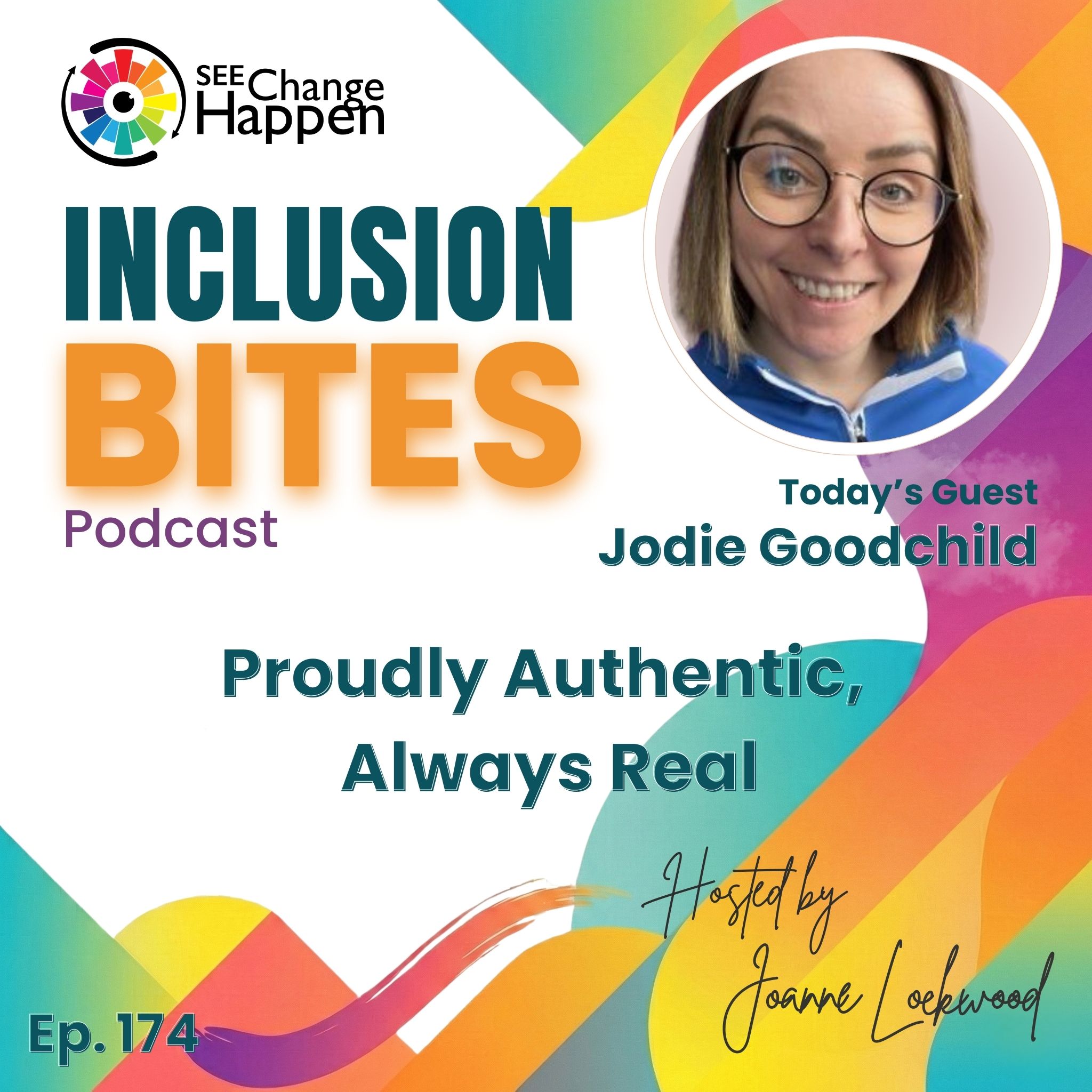
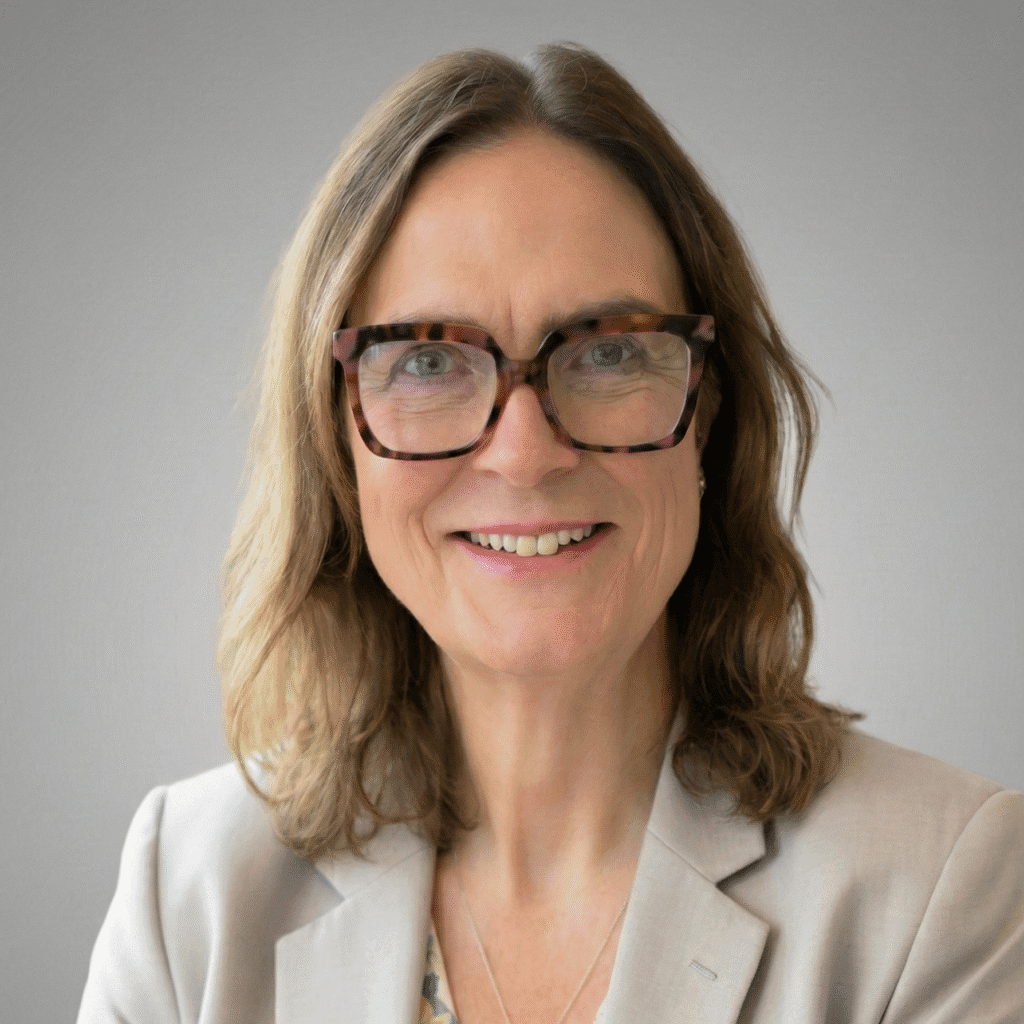
Jodie Goodchild explores the power of unapologetic authenticity, visibility, and community in business, sharing how embracing one’s true self paves the way for resilience, connection, and meaningful, inclusive growth.
In this episode of Inclusion Bites, Joanne Lockwood speaks with Jodie Goodchild about lived experience identity.
Welcome to Inclusion Bites, your sanctuaryfor bold conversations that spark change. I'm Joanne Lockwood,your guide on this journey of exploration into the heart ofinclusion, belonging and societal transformation.Ever wondered what it truly takes to create a world? Remember, everyonenot only belongs, but thrives. You're not alone.Join me as we uncover the unseen, challengethe status quo and share stories that resonatedeep within. Ready to dive in? Whether you'resipping your morning coffee or winding down after a long day, let'sconnect, reflect and inspire action together.Don't forget, you can be part of the conversation too. Reach outto joe.lockwoodeechangehappen.co.ukto share your insights or to join me on the show.So adjust your earbuds and settle in. It's time toignite the spark of inclusion with Inclusion Bites.And today is episode 174 with thetitle Proudly Authentic, Always Real.And I have the absolute honour and privilege to welcome Jodie Goodchild. No,you're not. You're Jody. One second. Let's do that again. Today
Joanne Lockwoodhost
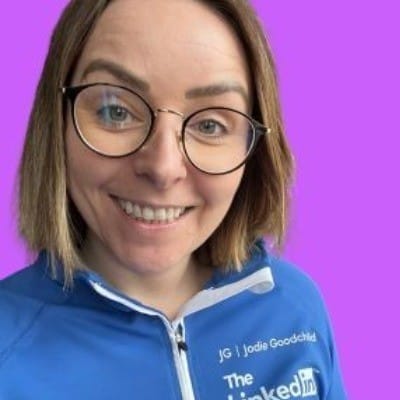
is episode 174 with the title ProudlyAuthentic, Always Real and I have the absolute honour andprivilege to welcome Jodie Goodchild. Jodie is an award winningcommunity creator, author and LinkedIn trainer whoempowers others to grow their brand and business with zerobudget, but with 100% authenticity.And when I asked Jodie to describe her superpower, she said it isbeing able to create brave spaces where authenticitybecomes your best asset. Hello Jody, welcome to theshow. Hello. Thank you so much for having me. I've followed you
Jodie Goodchildguest
for a long time and it's actually great to get to meet you and chatand talk to you in person rather than admiring your posts andTV appearances from afar. It was actually a real pleasure to have a
Joanne Lockwoodhost
guest on my show who is probably less than 10 miles away from where I'msat right now. We're both pompy girls, pretty much born and bredin the not the sound of Bo Bows, but the sound of Fratton park probably.And as we're chatting in the green room, it turns out that my father taughtat the school in the 70s that you attended inthe 90s, I guess. Yeah, yeah. Small world.Yeah. And yeah, we're both lovers of the area, soyeah, absolutely fantastic to have somebody fromhere other than over there. So Jodie,we were chatting in the green room, we had a good natter for about threeminutes, half an hour. And it's clear that you speak verypowerfully about living as your true self. You wouldRecognise, like, even only last night with another award, and you werevery proud of that. So what helped you embrace thatauthenticity and more importantly, I suppose, turn it into a platformfor change? Yeah, well, firstly, yeah, I've got my shiny award here
Jodie Goodchildguest
with me, which I'm really excited about. Entrepreneur of the Year.And I think it's just absolutely crazy that I've wonthat because, and this is to answer your question, there was a timethat, you know, you listening might relate to this, that I didn't think thatthere was life past, you know, if I was to come out and tell theworld who I thought I was. And being able to standon that stage last night and win that award as an out and proudlesbian woman who now doesn't give a toss if somebodylikes that or not, was just absolutely mind blowing. And it's actually made me feelreally emotional today because I. And again, I'm sure peoplelistening will resonate with this, but I actuallydidn't feel like I started living my life until I was about 19 years old,because I went through what most of us, well, all of us do in theLGBT community, which was, you know, not understanding who I was andbeing scared and afraid to talk to anyone about that because there was no educationand there was nobody to tell me that actually that was okay. I wasconvinced that if I spoke my truth that I would be, you know,shunted away from my family and that, you know, I just really struggled with myidentity. And the honest truth is that it was onlyreally in Covid. Um, you know, we had lots of people that were passingaway that made me sit there and think if it was mytime to check out. And I was set, you know, sat in that waiting roomand somebody comes around with their clipboard and says, right, you're just about to checkout. Like, give us an evaluation of your time on this earth. You know, haveyou done everything you wanted to do? I kind of sat there and thought, no,I haven't. And it was that that really pushed me out of my comfort zone.I mean, I've had a really successful corporate career, but, you know, I wasn'thappy. I had no purpose. Then started my own business. Andjust by being me and, you know, not acting like I thought everyone else,you know, should act, I've made a really super successful business. Andwhat I now do is teach businesses in my community, we've just hit the90 number, which is crazy, just to be themselves and, you know, just postwhat they do on social media. So we. I teach LinkedIn and that's all aboutbeing authentic, you know, not worrying about what everyone's going to say, just saying whatyou want to say and being your authentic self. And that will attractpeople to want to work with you. And that's, I think, along winded answer of why, you know, why I do what I do.
Joanne Lockwoodhost
It's a real challenge when you first come out as a small businessowner, forget about your sexuality. You're used to hiding incorporate land, working for somebody else. You don't have a voice, you don't feel thatyou can speak on behalf of anybody and suddenly you're a small business andsuddenly someone says, you can say what you like, it's your business. Yeah,
Jodie Goodchildguest
yeah. But people go, what can I say? You know, what should I say? And
Joanne Lockwoodhost
there's this real nervousness about having an opinion sometimes. You know, if you lookat LinkedIn, 99% of people are lurkers. Yes. Not commenters orposters. Yeah. So it takes a real bravery to overcome your ownimposter syndrome. What has little old me got to say to the world? Yeah.So that's a coming out that Everybody does on LinkedIn, isn't it? Yeah, you're
Jodie Goodchildguest
so right. You're so right on that. And that there's 1 billion, 90million people on LinkedIn and the stat is that whilst3 to 4% of those are active, they might, you know, they might use it.Only 1 to 2% of those people actually post.So what I say to people is, what a brilliant opportunity is that, becausetraditionally you'd have to pay thousands of pounds for marketing to get visible, whether that'san email campaign or some cold calling or direct mail. And you've got a platformavailable to you with. In portsmouth alone, there's207,000 people on LinkedIn. You know, you've gotpresents you with brilliant opportunity. But I love that you've just said, you know, you
Jodie Goodchildguest
have to almost come out because you do. That first post is so difficult andI've seen it almost, you know, 90 plus times of the people in my community,you know, they come in and they come in because they feel like they're scaredof LinkedIn and they, you know, they don't want to post. And my job, Ithink that, you know, my mission is to make them feel comfortable enough tojust talk about the awesome stuff that they know. Because you're right when you're inthat corporate job, you might be selling. And I was selling, you know, I hada huge sales, sales role and a huge sales team. We were doingover £100,000 in sales a year. But when I became a businessowner myself, mentioning even just, you know, a couple ofgrand to somebody for what I was doing petrified me, you know, and it'slike, it's crazy. So, yeah, you're absolutely right. It is almost a coming out thing,isn't it? Hadn't thought about that. It is, yeah. I look at my own journey
Joanne Lockwoodhost
on LinkedIn. I used to run an IT company based in the Portsmouth area andI set up on my own and. And I was lurking like everybody else andI thought, well, what can I say? Because if I upset somebody by saying somethingthey disagree with. Yeah. Then you have to sort of say, well, actually,forget about who you're upset, but think about who you engage. Yeah. Andthere's a great quote, if you remember the broadcast of Chris Evans, he said,you gotta be Marmite. Half your audience are gonna love you and half the audienceare gonna hate you. Yeah. But then you stand for something. You do. If youstand for nothing. Nobody's engaged. Yeah. So findthat polarisation and challenge people to think. That's what we want to do,isn't it? Create that thinking rather thanjust acquiesce to the majority. Yeah, yeah.
Jodie Goodchildguest
Really cool video actually this week. Do you know Florence Given? You've probablyheard. No, not come across. Brilliant, amazing author, writes some really awesome booksfor women, so definitely check her out. But she's. I stumbled upon her TikTok thisweek and then I ended up in a. In a. A good TikTok hole becauseyou can get into the bad ones of, you know, getting sucked into all thebad stuff. But this was a good one. And she was saying, when you're gettingthat nervousness to do something and you hear that voice in your head that goes,I can't say that. Stop for a second and actually tryand think about who you're thinking about is going to say something. Who isthat person that you're thinking, oh, if I post that, they are going to, whois that person? And she literally just says, stick your middle finger upat them and do it anyway because they're controlling you and they own you anddon't let them do that. And I absolutely love that. And she's got some brilliant.She's got some brilliant tiktoks. So definitely go check her out because I sat thereand there was one of them that I've now committed to watching every day becauseit just, you know, when something really fires you up and I'll send it toYou. And I put it in my community. Everyone's like, oh, God, that's brilliant. Ineed to watch that every day. But, yeah, you just need to think about whoit is that you're. That's making you feel that way and just, you know, stickyour middle finger up to them and do it anyway. Yeah. I stumbled across the
Joanne Lockwoodhost
Australian, I guess, polymath Tim Minchin, and Iwatched some of his YouTubes and I was really transfixed by his. First of all,what got me onto it was his honorary doctorate acceptance speechin the University of Australia somewhere. And I watched it and thought, brimey, thisguy's got some real insight that I resonate with. And I started going down thatRabbit hole on YouTube, watching all of his material, and I'm now aTim fan. You know, he's absolutely. You know, he's got those wild eyes,eyeliner. He wears crazy hair. Yeah. But he just. Hejust cuts through the bs. And you say that middle finger. AndI keep this. If you listen to this, I've got a jar of fucks, actually.And so I know I've only got so many I want to give away beforeI run out. So, you know, care about what you care about,but know when to stick the middle finger up and say, your opinion doesn't matterto me. And I guess you had that experience again when you had thatepiphany where you have to have that opinion. When you come out asqueer, lgbtqia, you have to get to thatpoint where you can put that middle finger up. You do. Yeah, you do.
Jodie Goodchildguest
And then I think there's a certain amount of. I don't know ifyou. Maybe power is the right word, but when you've been scared of doing somethingfor so long and you fear the other side of thething, and then you do it, and it's not easy straight away, but thenyou kind of think, well, if I could do that. And I thought there wasnothing on the other side of that, like, what else could I do? And I.I say this all the time, like, LGBTQ plus. You know, we area community of the most resilient and hardworking people you ever meet, becausewe've been through it, and we are tough. You know, you won't find more, youknow, stronger people than our community, and I love that.
Joanne Lockwoodhost
Yeah. I cast my mind back 10 years when I firsttransition came out, was open, whatever phrase you like to use.And that line you have to cross, it feels like a chasm.
Jodie Goodchildguest
It does. It feels like a cliff edge. Yeah. And you Step off it
Joanne Lockwoodhost
and go. Hang on a minute. That was only one inch. It was no. Itwas no big deal at all. Yeah, yeah. Andthe people who love you, love you. And the people who don't don't matter, youknow, and there's lots of anecdotes and phrases about that, but I learnedthat my friends are my friends because they're my friends andthose are the people that stick with you and the other people, they just don'tmatter and they drift off. Like leaving school, like leaving college, changingworkplace. Some people stick with you, some people don't, andsome people stick with the old person. And some people have come with meon my new journey. And yeah, having polarisation likethat is actually a good thing because for me it was. I don't need tocarry this baggage of expectation around with people I don't care about.
Jodie Goodchildguest
Yeah. So, yeah, I'm sure you could be proud to you.
Joanne Lockwoodhost
And actually, you'll find you open up different markets. You do, yeah.
Jodie Goodchildguest
And also you set the example for other people as well. You set the examplethat, you know, that there is life on the other side of that chasm thatyou once look at and think, you know, this is never going to happen. Andif you can set that example to other people, then even if just one person,you know, looks at you and thinks, if they've done it, I can do it.That's all that matters, isn't it? Again, casting my mind back to 2017.
Joanne Lockwoodhost
I remember going to. I wastrying to do radical failure, that sort of thing where you failquickly and move on quickly. And I thought, well, gender transition.I thought, okay, how am I going to develop a new business,a new life, new career? I thought, I know what I got to do.I've got to find out where my edges are. So I started going to allthese networking events in Portsmouth. I wanted to invent Bright. I. I joinedStartup Disruptors at the Customs House at Gum Wharf, went there for afew times, met some of the people at Halpern House and those sort of communities.And I thought, I got wind of this Female Entrepreneurs Network eveningat the Purple Door at the University and I turned up there, thought,okay, if I can get away with going to the Female Entrepreneurs Network, I canget away with anything. So I walked in there thinking, someone's going to have ago at me. Someone's going to out me, someone's going to drum me out ofthe room saying, you're not a real woman, get out of here. And at theend of it all I got was curiosity, warmth, love and support for everybody, Ithought. And it's just those little testing moments that you. You take yourselfa little test drive every so often and go, that worked. Then you realise thatfear is just this. This thing that you make up, these lies you tellyourself. Yeah. And also there's. There's
Jodie Goodchildguest
people that aren't against you, they just need educating because they don'tunderstand things. And then you have a conversation with them and they're like, yeah, actually,that makes sense. And it's nice to be able to challenge that andgo out and educate people and make them, you know, become a safe personin a safe space for other people to go into. Yeah. You mentioned
Joanne Lockwoodhost
the word authenticity or authentic quite a few times, and peoplesometimes confuse that word with being myobnoxious, authentic self. So how do we. How do wetoe that line between sanitising ourself enough to be sociallyacceptable but not compromising our ideals as well?
Jodie Goodchildguest
That's a really good question. And we've spoken about this. I think that the waythat we look at it is that it's absolutely acceptable to be you.And you will have, like we've just said, you will have differing opinions. You know,if you're not, you know, getting people to say the opposite, then you're notdoing it right. It is like Marmite. People either love it or hate it. But.But the way that I say this to people in my community is if youwouldn't say it in an office environment, probably don't say it on asocial media platform because there is a line there of some things that, you know,are acceptable to say and have an opinion on. And then there's things that, youknow, wouldn't be acceptable to, you know, to say. And you've. You've got it. Youdo have to be careful with that. But, you know, most of the things thatpeople want to share about their journeys or, you know, how they started their businessesand all of that kind of great stuff is being authentic. It's not speakingin a voice. You know, we go on LinkedIn and we see people like RichardBranson, you see the Stephen Bartless of the world, DanielPriestley's, and you think, oh, I need to speak in a particular tone on here.
Jodie Goodchildguest
You know, and you see those posts that go up that say, exciting announcementAlert. And what I say to people in my community is, if you.You wouldn't go up to somebody at a networking event before you've even introduced yourself,go, exciting announcement alert. Because they'd go Are you okay? Like,that was a bit weird. So just talk, like, you talk to people face toface and just be you. You don't have to use all of these, you know,fancy words that, you know, you think you need to, you need to speak. AndI, I was talking to somebody actually this week and they said that they didthat and they spoke almost in this corporate tongue on LinkedIn, and theytried to use big fancy words. And then when they met somebody in person,the person said, can I say something to you? And I don't want this tooffend you, but I didn't think you'd be like this because you don't speak likethis on LinkedIn. And they were like, God, that's actually a really goodpoint. So they stopped trying to make a fake LinkedInPersona and just post it as them. And I think that's what it's all about.
Joanne Lockwoodhost
I suppose what I try and do on LinkedIn is a kind of a cycle.So some stiffy corporate sound bitesor articles and then some truth bombs in themiddle of that, where I'm having a bad day or, wow, this has blown mymind. So you talk from the heart. Yeah, So I think it's trying to findthe right cadence between. So you want to sell your professional side, but also giveit humanity as well, don't you? Yeah, yeah. And it's that word, isn't it? It's
Jodie Goodchildguest
social, you know, it's social media. So we're using it to besocial, which is, you know, being authentic and real. You know,I don't want people. When I used to think about an entrepreneur, I would thinkof somebody that Woke up at 5am, went to the gym for an hour, drankprotein shakes, then got into their Range Rover, you know, checkthe time on their Rolex, and then went into the office. And that's not realat all. And actually, I've not met. I think I've met one person that's likethat, that's a business owner. The rest of them are just normal, you know, Iknow none of us are, you know, normal, but you know what I mean, like,you know, just people that, you know, might not get up till, you know, seveno'. Clock. Some days I might sit around in my pyjamas until 9:30 andthen think, right, come on, we got to start the day. So. So I thinkit's breaking that, breaking that norm and makingpeople just say it how it is. And like you say, you know,dropping in a few truth bombs and actually the format that I teach in mycommunity is educate, engage, convert. So we, wesay that you should post 80% of your content to educate andengage your audience. So that could be, you know, I've read this article. What doyou think? Or it could be, you know, this is where I do my homeoffice stuff and this is my favourite thing in the office. What's yours? That's alleducation and engaging. And then Your converts are 20%of the time where you then talk about your product or your service because peoplebuy from people, you know, they don't buy from faceless brands anymore.And when you go on LinkedIn, you're not looking to be sold to, you're lookingto make a connection with somebody and connect with something. And I posted a videothis week that really explains this. Well, I was driving back from a meeting andI stopped my car to let a guy cross the road and hethrew his ladder on one arm and he had a bucket in the other armand he crossed the road. He's obviously a window cleaner. And in that moment Iwent, oh, God, I need to book our window cleaner in to get our, get
Jodie Goodchildguest
our windows cleaned. He didn't sell me anything, he didn't pass me a leaflet, hedidn't stop my car and say, exciting announcement alert, you can book me to cleanyour windows. He just walked across the road and he was just doing his thing,but visibly. And that is just being yourself onLinkedIn in, in my world and making people connect with you.And then you either remind somebody of something they need or you educatethem on something that they don't yet know that they need, that they then go,that makes a lot of sense. I need that. So rather than saying, buy mystuff, you know, I've got this cool stuff. It's like, you know, this is aproblem that I'm facing and this is how I'm finding people, solving it, getting intoconversations with people and then before you know it, you've got an opportunity fromsomebody having a conversation. And then when you have to sell to that, it's notselling at all because they're already brought in and they'll probably say, how much wouldit be for you to come and do some training? I've seen all the greatstuff you've done. Brilliant. You don't have to say, you know, let me just getmy three pages of objection handling out, because I knew you were going to saythis and I'm going to objection handle you. It's already done. Yeah,
Joanne Lockwoodhost
well, we can do that with ChatGPT now, can't we? We can just paste theproblem into it and say, dispel these myths, please. Yeah, yeah.
Jodie Goodchildguest
And it helps you with that. Got an article? Yeah. I made a conscious
Joanne Lockwoodhost
decision seven or eight, six or seven years ago probably to stop being a lurker,to stop being a commenter and reshareror commentating on somebody else's post because I thoughteveryone's doing that. Where you become recognised as athought leader is to originate ideas and content.So I took a very practical thing now is I almost deliberatelydon't share other people's posts or just comment on them other than unlessI've got something value add, because I want to originate that. Really.That's what sets you apart from your competition sometimes is that thought leadershippiece, isn't it? Yeah. There's a really good book actually called Key Person of
Jodie Goodchildguest
Influence by Daniel Priestley and I would recommend toanyone listening to get a copy of thatbook because I genuinely believe that's one of the reasons why things have gone sowell for me in the last two and a half years. Because it really setsout what you need to do to be a thought leader and to create apersonal brand. Daniel's just been on StephenBartlett's Diary of a CEO again recently and said that the future of businessis personal branding. That doesn't matter whether you're a one person bandor, you know, a giant corporate. Even in a big corporate, the CEOhas to be present on LinkedIn and have a personal brand or business justwon't move forward because we don't buy from cold calling.I've done two workshops recently and I've had 28 businesses in eachworkshop. And I said to them, right, hands up. I'm not talking aboutthe last week, the last six months, in the last 12 months plus,put your hand up if you've brought something from a cold call, not one ofthem put their hand up. Because we've moved away from sales being transactionalnow. You know, cold calling is harder than ever. You're sending emails, it'sharder than ever to get through to people's inboxes because they're spammed allday. You know, it is just a world where the transactionalsales is, is I, I almost believe it's nearly dead. And that's what I've beensaying for, you know, for months I've been saying there's 1billion, 90 million people on LinkedIn, 3 to 4% of those are active. Get onit. And Daniel Priestley said that exact statement onthe diary of a CEO podcast recently, and I was listening to it in mycar and almost screeched the brakes on because, you know when you have that momentwhere you're like, oh, my God, like, this is exactly what I've been out theresaying. And it kind of gave me that boost as a thought leader to say,I've been saying this, and now one of these biggest names in business has justsaid exactly the same thing. And, yeah, I'm really passionate about itbecause I've been in sales and I know how transactional it can be and howexpensive it is. And that's why I've started what I've started to almost break thatbarrier down for people. Yeah. What you're saying there completely
Joanne Lockwoodhost
resonates. And I'm always a great believer that your personal brand, how peoplefeel about you, what emotion do you create in people?And it can be quite tricky sometimes. When we first spoke, Ithink in the introduction, he said how much you've been looking forward to this. Therewas obviously some recognition of my personal brand, how you've seen me on LinkedIn, howyou're really honoured to meet me. And that's quite humblingfor me to hear someone say that, because I'm not ego driven. Andthe number of people I bump into who go, oh, my God, I've finally meeting,I've been looking forward to it. It's like, whoa, how am I having that effecton somebody? And that's the personal brand I'm trying to create, isthis connection. Yeah. At a personal level, an emotional level with peoplewhere I. What I talk about is generating change in theirlife. And that's the magic, isn't it? How do younote to that in people? Yeah. And it's, you know, what I will
Jodie Goodchildguest
say on the back end of that is you never know who's watching. I wassaying that earlier this week, like, you know, you might be doing all this stuffand thinking, you know, no one's liking or commenting, but the amount ofopportunities I've had that have come through from people that have neverliked or commented or even spoken to me before, and they are the lurkers, likeyou say, that kind of just lurk in the background and they consume all ofthis educational content that you share, and then they go, you know, actually,I'm gonna. I'm gonna reach out to this person. So the question that you askedwas, how do you nurture somebody to just be themselvesin my. The idea of my community, I was going out and I was doingnetworking events, as you've mentioned you did. I was probably doing two of them amonth, maybe three. And they cost me about £15 a time. I was
Jodie Goodchildguest
probably spending close to £50amonth on doing networking events. Andwhen I kind of went to them, I'd get a good social buzz from thembecause I felt like I'd been around people and, you know, as a small businessowner, it's just, you know, when it's just you and your partner at home andyou'll resonate with that as well, can get a bit lonely and you need tobe around people. I used to work in an office where I had a departmentof 70 people, and when I wanted a little chat or a mess about, Icould go to the, you know, one of their desks and do that. But whenyou're at home, there's only so much you can annoy your girlfriend before she tellsyou to leave the house. So I was going to these networking eventsand I was really enjoying them. I was. I was meeting some people, but actuallyall I was really getting from those were a coffee and a chat. So Iactually stopped looking at them as something that was helping my business and more ofa social. But it made me realise there was a gap in the market.In Portsmouth, every year we lose 900 businesses. 900businesses go under a year, which is crazy. And. And I was thinking, well, there'sall these people here that are, you know, that doing their own thing, andwhy are we losing those 900? And I thought, well, if we did a networkinggroup where we could network and still meet people and get that social element, butthen a part of that was actually educational where those businesses couldlearn something really tangible that they could then take away to help them grow theirbusiness. That would be really helpful. So I cameup with this idea, did some research, and that was what I created. So Icreated a community of people that meet once a month to network. But they knowthat an hour and a half of that time is dedicated to them learning howto grow their business. So when we meet, we do, you know, we check in.And we're a bit like a family now because it's a community. Everyone knows everyone,so we'll catch up. And it's not, who are you? What you, what you doing?It's how's that project going that you're working on? You know, did you close thatdeal you were talking about? And then for an hour and a half, we focuseddown on what they can do to be authentic in their business, to help themgrow. So you know, we'll sit and plan content together. So we'll show,we'll take that, the stigma out of it that makes it feel complicated. AndI'll say to them, right, you got three post it notes in front of you.I want you to write down, you know, three things that have happened this week.One thing you've done with the client, one thing that you've done that's made youhappy, and one thing that you're proud of. And they write those post it notesin literally 10 seconds and they're done. And I'm like, there's three LinkedInposts. And they're like, she's right, it's that simple.And it might have been that they had a nice bit of cake with theirfriend over a coffee and spoke about business. Could be they finished a client project.It could be they've just won something. Every day, everyday kind of activitiesthat we do make great content. You know, us having this podcast together now wouldbe a great LinkedIn post. You know, the awards last night is a great LinkedInpost. I'm going out for some sushi on Saturday to a new place in PortsmouthI've not tried before. That'll be a great LinkedIn post because I'm celebrating a brilliantquarter in somewhere new. So everyday activitiesmake great LinkedIn content. I think that's what I make it my mission to, toteach people. Yeah. I think we look at
Joanne Lockwoodhost
the best comedians. The best comedians are observational, they're narratingreal life. Yeah. You look at the best posts, it'saugmenting their reality. Anda great friend of mine said, you don't have to tellword for word truth. It doesn't have to be factuallyexactly true. The gist of it has to be real toget that authenticity. But you can rearrange the timeline, you canchange the scenario, you can change the characters, keep the root of the storythere and then use that so you can completely anonymize it. So, yeah, don't letthe truth get in the way of a good story is what basically the lineis, don't overthink it. Keep the thread. Keep the thread there. Yeah.
Jodie Goodchildguest
Another thing I was saying earlier this week or last week was that we were,my generation, were a generation of people that went out with a real camera attachedto their wrist and we'd take probably 14 plusphotos on a night out. There'd probably be two decent ones in amongst that. Andthen the next day we'd upload that album to Facebook and we wouldn't Even giveit a second thought. And loads of us have still got those albums now. Andthose photos come back to haunt you of how you know, of, you know thatwhen you were young and out and about. But yet we really overthink posting onLinkedIn when we, even with Instagram, you know, we might be on the beach andwe might be like, wow, this is a really good moment capture. You take apicture, you put it on your Instagram story, you know, and you posted it. And
Jodie Goodchildguest
I'm not saying, you know, LinkedIn is Facebook and Instagram, but thereare ways that you can, some of the content that you would use for that,even if you're a business owner, you know, everything we post on Instagram orFacebook for your business is exactly the same as what you can post on LinkedInbecause it is social, it's a social media and without that it's notsocial. So it's important to treat it like how you'd be chatting to peoplethat you know and what conversations you'd be getting involved in. But yeah, the biggestchallenge I find people have is the, is the overthinking and the worrying about, well,no one's going to care about what little old me's got to say. And infact, one of my best stories that I love is there's a lady in mycommunity called Bev and she runs a company called Frank hr. When I mether in October, she said, jodi, no one is going to want to talk hearme talking about hr. It's such a boring subject. Andfast forward to now, she's had over 1 million impressions onLinkedIn. Um, she's literally like. But because shetalks like a normal person about hr. HR is really complicated butBev just talks about it in a normal, normal way and it's reallyresonated with people. And she's now out and about, people are going, oh, you're bevfrom Frank HR. I keep seeing you on LinkedIn. And she's got loads of newbusiness from it and it's brilliant. And it's just, that's what I love.In the last seven weeks we've had 151 new business opportunitiesin our community. And that's only from 50 businesses that are submittingtheir weekly check ins that we do. And they are bits of, bits of, Isay business, I should say leads. So they are people that are commenting on theirpost or dropping them a message to say, you know, can I find out moreabout this? Or coming in the DM saying I saw that post I'd love tofind out a little bit more about how that works. That's the magic of beingvisible. If you think about the, that we're nearly at 700.When I looked yesterday, we're nearly at 700,000 impressionsfrom the, from those in the community. If you were to pay for traditionalmarketing to get that kind of visibility, it would cost you at that point,probably would have cost, you know, thousands and thousands and thousands of pounds.But the members of my community pay 29.99amonth and they can cancelwhenever they like. And, and it's something that's there to be,make people feel safe, have others to talk to, you know, connect withpeople who are on the same journey and, and just be visible. That's what it'sall about, being visible so that people can see you're there and they can buyyour stuff. Because if nobody can see you, they can't buy from you. You've notgot a lead generation problem, you've got a visibility problem. I like that. Yeah, visibility
Joanne Lockwoodhost
problem. And that's what it is. And I, another great friend of mine, PennyHaslam, wrote a book called how to Be a Little Bit Famous. And Pennywas the face of Weight Watchers for a while. She's also a TV news presenterfor a while. And I also about Penny's book and she has this acronympie and sorry Penny, I can't remember what the Pand the I stand for because I always talk about the E. The E isexposure. So P is probably product. Yeah. And so you've got thebest products in the world. You polish it, you treasure it, you nurture it,you go, wow, everyone's going to love my product, but if no one hears aboutit, they can't do anything about it. So the exposure element is thecritical thing. So how do you showcase your wares?My mantra is always give away your best stuff for free. Yeah,
Jodie Goodchildguest
agreed. I go back to, I was brought up in an
Joanne Lockwoodhost
era where people were pirating music on MP3s or Napsterillegal copyright downloads. And it changed the market frombeing one that was. Revenue was generated from, from albums andCDs and vinyl to one that was generated by liveappearances. Because if you, if you pirate my stuff, you download allmy content, which I put freely on YouTube on my website. If you downloadthat, you're gonna go, wow, I love Joe's stuff. I'm gonna keep following Joe.And then one day you think, oh, I can go and see Joe live. Andthen all I have to do is play my Greatest hits on stage. Because peoplego, oh, yeah, she did this bit. Oh, she did that bit. Nobody wants tohear your new material for the first time. They wanna hear the old stuff. Soit's about that exposure, giving away stuff, being generous,being altruistic, giving. You expect nothing in return.
Jodie Goodchildguest
Yeah. And then people warm to that generosity, don't they? They do. And there's aninteresting stat that it takes eight to 11 interactions with somebody to buildtrust before they'll buy from you. And I read that and I kind of thought,that's really interesting. But how, you know, how is that true? And actually, when we.We started tracking results in the community, so we look at thevolume of impressions, which is the amount of people that are seeing your posts, welook at leads generated, an amount of posts made. We've actually seen thatin, in the community from those that we've got posting. They're authentic kindof content. It takes between six to eight posts for them to get onelead generated, which is pretty cool. And it's because they. They're not. Notsaying eight times, buy my stuff, buy my stuff, buy my stuff. They're being human,authentic. They're sharing what they're up to and what they're doing for clients. And becausepeople can then see a client commenting going, oh, yeah, that was brilliant. I'm soglad we worked together. You were excellent. I loved working with you. They thenconvert. And I think we've also moved away from that time where so many peoplewould, you know, oh, you can't mention that client we've got because we don't wantanyone else finding out about it. You know, we've got an NDA. You can't mentionthat. The birth of social media in the era that we're now in, your clientsare on social. So every time I work with somebody, I will t. I'll sayto them, as part of working with them, are you happy for me to mentionyou on social media? And they'll say, yes, great. Because when I finish the project,I'm going to say, just been in. I've just trained Mountjoy, who were one ofthe biggest brands in Portsmouth, and Simon Ingram, the owner, absolutely lovedit. And to be fair, I love Simon. He's one of my biggest, biggestcheerleaders. And I'd actually now call him a friend, which is brilliant, but because Idelivered such a good service and it really helped his business. But he talksabout it more than I do and I get people coming to me all thetime, or Simon's told me I need to speak to you. But that's the beautyagain of social media, because if you do a good job and it helps thoseof us that are authentic, because there's also companies out there that usesocial media to trick people. There's, you know, the,
Jodie Goodchildguest
the social. The personal brand is one that can be, you know, reallypowerful, but also it can be really scary because there's people that can build apersonal brand that actually are dangerous to work withfor, you know, many reasons, or they might be building a personal brand for thewrong reasons and you buy into them and you think, oh, they're really safe andI've seen what they do and then you give them your money, but actually theycan't walk the walk, they can just talk the talk and then you've lost it.So I think it's really important to, when you're doing social media to also, youknow, get those clients happy to mention their names and tag them in, because thenpeople can see your clients going, yeah, that's brilliant. I loved it. You've just hadthis session and I think that really changes. The socialproofing, I think that's the word for your book, whatever. You
Joanne Lockwoodhost
stop your brand or your public Personabecoming too big. And let me explain what I mean by that. So I wasspeaking on stage at an event at the XL in London last week andone of the keynotes there before me was Deborah Meaden. Wow.And you'd think Deborah Meaden, big Dragon celebrity,her fierce Persona that she shows on Dragon's Den and she did aFireside chat and I just thought, wow, what a wonderful lady.What real down to earth conversation it was. SoI was probably went in there with a bit of sort of apprehension, scared justabout her brand. You mentioned Stephen Bartlett, you mentioned Daniel Priestley. I've met DanielPriestley a couple of times and I'm a big fan of his score, apparently. That's
Jodie Goodchildguest
cool. And use that. And I've had people come up to me going, oh, Joe,
Joanne Lockwoodhost
oh, I'm so honoured you want to speak to me. You'd never allow yourself tohave a conversation. And if you're not careful, by building too big a brand,you can create this barrier and it's, how do you cut through that barrier tokeep yourself real and accessible? That's a really good question. And one thing that I've
Jodie Goodchildguest
always done is I've blended my online Persona with in personthings. So I will take the time. The people that I build my networkwith on LinkedIn, I will take time to speak to them inperson so that they know that, you know, the version of me they getonline is the same version of me they get, you know, in, in person andvice versa. So I'll meet people on, in person and then they'll come and addme on LinkedIn. And I think that's just. It then builds a brand where peopletell other people that you're the nicest person they've ever met and you're. And thenI get, people come up to me and I've got a really, I've got areally cool picture actually of me that somebody captured for me that I had noidea what's happening. But there was a lady that had been following me and afew of her friends had met me and had said, oh, Jody's like amazing inperson, like you should meet her. And this photo captured this moment of thiswoman just being so thankful and you can kind of just. It was a real.Yeah. So I try and blend the two in, but I can imagine at themoment for me, I'm, I'm managing that. But I think asthings get bigger, I don't know how that will change. There's other creators,I guess you could call them. I would probably. I've only just recently admitted thatI am an influencer, which is something I didn't want to think for, you know,for a long time. But I've admitted, you know, I'm trying to influence peoplefor a good reason. So I'm an influencer. But there's people on LinkedIn that have,you know, brag that they've got, you know, 12,000 followers, you know,30,000 followers, 40,000 followers. How many of thosethey actually know and how many of those are just people? They've just randomly addedthat. So my network is smaller, but it'sworth more because a lot of those people actually know me and they've met mein person or we've, you know, we've had a conversation online. So I don't knowif I can answer that. I think it's something I'm going to have to keeplearning as I grow, I guess. But at the moment, I mean, I, again, oneof the things that took me back last night that I feel really emotional abouttoday is when my name was read out for the awardfor Entrepreneur of the Year. The amount of people in the room that kind ofcheered and screamed, I almost, it felt like an out of body experience. But itjust reminded me of how well I've done at building my brand. And it wasa really humbling moment, actually. And everyone around me seemed to know that it wasa given. You're going to win, that you're going to win it. And I waslike, oh, yeah, I'm just here for. When they read out my name, it waslike, God, this is absolutely insane. And the amount of people that came up to
Jodie Goodchildguest
me after, you know, to, to congratulate me and say, well done and what you'redoing is brilliant, was a real, just a real heartwarming experience.And, and my girlfriend made a good point last night as well when we gotin, is that she said they were the, the people, were the people that cameup to you to say congratulations because they had the courage to do that. Imaginehow many other people were there that wanted to say congratulations but didn't come and,you know, come and speak to you like something to be really proud of. AndI'm, I'm almost on cloud nine today because you know how hard it is beingan entrepreneur. And as I say, when you think of the word entrepreneur, I don'tfeel like I fit in that. But that's exactly what I'm trying to do, isbreak that mould of showing people that you don't have to look a certain wayor act a certain way to, you know, to do well in life and besuccessful. Yeah. There's a, there's a couple of words that it
Joanne Lockwoodhost
feels inauthentic to use for yourself. So one of them isentrepreneur. I don't think anyone should call themselves an entrepreneur.People will describe you as one influencer. Someone else should call youan influencer, you shouldn't call yourself it. And the third one is ally. Idon't think you should call yourself an ally. You should, you should. Other people shouldcall you an ally. Yeah. So that there are words that you, you live upto rather than, rather than claim the badge. Yeah,
Jodie Goodchildguest
you're right. Yeah, I like that. That's a really good way to put it.
Joanne Lockwoodhost
And one of the things I, I often say, and I don'tapologise for saying it, because the old mantra was, it's not what you know,it's who you know. But I, I, I, I've now evolved that into, it'snot what you know who you know, but it's about who knows you. Yes. And,yeah, it may sound quite harsh, but I, I actually say to people,I don't care who you are if you know who I am. And I don'tmean that insincerely, but that's about the influencers about being, havethat really strong personal brand is that I don't need you,I don't need your business card. I remember going to BNI meetings and we alwaystold, don't give away your business card, always collect them so you can control theconversation. I can't control the conversation with 30,000 people onLinkedIn. I've just got to make sure that you know who I am. So whenyou see me do something, you go, that's Joe. I'll listenand hopefully then you'll make a personal connection later. But I can't connectwith thousands of people as long as that one individualwho's listening right now connects with me, then that's the personalbrand effect, if you like. Yeah, yeah, I guess I've not thought about
Jodie Goodchildguest
that. I guess there's some people that you can build that relationship with and theones that you can't, you know, going back to those lurkers, like you say, there'speople that listen that don't necessarily interact. But I do try to makea relationship of some sorts with people that I meet, andI do. I'm on the volunteer team for LinkedIn Local Portsmouth as well. When Ido the name badges, some of the other ladies, they'll laugh because they were like,how do you know everyone? And I don't know how I know everyone because mymemory, typically outside of work, is terrible. But I've got a good knack for beinglike, oh, there's James. Here you go, here's your card. And it just makes peoplefeel special. And I think, again, that goes back to, you know,maybe traumas that I've had of coming out and, you know, feeling likeI want people to see me for me. So I make that extra little effortto make people feel special when I meet them and remember their name or somethingabout them. And there was a lady that came up to me last night andshe went, you probably don't even know who I am. And I was like, ofcourse I know who you are. You're from your own physiological. Right? And she waslike, yeah. And I was like, yeah, I know who you are. Like, we've spoken.And I think. I think it's important to make, if you can makesomebody feel good about themselves, to do it, because life is bloody tough. And,you know, for. For all of us small business owners, particularly in the. You know,with everything that's going on at the moment and in the economy, it's really difficultand it's so hard running a business. You know, I've had a really goodquarter, but it only kind of everything tipped over and, you know, likethe last couple of weeks before that, I started to panic. And I've got friendsthat are running businesses that are really struggling and they've not even got sales andmarketing experience. And I do sometimes think I'm quite lucky about that because Ican, you know, I've got the. I know what. What needs to happen when youstart talking to somebody and there's an opportunity. So it's tough out there right now,isn't it? It's tough. We've got to all help each other. It is tough.
Joanne Lockwoodhost
Yeah. I'm in the DEI space, the HR space, the.Yeah, the stuff that's been targeted by presidents across thewater. And the. Yeah, DEI is becoming a toxicsector. So, yeah, it is. And I also earn a lot of money onprofessional speaking and budgets are getting tighter as well. So, yeah, you're right.It is a more considered budget holder now. It'snot spending the money the way they used to. So, yeah, it's a different world.Which I suppose comes to some of the subtext of thispodcast is the inclusion bite. It's the inclusion. Howdo you and your small business community think aboutbroadening your demographic appeal? Because if you're not careful,you think as a. A young white woman, andtherefore you're trying to attract young white women into your audience. But actually there's alot of young black women, older black women, there's people with disability.So how do you encourage maybe small business owners in the community to think aboutthe broader impact of their marketing language and who they'reappealing to, to get different sectors, different markets? Yeah,
Jodie Goodchildguest
I think naturally for me, because of obviously, you know, my background and comingout, I do think very inclusively. And that was the whole reasonbehind my community, was that I knew there were businesses out there that can't affordmarketing, that need to get new clients, and they're in a catch 22.Because in order to do marketing, you need money, but in order to, you know,to get leads, you need money. So it's like you can't. You can't do marketingwithout money. And money makes everything, you know, the world go around. SoI wanted to make a space where it made it inclusive forpeople that had, you know, little to no budget to be able toactually do some marketing that would help them grow their business because of that£900. But I think it's just about the messaging and making it, you know,being. Also being cautious about another time in conversation yesterday,about when you're Trying to grow a community, you need to make sure you letthe right people in. Because if you. If you grow a broad anddiverse community and you let somebody in that has, you know, let's just say Ididn't realise and somebody joined that's homophobic. You know, that's.You've got to be cautious of, you know, protectingthe community that you've built. And it's actually a challenge that I'm going to haveas things start to get bigger. Especially one of the things on my list atthe moment is how can I have more control over who I let in mycommunity without feeling like it makes it inaccessible for the peopleI want in? So it's a whole. It's a whole new challenge. I think I'vegotten, you know, somebody I was talking to yesterday said, you know, well, you couldinterview people before they join, but then when you're looking to scale something, it kindof almost. There'll be a way around it. But I think it's just,you know, making people, keeping things simple for people and making, you know, usinglanguage that, you know, resonates with people, makesthem feel comfortable with you building trust and, you know, chattingwith them beforehand to make them feel comfortable. I don't know if that answers the.
Joanne Lockwoodhost
Question, but, yeah, as you're talking, I think I was thinking it's.It's quite a minefield because everybody is someone else's weirdo, to quote ScottAdams. And we, we have our own. Our own thoughts, our own lens, ourown echo chamber of what we believe is right. And other peoplehave their own lens and echo chamber that they believe is right. So someone whohas a homophobicview, for whatever reason, has a belief that they're right. Theydon't think I'm just going to be a nasty person for the sake of it.Their echo chamber is telling them that when you're trying to build communitiesand trying to be inclusive, is trying to createa space, a broad church, however you want to describe it, where differenceof opinions and perspectives can coexist. Psychological safetyis still there. So people can be themselves, they can still bring themselves out,but people understand the barriers and the boundaries of what isfree speech and what is accountability of that free speech and the impact ithas on others. So, yeah, it's a real tough gig tonot to de. Platform or disenfranchise peoplefor having a different view, provided that their viewdoesn't weaponize against people. Yeah, yeah. And also just things
Jodie Goodchildguest
like people that might join that have a hidden agenda of great there's 90businesses in that community. I could probably sell to 50 of those.I'll join and then I'll try and message each one of them and sell themthings. That's also not what we're trying to create. But it is going to bea challenge for me as I, as I grow the community because by beinginclusive, I don't want to then be not inclusive bymaking it so difficult for people to join because I want it to be a,almost a bit of a no brainer that they know they need to grow theirbusiness. They don't have, you know, thousands or hundreds of pounds to do it. Sothey've got a low, low, no commitment option that can help them. Andyeah, I want to. It's one of the things that I really need to kindof consider as we start to, to get bigger conundrum.
Joanne Lockwoodhost
Yeah, it is, yeah. People, you're too known as people are people andthere's now as queer as focus I think is another phrase, you know,people will always surprise you by. Yeah, and whatever couldhappen probably will happen. And so yeah, disputes, conflicts,how you handle that becomes a really important part of it. And yeah, but beinginclusive you can't exclude. It's trying to find that fine balance. It is,
Jodie Goodchildguest
yeah, it is. So where's the future live? As
Joanne Lockwoodhost
a, as a. Recently, I say recently, you know,just out of the, out of the cupboard or closet. Where does your life gofrom here? You know, you feel more empowered, you've got your own business, you're, you'remaking some great waves, you're building communities. So where's the future goingfor you? Yeah, it's a really good question now. Everything that I've done
Jodie Goodchildguest
has been about impact and that's been my wordfor my business. You know, how can I impact somebody else's business and help themand lift them up? And I've realised recently, asmany do when they run their own business, that I spent so much time inamongst the, you know, building the business and helping people that I've almostactually neglected myself a little bit because I've focused somuch on the business. I've kind of, I review things regularly.I've just done my quarter one review and I've got some plansin for quarter two. And one of the things I'm focusing on this quarter issome R and R. So Sophie and I are gonna look at,we're looking at potentially moving and also we're gonna book ourselvesa nice holiday so that we can do some rr. But yeah, it's One ofthe things I need to, you know, running a business is like a roller coaster,isn't it? You learn as you go and the ups and downs and, you know,whilst I want to focus on the business and make impact, I also wantto, you know, make money. But then I also want to make. Remind myselfof why I started it, which was to have more freedom in life, to enjoylife more. And I've got much more, so much more purpose to life now becauseof, you know, what I get to do for a living. But I do needto make sure that I actually enjoy living life a little bit more. So whilstthere'll be, you know, plans and things in the business, I also need to dedicatesome time moving forward to reminding myself, you know, we wanted to. We did thisso that we could go work in a different country for a week or, youknow, go and rent a little log cabin somewhere and do some work there. Sothat's what I want to do. I want to kind of make sure I don'tlose the tip of balance again and that. That's critically important. It's. I
Joanne Lockwoodhost
talk about trying to evolve a rather work life balance. A life workbalance. So, yes, I live and work to fundnot. Not. Yes, not work. And then try and squeeze the living in.And I think that became my realisation over the last five, six yearsthat you've got to have the joy back into life. AndI've just turned 60 on a different curve of my life, my career andmy aspirations and my life is now more importantthan it's ever been. Yeah. I'm 60%rather than 60 years old. I've still got 40%, a good lifethat I want to live. Yeah. And I've seen how some peoplework all their lives for somebody else and then they get to retirement age andthey're. They're knackered, they've had enough. They make it because they're healthy,
Jodie Goodchildguest
because they've just spent all of that time, you know, workingthemselves into the ground. You know, I see it all the time, you know, people'smental health and that they. And it's almost like. It's almost like being ina. In a. Like a domestically violent relationship.Because you know that they're taking the mickey out of you by making you workall of the hours, but you don't stop anything about it yet. You'll, you know,moan at your friends about it and say, you know, this is happening and,you know, this is not good. I'm doing all this, but don't stop. And it
Jodie Goodchildguest
really saddens me that some people kind of just go through that Groundhog Dayweekly and they let the corporate world, you know, slavethem until they burn out and, you know, their brain ends up, you know,having a mental breakdown on them. It's reallysad, actually. And I wish more people would kind of wake upto the corporate slave drivery that's kind of going on andgo out and do their own thing. And I almost wonder if that's the worldthat we're moving into, we're seeing. I've done a lot of work in some ofthe colleges locally, and the kids. At 16, I couldn't evenmake pasta. And these kids have got businesses, like, it's crazy.And I think we're moving more into a world now where the next generationwant to do their own business and they want to do things rather than goingto work for a corporate where, you know, you might get, you know, the wayI say it to my friends is if you're good at sales, you know, couldyou sell. If your salary's £3,000amonth, could you sell£3,000 worth of stuff in a month? And they go, yeah, well, I'm selling, youknow, 15 grand a month. And I'm like, well, then if you did that foryourself, you would be laughing. And they kind of go, oh, yeah,boys, you know, it's too scary. I just wish more people would give it atry and just take the leap because it's worth it when you get there.
Joanne Lockwoodhost
It is. But if you've got stability, then it's reallyhard to risk. That's true. Using a poker analogy, pushingall your chips and going all in on a venture where you haven't gotthat experience. And you know as well as I do, once you've made that leap,you look back and go, well, that wasn't that difficult. But the time. It's amassive, great big golf, isn't it? You're coming out. You've got to come out asa small business owner. And it's. Yeah, I like the coming out
Jodie Goodchildguest
analogy. Might be a LinkedIn post, depending on that, you know. Yeah,
Joanne Lockwoodhost
yeah. It's not just for queer people. Everyone can come out or something. Yeah,
Jodie Goodchildguest
no, it's really. That's a really good point. I saw a great talk the other
Joanne Lockwoodhost
day. I was actually at. With LinkedIn speaking at a LinkedInconference on. Wow, that's really cool. On Tuesday. And I hosteda big roundtable. One of the. One of the opening keynotes was alady from, I think our organisations is 55 redefined lady calledLindsay and she was talking about ageism in the workplace andhow the fact that our population is now getting olderbecause we are not having children at asustainable rate anymore globally, it's not just the UK. So we're having1.2 children per woman as opposed to what's necessary of beingtwo point something children per woman. That's really interesting. So millennialsbecome over 50, the first million to come over 50 in less than sixyears time or six years time. So 2031 I think it is. So we're ina position now where the bulk of the workforce will be over 50 andwe've always been focusing on what are we going with Gen Z, Gen Alphas, allthe new technology. But we've got this workforce now who can't afford toretire, who are ageing but want to stayactive. Maybe they haven't been brought up with technology,whereas technology is key. So how do we now get people whoare that veterans or classic employees or classicworkforce to re engage? And I see a lot of womenentrepreneurs who've been through starting a family, theychecked out to the BS of corporate life. I don't want to go back tothat BS anymore. I want my life, work balance. I want to still look aftermy family, my children. I want to be a great, great person in the community.And that's why you see many, many women starting businesses in their 40s and 50sand being very successful at it. So how do we nurture thatageing population within our small business communities? Yeah,
Jodie Goodchildguest
it's a great question and you're absolutely right. And I'm thinking of women that Iknow that have gone through that and they've done that and it's a. Idon't think it's an easy, easy question to answer, is it? But I guess Ithink as a woman, as a woman myself, and you can relate to this, Ithink when you get to that age, like I'm 39 this year, so I'm nearly,I'm 40 next year. But I've never felt so confident in who I amand knowing what I'm about. And I think part of that is that maturing aswell and living life and starting to really understand what's important andwhat's not. But yeah, it's a challenge, isn'tis? Yeah. I think when we talk about being inclusive, we've got to start,
Joanne Lockwoodhost
you know, it's very easy to walk into a room and see a person withgrey hair or wrinkles. I Think, what do they know? Youknow, they can't be with it or they can't have any value here. Yeah.But behind the eyes, they're still the same person they were when they were.When they were 25. They still got the same get up and go. Yeah. And
Jodie Goodchildguest
that's actually really. I was talking to my mum the other day and I saidto her, I was like, I can't believe I'm 39. That means next year I'mgonna be 40. And I said, I've got a vivid memory of being inmy nan's back garden and my nan telling me that my mumwas about to turn 40. And I had an absolute meltdown. Istarted crying because I thought that she was so old that she was gonna diesoon. And now I'm actually that age. I understand how young she stillfelt. And actually, she was just in her prime and her daughter is sat therecrying because she thinks that she's only got a few years left with her mumbecause she's, you know, turning 40. Yeah, I get it.I still feel, you know, 20 years old and you start to see, you know,wrinkles appear or, you know, blooming baggy eyes and all sorts. You think, God, howis this happening to me? It's. I still feel young. Andthen you've got, you know, we've got menopause. Then add into theequation, and there's so much going on, which I love about that at the moment,and all the education that's now to going, you know, all the women that havekind of got together that are making it, man, you know, trying to make itmandatory for workplaces. A lot of the ladies that I know in Portsmouth, we're verylucky. We've got so many menopause champions here in our city that are educating people,but we still don't know enough about it. We're still, you know, lots of womenare, you know, told that they're depressed and they need to take antidepressants naturally.They just need a little bit of hrt and overnight, you know, they've completelychanged. I read Davina McCall's MenoPausing book and it was one of the bestreads I've ever read. And a few people said, why did you ask for thatbook? Like, you're not even that age. And I was like, because it's really importantto educate ourselves about our bodies and what happens and what to know. Because Idon't want to be one of those women that, you know, have. Have to go
Jodie Goodchildguest
through, you know, being told that they're, you know, depressed for years and then losinga chunk of your life when you've only just got it back in the firstplace to then, you know, to menopause. And I loveseeing and reading all of the things that are going on about that and allof the research that's now going into it and what's being done to helpwomen, because that, that, that's another layer of stress for, like, you say, the,the older ladies that are still in business, because it's really tough. Like, it reallyaffects you mentally and physically and something can be completely black and white,but in, you know, in the womb, in. In a perimenopausal menopause brain, it's not.And women are losing their jobs because they've, you know, for something that's not theirfault. And it's absolutely crazy. Yeah. And as we know,
Joanne Lockwoodhost
menopause can start at any age. Yeah, it can. Many women are going throughperimenopause in their early 30s. Yeah. And they've got no idea. Yeah,
Jodie Goodchildguest
it's absolutely. It's absolutely the subject I really enjoy learning about. I went to awomen's health event in Portsmouth a couple of weeks ago and hormoneson the blink were talking and I found it so educational, just understanding,you know, things to look out for, you know, how the hormones spike. And,you know, it's just good to see that there's lots going on in ourcity, particularly that's to help women. And we were acity that talk about it a lot as well. Again, one of my. One ofmy members had posted something the other day about her HRTcream, I think it is, that she uses or pump, and it went viralbecause she was just like, you know, I was feeling a bit off and I,you know, did three pumps instead of two and bang, I was fine. And so
Joanne Lockwoodhost
I saw that. Did you see that? Yeah, I saw that. Yeah. Yeah. That's one
Jodie Goodchildguest
of the ladies in my community, Bev. And we were talking about this morning andI was like, it's brilliant you're talking about that. Because that's the kind of thingwe need to be visible talking about, because, again, it educates people to go, oh,I've been feeling crap. I didn't know. Maybe I'll try and give myself a coupleof extra pumps today and see if it makes me feel better. And there werepeople going, I did that. And it had the same to me. And you're like,I love this. Like, we're talking about it. We're actually having conversations, whichis Brilliant. Yeah. I feel quite. I don't.
Joanne Lockwoodhost
I'm not sure what the word I'm going to use here, but as a transwoman, I get my blood tests and my hormone profile tests done veryregularly by the gp, by the gender clinics, various other people. So I. Iknow almost to the nanomole of my oestrogen levels, my testosterone levels,my free or the prolactins, all these kind oflevels, whereas most. I don't know many women who aregoing through menopause who've actually had their hormone profile tested. Yeah. Sopeople and the doctors are reluctant because they say, oh, there's no point testing yourhormones because we don't know what's right for you, but if you never do anytesting, you're never going to get any baselines. And it's all done byalmost like a chemistry set where you try and try a bit of this anda bit of that and see what happens. And you nudge it up a bit,put a Mariner coil in, see if that helps. If that doesn't help, then putsome gel on. We do a bit of this. Yeah. Nobodyreally coming up with a credible strategy for halfthe population. Because it is half the population. I think it's 52%
Jodie Goodchildguest
or something, isn't it? 52, 53%. That's crazy. Andit's also crazy that women are having to pay themselves privately to getthese things to then take it to their doctors, because doctors aren't trainedproperly in menopause, so they don't really know what they're looking for. I was witha menopause nurse a couple of weeks ago at an event and we got chattingand she was sharing with the group that a lady that she'd. That hadgone to see her, had gone to her female doctor as well, which makes iteven worse, and had said, you know, I'm feeling really run down. I think, youknow, obviously gave a bit more info than that, but thedoctor's response was, well, maybe you should kind of take a bit more care abouthow you look and how you appear and that might solve the problem. And thatcame from a woman. It's just crazy. Yeah, yeah,yeah. That's a whole other episode. Yeah,it is. It's absolutely crazy. And I. I can recommend some lovely. There'sa friend of mine called Jo Morgan. Do you know Jo? Don't
Joanne Lockwoodhost
think I do, no. You two would get on really well. But you should do
Jodie Goodchildguest
one of these episodes with Jo Morgan, because she is. She's a sex educator andshe's in the same field as you. And you two would get on like ahouse on fire. I'll introduce you both. Oh, it'd be fabulous. So if you're listening
Joanne Lockwoodhost
to this, keep a lookout for the episode with Joe Morgan, which will be comingup soon, I'm sure. Yeah. Jodie, it's been absolutelyfascinating. We've been yakking away now for over an hour and a half. Previously inthe green room and now on this episode. Yeah, I mean, you're veryinspiring. You've obviously got building a strong community. How could people get hold of youif they need to find out more? Come and find me on LinkedIn. Just type
Jodie Goodchildguest
in Jodie Goodchild. I pretty much look, I've got better, probably a bit better hair.My hair's a bit scruffy today because of the awards last night. But you canfind me on LinkedIn. You can find me on Instagram, which isJodiegoodchild, and I've got a Facebook page,Jodie Goodchild Ltd. As well. You can find me on all of those, but probablythe best is LinkedIn because of the amount of free content I share to educate.So come and find me and learn some things that are going to help you.
Joanne Lockwoodhost
Jodie, it's been an absolute pleasure. Thank you so much. Yeah, thank you. I've loved
Jodie Goodchildguest
it. And we could probably carry on chatting for another four hours. We've got somuch to share, so I've really enjoyed it. And like I said at the start,it's been a pleasure to finally get to chat with you after admiring from afar.And what you do for our community as a, you know, LGBTQmember is just amazing. And the amount that you do to, you know, sayyour peace and protect, you know, our queer family is,you know, I know there's a lot of people that really, really thank you forthat. So keep doing what you're doing because you are amazing. You humble
Joanne Lockwoodhost
me. Thank you. As we bring this conversationto a close, I want to express my deepest gratitude toyou, our listener, for lending your ear and heartto the cause of inclusion. Today's discussion struck achord. Consider subscribing to Inclusion Bitesand become part of our ever growing community, drivingreal change. Share this journey with friends, family and colleagues.Let's amplify the voices that matter. Gotthoughts, stories? What a vision to share. I'm allears. Reach out tojo.lockwood@seechangehappen.co.ukand let's make your voice heard. Until next time, thisis Joanne Lockwood signing off with a promise to return withmore enriching narratives that challenge, inspire andunite us all. Here's to fostering a more inclusive world oneepisode at a time. Catch you on the next bite.
Authenticity as a Catalyst for ChangeVisibility, Personal Branding, and the Role of Social MediaCreating Inclusive and Sustainable Business Communities
Joanne Lockwood is joined by Jodie Goodchild, an award-winning community creator and LinkedIn trainer, to explore what it looks like to be proudly authentic in business and in life. Jodie shares her journey of coming out as a lesbian, the fear and uncertainty that can come with naming your truth, and the freedom that can follow when you stop living for other people’s approval.
From there, the conversation moves into the practical realities of visibility: why posting and sharing your perspective can feel like a second “coming out” for small business owners, how imposter feelings keep people lurking, and what helps individuals find a voice that sounds like them rather than a corporate persona. Joanne and Jodie discuss polarisation, boundaries, and the difference between being authentic and being intentionally provocative.
They also unpack how community and trust are built through consistent, human content and real-world connection, including Jodie’s approach to creating brave, supportive spaces for business owners to learn, show up, and grow. Alongside reflections on inclusion and safety in groups, they touch on wellbeing pressures in entrepreneurship and the importance of protecting time to live, not just work.
“I actually didn't feel like I started living my life until I was about 19 years old, because I went through what most of us, well, all of us do in the LGBT community, which was, you know, not understanding who I was and being scared and afraid to talk to anyone about that because there was no education and there was nobody to tell me that actually that was okay.”
“And then when they met somebody in person, the person said, can I say something to you? And I don't want this to offend you, but I didn't think you'd be like this because you don't speak like this on LinkedIn.”
“And that is just being yourself on LinkedIn in, in my world and making people connect with you. And then you either remind somebody of something they need or you educate them on something that they don't yet know that they need, that they then go, that makes a lot of sense. I need that.”
“the amount of opportunities I've had that have come through from people that have never liked or commented or even spoken to me before, and they are the lurkers, like you say, that kind of just lurk in the background and they consume all of this educational content that you share, and then they go, you know, actually, I'm gonna. I'm gonna reach out to this person.”
“When I met her in October, she said, jodi, no one is going to want to talk hear me talking about hr. It's such a boring subject. And fast forward to now, she's had over 1 million impressions on LinkedIn.”
“If you were to pay for traditional marketing to get that kind of visibility, it would cost you at that point, probably would have cost, you know, thousands and thousands and thousands of pounds.”
“That's exactly what I'm trying to do, is break that mould of showing people that you don't have to look a certain way or act a certain way to, you know, to do well in life and be successful.”
“I've realised recently, as many do when they run their own business, that I spent so much time in amongst the, you know, building the business and helping people that I've almost actually neglected myself a little bit because I've focused so much on the business.”
How embracing authenticity catalyses growth, both personally and for business, and why visibility is key to overcoming imposter syndrome.
Practical approaches for small business owners to use LinkedIn as a platform for thought leadership, focusing on educational and engaging content rather than self-promotion.
The importance of sharing everyday stories and experiences to resonate with audiences and build trust, rather than relying on polished corporate personas.
Strategies for fostering inclusive and psychologically safe communities that value difference while establishing boundaries to ensure respect and belonging.
The challenge of balancing personal exposure and accessibility with the risks of an outsized brand presence, and how to maintain genuine relationships online and offline.
The shifting landscape of entrepreneurship and work-life balance, especially for women and those re-entering or transitioning within the workforce later in life.
The vital role of peer support networks and normalising honest discussions about topics like menopause, mental health, and diverse lived experiences in professional communities.
One thing to remember
The episode underscores the transformative power of authenticity—both personal and professional—as a catalyst for inclusion, meaningful connection, and success within business and community. Jodie Goodchild and Joanne Lockwood demonstrate how embracing one’s true self and sharing that journey, particularly on platforms like LinkedIn, not only nurtures belonging but also opens the door to opportunity, trust, and positive change. The episode reveals that visibility, vulnerability, and integrity aren’t simply aspirational values—they are strategic assets for both individuals and organisations seeking to thrive in a complex, evolving society.
Explore topics
Ideas from this episode
Authenticity as a Catalyst for Change
Reflecting on my recent conversation with Jodie Goodchild, one striking theme was the transformative power of authenticity—both in personal identity and professional branding. Jodie shared how her journey to living proudly as her authentic self was not linear; she experienced the all-too-familiar fears that come with “coming out,” whether as part of the LGBTQ+ community or as a new voice in the business world.
Visibility, Personal Branding, and the Role of Social Media
Another central axis for our dialogue centred on visibility and personal branding, especially in the context of small business and digital presence. We explored the paradox many face: striving for exposure whilst battling fears of judgement or rejection.
Creating Inclusive and Sustainable Business Communities
Lastly, we turned our attention to the importance of building genuinely inclusive communities at the heart of local business. Jodie’s vision shines through in her commitment to making her entrepreneurial network both accessible and safe, supporting those with limited resources while holding space for diverse experiences.
Learn
Frequently asked questions
Who are the host and guest in this episode?
The episode is hosted by Joanne Lockwood (she/her), an inclusion and belonging champion, and features Jodie Goodchild, an award-winning community creator, author, and LinkedIn trainer known for empowering others to build their brands through authenticity.
---
What does ‘authenticity’ mean in the context of small business and personal branding?
Authenticity here refers to presenting your true self, sharing real stories, and resisting the urge to create a ‘sanitised’ or performative persona online, particularly on professional networks like LinkedIn. Both Joanne and Jodie stress the value in being genuinely yourself as it attracts meaningful connections and trust (rather than simply trying to please all audiences).
---
Why is it difficult for many people to be authentic online, especially on LinkedIn?
Many individuals experience ‘imposter syndrome’ and fear the repercussions of expressing genuine opinions or personal stories, worrying about negative reactions or appearing unprofessional. Most LinkedIn users are ‘lurkers’ rather than posters, reinforcing apprehension. The podcast frames this as a kind of ‘coming out’ — stepping into visibility with one’s real narrative.
---
How can small business owners use LinkedIn more effectively according to Jodie Goodchild?
Jodie advocates an approach based on education, engagement, and authenticity rather than transactional sales. She suggests focusing 80% of content on educating and engaging, sharing insights, and narrating daily experiences, while only 20% should directly address selling products or services. She highlights that people buy from people, not faceless brands.
---
What role does vulnerability play in building a community or brand?
Sharing vulnerabilities and personal challenges makes you relatable and can foster brave spaces where others feel safe to do the same. Jodie discusses how coming out as a lesbian, and then being open about her business journey, was empowering — and helped others see what is possible.
---
What are the pitfalls of ‘performative authenticity’?
While being yourself is encouraged, Jodie and Joanne caution against confusing authenticity with being inappropriately blunt or disregarding social norms. The benchmark is: if you wouldn’t say it in a professional setting face-to-face, reconsider posting it online.
---
Share this episode
Heard something worth passing on? Send this conversation to someone who needs to hear it.