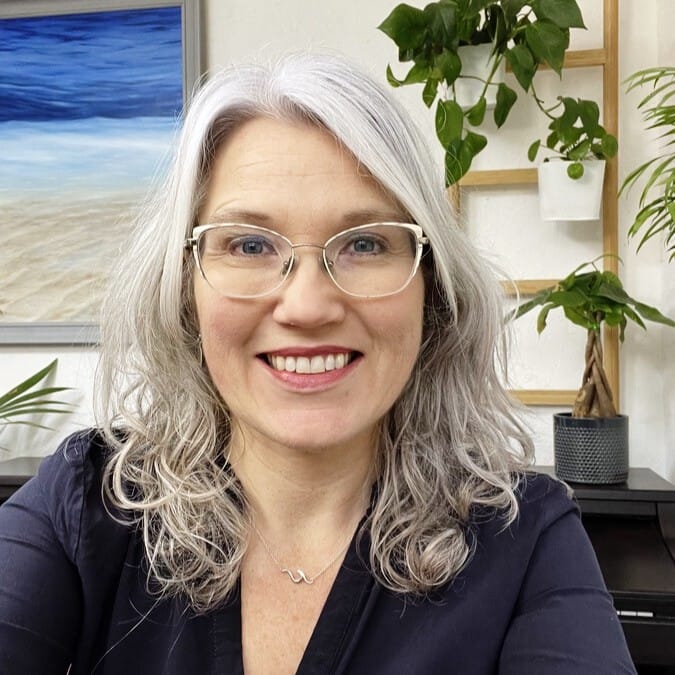
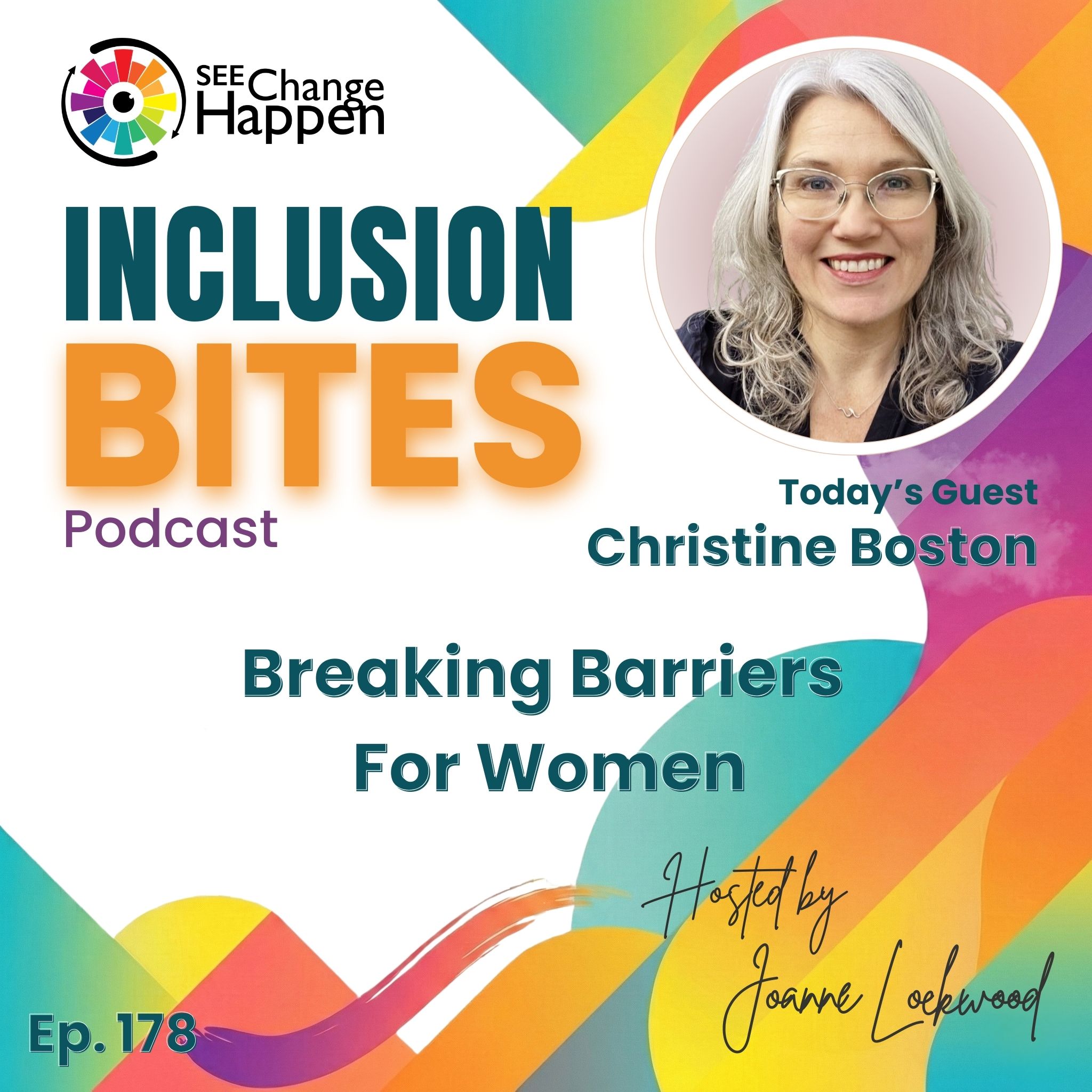
Christine Boston unpacks the persistent barriers facing women, exploring the intersection of gender equity, societal constructs, and inclusive leadership while championing transformative action and authentic culture change in both work and society
In this episode of Inclusion Bites, Joanne Lockwood speaks with Christine Boston about workplace culture systems.
“Male female conversation is cross cultural communication.”
Explore
Navigate this episode
Christine Bostonguest
Foreign.
Joanne Lockwoodhost
Welcome to Inclusion Bites, your sanctuaryfor bold conversations that spark change. I'm Joanne Lockwood,your guide on this journey of exploration into the heart ofinclusion, belonging and societal transformation.Ever wondered what it truly takes to create a world? Remember, everyonenot only belongs, but thrives. You're not alone.Join me as we uncover the unseen, challengethe status quo and share stories that resonatedeep within. Ready to dive in? Whether you'resipping your morning coffee or winding down after a long day, let'sconnect, reflect and inspire action together.Don't forget, you can be part of the conversation too. Reach outto jo.lockwood@seechangehappen.co.ukto share your insights or to join me on the show.So adjust your earbuds and settle in. It's time toignite the spark of inclusion with Inclusion Bites.And today is episode 178 with the titleBreaking Barriers for Women. And I have the absolute honour andprivilege to welcome Christine Boston. Christine is alifelong gender equality advocate and leadership specialistwho's on a mission to build inclusive cultures that empowereveryone to thrive. When I asked Christine to describe hersuperpower, she said that it is turning strategic visioninto inclusive purpose led action. Hello, Christine,welcome to the show. Hi, Jo. Hi, Jo. Nice to see you. Yeah,and we were just chatting in the green room just now and we first connectedon LinkedIn in 2018, so that's. We've beenstalking each other for seven years. That's a while. A long time.
Christine Bostonguest
Indeed. And did I pick up on the fact you're
Joanne Lockwoodhost
based in Wales, is that right? I am in Wales, yeah. Just outside
Christine Bostonguest
Cardiff. Lovely city. I've
Joanne Lockwoodhost
spent many a night out in the. Near theWetherspoons area. The Prince of Wales, is it the. That's the one, yeah.In my younger days, when I was a bit more of a party animal thanI am now. Great part of town. Sothe kids are breaking up for Easter soon, aren't they? Is that right?
Christine Bostonguest
They are, yeah. One more week of school and then, yeah, they'll be homefor two weeks. Wow. Wow. What are you gonna do with
Joanne Lockwoodhost
them? Well, probably avoid the rain. We've had really good weather all week, you know,
Christine Bostonguest
in the run up to the Easter holiday. So that means it's definitely going tobe a wet one. So I'm sure we'll be, you know, doing lots of softplay and finding some indoor activities to keep themoccupied instead of letting them run around outside. Well, you. Yeah,
Joanne Lockwoodhost
the introduction. I said this is the title is Breaking Barriers for Womenand I realise and know that that's a huge passion of you aroundgender equity and equality for all gen and callingout some of the constructs that are there. So what got you into what you'redoing? And, yeah, give us a bit of background as to why youdo that. Yeah, so I've been a gender equality activist
Christine Bostonguest
since I was about 6 or 7. And I know that always kind ofsounds really strange, you know, how is that possible? But actually,I grew up in a Catholic family, so we were at church every week.I went to a Catholic school and it was about that age that, you know,as a girl, I realised there were things that I would be told I couldn'tdo, you know, just for that reason, no other good reason, just because I'ma girl. So, you know, we were kind of, as girls, we'd sit and think,well, that's not fair, you know, why can't we do that? And that's kind ofwhere it started. And then I was a child of the 80s aswell, so, you know, that was a really big time for women's empowerment. And Idon't think, you know, there was any way really of avoiding having thatinfluence me in my household as well. My mum was the main earner,but we'd still have salespeople, people ringing the houseand not wanting to speak to her, but wanting to speak to my dad or,you know, if they're coming round, you know, can they come round when my dad'shome? Because they're still kind of obsessed with the man making the buyingdecisions, you know, and that wasn't the case practically in my homegrowing up, so. But of course it was into the 80s, youknow, the Sex Discrimination act was passed in 1975, sokind of awareness, empowerment was kind of really coming about. Itwas the era of women having independence, being financiallyindependent, you know, because of the new legislation. Women then,you know, there was kind that could no longer be told. They had to havea male guarantor to have a mortgage, for example, they could have their own bankaccount, they could have their job. And it was kind of the age of thesuperwoman archetype. You know, women, you can have it all. Youcan have the career, the big shoulder pads, the family, you know,all that. Yeah. So that, you know, those kind of, like values andideals really sunk in for me. So I was verydetermined. I was going to have the career, I was going to have the independenceI was going to. You know, from that point, I kind of really championedwomen's rights and I have been a trailblazer myself. You know, there arechanges in terms of altar service. I mean, this sounds really geeky, doesn't it? AndI'm not a massive religious churchgoer these days. Butit is true to say that, you know, I played a major role inshaping the kind of system where boys could serve on thealtar and girls couldn't. And now boys and girls do that equally. And Ijust believe that if you want to, there's no practical reason why youshouldn't, then that ought to be okay. So, yeah, so brought about a lot ofchange. And then I was very determined myself to be financiallyindependent. I. Because kind of, you know, women thenwere able to get mortgages, get property in their own right. That's whatI was going to do. I bought my first house when I was 21,I think, kind of to get a real idea of what that's like. I foundthe Handmaid's Tale really, like, enlightening because they'regoing through a time, you know, at the kind of beginning of season one, wherethey're losing all these rights again. You know, only the men can have the bankaccount. So all your money and your bank account and your assets have to goin, you know, your brother's or your husband's name. So I think, you know, that'sa really good way to sort of understand it and it brings it to lifein a kind in the modern day. Um, and then I went on to workin gender equality professionally. I was policy and research leadfor the Welsh charity Gwara Teag, which is. Was an organisationfocusing on gender equality in the economy. Then I was a foundingtrustee of When Wales, which is the Women's Equality Network in Wales. I spentsome time in Africa working for the Federation of Women Lawyers Feeder inLesotho. And I've had my own women's leadership journey in those roles.I've done a lot on women's leadership, and I kind of really took that toheart and sort of have, you know, tried to be a women'sleader, leadership role model myself as well, in my own career. So Wales,
Joanne Lockwoodhost
for those of you who are listening outside of the uk, is a separate country.You have a different culture, maybe to the rest of the uk. Iknow that the Welsh government were very forthright in genderequity and promoting women in society and leadership roles.Do you think that's had a big influence on you, the fact that you areWelsh and not English or not British, if youlike, and there's an identity around that? Yeah. So I Was born in England,
Christine Bostonguest
made in Wales. Right. So my career has been inWales, my gender equality professional career has been Wales.And yes, you know, I kind of work very close with government,very closely with the most senior women in Wales. And yeah, thereis a kind of, you know, attitude ethos that, youknow, women can be and will be leaders too, that we needgender diversity and broader diversity in decision making.And they've been, you know, some wins, some losses. I think we have a genderbalanced cabinet now. We've certainly had them in the past, but then thenumber of women in the Senate, the Welsh Parliament, that's gonedown over the years, you know, and that continues to be a drive to tryand increase that. And I think, you know, it's the societal barriers, I think, thatget in the way, stereotypes, things like that, that really need to bediscussed in the open and addressed as far as possible. In the. In
Joanne Lockwoodhost
the workplace, when we talk about career and aspirations,there's always this, I think the word, is itdichotomy. You can't, you can't have it all. Women still have to make a choicewhether they want a career or a family. No matter how,how much girl power is there, the needto be a great mum or be a great parentoften overrides the priority of furthering a career. Or you have to make that sacrifice.And I know many career women who have to have that. Trade andcompromise. Are we ever going to get to the point where women can have itall? I think it's very difficult and I think it needs a balance, really. But
Christine Bostonguest
the fact is we're in a patriarchal society and in a patriarchal society,you know, a masculine culture by default, the very, you know,fundamental basis of that is distinct roles for men and women.Now, in my household, we have a very feminine culture. You know, there areno clear gender roles between myself and my husband and I'm quite interested tosee how that influences my son as the years go on. I mean, he'sdefinitely very subject to the influence of stereotypingin school, I notice. And so he's having to sort of make his ownmind up about gender ideals, you know, whether pink is an okay colour for himand that sort of thing, whether he can, you know, have his nails paintedif he wants to and play with the girls and all these. All thesethings that, you know, shouldn't really matter. But the, youknow, social values and norms are being constructed at that age. He's six,you know, so he's in primary school. That's kind of where it's all coming togetherand you can see, you know, different children have different ideas.You know, some households will be more traditional than ours is and yeah,we'll see how he grows up. But I think, you know, he certainly doesn't seethis one role for Mum and one role for dad. So, you know, I thinkhe'll grow up to be more open minded and more kind of likeunderstanding of difference. Yeah, I was watching, I don't know if you've seen it, the
Joanne Lockwoodhost
Netflix series Adolescence, which everyone's talking about at the moment andtalk about incel talking about the rise ofsay, toxic masculinity. I know that's an inflammatory phrase. I don't mean that to beinflammatory to what I'm listening. But it's kind of using the language of AndrewTate and the followers and thehow the intel movement is gaining traction amongstyounger generation, you know, young boys mainly. And that must bequite worrying because there's almost like this pushbackor hang on a minute, women are getting too much. Men want to take theirpower back. Yeah, it's very worrying. And you know, I
Christine Bostonguest
wouldn't even repeat the things that are being communicated by Andrew Tatebecause I think it is, you know, it's a real concern anda worry it should be for all of us and what that creates. I mean,Andrew Tate, you know, he's such an influential TikTok personality.His videos have been watched 11.6 billion timesaccording to the article I was reading. And that is, you know, I'm sureincreased already. And it's creating really extreme viewsagainst women, I would say. Women, I would argue,which I think is fair to say, you know, the figures really back this up.Women are already really disadvantaged and face a lot ofbarriers to, you know, to kind of achievement, tobeing independent. And you know, I think that
Christine Bostonguest
is really played down a lot. And we're in a society wherea lot of households have two incomes, you know, whetherthat second income be part time or full time. But you know, bothparents in the household are working. So yeah, women need tobe able to kind of participate. If they're being kind of treated equally interms of financial responsibility, then they need to be ableto participate equally as well. And I always think, you know, we've,we're educating our girls, we're paying to educate our girls and, and that'sexactly the right thing, but then we should behelping them to utilise their skills as well. There's so many women working in lowpaid, low skilled, part time roles because they're tryingto, you know, raise the family at the same time, and that's a great lossto society. It's not a great use of the investment, I think, that we've putinto women. But yeah, of course, you know, as well as Andrew Tate, we've hadthe Mark Zuckerberg comments as well, haven't we, recently, abouttoo much feminine energy is neutering the corporate world. And he's saying hewants a culture that celebrates aggression more. And really what doesthat achieve for anybody, you know, celebrating aggression? And I've kind of, you know,I think we need to have a better awareness of male and femalestyles and approaches, but it's a matter of bringing those alltogether for the benefit. And I mean, I kind of looked at thefigures around the Meta senior leadership team and theirboard. Their leadership team is one third women. Theirboard is 23% women. You know, as far as I could tell, I'mjust looking at the website and that. So the board roles, that's about thesame as the global average. They're making about $62 billion netprofit, which seems pretty good to me. So it doesn't kind of look like womenhave, you know, held them back too much. I think, you know, Zuckerberg might actuallyagree that gender diversity on boards is good for business. And I justthink, you know, maybe his views are more related to the fear of themale elite losing their power in a patriarchal society, you know,which the US and the UK are. But in terms of kind of the benefitsfor business, you know, we know diversity is good. The figures show that, youknow, in terms of kind of boardroom representation, the boards that have agood representation of women, they celebrate, you know, the benefits of differentperspectives. They have better business performance and they're moreinnovative and creative. So, you know, there's a very clear argument forhelping women to progress. Now, I, I've written some articles on Sheryl
Joanne Lockwoodhost
Sanderberg, the. The former Facebook executivewho is famous for her leaning in mantra andthe criticism coming that really she isn't a feminist, she's acomplicit male applauder and promotingwhite women and not intersectional approach and pullingup, she's pulling up the ladder behind her for black women and peoplearound her. So even though we have maybe femalerepresentation in some of these big mega corporates, are theyreally doing much for gender equality or are they doing a lot for themselves?
Christine Bostonguest
And that is the question we need to ask. Pulling the ladder up behind themis extremely common and kind of, you Know what I see, sexdiscrimination is still an issue today. You know, I can kind of give a personalexample. When I was accessing financial services not that longago, I, you know, it was me that went for the service, it was methat was paying for the service. And then when, you know, I was looking toget a mortgage with my husband, they wanted to put my husband's name firston their, you know, because it helps their filing. I mean, I just don'tsee it, you know, I can't understand what the reasonis, why that's important. If I'm your client and I'm paying,you know, why does my husband need to go first? So thatwas really kind of, you know, enlightening for me. And then we knowthat claims are going up as well. So, you know, there's clearly things happeninghere. And the figures show that ACAs are reporting a6.2 increase in disputes between 23and 24 facing successful claims and anincrease in the amount of money awarded. And I think kind of what'shappening is, you know, got lots of. There's lots of awareness aboutunderrepresented groups and the barriers for them. I think you have lots of kind ofempowerment programmes for those nonunderrepresented groups. So there. And I think what's happening is, you know, they are reallyempowered and they understand what's happening, they can seeit. But then, you know, kind of, I, I think whereit goes wrong is businesses increase diversity, but they don't do the culture work togo with it. And so you have, you know, there will be conflictand probably lots of microaggressions. Maybe, you know, when concernsget raised, nothing happens and it can become like a really big,you know, reputational issue. You're seeing lots of examples ofit. I feel like I'm seeing it every week at the minute. It was Midand North Wales Police having major issues with harassment and sexdiscrimination. BBC McDonald's. You know, there's been kind of quite anumber in the last few weeks that are kind of really standing out for me.And yeah, I think it's, you know, I think what's really importantis understanding, understanding and understanding that men
Christine Bostonguest
and women are different. I feel like that gets played down all the time,you know, like men and women are a homogenous group. But there's so much evidencethat demonstrates the kind how women are disadvantaged insociety and particularly from an economic point of view. AndI'm really, really interested. I'm extremely passionate about the work ofDeborah Tannen, who's A sociolinguist and she wrote a book andit's a bit dated now, but for me it's such an important piece of workand I know that she was kind of quite blown away about theinterest in the kind of gender aspect of her work and has done a lotmore on that as a result. But yeah, the book's called you Just Don't UnderstandWomen. Women and Men in Conversation. And what she talksabout is she says male female conversation is crosscultural communication. She uses the termgenderlect and I quote, she sayslearning each other's way of talking is a leap across the communicationgap between men and women and a giant step towards genuineunderstanding. You know, I think there are such fundamentaldifferences, you know, that are reinforced in manyways, you know, through stereotypes and things like that that we're just nottalking about. And it's creating, I mean, we're in a world of polarisation, aren'twe? And it's just creating more and more polarisation and weneed to kind of combat that by making allindividuals aware. So, you know, I think there's a place forwomen's empowerment programmes, you know, all the women in leadershipprogrammes, I think that's very important. But I also think it's importantfor organisations to be gender aware and make sure,you know, all their colleagues have an understanding of how, you know, women leaders arestereotyped and how that impacts them negatively and that sort ofthing and how to kind of like appreciate the range of different approaches that, thatcan be in the workplace. Yeah, put it back to what you were saying there
Joanne Lockwoodhost
around the difference between men and women. You specificallymentioned around conversation and language. Havingspent a good part of my life surrounded andimmersed in male culture and male groups. Male language,male interests, male banter, male humour, and thencrossing the fence, if you like, and spending the next part of my lifealmost entirely female focused in female groups and language.I can completely agree there is a differencein the whole tone of conversations and thehow you support each other. I'm not saying every male conversation is aboutcompetition and alpha male and trying to prove a point. I'm not saying everyfemale conversation is around collaboration and helping and supporting eachother. There are obviously shades of grey and a spectrum there, but Ido find inherently female based conversations are more inclusive,more collaborative, more supportive. Certainly in a friendship group wheremale conversations are all about trying to pick holes in each other and trying toget one up. I find it really difficult now to spend much timein male company because I find it so exhausting soit. Is a very different. It's completely exhausting. And I reallycelebrate and embrace my female identity and being in femaleonly company because it's just. I just feel so much more at homewith it. And. Yeah, and the other thing I notice is how Icall it gender coded language. So I can tell ifI'm with a person or with people who code me as male orcode me as female by the language and how they talk to me. At theextreme is I'm sitting in a taxi and I'm getting effing and blindingand mate and football and my wife this and mywife that, that kind of laddie type conversation. Whereasif the taxi driver codes me as female, it's all right, love, how you doing?And it's a very much more relaxed, chatty sort of thing. And soI, I can, I can very easily tell the energy that's comingtowards me. And so it is different and it. Is thata construct? Have we invented that or is it just the differences between thegenders? It is so interesting, isn't it? So now, I don't know if you've read
Christine Bostonguest
Tanner's work, but it very much sounds like you have. They are the types ofthings that she talks about. And I think it's really important to be clear thataccording to UN figures, they say that 90% ofmen and women hold bias against women. So kindof, you know, what I've seen in the workplace at times is that, you know,basically, well, a woman's said that, a woman's made that claim. So it must betrue. There can't be. There can't be this in it. It must be true becausea woman said it about a woman, you know, and it's like, well, no, because,you know, we're in a patriarchal society and90% of men and women hold those views aboutwhat's normal. So that's definitely not the way to judge it. Butyeah, Tannen talks about exactly kind of what you've just shared. Really, likereport talk versus rapport talk. So, you know,men are in conversation, they're competing for a higherstatus and women want connection andrelationships. So it's kind of the status versus relationship,competition versus connection. And it's really interesting. So I've got plenty ofexamples from home and I wonder if kind of you and listeners canrelate to this. But, you know, I could give you a situation where, youknow, I might be kind of having my dinner with the family and myhusband's talking about frustrations from his day. You know, andmy response is, oh, yeah, I know. Here's the thing that happened tome, you know, so I'm trying to demonstrate how I understandwhat he's talking about. I've experienced it too. And his reactionto that is, you've just made it about yourself, you know, becausehe's thinking about status and competition. That has to be about one or two ofus, and it's about me, you know, because. And, you know, he wants it tobe about him because, you know, he's put that forward. Whereas to me, I'mjust trying to, you know, to build that connection. That's what's importantto me. And, yeah, I can. You know, the examples of that at home allthe time that I notice. And it's just kind of a natural thing. I
Joanne Lockwoodhost
call that an empathy bridge. What you're trying to do is. I don't know whatyou're going through. I can't relate to everything, your lived experience. But what I cantry and do is build empathy across this bridge to what you're saying against somethingI recognise. And to show connection with you, I'm repeatingback in my own language, which then you think is diverting away fromyou. But actually it's me checking my understanding. In my own language
Christine Bostonguest
and women might do that. And I think that's kind of quite typical incommunication. And that's what Tannen demonstrates. I do wonder if there's beenchange over time. Like I say, you know, her work's fairly dated now,it's probably news. And I do think there's a lot more awareness todaythat, you know, an individual's lived experience is their lived experience. And notto try and say, yeah, you know, I know exactly when you don't, because it'sthem. But, yeah, I think, you know, the approach in the communicationand the kind of, you know, the fundamental ways that men and womencommunicate and react to each other, they are still very much true and kindof need to be part of the debate. I've never. I've never
Joanne Lockwoodhost
read that book or heard of that study before. So it's really interesting because I.I guess my. My perception is. My perception iscompletely born out of lived experience and observation. And I guess whenyou're a member of the club on the inside, youget a true representation of the real language and the realculture that goes on. And I've been on both clubs, but Ican't now join, go back to the old club and I wasnever welcome in the same way in the new club. So when I'min these situations. Now, I do have this beforeand after I was a member of that club. Now I'm not and I seehow it is. I'm a member of this club. Well, I wasn't before and nowI see how it is. It really ispersonal observation, just realising and being hyper aware ofwhat's going on. I'll give you a story.I had two nights out in Brick Lane in London. For those who know, theEast End of London is the bagel and curry place central for.And I was out with a group of men one night and the men weretalking about a fight they'd been in, how they had their nosebroken and had stitches and they're bleeding and all this sort of thing.And there was three or four men in this group all talking about their brokennoses. And I was out three night, two or three nights later witha group of women in literally a hundred yards down the road in Brick Lane.And they were talking about childbirth and they were talking about stitches they'd hadafter childbirth and how much pain it was. I thought men were talking abouttheir noses being broken and women were talking about their. The stitches they'd had postchildbirth. And I just sort of sat there in my own little mind, chuckling insidemy head, thinking, this is so surreal. Same topic,different part of the body. So, yes, we have commonality in what's importantto us and how we want to share, but the motivation and the language weuse is completely different. Now all women have got a childbirth
Christine Bostonguest
story. Total worriers. Yeah.
Joanne Lockwoodhost
Yeah, it is. And so in orderto change society, the constructs of how we create a gender,if we. I think what I'm hearing from you is there are fundamental differencesthat aren't just constructs. These are kind of our brains, the nurture versusnature. So there's a lot of nature in there as well. But if we wantto change the aspirations and the way women arewelcomed and embraced in the workplace, in society as a whole, it's agenerational shift, isn't it? Because what frustrates me is if youtalk to maybea woman who's maybe, I don't know, let's just say in their late early teens,early teens and a man in their early teens who are thinking about their aspirationsto start a family, to get married, have children, all this kind of thing,they're already starting to think about, I want a little girl becauseI want a little boy. And I'm already thinking about the rough, tough taking, thefootball type stuff. So we're Pre programming thedestiny of our offspring throughout our ownchildhood, adolescence and creating our own aspirations for thatfamily. So if we're going to have anyway of breaking some of these stereotypes, rewriting the constructs,we've got to start training our young children today aroundgender equity and what gender construct is and how we can breakout of these. So young boys, young girls, young non binary peopleto try and talk about the damage that gender stereotypes cause.Because by the time we're in our 20s, no matter how woke we areor how enlightened we are, we're having gender reveal parties.We've got blue and pink start coming out and we're starting to create aspirationsof how we perceive our child is going to be based on their gender.That's the challenge we've got, isn't it? It's when we try to get right backto the point of influence, when we start to break it because we can't breakit for ourselves. Once we've got it, that's it. And I don't think, you know,
Christine Bostonguest
I don't think people understand, you know, the impact that has on girlsand then the women they're going to become. Women typicallyhave lower pensions, they have less saved in their pension because they're the one thatones that have had to kind of take a hit. Things have changed. You know,we're not as kind of well supported by workplace pensions or state pensionsor you know, your partner. Couples don't necessarilystay together in the way that they used to. So you know, a lot ofthat security is gone. And I don't think kind of, you know, we're, we're awareenough or thinking enough about the future to be able to protectchildren against that. I mean, yeah, stereotyping starts from veryyoung, very, very young. And kind of from previous research work that I've done,
Christine Bostonguest
girls and boys start to get an idea of like what are male and femaleroles at the age of three, by the age of three, you know, that'sextremely young. And then I see in the school still and I'm shockedby kind of how stereotypes are reinforced and what's happeningkind of in the playground, for example, or after school clubs. So our schoolhas a, has a ballet club kind of for after school andthey're optional things that the children can join. And so, you know, when myson came home and I knew there was an option for an after school balletclub, I said, you know, are you going to do ballet? And he said, oh,well, isn't that just for girls? You know, and I said, well, no,you know, men do ballet as well. There's nothing wrong with that. If you wantto do ballet, you know, you absolutely should. There's no reason why you wouldn't. ButI think, you know, that's all well and good, me having a one on oneconversation with my son at home, but, you know, what is the school doingto make sure the boys feel that they are welcome in that class andto challenge, you know, challenge the stereotype in the classroom and make surethat, you know, any boys that do decide to go are not going to be,you know, teased and bullied for making that decision. Thenfootball, My son is into football and we never really expected that.I'm not sure, I don't, I kind of, I kind of did suspect I mighthave a boy, but I'm in a family with many, many, many girls.So it was, you know, it was quite a big thing.So I never really expected I was going to be a football mum. Andyou know, whilst I'll kind of allow him to do whatever he likes,you know, I also have been asking him, would you want to go to dance?Do you want to do these things? I'm trying to just encourage him to kindof be a bit more open. He went to gymnastics and thingslike that and just allowing him to kind of think about all his options andnot be like, well, you're a boy, you have to do football and all that.But I noticed in the playground it appears that it is theboys that get the football area and the girls canplay if they want to, but the boys dominate and the girlsnever have the opportunity to kind of take that as their space. So Ijust feel like the kind of, the different roles are being reinforced in school. They'recertainly not being challenged. Yeah, the boys turn up with the football, it's their game,
Joanne Lockwoodhost
isn't it? They put the goalpost down, they pick the teams.That only changes when the girls have the football and they pick the teams andthey put the goalposts down. So I guess like we're seeing in the women'sPremier League and the women's football sport, they're trying to carve out their ownidentity. They're not, they're not an alternative to the men's game. They're, they'rea game in their own right. Different personalities, different characters. Ithink that's, that's the important thing. The girls don't need to play in the boysgame, they need to play, play their own game. And the boys are welcome inthe Same way. Yeah, absolutely. And yeah,
Christine Bostonguest
I just don't think they're given that opportunity because it's justassumed that the boys play football and the girls do this and it'slike, what if we didn't make that assumption? You know, what would that look like?Or what if we said, actually, right, we're going to switch now. Soif the girls want to play football and use that space, then they can havethat on that day and it's up to them because the girls maybe don't wantto play with the boys. And yeah, I'm soexcited about the women's game in football. I findit so much more engaging. You know, never been a football fanat all, but I've been to some women's games, I watch them on the tv.I find them so much more, more enjoyable.The, you know, the women are great to watch. I love the kind of teamfeeling. It just got a whole different feel to it and a different culture andI've been to kind of live games and it's got a much more familyfeel. Yeah, I agree. I think I've come, I've been turned off by
Joanne Lockwoodhost
men's football just purely because it's all about masculine personalities,sometimes as egos and things and prima donnas. Whereas Igenuinely feel that mostly when I watch women's football and other women's sports, there isvery much a team all for one on one, full time,genuinely not pretending. And I think sometimes male football is all aboutthe aggression and there's too much, I would call cheating.Going for the dive, going for the tackle. Women arequite rightly worried about their bodies and they're breaking bones and things and they don'twant to go in for that hard tackle or so they're more likely to. They'regoing hard. I'm not saying, I'm not saying that they compromise anything, but they havea different approach to a non contact sport. They don't push the point of contactand they. It's exactly that. And I think from what I see, you know,
Christine Bostonguest
they're more collaborative, they're more cooperative even, youknow, with the players from the different teams, they look after each other a littlebit more, they're a bit more respectful, whereas the guys are, you know, they're dominant,they're assertive. It's just sort of all that typical genderstuff. They're focused on the competition, achievement and you know that it's typicalof kind of masculine feminine culture. And I think that's a really kind of greatplace to see that. Difference play out. We still have.
Joanne Lockwoodhost
We talk about these glass ceilings, we talk about the concrete cliffs and theconcrete cliff edges where we don't have enoughwomen in leadership positions. And we talk about the 30% club, we talk about allthese different initiatives we have in the city and other places trying to getwomen into senior roles. We can never quite get the momentum, can we?We're always, you know, you talked about percentages here on the Facebook board and otherboards. 25%, we're not seeing enough. 60%, arewe? 70%. We're not seeing that flip.What I find challenging and difficult is thatwhen we're in a world now talking about anonymized recruitment processes as freerecruitment, that's great because we're anonymizing outwho you are, whatever you may be. But the challenge is,if we want to rectify a 70, 30 malefemale representation, we can'thire one woman for every man because that ratiowill never change. We have to hire 2.5 womenfor every male for the next five years in order to get thatfrom 30, 40, 50, 60 to 50%. And I think that'swhat organisations aren't doing enough of. And the problem, thenwe end up with positive discrimination the other way, which no one's in favour ofeither. But how, how do we create an environment then, where we areactively recruiting women in a higher ratioto offset that balance without being discriminatory to men?
Christine Bostonguest
Yeah, I think, you know, bias is a really importantkind of subject to think about because whilst we haveall this, you know, kind of awareness in recruitmentand the, the kind of, you know, name blind, all that sort ofthing, we've still got bias. There is still bias at play in,you know, the most engineered to be fair recruitmentprocesses. You know, if you kind of look at, you know, how toget a job right now, it's sort of. You should network, you know, becauseif you are interviewing with people, you know, then there'll be a positivebias, you know, of some sort at play. And I think it's reallyinteresting to consider, kind of. And I've done a piece on thisabout this recently about, you know, what is merit and whodecides? Yes, BS of meritocracy. Yeah,
Joanne Lockwoodhost
yeah, one of my, One of my topics. That one. Yeah, yeah. And,
Christine Bostonguest
you know, women and all underrepresented groups, we are, you know,really happy to kind of, you know, put ourselves down, keepthese barriers in the way. You know, kind of heard somebodykind of recently saying, you know, well, you know, I don't. Well, they Were talkingabout Donald Trump and saying. And all his views on EDI policies, and they weresaying, well, I agree with Donald Trump, actually, because I don't want to be recruitedon the basis of merit. You know, I don't want to be recruited just becauseI'm a woman or I'm this or I'm that. But I said, well, menhave been getting recruited through the golf club forever, you know, and throughtheir networks forever. So why, you know, why are weso reluctant to have the same privileges and opportunities?Why would we do that to ourselves? But we're so like. And that idea of
Christine Bostonguest
merit has been created by those in power to protect their ownposition. And, you know, we play right into that, don't we? But,yeah, you know, the stereotypes are very clear, you know, in terms of women leadership,you know, all these kind of. It's a really fine line thatwomen leaders have to walk because there can't be too much this, therecan't be too much that. You know, if women were to communicate in this sameway as a man, you know, a woman leader, in the same way as amale leader, they can often be labelled negatively. Like, they'reaggressive, they're controlling, and you've got all the kind of,you know, aspects that kind of. Tannen describesplaying out there. Things like, you know, if a male leader was to go intoa room and think it's cold, they might just say, it's cold in here. Someoneclose a window. A woman is more likely to come in and say, anybody feel
Christine Bostonguest
cold? You know, didn't. Do you think we should close the window? Like, it's achoice, like she's making a suggestion, you know, but actually,you know, if you think about, you know, they're hoping that they can rely onhierarchy, that people will know, maybe suggestion about closing the window, someone willclose the window. But it doesn't kind of quite happen in the same way. But,you know, if a woman comes in and says, it's cold in here, closethe window. Gives it as an order or an instruction that's often notperceived well. And you have different groups. You have, you know,women leaders who kind of really hold on to theirauthenticity and their identity and their approach and say, I'm going to do it inmy own way. And my way is, you know, compassionate, empathetic,understanding. You know, some might say softer, more gentle,you know. Yeah, in some was some women, you know, we're going to do that.Others are, you know, used to a more masculine culture and think,I've got to Be like that to be successful, you know,and kind of that's what we're fighting against, really. I heard Rose
Joanne Lockwoodhost
Ailing Ellis on, I think it was BBC Radio 2 the othermorning, and there was something she said which cut rightinto me and I thought, wow, wow. And shesaid, I have a sign interpreter here for youbecause I know you and many of you don't use sign language,can't speak sign language. So my interpreter's there for you, not for me.They're there for you because you don't speak sign language. I thought, wow,what empowerment and ownership of thatsituation. And I thought that was incredible. And whatmade me think of that is what listen to you. Becausein order for women to succeed, often they're told they need to be morelike men to overcome the biases. When you speak,you don't end the sentence in an uptick. You have to go land it downto sound more authoritative. Otherwise it sounds like a question anduncertainty. That's a bias, that in the wayyou speak. I hear that uptick. I think it's a question, not a statement.In order for women to be taken more seriously, we're saying you have to speakmore like a man. Actually, what we should be saying iswe need to be speaking. We need to be learning how to listen better andnot making an assumption based on what we hear. In the same way that RoseEllis Ailing Ellis is the science interpreter's for you, not for me.And mine was going, hang on a minute, I thought it's for you. It's not.It is for me. You can speak perfectly happily with sign language.I can't. Wow. So it's about reframing thoseviews and allowing people to succeed for who theyare, not to comply with someone else's definition of what credible is.And I made a decision not to retrain my voicebecause to make other people feel comfortable with my voice. So I'vechosen to keep it because it's my voice. And if you've got a problem withit, that's your problem, not mine. So I think we need to be ableto challenge this bs, the meritocracy of what isvaluable, what succeeds. That's the challenge that we as women have to face,is to get people to say, you're good enough, you're fabulous, you're wonderful,
Joanne Lockwoodhost
actually. Yeah, yeah, perfectly wonderful in your way.
Christine Bostonguest
You know, you don't have to try to be something else because, you know, it'sabout performance and results. But the aware, you know, theawareness is absolutely fundamental, isn't it? Because otherwiseyou're just placing judgement on thing, on something you think is right and noone's ever challenged a question. You know, again, like the whole idea ofmerit. If you think like merit is a thing that's kind of, you know, youhave it or you don't, then you're gonna probably, you know,you're going to make one assumption. If you are aware thatmerit is something that is defined by somebody, it's a decisionthat gets made, then it's totally different, isn't it? I mean, I used to, Ikind of noticed, you know, with my teams that we were kind ofrecruiting the same. And what I said to them was, well,first, first of all, you know, can you look at the questions in the processand think about how do you make this a level playing field? Because, you know,we don't want to advantage somebody who'sinternal, for example, or already in the sector, because do we actually need that,you know, or how can we kind of look at kind of, you know,just, yeah, create that level playing field so everyone's got, you know, startingfrom the same place and got the same opportunity. And also I'd say to themwe need to look for culture add, not culture fit. And I think that changesyour bias when you come into that recruitment decision. And then of course, it's allthe other things, like having diverse panel, you know, as far as youpossibly can, making sure it's not all kind of. Yeah, well,I'd say more than two types because, you know, typically you'll have male,female, but actually how can you diversify even more than that on your panel? Becausethat's, that's what you want to be doing, really. But yeah, kind of women arehaving to kind of work in this really awkward and difficultsituation, figure out like, who they are, who do they have to be?Do they have to be that, you know, all the time? They're facing a rangeof different, other, different barriers at home. Like the barriersin relation to the reproduction of life. Like all sorts of things that womenmight be going through around trying to conceive ormaybe pregnancy loss, which is hugely played down. So, you know,kind of society sort of tells you that that's, you know, that's nothing and youjust should be carrying on because that's not really a thing. But actually, psychologically it'svery impactful. Pregnancy and maternity discrimination, you know, whetheryou think you're thinking you have a baby or not, it really doesn't matter. Likeemployers, if you're a woman of a certain age are stilldiscriminating against kind of women inthat group. I've got, I've got a story about that. I was working in an
Joanne Lockwoodhost
organisation and two or three of my male colleagues ina meeting said we should do a sweepstake.Our colleague Helen has just got engaged. Howquickly before, when she's going to get married, who's going to guess how quickly she'llget married? And then it was, how quickly after she was married would she fallpregnant? And that was a sweepstake, a serious sweepstake. And theyall went, oh, yeah, I'll put a quid on August and I'll put aquid on next February for being pregnant. And that'sstill the perception that a woman can't get married, can'tget engaged or can't have their own family life without peoplejudging what that means. Men would be, yeah, great, we havea stag weekend and it'll be all kind of SAP each other on the backwithout any expectation that that person is goingto want to be an active part of their family. And thatbreaks, you know, you then that, that was very gender stereotype there. You know, wehave female, female couples, we have male, male couples, non binary, nonbinary couples and a whole mix of different permutations inrelationships. Men are being judged as workers, women are being judged ashomemakers and we need to break that barrier down and make it acceptable both ways.
Christine Bostonguest
Absolutely. So, yeah, I remember, you know,I was going for a new role just before I got married and I wassaying, well, you know, I was wondering to myself, and I was asking otherpeople, do you think I should take my engagement ring off? Because are they goingto, you know, judge me based on that? Would that disadvantage mewearing an engagement ring? And then, you know, I had one conversation withsomeone who said, well, you know, if that happens, it's not the rightworkplace for you. And I thought, yeah, so kept the ring on,got the job and that was great and they were a fantastic employer. But there'sso much like that. And it's really clear in my household because like I say,you know, we're, we're very equal. And throughoutmy career, you know, I campaigned for shared parental leave.And so, you know, it was only right that we made the most of thatand it worked for our financial situation. So I went back to work afterour baby was five months old. My husband had three months off full
Christine Bostonguest
time. And before I, before I had thebaby, people were saying to me, oh, will you give up work? You know,when the baby Comes, will you give up work? And I was absolutely horrified, youknow, thinking, why on earth would I do that? You know, I'veworked really hard to get where I am, why would I give up work?And then they'll say, so I'd just say to them that, you know, you know,not, not planning on doing that. I'm expecting to still go back full time because,I mean, you know, in my bit of an occupational hazard, but very aware ofthe motherhood penalty, so I was going to try and resist that as far aspossible. So. And then, yeah, baby came, you know, as Ithought, wanted to go back to work. So I went back quite early and yes,my husband was off full time and I said to him one morning, and Idon't know why now, it was a morning that seems, seems a funnytime to have this conversation, but I was getting ready for work, ready to leavethe house, he was sorting out the baby, ready for the day.And I said to him, has anybody asked you if you're going backpart time? And he said, no, no one, not a single personhad asked him that, even though he's off three months full time, you know,on shared parental leave. And I said,I must have been asked about 20 times, are youcoming back part time? Because that's just an assumption that gets made, you know,despite the fact if I did that, I'd be losing my salary, I'd be losingmy pension, I'd probably be having to do the same job. I mean, I wasthat, that's typical anyway for all women. But I was a director, you know, jobthat's got to be done. I'm running, you know, the organisation in Wales, I haveto get this job done and I can't just say, I'm not gonna do thatbit, you know, but I'm gonna kind of flex my hours in thisway. So, yeah, and it has serious financialpenalties for women. And that is the problem as well.
Joanne Lockwoodhost
You have part time hours and part time money, but full timeresponsibility. So you still end up cramming your 40hours into 32 or into 28 or something. And again,that's the penalty that many women, they feelthey have to do that to meet the expectations of notbeing a slacker, not being, you know, being committed. It's very difficultto just sort of say, oh, it's 4:30, pick the kids up from school,I'm off now, bye. In many environments, I alsorecognise there are many organisations because I go into organisations to provide trainingcourses and are very conscious about the fact what time do youwant the day to end? And quite often they'll say, well, we need to wrapit up by 3:30 because some people have got childcare and they need to gooff and collect their kids and things. I said, absolutely fantastic. AndI now almost schedule the courses 10 till3:30 deliberately so people got time to come in and they'vegot time to leave at the end. Whereas if you go for the old style,nine o' clock till five, that doesn't work for everybody. Does
Christine Bostonguest
doesn't. And I think, you know, one of my concerns at the minute is aboutthis, you know, push to return people to the office because homeworkingis really beneficial for many. You know, anyone with caring responsibilities,people with disabilities and returning to the office is going to have anegative impact on them. And kind of I've heard senior leaders saying,well, you know, they can just arrive late and leave early. Well, areyou going to pay them for that or do you expect them to take apay cut? And I suspect, you know, it'll be a reduction in pay as well.And what I really believe in and what I'm promoting is a different approach toperformance management that's about results, not time. Because thatjust allows people to work flexibly as they need to to getthe work done. And as long as they're actually delivering what is required andthat's less to do with outputs. Because I always kind of used to say, youknow, my colleagues would be saying, written so many reports, well,that's great, but if they're sitting on the shelf making no difference at all andnot being read, then that was, to be honest, a waste of time. So reallythinking about, right, what do you need that individual to achieve and what's fairfor the amount of time that you're paying them or, you know, for the amountof money you're paying them and managing in that way instead and reallylooking at did that person deliver what we pay them to do ornot? You mentioned earlier about it. Well, I think
Joanne Lockwoodhost
you mentioned Margaret Atwood's Handmaid's Tale. We talked about the impactof that in certain parts of the world. I feel that there'salmost this potential for that dystopia to come tofruition in some parts. Especially if you drew a map of Gilead and laid itover the US and it's kind of the central belt, the central block of theUS Is Gilead in that story. California, New York andthe coastal areas are kind of the old US if you like, affiliated to Canada.So we're Seeing abortion rights pulled back,we're seeing trans rights, we're seeing queer rights,gay rights, necks on the cards, we're seeing these pureChristian values coming back into play. Could that happen in Europe?Could that happen in the uk? Believe anything. And, you
Christine Bostonguest
know, now after I've kind of had so many things happenwhere I thought that would never happen, you know, like the pandemic, Brexit, all thissort of stuff. So now I can believe anything. Yeah, it's, you know, backto the polarisation, isn't it, and the kind of Andrew Tate movement and howsocial media is allowing these extreme messages to reach peopleand how it's influencing their view of the world and. Andwhat they think is right and wrong and it influences their behaviour and theirattitudes. So, yeah, I, you know, I. Icould. I can believe, you know, that it could happen. I don't want to believeit and I'll work really hard to make sure it doesn't. But, yeah, we shouldall be concerned about that, I think. Do you think men
Joanne Lockwoodhost
should have their hormones tested to see if they've got too muchtestosterone in their bloodstream that might give them an unfairadvantage against other men? It's really interesting you say that
Christine Bostonguest
because, actually, I think that, you know, it just opens a really interestingavenue into menopause treatment for women becausethe, you know, I believe more women should beprescribed testosterone. There's a great reluctance. There isn't like a product onthe market for females, so women who are being giventestosterone, and that includes myself, are having to use productsthat are for men and just sort of do their best, make the best ofit. There are private products. I think there's something in Australiathat is for a female market. And, yeah, there's a real reluctance to give womentestosterone. But I can tell you that, you know, a perimenopause symptomis sort of anxiety reduction in self esteem, you know,lower self confidence. There's a lot of kind of psychological impacts ofperimenopause that are often, you know, not properlydiagnosed by gps, are not treated in the right way.And I was. Was lucky to be able to go and see a private specialistwho put me on testosterone. And it's been transformational. I just wish,and I can't imagine that I could have enough to have as much as DonaldTrump, for example. And I look at that and think, what would it take tohave that amount of, you know, testosterone and confidence?And surely I must be able to have that because I've got a whole packetupstairs. Yeah, I mean, I'm not a
Joanne Lockwoodhost
medic by any shift of the imagination or endocrinologist, but myunderstanding is that oestrogen in the female bodyconverts to testosterone and women will have atestosterone level, whatever the units are, of around 1 to4% of whatever, or nanomoles or whatever this ratio is. Mentend to have 20 plus to 40 oddnanomoles. Both bodies aredesigned to run with testosterone lubrication indifferent amounts. And you're right, when perimenopause andmenopause post menopausal women, because they haven't got so much oestrogen in theirsystem, then they can't convert that to testosterone. So microdosing, testogel, or whatever the gel is you can put on is gonnabe a benefit. But what I've learned through my wifeis that there's almost a reluctanceto hormone profile CIS women because theysay it makes no sense because we don't know what that means. And I think,well, if you've never got a baseline, you're never going to know what it means.But what you could say is statistically this person hasa lower oestrogen, a lower testosterone, lower progesterone. Thereforestatistically, they're more likely to be having anxiety, heatflashes, itchy skin, brain fog, all the kind of menopausalsymptoms statistically. And if we add a little bit ofHRT gel, a bit of bit of testosterone, as you say,then we could, we can then observe the change. But no one's doing thatobservation. They're not saying, let's try a bit, let's try it. Whereas I,I get, I get my hormone profile taken every year to make sure that mylevels are correct. Why me? Why isn't every woman, every man gettinghormone profile testing just to create these baselines to be ableto understand society, the effect of these hormones, because they affect yourbrain, they affect your mood, they affect your reaction to stimulus,everything, those three, testosterone, progesterone and oestrogen,with a bit of prolactin, the other hormones, have a huge impact on yourhealth and wellbeing. Exactly. And think of the impact on women's
Christine Bostonguest
careers because it's that age group that are most likely to be in leadershiproles. And there are also most likely or more likely, you know, to have increasedcare and responsibilities. And women are having children later andthey're also, you know, having to care for adults. So I think you've got, youknow, a cohort of women who are kind of stuck in that 40sage group that have Got children, old parents, perimenopause to win aleadership role. You know, something gives in the end.
Joanne Lockwoodhost
Yeah, and, and being right in the middle of that sandwich generation ourselves,you know, we've got elderly parents, we've, over the last two years we've dealt withhospitalisation, nursing homes, engaging with social services, old people's mentalhealth services. All the things that you think, blimey, there's no, there's no, there's nohandbook on this. You know, when you're, when you're starting your family, it'santenatal classes, everyone's kind of helping you out how to have a baby. It'skind of in your brain about that nurture side of looking after yourfamily. But suddenly you get to your mid to late 50s and suddenly you've gotthis adult child with newresponsibilities and no one helps you. Social services aren't any good,hospitals aren't any good. They want to treat the physical, they don't want to treatthe emotional or the mental. And you soon learn thatyou're woefully inequipped to be a later life carerfor elderly parents or elderly relatives. And imagine if you
Christine Bostonguest
are, you know, a working woman tryingto, you know, manage everything. I am, I am a working woman and
Joanne Lockwoodhost
I, I do, I do, yeah, I do have to do that. Yeah. And it's.
Christine Bostonguest
Well, of course, I'm just thinking kind of for listeners, you know, thinking about thatand like all the, you know, the kind of pile up ofchallenges that are, you know, not well supported, you know, womenoften, well, typically not getting adequate medical care for women'shealth matters, not getting, you know, finding very difficult to navigateadult social care pay in. I mean, at its worst, ourchildcare bill was twice our mortgage. You know, so sort of having tograpple with all of these things whilst pretending that, youknow, there's nothing to see here and contributing, you know, in the workplace like you'rean equal, you know, it's not easy. No, my wife and I, we, we both
Joanne Lockwoodhost
talked about this many times where both our parents are similar ages, both are goingthrough that stage and we've, we've said to each other thatwe could not have coped had we been working for an employer.We only had the flexibility and the ability to be able toreact and care and deal with because we were self employed workingtogether. We both reflect on that.But we have a luxury that most of the population don't have. They workfor somebody else. They have to be accountable for their time and being There.And you don't want to say, sorry, I can't today, oractually, my, My elderly father's had a fall and I've had towait half the night for an ambulance. The ambulance only got here half an hourago. I need to go to bed. I'm sorry, I can't come in today. Andthat's random, isn't it? You've got no choice aboutnobody else to deal with it. You just got to pick up that situation. Andso the childcare aspect, again, you can't say to your child, sorry,don't throw up this morning because I've got a big meeting to do, deliver aproject today. I'm sorry, you got a temperature? What do I do? So we createthat stress, don't we? And again, we talk about things like psychological safety in theworkplace. You need to be able to talk about this challenges in your life,otherwise you're just going to bottle it up. That's when you get burnout, stress, anxiety,all those other things creeping. Exactly. And it's still typical that, you know,
Christine Bostonguest
I had an example recently where, you know, there was a, you know,a friend kind of had a child off sick and so herhusband kind of rang up the employer and said, I need to take the dayoff work, my child's off sick. And the employer said, well, can't your wife doit? You know, it's really typical and still of youtoday. Yeah. And we do have these, these gendered expectations. And
Joanne Lockwoodhost
that's, that's, I think, what I said earlier. We've got to try and train ouryounger adults, our younger children to start breakingthis now because once they become ingrained, it's really hard to, to rock that boat.So if you're, if you're listening to this and you've got a young person who'sunder 10 years old, now is the time to empower them both, notjust the girls, but empower the boys as well, to break thisBS of construct of gender. And that's kind of like another really good
Christine Bostonguest
reason why I love women's football so much. I love that, you know,my son is watching women's football and, you know, they are rolemodels for him. And so he's growing up with, you know, different views.And I'm really interested to see what these kind of, you know, younger generationscoming through, what their attitudes are going to be and how they might shapeequality in the workplace going forward. Fingers crossed. Christine, it's been absolutely
Joanne Lockwoodhost
fantastic. We've been yakking away now for over an hour. And howdo people get hold of you? How do people find out more? Well, you can
Christine Bostonguest
Visit the website threeminuteleadership.com and there's lots of goodcontent, articles, resources around leadership, culture and inclusion thatthey can access there or. I am Christine Boston onLinkedIn. Excellent. And I found you because I. That's what I
Joanne Lockwoodhost
worked out, that we connected back in 2018. So, yeah.Christine, thank you so much for your time. And if you're listening to this. Yeah.I'm sure you found this useful as well, so thank you very much. Brilliant.
Christine Bostonguest
Thank you. It was good. Yeah, yeah, yeah. I think I kind of, you know,covered everything that I was hoping to get to.
Joanne Lockwoodhost
As we bring this conversation to a close, I want to expressmy deepest gratitude to you, our listener, for lendingyour ear and heart to the cause of inclusion.Today's discussion struck a chord. Consider subscribing toInclusion Bites and become part of our ever growing communitydriving real change. Share this journey with friends, family andcolleagues. Let's amplify the voices that matter.Got thoughts, stories or a vision to share? I'm allears. Reach out tojo.lockwood@seechangehappen.co.ukand let's make your voice heard. Until next time, thisis Joanne Lockwood signing off with a promise to return withmore enriching narratives that challenge, inspire andunite us all. Here's to fostering a more inclusive world oneepisode at a time. Catch you on the next bite.
Challenging Gender Stereotypes and Breaking Barriers for WomenThe Double-Edged Sword of Meritocracy and RepresentationSocietal Shifts, Intersectionality, and the Backlash Against Progress
In this episode of The Inclusion Bites Podcast, Joanne Lockwood is joined by Christine Boston as they examine what it truly means to break barriers for women in modern society and the workplace. The discussion maps the enduring structural and cultural obstacles women continue to encounter, from the persistent motherhood penalty to the prevalence of gender stereotypes in education, recruitment, and family life. Joanne and Christine debate the efficacy of diversity initiatives, question the myth of meritocracy, and explore how both language and communication style influence women’s advancement in leadership.
Covering topics such as the impact of social media personalities like Andrew Tate, the challenges of toxic masculinity, and the subtleties of “pulling the ladder up”, this episode probes why equity must start from childhood and how workplaces must move beyond surface-level diversity to effect genuine culture change.
Christine is a lifelong gender equality advocate and leadership specialist based in Wales, renowned for transforming strategic vision into purpose-led action. Her professional journey includes prominent roles with the Welsh charity Chwarae Teg, the founding trusteeship of Women’s Equality Network Wales, and international experience with the Federation of Women Lawyers in Lesotho. Having grown up questioning traditional gender roles from a young age, Christine brings first-hand insight into forming inclusive cultures and balancing feminist principles with lived experience. Her approach champions the progress of women through structural change, awareness-raising, and the fostering of authentic leadership at all levels.
Joanne and Christine engage with real-life examples, challenge patriarchal norms, and offer candid perspectives on what it will take for women to truly thrive—rather than simply survive—in business and society. They illustrate how communication gaps and gendered expectations persist, while also sharing practical illustrations from home, school, and work.
The key takeaway from this episode is that advancing gender equity requires more than tokenistic representation—it demands unpicking deep-seated assumptions, reconfiguring workplace merit and culture, and investing in a generational shift through early education. Listeners will come away energised by the practical insights and inspired to push for systemic changes ensuring every woman—and every person—has the opportunity not just to belong, but to lead and flourish.
“as a girl, I realised there were things that I would be told I couldn't do, you know, just for that reason, no other good reason, just because I'm a girl.”
“he's having to sort of make his own mind up about gender ideals, you know, whether pink is an okay colour for him and that sort of thing, whether he can, you know, have his nails painted if he wants to and play with the girls and all these. All these things that, you know, shouldn't really matter.”
“But I think, you know, that's all well and good, me having a one on one conversation with my son at home, but, you know, what is the school doing to make sure the boys feel that they are welcome in that class and to challenge, you know, challenge the stereotype in the classroom and make sure that, you know, any boys that do decide to go are not going to be, you know, teased and bullied for making that decision.”
“I noticed in the playground it appears that it is the boys that get the football area and the girls can play if they want to, but the boys dominate and the girls never have the opportunity to kind of take that as their space.”
“I must have been asked about 20 times, are you coming back part time? Because that's just an assumption that gets made, you know, despite the fact if I did that, I'd be losing my salary, I'd be losing my pension, I'd probably be having to do the same job.”
“There isn't like a product on the market for females, so women who are being given testosterone, and that includes myself, are having to use products that are for men and just sort of do their best, make the best of it.”
How early gender role expectations and societal norms shape aspirations and limit opportunities for both girls and boys.
The tangible impact of legislative changes on women’s financial independence and societal perceptions, from the Sex Discrimination Act to present day.
The persistent career-family dichotomy that women face, why true equality requires broader cultural change, and how household roles influence future generations.
The damaging influence of online personalities and movements reinforcing toxic masculinity and resistance to women’s empowerment.
The importance of understanding gendered communication styles in the workplace, and why genuine inclusion depends on valuing diverse perspectives rather than fitting a single mould.
Intersectionality and the need to ensure diversity initiatives benefit all women, rather than perpetuating privilege or pulling up the ladder.
Practical steps for employers and leaders to move beyond recruitment metrics—such as meritocracy and quotas—towards reshaping organisational cultures, policies, and performance management to support genuine equity.
One thing to remember
The central takeaway from "Breaking Barriers for Women" is the persistent influence of gendered societal constructs and systemic barriers on women's progression at work and in society. True gender equity requires not only policy change but a profound cultural and attitudinal shift starting from early childhood, challenging stereotypes, and redefining concepts like merit and leadership to cultivate environments where women—and all genders—can genuinely thrive.
Questions this episode helps answer
Christine Boston discusses the foundation of her gender equality activism stemming from early lived experiences in a Catholic environment. How do early childhood environments and societal expectations shape our understanding of gender roles?
The episode touches on the persistence of the "superwoman" ideal from the 1980s. Is it genuinely possible for women to “have it all” in today’s society, or does this notion create more pressure than empowerment?
The Welsh Government is commended for its proactive stance on gender equity. What unique cultural or political factors do you think contribute to Wales’ comparatively progressive approach to gender inclusion?
There is increasing concern about the influence of figures such as Andrew Tate and the rise of toxic masculinity online. In what ways do digital platforms both hinder and help gender inclusion efforts?
The episode distinguishes between “report talk” and “rapport talk” as gendered communication styles. How do these differences affect the leadership journey and workplace progression for women?
Joanne and Christine discuss the challenges of meritocracy and the hidden biases in recruitment and promotion. What practical steps can organisations take to evolve from “culture fit” to “culture add”?
Explore topics
Ideas from this episode
Challenging Gender Stereotypes and Breaking Barriers for Women
Reflecting on my recent conversation with Christine Boston, I was reminded just how early and deep-rooted gender stereotypes can be. Our discussion roamed from childhood experiences of “girls can’t do that” to the present-day obstacles facing women in both society and the workplace.
The Double-Edged Sword of Meritocracy and Representation
The complex myth of meritocracy, interrogating whether hiring “the best person for the job” truly creates a level playing field when systems are skewed by unacknowledged bias. Christine highlighted the ongoing challenges women face, not only in representation at senior levels but in how their contributions are undervalued or dismissed if not delivered in a stereotypically masculine style.
Societal Shifts, Intersectionality, and the Backlash Against Progress
A landscape increasingly shaped by the amplification of divisive ideologies. From the rise of the so-called incel movement and figures like Andrew Tate, to recent comments by senior corporate figures decrying “too much feminine energy”, we witnessed a concerning resurgence of pushback against gender equity.
Learn
Frequently asked questions
Who was the guest on this episode, and what is her background?
The guest was Christine Boston, a lifelong gender equality advocate and leadership specialist based in Wales. Christine has extensive experience in policy, research, and leadership—she’s held roles such as Policy and Research Lead at the Welsh charity Chwarae Teg, was a founding trustee of the Women’s Equality Network Wales, and has worked internationally with organisations like the Federation of Women Lawyers in Lesotho. Her expertise centres around building inclusive cultures and championing women’s rights.
---
What motivated Christine Boston to become a gender equality advocate?
Christine’s advocacy began in her early childhood, growing up in a Catholic family where she observed gendered restrictions for girls. Influenced by her mother’s role as the primary earner and the cultural shifts of the 1980s—including the Sex Discrimination Act and women’s increasing financial independence—Christine became passionate about challenging social constructs that limited women’s opportunities.
---
How does Welsh culture and government approach gender equality, and how has this impacted Christine?
Wales has historically been more forthright than some UK regions regarding gender equity, with efforts to promote women in leadership and government. Christine, though born in England, developed her professional career in Wales, benefitting from and contributing to this progressive ethos. However, she notes that gender balance in institutions like the Senedd has fluctuated, reflecting persistent societal barriers and stereotypes.
---
Is it possible for women to “have it all”—a successful career and family life?
The discussion emphasised the enduring dichotomy women face between career and family. In patriarchal societies, distinct gender roles are still the default, often forcing women to make difficult compromises. While progress has been made, genuine balance requires further cultural change, especially regarding shared domestic responsibilities and equal workplace participation.
---
What are the current societal challenges in gender equity, especially concerning boys and young men?
The episode highlights growing concerns about the rise of toxic masculinity and influential figures like Andrew Tate, who champion regressive gender attitudes. Christine cited the reach of such personalities as a genuine threat, noting how extreme views about women can influence boys and create backlash against progress in gender equality.
---
Are there inherent differences between men and women in communication and leadership styles?
Christine referenced sociolinguist Deborah Tannen’s work, pointing to distinct “genderlects.” Generally, men may focus on status and competition, while women emphasise connection and support. These differences carry into leadership; women are often judged more harshly for assertiveness, while male-coded behaviours are more readily accepted. However, both guests caution against oversimplification or stereotyping, noting the value in broadening workplace understanding of varying styles.
---
Share this episode
Heard something worth passing on? Send this conversation to someone who needs to hear it.