Gillian Russell explores the shifting landscape of trans rights, the power of resilience, and the essential need for unified advocacy and authentic belonging amid social and political upheaval.
In this episode of Inclusion Bites, Joanne Lockwood speaks with Gillian Russell about lived experience identity.
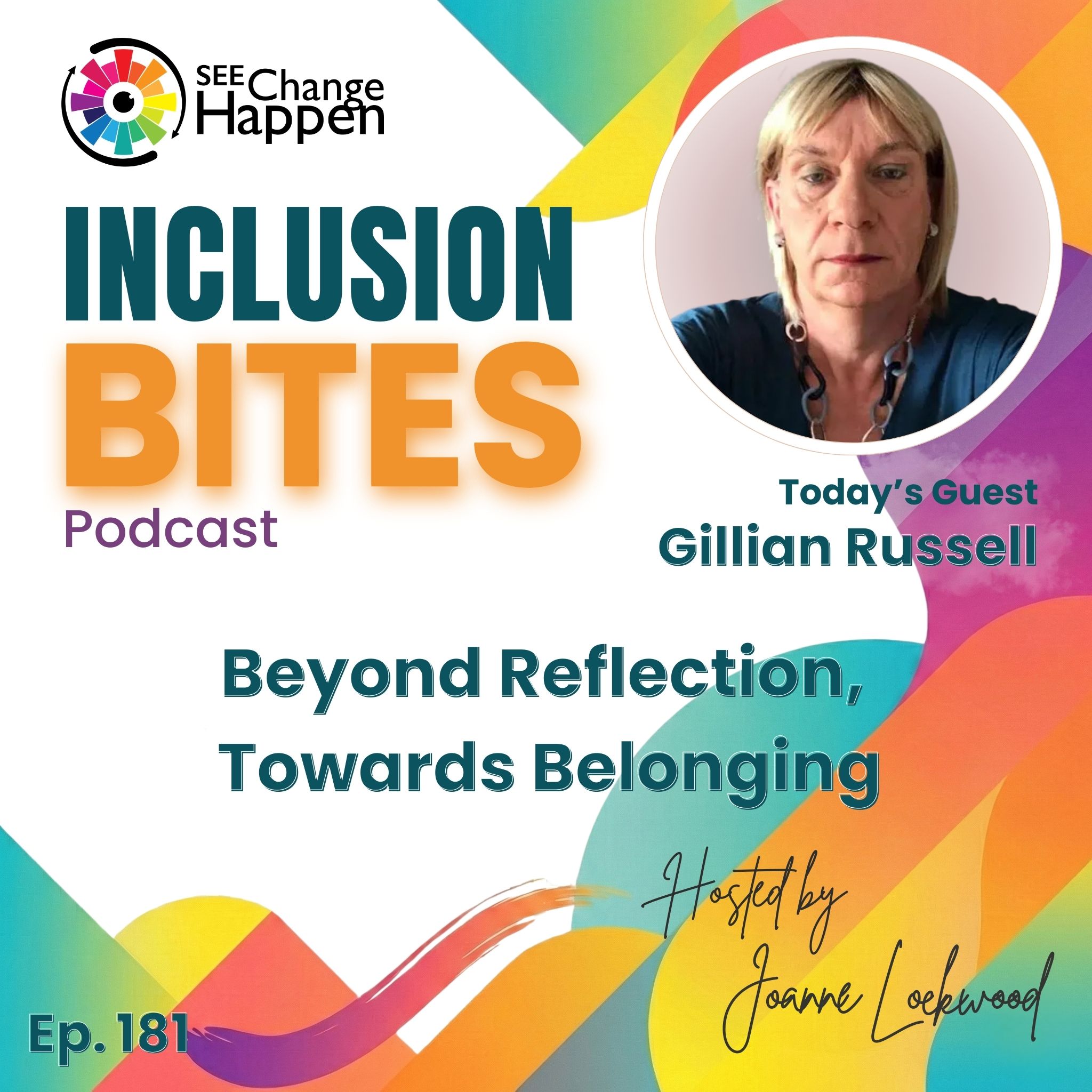
Foreign.Welcome to Inclusion Bites, your sanctuaryfor bold conversations that spark change. I'm Joanne Lockwood,your guide on this journey of exploration into the heart ofinclusion, belonging and societal transformation.Ever wondered what it truly takes to create a world? Remember, everyonenot only belongs, but thrives. You're not alone.Join me as we uncover the unseen, challengethe status quo and share stories that resonatedeep within. Ready to dive in? Whether you'resipping your morning coffee or winding down after a long day, let'sconnect, reflect and inspire action together.Don't forget, you can be part of the conversation too. Reach outto jo.lockwood@seechangehappen.co.ukto share your insights or to join me on the show.So adjust your earbuds and settle in. It's time toignite the spark of inclusion with Inclusion Bites.And today is episode 181 with the titleBeyond Reflection Towards Belonging. And I havethe absolute honour and privilege to welcome Gillian Russell.Gillian is the CEO of Beyond Reflections, who champion
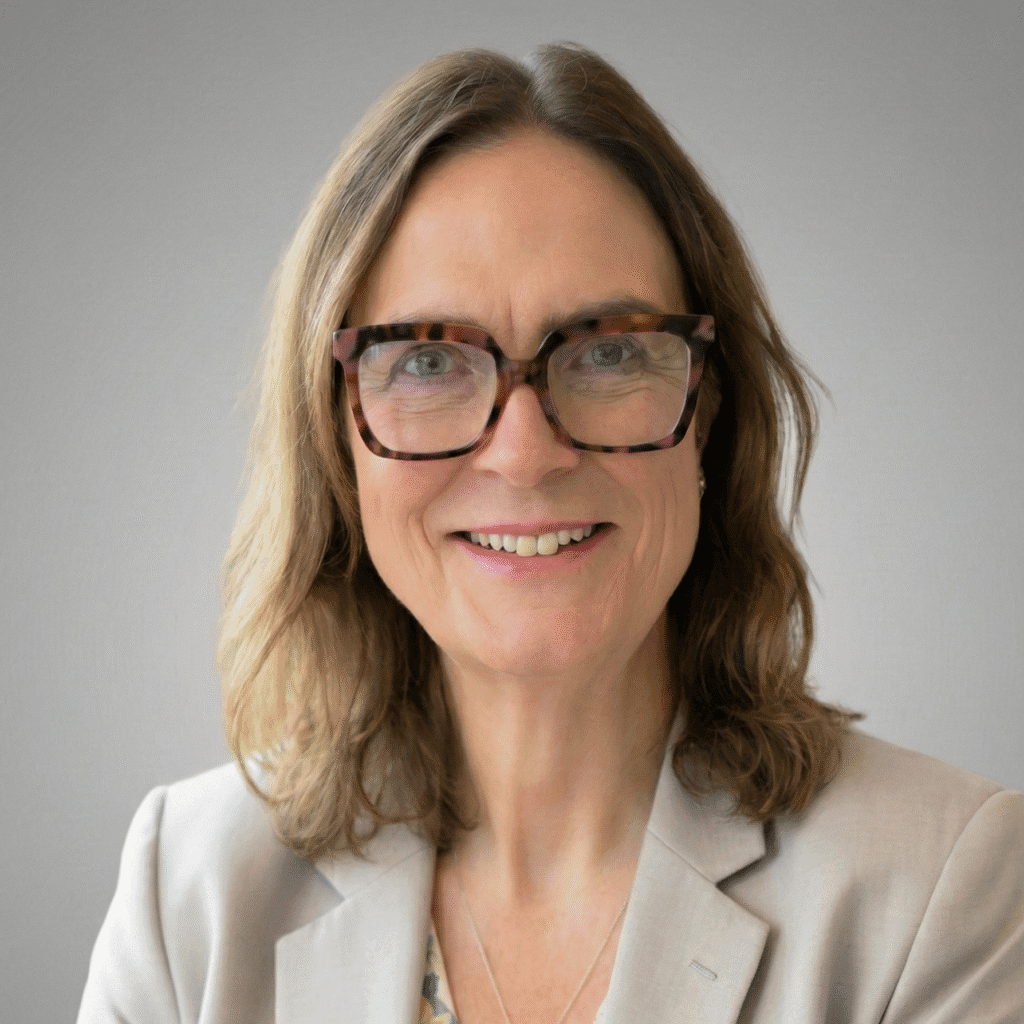
Joanne Lockwoodhost
mental well being and inclusion by empowering the younger generationwith chances the older generations never had. When I asked Gillianto describe her superpower, she said it is giving younger people thoseopportunities her generation was developing. Hello, Gillian.Welcome to the show. Hey, Jo, how are you?Yeah, well, yeah. No,yeah, it's been a tough day at the office. Tough day at the office.16th of April, 2025, and we hadthe Lord Chief Justices of the Supreme Court of the UnitedKingdom rule on the definition of woman. And that as a transwoman, that affects me and without wishing to out you any further, otheraffects us both in some ways. Yeah. Yeah, it's been atough day. It has, it has. It's been one of those days. It's
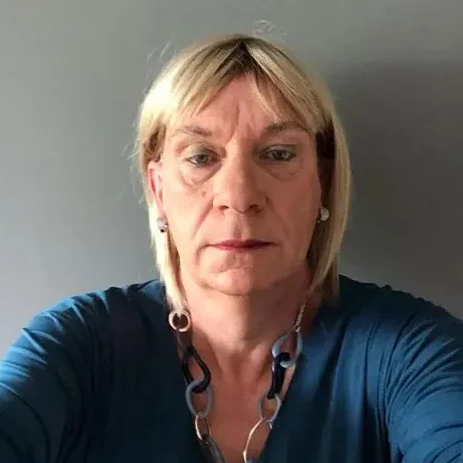
Gillian Russellguest
not unexpected, I suppose, but it's still. It's still a kick in the guts really,isn't it? That's. That's the trouble. Brutal is the word already is. Itis. It is brutal. But no, not unexpected. And I think the problem hasbeen, if I may say, is that in my view.How can I put this, I don't know that we've done enough toa protect the freedoms we had to protect the rights we have.I don't know if we've done enough to takeenough action quickly andeffectively enough. I don't know. Because we're sucha diverse community, as a group of transgender peopleunder that huge umbrella, it's hard to get everybody to come together. You know, Isit in meetings with CEOs and other structures in thetrans health and I listen to people to go talking and talking and talking andtalking and talking. And just sometimes I just wish, can we just dosomething? And I think. I think, you know, there's anorange man in the White House at the moment, and he has provenone thing above all for me. It's something which hasbeen my mantra all my life. It's not what you do, it's how fast youdo it. And if you're gonna make change happen, you do it fast. Andthat means that things happen. And I just think we spent a lot oftime consulting, coordinating, thinking, policy making,pontificating. And I understand why, get me wrong?Because of course, you know, it's. But there's this idea that we haveto have everybody on the same train, all going the same direction, whatever that trainis and where the tracks are. Sometimes I think. And I'm looking at myself, bythe way, Joe, you know, I think this is really important. People like myself, theelders in the community, as it were. And I'm proud to say I'm older thanyou, so I can call myself a true elder if I'molder than you. That is something, isn't it? But, you know, we've not pressed hardenough. And I think we fought so hard to get the rights we had,and then we sat down and thoroughly celebrated them, and then we sort of wentto sleep and we just assumed that was all ours. And I think what we'veseen in the States is that erosion of a democracy. And I thinkwe're seeing it in the UK and I think we're seeing, you know, the bigpicture, a big political movement against trans people for all sorts of different reasons,but in the day to day, you know, it's the case, isn'tit, that who really cares aboutthis decision? It's about 25 people with a particular agenda.Sorry, there's probably maybe 250 people with a particular gender.And of the other 79¼ million people in this country,no kids are monkeys about it, apart from us, who are severelydisadvantaged by it. And. And that's the. That's the trouble withthis. That's the trouble with this rule. Yeah, but we don't want to talk allday about this because that's just moaning and pitching, isn't it? You know,that's why, just like opening. Salvo, it's a car
Joanne Lockwoodhost
crash on the way to work. I guess it's probably the best way of describingit. Yeah. And you know what's really brilliant about it? It does two things. It
Gillian Russellguest
polarises People, doesn't it? So you have people. I was on LBC this morning chattingand I had someone called Graham who rang in, say ah, Gillian with the blokesvoice. Ah, you know, what's the reason this is important is for the protection ofour spec. And are they great? Yeah, because I'm single handedlynot doing my bit to help them. You know, the carry on of the specieshaving fathered children in the past. So, you know, my job is donehere, both as a man, as a woman. Was that Nick Ferrari you did,
Joanne Lockwoodhost
was it? No, it was on James Bright or Brian, part of the phone
Gillian Russellguest
in the thing. Yeah, I did GB News this morning. I'm sure you did. Youlive on there now, don't you? I don't know. You can't live
Joanne Lockwoodhost
there, it's far too toxic andsoul destroying. But I was sat in the green room or onZoom waiting to go live and I just listened to the two presenters,they were just piling on the bigotry, the bias, the anti transrhetoric and it was just like by the time I got on there I wasfeeling kind of unclean and dirty. And then they had someone outside the courtin Scotland who was basically celebrating from oneof the board of Sex Matters charity and they were euphoricand it was kind of. And I was trying not to be too doom andgloomy and just be very practical. You know, we've got to accept the decision, we'vegot to work out what it means. Today is a day for reflection,tomorrow is a day to regroup and re establish, youknow, I still have a gender recognition certificate, I'm a certificated woman.According to the judge, I may not be a biological woman and I never claimedto be a biological woman, but I'm legally, for all intents andpurposes a woman. I'm just not covered under the Equality act underthe sex protection. And let's, let's be really clear about this.
Gillian Russellguest
What we need to do is look back in six months time and say, andsee how the figures of rapes, crimes, violence against womenhave dramatically dropped because all of these transgender women are being excluded fromthese spaces. It is ludicrous. Well, what it shows is thatwell funded, well invested, well organised, smallgroups of people can make a big impact and we can do that. And that'swhy I keep sort of, you know, we have great allies out there, we haveadvocates who speak passionately on behalf, you know, Joe Lysert, Dave, DavidTennant. We've got good people out there and we're just Not. We're justnot joining the dots to bring it all together and make that process work. And,you know, that's what we have to do. Simples. But isn't the problem we're not
Joanne Lockwoodhost
really a community? Yeah, we're not. We're a. A group of peoplewho share a characteristic. Yes, but we're so diverse,so disparate, so intersectional. We're not really a community. And evenwithin. We're organised as a community. But we are a community, as I would say.
Gillian Russellguest
But I remember Bobby Pickard saying this in Trans. In the City. Youknow, we don't have a hut, we don't have a badge, we don't have aflag that we always. Which is funny because we do have all those three things.But. But you're absolutely right, we don't. And we don't have people who,dare I say, have been in the commercial world enoughto understand how large scale change managementlobbying works in the real world.Like lots of people, we've got a lot of people running this sort of communityinterest companies who have come from that community. We don't have people who'vemaybe got the breadth of experience. You and I have been in the corporate worldand managing huge changes and understanding. How do you get a government tochange and understanding if you've got a thousand people heading in onedirection, how do you change that really quickly? And all of this,all of this can happen. Just needs. It just needs some.Hold the first meeting. I always think, and I've often. If you look at. If
Joanne Lockwoodhost
I look through the sex matters and looked at the who's who there on theirwebsite and they have people on their boardwho are specifically targeted at lobbying mps andministers and people like that. They have someone deliberately working with the pressand media to get that. Stories. We don't have that. We don't have anadvocacy charity. We used to. I mean, Press for Change used to be
Gillian Russellguest
that organisation wasn't there and. And we. But we didn't. And wedidn't. But we didn't have the forces against us in that time. But Igenuinely. I'm actually genuinely. What's the word? I mean, across.I'm angry, I'm frustrated, I'm bloody mad, actually. But I'mactually quite optimistic as well because there comes these points in theroad where what they've done is. They've said, right, it's this. Sonow we know what we're dealing with because since 2010 it's beenanything and no one's known what they're dealing with now, we might not like theresult we've got, but now we know what we're fighting against. And actually, it's betterto have a fight against something than half a fight against lots of differentthings. And what's important for us now is that we're a wedgepiece of. This is a wedge piece of legislation against all marginalisedcommunities. And, you know, we have to get others,those marginalised communities, to stand behind us and with us, becausethere's also already attacks on gay marriage. And this is, you know, Project2025. I had the joy of reading all 900 pages at one point. This isall written down. This is actually a plan.This is not someone, you know, actually sort of making up goes along.This is a well considered, well thought out, well funded, well organised plan andwe can do the same. I'm very hopeful. Let's get to it. Yeah, we
Joanne Lockwoodhost
just gotta. We just gotta come together. I think you're right. But, yeah, we saidin the green room before we went live here that we weren't gonna spend theentire episode talking about this. So we've done a bit of a prelude and wegot it off our chest and we've kind of screamed at the world andcommitted it to tape. But, Jillian, tell us a bit more about what yourreal passion is in your other life, if you like. It's interesting, isn't
Gillian Russellguest
it? Because being very old, even older than you, as you said, I mean, I'vehad a number of different careers and not just working for Beyond Reflections. I'm thechair of Support you, which is a LGBT charity up in Thames Valley,and I'm the host of TransVox, which is a campaign and podcasts such asyour own, but specifically in the trans world, and trying to, you know, making changehappen in the trans world with a colleague of mine, as well as working inBeyond Reflections. So I've always said thatbecause I left it so late to transition, I look at some of the youngerpeople who come along behind and say, it's a real. You know, I want thosepeople to have what I didn't have. Now, what I didn't have is through myown choice, and sometimes because of a lack of opportunity and knowledge and time andresources and such like. But you see, when I started out, and maybeyou're the same, we didn't have the word transgender. We didn't really talkabout identity as a psychological construct. We didn't really talk about. Certainlydidn't talk about gender identity. We had. You know, I come from the Northeast ofEngland. And you. If you were wearing women's clothing, were youjust seen as a pervert? And there was no concept orconstruct. I mean, we had that, you know, documentary about the person that wasborn in the wrong body. And, you know, I remember that being discussed. AndI think, you know, the youngsters today, they've got thelanguage, they've got. They've got evidence, they've got science, they've gotall sorts of things which are there to be able to make things work forthem. And I think it's, you know, the job of us elders to be ableto facilitate for that next generation the opportunity, but also theskills on how to fight and how to lobby and negotiate and do the thingsthat we've done. Because arguably, trans people are veryresilient, but also they're not. At the same time, they're very vulnerable. So it'sabout how we transfer those skills. Now, I was lucky.I remember when I was very young, aconversation with my uncles, actually, and my uncle was avery large man. He just come from Poland, working in the steelworks inPoland. Steelworks, remember those? And he was sitting. He used to work forSwan Hunters, the people that made the tanks in the war. And he was sittingthere. And I used to be a musician. I used to play A musician, playmusic. And I used to say to him, E. E.Because we always say E at the beginning everything in Geordieland. He's a funnyun. He's a funny un. But at least he's not a Tory.
Joanne Lockwoodhost
There are worse things, aren't there, than being trans. And I always think, and thisis no disrespect to any of my friends or anybody that listens to this, I'drather be trans than a Morris dancer or a Tory. And, sorry, that's not meantto be pissed anybody. That's very funny. And it is interesting, though, isn't it? It's
Gillian Russellguest
interesting that, you know, I have met trans people in the Reform Party and inthe Tory Party, and it's. And it's that lovely idea. So your point aboutnot being a community, isn't it? We're not all. We don't need to becut from the same place. The point about our, you know, the trans existence isthat it's. It's separate to our lives. It's possible to haveviews which are not linked to being transgender the whole time. So I
Gillian Russellguest
suppose I was lucky, you see, because I grew up in the arts world, soI had gender dysphoria, but didn't know it was gender dysphoria. I was often caught,you know, dressing in clothes, female clothes, not knowing that was abad thing. Remember coming to London and going to Transformation, you know, like, I'm oneof those people that went to the Old Place and Euston Road, you know, itwas great. Used to see the adverts and used to come down, you have tomake a phone call from the call box around the corner. And I was about13, 14, coming down to Newcastle, from Newcastle to London to havemusic lessons, such like. And then, you know, sort of trying to experiment with this,but at least the arts. And I've always been a big fan of the artsand I always think lots of trans people come from the arts and they comefrom it as well. Being in the arts gave me that ability to expressyourself through music. And, of course, that was marvellous becauseI wasn't able to express myself with words because the words sort of didn'texist at that time. And at the time, you know, we're talking, Iremember a friend of mine, I was a musicologist who committed suicide because, you know,gay rights weren't even a thing really, back then. You know, early set, it was,you know, it was. I can't remember when gay homosexuality wasdecriminalised, can't remember it. But there's a huge amount of, you know, negativityaround the whole thing. So the idea of being transgender was just nowhere. So.So I think it's been. It's been a classic story of you. You find yourway, you understand yourself. I mean, how many people we met in the military havetried to deny it themselves? You know, how to try and fight against it, gotmarried, had children, all that sort of stuff, you know, try to deny themselves.I mean, a lot of people I meet who are trans say, I wish. Ijust. I wish I wasn't. Wouldn't life be easier not beingtransgender? People don't understand this, who aren't transgender. I remember sitting recently andsaying in a board meeting, you know, I sit here nowand I used to have white male privilege. And whatever I said, whatever,whatever it was, people just listened to and go, oh. I used to suck theirteeth and say, that's very profound. And then a woman would say something and itwas, ah. And then a transgender says, this person says that. And they're sort ofsaying, oh, are you a she or a they? And it's like. It's just notthe conversation. And it's like, we. We lose our. This, you know, thisidea of crossing identities is very Very powerful. And, you know, whichis something that's fascinating. But I think having a world for mebuilt in the arts gave me this access, especially from the Northeast.It gave me access to people from different classes, differentaspects, different journeys, you know,and it was a. It was a marvellous thing. It was true inclusivity and,you know, because actually what you're trying to do is to produce a performance andno one cares after a while. There was quite a lot ofsexism at the time, but no one cared after a while whetheryou know, what you were, what you. Who you were or where you come from.It just mattered. That was a great performance. I say that as if it's true.I mean, clearly there was a lot of untruth sitting behind that. But, you know,that was really what it's all about. I was in the freelance world as well.So freelance players were either you were either up to it or you weren't.And so, you know, it's been a founding part of my life beforeI went into commerce and even in commerce. I've always understood andhad that sort of musical brain being able to see the world differently.I mean, I now think, you know, neurodiversity. I think Howard Gardner talked about thisidea of multiple intelligence is slightly erroneous thing, butmusical intelligence is quite an interesting conceptand musical language and such like for those who habit.So I've always been able to see the world differently. And to a certain extent,I think I thought that explained being transbecause I already looked at the world differently. I already used tothink that everybody used to look at the mirror and think, well, I'm this. AndI look in the mirror and think, who's that? I thought every. Like posadamba. Don'tknow whether you had that experience. It's peculiar, isn't it? Just seeing a person youwant being reflected back. Who is that? It's like when you watch Cats. So don'tyou see Cats in the. Looking in the mirrors and the sort of, you know,that thing where they jump into the air and I think I spent a lotof time doing that. Yeah. I probably only became
Joanne Lockwoodhost
hyper aware of that mirrorimage at the point when I was transitioning, I guess.And the dysphoria, you know, the. I was okay here,I was okay here. But it was on that bit in the middle whereyou just didn't see the reflection of the somebody whoyou believed you were on the inside. I could handle it. Looking at a blokewhen I was a bloke, sort of thing, it didn't bother me but it waswhen I was embarking on my transition I was hyper awareimposter syndrome, passing a test, not being goodenough for anybody. Who am I kidding? All that kind of dysphoricself loathing kicked in and it's only when I was able to break away fromthat self loathing and that focus on what I look likebecause actually that became irrelevant. Actually what I looked like was not irrelevant at allhow I felt and loved myself. And that's when I focused onthat. It doesn't matter what you think of me, whether youcriticise me or you slag me off. You don't like my voice, whatever it maybe, that's not relevant. It's what's in my heart and mysoul and my being that's the important. Who you are,
Gillian Russellguest
the root of you. And I think sometimes I genuinelyenvy some of the young members of the trans population becausejust younger people because they've not grown up with those sort of stereotypicalroles. Lots more gender fluidity, there'slots more accept. I mean, you know, people used to be out there inmy world if you had a pink shirt on, sorry a purple shirt on withbig, big collars now I mean people come in wearing the most amazing clothes andyou look at them and think that's incredible because societalbreakdown has happened around fashion and, and those sorts of thingsand I think the traditional idea of what a woman and a man looks likehas broken down. This has allowed I think the non binary community to,to sort of go ah, okay, that makes a lot of sense because I'm noneof those things. And you know that's, that's been a really wonderful opportunity for peopleto, to think about that. Whether they're always a non binary or they movefrom one side to the other or you know, it's part of a path, whateverthat might be. I think, I think being non binary is very misunderstood possiblybecause it is that concept which is, it's not this ratherthan being a something which is, which is very clear. It's an
Joanne Lockwoodhost
absence rather than a positive statement. Yes. It's like a vacuum, isn't it? It's
Gillian Russellguest
like, you know, okay, I, that's not, doesn't got, hasn't got that in. But whatis it that, what is it you are rather than what is that you're not?And I saw a good old J.K. rowling launchingSeven Pennyworth into the conversation about agender people on a websiteand. You know, asexual people. Yeah. Yeah,exactly. So there you go, confusing sexuality and gender again,as usual. But there you go. Well, there was this person, one of the presenters
Joanne Lockwoodhost
on TV news this morning, pontificating about the fact that now they don't have topander. The people who use they them pronoun. We know it's all rubbish.It's like, no, you're just extrapolatingBS from this. It doesn't weaponize. It doesn'tempower you. No, but you see, I was talking to someone and
Gillian Russellguest
talking to Jenny, colleague of mine, who's a big YouTubeon the podcast, and it's something I've talked about for a long time. And Iremember a couple of the tech bros talking about this idea of wokescolding, this idea that you're talking down to people, tellingthem this is not right and that's not right. And. And I've been ahuge advocate of removing all that. And you know, what you're. You'resaying is, I don't want to be treated differently, I want to be treated thesame as everybody else. And I'm not going to get bent out of shape forsome of some of these things, because I understand. Takes you time to understand becauseyou've got limited intelligence and you know, that's hard. And I get that. Andone of the things I think is we have spent a bit too much timefocusing on the wrong things. I do think we spend too much time talking downto people. I don't think we've. Actually, if Ialways like to say this, if you took our community and looked at the ROIfrom our community in the performing arts and the soft power of the UK inthe IT world, for goodness sake, we would be a significantcommunity in terms of impact. No one talks about that. No one talks aboutthe part we play within LGBTQIA umbrellas.No one talks about the impact of those people. And if they do, they don'ttalk about enough in a way that people get. And I thinkfor me, this is your point about not beinga community. We never sit down, do we, and think, actually, what are we worth?Not just individuals, but what are we actually worth in the UK economy? We're wortha lot. I mean, how many IT firms would grow into a haltif we took our transgender peopleout of coding? Nothing would be flying for a while, wouldit? Well, certainly gender queer, gender fluid, gender expansive people. Yeah. The
Joanne Lockwoodhost
whole spectrum. Yeah, absolutely. Yeah.
Gillian Russellguest
And I think. And I think we. And I think that's the point, isn't it?The point is we need to Stand up for ourselves. We need to bring thisevidence together. You know, one of the things in the arts funding at the momentis they're saying things like, well, actually, if you invest a pound into the artscommunity, you get something like three or four thousand pounds backinto the cultural zeitgeist. And I mean, so that's the argument, isn'tit? So invest, because actually you're going to get a return on investment. The issueis how quickly does that return come? Okay, it's not quick enough. Let's figureout how we get that to return fast enough. Now we've got a different conversation.We're not saying we shouldn't, we're just saying how do we do it? And Ithink this is the thing that's being missed again in our community. I'm not, bythe way, suggesting that this is a piece of work we need or should bedoing, but it's that sort of commercial thinking about the world.It's about how we lead, how we manage, how we develop, how we think aboutcultures. It's about we've. We can, we can becomeso protective. We don't give people the tools to beable to have robust conversations. We can remove people and say.I remember someone asking me a question at a speaking eventand one of the facilities on the panel there was something quiteinnocuous saying that's hate speech is anti trans. I said, it's nothate speech and not anti trans. A. I'm not offended because I've chosen to be,but actually it's coming from a place where you're finding out when he wasn't callingme something, it was asking. And I think this is the thing, isn't it? We.We run the risk of closing down arguments. We run the risk ofbeing vulnerable to the extent that we don't actually educate and informpeople. And a lot of people, once they educate and informed, are quiteokay there. I mean, it's a classic piece of research, isn't it? Once you meta trans. If you don't like trans people, A, you probably met one never knew.But if you have met an explicit trans person, you tend. Your opinions about transpeople completely change at the end of it. Yeah, I think
Joanne Lockwoodhost
we've tried to create people accuse us of having an ideologyand I think to a certain extent we've created language thatseems complex. We're forcing people to conform to our way of thinking.As a minority, we're trying to influence the majority. And I think sometimes what weprobably need to do is be more tolerant ourselves I totally agree.And learn to navigate a world where we're not the majority, we're not the default,and therefore we have to figure it out. And no minority ever wants to fithere, that they're not included. But sometimes we have to work at it. And Ithink, I know if we attack people,your argument, if we go there with pitchforks, people tend to put the barricadesup. So how do we lower the drawbridge? How do we get people to sitaround the table and have conversations? And that's what we've lacked. I
Gillian Russellguest
think that's absolutely right. I think it's that a classic thing is that you've gotto understand the other person's perspective. Now, I've listened to theturf, what people, what we call turf stuff. We listen to theextreme feminist argument. Do you know what? They're pretty right. They've foughtfor many, many years to get the rights of women to be where theyare, and then they suddenly find them swept away becauseas they see it, a bunch of blokes dressed in frocks are going to comealong and get their rights. I mean, I think I'd be a bit hacked offabout that as well. And I don't think we've thought clearly enough about that. There'sbeen a heck of a struggle for 30, 40, 50 years. You know, at avisceral level. I don't mean visceral. I mean at a really fundamental level forwomen to get, I mean, I remember my mother in 74, whatever it was, havingto go get a, open a bank account and having to have my husband go,my father, to go along with them to open their bank account. That's only50 years. You know, that's, that's been a long time. And Idon't think we appreciate the fact that this has been a longstruggle. And, and then we sort of, in their perception, come swanningalong at the end and go, well, we want all the rights that you've got.Thanks very much. And in their world, you know, we're just,we're just taking it, taking away again as what they see as menwho dress up and okay, fair enough. Let's start there. Let's have thatconversation. And because we're a broad church, there are people across that spectrum
Joanne Lockwoodhost
who, fromgender fluid, cross dressing, transvestite people, whatever language you want to usehistorical, who do itfor identity reasons or for expression reasons or for fetish reasons. And again,we're such a broad church that we rebranded the wordtrans or transgender to mean lots of different Things to mean nothing.Everybody gets caught up in everybody else's description and that's whereconfusion arises. And I can hear that the judge thismorning talking about we couldn't have a trans woman with a genderrecognition certificate who looked like a man in women's spaces.It's like, well, okay, we're conflating the whole thing there of course. Butit comes down to perception. Yeah. And never mind trans masc people
Gillian Russellguest
just because they don't have penises, they look more alaid. Some of the transmascape peoplehave fantastic. I mean they're just, you know, broad. Shoulders and
Joanne Lockwoodhost
trans men with penises. I'm afraid I've been there. I mean of course. And they'rekeen to show it off and go look what I've got. Yeah, it's. And they're
Gillian Russellguest
allowed toilets. And it's not like. And it's not like we've got the thirdoption because of course now what we're talking about. So we're back in bathrooms again.Let's get off, let's get off that subject. You know, less than 5. You know,I was in London in the Royal Exchange. You probably note that lovely place. Godown to the loos down there. Everything is just non gendered orany. Just going to the toilet or you know, whatever the Americans say.Bathroom I've never understood because I'm from the North. I never understood the concept ofa bathroom because a bathroom is a place you go for a bath and atoilet is a place that you go to how good to the toilet. Call meold fashioned. Well they call them restrooms as well, don't they? Restrooms,
Joanne Lockwoodhost
bathrooms. I mean I go to the Louvre. Yeah. I go,I go and spend a penny. Yep. So I think, I think there's going to
Gillian Russellguest
be interesting challenges. I think there's going to be, as you say, there's going tobe many different peoplewho consider themselves leaders in the trans community,as it were, who are going to get out there and going to saystuff. It's going to be not coordinated. It's going to be all overthe shop. It'll be a shame. But I do think sometraditional corporate change management would actually help this and would allowthings to move forward. And at the same time you've got an organisationlike the charity I work for who's not political, doesn't have. That's why we have
Gillian Russellguest
trans voxers, so we can campaign and be political, but they're just supportingtrans people. Many hundreds of members who are going in needing supportwith trans issues. Well, being safety, dealing with hatecrime, thinking about challenges with the National Health Service, for God's sake, youknow, because we know that's another area of exclusion, you know, And I think, Ithink there are organisations to just get on under the surface and just deliver somethingand then you've got people who want to make a song and dance about it.And I think the good thing to know is that for trans people is we'renot alone. And there are some really good trans support charities out there considerarrows to be good, obviously, but there's others and you should reach out to themand you can talk to them and have a chat and then say, okay, sothat's one thing, that's support and safety and all that sort of stuff. And thenthe next thing is, right, okay, so what we're going to do about this. AndI think that's the part where people have got to be standing up andsaying something and I think that's the process of change, isn't it? You've got tohave places where it sort of bubbles along and then you've got to have peoplewho are pushing envelope who are out there saying things. And you've done this inGB News, you stand up and say stuff, it's not popular and people throw allsorts of insults at you and, you know, they do to me and,and, hey, yeah, I'm a trans woman and. And I'm proud to be. And I'vealways said I am. I've never pretended to be a cisgender woman. Certificated woman.
Joanne Lockwoodhost
Now I'm a certificated woman. Congratulations. The difference. The judge told me I'm acertificated woman, not a biological woman. So. Exactly. I've got a newtitle. Yeah, congratulations. We need, we need, we need a. You need a
Gillian Russellguest
badge. Yeah, you have to carry that around. Now
Joanne Lockwoodhost
I get my gender recognition certificate and I frame it and I keep it inmy pocket just in case I'm a certificated woman. Yeah. And I think, do you
Gillian Russellguest
know what, it's interesting that, because it is, it does beg the question of howthey're going to check this stuff out, because I do have this idea that we'regoing to have a new employment strand of genderin a toilet police who are going to be standing there saying, now there's aspecial test I'm going to give you to see whether you're a cross dresser, atransvestite, gender fluid or a CIS woman. It's like. It's hilarious,isn't it? So we already see the people being. Called out by
Joanne Lockwoodhost
teak with a. A brush. And then you're gonna DNA test it and.Yeah, and then by the time you've done that, I've already peed and washed. My
Gillian Russellguest
hands down his leg.This is all good stuff, but, you know, it's. Thetrans community has had these challenges many, many times and it's adapted and it's grownand grown and it's, you know, it's like weeds. It pops up through the cracksin the. In the pavement. And we're not going away as a community, but wemight have to be a bit more smart about how we operate over the nextperiod of time. And it's clear that this Labour government aren't going to be particularlyinterested in this and they're going to use this the same way as the Toriesdid last time around. And so we've got to deal with. They really started talking
Joanne Lockwoodhost
on the news today about how we fully support the judgement. Weknew they were right. And of course you think, well, yeah, everyone's throwing us undera brick under a bus right now. And so, yeah, so we've got to beclear. Let's see what happens when trans people are being discriminated against under theprotected characteristic agenda reassignment. If I start seeing some caseswhere trans people start winning back and limiting the.And, yeah, all this rhetoric, you know, about banning me fromsex, separated spaces, like hospital wards. I think last timeI went to hospital, they looked at me, scratched their head and put me ina private room. And I thought, well, okay, segregate me and put me in aprivate room every day of the week. Give me my own telly. That's. Yeah, gofor it. You're not having any complaints from me. Yeah. So, yeah.Is that what you. Is that what you mean? You want make me happier byputting me in a private room? That's fine. That's good. It did make me laugh,
Gillian Russellguest
dealing with the level of sophistication from some of this. Iwas reading an article on LinkedIn about the guy who didn'twant to be subjected to the TSA screeningprocess because apparently the TSA screening process makes yougay. So what he'd prefer is to be patted down by amale operative. And I did chuckle, I think. I don't know if you've seen theirony of what you were just said there, but you'd rather have a man cupyour testicles than actually just go through a screening process.So this is what we're dealing with. We have to be smart. We have tolook after ourselves and look at each other for the next period of time andthen things will. Because we can't see what the world's going. We
Gillian Russellguest
can only do a risk analysis and say it is the case thatvery, very powerful organisations,outfits, political institutions are moving against us and when it'sexpedient to go the other way, they will. And you know, itdoesn't help that we've got west treating in the Ministry of Health, but we have,you know, we know things are going to be getting tough, but that doesn't meanwe can't do stuff about it. And certainly in the charities I've worked for,what's been fascinating is the degree to which funding organisations still currentlyare on our side, still the case that arts organisations arestill on our side, it's still the case that you can get jobs where youcan get jobs. I mean, there is discrimination against trans people. I've done that thingwhere I've applied for a job, an identical, the same job withthe same cv, but the word trans on one anda boy name on the other one. I've got an interview as one and notas the other. So, you know, it's there. But then that alsocan be just about AI and rubbish as well that goes on in the world.And I think we've got to just say we can only control the oldstate stuff that we can control and that's what's inside of our, you know, betweenour two ears and we can get out royally bent out of shape about allthis or we can actually say, look, we need to be resilient, we need tobe cute, we need to stick together and then we need to think about whatwe're going to do running for, how we're going to cope and adapt to thisnew world until we've got a chance to change it. And once we change it,it'll be different again, it may be worse, it may be better, wejust don't know. And as you said, control the controllables. And if it's outside
Joanne Lockwoodhost
of your control, you have to work out how you can adapt around it andcope with it and stay resilient and staystrong. Just don't burn all your energy up on reentry. You oughtto save some for the landing. Yeah, well, I've spent many years as a psychologist
Gillian Russellguest
working with people and building resilience. You know, I do see a lotof. I do see huge amounts of resilience in ournon community, as it were, but I also see a lot of victimhood and victimisationas well in the community. And understanding that role ofchoice and controllability and such like is really important. Andunderstanding about how to ask for help and helping and asking peoplehow to help you think if you don't know how is really important as well,because you don't need to suffer alone with things like the effects ofanxiety or depression and such like. Some of it needs to be sortedout and that works. And that works in a work setting as well. You know,organisations need to be more resilient and think of different ways to being that wayand need to be more adaptable and think more. I mean, there's a massive crisiscoming to the world of work soon, according to all about AI.And as trans people, we should be thinking a lot about that, because many ofus are in that community, could do something about that. There's going to be alot of seismic change hitting the UK over the next 20 years, maybe over thenext two. I sincerely hope, as a woman, as a certificated
Joanne Lockwoodhost
woman, no less, that we do startfocusing on what matters to women and that is safety andnot experiencing some of the sexist behaviour we get all the time. AndI really would like some of these charities who purport to be for womento actually start tackling the real shit and challenges that are out there.And that's predatory men, often in a family environment,looking at people in positions of power and responsibility who areadversely affecting women's opportunities in the workplace.Sexism exists, disparity in.In pay and reward in sport and other sectors. That's where we want toput the effort in. And 0.5% of the population who arejust getting on with their lives are not a threat. So let's hope that westart actually starting to call out people who are trying to bang on about tryingto save women and actually. What are you doing? Really? We should be talking about
Gillian Russellguest
that. We should be talking about health and safety for women and girls, because weare women and girls and we should be part of that debate, notbeing seen as the threat. You know, the vast majority of rapeis from people you know, I mean, those statistics are. Have been well borneout over the years. Very well documented, very robust. You know, bumpinginto a stranger in a toilet wearing a wig is unlikely to be the sourceof your most extreme discontent. It's. It's like the. I don't know
Gillian Russellguest
if you're familiar with Jon Stewart's work. I remember in the States, I think he'son the Late show or whatever it is, sitting down with one of the antitrans campaigners and saying, why are you stopping drug shows? And they're saying,well, drag shows are very, you know, harmful to children. So hesaid, okay, that's really interesting. What's the number one source of harm forchildren in the us? And the person looked at him, said, you're going to sayguns, aren't you? And he said, of course I'm going to say guns. Because there'vebeen four and a half thousand deaths from guns and zero fromwatching a drag show. And it's exactlythe same in our world. So it's not about that. And that's the thing we'vegot to figure out. It's not about that, it's not about toilets.Toilets are just the thing. That's the gathering point. It's something else. And that's thebit we've got to get. It's not about prisons, it's not about children, it's not
Joanne Lockwoodhost
about this, it's not about the other. It's all about. It's playing find the ladywith the cards, isn't it? Don't look at this hand, look at this hand. That'swhat it's all about, isn't it? The troll of the masses. Fox News that has.
Gillian Russellguest
Whenever there's a positive story about Donald Trump, they havepositive story about Donald Trump. Here's the stock market, it'll say this, it's that he'sjumping up and down. Negative story about the stock market. Transgender athlete. That's a headline.And it's just we have always been the dead cut, haven't we? Rishi Sunak,Boris Johnson, we've always been. Let's just roll out atransgender issue. You know, let's get that very tall swimmer. Iforget that their name. There you are, Sharon Davies, straight on the scene,flipping X right into war. Sharon Dick. And you know,good. And of course what we have to do is not just let ourselvesbe radicalised by the radicalised others and that's aboutjust staying sane in this world. And I do think that's part of our job,isn't it, as elders, is to be saying, we've been through this before.You know, I've sat on and board meetings and takeovers and such like emergenceand acquisitions, where two sides have been literally yelling, screaming,inches away from each other's faces, pointing about the punch people in the facesand you can talk people down from that. And this, this situation of ours canbe dealt with, it just can't. I don't want to be an elder, I want
Joanne Lockwoodhost
to Be a youngster again. Sorry. You're an old certificated woman and be proud
Gillian Russellguest
of it. Yeah, but you're younger than me.You're younger than me, so I'm still looking at you, thinking you youngsters.So that's good, isn't it? Oh, that's good. Yeah. I like that. Yeah.I was talking to earlier. Yeah. Yeah, that's good. I'm back on again.Yeah. I'm only 25 in my head. Yeah. No, I do think. I dothink. I do think with everything. It's about what's in your head. For me, I'malways optimistic. I always think there's no need for us to start running for thehills and, you know, all moving. Well, don't move to Spain because that's. That's notso great. Or moving to Norway or wherever it is where we're accepted. This isa good country. It's. It's relatively free, it's relativelybenign. It's about what we do with it. So, youknow, let's get together and sort out. Yeah. And I
Joanne Lockwoodhost
mean, the grass is never greener. The grass is just grass.There's always been a cow's shit on it somewhere, whatever it may be.It's. You just got to make do with what you've got. And you can keeplooking over the fence, you can keep wishing or wanting, but the reality and people.I often say to people, when they say to me, should I transition? I said,well, what do you. What's in it for you? What's the objective? You know, ifyou're looking for a greener grass, a better life, that's not what you.That's not what it's about. The ultimate aim is for life to be ordinary andboring and just like everybody else's. If that's what you're looking for andthat's what's missing in your life. Ordinary and boring. Yay. Welcome to.Welcome to my club. Yeah. So I was chatting
Gillian Russellguest
online to someone and said to me, oh, it must be great wearing tights allthe time. I said, really, really have.Do you know, I mean, you've obviously not done it because it's not become themassive sexual fetishization thing for them. And. Andthat's the problem, isn't that people look at this and think that we're like thatand we don't think like that anymore because this was never about fetishization. It's justbeen about finding out who we are. Identity is reallyfascinating, isn't it? People get it because everybody understands the concept ofIdentity. So, for example, you'll live on the south coast, don't you? And you'll knowpeople who support Portsmouth and somewhat very quietly support Southamptonat the moment. And there are people. And I get the same thing up herein Newcastle and Sunderland as well. Rivalry, you know. And, you know, you'll havepeople in Portsmouth who won't have red stripes in the house and there'll be massivefallings out between the family. And if you. If you support them and theyidentify so strongly with that club, they are,I am Portsmouth here. I am Portsmouth through and through. You'll hear them sayingthat, oh, the. Song is Portsmouth till I Die. Chant it
Joanne Lockwoodhost
on the. On the. On the terraces. Yeah, yeah. And it was one of the
Gillian Russellguest
things. I did some work with Southampton Football Club, so you may not like them,but I remember them saying to me that if they hear hate speech or victimisationor one of their supporters who are in their fan clubs committing hatecrime or offences like that, they lose their ability to come to the football clubbecause that's the bit they care about. And I thought, you know, that's a reallypositive thing. But people get that. You know, I was in Australiathree years ago and I met someone and he said hello to me insome strange context, and they said, oh, where are you from? He said, I'm Welshthrough and through. That's identity. I'm Welsh. How long you lived in Australia?Oh, I've been here since I was 16. How old are you now? I'm 57.And you're still Welsh? Oh, yes. I'll always be Welsh till Idie. And you see, people understand identity when you starttelling them, oh, yeah, I get that. But didn't I just choose that? Well,yeah, but it was more than that, wasn't it? You became it as well. Oh,yeah, that's right. People choose that. And of course, what happens is, you know,people choose their jobs, right? And how many people have evoked into menit people, I'm a man, I'm an accountant. It's the second thing to say.Or a man, I'm an actuary. And then they lose their job and they completelylose that sense of identity. They lose that sense of who they are.People get that, they understand it. I've been a mum all my life. I'm amom, I'm a mum. Kids grow home. What am I? What am I? Oh, thankgoodness, I'm a grandmom. So you get about this idea of identity is at thekernel of who we are. So why doesn't it Just click over to the last.The last piece. And I know it's much deeper than the others. People get it,don't they? Once you start explaining identity. I've never explained it.It. And people go, no, I don't believe in identity anymore. Because they'll say, well,you know, there's a bunch of nurses in front of you. I'm a nurse. I'llalways be a nurse. I want to be a nurse. Would you like to bea doctor? No, I want to be a nurse. I'm a nurse, I'm a nurse.I've always been a nurse. I've always wanted to be a nurse. Here I am,I'm a nurse. I celebrate. Okay, sure you don't want to be a kind ofdoctor with a parent? No, I'm gonna. Because that's who I am and that's whatit's all about. And I think it goes. It goes to culture and organisations, itgoes to charitable, you know, organisations. It goes to who we are arewho we are is who we are. And you can't really do much about ituntil it's taken away from you. There's the thought. Because identity
Joanne Lockwoodhost
is all wrapped up in belonging, isn't it? Because, you know, beingWelsh, you're part of a Welsh community. That identity is all caught up in thatsense of self, who your communities are, who your echo chamber is, youraffinity group. I mean, you talk about it.And I spent a large chunk of my life, 20 or25 years, with people labelling me as an ITguru, as an IT expert, as an IT this and the IT rocketscientist. But it was never an identity that I wasproud of. It was always something that I thought, exactly, I don't want to beknown as the IT person. And so it made me realise the difference betweenidentity and labels. You give me a label how I see myself,and when I shed that IT person labeland sold my business 10 years ago, it waseasy to let go because it was caught up in how other people saw me,but it wasn't caught up in how I saw myself. Yeah, my new identity isa professional speaker, educator, trainer, whatever you want to do in theEDI space. And being labelled with the trans identity,it's not a label that I resonate with. Yes, if you want to tick someboxes, yes, I'm trans, yes, I'm a woman, therefore tick, tick. I'm a transwoman, fine, great. Logically, it makes sense, but it's not something Iwant to be all my life. It's that label stuck on Mychest all the time. So yeah, it's working out who you are. I
Gillian Russellguest
get it. I mean, I was working in, I think you know, as aspeaker as well and consultant and I was working. I lost a hundred grands worthof revenue last year just because I used to work in Africa. And then suddenlyI couldn't work in Africa anymore. And you know, that's just speaking revenues from oneyear and it's like, like, well, that's gone. And then when people ring us upnow and say, oh, I'd like you to come and talk. Oh yeah, what doyou want to talk about? Change management, Culture? Leadershipactivity? No, no. Being trans. So, okay, right, I
Joanne Lockwoodhost
know, it's, it's like, is it ParanoidMarvin, the paranoid Android? You know, brain the size of a planet and you wantme to clean the floor or something? It's like, yeah, it's almostlike, hang on a minute, I've got this big brain, I've got all these ideas,I've got all this oomph. You want me to talk about being trans?Okay, yeah, yeah, great. Yeah, well done. I know,
Gillian Russellguest
and I get that all the time. I mean, it's. Luckily it's sort of interesting,but you know, it's, it's not that interesting. I mean, I was in Naples andFlorida the other day and last week for two, three weeks ago for myholidays. And it was not a pleasant experience. And, andI think it's going to be a differently unpleasant experience as life rolls on.But you know, it's not, like I said right at the beginning, the least interesting.I mean, we probably haven't talked enough about what makes, what. What's more interesting thanbeing trans, other than being just ranting. But you know, it is the least importantthing about me. I remember one of my colleagues in BR saying exactly that. Youknow, one of their, one of their kids has said the least important thing aboutme is that trans is true. Because we're not defined by our transness. That's justa really small part of who we are. And once that's achieved, youknow, there's that thing, isn't there, in the transition journey? It's like a change managementthing. The old idea of change management is you have this, you have something that'sfrozen, you unfreeze it, you refreeze it again. Sometimes that's part of the transjourney, isn't it? You're something, you transition and you become somethingelse. But you don't realise that's just the beginning of it because that's done now.And it's finished. You're not defined by your transness and the journeyyou've been on. It's just a small part of who we are, like everything inlife, you know, otherwise we wouldn't have any potential to change. I mean, it's likeif we've got a member of staff who comes in and says, I can't doPython coding, they say, well, that's it then. That's you doomed. That's theend of you. Because it sort of precludes the idea that wehave potential and can learn. Yeah, you see, you can. You just gotta get Chat
Joanne Lockwoodhost
GPT, you gotta use the Deep seq. Deep Seq.And I write Python code now. Is it jibecoding, they call it, where you basically ideate intopseudocode and you just get. And Canva just released aCanva AI which writes brilliant code. I've just developed a whole lot of stuff,okay? It's not like push the button, it just happens. You've got to massage ita lot. But I've created two great things. One isan LGBT history of200 years of LGBT history as a timeline map, which I did in Canva AIand then refined it. I've got like 130timeline entries with drill downs and clicks and all this kind of thing, which isgoing to be just ready for Pride Month to show, to share with the world.And I designed all that in camera AI with, With. With Chat GPTbackup on the end of it. And yeah, it's. You can develop stuff now. Youhaven't got to be a Python expert, you've just got to be a business analyst.Probably is where we go back to. If you're a business analyst and processanalyst, you could then fill the gaps in to get the codeto do the black box stuff. And you just put the black boxes together. Input,output. I was doing an interim CEO role because I do spend a long
Gillian Russellguest
time doing that now. And I was working with a specific type ofarchitecture firm. I don't want to say too much about that because they're very famous.And I said to them, because I was doing this work too, a couple ofyears ago, I said to them, so what about AI in your business? And theysaid, AI will never affect us. And I said, okay. I said, well, what youcould do is you could maintain that view, say nothing about it, sit down withAI software people and be the first people to market, or you can donothing thing. And I was just online the other day, had my phone,I just took a picture of my Garden. I know this is landscape design ratherthan landscape architecture, but I took a picture of my garden and I've got 17designs with levels on the back of my ChatGPT stuff anddeep and deep seq or whatever on Perplexity. All these different
Gillian Russellguest
AI tools are out there and they're all giving you results you never knew. Whatmatters now is that ingenuity of understanding the question you want toask, that's going to be the key skill, isn't it? It's that originating need. Youknow, again as a therapist, counsellor, all that sortof nonsense. Go to ChatGPT and just type in, hey,ChatGPT GPT. You can't say I don't feel so good today. And they'll say,oh, I'm sorry to hear you're not feeling so good and especially if you switchthe voice on, you've got a counsellor. All these non skilledjobs are going and it's time that we all wokeup to the real big seismic changes which are going on, which our communitycould be a real big part of if only we could get ourselves, get ourhead out of the toilet. Pace there's a brand. I, I, I appealed
Joanne Lockwoodhost
a parking charge the other day with Chatgbt. I scanned, I took a photograph of the front and back page, fed itinto Chat GPT and said, look, what causes canI, can I contest this parking charge with? He went, ah, under the British codeof parking whatever, you're entitled to a 10 minuteoverstayment, which seemed fair and reasonable. You were 41seconds over the 10 minutes. I think that's a good causeto go back, say it'd be a waste of the court's time to take thisto court because of de minimis or whatever the legal term is andthat 41 seconds is kind of like so trivial. They should denyit. If they don't, it's worth appealing. I thought, go on then, I'm going togo for this. So, yeah, it allows you to have thisempowerment. A bit like YouTube gave us the idea of how to fix a car.You find the bit you want to do and YouTube shows you all the bits.I another story with ChatGPT is I've, I've got rid of SkyTV. They're just charging way too much money a month. Hang ona minute, I could do freesat, my TVs got freesat errors on. I could plugit in and I just asked CHAT GPT, can I just do this? They went,ah, no, your Sams will not likethe LNB which is the module on the, on the satellite dishthat Sky Q has. Because it has a different frequency or differentcharacteristics, you need to swap out the LMB for one that issupported by your tele. I went, okay. I said, how do I do that?Take a photograph of the LMB you've got. I went. He said,right, I can see if what you've got there is definitely Sky Q. It's notthe one you need. I recommend you go to Amazon and buy one of these.Okay, I've got that. So now on my telly, what do I do? Itsays, oh, you need to go to this setting, into this tuning, select that anddo this. And it says, if you want to get hold of Far eastsatellite, you need to add this one in as well. I coachmyself, I'm now a satellite engineer. We joke about the film the Matrix in transcircles, about being kind of our allegory, if you like. But thatidea of plugging a module in to fly the Apache helicopter, theAI can now upskill us rapidly at thepoint you need that information. And of course, if we're six, seven or eight, we're
Gillian Russellguest
not even thinking, this is remarkable. We think it's remarkable because remember.Do you remember dial at modems? Oh, yes. Remember that?
Joanne Lockwoodhost
The sad thing is I could tell you what bold rate and what errorcorrection the modem negotiated and go, ah, yeah, I've got 14,400 there. That's a good one. Or, oh, that's a 5600 connection. Yeah,that's how sad I was. I knew that. I knew the negotiated speed, face to.
Gillian Russellguest
The knob, I could sing it and play it back to you. So there yougo. You said, we'll have a little. It was like a neighing donkey, wasn't
Joanne Lockwoodhost
it? Okay, yeah, that'sconnected. Brilliant. Well, there you are. So there we are. We've
Gillian Russellguest
come to the part, come around to the circle where we said, this is whatwe wanted to do. We want to empower young people to get on do it.And I think AI is the way it's going to happen. I think there's goingto be such seismic changes over the next 20 years. If we don't have awar, which is entirely part of the risk managementof the next four to five years, that's entirely likely to happen. But if itdoesn't, I think we're going to have some. It's going to be a very interestingworld. And we've only got another 40 or 50 years in front of us. So,you know, it's Going to be a challenge. I wish. I hope. Yes. Now wedo buy a hacking and it's all written down, what you need to have. Andyou get your butter rail and sort your microbiome out, you know, it's all, it'sall this stuff. And buy probiotic yoghurts for breakfast. Yes,
Joanne Lockwoodhost
Yeah, I know. As long as you don't buy the main brands because they're worse
Gillian Russellguest
for you than having none. That's the challenge of all this stuff. I'll ask ChatGPT
Joanne Lockwoodhost
later than what it. Recommends you should do. That's a no. You should really watch
Gillian Russellguest
out for some of the supermarket type stuff and anything off Amazon.I used to have a little alternative therapyunit in Port Solent years ago, which you'll know it's around thecorner from you because I used to live on the south coast, which is whyI manage a charity on the south coast. And Iremember we used to sell CBD way before the time it waspopular because I've always been at the bleeding edge of thought, thought,thinking. And Amazon did a test of all theirCBD and Holland and Barrett did, and at the time, of the16 products, none of their product had CBD in it. Isn't thatamazing? Just makes you wonder, who'd have thought, eh? Who'd havethought? American companies making rashclaims. Yeah, make claims. And Ilove the TikTok thing with all the Chinese people saying, this is how we makeyour designer stuff at the moment. That's a very good tick tock meme.I like that. Yeah. It's the future, Joe. It's the future
Joanne Lockwoodhost
young people of the future. And I'm. I'm envious becauseI'd love to have another go around. I'd love to, love to have another goaround and think, actually, what I know now. Yeah, wow. What I could do withthat. Yeah. But hey. And people say, oh, I wouldn't want to be back in
Gillian Russellguest
this time because the social media thinking, no, no, I'm very happily, I'll be 16again. I'll swap. You can be 63.
Joanne Lockwoodhost
Know what I know now. Yeah, let's have another go. Give me another roll ofthe dice. I could do this one more time. What single thing would you do?
Gillian Russellguest
What single thing would you do differently. Or change like myself today?
Joanne Lockwoodhost
So I'm one of these people that if I changed something in the past, Iwouldn't be me today, who I am today, my family, my friends, my children,you know, that butterfly wing that changed. But things I would do differentlyis not smoke or ever start smoking and. And I wouldrecognise how alcoholimpacted my life negatively and my weightmanagement. I think those are the health. But all those three things I mentioned arehealth related, not ambition or goodcapability. So I think being more mindful of mybody from an earlier age, that's probably. It's notregret, it's just if I was doing it again. I've learned inmy late 50s that this is how I should be. So, yeah, I thinkbe more health conscious, be more aware of my body because Iwant it to last a long time and by, by not looking afterit, I'm. I've potentially stunted some of my capability.I might even start flossing just because my. My hygienist keeps telling me Ishould floss every time I go and see her and. Are you talking about guns
Gillian Russellguest
or the teeth? My teeth. Floss my teeth. Floss my teeth.Not flossing. The dust. So I don't get long in the tooth, as I keep
Joanne Lockwoodhost
getting told. I'm long in the tooth, though. That's terrible.Apart from that. No, I would. Don't split the small stuff. Believein yourself. Believe in the kindness and warm heart of other peopleand keep being the best you can be. I think those are. If you canlive by those sort of mantras, then life is what you make it. That's areally privileged thing to say, isn't it? Why not? Why not? You've earned the right
Gillian Russellguest
to be privileged because you've put all that work in before today. Yeah, well, it's
Joanne Lockwoodhost
just time served, I guess. Yeah. It's not luck. I don't believe in, bloke. I
Gillian Russellguest
think it's all about what you've done before today to make that butterfly wing thingcome together. Yeah, well, we are a product of our environment and our history,
Joanne Lockwoodhost
aren't we? So we are here. We are. We are.
Gillian Russellguest
Are we done? Yeah, we're done. Gillian, tell us how to get hold of
Joanne Lockwoodhost
you now. Well, you can send me an
Gillian Russellguest
email@transvox.co.uk if you want to do that. You could send mean email to gillian@supportu.org.uk or Gillian,what is it? Gillian Russell, Beyond Reflections. Or you can just go on LinkedIn andjust look for Gillian Russell, FRSA and yetanother one of those FRSA people and send me a LinkedIn, have achat, send me something contentious. Let's write an article together. Come and be apodcast guest, come and volunteer, Come andbe contentious. Make a difference in the world and I'll help you get. Wow.
Joanne Lockwoodhost
Wow. Wow, wow. Gillian, it's been a shit show of a day sofar, but you've lightened it up. The sun's come out. It's been great having achat, so thank you so much. Take care. You'll be good.As we bring this conversation to a close, I want to expressmy deepest gratitude to you, our listener, for lendingyour ear and heart to the cause of inclusion.To today's discussion struck a chord. Consider subscribing toInclusion Bites and become part of our ever growing communitydriving real change. Share this journey with friends, family andcolleagues. Let's amplify the voices that matter.Got thoughts, stories or a vision to share? I'm allears. Reach out tojo.lockwood@seechangehappen.co.ukand then lets make your voice heard. Until next time, thisis Joanne Lockwood signing off with a promise to return withmore enriching narratives that challenge, inspire andunite us all. Here's to fostering a more inclusive world oneepisode at a time. Catch you on the next bite.
Resilience, Community, and Activism in the Face of AdversityNavigating Identity, Language, and the Quest for BelongingThe Influence of Changing Society, Technology, and the Future of Inclusion
Joanne Lockwood is joined by Gillian Russell to explore what it means to move beyond reflection towards genuine belonging, in the context of a UK Supreme Court ruling on the definition of “woman” and its impact on trans people.
They discuss the emotional and practical fallout of the decision, the erosion of rights, and why the trans community can struggle to coordinate fast, strategic action. The conversation covers lobbying, working with allies, and the need for better organised advocacy, alongside the value of cross-community collaboration with other marginalised groups.
Gillian shares her background across the arts, corporate life, charity leadership, and trans advocacy, reflecting on language, identity, and why being trans is only one small part of a person. Together they explore resilience, vulnerability, mental wellbeing, and the importance of robust conversations that educate rather than entrench division.
The episode closes with pragmatic optimism: focus on what can be controlled, seek support when needed, and build the collective capability to adapt, organise, and drive change while continuing to pursue a society where people can belong and thrive.
“It is ludicrous. Well, what it shows is that well funded, well invested, well organised, small groups of people can make a big impact and we can do that.”
“But you see, when I started out, and maybe you're the same, we didn't have the word transgender. We didn't really talk about identity as a psychological construct. We didn't really talk about.”
“I think the traditional idea of what a woman and a man looks like has broken down. This has allowed I think the non binary community to, to sort of go ah, okay, that makes a lot of sense because I'm none of those things.”
“And I think that's the part where people have got to be standing up and saying something and I think that's the process of change, isn't it? You've got to have places where it sort of bubbles along and then you've got to have people who are pushing envelope who are out there saying things.”
“I've done that thing where I've applied for a job, an identical, the same job with the same cv, but the word trans on one and a boy name on the other one. I've got an interview as one and not as the other. So, you know, it's there.”
“you don't need to suffer alone with things like the effects of anxiety or depression and such like. Some of it needs to be sorted out and that works.”
“I just took a picture of my garden and I've got 17 designs with levels on the back of my ChatGPT stuff and deep and deep seq or whatever on Perplexity.”
“All these non skilled jobs are going and it's time that we all woke up to the real big seismic changes which are going on, which our community could be a real big part of if only we could get ourselves, get our head out of the toilet.”
Lessons from political and legal changes affecting trans inclusion and how communities can mobilise more effectively.
The critical distinction between individual identity, social labels, and the complexity of belonging in organisations and society.
The impact of intersectionality on building advocacy: why broad, cohesive strategies matter.
How commercial change management and lobbying can inform advocacy for marginalised groups.
Resilience and wellbeing: navigating external hostility whilst fostering internal strength and compassion.
The transformative potential of arts, neurodiversity, and new technologies like AI for empowering young people and breaking traditional barriers.
Practical approaches for allyship, self-advocacy, and connecting with support networks to sustain change and build inclusive cultures.
One thing to remember
The central takeaway from this episode, "Beyond Reflection, Towards Belonging," is the urgent need for focused, collective action within and beyond the trans community to safeguard rights, nurture resilience, and foster genuine belonging—especially against a backdrop of increasing polarisation and legislative setbacks. The discussion highlights the power of storytelling, intergenerational solidarity, and pragmatic advocacy as essential levers for progressing inclusion and positive societal change.
Questions this episode helps answer
The episode opens on a day of legislative significance regarding the definition of ‘woman’. How do institutional and judicial decisions impact the daily lived experiences of trans women in the UK, and what broader ripple effects do such rulings have on the concept of belonging?
Gillian Russell critiques the pace and strategy of trans advocacy, stressing the importance of swift, coordinated action. What are the barriers to unity and momentum within the trans community, and how might these be overcome to effect meaningful change?
Joanne and Gillian debate whether the trans population constitutes a ‘community’ or merely a collection of individuals with a shared characteristic. What defines true community in the context of diversity, and why does this distinction matter for collective action?
Reflecting on their personal journeys, both guests share stories of growing up without the language or social framework to describe gender identity. How has increased visibility and vocabulary affected today’s younger generation in their self-understanding and sense of belonging?
The episode discusses intersectionality and the challenges of representing such diversity, suggesting that commercial change management and strategic lobbying may be necessary. What can marginalised groups learn from other successful advocacy organisations, such as ‘Sex Matters’, to improve influence and outcomes?
Gillian describes the resilience and vulnerability within the trans community, urging ‘elders’ to mentor and empower younger people. What practical skills and strategies should be prioritised in supporting the next generation of trans advocates?
Explore topics
Ideas from this episode
Resilience, Community, and Activism in the Face of Adversity
In my recent conversation with Gillian Russell, we tackled the challenges facing the transgender community following a landmark legal ruling. The discussion quickly evolved into an honest reflection on community resilience, strategic activism, and the complexities of what it truly means to belong.
Navigating Identity, Language, and the Quest for Belonging
A pivotal part of our exchange centred around identity—how it is formed, expressed, and (all too often) policed by society. We discussed the generational shift in understanding language—how terms like "transgender" and "gender identity" were absent for older generations and are now critical tools for self-understanding and advocacy.
The Influence of Changing Society, Technology, and the Future of Inclusion
Our discussion naturally turned to the future—both immediate and long-term. Gillian and I unearthed the changing landscape in which inclusion work happens: political shifts, social upheaval, and the ever-accelerating march of technology like AI.
Learn
Frequently asked questions
What is the central theme of this Inclusion Bites episode?
This episode centres on the concepts of reflection and belonging within the context of trans rights, inclusion, and the resilience of marginalised communities. Joanne Lockwood and Gillian Russell discuss how historical events, current challenges, and community dynamics shape opportunities for younger generations, with a strong focus on moving the conversation from introspection towards creating tangible belonging.
---
How did the recent UK Supreme Court judgement impact the speakers and the trans community?
Both Joanne and Gillian discussed the emotional toll and practical ramifications of the ruling on the definition of ‘woman’. The judgement was described as a setback, creating legal distinctions that affect the rights and recognitions of trans women, resulting in feelings of exclusion and frustration within the trans community. Nevertheless, both speakers emphasised the need for resilience, reflection, and collective action moving forward.
---
Why do the speakers argue that the trans community struggles with unity?
The speakers highlight that the trans community is highly diverse and intersectional, often lacking a cohesive organisational structure or collective approach to change management and lobbying. They note the absence of dedicated advocacy and effective coordination, compared to well-organised groups with clear lobbying objectives. This diversity, while a strength in many ways, presents a challenge when unified action is necessary.
---
What role do allies and advocacy play according to the episode?
Gillian and Joanne recognise the importance of allies, both individuals and organisations, in amplifying the voices of the trans community. Public figures and passionate advocates are acknowledged, but a coordinated and strategic approach is identified as necessary for making lasting societal change. The episode encourages building bridges with other marginalised groups and fostering stronger alliances.
---
In what ways do generational differences shape opportunities and attitudes within the trans community?
Gillian, identifying as an ‘elder’ in the community, describes a strong desire to provide opportunities and resources to younger generations that were unavailable to preceding ones. She notes that younger people benefit from improved language, access to information, and broader societal understanding, but stresses the importance of passing on skills related to resilience, lobbying, and negotiation.
---
How do the guests describe the intersection of identity, labels, and belonging?
Identity is framed as a deeply personal construct, far richer than societal labels. Joanne contrasts externally imposed labels—such as ‘IT expert’ or ‘trans woman’—with self-perceived identity, expressing that true belonging arises from being authentically seen and included, rather than being defined solely by a characteristic.
---
Share this episode
Heard something worth passing on? Send this conversation to someone who needs to hear it.