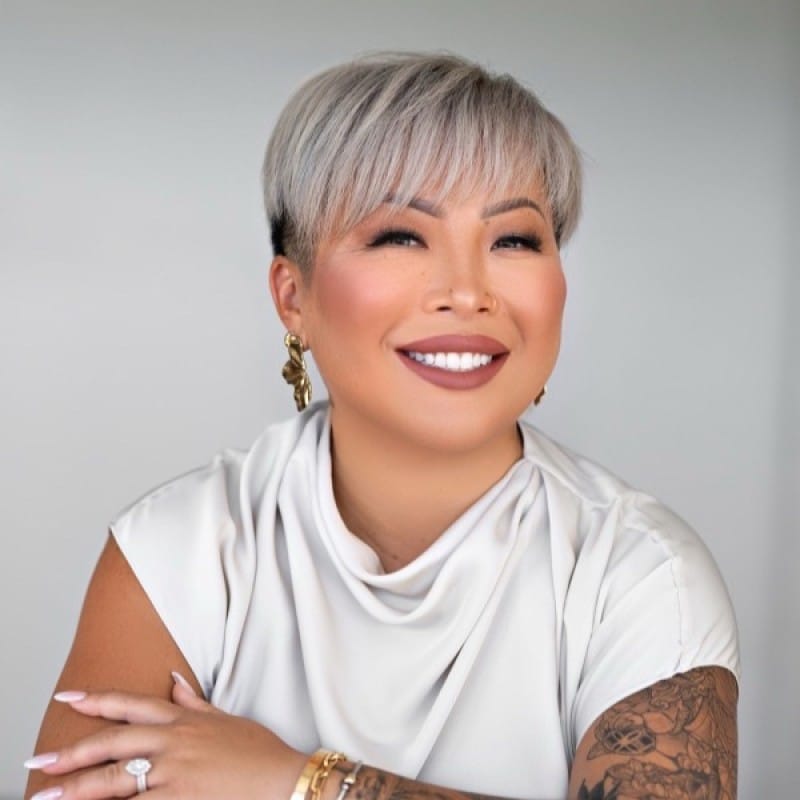
Jenny Chen explores the challenge of embracing authenticity over assimilation, illuminating how curiosity and courage can drive systemic change and nurture genuine inclusion and belonging.
In this episode of Inclusion Bites, Joanne Lockwood speaks with Jenny Chen about workplace culture systems.
“The values that we want shaping our country today lasts for generations.”
Explore
Navigate this episode
Jenny Chenguest
Foreign.
Joanne Lockwoodhost
Welcome to Inclusion Bites, your sanctuaryfor bold conversations that spark change. I'm Joanne Lockwood,your guide on this journey of exploration into the heart ofinclusion, belonging and societal transformation.Ever wondered what it truly takes to create a world? Remember, everyonenot only belongs, but thrives. You're not alone.Join me as we uncover the unseen, challengethe status quo and share stories that resonatedeep within. Ready to dive in? Whether you'resipping your morning coffee or winding down after a long day, let'sconnect, reflect and inspire action together.Don't forget, you can be part of the conversation too. Reach outto jo.lockwood@seechangehappen.co.ukto share your insights or to join me on the show.So adjust your earbuds and settle in. It's time toignite the spark of inclusion with Inclusion Bites.And today is episode 183 with the totalauthenticity over assimilation. And I have theabsolute honour and privilege to welcome Jenny Chen. Jenny isa former top ranking finance professional turned DEI consultant
Joanne Lockwoodhost
who is on a mission to dismantle performative inclusionand rebuild cultures whereauthenticity thrives. That's easy for you to say. And when I askedJenny to describe her superpower, she said that is her relentlesscuriosity that drives transformative conversationsand systemic change. Hello Jenny, welcome to the show.
Jenny Chenguest
Thanks so much Jo for having me. Absolute pleasure. We've
Joanne Lockwoodhost
had a good natural ready in the green room and we were in danger oflosing all the material on the cutting room floor so I had to quickly geton here and press record. So you were telling me you're from Canada,is that right? Yep, I'm from Ottawa, Canada.
Jenny Chenguest
Welcome to we are the capital of our great nationand we actually just finished with ourCanadian federal elections a couple weeks ago. Andso we are all a little politics doubt right now. Mark
Joanne Lockwoodhost
Carney, I mean the UK know Mark Carney well as our former bank ofEngland governor. I guess secretly we were all probably egging himon as a honorary Brit for a fewyears. You know what, it's so, it's so crazy right now because you
Jenny Chenguest
know, as you know in the world there's so much politicalunrest, right. Even in countries. I have never, I'm, I'malmost 40 and Joe, I have never really paidattention to nor really cared about Canadianpolitics before because even our biggest problems used to bejust cute, cute compared to other globalissues happening. And this was the first time where ournormally conservative family were really challenged withthe decision on who we wanted representing us. And thistime we actually voted with Our moral values versus the politicalparty that it was. So, yes, we actually voted for Mark Carney. We egged himon too, becausewe, you know, Prime Minister is what, in theUK too? They last what, four, eight years maybe. But thevalues that we want shaping our country todaylasts for generations. Right. So, yeah,interesting times. I've seen that in the UK as well, where there's
Joanne Lockwoodhost
this real blurred line between the traditional colours, the reds, theblues, the oranges, the greens, and people are starting towork out that you can't get everything from one person or you can't get everythingfrom anybody. You got to try and pick and choose and sometimes you end uppicking and choosing the least worst option. One party says has something youreally, really strongly disagree with, but they do. Lots you do agreewith. You've got to be careful here that you don't end up absorbing stuff thatyou don't want to get what you do want. And you've got to try andbalance that in your own sort of psyche as to which is best forthe long term future of the country. And sometimes we're allowing people inwith really, really dangerous views because they dosome things we like. Yeah. And we
Jenny Chenguest
really have to step back, you know, andinstead of thinking, what's in it for me? What is this partyor what is this leader going to do for me personally, youknow, and, and take a look at the bigger picture, the next generation,how this is going to impact. Right. Like we talked about inthe Green Room, we talked about the climate in the US rightnow and how polarising it hasbecome and how openly people withdiscriminatory behaviours. Right. Racism, sexism,homophobia, xenophobia. The currentadministration has just given them more confidence and avoice to share a lot of those hateful rhetorics thatI was hoping were a thing of our past. But we know better,you and I, Joe, that they're still very, very much a pervasiveissue broadly. And so, you know, those. It comes back to values,right, that are shaping the next generation, not just ourgeneration. Yeah, so true, so true. And I think, if anything, I think what the
Joanne Lockwoodhost
US is doing is giving a worldmodel that you can either embrace or you can reject. AndI think if nothing else, that administration is. Everyone elseis waking up and going, if we're not careful, we will slide into thatourselves. If we don't want that, now's our chance to do something about it ratherthan sliding in. And then once it's happened, it's too late. People are seeing thatthis can happen. This slide into authoritarianism is real.
Jenny Chenguest
We experienced that this year upin the Canadian elections. Our Conservative Party leaderhere shared. They actually call him Maple Trump. Andhe shared a lot of the viewpoints in example, saying,you know, racism doesn't exist unless we talk about racism, soeverybody just stop talking about racism and it'll go away. And it's like,that doesn't really make sense. Right. And as a. As a racializedwoman, as a Chinese Canadian immigrant, I came here in1989 as a political refugee during theTiananmen Square massacre. I can tell you thatit's very much deeply rooted in our systems.And so saying we shouldn't talk about it and it'll go awayis exactly why systemic gender barriers, racialbarriers, all kinds of discrimination continue to happen because we treat itlike it doesn't exist. Look at indigenous peoples inour country right across the world. So, yeah, very, very interesting.It's funny that you were just introducing myepisode as authenticity, and here we are spreading, spendingthis much time talking about politics, but I think it's more about. These arethe topics that impact each and every singleperson right. In society. And why don't we talkabout these things? So thanks for giving me a space and aplatform to share some of my perspectives. Yeah.
Joanne Lockwoodhost
And you just dropped the Tiananmen Square bombshell on me there. And I'mnow thinking, wow, I can't let that pass without listening tosome of your experience about that time in that. In the country.I saw it, I mean, 1989. I was how old? I was probably1920 about then. Yeah, about that age. And I'mthinking I didn't really understand world politics. So we got the iconicimage of the lone person confronting a tankand holding up the tanks in Tiananmen Square. That's kind of the iconic world imageof Tiananmen Square. You were there living it as a. As a Chinesecitizen. So what was going on in the country at that time, if you don'tmind sharing. Yeah. So I was very young,
Jenny Chenguest
I would say, so my experience is limited.I was in Changsha, Hunan. That's where I was born. It's actuallyChairman Mao's hometown. So when you go back home,when I go back to visit, people see ChairmanMao as this icon, this hero. Right.And I recall, because I was in Canada at the time theTiananmen Square massacre happened. My father was hereon a scholarship pursuing his PhD incomputer science. And my mom and I came. I was three years old at thetime, Joe. We came to Visit him in April 1989 andJune is when the Tiananmen Square massacre happened. Andthe previous Prime Minister Trudeau, the seniorPrime Minister Trudeau, granted all Chinese nationalslanded immigrant or permanent resident status right herein Canada for asylum. And we were notable to go back home. My mom and dad left everythingthey knew, everyone they knew behind because we had to takeup residence in Canada. And I am, and again, I was so young.
Jenny Chenguest
I really am gratefulfor the opportunity to be here. But sometimes itgives you that perspective that others mightnot have if you're born in a country, right. And we talk aboutwe still have refugees seeking asylum all over theworld because they're fleeing war, genocide,anything, Right. And it allows me, I think,to have a much more compassionateand also pragmatic lens when it comes to thingslike immigration. So back topolitics. You know, we were saying thatthe values that shape our country. Well, if aleader or a party are against immigrationor have a very negative rhetoric to immigration,I say that that deeply impacts thevalues that I have grown up with. As a first generationimmigrant, I've got. No lived experience of
Joanne Lockwoodhost
that kind of scenario. Effectively went on holiday and never wenthome, really. Yeah. Never went home. Your home, yourpossessions, your television or your clothes or your toysas a young person, your friends, your school suddenlygone, you know, you now have a new life. And I would imagineyour command of English was almost non existent atthat age when you were just learning to speak anyway. But yeah, you had tolearn a new language and you had to parents had to learn a new languageand you had to become part of the Canadian culture. That's ahuge, huge undertaking for any family. You know how I learned
Jenny Chenguest
English, Joe? We shared a basement apartment inKitchener Waterloo. It's a very university town here, very smalltown. I watched Disney movies, so Alice in Wonderland,Little Mermaid, Cinderella were my first three Disney movies. AndI watched, you'll laugh at this, a lotof old 80s 90s actionmovies with Sylvester Stallone, ArnoldSchwarzenegger. And. Because in Chinathey're so popular, right, that they have actuallyphonetically, Arnold Schwarzenegger, you can't translate that into Mandarin,but they phonetically have created names for all thesemovie stars. So that's all I knew when I was growing up. But yeah, itwas wild. And realistically, a lot of the
Jenny Chenguest
nuances from China we carried overwith us, right? So in communist China, this is allI'm told from my parents, because I don't remember, obviouslyI was too young. But in communist China, right, Like weLived on rations. So monthly the governmentwould hand out rations of like this much cookingoil, this much rice. And I don't think anybody reallyunderstands during that time what that was likefor a, for a growing family with two parentsand a child. And then even mygrandmother to the day she passed away in 20,2017, she used to be a devoutBuddhist and she prayed in her closet. Andgrowing up watching that, I never understood that. Right. Because herethere's all, there's freedom of religion. Nobody ishopefully ostracised in communities for their religion. Butin China, if you have religion during that time, during the CulturalRevolution, you'd go to jail or worse.Right. And so for 30 years she lived in Canada.She prayed in her little tiny, not even a walk incloset, just a corner of her closet. So, yeah, these thingsreally shaped your experiences growing up, right?
Joanne Lockwoodhost
Wow. Wow, that's. What a story. And yeah, thank you somuch for sharing that. It's. Yeah, it's incredible to hearthis truth. So you were in this financeenvironment, a male dominated industry, and you realisedthat it wasn't as easy for you as it was for others. And was thatbecause of being a woman, Was that because being of Chinese descent or wasit a combination of those factors? Yeah, so that's a
Jenny Chenguest
great question. I found thatI didn't know I was experiencingsystemic barriers or that I was different untilsomeone told me I was different. Right. Until someone toldme I was going through or experiencingsexism or racism. Because byvirtue of assimilating at a very youngage, learning the language, trying to fit in,I think that as a survival mechanism, Inever wanted to stand out. So spending also sixyears in Plano, Texas when my dad worked intelecommunications. Right. You just don't want to stand out. Andso in my career, I was oftenthe only woman or the onlyperson of colour. And then realistically, when I startedraising these experiences to our leaders,I feel like it wasn't being challengedenough. Right. Some of these systems weren't being challenged enough. So I feltcompelled to just, hey, say hey, take a step backand look at this experience. And this is DEI asan element of a person, right? This is sexism. Andthe emotions that I feltbeing the recipient of these actions so thatwe could hopefully help dismantle them in ourorganisation. And then I was appointeda DEI leader for our global wealth managementfirm because like many women, and especiallywomen of colour, that title is often given tous based on our lived experience and not becauseit's something I ever pursued Right. I was a salesperson through
Jenny Chenguest
and through and I had no HR experience. Butrealistically, Joe, what I realised during my timeleading DEI efforts for a fewyears that, you know, I'm a businessstrategist through and through, and I realised we could not,as a global organisation, accelerate ourgrowth or drive innovation if wewere stuck in the same way. Our,our organisation was built in a time where women didn't havethe right to work, right. Weren't included in our workforce, didn'teven have the right to vote. And wecontinued operating and leading inclusionand belonging in a separate silo inan HR initiative off the side of the desk of a lot ofour leaders and decision makers. Somy journey, as I said, into DEI wasn't in theclassroom, but really began through theselived experiences. Again, I eventuallywas able to integrate our, what wereally wanted as dei, as a value,into our core operations, into our business asusual. So instead of just featuring our blackAsianized women wealth managementprofessionals on International Women's Day, Black HistoryMonth, you know, Asian American Pacific IslanderHeritage Month, integrating that and highlighting thatin our regular programming, like it's not, it's not rocketscience. Right. And so I took a step out of corporatefinance and I actually started my own management consulting firm calledCatalyst Consulting, where we help organisations doexactly this, right, integratinginclusive business practises, equitable business practises,inclusive leadership into their core operationsbecause that's the only way that we will be able to drive long lastingsustainable change. Yeah, I, I, I think I realised that
Joanne Lockwoodhost
had an epiphany probably about 10 years ago when I did a transition that inmy most of my life I'd never appreciated what itliked, what it was like to not have advantage, what it was like tonot be considered, to be not the default, to be not in the majority.And it's only when you step over that line into an environment where youare suddenly the minority, the marginalised, the voiceless, thedifferent, that you realise how cold, how bleak it can beover there. I would imagine when you're with your owncommunity, within Chinese community, you're in the majorityand it's very easy to feel that sense of belonging, but if you step outinto that other zone, you're not. How can we getpeople who are in the majority and we can use the termprivileged, if you like, to start being awareof that difference of experience. Yeah. So you raise an
Jenny Chenguest
interesting point because this is something that I navigated,but also my kids are navigating right now where,yes, you would think that if I'm with a communityof other Asianized people thatI would have a stronger sense of belonging. Butremember I came here when I was three years old, very quicklyassimilated, as I mentioned, as a survival mechanism.So growing up, like we didn't even, we weren't even speaking Englishlike Chinese at home. We weren't. We. I lost my language so longago to learn English and then French becausewe're in Canada and those were the things weneeded to do in order to, like, my parents wanted to fitin, to be successful here. And sogrowing up I wasn't Chinese enoughor considered Chinese enough for the Chinese community.
Jenny Chenguest
And then I very obviously stand out anddon't really fit in in the non racializedcommunities. So I think especially withAsianized communities across the world,we are often put into thismonolithic group. But Asia has what,like 52, 56 different countries, right?And then different nuances impact. Vietnamese,Korean, Japanese, Chinese cultures,Cambodian, Laos. Like there's so many. And if youpeel all the layers back, Joe, of what you and I aretalking about, it all comes down tojust treating each and every single personyou know, you meet, you see as theindividuals that they are and respectingthem as the individuals they are,right? Because at the end of the day, if you take a look atracism, sexism, homophobia,transphobia, all of these discriminatoryphenomenons and behaviours, it's aboutnot respecting, right? Beingcompassionate, being kind to these people. Sooftentimes I tell organisations, before we put adiversity lens on anything, let's remove it andjust ground ourselves in respect, kindness, humancompassion and start there. Like that's a great starting point,right? But surely, surely everybody
Joanne Lockwoodhost
thinks they're kind, everyone thinks they're, they're a great person. Everyonethinks they're, they care, everyone thinks that they, they're, you know, everyone thinks they'reright to be honest. And that's, that's half the battle. But nobody gets up inthe morning thinking, I'm going to be a really nasty, horrible person today and causepain to everybody else. They're just doing what they believe and their ownecho chamber, their own culture, their own lived experience, that's, that's partof the challenge, is trying to encourage people to seea, a greater, a greater truth or a greater perspectivewithout telling them they're wrong. That's the hard bit, isn't it? It is. And
Jenny Chenguest
realistically and, and that's, that's human nature, right?Like that's part of our limbic brain. Like thatpart of our human makeup ofneeding to belong and needing to find people who are exactlylike us, think like us, look like us, come from the same backgrounds as wedo, socioeconomic, educational, professional, whatever.That is so deeply rooted in ourhuman makeup that it's hard to reallynavigate around that. But I think that if you areinherently curious, if you come from a placeof being open minded and seeing the worldaround you, that it isn't the same world as it was five years ago, tenyears ago, right? Not even like two years ago. Look how much has changed inthe world in the last two years. That if wedo that and allow for differentperspectives and different people in. I thinkthat's a really hard but very necessary thing to
Jenny Chenguest
do. Because the only reason why we were talking about this in the greenroom, even you and I have had different perspectives isby being open, being inherently curious and open tohearing different perspectives. I've learned so muchfrom all people from all different walks of life.I've learned the most actually from myCaucasian male counterpartsthat have taught me everyone isjust navigating systems that neverincluded women, racializedcommunities, trans communities. And we're stillnavigating in those systems, we haven't evolved them. Soactually I think it was Nelson Mandela who, you know,when, during apartheid said there'sno victims and villains when it comes toracism in Africa. There is only victimson both sides navigating a broken system. And if we treat itthat way, then people who think differently than us orare not one of us are not villains. Right? Just becausethey have a different perspective, they're not the bad guy, we're notlistening to them to try and change their mind because we're right and they'rewrong. We actually have to meet people where they andjust recognise that we have all been navigating a systemthat did not include most of the world asit is today. And I think that would be a great starting point. I
Joanne Lockwoodhost
completely agree. I'm in the same echo chamber as you. I get itcompletely. I value that perspective on life. But where I alwaysstruggle is as a EDI professional myself, is tryingto convert the unconvertible andwho are entrenched in their zero sum view. You win,I lose. A lot of these DEI initiatives have got a bad name.Especially, you know, look at what's going on in the US and certain parts ofthe UK and other things where people arethe incumbent privilege are starting to feel themselves beingmarginalised because they're not getting the advantages and they see DEI astaking away their maleness, their whiteness andtheir power base and they're having eroded and saying, hang on, I don't like thisfeeling of being uncomfortable and losing stuff. It's everybodyelse that's trying to take things from me. And that's a real human fear, isn'tit? It's an innate limbic system you talked about. It's our fight,fight, freeze mechanism kicking in, going, I've got to hang on to what I'vegot. And it's really hard to get people to lower those defencesand have truly honest, open conversation to address those fears, isn't it?
Jenny Chenguest
I think we have, in good intention,tried to overcorrect for historicalimbalances across the globe, right? Becauseagain, you know, it's about time that wetake a look around and see what's been missing, right, andwhat's holding people back. I think thatin good intention we have createdthis environment of zero sum game,meaning exactly as you said, bybringing other people in, we areleaving or pushing other people out. That's what we.That's the environment we've created. But we really need to take a step backand recognise that the reason why these. And I, again, I.Every time I say dei I put it in air quotes because every time wecreated these initiatives, committees, task forcesin organisations, in society and politics and government,it was to bring, level out the playingfield and give equal opportunitywhat we didn't stress enough. And again, I'll goback to Nelson Mandela because I think he did an exceptional job in this. Likeapartheid was such an incredibly horrificthing that happened in that country. It could have ended in bloodshed,but it didn't, right? Because he said, I am notfor the oppression of black people, but I also am nothere for the oppression of white people. He always had to beexplicitly clear that he was not againsteither side. And we have not done that. AndI'll give you a very specific example, Joe, because mybackground is in corporate finance, right? Investmentadvisors, wealth managers, portfolio managers, what have you.Key sales roles are still, across the board,15% women, 15% women. Todaythat number has remained stagnant. We cannot, across theindustry, globally, seem to fix this problembecause we continue saying things like, womenmake better advisors than men. Women canemotionally connect with men better, right? And dealwith women clients better. That's not true.Right? That's not true. That's. I don't know where that rhetoric came from,but all that told the 85% menin our industry was that women are better than this, thanyou, and we're coming from. For your jobs.That's not true. What we should have actually said waswomen make up 54% of the global population.
Jenny Chenguest
They make up 50% now of our workforce, our labourforce, of our talent. And so how can weas an industry be confident that we have the besttalent out there to take care of clients andtheir wealth if we only have 15% of the54% of the talent that's out there? Right? Andso this, again, if you remove the diversity lensand just say this is a gender equity problem becausewe need more women, and now we've created this, this narrativethat we women are taking opportunities away from men,we should actually say, for the continuity of thisentire industry, we, we do not have enoughwealth professionals to take care ofthe next generation when our current workforceretires. And that's the reality as it is today, Joe. Acrossfinance, we actually don't have enough wealthprofessionals, we don't have enough doctors, engineers,right across sectors to sustainthe continuity of a lot of these sectors. So, picking up
Joanne Lockwoodhost
on what you're saying there about some of the root cause of where we aretoday is that within our communitygroups, however we want to describe it, our affinity groups,we've almost overcompensated in order to give ourselves thatsense of belonging and that sense of purpose, that sense of fighting backagainst oppression, we've overcomplicated, compensated by saying,we're better, we can take over this. And so we're tryingto shoot too far, whereas what we should be trying to do is shoot forequity, not overpowering.Is that kind of what you're. The hint of what you're saying there? Yeah, a
Jenny Chenguest
hundred percent. If you look at why diversity councils were created in thefirst place, right? Employee resource groups acrossorganisations, across industries, they were created becauseracialized and also. Right, like different genders, differentsexual orientations, everyone who didn't fit thelegacy mould of our workforce.We're trying to create a spacewhere our voices could be heard and hopefully,through sharing our experiences,impact the change that is so needed in theseinfrastructures. But again, what we createdwas through personalising the hurt ofcenturies, right, of different communities.We forgot that what we were trying toaim for was to inspire change.And you cannot inspire change throughadversarial rhetorics, throughdivisiveness, through polarisation. That's whatthe world is like right now. What we really need todo is find a way to bridge a lot of thesegaps by creating strongerpartnerships Collaboration across the board,realising that, you know, if we don't,it's actually like, what. What's our world gonna looklike in 5 years, 10 years? This next Generation,Right? Yeah. Yeah. How can we. Not sure these are the right words, but how
Joanne Lockwoodhost
can we undo the damage that we've created by overshootingand trying to get it back to this level playing field where we'reall trying to find this common purpose where to create a world where we canall thrive. We're looking for a happy life. We're looking for somewherewhere I can feel safe in my community, I can bring my family up, Ihave a roof over my head, I have food on the table. I only wantwhat is fair and reasonable and sustainable. It's really hard to see a vision wherewe can find that nirvana. The Star Trek world, if you like, whereeverybody sort of gets along with each other except for the Klingons and the Ferengi.
Jenny Chenguest
I love. I love that reference. I think that, you know, again, wejust have to take a real step backand look at it from a differentperspective. I could say that, you know,it really comes down to, as I mentioned before, if you strip awaythe diversity lens off of a lot of these issues that we're tryingto solve for, right, it's really abouthaving a systems failure, a true systemsfailure, and recognising that as the starting point, right? This isn't justa diversity issue. It's not about immigration,gender, race, sexual orientation. It's. It'sreally about, you know, the system that we are inright now, across the world, society.It's not broken. It was actually built this way, right?
Jenny Chenguest
And so the only way forward is to rebuildit together, based on what the worldlooks like today. And what I've realised is,you know, if you strip away all of theseissues, these. These. These very important issues,but we've named the problem aslike a diversity problem. It comes down to a lackof respect, a lack of kindness, a lack of human compassionand understanding. And so whether we talk about inclusionin workspaces, healthcare, politics or in ourcommunities, we don't need to ask how do we supportthis group or that group, Right? That's. Those are the solutions we've come upwith. We really need to start with how do wetreat people like human beings and everyone isdifferent? Recognising that each and every single person is different. My experienceas a woman of colour in finance willnot be the same as another woman of colour, not eventhe same as another Chinese Canadian immigrant. Right. Andthat's the point. Systems aren't designed to accountfor complexity, but real leadership and realchange in each and every single one of us requires that we do.And to your point, at the beginning of our conversation,you know, hearing from different perspectives, inviting indifferent perspectives, because when we challenge each other and whenwe offer feedback or invite these differentviewpoints, it's not because we're trying to tear each other down.It's actually because we care. Some of the angriest people outthere right now, some of the loudest voices,are angry because they actually care. Like, if you. Ifyou take down all of thehateful rhetoric that's out there. Right. They care.And real leadership isn't about avoiding theseuncomfortable discussions, but be willing tosit in it with curiosity and not come back. And I think thatthat's something that is truly, truly missing. Becauseempathy builds momentum, and thenmomentum changes systems. Right.
Joanne Lockwoodhost
Yeah. I think you picked up some points that I really resonate with. It's aroundthese perspectives. It's around that understanding of wherewe're at, each of us, because we all have different starting points, different lived experience.And you start the conversation by talking about Canadian politics and worldpolitics. But we don't all vote for the same party. We don't vote for thesame people, do we? Yet when I look at it and think, well, it's reallyobvious, of course you should vote for this person, because that's everything I. But wedon't. So it's really trying to understand why somebody has a different viewerperspective and an opinion on something. Yeah.We get caught up at the bigger picture of the outcome.We never sit there and actually drill down as to why someone. Why doessomeone feel disenfranchised? Why does someone feel hurt? Why does someone feel lonely?And as you said, as a racialized Chinese person,you have a different perspective on inclusion than somebody who ismaybe Canadian French or Canadian Inuitor Indigenous. Right. I think.
Jenny Chenguest
So back to the politics. I.This was the first time, as I said, in my life where I was deeplyimpacted by a lot of the things happening, theconversations happening, the rhetoric that was taking place here inCanada, because I always pictured us as avery inclusive society. And maybe that was me being naive orin my own little echo chamber. But I'm not surrounded bypeople who think that immigrants are thedownfall of this country or that racism doesn'texist. Right. And one post actually made
Jenny Chenguest
me emotional. I cried when I saw that in the US There was acongressman in West Virginia who proposed a banon International Chinese students from entering the UnitedStates. Joe, this was like two months ago, right?Right before our, our Canadian federalelection. And how many people agreed with that?I had just attended at ourSenate two years ago, 2023, thecentenary for the Chinese ExclusionAct. So 1923, Canada putforward a law that banned Chinese exclusivepeople from entering Canada, even though we built therailway, even though we were here working the gold mines. Butbecause they were afraid that Chinese people were going to take over Canadaright through immigration, we actually put a ban forwardthat prevented families from being together until theban was lifted in 1947. That was the worstperiod and not found in anyhistory books. I didn't learn that until I attended this event. And Igrew up in Canada, not a single history book mentions that. Andone thing I realised through this election, how manyfriends of mine voted with aparty for a party who was,you know, against higher taxes, Right.Better for businesses. Right. But again, standingfor these values that myself, as a racialized ChineseCanadian didn't stand for. And I saw this quote, Joe, andI'm going to say it here because I think it's really important. I don't knowwho wrote it, but it says, may you never know the fear of having yourhuman rights challenged every time there's an election.And may you never know the pain of watching loved ones vote against yourright to exist fully, equally and authentically.
Jenny Chenguest
Because when and why do wepoliticise caring? When andwhy do we continue to politicise basic humanrights, basic respect, basic understanding ofpeople? Why is it that if you care aboutpeople of all different backgrounds, you are labelledthis way? Politically, we are a very conservative family.I have always grown up with that because we come from Communist China.We came here as first generation immigrants, you know, pulledup our bootstraps, never asked for social assistance, worked from theground up and built a legacy and a life for ourselves in this country.And so by virtue of that, and nottrusting governments, because we come from Communist China,we have always, as a family, voted conservative. And this isthe very first time we didn't, because again, the leader of our partydid not represent the values we wanted to see shaping the nextgeneration. And these are going to be the nextgeneration of leaders, of government, ofsociety. And they're watching every single thing we aredoing right now and all the decisions we are making. And they areasking, how did you treat our parents?How did you treat our family? How did you treat mylineage and my legacy? Because thosewill impact and shape the values that they havelater on. Right. Yeah. As you, as you're talking there, I'm,
Joanne Lockwoodhost
I'm almost a bit choked in that quote you gave. That that quote would nothave resonated with me. Ten years ago, I was voting for partiesfor my pocket, for my wealth, for my economy,for my business. What I'm now hyper aware isthat I'm now voting for my safety, for my right toexist, my right, my freedoms. And that is somethingin my old life as a perceived straight white male,I never had to consider that side of it. But now you're right.I am now hyper, hyper, hyper awareof my right to exist. And I'mscared, I mean, I really am scared aboutsome of the parties and some of the political rhetoric in the UK and alsothat's coming from the US it's actually threatening myright to even walk the street. And yeah, we sawthis in. Yeah. And I don't like drawing parallels to 1930sGermany, but we, this is the state we're looking at. We're lookingat countries around the world that have oppressive regimes thatare denying people's freedoms. And I'm almost unbelievably thinkingthat this could happen in my town, in my village, in my houseright now. And it's absolutely scary.It really is. And yeah, that quote you gave was, is sobrutally real. Yeah. And like I said,
Jenny Chenguest
we are my family. We are in the highest taxbracket here. And I knew that voting a certain way would mean that we'repaying 54 cents on the dollar of every dollar we earn tothe government, and we're not here for that. But at the end of theday, our kids. My stepsonis a schoolteacher. My daughtersare both engineers and scientists. Right.Our extended family are all nurses.And so the certain, certain politicalplatforms, certain political parties willimpact with their policies, impact ourfamily. Our kids can't buy homes right now in Canada.Right. And across the world, like, housing prices are so high,the healthcare systems all over the globe are, arebroken. Even, even in Canada, where countries lookup to our health care system, our public health care system hereis broken. We actually have private healthcare in Canada. We choose to,but we also have the option a lot of families don't.And so again, looking beyond our myopic needs,our individual needs, and seeing the worldaround us and who is in society todayand making sure that things like justsafety rights that we foughtso long for aren't stripped away. Because progress, aswe know, as we've seen, is so incrediblyfragile. But I can tell you. 30% of ourcountry voted for a party whose leaderspews the same hateful rhetoric that the UShas allowed into their government rightnow. And it's scary. Well, not an insignificant
Joanne Lockwoodhost
portion of the UK population is voting forparties which have allegiances to theRepublican government in the US and these are kindredspirits, all financed through the same sort of money channels.And yeah, it is. And we see the rise of this over Europe, in Franceand other countries, and Germany is even seeing a pushback for the first time sincethe war that they're seeing a rise in right wing politics in Germany.And this is spreading around the world. No longer shouldwe be worried about communism stealing our freedoms. We should be worried about the riseof fascism stealing our freedoms and squeezing out the middle ground. Right,
Jenny Chenguest
exactly. You know, in, in Canada, there was a, there wasin Toronto, Canada, so four hours away from here, but the biggest, one ofthe biggest metropolises in Canada, there was aprotest yesterday where a group of maskedmen were protesting for mass deportationand anti DEI herein Toronto. Right. 2025, Joe. I never thought that that wouldhappen. And they're actually chanting, you know, ShilohHendricks did nothing wrong. Shiloh Hendricks inMassachusetts was a white woman who hasa viral video of her spewing racialslurs at a black autistic child in apark. Right. She's calling him theN word, she's berating him. And when she wasquestioned on why she did it, she said, well, if that's what he's going toact like. And there's a group now protesting, sayingshe's done nothing Wrong, she's raised$700,000 in support frompeople in our own communities. Right. Thatare saying that she was within her right to do this to a 5 yearold autistic black boy in a park. Andso if you think around the world, because I know that there'slisteners from all around the world hearing thispodcast, that if you think that thesethings don't happen in our very own backyards,it's because we weren't looking. But some of us experiencethis each and every single day. It's so
Joanne Lockwoodhost
easy to see what we want to see, hear what we want to hear, andnot open the door, not lift the carpet, not look underbecause our communities and our echo chamber isn't talking about it. It doesn't mean it'snot happening. Yeah. And I said this during our
Jenny Chenguest
earlier discussion, like we don't need any more DEIstatements or DEI initiatives, like we don't need any morelabels or more buckets or any more separate systems that we createfor different people. You know, we don't need morecommittees. And if, when we talk about inclusion, we reallyneed to stop assigning the work of equityto the very people most impacted byexclusion. That's actually why I created my consultingfirm, because I'm helping organisations take off their ownblinder and reevaluate thefoundation in which their company is built on. AndI'm really tired of companies thinking that justbecause they've put together an employee resource groupor a diversity council, that means they're driving change. Absolutelynot. Right, again, back to our earlier point. These werecreated not as innovation tools, but they startedbecause underrepresented people had no seat at decision making tables.So we created these spaces for ourselves, for survival, forsolidarity, for, for a sense of community. Andit's easy for organisations to use these groups as a way tosay, look, we're doing something right without actuallychanging the systems that created the need for these groups in the firstplace. And so I don't think that's inclusion. I actually think thosegroups are a way of containing the voices.And I think it's time we call it what it is. Right. And we,we just need redesign and we need clarity and we needworkplaces that work for everyone. But more thananything, we need courage, because courageis needed to drive the change that we need to challengesome of these really hurtful,exclusive behaviours that have remained apervasive, perpetual issue in society today. I think that's
Joanne Lockwoodhost
very powerful. You know, just to paraphrase what you said, you know, equity ischampioned by those who lack it, I guess, is what you're trying to say there.And the problem, I go back to the point I made earlier as well, ishow do we get the people who have the power, the privilege,the tools to enable, you know, sexism is a maleproblem, racism is a white problem. You know, how do we get the people whopropagate these systems of oppression to recognisethat they have to step up and create the equity? I can't createequity from underneath. It has to be allowed. But they're so busyfighting their own equity battle, their own needs, their own threats, their ownanalysis, so we're all pulling in different directions. The challenge is trying to geteverybody around the table working out what the zero sum gameisn't and all going, actually, if we just stop all thisbickering and just carrying on, we all be great. Butit's almost like an impossible ask because we're so Divided. We're sofocused on ourselves. We're so focused on our rights and our needs and ourenvironment, we can't stop and look at somebody else. I don't spend a lot ofmy time thinking about the issues of racism or ableism in societybecause that's not my crusade. But it is others. I'm not a bad person.I'm just not looking in that direction. Think that. Well, actually, this is.
Jenny Chenguest
This is exactly why I also started my podcast. I'm not183 episodes in Joe. I'm only five. Butit's called Tune up youp Warrior. Because Ihad been championing systemic change bysharing not only my own lived experiences,but experiences of everyone who had the courage to share itwith me during my time leadingdiversity, equity, inclusion efforts. Andthen by sharing these experiences, I was actually toldthat I needed to tone down my warrior. That thesepersonal stories I had shared about overcomingadversity, about standing up for what's right, weren'taligned with the image of a leader they wantedto project. And at first I didn't even know what that means. Like, what doestone down your warrior meaning? And I actually replacedally. What we thought of an ally, what we considered an allybefore, right? I'm tired of the word ally. Because you can be anally, know something is wrong and doabsolutely nothing about it. What Ialways think is what we need more of. We need more warriors, right?Ones that will challenge status quo, willstand up for the people who don't have a voiceor are the only ones at a table. How many times did we haveto stand up for ourselves in a very uncomfortable situation?Right? Though that moment was aturning point when I was told to tone down my warrior becauseI realised that I wasn't meant to lower that voice,I was meant to amplify it. And
Jenny Chenguest
I think that we just need to raiseawareness about these experiencesso that people can understand what is stillhappening. Because if you look at what happened with what Imentioned, Chinese history in Canada,what we've learned through the discovery of,you know, what has taken place forIndigenous communities all around the world, blackcommunities all around the world, is that wedon't put it in history books, we don't talkabout it. And because we don't talk about it, we treat it likeit's something of our past or that it no longerexists. And so I think having the courage toshare these experiences, but also not your ownexperiences, sharing the experiences of others attables where there are still so few of us therewill help inspire the change thatwe desperately need. Because again, toyour earlier point, we don't even, we don't even look for it because wedon't know it's happening. But once we learn about it,whether it's through people that are in our own circles,our networks, our workplaces, our neighbours that gothrough it, only then can we realise theseare still very much challenges that we haveto overcome here as a society. I think we'll leave it there, if that's okay.
Joanne Lockwoodhost
I think that's a fascinating conversation. I think your insight and perspective have beenabsolutely mind opening for me and I hope if you're listening tothis, that you'll also be challenged on your own perspectiveson what Jenny's been saying. So Jenny, how can people get hold of you ifthey want to connect with you and find out more about you? Yeah,
Jenny Chenguest
absolutely. So you can find me throughcatalias.com that's C-A-T-A-L-A-IS.com and there you'll find all thedifferent ways to get a hold of me. You'll have a link to my podcastthat's available everywhere called Tune up your Warrior and follow me onInstagram Catalias Consulting because there's aif you really enjoyed or what I said resonated withyou, I try and share these little nuggetsoften as they come up pop up in my brain because I think thatwe really need to have more conversationslike this. Not left completely agree with that. You're not going to have any
Joanne Lockwoodhost
resistance. We're one and truly in the same echo chamber here. So yeah, I'm anopen door to your thoughts. So Jenny, thank youso much. Thank you, Joe.As we bring this conversation to a close, I want to expressmy deepest gratitude to you, our listener, for lendingyour ear and heart to the cause of inclusion.Today's discussion struck a chord. Consider subscribing toInclusion Bites and become part of our ever growing communitydriving real change. Share this journey with friends, family andcolleagues. Let's amplify the voices that matter.Got thoughts, stories or a vision to share? I'm allears. Reach out tojo.lockwood@seechangehappen.co.ukand let's make your voice heard. Until next time, thisis Joanne Lockwood signing off with a promise to return withmore information. Enriching narratives that challenge, inspire
Joanne Lockwoodhost
and unite us all. Here's to fostering a more inclusive worldone episode at a time. Catch you on the next bite.
Authenticity vs Assimilation in Society and OrganisationsPolitical Values, Systems and the Impact on InclusionSystemic Barriers and the Challenge of Driving Sustainable DEI Change
Joanne Lockwood is joined by DEI consultant and former finance leader Jenny Chen for a wide-ranging conversation about what it really takes to choose authenticity over assimilation
They explore how political rhetoric and workplace norms can turn inclusion into a zero-sum fight, and why performative gestures
do little to shift the lived reality of people facing racism and sexism. Jenny shares her personal journey as a Chinese Canadian immigrant and former political refugee, and how early pressures to fit in shaped her relationship to language, identity and belonging.
Moving from story to strategy, Jenny and Joanne discuss why DEI cannot sit in an HR silo, and why employee resource groups can be misused as containment rather than change. They make the case for redesigning systems that were built for a different era, grounding the work in respect, compassion and courageous leadership that can hold difficult conversations and drive sustainable cultural change.
The distinction between assimilation as a survival mechanism and the pursuit of authentic self-expression in professional and community settings.
How systemic barriers and historical narratives shape present-day inclusion and belonging, particularly for immigrants and marginalised groups.
The limitations of diversity councils and resource groups when true systemic change is left unaddressed.
Pitfalls of “zero sum” thinking in diversity efforts, and the dangers of polarisation that create adversarial environments instead of collaboration.
Transforming allyship into active “warriorship” to champion inclusion and justice, even when uncomfortable.
Why addressing inclusion must begin with universal values of respect, kindness, and human compassion, irrespective of social identity.
Practical strategies for integrating equity into organisational culture—beyond policy statements—and building workplaces where every individual can thrive.
One thing to remember
The central message of this episode—Authenticity Over Assimilation—is a powerful call to dismantle performative inclusion and reshape systems so that genuine authenticity can flourish in our workplaces, communities, and wider society. Through the candid conversation between Joanne Lockwood and Jenny Chen, listeners are challenged to recognise the limitations and invisible barriers of existing diversity efforts and reframe inclusion not as a checkbox exercise, but as a fundamental rebuilding of our organisational and social systems. The episode underscores that true belonging comes only when we move beyond tokenism, centre respect and compassion, and grant equity by design—not just intention.
Questions this episode helps answer
How does the personal history of immigrating during the Tiananmen Square crisis, as shared by Jenny Chen, shape her approach to inclusion and authenticity in workplaces?
Joanne Lockwood and Jenny discuss the pitfalls of performative inclusion. What do you think distinguishes genuine cultural change from surface-level initiatives in organisations?
Reflecting on Jenny’s account of learning English through popular Western media, how do language and cultural assimilation affect one’s sense of belonging or identity?
Jenny mentioned feeling “not Chinese enough” for the Chinese community and not fitting in with non-racialised communities. How can organisations better support those who experience intersectional exclusion?
How can we dismantle the zero-sum mentality around DEI initiatives, where some perceive inclusion as a threat to their own identity or status?
Jenny argues for grounding diversity efforts in basic respect, kindness, and compassion instead of labels or separate systems. What are some practical ways workplaces can accomplish this?
Explore topics
Ideas from this episode
Authenticity vs Assimilation in Society and Organisations
During my discussion, one of the most poignant themes was the tension between authenticity and assimilation, both within organisational environments and wider society. Jenny shared her deeply personal journey as a Chinese immigrant in Canada, revealing the reality of arriving during a period of profound political unrest and navigating her early years in a society that prized “fitting in.” We examined how minority groups often feel pressured to suppress or dilute aspects of their identity in order to belong, and the emotional cost that comes with it, especially in male-dominated fields such as finance.
Political Values, Systems and the Impact on Inclusion
The political climate and its effect on inclusion, particularly through the lens of both Canadian and British politics. Jenny shed light on how voting behaviour within her own family was transformed by the growing realisation that moral values should shape decisions more than party allegiance.
Systemic Barriers and the Challenge of Driving Sustainable DEI Change
Finally, we delved into the complexities of systemic barriers and the necessity of courageous leadership in driving sustainable Diversity, Equity and Inclusion (DEI) outcomes. Jenny’s transition from finance professional to DEI strategist highlighted the recurrent issue of performative inclusion—where initiatives such as employee resource groups are often mistaken for substantive progress yet actually serve as containment, rather than empowerment, for marginalised voices.
Learn
Frequently asked questions
What does “authenticity over assimilation” mean in the context of inclusion?
Authenticity over assimilation refers to the idea that true inclusion is achieved when individuals are encouraged to bring their whole selves to the workplace or community, rather than feeling pressured to adapt or conceal aspects of their identity to fit a dominant culture. Joanne Lockwood and her guest discussed how assimilation can be a survival mechanism, particularly for those from immigrant or marginalised backgrounds, but ultimately fails to foster genuine belonging or systemic change.
How do politics and leadership impact inclusion and belonging?
The episode highlights how political decisions and leadership values shape the cultural and social norms that affect generations. Shifting leadership rhetoric, especially those that ignore or minimise issues such as racism or gender inequality, perpetuate exclusion and discrimination. Voting with moral values, rather than self-interest, is advocated as vital for shaping an inclusive future.
Why is performative inclusion problematic?
Performative inclusion is when organisations make surface-level changes—such as creating diversity councils or employee resource groups—without addressing the structural inequities that created those needs in the first place. Joanne Lockwood and her guest argue that genuine inclusion requires systemic redesign, not merely symbolic gestures.
What role do majority and minority groups play in advancing equity?
Majority groups (such as men in male-dominated industries or white communities in Western society) must recognise that equity cannot be created by marginalised groups alone. Those holding privilege and power have the responsibility to step up, dismantle systems of oppression, and enable meaningful change. The podcast emphasises that racism, sexism, and similar issues are not problems for those who experience them, but problems propelled and perpetuated by those in power.
How can organisations move beyond siloed diversity efforts?
It is recommended that organisations integrate inclusive practices and values into their core operations and everyday business, rather than relegating diversity efforts to side projects or special occasions. Highlighting diverse talent and experiences should be routine, not reserved for “heritage months” or special events.
Is striving for equity about overcompensating or overpowering majority groups?
No. The episode cautions against rhetoric that suggests marginalised groups are “better” or should replace majority groups. True equity is about accessing the entire spectrum of talent, experiences, and perspectives—not creating new imbalances. Collaboration and mutual respect should underpin efforts to rebuild systems for everyone.
Share this episode
Heard something worth passing on? Send this conversation to someone who needs to hear it.