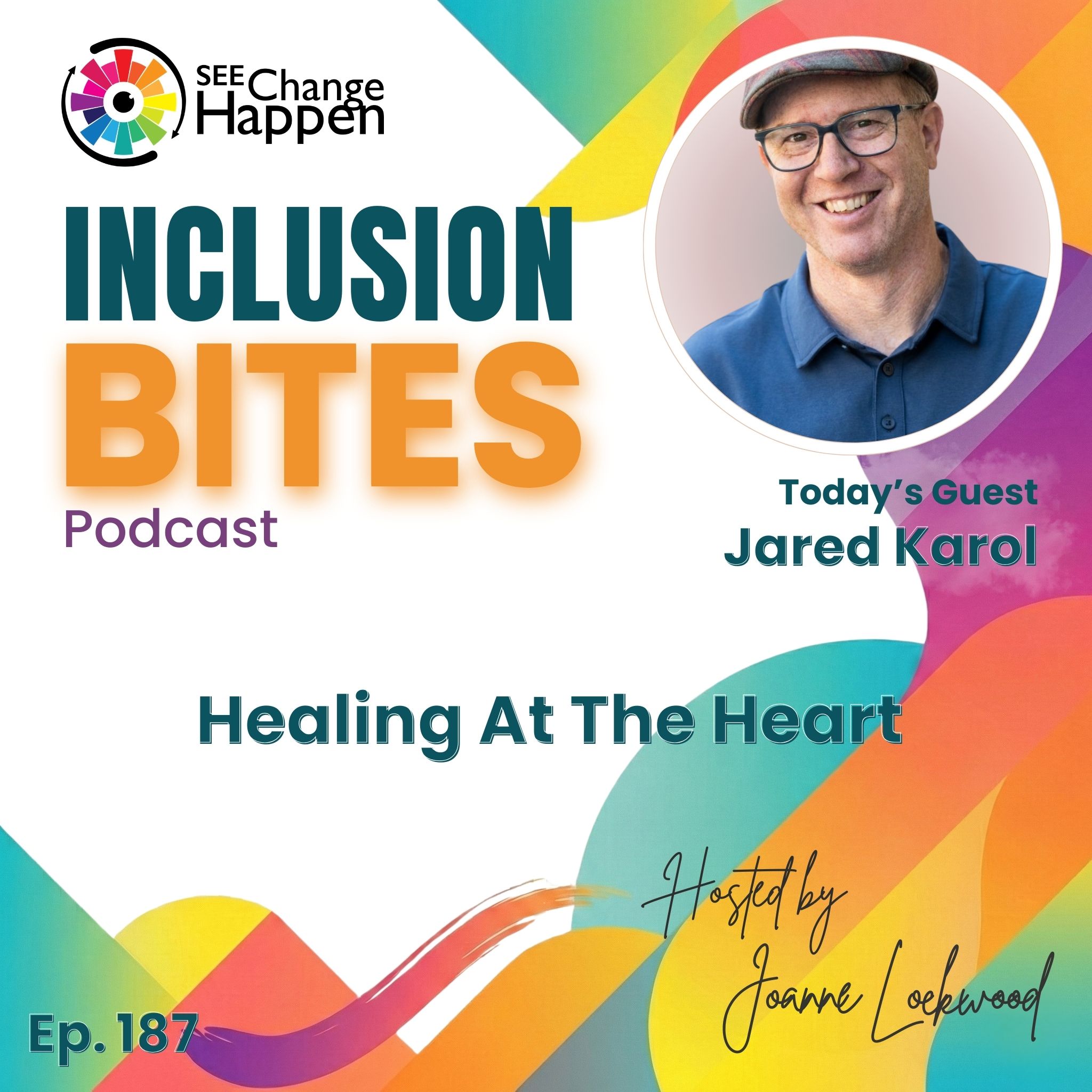
Jared Karol explores the intersection of social change and personal healing, illuminating the power of equanimity, self-awareness, and connection to foster sustainable activism and transformative inclusion.
In this episode of Inclusion Bites, Joanne Lockwood speaks with Jared Karol about mental health wellbeing trauma.
“How are we going about the work that is going to be effective and sustainable and build community, build connection.”
Explore
Navigate this episode
Joanne Lockwoodhost
Foreign.Welcome to Inclusion Bites, your sanctuaryfor bold conversations that spark change. I'm Joanne Lockwood,your guide on this journey of exploration into the heart ofinclusion, belonging and societal transformation.Ever wondered what it truly takes to create a world? Remember, everyonenot only belongs, but thrives. You're not alone.Join me as we uncover the unseen, challengethe status quo and share stories that resonatedeep within. Ready to dive in? Whether you'resipping your morning coffee or winding down after a long day, let'sconnect, reflect and inspire action together.Don't forget, you can be part of the conversation too. Reach outto jo.lockwood@seechangehappen.co.ukto share your insights or to join me on the show.So adjust your earbuds and settle in. It's time toignite the spark of inclusion with Inclusion Bites.And today is episode 187, the titleHealing at the Heart. And I have the absolute honour and privilegeto welcome Jared Carroll. Jared is a personal development coachworking at the intersection of social change and healing.
Joanne Lockwoodhost
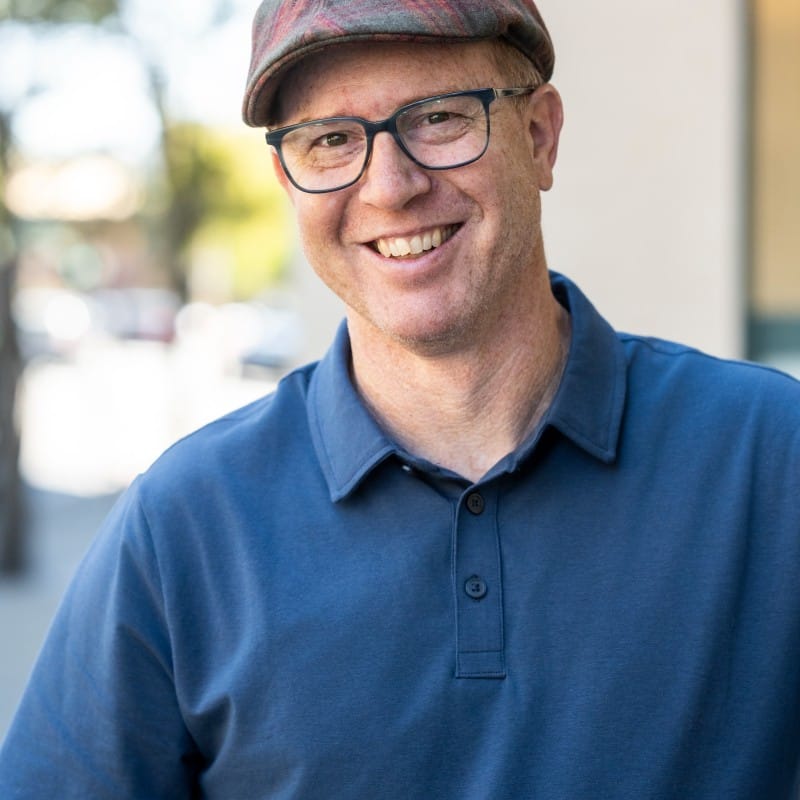
He helps people understand who they are so they can show up more consciously,courageously and sustainably in the world. When I askedJared to describe his superpower, he said it is bringingequanimity to difficult conversations so people can stay present,honest and open instead of shutting down or fighting back.Hello, Jared. Welcome to the show. Hello, Jo. Thank you for having
Jared Karolguest
me. Great to be here. Absolute pleasure. And we were. We've been
Joanne Lockwoodhost
yakking away for probably 25 minutes and we had to press record quickly, otherwise everythingwe talk about is going to end up on the floor and be lostfor time. But we were. We talked about the fact that you livein Oakland, California. I do, yeah. That gave us something incommon because I was in Oakland a year ago. A year and a half ago.
Jared Karolguest
That's right. Well, you said you were at HR west emceeing theconference. I spoke at HR West. I think it was2019. 2018 19, but. Yeah, right. DowntownOakland, 10 minutes, same place. The Marriott Convention Centre, was it?Yeah, they have a big, big building there down like. I think it's.Yeah. So. Yeah, yeah, yeah, yeah. Very cool.
Joanne Lockwoodhost
And. And back at me. You're a football fan, so you've.Sorry, UK soccer fan. So you follow the English Premiership.So you know about Portsmouth and where I come from. Because you follow the team.
Jared Karolguest
I do. I. His. I. Well. And maybe we'll get into this becauseit's part of my journey, but I was a college athlete. Not soccer, butlacrosse. And I was a big Sports guy in my youth, incollege and young, Young adult. And then I decided I didn't want to be thatguy anymore. But I kind of had one. One little thing I couldn't letgo from my youth, which was. Which was soccer. So I decided, well, if I'mgoing to follow sport, I'm just going to pick one, one country. And I choseEngland. And so. So I know the. Iknow the British geography largely through where the soccer teamsare. That's a. That's a really, really good way of doing it. And I know
Joanne Lockwoodhost
many Brits who follow American footballor basketball or baseball, and they know all of the names of theclubs and where they are in their world. So, yeah,I guess if you're going to learn geography, tie it to something andwhy not sport? Yeah, exactly. So, yeah, happy to be
Jared Karolguest
here and talk about whatever makes sense for us to talkabout. Well, let's start with the word that I was you
Joanne Lockwoodhost
put into your bio and show notes as equanimity. Istruggled there. I struggled to pronounce it the first time because I'd never used itbefore. And so I even had to feed it to copilot to lookup what it meant. But you said that word has sat with you for acouple of decades, so why did you bring that into theconversation? I bring it into all conversations about
Jared Karolguest
anything trivial or serious or anything in between.The way I define it, actually, I don't really have a concise,tidy definition like copilot I gave you, but I seeit as a way for us, for me, for you, for anyoneto. The hardships, the suffering,the challenges, the situations that we face, just as, youknow, being human with. With composure, with poise, withcalmness, without. Without freaking out, without getting toodown or perpetuating. Perpetuating astoryline that may or may not often is not true.And then conversely, when you know the quote, unquote, good things happen.Not getting too elated, not getting too high, not getting too cocky. And sojust it's this kind of ongoing self and metaawareness of what's going on and having the confidenceto know I can handle it, even if I don't like it, evenif it's hard, even if I don't know what to do or what to say,I can handle it. So as we both know, doing this type ofwork, those are important skills to have, and a lot of peopledo have them, but a lot of people don't. And then in your superpower, you
Joanne Lockwoodhost
said it's about avoiding shutting down orfighting back. And when you are oppressed,marginalised, at the brunt of somebody else'sbullying or discrimination, those are often the two choices, aren't they?Shut down, run away, tail between your legs, or come out withteeth showing and growling and is tryingto sit somewhere in the middle there where you can engage in the conversation.And that's a really tough thing to do when you're under that psychological pressure. It
Jared Karolguest
is. And I'm a, you know, I'm a cis straight whiteman. So I have, I'm, I'm at the top of the privilege foodchain. So for, I think for a long time, I mean, I've beendoing this work for 25 years. My father was a, was a gay man. Hedied of AIDS in 2000. And that's when I decidedto change really to do the work. And so when I started doing the work,it was the typical kind of social justice warrior, like,okay, time to wake up, Jared. You've been, you know, ignoring all this
Jared Karolguest
stuff for, you know, your whole life and now it's time to not.So I jumped into that work. I was teaching at the time, that was myprofession. And I was, I was snarky, I was acerbic, I wasdogmatic, I was, you know, things were new to me, newtheories, new philosophies, new understandings of historythat I hadn't really, I mean, I had had some exposure tosome of this through my dad, but I wasn't really listening that closely or, youknow, didn't, it didn't affect me who I thought. So I'd say forthe first, you know, eight to 10 years, I was that, youknow, newly woke white guy who was telling everyonehow unwoke they were until I decidedthat that wasn't really effective or sustainable, which I'm surewe'll jump into many, many stories of how and why and howI, how I shifted. But that's, that's a good place to start with where Iwas back then. Yeah, I think it is the temptation
Joanne Lockwoodhost
when you're trying to educate people, you want to, you want to educate them bybeing right and they want to be uneducated by beingright themselves and not needing to be educated. It's trying to find that balanceof how to educate without telling, isn't it? How to show don't tell.
Jared Karolguest
Yeah, it's. Which is interesting you bring that up because I was a teacher for12 years and for most of that time I taught middle school humanities,you know, language arts, writing history, I taught a socialjustice curriculum. So everything was through the lens of power and privilege. And whether itwas literature or history or current events or classroom dynamics, it was all throughthese lenses. And that was. I was fortunate andintentional about finding a school that allowed me to, you know, notonly it allowed me, but that was what the school did and that they expectedand supported us in doing. But to your point, yeah, wesee that the world is unjust, isinequitable, is unfair historically and contemporarily on amicro and macro, on a local and global level. And wewant change yesterday. And so we get upsetwhen people don't see that as clearly or asquickly or as urgently as we do.And so that causes us to. To be more upsetbecause if. If this person or this community or this, you know, thisgovernment only saw. And sothen it becomes charged. And I'm not saying there isn't a placefor charged or for protest or for other things, but which again, we. I'm surewe'll dive into more details, but I think we lose track ofwhat we're actually trying to do and we don't realise that we're actuallynot being effect our. Call it what you want to call it, fervour,righteousness. And I would argue that that has. Hascontributed to the challenges thatwe in this industry, dei, hr, social justice,whatever, however expansive or narrow, we want to define that assome of the challenges that we. That we. I think I, as I've matured, you
Joanne Lockwoodhost
know, I'm in my. I'm in my early 60s. How did that happen? You know,I think over your. The arc of your life, you go throughdifferent phases, don't you? And I think I. I've become to learnthat even though I'm more settled in my ways, more relaxed, morecalm, more pragmatic, more logical, alwaysI'm able to shift my thinking from my amygdala into my prefrontal cortex.Easier. Today. I don't get triggered. I'm able to feed myhuman emotions differently. But I also recognise thatin order to enact change, you need different peoplewith different levels of passion, if you like, for whatever way.You do need the people who are the angry social,not necessarily the mob, but the angry social justice warriors who arefighting for the cause, who are whipping up people who are in thatsame space as they are. But then you've got the people on the other sidewho are looking for political change, which is slow, methodical,nuanced, persuasive, lobbying, all those kind of things.You've got people in the middle who are trying to do a bit of bothand try and do it. I've come to realise that as I swingtowards the more nuanced, logical approach, there'sstill a place for the people who want to wear the T shirt,march, those sort of things. Well, I think
Jared Karolguest
there's. What I've learned is there three, threeperspectives to take in this work. There's the why,there's the what and there's the how. So the why. Iwould imagine or, or hope or suspect that every person doingthis work, social justice, dei, change, work, right, Has. Has a personalwhy. They may or may not have, have be clearabout it or really know it. Maybe they haven't done that work, but there's somethingthat's driving them to do this work, right, which is good. You need that. Orelse, like, what are you doing? Why are you doing this? Right? Then there's thewhat, which I think is what. What you were kind of getting at. Like, whatis your role? So I'm a coach, I'm a facilitator. You know, some.Some people might be, you know, a community organiser, some people might behead of, you know, DEI at A. @ a big company or, you know, whatever.They're. Maybe you're a speaker. So there's. There's the what. And then I wasreminded, as you were talking of, I don't have it super handy. Maybe we can,after the show, we can put a link to it so people have it. Butthere's a woman named Deepa Iyer and she has this.What does she call it? The social change ecosystem. Andshe talks about the different roles that are neededand they. Not all of us are and can befrontline protesters, rebel rabble rousers. Thereneeds. There need to be caretakers, educators, coaches,storyteller. I mean, and she has this whole kind of, you know, graphicthat illustrates it very, very well. And that gets to the.For me, the why, the what, the how, Ithink is under underappreciatedand under emphasised because, especially ifyou see someone like me who, as I said, you know, a little bit ago,very comes from a privileged position doing this work,it's easy to dismiss myangle into this work as well. Of course you're privileged,so of course you can do that. But what about me, who has, youknow, X, Y, Z marginalised identities,which is fair and taking this approachis open to anyone if they have the wisdom andmaturity to see it. And so that's what Ihave come to emphasise and focus on in My workand I can share some personal experiences that have leddirectly to that. But it's the how.How are we going about the work that is going to be effective andsustainable and build community, build connection.It's so easy to dismiss people who don't get it, who don't want toget it, who are hurtful, harmful, but the wayswe've been going about it aren't working and they're not going to bringabout the change that we say we. Want. As you're talking, I'm thinking about
Joanne Lockwoodhost
some famous people in history that haveprobably themselves transitioned through. There's different waysof enacting change. You know, Nelson Mandela, for example,he was a freedom fighter terrorist. Prison probably calmed him down,but he came out a state statesman of the nation, thegrandfather of the nation who then enacted changethrough political discourse, dialogue, calmness and reason.Lech was instrumental in the fall downof the Cold War, the Berlin war coming down in the80s, the Solidarity Movement. He was a freedom fighter. And we lookat Martin Luther King, Rosa Parks, these people started off by,in the protest, freedom fighter space and thentransitioned into the reasonable politician or the logicalresponse. I think. Yeah, I think that's probably a natural arcof evolution. I. Think. Well, it is and it can be,
Jared Karolguest
and I hate to use the word should, but I would argue that it wouldbe beneficial on an individual and collective level if it was thatarc. And, you know, I don't thinksomeone has to, you know, be in prison for 27 years to,you know, to come to that. Not really a conclusion, but to come to thatawareness. Right. So how do you, how do all of us, you know,the people on the street doing this work, how do we come to those, thatawareness ourselves without, you know, those, thosebig dire, you know, historicallyrelevant and known, you know, events in our life, becausewe don't all have those, right? We have, you know, we have our own things.We have our own local things, our own personal things, our own, you know, butthey're just as important. They're just as. They're just as relevant.And so how do we individually decide, you know, what? I'm notgiving up on this work, but I'm going to do it differentlyso that it's more sustainable and more effective.And it's building what I want to see, not just takingdown what I don't want to see. And there's all kinds, you know,there's so many people, you know, contemporary people who are doingthis work. And I've, I mean, I can, I'M sure we'll get into some ofthem. But one who, who immediately comes to mind is actually, he lives in Oaklandas well, Dr. Sean Ginright. And he wrote a book,I think it's fairly recent, a couple years ago, maybe 20, 22 or so,called the four pivots. He
Jared Karolguest
gist of the book is switching from traumainformed work to healing centredor healing centred, healing engaged. And so his first of the fourpivots is from lens to mirror. Right. So the lens isthe world is inequitable, unjust, unfair, weneed to change it. Here's what we're going to do. So it's not like thatgoes away or that's wrong, but the mirror is okay, how doI need to change? What am I doing or not doingthat's contributing to the chaos, to the,you know, to the status quo? And so he talks andI follow his, you know, his newsletter and he send once or twice a week,he'll share a little video and, and he's a, you know, he's a black man.So that's just one small example of this isn't just a privileged,you know, white guy thing. In fact, most of the people who I'vebeen influenced by have been folks ofcolour, queer folks of colour, trans folks, people whoare in, in multiple ways, have experienced and still areexperiencing marginalisation, injustice, et cetera.And so I, I take. What's the word I want to look for? I guessI don't want to say like, oh, I'm glad, I'm glad they're experiencing that, becauseI'm not, but I'm. I'm glad that it's an. So manyexamples of people who have chosen, kind of whatyou were getting at with Nelson Mandela and others have chosen to do theirwork differently and are better for it and the world isbetter for. It. Yeah. Again, as you're talking, my mind's
Joanne Lockwoodhost
racing ahead, thinking, you touched a few buttons there.And I'm thinking in my own experience, about12, 15 years ago,I awoke for one of the, you know, to paraphrase, lived same as you.I'd lived a lived life of privilege on the outside,benefited from that privilege. And then suddenly I, I stepped out ofthat lane into another lane and it was, it was a lottougher, a lot harder, a lot more. And I think once I look backat that time, I definitely see myself transitioning through thatawareness of what's going on in the world. Suddenly I'd losta lot of privilege and gained a lot ofmarginalisation for Want a better way of describing it. And I think thatthen woke me up to the injustice in the world.I think maybe when you say you talk to people there, queerpeople, people of colour, whatever it may be, is they've, they've, they've,they've started to. They've experienced this wind in their face all their lives, or theysuddenly open the door and it's hit them and you go, hang on a minute.Whereas if you never open that door, you never feel that wind, you never havethat feeling of being marginalised. It's really hard to buildempathy with someone who has. You haven't got any reference point, have.
Jared Karolguest
You? Well, that's why, you know, people in our industry use the phrase, youknow, do the work. It's ubiquitous, right? Do the work, do your work, do thework. We gotta do the work. And we do. But I think sometimesdo the work is. Is implied toonarrowly, I think, when people, because I've had somany conversations and either personal conversations or witnessed kind ofconversations or been part of online conversations, where do thework means get wokeand they're talking to privileged folks. Do the work.Understand kind of what you were taught, understand why we're so upset,why black folks are so upset about racism, why queer folksare so upset, et cetera. And that is necessaryand I don't disagree with that at all. Yes, do that work.And to me, do the workalso includes just as equally. And if I was agood graphic designer, I'd have some fancy little graphic that would show thisin maybe like a quadrant or something, means doyour inner work, do your inner work, do yourhealing work, whatever that looks like. For me, it'sbeen Buddhist meditation, mindfulness philosophy. Right.The equanimity stuff that we started with doesn't have to be everyone's,you know, angle into it, but there has to be somethingthat is, that is healing. Or else, as I keepcoming back to, it's the other work that you're doing isn't goingto be effective or sustainable.So the other part of my story that, you know, I said my, My father,he was. So I was, I was 14and I was, I was. Lived in San Diego and my dad had moved toSan Francisco. We'd been there, I think, since I was 11. So I'd go upand visit him and it was kind of cool to come from the suburbs andgo to the big city and ride the cable cars and, you know, all the,all the fun. Go to, go to Haight street and see all the hippies. And,you know, all the. All the San Francisco touristy things. So I was 14,end of my freshman year in high school. And he sat me down at theend of the weekend, and it was usually one of those, hey, I love you,Jared. I wish we could see each other more often. You're a good kid. Youknow, all those things, which he did do. And then he said,you know something? You should know I'm gay, so I'm 14.This is the late 80s. We know what was going on in the world,especially in the United States. Reagan was still, I think, president,maybe for a little bit longer. So there's a huge stigma.So I didn't tell anyone. I went home. I cried, I wenthome, and I didn't tell anyone for almostsix years. I had the privilege of geographical separation. No one knewmy dad. They knew he lived in San Francisco. And I'd go up and seehim three, four, five times a year. But I went throughall the rest of high school and halfway through college without telling anyone because Iwas embarrassed. I was ashamed. I was confused. My dad and I had a. We.We. We had a decent relationship. But abouthalfway through college, I was a college athlete, and I wasn'tmature enough to. To have a. Have a gay dad, toown that, right? So he and his partner would visit, you know,every once in a while, and I'd have to arrange things or make up lies.And. Yeah, it's my dad and his friend, and we're just going out to lunchand. No, no, you know, we don't need to invite any of my friends. Dad.
Joanne Lockwoodhost
It's. Cool. Like, that kind of. I don't know if I can swear on this
Jared Karolguest
podcast, but that kind of bs, right? So finally,summer of my. So after my sophomore year, about halfway through college, I was withmy friend Amy and I. And she was my best friend since.Since high school. She went to school in Colorado, and we were in the mountainscamping, and I said, amy, I gotta tell you something. She's like, what's going on?You're being weird. I said, my dad's gay. Said, big fucking deal.So I was 20 years old. And that was. That was the. Themoment that I wouldn't say I changed all of a sudden. And just like, withhis was this, you know, gay. Gay rights advocate. But thatopened up like, oh, like, this is. This is. This is a me thing.This is like a limiting belief that I have. So itstarted growing and growing a little bit. And then when he was. When I was27 is when. When he passed.And so when he,he, he was HIV positive and so he, I would go up and visithim. You know, I'm in my mid-20s now, out of college, still living back inSan Diego and I'd go up to visit him and he started goingto these gay men's meditation circles in Dubose,Dubose Triangle. People know the city, it's right next to the Castro. It's like kindof a cute little neighbourhood. And it would just, it'd be him with like threeother men in their 40s and 50s and this woman who led itand then me, this 26 year old kid and,and this woman would lead these like little. It was in this superhuge like open yoga studio with skylights and hardwood.It was beautiful. And she would lead us in these, in thesemeditations. Sitting, we do like walking, chew, like
Jared Karolguest
eating like all this stuff that I know now is like, you know, Buddhist stuff.But at the time I hated, was physicallyuncomfortable, it was hard to sit still.But my dad, who was never religious or evenspiritual, he knew he was, you know, he knew he was going to diesoon. And so he felt that he needed something to groundhim. And so that's what he did. And I was,I know now that I was lucky to be exposed to that. I probably wentto those sessions maybe not even a half a dozen times,probably four times. And when he died I decided,and it wasn't with the clarity that I had, but Idecided that I would do the workthat I described before to understandthe injustices, but I would also do my personal workand develop equanimity, develop,cultivate the healing for myself so thatI could do the work more effectively. So that's theorigins of the, or the, the original origins.There are more recent stories that have deepened my appreciation andbelief in the need for healing. But that was the,the original genesis of. It. When you said yeah, your friend
Joanne Lockwoodhost
said was it? Amy said, big deal, you know, no big deal.No biggie whatever about your dad being gay.Completely, completely, completely resonate with that as you're saying that I was thinkingthe only person is technically a big deal for. And this is myown experience here is there is your wife, your partner, your husband orwhatever it may be in that relationship. That's probably the only person whoit's allowed to be a big deal for because it is so intrinsically linkedto that other person, that contract you have in a relationship. Whereasif you're a parent, a child, a brother, sister, friend, big deal,it's yeah, get over it. And my wife, it was a big deal forher. It was a big deal for her. Be gender transitioning. Everybody else wasinconvenienced by it, everyone else was kind of having an opinion about it. Butone person that it really mattered to was my wife and we were ableto work through it. But, yeah, it was a big deal to. Her. Well, it's
Jared Karolguest
interesting you share that because that's a good segue tothe next part of the story, which is so whatI've learned and come to understand abouthealing. This is a vast generalisation, but I think it'shelpful just for this conversation, two thingscultivate healing, two areas ofmindset, connection and letting go.I don't know how much time we'll have to get into the details of whatall those look like, but generally letting go doesn't mean ignoring ordismissing, just means being lighter.Right. Understanding what's going on for ourselves,for the world, for the people we care about and notcarrying it so heavily and so, so oftenand so much where it impacts. Your.Right. It's where you're not. Equanimous. Right? Andconnection. Right. Connection toother people. Right. When we're doing this work, it can feel isolating.Right. People don't get it. People aren't changing like I'dlike them to or as quickly as I'd like them to. You know, where aremy people? Like all these. Things. Right. And it's not just in social justice work,just in life. So it was about. Actually, I was sitting right here at thistable. It's my dining room table, 12 years ago. 12,13 years ago. And my mom was visiting. I havetwins, they're 16 as of this recording, so they were like 4.My mom was visiting and we were sitting at this table, it was a Fridaynight and we were playing cards is what we do.I, at the time, I had a. I had started a. I'd leftteaching and I'd started a daddy blog, probably like in2010, 11. So I had this blog for a couple years and it was,it was. It had some decent reach and, you know, I was in some writingcommunities and. And of course I was initially, I was writing aboutmy kids and kind of more, you know,satirical stuff about being the father of twins and how, How. How hard it wasand everything. But then it started evolving. I started writing more aboutpolitics and my dad, and that was when I first started writing aboutmy stories that I now very openly and easily shareabout, you know, some of what I've just shared and other stories.So my mom was a regular reader of theblog, but she was not a major characterin any of the. Stories. So. And we talkedabout it a little bit. Like she'd leave a comment and you know, we go.But it was very superficial and I kind of dismissed her.So we're sitting here playing cards and out of nowhere. We weren't even talking aboutthe blog. She just says, you know, Jared, you write alot about how your dad being gayinfluenced you and your politics, but you neverwrite about how he wasn't around to raise you. Mike. Yeah,it's like, oh my God. And I don't rememberthe rest of that conversation. I'm sure it didn't.It wasn't like, oh, you're right, mom, like, it wasn't. It was. I probably hadtried to go somewhere else and. But I remember that night very clearlyand that was the beginning of. Or maybe not the beginning,but another clear marker of like. That's right, connection. Here's mymom who. She was 19 when she hadme. Hippie in the60s. My dad was gay, he knew he was gay, butyou don't come out as gay in the United or anywhere in1970. So he meetsthis 17 year old girl, right,Move off to college town, get married when she's 18,I'm born, you know, a year, a year and a half later andthen two years later my dad finally has the courage to say, hey, you know,this isn't working. And he does his own thing. So now my mom is21 with a 2 year old withno education, no, no real skills,and raised me. And yes, we grew uppoor and it was all the things and you know,and saw my dad fairly regularly. Butshe's right, he wasn't, he wasn't around to raise me. And soI realised, or I started to realise and I know nowlike that connection, right, not just tomy dad or to my mom, but connection to people andtheir stories and their realities that, you know, Brene Brown and others talk aboutthis whole of like comparative suffering. Was it, you know,was my dad's life harder than my mom's? Yeah, probably, but who cares?Like they were both hard for, you know, for variousreasons and if we dismiss that,where are we. Right? What we end
Joanne Lockwoodhost
up doing is trading pain, isn't it? It's sort of, yeah, I've had ittougher than you have and it's. We all go through stuff,we all have our stuff to deal with and it's not aboutmy life, is Tougher than yours. It's just, it's all relative, you know, it's,you know, if you got a million dollars in the bankand having a tough life because of something, it's a different experience than if you'vegot $5 in the bank and you're having a tough life.Your circumstances are all relative, aren't. They? Well, they are. And
Jared Karolguest
I think, and I try to bevery mindful of not being dogmatic with my,you know, Buddhist beliefs, but it's been 25, well,26 years now, really, since I've kind of was introduced to some of theseconcepts of, like, equanimity andinterconnectedness and. But we're. I mean, it sounds almost clicheor trite, but, like, we're all interconnected. And soI'll give you an example. I reached out to you, I don't know howlong ago, A month ago? Not even a month ago. Probably three weeks. Ago. Yeah,
Joanne Lockwoodhost
on LinkedIn. Yeah, on. LinkedIn. You know, I have this new.
Jared Karolguest
This new coaching programme that we're launching, which we can talk about in a littlebit. And we. We've been connected for, I don't know, fouror five years. You know, like, just like LinkedIn does. Like, we're connected, butI don't remember you, and you probably didn't remember me, and I. So I reachedout and said, hey, I know we've been connected for a while, and it wasa template message. Right. I know we've been connected for a while and here's thisnew thing and see if it resonates with you. So that's how you invited meto this podcast. Okay, great. That's a great result of theoutreach. Well, similarly, I reached out to someone else who,similarly, we'd been connected for five years, but had no idea who they were andsaid this message and she responded. Before I continue thisconversation, please point me to your organization's publiclydisplayed stance on the. On the genocide in Palestine. Fairenough. We don't have one. I don't have apublicly displayed stance on the genocide inPalestine. So what I maybe should havedone is just said, we don't have one. Thank you for your time.You know, next. But I chosecuriosity over boundaries. And Isaid, hey, totally get that. I am. I am awarethat there's a genocide in Palestine. I believe there is one. I'm against it,but I've chosen and I try to give some philosophy of my equanimity inmy life and all the things. And, you know, she wenttotal ridicule and mockery. And what's the,what's the argument when you attack some ad hominemattacks? It's my character, which. And then I continuethe conversation. Cause I'm like, okay. Like, she's. And it just kept evolvingand it was really. It was really immature. Sothen I said, okay, hey, obviously this isn't working. You know,she's making fun of the, of the programme that we were, that we were having.She was making fun of my, My outreach skill, you know, just anythingshe could do to belittle me. So I'm like,okay, I can handle that. Like, it's not about me, it's about her. But it
Jared Karolguest
still doesn't feel good. But it wasn't like, it didn't. It didn'tchallenge my belief in what I was doing. But then Iwent and I had been trying to write a little bit more on LinkedIn justto, you know, kind of get. Get some, Some thought leadership out there. She wentthrough about six or eight posts and used the laughing emoji. Sothat point I had to block her, which I don't like doing. But it wasclear that she not only wasn't interested in what we had to offer,which is totally fine. That's how sales works. Like, not everyone's gonna be like, yes,sign me up for your programme. But then it went that. And so I wasthinking like, hmm, a healed person doesn't do that.And what was the impact of that for her? I don'tknow. I'll never know because obviously we're not gonna. She's not gonna have a conversationwith me. I don't think she has a podcast and isn't gonna invite me onif she does. So I share that as just a very recent example ofwhat I'm. What I've been seeing for years and years, andI would never have done that, what she did, but 15years ago. I do that type of stuff.Maybe not as extreme thinking that, because thecause is just that the. How the behaviouris acceptable and it's. It's. Not. So
Joanne Lockwoodhost
I. I've been the brunt of other people's adhominem attacks and laughing emojis on my posts. Andyou should look at my TikTok and my YouTube channel and all the comments onthere. It's just. Yeah, it's all personal attacks. There's no argument. It'sjust attacking me, my voice, how I look, how. Yeah, all this kindof. Well, and so. Yeah. And
Jared Karolguest
I mean, I don't need to tell you this, Joanne like someone listening to thisconversation right now might say, jared, you're a straight man.Joanne is a trans woman, like, who has it. Harder.
Joanne Lockwoodhost
But. That'S. That's not the point. It's the whole master's tools will never
Jared Karolguest
dismantle the master's house. Is that the goal of,you know, marginalised, oppressed people? To flipit so then they can. No, I don't think it is. Most of the peoplewho I talk to, who I'm in relationship with, don't. That's not the goal.And A, that's not really possible. And B, it's notsustainable. And so it's the shortsightednessof it that, you know, it doesn't get us where we'retrying. It's just colluding. It hasn't changed me. I mean, I told her andshe chose not to believe me, that. I mean, it's not that I disagree thatthere's a genocide in Palestine or that it. That it's bad or that it's harmfulor that it should stop. I agree with all that. And, you know, hermocking me doesn't make the genocide. End. What it did
Joanne Lockwoodhost
was it shut down an opportunity for education.Because I'd love to have a conversation with people about their perspective onwhat's happening. I've got friends on both sides of the equation wholive in that region and I hear different opinions. I've spent some time inTel Aviv and Jerusalem and Bethlehem and places like thaton work conferences and things, meeting the people. And I've got people in thiscountry who have strong opinions on both sides. And myview is the death, the killing of thelives being ruined, the carpet bombing of propertyand the destruction of assets and wealth. Completely abhorrent.But beyond who's right and wrong, we just stop it.And then we can work out how we get from where we arenow to where we need to be, which is getting people back into life andgetting things moving. I think we have to unpack all of thewhy and the blame. We'll just spend all our time blaming each otherand throwing. Throwing more missiles, either words or things. We're not going tosolve it, but we need to. We need to bury our. Bury our prisoners ofour beliefs and just say, hang on a minute. Holding onto where we are nowis not going to change. Anything. Yeah, well,
Jared Karolguest
that. I mean, you use the word holding on. And as I said a littlebit ago, what I've come to understand is two things lead tohealing, letting go. So not letting go of fighting for justicebut letting go of the, the dogma,the, the us versus them, all the things, right? Andthen connection wants to be. Right. People want to be right, don't. They?
Jared Karolguest
Well, when you were, when you were summarising kind of, you know, what Ihad shared, I thought of a phrase that I learned recently in a bookcalled Cultish. I forget the author, but shewas writing about just, yes, like actualcults, like Manson and you know, Jonestown and stuff, but all just the kind ofthe, the cultish mindset around things,even like marketing and everything. And she said, you know,when, when you know, aleader or a member of a group. And I would say if you'veread Woke racism by John McWhorter, he talks about this like the,the Woke mob is kind of a cult. It's like this religion, right? Likeeither here's, here's the right way to believe and if you, if youdeviate from that, then you're going to be excommunicated is, you know, the,the extent of the analogy. Right. But this author inCultists, she, she introduced a phrase that I hadn't heard before called a thought,a thought terminating. Cliche. Okay. Cool.So I don't know exactly what this woman who I was talking about, whatshe would have said that would exactly fit that as a thought terminatingcliche. But the whole exchange was a thought terminating cliche. Shewasn't interested in dialogue, she wasn't interested in nuance. She was interested in Ididn't meet her standards and that was not okay. And therefore Iwas eligible formockery, ridicule, et cetera.So in the grand scheme of things, that's pretty minor. Like I have equanimity, Ican handle it. I'm not, I don't take it personally, but likethat kind of nonsense happens all the time.And so I'm finding there seems to be adivide. Maybe not a divide, a continuum, I think is a better wordof people who are somewhere on their awarenessof what healing is and looks like and the need for itpersonally and as a society from,let's take this woman probably isn't interested in itat all. Although I don't really know because I'm not going to have thatconversation with her. To people who like, yeah, like. Oneof my favourite thinkers and writers is Lama RodOwens. He's a queer black man and he's a, he's a, you know, alama, ordained Buddhist lama. Andhe's written a couple books. His first one was called Love and Rage. And itgets at exactly this dynamic, the worldis messed up. It has been for a long time and it's personally affectedme as a gay black man and I'm just gonna selfdestruct if I don't change. And so he, he did, hehas, he is. And his new book, newish bookis called the New Saints. He's like, how do we,how do we hold all of thiscomplexity and nuance without self destructing,without giving up or compromising our values,but also without self and selfdestructing and causing more chaos, more destruction toothers. So it's people like him who have lived itmuch more deeply than I have, who I'm learning from.And there are people out there whoare toward that end of the continuum of understanding andappreciation and action. But there's still a lot ofpeople who are the social justice warriors who think thatthe cause is just so. The behaviour is. Just. What you're trying to do is
Joanne Lockwoodhost
you're trying to. You're waterboarding people really, aren't you? You're justpouring water and hoping you drink this, drink this, drink this, drink this.Not allowing people to breathe. When you're that passionate,you think that everybody thinks like you or you want everyone to think like youand be angry like you and you're all this baggage. Yes,it's important that people hear your story. What. We're nottrying to divide up between the what you believeand the why you believe it. This scenario youtalked about here, you never had the opportunity to understand the why. Whyare you so passionate about this topic? If you lost a loved one,if something happened, your personal attack on you, this is whyyou're so angry, so fired up. You never got the point to buildempathy, you just built, as you said,it's at the beginning. Shutting down or fighting back. She was fighting back. You wereshutting down. There was no way of. I'm out.Goodbye. We're now asking these questions. We want to know what her passion was, whyshe had this. All that educational purpose has been lost becausethe disengagement. Happened. Yeah, well, to her it was very clear as
Jared Karolguest
I'm processing it, or translating it, I guess, right is there's agenocide, it's wrong. People need to fight for it,do whatever they can, even if it's small. You're notmeaning me, you're not. I don't see anything thatdemonstrates that you're, you know, at thelevel of understanding and agreement with me. Sotherefore you are, and I learned this term recently,an unreal. Other. Okay. Which I mean,that's basically what historical oppression does totrans people, to gay people, to black people, to poor people,to immigrants, to. Right. They're unreal, others
Joanne Lockwoodhost
so dehumanising. Basically. Dehumanising, Right. Because if you
Jared Karolguest
dehumanise, if she comes to this quick, youknow, conclusion that Idon't get it, don't care, ignoring, you know, basking inmy privilege about the genocide in. InPalestine, then I'm an unreal Other, then Idon't. There's no need. There's no need to haveempathy, curiosity, compassion for me because,you know, I don't deserve it. Which is exactly whatIsrael is doing to Palestine. Andcount dozens, hundreds, thousands of examples from history thatexactly the same type of thinking. Right. And sowe're just repeating, you know, we're colluding.There's a great book called the the Anatomy of Peace by theArbinger Institute. And the main thrust of it iswhen our heart is at war, as to use their language, whichdoesn't mean hard at war, doesn't mean we're angry, we're upset,we're seeing something that needs to change. It just meanshow are we processing those emotions. So if our heart's at war,whether it's an interpersonal conflict or a global conflict,there will never be resolution. Never. We're justcolluding. And so that's where I've landed the lastcouple years is. It's a clarity, Joanne. It's aclarity of like, I don't believe any less,any less than I used to about the injustices in the world,but I also see more clearly about what's notworking for me and for all of us, and I'm not gonna be part ofthat collusion and anymore. And I'm. Not. So calling it in rather than
Joanne Lockwoodhost
calling it out, just be partly educated rather thanthe stop. Sign. That's a. Yeah, that's a way to summarise it, I'd say
Jared Karolguest
to use that language. My calling in is doing the coachingthat I do, right? Iswho's ready, who sees this, even justa little bit, and knows that there's a better way,but for whatever reason, hasn't gone that routeyet. So that's where I. That's. That'smy version of calling in, hey, I'm calling you in todo some. Some deep inner work, some mirror work.
Jared Karolguest
You got the lens part pretty down. I trust that you understand the issuesand you see why there's a, you know, whythere's problematic things going on and why they need to change.I'm not questioning until you show otherwise. I'm going to trustthat you got that part down. What I am seeing very clearlyis that you don't have the inner part going on. So if you'reinterested in that, because you can't, you know, this woman that Itold the story, she's not going to be a coaching client of mine.Although, I mean, you know, she could be.She's a good candidate based on her behaviours. But, you know, if you're notinterested in going there, I mean, just like any coaching, like, you're notgonna, you know, it's like kids taking piano. If they don't want to do it,they're not gonna. They're not gonna do. It. So,
Joanne Lockwoodhost
yeah, I mean, as you pointed out, you know, you reached out to me withpotentially the same message you reached out to her with. Clearlyit was a template. Clearly it was a salesy kind of like, yep, do youwant to do my coaching programme? Pay me a hundred dollars or whatever it was.You've got two choices at that point there. You can either get sort of likeabusive trend or disconnector whatever it is. And depending on what mood I'm in, quite. Sometimes I'lljust sit there and playfully say, not for me, but if you want to comeand talk about my podcast, let's do it sort of thing. And that's what I'd.
Jared Karolguest
Hear. Yeah. So here's. Who was it? I can'tremember who it was. It was someone you wouldn't think of, but there was this.So I was. I'm also a certified purpose coach. So like seven, eight years ago,I got my purpose coaching certification. It's all about like leadership style andintrinsic motivation and kind of what motivates you to. To make impact and to dothe things you do and stuff. So it's all integrated intoall this. But so purpose, right? This idea ofpurpose is like intrinsic motivation, meaningauthenticity. And there's, you know, all kinds of different angles one couldgo into, like, what is your purpose? But sometimes people,oftentimes people conflate purpose withpassion. So the passion, you know, people. Idon't like to use the word passion. I don't mind if other people do, butI don't personally use it. I don't consider myself a passionate person. If people want
Jared Karolguest
to, you know, describe me as that, that's. That's fine. But this woman, thisauthor, I can picture her doing this little mini TED Talk, but I don't knowwho she is. She says sometimes our passionbecause we're so passionate, and it gets so charged because we're sopassionate about whatever it is we're passionate about gets in the wayof our purpose. So that our purpose, our truewhy, doesn't really actualize.So to me, that is a nice little encapsulation of, like,what healing means. How do you let go? Which, again,doesn't mean ignore or, you know, kind of get rid of stuff youcare about, but how do you let go of that passion so that yourpurpose can come through? And I thinkthat's part of. That's a lot of the work that I do ispeople see that inflation a little more. Clearly.
Joanne Lockwoodhost
Back to the ad hominem attacks technique I found that seemsto work for me. Is I a bit like in the Matrix whereNeos or, like. And the bullet goes flying straight past? I kind of try anddo that because the person who'sattacking me doesn't know me, knows nothingabout my values or anything like this. They're using thisstereotypical Persona of me, and I always think ofit. It's just what they're doing is they're spraying graffiti on a wall.It's just raising angry words on a wall. And Idrive down the street and I see the graffiti on the wall. Okay. It makesme feel worried and threatened because it's there, but it's just graffiti. Andall I've got to do is just keep driving and drive past it. So I'mdoing that sort of, Neo, bullet passes me, they're attacking me, andall they're really doing is spraying graffiti on a wall behind me. And it's not.It's not about me. It's about their anger about something, and it's not aboutme. So I'm able to, you know, this equanimity you talk about being able tohold this space. I don't absorb it. I justgo, whoa. Yeah, okay, well, it's not me. You'retalking about somebody else here. Because if you knew me, you would not say. That.
Jared Karolguest
Exactly. And even that's a beautifulanalogy with the metaphor I can picture, especially living inOakland, San Francisco. There's lots of graffiti around,some of it actually quite beautiful. But that's a whole nother. Conversation.
Joanne Lockwoodhost
Yeah. Street. Art. Yeah, but exactly. There's another. I
Jared Karolguest
mean, I'm a big reader. If I was downstairs, you'd see my big library.But another book that I. That has been fundamental,foundational for my belief system is theFour Agreements by Don Miguel Ruiz. And it's interesting whenI bring up that book either people go like, oh, my gosh, I love thatbook. If they've heard of it, Right? I love that book where they go, yeah,that's like pop spirituality, which is totally fair. It's like, you know,150 pages. But for me, thefour agreements. The first agreement is don't take anythingpersonally. I'm sorry. The second agreement is don't take anything personally.And in the book, he says, nothinganybody ever does is because of you.It's always because of themselves. So that.Now, that doesn't mean it's easy to take the. You know.But that's what we do. We know that foundationally and weprocess that. And maybe we need coaching ortherapy or other sources of support,but if we know that that's not about us, and if wefeel confident that we're acting in alignment with our values andintegrity, the more we practise that,the more we can see it clearly for what it is. Right.I'm not a cause of the genocide in Palestine. No matter howmuch this woman wants to paint it as that, it's abouther. Right. But collectively, we can. We can all agree,
Joanne Lockwoodhost
need to stop. Whatever's going on needs to stop. And we asa world need to help people rebuildand press pause on what's going on at the moment. Have conversations. Yeah,yeah. And me putting a statement on my website won't do that, but I willspeak up about my opinion in situations where it's relevantcompletely all the. Time. Well, I'm. I'm inspired by. You brought up
Jared Karolguest
Nelson Mandela, like, you know, Thich Nhat Hanh, who just dieda few years ago, actually, on my kid's birthday, I think it was two yearsago, three years ago, you know, he was a Vietnamese Buddhist monkwho got exiled during the Vietnam War because he was speakingup, you know, and he wasn't saved. So he. Ican't remember if he ever eventually did go back or not, but basically, he nevergot. You know, he didn't really get to ever go back to his country andhe continued his work and he died, I think he was 1995. So for60 years, he was doing his. Youknow, what was his phrase that he used? Like, active Buddhism orsomething like that. So it was, you know, people think of Buddhism like, oh, goin a cave in the hills and meditate for 20 years. It's like, yeah,people do do that. But the real purposeis to understand clearly so you can enact changein whatever ways you need to do. And in his case, you know, he wasa writer, he was a speaker, he was training other people to, you know, tosee things. Hilarious. So this whole argument of like, oh, if youwere really, really impacted by things, you would think differently. No,I don't, I don't, I don't buy into that as a, asa kind of wholesale philosophy. Yes. Are there people who are privileged andignorant? Yes, of course. But, you know, that's nota default blanket statement that applies really for anything about.
Joanne Lockwoodhost
Anyone. Is the world getting more polarised or are wejust seeing it through our current lens? You know, social media,the mainstream media pushing people against each other, drivingrevenue from clicks and anger. And is it, are we gettingworse? Is this ever going to end or is it just a symptom of the.
Jared Karolguest
Times? It's hard to, I mean, I'm not a, I'm nota scholar of like, you know, journalistic and social mediaand media trends, but I, whenever I see someoneor a report or an article or something, kind of say, like, you know,times are worse now than they ever have been. I always wonder, like, is thattrue? Like, I mean, I don't know. So I don't know the answerto that, Joanne, you know, comparatively now versus then or, youknow, another time. But I will say thatit's the way we interact with each other, whether it's online,like on, I mean, I'm only on LinkedIn and even decreasingly thesedays as well, does contributeto everything we've been talking about and not just this story that I've shared,you know, with this woman. That's a, that's an extreme example. But even just thelittle ways that we interact with each other ordon't. The ways. And I'm sure if you asked a hundred people to tell youabout the LinkedIn algorithm, you'd get a hundred different, you know, examples of why it'smessed up and how we can't figure it out. So I'm, I'm the hunter. Idon't know how it works, but I do believe it does rewardprovocative. And I, because I used to be a much,a much more frequent writer on LinkedIn five, four,five, six years ago, and I noticed like, okay,I'm going to write a post. If I write it this way, it's going togo. If I write it this way, it's likely to get a lot of. Andfor the most part, I, I was right. And so,you know, did I contribute to what we're seeing? Yeah, probably.And that's part of the healing process is I'm notGonna. I'm not gonna do that. Anymore. Which. Which
Joanne Lockwoodhost
is more successful? A million views, hundreds of reactions andcomments, or 5 views and someone takes action to the positive.Someone taking action is the objective. If it's just peopleclicking and getting torn up, that's not. That's not. That'snot change. That's just outrage. Isn't. Is.
Jared Karolguest
It's What's. There's a phrase. Is it like. There's like outrage bait orsomething like. That? Yeah, clickbait. Outrage bait. Yeah, I know. Yeah. Just.
Joanne Lockwoodhost
So you're just fueling it. Fueling the trolls, aren't you? You're not careful. Yeah. Well.
Jared Karolguest
And, you know, at the heart of all this, Joanne, is. Which is.I don't know. I don't know if it's really an elephant or not, but it'scapitalism. Like, we all have to make moneyand LinkedIn is a social, you know, professional networking platform.And, you know, you gotta try andin whatever you're, Whether it's direct, through messages or writing posts, you're tryingto sell, you know, who you are, your positioning,your branding, Maybe you're trying to sell a specific service or a, you know, product,like. And that's what capitalism breeds.It breeds, you know, competition, and it breeds,you know, us versus them. And this kind of,you know, scarcity mindset,which we're all. I know I've been guilty of it often and I, youknow, I'm trying. I try to be aware of it and kind of cultivate theopposite when, just like anyone else, I need to make money as. Well.
Joanne Lockwoodhost
Yeah, don't we all. So if you're writing a. Ifyou. If you're writing a book called Equanimity for Dummies,what would be your top two or threethings to take away from. This? I would say start
Jared Karolguest
and practise a meditation. A.
Joanne Lockwoodhost
Meditation. Practise. Cultivate inner peace and
Jared Karolguest
clarity proactively. It's not like, oh, my gosh, something badhappened. Let me go meditate, okay? I feel better. No, that's not what it's about.We meditate so we can cultivate the behaviours and themindsets that we want to have.When the hard stuff happens, that's the inner work again, itdoesn't have to be meditation. That's what I've chosen, the Buddhist kind of meditation,mindfulness path. There are other ways that work for people,
Jared Karolguest
but that's what I would say is if you have that practiseand you've kind of been dabbling in dabbling in it, likeconcretize it, do it because it's gonna saveyou and it's gonna save us, I would say,which, that will help you do these other things, which iscentre on two things that are going to promote your own healing.Connection, true connection, whether it's with people you know well andlove and maybe live with or any interaction online,at the grocery store, in the community, in trafficcentre, connection, however small, andresist the urge to other,to gossip, to dismiss, toridicule, to mock. You can disagree,but really be so the other, the first agreement of the four agreements is beimpeccable with your word. And the other thing related to the healingis the letting go. How can we behave firm beliefs and conviction in those beliefs, but remove thecharge. So that's a skill that peoplecan and do cultivate where you can say whetheryou're a speaker, you're a coach, you're a podcast host, you're whatever your role is,you're right, you're a thought Leader on LinkedIn. You can write withconviction and clarity and purposewithout being an asshole. Because yeah,there are going to be people who will already agree with you. They're like, yeah,but then what about the people who see you as an asshole and maybe wouldhave agreed or been interested in what you're saying if you weren't an asshole?So it's really individual choice.So those are my. Insights.
Joanne Lockwoodhost
Everything you're saying sounds to me this is what emotional intelligence is built on.The self awareness, self management, it's all about that.So obviously emotional intelligence is built on Buddhist ideals and.
Jared Karolguest
Equanimity. Well, it's emotional regulation.And so, you know, a common argument I've, you know,had or seen or been part of or witnessed is, you know, don't tellme, you know, who you white guy to tell me how toreact, to feel like I'm not tellingyou how to. I'm, I'm, I'm inviting youto see things differently and to see the consequences ofyour behaviour. Oh, well, is that more important than, you know,black people getting killed by the police? No, not at all. Butwhat you're doing isn't stopping black people getting killed by the policeor pick your unjust cause thatwe all know is happening and needs to end. Soit really. Is. It. Is. As you said, it's eq, it's, it's self awareness,it's emotional regulation. I guess there's a term kind of in, in the.What's it? Emotional sobriety, which I've come to kind Of.I like that. I like that. Term.
Joanne Lockwoodhost
So there's been a. An amazing conversation. We've been yakking away foran hour and a half bit in the green room and we've. We're probably overrunon this episode. I could keep chat to you all day. In fact, I'm temptedto jump on a plane, come to Oakland, we'll have a. Go to that fishrestaurant. Go to that fish restaurant I mentioned earlier that I went to with HRWest. But, yeah, and I'd love to hire another car and go up to theRedlands and all the redwood forests and things like that and just,just chill out for a. Day. So, yeah, you're welcome. Anytime.Superb. So how can people get hold of you? You mentioned you have a hugeamount of social media, so that. What's the best way of tracking you. Down? Yeah,
Jared Karolguest
so I'm on LinkedIn, just Jared Karol, J A R E D K A RO L. You can search for me on LinkedIn. Also the co founder withmy partner, Cornell. Three Arrows Coaching LLC. There's anotherone or two Three Arrows Coaching on LinkedIn. So if you are looking for thaton LinkedIn, type in the LLC. You'll find us ourprogramme. Our coaching programme is called the three arrows of life. So justthree arrowsoflife.com and you'll get to learn a little bitmore about that programme and how to. How to be part of it, if thisis something that you're interested in. Also, we didn't talk about this. I think wementioned it before we started recording. But I'm also a vinyl dj,so if you are in the Bay Area and you're looking for, you know, privateparties or, you know, corporate events, you can go to djmaju.com ma j u d j ma j u.com and learn about the vinylDJing offerings there. I think that's. It.
Joanne Lockwoodhost
Brilliant. Brilliant. So if you do connect withJared and he does send you a outreach on LinkedIn,rather than just shoot him down, invite him on your own podcast andhave a good chat because it's been absolutely fascinating and I've founda friend from four and a half thousand, 5,000 miles away and it's been fantastic.Thank you. Thank you so. Much. The feeling is. Richel, thank you. Glad to be.
Joanne Lockwoodhost
Here. As we bring this conversation to a close,I want to express my deepest gratitude to you, our listener,for lending your ear and heart to the cause ofinclusion. Today's discussion struck a chord.Consider subscribing to inclusion bites and become partof our ever growing community driving real change.Share this journey with friends, family and colleagues. Let's amplifythe voices that. Matter. Got thoughts, storiesor a vision to. Share? I'm all ears. Reach out out tojo.lockwood@serchangehappen.co.ukand let's make your voice heard. Until next time, thisis Joanne Lockwood signing off with a promise to return withmore enriching narratives that challenge, inspire andunite us all. Here's to fostering a more inclusive world oneepisode at a time. Catch you on the next bite.
Equanimity and Emotional Intelligence in Difficult ConversationsThe Social Change Ecosystem: Roles and the Importance of HealingCultivating Dialogue vs. Thought-Terminating Clichés: The Perils of Polarisation
Joanne Lockwood is joined by personal development coach Jared Karol to explore what it means to bring equanimity to difficult conversations—and why inner healing matters for sustainable social change. Together they unpack how people often respond to pressure and marginalisation by either shutting down or fighting back, and what it can look like to stay present, open, and grounded instead.
Jared shares the origins of his approach, including the impact of his father being a gay man who later died of AIDS, and how that experience shaped his commitment to social justice work. He reflects on his early years of activism, when certainty and snark felt effective, and the gradual shift toward a more mature, healing-centred “how” that prioritises emotional regulation, connection, and long-term impact.
Across the discussion they consider the difference between passion and purpose, the risks of performative outrage, and the way online interactions can accelerate polarisation. The episode closes with practical invitations—such as mindfulness and centring connection—to help listeners show up consciously and compassionately in the work of inclusion and change.
“I'd say for the first, you know, eight to 10 years, I was that, you know, newly woke white guy who was telling everyone how unwoke they were until I decided that that wasn't really effective or sustainable, which I'm sure we'll jump into many, many stories of how and why and how I, how I shifted.”
“But to your point, yeah, we see that the world is unjust, is inequitable, is unfair historically and contemporarily on a micro and macro, on a local and global level. And we want change yesterday.”
“The gist of the book is switching from trauma informed work to healing centred or healing centred, healing engaged. And so his first of the four pivots is from lens to mirror. Right. So the lens is the world is inequitable, unjust, unfair, we need to change it. Here's what we're going to do. So it's not like that goes away or that's wrong, but the mirror is okay, how do I need to change? What am I doing or not doing that's contributing to the chaos, to the, you know, to the status quo?”
“And when he died I decided, and it wasn't with the clarity that I had, but I decided that I would do the work that I described before to understand the injustices, but I would also do my personal work and develop equanimity, develop, cultivate the healing for myself so that I could do the work more effectively.”
“She said, you know, when, when you know, a leader or a member of a group. And I would say if you've read Woke racism by John McWhorter, he talks about this like the, the Woke mob is kind of a cult. It's like this religion, right? Like either here's, here's the right way to believe and if you, if you deviate from that, then you're going to be excommunicated is, you know, the, the extent of the analogy.”
“how do we, how do we hold all of this complexity and nuance without self destructing, without giving up or compromising our values, but also without self and self destructing and causing more chaos, more destruction to others.”
“I'm sure if you asked a hundred people to tell you about the LinkedIn algorithm, you'd get a hundred different, you know, examples of why it's messed up and how we can't figure it out.”
“Connection, true connection, whether it's with people you know well and love and maybe live with or any interaction online, at the grocery store, in the community, in traffic centre, connection, however small, and resist the urge to other, to gossip, to dismiss, to ridicule, to mock. You can disagree, but really be so the other, the first agreement of the four agreements is be impeccable with your word.”
Strategies for maintaining composure and presence in difficult conversations about equity, privilege, and social justice.
How to approach healing as a lifelong process, including the importance of both “lens” (outward change) and “mirror” (self-reflection) perspectives.
Understanding the continuum of activism, from protest and anger through to advocacy and sustainable social change.
Ways to avoid polarisation and build dialogue, including practical approaches to calling in rather than calling out.
How emotional intelligence, self-regulation, and letting go of dogma enable more effective engagement and transformation.
The significance of life experience and personal awakening in recognising privilege, oppression, and collective suffering.
Actionable insights on fostering connection, avoiding comparative suffering, and building empathy even when opinions differ.
One thing to remember
The core takeaway from this episode of Inclusion Bites, "Healing at the Heart," is the vital role of equanimity and healing-centred approaches within social change and inclusion work. True, sustainable impact in DEI (Diversity, Equity & Inclusion) stems not just from external advocacy or impassioned activism, but from cultivating inner awareness, emotional regulation, and meaningful connection. Rather than perpetuating divisiveness, effective change-makers blend conviction with compassion—bridging the urgent "why" of the cause, the "what" of their actions, and the "how" of bringing people together, fostering true inclusion and healing at both individual and collective levels.
Questions this episode helps answer
Jared Karol describes equanimity as his superpower in challenging discussions. What does equanimity mean in practice, and how might developing this mindset transform the way organisations approach conflict and inclusion?
Both Joanne Lockwood and Jared Karol discuss the spectrum from passionate activism to nuanced, political change-making. How can movements balance the need for protest with more strategic, long-term engagement?
The phrase “do the work” comes up repeatedly. How do each of the speakers define or challenge what it actually means to “do the work” of inclusion and justice, particularly regarding inner transformation versus outward activism?
Jared Karol shares how his experience with his father’s sexuality and death led him to social justice work. How can personal stories drive systemic change, and what are the risks and rewards in foregrounding personal vulnerability in professional settings?
Joanne Lockwood links equanimity to emotional intelligence and self-regulation. In what ways do you see emotional awareness either enabling or impeding progress on inclusion within your circles or workplaces?
Jared Karol argues that healing requires both connection and letting go. What might “letting go” mean in the context of social justice work, and how does it differ from indifference or disengagement?
Explore topics
Ideas from this episode
Equanimity and Emotional Intelligence in Difficult Conversations
Reflecting on my conversation with Jared Karol, I was struck by his deep-rooted commitment to holding equanimity—calm composure and balanced awareness—at the core of social change and personal development. We examined the power of emotional self-regulation, especially in challenging circumstances or when one feels marginalised or oppressed.
The Social Change Ecosystem: Roles and the Importance of Healing
Jared and I explored the diverse ecosystem of social change, probing what it means to combine fast-paced activism with deeper, reflective healing. We discussed the ‘why, what, and how’ of activist roles, drawing inspiration from Deepa Iyer’s Social Change Ecosystem—which underscores that caretakers, coaches, educators, and rebels all have crucial, complementary roles.
Cultivating Dialogue vs. Thought-Terminating Clichés: The Perils of Polarisation
A recurring theme throughout our exchange was the struggle to maintain dialogue in a polarised, click-driven world. Jared brought forth the image of “thought-terminating clichés”—stock phrases or ideological assertions that shut down genuine engagement and nuance.
Learn
Frequently asked questions
What is the central theme of this episode?
The main focus is on healing and equanimity in the context of social change and inclusion. The discussion explores how to balance passion for justice with sustainable, compassionate approaches to difficult conversations and activism.
Who are the speakers in this episode?
The host is Joanne Lockwood of SEE Change Happen, and the guest is Jared Karol, a personal development coach operating at the intersection of social change and healing.
What does the term 'equanimity' mean in the context of DEI work?
Joanne Lockwood and Jared Karol describe equanimity as the capacity to handle both adversity and success with composure, poise, and emotional stability. In DEI, it’s about navigating difficult conversations and situations without becoming overwhelmed, defensive, or shutting down.
Why is emotional regulation important in social justice and inclusion work?
Emotional regulation, or 'emotional sobriety', allows individuals to engage in change-making without causing harm to themselves or others, making their efforts more sustainable and effective. Jared Karol relates this skill to his own journey, highlighting its importance in sparse and heated environments.
How does the episode address the tension between passionate activism and sustainable change?
The conversation identifies the roles of both passionate protest and more nuanced, pragmatic approaches in driving societal change. Joanne Lockwood and Jared Karol acknowledge the need for a spectrum of roles—from frontline protesters to policymakers—to effect meaningful transformation, noting that maturing as a change-maker often means moving toward dialogue, connection, and healing.
What personal stories are shared to illustrate the themes?
Jared Karol recounts his experience as the son of a gay man and how that shaped his early activism, leading to attempts at healing and self-awareness. He discusses his father’s influence, the significance of connection and letting go, and his journey toward inner work and mindfulness.
Share this episode
Heard something worth passing on? Send this conversation to someone who needs to hear it.