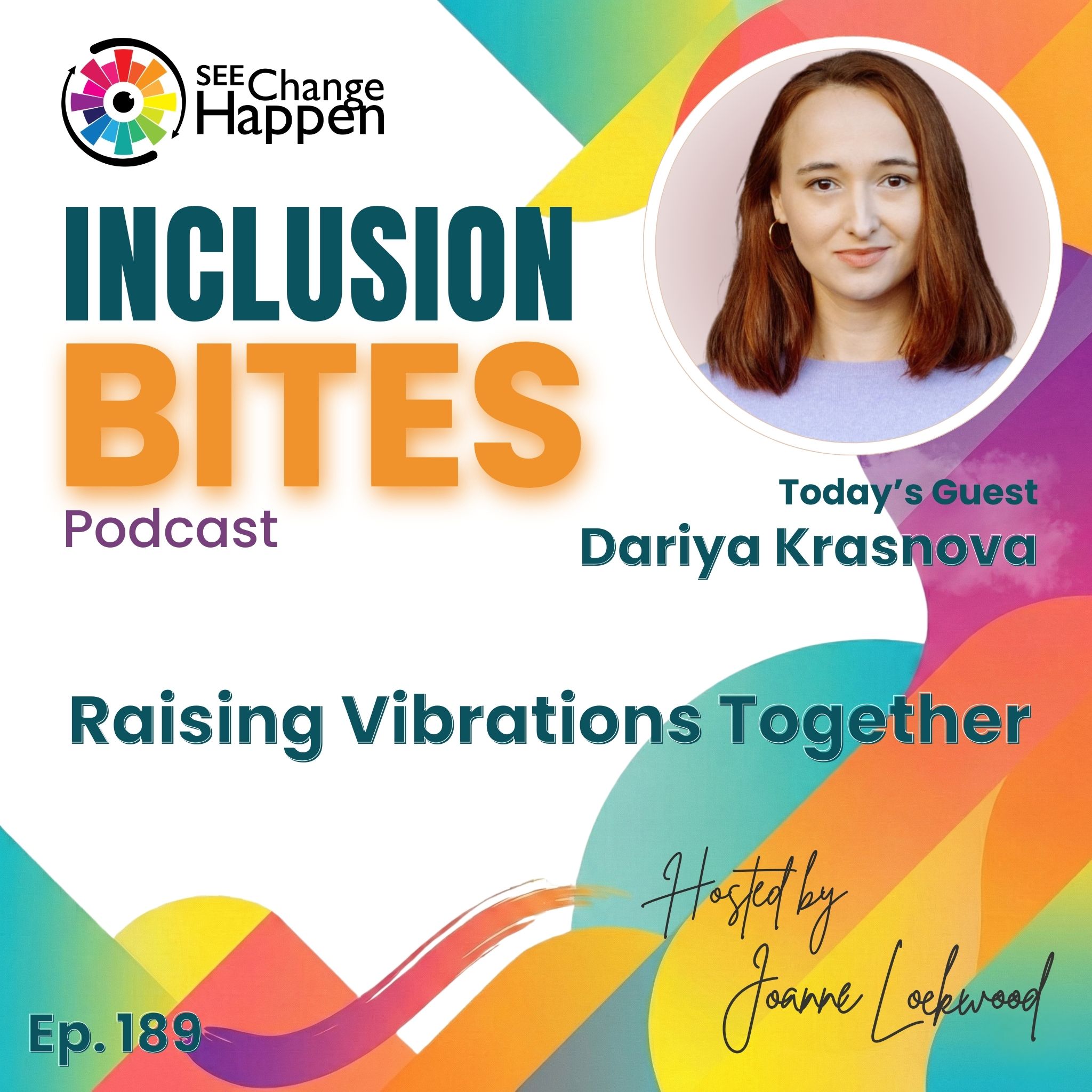
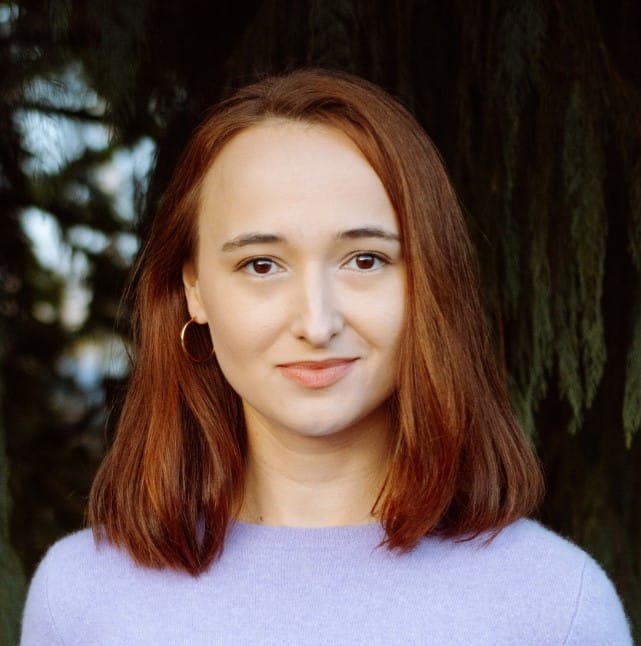
Dariya Krasnova explores the interconnectedness of holistic health, personal authenticity, and collective wellbeing, illuminating how energy, compassion, and self-responsibility can raise societal vibrations and foster genuine inclusion.
In this episode of Inclusion Bites, Joanne Lockwood speaks with Dariya Krasnova about mental health wellbeing trauma.
“I believe that everything starts with self love.”
Explore
Navigate this episode
Joanne Lockwoodhost
Welcome to Inclusion Bites, your sanctuaryfor bold conversations that spark change. I'm Joanne Lockwood,your guide on this journey of exploration into the heart ofinclusion, belonging and societal transformation.Ever wondered what it truly takes to create a world? Remember, everyonenot only belongs, but thrives. You're not alone.Join me as we uncover the unseen, challengethe status quo and share storeys that resonatedeep within. Ready to dive in? Whether you'resipping your morning coffee or winding down after a long day, let'sconnect, reflect and inspire action together.Don't forget, you can be part of the conversation too. Reach outto jo.lockwood@seechangehappen.co.ukto share your insights or to join me on the show.So adjust your earbuds and settle in. It's time toignite the spark of inclusion with Inclusion Bites.Today is episode 189 with thetitle Raising Vibrations Together, and I havethe absolute honour and privilege to welcome Dariya Krasnova.Dariya is a holistic health advocate and co founder dedicatedto empowering others to heal, grow and embracetheir unique path to well being. When I asked Dariya todescribe her superpower, she said that it is championing othersauthenticity and curiosity to follow, foster real humanconnection and change. Hello, Dariya, welcome to the show.
Dariya Krasnovaguest
Hi, Joanne, thanks for having me. So pleased to be here. And
Joanne Lockwoodhost
we were chatting before we went live here. You found this podcastusing ChatGPT. That's fascinating. That's
Dariya Krasnovaguest
correct. That's correct. That's the first time probably. I've used ChatGPT as a kind ofGoogle and I've asked it to find me podcast where it can be guessed.And you were at the top, believe it or not. And I was like, thatsounds amazing. I know, it's incredible. I
Joanne Lockwoodhost
suppose most of us who've run businesses and things, we spend so much timethink about Google search rankings and keywords and things.And when you told me that, it made me think, hang on a minute, I'vegot to think about AI as being my new search engine andmaking sure I appeal. So it's fascinating to know that theInclusion Bites podcast is ranking top of ChatGPT.
Dariya Krasnovaguest
Yeah, absolutely. And I think there is a good kind of tendency or trend nowto be on the podcast. People would like to share their voice,their opinions and kind of help other people empower them withtheir own storeys. So I think it's great that yourpodcast was actually, well, top one was the first one, soI'm sure you get lots of great guests. Thanks, dude.I. Yes, yeah, it's fascinating, it's fabulous. So
Joanne Lockwoodhost
judging by your accent, you're not in Portsmouth, where I'm based in the uk.Whereabouts in the world are you? So I'm based in Glasgow, Scotland
Dariya Krasnovaguest
and I'm trying to integrate as much as I can, trying to put thosewee Scottish words in my accent. But originally Iwas born in Soviet Union, kind of end of Soviet Union,Russia. I'm almost 10,000 miles away here andbeautiful town called Vladivostok on the sea, near Japan andKorea. So yeah, that's, that's where my roots are from. Right over the
Joanne Lockwoodhost
East. East of Russia. That's. You're right, that is a. Well, along way away. 10,000 miles, as you say. The other side of the world. Almost.
Dariya Krasnovaguest
Absolutely, yeah. Very, very far away. How
Joanne Lockwoodhost
does. I'm fascinated. You don't mind me just diving and asking a fewquestions about. So we. Do you remember your lifethere very well? Yeah, yeah. I was born there
Dariya Krasnovaguest
and I grew up there. So I spent the 20 years of my lifebefore I moved to Germany where I spent 10 years of my lifeand then I've been here for just over six years. So I'm verymulti culty and I kind of don't consider myselfto belong to any race or any nationality.I'm just thinking myself as a citizen of planetEarth. Literally this is kind of embracing everything and everyone.
Joanne Lockwoodhost
I love that. Yeah, I do consider myself a citizen of the, of the worldas well. I think life's too short really, to sort of put these artificial boundarieson yourself and say, well, I, I'm this, I'm that. And sometimes it's, it's niceto escape that definition. But also it's nice to have your culturalheritage that anchor about where your roots are. If you like your familyor your heritage. Yeah, absolutely. Yeah. I
Dariya Krasnovaguest
think, I think it's super important to have those cultural thingsand like people embracing their culture and honouring their culture becauseevery culture is unique. But at the end of the day I believe thatwe're actually all one. So we're all very interconnected.So we should all be creating, co creating andcollaborating and just accept and embrace everyone'suniqueness. So this is how I see the world. So
Joanne Lockwoodhost
again, I'm not that familiar with Russia.So right on the east coast, as you say, towards Japan,how does that part of Russia differ from maybe the bit we hear on thenews all the time? The more western side of Russia, the Moscow, the StPetersburg, the Baltic Russia? Good question. Well,
Dariya Krasnovaguest
I left more than 13 years ago now. And I thinkobviously Moscow is more kind of cosmopolitan. I've only beena couple of times and that was like a transit journey and big citieswere never for me. I kind of never liked that kind of crazy lifestyle. Andso I was born in end office and were kind ofdeemed to be criminal era. Well, it's always been, but it's kind ofdeemed to be a bit crazy after the Soviet Union broke. Andso my childhood was kind of. Yeah, it was interesting
Dariya Krasnovaguest
experience that only made me stronger actually. So yeah,I can't really compare both sides of Russia because I'venever lived in Moscow and I've never lived in that part of the worldfrom. I know very little of what's happening right now. I only.I don't have. Even my parents are here, so I don't have anyone inRussia. I have like a couple of people that still keep in touch. I meanthey're just having a normal life because they're very far awayfrom all the nonsense that's happening that I obviously do notsupport. Neither do they, but they,yeah, they just leave their life as good as they can, you know.Yeah. So why Glasgow? Was it just
Joanne Lockwoodhost
put a pin in the map or you had something to draw you there? No,
Dariya Krasnovaguest
no, no. I was dating a Scottish guyfor almost eight years. It was a long distance relationship. I methim when I was in Germany and he was visiting Germany andit didn't work out. That was a great lesson as well. So we splitup during COVID and then I met my fianceand we've been together for almost four years now. Andit's all great. I'm always grateful forevery experiences, whether they're bad or good. There's always lessons learned.Yeah. Basically a typical storey, a guy brought me toScotland but I didn't want to move. I kind of felt that Germanywas over for me. I kind of exhausted it and I wanted tomove somewhere and I did like Scotland because I visited a few times. SoI was like, yeah, why not? Even this is not going to work out. I'lljust stay in Scotland and see how it goes, you know, here I am. So
Joanne Lockwoodhost
you travel for love and that sounds. That's fantastic. Even though the love didn't workout but you found love again, which is the important thing,if you don't mind me saying. Your English is really good with a reallybeautiful Glaswegian accent as well. And you've obviously.Did you speak English before you came to the UK much? Thanks. Thanks for the
Dariya Krasnovaguest
compliment. First of all, well, yes and no. Idid learn English at school, but this is your basic one.Always say that what you get taught at the uni or at school,it's nothing compared to when you go into real life and youkind of facing all the accents and differentpronunciations and words, they do not exist in the dictionary. And evengrammar is like slightly different from what you used to hear. It'scalls. So, yeah, I've kind of. Yeah, well,I've always been drawn to languages. I speak three of threelanguages. So, yeah, I think it's kind of one of the things that I actuallycan learn and absorb and I'm quite good at. Butthere's other things that I can process or my brain can't process at all,which is absolutely fine. But, yeah, as I said, we're all. Unique because
Joanne Lockwoodhost
the Glasgow accent is very distinct as aregional dialect, isn't it? And some of the words and phrases withinGlasgow, again, very Glaswegian centric. Andit's. So I could tell your accent was probably from there.I think I said to you at the beginning of the show, I was inEdinburgh recently and that's a different accent again, it's a lot smoother and richer. WhereasGlasgow. A hard accent, isn't it?
Dariya Krasnovaguest
Yeah. Oh, I've got a funny storey. Aggressive.Totally, totally. And I have a funny storey about it. When I first started to.Actually, when I first started to date the Scottish guy, he was.Kept seeing that word I, but the I meant yes.And I thought he was trying to start a sentence like Iwas going on I something. So I thought it was like, I is me,right? And I was like, he's weird. Like, why is he constantly saying I andthen nothing after that? It's like he's starting a sentence. So thatwas weird. And then I remember being like in a taxi, first few timesand that guy would speak to her taxi driver and I would understandnothing. I could probably understand, like, what word? Like football. Like, okay, they mustbe talking about football. I was at like, God, like.Yeah, but now I can speak to a taxi driver, no problem.
Joanne Lockwoodhost
You sound. Your accent is very class weighted and it sounds, you know,very, very, very easy to listen to. So, yeah, now you've. As long
Dariya Krasnovaguest
as you can understand me. As long as you can understand me. I can understand
Joanne Lockwoodhost
it, yeah, perfectly. You have very little.It sounds very native and I don't know if that's a compliment or not, butit does, it sounds, it sounds really, really. I suppose, because Claspesiandialect is very Strong, you say you've got the I and theMs. And there and all the other and the sort of. The Scottishness of theenrichments of the. Of the. So, yeah, no, you've.You've done well to become Scottish. Thanks. Integration.Integration, yeah. Yeah, but that's not. That's another question, if you don't mind. Before weget onto the. What you do. How. How did you find. So you obviously movedfrom. From Russia to Germany, from Germany to Scotland. How.How do you find it integrating? And you use the word integration. How did youfind that? Being a stranger and being. Finding. Belonging, I suppose, is theword phrase I would use. Well, first, obviously, the biggest shock
Dariya Krasnovaguest
was moving at the age of 20, just parking my suitcase and moving toGermany, to Munich. And then Munich got a very strongBavarian accent. Although I did learn some German. Yeah, thatcultural shock. I first gravitated. It wasreally, really hard. And I started to gravitate towards people fromEastern Europe and people who spoke Russian, whether they werefrom Russia, Ukraine, White Russia or anyone who wouldspeak Russian. You know, I was trying to kind of do this, but then Iquickly realised that this is just me trying to create asafety bubble that's not gonna get me anywhere.So I've actually integrated myself into that. Skinnermet someone who was studying at the uni and at that time was just stillstudying, and I started to go out with students and they were allvery mixed. So it was Japan, Greece, Italy, Netherlands, StStates. And that was great to be kind of submerged in that kind oflovely community of people from all over the world. Andwe were all kind of watching football together. But if. If,for example, Germany were playing German football team, we wouldjust all root for Germany, you know, and it's just. It was allreally nice and diverse and inclusive, you know, andthat helped a lot. And then just kind of trying not to thinkwhere I'm from, to be honest. It's like, I don't thinkit said, I don't think that, oh, I'm Russian and that means X, Y, Z.No, I'm. I'm just a human living on planet Earth and justtrying to be authentic, you know. So, yeah, I've kind ofgradually managed to integrate. I obviously did have sometimespeople being silly or assuming things about me, but I never took itpersonally because at the end of the day, that's. That's not my problem. If someonewants to then kind of put badges andlabels on me, that tells nothing about me. That just tells that that person,for some reason wants to label Me as X, Y, Z. And that's not myproblem. So if that's uncomfortable, I would remove myself. Yeah.But I would never take it personally. Well said. Well said. Yeah, well said. That
Joanne Lockwoodhost
is. That is. That is what I would agree with. So, yeah,absolutely. So, so what do you do these days? I mean, wetitled this podcast Raising Vibrations Together. So,yeah, what gets you up in the morning? What gets you excited?
Dariya Krasnovaguest
The business I'm building together with my fiance, so we're kind of ying andyang in this one, which is funny, actually, because he's gotloads of kind of feminine energy and I've got quite a lot of masculine energy,but I'm a female and he's male, but it's really, really kind ofcool how it works. And he's bringing food on the table whilstI'm building Vibe Insight. Vibe Insight is going to be aplatform that educates people about holistic health, complementary and alternativetreatments, and helps people find the right treatment andthe right practitioner, but also self help and self tipswith the immediate things that people can do, literally from todayto improve their health. And that goes from anything fromneurodiverse. Enter any conditions, heart,high blood pressure, Parkinson's, any condition you canthink of. And we want to create also a community that's based onlove, compassion, kindness and gratitude. And, yeah,everyone to be authentic, everyone to be included andcelebrated and support each other, you know, so that's kindof a bit of a further step. But, yeah, so we're building theplatform at the moment and I'm submerged into that in abeautiful world of holistic health and kindof spirituality, but also intertwined with quantum physics, whichsounds scary, but it's not. It's actually beautiful. I've got to ask
Joanne Lockwoodhost
quantum physics, so in what way? So you talk about thevibration, so it's about the atoms, is it? At the quantumlevel? Yes. So basically everything is energy, frequency and
Dariya Krasnovaguest
vibration. We are 99.99999empty space. Like I'm an empty space. So when someone says, you'renothing, I totally agree. I am nothing because I'm anempty space. Basically,you are the energy that you know how people come into the room and youeither feel better or you feel worse. Like, this is all real. This is nota bull stuff. This is all quantum physics. So thereality we see around us, this is all based on energy, frequency andvibration. So it's very powerful tools that we can have on a dailybasis, make conscious decision and prove our life of our healthand physical and mental and spiritual. So quantumphysics got some amazing discoveries. Such as we've got trillions ofatoms in our body and each single atom containsall the information in the universe. So you've got all the informationin the universe contained in your body. So if you maybe think of themovie Matrix, how they could like quickly access theskills and the tools they needed, right, that says in theorypossible, we just kind of forgotten the power we have within.So we can tune in and lots of things. I'm not saying it's going tobe like in the movie Matrix, but as it is a movie, but that justgives you an idea how actually powerful we are as humanbeings. So this is what quantum physics is about. Andit's not an empty space around us, it's actually filled with energy. Sozero point energy was kind of considered to benothing like zero point. It's just static, nothing's happening. Butactually new discovery is showing us that it is teeming ofenergy. So absolutely everything is energy, nothing isempty. So it's just fascinating. And itcan be broken down to easy things, easy steps that can, we canimplement to kind of have a better life, you know, that's what we all want,I guess. So what, what are the challenges that
Joanne Lockwoodhost
society is facing right now from a healthepidemic problem, if you like, you know, holistic health problem. What are people,what's going on in the world? I think what happened
Dariya Krasnovaguest
is we over relying on western medicine.Western medicine is amazing. Saving lives as we speak. Someonein a car crash, I don't know, giving birth, broken leg, anything.Absolutely fantastic, amazing. But as humanity, wedecided to over rely on it. Something happens, we run to gp,gp, they don't have time, they give you a tablet, you're justfighting the symptom. It gets worse and worse.
Dariya Krasnovaguest
Before you know you're on five medication a day and you're not healthy.You're dismissing the absolutely simplest steps that you could take toprevent things. There's some stats they've seenas 70% of the UK are on prescribed drugs,57% of adults are eatinghighly processed foods and 64%of kids are eating highly processed foods. I meanwhat we eat, what we put on our skin andwhat we process in terms of the news that we've beenfed, the kind of gossip and negative thoughtslike all that stuff is just penetrating us and it'sjust making us sick. So I think, yeah, we kind of over relyingon what's in the supermarkets and we're trusting blindlyand we're not doing our due Diligence and we just became lazyand not kind of interested in actually doingthings ourselves because no one's going to fix anything for us. We are the oneswho can fix things, you know, and we have this enormous power thatwe've forgotten. This is I believe one of the problems and that caused,yeah, that caused a lot of debate in the humanity. As a species
Joanne Lockwoodhost
we've become, I'm going to say lazyor we latch on to convenience. I think it's a humantrait that lazy people are more efficient because theydon't do things the hard way, do the things the easy way. And welive in a world, we're certainly in the UK world wherewe have to work, most of us have to work to put and both ofus, if we're in a relationship, both people have to work. So having a family,taking time out, we find ourselves working allhours, maybe one job, two job gig,multi gigs, running a business on the side of employment.We don't have the luxury, I call it a luxury that maybe my parentshad back in the 1960s, 1970s, where my mumstayed at home raising three children. My father went off towork. Even though it was tight, they could afford to have oneowner and one permanent house person.But women want to work, women want to work, women want their place in life.We don't want it with be the primary caregiver all the time.So food is convenient, isn't it? ReadyMeals, McDonald's fast food. We've developed alifestyle around it 100%. Yeah, yeah. I think we've trapped
Dariya Krasnovaguest
ourselves a bit. And I totally agree with you that earlier, not that long timeago it was possible for a mother to dedicate timeto her kids. So what happened? Now we have kidsand then we need to work to earn money. So we give our kidsfor someone to raise our kids like this is justweird. That doesn't make any sense. And then I know lots of peoplewho are so overwhelmed with parenting just because we lost thesense of community. It's like there is no people around you whocan just support and just keep an eye on a kid. You know, it's justlike I think we really need to go back to the roots of this community,of this people kind of knowing each other and supporting eachother and kind of collaborating and co creating rather than thisconstant competition. And you know, people think they needto live in a certain postcode to, to have a successful life.You're like what? Like to have a certain car and then they walk overtime andthen I mean the stress levels, it's ridiculous. And Icannot stress enough when I speak to people aboutneurodiversity and the conditions we've got. This islike the influence of factors of. Are dependenton what we eat. So what we eat and the lifestyle we've got in termsof stress. Like, for example, you've got a kid whose parentsare constantly working, they can't see the kidenough. And then the fifth kid, some, yeah,food that is not that great, but they just don't have time to cook aswell, you know, and then it's all that stress. Kids can feelstress, we all can feel stress again, everything is energy, frequency and vibration. Sothey absorb all this stress. They have been traumatised andpoor parents, they just don't know what they're doing. They're trying to survive it andsurvival. What? Yeah, they're gonna traumatise their kids? Obviously notintentionally. And then the food and then everything around us, what we puton our skin and then we've got ADHD and autism andlike. Well, let's not blame the genes. Many people are saying, oh,this is genetic condition, this is genetic condition. No, what can we actuallydo, do to feel better? The studies areamazing and I speak to people all the time and as really greatexamples of kids improving. So the symptoms are going awayby from 50 to 75% of the symptoms are awaykids who just changing by changing their diet, they couldn't speak andthen all of a sudden they speak. And that is just by changing the diet.So. But yeah, the pace of life and theexpectations from the humans, it's just I don't think we can go onlike this for any long. I think we need change. Definitelydon't know what you think. Yeah, completely. When I was growing up,
Joanne Lockwoodhost
let's say I've just turned 60, so I grew up in the 60s and 70s.That's when I was a kind of a kid. I would get up, go toschool, I'd do a paper round, I'd deliver newspapers. Before I went to school, I'dbe up at half five, deliver newspapers, come back seven o', clock, have a breakfastand then I'd cycle or walk to school and I'd get home in the evening,I'd do another paper round, I get back in, I'd maybe go play football withmy friends in the park or running around, get my bike out, cycle around,do stuff, play marbles. And then I'd eat my tea and thencrash by about nine. And at the weekends it was even or schoolHolidays I was up, gone and out. Ivery rarely sat around watching telly because back in those days don'tsound like dark ages. But television was only a short amount of time each day.It used to go off, you'd have the children's programmes, then it was the newsand that was bedtime, something. But I think todaythere's too many sedentary ways ofoccupying children. You know, computers, nothing wrong with them, nothing wrong with phones, nothingwrong with gaming, but most of them are mental activitiesor stress activities, not exercise activities. And peoplebuild relationships online, which is great, they connect with the world, but they're notactually, you say, just hanging out and chatting face to face.
Dariya Krasnovaguest
Yep, totally, totally. Yeah. Well, that's that. And I did meet my fiance onTinder, but that'sfine, you know, but as long as we're not sitting on our night dates likethat, it's like on the phone constantly and not chatting to each other because peopletake it to extreme and it's like.Interesting topic that I actually wanted to bring, if you don't mind me,which is they kind of contro. Might be controversial, butwe've got this neurodiversity then we've got people with neurodiverseconditions and I believe we are all, to a degree, neurodiverse. Someless, some more, some struggle less, some struggle more.The problem we've got here is that some people useit as an excuse, like they don't work on themselves, theydon't work to realise, understand what this condition,where is it coming from, how to cope, how to make their lifebetter and how can they integrate in the societyand understand, understand their patterns, understand what's happening. Forexample, because I don't know, I had, for example, I'm. I'mneurodiverse myself, for example. I can absolutely not processnumbers, like talk me about numbers. I have not. I just like. It, like, feelslike you're talking Chinese to me and I don't know Chinese. So, yeah, German,English, Russian. I've had an interesting kind of.Yeah. Thing happen to me. The person basically didn't treat me well at all,like just quite rude. And I brought it up, I said, look, Idon't know what this person is going through. Maybe this person is notfeeling well or overwhelmed by something. I would like to bring it to attention becauseI don't think people should be treated like this. Let's figure out what's happening soit doesn't happen again to anyone else or me. And the response I get,this person is neurodiverse. It's not an excuse in terms oflike, we can't just hide behind being neurodiverse. How can we all bekind to each other? You know, whether we neurodiverse, whether we. On ageor whatever. Even. Even if you've done something, be braveenough to. Enough to apologise. I have horrible days sometimes and I canlash out on my fiance, but I recognise that I'm like,look, I was overstimulated, my brain couldn't process. Yeah, I said, I didn't meanthis. You know, it's just like understanding how we can.How can we be kind to each other in those things? Andthere's lots of things that can be done. Because if, let's say someone has areally bad neurodiverse condition and they really kind of. Yeah,they're struggling a lot. And then let's say over the weekend they werepartying and fueling themselves with alcohol and horrible food,which can only make their condition even worse. And then come Monday, this personcame to work and. And was horrible to everyone. Surely this isnot a nice thing to do. Like, I think that.I believe that everything starts with self love. So if youare kind to yourself, if you work on yourself and you aim to become thebetter version of yourself, the healthier and the more kind you are, you feelbetter. And then everyone around you will feel betterbecause you'll be kinder to them and you also. You'll reactless. Like, I was reacting to people, but nowI'm like, whatever, that's not my problem. You know, someone. I willraise it. I will raise it and I will protect my peace and I will.I will remove myself from situations, but I'm not gonna reactthat just. Yeah, I would love to help people andmake them understand what's happening. And the other thing is, we'vegot. It's kind of the part the neurodiversity. And then I group it inthree. So neurodiverse people, then thesexual orientation and then the social, ethnic background.So there is an interesting thing that I think we dismiss. There isa percentage of people who got confused about theirsexual orientation because of the trauma.And those people are actually deeply suffering. I knew a few casesof people being abused in a childhoodand that created them to pick a certain sexual orientation.But they're broken and they're suffering, they're depressed, they're anxious, they'reon medication. And I think we need to be very carefuland understand where this person wasborn. That way, you Know, yeah, because we're all unique. But where.But that group of people who are actually deeply suffering.I think it's important to recognise this and addressand help those people because it's.They'll. They're making choices based on their trauma and it onlyhurts them more and more. I had a certain perspective aboutsex for example because over certain things that happen in mychildhood but once I realised I was like, okay, it'sactually fine, there's nothing wrong with sex, you know. So yeah, I don'tknow what your take on it because obviously you've got your own storey.So what do you think? Do you believe that some people, there is a percentageof people that we need to be mindful of and think likethis is prob. Yeah, what I've just described, what do you think? My
Joanne Lockwoodhost
starting point is always each of us have a personal responsibility forhow we show up in the world then acknowledging that each of usmay well need additional help and support based onwhatever, whoever we are in society. So call that equity if youlike. But yeah, I'm a great believer that I have to take personal responsibilityfor being the best me I can be and not pushingit onto somebody else or societystraight away. What can I do first? And so Ithink it's important that we try and create that balance where I take responsibility.I can then advocate to somebody else for whatI need help with and then that person can tell me howthey're showing up and tell me how they want to interface with me and thenwe have a conversation because you both sit there and say, well, we're bothneurodiverse. You don't do numbers, I don't do numbers. Either one of us has todo numbers. So between us we have to figure out the numbers. So
Joanne Lockwoodhost
I think somehow we've got to develop this, a better technique fornegotiating our communication with somebody else and findinga common language, a common ground, a common perception wherewe can communicate effectively.It becomes frustrating when people push it back to everybody else to deal with. Soyeah, it's just trying to find that balance. I read something the other dayand someone's identified thatone of the reasons people are growing up into adulthood with moreanxiety, with more stress, with more poor mental health,is we haven't maybe spent enough time as a younger person with ourparents, with our mum, learning resilience, learning aboutfailure, learning about things not working wherepeople are maybe being brought up in a world now wherethings have to work first time or someone's going to fix it for you,there's cartoons showing that in the old days, I soundlike. I sound like an old person. Well, I am an old person. When you,when you went to parent parents evening, the parent will be putting it back onthe parents. This teacher would put it back on the parents about how you bringyour child up. And our own parents, even the parents are pushing it to theteacher and saying, what are you doing for my child? Why is my child failing?Being the other way around to parents taking responsibility. Maybe it's. There's adifferent relationship now where people are growing up in a world wherethey're not getting the resilience, they're not getting the parental love, they're not gettingtheir support to grow their personality,become resilient. I think, I thinkwe're lacking resilience in our adult life today. Yeah, absolutely.
Dariya Krasnovaguest
On one side, it's everyone's own responsibility to grow upand then address the things that happened. Andit's not really the things that happen, it's how we reacted to them.Because the coping mechanism can turn intoneurodiversity, can. It can turn into disease, it can turninto anxiety, depression, it can turn into hatred towards aspecific sex, for example, just because something horrible happened. Right.Which is, which is not right. So it becomes. We get, we get toxic femininityand toxic masculinity. You know, we push each other apart.We're just creating so many groups and communities and it just grows andgrows and grows. So I'm questioning myself, well, where is the diversity andinclusion if we all gonna have so many groups andthere's only specific people are allowed in those groups? Howdo we come together? How do we embrace the masculinity and femininityin its beautiful shape and form and all the aspects. It'slike a. It's a spectrum of a rainbow. You know, somepeople, like yourself, I'm more of a masculine energy, but I'm femaleand I still like my, my female stuff. ButI've got this leadership and whatever, you know, so it's. We, we. We're sodifferent. So I think it's about. Yeah, recognising your ownpower. Recognising that you can heal from things thatdefined you because of that traumatic experience that happened toyou. And then help each other, you know, just be there for each other. BecauseI believe that everyone is just another version of me.Which just sounds crazy, but according to quantum physics, we areall one. So you're just another version of me, and I'm just anotherversion of you. So I cannot get angry at you becauseyou're just another version of me. I will accept you the wayyou are. And it's just weobviously tend to gravitate to some people more andsome less. And this is based on our uniqueness, you know. ButI will never hate anyone because of anything. Youknow, I've been treated horribly. Horribly. I've been hated by allkids at school and by all teachers. There was a teacher who was telling methat my name does not exist. So she was calling me a different name.Like, this is just. I was obviously hating thisteacher. But I grew up and I've worked through my traumas and I'm stillworking through them. And I've realised this teacher was really traumatisedas well. This woman was unhappy. And then I wasbullied by males as well at work, like, reallybad stuff, you know, I was told things. I was told I'm thick and I'mstupid and whatnot, you know, And I forgave them all.And why? For my own sake. Because there's no needto hold on to anger because we're all. I believe we're all one,you know, and if. See, if the people who hurt me will come overto me and say, daria, I need help, I'll help them. Not, notto. Obviously, if. Obviously if I can and if they open to it. But I'mnot going to hold any anger. I just. I just refuse. So this.This is the world I want to see. You know, that's really interesting. I like
Joanne Lockwoodhost
what you said there. You don't hold onto the anger, you know, you have tobring it back to fundamentally, we are all one. We're one species.At your quantum level, all parts of theuniverse together, just a different assembly of atoms, aren't we?As you say, lots of gaps between us. Well, it's the
Dariya Krasnovaguest
universe. I would say it's the universe experiencingitself according to the teachings of kindness, spirituality. Likea funny fact. Not a funny fact, actually, but that's quantum physics aswell. We are drinking the same water molecules as Jesus was drinking.So this is just mind blowing, you know, but it'sscience, you know, and yeah, I'm not. I'm not religiousbelief system based more on spirituality. Everything is everyone andwe're all one. Yeah. And this is what we've forgotten. Andthen we forgotten until that, that we're all one. And wecreated divide borders, wars and trying tofigure out who's better, you know, you are who you are. You're not better orworse than Anyone? That's the thing, I believe.Don't know what you're thinking. It's just a collection of atoms that's formed a molecule.
Joanne Lockwoodhost
If you go back to the formation of the universe, whatever your theoryon that is, it was all just dust or atomsof, I guess the primaeval atoms, hydrogen, helium, carbon,those sort of kind of the fundamental building blocks of the universe. Yeah,
Dariya Krasnovaguest
absolutely. And we are about 55 or 50%, we shareDNA with banana and then we are like 85%sharing DNA with DNA with dogs and cats andI don't know, 40% some kind of fruit fly or something. Weare really everything. Like that's another thing that we've forgotten that we arenature. I'm sorry, but Oxford Dictionary issaying that we are separate from nature. But I disagree with that. This ismy belief system, take it or leave it. But I believe we arenature and it's kind of, yeah, the science backs it up, you know, so that'sthe other part we've forgotten and then created that divide and thatwent into health problems and mental health problems and just kind of a bitbroken at the moment. Let's see. Yeah, I'm, I'm a
Joanne Lockwoodhost
great believer that our DNA is effectively justa computer code. And you know, if you look at most computer programmes,computer code, it has core blocks as a beginning, a middle and end, it hassubroutines, it has this. So it's not surprising that our core code,if you like, is very related to other living organisms that arebased on a carbon based ecosystem. So we're all going to beprocessing oxygen, light. If we were silicon basedculture, we would have different ways of processing things. But fundamentally, becausewe're all growing up in a very similar ecosystem, our DNA andhow we process things in this planet is going to be very similar. So, yeah,I completely, completely agree. And all our, all our programming is doing istelling how our atoms and molecules and, and, and,and cells in our body, how to configure themselves.
Dariya Krasnovaguest
Yeah. But the beauty is that we are responsible for that. We can change.There is another science that, called epigenetics that tells it that yourenvironment, the environment you live in and how you treat yourselfand what is the world around you, including what you eat and what you consumementally as well, your thoughts, your emotions, that all defines yourgenes. So the new studies that are actually showing, I've just seen it recentlyand that's. I can't remember the name. I think it's a German scientific journalthat's 150 years old. Seeing the new studies are showingnow that cancer is not a genetic disease, it's rathermetabolic. And this is amazing because that gives usmore power as every single person isresponsible and can be responsible in a good way and has the powerto actually prevent and yeah,have less chances of having cancer and not just playing a victim.I've met people who were just playing a victim and saying, oh, nothing I cando. Everyone had cancer in my family. No, no, no, no.This is just you having you. You're actually installing this beliefsystem in your head. So you're gonna more likely to havecancer if you're gonna constantly believe that you're gonna have cancer.But if you act on your lifestyle and improve it, then you're less likelyto have cancer. So why not to go this route? There's no need tofall into this. We always kind of tend. And it's very temptingto become a victim of the things around us, you know, likeblaming everything and everyone and not taking responsibility andthinking what can we do? Like things happening withme, not to me, because if they're happening to me, I have no control,you know, but if they're happening with me, I'm like, okay, I can dosomething about this. I can change things, you know, whether it's health orthe people who are around me. But I believe there's enormous power we've got within.
Joanne Lockwoodhost
I mean, what about your, your vision for your Vibe platform?How do I listen to what you're saying? I think thissounds, I love your wisdom here. Where does Vibe come into my life?
Dariya Krasnovaguest
So Vibe inside. Yeah. First of all,if someone lands on Vibe Inside, which we're currently building, as I said, is toeducate yourself about the holistic health and how important itis body, mind and soul. And the first immediatesteps that you can do to improve your health, improve yourlifestyle and then to discover thetreatments and the practitioners and book, book and payand if it's online, attend the treatment.We would like this to be part of Western like integration,integrate with western medicine and be a part of gp. And this is a verylong term goal. But we want to empower peopleto take responsibility, accountability for their ownmental, physical and spiritual health. We want to encourage themand give them tools and help them tobasically build their own reality and then create a communityaround it. And also almost like potentially asocial media platform where everyone can be authentic,not pushy, you know, not like there is law in social media that isobviously good but equally toxic. People are pushing theway like buy My book, this is the way, thisis the product. We don't want any of that. So we wantto encourage people to find their own unique way because at the end of theday, everyone will have their own unique way. You can just say, well, thisis definitely going to work, you know, and this comes from thisuniqueness that each and everyone's got and support supportive communitywhere people can share knowledge and. Yeah. Just kindof the opposite of. The opposite of the toxic part of thesocial media that we can see nowadays, you know, and.Yeah. Which is sometimes sad to see. Like you look at the people and thebroken, you know, and the confused. Yeah. Bringing everyone together backand going back to the roots and it's simple, you know,and we would love to see Western medicine to integrate and we've got plansto. Yeah. To try and suggest this to western medicinebecause I think we should work together again, collaboration and co creation.You know, if someone's broke a leg, obviously they're not gonna go and have aReiki session. This is obvious. But nowwe've got loads of studies that prove, for example, the Reiki is very helpfulfor cancer patients while they're having a chemotherapy. It really,really helps people feel better, you know, so that support andintegration. So vibe inside again. Vibe inside.From inside to the outside, you know, so the vibration you've gotinside, the energy you've got inside, get it on the outside,align yourself and then spread the love, spread allthe good stuff. And actually, I believe we are goinginto kind of golden age. We just need to come through turbulenttimes where it's all messy and confusing and there's lotsof kind of horrible stuff happening. But at the end of the day, Ithink we're gonna come out on the other end where it's gonna be a beautifulworld. I might be sounding too optimistic, but that's my beliefsystem, you know? Yeah, no, I, I get it. And we talked about some
Joanne Lockwoodhost
things earlier about, you know, what's going wrong in terms ofthe food we're eating, stress levels, we have the cortisol levels inour heads. We're always on, we're always doing stuff. We never have time torelax. Our, our pulse is always high. We're, we're rushing, we're notrelaxing, we're not getting is. Obesity levels are high,has an impact on health and wellbeing. Where does someone like mestart? I've just turned 60 and I'm thinking, I want to live ahealthy Life for another 15, 20 years if I can. SoI've Gone. Right, I need to do something. What's my first thing I need tostart thinking about? How do I do an audit of my life?
Dariya Krasnovaguest
Well, first of all get curious about things aboutso your body, mind and soul, everything that you consume, start from yourbody and what you eat. Educate yourself on what are thegood ingredients, what are the bad ingredients. Unfortunately, supermarket's gotloads of carcinogenic food but we still have got achoice to between a carry out, lazy carry outand cooking something from scratch. And I can tell youmore, not everyone loves cooking but if you try and integratecooking, it can be as good as meditation because you'revery in the zone. So you're killing two birds with one stone.You can be relaxing and trying to cook something you're creating and weall here on this planet to create. Soeducating yourself about food, educating yourself about whatyou put on your skin. Please, please, pleasedon't be scared of the sun. This is like one of theworst things I've been put in our head. I'm not saying you should be baskingin the sun for like hours and burning to crisp. No, but there isno need to put a sun cream, sunscreen, whatever you call it. If you just10, 15 minutes outside, get the sun if youcan, please. It's 10, 15 minutes of your day. I guaranteeit's not going to do you any harm. It can only do you good. Groundyourself, do simple things. Take time to go to nature,pub, to nature. That might sound reallyhard for some, but every dropof alcohol is a toxin. If we've been tricked into thinkingthat it's good for us, just reduce your alcoholconsumption. If you do drink alcohol. I'm talking about everyone here because youradvice I'm giving to you is applied to everyone who's, I don't know, 18 plus,you know, so and start integrating thesmall things in your life like what you consume, food wise, what youput on your skin. Nature is extremely important because we are nature. Just get yourfoot on the ground again, 10 minutes a day if you can. If you've gota wee garden on the beach, anywhere you are super important.Try and find ways to relax your body. And people say I can'tmeditate and I just hate that saying I'm sorry but startsmall. Put the music of nature like who hates musicof nature? Does anyone hate the birds chirping and the wavescrashing? I don't think so. I mean there may be, but just putthat music on and just try and lay down for 10 minutes,relax, just Try not to think of anything. Don't be hard on yourself.Start painting if you like. Find something that you can dedicate timeand be creative. Just be curious in what's aroundyou, you know, and there is, there's different ways again, it's fine aboutfinding your way and don't be afraid of facingyour demons. We all got them. We all got things from the pastthat hurt us really badly. Andit's really necessary to get them out if you didn't yet.And I'm still digging some out and I'm like, oh, that hurts, youknow, but that hurts. If you address it and you feel it and you releaseit. Complementary alternative treatments. It's amazing whatit can do. People don't believe, many people don't believe. But I'm leavingproof of that because I was taking antidepressants for almost20 years. I had severe anxiety and panic attacks. I couldn't leave thehouse. I was calling ambulance to just get injectedsome stuff so I can come down. Horrible, horrible, horrible. I came upand understand that the power is within you areabsolutely unlimited human being.You can do anything you want in your life. You can behappy. It's really your choice. It's really how you lookat the world. Yes, if you're 60, you might notgoing to be a gymnastic or, I don't know, the first one,the best swimmer in the world or something, and that's fine. But you havepassion and talents and values that you can align. And in your case, Ibelieve you are aligning them. So you're definitely doing a great jobhere. But yeah, the mind, try not toconsume all the garbage that surrounds us. There isno need to read those news all over again and gossip about them.Can you do something about it? Then go and do it. If youcan't. There is no need to just constantlygossip about things because there is this thingpeople talk about politics and people they hate. But what you do,you're giving away your power to them. You're getting all this adrenaline rushand you're getting really stressed like all these politicians and this and that.But what you do, you're just stressing your body.So it's rethinking those patterns as well. Do they actually.Do they deserve your time? I don't think they do, you know,so positive mind. Yeah.
Joanne Lockwoodhost
Everything you said makes perfect sense. Be mindful about what you're eating.Be mindful about your stress levels. Be mindful about how you interact with people.Take personal responsibility. We've lost a lotof that art as a society. So I think you're saying you probably find thatmost people will agree with you fundamentally, it's a secret of a happylife. We're quite lazy, we're quite habitual. We've got sucked into thislifestyle. And it's not just our ownself we're worried about, it's how we interact with everybody else around us. Everybody else'slifestyle has an impact on us. Instead, we'll connect. It's reallyhard to buck the trend and get off the conveyor belt and say stop.I've got to. Most people just get sucked along in this lifeof doing stuff until, until they have a,a crossroads, an impact, a diagnosis or something'shappened in their life that nudges them into, into waking up.How, how can, how could people start to be curiouswithout, without having, having to have a life changingepiphany? Well, do you want to suffer? Some people actually do want to
Dariya Krasnovaguest
suffer. This is sounds bizarre, but I came across peoplewho would like. Nope, I like my suffering. I generally do.And not everyone's meant. And that's fine. You know, it's, it's. Iaccept people's belief systems and if they want to suffer, let them be.But you need to want, you need to want to change and it's.You need to. I don't think there is a magic formula here. How,how to, you know or like again that way. How do I do this?It's. Well, ask yourself, do you want to suffer for the rest of your lifeby being in this comfortable zonethat you're in? Your ego, it's keeping you in this comfortzone where this pain is familiar. You knowhow to deal with this pain. You're still suffering, but you still, but you stilllook at how to deal with this pain. Or do you want to embracethe change? Because I can tell you one thing, that nothingnew is gonna happen in the known.Nothing exciting is gonna happen in the known. You're not gonna findgood life in the known. If you're not happy with your life right now,it's gonna come from the unknown, something new,something you've never tried. You need to come out of your comfort zone,trust the process, you know, And I always recommend people totry and write down their values, passions andtalents and literally write them down. What areyour values in life? What you're passionate about andwhat you're good at. And if you act on that as long as you can,as good as you can, you will arrive atwhere you feel better. Because Everything that's in ourhead is a belief system. That's it. And if it's just a beliefsystem, it can be changed. I believe
Joanne Lockwoodhost
I'm a subscriber to emotional intelligence as a concept.And the first, the first step of emotional intelligence isunderstanding that self awareness. So everything you're talking about here is aroundtrying to unpack who you are.You've mentioned core values, how you interact with people, how youcommunicate, the personal responsibility, how you show up in the world.And you cannot influence yourself until youbecome aware of who you are and all those dynamics. Because the secondstage of self information intelligence is that self regulation, how to developthat better interaction with society. So everything you're saying really resonatesfrom an emotional intelligence starting point. And that selfawareness, that sentience, that connecting yourself to theworld and your interfaces, it's gotta be the first step. For me,
Dariya Krasnovaguest
absolutely. Yeah, I agree. It can be. I think people are afraid of thepain that they can cause the process toactually become free and to become who you are and to becomeauthentic. Because people will live yourlife and sometimes it can be your closestpeople, it can be your friends and family, unfortunately.But again, do you want to be yourself or do you want to justsuffer and be a people pleaser? We do have sometimessituations where people have to, to lose everything, to becomefree actually and regain kind ofthe authenticity and find their real tribe,you know, people who actually accept them for who they are.And it's beautiful once you find those people because they're outthere, they are like, I guarantee you they're out there. But you needto be yourself because if you're not yourself then I lost two friendslast year because I'm becoming more and more of who I am.Those people just disappeared from my life and I'm like, whatever, I wasn't aligned withthem anyway. So yeah, I think
Joanne Lockwoodhost
in today's modern age we collect friends, we collect likes, we collectreactions, we judge ourselves on how people see us.And it's getting back to the fundamentals. And I think you're right. We have tolet go of the prisoners of our beliefs. Ten yearsago, when I changed my life, Ilost people. When I say lost, we drifted apart.I didn't lose anybody. We drifted apart. We no longer had the thing in
Joanne Lockwoodhost
common that once held us together. And we do it throughout our lives. Youknow, we go to our first school, when we go to our next school, wedon't bring everyone with us when we go to the school after that, we don'tBring it then. When we get into our career, we keep in touch with somepeople from school, some people from university, and over our life wedrift apart and we form new connections and new bonds. ButI've got a friend who I've known since I was about 6 years old, sothat's 54 years. We lost contact for about 20 years in the middle,but we're still friends now. So where relationshipsare meant to be and there's a mutual benefit for that relationship,then you'll hang onto it. But as soon as it's one sided or itserves neither any purpose, of course you're gonna drift apart.And I think allowing yourself to be able to move on and not holdonto your past, hold onto what's holding you back,it's part of that self awareness, part of that emotional intelligence. It's what makes youhappy. Yeah, totally. Because we're afraid. Because
Dariya Krasnovaguest
when we change and become more authentic, our family and friends are saying like, what'swrong with you? Nothing, I'm justactually finding myself. But to them it's like shock to the systembecause actually we bond connections on a chemical level. The,the people, your, your family and your friends, it's like that chemical bondand they can sense it on an energetic level that you've changed.And they started panicking, like, oh my God, oh my God, you were better whenyou were on the meds or something. You know, you were better when you werethis or that. You're like, well, I was suffering by the way, when I wasthis and that. You know, now I'm free. Like now I'm feeling better and.But they panicking, they're like, oh, oh no, that's not you anymore. No, this isactually starting to become more like me. So. And thisis, yeah, it can be painful, but it's worth it. Honestly,it's worth it. But that's the hard thing about family is because
Joanne Lockwoodhost
those bonds are not transient. They're kind of our social construct offamily is that these bonds are permanent. So thatwhen we drift apart, when we grow, when we age, when we have different livedexperiences, we keep coming back to our family. But our family,those bonds don't evolve, they're kind of static. And what we find is thatwe get together at Christmas, we get together for family reunions, at a wedding, wehave arguments, we have fights, we fall out. Because we'venever evolved the bond. We've always been stuck in that timelock of where we were when that bond was formed. And parents alwayssee us as a child. Brother always sees us as ayounger person or an older person, whatever it may be. Whereas friendships, thosebonds stretch and evolve, families never do. And there's a greatsaying called chosen family. If you hang out with your chosen family rather than yourbiological family for. Want a better way of describing it, then those relationships arebetter because they're more authentic. Yeah. And that's
Dariya Krasnovaguest
totally agree. And there is this funny thing that I can see across all culturesand I've been introduced to three. It's like your family, for some reasonwe have that feeling that we can. Can itbe rude or something to each otherwithin the family? It's like, it's like family members can calleach other names and I don't know, it's just like be more of a.Abusive in a way. And you're like, well, you would never say that to yourfriend. Why are you saying this to me? You know, things like that, it's like.And this is. I'm kind of. Yeah, I don't, I don't quite understand. Idon't have an answer yet for that. But it's, it's a bit weird in certainsituations. Not all families, obviously, but it's. There's a weird tendency, youknow, I don't know. What do you think? Would you agree that bond
Joanne Lockwoodhost
is, is inherent between you? You know, you know that you canget angry, get upset, say things you shouldn't say, but you're alwaysgoing to be a brother, you're always going to be a mother, you're always goingto be a child. So maybe what it is, is, is that bondallows you to be more blunt or ruthless.Whereas with a friend, with a friendship, you're maybe more.You value that transient maybe nature of it. And maybeif you've got close friends, maybe you're more brutal with your closerfriends because again, that bond is very, very tight. But then it
Dariya Krasnovaguest
hurts more family. If your close family members would tell youthat you're stupid, that's gonna, that can. That alone can cause trauma. And you mightbelieve for the rest of your life that you're stupid. So it'slike, you know, or like you've made the wrong decision or like, oh, what areyou doing? You're taking the wrong path. And then you start questioning yourself and you'relike, oh, my God, oh my God. And you're taking the wrong. And you're startingto take the wrong path by going backwards and not taking those decisions thatyou wanted to make. And then you're unhappy. And it just allgets. So if a stranger were to come over to me and say, daria, you'restupid, I'll be like, whatever, you know. But then if it's some closefamily member were to see this, I. It wouldn't be more hurtful,obviously. Yeah, I get that. I get that. Yeah, it is.
Joanne Lockwoodhost
I think it's probably down to the bond of trust as well. We have abelief that our family should be there to amplify us and protect us. And whenit. When it lets us down, it hurts more because we have a higher, higherexpectation. Maybe, Maybe. Who knows? Who knows?Dariya, it's been absolutely fascinating. I've loved. I've left chatting away with you andI'm sure we could just. We could carry on. So next time I'm in Glasgow,I'll. I'll drop you a message. So how can people get ahold of you? Howcan people find more about your Vibe platform? Thanks.
Dariya Krasnovaguest
Thanks, Jan. It was a pleasure as well. And please, please let me know ifyou're in Glasgow. Yep. Would love to go for a cupper. Yes. Soobviously my name Dariya Krasnova. I'm on Instagram
Dariya Krasnovaguest
trying to share some lovely stuff andvibeinside.com is the website where you can cheque what'shappening. And if you want to talk to me about this or want to bemay a part of market research, which is ongoing, always get yourthoughts out and please get in Touch on LinkedIn. That's my name as wellthere, Dariya Krasnova. And yeah, just catchme on Insta, catch me on LinkedIn. vibeinside.comand yeah, love, kindness, compassion,gratitude, diversity, inclusion and,yeah, peace. That's all I want to see, you know, And I'm open to chatto anyone who wants a personal advice to help findtheir own way. I will never, ever show you the way, butI might help you find your own unique way. Sofeel free to get in touch. Brilliant. That's a great definition of helping people find
Joanne Lockwoodhost
their own unique way. Love that. Thank you, Dariya. It's been apleasure. Thank you. Thank you. As webring this conversation to a close, I want to express mydeepest gratitude. Gratitude to you, our listener, for lending yourear and heart to the cause of inclusion.Today's discussion struck a chord. Consider subscribing toInclusion Bites and become part of our ever growing communitydriving real change. Share this journey with friends, family andcolleagues. Let's amplify the voices that matter.Got thoughts, storeys or a vision to share? Share. I'm allears. Reach out tojo.lockwood@seechangehappen.co.ukand let's make your voice heard. Until next time, thisis Joanne Lockwood signing off with a promise to return withmore enriching narratives that challenge, inspire andunite us all. Here's to fostering a more inclusive world oneepisode at a time. Catch you on the next bite.
Global Citizenship, Belonging, and IntegrationHolistic Health, Energy, and the Quantum SelfAuthenticity, Neurodiversity, and Self-Responsibility in Community
Joanne Lockwood is joined by holistic health advocate Dariya Krasnova to explore what it means to “raise vibrations” through authenticity, self-responsibility, and more conscious approaches to wellbeing.
Dariya shares her migration journey from Vladivostok to Munich and then Glasgow, reflecting on integration, belonging, and the importance of genuine human connection. Together they discuss how identity labels can shape assumptions, and why finding aligned relationships and communities can be essential when you start living more authentically.
The episode also tackles health and wellbeing in modern society: over-reliance on Western medicine for chronic issues, the impact of ultra-processed food, stress, and lifestyle on physical and mental health, and the role of complementary approaches. Dariya outlines practical first steps—being more intentional about food, time in nature, stress reduction, and self-awareness—and emphasises that lasting change comes from curiosity and personal accountability rather than waiting for a crisis to force a reset.
“We don't have the luxury, I call it a luxury that maybe my parents had back in the 1960s, 1970s, where my mum stayed at home raising three children. My father went off to work. Even though it was tight, they could afford to have one owner and one permanent house person. But women want to work, women want to work, women want their place in life.”
“And people build relationships online, which is great, they connect with the world, but they're not actually, you say, just hanging out and chatting face to face.”
“But yeah, I'm a great believer that I have to take personal responsibility for being the best me I can be and not pushing it onto somebody else or society straight away.”
“one of the reasons people are growing up into adulthood with more anxiety, with more stress, with more poor mental health, is we haven't maybe spent enough time as a younger person with our parents, with our mum, learning resilience, learning about failure, learning about things not working where people are maybe being brought up in a world now where things have to work first time or someone's going to fix it for you”
“But I've got a friend who I've known since I was about 6 years old, so that's 54 years. We lost contact for about 20 years in the middle, but we're still friends now.”
“But that's the hard thing about family is because those bonds are not transient. They're kind of our social construct of family is that these bonds are permanent.”
How individual authenticity and curiosity can foster genuine human connection and drive societal change.
The integration of holistic health, quantum physics, and spirituality in developing robust approaches to wellbeing.
The limitations of over-reliance on Western medicine and the role of self-advocacy in personal health.
The societal impact of convenience culture on community, diet, and childhood development.
Why self-awareness, responsibility, and regulation underpin inclusive and resilient communities.
Techniques for positive self-inquiry: assessing values, passions, and beliefs to effect meaningful transformation.
Building collaborative, non-toxic networks that merge the strengths of Western approaches with holistic, community-based methods.
One thing to remember
Authentic inclusion and wellbeing are fostered when individuals take personal responsibility for their health, mindset and connections, recognising our interdependence whilst embracing uniqueness. True change arises from self-awareness, conscious choices about lifestyle and relationships, and the courage to pursue authenticity—even when it disrupts established norms or bonds.
Questions this episode helps answer
How do notions of cultural heritage and identity shape one's sense of belonging in a globalised world, as described by Dariya Krasnova?
What are the potential benefits and drawbacks of integrating holistic health approaches with Western medicine, as advocated by Joanne Lockwood?
In what ways can community and genuine human connection counteract the health and wellbeing challenges brought on by modern lifestyles?
How does the concept of “energy, frequency, and vibration” influence our understanding of health and relationships, based on the quantum physics discussion?
What societal patterns of convenience and “lazy efficiency” do Joanne Lockwood and Dariya Krasnova see as contributing to declining holistic health?
How do trauma and lived experiences potentially impact both neurodiversity and sexual orientation, and what support mechanisms are most effective?
Explore topics
Ideas from this episode
Global Citizenship, Belonging, and Integration
In my exchange with Daria, the notion of global citizenship took centre stage. Daria shared her multifaceted journey spanning Russia, Germany, and Scotland, underscoring how embracing a “citizen of planet Earth” perspective enables us to honour diversity while consciously rejecting restrictive boundaries and labels.
Holistic Health, Energy, and the Quantum Self
Daria’s expertise as a holistic health advocate opened up a vibrant conversation about wellbeing beyond conventional medicine. We journeyed into the transformative impact of holistic health, alternative treatments, and the powerful concept of quantum physics applied to daily wellbeing.
Authenticity, Neurodiversity, and Self-Responsibility in Community
A particularly resonant theme was the challenge and privilege of living authentically in a world intent on labelling difference. Daria candidly shared her own neurodiverse experience and how personal responsibility underpins kindness, successful integration, and the release of trauma.
Learn
Frequently asked questions
What is the core theme of this episode?
This episode explores holistic health, human connection, and how authenticity and inclusion raise collective vibrations in society. Joanne Lockwood and Dariya Krasnova examine personal wellbeing, cultural integration, and practical ways to create more inclusive environments.
Who are the speakers, and what are their backgrounds?
Joanne Lockwood is the host of Inclusion Bites, a podcast dedicated to real conversations about inclusion, belonging, and change. Dariya Krasnova is a holistic health advocate and co-founder of the Vibe Insight platform, focused on empowering people to heal, grow, and embrace their own unique paths to wellbeing.
How did Dariya Krasnova come to live in Glasgow?
Dariya Krasnova originated from Vladivostok, Russia, spent a decade in Germany, and moved to Glasgow following an international relationship. This journey shaped her perspective as a “citizen of the world”, embracing cultural plurality and integration.
What challenges did Dariya face with integration and belonging?
Dariya Krasnova discussed the initial cultural shock of relocation, the tendency to seek familiarity within one's own community, but ultimately advocated for authentic integration—forming relationships with people from different backgrounds and letting go of restrictive self-labels.
What does “raising vibrations together” mean in the context of health and inclusion?
The phrase addresses the idea that individual energy, authenticity, and wellbeing have a ripple effect on society. The episode links this to quantum physics, explaining that everything is energy, frequency, and vibration, and our choices—what we eat, how we interact, and how we process information—impact collective wellbeing.
How does the Vibe Insight platform help people?
The Vibe Insight platform, discussed by Dariya Krasnova, aims to educate users about holistic health, integrate complementary and alternative treatments with conventional medicine, and foster a compassionate, inclusive community that encourages self-responsibility and authentic living.
Share this episode
Heard something worth passing on? Send this conversation to someone who needs to hear it.