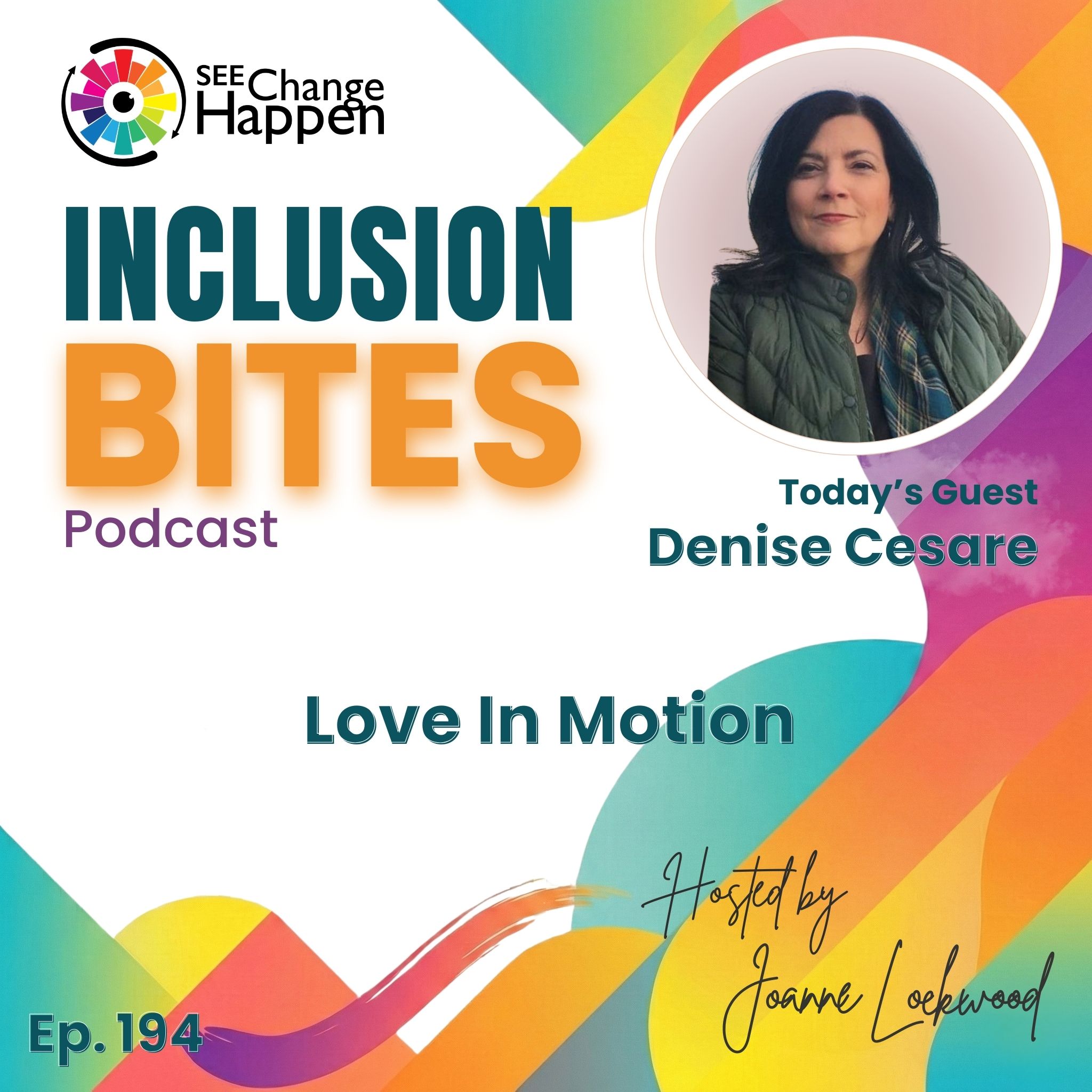
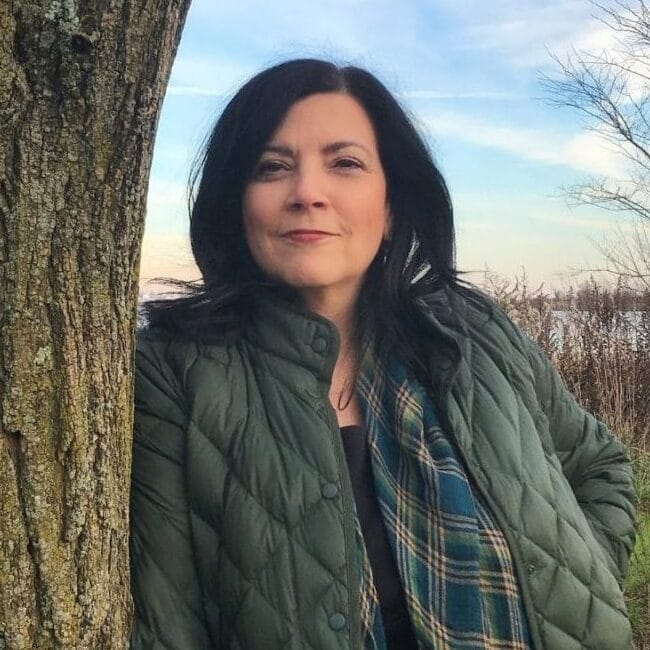
Denise Cesare explores the resilience found through disability, self-acceptance, and mindful creativity, weaving together disability rights, mental health advocacy, and the transformative embrace of inclusive fashion and self-love.
In this episode of Inclusion Bites, Joanne Lockwood speaks with Denise Cesare about mental health wellbeing trauma.
Foreign.Welcome to Inclusion Bites, your sanctuaryfor bold conversations that spark change. I'm Joanne Lockwood,your guide on this journey of exploration into the heart ofinclusion, belonging and societal transformation.Ever wondered what it truly takes to create a world without? Remember, everyonenot only belongs, but thrives. You're not alone.Join me as we uncover the unseen, challengethe status quo and share storeys that resonatedeep within. Ready to dive in? Whether you'resipping your morning coffee or winding down after a long day, let'sconnect, reflect and inspire action together.Don't forget, you can be part of the conversation too. Reach outto jo.lockwood@seechangehappen.co.ukto share your insights or to join me on the show.So adjust your earbuds and settle in. It's time toignite the spark of inclusion with Inclusion Bites.And today is episode 194with the title Love In Motion. And I have theabsolute honour and privilege to welcome Denise Cesare.Denise is a published author, a keynote speakerand social emotional learning specialistwho champions disability rights, mental health and bodypositivity. She brings her lived experience of spasmodic
Joanne Lockwoodhost
dysphonia and inclusive fashion to T suite.T suit. Actually, we got that wrong in the green room as well. T suit.There's no E on the end to inspire change. And when I asked Denise todescribe her superpower, she said it is turning compassioninto practical, inclusive actions across classrooms,communities and fashion. Hello, Denise. Welcome tothe show. I am so happy to be here on Inclusion
Denise Cesareguest
Bites and I am so happy to be in this moment with youtoday. Isn't that funny how I. In the green room, I was reading through those
Joanne Lockwoodhost
show notes and I said, t sweet. He said, oh, well, the second person tosay t sweet is actually T suit. And I did the same mistake when Iwas reading it out. It's something how my brain just couldn'tprocess that, could it? Because I'm so sweet. So sweet.You are. Yes, you are. To a T. Sweet. To a T. And alsoyour name, because it's Caesar, but you were saying in the greenroom that it's Italian root, so it was probably historicallyCesare. Exactly. Cesare. Is the
Denise Cesareguest
pronunciation Italian? Yeah. So
Joanne Lockwoodhost
I was musing whether it was actually Julius Caesar. Itwas actually Julius Cesare, and probably Julius isn't even pronounced correctly.So hail Caesare. Right? Yes, Hail Caesare.
Denise Cesareguest
Yeah, exactly. But Caesar, you know, even on a menuin a restaurant, if you say. Or Caesare salad, it's a
Joanne Lockwoodhost
fire. It is. But people say Caesar, right? Because that's what the brain
Denise Cesareguest
knows in the American version of it. If it's a real Italianrestaurant, they'll spell it the way my name is spelled. The way that it'snamed, yeah. So your name is spelled C E S A R
Joanne Lockwoodhost
E. So that's the Italian spelling. Exactly.So how did you get the name? So, you know, you get
Denise Cesareguest
married, right? You take a name and my husband, his identity.Right. That's his name, his father. You know, I. I gather,you know, you come to America from Italy and then they Americanizeit so it's Caesar. So when I met him, as being his speechpathologist, I'm like, oh, no, Cesare.But, you know, you have to keep. He grew up like that. That's what peoplecall him. And I have a son. I can't change the name. It's likea brand. You can't change it. You can't do that.
Joanne Lockwoodhost
It's a very old Italian name, isn't it? So, yeah, be proud of it, Iguess. And Caesar. Hail Caesar. Maybe he. He changed it,
Denise Cesareguest
right? He changed it. Maybe, maybe, maybe. We don't know.We don't know. He may have gone to America for his holidays and while he
Joanne Lockwoodhost
was there, he changed his name and came back and planted Europe.
Denise Cesareguest
Exactly. We don't know. But maybe we should investigate that way. I don't know. Wehave something to search about. Yeah. Thousand years before Columbus, we
Joanne Lockwoodhost
had Julius Caesar. Popped over,made a few pizzas, left some salad. But now I'm getting hungry,
Denise Cesareguest
like, oh, yeah, now we have to go. Now we go. Have to go meetfor a meal. Excited. So your accent sounds like New York,
Joanne Lockwoodhost
but you're not living in New York anymore. That's true. I grew up in Brooklyn,
Denise Cesareguest
New York. I moved to Staten Island, New York, after that when I got marriedand had my son. And now four months ago, Imoved to Bluffton. Hilton Head, Staten Island. Oh,Staten Island. Oh, that was a. That was a blunder. I moved to BlufftonHilton Head, S.C. south Carolina.
Joanne Lockwoodhost
I went to Staten island once. I was in New Yorkwith my. With my wife, and someone said to us,the Staten island ferry was free. So I thought, we'vepaid all that money to go to Statue of Liberty and other things. Let's goto Staten island and see what it's all about. So we got the Staten islandferry, got to the other end, got off, got back on it again, came home.But we had a bit of a free ride across the. Whatever that bit ofwater is at the time. I had a really badcough, and it was about the time of SARS. I think it was inthe. Probably the late 90s, I think it was. And every time Icoughed, everybody around me moved out. The way they're allparanoid. I mean, it's like. Yeah. And you were outside on
Denise Cesareguest
the ferry. Really? It was probably okay. You know, more of the air was.You weren't like, in. But it is tight. The ferry does get crowded. But wehave a lot in common. Right. Who knew you. Who knew you rode theferry? Right. I didn't know it said Staten Island, New York. But nowI live in Seattle. So four months ago, I moved to a place that'scoastal. And even Staten island is an island. So obviously I do love water.So that's. That's a segue that I love water. We'll get to that segue, right?
Joanne Lockwoodhost
Yeah, let's do that. Yeah, let's not. Let's not hang on thepreamble anymore. So you've had a. You've had a very busy life.You've written a book, Moments in Motion.Well, I think what it says here I've got in my notes. Journeyspends losing and reclaiming your voice. Is that metaphorically oractually? That's. That's actually. That's actually losingvoice. Okay. You've launched an inclusive swimwear brand. Sohow did this all come about? What wove this together? So it's
Denise Cesareguest
interesting. Okay. I'm a speech language pathologist who lost hervoice. So this is like a. This is a full circle moment. We willgo, we will start to the losing of the voice. Being a speechpathologist, 2006, I was in a car accident and it triggeredsomething for a condition called spasmodic dysphonia. I still don't have avoice. I have to get injections to speak, and my voice needs tobe heard. I make the choice to have the injections. I am fortunate and theydo work. So that's how that. That journey of the losing of thevoice. So for five years, I had no voice.I didn't do Botox right away, so I had no voice. And in that,I'm gonna say it was a dark timing because we have to talk about darkness.Cause you can't see light without darkness. In that dark period,I created T shirt for everybody toa T because of being silent, you know, silent,not being able to really speak. I went intoa different creative force in my brain. I didn't realise it atthe time. You know, looking back, I know why.So I was. I love water. We just talked about bringing us Back tothe water. We used to go to a swim club. I took my son atthat time. He was 6 years old. He's now 25. I would go to theswim club, but I was always hiding myself. You know,putting a T shirt on over this swimsuit, but then going into thewater and getting all wet and looking, not feeling good.It's just this heavy T shirt hanging on your body.Hence not being able to speak. But a lot of thoughts. I said,I have to do something. So then I used to wear something different and Icreated. I didn't realise at the time that was my prototype. I would putsomething on that would kind of make me look smoother and that puts something ontop and people go, oh, where'd you get that? I'm like, oh, I don't know.I just put it together and then from there. I didn't createit first. I came up with the name first Fits everybody to aT. T suit because you're not a size, you're afit. We are not sizes, we are humans. It's nota size. So that was born in my brain,just came to me. But, you know, making this makeshift thing to make myselffeel better, not covering up, but putting something on that made me look goodand good inside. And then, okay, so, you know, yougo through a journey of having. Okay, so now I have this idea. What doI do? You know, I have this idea running around in my brain. But understandone part of me was going through a very heavy timeat work in the world, trying to get along, recognisingand coming to terms that I have a disability. All of these things. But thenthere's creative spin over here probably was lighting me up.So I kind of was balancing something. And thenI came up with the name and I trademarked the name. Now this, you know,2007, 8, 9. Those five years till2011 without a voice. But T suedfits everybody to a T was not born. It wasn't reallyborn into 2017. So it doesn't mean that you, youknow, I was going, I was thinking, I was planning, but I didn't.I listened to my intuition. That's another thing we'll talk about. I listened to myintuition that it was something. So 2017born. Hello, tea soup. It's everybody to a T. Icreate swimmable cover up. And it's not a cover up. I want tochange that. I created a swimmable cover and a Paretoand different products to go with travel. So people,instead of putting on that wet T shirt they put on the T top. Icall it the T top. And the tea dress is the little black dress up.Swim where you go into the water and you feel sexy. You're allowed to
Denise Cesareguest
feel good, and you could go in and not hide. So that was myfirst feeling good about something that I created. And thenI did get my. Got my voice back, back to Botoxinjections in 2011. So then I startedto become more empoweredbecause then I was able to, you know, when you lose your voice,it's detrimental. You know, I'm a talker, and itreally was something that was a loss. But then I'm gonna take you to the360 moment of my book. And I have written multiple books, butthis. This book is a catalyst. Moments in Motion with Lovewas the tagline on T suit. Iused to write that and put it on cards to customers. Momentsin Motion with love, Denise, Because I felt like the motionand the water and your body and loving yourself. So that was mytagline for T2. Who would have thoughtthat? And then, hence Covid 2020,being a speech language pathologist and having thedisability, being with students and I having a disability. We wereall put on lockdown and we had to work remotely with speech. Speech and languagestudents. I was with them like we are right now. I mean, Covidbrought about a lot of great things. You know, was heavy. A lot ofheaviness happened and sadness and sickness, but there were reallygreat things that came out of it, and that's what I want to talk about.So I was online with my students, and they were getting sodisconnected. So lockdown, March, April, May. By May, Isaw the disconnect in their eyes, and I saw very. Alot of sadness. So that night I went to sleep and I actually prayed,
Denise Cesareguest
please help me help these students, because I really don't know what to do. Ifeel so disconnected from them myself, and they're getting lost, and we need tohelp them. At five o' clock in the morning, I woke up with a book.The book came out of me in my sleep. Some people might not believe me,but I have the proof because I woke up my husband. I said, wake up.I wrote a book. He goes, what are you doing now? You know, because Ihave him on this spiral of all these creative things. If you're not creative andsomeone's waking you up, nothing's that creative. You know what I'm saying? Creative brain justkeeps going and going. I said, you have to listen. So I read it tohim and, you know, I wasn't able to write it. I kind of spoke it.Luckily, we have these phones now. I spoke it into my phone and I readit to him and he goes, wait, read that again. And I read it again,and he goes, that's something. He just kept listening to me.I said, well, I have to do something. I was in the processof creating a prescriptive narrative for more what Ithought in my mind, this is what I thought for adults, that I was gonnado that because of all the trauma and sadness and mentalhealth issues that I went through. And I said, no, this. This is what hasto happen right now. So the publisher, I called her,I said, you have to listen to this. This was like 7 o' clock inthe morning. I'm bothering her. I said, we can't do the other book. This hasto happen right now. And sure enough, she called me, the bothof us. She's like, yes. Wasn't that. I don't even have to blink.Yes. But the real capture that capturedme and the essence of why the book was so prevalent. Myson was in college and they were all locked down too. And when IFaceTimed him, I said, oh, can you listen to this? You know, this just camethrough me. And I really. I read it. And he cried.Not from sadness. It released something. And it was like,yes, I only have this moment with love, and I have to hold ontoit. And it was something. And I'm gonna cry now talking about it. Cause italways brings me back there because it was this full,unbelievable moment. So, yeah, sothat's how I. Yeah, yeah. I've got so many questions to ask out
Joanne Lockwoodhost
of that. I mean, the. I suppose the thing is this spasmodicdysphonia, I mean, that. I've never heard of that before. But is it. Isit a physical or is it a psychological? Or is it a bit of both?
Denise Cesareguest
So that's funny, but you know that there's so many people that have it.Some people don't know it. It's a neurological condition.My journey, I really had diagnosed myself becauseI went to doctors. They're going, like you just said, is it psychological?Is it. No. I knew I wasn't phonating. It wasphysiological because your vocal foldsspasm. And that's why getting the injections of Botoxparalyses them so that we speak on respiration.So when I would speak, when I didn't have it, theywould. I would get choked and the voice could not come out. So, you know,I went through. I went Through a lot of trauma, trying to actually bediagnosed because. Oh, asthma. Yes, I have asthma. That. This is notasthma. Oh, as a reflux. Okay, you want to tell me.Oh, no, it's not that. And this whole journey trying to figure it out.But I'm going to tell you something else now that I did go to adoctor and that's why I didn't do Botox for five years, because you have totrust your instincts. And he was such adowner. He wasn't uplifting, saying, you know, yougotta keep moving, you gotta keep. Keep yourself motivated and yougotta keep working. No, he told me, oh, it's Omar gone disability. And I lookedat him, I'm like, wow. He goes, yeah, you havea disability. I'm like, but I have. I went to no,no. Said no. But imagine doingthat injection with someone who's so not proactivefor me to be in the world. I shouldn't have to giveup because I had a disability. So that's tip numberone to the audience. Your gut, your instincts tell yousomething. Listen to them. So I didn't do the Botox and itwas hard to not talk for five years. I can guess that of you. Yes,
Joanne Lockwoodhost
I can guess that you are a talker. Yes. So this iscompletely different to selective mutism, where. Yeah. People throughanxiety or. Exactly, exactly. Yes, it's a totally.
Denise Cesareguest
So, yes, I work with children who had selective mutism. It's a totally different.It's more of a behavioural, psychological thing. This is anactual physiological, neurological condition. And even,you know, the. I don't know if, you know, RFK Jr. Hasthis, the senator, he has it. And if you listen to him,that's what he has. He does not do. That's why his voice is. Yes,that's the condition. Sounds a bit strange. Yes, that is the condition he has.
Denise Cesareguest
And he does not do the Botox. It doesn't work for anyone. Everyoneeither. So that's another side of it that,you know, I had the right doctor, I had the right knowledge, becausebeing a speech pathologist, I was a patient and the professional. SoI kind of had. I had more of an advantage formyself than others do because this happens to people all the time and they don'teven know what's wrong with them. So I feel blessed by that, that I did.Was able to understand more.
Joanne Lockwoodhost
So when RFK speaks and you say he's not on the Botox, youcan just about understand him. So were you able to speak in some way?It was just almost like Shouting through a straw sort of thing.
Denise Cesareguest
So if you listen to his voice. My voice was worse than that,right? Yeah, my voice was more choked. He. Hecan kind of. He works on the phonation, I believe, becausehe can get the words out of his labour. That's laborious, but it's also. Hehas to take his time. Oh, yeah. So. But for me now, right now I'min the middle of my Botox injection. As I laugh. You want to laugh. Isay the many voices of Denise because when I start at the beginning of theBotox, I have this high pitched voice. Then I go.Then I go in the middle, like now and then it starts to get alittle raspy and then it kind of slowly goes away. And then I'm.But it never goes away where you can hear me anymore. When this happenedto me, it was devastating. You really. I was. You couldn'tunderstand because I had to really. I was choking totalk almost. You could think about that. So, yeah,so if you think I had a terrible,unintelligible at times voice. So I had to fight to keep my jobtoo, during that time. Because, you know, people don't.People don't advocate when you have a disability. They want to getrid. They want to hide you, they want to put you somewhere else. Well, theypick the wrong person to try to put somewhere else.
Joanne Lockwoodhost
So I guess now when the Botox is wearing offor in a better place mentally, to cope with it, you've probably adaptedyourself so that you know what it is, you're no longer kind of held backby it. Right? Exactly. Exactly. Yeah. Because,
Denise Cesareguest
yeah, my void comes and goes and you take me as I am. Like Ido podcasts all the time. There's the beginning of my bozak. The end. I'm inthe middle for you. Yeah. So sometimes it
Joanne Lockwoodhost
sounds like you've been smoking stogies for the whole last night. Does it? I never
Denise Cesareguest
did, but I guess if that's true, maybe that's how you sound. But what I'mtrying to say is I come as I am because that's how youempower people. I'm not shying away from when it changes because itis what it is. Yeah, I'm with you on that. I mean, my voice
Joanne Lockwoodhost
is relatively deep. People, it confuses people. ButI am what I am and yes, why should I worry about my voicefor you? And it is what it is. That's right. You are who you are
Denise Cesareguest
and we. Should not change for anyone and be
Joanne Lockwoodhost
proud of that. Yeah, I think that's Good. Yeah. Because no
Denise Cesareguest
one's. No one's you, no one's me. We are unique.
Joanne Lockwoodhost
Glad of that. You're glad of that. Yeah. So I looked at yourT suit website, and yeah. So the threeproducts, the top, the dress, and the parade. Pareto. Is it
Denise Cesareguest
Pareo? Yeah. Why did we as a
Joanne Lockwoodhost
society invent bikinis and skimpy. Andskimpy things? You know, Australians, they wearshirts to cover up because of the, um.What's it called it? The light. Yeah, yeah, yeah. The UV light andstuff. Yeah, yeah. Or protecting yourself from the UV rays.
Denise Cesareguest
Right, yeah. But also to protect yourself from the gaze of people
Joanne Lockwoodhost
who. Yeah, but what I want to say about that. Okay.
Denise Cesareguest
If I want to wear a bikini, great. But they create. Okay. So they.The fashion industry created these things formodels, beautiful models. And there's nothing wrong with models,but the average human personis not a model. But we are looking at the model,right? And the model. We've got our little belly aprons going on and a little
Joanne Lockwoodhost
tummy. Tummy poking out and the flabby bits under our. Under ourboobs is there. So my suggestion to the
Denise Cesareguest
fashion industry and what I created way back when. Cause, you know, Iwasn't. I wasn't. Not that I'm downing it. I was an educator. I wasn'tin the fashion world. I was. I wasn't part of that world, but Ibecame part of that world and got very educated evenfaster than I thought. And I'm proud of myself for
Denise Cesareguest
creating things that no one else really thinksabout. And what I did in the beginning, because, you don't know, I didput swimwear on there, but I carefully selected swimwear. Itook it off now because I'm revamping everything, but I carefully selectedcertain swimwear companies that cater to howit fits a woman. Because I could fit anybody.Everybody. I could fit anybody, and I could fit everybody. But what I create, mycreations are something special just toenhance the skin you're in. So if you don'treally feel comfortable even in a swimsuit, because a lot of people donot. If you put on the T top or the tea dress, you could goin the water. Like I said, it's. The little black dress of swim. Is anenhancement for you to walk around and be in the water and walk outof the water. The pareo is a little bit different. You can wear that inthe water, but it's more of like a. You could go from pool torestaurant and make it, like all different stylings.
Joanne Lockwoodhost
Wraparound skirt, Effectively, isn't it? Yeah, yeah, yeah. The wraparound skirt. But
Denise Cesareguest
of course I have one colour and the other two are black. Because you know,as a small business, when you're starting out, you just have so muchfun, right. How much if it doesn't. Not taking off. If people don't know aboutyou, how are you doing? So you start small and you have tobuild from that. You have to build your audience and your customers. I like the
Joanne Lockwoodhost
idea that it's both wet and dry. So you can go from the pool tothe bar to wandering around. Exactly. It dries pretty quick.
Denise Cesareguest
I'm guessing after I'm going to tell you. Yeah.
Joanne Lockwoodhost
You're not dripping water everywhere. It's kind of like white teachers
Denise Cesareguest
that never dries. Hey girl. It doesn't dry. Butif you think about this is also. I was also with.I have a product on there to clean, which is about adelicate, organic, eco friendly wash to clean theproducts. I'm all about sustainability. Sometimes webuy things, people are very. They buy something for $5 and there's nothingagainst that, but then they're throwing it away. Where's it going?Where is all this garbage going if you're not giving it away? If you'rethrowing it away. So sustainability. My products are made withexclusive and very good quality fabric forthe sustainability of it. And that's why it does dry quick too. Itdries so quick. Super quick. Super quick.
Joanne Lockwoodhost
Yeah. I just read the website. It's a fascinating product.For me. I, I've never beencomfortable in two piece. I'm always a one piece person. I understand and I
Denise Cesareguest
think you would love it because it is, it is. Like I said, itfits everybody. It's not just. It's not a body typeproduct or it's not a body type design. It's aninclusive fashion sense thateverybody looks perfect in it for who they are.That was my goal, being able to. So having this son at theswim club, when I thought about it, remember back then, before it even becamesomething, I wanted to be able to jump up and walk around. Not just,okay, oh my God, wait, I got to get the towel. I got to roll.No, I wanted people to walk out of the water and just walk around. Andnow I can with whatever swim you have underneath. Even if youwore a tank top and boys, whatever you want to wear underneath that, it justkind of gives it a step up. Well, you can actually, you could probably
Joanne Lockwoodhost
turn a shorts and a tank top in something a bit more sexy as wellif you wanted to. Exactly. Exactly. Dress. Can I tell you a
Denise Cesareguest
funny storey? I don't know. So someoneactually took it. Not that I would do this, and I'm not advocating, butfeel free. Anybody that feels free, because itis so forgiving. She went, like nude underneathit and you couldn't see anything because that's how the design kind of.It's not camouflage, but it's just magical.
Joanne Lockwoodhost
Yes. It's kind of a. Yeah, it's a black. Yeah, I'm not
Denise Cesareguest
gonna. Tight mesh. It's a relaxed mesh and it says. Exactly. So you
Joanne Lockwoodhost
can't probably get your pinky through the hole, can you? Is that. Is that about.
Denise Cesareguest
You can't even. No. So it's smaller than the pinky. Yeah. Iwish I had. I don't have it here, but. What is that saying? It's notcamouflage. It's magical because you can't see through. Camouflage means you'rehiding. This is not hiding. It's just magical. So you could
Joanne Lockwoodhost
be ending up with people wearing it out in the evening, you know, going outin town. You could, as you say. Exactly. A bra and pair of knickers underneathand just go out clubbing. That's it. Exactly. See, you. You get it.You just get it doesn't have to just be for swimming.It could be the one outfit for your whole holiday because you can. And you
Denise Cesareguest
know what, if you interchange it to put different colours because of thatmesh, you could change the. Like the colour. You could see red through it. Oryou. I was gonna say. I'm just thinking it's really powerful, bright scarlet red
Joanne Lockwoodhost
undies and bra underneath and amazing. And then it's a
Denise Cesareguest
different. And then having the top and the dress, like the T top could bewith jeans or whatever, but then the dress could become a dress. Put ashawl, you just go wild. Got your reds, got your
Joanne Lockwoodhost
turquoise, you got your top and all these. Yeah, all these different colours. Exactly
Denise Cesareguest
1000%. That sounds brilliant. I mean, I'm back on the website as soon
Joanne Lockwoodhost
as we hang up. It's got to give it a go. It is. And
Denise Cesareguest
it's amazing because my. Like I said, the. The fashion industrydoesn't cater to sizing. So that's how people getsuppressed, too, with their body image, because their sizing is skewed.If I. Let's say I'm, as. I'm going to say I'm size 12, right. SoI go in the shop and I say, this is my size. And I goin. Now, that is size 8. It's two sizesdown from what we Are. So nowI go in there. Now I'm crying. I gained it. I gain weight. Why doesn'tthis fit me? I don't understand. Because you're not a size,you're a fit. So if you go back, this is what I wanted to helppeople too. Go take. Even though they label ita 16, two sizes up and put it on. And if you lookawesome in it, you buy, don't carebecause they're not a size. You're a fit. It's the fit. You're not thatsize. That's very. I'm like that. I go into
Joanne Lockwoodhost
the retail outlet and I'm. I'm. I. I look on the rack and I seemy size. I put it on. I think, it doesn't fit, it's too tight. Andthen you have to go size up. And you feel like you're cheating going upa size or two. And it's like. But I want you to get the number
Denise Cesareguest
out of your head. Everybody get the number out. Just when you put iton. If you. So some things aren't fit for somebody's body, right?Certain. We all gravitate to something that looks better on us becauseit's the fit that makes you feel good about it. So just look for thefit. That's why I'm fits. Everybody fits everybody. And love yourself,love your body. I mean, we go through all stages. We gain weight, welose weight, or we think we're too skinny. We think, enough,you're alive. So you wrote this book Moments of Motion with Love. And that
Joanne Lockwoodhost
was all around the mental health challenges that young people werehaving during COVID and at that time there, because it's hard to thinkCovid was five years ago. Five years ago seems like yesterday. Idon't know what happened. It's like mind blowing.
Denise Cesareguest
It's always present, but it's so long agobecause people are still getting it. It's still present.You know, a lot of people are having. And I'm notdealing this but like stress syndrome, post traumaticstress syndrome. Because we didn't really get the mental health thatwe needed for that phase of ourlife. It didn't mean there's not enough being done about that. Peopledon't. And you know, I talk about the children that were inkindergarten then. They didn't give them enough. They're there falling through cracks ofeducation because they just missed it all. So I could. Well, I could goon a whole topic about that. You know, we will be here forever. There's somany things I tell you about that. But even as an
Joanne Lockwoodhost
adult, it was. For me, it was a tough time. I mean, luckily we didn'thave children living with us. Our children were older than that and they were kindof dealing themselves. But I imagine when you're cooped up,locked down, not able to go shopping, not able to go out and do stuffand play outside, it's almost like a one of those disaster movies, isn'tit? It was like. Like I said, they didn't have real
Denise Cesareguest
interaction and they didn't have socialpragmatic like being able to deal withthings. They can deal now. They're not. They don't have copingmechanisms. And that's where the mindfulness comes in with the book.And there's a sort of emotional component. So what
Joanne Lockwoodhost
was the key learning for you that came out of that time then? It's the
Denise Cesareguest
key learning of COVID Well, you know, I wrote the book aboutmindfulness and moments in motion with love. But beingmindful is not something easy that we do.It's something you have to practise. Mindfulness, it's notjust. It's not just, oh, I'm mindful today. Oh, you have to. Becauseour brains are always rolling and thinking, what's next?You have to really breathe. Say,I am taking a mindful moment and really know what presenceis grounding on your feet, on the ground.I. Even so, I don't know. I have so many things going on that youprobably don't even know about. My book became a yoga. Emotionswith love. Because every page of the book has emotion and Ihave a video that is post production withmovement to physically put you in the moment. Yeah. I mean,
Joanne Lockwoodhost
I'm looking back at what was going on in my head at the time. Yeah,
Denise Cesareguest
yeah, yeah. Did I. Did I answer your question? I'm wondering. Did I really answerit or I'm just wondering historical back. I don't know. Let me. Let me ask
Joanne Lockwoodhost
you some more questions and see if we can. Yeah. Zero back to it. But
Joanne Lockwoodhost
I mean the thing we all have this went through similar phases, denial,all the sort of seven stages of grief. Maybe because I losteffectively my business, I mean, and many others did. We had customers one dayand then next day we didn't. I remember it allstarted as far as I was concerned, where there was that ship. Was itmoored off of Los Angeles or something? Was it. There was a big ocean linerand there was 15 people on it or something that had Covid and people werecomplaining about being locked in their cabin and they were Being passedtheir meals under the doors. It was like, well, this is really ridiculous.And suddenly Italy, if you go back to Italy, in Europe they had people inintensive care and they were dying and we're thinkingItalians, they're both in America, whatever. Then suddenly it's alllocked down. All locked down. It's like, yeah. And then people were dying from it.
Denise Cesareguest
Well, I'm thinking about something that you just said becausethe college community, my son was in college. Right. I talked about that.They have so much stuff that's still in them from that webeing locked down. My husband lost his business. You just jarred thatto me. Not that we're forgetting. Sometimes it's very heavy what went on duringthat time. It's heavy that we kind of push it away, but itwill come back. You can push, can't push things away. So that's what I wantto say about it. So much went on. Pushing it down isnot going to heal you. But it's almost like the business community and the politicians
Joanne Lockwoodhost
and people around the world have forgotten. It's likewe just got to move on. It didn't happen. Get back to the office.No. Working from home, all those well being and all thosegreat things we were doing for our staff, our employees, our customers to make themfeel wanted. We kind of just thrown all that in the bin. I thoughtit would be a generational shift change and it's just reset.Just reset. I was like, yeah, we didn't learn anything.
Denise Cesareguest
No. Because we didn't do the work. No,
Joanne Lockwoodhost
no. We would. Maybe it didn't last long enough. Maybewe needed another year of it. Oh God, I don't know.
Denise Cesareguest
But it still is present. People are still dyingfrom it. Right? Yeah. People lose sight of that too.Maybe not in the amount the massive amounts of deaths, butpeople still get it. People still dying from it. It's still here, it'smorphed, it's changing. But there's more. It's like you said, there's moreto it. We did not do the work.Not on purpose. There was nothing. No one's offering anything.No one's actually like we're right now stating it. There's so much workthat needs to be done. Well, it gave birth of more strength to the anti
Joanne Lockwoodhost
vax movement. So we've seen more people weaponizing the anti vax. Wementioned RFK earlier. I mean, well, I mentioned him, but he does not do the
Denise Cesareguest
Botox because he's anti vax. Right. Okay.One side or the other, I have to do it. You have to pick andchoose what's right for you. But vaccines saved theworld, right? What people didn't die because of vaccines is awhole. Yeah, exactly. It became a dividing line,not a politic. Politicised, weaponized. Exactly.
Joanne Lockwoodhost
It's. Yeah. If you vote blue, youbelieve this, if you vote red, you believe that. And it's kind of becoming that,that battle cry, isn't it? It's funny that we're talking about this because just last
Denise Cesareguest
night my friend came over for her birthday, we had a whole weekend togetherand we had this red and blue. I said, why is it that? Whyare we not just coming together for the greater good? It's not aboutdivision. How about doing what you're supposed to do?We the people, we're not in charge. We the people should have the say.We should have more say in theirrealm of what they're presenting to us. We the people don't have avoice, really. I mean, I have a voice, but not in government.Just don't. Just don't. Because we're not in charge of that.So it's red, blue, green, it doesn't matter.They will still be divisive because they're not doing their parttogether, they're dividing it. So we can't go there.I'm too much about love when I go there. I get, oh, shoo. Because theydon't need a little bit of love. Their little situationsthat they're dealing with. Yeah, I struggle as well because
Joanne Lockwoodhost
it's a lot so clear and obvious that compassion,love, empathy, communication, listening.
Denise Cesareguest
It's so clear. But this was the. I can't even believethis. This was our exact conversation last night. It's so clearto us. But why are we so divided? Why?
Joanne Lockwoodhost
Why? Why is our perspective not the only perspective? Is itpower money? It can't be just be power money, can it? I think it's just
Denise Cesareguest
I don't have that. If I had that million dollar answer. If I had that.
Joanne Lockwoodhost
Split it, split it 50. 50. Right, right, exactly. We have that
Denise Cesareguest
million dollar answer because it is something,you know, something so simple, but it's so complicatedbecause we're not part of it. So we're living in a world now, as you
Joanne Lockwoodhost
said, it's polarised. There's these debates, the politicalclimate seems to be out of touch sometimes with thatcompassionate rhetoric. We've got our young people, youngadults, even older adults. We spend a lot of time flicking through our screens,being judged by likes and Instagram and Snapchatfilters. It's really Tough being a kid now, isn't it?
Denise Cesareguest
It sure is. They believe what they see. They haveto dig deeper. You can't just believe all these. Because people could change thingson Instagram. You could have filters, you. You could just change any. Youcould post different things. You want to say, not everything is true.Not everything is, you know, not false, but not everything's true. And it's toomuch of this instant world that people don't even take the momentor mindfulness to actually. They're just flipping andscripting. Like you're saying the brain is just next, next,next. Well, what is that? You know, I am happy, though.I have. Yes, I am on Instagram, but I do not put thingson there. I put knowledge. Knowledge is power.I put things that you could learn. I put things to empower you, you know,because I. I give you information, but you really, in the end of it, haveto empower yourself. Yeah. I mean, the way I look at things like Instagram
Joanne Lockwoodhost
or Facebook or other platforms, LinkedIn, is that if you meet me inreal person, you recognise me. It's not like I'm. Is that you? Is that reallyyou? Different. Right. Ivery rarely wear makeup when I'm. When I'm doing podcasts, maybe if I'mdoing some keynotes online, maybe very rarely. And if I go out, Ithink, am I just going to the shops? We're just doing a bit of this,bit of that. I think I'm not going to bother. So I'm quite happy tobe raw and ready, you know, kind of thing. Well, I like that. Raw and
Denise Cesareguest
ready. That's a good one. I like that. But it'strue. You just. You have to. We just went back to this. Be you.We were talking about this right before the park. We have. You just have tobe you. And I did write, I am a co author inanother book with 33 powerful women calledMagnificently Made. Well, I love that as well.Yeah, the title is beautiful, but within it, mychapter is called Let It Be and it's all about how musichealed me. Because music was,yes, the Beatles and other songs and listening to.But also there's science to the music. It's not justart form, there's science, the vibrations, the brainand the vagus nerve. All these things that music does that people don'tknow or that they should investigate. Because it's amazing.
Joanne Lockwoodhost
I love it when we name drop the vagus nerve into these conversations.
Denise Cesareguest
Guess what? I studied the vagus nerve because I'm a speech language pathologist.So I, I could talk about the vagus nerves because I studied it.
Joanne Lockwoodhost
Wow. It's, it's such a, an underrated part of ourneurobiological system, isn't it? I mean it, it's. Those are the cranial
Denise Cesareguest
nerves. They're in your brain. Your brain is the, the centre. Right. Your heartis a sensor, your brain is a sensor. These things have to, that's the difference.This is the political difference. The brain and the heart and are comingtogether. That's the problem. That's theproblem. They're not. The brain and the heart are not meeting.
Joanne Lockwoodhost
Yeah, but the vagus nerve is the, the control highway, isn't it? It's
Denise Cesareguest
the epicentre. It goes from your, your brain to your gut. Yeah,it's the epicentre. Yeah, yeah. That's your, your adrenaline
Joanne Lockwoodhost
or your pituitary. All these, all these glands. Vagus nerve kicks in, saysyou're going to feel anxious, you're going to feel queasy. Yeah.
Denise Cesareguest
People don't like I, of course, like I just said to you, I studied it,so I know I put myself back to college. That was somebad semester where you had to study all those cranial nerves. Oops. Itwas a lot. It was a lot. Yeah. No, I, I've, when I started, I've
Joanne Lockwoodhost
not studied it in any academic way, but I've certainly read up on it sinceI first came across the. Came across it about 10 years ago. And it'slike it is, it's. You start to understand why you feel something, how yourbiases tripping, your fight, fight, freeze mechanism and all these kind ofthings and how that takes over your body and it's all comingstraight through that. Yeah, it's a pathway use.
Denise Cesareguest
Like you just said, it's a pathway from your mind to your. So when peoplesay butterflies in your stomach, then you make us knowyou're. Going to feel anxious, you're going to. Feel, oh, I took in my LasVegas. That's a different type ofold Las Vegas, right? Huh? That's a bit Elvis.
Joanne Lockwoodhost
Yeah, yeah, that is. It's. I think when you study whatgoes on with your body, you are more in touch with it. I think,I think maybe that was what was in my life for most of it. Iwas always blissfully ignorant or unawareor out of touch with my own biology, my own physiology, my own,my own brain understanding why things are happening. I was into computing, soI was more worried about why my computer crashed and didn't rebootthan I was about why I was Crashing and not rebooting. Right. Ithink maybe that's where we go wrong. We're not teaching enough people aroundtheir physiological responses and how the biasesare all again, triggered. Exactly. I
Denise Cesareguest
agree with that. Oh, I'm going to tell you something else that I talk aboutthat's very important. If people would only knowthat from birth to seven, your brain ismapping things that you learn. There's mapping going on inthe brain after seven, that stops. So someone's like, youhad seven and 77 is the same. Theonly difference is you can. You can map these things. Like,
Denise Cesareguest
I made my son play the guitar so he could learn at 5, so hecould learn how to read music. Those things are mapped inyour brain. If you do violent video games at 5, they'remapped in your brain. So what? Fast forward tothat. You have to infuse arts and musicand all of these awesome things in the brain from birth to seven,that's putting love in your brain. And then from thereafter that, the world will be a better place for sure. But for us,our iq, because you could learn, but you can't map your brain. Youcan change the brain. You can learn things. We're always learners.Right. We could always learn, but it's a totally different thing. So that core
Joanne Lockwoodhost
foundation is laid down early. So you are kind of become a product of thattime in your life. And that's why this book came out too, because
Denise Cesareguest
it's about loving yourself, loving each otherand loving the planet. It's also a book that ishealing your inner child. We all sounds like
Joanne Lockwoodhost
RuPaul. Is that RuPaul if you can't love yourself or something. Yeah, I
Denise Cesareguest
don't even know. But for what my ideas are is that if youcan't heal your inner child, you're never goingto heal because you have to tapinto those wounds. There's wounds that stayor stay dormant, like you just said, and then they show up. So,
Joanne Lockwoodhost
yeah, I've got lots of strong memories about my childhood. The.The love I was shown by my mum and being part of a.Yeah, a very nice family. It was very. Yeah. Very white, very middle class,very ordinary. Yeah. But I had a lot of stability as a child and I'venever been in those situations where I had huge amounts of trauma. So I guessI can play on that now that I've got that really strong foundation. Exactly.
Denise Cesareguest
But when you have that foundation, then you could tap intoit. If you don't have it, where are you going? Where you're going with It.If you don't have a foundation, those are the people that are lost.Those are the people that. When people say, oh, mental health. Well, you're not doing.You present. But are we following through on mental health in America?Don't. Don't give me a drug. It's not about, yes,medicine's important, but what are the sideeffects to medicine or what? There has to be moremonitoring, right? You're gonna give someone a drug and then you go,good, bye, bye. Take that prescription drug and come see mein six months. In those six months, your brain chemistry changes.
Joanne Lockwoodhost
Do we spend enough time with youngparents or even before they have children,educating them in developing those formativeyears, or are we just expecting people to figure it out?
Denise Cesareguest
You just said it. They're just expecting people to figure it out. What I'm presentingto you, I know, because of my studies, but no one's talking about who'stalking. I mean, I don't know who's talking about this because I don't hear it.I hear myself. I'm talking to my own choir. That's why I hearpodcasts are good, because now maybe some of them will say, oh,Denise, that's something I never knew about. Well, thankyou, Joanne, for bringing Denise here withyour knowledge and power and helping us. Because the children,
Joanne Lockwoodhost
they're not. I don't like generalising.Many children aren't developing resilienceand they're suffering from anxiety.Seeing a rise in asd, autism, adhd.People are trying to link that to drugs and vaccines.Maybe the link should be back to the environment and howthey're being reinforced in that early formative years.
Denise Cesareguest
Exactly. They are not being, likeyou said, it is a parent thing because you're not born a parent.We don't get born and we're like, oh, I know how to be a parent.No one knows what you know, but youhave to be, you know, and if you were in a bad situation, what abad. A life of having a bad family life, then Imade perseverance. So it's. It's very. It's a veryheavy topic, but we need to. We need to do something because it's a mentalhealth crisis and that's why the. And the children. Excuse
Joanne Lockwoodhost
me, I'm gonna go have a drink. Have a guzzle. Don't worry.I press pause on the tape. Don't worry. Carry on. So I'm joking. We're just.We're gonna let it roll. We'll let it roll. We'll let it roll. No, Pressure,it's okay. Well you know I have to protect my voice.Of course, yeah. Not even just children.
Denise Cesareguest
I'm gonna say the youth or the young adults of today have nocoping mechanisms. I think we're now, we're
Joanne Lockwoodhost
now coming into second generation. So we have parentswho have. Haven't had the coping mechanisms orthe resilience built into their lives at their early age are now becomingparents. So we're expecting them to now of coursethe Chinese whispers it's getting worse and worse and worse, more self fulfilling. So we'llend up in maybe another couple of generations time where we've lost that,that resilience that we've always had and we want instant gratification. We want itnow. We want to, we, we don't like not winning.We want. Yeah, we're going to live in debt and all these sort ofthings and. You know, I mean sometimes I think to myself
Denise Cesareguest
how did I have the resilience?Because yes, I had a relatively intactchildhood then there were some things,episodes of things that did occur that were heavyand then how did I. How? I think so because you have to look withinto know how to help others. How was Iresilient? And I always just come back to. I learned thatbecause at the time when you know, we talked about the voice, we'll dial backto that. During that time it was very dark. It was adark time in my life. It was so dark and people go throughthis. That's of the mental illness. What is darkness? How do you find?I always say you have to look for. I don't know even if it's likea seed, you have to look for light. And what would happento me. I had a six year old, remember And I always thought it wasthe six year old that kept me alive. That's why I was stillthere. And as doing all this workthat I've been doing for the past five years I realisedthat as much as I loved him, it wasn't about my love for him thatkept me here. It was my love for myselfand the resilience and not wanting to give up andseeking things to get me to the next step.I would go to work every day. I'd have to smile at myself in themirror because of the heaviness that theywould present on me because they really didn't want me there. They didn't want tohelp someone with a disability. They didn't want to. But yet you'reteaching people with disabilities but you want to get rid of the Educator with adisability, go figure that out. Butthey didn't. You see, I'm here. They didn't get rid of me. I stayed, Ipersevered. I even was better than ever because my students.So me having a disability created meas the educator, but then me as the human with thedisability that connected with them on a deeper,more loving level. Not that everybody has to getsomething to have that, but it was a betterself love purpose for me. So the bottom linewith why I'm still here and sitting is I learned that lovemyself. Because if you don't have self love, you don't want to be here straight,straight out. That's. That was my formula. I could have said everythingelse like I did. I said, my son saved me. No, Isaved myself. I think that's, that's the important thing though, isn't it? It's. Use the
Joanne Lockwoodhost
phrase bootstrap. It's being a. Pull yourself up yourself and learn how to,how to spot when you're starting to tumble a bit and how toput those cheques in and then making sure you've got a supportive networkaround you that can also pick up on those triggers as well.
Denise Cesareguest
Yes, I think that was an awakening for mebecause I used to say, oh, my son was sick, I had to keep going.It was a little. I guess that was the motivation, but that'snot what saved me. There's two different things, right? Becausethere's people who have everything. I think of people when theycommit suicide. There's so many people that have everything.They have a child and the people go, why did they do that? And Isay to them, because sometimes I think I get very emotional aboutthis and I say, don't blame them. They didn't want.
Denise Cesareguest
They were in so much pain, they couldn't stay here anymore.They weren't looking like me to find a crumbof light, you know, they just couldn't find itbecause they weren't doing things toserve their soul and they weren't doing things to love themselvesor healing. And that's why. But I always, I do get veryintense about them when people go, oh, why'd they do that? Whythey. So people do say people are selfish when they do that. I'm like,just go read up. Because it's not about that. Because if they have everything,why would they do that? And then taking these andlike, you know, I'm not against medicine, butcheques and balances, if you're going to prescribe something even to ayounger adult. No, some Thingscreate suicidal tendencies. Right. That then youbetter be monitoring them. Don't just leave them on their own to justbe taking this drug and not know. So that, thatthis, these are very important things that we're talking about that isnot even addressed. I use ChatGPT a lot these days because
Joanne Lockwoodhost
it's quite amazing. And it's diagnosis capability.
Denise Cesareguest
Well, it is a helpful tool. Right.But it's amazing. I don't use it that much, butI should try. Right. I use it to analyse my
Joanne Lockwoodhost
blood test results, other things that are going on. That's interesting.I cut and paste it off my healthcare app, allmy blood results, paste it and say, what do you reckon? And it goes, oh,wait, yeah, that's okay, that's okay. Oh, be a bit careful. Your white blood countcells are a bit high and Should I be worried? No, no, becausethat's okay. So sometimes you have to go togp. Wow. I'm gonna, I'm gonna try that. Thank you. I like
Denise Cesareguest
that idea. Now, I've got a couple of conditions that I'm, I'm sort of
Joanne Lockwoodhost
trying to sort out with a bit of medication stuff and I, I,I give it my symptoms and then help it get to draught. Aletter to my GP that makes it sound like I'm curiousbut knowledgeable without being. You don't sound likeyou're smart. Smart ass. Do you want to sort of say. Exactly. I was wonderingif it's something like this because I've read something, you know, in this. Right, exactly.
Denise Cesareguest
Just curious. Curious, not criticising, just curious.
Joanne Lockwoodhost
Yeah. And would a course of antibiotics help with that? Andthey go, you're right. Thank you. That's good. Yeah. Orphrasing the condition in a way that is understandable. So you thoughtit's a bit of this and a bit of that asks you a few morequestions. It says, okay, now construct a letter to my gp. And thenI cheque, I scan the leaflets you get in your medicineboxes and I scan it in and say, look, I've beenprescribed this, these are my other ones, you know, already takewhat indicators are there. Is it like to cause that? No, this is
Denise Cesareguest
a knowledge. Thank you. Because you know what it can, you know, we needto be able, we have to be our advocate so we acknowledge them.Interesting. It's harder and harder to get access to your gp. They're busier,
Joanne Lockwoodhost
they're more restrained, funding's less certainly in the uk. Yeah,
Denise Cesareguest
it's true. I've suffered from puffy ankles at times.
Joanne Lockwoodhost
I've suffered from other conditions. And I've just got sort of. Is thiscausing that? You know, my blood pressure going up and down. Right.
Denise Cesareguest
Because I have the blood pressure thing too. And like I just said toyou, you want to take as little as possible because they have side effects.But some things you have to take. There's no way around it. If you havehigh blood pressure, would you want to be vital andalive? You can't not take the blood pressure meds, especially if there's a familyhistory of heart conditions. Right.Medicine's important, but knowledge is power and you have to bean advocate because they are human too. And they, they,they, you know, we have to work together. There's another thing, workingtogether again, working together. People don'tget that. Yeah. And if anyone listening to this, this right
Joanne Lockwoodhost
now, I'm not advocating that chat. GPT can replace a doctor.The medical advice it gives you is, is at besta storey, you know, and you, you have to interpret it yourself. So, you know,don't go off and. No, don't be running and going, no,
Denise Cesareguest
no, don't go doing that. But it doesn't hurt toinvestigate. This is investigating. This is not, this is nottaking it for, for gospel or whateverword I want to use. It's not taking it for the. But just give youinformation, that's all. It's like listening to a podcast too.We're saying things, we have great information. Butit's not for everybody too. Right, everybody. It's not for everybody. ButI'm about. Fits everybody and being all in the moment.
Joanne Lockwoodhost
Yeah, no, I'm with you on that. I think we do need tostop counting all the little micro steps and planning away therest of your life. I know that my personality type is kind of now andnext. What am I doing now and what am I doing next? Next week?I don't care. I'm just worried about this evening, this afternoon, tomorrow morning.And I'm quite happy to wake up in the morning, cheque my diary and go,oh, that's interesting. That's what I'm doing today. As long as I shouldn't be somewhereelse and I've got a train ticket and I know what time I supposed toleave. So that's kind of what I do, you know, before I go to bed,I'd say, what am I doing tomorrow? And I go, oh, that sounds like agood day. I'm enjoying that. Yeah. Because I know some people who are, who willplan out the rest of their life and it's like, I can't live with that.I can't be that planned. I just want to have the freedom to figure itout, wing it. When you plan, something else happens
Denise Cesareguest
anyway. There's so many things that could change, you know,being in the moment, like you said, like right now or the next. The peopleuse that word, mindfulness. They throw it around. Right. Everybody's, oh,mindfulness, you know, but it's not about. It's apractise. I think people really need to know you're not justmindful. You have to practise mindfulness. You are notjust, you know, you may be thoughtful, you may be thinking,but mindfulness is a practise. Yeah.
Joanne Lockwoodhost
About yourself, about the impact on others and others impact onyou. And then contextualising and not sweating the small stuff, as they say.
Denise Cesareguest
Or if you're gonna sweat it, take a moment and just breathe. Because don't sweat.Try not to sweat it out. Yeah, that's right. At that point there,
Joanne Lockwoodhost
you put your t suit on and you go for a dip in the pool.
Denise Cesareguest
Don't you put your t suit on and go have fun. Exactly. Have a
Joanne Lockwoodhost
splash. Yeah. And then you can wear it to the bar afterwards with a skimpy.
Denise Cesareguest
I love that. I love that. Thank you. Yeah, it's true.
Joanne Lockwoodhost
Denise, it's been absolutely fantastic having a chat with you. I mean,we've been rapiding on now for well over an hour here and 20 minutesin the green room. No, people get a hold of you. That's true. Oh, my.
Denise Cesareguest
Wow. I know. We can talk. Well, yeah,I can. Well, now you got rid of your
Joanne Lockwoodhost
dysphonia. Yeah, yeah. And then I'll go back for the injection
Denise Cesareguest
again. It is a cycle and I'm blessed, though, because itworks. So, you know. Yeah. So how can people
Joanne Lockwoodhost
get hold of you? What's. What's the. The best way to track you down? So
Denise Cesareguest
the. I think the easiest way to get a hold of me is go tomy website, denise caesar.com. spell it with the Chesire.Denise C E S A R E dot com. There youcan purchase my book and you will get it autographed if youchoose to go through Amazon, which is fine because it comes in two seconds. Youwon't get it autographed and you won't get the updated version. I madea new updated version because in my book I have a glossary,because when you hear words andsometimes you don't really understand what they're meaning in thecontext of what the author has presented to you. Soit has a glossary of the. Especially for children too. So they couldhold on to the meaning of this book. Then there's a poem in there. So,yeah, deniseiser.com, amazon, all social handles,fits everybody on Instagram and Facebook.Of course, you could Google my name and you'll see everything I'm doing. You know,it's funny. Google could show you everything about yourself and. Yeah, justreach out. I have. So in my book, I empower thereader. I tell you how wonderful you are, but if you don't believe. That's mybelief poem. If you don't believe it, it's not withinyou. So I'm going to say the poem before we leave. Are you okay withthat? Yeah, go for it. So you've got. Your book is Moments in
Joanne Lockwoodhost
Motion, Moments in Motion book is your Facebook pageand tsuit is t-suit.com. if you want to find out more aboutthe. I'm sorry, I didn't talk about that yet.
Denise Cesareguest
If you go on Instagram, though, you know, there's the link tree. It could getyou to the. People want quick, right? They don't want to go type into myT shirt dot com, go to Instagram, go on mylink tree. You'll see the website right there because they're. They're quick.They want to be quick, right? So my believe poem. And I want you tosay it with me to believe. Believe, girl.
Joanne Lockwoodhost
Ted Lasso. Believe. I am loved. I am loved.
Denise Cesareguest
I am light. I am liked. I amcourage. I am courage. I am bright.
Joanne Lockwoodhost
I am bright. I am brave. I ambrave. I am so important in this
Denise Cesareguest
moment. I am so important in this
Joanne Lockwoodhost
moment. And you are. And
Joanne Lockwoodhost
you are. I have a mantra which I developed again about 10,15 years ago, where I realised that in order to be loved, you have tobe lovable. In order to be liked, you have to be likeable. In orderto be worthy of respect, you have to show that you are worthy of respect.And all of those things are within you to control. You cannot demandof somebody else if you're not prepared to give it. So 99%of what we have to do to be loved is within us. Thank you,Denise. It's been amazing. I've really loved our conversationand. Yeah, please get in touch. Thank you so
Denise Cesareguest
much. Yes, please be in touch. And if you want. You want to know anything,just contact me and we will be in touch. And thank you for having meon your podcast. It was a pleasure.
Joanne Lockwoodhost
Absolutely, absolutely. Take care. Bye.As we bring this conversation to a close, I want to explain expressmy deepest gratitude to you, our listener, for lendingyour ear and heart to the cause of inclusion.Today's discussion struck a chord. Consider subscribing toInclusion Bites and become part of our ever growing communitydriving real change. Share this journey with friends, family andcolleagues. Let's amplify the voices that matter.Got thoughts, storeys or a vision to share? I'm allears. Reach out tojo.lockwood@seechangehappen.co.ukand let's make your voice heard. Until next time, thisis Joanne Lockwood signing off with a promise to return withmore enriching narratives that challenge, inspire andunite us all. Here's to fostering a more inclusive world oneepisode at a time. Catch you on the next bite.
Disability, Voice Loss, and EmpowermentInclusive Fashion: Rethinking Body Positivity and IdentityMental Health, Mindfulness, and Resilience in Young People
Joanne Lockwood is joined by speech-language pathologist, author, and inclusive fashion founder Denise Cesare for a wide-ranging conversation about self-love, resilience, and what it means to be seen and heard when your voice and body don’t match social expectations.
Denise describes living with spasmodic dysphonia after a car accident, the impact of years without a reliable speaking voice, and what it took to advocate for herself in medical settings and at work. From that difficult period, she explains how her creative energy became a route back to confidence and connection, ultimately leading to the creation of T Suit: swimmable, versatile garments designed to help people feel comfortable and empowered in and out of the water.
The discussion broadens into body image and the damage caused by size-based fashion norms, the lasting mental-health effects of COVID-era isolation (especially for young people), and why mindfulness is a practice rather than a slogan. Throughout, Denise and Joanne return to a consistent message: resilience grows when self-worth is protected, community is nurtured, and compassion becomes practical action in everyday life.
“But what I create, my creations are something special just to enhance the skin you're in. So if you don't really feel comfortable even in a swimsuit, because a lot of people do not.”
“as much as I loved him, it wasn't about my love for him that kept me here. It was my love for myself and the resilience and not wanting to give up and seeking things to get me to the next step.”
“So the bottom line with why I'm still here and sitting is I learned that love myself. Because if you don't have self love, you don't want to be here straight, straight out.”
“So people do say people are selfish when they do that. I'm like, just go read up. Because it's not about that. Because if they have everything, why would they do that?”
“There you can purchase my book and you will get it autographed if you choose to go through Amazon, which is fine because it comes in two seconds. You won't get it autographed and you won't get the updated version.”
Strategies for transforming adversity into creativity and social impact within communities and classrooms.
Unlocking mindfulness as a daily practice and the importance of presence in mental wellbeing.
Rethinking body image, fashion inclusivity, and how apparel can empower confidence beyond conventional sizing paradigms.
Navigating the barriers to disability acceptance, diagnosis, and self-advocacy amidst systemic and societal challenges.
The ongoing impact of the Covid-19 pandemic on youth and adult mental health, resilience, and adaptation.
Addressing generational struggles with anxiety, coping mechanisms, and the consequences of limited formative support.
Actionable ways to foster self-worth, healing, and a culture of collaboration—through mantras, community, and reframing moments of darkness towards empowerment.
One thing to remember
The central insight from this episode of Inclusion Bites, “Love in Motion”, is the transformative power of self-compassion and resilience—especially in the face of adversity, disability, and societal pressures regarding body image and identity. Through the lived experience and advocacy of Denise Cesare, it’s clear that practical inclusion starts with empowering oneself and others, embracing individual differences, and moving past limiting cultural norms around voice, body, and belonging.
Questions this episode helps answer
How did Denise Cesare's personal experience with spasmodic dysphonia influence her passion for inclusive fashion and advocacy in disability rights, as shared in her conversation with Joanne Lockwood?
In what ways does the concept behind T suit challenge traditional notions of body image and inclusivity within the fashion industry?
Reflecting on Denise Cesare's mental health journey during the loss of her voice, what do you think are the most significant connections between resilience, self-love, and creative expression?
What are the broader societal implications of measuring value and belonging using external markers such as body size, clothing fit, or social media validation, as discussed by Joanne Lockwood and Denise Cesare?
How did the Covid-19 pandemic act as a catalyst for Denise Cesare's book “Moments in Motion with Love”, and what does this tell us about the power of adversity in sparking innovation and empathy?
In the episode, both Joanne Lockwood and Denise Cesare discuss the lack of adequate mental health support for children and young people during and after lockdown. What practical steps could organisations and communities take to address these gaps?
Explore topics
Ideas from this episode
Disability, Voice Loss, and Empowerment
Reflecting on my conversation with Denise Cesare, I was struck by the profound interplay of disability, voice loss, and personal empowerment. Denise’s journey as a speech language pathologist who herself lost her voice through spasmodic dysphonia brought remarkable insights into how identity and agency transform in the face of adversity.
Inclusive Fashion: Rethinking Body Positivity and Identity
Our dialogue deepened around the domain of inclusive fashion. Denise’s brand, T Suite (or T Suit), emerged as a creative response to personal struggles with body image and the pressures of traditional swimwear.
Mental Health, Mindfulness, and Resilience in Young People
An emotive theme running through our conversation was the mental health and resilience of young people, heightened by the collective trauma of the Covid pandemic. Denise recounted how, as schools locked down, she witnessed deterioration in the emotional connection of her students, prompting her to write “Moments in Motion with Love.” We discussed how crucial it is to foster mindfulness, resilience, and self-love in formative years and to recognise that the scars of lockdown still ripple through children, young adults, and the workforce at large.
Learn
Frequently asked questions
Who is Denise Cesare and what is her background?
Denise Cesare is a published author, keynote speaker, and social emotional learning specialist. Her work champions disability rights, mental health, and body positivity. Drawing on personal experience with spasmodic dysphonia—a neurological voice disorder—she's an advocate for inclusive fashion and well-being. Her journey into creativity emerged from lived experiences of disability and self-acceptance.
---
What is spasmodic dysphonia and how did it impact Denise’s life?
Spasmodic dysphonia is a neurological condition causing involuntary spasms in the vocal folds, leading to voice disruption and difficulty speaking. Denise Cesare, herself a speech language pathologist, lost her voice for several years as a result. This period not only presented personal and professional challenges but also awakened new avenues of creativity and resilience. Ultimately, Denise found a measure of relief through Botox injections, enabling her to reclaim her voice and amplify her advocacy.
---
How did Denise’s personal experience lead to the creation of T Suit?
During her silent years, Denise Cesare noticed a lack of inclusive swimwear, especially for those seeking comfort and body confidence. Frustrated by impractical solutions like wearing t-shirts in the water, she invented the T Suit—a swimmable cover-up designed to fit every body, not just a prescribed size. Her mantra is “you’re not a size, you’re a fit”, reflecting the principle that fashion should serve all bodies, not just those modelled in mainstream media.
---
What is the philosophy behind T Suit and inclusive fashion?
T Suit was created to help people feel comfortable and confident at the pool or seaside, whatever their body shape, size, or preference. Denise Cesare challenges the fashion industry’s narrow standards by designing garments that enhance rather than conceal. The intention is to promote joy, inclusion, and self-love, so individuals are free to enjoy themselves without self-consciousness or societal pressure.
---
How did the COVID-19 pandemic influence Denise’s work and writing?
The isolation and mental health pressures brought on by COVID-19 inspired Denise Cesare to write “Moments in Motion with Love”—a children’s book focused on mindfulness, resilience, and healing. The book emerged from her desire to bridge the disconnect she witnessed in her students during remote learning, nurturing social emotional growth in a time of profound uncertainty.
---
What is “Moments in Motion with Love” about?
This book centres on mindfulness, emotional intelligence, and self-compassion for children and adults alike. It not only delivers poetic affirmations but also encourages readers to practise being present, loving themselves and others. The aim is to heal the inner child, build resilience, and foster positive coping mechanisms amid adversity.
---
Share this episode
Heard something worth passing on? Send this conversation to someone who needs to hear it.