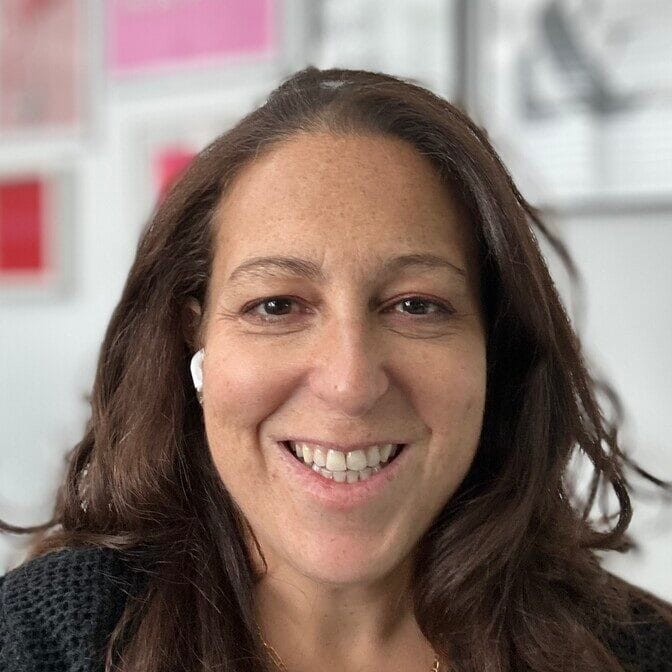
Hannah Cohen unpacks the realities of hidden disabilities, navigating lived experience, resilience, and practical inclusion, while empowering leaders and teams to foster conscious inclusion and deeper understanding within organisations and society.
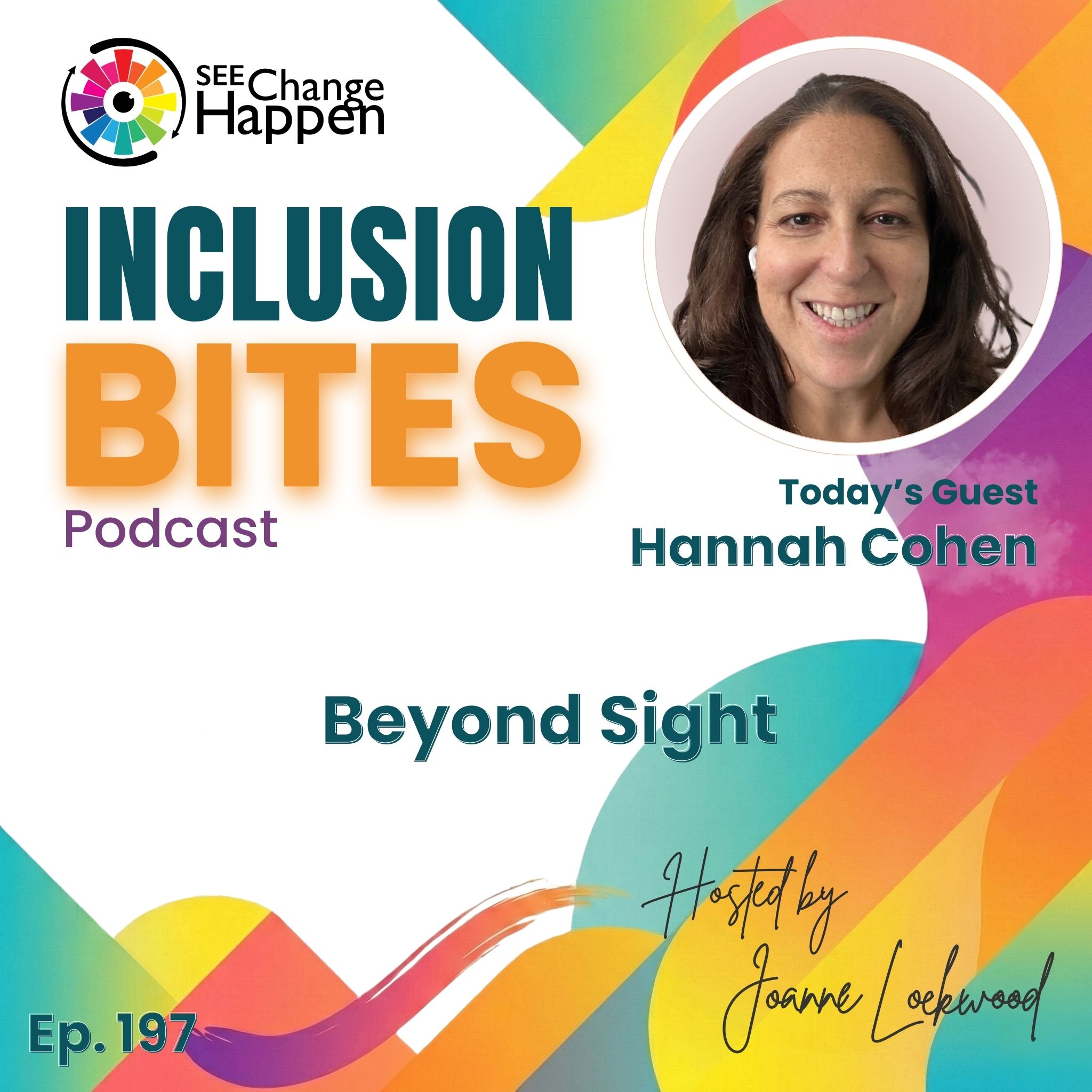
In this episode of Inclusion Bites, Joanne Lockwood speaks with Hannah Cohen about lived experience identity.
Welcome to Inclusion Bites, your sanctuaryfor bold conversations that spark change. I'm Joanne Lockwood,your guide on this journey of exploration into the heart ofinclusion, belonging and societal transformation.Ever wondered what it truly takes to create a world without? Remember, everyonenot only belongs, but thrives. You're not alone.Join me as we uncover the unseen, challengethe status quo and share storeys that resonatedeep within. Ready to dive in? Whether you'resipping your morning coffee or winding down after a long day, let'sconnect, reflect and inspire action together.Don't forget, you can be part of the conversation too. Reach outto jo.lockwood@seechangehappen.co.ukto share your insights or to join me on the show.So adjust your earbuds and settle in. It's time toignite the spark of inclusion with Inclusion Bites.And today is episode 197 with thetitle Beyond Sight. And I have theabsolute honour and privilege to welcome Hannah Cohen.Hannah is a visually impaired inclusion coach who empowersteams, leaders and individuals to understand and supporthidden disabilities through workshops and one to onecoaching. When I asked Hannah to describe a superpower, she saidthat it is turning Live Challenge into practicalinclusion. Hello, Hannah, welcome to the show.
Joanne Lockwoodhost
Hi, Jo, it's great to be here. Thanks for having me. Yeah, no, it's absolutely
Hannah Cohenguest
superb. I can almost hear you. Are you around thecorner? Maybe you're not. Where are you based in the country?
Joanne Lockwoodhost
Manchester. Manchester? Well, I'm in Portsmouth, so probably just
Hannah Cohenguest
a bit out of. Bit out of hearing range. So you don't sound veryMancunian. The outskirts. Posh bit. Poshbit. Possibly, Possibly, possibly. You couldn't say. You couldn't.And I understand we're also joined byManny. Yes, Manny the Cavapouson is around
Joanne Lockwoodhost
and. About, so we may have an interlude with a bit of yelping and
Hannah Cohenguest
a bit of earlier I heard the collar flicking and the ears flapping onthe mic. So if we are joined by Manny, we'll welcome him most sincerely becausenews, everybody. Special news. I bought myself or ourselves acavapoo at the weekend, so we're newly dogged up. So our dog isin the other room with my wife at the moment. So, yeah, we're well intothe Cavalier King Charles Spaniel Poodlecrossbreeds. Yeah. And if Manny barks, maybe she'll.
Joanne Lockwoodhost
He'll set Amber off. She may. Well, she may well join in. Yeah. In which
Hannah Cohenguest
case I look forward to her being a key part of future episodes. It'll bethe Joe and Amber show in future over. She'll bring the cuteness,I'll just bring the practicalities. So, Anna, you just. As in the introthere, we talked about you were visually impaired inclusion coach, and theauthenticity in that is you are visually impaired yourself. Do you. Do you want tojust explain who you are, your storey and your
Hannah Cohenguest
background? Yeah, definitely. Thank you. So I became visually
Joanne Lockwoodhost
impaired around four and a half to five years ago. I'm actually asolicitor and a trained solicitor and since mysite has changed, it's been very hard to do my job and Iended up training to become a coach. I wasn't really sure if it would bea career or not, but I thought I'd do some training to keepmyself more busy and yeah, I just sort of fell in love withit. And when I started trying to think how I could sort of nicheinto what direction inclusion coaching just felt really perfect andthat I could help people who are. Had similar challenges to me and helpedthem navigate their way. Whether it's one to one, people who are strugglingmaybe with a new diagnosis or just struggling with,you know, life, which is tough, or may or. And then goinginto teams and companies, helping them work out how tobest work with each other and work with their own, with their clientsand then also leaders, how to work with their employees. So, yeah, itworks with everyone, really. That's incredible.
Hannah Cohenguest
Even with the prevalence now of computing,tablets, text to speech, all these kind of tools and AI,it's still quite difficult. I guess as a solicitor,there's lots of paper, lots of processes to follow, differentwebsites, different. Is that part of the challenge you faced? Yeah,
Joanne Lockwoodhost
it's. It's really tough. I mean, I've spoken to loads of different solicitors in differenttypes of law and asked, you know, to try and see how different people doit. It is possible to do it. A lot of people have support workersand, you know, the software and my. I work in a very small firm, thesoftware isn't very accessible and, you know, some of the big firms, they have alot of extra. Well, as well as the money, they've got morestaff, more software, different options. Different tools and stuff.Yeah. And I've used access to work. They've beenrelatively helpful at times, but it's really tricky.It's really tricky and it's a different way to work. I've got to listen todocuments all day in my ear. It's not. So, yeah,it's hard to focus on things like that. You know, you're used to sort ofscanning Documents with your eyes and you take the importantthings and now can't do that. And it's a whole newway of learning. And yeah, it's, I'm not sort of enjoying that.So I am actually still working part time as a solicitor. But yeah, I'm reallyhoping my inclusion work takes off and it's, you know, I'm loving it, reallyenjoying it. Yeah. I actually listened to an audio book
Hannah Cohenguest
in the car yesterday about puppies actually.So my wife is a book reader. I'm not a book reader. So I boughtmy wife the book and I bought myself the audio audible version.I, I, I knew cause I was picking a puppy up and it was threehours each way, so I knew I had three hours and the book was fourand a half hours. So I started listening to it. I know exactly what youmean. The bits I would skim through and eventhe audiobook sort of said, I'm going to give you the 10 points to considerin a minute. And you had to wait. I couldn't just flick ahead and recapor. So I guess you're faced with. Everything is verysequential now. It's hard to get a random access of the,of the info or data you need. You can't flick in back and forwards.
Joanne Lockwoodhost
No, definitely. And I do actually listen to a lot of books, butthere are some that are, I think, especially in learning. So personaldevelopment books or educational books, they are meant for,you know, going into specific chapters and yeah,it's not easy to do that. So yeah, look, it'sjust a new way of learning, but it is, can be a bit tricky. So
Hannah Cohenguest
you describe yourself as visually impaired. To whatextent has your sight failed? So
Joanne Lockwoodhost
I'm actually registered blind, but I feel like if I say that I'mblind, people don't really understand because I can see. And there isa real spectrum of blindness. I can see, I can sortof see on the screen. But you're blurry, so I don't really seedetail. I can't see words. So I use a lot of tech toread stuff to me on my computer boards, on my phone. And when I'm outand about, I use my phone to read things. So luckily I canget out and about sort of. I can see the contrast between the pavement andthe road almost 100% of the time. So, you know, I'mlucky about that. But blindness really is a spectrum and peoplethink people who are blind see nothing. But you know,you never really know, you know, unless you ask. I'm very happy to Be asked,but everyone's different. There are people who've had
Hannah Cohenguest
their optic nerve fail or parts of their brain fail. Maybethat's. I guess that's when they get almost like the complete blindness, isn't it?
Joanne Lockwoodhost
Just. I'm not sure whether they see black or white or nothing
Hannah Cohenguest
or. Well, my optic nerves have actually failed. Oh, they.
Joanne Lockwoodhost
Okay, yeah, that's part of my condition and, I mean, Idon't know about loads of other conditions. I don't really, you know, know everything, butI know that my optic nerves. I think they said they're dead, but,you know, I can see stuff, so I don't really know how it works, tobe honest. So you'd lived a good chunk of your
Hannah Cohenguest
life, and I don't want to give your age away. So you're aware of theworld around you, you've got context to what you can see.So if you'd have been born this way oracquired this at a very early age, you'd have less context or at least youknow, what the sky looks like, the grass looks like. So when you.Yeah, whatever vision you have left, you can stillcontextualise it and get. Get some joy from that, from that image, Iguess. Yeah, definitely. I mean, I feel so lucky that I still have
Joanne Lockwoodhost
enough sight to enjoy, you know, seeing things. I mean, it.Look, it's completely different, but I can still. I love going to the beach andI still love going to the beach and you see it, but it's more thefeeling and the noise, you know, all the senses, really.Yeah, I. But I do feel lucky that Istill have enough sight to do a lot of things. Can you recognise
Hannah Cohenguest
people that you know still? Yes and no. I recognise
Joanne Lockwoodhost
mostly the people I see all the time, but then some people,I think, you know, I think I'm seeing someone and I'm not. And I dosee funny things, you know, I think I'm seeing something. I remember saying to thekids recently, what's that over there? I think we were stood outside the appleshop in town, said, what's that? And they said, it's a child. I went,oh, thought it was a statue. So, you know, you'renot really sure sometimes what you're seeing, what surprised you. The most in
Hannah Cohenguest
society around your condition. So you said to yourself,you don't want to describe yourself as blind, you prefer visually impaired, becauseblindness is misunderstood. So by saying visually impaired, you're almost implyingthat it's not absolute. Do people lack understanding? I
Joanne Lockwoodhost
guess I think the thing is. And also why I'veyou know, some of my works around hidden disabilities is becauseoften in some ways, you know, it isinvisible to people. Well, it always is. But in some ways that's really goodbecause, you know, I can be an inverted commas normal,which, you know, I suppose some people with theirdisabilities aren't able to do that. But in a lot of ways it makes meinvisible in other ways, as in people forget thatI have it and then I feel excluded in lots of situations. Butalso, I always have to advocate for myself. You know, if I go into ashop and I can't find something, I have to ask people constantly. Whereas maybeif I went in with a stick, people would come up to me and askme if they can help me. So, you know, there are pros and cons, Ithink, to hidden disabilities, and I think it's probably the same with every kind ofhidden disability. It's almost like you want a T shirt that says, I have a
Hannah Cohenguest
sight impairment, visual impairment, but I'm kind of okay,just, just, just be ready to help if I need it. Butdon't. That would be perfect. Don't patronise me and mother me. Yeah, you know
Joanne Lockwoodhost
what? That is exactly right. Sometimes I just want to paint on my forehead andsometimes I don't want anyone to, you know, it is really. Yeah,it's, it's. It is very tricky because. Exactly. I don't want peopleto patronise me and, you know,mother me or whatever. But at the same time, I do need help a lotof the time. I've got a good friend of mine who, who was born with
Hannah Cohenguest
cerebral palsy and she has a power wheelchair and she's fearfullyindependent. You try and you try and mother her manager or do anything for herthat she hasn't asked for. She'll. She'll bite her like a.Yeah, like a puppy. But being around her taught methat when I'm with her, I'll know. She'll ask ifshe wants some help and I'll be sitting there and she'll say,it's my round. And she'll, she'll scoot off the bar and she'll come back witha, With a. One of the bar staff in attendance carrying the drinks.So she doesn't expect us to be the bar staff. And, yeah, sometimes she'llsit there and say, my shoe's fallen off. Can you put my shoe backon, please? Or when you're sitting there having a meal, she'll.She'll ask the waiter, can you please cut my food for me? Rather than askher friends to cut the food. So she's very good at advocating, butI also know that she'll just look at me and go, can you? I go,of course, but I would never offer that. Yeah,so it's knowing when to. When to help, when not to help. I guess that'sthe same with you. You expect new people around you to be mind readers andbe emotionally intelligent enough to figure out this is a Hannah moment,we need to be there. Yeah, 100%. I mean, my friends
Joanne Lockwoodhost
always say they know I'm so independent and I hate having to ask for things,but I do have to sometimes. But, yeah, some of the time I wish theywere all psychic and just knew that I want to go to the shops andwhy aren't they going to collect me now? But other times I don't want anyoneto ask me and I will ask if I need it. So, yeah, there'sa balance. But I am. Yeah, I'm very independent and I think that's one ofthe hardest things. You do feel like in some ways you've lost your independence. Especiallyfor me stopping driving because, you know, especially having children, Ican't drive them around. I have to ask other people, you know, it is difficult.
Hannah Cohenguest
Did it come on suddenly? Was it. Or was it over a period of time?
Joanne Lockwoodhost
No, one eye, sort of. Soit's like the central vision loss. So one eye went. But Ididn't really realise. It's strange when you don't have one eye, you still seefine. So one eye went. And then I sort of mentioned it tosomeone and they said, I think you should go to the optician. Anyway, you know,a few months later, the second one. And over the time I'd been to theoptician, I'd been sent to a ophthalmologist andanyway, long storey short, I gotadmitted to hospital. They pumped me with steroids and all different things. Ihad like lumbar puncture, all. All different things. In the end, there wasnothing they can do. It's a condition. That is what it is really. It's somethingthat triggered, which I didn't know was in me already. Andthat's it. There's nothing they can do. There's. It's quite rare, but, youknow, over time, who knows what might be able to be done. But currently, no,nothing. There's no equivalent to the cochlear implant for
Hannah Cohenguest
optic nerves at the moment, is there? No, they're doing
Joanne Lockwoodhost
stem cell. I don't even know what it's called, but, you know, but there's nothingthat's actually worked as of yet. Yeah, I don't knowif there's other conditions that are, you know, like ahead of it andterms of research, but yeah, who knows what the future holds?
Hannah Cohenguest
So saying that it manifests itself as such, the central vision's failed. You've still gotsome periphery. Yeah, I mean, it's strange because I don't see,
Joanne Lockwoodhost
you know, to me it just looks like I've got normal vision butblurry. But yes, essentially I've got peripheralvision. So your out of focus peripheral vision is doing the seeing.
Hannah Cohenguest
So, yeah, I can't sit at the corner of my eye. I know there's somethingthere, but I can't focus on it. That's kind of what you've got and that'sall you've got. So you're aware of things moving around you. So you'veprobably still got that reaction, have you? Yeah, yeah, no, definitely.
Joanne Lockwoodhost
It is strange. I mean, I feel like I. SometimesI feel like I can see fine, even though I can't, obviously. It's blurry,you know, in a small space, basically, you know, I can sort of almosttell what everything is and who everyone is. And as soon as it's slightly furtheraway, that's when there's more of a struggle.But, yeah, like if my son's in his room, in a room with his friends,I can't tell which one's which. But, you know, so,yeah, you just. Got four or five blobs of humanity. Little.
Hannah Cohenguest
Little human, basically. They all look similar. I mean, if
Joanne Lockwoodhost
one's blonde and one's brown, I couldn't tell. But otherwise they're all. They're all justteenage boys who smell. Yeah, you're mine. Exactly. I can
Hannah Cohenguest
imagine that you are. Put them in special coloured T shirtsand colour code them, like jockeys or something, so you could tell. Yeah, that'd be
Joanne Lockwoodhost
perfect. How did.
Hannah Cohenguest
I mean, you say you've got boys and you've got family and how have theyadjusted to you so? Well, actually, I became a
Joanne Lockwoodhost
widow seven and a half years ago, so. No, thank you. So it's just meand my two kids. My teenage son, who is almost 17,nearly learning to drive, and my daughter, who's 19, who's just gone to university.So it was a struggle because I wastheir sole parent looking after them and then they had tosort of take on more responsibilities and, you know, I didn't everwant them to look after me and I didn't need looking after. But it wasa journey and we've been through a lot, but no, we're, you know, they'reamazing and they're more resilient because of it. And likemy daughter at uni, she's not struggled at all in terms of independence. Cause she'sused to being independent and used to doing stuff for herself. So Isuppose there's pros and cons, but yeah, the kids are brilliant and all myfriends and family have been amazing help. So that creates a problem
Hannah Cohenguest
in the future as well, doesn't it? So you want to ensure your childrenhave their lives, they're not encumbered by you for want of a betterway, not burdened by you and say if you want to go to uni, youwant to go off to live your life, I fully understand that thatmust be a daunting prospect for you. Yeah, well,
Joanne Lockwoodhost
it's very strange having my daughter away. And once my son goes to university, whichhe says he wants to, I mean, that will be very odd. I amlearn my daughter is very helpful tech wise. Myson's not so techie. So I'm trying to learn to domore tech things that I would normally just say, oh, can you just help me?Because it's quicker. But I'm learning to do more on my own becauseshe's not here. But yeah, I meanit's. Yeah. The thought of them both not being here is verystrange. I know I could, I know I could. I'll, I'm, you know, I'm okaywithout them. But sometimes you sort of rely on people around you just for thelittle jobs, just to save time.
Hannah Cohenguest
Yeah. So you've got things, you've got your Amazon Wishlistset up, you got your Tesco's online ordering, you can do all that and.
Joanne Lockwoodhost
Exactly. And when they deliver, they'll put it in the cupboards for you if you
Hannah Cohenguest
ask these days, won't they? So, yeah, I don't know. I mean, as long as
Joanne Lockwoodhost
they bring it in for me. And sometimes I'll say, oh, what's this? You know,and they'll, they'll say, well, you ordered that, didn't you? But that's when
Hannah Cohenguest
you need the T shirt. Yeah, exactly. I think it's being impaired, not stupid. Pleasehelp. The problem is, is that I don't, you know, if someone is dropping
Joanne Lockwoodhost
my shopping off, I don't like to tell them I'm visually impaired.When, which is, you know, they're coming in my house. I don't know who theyare really. I do feel a bit vulnerable sometimes. So IDon't, actually. Yeah. I don't know, you know, ifthat's necessarily the right thing, but that's how, you know, I feelsafer that way. It's very interesting point, I suppose. Yeah. You're. You're. By being
Hannah Cohenguest
vulnerable, it makes you. Vulnerable. Exactly. Yeah.
Joanne Lockwoodhost
I. You know, I do feel a bit more vulnerable in certain. Certainsituations, which I didn't before. But, youknow, I'm sort of, you know, you get used to it, really. You get
Hannah Cohenguest
anxious when you're out alone? Sometimes. Yeah. You know, I.
Joanne Lockwoodhost
I take the dog out every day on my own and I know, you know,I know the area, I know where I'm going and. And I can see thecontrast of the payments. But sometimes, you know, if I have to cross asmall road and I can pretty much tell if a car's coming,but occasionally a car just turns up. I'm like, oh, my God, youknow, and things like that. And I notice when I'm walking, I am moreanxious than I used to be because I do have to take more care andI have to be, you know, more aware, really. Oh, yeah. But,you know, I love getting out as well, so it's.I think I also am very anxious, not intentionally, but when I'm inshops, because there's just.It's. It's just a bit of a stressfulsituation, being in a place where you don't currently see anything. Andalso there's lots of people around. Who are they? Do I know them? Do theyknow me? You know, it's. It's strange. I mean, I don't know what. Why
Hannah Cohenguest
I'm saying this, but I'm going to say it anyway as you're talking. It's abit like being in a strange hotel and needingthe loo in the middle of the night and there's no lights on and, youknow, the bathroom's around here somewhere and there's a. You can just about see something,but you. You don't realise that the doorstop is just there andyou end up kicking it or something, or hopes. You bang your head on something.You think, what was that? Oh, that was the hair dryer. Yes.
Joanne Lockwoodhost
All the time. Actually, recently, I was away for a few days and Icame back and I was in bed and I got up in the middle ofthe night to go to the toilet and I just did not. You know, whenyou don't know where you are. Yeah. But then, because I couldn't really see, Iwas so confused where I was walking. But, you know, I suppose ithappens to everyone in the dark. Most people can't see much anyway. So.
Hannah Cohenguest
Yeah, is. Is your. Sorry, if this isinvasive. Is your site going to deteriorate more over. Over time or has itgot to the worst? I think. Well, it took a
Joanne Lockwoodhost
bit of time, actually, to settle. It did take at least a year and ahalf, maybe longer, to feel like and knew whereit was and where I could go and how I felt. It took quite awhile, but I don't think it's gonna deteriorate. But because it's a rare condition,you never really know, but hopefully not. So
Hannah Cohenguest
you had. I think it's just reading into what you're just saying. Itwasn't overnight. It grew or failed overthe course of time. So you had a chance to adjust in somerespects, sort of. I mean, overnight I couldn't drive, but
Joanne Lockwoodhost
it almost went worse. It almost was worse, and then it got better.I don't know if it. If it was bad or ifI needed to get used to it for it to settle, if that makes sense.I don't know if it was in my mind because of the stress and theanxiety, if that made it so much worse because it'ssuch a massive shock. So, yeah, I don't know really. You know, I was neverreally told at the hospital. You know, it's this level and then it'sthis level because people do say to me, oh, what number are you? I'mminus one. Whatever I said, I actually have no idea. And I do wear glasses,and I wore glasses before. They were exactly the same glasses, and they stopped megetting eye strain, but they don't make me see different. Okay. It's not
Hannah Cohenguest
a focusing issue. It's not a lens issue. Is just. No, I think I
Joanne Lockwoodhost
had a stigma. I don't know if that makes a difference now. As in, Idon't know if that's still there. I have no idea. I'm not very good withmedical stuff, but all I know is they help with eyestrain. So I just put them on when I'm staring at a screen orthat's the front door. There goes. Maddie's going, man, just let
Hannah Cohenguest
Hannah answer the front door. We're okay. We're cool with this. We've done it before,haven't we, listeners? Oh, well, it's asign of your resilience that, you know, the doorbell rings andyou still go up and answer it. Yeah, you still. You still got to liveyour life, haven't you? You can't just say, exactly, I'm visuallyimpaired. I Can't. It could do. No, life's gonna happen.
Joanne Lockwoodhost
Yeah, exactly. I mean, people say to me all the time, you're so resilient,but I just. I mean, I just feel like you either live your lifeor you don't. And I live my life. Yeah. I don't feel resilient. I feellike I've just got to do and live.
Hannah Cohenguest
Do you. Do you get the. Or you're brave all thetime? Yeah. You get brave? Yeah, it's good. Do you get that as well? Yeah,I get brave sometimes. Yeah. Not so much these days, but yeah. Yeah.Brave. Or. My wife Marie gets brave as well because we've been married 38 years,so she's had to cope with a fair bit of flack for me.So, yeah, it's. I always think about it when you're notactually brave at the time, so you really look over your shoulder and go,oh, wow, maybe I was a bit. But when you're dealing with it, you're justdealing with it, aren't you, in the moment. Yeah, exactly. I mean,
Joanne Lockwoodhost
I didn't make a decision, oh, I'm going to be really brave and resilient andget out of bed today or anything. It's like, well, I either get out ofbed or I. Well, you don't. Yeah,yeah, exactly. You don't get breakfast if you stay in bed.
Hannah Cohenguest
Unless your children are feeling like it. Man is going to go angry.
Joanne Lockwoodhost
Yes, exactly. And the delivery driver will be at the door, knocking on, saying,
Hannah Cohenguest
take your parcel. You have just got to get on with things, haven't you? Andyou can't. Can't hide from the world as much. Sometimes you want to have aduvet day, I suppose. Yeah, no, exactly. I mean,
Joanne Lockwoodhost
look, life's hard and lots of people have struggles of alldifferent types, but you just have to try and get on with it and liveyour best life, you know, I'm not saying that my life every day isa happy, perfect day, but overall it's good.
Hannah Cohenguest
So you work with teams, leaders in businesses, individuals as well.What if they often come to you to talk about what's. What's. What's the thingthey cover? So the teams, you know, and the leaders. Well,
Joanne Lockwoodhost
the teams are more, you know, the company gets me in.So then, you know, it's not. It's sort of lessof a choice for them. But it's amazing speaking to them and working with themin their workshops because some of them are just so unaware abouta lot of hidden disabilities and they just. It feels like they're learning loads, whichI just love. I love helping people to understand other people and understandwhy they might have acted like that. One person said in a workshop,right, my brother's neurodiverse. I always just call him really annoyingbecause he drives me mad. But now I actually understand that he's struggling and I'llbe nicer to him and I, you know, things like that are really great tohear people say. And then the leaders, you know, a lot of leadersstruggle working with their employees, you know, whetherit's neurodiversity or people with medicalconditions that are classed as hidden disabilities ormental illness, you know, and a lot of it is justletting them know that it's okay to just ask people, what do youneed to be able to do the job? Or, you know, howcan I help you? Often these questions are all people wantand, you know, people get so worried about knowing what to say or.But, you know, often it's just ask people, how can you help them?And that makes a massive difference. Yeah, because
Hannah Cohenguest
you are your own best advocate, aren't you? You know what you need and ifyou're not sure, just say, what can I do to make your life easier rightnow? Tell me. Exactly. Exactly. It's not a dark.
Joanne Lockwoodhost
No, it's not. And it makes a massive difference, especially incompanies, you know, for their employees. They just want to feel like, they want tofeel understood and valued, you know, one to one, coaching is different. It's, you know,I do it in the companies, but out as well. And that's more for peoplewho might have hidden disabilities and they're struggling to cope in certain situationsor in work. And also people whose maybe children havebeen diagnosed in neurodiversity and they're struggling to deal with them or they'rerealising that they are neurodiverse all of a sudden after getting their kidsdiagnosed and they're realising they actually must have it and, oh, that'swhy my life's been like this for 30, 40 years.So there's so many different things around hidden disabilitiesthat I just find really interesting and want to help people and, you know, workwith people. In your experience, when you're working with
Hannah Cohenguest
other people, maybe with hidden disabilities as well, do they have a very similaroutlook as yourself on this? I don't always want to shareit and sometimes I need to and sometimes I don't want to. Is it.It's when relevant, isn't it? Yeah. Look, I think some people are different.
Joanne Lockwoodhost
Some people want people to know all the Time. You know, some people mightwear a lanyard or a badge. Yes.Yeah. And some people don't want people to know at all. So itcan be quite varied. Yeah, I feel like I'm generally veryhappy to just talk about it and tell people. Whereas, you know, other people.I know, we're different disabilities of much morereserved. Well, not reserved, but, you know, they just don't. Don't like anyone to knowand they're just. Yeah, it's not. It's maybe more private.
Hannah Cohenguest
Well, I've got friends who areneurodiverse, neurospicy, sometimes whateverlanguage they use to describe themselves. And some of them will startevery sentence with my adhd, you know, sort of.It's almost like they're everything. It revolves around theirADHD or their autistic traits or whatever it may be. And there are other peoplewho are arguablyundiagnosed, but exhibit thecharacteristics of someone with ADHD or autism, ausd,and they just get on with life. And it's different,isn't it? People have told me I've got a level ofneurodiversity. I don't. I don't need to be diagnosed.I'm quite cool with it. Certainly not the characteristic I'm worried about. I've got otherthings going on in my life. I don't need another diagnosis.Yeah, you see, you recognise the traits in different people, but some peopleneed that diagnosis, don't they? They need that part oftheir identity. You might say I am blind as an adjective, asan identity describer, because it gives you a sense of community andunderstanding and recognition. Or you might just say, actually, I just don't seeas well as I used to. I'm fine. Yeah, no, definitely, you
Joanne Lockwoodhost
know, I mean, I can work with people who don't have diagnosis and vice versa,but just everyone is so different. And, yeah, some peoplereally want everyone to know. They want to shout it, you know,this is almost. Sometimes I feel like some people just needit. It's like, this is me, this is why I've been like this.And, you know, and other people just, you know, it's irrelevant. They justget on, this is me. Doesn't matter what I am, Giveme. The meds, I need them. If not, don't worry about it. Yeah, exactly.
Hannah Cohenguest
Yeah, I'm with you. You're right. We're a mixed bag of humanity.We're all going to respond to different situations differently. Andsome people need that sense of belonging in that community to feelmaybe safer, maybe feel more empowered. As a result of it. Yeah,
Joanne Lockwoodhost
yeah. I just try to helppeople understand their strengths and use their own strengths,whatever they are. You know, we all have our own strengths and as long asyou can harness them, you know, you'll getwhere you want to go. Yeah. You mentioned right at the beginning about
Hannah Cohenguest
the struggle that your. Your workplace, a small employer,small practise. To what extent should your employerhave invested more in you? I mean, because thinkabout the Equality act, access to work, all those schemes,it's. Did they do the minimum or is itjust. They just didn't have the resources? I think
Joanne Lockwoodhost
it's a mix of things. I think they didn't have theresources. They didn't. Sorry, that was Alexa. She thought she'd get involved as well.I don't think they've got the resources. I don't think they really knew what todo. I think this was the first time anything like this had happened to themas well as me. They've been very, very supportive.
Joanne Lockwoodhost
So mentally, if that makes sense. But in terms of the work stuff,I've sort of got on with it myself a bit. Hadto speak to access to work and get thingsinputted and stuff. You know, I think thereare pros and cons being in, say, in the firm or in theposition I've been in, in the office, as in everyone's so lovingand welcoming. When I was off sick,you know, I took about a year off because, you know, I had to sortof just get to grips with the. My new reality. You know, they'd come andvisit and always. They were always looking out for me.So, you know, other people might have been a different situation when they had allthe software, but no one actually speaking to themin, you know, were looking out for them. So I don't know exactly,really. But yeah, it's been tricky, Iguess. Also, I mean, just listen to your storey, about your career change
Hannah Cohenguest
and. Or pivot, which I wish describe it. Your outlookon life also changed. So maybe you. Youlost the passion to be a solicitor and do what you were doing. So evenif. If they. Even if they'd been the perfect employer, put all these tools inplace, your brain was being exhausted by the new realityof having to process information in a sequential audioformat. So your own expectationsabout what you wanted to do change as well, didn't they? Definitely. And,
Joanne Lockwoodhost
you know, I just feel so passionate about the inclusion work. You know, I'm reallyenjoying it and themore I learn about it, the more I talk to people, the more I justWant to be doing it all the time. AndI'm not sure I ever really felt like that about law, to be honest.
Hannah Cohenguest
My background, it was more of like. A means to an end. Oh, Really? Ispent 20, 25 years in either in electronics or IT,and then I discovered people and it was like, wow, thisis. This is far more enjoyable. I get engaged withempathy, compassion. My life is so,so much more enriched in the last 10 years than it ever was. I'm notsaying I had a bad life. Yeah. I've opened a box and founda whole new treasure. And it sounds like you found the same.
Joanne Lockwoodhost
No, definitely it. I feel like I'm almostlike blossoming into myself and I'm learning about myself as well as the world,people, everything. Yeah, I feel definitely enriched. I've got
Hannah Cohenguest
friends who've talked to me about the social model of disability as opposed to themedical model. And the key thing is it's society that isdisabling society doesn't enable you andyou're probably hyper aware of that yourself now about theseunseen barriers. And I think it doesn't mean that people are bad people,they're just wearing blinkers and they see the world through their own lens. Theydon't see the world through your eyes, therefore they don't understandwhat it means to be think about your needs. Everyone'sso busy focusing on what they want. Yeah, no,
Joanne Lockwoodhost
100%. Look, the world has been designed for.I mean, there's say, able bodied, but you know, that termisn't always accepted. But yeah, the typical. Because even for neurodiverse people,the workplace isn't built for them. You know,there's just so much that I think over the next, I don't know how long,10, 20, 30 years, things are going to change massively tomake sure that either everyone gets what theyneed separately or the world is built in a bit more of amore open way to serve more people, really. I
Hannah Cohenguest
spend a lot of time with my mum, she's what, 86? Andshe needs to use a rollator now. She struggles to walk,she ends up with back pain, she walks too far without the rollator.Like I was talking about my friend who has cerebral palsy in a wheelchair. Untilyou've spent a day or two or a lot, a lot longer with these people,you don't realise how inconvenient the world is for them.Stuff that I take for granted, you know, I remember going to Londonwith my friend and just getting on, off the train.Finding the underground was just a huge Sojourn around trying to navigatedifferent lifts, all this and curbstones and buses.I took my mum to Edinburgh back in the spring andwe booked passenger assistance and itwas a bit hit and miss. It wasn't great, you know, you feltlike you were having to try to figure it out on your own.And on the way back, first class, we were travelling first class on thetrain. We turned up at the first class land. Result, my mum's books took PassengerAssistance. Have you checked in with Passenger Assistance downstairs? No,I haven't. Can you deal with that for me? My mum is 86, she's justabout made it here. Oh, okay. And then all of a sudden this person waswandering around the lounge shouting at this person's name. I thought, that's notmy mum. Okay, I'll just sit here. I look at my watch thinking,our train's leaving in about 15 minutes and I know how far it is fromthe first class lounge at Edinburgh to the first class carriageson the platform. I said, look, my mum says, yourmum this. I said, no, that's not my mum's name. Well, you're sure it's notyour mother? I said, I'm very sure it's not my mother's name. What a sillyquestion. And eventually we. I got the personat the desk to run off and then she disappeared. I
Hannah Cohenguest
was now faced with nobody with a radio and I managed to grabsomething and said, look, your person here has gone off to cheque something and we'renow five minutes before the train departs. We are not going to be happy ifwe miss our train and my mum cannot run, okay?And I know you don't want to hold the train up, so what are wegoing to do here? Eventually I will take you now. I mean, fogmarched from the first class lounge down in this train and by the time wegot there it was like my mum was. I wasstruggling. We get on the train and they take my mum's relay to. Theystick it in the luggage rack, which then probably falls off and hits somebody else.And I wrote, well, I say I wrote me and my friend Chatgpt, we wrotea little complaint letter because our train on the way up was 45minutes, no, an hour late, I think it was on arrival. They can't. No, theycancel the train we booked on. The next one we could getwas two hours later. So we're automatically entitled to a refund on the journey up.So I wrote a complaint letter about this passenger assistance. Now all this played upand so we got Return back free as well. So two of us, there's noway back. £400 worth of first class ticket to Edinburgh,we got free. It doesn't compensate for the poorexperience. But me and my mom did laugh and sort of wink ateach other go, wow. It wasn't so bad after really was.Could have been worse. We could have missed the train. My mum could have beenon her own. I mean she's feisty, she could have selfadvocated but she probably wouldn't have wanted toin the same forceful way I was able to. Yeah,
Joanne Lockwoodhost
it's. You must find that yourself, you know things. Yeah. You find yourself
Hannah Cohenguest
having to complain and get angry more than you really want to. Yeah.
Joanne Lockwoodhost
I think overall, with things like passenger assistance andthe, the ones at the airport, overall I've had good experiences. I think thetimes I've not had good experiences is when I'm trying to do it myself ina way. But it is hard because you've got to rely on these people. Ifthey don't pick you up like you know, from the lounge and take you whereyou want to go, you're not going anywhere, are you? A few weeks ago Iwas in London and I was staying at my sister in law's and I wantedto go to a conference in Wembley, a coaching conference. I thought, okay,I can manage to get from there to there and thenI'll ask someone. But it was a lot harder than I thought it would beand I could have booked some sort of assistance, at least some of it, butI didn't because I thought, well, I'll just ask. But it was quite hard andit was quite stressful. It just made me realise that maybe I can't do somethings on my end that I want to do or thought I could. Yeah,it's, it's hard. I mean I think there's, there's apps probably that Idon't know about that, you know, it's like navigating apps that I've never tried thatI need to look into because that was the first time that I tried tonavigate myself from one place to another. Yeah. And I realisedthat Google Maps does not do that for me these days. So I thinkthere are others out there I just have never tried. If it's in London
Hannah Cohenguest
or any major city. City Map was a good app. That
Joanne Lockwoodhost
one's not accessible either. It's about it sort of being reallyaccessible and then reading to me where you know, you're in this direction, go thatway. City Mapper. I'm not sure I don't think that. I don't thinkthat was accessible. When I was in London, I did try it. I think GoogleMaps was telling me where to go. I just couldn't work out where it was.Telling me it was like, go down this road. I'm like, well, I don't knowwhich road that is. You know, I need one that says go straight ahead.You know, works out where I'm going sort of thing. I
Hannah Cohenguest
would have thought City map would have done that. It was said bus stop, geton the 76, in, in. In two, five or 10 minutesor something. It would turn in the buses. I don't know. I did. I'm sure
Joanne Lockwoodhost
I tried to click on it to try and work something out and the buttonsjust said button rather than, you know, that sort of thing. The interface wasn't
Hannah Cohenguest
intuitive. Yeah, yeah. Often interfaces don't work with a
Joanne Lockwoodhost
voiceover or different screen reader tech. Yeah, that's true.
Hannah Cohenguest
Yeah. Yeah. Websites, I guess.Do you get annoyed with the lack of alt text and visualdescriptions and things? Yeah. I used to love shopping. I mean, I still love
Joanne Lockwoodhost
shopping. That's a lie. But it's so much more difficult now.Unless there's good descriptions on things, it'simpossible. I mean, I've ordered things before and they've turned up and they haven't beenwhat I expected. They've been the colour. And, you know, I know it's a brown
Joanne Lockwoodhost
top, but it's got all this detail that I didn't know it had and Iwouldn't have ordered it, you know, so it's really frustrating. Reallyfrustrating. There's so much that isn't accessiblethat you don't realise until you're using some like, you know,accessible screen reader technology type of thing. You don't. You just don'tknow. I mean, I didn't know any of this even existed really, before my sitechanged. So it's. It's amazing what is out there, butit's. It's very frustrating how little is accessible as well.
Hannah Cohenguest
It's getting better, isn't it? It is getting better. I look atApple technologies and Microsoft technologies. It is built into thecore of the platform these days, isn't it? Yeah, I use all
Joanne Lockwoodhost
Apple stuff and I think it's brilliant. Yeah. But, yeah, somewebsites just very, very hard to use. So do you. Can you still put mascara
Hannah Cohenguest
on? Yes and no. I do it,
Joanne Lockwoodhost
you know, by sort of feel. Butoccasionally, you know, I'll get it in my eye or on my face or my.I'll come Downstairs. And my daughter will go, you've got makeup all down here onyour cheek. But generally people say to me, oh, your makeup's nice. Whodid it? I do, but I don't know what it looks like. But apparently itlooks good. And why not? Exactly. I mean, you know, there arepros and cons. I don't look wrinkly and I don't think I ever will. To
Hannah Cohenguest
me, no, you'll always be the age you were.
Joanne Lockwoodhost
Yeah, exactly. So you don't go to the hairdresser and say, just make it look
Hannah Cohenguest
fabulous. Well, actually, I told my hairdresser to tell me
Joanne Lockwoodhost
when I was grey enough to need some colour doing.And she said, you've got some greys, you're not. I don't think you needit doing yet, but I think you might want to do it. As in, youmight. If you could see, you would probably want it done. So she picked themout and put a bit of colour on. But, you know, I'm paying for allthis stuff that I can't even see. It seems a bit mad, but, you.
Hannah Cohenguest
Know, that's the beauty industry, isn't it? Yeah, exactly.
Joanne Lockwoodhost
I'm definitely not bought into so much stuff because I think, well, I can'tsee what I'd be using it for. But a lot of my friends areinto all different things. You know, there's so many amazing products out there now, orgadgets. Does it change your relationship with food? Because a
Hannah Cohenguest
lot of food is it's smell and sight, isn't it? You know, you go intoa restaurant and the. The menu, the appetiser, you know, you'relooking at the menu, the visual colours and the. It's all that marketing.First, you must largely go for something you.You've had before. Do you fall for it? I don't think so. The
Joanne Lockwoodhost
one thing which is actually quite funny is, you know, like, if you see adessert, you think, oh, I really want that. Well, I don't really get that becauseI can't see it. So that actually it helps quite a bit.But in terms of, you know, on a menu, I mean, it's a pain. Youknow, I normally ask who I'm with, someone who I'm with, to read the menuto me and, you know, if someone's reading it and, oh, can you stop that?Oh, can you read that again? I missed that. And by the end they're fedup and I can't be bothered listening anymore. I just picked something that might. I'vespent more time thinking over things and looking at the menu and, youknow. But I don't think it majorly affects food.I mean, it affects what I make at home because I've got like,you know, jars of spices. Well, I can't be bothered spending time withmy phone trying to work out which one's which. I just make something that Imake all the time, really. I guess the salad bar at
Hannah Cohenguest
Harvester you need help with these days as well. Pardon? Sorry? The salad bar atHarvester. God, yeah. That's impossible. Anything like that is
Joanne Lockwoodhost
impossible. I reckon that's sweet corn. That's probably kidney beans.
Hannah Cohenguest
That's probably a bit of beetroot. Yeah, exactly. I did actually
Joanne Lockwoodhost
go to a hotel with some family a while ago and. And they haveto, they have to literally go around with me and say, right, this is this,and this is this. It's. Anyway, it's not that muchfun. 15, 15 or so years ago, I was at a
Hannah Cohenguest
restaurant, they were hosting this. I think it wasa five or six course set meal called. I think theycalled it the around the world night. So you had a different dish.They sold the restaurant seats out so you couldn't just turn up. See, they putthe whole restaurant out and you had to put the five or six courses andyou just sit there and they just serve you the next course. Next course. Andon the table next to the friend I was with and I.She was blind, visually impaired, whatever scriptshe'd like to use, but she clearly couldn't see and she was feelingin the cutlery, feeling the plate. Yeah, starting to eat.And what she didn't see was a reallyhot large chilli on top of the meal.Of course, everyone's plate looked the same. Mine arrived in front of me, myfriends arrived in front of his. We looked down clearly, we could seea nasty high powered chin. It wasn't a.I think we're made of a firecracker and there's really one to get in thejail phrases type meal. And she just tuned into itand of course she had no forewarningabout this heat explosion in her mouth. And shewas completely distraught, completelyshocked and she feltviolated. She'd been attacked by this chilli. This pain came out ofnowhere and yeah, that's horrible. And it was, itmade me realise that, you know, when you think about accessibility,popping a chilli or popping something on a bit of food, you've got alot of responsibility there to say to the people as you put it down, becareful, this is hot, the plate's hot, the pan's Hot. Andthere's a chilli on top. And I think we have to audio describefor our restaurant goers as well. It sounds like could have happened to youin this scenario. Definitely. I mean, I have, you know, taken a
Joanne Lockwoodhost
mass. You know, when sometimes they put one of those massive chunks of parsley ontop of something, just a big tree and I've. I've gone in, I'm like, oh,what's that? But luckily it wasn't chilli. But I have.I can't remember why. I don't know if it was decorativeor what, but, you know, taking a big piece of lemon in my mouth, likea wedge of lemon that was in something about, oh, what's that? You know, thingslike that that don't need to be there or should be on the side orexplain. But often I'll say to people if I'm sat withsomeone, which I generally am when I'm in a restaurant where,you know, I ask them to sort of point out where everything is or whatit is on the plate. If I know there's a selection of things and say,you know, which one the potatoes, which one's the. Just so I'vegot. Especially if it, you know, if you order something like white fish andthen the plate's white and then the potatoes are white and you're like,it's just. A one colour just plate.Yeah, exactly. You need like audio captions
Hannah Cohenguest
live for the real world. Exactly. I mean, that would be
Joanne Lockwoodhost
perfect. But often my companion,whoever it may be, is my audio describer. And I always say to the kidsas well, if we're walking out and about, I say, you know, make sure youtell me, you know, if we see someone and they just come up to mego, hi, Hannah. Who have I said? And often I'll just say to someone's face,who are you? You know, because I've given up being polite. I
Hannah Cohenguest
mean, we've been having a conversation now for what, 55 minutes anda lot of what we're talking about is your real life experience ofbeing not included. I'm not going to. I'm notsaying you've been excluded, but you haven't been consciouslyincluded. So you're having to do more selfadvocacy than you would. You feel you should have to,because the world is still assumingthe normality of that 80% of people who are in themiddle of there somewhere. Yeah. I thinkyou've highlighted some things that I hadn't considered before aboutwhat we as individuals need to do. We as businessneed to do we as colleagues, whatever it may be, just tobe more consciously inclusive, not just of visual impairment,hearing, other sensory perceptions, neurodiversity,whatever it may be, because it could happen to us.One in six of us will lose our hearing at some point in our life.I'm not sure what the stats are for sight, but certainly one in six. We'Re
Joanne Lockwoodhost
hearing, I can't, I don't know what the stats of a site but there's, thereis, there are some stats about how many people will become disabled by the timethey're, you know, whether that's 60, 70, 80, age,you know, most people will become disabled of some sort in theirlife, lifespan and yeah, you know, you don't know what someone's going througheven if you don't know they're visually impaired or they're neurodiverse, youknow, maybe they're just having a horrendous day and they just needa bit more compassion. All four of our
Hannah Cohenguest
parents went through a phase where they needed a blue badge,so that's four out of four aroundmid-80s years old. So at some point it's pretty certain that you're either goingto have hearing, sight or physical.My wife just had a total knee replacement.And this is the crazy thing about the Equality actis that a disability is only class of disability if it persists for overa year. So the fact that my wife's had a total knee replacement, she'snot entitled to any support, bluebadge or anything like that because it'sa transient condition and not more than a year.You think, well hang on a minute, she can't walk from the car to thecar park. She's got no entitlement to use a, a disabled spot, pay forparking, whatever it may be. And it, it's, we've got to, we've got to thinkabout those people who maybe don't quite hit the threshold and how are theysupported as well? Yeah, definitely. And you know youcould lose, you could lose your sight or your hearing to a point where youare disabled by most definitions but not disabled enoughto qualify for support. And it's no definitely. And even if youdo hoops, you have to jump, you'd be through access to work andany benefits you get you have to bebrutally kind of assessed as to, you sure youcan't work, you sure you can't provide that for yourself? Show us your budget, showus your money. Show us our father in law, he's justcome out of hospital, broke two ribs. They thought he was going to die. Atone point they sent him home. He said, well, what support canwe get? Well, he's not broken enough, you know, he's. He's recovered.It's like, yeah, but if you don't help him, he'll fall over andhe'll be back in hospital and he'll be back where we started. Well, we're notset up for that. We're set to fix what we can see, not preventwhat might. Yeah, no, I know. And
Joanne Lockwoodhost
you mentioned conscious inclusion. That's something that I speak about in my workshops, because it'snot about consciously excluding people, it's just aboutconsciously including everyone. So. So, you know, itdoesn't matter what anyone's got or what they're going through or if they've got adiagnosis or if they're disabled or not really. It's about making sure everyonehas what they need. Yeah. I always remember the storey about
Hannah Cohenguest
the. There was a person who got off an aeroplane, I think it was atone of the London airports, and he had his own customwheelchair. And for whatever reason, that custom wheelchair wasn't made availableat the gate when he got off the plane. And they offeredto push him through the terminal in a one with a handle onthe back, and he refused and said, I would rather dragmyself on my knuckles through the terminal on thefloor than have you push me in a wheelchair because that will make medisabled. You've taken away my autonomy, you've taken away myadvocacy. You basically said, I am disabled. I am. I cando this myself. And I always use that as an example of howbadly did that go. The gate staff could have handled that insuch a different way, where this person would have felt validated, listenedto, considered supported. They wouldnot have escalated. But instead they say, here's a chair, get in it. That's theonly option. And there was another one, wasn't it? The cop26 was the climate in Edinburgh orGlasgow where one of the delegates was a wheelchair userand she couldn't get access to the venue. On the firstday, she turned up and said the entrance wasn't accessible. There wasn'ta plan B. You think, well, hang on a minute, this is basicstuff. Basic stuff, yeah. If your plan Afails, what's your plan B? C, D, E, F, G, all the way through toZed or zz. Zzz. Keep coming up with plans.I always say to people, the first plan B is listen andask the person, what could you do insteadof you? And then you can base your Future plans on an individual.
Joanne Lockwoodhost
No 100%. Too often we just job's worth. Or
Hannah Cohenguest
there's lack of empowerment. Lack of whatever it may be.And I'm sorry, we can't do that. I betif I got angry with the right person, you'd make it happen. Yeah. Cutout the angry bit and just get the right person. Exactly. Because it's
Joanne Lockwoodhost
exhausting. You don't want to have to get. Have to get angry every time justto get what you need. I know, but you almost know. You always know
Hannah Cohenguest
you're going to have to, though, don't you? That's the sad thing.Hannah, it's been fascinating chatting to you. I can't believe we've been rabbiting on nowfor nearly an hour and a half. Bit in the grin.
Joanne Lockwoodhost
Yeah, I've really enjoyed it, thanks. Your storey is incredible and
Hannah Cohenguest
I'm not going to use the brave or all those other words you have.You've got some true grit there. And I think what's come out of youradversity is you've discovered yourself and you found apassion, you found something that's going to drive you and you're changing the worldin your own way. Thank you. It's fabulous. Well, I hope so. Thanks. How canpeople get hold of you? What's the best way of tracking you down? Well, I'm
Joanne Lockwoodhost
on most of the social media sites. My business is called the Insight Coach,so you'll find me on Linked. Well, my name, Hannah Cohen on LinkedIn, theinsight coach on Instagram and Facebook and my website,theinsightcoach.com. So, Hannah, just for accessibility
Hannah Cohenguest
is H A N N A H and Cohen, C O HE N. Is that right? Yeah. Brilliant. Find you on LinkedIn.And obviously, if someone's contacting you, be aware you're using a screen reader. Yeah,
Joanne Lockwoodhost
yeah. Make it concise, make it easy.Yeah. Put no images and put some more text on the images if you're going
Hannah Cohenguest
to put them there. Yeah, exactly. People sometimes just send me an image and that's
Joanne Lockwoodhost
it. I'm like, great, yeah. What's that?
Hannah Cohenguest
White fish on a white plate with potatoes. Isn't that. That should be the titleof the episode. White fish. White potatoeswith a bit of lemon. Yeah, Big wedge of lemon.Hannah, thank you. Great. Thanks, Jo.
Hannah Cohenguest
As we bring this conversation to a close, I want to expressmy deepest gratitude to you, our listener, for lendingyour ear and heart to the cause of inclusion.Today's discussion struck a chord. Consider subscribing toInclusion bites and become part of our ever growing communitydraw driving real change. Share this journey with friends, family andcolleagues. Let's amplify the voices that matter.Got thoughts, storeys or a vision to share? I'm allears. Reach out to jolockwood@seechangehappen.co.uk andlet's make your voice heard. Until next time, this isJoanne Lockwood signing off with a promise to return withmore enrichment narratives that challenge, inspire andunite us all. Here's to fostering a more inclusive world one
Hannah Cohenguest
episode at a time. Catch you on the next bite.
Living with Hidden Disability: Navigating Society and Self-AdvocacyAccessibility Barriers: Technology, Workplaces, and Public SpacesTransforming Identity and Career: Inclusion Coaching and Social Change
Hannah Cohen joins Joanne Lockwood to unpack what it means to navigate life with a visual impairment that many people don’t immediately see. Hannah shares how her sight loss developed, what “blindness as a spectrum” looks like in practice, and the constant recalibration involved in work, travel, shopping, and social situations when the world assumes you can see what everyone else sees.
Drawing on her background as a solicitor and her current work as an inclusion coach, Hannah describes the practical barriers that show up in workplaces and everyday systems: inaccessible software, interfaces that don’t work with screen readers, missing descriptions and alt text, and environments that require people to self-advocate repeatedly just to participate fully. Joanne and Hannah explore the tension many people with hidden disabilities experience—wanting independence and not wanting to be patronised, while still needing timely, respectful support.
The conversation also widens to conscious inclusion more broadly, including examples from transport and public services, and reflections on how leaders and colleagues can respond better by asking straightforward, supportive questions like “What do you need to do your job?” The episode closes with a reminder that inclusion isn’t about minimum standards—it’s about creating day-to-day conditions where people are genuinely supported, understood, and able to thrive.
“Well, I've got friends who are neurodiverse, neurospicy, sometimes whatever language they use to describe themselves. And some of them will start every sentence with my adhd, you know, sort of. It's almost like they're everything. It revolves around their ADHD or their autistic traits or whatever it may be. And there are other people who are arguably undiagnosed, but exhibit the characteristics of someone with ADHD or autism, ausd, and they just get on with life. And it's different, isn't it? People have told me I've got a level of neurodiversity. I don't. I don't need to be diagnosed.”
“We are not going to be happy if we miss our train and my mum cannot run, okay? And I know you don't want to hold the train up, so what are we going to do here?”
“when you think about accessibility, popping a chilli or popping something on a bit of food, you've got a lot of responsibility there to say to the people as you put it down, be careful, this is hot, the plate's hot, the pan's Hot. And there's a chilli on top. And I think we have to audio describe for our restaurant goers as well.”
“And this is the crazy thing about the Equality act is that a disability is only class of disability if it persists for over a year. So the fact that my wife's had a total knee replacement, she's not entitled to any support, blue badge or anything like that because it's a transient condition and not more than a year.”
“Well, he's not broken enough, you know, he's. He's recovered. It's like, yeah, but if you don't help him, he'll fall over and he'll be back in hospital and he'll be back where we started. Well, we're not set up for that.”
“I would rather drag myself on my knuckles through the terminal on the floor than have you push me in a wheelchair because that will make me disabled. You've taken away my autonomy, you've taken away my advocacy. You basically said, I am disabled. I am.”
The real-world spectrum of visual impairment and how public understanding often fails to capture its complexity.
The invisible nature of hidden disabilities and how self-advocacy is essential but exhausting.
Technical barriers faced in professional environments and accessing digital tools, with practical examples of adaptive strategies.
The impact on family dynamics and independence, especially when unseen support needs arise.
Approaches for businesses and leaders to cultivate consciously inclusive cultures, including asking the right questions and providing meaningful support.
Identifying accessibility gaps in public spaces, technology, and consumer interactions, and the importance of descriptive communication.
The critical role of societal design and policy in preventing exclusion and ensuring everyone’s needs are met, regardless of diagnosis or visible impairment.
One thing to remember
The central message of this episode of The Inclusion Bites Podcast—Beyond Sight—is that inclusion is about conscious awareness and practical action, particularly around hidden disabilities such as visual impairment. As explored through Hannah Cohen's experiences, genuine inclusion requires both empathy and an openness to adapt, driven by understanding the nuanced diversity and lived realities of others. It’s not simply the provision of policies or technology, but a cultural shift where all, regardless of visibility of their impairment, feel valued, understood, and empowered to advocate for themselves.
Questions this episode helps answer
How does Hannah Cohen's experience with sight loss illustrate the diverse spectrum of visual impairment, and why is the term "blindness" often misunderstood in society?
In what ways does having a hidden disability, such as visual impairment, present unique challenges regarding self-advocacy in everyday interactions?
How do assistive technologies and software help or hinder accessibility in professional settings, particularly for solicitors as described by Hannah Cohen?
What are the pros and cons of self-identifying or openly sharing one’s disability with others, both personally and in the workplace?
How important is conscious inclusion, as discussed by Joanne Lockwood, for creating environments where people with disabilities can fully participate and feel valued?
In what ways does the social model of disability contrast with the medical model, based on examples and reflections from the episode?
Explore topics
Ideas from this episode
Living with Hidden Disability: Navigating Society and Self-Advocacy
During my conversation with Hannah, I was struck by the real and sometimes invisible obstacles faced by people with hidden disabilities, especially visual impairment. We spoke candidly about the spectrum of blindness and the lived reality of navigating both daily tasks and societal assumptions.
Accessibility Barriers: Technology, Workplaces, and Public Spaces
Our dialogue pierced beneath the surface of accessibility, revealing how technology, workplace systems and public environments often fall short for those with impairments. Hannah described her experiences as a visually impaired solicitor and inclusion coach, sharing the sequential challenges of audio-only learning and the frustration when tech solutions are more hindrance than help.
Transforming Identity and Career: Inclusion Coaching and Social Change
What shone brightest in our conversation was Hannah’s journey—from solicitor to visually impaired inclusion coach—and the sense of personal transformation this brought. We explored the social model of disability, how it’s society not the diagnosis that disables, and why conscious inclusion matters.
Learn
Frequently asked questions
What is the focus of the 'Beyond Sight' episode of Inclusion Bites Podcast?
The episode centres on the lived experience of visual impairment, the spectrum of blindness, and the wider conversation around hidden disabilities. It explores challenges faced by people with sight loss both personally and professionally, and advocates for conscious inclusion within teams, leadership, and broader society.
Who are the speakers and what are their backgrounds?
The host, Joanne Lockwood, leads the podcast, while the guest, Hannah Cohen, is a visually impaired inclusion coach. Hannah Cohen shares her journey from being a practising solicitor to pivoting into inclusion coaching following her loss of sight, highlighting the importance of authenticity and practical inclusion work.
How does visual impairment affect daily living and independence?
Hannah Cohen discussed the impact on routine activities, from navigating public spaces and shops to cooking and travelling. She emphasises the need to adapt—such as using tech for reading and the importance of self-advocacy—while underscoring the mixed feelings of losing certain abilities, especially driving and spontaneous independence.
What is meant by 'hidden disabilities'?
Hidden disabilities are conditions not immediately obvious to others, including visual and hearing impairments, neurodiversity, and some medical and mental health conditions. The episode explores how hidden disabilities create barriers to inclusion and are often misunderstood, requiring ongoing advocacy from those affected.
How can organisations and leaders foster greater inclusion for people with hidden disabilities?
Practical inclusion requires conscious awareness. Joanne Lockwood and Hannah Cohen encourage leaders and colleagues to simply ask, “How can I help?” rather than assuming needs. Creating open conversations and providing flexibility in support or accommodations are vital. The episode also highlights challenges with workplace accessibility, especially regarding technology, software, and support systems.
Are tech tools and accessibility services helpful?
Modern tech, such as screen readers and accessibility features, are essential for visually impaired users but not universally effective. Hannah Cohen notes that many websites and apps, including navigation tools, often lack suitable accessibility—especially poor alt text and unintuitive interfaces—limiting independence. She advocates for improvements in digital accessibility and clear visual descriptions.
Share this episode
Heard something worth passing on? Send this conversation to someone who needs to hear it.