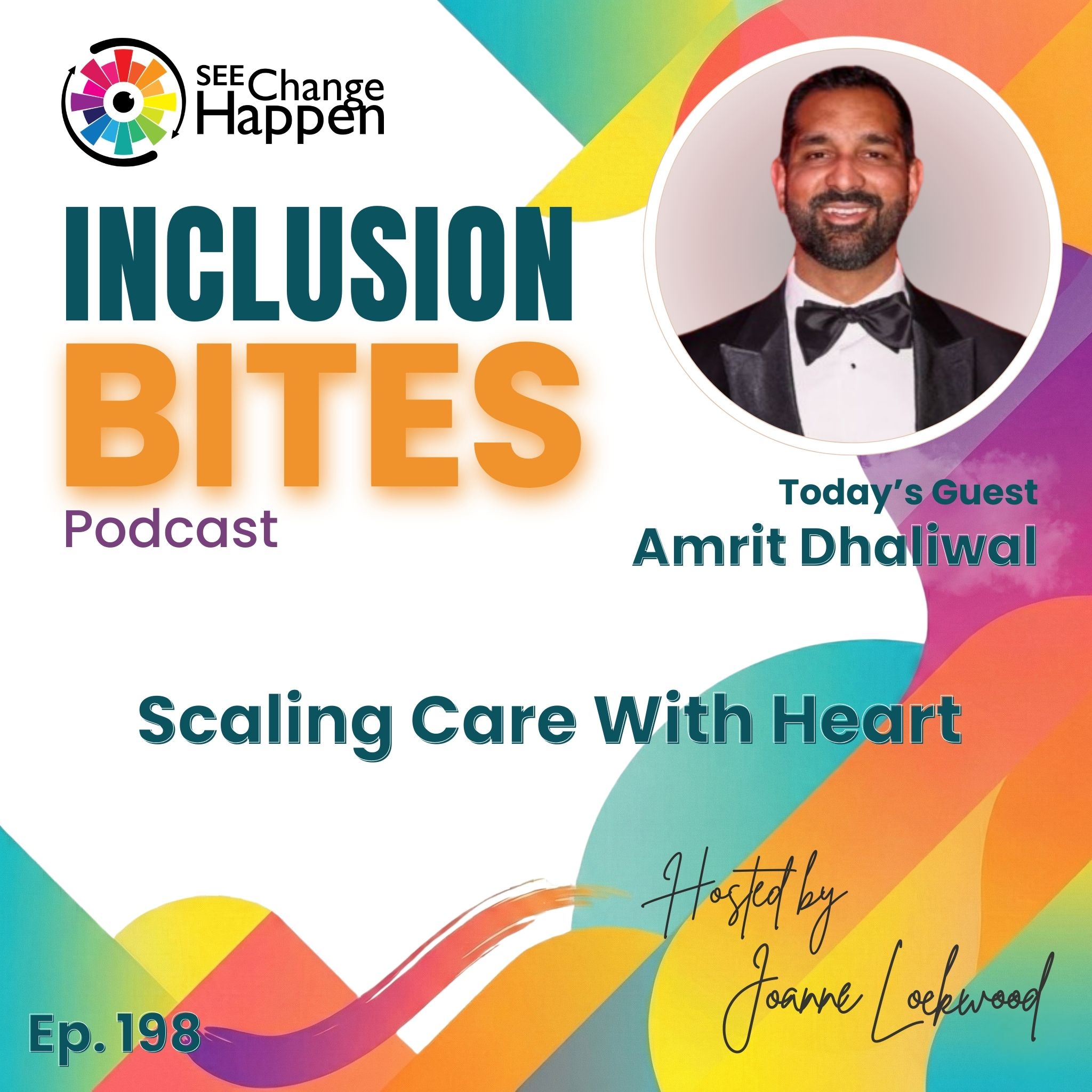
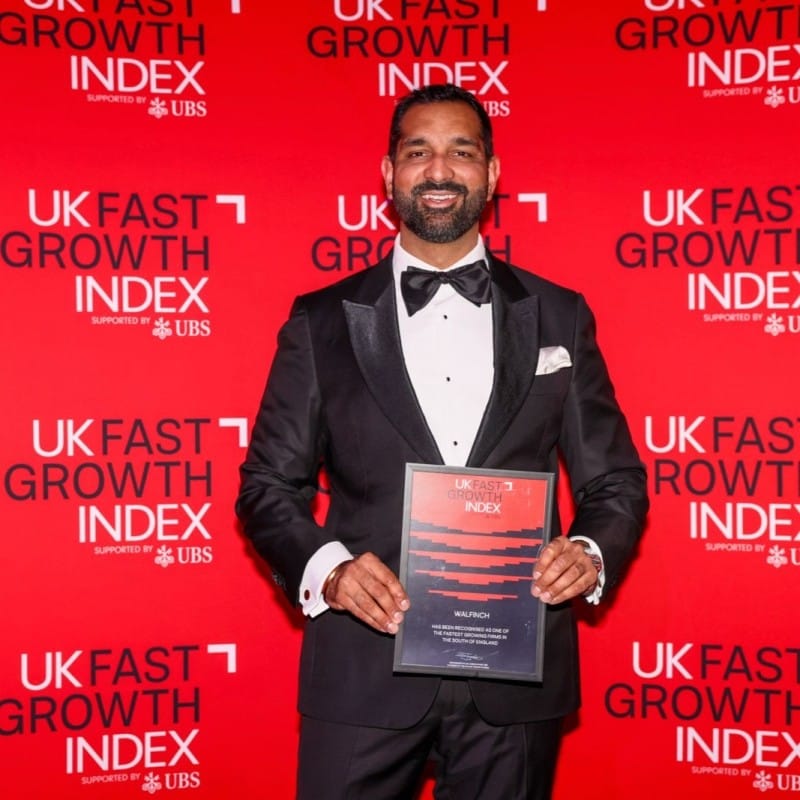
Amrit Dhaliwal explores the reinvention of UK home care through entrepreneurial vision, purposeful franchising, and a steadfast commitment to dignifying care workers while championing prevention, inclusion, and sustainable well-being for all.
In this episode of Inclusion Bites, Joanne Lockwood speaks with Amrit Dhaliwal about workplace culture systems.
“I still see myself as very much a home care outsider, but working from within.”
Explore
Navigate this episode
Joanne Lockwoodhost
Foreign.Welcome to Inclusion Bites, your sanctuaryfor bold conversations that spark change. I'm Joanne Lockwood,your guide on this journey of exploration into the heart ofinclusion, belonging and societal transformation.Ever wondered what it truly takes to create a world? Remember, everyonenot only belongs, but thrives. You're not alone.Join me as we uncover the unseen, challengethe status quo and share storeys that resonatedeep within. Ready to dive in? Whether you'resipping your morning coffee or winding down after a long day, let'sconnect, reflect and inspire action together.Don't forget, you can be part of the conversation too. Reach outto jo.lockwood@seechangehappen.co.ukto share your insights or to join me on the show.So adjust your earbuds and settle in. It's time toignite the spark of inclusion with Inclusion Bites.And today is episode 198 with the titleScaling Care With Heart. And I have the absolute honour andprivilege to welcome Amrit Dhaliwal. Amrit is adynamic entrepreneur and CEO transforming theUK home care through a purpose led franchising model that blendsinnovation, quality and social impact.
Joanne Lockwoodhost
When I asked Amrit to describe his superpower, he said that it is turningtraditional sectors into scalable purpose led ventures.Hello, Amrit, welcome to the show. Hi, Jo, thank you for
Amrit Dhaliwalguest
having me here. Great to be on the show. Absolute pleasure. We were just
Joanne Lockwoodhost
chatting away in the green room about my own experience insocial care care homes and sothrough parents and parents in law. So I'm sure we've got lots totalk about. So. And you're based in London, isthat right? I am, that's right, yes. Wow. Fantastic. It'snice to have someone in the same time zone for a change. There we go.
Amrit Dhaliwalguest
Yeah. Makes a change for you, I think you were saying. Yeah, it does. And
Joanne Lockwoodhost
we probably share in the same rain cloud at the moment. It's absolutelypouting down here and I think it probably must be all over the country rightnow. Yeah, absolutely. So, Amrit,you are, by the sounds of it, a sea, a serialentrepreneur and getting involved with many, many, many different startupsand models. So what got you into the homecare business and what is your. Witha heart, if you like, what's your passion for this? I
Amrit Dhaliwalguest
think, like most good things in my life, Jo, this wasalso my wife's idea.So we're sitting in a Cafe in 2012 andI was like, trisha, I've got lots to give and I don't know who wantsit. You know, I was in restaurants and catering businesses atthe time and I was working long hours and so on and the return wasfine. But when I think about the time and the emotionalinvestment, the financial reward just wasn't really therecomparatively. And my wife's a dentist, her family's been in nursinghomes for the last 30 odd years and she said heavy thought about domiciliarycare and I was about 25 or 26 at the time and I,you know, said what you would expect any 25 year old to say, whichwas, what the hell is that? You know. And the next thing I knowI'm speaking to all the different franchises around the country. I bought a home carefranchise within, you know, 60 days of thisconversation. I'm then running my care businesses andthen going out to Oxfordshire for my doing that,driving three hours to Richmond where my restaurants were and soon. And this is 2012 in September I signed the contract. InNovember I got my care Quality Commission registration and In I think2013, sort of February, I took my first client on and it wasaround March or April 2013 that I realised thatthis was it, this was what I needed to do for the next 20 years.I needed to fix home care, fix franchisingand both of those things in the home care space in the UK were abit archaic and I thought there's got to be other people like me thatwant to run businesses and scale them and justdon't know how. And I felt like the market was set up very much forpeople that were from the sector and I reallywasn't. I still see myself as very much a home careoutsider, but working from within. And I've setup Wolfinch with that in mind for entrepreneurs that want to getinvolved in the sector but want more of a plug and play model and tohelp them scale. That's often the way though, isn't it?
Joanne Lockwoodhost
Many businesses are the founder is the inventor, theidea person, the creator of something.But sometimes the better businesses are run by people who are one stepbackwards. They're not driving from their passion of the solution,they're driving from their passion of the business itself. To create asustainable business model that serves its customerslooks at all the dynamics. Whereas the inventor mindset is too focusedon the product sometimes. Yeah, I mean, I think, I think it's kind of
Amrit Dhaliwalguest
both end, you know, for me the problem I was trying to solvewas something else. It wasn't that I had been actuallyreally conveniently at that time, my grandfather, my lategrandfather had come over from India from Punjab he'd lived ina village that my families lived in for many generations andthere is no care. You, you, you take care of your elderly and soon. But as, as it happens,all of the kids have moved away in Canada,America, the UK and so on, all in search for a better life.And so, you know, my grandfather fly over here andhe spent a couple of years with us. Now that time I really got afirsthand experience on what it felt like to haveelderly people living with you and how you cansupport them and how you need to keep people independent but still keep,keep.It's kind of a blend between independence and, and givingsomebody that support. And I think that's the hard part. AndI really sort of saw that firsthand and then I went into sort ofthinking, well, okay, you're right, great. So I can see there's a need for this.So I become a franchisee myself to try and fix that need.And then as a franchisee I saw, well, here's a different problem. You know, theproblem is actually in the systems and in how archaic the wholemodel is. So then I went off to fix that problem and actuallythat I thought was the longer term problem because actually the mission pieceis finding more people like me that want to do thator more people like me back in 2012 that want to do that now. Youknow, when I look at it, I think in last five years I probably couldhave earned a lot more money being a home care provider and just scaling myown home care businesses. But I can make a lot more impact being theCEO of Wolf Inch and scaling it through franchising and goingnationwide. That's interesting. Yeah. So you, you
Joanne Lockwoodhost
have the passion, but you also have the entrepreneurial skills, as you say, to, tofranchise it out, to have a wider impact. So you said,well, to paraphrase you, the home care system is brokenor was broken and has been broken. What were the key things in there thatyou identified that needed fixing right now thatyou tackled? There's a multitude of things.
Amrit Dhaliwalguest
I actually wrote a book that came out earlier this year and all theproceeds go to the care workers charity. It's called Time to Thrive,the Home Care Revolution. And in that I set outa 12 step model. But I thinkanyone within the sector understands the way that the sector isfunded is problematic. So, you know, thegovernment's really kind of left us to our own devices. We get paidthrough local authority contracts, a rate that is not sustainableand is not reasonable. You know, we can't runsustainable businesses from that and therefore, and I saw this back in2012 and I thought, well, okay, the whole market's running after these governments contracts,I'm going to run in the other direction and focus on building a private business,self funded business, which I did, went from zero to a millionin that few years and really built this very kind of sustainablemargins led business which allowed me to provide a better qualityservice because I could hire staff that werecalmer, it was more sustainable, I paid them very well andso on and we were able to spend that time training them.And then if I think about that today, I mean, that problem stillremains in a different way today. And then for me, I thinka lot of it comes down to the way that the market is branded. AndI think, well, okay, the NHS is not branded the way home care is branded.And if I think about the campaigns that have been done fornurses, we think about a nurse and think, wow, thatis a really professional role and it's reallysupportive. But we think about care workers and there's almosta level of embarrassment saying, well, I'm a care worker and that isunbelievable to me. I think, you know, it's work that I couldn't do.It's amazing work that I think isso important. And if we think about the lockdown and Covid andso on, I mean, care workers that kept the country spinning, you know,the wheels would have fallen off. But I feel like we as acountry do not do enough to kind of help rebrand that.So part of my mission is rebranding the role of the care worker,professionalising it, really dressing it up and putting it out there. Andthen, you know, I'm 38 and so when I talkto my friends about being in home care, they're like, what the hell is that?Come on, you know, that's so cool. And so on. And they're all in financeand this and that and all of the sexy stuff. But the wayI sort of see it, I think, well, okay, well why can we notrebrand the role of the entrepreneur within this sector? Thissector is operated due to andby entrepreneurs. It is not led by the government.On the whole, you know, it is very much entrepreneurs that arein the sector driving it and creating change. And so I kind
Amrit Dhaliwalguest
of think, well, you know, when we're in the age of your Gary Veesand your Alex Amozies and, you know, your Cody Sanchez is, youknow, entrepreneurialism is cool, but home careisn't yet. And so what can we do about that? And I And then thatwill attract really interesting talent from different sectors who will come with theirown thinking and help redefine home care,which, you know, happens to be thewolf inches strap line. Because I really do believe that, I think that you cantruly do that through, through the power of franchising. Becausepeople like yourself might wake up one morning, think, gosh, you know, this would bean interesting thing to do and you come with your own skill set. Bring thathere. I think, well, okay, gosh, how do we, how do we then? You know,I've got a friend of mine that's creative and,and, and he's been paramount in, in helping morph mythinking in how the brand looks and feels and so on. And, andit's just different people that can impact along the way in very differentways. Yeah, I mean I'm currently, I
Joanne Lockwoodhost
suppose indirectly through parents, a procurer ofdomiciliary or residential care.And you're right, we've noticed that it's frustrating,very frustrating, especially when you're dealing with local authority.You have the interviews, they tell you, yes, you can qualify for15 minutes a day or half an hour a day. And this is what we'vecontracted with the provider to provide. Then wefound it very frustrating and that the provider turns upintermittently, different times, there's no stability there.Elderly father in law wants a breakfast roughly at breakfast timeand when someone turns up at 11, he's in the mood forlunch and he's had to make his own breakfast. And that defeats the whole objectof the care because we didn't want him walking around his property with a zimmerframe, potentially tripping over or falling or knocking something or havingto bend down. And so we found the actual provisionof service to be very variable. And whether that's because it's a local authorityfunded scheme or whether we, because I believe we now have the rightto opt out of this local government and take the fundingand do your own procurement, which we didn't opt to do. We opted to keepit through the local government at this time. But we probably end up goingthrough the same provider anyway. And it's, it's very frustratingas a, at this side of the fence trying toliaise the companies who are doing their best. Absolutely doing their best,juggling multiple balls, I'm sure, and people who caredeeply to get it right. But from acustomer perspective it's not quite there yet.
Amrit Dhaliwalguest
And I think a lot of that comes down to the way that the governmentbuys care. And so, you know, One ofmy sort of big pieces has been really moving away from that. And I think,you know, when we, on the whole, when we work with the local authority orgovernment, we work with them in the capacity of kind of direct payments. Thatpersonal budget that you're referring to now,where we don't have that, we tend to work with privatepay. And it means that both yourself as a procurer andus as a provider have control in the situation. And there's nothird party that's not there. You single action. That should be15 minutes. Gosh, what can you do in 15 minutes? You know, that
Amrit Dhaliwalguest
should be illegal as far as I'm concerned.You know, you can't go into someone's property and do anything in15 minutes, apart from cheque that they are there and okay,and then it's time to put your coat on and leave and it's just, it'snot feasible. I mean, you know, also when you think about that, you think,well, how much is that care worker being paid to go to that 15 minutevisit? Then they're driving there, they're driving back, you know, the time, themileage and all that. It's unreasonable in my opinion, to ask themto do that. You know, unless someone lives in some sort ofhousing colony and there's, you know, five houses there and you're going backdoor to door or whatever and it's, you know, 30 seconds betweenhouses. Okay. You know, but the reality of that situationis how disruptive for that elderly person at homethinking, you know, maybe they've got dementia, maybe they've got other,other sort of situations going on. And I think someone's rushing in, rushingout maybe. And also you cannot blame the care workerbecause they're trying to fit in all of these things. You can't even blame theprovider. They're trying to keep a sustainable business, to keep the care workers going,keeping clients healthy and so on. And you know, but the way that the workis contracted is problematic, I think.Yeah, as providers, I think, you know, really we, we need to march with ourvote with our feet and just march away from that, that, that localauthority work unless it is fairly commissioned.
Joanne Lockwoodhost
Yeah. I was a trustee of a charity in Portsmouthseven or eight years ago and we, we as a charity provided domiciliary care.I remember we ended up having to walk away from contracts because they just weren'tviable. You, you couldn't deliver and they were trying to bid 15 minutecontracts almost at minimum wage at the time.And that doesn't give any Scope for travel, doesn't give any scope for time off,doesn't give any scope for training or anything else,or personal, other personal needs. And it was justunsustainable. Providers were losing moneyon every visit, on every contract, and they just thought. Well, and that's so reasonable,
Amrit Dhaliwalguest
right? As a provider, you are also an entrepreneur.You might have shareholders responsibility to them as well,you know, both to provide a really good quality service,pay your staff really well, but also to enjoy dividends. Asa. As a shareholder, I think there's nothing wrong or inappropriate inthat. You know,it's a way that the system is all kind of curated. I think it's reallyimportant to have everyone in that system should win. Youknow, the carer should win, the client should win, the entrepreneurbehind the service should win, you know, the community should win.And as a result, the greater economy will win. AndI think, you know, if we think about it from the abundancemodel, I think there's. There's a lot to be said there. I actually have myown podcast called Walking With Wolf Inch and theepisode's not out yet, but it will be by the time this episode's out.I had an interview with Professor Martin Greenand a really interesting gentleman. He's the CEO ofthe Care Care England and he talksin that episode about how the NHS is funded. And actually, ifwe took a portion of that funding, gave it to the social care sectoras a. Social care providers would be able toreduce the amount of burden that islevied onto the nhs. And actually we're talking about about a tinyproportion of that, that, that funding, but it's just not there,you know, because actually home care or care doesn't win votes, you know,and that's fundamentally where we're at. I think you said it
Joanne Lockwoodhost
earlier about the. It's not seen as a glamorous thing, is it?Nurses and hospitals somehow are vote winners and they're seen asglamorous. Well, they've been rebranded. So, you know,
Amrit Dhaliwalguest
10 or 15 years ago, I remember there's this wonderful campaign around theNHS and nurses. It's wonderful. You know, if you think aboutall of the sort of civil type services, you know, the army and so onand the raf. I mean, you see adverts on tv. Where is that for socialcare? You know, we are the reason that people are keptat home or out of hospital and, you know, a bed at hospital.I think the last count was. I think this number is. Has. Has gone up.It certainly will by the time this episode's out but it's over £800 anight, you know, and you think gosh, you know that is a phenomenal amountof, of, of investmentfrom the, the taxpayers money. And, and I think.But we're able to remedy that. And also mostpeople don't want to be in hospital. They, they, you know, most people want tobe at home. Yeah, that's for sure.
Joanne Lockwoodhost
Certainly all of my parents, parents in law, I'vewanted to stay at home as long as possible but it gets to a pointwhere you just can't do it. You haven't got the accessible property,there's no, there's no help to make it accessible in some casesdoesn't need to be huge amounts but you know getting a hospital bed in thereor, or getting some other way or the toiletsupstairs, the kitchen's downstairs. Where do you put somebody? There's, there's no stairlift or anything else in the, in the property. It's complicated. AndI look at what happened with my father in law beginning of this year.He had a fall, not his first fall. Heprobably clumsy, he was trying to use a rollator instead of aZimmer frame type model. He probably tipped it, it fell
Joanne Lockwoodhost
and it ends up in a pile on the floor, walkingframe on top of him, two broken ribs and it tookuntil the care visit later that day to find him and end up inhospital potentially they thought he was going to end up onpalliative care and end of life but he managed to do anazimuth and pull it around and it got better. But I look at the timethat my wife was off work with that, at the worry that we had asa family, the time I had to take off work. So we're self employed butboth of us and she couldn't earn, she couldn't deliver the business. Then youthink about all the time invested in the actual hospitalisationof my father in law for that 10 days, 15days and then having tooff board him out of hospital, onboarding back into domiciliary care. Thatwhole process, the number of people involved in that, how do you have proper careat the beginning then that would have cut out all of thisanguish and time from the workinggeneration and the hospitalisation and the care heneeded. So you're right, the prevention in that scenario would have been a better investment.
Amrit Dhaliwalguest
Yeah. And I think this is where my mind is really at withthe way that we're scaling Wolf Inch. It's really focusing on prevention,it's focusing on where we ought to be focusing As a community,as a nation? And I think really that for me is all partof creating, creating a solution because we all know the problem and certainlyif you're within the sector, you know what the problems are and we can sitand we can talk for an hour about all of the problems that are there,which is vast, or we can actually start taking some actionand saying, well, okay, what am I doing differently as a provider? Am I chargingenough so I can pay my staff enough? Am I. So is the local authoritypaying me? If they're not, am I going to focus on privatepay work? And, and how do I then start to createa business out of private pay work? And actually, isthere a franchise model I can get involved in? Are there coaches or whathave you? How do I actually scale that to ensure that that business issustainable? And I think that's it really. I mean, I'mvery process driven and focused onresults and I think it really serves itself well within,within the domiciliary care market, is there achallenge. On the supply side of the talent
Joanne Lockwoodhost
of the resources, the care workers? Is there a challengegetting people to steer asa worthy profession to invest in, or are westill struggling to get the resourcing? I think
Amrit Dhaliwalguest
there's a few different challenges. Certainly, as we currentlyspeak, there's been changes within the way that you're gettingstaff from abroad and that's problematic because that really alleviateda lot of the issues that we had in the market. It creates an increasein supply. So you've got that problem, then you'vegot problem on a more local market. But forme, and again, maybe I'm too simplistic, butfor me, I think often the problem is a lack of activity problem. And Ithink if you're able to get out there enough and you are making enoughphone calls and you speak to enough people, you willget a member of staff and you sort of look ata kind of sort of two to one ratio whenyou're, when you're looking at clients to care workers, invariably, andactually that works. Right, so you don't need lots of carersto make a successful home care business. You know, a successfulhome care business might look like about a million pounds in revenue with youknow, maybe 40 odd clients andmaybe you know, sort of 25 care workers. So it's not ahuge, we're not talking huge numbers of people, but then I think thefocus needs to be very much on retention of those people. So,yes, you know, my first home care business was Oxfordshire, so Veryaffluent area. And you know, I realised really earlydoors I'm not going to get tens of people applying tomy job every day. And I spoke to a colleague of mine withinthe sector from a different brand and said, oh, so you know,what are you doing? How are you getting staff? I mean he was sort offive years ahead of me and said, well I spent about this is backin 2013 he was spending 1500 pounds a month on indeed adverts andthe gosh, I don't have 1500 pounds a month for a start.And second of all, you know, he's getting 10 people in but thenlosing nine and then having a net growth of one. I was like this is,this has got to be something, something else. And I was talking tomultiple other providers and everyone's in a similar situation,different version of. And I thought, wellokay, now what? And then I sort of went back to the office and Iremember looking at my, my team. So
Amrit Dhaliwalguest
what is our difference? How do we change this? Because I don't have1500 pounds a month and I don't want to grow by a net ofone people. So how do I change this? Okay,so I'm doing all of this activity so we're going to get really focusedon who we're hiring and we're going to say no a lot, which is actuallyunheard of within sector. And so we're going to say no to people that we'vethink don't want to do this are not people I would hire from my ownparents. And we're just going to say no tobasically 50% of the applicants that come. And so we're going to get superfocused on who do we want and what is the purpose ofgetting this, taking this job,you know, and I really thought about that and I started doingvalue based recruitment and so that really helped. So thatone thing alone made me get the rightplace. And so the right care workers were comingin and they were sticking around longer just automaticallybecause they wanted to be there. So I didn't have that churn just from thatone after. And then I thought okay, well now, so I've got care workershere, I'm not go. There's, there's an even,you know, further reduce the supply. So now they'vebecome even more like gold dust to me. So now what? And I thought wellokay, so, so now I need to, there's not lots of them. I need toget to know these people, every member ofstaff, you know, the dog's name and who's got chickens and how many kidshave they got and what's their names? And, you know, they've just run a marathondoing X, you know, oh, someone's working in a mini field factory. Great.You get to know people and then you start to understandwhat motivates people. What is it? Is it money? Isit purpose? Is it the fact that they want to be at little Timmy's footballmatch on a Wednesday afternoon? Every Wednesday. Great. You know, let's get to knowthese people. Because actually, if I was a consultantand I had a client that was generating £50,000 a year forme, I'd be falling over myself. I would be sending thembirthday cards for their children's birthdays, for goodness sakes. Acare worker who's generating the same for a business. We're like, oh,whatever. Sarah's gone, Samantha's come in.We just don't have that thinking there. And so Iflipped that thinking and I said this to my core teamin the office. You think I'm paying your salary? You are dead wrong.It's the coward. They are driving thewhole thing. So how do we keep them going? How do we keep themin this business? And then it was thinking, well, how do I increasethe supply? And that comes down to simple. Let's get out there.Let's, you know, let's do the press ups. And if we're not doing the pressups and then complaining about, I'm not getting care workers in,I don't buy that. You know, I think it all comes down to, right, let'sdo more work, work. Let's change your work. Let's tinker with it. Let's drive thedata. You know, I did this. That didn't really work. Is itbecause the system open or is it a volume problem? Andinvariably it's a volume problem. You know, I had a, a friend of minein the sector, he said, oh, well, I sent out 300 leaflets and nothing cameback through it. And I thought, okay, cool.So. And then what'd you do, you know, all that work, Nothing. I was, okay,so have you, have you tried sending out 3,000 leaflets? And so hesent out 3,000 leaflets and he got something back from it. I was like, great,so now what happened if you send out 3,000 leaflets every day, you know,for example, and yes, and there's a budget issue and whatever, but actually.And then what happens if I'm doing that every day, but then I'm also,you know, asking those people that coming in or for theirreferrals and then know six months later I'm speaking to saidcareworks, I've been working with me and I think they're wonderful. Hey, who else doyou know that is like you, that is your friend as a value set thatcan work for us. And all of a sudden you'll keep growingby one, two, five people. And if you can
Amrit Dhaliwalguest
retain those people, you will developa sustained scalable business but also you'll dosomething really magical which is upskilling that sameperson. Now what you find with businesses with a lot of churnis that they never, they've never got anyone around to upskill them. You know,they can't teach them the next thing and the next thing with medication and thewhatever else it might be. But if you've got somebody that issticking around for a five year period or you can really sayhey look, you know, I've got this next course and we're doing this thing onossipro and their diabetes and then so on and then so forthand all of a sudden five years later you've got this wowzers care workerthat is just phenomenal. And theycan talk to a tissue viability nurse for you and they can talk to districtnurses and they can have these really meaningful conversations thathistorically have all been reserved for managementstaff. And my thinking is flipping that on its head. It's thinkingwhy can we not give the care workers some of the mostresponsible work within the business? Because they are the ones that are out there thewhole time. You know, the only thing stopping us isupskilling them. Yeah. I go back to
Joanne Lockwoodhost
when I was a trustee of this local charity providing dogma care. Thetraining, the compliance, the CQC regulations,so much so that we, this, this charity even started its owntraining business, E Learning company because it wascheaper to build its own E Learning platform to train its staff and thensell it to other training care providers than it was tosort of outsource somebody else. Because you know, you haven't, you've got, youknow, you need people trained in stoma care, you need people trained in beingable to give a certain type of injection or diabetes or whatever it may be,foot care, all these other type things. So you need people who are amultifaceted rounded professionals and Ithink that's what we probably forget. We think home care is justincontinence or feeding or cleaning.It's the whole load of specialisms there that you have to bea nurse in a package really, don't you? You have to be able to provideall the things that you would get if you're in a hospital bedin the community, wherever possible. Absolutely.So factoring that into your care packageand whatever the local government is giving you is really tricky. Asyou say, you're trying to change how you're funded bylooking at the private sector, looking at different partnerships. Sothat's the challenge you're facing now, isn't it?Higher net worth individuals who are looking at premium care homes orpremium at home services. Yeah. And I think as time
Amrit Dhaliwalguest
goes on, so many people fall into that bracketand it might be somebody that was historically kind ofdidn't quite fall into that bracket because the thresholds have changed over timeor property prices have gone up and so on. And so all of a suddenso many people fall into that bracket. So actually, and I thinkthat'll only happen more and more over time and, and it's then aboutsaying, well, what is the, you know, most sustainable way of doing thisand what is the most fair way of doing this? You know, you've got tothink, well, okay, how do I sustainably and fairly turn a profit? AndI think that's what it really, it's really thinking abouteverybody in that kind of circle winning.
Joanne Lockwoodhost
My mother's come to terms with having spent, welltwo years of paying for care homes for my father in excess of£120,000, I think, in care care home costs.She's decided to invest £120,000 in her houseto make it accessible. So she's building wet rooms, she's building a downstairs,she's even planning out where her bed could go in the living room, remodellingthe downstairs so that she can now foresee herself staying at homefor as long as physically possible with domiciliary care. Rather than havingto ship herself off to a care home, sell her property tofinance it, whatever she can. Now, hopefully the plan is for her to stay theretill the right to the very end. And I think if people startedthinking about that in their 60s, 70s and 80s, about how can theycreate a sustainable home environment for them and not bereliant on care homes and they can keep the asset in their property as well,all that, maybe we need to educate thepopulation as well on how to fund these things. I think there's a lot of
Amrit Dhaliwalguest
work that needs to be done there. I think there's probably also, we're probably ata point in time where there's more products that are needed.And one of the things I talk about in my book is about,well, okay, are there insurance products that could be product provided topeople from this, from, you know, that are going through this? I mean, there'salready kind of equity products withlenders that I've come across in the past and so on and we've seensome clients utilising and so forth, you know,but what else is there that would help kind of pull thatplaster off and help us really just move forward from this.
Joanne Lockwoodhost
Yeah. And providing better training and support forrelatives. And that's one thing we learned as,as, as children of elderly parents is that we werewoefully unprepared for what, what was expected of usand we needed educating. You know, I, I said at the timeto the, anyone who would listen thatwhen you're having a baby, you kind of, you're in this club. Everyone, everyone knowswhat having a baby means. You know, you've got antenatal clients, you got lots ofparenting books, you've got all these little things, you've got these little clubs and Facebookgroups, but nobody has this kind of what it means to be asandwich generation in your 60s trying to hold aliving deal with your children who are in their 30s andthen suddenly your parents become children again. Yes.And you've got all this navigating this care system,navigating the terminology, getting through to people, havingconversations with medical professionals who seem keen to treat thephysical but not capable of treating holistically the mentaland the well being side. It's almost like your ribs arefixed now, off you go, there's no more deal with it.So it's education for the relatives that isalso needed and I think destigmatizing theprofession, professionalising it and alsomaking it a careeropportunity for many people. Then as a child, as someone who'sin care, then I wouldn't feel the stigma either and my employer wouldn't know thestigma. And it's accepted that I'm going to need that flexibilityand time. And people see that being a carer as somethingmore than just fitting it in. You get maternityleave, you get paternity leave. Why can't I have care leave? Yeah, yeah,
Amrit Dhaliwalguest
I think, I think that's absolute here. I mean, you know, and actuallyone of the opening gambits in my book is exactly that. You know, if I'vegot a PA then that's something to be proud of.If I've got a nanny, that's, that's okay. But if I've got a care worker,you know, that's something to be Embarrassed about. And I think that thatthinking just needs morphing because actually more and more people are living withthat, dealing with that and then thinking about a tool,you know, just a toolkit that you, Jo and, and your partner canlive with. Or I think, well, okay, how do I navigatethis whole very complex thing where, yeah, we, you know, you verymuch are in that sandwich generation of I've gotboth ends popping off and, and how do I fix that? How doI, you know, cope with that also emotionally, how do you cope with that? That,you know, because the pressure is, is immense as well.
Joanne Lockwoodhost
Yeah. And it's not just elderly, it's people of allstages of life. I, I'm, I'm also mindful of this because my, my wife hada total knee replacement two weeks ago andshe got sent home, no care package. You know, she, under the EqualityAct 2010, she doesn't even qualify as disabled because it's to be qualified thatyou have to have a disability that lasts more than a year. So having aknee replacement so she doesn't get any help with parking spaces oranything else, she has to deal with that.Crutches and zimmer frames and walking frames, whatever it may be, without anyprovision. And so there was no offer ofsomeone to help her. I would have to drive her to thelocal surgery to have the wounds dressed and changed. Something could have beendone in the community. Need to occupy hospital time to have that.So again, it's not just elderly people here, it's people of allages who are going through having a need for dominance care, isn'tit? Yeah, yeah. And that's it. And that's one of the
Amrit Dhaliwalguest
reasons, actually I've recently partnered with the Royal OsteoporosisSociety and so I'm one of their businessambassadors. And it's really interesting because actually, again,we don't really talk about it as a sectorthat's kind of so early doors that we're not talking about it.And I think, gosh, if I think about the demographic of my staffingteam, they will all be dealing with this. If not now,then shortly. A very big percentage of myteam will be dealing with that care workers and management and so on.If I think about that work end client, they will be dealing withosteoporosis and, and, and it's really then saying, well,okay, so what, what can we do? Are we teaching our care workers enough? Arewe partnering up enough? Are we talking about it enough? And so we're trying toraise money for them and and, and really work with them directly. So I thinkit's, it's really interesting the way we, where we look at that.
Joanne Lockwoodhost
We've just started talking more openly about menopauseand the impact of HRT and which obviouslyhas a huge impact osteoporosis as well, certainly in women. ButI guess it must also occur to men of a certainage as well where their bone density is reducing. Absolutely,
Amrit Dhaliwalguest
yeah. And maybe more, more money has been spent on elderly women right
Joanne Lockwoodhost
now because it's kind of linked to menopause and hrt, whereas elderly menare probably. There's no, there's no, there's no programme there, is there?People that. No. And I think, well, also there's a bit of re education that's
Amrit Dhaliwalguest
needed from an earlier age. So, you know, I've got both of my parents whoare in their early 70s, you know, lifting weights and,and really building that kind of muscle mass now to, to help that deteriorationand increase bone density and work through all the supplements and so on.And it's really, it's really talking to people at much earlier age andstage when they're fitter, healthy and so on, say well, you know, what are wedoing to increase bone density, increase muscle mass? You know,when we're talking about your, your father or father in law that had the fall,you know, it's, it's really then saying, well, okay, have I really worked on, inthe early years on my quads, my glutes and really kind of made that strongenough because I know that after a certain age or you know, evenafter the age of like 40, the deterioration is going to increase,the muscle mass is going to decrease and so I'm left in a much kindof weaker position. And so if you think about how you want to beable to live in your 80s and 90s, you know, pick up the grandkids, playgolf, tie your shoelaces, whatever that might look like, it's then saying, well,how much muscle mass do I need for that? And then howmuch deterioration am I going to have? Well, this is how much muscle mass Ithen need to build from where I am today. And it's, it's really kindof thinking about things in a much more scientific way. Things like gettingbenchmark bloodstone. You know, I've started getting into that myself now doinglike, you know, selection bloods and so on, say well okay, here's mybenchmark number. So I'm not looking at it in my 40s, 50s,60s, and then saying, well, I don't Know what these numbers mean? Are they up,down, sideways, what are they? But, you know, getting a kind of aselection of things done earlier at any stage, really.The thing is really interesting because as you get older, you've gotthings to then pitch that against and really think about that. You know,I think. I think we. There's this great guy calledPeter Attia who talks about health in a really interestingway, and he talks about health, you know, 1.0,where it was bloodletting in the mediaeval times, you know,2.0, which is kind of what we're in. Yeah, during,you know, so. So you've got an issue. I'm giving you some medication,but we're moving into that medication 3.0, which is,you know, Wellness and Health 3.0, where we're talking aboutprevention in a real way. You know, we talk ofprevention today, but the two things are notmirrored in terms of the way that it'sdelivered. Health is delivered to us and cares and supports aredelivered to us from medical professionals and so on as well. It's really thenthinking about getting all of that information together. I thinkit's closer to it in the States than it is here becausethere's a much more kind of privatised system around health and I thinkthat makes the data flow better.And also there's a appetite for that kind of information,which I think there's probably work to be done in the UKat the moment which hopefully will be part of that change.
Joanne Lockwoodhost
I mean, I'm probably biassed because I had, I suppose, a bit of alife epiphany about three or four years ago, so I've just turned 60 thisyear and I realised at the age of 57ish,that if I wanted to stay active into my 70s,I couldn't wait until I was 67. I had to do it at 57, atleast I should have done it at 47, but. So I gave updrinking, lost a lot of weight and joined the gym,go to classes now, but I'm quite data driven. I've got my Apple watch,I've got my nutrition calculator, fooddiary. So I'm much more conscious aboutmy own health and well being through data points. I guess the youngergeneration that's coming up is used to having wearables,these technology devices. So that generation, yeah, the coming generation will bemuch more acutely aware of the metrics. I'm alsofortunate that I do get regular bloods through my GPfor various things I've had going on in my life, I get regularblood tests every six months. So I've been quite fortunate things like that havehappened. But you're right, if you haven't got that benchmark, you don't know whatyour user needs are. Your baseline lymphocyte counts, all these kind ofthings. Even your hormone levels, when it changes, you don't know if it's,if it's up or down. You just know that it's different for you or yougot nothing to go on. So I think, yeah, going back to the point youmade at the beginning was the prevention side. This Health3.0 is all about prevention, investment in the future. And that'sgot to start in our teens, isn't it? Truly, I mean, we just
Amrit Dhaliwalguest
need to think about it. I think, you know, also just changing the way thatwe're educating ourselves. But, you know, I've, I've always been into liftingweights and so on. And when I was younger, it was all about the vanityand just being a big beefcake. But actuallyas I've got older, it's really, it's less, far less about the vanityand much more practical and thinking, well, I startedin this year, really. I've been personal training quite a lotand I just feel just so much strongeras well. Just for you, going up and down so stairs and you're standingup without using anything, you just think, gosh, yeah, you know, this is, this iswhat I want my strength for as I get old, basic stuff.You know, I just want to be able to hold my kids forlonger and walk with them further and, you know, all of thatpractical strength. And I think as I get older, what does that look likefor me? You know, what, how do I want to live and what am Idoing today to think about that? And so, you know, things likeweight reduction, so on. I mean, I've been on a bit of a journey myself,you know, bit more to go. But I think again, all of these things,it takes off the burden on your ankles and your knees and so on. Andit's just, you know, as long as you can safely healthy do that.I think this is, there's a lot there that as we getolder, it will really help create a much more thrivingstage of our life. Yeah, but I think at the moment
Joanne Lockwoodhost
it has to be my epiphany. It's not a, a culturalthing, that it's evolving. Maybe, maybe we'll be talkingabout it more, but it took a personal epiphany. So, you know, Ibought an E bike because I realised that I had. I had a manual pedalbike and I was locked in between two hills so I could go along thebottom. But as soon as it got bumpy, I couldn't get up the side. SoI bought an E bike and suddenly my world expanded. I can now do 25,30 miles on a Sunday morning, whereas before I was doinga couple hundred yards because I was blocked in the gym.Personal trainer classes do that. And Imentioned at the beginning we've just got a puppy and I've. I look, look atthe rings on my watch and having the puppy. I'm stat. I'mdoing my stand count before lunchtime now because I'm getting up anddoing this, I'm more active. I don't lie in bed anymore, I'vegot to get up, take for a walk and feed all that stuff. All ofa sudden just having a puppy has created this whole newfitness requirement just to be active. So I've been verymindful around standing from a chair without support. So I always,when I get off the sofa now, when I get off a chair now, I'malways trying to kind of do this without support, just usemomentum and. And I judge that as a real progress step, that I canstill do that. And so, yeah, I think you're right. We have to take personalresponsibility and maybepart of your business model, and I don't know if this is what you're thinking,is to try and bring people on that journey with you. So you're coming intothat. Yeah, really it is. I mean, so we have, around
Amrit Dhaliwalguest
the country we do something called Thrive Clubs, which are freeclubs and donations go to the Royal Osteoporosis Society inRenbury and where people can drop in and I'll do somethingactive, whether it's, you know, yoga or Pilates orchair exercises. I mean, heck, in some places we even doart and so on. So just kind of creative as well, because it's not alljust physical. But I think really thinking about that andsaying, well, what are we doing and taking to the community and actually are westarting that journey with people much earlier and really bring them on thatjourney much earlier and then going on a, on a, on a much longer trajectorywith them. Is society changing? I mean, I look back at my
Joanne Lockwoodhost
generation and we were probably the cause of theMcDonald's problem. You know, as parents, McDonald's just launching theHappy Meal. So we were probably of thatgeneration that started causing that obesity crisis in our kids.Have we got to the end of that phase. And we're now looking at abetter or we stillpropagating this. Yeah, I mean, you know, from
Amrit Dhaliwalguest
things I've read, you know, articles and studieshave been done with economists and so on, and also from my own personalexperiences with the sort of GenZ's or zeds or whatever they're called, the, the next lot that are comingup, I note that they are far more health conscious, theydrink less, they don't binge drink in the way that was normal,you know, 10 or 20 years ago. They exercisemore, far more kind of sort ofaware of their health. And you think thingslike these AG1s and all these kind of supplements and so on, you know,there's a, there's a much bigger kind of appetite for things like that. So Ithink that there is a lot of that happening. I think that we arefinding that things are morphing and changing. It will taketime. It will take. A generation, Ithink, but it requires all of us to carry on doing the work.
Joanne Lockwoodhost
Yeah, I'm one of the millions who are using Mounjaroas a partner in my, in myweight loss journey. And I see it as a partnership because it's not, it's not,doesn't do all this on its own. You've got to, you've got to want todo it and you've got to meet it halfway because if you don't put theeffort in with it, it has no effect. Butthat's really woken a lot of the population up. That's become almostaccessible to many. Obviously there's still a premium price,but that is really getting people thinking about, actually, I can now do this.It's like having a little coach on your shoulder going, you can do this, youcan do this. You're paying 250 quid a month for me, you better make itworth it. I think it's in my mind, I think I don't want to keepeating the pizza and paying 250 quid for weight loss injection.So there's a whole new generation now thinking I want to take personal responsibility formy weight. And they're now buying into it. But there's still stigma aroundhaving help, isn't there? It's like, yeah, I mean, but again,
Amrit Dhaliwalguest
I think that is changing so quickly. You know, I, I thinkcertainly in the people that I know, Ithink I, I know a lot of people that are using,you know, medication or whatever it might be. And also I think thatthere was this wonderful article in the Economist earlier thisyear. It was like a six page spread and it was talking aboutweight loss, drugs and, and I, I thought it was really interesting becausethe way that they had positioned it was, was to say that over the next20 years it will really change and it will beseen as more likediabetes or a curable issue asopposed to the way that it seems socially today. I
Joanne Lockwoodhost
think that's laziness and lack of discipline and yeah,very not true actually. Yeah, and it's just, it's just the way, way that we
Amrit Dhaliwalguest
position it socially and I think that, you know, it's just not trueactually. And, and I, I really kind oflook at that and I think that's really interesting to think howdrug like that will change society. And I think, wellthat's one of many changes that will happen, you know, and, and,and I, I just think that if we all just takeour little bit and we, you know, focus on our sphereof influence, we can really make monumental change in how we thinkabout ageing and how we think about wellness and how we think aboutbeing older. I mean, in many ways you think, gosh,if you focus on that health trajectory, youknow, you are at a stage in your life whereyou've worked, you've, you know,accumulated whatever you're going to accumulate, you've got a house or whatever it might be,be and you know, if, and if you are fortunate enough to do so andactually you're able to live a much morekind of full life than you might in your 20s and 30s because you're inthat building stage and you've got young kids and so on and so forth. Andso it's a really wonderful stage of life. But I think it's about repositioning theway we look at it. And so I'm really interested inhow we think about ageing in a young uk.
Joanne Lockwoodhost
I read somewhere and I can't remember the exact age, but something, I think it'ssomething like the first person to live to 150 yearsold has already been born or just been born and youthink, so the new generation, there'll be an expectationby definition that you will live into your 120s at some point.But what we don't want to do is live to 120 and not befit into our 110s becausewhat we can't have is 2/3 of the population beingover 50, over 60, living in care or needingdomiciliary care with the other third trying to pay for that.So we need to change ourfitness and Our capability. So that adjusts with our lifespan at themoment. Yeah, I mean, I think we need to really change the conversation
Amrit Dhaliwalguest
from lifespan to healthspan. Well, okay, how longam I healthy for? How long am I mobile and fit for and so on?And actually, you know, that, that, that health spanis, you know, because we talk a lot about lifespan, don't we? And as acommunity and I think really it's kind of morphing the conversation and saying, well, youknow, how long am I independent and happy in,in who I am for? You know, and it's, and really asking those sort ofhard questions. Questions. Early doors, I think. Yeah, I mean,
Joanne Lockwoodhost
we've gone past the, the era of golden handshakepensions where people can retire at 50 and, you know, the nextgeneration and Gen X is like me andboomers, like, like people around me, we're gonna have to keep working to ourmid-70s. You know, we don't, we, we don't have the, the wherewithal now. Thepension age is going to go up. Even, you know, I, I could I affordto retire at 67? Probably not. So I need to be fit and active enoughto earn some kind of living to supplement any pension I haveinto my 70s. And that number's going to go up by fiveyears every 10 years or whatever it may be. So we're going to need peopleworking to their 80s. Workplaces are going to be accommodating now of multiple generations inthe workplace, multiple fitness levels and multiple capabilitylevels and we as a society can't keepignoring that. Yeah,yeah. The NHS can't cope with it. Well, this is it and I think we
Amrit Dhaliwalguest
really need to think about it and think, well, what is, you know, I talkedto my nephew who's in his early 20s, said, well, you've got 50 years ofwork, you know, so, so really, you know, think about all the different incarnations you'regoing to have. Whatever it is that you're doing today is probably not going tobe what you're doing in 20 years time and then another 20 from there, youknow, and, and that's, it's also then at his stage, it's thinkingabout the wealth span that will feed into the health span and that will feedinto the lifespan. And, you know, it's really, it's really thinking about thatwhole, whole journey, I think, and much, very much like a journey, you know,and I think really kind of mapping it, planning it and thinking about it, whichis not something that is comfortable to do, but I think we ought to.
Joanne Lockwoodhost
But there's been an expectation that people are relying on the stateto do that for them, haven't they? That's been the kind of. I suppose itcame out of World War I, World War II, that sort of mentality wherethe state started looking after, you know, the NHS was formed, pension,retirement, all these concepts started evolving. Ifyou go back in time, back in history, people didn't retire,they just passed away at work orthey became very infirm very quickly and they weren't expected to live much more thana couple of years after retirement. Yeah, and that's, that's it. It's very
Amrit Dhaliwalguest
true. Especially as the people who were in that zone
Joanne Lockwoodhost
were probably working class, lower middle class,probably doing manual labour, probably working inadvance, that were toxic and they were developing conditions. You know, healthis probably for the benefit of the wealthy and the, the privileged few, wasn't it?
Amrit Dhaliwalguest
Yes, very much so, yeah. And yeah, we now have an expectation
Joanne Lockwoodhost
as a society that health and well being and wealth span, as you said, andhealth span should be the right of every person,regardless of financial status. Absolutely. I
Amrit Dhaliwalguest
think, and you know, hopefully we will work toomit that two tier system that has formed in the uk.
Joanne Lockwoodhost
Amit has been a fascinating conversation. I mean, we've gone off afranchising and domiciliary care into sort of blue skyingaround health and well being, into our, into our hundreds. I'vereally enjoyed it. How can people get hold of you and find out more? Youknow, maybe you're a budding franchisee listening to this,Jo. I've really enjoyed myself too as well, thank you very much. So we're very
Amrit Dhaliwalguest
easy to get hold of. So I'm Amrit Dallywell. I've got my book which iscalled the Time to Thrive Home Care Revolution, which you can findon Amazon. I have a podcast which is called Walking With Wolf Inches. Allthe, on all the podcast platforms on myInstagram, which is Amrit Wolfinch and LinkedIn,which is Amrit Dallywell and then the website which iswww.wolfinchfranchising.com.
Joanne Lockwoodhost
Fantastic. This is all in the UK at the moment. You're not, you're not goinginto Europe yet. Currently in the UK and you know, let's see what
Amrit Dhaliwalguest
happens in the future. So throughout the uk.We're currently throughout the uk, yes. Yeah. So the furthest north isEdinburgh and the furthest south I think is Southampton. Oh, wow.
Joanne Lockwoodhost
I'm in Portsmouth. So. Yeah, just around the corner. Yeah. Not far. Yes. Yeah, notfar. So if you're, if you're in the west country or you're inthe tail end of Kent, maybe there's an opportunity there to franchise.
Amrit Dhaliwalguest
I mean, we have, you know, we've got awonderful journey to go on. I think we'll probably have about 40locations by the end of this year, but we probably divide the country into200. So there's a lovely kind of 10 year journey togo on and we're always looking for the rightpeople to go on that journey with us. We say no a lot, but again,for the same reasons, we're looking at retention, we're looking at theright people and we're trying to build a values led business.
Joanne Lockwoodhost
Well, I'm never going to disagree with that statement. Absolutely fantastic, Amrit, thank you somuch. Thank you.As we bring this conversation to a close, I want to expressmy deepest gratitude to you, our listener, for lendingyour ear and heart to the cause of inclusion.Today's discussion struck a chord. Consider subscribing toInclusion Bites and be become part of our ever growingcommunity driving real change. Share this journey with friends,family and colleagues. Let's amplify the voices that matter.Got thoughts, storeys or a vision to share? I'm all
Joanne Lockwoodhost
ears. Reach out tojo.lockwood@seechangehappen.co.ukand let's make your voice heard. Until next time, thisis Joanne Lockwood. Psych. Signing off with a promise to returnwith more enriching narratives that challenge, inspireand unite us all. Here's to fostering a more inclusive worldone episode at a time. Catch you on the next bite.
Transforming the Home Care Sector with Purpose-Led FranchisingPrevention, Wellness, and Healthspan—Rethinking Ageing and Care DeliveryStigma, Workforce Retention, and Resilience Within Social Care
Joanne Lockwood speaks with Amrit Dhaliwal, CEO of Wolfinch, about what it takes to scale high-quality home care without losing the human connection that makes care work effective. Amrit shares how he entered the sector, what he learned from running a franchise as an “outsider”, and why he believes home care can be redesigned through a purpose-led franchising model.
Together they unpack the structural barriers that keep care provision unstable, including how local authority commissioning and short visits undermine consistency for families, providers, and care workers. Joanne brings the discussion to life with personal experiences of navigating domiciliary care for family members, highlighting the real-world gap between what is commissioned and what people actually need.
The conversation also explores what it means to professionalise and rebrand care work: recruiting for values, retaining and upskilling staff, and building systems that make quality sustainable. They widen the lens into prevention and “healthspan”, arguing that supporting independence earlier can reduce downstream pressure on hospitals and help people live well for longer.
“the government's really kind of left us to our own devices. We get paid through local authority contracts, a rate that is not sustainable and is not reasonable. You know, we can't run sustainable businesses from that”
“And then that will attract really interesting talent from different sectors who will come with their own thinking and help redefine home care, which, you know, happens to be the wolf inches strap line.”
“And I think really that for me is all part of creating, creating a solution because we all know the problem and certainly if you're within the sector, you know what the problems are and we can sit and we can talk for an hour about all of the problems that are there, which is vast, or we can actually start taking some action and saying, well, okay, what am I doing differently as a provider? Am I charging enough so I can pay my staff enough?”
“But for me, and again, maybe I'm too simplistic, but for me, I think often the problem is a lack of activity problem. And I think if you're able to get out there enough and you are making enough phone calls and you speak to enough people, you will get a member of staff and you sort of look at a kind of sort of two to one ratio when you're, when you're looking at clients to care workers, invariably, and actually that works.”
“Why can we not give the care workers some of the most responsible work within the business? Because they are the ones that are out there the whole time. You know, the only thing stopping us is upskilling them.”
“And it's really talking to people at much earlier age and stage when they're fitter, healthy and so on, say well, you know, what are we doing to increase bone density, increase muscle mass? You know, when we're talking about your, your father or father in law that had the fall, you know, it's, it's really then saying, well, okay, have I really worked on, in the early years on my quads, my glutes and really kind of made that strong enough because I know that after a certain age or you know, even after the age of like 40, the deterioration is going to increase, the muscle mass is going to decrease and so I'm left in a much kind of weaker position.”
“I just think that if we all just take our little bit and we, you know, focus on our sphere of influence, we can really make monumental change in how we think about ageing and how we think about wellness and how we think about being older.”
The tension between archaic government contracts and the goal of sustainable, quality-driven care provision.
The importance of rebranding care work as a professional and respected vocation to attract fresh talent.
How prioritising prevention and early intervention can alleviate strain on the healthcare system and improve outcomes.
Actionable recruitment and retention strategies centred on values, genuine relationships, and long-term investment in people.
The crucial role of training, upskilling, and holistic support for care workers to deliver complex, multifaceted community care.
The shift in funding models toward private pay and insurance products, enabling greater flexibility and control for families and providers.
Approaches to drive societal change, from demystifying ageing and healthspan to encouraging personal responsibility and forward planning for later life.
One thing to remember
The episode "Scaling Care with Heart" on The Inclusion Bites Podcast illuminates the urgent need to reshape how we design, fund, and value home care services in the UK. Central to the discussion is the challenge of creating sustainable, high-quality care environments where both carers and clients thrive. The conversation sheds light on rebranding the care sector, shifting from archaic systems towards innovative franchising models, and emphasising prevention and holistic wellbeing as foundations for future success.
Questions this episode helps answer
What motivated Amrit Dhaliwal to move from the restaurant and catering business into home care, and how did his wife's family background influence his decision?
How does Amrit Dhaliwal approach the problem of archaic systems within home care franchising, and what solutions has he implemented through Wolfinch?
Joanne Lockwood describes difficulties with local authority-funded care, such as 15-minute visits and lack of flexibility. How does this reflect wider systemic issues in care provision?
In what ways does Amrit Dhaliwal advocate for the rebranding and professionalisation of care workers, and why does he believe this is essential for attracting new talent to the sector?
Discuss the concept of “prevention” in care as outlined by Amrit Dhaliwal and Joanne Lockwood. How can early investment in health and fitness reduce the burden on the NHS and improve quality of life in later years?
How does franchising operate as a model for scaling high-quality home care, according to Amrit Dhaliwal?
Explore topics
Ideas from this episode
Transforming the Home Care Sector with Purpose-Led Franchising
Recently, I had a thought-provoking conversation with Amrit Dhaliwal, a dynamic entrepreneur whose work has radically altered the landscape of UK home care. We discussed how purpose-led franchising is reshaping this traditional sector, moving away from archaic models towards scalable, values-driven ventures.
Prevention, Wellness, and Healthspan—Rethinking Ageing and Care Delivery
Our discussion naturally led to the future of ageing, the evolving concept of healthspan, and the importance of prevention over crisis management. Amrit and I reflected on how society needs to shift away from focusing solely on longevity and instead prioritise living well, independently, for as long as possible.
Stigma, Workforce Retention, and Resilience Within Social Care
A recurring theme in our exchange was the persistent stigma surrounding both receiving and providing social care. Amrit shared his vision for transforming attitudes, professionalising the care workforce, and reframing being a care worker as a role to aspire to, rather than hide.
Learn
Frequently asked questions
What is “Scaling Care with Heart” about?
This episode of the Inclusion Bites Podcast, hosted by Joanne Lockwood, explores the evolution, challenges, and opportunities within the UK home care sector. The conversation unpacks how franchising models, innovation, and social purpose can drive systemic change in home care, with Amrit Dhaliwal sharing his entrepreneurial journey and vision.
Who are the speakers in this episode?
The episode features:
Joanne Lockwood, the host and inclusion advocate
Amrit Dhaliwal, CEO and entrepreneur pioneering purpose-led franchising in UK home care
What inspired Amrit Dhaliwal’s venture into home care?
According to Amrit Dhaliwal, home care was originally his wife’s suggestion, stemming from her background in dentistry and nursing homes. Amrit saw unmet needs and an archaic system, prompting a move from catering and restaurants to home care franchising, aiming to create scalable, purpose-driven businesses.
Why is franchising considered a solution for home care’s challenges?
Franchising enables entrants from diverse backgrounds—not just those already in care—to build sustainable, values-led businesses. This approach provides “plug-and-play” models, nurturing entrepreneurship and supporting broader impact by professionalising the role of care workers and business owners.
What are the main problems facing home care in the UK?
The episode highlights several systemic issues:
Unsustainable funding from local authorities
15-minute care visits which compromise quality
Underpaying care workers and undervaluing the profession
Lack of branding and societal recognition compared to nursing or NHS roles
Reliance on archaic business models
How does private pay differ from local authority-funded care?
Private pay allows for greater flexibility, higher quality of service, and fairer compensation for care workers. Amrit Dhaliwal asserts that private clients and providers retain control, permitting more meaningful visits and reducing bureaucracy.
Share this episode
Heard something worth passing on? Send this conversation to someone who needs to hear it.