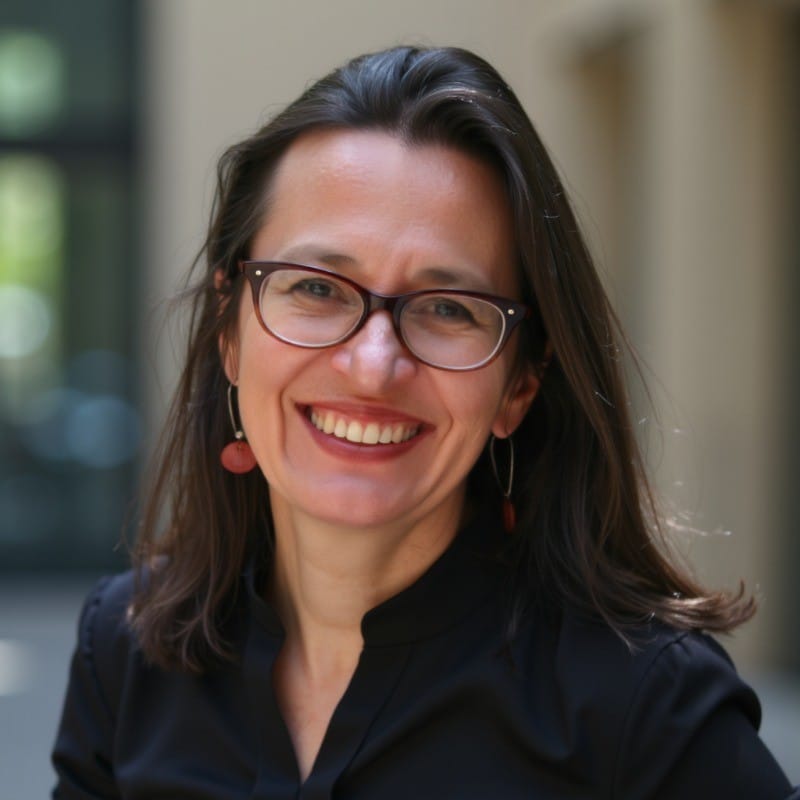
Solveiga Jaskunas explores the nuanced journey of migration, confronting stereotypes, imposter syndrome, and the meaning of belonging, while revealing how hope, vulnerability, and bicultural perspectives ignite compassionate inclusion across borders.
In this episode of Inclusion Bites, Joanne Lockwood speaks with Solveiga Jaskunas about lived experience identity.
“I realised, you know, how helpful it was for me to be more in the rooms where I feel don't belong.”
Explore
Navigate this episode
Joanne Lockwoodhost
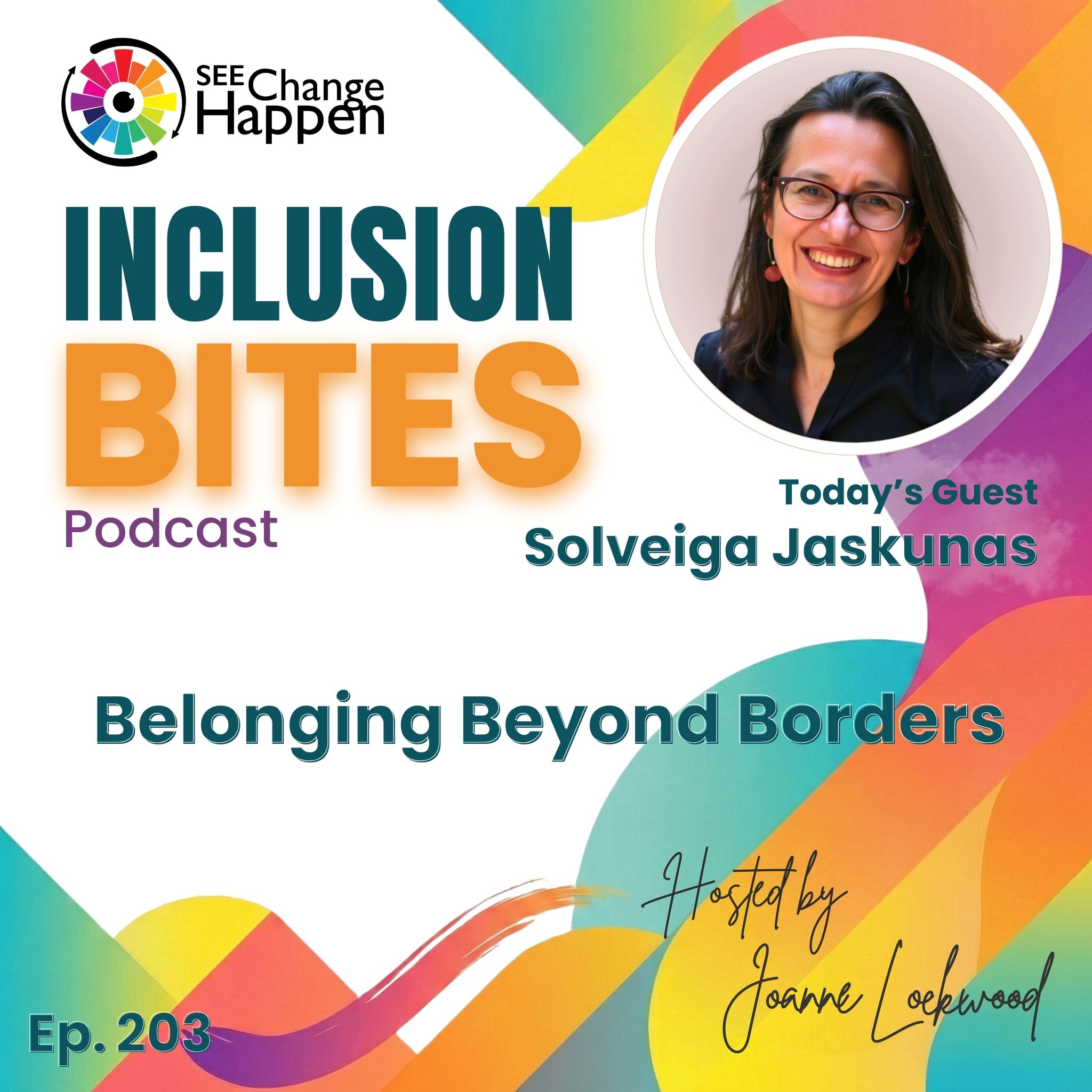
Welcome to Inclusion Bites, your sanctuary for boldconversations that spark change. I'm JoanneLockwood, your guide on this journey of explorationinto the heart of inclusion, belonging and societaltransformation. Ever wondered what it truly takes tocreate a world without Remember, everyone not onlybelongs, but thrives. You're not alone. Join me as weuncover the unseen, challenge the status quo andshare stories that resonate deep within. Ready todive in Whether you're sipping your morning coffee orwinding down after a long day, let's connect, reflectand inspire action together. Don't forget, you can bepart of the conversation too. Reach out tojo.lockwood@seechangehappen.co.uk to share yourinsights or to join me on the show. So adjustyour earbuds and settle in. It's time to ignite thespark of inclusion with Inclusion Bites.And today is episode 203 with the titleBelonging Beyond Borders. And I have the absolute honour andprivilege to welcome Solveiga Jaskunas, Solveigais an international keynote speaker and HR consultant who helpsimmigrants and expats thrive at work by turning livedexperience into practical human centred inclusion.When I asked Salviga to describe her superpower, she said that it is leading withhope, compassion and vulnerability. HelloSolveiga, welcome to the show. Hello Jo.
Solveiga Jaskunasguest
It's incredible to be here with you. Like, we had severalcommunications over LinkedIn and now it's nice to meet you inperson finally. We did and I think it was almost a year
Joanne Lockwoodhost
coming from a year since you originally applied to be on the show and it'staken us, well, 11 months to finally connect and be here today.So this is fascinating. Yeah, it is. And you have
Solveiga Jaskunasguest
incredible conversations. I totally love them.
Joanne Lockwoodhost
I'm guessing from your accent that you are not born and bred in theUSA because you're currently living in Washington D.C. you've startedoff your life in a different part of the world. Yeah, so I am originally
Solveiga Jaskunasguest
from Lithuania, Eastern Europe and then, yeah, Ilived in the States for more than 20 years already.
Joanne Lockwoodhost
So for some time, Lithuania, it's part of the Baltics. It's thesouthernmost, western, southwestern most Baltic, isn't it? So you've gotTallinn. Tallinn, yeah. If it's the capital of
Solveiga Jaskunasguest
Estonia and Vilnius. Yes. You got. You've got Vilnius and
Joanne Lockwoodhost
capital of Lithuania and you've got the Estonia and you'vealso got the Latvia. What's the other Baltic? Latvia.That's it, Riga, in fact. Latvia. Yeah. Sorry, my mind wentblank. It's a beautiful part of the world. I've spent time inall three of the Baltics and the architecture, thepeople, the culture is a fascinating place to be, isn't it? Yeah,
Solveiga Jaskunasguest
yeah. It's quiet, you know, it's different than thestate. It's more peaceful, quiet. There's a lot oflike beautiful nature. I like it. And yes, Vilnius, it's a very beautifulcity. I studied via. It's an intense likecultural life, but it's also small and it is easy to get around.
Joanne Lockwoodhost
So you moved to the US twentysomething years ago as you said. How did you find that initially? Because you saidyou came from a very small, insular country.Everyone knows each other. Literally they almost do know each otherto a big place like Washington D.C. where you're kind of lost in thehustle and bustle of the year. Yeah, I think, you know, it's
Solveiga Jaskunasguest
not about the size of the city,but it's more like was hard because youlive here, as you mentioned, everything you're familiar, you love.And then you come to the place where you suddenlyyou don't have friends. You don't knowhow long it will take you to find friends. Initially, when he hada degree in industrial psychology, I was not getting a single phone call.And when I started getting phone calls or interviewsafter I started getting my second master degree, my interview experiencewas really sometimes was worse than not getting a jobbecause when your interview ends after first question or likeyour voicemails doesn't get written, you, you don't at that point,like I didn't know even how to compete. Even like such like whenI travelled in Europe, I, I thought my English is quiteokay. Like even I was in Britain and people in Britainare very used to people from other countries and they will say oh, likeplease repeat if you don't understand. Or they say, oh, your English is so good,you know. Please continue speaking. And then when I came tothe States, this is where my confidence I thinkgot crushed because some people will walk away and they saylike I, I didn't understand a single thing you said. And I said at thatpoint you think you didn't, you know, like I knew that I have an accentbut. Or like they will say I don't know how you got hired. You know,your English just, I cannot understand, bring somebody else. So thingslike that makes you like, yeah, like you, you, you suddenlystart questioning and of course it's very hard to change youraccent, it's very hard to change how you speak. And even youwork, the progress doesn't happen right away. So.And even now, like, as you can see, like I've lived for many yearsand I still make mistakes and probably I'll make till the rest of mylife because sometimes you get used to say certainway things and pronounce certain way and it's hard to change.
Joanne Lockwoodhost
So which language is Lithuanian most like?Is it more like Finnish? Is it more like Russian? Where's itderived from? It's similar only to
Solveiga Jaskunasguest
Latvian. It's a Baltic language group, so it's very differentfrom others. And yeah, I speak Russian because I hadto learn at school. We are part of a Soviet Union, so we hadno choice, but it was a very difficult language becausevery different and I think the most similarto Sanskrit. We say, like everybody who studiesSanskrit, we study Lithuanian and Latvian because it's the most similar.
Joanne Lockwoodhost
So it's not even closely related to. To Estonianor to Latvia. It's just Lithuania.
Solveiga Jaskunasguest
It used to be Prussian too, but that language disappeared. Sonow we have just two small countries and. Yeah,wow. So you mentioned there you grew up in that
Joanne Lockwoodhost
era, pre Berlin Wall, I guess, falling down andthe Solidarity movement in Poland, all of that kind of era in the80s. So how was that for you growing up as a youngperson in that world? Yeah, so like it was
Solveiga Jaskunasguest
definitely very exciting to get independence. Iremember that time and yes, sometimes I don't know if Iwould even know the. I knew that, you know, what we aregetting is propaganda. But what I didn't know, I have areal event stories about my own family or about mycountry because people were afraid to speak or share.So I find out like for example, that my best friend'sfather was in Siberia for 20 years only, you know,during independence movement because nobody talkedabout those things. I didn't know that my uncle was inKGB prison and when he came back, like nobody then couldrecognise him. But I found out I even didn't know whatKGB is growing up. Nobody talked about it. Andso you knew that, you know that. Yes,we are not, you know, people say, oh, you live in the best country inthe world. We knew that people in the west live betterbut. But wedidn't know that. I didn't know even like what Lithuanian flagwas. I didn't know the history of my country, my family history.So a lot of things we find out in independence movement.And yes, I remember my first trip to Berlin. Actually Berlin was the
Solveiga Jaskunasguest
first city in the West I visited and it wasshocking to seehow different it was at that time comparing to Vilnius at The timewas no renovations for 50 years.And it was shocking to see it. And when I cameback, I remember how sad Vilniuslooked to me and I thought it will never look as the rest ofEuropean cities because it was Nothingrenovated for 50 years, was falling apart, was very greyand dark. And I thought, oh, this is the city I love so much. Butit looks so different from the west.And yeah, it's beautiful to see that the changes. And I thought it will neverhappen in my lifetime. And now like, you know, like when I go back, Ithink it looks as, as beautiful as many other European capitals. And.And maybe in like some ways it's more unique because it has this stillimperfection and. And that is also the beauty of it.
Joanne Lockwoodhost
Yeah, I think I was there in about 2007 and it, to me it seemedlike a very vibrantculture. Didn't feel, it didn't feellike any deprivation or anything like that. I. Cause I remember being inHungary at Budapest in about 2000.No, to about 1996. 97. And thatseemed very, very backward to me at the time. The hotelwas really felt like I would imagine a Sovietera hotel was. There was no. There was no comfort. Themattresses were like 2 inches thick and the really hard beds,everything was like tiles and hardwood and nothing soft.It was very, very square and boxy though. I guessthe world had moved on in that in 10, 15 years since I was inHungary. So yeah, I guess the Baltics also developedquite quickly once they found their freedom. Yeah, yeah,
Solveiga Jaskunasguest
yeah, yeah, definitely it was. And it'sreally amazing to see all the changes here happened andnot only, you know, how the cities look, but also howpeople like, you know, see opportunities and the wholeculture change in so many good ways. I really likeit. And yes, I. Talking about Berlin, Iremember our first trip and as astudent we got to go to the camp in Germanyand we got money for it, train tickets anda hotel. But at that time for us that money was so bigand so we decided, four of us, thatno way we can spend money for the hotel.We'll go and find ways to be. Because we needed money.So yeah, it was an interesting trip. Goingto a city in a country we never been beforeand, and figuring out like what we are going, you know,exploring basically city through all day, night and thenext day till we've been one to the camp.And in some ways it was one mostmemorable trips because yes, youexperience it all time. But yeah, like I, I would now like, you know, Iwouldn't think, you know, to travel that way. But at that time, you know, wehad this recession and as a student we didn't have money and it wasfor us way to travel and see the world andwe made it work. Why did you pick the US and Washington
Joanne Lockwoodhost
as your destination or did you try lots of different places beforeyou settled? Not so many other
Solveiga Jaskunasguest
places I just visited or travelled. Myhusband is American so we met in Lithuaniaand Vilnius. Like we end up in the States.
Joanne Lockwoodhost
So you, you travel for love? Yes, it's. It
Solveiga Jaskunasguest
happened. We met in Lithuania and then said let's, let'sget check out and checking out, you know, sounds, soundsgood. But being an immigrant is not the same. So we called
Joanne Lockwoodhost
this episode belonging beyond borders. And we talked veryearly in the introduction of how that sense of belonging, it must bereally hard to go from a culture and a language that you'vegrown up with. Even though you had to transition from the pre Soviet into thepost Soviet era and see the country develop, you're stillmoving to the us which is a completely different culture, not knowinganybody where you're. Whilstyou can speak English really well, you don't speak English. As a nativeAmerican or a native English speaker, how did youfind that lack of belonging and how did you move into that sortof sense where you started to feel comfortable again? So it definitely is a
Solveiga Jaskunasguest
journey. Like I tell everybody, like I mentored alot of immigrants as well. It doesn't happen right away.And in some ways that experiencedefinitely challenges you in so many differentways. But also and definitely humbles because yeah,you, yeah, there are many days that yeah, you don't know if you everwill be able to compete. I think what changed forme, like a lot of different things, but what it helped mefirst like, you know, you know, been talking about the interviews.At some point I thought I will not get a job andwas like really difficult. As I mentioned, experience when you go and you see thatpeople are not interested in you right away as you start talking. Andat that point I realised that I don't care here if I get a job.I just want to get better and more comfortable in, in the interviews. And Istarted instead going to every interview and think abouthow I can do better next time. And I start comparing myown progress to where I was, you know, you know, month ago. And then whenyou start seeing progress, it changes and then you also stoppaying attention what other people think about you because you think aboutyourself and start see room progress. What alsohelped Me really, especially inthe last few years, I thought I'm alreadyquite confident. And then I was challenged tobe visible and to do speaking and being visible on thesocial media. And I realised how much I stillhad that imposter syndrome about myself that Ididn't even realise. And I've learned how helpful it was
Solveiga Jaskunasguest
for me to be more in the roomswhere I feel don't belong. In the past Ifelt more comfortable going to be in the places maybe tobe a lot of other immigrants where people could resonateexperiences or language is not the same. But I've learned howwas useful for me to go to the rooms wherethe less comfortable I was, the more value I gotit. For example,in those recent years, I wouldgo to the meeting and I would think, okay, herethis person the most maybe, I don't know,strongest leader in the room and the most accomplished the person probably willnever get back to me or even on the social media. I will think, okay,who's the person maybe is likely for me to respond? And I will reachout to the people very accomplished, the people who maybewill never respond to me and ask for theconversation. And I've learned, you know, how helpful for me was thoseconversations and most mentoring sessions where theysuddenly pushed me out of a comfort zone who said, like you have to bevisible, you have to be speaking speaker for a leader and influencer. And I said,well, that is not for me. And then they say why? And then they tellwhy. You know, I said like I, I just don't like it. And, and nowI've realised and now they said I met with the same mentors atSilicon Valley. Look, you are doing everything that youthought that is not for you. And I've learned, you know, how,yes, it's, it's helpful for me was to challenge my own comfortzone and to, to get to know people who think and actdifferently, who don't say, like to do only this thing. Thinkbig, act big, speak big, be bold. What you're saying there about the
Joanne Lockwoodhost
imposter syndrome and the have just forced yourself out of your comfortzone and move out of the. If you like the comfort of being with theexpat community, with people who kind of share in the same problem. I cancertainly relate to that because I've been tHRough that phase in my lifewhere you can hold yourself back by living in comfort, can't you? And whenwe, when we're judging people or judging ourselves and I think when you talkabout imposter syndrome, there Your reference model of who you are doesn'tevolve very quickly because it's always on your tail. So you have to, youhave to jump, almost jump out of your comfort zone in order to see thosechanges. And then you look back over your shoulder and think, wow, I've comea long way. But day by day you don't feel like you've changed. It's reallyinteresting what you say about the interviews, where you are going to eachinterview looking to do better than last time, preparing to do better nexttime and eventually that would pay off and you, you'd. That confidencewould shine tHRough, wouldn't it? Yeah. And
Solveiga Jaskunasguest
it helped me not only, you know, and feel better because Ijust, you know, stop paying attention, you know, what other people think,but also helped me all to help better others. Now, like Ihelp a lot of other people in interviews because I start givingdifferent examples and seeing what will resonate. I got better, but I alsostart paying attention when I start interviewing others.I've realised how many other people, especially like immigrants orexpats, they make the same mistake as I do. They don'treally tell them, tell the storeys, theytalk too much, too little, don't give a good examples, don't giveexamples at all and, and so on. So it helped me to helpothers better. And yes, I got better myself. So how do you find
Joanne Lockwoodhost
the US as a society? Is it, is it welcoming? I mean,I see a lot on the news and the media about politicaldiscourse at the moment. How does it feel being a. I don't want this wordto sound derogatory, but an immigrant, but I guess that's who you are.How does it feel being in the country right nowwith your, with your background, status? So I think, you
Solveiga Jaskunasguest
know, this is, in some ways it inspired me, the conversationslike, so when I search non privateconversations, nobody. I say all the time I'm immigrant. Peopledon't say anything. When I start speakingabout immigrant experiences, my first podcast,people start asking me questions like, why do youeven call myself an immigrant at that time? Like, you know, for me it wasstrange, you know, and I said, how come you know, I'm an immigrant?So some people say, you live here for so many years, why do you stillcall yourself an immigrant? Or like, why do you call yourself an immigrant when youare like, you know, having your own consultancy? And I say, well,when I was making $7 per hour, then I was an immigrantand now like, I'm not anymore. Or like they will saysome also valid points like they will say look, Americans wholive in your country don't call them, call themselves expatriates. So why doyou call yourself an immigrant if you live in the States and, and, andand so on or like that you don't look like an immigrant. And they saidlook how look immigrant looks like. And, and then they say well in Americaimmigrants looks like ones who cross in Mexico border. And I said well I crossdifferent border. And for me immigrants know coming from all around the world.And, and so yeah, it was interesting and that's why I'verealised that even this or likeI, I told I help other immigrants and I say why do you call otherpeople immigrants? And I realised well yeah, maybe it's true. Like some people don't liketo be called immigrants. We like to be called expats orforeigners. And but yeah, like I, in some ways that inspiredthe conversation because I found that beingan immigrant was definitely challenging experience. Definitely youdon't feel welcome all the time. There is a lot of nowthoughts about these good immigrants or bad immigrants. Well, for me
Solveiga Jaskunasguest
it's like, you know, it's just being immigrantdoesn't make you bad or good. It makes your, it'schallenging but it doesn't make you a good or badperson. And so yeah, like that's what inspired.Because I wanted to show that being immigrant doesnot diminish your, your value actually it expandsyour world, it expands your perspective. I want italso like when I start speaking a lot of other peoplesay please be a voice for us because we never have aconsultant or speaker who sounds like us in HR. And Irealised, yeah, a lot of even conferences I go,nobody talks about immigrant experiences andnobody. There are not so many people who have accentsand from other countries, especially in HR. So I feltlike in some ways I, it, you know. Yeah, it's, it's,it's important conversation and that's why I started, you know, considering because Ifelt very passionate about it. So would you class
Joanne Lockwoodhost
yourself? You know, in this pHRase you use a good immigrantas opposed to someone maybe who's from Central America orSouthern America might be framed more as a bad immigrant inthe language. Do you have privilege by being from a, from agood country? Is that that how you would say it? I don't
Solveiga Jaskunasguest
know. It's, it's, it's, it's a privilege. Maybe it is,but it's also like I just don't likealtogether this classification because it'saltogether America is, is based on. Most people areimmigrants at Some point. Most not. You know,there are very few who would consider themselvesnatives from native backgrounds. It's, It's. There is a beauty of it,you know, food and culture. That's what I think makes America sounique because of a diversity of people and different generations ofimmigrants that brought so much value to it. So it's.Yeah, I don't agree and show. Like, it wasinteresting initially when I start, youknow, speaking, I thought that only immigrantswill relate to what I talk. But then suddenly people fromall kind backgrounds say this conversation is important. They sayI was not. I felt like an immigrant in my own country,so I have disability and you don't. But language can feellike disability. So understand that it's important people with disability.I also felt like I don't belong. I face differentstereotypes than you, but it's still stereotypes. Consider that, youknow, every. What you talk, it applies to so many people.It's not only for immigrants. And this is how I feellike, you know, it's important more talking aboutexperiences, what it's like, you know, to adjust, belong,overcome challenges, be more sensitive to others. Do you call yourself
Joanne Lockwoodhost
American now, or do you still see yourself as an expat immigrant? Are youAmerican? Yeah, well, I know. I think I still
Solveiga Jaskunasguest
consider myself Lithuanian, living in theStates, like, yeah, when I land, you know, when Igo back to Lithuania, I don't consider myselfimmigrants in my own country, depending where Iam. But I also appreciate experience. Iappreciate that a lot. So
Joanne Lockwoodhost
do you have an American passport now? No, I don't. I.
Solveiga Jaskunasguest
I'm a permanent resident because Lithuania doesn't allow dualcitizenship. And that is the reason I don't want to be aforeigner in. In my own country, so I don't.
Joanne Lockwoodhost
Okay, so you'd have to renounce your Lithuanian citizenship inorder to get American. So. And that's important to you tohold on to that? Well, I think it's. It's. It's important, you know,
Solveiga Jaskunasguest
to my heart. Like, you know, we fight for independenceso long. It was very emotional to get Lithuanian passport for me. Soit's like, it's dear to my heart that. Yes,you know, you don't want to be like a foreigner in your own country, too.
Joanne Lockwoodhost
No, no, I get that. Because if you're not careful, you. You end up belongingto nowhere and. Well, it. Yes,
Solveiga Jaskunasguest
yes. Yeah, it could be. Yeah. So you've built
Joanne Lockwoodhost
your life with your husband and you built your business, and you'vedone this. Have you found that sense of belonging now? Do you get to thepoint where whilst you have your Lithuanian passport,you feel as American as you can be.
Solveiga Jaskunasguest
I, I definitely, you know,definitely now feel comfortable. In some waysI probably never considered opportunities.And in some ways in both places in Lithuania, in theStates, I feel I belong. And in some ways there are things that I alsodon't belong as much. I don't know both ways. There aresituations that you change and you think differently and youact differently. And it wasfunny last time I went to Lithuania,my friend said, solvega, you think us like American, youchanged. And I said, what do you mean? Like I didn't.And they say no, you, you did. You, when you talk of you, you thinkevery, everything is possible. And I've realised, you know, thesefew years, you know, I had these mentors who always say you can do it,you can do it. And I start doing things that I neverconsidered before. Like speaking that was extremely hard. Andyeah, like now I, when other people say I cannot, I said no,did you try like you can do it. So, so yeah, maybe, maybe I'mchanging. Yes. Which language do you think in? Do you think in Lithuania or do
Joanne Lockwoodhost
you think in English? I think, I think in both. I don't know. It
Solveiga Jaskunasguest
comes natural in both. What
Joanne Lockwoodhost
about if you have to to add up a sum in your head, ifyou're counting and adding up numbers, what do youadd up in your head? Yeah, that is a
Solveiga Jaskunasguest
good question. Well, some things,yes. I think it's more comfortable inLithuanian, but I switch back and forward and I don'tthink anymore. No. Okay. Ijust one thing I've realisedsometimes when I start speaking of somebody in Russian because Ispeak Russian as well, I somehow like it doesn't switch backsometimes because it's also a foreign language. But from Lithuanian inEnglish it's easy. Okay, so Russian is the hard one. Yeah, yeah,Russian. I, I'm, I'm fluent actually. Maybe my Russianpronunciation is, is better than English, butI, you know, I, I, but yeah, I'm good too I guess.
Joanne Lockwoodhost
Lithuanian and Russian, whilst they're different languages,they, to some extent, sound very similar in the way you pronouncewords. And your, your accent sounds more Russian to me than itdoes English. So I guess you would probably feel more acceptedfrom a native speaking Russian perspective than maybe a nativespeaking English. I don't know. Do you think you do people tellyou that? Could they tell you're not native Russian?
Solveiga Jaskunasguest
No, they will tell that I'm not native. They will tellit but they will say my Russian is very good. This iswhat they will tell. And it wasn't, actually it gotbetter in the States. I spent spoke more Russian in thestates than in Latvia. Is that because you're helping or working with people who
Joanne Lockwoodhost
are expat Russian as well? No, my first job in
Solveiga Jaskunasguest
the States was working with refugees and I had tointerview Russian speaking refugees and my firstsentence I remember was always saying sorry, I'm fromLithuania and my Russian is not native. And I was mixingEnglish words. Lithuanian Russians was hard and thenlike after a month became easy. It was interestingbecause I understood Russian everything I just didn'tspeak so much. And so when I started speaking it, it becamelike English. I. I don't see the progress and of Russianwas. Was really big progress, fast like was hard and thensuddenly became easy. So do you think
Joanne Lockwoodhost
you'll ever get to the point where there. So you already mentioned thatwhen you go back to your friends, they say you're speaking thinking like an Americanhere. Do you think you'll get to the point whereLithuania seems like a foreign country to you? Does it? Or does it some insome respects feel that way already. No, when I go back it's always
Solveiga Jaskunasguest
so nice. It feels very calm and
Joanne Lockwoodhost
relaxed and yeah, it feels like going home. Yes,
Solveiga Jaskunasguest
it feels like going home even. Yes, Idefinitely probably lost somefriends and I don't have as. As many friends as I usedto have some, you know, you. Yes, it'srelationship changes over time too because you don't seepeople as much. I think that is thehardest part, you know, living abroad, that you know, your relationshipchanges. But going back as always feels very special andvery nice. So what, what do organisations need to think about when they're
Joanne Lockwoodhost
working with people who are immigrants, expats, refugees, however you wantto describe people at their various stages in life. What are thestereotypes, what are the things that organisations leaders need to be aware ofabout real people? Yeah, so I think, you know, there are a few things
Solveiga Jaskunasguest
that you need to be aware like of course, you know, thinking about thoseexternal stereotypes that suddenly resumesautomatically get rejected because if peopleassume that your experience is not relevant, your education is notrelevant, your English maybe not good, even the interviews oryou know, when having that interview, you know, like feeling that it'sokay to. If you have somebody who's maybe not English is good,just finish your interview after first question.I think nobody should have that type of experience because it's alreadygoing, you know, to the interviews. It's very painful to have all therejections, but when you, when you feel that, you know, you're suddenly treateddifferently, it's even harder. Yeah, like, I think havingdiverse recruiting teams, having a consultant and trainers whoalso have like an accent and speak not perfect English, it's, it's okaybecause you almost empower, like your employees. You don't say, oh, like wevalue diversity. But then suddenly you, you don't have anytrainers, you don't have any recruiters, you don't have anybody whosounds like that in each other. And it's, I think that is,is, you know, can be one thing, but a lot of, I thinkorganisations don't do any work or think about that.Many immigrants expats develop that impostersyndrome that suddenly you, youdon't yourself consider opportunities that you think they are notfor you. So, for example, like, I, I never consider spacespeaking. And speaking was for me probably even more challengingbecause I had also this fear of publicspeaking. So it was not only accent, but fear also.I suddenly started stumbling over the words of stuttering. So that was anotherthing. But I've learned that even some people,yeah, many immigrants don't consider speaking oreven doing videos on LinkedIn or creating your brand because it's,it feels uncomfortable. You do a video and then suddenlyyou think you will not get hired because you make mistakes. Soorganisations need to help the employees to show the value of adiverse perspective, diverse voices, andto show that this is what makes you unique and this is whatmakes you, and this is what makes you stand out.And so yet to work both external and internal barriers,because I don't know at least a single person whodidn't start having this imposter syndrome. Movingthe new country.
Joanne Lockwoodhost
America, as we said earlier, is a very cosmopolitancountry made up of people from many different backgrounds. Ibelieve that Spanish is almost like the most common language in the USat the moment. You've got Hebrew with the Jewish community. You've gotother prevalent languages. French, German, Italian.Everyone wants to be Italian in, in America, I believe. Yes, one of thoseheritages. There are, there are lots of diverselanguages. Do you feel that you stand outstill in this cosmopolitan world?In Washington, D.C. is a prettycosmopolitan area with lots of different communities and languages. Well, it's, it's
Solveiga Jaskunasguest
in, in the workplace. But atthe time, you know, when I did my first podcast and I totallyhate it, I just didn't even wanted to share becauseI saw how uncomfortable I was, you could tellit, how unclearly I was speaking.And I wanted, you know, to project confidence with zero confidence. And at the timewhen people start reaching out to me and say, please continue this conversation,it's so important. I realised at the time I had about1,000 connections on LinkedIn and only twoimmigrants whom I knew at that time were doing videoson social media and both of them had perfect Englishand very confident. And I've realised that a lot of otherpeople felt like the same as me. And yes, you definitelyeven myself, you know, like I would put this video andI would say is it helps me, maybe other people like it, but doesit help me? Now I seethat the people who not hired me, they would not hire me anyway.And the people who actually other people oppositeopportunities came because I start putting videosand starting getting invited to the conferences andevents because. Yeah, yeah, you still.And, and, and I think also a lot of evenAmericans, you know, the people who put videos, the oneswho speak very, very well. And then suddenly I putsomething and. And then I stop in the middle sentence,stumble. I don't know. Like. But people actually,it's. Yeah, you stand out, you know, just thismakes you who I am. Like in the past, in fact prevented.Now I see that makes me still different. I think
Joanne Lockwoodhost
anyone who speaks multiple languages, certainly fluently inmultiple languages, has a gift that I don't have. I do speak alittle bit of French and petit peu très lentement. Yeah, slow and alittle. I do a little bit of German, enough to order some food in arestaurant, maybe even less Spanish I can pick up and maybeunderstand some of it, but I certainly couldn't speakLithuanian, I certainly couldn't speak Russian, apart from theHollywood stuff that you pick up and swear words and those sort ofthings. So I think what we have to. What I appreciate is the skillyou have in speaking multiple languages. A skill I don't have. Itdoesn't make you less intelligent, as far as I can say. It makes you moreintelligent, more capable because you're having to double think andtranslate and do this all on the fly and still sound interesting,intelligent and articulate and everything and trying to keep. Communicate your message.So I would say what you have is a greater superpower than someone whodoesn't speak more than one language just becauseyou've had to adapt. I think that's a very powerful skill you have andit's underappreciated, undervalued. Yeah. And
Solveiga Jaskunasguest
it's. And yes, you mentioned you live inWashington D.C. one of the most diverse cities,and yet, you know, in some neighbourhoods it's it's not like that too.Like, I worked in a charter school in a Blackneighbourhood in D.C. and then suddenly all the students starting measking if I'm new Spanish teacher. And Irealised there are only a few foreigners there and there are Spanish teachers.And this is where I told, you know, my boss,can I go and teach the class about my own country.
Solveiga Jaskunasguest
And I never had asinterested, you know, I thought like, just to talk about15 minutes. But the first sentence, the firstthing I said at the beginning, I grew up in the Soviet Union and doyou know what it is? And the kids didn't know,and the kids didn't know anything. And then this is where like,what I cannot tell about my school if the kids don't know what it is.And I never saw the kids so interested. If youask like really good questions. So how women are treated in your countryand how people different than you are treated in your country and what things youdo. And. And the best part was like, after, like the teachertold that the kids start being interested in other countriesand they said, like, you open the wall for those kids, the window tothe world. And the kids starting later stopping me in the corridor saying,I'm doing a research about your country. And I thought, how cool is that? Irealised, yes, we live in Washington D.C. one most diverse cities in theworld. And yet in some neighbourhoods, the kids in those neighbourhoods,neighbourhoods Faran know not so much immigrants and definitely not so manywhite immigrants. And. And for many of them I was the first EasternEuropean who knew it. And for them then it was veryfascinating my experience and I think manypeople, yeah, even that for me at that time I realised thatsuddenly that class that I just thought to tell aboutmyself turned out like almost inabout the cultures and about diversity and about belonging.
Joanne Lockwoodhost
So as I introduce you, you're an international keynote speaker. Sodo you speak across the world or in America or online?Where do you speak? Yes, I speak on. Yeah,
Solveiga Jaskunasguest
they had in person and online events just a yearand a half ago. Everywhere I applied I gotrejected and then I got invited to my firstconference Expat Women Conference and then fromvia people liked and I got invited to Global HRConference in Lithuania, MindedTech, GSX,Society of Human Resource Management and yes,even interesting, like even this month. Yeah, Ihave few podcasts and two of them from Britain andone of them person I thought was fromSwitzerland, one American living in Chile. Soit's interesting how when I started speaking Igot to know people from all around the world. Andevents also like some of them global events too.
Joanne Lockwoodhost
We're living in a funny time at the momentpolitically polarised. People have opinionsabout people. People have opinions about immigrants andas you we mentioned earlier, good immigrants, bad immigrants and those sort ofphrases but we've got wars going on in the world at the momentand Russia, Ukraine, Israel,Middle east, rise of Islamophobia, rise of anti Semitism, all thesekind of things. Are you able to add yourvoice into those conversations as someone has a different outsideperspective? Because I know many Americans that stereotype ofgeneralising here tend a very insular view of the world not tooworldly in some of their experiences. Yeah it's something. It's just
Solveiga Jaskunasguest
became a little like less safeto talk about different issues especiallybeing you know not a citizen, being a permanent residentbecause yeah it's feels less safe. Itfeels. Yeah you can get more attackedand you. Is it worth it? Is it worth it?And also yeah you may be called like anti Americanand I think if it's also like worth it. I start.I still speak like for example I. I've recentlytalked about misinformation, disinformation and propaganda is.It is quite political topic and Ibrought about getting brainwashed myself Growing up in theSoviet regime and connected to today's time I decidednot to talk about mention any names oranything but I talked about the importance of protectingjournalists and freedom of speech and standing for peoplewho during very difficult job providing factchecking facts and it's our responsibility tostand out and so but yeah like. So I bring it as as muchas I can but I also seeing thatsometimes I need to protect myself as well. Thismakes sense. Yeah you have to look at
Joanne Lockwoodhost
what is your role in the world I suppose and sometimes it's not your fightor not your voice or. And you have your own as you say safety tolook after both and your family I guess as well. So yeah it's.We can't all speak without consequence, can we? Yeah even
Solveiga Jaskunasguest
like you know some topics, you know like yes it's.It's. It's hard like I definitely speak I think more thanother people do I share more things butyeah I'll probably John like I'll give you like one example.So I in my previous jobs cameBiden and I had a picture of Biden and oneday I had. I just wanted to do this post andabout pictures of famous people was not even political it's aboutpicture of famous people and I had wantedto share Biden because I thought, well, this is the most powerful person inthe States I made, you know, he's now president. And, and it's notthat, you know, he's, you know, maybe the mostlikeable. I don't know, like, it's not like that. I, I like everything about him,but it's still like, you know, it's a picture of a famous person.And I showed the picture for my both of my kidsand my kids said, no way you can post this post. And I say, howcome, you know, it's nothing political? He said, no, don't, don't do that. It's justeverybody will see it as a political cause. Whilst also waspresidential elections coming up. And then I askedpeople in my network, maybe 20 people, I say, this is a picture,this is a post. What do you see? My kids say, it's not. Don't postit from 20 people.Just two people say, Salvega, post it.Everybody else say, don't do it. You're starting your own consultancy.People just will see your. The picture will automatically start hitting you.Do you want that? And I thought, well, I don't. Youknow, I really don't. And they say like, if you would do something likethat 10 years ago, 15 years ago, everybodywill think as it is not political false. It's just you're sharing yourperspective, you're having picture of a famous person.And then I thought, you know, like, it's really like this is justan example that how political thingsbecame and how became a little like say unsafe. Like I thoughtlike in any time in my history it was an immigrant. Iwould come and I would have a picture of the most influential person inthe country and most, one of the most influential persons in theworld. You would be okay. And then even my kissy.Why you just share the picture of Lithuanian president. So they thought sharing picture ofLithuanian president was okay, but of American is notokay and be American citizen. You know, my kids are American citizens too.Am I? Yeah. Yeah. So this is just an example thateven like pictures can be like not okay to.And then like at some point they can't tell us 18 people saying no.Yeah. And I decided, well, maybe I don't. Can I ask younow question related to this? Do you. Well,you interview a lot of people from different parts of the world. Do youfind also that, you know, especially maybe the peoplewho are now like in the States, but maybe in other countries too, that theyfeel suddenly less safe talking about certainissues, especially about the politics oranything, you know, do you find that it's lesscomfortable? I, I think anybody who
Joanne Lockwoodhost
would maybe describe themselves asmarginalised, minority, whatever it may be.Most people I speak to in the UK and around the UScertainly and, and other parts of the worldcertainly feel more uncomfortable,certainly feel there's been a shift inperspective from governments, from society.And it's almost like the people who hold theprivileges, the people who are the majorityare pushing back and people who are beingmarginalised feel less safe, more scared,feel in the media, feel it politically thatthings are scary. I guess I feel that myself. Iknow people who are work, who are black or brownor people of colour, people are from LGBTQIAbackgrounds, people are from say, migrants,expats, all feeling less safe than they were.And we see a rise of populism, nationalism,right leaning politics, and that's becomingthe kind of the mainstream narrative. A lot ofpeople I talk to and the world I live in isfeeling less safe now than it did a year ago.Certainly, certainly. And I think a lot of that ismaybe due to, maybe the political shift in the US has hada huge impact on that. The war in Ukraine, I think it'shad a shift in that as well. The rise of anti immigrationsentiment, certainly in the UK. I'm seeing that it's.Yeah, it's a less safe time for many people or perceivedto be less safe. Yeah. And I think, you know, it's,
Solveiga Jaskunasguest
it's, yeah, definitely. I think that isalmost for me moreconcerning because, you know, growing up and having thatexperience in the Soviet regime when people are evenafraid to share things with their own family membersor like even now, like seeing, you know, that basically same thingshappening in Russia and many other places in the worldand in the States too, like people are less open. Some people are still,but some other people are less open to talk about it. Andit's. Yeah, for me thatis more concerning. It's okay to agree to disagree,but it's still importantto share perspectives as much as you can. AndI found that you build that courage andstrength every single time you bring some conversations.As I said, I try to stay as safe as possible, but notcompletely avoiding the conversations and more like bringing that stillbrings that pause or bringsthat discussions. And have you noticed a shift yourself in the last
Joanne Lockwoodhost
12 months and how safe you feel? Yeah,
Solveiga Jaskunasguest
yeah, definitely. It's less, but it's also almost,it makes more meaningful. A lot of people ask me, so howdoes Zalvega, you feel now, like, do you get a lot of backlashand actually I say, yes, I do, but it happened before. Like when I startspeaking about immigrants, I think I lost about 10% or moreconnections. Some people never respond orignore. Some peoplesay disconnect specifically, you know, and mention something,but actually starting getting also more support.I starting get more invitations. Becausewhen I put that immigrant voice in hr, peoplewho are against immigrants, they don't even connect with me.They don't support. But the people who are supporting, whenwe see those first words and we say, oh, like, what are you doing? Oh,let me see what you're talking about. So actually,it almost also helps me because it attracts rightpeople, the people who want to support the work Ido. So actually, maybe in some ways it helps me out. I have the same
Joanne Lockwoodhost
view that I'd rather polarise people. I'd rather peoplewho weren't interested left the room and I'll just keep talking topeople who are interested. And it's by. By being very clear about whatyou do and who you help and what you're for. If people don't like that,that's on them. They can. They can leave the room as far as I'm concerned.And you end up having conversations with people who want to talk to you.
Solveiga Jaskunasguest
Yeah, yeah, yeah, yeah, yeah. And that's why we have thisconversation. It's really, like,you know, incredible, you know, from different countries, but,yeah, like, we feel a way. Like, I like how youthought at the beginning you like conversationsfor humans who care for humans. Something like that. You said. And I thought, oh,this is so simple but so beautiful.And you said, like, I just want to be curious, you know, and see wehave a conversational lead. And yes,
Joanne Lockwoodhost
so I noticed in the. What you wrote. Bear in mind, you wrote thisalmost a year ago. One of the things you said, yousuggested that I asked you is what does achieving the American Dreammean to you? Has that changed in thelast year? What is the American Dream that you're aspiring to? Yeah,
Solveiga Jaskunasguest
actually, it didn't change as much because in some ways,you know, like, I think I would never talk aboutimmigrantrant experiences or how to supportimmigrantrants or expats or if I. If I didn't have thatexperience myself, because as I mentioned, thatexperience is very difficult, but it helped me to helpothers better. And yeah, like, in the past, my probablyAmerican dream was to achieve my own success, but Ifound, like, how much is more rewarding for me to helpothers and to inspire other people. Like, I never, as Imentioned before, I never considered even speaking,but I Never thought people will resonate with myspeaking and then suddenly seeing that other peoplestart posting or speaking or consideringopportunities because something I shared, it feelsrewarding. And even, especially now in this polarisedsociety where suddenly even the word immigrant feelsnot okay, I, I feel okay saying, you know, this is mypicture and I feel proud to be an immigrantrant and why Ifeel proud and, and yes, maybe I could use the word otherpeople more comfortable with, but for me, expat doesn'tdescribe completely my experience. I, I feel more likean immigrantrant and I, I'm not ashamed. I'm proud ofthat experience and I want for other people to see that.Yes, be proud, not to be ashamed. Fabulous.
Joanne Lockwoodhost
Oh, I, I, I, I'm 100% behind you and I, Iadmire that you have the courage to have a voice and youstill want to be heard and you're still inspiring people who arefollowing behind you, walking beside you or even in front of you, looking,looking for inspiration, looking for somebody who can putinto perspective what you've had to cope with and how you've adapted over the last20 or so years. So it's, it's fascinating. So Solveiga,how can people get a hold of you? They want to find out more. What'sthe best way of contacting you? Yeah, so probably LinkedIn. This
Solveiga Jaskunasguest
is where like I post everything. I have a Facebook account andInstagram, but I don't actually post most things. It's hard tokeep up all these different social media accounts. I also had animmigrantrant voice in HR website, but LinkedIn has the mostinformation. This is where I post all the speaking events and.
Joanne Lockwoodhost
Fabulous. Well, I'll put those in the shownotes and just to help people out who aresearching for you. Solveiga is Solveiga andJaskunas is Jaskunas and that put that intoLinkedIn. They'll find you there. AndImmigrantVoiceInHR.com is the website.Yeah. Fabulous. Fabulous. It's been an absolute pleasure. I'vereally enjoyed our conversation today. Thank you so much for joining us. Thank you so
Solveiga Jaskunasguest
much. As we bring this
Joanne Lockwoodhost
conversation to a close, I want to express my deepestgratitude to you, our listener, for lending your earand heart to the cause of inclusion. Today'sdiscussion struck a chord. Consider subscribing toinclusion bites and become part of our ever growingcommunity, driving real change. Share this journeywith friends, family and colleagues. Let's amplifythe voices that matter. Got thoughts, stories or avision to. Share I'm all ears. Reach out tojo.lockwood@seechangehappen.co.ukand let's make your voice heard. Until next time, thisis Joanne Lockwood signing off with a promise to return withmore enriching narratives that challenge, inspire andunite us all. Here's to fostering a more inclusive world oneepisode at a time. Catch you on the next bite.
Belonging, Identity, and the Immigrant ExperienceNavigating Stereotypes, Privilege, and Psychological SafetyInclusive Workplaces and Empowering Diverse Talent
Joanne Lockwood is joined by HR consultant and keynote speaker Solveiga Jaskunas to explore what “belonging beyond borders” looks like when you build a life and career in a new country.
Solveiga shares her journey from Lithuania to the United States, including the early shock of navigating hiring processes, interviews, and everyday communication while being judged through the lens of accent and assumptions about competence. They unpack how language barriers and stereotypes can crush confidence, and how imposter feelings can follow even after years of success.
The conversation moves from personal experience into practical workplace realities: what organisations get wrong about immigrant and expat talent, how recruiting practices can exclude people before they’re even heard, and why visibility matters—especially when few people in HR and leadership roles “sound like” the communities they claim to include. Solveiga reflects on mentoring, building community outside familiar circles, and intentionally stepping into rooms where discomfort becomes a catalyst for growth.
They also touch on the current climate of political polarisation and how it can make it feel less safe to speak openly, particularly for people without citizenship status. The episode closes with a call to amplify immigrant voices, reframe difference as value, and take deliberate action to create workplaces where more people can belong and thrive.
“And then you come to the place where you suddenly you don't have friends. You don't know how long it will take you to find friends. Initially, when he had a degree in industrial psychology, I was not getting a single phone call.”
“So some people say, you live here for so many years, why do you still call yourself an immigrant? Or like, why do you call yourself an immigrant when you are like, you know, having your own consultancy? And I say, well, when I was making $7 per hour, then I was an immigrant and now like, I'm not anymore.”
“Now I see that the people who not hired me, they would not hire me anyway. And the people who actually other people opposite opportunities came because I start putting videos and starting getting invited to the conferences and events because.”
“it's not that, you know, he's, you know, maybe the most likeable. I don't know, like, it's not like that. I, I like everything about him, but it's still like, you know, it's a picture of a famous person.”
The realities of navigating professional and personal identity as an immigrant or expat in a new country.
How language barriers and accent bias impact confidence and career progression.
The role of vulnerability and mentorship in building self-efficacy and community.
Why imposter syndrome uniquely affects internationally mobile talent and actionable strategies to address it.
The organisational blind spots that perpetuate exclusion, and solutions to foster an authentically inclusive culture.
The shifting global sociopolitical climate and its effect on psychological safety and belonging.
How visibility and diverse representation in leadership and HR catalyse systemic change and empower others to follow.
One thing to remember
Belonging transcends geography and language; genuine inclusion demands recognising both visible and invisible barriers faced by immigrants, expats, and marginalised groups. The need to address imposter syndrome, unconscious biases, and the complexity of cultural identity is paramount for organisations seeking to cultivate environments where everyone can thrive and bring their authentic selves to work.
Questions this episode helps answer
How does the concept of “belonging” evolve for individuals who migrate, and what steps can organisations take to facilitate a deeper sense of inclusion among immigrants and expats?
What are the psychological and emotional impacts of repeated rejection in professional settings, as experienced by immigrants, and how can support systems be improved in response 05:08?
In what nuanced ways do language barriers and accents affect perceptions of credibility and capability in the workplace 05:08?
What does the distinction between an “immigrant” and an “expatriate” reveal about social hierarchies, privilege and inclusion within global societies 20:17?
How can imposter syndrome be addressed both individually and organisationally, especially among professionals new to a country or cultural context 16:55?
How do strong national identities and family histories, shaped by historical events such as regime change or migration, continue to influence individual identity decades after resettlement 08:13?
Explore topics
Ideas from this episode
Belonging, Identity, and the Immigrant Experience
My recent conversation journeyed deep into the notion of belonging and the complex mosaic of immigrant identity. We explored what it means to migrate from the familiar–whether that be language, culture, or community–and then attempt to root oneself in a wholly new environment.
Navigating Stereotypes, Privilege, and Psychological Safety
Our exchange delved into the hidden barriers facing immigrants and expats, examining stereotypes, privilege, and the sense of safety—or lack thereof—for marginalised groups. We discussed, with candour, how certain immigrants are labelled as “good” or “bad” based purely on origin and appearance, and how these entrenched assumptions may affect life chances, social integration, and even career progression.
Inclusive Workplaces and Empowering Diverse Talent
We investigated the critical need for workplaces to move beyond tokenistic inclusion and actively value immigrants, expats, and refugees. The discussion focused sharply on how practical, human-centred inclusion can help people thrive—whether through diverse interview panels, support for non-native speakers, or by embracing the unique perspectives multilingual staff bring.
Learn
Frequently asked questions
What challenges do immigrants and expats face in building a sense of belonging in a new country?
Immigrants and expats commonly experience a profound sense of displacement when moving to a new country. Challenges include linguistic differences, accent bias, lack of professional networks, and cultural unfamiliarity. Slvika Just Kounas shared that initial struggles included not receiving interview callbacks, feeling isolated, and facing overt questioning of her language abilities and value as a professional 05:08. Overcoming these obstacles often requires time, emotional resilience, and a shift in self-perception, focusing on personal progress rather than external validation 14:33.
How does accent and language proficiency affect opportunities and experiences in the workplace?
Accents and language proficiency significantly impact immigrants’ experiences, from employment opportunities to workplace integration. Slvika Just Kounas recounted that, despite holding advanced degrees, her accent led to premature interview dismissals and comments about her suitability for roles 05:23. She emphasised that organisational biases can result in undervaluing candidates whose English is not “perfect”, influencing hiring decisions and professional growth 31:18.
How can organisations become more inclusive of immigrants, expats, and refugees?
Organisations should actively dismantle stereotypes and biases against those from differing linguistic and cultural backgrounds. This involves:
Forming diverse recruitment panels,
Providing internal support, mentorship, and representation,
Actively valuing diverse voices and experiences, including from those with accents,
Creating pathways and encouragement for career advancement and public visibility—such as speaking, presenting, and leadership roles 32:27.
Organisations must also address internal barriers, such as imposter syndrome, which immigrants frequently internalise due to repeated rejection or lack of relatable role models.
Is there a stigma associated with the term “immigrant”?
How do labels affect identity?
Discussion around the terminology “immigrant” versus “expat” or “foreigner” revealed underlying social hierarchies and biases. In the US context, “immigrant” often carries negative connotations, sometimes associated with undocumented migration, whereas "expat" is perceived as more privileged 20:47. Slvika Just Kounas insists that neither label should diminish one’s value—being an immigrant is not a mark of deficiency, but rather speaks to resilience and diversity of experience 21:43.
How does imposter syndrome manifest for immigrants and how can it be addressed?
Imposter syndrome for immigrants often stems from repeated experiences of exclusion, linguistic hurdles, and cultural unfamiliarity—it can deter individuals from seeking visible roles or leadership positions 33:27. Slvika Just Kounas highlighted the importance of intentionally stepping into uncomfortable spaces and seeking mentoring relationships with established leaders to challenge self-imposed limitations and build confidence 16:55.
How has political polarisation and changing social climates affected immigrants' sense of safety and voice?
Both Joanne Lockwood and Slvika Just Kounas recognised a recent shift towards a less open, more hostile environment for immigrants and minorities due to political polarisation, increased populism and anti-immigration rhetoric 48:37. This has prompted some to exercise greater caution in public discourse or advocacy, weighing personal and familial safety against the drive to speak out 41:43.
Share this episode
Heard something worth passing on? Send this conversation to someone who needs to hear it.