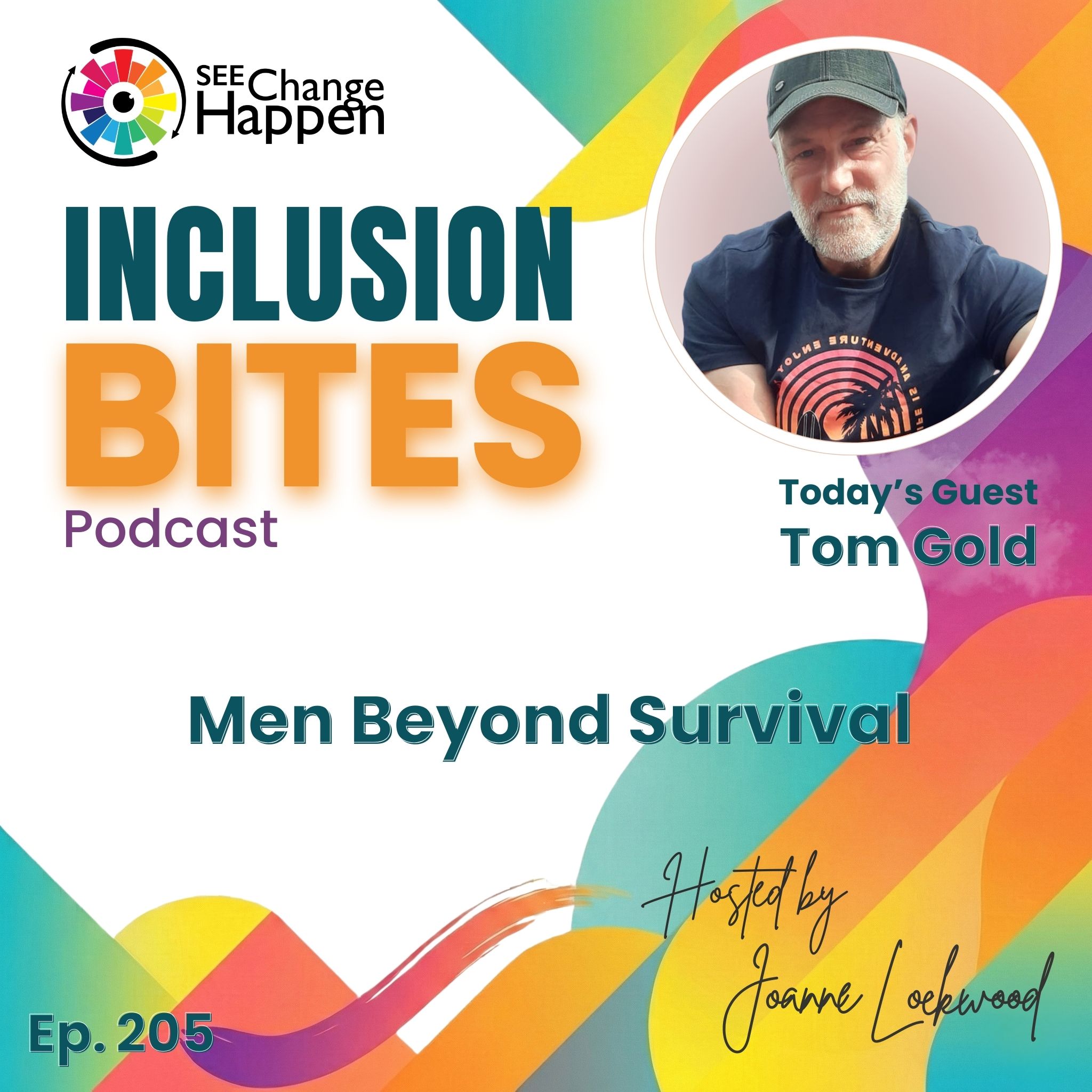
Tom Gold explores the complexities of modern masculinity, the importance of outdoor connection, and the subtle yet profound ways men can support each other and find belonging beyond performative expectations.
In this episode of Inclusion Bites, Joanne Lockwood speaks with Tom Gold about mental health wellbeing trauma.
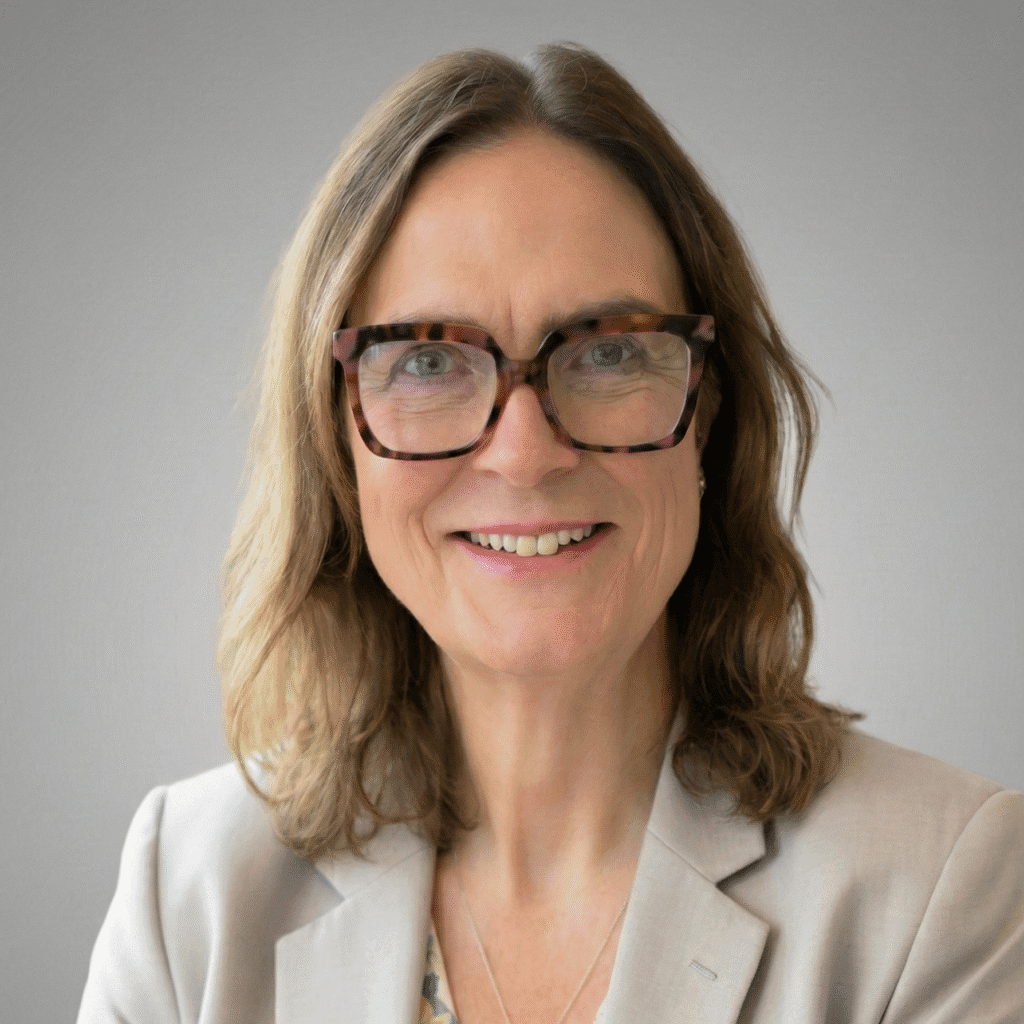
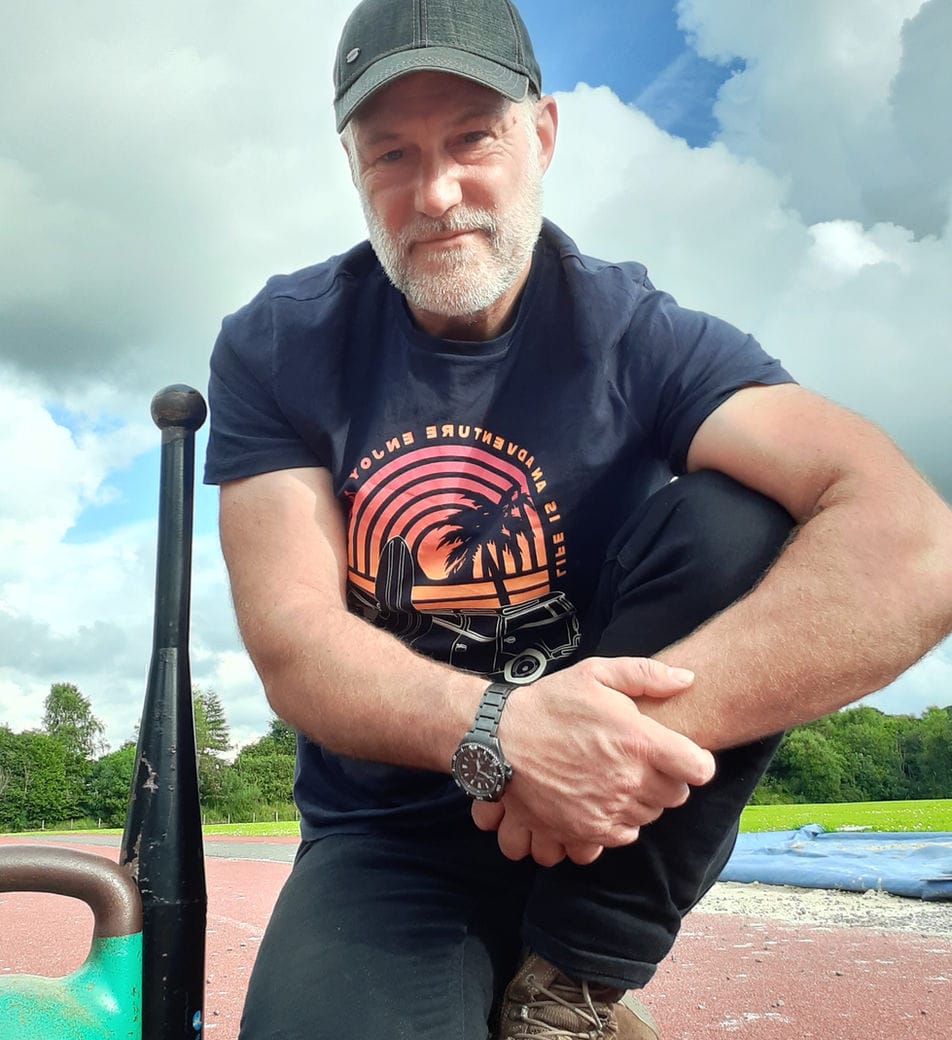
Welcome to Inclusion Bites, your sanctuaryfor bold conversations that spark change. I'm Joanne Lockwood,your guide on this. Journey of exploration into the heartof inclusion, belonging and societaltransformation. Ever wondered what it truly takes tocreate a world without? Remember, everyone not onlybelongs, but thrives. You're not alone. Join me as weuncover the unseen, challenge the status quo andshare stories that resonate deep within. Ready todive in. Whether you're sipping your morning coffeeor winding down after a long day, let's connect,reflect and inspire action together. Don't forget,you can be part of the conversation too. Reach out tojo.lockwood@seechangehappen.co.uk to share yourinsights or to join me on the show. So adjustyour earbuds and settle in. It's time to ignite thespark of inclusion with Inclusion Bites.And today is episode 205 withthe title Men Beyond Survival. I havethe absolute honour and privilege to welcome Tom Gold. Tom is aBushcraft instructor and life coach who helpsmen build real mental fitness in the outdoors, in the bar,beyond performative well being Talk. When I asked Tom to describe hissuperpower, he said that it is resetting in nature. One night outwith a tarp, a notebook and sleeping bag and then coming back a newman. Hello, Tom, welcome to the show. Jo, thanks very much for having me
Tom Goldguest
on the show. And by the way, belated congratulations on
Tom Goldguest
205 episodes. You've just passed your doublecentury. That's brilliant. Yeah, it's been a real achievement going since
Joanne Lockwoodhost
2005. 2020, sorry, five coming up forsix years ago. This was started pre Covid. Yeah, I've had a number ofguests from all over the world. It's been fascinating and. And yourself, youknow, very diverse guests from different or from differentperspective. Different. Different. Different areas. And yeah, I'mreally looking forward to this conversation. So thank you, Tom. For those of youwho listen to this and not watching, Tom is wearing a beanie and ajumper and he's happened to mention that he's in the middle of nowhere in somepart of Scotland. So, Tom, where are you at the moment? Yeah, it's. It's a
Tom Goldguest
rural area just north of Glasgow. Little village calledBalfron. I can see the Campsie Fells out of my window. They're abit fogged in today. There's no snow up there. It's a very, very beautiful place.I'm extremely lucky, to be honest, Jo. And, yeah, this was my choice to.To live out here. I can walk out of my Door and be inforest, woodland, hills in no time flat. And that works.Works pretty good for me, definitely. So you, you work in the outdoors.
Joanne Lockwoodhost
So you're a bushcraft instructor, life coach. Did the whereyou live influence what you do or does what you do influence where you live?
Tom Goldguest
I was pretty heavily influenced by my dadgrowing up. He had a still does.I still have him. He's still around. A really impressive range of skills.My dad can navigate by the stars, he can find wildedibles in their hedgerows, he could light a fire with all sortsof very primitive methodologies. And as asmall kid growing up in Northamptonshire, which is where we were,there were always adventures. We were having bonfires, we werebuilding dens, camps, doing crazy,dangerous things. We abseiled the local quarry on someropes that dad had found at the dump. We paddled our leaky oldinflatable dinghy down the longest canal tunnelin Britain. Yeah, there were great adventures growing up. I mean, you know, we wereonly little and it all felt pretty real and excitingand yeah, if there's one, I did, if you want to know where it started,it started with him, really. Fair play to him. And this is all
Joanne Lockwoodhost
seek forgiveness rather than ask for, ask for permission. So you're justdoing this and getting on with it and if someone chased you away, you justrun away and go back another day. Well, in the summer holidays, which could
Tom Goldguest
seem quite long, I was lucky. I grew up in a little village and therewere a lot of other boys. And my old man had this idea offorming a group with the boys and the dads in the summer holidays. Andit was called the UDF Club, which stood forUtterly devoid of fear, which was something that came out of,I discovered later, the Eagle comic, long since defunct, whichdad had read as a boy. So only people who were utterlydevoid of fear could deal in on these adventures. Andit would always end up with a picnic somewhere, but would involve somedeath defying health and safety vortex of aadventure. And I look back on all those times just with greatfondness and happiness. And it formed a kind of blueprint for when itwas my turn to be a dad, you know, I mean, moving forward a fewyears, you know, I gave a few more nods to health and safety thanmy father did. But I think looking back on that, for all the jokeshe made about our slim chances of success and almostcertain doom, dad never took his eye off the ball, youknow, I always knew that if it came to the crunch, he'd bring us throughit sometimes it was a close runthing, but I learned a lot about trust that way as well. Iknew what it was to trust someone and I learned early in life what ittook to, to elicit that in other people, what youneeded to do. So yes, it was, yeah, it was, you know, itwas a happy childhood and it's influenced a lot ofwhat's happened in later years. Definitely. Do we do enough of that
Joanne Lockwoodhost
in the modern world? I mean, having everything you're saying there and the wayyou learned those skills from your father and you'll pass them on to your, Iguess, your sons and your children and the work you do now, are weliving too much behind computer screens in houses and we're not gettingout there and taking risks and challenging ourselves physically andmentally in that way? Yeah, I think, you know, your listeners and
Tom Goldguest
viewers will be expecting the crusty looking old guy with awhite beard and woollen hat to have some very clear views on that. And yeah,I do think there's still tremendous value in it. Itcan be tempered with health and safety. But the idea ofthe, you know, weekend or Saturday morning adventure,I think it's still eminently doable. I mean, a lot of the work thatI've done in the past and continue to do with youngpeople and with some, what seemed to me very young dads isempowering them with the skills to, you know, to say, right,here's what we're doing this weekend, you know, we're going to make a wee fireout here, we'll toast some marshmallows, maybe we'll find someanimal tracks, whatever. And then, you know, what if therest of the weekend is spent with everyone on their screens? It'sstill a win, it's still a win for the team and itbuilds really, really powerful memories that you carry forward with you.I mean, ask me how I know that into later life. One of the,I think it is the most like, pleasing bit of feedback I evergot was from a young man who'd been in a drugs and alcohol recoverygroup. He'd had his, his difficulties and challenges, that's for certain.He hadn't had any unsupervised time with his five yearold son in three years, which was shocking because to mehe seemed like a young guy. Anyway, as part of the session that we weredoing larger group, we ended up makingpizzas on the campfire. It just turned out that's what we were doing. Andhe wrote to me a week later because he'd had his first unsupervisedvisit with his son and he said, this weekend we went outand we made pizzas on the fire and I just thought, that'sfantastic. He will, the little guy will remember thatfor a long time that dad showed up with all the goods andthe two of them had a fantastic first day out. I couldn't havebeen happier for this guy, you know, it was well done to him.Yeah, I still think about that now. It was a couple of years back, butyeah, well done to the brother. I sincerely hope things continue to work outfor him. Children, in
Joanne Lockwoodhost
my view, definitely need mum time and dad time. They're differentsorts of experiences. And we hear the jokes that dadwill bring you back filthy and mum will bring you back sort of clean andthings like this. But I look at the way some of the things my childrenremember, they remember a time with me when they were younger goingcamping not alone but in a group with other, other kids andtheir, and their male figure in their life and they remember those times andyou bring them back alive and filthy andthey've had a real whale of a time. And I think kids just need tohave that outdoor experience where they are closer to the edge andnot cocooned a little bit and that helps them grow. Yeah, I think
Tom Goldguest
with find out a lot that, that way. I remember the dilemma I hadwhen I found out my boys and their pals aged anywhere between 5and, no, I think they're a little bit older than that. Thelittle group aged between about 6 and 9 had been exploring aruined castle that's all fenced off not far from here, whichhad involved climbing quite high, very high into some of thewindows. I mean, the whole building was condemned. And yeah,it was a dilemma for me because on the one hand I felt that'sexactly what they should be doing. They should be exploringthese things and finding out what danger and a little bit offear actually feels like. But on the flip side of the coin,yeah, the place could have tumbled down on them at any time.They were taking some appalling risks. But this is, you know,
Tom Goldguest
in my view, how they develop some of those skills that willsee them through later life. You know, they've got to knowthat difference between saying, yeah, I think, I think thisis okay, and no, we should stop here and turn it around. Ifyou've not experienced those things, it's a lot harder tomake an informed judgement call on that. You know, if you'venever sort of felt your knees shaking as you sort of crawlacross a very narrow object that's very high up then. Yeah, Ithink it's going to be a lot harder to make those judgementcalls later. That probably sounds spectacularlyirresponsible, but yeah, what happened was myself and Jackand Nicholas, we had a long talk about it afterwards, abouthow safe they felt and did they think this was a good thing todo. You know, at the end of the day they'd gone out for anadventure, gone exploring with their friends. You know, Ithoroughly approved. Yeah, I'm with you again
Joanne Lockwoodhost
on this. And I think that squeaky bum time is a learning opportunitybecause we don't learn without making mistakes or without having a reflection on somethingwithout looking back on it. And I look at some of the things I've done,I've done static wires across courtyard in a castle in Polandand this was like 50 metres across. Okay. I was clipped on, I couldn't goanywhere. But when you get to that middle of the wire and the wiregap between the wire you're holding onto at the top and where you are stretchesand you're then suddenly right the tips of your fingers trying to cross this, youneed those moments to sort of appreciate that feeling that reality, don't you? Yeah,
Tom Goldguest
they're moments of growth, I really believe that. And they can't really beexperienced any other way. You know, I was saying that, you know, Itook a very sort of kind of open minded view of some of the risksthe boys were taking. But I do remember when I found outthey were playing Call of Duty with their friends and I said thatI didn't want that. I certainly didn't want it happening in our housebecause taking one look at this game, itbasically trivialised death. Their great grandfathergave his life fighting for our country. He would have beenhorrified because this was actually, it was a version of the Dday landings. I think I said your great grandfather was actually
Tom Goldguest
there. He would turn in his grave to think that this had been turned intoa game. So it wasn't the fact that it's quite gory andbloody, it was the fact that it really trivialised a sort ofa moment that changed history. That, you know, so many like reallytremendous, very brave men, you know, went across the Channel thatday, their great granddad amongst them. And this was my objection to it.Just the trivialization of something so important. Isaid that as a recompense we could try in thelittle workshop I had in the garage to recreate some of the weapons andequipment that were featured in the game which my nowex wife was Furious about. But I didn't want them playing Call OfDuty. It just, you know, it didn't. On a variety of levels, didn't sit right.Yeah, I get that. Yeah. As you say, it's trivialising a.
Joanne Lockwoodhost
A really sad time, but also it trivialiseswhat people sacrifice and. And what's going on at times, isn't it? So no
Tom Goldguest
attaching a score to it. Yeah. You know, making it competitive. You know, thisis how many people you. You killed.
Joanne Lockwoodhost
Or you get killed yourself and you come back to life again straight away andit's. It's not reality. Is a. It's not reality. I guess maybe thatdesensitises people to knife crime and gun crime. You're so used torespawning when you get killed and then suddenly you walk inthe streets with a knife or you're in gang violence and you're.Becomes more trivial because you're so used to being killed or killing.
Tom Goldguest
Well, I do wonder. That's behind some of it. Scotland, where Ilive, has a long and very unhappy history of knife crime goingback quite some years. Iattended a session given by a youth outreachorganisation in Glasgow about this sort of endemicknife crime in a part of the city called Easter House, which wasabsolutely chilling. A number of young men who were dying overnothing. Over nothing of any tangible value. They weren't evenfighting over sort of drug territories or money or anything. Absolutelyhorrific. Yeah. I mean, that's another storey. But these wereboys in their teens with, you know, their whole lives in front ofthem and for. Yeah, reasons I still don't fully understand.You know, for some years there, it was absolute carnage. Some very bravepeople took it upon themselves to turn that around with thisoutreach programme. I don't think I've ever been more impressed by anything in my lifebecause they could have just left. They could have just got to live someplaceelse. Yeah, that was. Yeah, impressive. So that might be a bit ofa tangent, Jo. No, not at all. It's worth exploring
Joanne Lockwoodhost
that. One of the things we'll talk about before we click the record button isthat you have struggling to come to terms with the fact that your. Your.Your boys, which we've been talking about, have now become men. What do you meanby that? Yeah. I always wanted to be a
Tom Goldguest
dad. I'd always wanted to have sons as a first choice.I think I would have done a pretty good job if I'd had girls. ButI feel exceptionally lucky. I had twofine, healthy little boys. They're 18 and 19 now,and based on the blueprint I got from my dad. We spent a lotof time doing, you know, crazy things. We went on lots of adventuresin our canoe in the. The lochs around here. Webuilt dens, we lit fires, we camped out with their friends andit was. It was a lot of fun. Endless nonsense. Andalso that role of being their dad. You know, when their mum and Isplit up and I moved in here, the house was. It lookedvery, very sad. It hadn't been lived in for a long time and it was
Tom Goldguest
nothing like the place they'd, you know, that their mum still had. AndI said, our job here is to make this into the coolest house in thestreet. So, you know, that is our mission. So we're going to make furniture,we're going to redecorate, we're going to do a lot of this stuff. And itfelt like a. Again, it felt like a bit of an adventure. We even hada long discussion about what we should call it. And we came up with theawesome House as its official name, which they're veryembarrassed to be reminded about now in front of their friends. And,yeah, they've both. They've both moved out, moved on. That issad. You know, I have recollections of the, you know, crazy stuff wedid and I realised that's a chapter that's now closed. How they turned rightin front of my eyes into, you know, confidentyoung men and now they're. They're running their own thing. And, yeah, that'sbeen a little bit difficult sometimes. And I have to be very conscious,not when we're together, not to be constantly harking back to thosetimes, which for them are now the sort of dim, distant past.For me, they're some of the happiest moments of my life. And that canbe a little bit difficult. And for reasons I'm still notabsolutely sure about, I still worry about them a lot. You know, theydon't need anyone to do that for them,but I still do. I try and keep the lid on it and, you know,I'm not, like, expressing that to them. So, yeah, it's been.It's been tough. You know, I'm still their dad. My role has changed now.I'm there to sort of support and encourage and assistwhere I can, but the decisions, well, they're pretty muchall theirs. That's really the way it's. It's got to be. ButI even miss little things, like, you know, at 9:30 each night we'dhave countdown to initiate Wi Fi. Shutdownwhere I'd pull the router and, like, take it to bed with me. Andthere'd be this, you know, big countdown or sort ofpizza nights when we used to make our own pizzas or what theychristened sad Chinese, which was when the Chinesetakeaway, which we didn't use very often here, shut. And I said, well, hey, don'tworry, I can do Chinese. Anyway, it was christenedsad Chinese because Dad had made it. Yeah, I miss those things alot. But, you know, I got to remember that we did most of it inorder to encourage them to be the independent men that theyare now. So, yeah, this was the trade off.It's difficult. Some days it's difficult, but, you know, this is what I wanted. Thisis what we worked for. So, yeah, my youngest, Nicholas,got himself into a lot of trouble some years back, which,yeah, a tremendous amount of stress and worry for me.I honestly didn't know if he was going to survive his teensor whether he'd actually end up doing time. And I thinkas dads were fitted with a can't quit switch.It's like a wiring problem that just doesn't let you walk away.You are stuck with it until you win or it ends.And that was hard because obviously I couldn't give up on Nicholas. But yeah, heput us through it and no mistake. Yeah, we're out the other side.
Joanne Lockwoodhost
In the intro, I use the word performative. And we've talkedabout this in our briefing call before this and when we first got onbefore we press record. The challenge at the moment is men are beingencouraged to speak up andhave conversations and not be alone when they're suffering theirmental health. And one of the things we talked about the other day when wedid the briefing was the. The fact that not every man wants to speakand have a Kumbaya, sit around and share all theirfeelings all the time. And so how do we as a society engagewith people who are very introspective and not bigtalkers or make assumptions that they're suffering, maybe they'renot. They can still be part of it even if they don't want to say
Tom Goldguest
anything. I've run a lot of men's groups, eitherlike as actual men's groups or groups that turned out to beexclusively men. And you'll get a lot of guys who won't say anything, but, youknow, they actually. They're in a good place because I run a lot of mysessions outdoors. You'll find some guys who just want to chop Woodor saw up timber and split it with an axe for sort of mostof the session. Tender fire, etc. Just enjoy the space. AndI'm totally okay with that. They are part of the group. They'recontributing towards it. You know, they're sitting in with us and they're listening.If they're not ready to speak, that's absolutely fine. They certainlygiven to understand that they're not on their own while they're part ofthis. And when that guy, after sort of three sessions,you know, of saying nothing, clears his throat to speak, you know,it's going to be important. And if you've done your job right. If I've donemy job right, then, you know, we've created that atmosphere where they feelokay to do that. And it's a funny thing that I'veseen many times when somebody is brave enough to speak up and say,do you know what? I'm really struggling with this. Other people sitting around thatsame campfire will acknowledge it often in very subtle ways. It might bea sort of a clap on the shoulder. It might just be a nod, orthey might just say, yeah, I get it, you know, or I'm dealing with thesame thing. But I didn't want to say anything. So thank you forsharing. I think there's an understanding that we can't all fix it. Youknow, we can't fix this for each other. But that sense ofcommunity can make a huge difference. You know,you're not the only person dealing with it. So, yeah,I think that pressure to talk more. I find itunhelpful at times. Men need to talk more. This is themessage being pushed by DEI. And there aren't thatmany guys, men working in DEI. So I do sometimeswonder if, you know, people are just picking up onthis popular trope, this comfortable, cartoonishimage of a man who, you know, he can't cook. He might takesix weeks to put up a set of shelves and he doesn't talk about stuff.And I think pushing that image, that gives men permission todeal out, you know, because they can revert to this, hey, I'm notgoing to tell you, I'm a typical bloke. So I'm not going to engage withthis for the same reason that I can't make a shepherd's pie withoutscrewing the whole thing up or needing a tremendous fanfare toaccompany it because they've. They've done this. It's acomfortable kind of vision. There was something in the newsrecently complaining about Peppa Pig. And Daddy Pig, whois this well meaning, useless buffoon who, youknow, gets everything wrong in a domestic sense. And you know what, it'sgiving people permission. And I don't know that it. Isometimes talk about a thing called the Man Code, which, you know,has a few very simple tenets, which is project outward strength atall times, tell everyone you're fine and keep the lid nailed downtight shut on all the sort of clamour in your head.And the reason that we still do this is, firstly,it's really, really easy. It's not difficult to followthe Man Code and it certainly isn't difficult to,you know, follow that popular trope of being a guy who doesn't talkabout stuff and, you know, doesn't deal wellemotionally. And it's been tremendously successfulin the past. You look at some of the history's great men.They were, you know, often appear outwardly as veryemotionally closed off people. History now tells us that a lot of themdid have some sort of significant mental health problems going on. And I
Tom Goldguest
think, you know, some of the sort of heroes of the Edwardian and Victorianera, if they were sort of more closely examined now, we'd find that they had,you know, a whole host of sort of mental illness issuesgoing on. But the Man Code allowed them to navigate that andachieve greatness at the same time. And this is what we remember themfor and this is, you know, in a way, why we use them.But it always makes me think when I read about these guys, andthey do, because they love sort of true life adventure storeys, what else they couldhave achieved if they weren't dealing with all the sort of thedemons in their head, if they weren't constantly suppressing those, ifthey had an outlet for them, if they were able to, you know, achieve alittle bit more emotional coherence, sometimes called vulnerability.Not a word I'm particularly fond of, but there it is. And this issomething that I like to, you know, present to, to some of the guys Iwork with now. You know, as they're thinking about what you can achieve or whatyour employees can achieve. You know, if they're not dealing with this,you know, a lot of them are already doing pretty well. You've got to wonderhow much better, how much better they could do. So, yeah, I think that'spart of. Your Bushcraft, your outdoors activities. Is this where you take people
Joanne Lockwoodhost
out into the. Into the wild and return them a bit tonature? It's not really the wild, Jo. I mean, we're
Tom Goldguest
Extremely blessed here in Scotland in that, you know, ourbiggest cities are ringed at the very closest edge bybeautiful scenery countryside, woodland hills. Soescaping from the city is pretty easy. And finding places tobring a group together that doesn't involve a lot of travel,it's quite easy here. We also have some unique access to theoutdoors, rights of access to the outdoors that make thesethings easier. The sort of focal point is a fire with a kettlehanging over it and a group of people sitting in a circle roundit. And that is a meeting format. That's roughly, if yousubtract the kettle, roughly 400. That's when it's now
Tom Goldguest
believed the first early Neanderthals were deliberatelycreating fire as a sort of focal point. And we can seeminor digression here. We often think of the discovery as fire as leading tocooked meat, which enhances the protein uptake and makes you moreintelligent using fire to harden woodenweapons and later to create metal. The firstreal spin off benefit of that discovery was social because forthe first time our ancient ancestors had areason to come together when it was cold and it was dark. Andthat format, the fire, where people round it in a circle, is more or lessidentical to that. And I think somehow we have somesort of genetic memory for it, which is why I've never had to tell agroup of people to form a circle around the fire. Everybody knows that bit.There will always come a point in that session where no one'ssaying anything and everyone's just looking inward at the fire. It's a verycaptivating thing to look at, particularly as it gets dark and you watch thesparks twist up into the night. It's a great thing andit's worked for 400,000 years. Socreating that environment, very, very straightforward. And it's areal pleasure to share the skills that go into doing it, because this is somethingI want them to take away and use. But it's also kind of an elementalformat as well, and it encourages people to be more talkative.I've seen that many, many times. Guys who wouldn't speak upin a room with white walls, with all the chairs in a circle, can becomea lot more thoughtful, philosophical and vocal in thatenvironment. Maybe it just speaks to them, can't be absolutely certain,but I've just seen it work so many times, which is why I do liketo use it. It's not the most practical way of doing things. This is theformat in which we're speaking now. But given the choice, Jo, we would haveheaded out into the woods. I'd have put up a tarp, we'd have hung thekettle over the fire, then we'd have talked completely. I mean, I've
Joanne Lockwoodhost
spent many, many nights around a campfire, arounda fire. And as you say, there's something really hypnotic aboutsparks. The embers, the flames dancing, thecrackle, and that kind of innate instinct tojust burn stuff. You know, it's. Everyone becomes apyromaniac. Can we burn this? Will this burn? Wonder what happensif. What happens if I put a. An empty bottle of Heineken? Will the glassmelt? Will the can catch fire? And should we just try a little bit ofparaffin in there or maybe a little bit of diesel or petrol and see whathappens? Or get the lighter fluid out and squirt it and see if we canmake a jet of flame or something? Or the aerosol can comes outand we end up with the flames. Yeah, but that. It's. It's that fascinationwith being outdoors and the fire and the flame andexperimenting with that. That element, as you say. Well, yeah, you are
Tom Goldguest
indulging in and sharing in something that our, you know,early Neanderthal ancestors did the same thing. Theymust have been similarly fascinated. You know, what can we burn next? Will thiswork? What happens if we do this? At some point, someone will have discoveredthat wafting air at the fire, using a, you know, a flatsurface, will actually make it bigger. And, you know, they will have discoveredthe sort of properties of various natural resources. Some are going toburn real good, some are just gonna, you know, take you all night to makea fire with. And. Yeah, absolutely. You're seeing that exact samefascination, experimentation and, you know, sometimes justjoyfulness that comes with that is priceless. We're experiencingsomething that. And this is why I think it's somehow it's in us. You know,maybe on a sort of genetic level, it's passed on this fascination for it.
Joanne Lockwoodhost
I think it's the same reason. Warmth, social. It'ssafety, it's light, it generates so many things ata very basic level, isn't it? And as you're talking, I'm remembering aholiday that I went on with myfamily and a friend's family. So there was four of us. Four of them. Wehad a cottage in. I think it was Majorca,and it had a bit of farmland around it, a bit of wasteground. Adjacent to the building was an outdoor barbecue,which was a brick built with a roof and it had a chimneyat the top of it. And I remember we we were left, my friendand I, we were left alone with the kids that night whilst our partnerswent off into town and for their night out and we startedcooking on this barbecue. And then all of a sudden we justwanted. It started going out, so we wanted to burn something else. We were outat Coles and we found all these bits of wood in this, in this wasteground around the property and we kept bundling things on and bundling things on. Eventuallywe got this real roaring fire going in this barbecue areaand we got to the point where flames are coming out of the top ofthe chimney. And we were really pleased with ourselves that we'd managed to get thefire really, really roaring up there. And then we startedreflecting. Let's hope the chimney doesn't catch fire. And Ithink the only thing that really stopped us was we ran out of wood, weran out of combustible material and we, we were. I think if we'd have drunka bit more, we would have seriously gone inside and maybe dismantle the diningroom table if we were that. That keen to burn something else. But it was,it's a. And I. I've been on a number of camping trips and, and barbecuesand away weekends where that, that draw and I think, as you say,it's the. That real elemental primaevaldraw for light safety, protection and cooking and all these sort ofthings come together. And this fire is something we need to tame.
Tom Goldguest
Absolutely. And to be able to pass on thereally relatively straightforward technical processes that ittakes to create it out of nothing, even if you were just out in thewoods, is, you know, one of the most pleasurable parts of what Ido is seeing people go away thinking, wow, you know, I could do this atthe weekend, you know, with, with the girlfriend, with the kids, withwhoever, maybe just on my own, you know, I can find a little bit ofspace out there away from everybody and I can just, you know, bealone with, with my thoughts. A lot of the work I do is with people.Their recovery journeys from drugs and alcohol andthe ability to create a warm, dry outdoor spaceout of some very, very ordinary, cheap items gives themanother place to go when it gets difficult. That isn't, I don't know, thebetting shop, their ex wife's place or the pub. You know,it's empowering them with this, you know, knowledge and this ideathat, wait a minute, I can take myself away from all of this if Iwant to. There is a place I can go. And it feels so suitably,suitably manly. You know, because the majority ofpeople, certainly here in Scotland who, you know, find their way into theseprogrammes are men. And it's been an absolutepleasure to share the campfire with so many of them now. Ifind them just the best company, perhaps, you know, one of thethings that makes them unique is people who are recoveringfrom sort of drugs and alcohol addiction arefantastic at looking after each other. It's something they do betterthan any other group that I've worked with together. They're unbeatableand very, very strong. And being in their company while they support one another isquite a powerful thing, actually. Yeah. Been a great pleasure manytimes, empowering them with that knowledge and that understanding that, absolutely goddamnright you can do this. And it's a huge win as well, if you makethat work, you know, especially for a group of other people.Well, you're a flipping hero, you know. Oh, wow, well done. Or to be ableto say, look, don't worry, I got this, I'll fix it. I can make usa fire, no problem, and then we'll stay warm, you know, for as long aswe want to be out here. That's great. You know, you go home as theguy who did, and if it's been a long time or a while since youlast had a win or you had people saying, well done, thank you,then that's huge, you know, hopefully makes people think about otherareas of their life where they can show up, you know, similarly, do we. It's
Joanne Lockwoodhost
a problem sometimes is when. When we're. When we're gettinginto these conversations, do we want to try and fix the people we're talking to?And I hear a lot of time where it's really hard to just talkwithout somebody trying to cure you or give youa solution. Absolutely. Is that why people don't want to talk? Because they don't needfixing, they just want someone to listen to them sometimes. I couldn't agree
Tom Goldguest
with you more. I mean, going back to when my youngest wasgetting into a lot of trouble, it was causing me a tremendousamount of stress, is putting a big strain on myrelationship. And I had a lot of people in the end, you know, Iwas very careful about who I told about this because peoplewere very close to me. Friends were saying, well, here'swhat you need to do, or this is what I do in your shoes, orwhat I think you need to do is. Or I wouldn't put up with that.And none of it was helpful, Absolutely none of it. But this iskind of a blokeish way of addressing another man'sproblems, to offer comparison and advice. We can do a lotmore by active listening, you know, perhaps an acceptancethat you can't fix this straight away, but you can show up forthat other guy. Because just physically showing up for me is90% of it. You know, go to see that guy who's struggling, youdon't have the answers, but he knows you showed up and it countsfor a tremendous amount, you know, trying to. Trying tounderstand the problem rather than constant sort of adviceand sort of comparison, which, you know, I found extremelyunhelpful at a time when I was already very stressed out. But,yeah, I mean, that's a fantastic point you make, and I don'tknow if you'd agree, but I think that's a sort of typicallyblokeish way of trying to help another man, is by, you know,advice as if it was a blocked sink trap or, you know, a faultycarburetor or whatever, or a radiator that needed bleeding orsomething. It's not always the same. I appreciated thesupport, but I couldn't make use of any of it, really. Yeah,
Joanne Lockwoodhost
because we joke about mansplaining, you know, men explaining things to women,but men explain things to other men. It's not just. It's almost like aningrained habit or way men are brought up inorder to know what they're talking about, be in control, having an answerfor everything, being the protector, being the provider and that pressure.So almost like you feel like you have to have an answer. If someone's comingto you saying, I've got a problem, I can fix it for you. And it'snot just men's men to women, as I say, it's men wanting toshow that they have a capability and a valuein this world. Absolutely. I remember it
Tom Goldguest
wasn't long after I moved in here, I just split up with the boys.Mum. My life was in an absolute turmoil. This place just lookedterrible. It hadn't been lived in for a long time. I had the boys roundthat weekend and my dad and his partner decided to visitto help out. Well, gosh, it was difficult and I thought, now I've gotto keep them occupied as well. So I said, right, we're going to build
Tom Goldguest
a boot bench for the hall and long storey short. My stuffwas in such a mess, I couldn't find any of the things that I waslooking for and I was trying to keep everybody occupied and happy and Iwas just. I was in a very, very sort of precarious state myself at thetime. And I went into the garage to look for some screws, which Icouldn't find because it was just piled up with boxes. And for the first timein my life, I just sat down on the stool in the corner and Ijust didn't know what to do next. For the first time ever, just couldn't thinkof anything. The next step had just completelyeluded me. Everyone was probably wondering where it was gone. I don't even know howlong I'd been there when my dad came in and found me. And hedidn't have any words. He just put his hand on my shoulder. That was it.And that's, you know, that's showing up. He couldn't fix this for me. He'd cometo help, and I really appreciated it, but actually, his,you know, assistance was. Yeah, but,yeah, he just came and stood next to me. Just put my hand. His handon my shoulder. You know what? I got it. I got it. Thanks, dad. Youknow, let's get back to it. I'll find the screws. That knowing silence isn't it.
Joanne Lockwoodhost
That is that just knowing that you know that I know thatyou know that I know. We don't need to say anything about this. It's just
Tom Goldguest
absolutely. Yeah, you know what? I've probably.We've never talked about that since. I should probably tell him sometimesoon how very much I appreciated it was. Youknow, I was able to take a breath. I knew he had my back. Weboth know he couldn't fix it all. But, yeah, it wasokay. I said, thanks, dad. Yeah, well, we'll find the screws. They're in heresomewhere. And we got on with it. He's not an especiallyemotionally coherent man. He lost his father in the war. Hewas told very early in life that he had to be a brave littlesoldier and, you know, crack on and stuff like, you know, so many men ofhis generation. So I knew, you know, I knew what to expectfrom him and what not to expect on a sort of supportive level. And,yeah, he showed up in a fantastic way. You know,I think sometimes it's tempting to see peoplesee the way men support one another as being very poor. They're beinga great poverty in the way that we do that. But I've seenmany times, not just my own experience, those small gestures, they just say,I see you. You know, I get it. I'm here. That's about it.But to me, that's like 90% of it. There is afascinating video you might remember this show show,roughly 80s. This Is Your Life with Eamonn Andrews. Everyweek he would surprise some celebrity and then they'd comeinto the studio and they would bring people from their past into talk to them. One time they did wartime fighter ace DouglasBader, a man who was very emotional. Tin legs, yes, both hislegs in a flying accident before the war, then went on to bethis tremendous hero. You know, he was a sort of cold, youknow, emotionless. Appeared to be a cold, emotionless sortof fighting man, you know, who just had his, his job to do andstuff and yada yada. But they brought in members of his oldsquadron and it's worth looking it up because it is onYouTube. The way they greet each other. These aren'temotionally coherent men at all. They're almost cartoonish bytoday's standards in their inability to discuss their feelings becauseit was something that they never did. But if you watch the video, you canfind it easily enough. The way they greet one another is massivelysignificant. They shake hands, they incline their headstowards one another and there's an arm clasp on the other hand.And to me it's conveying a great depthof understanding and closeness. They'd sharedhorrendous times together, they didn't hug each other, they weren't those sort of men.And there wasn't any sort of gushing, tearful, God, it's so good to seeyou. None of that was present. But for someone who, I don't know knowswhat to look for, or for someone who believes that men don'tcommunicate with each other very well, watch that.It's. You can almost feel it, you know, there's such a depth ofemotion in there. Yeah, it's special. Very, very interesting.To me, I found that interesting and it speaks to the way men willoften support one another in that showing up, you know, clap on theshoulder, I'm here, mate. Yeah, maybe not me, not maybe not manywords being exchanged. Is it important, I don't know. To know thatpeople have your back is important. So, yeah, I mean, for your
Joanne Lockwoodhost
viewers. If they want to look that up, they'll find it. Well, I
Joanne Lockwoodhost
reflect on sort of the two halves of my life, you know, the male dominatedlife and now the female dominated life post gender transition and theconversations amongst in all male groups and the competition is in allfemale groups, you can tell the difference. There's a complete polar opposite.And women groups I'm part of will often talk aboutthe feelings, the challenges they want to sort of share andsupport each other. Whereas the male groups I've been tend to talk aboutstuff, you know, football or car orwhat they're doing here and there and it's more, more of a nod and ayep, yep, yep. And it's, it's, there's lessemotional giving in male conversations and I really see thepolar difference. I find it personally much easier to bein female conversations where there are emotions being shared and there isn't moredepth. And I find sometimes going back to my spending time with my male friends,I come away feeling unsatisfied because it's been very transactional, very.It's been okay, but there's been no emotional sharing. Andyeah, there's definitely, you know, without going to stereotypes,there's a definite difference, which is why I'm a strong believer thatyou do need male only groups and female only groups to bettercommunicate in the way that makes sense for that group. As soonas you mix the two groups together, conversation changes again. Itends up in the middle. Everything
Tom Goldguest
changes. Yeah, men's group is kind of a, it's a subtle,fragile thing. Yeah, absolutely concur. Jo can be verytransactional, you know, without the emotional content.Unless it's people talking about stuff that angry about.That's usually quite sort of. Yes, you'll probably hearthat. But yeah, on the other levels, yeah, not so much.
Tom Goldguest
But I do believe that, you know, that sense of community, gettingthat right, making that happen first, I do believe that's thegreater part of it and it's what so many men are missing. The statstell us that, you know, our dads had a lot more close male friendsthan we do in this generation. And that's, you know, numbers onlygetting smaller. The number of men who actually say they've gotclose friends in the first place. You know, I can't remember them allhere, the stats, but it's, it's not great. And it's, it's, it's, it's still dwindling.So being able to create that space is difficult, but it's very, very, veryimportant. And there's always a fear, I think, amongst men that they're going to beasked to do odd stuff like gongs, robes, role playor group hugs or if it's a men's group and there aregroups that, yeah, a lot like that. But you know, for meit's a lot more straightforward than that. You know, aninspiring setting, a group of guys, something to actually dophysically, you know, even if it's, you know, just taking down the timber to makethat fire. And these can be priceless times. Fascinating. Yeah.There's perhaps not a sort of, you know, a great depth of emotional content, butit's community at the same time. It's just so important,he said there. That men feel passion when they tend to
Joanne Lockwoodhost
be angry about. Are we seeing a rise in maledisenfranchisation from the norm? If you like.We see patriotism with flags and roundabout painting.St. George's Cross. People get behind that, maybe borne out the fact thatit's hard to be proud to be English. You can be proud to be Scottish,you can be proud to be Welsh, you can be proud to be Irish, butcan you be proud to be English? Unless you're supporting a football team, butin the general run, and then you're seeing people who havea flag they can wave because they're queer. What can a whiteman wave? People have Ukrainian flags and Palestinianflags, but you can't have this, you can't have that. And you see the riseof the incel movement and that's showing that men feeldisempowered oremancipated using their masculinity. Is that what's going on in the world at themoment? Yeah. Try to answer that on a few levels, Jo.
Tom Goldguest
Firstly, yeah, the. The flags thing's beenmassively divisive. And Whilst, yeah, that St.George's Cross can be a very divisive emblem, here inScotland we have the saltire or the St. Andrew'sCross, but you can go through parts of Glasgow and seethem flying on every lamppost. And they're there forthe same reasons that, you know, we're seeingpainted roundabouts and stuff in England. It's
Tom Goldguest
just that in Scotland, the Union Jack or the St.George's Cross has sort of political connotationsthat speak to the sort of Protestant Catholic dividethat exists in certain parts of Scotland in a very, veryclearly divided way. So they choose the saltire as asort of symbol that unites, if you like. Yeah. I canremember furious rows online, which I tried to stay outof. Following the Unite the Kingdom maps, there werepictures of young guys draped in flags and they'dstopped at street vendor stand, who was still infalafel and samosas, and people were saying, oh, havethey even noticed the irony? They were on their way backfrom the cricket, nobody would have turned a hair. Is itsomehow ironic that they weren't eating chips? Thatthe assumption that because they're wearing the St.St. George's Cross, they should be so overtly racist asto not even wish to eat anything made by a person offoreign descent or food that, you know, originates inanother culture. I've never heard anything so utterlyridiculous. You know, the headline guy stops forsomething to eat on the way home from a. A match. You know,it's about all it was, but it's. It's difficult. I mean, perhaps we can, youknow, Both remember the 2012 Olympics. The Union Jack wasflying everywhere and it was like we had our flag back. We were united.Very, very proud of the fantastic job our athleteswere doing because they were leading the field in the medals table for quite awhile. What a great time that was. And, yeah, youknow, it's like we had the flag back now it belonged to everybody.We could unite under it. I can't remember that, you know, since now.Yes, a big problem. Yeah, it's sad. You know,you want to talk about the Union Jack, you know, fascismwas defeated by men who marched under thatflag. Now they're Nazis. You know, I mentioned earliermy great grandfather, he would turn in his grave as well atthe thought that, you know, after giving his life fighting theNazis, you know, they had now been reinventedas the sort of the bogeyman in the country he wasfighting for. It's sad. The flags, then men have anidentity to gather under. No, I suppose not, actually.Tricky. I went to a diversity event in Edinburgh just acouple of weeks ago, and out of 45 people, I was one of threemen in the room. You know, if we're not part of the conversation,we're not likely to reap too many of the benefits either.That's going to be tricky. It's interesting you say that, and I'm well aware that
Joanne Lockwoodhost
most of the conversations I have for people tend to be women and people whoare not white. So maybe you get black men or brown men in the room.It's very hard to engage the average typical white man inconversations because. I don't know, becausemaybe you have an inkling, but it seems to be that the conversations aren't relevantto them. They're not brown, they're not black,they're not this, they're not that. And all the initiatives in D and I seemto be promoting women, promoting black people, promoting queer people, whatever it may be.Who's there fighting for the white man? Is that the problem, that people go, well,can't be for me then, can it? Yeah, perhaps part of the problem is that
Tom Goldguest
the white man is always, by definition, fine,obviously, even though, you know, he's coming home to teenagechildren who no longer speak to him or a menopausal wife who he doesn'tfully understand. He's under enormous pressure at work, but he can'tsay anything about that because he needs to show up as acompetent, capable team member and he doesn't have asmany friends as he used to. Yeah, really difficult. You know, if youput all those characteristics together, you think, yeah, this is probably someonewho needs some, some help. And he's being told that
Joanne Lockwoodhost
he needs to be an ally to everybody. Absolutely, yeah.
Tom Goldguest
What if you're not actually in a position to supportother people right now? This assumption that part ofyour role now is to help dress address a genderimbalance in this business, in this company,whatever, by mentoring women so that they can bebetter represented on the top floor. Yeah. What ifthat guy isn't okay himself? What if he'sstruggling? Yeah, that's tough. But it would be abrave man to put his hand up and say, do you know what? Idon't want anything to do with this. That's going toend badly. Been hearing more and more recently aboutthe modern workplace's unreadiness for the influxof sort of non politically aligned but right wingleaning young men who are leaving school, who are inuniversity and who will be beating a path to aworkplace that is not ready for them, one that'sgeared to every other group but them. I think we'regoing to see some, yeah, some interesting, whatwould you call. It, exchanges just in collision
Joanne Lockwoodhost
ideology, frank conversations. I think they need to be,
Tom Goldguest
to be wise to this. A lot of the young men that I meet andwork with do have, you know, non politicalright wing views. They have so little faith in sort ofpolitics. Perhaps they inherited it from their parents that they're not actualparty politics doesn't interest them, but, you know, highlycharged political issues do. And we're seeing this, this is why.
Joanne Lockwoodhost
We're seeing people like Andrew Tate, the Incel movement, theUnited Kingdom, Tommy Robinson, these kind of figures that aregiving people that belonging, people that are listening to theirvoices and saying, yeah, and I see myself represented. And that'seven though maybe not politically aligned, but they areemotionally connected to these messages, aren't they? They are.
Tom Goldguest
And I think, yeah, I see a lot of this. Just not far from herein Falkirk is the clad hand. It's asylum seekershotel. It's been the focus of a whole series ofincreasingly angry demonstrationsrecently. And a lot of angry young white men myson's age involved in It. Somebody is speaking tothem, someone's saying, look, we need you. You're included.
Tom Goldguest
That's worrying. I think the Andrew Tate thing,he is offering something else. As I see it. Iwatched quite a lot of his content because my youngest son got veryinterested in Andrew Tate. So I thought, well, I'll try and understand who this guyis so we can have those conversations. People think that he'sselling sexism, misogyny and just thisreally unpalatable version of a man. But I think what he's actuallyselling is freedom. If you make enough money, if you get yourself to acertain level, you can do and say exactly what you want. Andhe's done embodies that in everything he says and does.I think it goes way beyond the, yeah, you know, your woman's thereto cook you a steak. It's. It's. I don't know, it's beyond that.It's getting to do and say exactly what you want. And this is exactlywhat he does. Yeah. You don't hear so much from him nowadays,but it's an absolutely fascinating guy. You can seethe appeal. He's offering a blueprint. You know, here's the steps,guys. It won't be easy. In fact, it's going to be really difficult. It's goingto cost you a lot in terms of relationships, friendships.But, you know, the reward is. Is this, you know, a guy who can.
Joanne Lockwoodhost
Yeah, you need to be an alpha male. You need to behave like this,act like this and you will get what? What, Whatever you want. Yeah. You will
Tom Goldguest
be untouchable. It's compelling, highly compelling. But I think a lotof people only take what he's saying at face value. They hearthe sort of. The snippets, the sort of.So people. Few people know what a misogynist is.It's a word that's got a lot more currency thanks to him. I mean, I'mnot in any way excusing some of the things he's said, but I thinkhe's offering a lot more than sexism and a return tosort of 70s and 80s male values. He's taken those on boardand run with them to produce something. Yeah.Much more compelling and valuable. I mean, let's face it, I was.
Joanne Lockwoodhost
Saying that if he is selling something that people are buying, they'rebuying it for a reason. They're disenfranchised with the status quo,with whatever's out there. So it's understanding why they're buyinghis brand. To understand where in society we need to Reconnect andunderstand what we're missing. And I think that's what we've beendoing. Too busy focusing on maybe this DEI. Everyone's welcome, butforgetting about the people we're leaving behind who don't think it'sfor them, and no one is talking directly to them. And that's what we'redoing here. The Andrew Tate characters, people who have these TommyRobinson views, they're speaking to these people. Even Trump inthe. In the US is speaking to a group of people who feel they're notbeing connected with. In the other view. Yeah, that's thechallenge we've got to try and address. Yeah. And then. And again. Yeah. We have
Tom Goldguest
to remember that this is a client group that's, you know, traditionallyquite difficult to reach. I mean, ask me how I know that. The idea that,you know, you're not. Fine, it's not, you know, it's not a naturalstate for sort of men of a certain age who were raised ina. A certain way. You know, it's. It's the man code. It's so easyto follow and it's so deeply hardwired. And itworks. You know, you can get through. You can do more than get through. Youcan really succeed in life by following it. I mean, thefallout, the people around you and for yourself, can be fairly sort ofcatastrophic, but you can. You can achieve that way. But, yeah, Imean, I always come back to, you know, what more could achieveif you were a little. If you could stay strong and find peace atthe same time. Is it too much to ask for both? It's a big partof what I try to help people with. I mean, I can mention thisnow, Joanne, because it would have passed by the time thisshow is aired, but in January, I'm putting together a men'sretreat right here in Scotland. We've got the RowardennanLodge. Beautiful place on the shore of the East Loch Lomond.It's very, very peaceful. We're going to climb Ben Lomond.We're going to swim in the loch. We're going to chop wood and make fire.We're going to cook on it. We're going to do a walk with burningtorches, which will be fun, and we mayeven on one of the evenings, sit down and watch a good old Arnie movie.Because I'm really interested to hear what people reflect on thisnow, you know, all these years later. But on another level,for guys, when was the last time they watched a, you know, one of thoseunbelievably foolish movies with a few beers and some other guys.So it will be about community, first and foremost. I'mreally looking forward to it, actually. Conan the Destroyer or something, One of
Joanne Lockwoodhost
those little old Arnie films. Yeah, I think I might have to go with
Tom Goldguest
Predator, which was like a real classic because it's just sounbelievably silly, but so much fun to watch because it's thecollision of these alpha male ego types allat the same time against this deadly creature out inthe jungle with loads of guns. I mean, yeah,it's actually something I'm looking forward to doing. I loved those movies as a youngguy, so the chance to watch one with some of the guys, obviously we'll bedoing some constructive stuff. I just thought I was going to throw that one inthere just for just. Yeah, so even though. Even though
Joanne Lockwoodhost
by the time it's broadcast that would have passed, you're. You're going to beplanning others in the future, so it's a good excuse for people to get holdof you. So how can people connect with Tom? Yeah, thank you for
Tom Goldguest
asking, Jo. I'm pretty easy to find on LinkedIn. Ipost there quite regularly on some of the subjects we've been looking attoday. You can also find me atBeyondtheMancave.co.uk awebsite or Instagram of the same name whereI post workout and outdoor videos. All prettywholesome, honest stuff. Nothing dodgy in there at all. Bear Grill
Joanne Lockwoodhost
survival stuff, is it? Yeah, there's a. There's a little bit of that because I
Tom Goldguest
want people to understand how straightforward these things are, how easy they are todo and how ultimately rewarding they are when you go out there andshare them. The outdoors will reduce your heart rate, blood pressure.You'll become more creative, thoughtful. You'll get more oxygen in your lungs, whichmakes your brain work better. It's why we feel better when we go out there.If you can make that experience comfortable at the same time, that's kind ofwhat Bushcraft is, then you're going to be able to stay for longer and itwill mean more. And if you can share that with other people at the sametime, if you can be the one that takes care of them, well, itmakes you a little bit of a hero too, for what that's worth. Yeah, Istill think that's important. Tom, we've had a fascinating conversation. This has
Joanne Lockwoodhost
been amazing. And if you're listening in, do make contact with Tom, Check him outon LinkedIn. I've been following Connecting with Tom for a little while now andthat's probably how we really got engaged in this episode. Just saw Tom post afew things and I said, tom, let's come and talk about this. That's why you'rehere. So brilliant. Absolutely fascinating. Thank you so much. Well, Jo, can I thank you
Tom Goldguest
enough for having me on the show today? Really appreciateand I look forward to seeing it in a few months time. Well, by thetime I'm saying this, it will be that time. Thank you.
Joanne Lockwoodhost
As we bring this conversation to a close, I want toexpress my deepest gratitude to you, our listener,for lending your ear and heart to the cause ofinclusion. Today's discussion struck a chord.Consider subscribing to Inclusion Bites and becomepart of our ever growing community driving realchange. Share this journey with friends, family andcolleagues. Let's amplify the voices that matter.Got thoughts, stories or a vision to share there? I'mall ears. Reach out tojo.lockwood@seechangehappen.co.uk and let's makeyour voice heard. Until next time, this is JoanneLockwood signing off with a promise to return withmore enriching narratives that challenge, inspireand unite us all. Here's to fostering a more inclusive worldone episode at a time. Catch you on the next bite.
Mental Health Wellbeing TraumaBelongingAuthenticityResilienceConfidence Self WorthCommunity & Connection
In this episode, Joanne Lockwood speaks with bushcraft instructor and life coach Tom Gold about men’s wellbeing, identity, and the pressures that shape how men show up in the world. The conversation centres on the idea of moving beyond performative toughness and creating spaces where men can be present without having to fix, explain, or always speak.
Tom shares how his work outdoors, especially with men in recovery, uses practical wilderness skills, fire-making, and shared activity to build confidence, resilience, and belonging. He describes how campfire settings can make it easier for men to connect, listen, and speak when they are ready, while also offering a healthier alternative to isolation or harmful influences.
The episode also explores masculinity, male friendship, emotional expression, and the limits of advice-giving when someone simply needs to be heard. Joanne and Tom reflect on the importance of community, support, and understanding in helping men thrive, and on the need for inclusion work to recognise groups who may feel overlooked by broader conversations.
“I think there's an understanding that we can't all fix it. You know, we can't fix this for each other. But that sense of community can make a huge difference.”
“I think pushing that image, that gives men permission to deal out, you know, because they can revert to this, hey, I'm not going to tell you, I'm a typical bloke.”
“The first real spin off benefit of that discovery was social because for the first time our ancient ancestors had a reason to come together when it was cold and it was dark.”