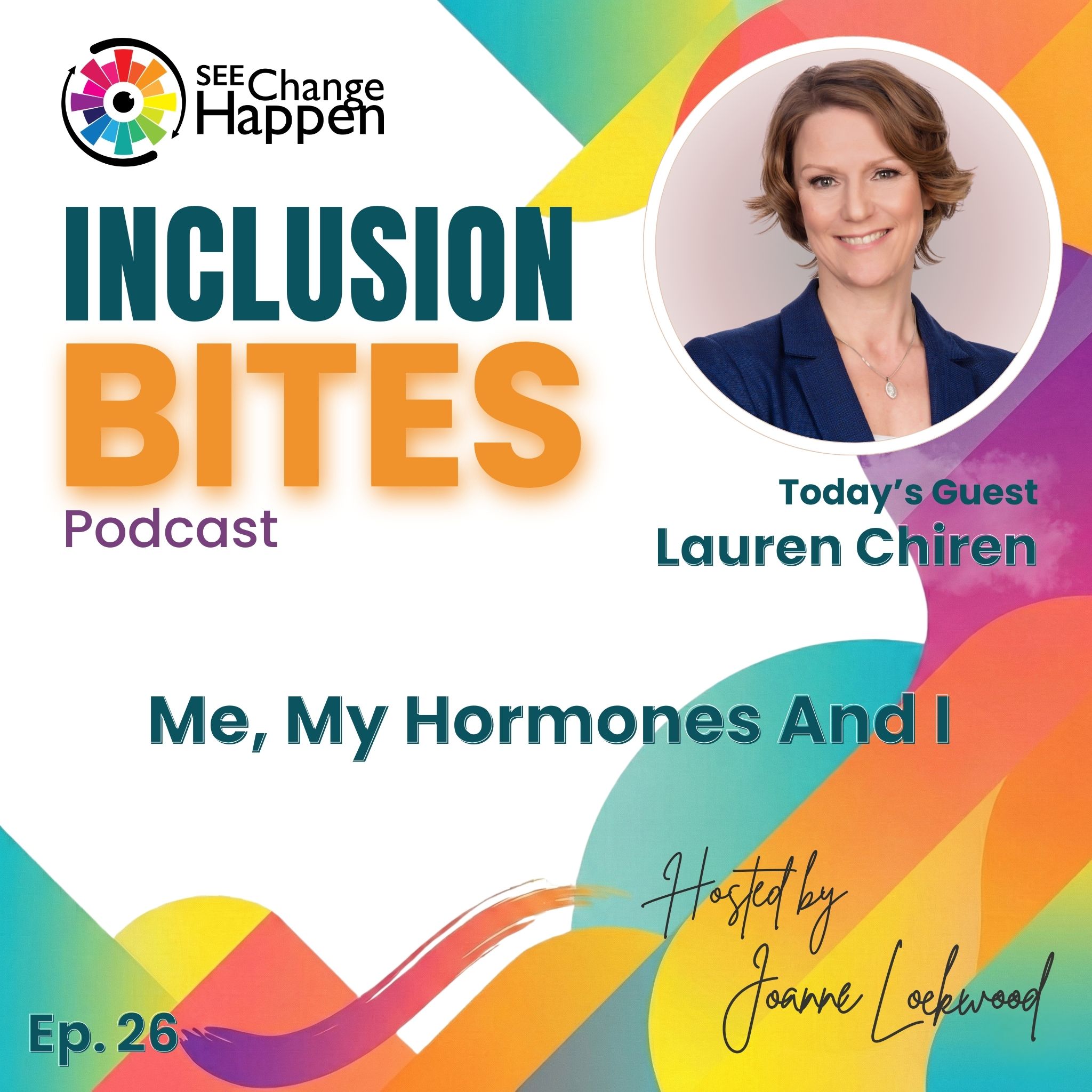
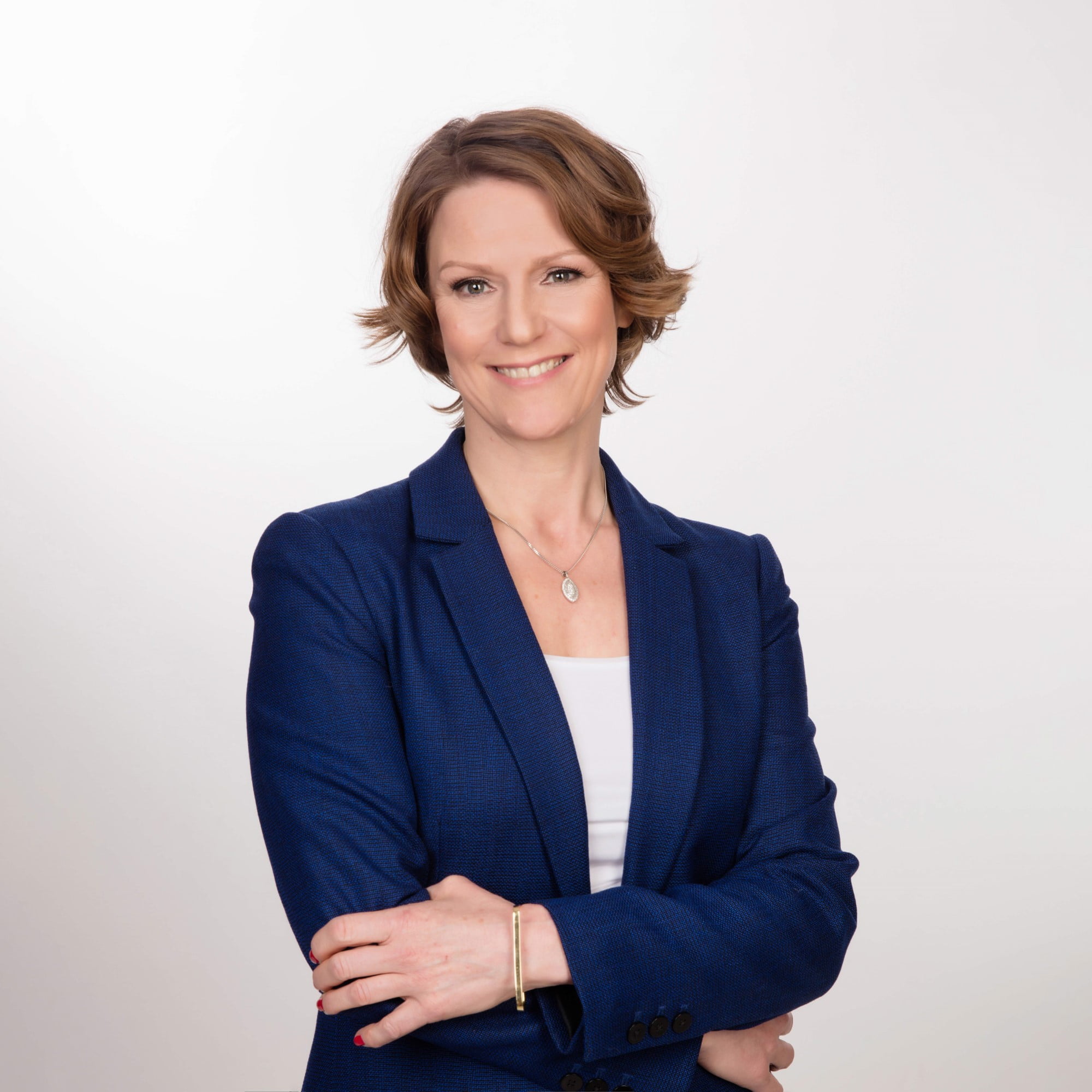
Lauren is an Executive Coach and Menopause at work specialist, who is passionate about raising awareness on a topic that is often avoided and misunderstood in the workplace.
In this episode of Inclusion Bites, Joanne Lockwood speaks with Lauren Chiren about mental health wellbeing trauma.
“I didn't stop being bright, intelligent, or capable.”
Explore
Navigate this episode
Joanne Lockwoodhost
Hello, everyone. My name is Joanne Lockwood, and I am your host for theInclusion Bites podcast. In this series, I will be interviewing a numberof amazing people as simply having a conversation about the subject ofinclusion, belonging, and generally making the world abetter place for everyone to thrive. If you'd like to join mein the future, then please do drop me a line to jo.lockwood@seachangehappen.co.uk.LockwoodS-E-E Change Happen dot co dot uk. You'll beable to catch up with all of the previous shows on iTunes, Spotify,and the usual places. So plug in your headphones,grab a decaf, and let's get going.Today is episode 26. With the title"Me, My Hormones, and I", and I have theabsolute honor and privilege to be joined by Lauren Chiren.Lauren describes herself as an executive coach and menopauseat work specialists. When I asked Lauren to describe hersuperpower, she said, tenacity,getting shit done, especially those things that others barely talkabout. Hello, Lauren. Hi, Jo.
Lauren Chirenguest
How are you? I'm good. Thank you. And yourself? Yeah. No.Really well. Really well. Thank you. It's really catch up.
Joanne Lockwoodhost
Fantastic. So, Lauren, "Me, My Hormones, and I",what's that about? Tell us How? That's,
Lauren Chirenguest
that's really interesting. Well, to me, it was quite interesting. Iwould like to take you back in 5th November 2014.I was called into meeting with my boss, which in itself was quite unusualbecause normally we caught up in between meetings on the way in and out ofwork. And I was also quite excited because it was my birthday.So I thought he had something in the store for me.However, I wasn't prepared for this surprise that he did deliver when I went intohis office. The conversation, which I shallabbreviate for, you went along the lines of You're walking around thoseplaces if you've got the weight of the world on your shoulders. It's not exactlybecoming of a female leader in this organization.And you were happier when you did that personaltrainer thing you used to do. So perhaps you ought to have a thinkabout that. Well, let me tell you whatever self esteem orself confidence I had before that meeting was down ina dark, dark place for the time of stepped out. And I knew I hadto go and get some space between myself and the office, and I worked forhome, from home for a little while. I took my son aholiday for a few days. And during that holiday, Ilaughed, joked, sang, built snow castles, andIglooze, had an absolute bowl with my eight year old were inIceland and slept like a log every night on the last night of theholiday as he fell asleep. I sat boughtupright in my bed and burst into tears. Itsuddenly dawned on me what my boss was trying to tell me.He was basically saying that I was a shadow of my former self, that Iwasn't behaving in a way that he was used to. And whenI looked back, I realized I hadn't slept for 18 months Iwas exhausted. I was kind of wired and tired at the same timeall day, every day. I was working longer and harder. I wastraining really hard for a marathon. I was doing a full timejob with teams in America, India, and the UK. Idelivered regulatory change projects for financial services, and Ithrived in my work. But I was finding I'd be sitting in a meetingand you know, planning planning's fundamentals is what I do.Right? But at setting a meeting, I choose 15different sentences to describe the work plan because I couldn't get it out of myhead. And my memory was shot. I couldn't recall names.I couldn't remember which meeting I had to be in and when. I hadself esteem issues, I had palpitations, anxiety attacks, all sorts ofthings, and I just thought I had completely lost it.So ultimately, I left my job thinking of the early onset dementia in my earlyforties. So you can imagine mysurprise when my GP told me I had just been through an earlymenopause. I was basically the happiest menopausalwoman in Bristol. And literally in that moment,and knew what I had to do. And that was to make sure another employerlost their talent because of lack ofunderstanding of a natural life stage Another womancould blindly walk into perimenopause and menopause withoutknowing what was going on. So that's kind of where it all started forme, Joe. Wow. That's a a
Joanne Lockwoodhost
story. I mean, this company you're working for 6 yearsago wasn't a small company. There's a big multinational organization, wasn'tit was a large organization. And I think
Lauren Chirenguest
back then, organizations were not menopause savvy, we're not menopauseaware. It wasn't something that was on the agenda. So I don't,you know, it's not there's nothing about size oforganization, or I think it's just we're we're living in veryfast moving and changing times. And it's beengreat to, you know, have on my books,brilliant organizations now that are looking to make significant changeand are really waking up the fact that there are more women in work nowthan ever before. We're working longer and later in our lives and holding more seniorroles So we really need to change the landscape that we work in.
Joanne Lockwoodhost
So you you you're looking back here. You're not casting any blame.It was just contextually at that time 6 years ago,that was the way of the world. People didn't talk about it. It wasn't Wellbeingtreated less fairly. Just they they were quite vital intheir observations that you weren't the person you used to be. Absolutely. I
Lauren Chirenguest
think it was quite interesting that someonewho's supposedly leading other people, bright, intelligent, etcetera,capable. I'd had an award, and my bonus the week before. So all thesignals were but things were going well. So thatconversation really was like a blow out of the blue for me, but it wasodd you know, to to not know what you're going through and justto put that into context, I was on I had my son just beforehis 38 and I was on the concept of pill that meant I didn't havea monthly cycle. So I had no idea that my, my period had stopped.So I didn't know what to look out for I hadn't had the conversation withmy mom. I didn't have anyone else around me, you know, late diarities, early fortiesgoing through perry or menopause. I didn't even know what perry menopause was.So, you know, as an employee, you've got responsibilityto look out for yourself and be on top form doing everything that you canto make sure that you're fit for work. And I believe an employer has gota responsibility to create the culture and the environment that is entirely inclusiveand that you can bring as much of yourself to workers as appropriate.So, yeah. For sure. I completely agree.
Joanne Lockwoodhost
And and the last 6 years, the world of work has come along way in rate, doesn't it? It's we won the clock back that far,then many employers hadn't even thought about this Wellbeinginclusive, you know, inclusion Wellbeing, diversity wasn't really on the top ofmost agendas. It was business as usual, get stuffdone, and being nice to people wasn't really on the agendas,really. No. I think I've, I've been very, I mean, I want
Lauren Chirenguest
career number 4, and I've been very fortunate to always do work thatI've loved. However, I never had anychallenges with monthly cycles. I never had any challenges when I wanted to getpregnant, getting pregnant. I did have a tricky pregnancy because I was offeredtermination at 6 months, and that meant that there was alot of stress around the continuation. And just for context,my son is now 14 and a big strapping lab will always go underlinemedical conditions. You know, the, the children'shome Bristol is our safe place. And that, that, that'sbeen amazing. However, even whenI was working, if he was critically ill and I was by bedside and thehospital. I sold my laptop on doing my meetings. I never took my foot offthe pedal. I didn't think because I was a mom and my son was ill.Now was that the business creating that culture? Was that me puttingmy the pressure myself? You know, that that's a debate that I think we couldprobably spend hours on. However,the, the whole menopause thing coming along just knocked me sideways.I nearly passed out twice in the office. It was bizarre,really bizarre. So you said that you you so
Joanne Lockwoodhost
you're putting pressure on yourself to work with these hours to deliver the projects andbe a full time mom and all the other things that went went aroundbeing you. You you said you're not you're not sure whether that was you puttingextra pressure or that was kind of Were you in this kind of working likea man type environment where you, you know, want to feel like you were succeedingand keeping up, you felt, or you had to be that person, or was ita personal thing? So that was a really interesting expression, right, because
Lauren Chirenguest
working like a man, I've never ever had thatphrase go through my head in my life. I started going out to work withmy dad when I was 4. He had properties. We go around and empty thetelephone boxes of the two p's and the pennies. He clicked the rent andwould spend a Sunday, you know, counting out and he had another company doingcontract cleaning. So I would help him as staff wages on a Sunday, and I'vealways just worked It's just some, it was a fun thing I did with mydad. I never considered it to be something masculine.And interestingly, the sports I've done like judo or andfootball, a lot of what I've done have always moved in a very maledominated environment. So I've never never questioned it. And the same withthe jobs I've done, they've always been traditionally very male.And because I was very fortunate not tohave any situations arise up until my early forties whereI saw the difference myself. I never questioned it.But it was only in hindsight, which is always great, right,where I suddenly went, ah, it was only because of myhormones. That my behavior changed,but because I wasn't aware of it, I couldn't manage it, and I couldn't takecontrol and make sure that I went on that journey with my eyes wideopen and helped get the right help and support from the people around me tocontinue doing that. I didn't stop being bright, intelligent, or capable.Oh, it felt like I had, but my, I didn't lose those skills knowledge andexperience, right? So it was just about how do you changethat masculine environment thatwomen tended to step into around about the 2nd World War when westarted really entering the workforce on mass, How do you changethat which we've stepped into and kind of worn the mask ormolded ourselves into what there rather than trying to change it, which iswhat I think we're doing now. Because it's interesting also when he
Joanne Lockwoodhost
was talking at the beginning, he said your yourmanagers said to you, not becoming of a female leader in ourorganization. So a female leader in organization, why notjust a leader in our organization? So was thatalmost the fact that your, your manager was seeing you as awoman rather than just as a leader? Yeah. I'm
Lauren Chirenguest
I'm not sure, you know, thememory plays tricks with you, right? So Iwonder if the more conscious I'm becoming of the differences ofbeing a female, is my recollectionor whether it was just the fact that there was a passing comment about beinga leader in the organization. So I don't know if I would want to Wellbeingthat too much. Okay. But you're now more hyper aware of
Joanne Lockwoodhost
your own sense of self and reflected back on thattime. And and almost like analyzing someof your behavior with hindsight and wondering whether these things came into play.
Lauren Chirenguest
Yeah. And I think I think specifically because I was a sole parent with achild with medical needs. I think that also made methink twice about ever considering taking time off or, you know,if I wanted to go and watch something at school or if my son waspoorly, how did I make sure that I was, a,there for work and be there for him,which on reflection I'm afraid I don't agree with.However, that was my choice at the time, but I would too afraid orto I had too fixed a mask on to consider it everturning around and saying, I need to take some time out because my son's ill.Or I need to take some time out because my son's going to be inan event. And it just never crossed my mind, but that wassomething I could do. I didn't know how to ask for help and support. Ididn't want to be seen as weak because I didn't want to give anyone anyammunition. And these are all things inhindsight I realized was because I was trying to fit into an environmentthat was not necessarily set up forsomeone dealing with the things I was having to deal with You know, this isway before menopause came along, but ultimately, it'sall part and parcel of the same thing. So
Joanne Lockwoodhost
you mentioned people that understand between menopause and perimenopause.I'm not sure I did. What was what's where's the difference? I mean,I yeah. Tell me. Sure. Of course. So it's interesting
Lauren Chirenguest
because quite often women will get in touch and say, oh, I'm pretty mad I'mpremenopausal. I can't cope. I'm going to your Perimenopause. You can't cope. So not mybag. Premenopausal is when you become an adolescent, your monthlycycle starts. And, you just, you just havewhatever is you're a normal. Whatever that is for you is when you'rePerimenopause. When your monthly cycle starts tochange a little bit might become heavier lighter might be longer orshorter in between blades And you may start experiencing symptomslike brain fog, anxiety, sleeplessness, achyjoints, so on. That's when you're entering perimenopause.It's when your, your Eastern levels are starting to kind of fluctuate. Yourprogesterone levels are, declining. And whenyou become menopausal, you've gone 12 months without a cycle.And thereafter, literally menopausal is like a 12 month anniversary of your monthlycycle and then your postmenopausal. Does that help? Okay.
Joanne Lockwoodhost
Okay. So that that that that's the 12 months window, and youyou've no idea during that 12 months if it'sgonna reset in 2 months' time. So -- Correct. Yeah.So you could be exhibiting these intermittent, periodsAnd that's where your Perimenopause, where you'll go into those last couple ofyears of of your periods and cycle. And thenyou say one day you wake up and go, oh, 5thDecember, that's it. We're done. We're done. We'redone. We're now post intervals at Yay. So you have menopause day isreally was one day in your life. That's exactly right.
Lauren Chirenguest
Yes. But I think because we don't want to go around goingperry to post menopause or journey, just go menopause. And that means everythingfrom parried through to post. It's it's it's it's the big big
Joanne Lockwoodhost
umbrella term that everyone kinda understands. Yep. Yeah.
Lauren Chirenguest
That's right. I I I seen that there are there are many
Joanne Lockwoodhost
women going through a similar pattern where you went through where you'reusing contraception, wrist masks, periods where you're taking them everyday of the month, So there are many women out there that probably not aware.And also, I suppose the most contraceptive pills give you Oestrogen andprobably progesterone progesterone at a similar level to whatyou're naturally assuming. So you probably don't notice them as turning offthere. No. If you're if you're on, certainly, certain
Lauren Chirenguest
types of contraception, you you're not going to know. There's just no way to knowunless you came off the contraception. So you really go by yoursymptoms. And, if you are in yourearly to mid forties up to your mid fifties and you're starting to experiencing,your anxiety, brain fog, sleeplessness,palpitations, itchy skin, hair loss, hair growth,tweezers can become a girl's best friend. And allthese kind of other low moods, nightsweats, if you started to spread, you know, experiencethese symptoms, then that's your guide, really, especially if you're over forty5, then that, that is just like going through adolescence. When you go throughadolescence, you may experience moodswings, slamming doors, differentchanging sleep patterns, all sorts of different things. It's just we don't expect that inwomen of a certain stage. So -- So
Joanne Lockwoodhost
you must assume that women have kind of got theirtheir life together, but they should be just flat, normal,whereas they're almost going back to those early hormonal years wherethey're their emotions are, yeah, goingup and down, but considerably, I suppose. It's one of the most common
Lauren Chirenguest
issues that women tell me about when I'm working with them that you, they,they, they've had this kind of cycle of behavior at work. They know when they'remore analytical or creative through their monthly cycle, where they're more reflectiveor determined. And then all of a sudden,Perimenopause comes along, and the moods can be, youknow, they can be quite severe. And in from one moment to the next,you can go from being happy as Larry to being in fits of tears forno apparent reason, and things will trigger you in a way that you just aren'tused to. And then all of a sudden you could be raging atsomebody. Now this isn't for all women clearly,but it is not uncommon behavior for someone going through menopause.
Joanne Lockwoodhost
Since you mentioned one of your symptoms was memory loss as well, well, or justforgetfulness or And I I've comeacross, people in my life where that's been a factorand that just assumed that it was just, as you say, on the earlyonset dementia, a senior moment, people would callit, but maybe never associating with with the fact it could have beensome perimenopause causing this. Mhmm. And what sort of ages with people that you've noticed
Lauren Chirenguest
that in the I would say late forties, fifties, yeah, kind of that
Joanne Lockwoodhost
kind of age. Yeah. But people just talk about it and say, oh, god. Ijust it was like, it's not a tip by tongue, but I just they justcouldn't get it out, or or, or you have a conversation and they say, Idon't understand that. And it's like, you just said that. No, I didn't.So maybe it isn't Maybe it is kinda like that. Yeah. Exactly. And I had
Lauren Chirenguest
a classic one time, to work the arrows I was working in the type ofposition I was I had to have support with my son, so I hadan Annie. And one night I came home, I drove back 4 to5 minute journey from work to the house. Dropped my suit, mysuitcase off, my briefcase off, said hi to my son, walked back my nanny, pickedup my briefcase, and said, I'll see you later, and she goes, where are yougoing? As I'm going to work. Week, you've just been called pork.I mean, it's the weirdest thing. It's the weirdestthing. So so you could also manifest itself where someone's
Joanne Lockwoodhost
maybe, an administrator and they're doing a routineprocess. And they keep missing bits of the process, or they they just don'tretain some of the process and go, would you mean I thought I'd done thatthat that could be part of that as Wellbeing exactly that.
Lauren Chirenguest
So people may experience those kind of small errors in theirwork, specifically if they're doing detailed work. And that's why it's soimportant for employers to become educated and for women to really understand whatthey're going through so that they can start to put their own processes inplace so that they can have checklists so they can set timers so they canrecord meetings so they can take more frequent breaks so they can do therelaxation exercises. Because it's important as an employeethat you take responsibility for yourself and definitely you can to thrive, as well asthe employer, obviously, makingthe cultural changes, environmental changes that are needed. So
Joanne Lockwoodhost
you weren't really self aware of what was going on, and I'm I'm guessing thatother people maybe listen to this and experiencing this probably aren't selfaware either. It's it's only when people maybe mention it to them that theygo, oh, maybe you're right. I suppose if you're forgetful, you don't realize you're being
Joanne Lockwoodhost
forgetful. Not until you kind of put car keys in the fridge and the
Lauren Chirenguest
milk in the I don't know a washing machine or something likethat, which as audits that might sound, is not thatuncommon. But I think I think quite oftenpeople, you know, especially in the workplace, people will notice your behavior changingbefore you're conscious of it. And it'sabout learning how to identify that, how to open a sense ofconversation with somebody, how to sign posts into the right health. Support ina supportive caring way without them feeling threatened.And I often find when I'm speaking to women,like, oh, I didn't know that was part of menopause because there's over 30 symptoms,and no two woman experiences it in the same way. Soit's it it fascinates me and I shouldn't because Iwas there only 6 years ago, but it fascinates me that womendon't know what menopause is. They don't know how many symptoms there are. They'renot prepared for it, and they don't know where to get help and support.So yeah, I'm really grateful to you for helping meopen up the conversation that little bit further. Yeah.
Joanne Lockwoodhost
Is it My understanding is there's still a lot ofkind of shame and stigma around losing one's fertilityand did at this point in life, maybe the feeling of loss,whilst someone may not ever want to have another child, but the fact they nowcan't -- Mhmm. -- is quite a big loss, isn't it? I've had a few
Lauren Chirenguest
clients mention that to me, andwe do I do a lot of work and mindset with my clients, so it'svery much looking deeper inside to them and what that fertility means to them,looking at the ages and stages of life. And actually, women ofthis generation experiencing menopause are going to live as long, if notlonger, post menopause leave than they were in their fertile years.And we are the 1st generation to do that. And that initself, when people get their their heads around that, and they recognize that they've gotthis incredible life ahead of them. So It's like the secondopportunity to, to create whatever you want to be anddo and have And it's, it's very much about, you know, thatmindset shift in recognizing your role in life alsoand, and how much you've got to give back So, yeah, there,there can be that sense of loss, but, it affectseverybody differently. But there's still a lot of,
Joanne Lockwoodhost
Social etiquette where periods,cycles, sanitary products, etcetera, etcetera,aren't topics for the dinner table that they're they're they're whisperconversations, and it's not talked about. So is there any wonder that thatmany women don't share their stories with WestCoast is it, is it, is it, is it, is it, is that part ofthe trouble that people aren't talking about it enough? I'm delighted to say that things
Lauren Chirenguest
are changing. Did you see the article about Scotland? And sanitaryproducts? Yes. I did. I did. I thought it was fantastic. Yeah. I just hope
Lauren Chirenguest
that is the beginning of something that more and more countries will will do.So free sanitary products is is oneamazingly positive straightforward. And more, the more clients Iwork with now, the more corporate clients that I engage with, Instead of justfocusing on menopause, what we do is we look at the entire female life cycle.So everything, all the changes, fertilityissues, miscarriage pregnancy, youknow, we're with looking at anybody who bleeds andwhat that's going to mean for them, the impacts are going to have for themthroughout their entire employee journey ratherthan just focusing on one specific stage because I believe that the more we canopen the conversation at work about what's going on that youcan't see necessarily, the more we can createan environment that people are, more engagedwith, more, tolerant of and more understanding of aswell. So it, it's, I do think it's a bigjourney, but I am seeing people being much more open now 6years ago. People organizations were kind of like kicking 9 to12 months before they were to engage me to come in and deliver something onmenopause awareness, whereas now I'll be It's inbound inquiries asking me togo and help them create their strategy around women at work. So there is ashift, but there's always going to businesses, and you must find this with your workas well. There's always companies that are, you know, the earlyadopters and those ones that will kind of lag behind a little bit more. Doyou find that? Oh, for sure. It's
Joanne Lockwoodhost
it turns on the size of the business, the sector, theculture. Some are front runnersout there trying to try to their best. And there were many organizations that arejust playing catch up, or or it's not even on the radar. So, yeah, you'reright. It's, I think in a way that's It'sjust the way the way the world. I think it was gonna haveoutliers forward people. AndI think in a way, it needs it needs to find about us to setthe examples and to and to break the ground and and to show people what'spossible that other people can aspire to and catch up. So I I think whilstI'm often disappointed that that all companies are focused ondiversity inclusion and helping their people in this wayis becoming the way organizations start to think, which is, whichis, for me, I think we are making progress. Yeah. No, I am definitely
Lauren Chirenguest
seeing a difference. And certainly, this time this year, especiallygiven that we're recording this, a time when COVID is stillvery much in our midst. I have noticed that Thereare more organizations asking to engage early next year to lookat what their strategy is going to be and how they're going to putmanipause on the table on the agenda and bring it to the attention of thisnew stakeholders. So I'm really, really excited about that.
Joanne Lockwoodhost
I I think I've I've seen that as well. So I don't know whether itwas COVID or black lives matter or something earlier this yearcreated this is bound waiver of of change or enlightenment.And I I think you're right. But many DNI leads and DNI teams arestarting to pull together a program of events aroundinclusion and identities and needs andmenopause is on that list is in the same way thatracial inclusion, trans, lgbt, all these kind of the bigticket items are on the list now. And I think I spoke to someonethis morning, And they do they do it very similar. They wantto really raise their profile. We were talking specifically around LGBT, but they'realso doing a number of other events. And similar lines. So it's it'sfantastic that you're, yeah, you're already seeing that in 2021 as on onthe agenda. Mhmm. Mhmm. And before, March
Lauren Chirenguest
20, I was doing a lot of work in the states. However,at the time I've saved by flying back and forth between states and theUK, I've been doing far more webinars and reaching out to farmore organizations much bigger and more global organizations. And, youknow, I've I've spoken to companies now that have got a footprintin Russia to Romania, Israel to Ireland, Australia toAustralia and beyond. It's been phenomenal this year to, toreally see that reach grow. So I think that's reallyhelped. And also with the flexibility and agility and theworking ways of working that people have had to do. It's openedthe doors to completely new thinking about what work means andand ways of working going forward. So I I think we'vetouched on that a couple of times when we've spoken. Yeah. Yeah. So because you've
Joanne Lockwoodhost
you've also got a a very active Facebook group, probably where yousupport network for women going through Perimenopause, menopause.Yeah. And you've had some guest speakers, and I've watched some of the, thewebinars you've done, which have been really, really enlightening and, yeah,and surprising that lack ofinformations out there without diving and, you know, if I hadn't havemet you, hadn't been on your webinars or Wellbeing a Facebook group, I would neverknow how for this. Oh, wow. I didn't know you could see some of
Lauren Chirenguest
them. You invited me into the group because --
Joanne Lockwoodhost
Yeah. I did. I did. And I I looked through them because whilstit doesn't affect me directly hormones do. So I have a so ifI stop taking hormones, I will go probably through a similar sortof cold turkey experience. So I'm veryhyper aware of of of what homeowners have done to me over my over thelast 5 years. And the changes that I've experienced asa result, not just physically, but mentally, and the mental changes havebeen well, I would put it most welcome because theyhave introduced a a calmness and a and a way of thinking thatI never had before. So I can imagine if I ended up in asituation where my hormone levels fluctuated wildlyto have have that that cycle between completecomplete you for it, calmness, and not would be,I said, I'm not sure I could imagine how that would Yeah. And I think,
Lauren Chirenguest
some delighted that you've seen the webinars, and you're right about thathormonal fluctuation. The other thing that women maybedon't recognize in themselves is that they have testosterone.So it's another, it's the, it's like the, the 3rdhormone that can drop and diminish. And that's quite often womenwill comment about loss of libido, loss of confidence loss ofself esteem, and that can all be tied into a drop intestosterone because whilst we have much lower levels and then we stillhave testosterone, it's really important hormone for us. So it'ssomething that's not licensed for use in the UK. However, it can be prescribed.So it's something for women to be aware of if they are talking to theirdoctor about hormone replacement therapy. But on the just going back tothe comment you made about the webinars, I have in my team, I havea GPU who specializes in women's health. Ihave, an amazing guy who I've known for20 years who specializes in CV confidence andcoaching sorry, CV career andconfidence coaching because quite often going through menopause is when womenreally start thinking about a change in their career. A bit of hypnotherapist,especially in stress anxiety because that's way up on people's lists withmenopause. And I've got a bunch of, fitness professionals,nutritional professionals, and myself obviously as the executivecoach. And it just means that people have got a one stop shop for allthe types of support that they might need throughout menopause.And it's that's what's that's what's come out of working with women and workingwith organizations over the last 6, 7 years justto make sure that people have got the right support, the right access, the rightinformation. And the, the the webinars thatyou mentioned, I do every few weeks, and they're in free,they're in the group. Anyone, you know, is welcome to assess them becausefor me, it's all about increasing people's awareness. If we don't share theinformation and people live in ignorance, then you know, that,that, that's not gonna move us forward. So I just, that's just me doing mybit, really. Are those, I mean, let's be clear to anyone's listening. These
Joanne Lockwoodhost
aren't just for women concerned about the menopausethemselves, whether they they go to repair menopause or post menopausal, this could befor women younger to try and identify educate himself a laterlife, but also for men who want to find out how they could support womenbest in the workplace. And and it's not a a taboo subject. Wewant men to listen to these to understand how they can help better, don'twe? Whether as a husband as a husband, as a as a partneras a as a as a son or as a as a as a brotheror sister, sorry, brother or father. Soit's important that men educate themselves, and it's not seen as a awoman's only thing to talk about. It is is a societalchallenge that we all need to embrace as is, and I think a really great
Lauren Chirenguest
way to bring that to life is an old friend of mine who hewon't appreciate being called an old friend, but a long term friend ofmine who lives overseas. When I got pregnant with my son, he moved overseas,got married, built a house, living the life of Riley withhis, his new wife, and They both had ideal jobs. They hadtheir swimming pool in the back garden. And, you know, for 10 years, I justgot great reports of how wonderful everything was. And3, maybe 4 years ago, he popped back over. He wasback over in the UK, spread his mum's ashes, and he told me it wasgetting divorced. And I was really, really upset for himbecause he was leading such an incredible life. Anyway, hehad to go back home to sort things out, put house in the market, putnotice in at work, his wife was off long term sick. And Iwas helping him sort out, you know, a new network back over in Bristol inthe UK, find a house to live in. So he put an offer in ahouse. He'd started going for job, interviews.And as I was talking to him one day, he wasjust talking in the most beautiful way about his wife.And I turned around and I said, look, forgive me, but confused.comover here. You're talking about your wife as if she's your best friend,as if she's, you really love her. And he goes, well, I do, and sheis. I was like, I really don't understand why you're comingback to the UK. And he turned around and he said to me, we haven'tbeen intimate for 4 years. I've tried everything,and I just can't live like that. I don't want to cheat. But I can'tlook at this either. And we had to cut a very long story short.We had some chats. I realized that his wife wasparimenopausal and really struggling. She had really severe symptoms likeI had, but perhaps even more so. And with a little bit ofcoaching, a little bit of counseling, and some interventions, some medical interventionas well, they stayed together.However, There were 2 employers in theirhome country that had one employee that had left work,male, one that was a long term sick female, an employer over inthe UK that thought they had a new male employee coming overthat wasn't, solicitors for the house sealant, the house selling, and thehouse buying on both sides, solicitors for the divorce,all because a couple were not menopause savvy and didn'tunderstand how to communicate with each other and where to go and get help andsupport. So it's not a women's only issue. Thisaffects employers, even when they don't see that the person beingimpacted is being directly impacted by menopause. So forme, that story is a really good one to demonstrate how far reaching menopauseis and the effects are because the more we recognize it, the more we understandit, can put the right help in support in place, and just so get overthere and I just --
Joanne Lockwoodhost
So so you're telling me earlier that you you went to Iceland.Oh, I I I mean, that's amazing. I was in Icelandin 9899, so that was what 20 yearsago. And I loved it over there. We we didthe, the locals tour because we actually were there aspart of a club, and we we were being hosted by someIcelanders, and we we enjoyed a lot of their theirtheir spirit. So it wasn't like a tourist. You know, we we we won't beon a bus with it. We didn't just see the the, yeah, the big ticketitems, the glasses, and the and the geyser things. We actually sort of live withthem, and we were experiencing some of their culture, which is incredible,but, no, I loved it. It's a it's a really great place, and I Ireally wanna go back there. But one thing that sticks my one66 in my mind was they hired this fish controller.And in the middle of the, you know, this was in May. So it's kindastill pretty dark and pretty cold and horrible out there. And they they said thesame as just enjoying it, and it literally threw the net over the back, trawedup I think stuff off the bottom, and there wasirchins. There was, clamps and some of this. And they were literally justopening up these irchins, and we were eating them off the knife. Wow. Andscallops and the clowns things were just literally easing them off off the knife asthey were bringing them up from the from the floor. And then we had thismassive buffet. One of the delicacies on there was puffing. I don't knowhow many puffins gave up their life for this buffet, but there was there was,like, trays and trays of puffing and Yeah. It wasa incredible experience, and and the way they prepare Lam,it's more like we were prepared to take. It was that the way the serveris actually beautiful. So yeah, I've got some really, really fondmemories, but, yeah, I'm afraid I, I did consume a fair few puffing thatweek. Well, my my biggest
Lauren Chirenguest
learning was don't go to Iceland on Christmasbecause everything is shut. Christmas day and boxing day,everything, even the restaurants and the hotels are shut. So it's avery interesting time, but we were the ultimate tourists and hadcompletely the opposite experience, but it was just the most stunning,beautiful, They're the most welcoming gorgeous people I thinkhave ever met. My son can't wait to go back. So one day when whenwe can, we will go back. But it's beautiful, beautiful location.It's simply stunning. We we went skid doing on the
Joanne Lockwoodhost
glaciers, and that was Absolutely. I mean, I've onlyever could do once. I never I never ridden a motor motorcycle before and justbeing let loose on this thing and just running around the asses and andthey're being shouted at because you'll be aware of these thesecrevices and cracks and fault in the in the snow in case you just wentstraight through them. So yeah, to keep on this very, very narrow,if single file path, because every time the the leader look the otherway, everyone's 5 impressed race that you told them about.It's an incredible, incredible, and I remember getting off this coulddo on the top of this class here, and it was literallywhite. Below the horizon andblue. And it was a pretty gorgeous blue, and not acloud, not anything just white and blue. And I I took one step offthis could do, and I went up up to my thighs in snow where thesnow is so unpacked and it's and I I'm justliterally I I was I went to my thighs and thought, how do I countfrom here? One of my friends who was really, really kindalightweight. He got office could do, and he was walking on thesnow. It's like incredible, the difference between someone who was a little bit weightier thansort of it was really light. It was really for the welcome. But, yeah, sucha happy memories of, sliding sliding downis on on inner tubes. You know, I mean, big doughnut inner tube things likethat. Yeah. It's a it's a fantastic place, isn't it?Yeah. It was just a ticket for me to wake up and smell the roses.Yeah. After matches because, yeah, it's bit of a digital detox, Ithought, when you were over there -- Oh, it was just
Lauren Chirenguest
the antidote to what I was going through. And it was just that moment ofrealization when I set up in bed that night and went, Oh,yeah. Oh, yeah. That was what he was trying to tellme. It was like a real wake up goal. It comes it comes on
Joanne Lockwoodhost
slowly, doesn't it? I mean, when we talked about this, you you don't know it'shappening, but it's so gradual, I guess, where over the course ofmany, many years, the decline is probably happening, isn't it? So you don't realize. I
Lauren Chirenguest
think it's different for everybody. And 25% of womenwill have quite severe symptoms if they're not prepared for it and don't know whereto get help and support like I did. And 55% will have mild tomoderate that will need some sort of intervention, even if it's just lifestylechanges. And 20% of women will seal through. However,if you have, nephrectomy hysterectomy, if you havecancer, cancer treatments, certainly in the pelvic regionwith chemotherapy, then you would go into an instant medical or surgicalmenopause as Wellbeing a lot of women describe that as being hit like atruck. So for them, obviously that happens at whatever age theirtreatments or surgery happens, and that can be a lot younger.Menopause itself, actually. I mean, I was under 40 when I went through it,and the youngest recorded case was 12. Soit's, you know, you need to be quite open minded and, and, andjust we need, thankfully, sorry, excuse me,Minopost is now on the education curriculum. So atleast it'll start to get talked about at school. And that's where it belongsbecause we need to know about it from the go so we can plan forit and recognize it. So is it a
Joanne Lockwoodhost
bit that you have to have HRT? Is that Is that,is that a myth you have to have it, or or is it not appropriatefor everybody? So HRT, so I'm speaking as a layperson,
Lauren Chirenguest
albeit very well educated to the layperson, and I'm doing yet anothercourse in HRT at the moment. So HRT, if you'reunder the nice guidelines are, if you're under 45, you should be onHRT, at least until you're 51 because your body's notintended not to have the Eastern in it. Eastern's got reallystrong preventative bone and heart healthimplications. And that's why men and women will take it even if they don't havea menopausal symptoms, they will take it throughout their entire life.However, because HRT got such a bad rep with,some now so there was a study18 years ago where there were links between DVT, breastcancer, and HRT, And as they've been, thatstudy has been discredited, but there have been other ones that have popped their headsup, but they haven't been based on the type ofHRT that's available now. They haven't been based on,cohorts where they are the ideal cohorts. I mean, a lotof women who've been studied who were over 60or over, you know, severely overweight obese, and they wouldbe normally contraindicated for HRT in the first place. Sothat's not where you would start off when you were doing a clean study. So,there's a big swath of GPs now beginning to get educated inHRT Wellbeing what it's for, why it's important. Andas I said earlier, because we're living longer and later into life, if wewant to be really active cognitive cognitively andphysically active, and we want our heart rate, or to be, Ithink, functioning normally, then HRT is definitely a consideration, butthere's, you know, it's it's personal choice. And itwill be based on your own personal choice and personal medical historyas Wellbeing you say it seems like osteoporosis, bone cancer,
Joanne Lockwoodhost
calcium, and there's something on things. Say estrogen orlack of estrogen is one of the causes or the start of osteoporosis settingin, isn't it, where people bone density recruit increase of,breakages or brittle bones, etcetera, etcetera. So, yeah, butI'd I'd heard around the, all about this, DVT blood clots,the worry around certainly when it's all about trans health care, the risks of of,Oestrogen. And also the the fact that if you take in tablet form,the liver, it gets metabolized in the liver and cause liver problems, which is whythey often put patches or creams or topical.See, I I'm quite reserved on all these. I would I would hope
Lauren Chirenguest
so. Yeah. I'm an education myself. So,
Joanne Lockwoodhost
yeah. Yeah. I mean, is people don't even realize that HRT
Lauren Chirenguest
comes in, you know, anIUD comes in sprays, pumps, gels, patches, tablets,and people don't know. You can have separate prescriptions or component procedures. Yep.We name it. So, and then the other thingWell, yes, there's there there's all sorts, that's really important tobefore you go to GP, because our GPS generally are not educated on HRT,They're generally not educated on menopause from if they have half an hour,it's a 5 hours worth of training and they're 10 years of training, they're doingwell. And they see shown an interest in it So it's really important to findsomeone who's knowledgeable, but still make sure you keep a list ofyour symptoms and make sure that you are read up on HRT through the niceguidelines and clear on what conversation you want to have foryour GP and be prepared to have 2 or 3 conversations with them before youreach a conclusion as well. Just be patient andbe prepared to educate your GPS to help you.So it's important. Yeah. I certainly found that you need to be a kind of
Joanne Lockwoodhost
a, an educated base know what you're trying to achieve. I'mnot saying we want to be a Google hypochondric or or Google expert,but certainly do the research yourself, you know, join forums such asyours, go into Facebook groups, go into other internet resources,and learn about other people's lived experience. And then go to yourGP knowing a bit more about you than they doand help help them to I mean, I certainly found that if I go tomy GP, educated, I'll get a far better outcome. Yeah.
Lauren Chirenguest
And I think specifically with the menopause, excuse expression,but a lot of the online forum Gora can be very bitch and moan.And I'm afraid I don't tolerate in mind in the menopause social hangout.We are we're What are you experiencing? Whatare your options? What are the positives? How can we move forward? Andas I've said, you know, you you've you've experienced some of the, the quality ofthe people I've got in there to help support everybody who are educated anddo know their topic really, really Wellbeing. It'simportant to stick. I mean, Doctor. Google can be phenomenally dangerousand very worrying. So I highly recommend peoplestick to trusted resources like the nice guidelines and thebms.org.uk, which are the kind of goto sites for people who want to be well researched,well read, and and really get some info on the nhs.co.ukaysight as
Joanne Lockwoodhost
well as now. I've I've -- Which one was that? On the NHS websiteitself, there's Lockwood resource from there. So yeah. Absolutely. I
Lauren Chirenguest
totally agree. But, yeah, hormone's, I mean, hormone's in in themselves, we could talkabout for hours because they have such a massive role in our bodiesand they, you know, they're happening, they're going on, they're going up and down,and fluctuating and doing all sorts of weird and wonderful things to keep usgoing. And the more we understand how we function, themore control we can have over that. But equally from an employer, you know,going back to the workplace from an employer's point of view, if they canembrace the fact that hormones play a big role in people'slives, and that that can be to their, benefit asmuch as anything else, then we can start to see people reallythriving and doing work, you know, being super creative, super analytical,super, you know, just amazing at what theydo. By embracing the cycles and the changes that they go through,monthly and throughout their entire life.
Joanne Lockwoodhost
Yeah. And likewise, testosterone's also hormone. She say women have it as smallquantities, but also understanding about the male cycle of of testosteroneincrease in the the mid to late teens andthrough into the early twenties is is a an extremely,powerful hormone in its own right as Wellbeing changing brain behaviorand and and personalities as well. So, yeah, it's, I guess,every one of us has touched by almost in some way.And, yeah, I think is it the ovaries produce the the testosteronein a in a female body, which is then converted to estrogen, isn't it? And,
Lauren Chirenguest
I was just, just as you were talking, I was slightly giggling to myself becauseI've got a fourteen year old in the house at the moment. Fourteen year oldboy. And, we've had some very fascinating conversations.So so far, I think I'm getting off very likely, like,lightly as a parent, but, which you'll see what's around the corner.
Joanne Lockwoodhost
It's when the busk and the odor develops. You know, you're right at thatstage. Yeah. We would. Smell. Yeah. The sundays
Lauren Chirenguest
are cart blanks. You're not allowed to do anything on screens until you've done yourbedroom, and that involves thoroughly doing your floors. Thoroughlychanging your bed linen. So that's aparamount. I've got a regulation of, of our son,
Joanne Lockwoodhost
going through that phase. It made me wonder if I ever remembersmelling that myself, I suppose, when you're living with those hormones, you can't smellyourself, Kenny, or your or your own musk. So, yeah, it's I've
Lauren Chirenguest
run out the door with the, the deodorant, or the prespirates, whatever it's called, youknow, the, the stuff that they use. And so, no, I don't think you've putyour entity person on today yet. Just wanna take that with you today. Youmight want to put someone at lunchtime. Go up. On the top of it.Oh, some of the computations are hysterical. But,yeah, no hormones are so important, so important tounderstand. And when you can embrace that for yourself, you can just upyour productivity in every aspect of your life. So really super important.
Joanne Lockwoodhost
I have a huge impact on your mental well-being, mental health,even even how you think and some of your inhibitionsand inhibitions, they they do Iwas often thinking that that that they remote control you sometimes. They they can takeover your life. And as you say, the experience you had 6or 7 years ago, where you realize that the lack of hormones or thedisruption to your hormone had a real impact on your cognitivefunction, if you like, your ability. To be who you were.Yeah. And because one of the things that was always today, I think one of
Lauren Chirenguest
the first times we spoke was how you describe that sense ofcalm, when you started going through your hormone regimeand the kind of switch that that brought for you, which I think you saidwas quite welcome. Would that be -- Oh, yeah. It's
Joanne Lockwoodhost
it was like I had someone else driving my body before. It was there wasanother voice in my head that I had that shouted louder than everything else. Mhmm.
Joanne Lockwoodhost
And I think once I removed testosteroneand increase estrogen, I I I realized that that reallyshut down that that extra voice that was unwelcome has been unwelcome in my headfor years, controlled actions that I was ashamed of ordisappointed with myself -- Mhmm. -- and allowed me to to have control ofmy body and my thoughts for once. And so, yeah, it was a realI often described that I went for being two people in my head to beingone person, and it fundamentally changed, I mean, apartfrom my gender transition, but my gender transition, the fundamentalthing was the reduction, complete reduction of testosterone, andthe the overriding introduction of Oestrogen. Mhmm.That was you can only explain, I think, that what that might whathappened to my head, my mind, the way I felt the way I experiencedthe world, based on that on that that significant change. I don'tthink the social element would have had the same impact. I feelso calm, so relaxed, so so unified in who I am.Something I'd never felt for the previous 50 odd years of mylife. Amazing. Yeah. And,you know, I I I identify as a trans woman as youknow, but we've also gotta recognize that there are trans men out therewho are also on a similar journey just because someone's trans doesn'tmean to say they don't have these. They don't have the menopause. They don't havea monthly cycle. They don't have periods. You know? And if we'reif we're being very 21st century about this, men can haveperiods, men can have cycles, men can have menopause.Where there were assigned feedback at birth. So we have to also recognize thatsomeone in your organization who you may knowwho is a man may actually have,may may be trans and may also have these underlyingconditions as they grow older. So, yeah, it's notall straightforward. No. And I think that's one of the interesting
Lauren Chirenguest
things now. So I have some clients who no longer have male and femaletoilets. They have gender neutral toilets. So one of the very first questionsI, I, I ask an organization is what pronouns do youuse? How to, you know, how what's the education level like in theorganization? And I always ask them, are you comfortablewith me using woman to cover all people who were assignedfemale at birth who may have a monthly cycle who may bleed. Andwe just talk through what that means and who that includes as Wellbeingquite often, it's, it's an eye opener for them because it's notsomething I've really thought about before, but I'm always really clear that when I'm usingterminology, what I'm actually covering when I'm referring to that terminologyas well. So I think that's a big part of theawakening and the inclusion of youknow, what, what I'm trying to, to over to people, what I'mtrying to get people to understand. Andtypically, you know, with clearly your typical femaleaudience get it. They understand it. They feel relieved that someone's actuallytalking about it, and that's for the kind of en masse However,I always find it fascinating because it's usually their partners and managers that come upto me afterwards and go, oh my goodness. I am sopleased to learn about this or didn't know that there were34 symptoms, or the one that always touches my heart the mostis when I get someone come up to me, and say to me, I thinkyou might just have saved my marriage. And that is one of,you know, especially with the story of my friend overseas,when I get a man coming up from the end and see, I think youmight have just saved my marriage. It's just like, blimey, whydo we not know about this stuff? It's so basic. It's sosimple and it's so easy to learn about and do something about and talkabout, but it's just having that confidence to say the word menopause outloud. And to stand behind it. And Idon't know how when you were, you know, when you were going through your journey,Did you find that your own posture and position changed when you're interacting withother people? Yeah. I
Joanne Lockwoodhost
guess I guess it did in terms of mywhat my femininity and masculinity is up is up. Yeah. I think I'm thinking about
Lauren Chirenguest
when I would go to business breakfast and be one of few women there whenI, when I this journey, this part of my journey, I'd woke up and introducemyself as an exec executive health coachwho helped women in midlife. Whereas now, we'll cut gohigh. I'm Lauren Churn. I specialize sporting organizations becomemenopause aware. And as my posture has changed, Irealized that how I behave has a very big impact on the people I'minteracting with. So the more confident I am, the more sure of mytopic, the easier it is for the messaging to land with otherpeople. I suppose in a similar way that
Joanne Lockwoodhost
because I have a level of confidence and selfbelief and I believe I'maccepted more because I'm I'm I'm sure of whoI am. Mhmm. And I'm confident about talking about things,and I get engaged in conversations that are positivemost often, because I'm not shyingaway from who I am or what all or what I'm talkingabout. So may maybe I I think I think as as yousaid at the beginning, your mission is to try and make talk about menopause acomfortable conversation rather than an uncomfortable or or anon conversation. So I think there's I I did the same around transgender.Knowledge and people and just trying to raiseawareness so that it's a topic that you're having. It's aconversation you're having rather than ignoring. Can I I think, yeah, in the same wayyou're creating positive conversations? I'd like to think I am as Wellbeing at least whenI run training sessions, I often say, does anybody how many people in the inthis in this training session know someone who's in this closecircle as trans, gender diverse genderqueer, eitherthemselves, their family, their friends, or their work colleagues. And often,it's kind of 30% do, 70% don't.And they're quite relieved afterwards because I say, well, now you know me, you canall take yes next time before they go. But,yeah, I often meet people in when I'm outtalking training, even online, where someone in their lifeis gender diverse in some way, but if not them, then theircousin nor a friend of a friend, daughter or son or a friend of afriend's partner transitioned, etcetera. So I think we're I don't think we'remore than 1 or 2 degrees away from somebodywho's trans or gender diverse, and So the conversations arebecoming more and more welcome. I get more and more messageson LinkedIn. I've had I've had quite a few quite a few messagesfrom from fathers who saw the documentary I took partin and thanked me for creating that conversationin their in their family. So I thinkwhat we do is allow people to have a conversation and startthat that process. That that's the best. That's that that, for me, thatinspires me, if you could do more, that is a really quick first step tohave that conversation and talk about it. Yeah. No. I 100% agree. I just
Lauren Chirenguest
love when I, you know, one of my classics and I walk away from anevent is turnaround goal. Right. Repeat after Perimenopause,and I'll repeat that three times just getting people to say the word out loudthree times. And it's just phenomenal when the whole roomor, you know, on screen and suddenly you just hear everyone take themselves off muteand go menopause and then invite them to do it every day for 21days till it just becomes normal. And, you know, it's, it'sjust a quirky little thing that I do, but the more we can standin our power and the more we can coverage other people's stand in their powerand, and be more open and more accepting, I just believe willcreate such a happier and more contentworld. It sounds it sounds a little bit grand, butit's so important. Wellbeing
Joanne Lockwoodhost
certainly did today the difference between premenopausal,Perimenopause, menopausal, and postmenopausal. Andthat the word menopause really is a a kind of a one day event thatyou go, yay. It's been a year. That's it. But and up to that point
Joanne Lockwoodhost
is perimenopause after that point it's Perimenopause. And beforeperimenopausal, what you're saying is basically your pre, I. E. You'rein the prime of your life. Your your your you'regrowing up becoming becoming a more mature, and that'stypical for you. And it's only when the the hormone levelsstart dropping and your month starting a periodstop for a period of 12 months. That's when the the Perimenopause kicksin. So if nothing else, I've learned a lot.I was a little bit educated before, but I've I've I feel like I've nowgot the I've now got this that key facts in my head. And, also, I'mI'm more aware just haven't spoken to you about these, was it, 30, 34signs of of of the Perimenopause?And the symptoms that go on that I'm moreaware now of when I meet people, I even think back inpeople I've known over the last 5, 10 years, Well, well, I'm nowthinking maybe that was a factor. It's a new relationship breakdowns.You know, I'm hyper where relationships Oestrogen down. Some of myfriends have have divorced. And I'm actually wondering whether this couldhave been an impact as well. Yeah. I think, I mean, they're gonna close out
Lauren Chirenguest
in negative stats, but the average age of menopause is 51, which isthe same as the average age of women attempting to take their own lives.There's a spike in women leaving work age 45 to 55,the average age of menopause and a spike in divorce 45 to 55.So I don't think it, you know, there is some research going on into thisat the moment, but I don't think it takes us a rocket scientist to fitthe put the things together to realize that hormones have got a big role toplay. So like anything in life, when you understand it and you accept it andyou know what to do about it, then you are in a muchmore harmonious space. And the help and support is all outthere is just learning how to access it and knowing where to go to getsign posted. So thank you so much. That's the
Joanne Lockwoodhost
positive thing. So so how do people get a hold of you?So you've got if we talk about Facebook group, you've got website, SoI'm sure that people are gonna wanna make contact with the after listening to this.So tell us how how it goes. -- really simple. Just contact me in
Lauren Chirenguest
LinkedIn. It's probably the best place to get hold ofme. And my my website's women of a certain stage .com.I am the curiously bad admin. So I'm not one of these people that'sgot this always seen dancing up to date website. If you wantto see what I'm and you want to learn more about menopause, definitely join meon LinkedIn. You'll hear about everything I'm up to, all that I'm doing, andI'm always really keen to open a conversation and see how I can help andsupport. And for sure, share this podcast,
Joanne Lockwoodhost
share some of the webinars you've done before, etcetera, etcetera. AndI suppose if you're in an organization, have a have a chatwith you, see if you can do a talk or come in and advise, etcetera.Yeah. Yep. Absolutely. And if anyone, you know, if anyone is struggling
Lauren Chirenguest
themselves, you know, give me a shout. If I can't help, I will know someonethat can. So whether it's personal or professional, I can definitelyget you on the right road. Fantastic.
Joanne Lockwoodhost
Well, I'm inspired and there's loads of ponder there, and I'msure, the listeners, anyone tuning in willhave a it's a fantastic resource out. So a huge thankyou. Thank you so much. Our time today, Lauren. A huge thank you to thelisteners. Thank you for tuning in. Thank you for listening to the end.Please do subscribe to keep updated on future episodes of the InclusionBites Podcast. That's B-I-T-E-S. Please tell your friends.Please tell your colleagues. Please do share this. I have anotherexciting guest lined up. I'm sure you'd be also inspired by over thenext few weeks or months. And if you care, if you'd like to be aguest on the show, let me know. Drop me an email. If you'vegot any feedback, suggestions, or anything any other comments you'd like to make toimprove the show? Again, let me know. So just drop me a line tojo.lockwood@stagehappen.co.uk.So finally, my name is Joanne Lockwood, and it has been an absolute pleasureto host this podcast for you today. Catch you next time.Bye.
Mental Health Wellbeing TraumaConfidence Self WorthChange & TransformationCommunity & ConnectionBelongingMental Health & Wellbeing
Lauren Chiren joins Joanne Lockwood to talk candidly about how early menopause showed up in her working life long before she had language for it. After a difficult meeting with her boss, Lauren reflects on months of exhaustion, anxiety, palpitations, memory problems and collapsing self-esteem, initially fearing early-onset dementia. A GP later helped her recognise that she was experiencing early menopause, prompting her to ensure other people don’t lose their health or careers through a lack of understanding of this natural life stage.
The conversation explores what perimenopause and menopause mean, the breadth of potential symptoms, and why many people don’t recognise what’s happening—especially when contraception masks cycle changes. Lauren and Joanne discuss stigma and silence around periods and menopause, the ripple effects on relationships and work, and practical ways employers and colleagues can become more informed and supportive.
They also touch on hormone replacement therapy (HRT), the importance of good medical conversations and trusted resources, and how building community and education—through workplace programmes and peer support—can help people navigate menopause with more confidence and less isolation. The episode includes explicit discussion of trans identity and how inclusive language and workplace practices should recognise that not everyone who experiences periods or menopause identifies as a woman.
“So ultimately, I left my job thinking of the early onset dementia in my early forties. So you can imagine my surprise when my GP told me I had just been through an early menopause. I was basically the happiest menopausal woman in Bristol. And literally in that moment, and knew what I had to do. And that was to make sure another employer lost their talent because of lack of understanding of a natural life stage. Another woman could blindly walk into perimenopause and menopause without knowing what was going on.”
“I had no idea that my, my period had stopped. So I didn't know what to look out for I hadn't had the conversation with my mom. I didn't have anyone else around me, you know, late diarities, early forties going through perry or menopause. I didn't even know what perry menopause was.”
“It was only in hindsight, which is always great, right, where I suddenly went, ah, it was only because of my hormones. That my behavior changed, but because I wasn't aware of it, I couldn't manage it, and I couldn't take control and make sure that I went on that journey with my eyes wide open and helped get the right help and support from the people around me to continue doing that.”
“If I wanted to go and watch something at school or if my son was poorly, how did I make sure that I was, a, there for work and be there for him, which on reflection I'm afraid I don't agree with.”
“So free sanitary products is one amazingly positive straightforward. And more, the more clients I work with now, the more corporate clients that I engage with, Instead of just focusing on menopause, what we do is we look at the entire female life cycle.”
“But it's something for women to be aware of if they are talking to their doctor about hormone replacement therapy. Just to make sure that people have got the right support, the right access, the right information.”
“'We haven't been intimate for 4 years. I've tried everything, and I just can't live like that. I don't want to cheat. But I can't look at this either.'”
“HRT, if you're under the nice guidelines are, if you're under 45, you should be on HRT, at least until you're 51 because your body's not intended not to have the Eastern in it. Eastern's got really strong preventative bone and heart health implications.”
“I always ask them, are you comfortable with me using woman to cover all people who were assigned female at birth who may have a monthly cycle who may bleed. And we just talk through what that means and who that includes as Wellbeing quite often, it's, it's an eye opener for them because it's not something I've really thought about before, but I'm always really clear that when I'm using terminology, what I'm actually covering when I'm referring to that terminology as well.”
The profound effect of menopause on intimate relationships, highlighting a real-life couple's journey through perimenopause and reconciliation.
The importance of recognising and addressing menopause as a societal issue, not just a women's issue.
The role of coaching, counselling, and medical intervention in overcoming menopause-related challenges.
Effective ways to open up conversations about menopause and similar "unseen" issues in the workplace to cultivate an inclusive culture.
The relationship between hormone replacement therapy (HRT) and overall well-being, including common misconceptions and updated medical insights.
The necessity for organisations to be proactive and supportive regarding women's health issues to foster a tolerant and understanding work environment.
The broader implications of hormone changes, including the lesser-known impact of testosterone levels on women's health and confidence.
One thing to remember
The episode "Me My Hormones and I" from The Inclusion Bites Podcast emphasises the importance of understanding and openly discussing menopause as a shared societal issue. By recognising the profound impact it has on both personal relationships and professional environments, we can offer better support. Menopause awareness is not solely a women's issue but a collective challenge that requires conversations, education, and empathy to foster inclusive and supportive workplaces and communities.
Questions this episode helps answer
How does the speaker's experience with their boss's comments shed light on gender expectations in the workplace?
What were some of the physical and mental challenges the speaker faced during their early menopause?
How did the speaker's realization about their hormones and menopause lead them to leave their job and become an advocate for menopause awareness in the workplace?
How did the speaker's upbringing and exposure to male-dominated environments influence their perspectives on gender roles and expectations?
What are some of the unseen issues that women face in the workplace?
Have you noticed any shifts in organizations being more open and proactive in addressing women's issues at work?
Explore topics
Ideas from this episode
Mental Health Wellbeing Trauma
Confidence Self Worth
Change & Transformation
Community & Connection
Belonging
Mental Health & Wellbeing
Learn
Frequently asked questions
What is menopause?
Menopause is a natural biological process that marks the end of a woman's reproductive years. It typically occurs between the ages of 45 and 55 and is characterized by the cessation of menstruation and a decrease in hormone production.
How does menopause affect women at work?
Menopause can have a significant impact on women's physical, emotional, and cognitive well-being, which can in turn affect their performance at work. Symptoms such as hot flashes, mood swings, fatigue, and memory issues can be challenging to manage in a professional environment.
How does menopause awareness in the workplace help?
Creating menopause-aware workplaces helps to foster a more inclusive and supportive environment for women going through this transition. It enables open conversations, understanding, and the implementation of necessary policies and support systems to accommodate the needs of menopausal employees.
What can organizations do to support menopausal employees?
Organizations can support menopausal employees by providing access to information, resources, and support networks. They can also implement policies that allow for flexible working arrangements, temperature control in the workplace, and access to appropriate healthcare services.
Should menopause-related issues be openly discussed at work?
Open discussions about menopause-related issues can help reduce stigma and raise awareness among colleagues, managers, and leaders. This can create a more inclusive and understanding work environment where women feel supported and valued.
Are there medical treatments available for menopause symptoms?
Yes, there are medical treatments available, including Hormone Replacement Therapy (HRT), which replaces the hormones that decline during menopause. It is important to consult with healthcare professionals to determine the most suitable approach based on individual medical history and preferences.
Share this episode
Heard something worth passing on? Send this conversation to someone who needs to hear it.