“An authentic person in the workplace is a happy person.”
Explore
Navigate this episode
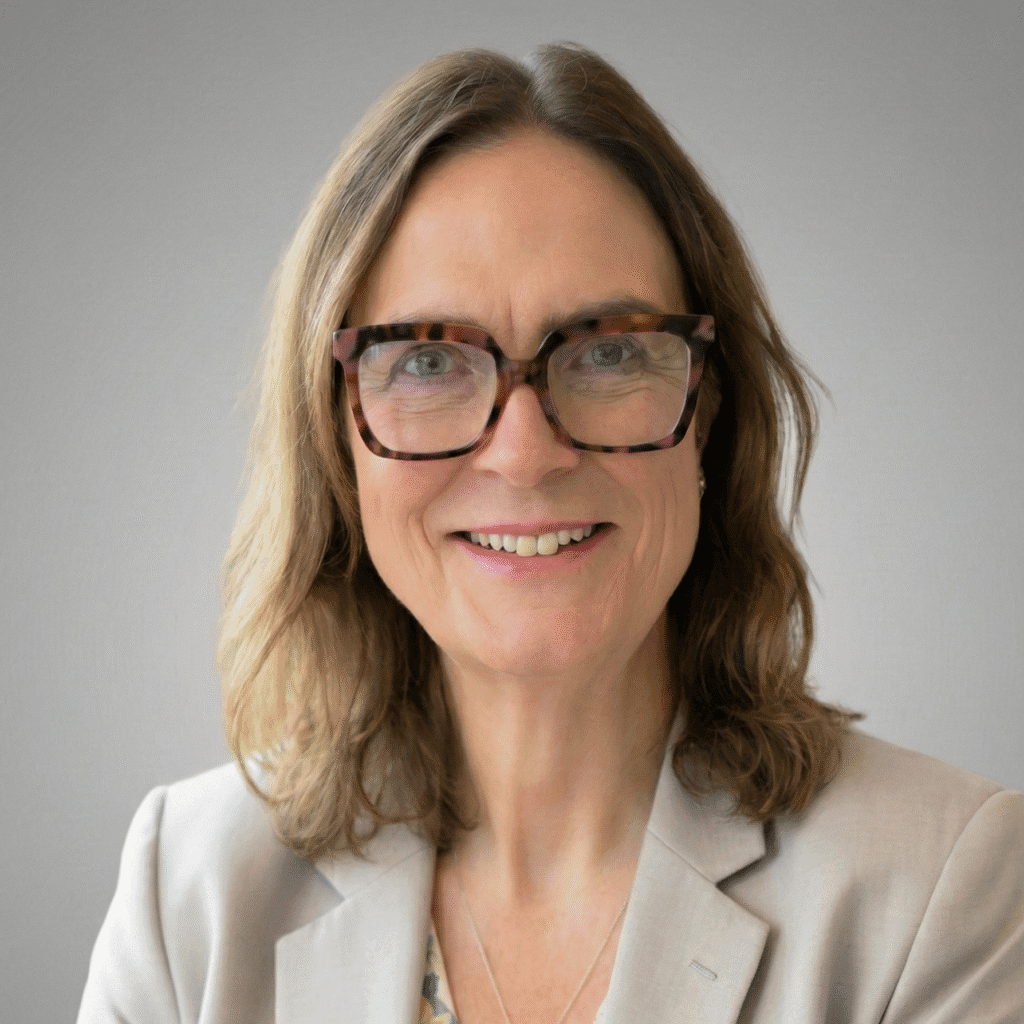
Joanne Lockwoodhost
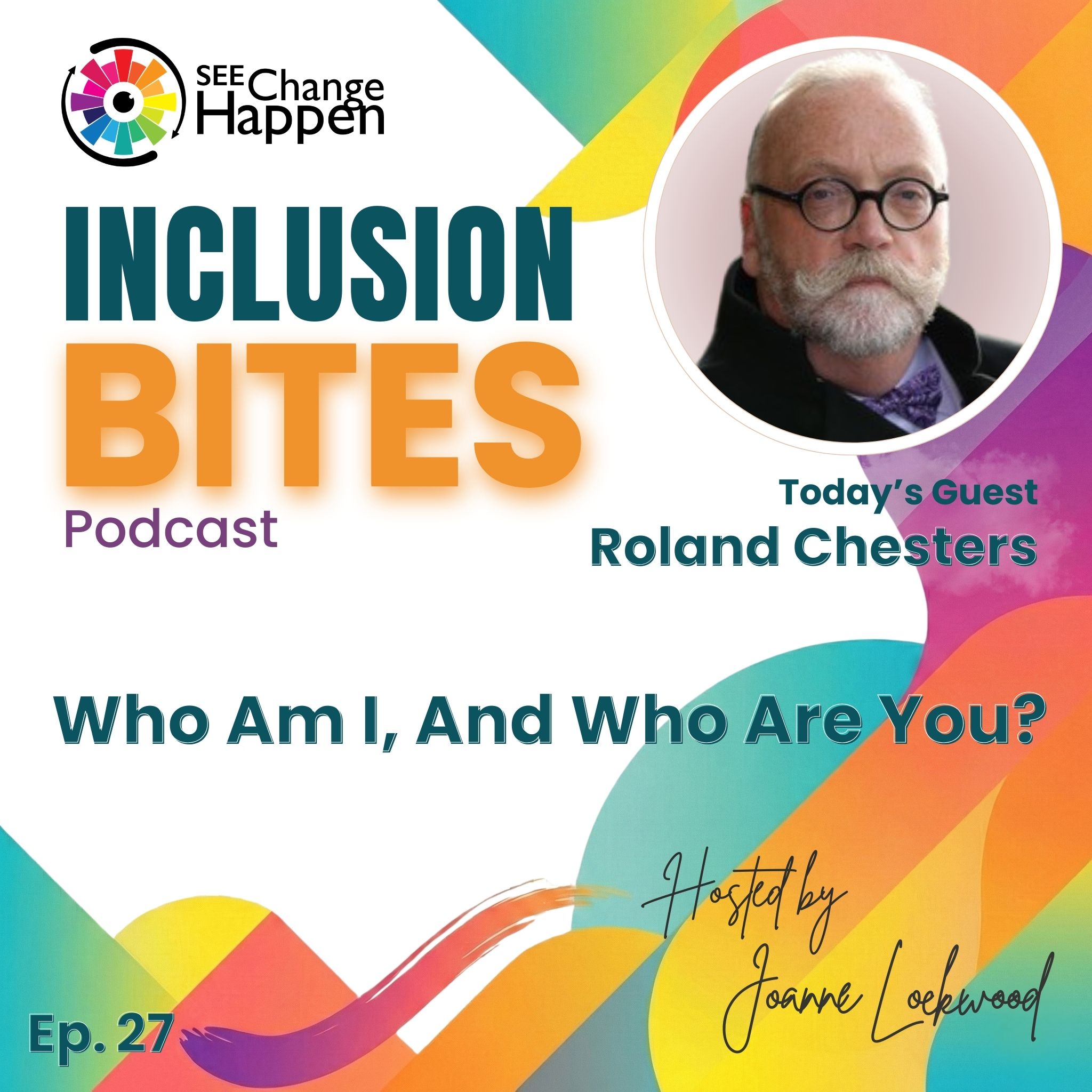
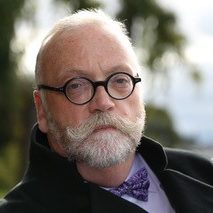
Hello, everyone. My name is Joanne Lockwood, and I am your host forthe Inclusion Bites podcast. In this series, I'll be interviewing anumber of amazing people as simply having a conversation around thesubject of inclusion, belonging, and generally making theworld a better place for everyone to thrive. If you'd like tojoin me in the future then please do drop me a line to jo.lockwood@seechangehappen.co.uk.S-E-EChange Happen dot co dot uk. Youcan catch up with all of the previous shows on Itunes, Spotify and theirusual places. So plug in your headphones, grab adecaf and let's get going. Todayis episode 27 with the title Who AmI and Who Are You? I have the absolute honorand privilege to be joined by Roland Chesters. Rolanddescribes himself as someone who champions authenticity.And when I've asked Roland to describe his superpower, he said thatit's slowing down the fast thinking. Hello,Roland. Welcome to the show. Hello, Joanne. Thank you very much
Roland Chesterguest
for inviting me. It's great to be here.
Joanne Lockwoodhost
We've been planning this for a couple of months and, I've been really looking forwardto this. Me too. Me too. Okay,Rowan. So tell me, who am I? Who are you? What's that mean to you?
Roland Chesterguest
Well, from from one obviously, greatfashionista to another, how many hats do you wear? Notall at the same time, obviously. But just think about the number ofdifferent hats that we wear and change hats forlabels. What labels do we choose to apply to ourselves,or what labels may other people apply to ourselves, andhow interchangeable are those labels? When does onelabel become more dominant than another label?What I'm I think I'm talking about is is what isnow in the the trendy DNI world called intersectionality,where it is recognized that there are many differentfacets to an individual. And somefacets may be be become more pronounced, morerecognized, stronger, depending on the con that theparticular context that that person is at that time. Andthe reason I say that is in in my own experience,my own history, I'm as a gay manfor many years, I wasn't out at work. Ididn't share that side of my private life withanybody, which meant that on the Monday morning when you go intowork and people gather around the coffee station and share stories of what they'vebeen up to over the weekend, I was very careful tonot say, Richardavoiding any, social activities. So nodrinks after work just in case a mannerism ora wrong word slipped out and somebody, cottoned onto the fact that I'm a gay man. Onreflection, many years later, if I had been out of work, it probably wouldn't havemade an iota of difference, but that was my own kind ofself stigma, if you like. When I joined the foreign officein the year 2000, joining the foreign office, everybody hasto go through a very in-depth security screening,including things like, wanting to know my partner'smother's maiden name. So at that point, itwas, yeah, how to be honest about this,and share information that I am in a same sex relationshipand so on and so forth. So when I joined the foreign office,the first day walking into the foreign office with my head held highand my metaphorical rainbow scarf gracefullydraped around my neck. It was with a huge sense of relief thatat last I could be whollywho I wanted to be. I had no reservationsabout engaging in conversation about what Richarddoes, what we do together socially, and all that kind ofstuff, which is great and a huge relief.Meant that I could be, I think, more productive,more engaged because previously, there was all that littlebit of my brain that was on the alert, that little redflag flying saying, be careful, be careful, be careful. Don't godown that route. Now I didn't need to have that.And yet something like 3 years into my employment,I became unwell. I was eventually diagnosedwith HIV and AIDS. I was off work for 5months recovering. When I returned, the sexual health records are kept separate toall other medical records. My employers had not beentold about the HIV and AIDS, only about my AIDS definingillness, which was a brain disease. My first day back atwork, I shared with my line manager the whole diagnosis, so not onlythe brain disease but the HIV and AIDS. And she, with myagreement, went off to share that information with HR, andHR almost immediately came back, sent me that little emailsaying you cannot share that information with anybody elsebecause we, your employers, cannot be held responsible for howother people may react or respond to that information.And I had been reaching out for understanding and support, not for pityor sympathy, and and they ganked me.And they deprived me of the ability tobe fully authentic. Being diagnosed with HIV and AIDS,having the brain disease, actually gave me a differentperson, a different character. At the time I was diagnosed, I was toldI had 2 weeks to live, and that makes you reevaluate who youare, what you want to do, what you want to achieve, whatyour legacy will be. And yet the foreign officewouldn't allow me to do that.Eventually, cut a long story short, II forced their hand into enabling meto speak up, speak openly aboutbeing HIV positive. And that meant that I couldagain rediscover my full authenticity. But inthat period where a part of me was denied,it had huge impact on my mental health, my mentalwell-being. Shall I stop there? That's quite a lot to say.
Joanne Lockwoodhost
Yeah. No. That's, I've I've heard your story before. I'veheard you speak live on a number of occasions and everytime you talk and say those words it's extremelyimpactful and moving. And as you're talkingwhat's going through my mind is that this needto be 1 person, to have 1 truth,not to have 2 voices in your head and I went through asimilar, obviously not life changing, but maybe in terms ofbeing gay and coming out around that,before I was out and open about my trans identity, I was always living2 lives, I had 2 Facebook accounts, I had 2profiles, I had 2 wardrobes, when I wentaway for weekends I was on a stag weekend with the boys whichin reality was probably not a big lie But it was it wasn'thow I saw the weekend or the people I was with. But it was mucheasier to frame it in that way so that there was no mistake, there wasno error, there was no kind of it all seemed very natural to everybody elsearound me. So yeah. Yeah. And the But didn'tthe simplicity of being one person Yes. Is amazing as well. Didn't didn't you find
Roland Chesterguest
when you were finally able to be the personthat you wanted to be, the person that you were destined tobe, It's like a huge weight that's lifted off your shouldersbecause finally, at last, you can step out into the world and say,actually, sod you, metaphorically,this is who I am. I don't have to change toto please you. If you like me, that's great.If you don't, just move on.
Joanne Lockwoodhost
Completely. And I used to describe it as having a separatesubroutine in my head that every time I spoke, I had to pass it throughthis processor to validate it, check it, and then pass it back going,say it, don't say it and then every almost like everywaking moment involved these two voices in my head, these two identities,these two ways of thinking. And it's andI found it very noisy. The head that my brain wasalways having conversations with itself, always questioning, always thinkingand having a discussion of should I say this, should I and I was actuallyhaving conversations in my head with my 2 identities and what Ifound I suppose in the last probably 3 yearssince I became 1 person, authentically 1 person,that my brain is so quiet, so silent,so relaxing when I'm not doing anything Ican literally blue sky think and shut down and just wander offand I have no noise in my head and I've talked to other people whosay oh I think about this, don't you think about that' it's like Jo, Ijust have this relaxing silencein my head and I can then fill that silence with thought, with music,with whatever I want to do but I'm not fighting it and I and thatis really powerful to hear your story about thesame sort of thoughts about this this thisdouble thinking, this Absolutely. What you said. And and all of that
Roland Chesterguest
I've seen that. All of before that peace and thatcalm, all of that processing that youwere going through, that I was going through, is actuallyexhausting. It's mentally exhausting, and mentally exhausting means it'sphysically exhausting. So and if as an employee,certainly less productive, less engaged, less happybecause there's all of this stuff going on at the sametime that, hopefully, nobody else realizesbecause that's the whole point of us having that stuff going on to make surenobody else realizes what's going on. And so for meand that's why I champion authenticity because an authenticperson in the workplace is a happy person.A happy person is an engaged, productive employeewho will stay with your organization for as long as they needto, as long as you want them to because they found a place where theycan be fully themselves.It's so important. Alright. Let's just talk about the,
Joanne Lockwoodhost
your your job where you were diagnosed with HIV,and they wanted you to effectively keep that secret, actually keep thatsecret. Was that a sign of the times, a misunderstandingor was that just the culture? I mean, would you have seen that in otherorganizations do you think at the time? Well, this was so I
Roland Chesterguest
was diagnosed in 2006, so 14 years ago. So thiswas 13 years ago. And,certainly, the treatment of HIV and AIDS hasmoved on considerably rapidly in the intervening period.We are now at a point where somebody who ison effective treatment and adheres to that treatment who'sHIV positive and on treatment, gets to a point wherethe viral load is so low in their bloodstream that it's no longer detectablewell managed, it's undetectable. And if it's undetectable, itmeans that it's not strong enough for that person to be able totransmit the virus to somebody else so they are no longerinfectious. And the current slogan is u equalsu, undetectable equals untransmittable.But not many people know that. Not many people understand that. Not manypeople are aware of that. And this is only in the last3 years or so that this has happened. So 13 years ago, it waspotentially a different story.But even then, themythology that if you use the samecup, even though it's being washed, if you use the same keyboard,if you use a toilet seat, that's something and all of that kind ofstuff. Just touching. Absolutely.Yeah. And I think the responseof my then employers was based on that outdatedmythology. Eventually, when I kind of forced thesituation and and was able to speak openly, WorldAIDS Day is 1st December every year. So I organizedon on the 1st World AIDS Day when I was out as being HIVpositive to have some speakers come in from the Terrence Higgins Trust,which is the the biggest charge in the UK that supports HIV positivepeople to come and talk about HIV and AIDS, theglobal pandemic because, you know, there have been otherpandemics. And I put post Other pandemics now
Joanne Lockwoodhost
available. Yes. Absolutely. Too surprised at 1. And I
Roland Chesterguest
put posters up around the office advertising this event with my nameon it, my phone number saying I was organizing it as a colleague livingwith HIV and AIDS. And posters were defaced. Theyhad graffiti put on them, some of them were slashedwith scissors or a knife, some were pulled off the wall andtorn into pieces and trodden on and I Iwas, bearing in mind that this is this was probably about2, 3 years after my diagnosis, It was the firsttime I'd experienced that kind of visceral gutreaction to me sharing informationabout my status. And, yes, it absolutely petrified me.I thought that if somebody could take a knife to a a pieceof paper and have that kind of intense reaction,what happens if they came across me in a corridor late one nightwhen there's nobody else around kind of thing. Buton reflection, I kind of eventually understoodthat this is a response of fearand fear based on lack of up to datecurrent information. Andthat fear then leads to a reactionof hate, that gut reactionthat says, you need to stay away from me because you're you'rescary. And that then sent me on thethe the mission, I suppose, ofeducating, informing, bringing people up todate with current knowledge and informationabout HIV and AIDS. So
Joanne Lockwoodhost
I remember the eighties and those adverts on television,the tombstones. There's very much a framing about thisis a gay disease where the realityis more heterosexual people are transmitted than gay people from my understanding. Nowadays,
Roland Chesterguest
certainly, initially, it was the gay community that was most affected.And, initially, the disease was called GRID, great gay relatedimmune immune disease.But nowadays, as you quite rightly say, John, the thethere is more than 50 percent of the HIV communitythat is not gay. The mostat risk groups are, postmenopausalwomen who are at a stage in theirlife where they, widowed, separated, divorced,whatever, want to engage in sexual activity and think thatbecause I'm postmenopausal, I don't need to use any protection because I'm not going tobecome pregnant. But then become infected with someother kind of disease, including HIV and AIDS. Andand also the black African community that have,certain certain members of that community because of their culturalbackground, have difficulty in understandingthat HIV and AIDS is passed through unprotectedsex, one of the primary routes of of infection is through unprotectedsex, but no longer came in. AndI'm I'm pleased to say that the latest statistics from PublicHealth England in terms of of annual rates of infectionshave shown an enormous decrease over the last couple of yearsin the number of gay men being diagnosed with HIVin the United Kingdom. And this is primarilydue to the introduction of PrEP, p r e p,which is, a a a formof treatment that, is part of the HIV medicationthat I and other HIV positive people take, somebody can takeas a as a form of prevention for them to becomeHIV infected. And it hasproved to be really successful. NHSEngland only agreed to allow this to berolled out, across England, inthe last few months. Scotland and Wales haveprovided it free for quite some time. NHSEngland had had withheld it until I settled it a few monthsago. So PrEP is pre exposureprophylactics. Somebody can take thatmedication, engage in a unprotectedsex, and be pretty confident that theywon't become infected. So
Joanne Lockwoodhost
prophylactic, that's the barrier. That's the prevention of That's the prevention.
Roland Chesterguest
Yeah. Yeah. And then there's also isn't there PEP as well? Is there PEP andblood pressure? It's post exposure prophylactic. So ifsomebody thinks that they may have been exposed to HIV,if they go to A and E or some GPs or maybe somepharmacists within 72 hours of when they think theywere exposed. They will be given PEP, which is amonth's worth of the treatment, which again,is something like 90% successfulin preventing, that person from becominginfected. So there are methods ofof controlling. The the downside of ofthis is that whilst we have seen the number of HIVinfections decrease enormously, the number of infectionsfrom, of of other, sexualinfection STIs, sexually transmitted diseases,has increased astronomically. So we are seeinga fast increase in the number of particularly gay menwith syphilis, gonorrhea, chlamydia, and so on and so forth.All treatable conditions. None of them nowadays lifethreatening. But the message is thatPrEP prevents HIV, doesn't prevent allsexually transmitted diseases.
Joanne Lockwoodhost
So in the same way you're saying that women of a certain ageare not using barrier protection because they don't think they canget pregnant, gay men are now saying well I don't need to use barrier protectionbecause I can't get AIDS because of PEP and PrEP'Jo again it's yeah it's now allowing wellallowing the rise of these other infections which were once subdued andsuppressed. Well did I also, I meanI had an HIV test for about two and a half three years ago.I get regular bloods as part of my transitionthe general the general identity clinic wants to monitor my hormone levels andthings and the bloods came back with a with a I think it was alow lymph or no high lymphocyte count which is severalcauses, 1 steroids, 2 is cancer and 3could be HIV. Estrogen, forthose who don't know, is actually a steroid Jo the doctor was fairly surethat it was the estrogen I was taking as part of HRT that wasthe cause. He also established that my otherblood would have been would have had an indicator if I had someJoanne of some sort. So he decided asa complete rule it out, have an HIV test just to rule it out andI was negative, but what he saidwas that many people have received HIV through bloodtransfusions, there was a point in time where blood wasn't screened properlyand that that caused, if not more thanmaybe person to person transmission, would ever have done because of thisbad blood coming from the US for some of it wasn't it?
Roland Chesterguest
Well actually that that when I was diagnosed Jo itwas 14 years ago because I was sounwell, the medical team triedto trace back how long I, before mydiagnosis I've been infected. And they traced it back, and they said it thoughtabout 13 years. Previous todiagnosis is when I was infected. And andme working back in my mind, before myrelationship with Richard. And at the point of diagnosis, Richard and I have been together10 years in a monogamous relationship. Only had onepartner before that. And thatpartner, we've been we were together 5 years. A couple ofyears before he and I met, he'd been involved in a really bad car accident,had had to have multiple surgeries, lots of blood transfusions.Whilst he and I were together, he became unwell.And it like I did, he went and saw lots of differentdoctors and specialists, and they came back and said that they thought that whathe was experiencing was as a result of all of theanesthetics he'd been given during the operations postaccident. I now knowand realize that the symptoms that he was showing then werewas symptoms of being infected with HIV.And so that's how I became infected. So he was infected throughblood transfusions, and that's how I became infected. Of course,nowadays, all bluffs are screened,so there is absolutely no risk of being infectedthrough a blood transfusion. The other way of of,used to be of transmitting infection is through mother tochild infection. But nowadays, the thethat rate of infection certainly here in the UK is very, very lowbecause, all women that go to antenatal clinic areoffered a blood test. And ifthe the test, brings back an HIV positive result,the mother is then put on medication, which lowers the viral,level in their bloodstream to the point that where the child is born,the child will not be infected. So,the primary route here in the UK of infection is stillthrough, unprotected sex. The otherroute used to be through, needle sharing,but, Norman Fowler, whowas the health minister at the time of that campaign that you mentioned, the icebergsand the tombstones, very wisely put in place the thesystem of of needle banks, needle exchange places.So now the rate of infections through intravenousneedle sharing in the UK is very low as well.
Joanne Lockwoodhost
Yeah. We think of I mean, Ithink of the year 2000 as being almost yesterday andI was surprised when I watched a film the other week and, I think itwas set in 2003 and the mobile phones they were usingwere just so alien, they're bricks. I thought I think inScratchMaker in 2003 that was just kind of like the other day.How much the world has moved on in technology but alsoin attitudes around, not justbeing gay, trans, HIV positive, etc, the world has moved on alot, rapidly accelerating this kind of inclusion message, isn'tit? And then so you must notice a big difference just the way you'reaccepted as a gay man let alone as a as a positive gayman. I but certainly as a gay
Roland Chesterguest
man and very kind of funnyincident. So Richard and I decided to join a localgym about 5 year you can tell, obviously, from my honed physiquethat this is having a great impact. It's about 5 years ago,and off we went. And, on the, you know, themenu of different memberships, they had family membership,so a couple could and I was all geared up inmy head to say, actually, we are a familybecause, you know, we are a civil partner. We are a couple. Weshould have the family membership. And without ablink, the receptionist said, oh, are you a couple? Up or you dance family membership?I thought, damn it. I was all good over a 5 day.She stole my thunder. So in in many respects,in in many areas. Yes. In the UK.Obviously, other parts of the world, notnecessarily so enlightened. One incident when I wasworking at the foreign office after I was fully out about HIVand AIDS, I was working as diverse and inclusion officer, and I had togo and deliver training overseas aboutdiversity inclusion. It's slightly, ironicbecause I was asked to go and deliver training in Dubai.Dubai is one of those countries that will not accept anybodyliving with HIV to enter, the countryeven if in transit. And in order
Roland Chesterguest
for me to be able to go and deliver the training, the foreign office hadto give the guarantee that I would leave the countryafter delivering the 5 days of of training. And in orderto guarantee that, they would escort me onto the plane,to to leave the country. And I agreed to all thisbecause I wanted to go and do it and and thought it'd be an interestingexperience and so on and so forth. And then sort of the thoughtprocesses start kicking in as either Ican see this as being escorted out of the countryas a convict in shackles because I've done somethinghorrendous, or I can see this as being like a statevisit because state visits, the important person is escortedonto the plane to make sure they're sat comfortably and so on and so forth.And in my mind, I thought this is it. It's a state visit. It's gonnabe fine. It's a state visit. Did the 5 days' worth of training,and then the the the poor unfortunate lad who'd drawn a short straw to escortme back onto the the plane, from the office.He was very young. And he all the way tothe airport, in the car, through the airport, up tothe door of the plane, he couldn't stop apologizing, sayinghow embarrassed he was, how ashamed he was having to do this, and hehoped I'd understood that it wasn't his fault. You know, he'd been told he hadto do it. And in the end, I had to stop him. And I saidto him, Patrick, Patrick, honey, sweetie, I'm on a statevisit. Don't rain on my parade.Well, it went down like a bit like a lead balloon because apparently his namewasn't Patrick, but, you know, such is life.But, as I say, you know, attitudes havechanged, but there is still work to be done. And I'm sureyou've experienced this yourself, that attitudes have changed but there's stillwork to be done. But there's still
Joanne Lockwoodhost
territories in this in the world where it's not safe being youisn't it? We know that but and one of the things Ialways say that I can't pack my trans in this in a boxand not be trans for that week and somepeople who are gay, lesbian, bi Joanne put their their sexuality in abox, leave it at home, do what they've got to do then come back andunpack themselves. Butit's really really strange I mean there's some countries that I couldn't even share aroom with my wife even if we even if weweren't a couple is frownedupon 2 women or 2 men sharing the same hotel room. No. I we
Roland Chesterguest
we went with a lesbian couple friends of ours forto Istanbul. And when we checked in, Iwent off with 1 of the girls to that that room, and Richard wentoff with the other girl to the other room. And then in the dead ofnight, we we swapped rooms. Came down to breakfast thefollowing morning, and nobody battered an eyelid. Butthere are times when you just have to be a little bitcautious, a little bit careful, I suppose.
Joanne Lockwoodhost
I mean, I I was offered some work inMoscow and I had to really think long and hard. 1, would Ibe safe? Well, 1, 2, 3, 4, 5,6, 7, and 10, would I be safe, basically, especially as I was goingthere to talk about DNI. I was therespecifically to talk about trans awareness, I think if I was promotingLGBT messages then I would have been really dangerous but Ithink just being there but I've also been to Estonia and I'vebeen to Ukraine, Kyiv and I wasI was more nervous about Kyiv, justpurely because I think that they still have a kind ofan anti or not an LGBT positive kindof culture there, they're still unknown. I mean the younger generation yes they're they'reevolving but it still it still holds some of that postSoviet type anti LGBT rhetoric. It's like all
Roland Chesterguest
the what's happening in Poland with thosezones that they've declared that will not allow Gay
Joanne Lockwoodhost
free. Yeah. Gay free zones. And and somehow in
Roland Chesterguest
my mind, I've been to to Poland.I still see Poland as being part of Europe andquite close to us. And that's kind ofscary that that is being allowed in invertedcommas to happen. Some of my lifelong
Joanne Lockwoodhost
friends live in Gdansk in that area because I when I was inmy younger life, I I traveled to Gdansk and stayed there on and off. I'dprobably be there for a month over the course of 5 or 6 visits,searching for for amber on the shores of of thebaltic in Gdynia I think it was. So yeahI've I've I've I've I see Gdansk as kind of a friendlywarm European city and now I'm thinking, Joanne Iever visit Poland again or for a while in Hungary?I had a great week in Budapest. Budapest is okay,
Roland Chesterguest
absolutely, yeah. Yeah, so I'm now thinking
Joanne Lockwoodhost
I may have my my Joanne passport but I'm looking at the countriesthat that passport is is safe to visit as as beingrestricted. We went to Melbourne last year for aconference and I was picking the least worstplace to stop off on the way. Wow. Do I fly Emiratesvia Dubai? Do I go, viaChina, via Shanghai? Do I go via Hong Kong?Where should I stop off which is least least worst and we end up,transiting in Hong Kong because I just perceived that as the safest of ofthose 3 or 4 options and and the cheapest as it happened. But,yeah, it's it's a real yeah. We're having to do this double thinking again, aren'twe? Where not only who am I, but where am I where am Isafe? What is the least worst option here? And, you know,
Roland Chesterguest
you mentioning Hong Kong just made me think. I Ibefore working in a foreign office, I was director of exams for the Charles InstituteFor Linguists, and I used to have to go out to Hong Kong to superviseexams out there a couple of times a year and would take acolleague with me. And one time, one of the colleagues I took with mewas a a a lovely Nigerian woman, Tolu.She'd never been to the Far East before.And you having been to Hong Kong and this isnow probably about 15 years ago, so things may havechanged. But at that time, in Hong Kong,you saw very, very few black people.And so I walking out industries with Tolu was anobject of curiosity. First of all, a black woman and thena black woman with a white man. And it
Roland Chesterguest
was fine when she and I were together. I then had to go off anddo some stuff in China, and Tolu decided that she'd stay on in Hong Kongby herself just to do some touristy things for a few days. When Igot back to Hong Kong, I found actually that she'd left HongKong after just being one day by herself because it just got too muchpeople coming up and wanting to touch her skin to, you know, see if itrubs off kind of thing. And I canthat was a real eye opener for me. You know, we talkabout white privilege and all this kind of stuff. And, yes, absolutely, Irecognize as a as a white Joanne,kind of middle class, whatever that means these days, Iam absolutely privileged. But I recognize that andI understand it. But at the same time, if I wear oneof these different labels and that takes our conversation full circle, if I wear oneof those different labels of being gay or HIV positive,then some of that privilege is is taken away fromme. If I choose to share that kind of information,Tolu obviously couldn't hide her skin color, andshe felt very threatened. Notthat people were intending to make her feel scared,but that was her response to how they were behaving towardsher. And that can happen sometimes in
Joanne Lockwoodhost
organizations in the UK, can't it, where you people are beingwell meaning but their over curiosity becomes exhaustingand you're always having to explain your story orcome out again as whatever that may be.I imagine you have told the story you told at the beginning of thispodcast a thousand times in various forms to to manypeople. Indeed. Absolutely. And and one of the things with hidden
Roland Chesterguest
disabilities, because I I talk a lot about hidden disabilities as well, isthe fact that because the disability is hidden,if you choose to share information about it, then you need tobe prepared to explain to people what the disability is, the impactthat it has on you, and so on and so forth. When I was inthe foreign office having recovered from a brain disease, I was then diagnosedwith dyspraxia as a result of the brain disease. Andas a reasonable adjustment, the foreign office had provided mewith the voice recognition software onthe computer. And when initially the voice recognition software wasloaded onto the computer, there was just me and my line manager showing an office.So, obviously, she was fully in the know about it. We then movedinto a bigger office of a 150 odd people, all hotdesking. Everybody hotdesk apart from me because
Roland Chesterguest
my computer had the voice recognition software loaded on it. And people weresaying, why do we have to move desks and Roland doesn't?Okay. And then, of course, when I start using a voice recognition software,everybody around me says, why are you talking to your computer,Roland? And at times, if I need to put check youknow, write down stuff that's sensitive, personal, how am Isupposed to talk it into it when everybody around me can hear?And then when I start to say to people, actually, I've got this because dyspraxia,then people come along and say, oh, can I have a go? That why can'tI have that? That looks like fun. No. You can't have a go becauseit's trained to recognize my voice, and you don't need it because you don'thave dyspraxia. And, yeah, it just kinda getsexhausting after a while. But, again, it goes back tolabels and that, intersectionalitybit and that authenticity bit, andhow far do we have to go in order to beaccepted, understood, recognized for whowe are? I was gonna say a 100%, butare we ever fully authentic? Particularly in the workplace, dowe ever actually bring in 100%of us? When I you know, in the privacy of our own home withRichard, I'm a very different person than I am in a professionalsetting. And I recognize and understand that, soI change the hat. I put on the appropriate hat to meet the suitthe setting and the context. So maybe authenticityis about recognizing our different hats andknowing when it's appropriate to wear which hat.
Joanne Lockwoodhost
Yeah. That that's interesting because sometimes incertain situations, I find I'm wearing a hatwithout realizing it. So if I'm in an allfemale group, I I I act behavein one way and if I'm in a majority male group I behave in adifferent way, some of that's down to my historical socialisation,my familiarity with that role andI actually start realizing that I'm feeling really uncomfortable in thatsetting and I'm trying to get the hat offsliding back into that that that way of speaking, thatculture, the sort of the attitudes and I've realized it's making mefeel really really uncomfortable. AndI wouldn't go as far as say dirty but I definitely feel it'suncomfortable and I often wonder whether that's how otherwomen feel when they're in an all male company about this kind of the culturethat goes on and how uncomfortable they feel as well. And maybe it's not justme. It's about it's about groupthink. It's about
Roland Chesterguest
peer group pressure and that leads me thank you for thatlead into the the fast thinking versus slow thinking bit thatthat you spoke about in the introduction. So DanielKahneman introduced this concept of fast thinking versusslow thinking, which says that all of us havetwo ways of processing everything that's going intoour our brains. The fast thinking stuff is stuff that we don't needto reflect on, that doesn't require us to deliberateand take action on. The habit stuff, the things that we doinstinctively. And the slow thinking, the stuff that requiresus to sit sit back, pause,think about it, then make a decision. And thehabits are stuff that we do because we need to have stuff that we cando rapidly. It's a protective mechanism. That's big and scary. I'm gonna run away fromit. Do it fast without pausing to think about it.These days, obviously, hopefully, we very rarely areput into situations where our lives are indanger. But as as the scenario that you described, weJoanne feel uncomfortable, anxious,overexposed, and so on and so forth, and so we resortto those biases. And one of the biases is it'sthat group thing because it's protective. I'm gonna becomelike one of them Jo I don't appear to be standing out like asore thumb and become an object ofwhatever. So I will assimilate into thegroup so that I don't stand out. Andwe're all like that. We all have fast thinking and and slow thinking.And sometimes, we need to be able to take thatstep back and think slowly whatthis actually means. Why am I behaving this way?Is it because of some kind of bias, some kind ofpressure? What if I took this into slowthinking? Would that make a mean that I would make a differentdecision? And if the decision is different, then what is the impact of thatdecision on me and on the people around me?
Joanne Lockwoodhost
That comes very very typical when we talk about unconscious bias. We we talk aboutthis kind of concept all the time, don't we? Where most of ourbiases are or our biases tend to be unconscious which means we don't know we'redoing it but by being able to pause ourbrains for a second and go why do I think that', why am I thinkingthat', what influences am I being receiving tomake me think that', what media bias, what what presumptions am Imaking for this label I perceive has made me think thatway? And that's part of the way we're trying to train our brains topress this pause button, isn't it, and and to step back and go back intothe into the slow thinking which is is quite expensive for brainthough, isn't it? Our brain burns a lot of calories, not a lot of energyJo the brain works best fast and it's really we've got to usea lot of thought process to get us into this slow methodicalstate of mind because when we're stressed, when we're rushing, we go into thisautonomous sort of mode it's like when we drive a car, yeah? How many timeshave you driven home and not remembered any of the roundabouts, notremember getting there? Absolutely. When I used to do
Roland Chesterguest
regular commuting on the train up into London, there's 3main roads between home and the station. And onmornings, I'd arrive at the station, and I think I I don't actuallyremember crossing any of the roads. I could have left behind atrail of destruction, crushed cars everywhere, but I I justautomatic pilot, and that's quite dangerous, really.
Joanne Lockwoodhost
But at the time, you're you're probably conscious at the time that you're doing it.If if something had triggered an exception in your mind you'd haveremembered it but the fact that it was just routine your brain decided it wasn'tworth remembering because it's got a memory of that junction, it It doesn't need anotherone, does it? Absolutely. Our brains are wonderful
Roland Chesterguest
judging people. Our brains are wonderful things.We just need to learn how to use them perhapsslightly better sometimes.
Joanne Lockwoodhost
But, yeah, we both know that this is millions of years ofevolution. Yeah. It's not going to change their mind. No.And you know if you've met one Roland, I'm going to treat everybody that Ithink is Roland like the Roland I know and that's like the roundabout, you don'tcreate a new memory, you just recall that information andbuild your own picture, yeah, as I was saying, you make shit up and fillin the gaps, That's what your brain does sometimes. Yeah.
Roland Chesterguest
So a great Joanne quote, you make shit up and you fill in the cracks.I have to write that one down. That's what we
Joanne Lockwoodhost
do, don't we? Our brain makes stories up, it looks at patterns,looks at previous events and decides a goodfit and you get into that good fit and that's the biases and the perceptionthat we struggle to overcome, isn't it? And when we talk about HIV, we'retalking about being gay, we talk about whatever it may be,your fantastic moustache, all those kind of things which the viewers will seeon the podcast cover but they won't be able to tell by listening to it,but you're an awesome moustache, you're into the steampunk look and you've got somereally some amazing outfits I love andpeople draw perceptions from me by looking at you don't they? And theyobviously look at me as a trans person and they're trying to workme out and my my intelligence getsquestioned 1 because I'm trans or b because I'm a woman. It's kind of youcan tell people weighing you up. It's pretty weird. But it's interesting now because
Roland Chesterguest
obviously both you and and I have madedeliberate decisions to presentin the way that we present. So me with a mustache and a bow tiesand the outfits, all that kind of stuff, that's that's my it'salmost my costume that I put on when I'mgiving a professional, in inverted commas, performancebecause that's what gives me confidence. That's what I feel comfortablein. And we all need to have that kind of confidenceand comfort factor when we are standing up delivering what cansometimes be messages that people don't necessarily want to hearor that make them feel uncomfortable. And we have to sort ofdrive that through and enable them to remember it.And part of enabling them to remember it is to remember, actually, is Roland withthe bow ties and the waistcoats and the the twirly mustache thatdelivered that message. In the same way that I'm sure that that you thinkabout how you present yourself, the Joanne brandas it were. Yeah. I I think going
Joanne Lockwoodhost
back to the hats we wear, we have a a parent hat. We havea a child we're a child obviously. We have our childhat when we're talking to our parents or our siblings. In theoffice hat we have our shopping hat, how we behave as a customer, howwe behave as a supplier, as you said you have you haveyour angry hat ready ready tucked away for when someone you haveto explain that you are you are a couple. So I think we all havethose kind of things things in our pocket we want to bring out or weknow we've got them there Jo yeah and I don't think we hide them wejust bring the hats out as needed don't we? It's it's kind of transactional
Roland Chesterguest
analysis. You know, transactional analysis where you're either an adult, aparent, or a child And, both people oneach side of the conversation fit one of those roles, and the best role tohave is adult to adult. We have an adult to adult conversation.But at times, we all slip into being the either the parent or thechild as well, and then the conversation come getsslightly skewered by that.
Joanne Lockwoodhost
Yeah. I I sometimes do that consciously,but I'm aware of the fact that right now Idon't want to be an adult. I'm quite happy being led, being told,being managed. If that makes you happy, I'm notbothered actually, I don't need to adult at this point in my lifeJo I'm quite happy with this whereas other times I'madulting up and making sure that I'm having my voice and saying what I needto or conversing in a very mature way, I don't think we're doing that now.But yeah it does you sometimes have the choice and youcan step in or step out, can't you?
Roland Chesterguest
Reflecting on current times and, youknow, the pandemic that we are now experiencingand the way and I don't want to make this political at all, but justa reflection of of that that thegovernment stepped into role of beingparent when and and spoketo us as children when it might have beenmore effective. I said, I don't want to make this political at all, but itmight have been more effective if they they establish a sort of an adult toadult relationship with us.
Joanne Lockwoodhost
Yeah. Who knows? Who knows?But yeah. I I have my have my own views aboutthe quality of the briefings that they were doing on a daily basis. They wereconfusing, misleading, beating around the bush,it's very hard to glean some evidence out of that and what youreally wanted was kind of this is this is this isthe facts, this is what's going on, this is what will happen and this iswhat we're doing about it' but they tended to have 20 slidesof build up and you Jo what are you telling me? What are you tellingme? What are you telling me? Oh okay, people are still dying, we need toisolate, stop people dying and this is where this is how we're basing ourdecision. Okay, I get it. Whilst that graph is here, we're doing this, when thegraph gets to there, we can do that, and if it goes down to here,we're cool, we can stop doing that. Okay. Right. I I can I can nowunderstand the form of myself? That would have been an adult to adult conversation,
Roland Chesterguest
which which sadly we didn't get.
Joanne Lockwoodhost
But isn't that reflective of the media where they're always dumbing downheadlines and articles to the reading age of a 9 or 10year old is kind of that mentality where governmentdumb it down to the Joanne and John the Fisher Price. Well,
Roland Chesterguest
I I my my personal feeling is that social media ishugely divisive. And and again, that kind ofbrings us back on the topic of inclusivity thatcertainly through the pandemic, of course, we've seenpeople on Facebook and other social I do II do quite a bit of Facebook, but I don't engage much with othersocial media Joanne, but peoplegetting very, very heated,to put it mildly, and taking polaropposite views on how people shouldrespond and engage and react to the pandemic and so on and soforth. And just letting ripinto people. The anonymous keyboard warriors have gota lot to answer for, I feel. I mean,
Joanne Lockwoodhost
certainly, the the 3 big instances I think of you you got theRemain Brexit, you've got the the election across thepond, the red blue divide there and we've nowgot the vax, anti vax, we can all name 100 of other ones,even Black Lives Matter has had its polarizing effect on people as welland we don't allow ourselves as a society tohave open conversations, rhetoric where we can debate and talkabout things, it's I'm right. You're wrong. And and that's I'mintelligent. You're stupid on both sides. Yeah. And I I think social
Roland Chesterguest
media has a large portion of blameto to be responsible for in in that in thecertainly on Facebook, you know, that knee jerk reaction,just a a short phrase of ofdismissal. Some of them, sometimes veryrude, very arrogant, and so on and so forth. And people feel ableto do that because of the non anonymity thatthat provides. I think if youthink back, you know, when when thecomputer was was first invented, if they hadthought that this is how we would endup. I wonder if they would have had a rethink and thought actually might notbe such a good idea.
Joanne Lockwoodhost
Yeah. It's interesting that, here we are onthe 8th December, just to put a time stamp on it. Andtoday we had the 1st person to receive the the COVID-nineteenvaccine, so Margaret Keenan who is 90and 91 next week. I think it's a it's a great milestone forand we I'd like to stick with it beginning of the end.Obviously this the the legacy of COVID is going to be going on for awhile but at least we're at the beginning the end of uncertainty andit's a part of the country maybe to sort of if the people arescared, people are not sure about the vaccine, to listento the fact, listen to what's going on, see the evidence and then the peoplewho are vehemently anti vax call into question thetruth that they know or whether that is true andnot get into arguments about it. I think that's what I'd hope for the next6 months as we we actually have proper evidenceand maybe the government or the NHS or whoever it islooks at trying to allay the fears collaborativelyrather than telling if that makes sense Jo produce evidence,show because I've heard someone the other day sayingwhat about Thalidomide?' I said what do you mean what about Thalidomide?'I said 'that was a drug, that was a that was a to curemorning sickness, that's not a vaccine' and you know, I lookback you know, I joined I was in the RAF when I left school andthe first thing you do when you join the forces is you become a pincushionyellow fever, diphtheria, hep A, hep A,smallpox, polio, everything, you get top up BCGand you know we as a we would go on holidays to Hong Kong andused to have or Africa, you have cholera, diphtheria, youdid nothing about and those vaccines actually didknock you out a bit, didn't they? And they were you know, you had yellowfever, you knew you had it for a couple of days. Andso we would go on holiday and say what what jabs do I need, justgo into doing it. And now this mentality seems to me well, are we antivaxx? Well, if you if it's smallpox would you be anti vaxx? Well maybenot, no Jo smallpox is bad. Soit's maybe reframing some of these conversations around welllook, you take that, smoking's bad, we know smoking killsyou but you still smoke. So you won't have a vaccination butyou'll smoke, okay, drinking beer, eating red meat, all these things arecarcinogenic, we know too much chocolate Jo we'rehappy to we're happy to kill ourselves in different ways but as soon as wewere given a vaccine we say well hang on a minute, I need some evidence,I need to prove so we've got evidence that smoking kills but we still doit Jo evidence doesn't matter, the facts don't change people Jo what itis is the emotional, the attachment, the echo chamber you're in so if you're inan anti vax echo chamber then stepping out of that means you've lostyour network, you've lost your friends, yourtribe, So it's not just about what you believe, it's aboutwhat goes with that belief that people want to hang on to. That's where itbecomes dangerous I think and that's where the labels and the hats comein and the safety we feel in our tribes, isn't it? One
Roland Chesterguest
thing that struck me about the pandemic. Inthe 1st lockdown, I'm I'm I was onthe sheltering list. So originally, Ijust used to go out for a walk of an evening later in the eveningwhen there were hardly people on the streets, and and, wecould avoid people easily. But if you did meet somebody comingdown the street towards you, either they cross over the road or we cross overthe road and we'd smile and say, hi. How are you? I mean, didn't knowthem. But there was that air of civilityand caring for other people, andI really, really hoped that we would hold on tothat. Sadly, human memories are very short,and we appear to have already lost thepositive, the good stuff that may have come out of the pandemic,which is a real shame because it was a golden opportunity that thatwe've lost. That solidarity of cheer in the
Joanne Lockwoodhost
NHS at East Auckland on Thursday. And just Jo if IMarie and I used to walk down the road in the evenings and someone elsewould come the other way, one of us would dive into the bush or intoa driveway or step right back and make way, we'd workout actually you've got right away because you you've got less pavement onyour way. We could we've got more. Yeah. So Absolutely. Yeah. That'svery much, Ella. Cheers. Good evening. How are you doing? Yeah. Smiling at eachother. Yeah. Absolutely. Yep. We've lost that already to say that thatwas a that was a flash in the pan for 3 months in the summer.Yeah. What shall we do, Alan?We're arguing about masks and, we're looking at people we'reostracising people without masks andwhether they are valid non maskers or we think wellactually you don't look that bad' yeah just Jo it's
Roland Chesterguest
And again, it's making that instantaneous judgment,judging people by what we see, making assumptionsabout a person that because you look like you don't have anykind of disability, that means you should be wearing a maskkind of thing. I I I wear a mask, I
Joanne Lockwoodhost
don't even think about it, but I know that I feel uncomfortable sometimes.It builds my temperature up and I can feel kind of a bit claustrophobic, I'vegot one of these kind of like plastic things you put under the mask and
Roland Chesterguest
gives you a bit more breathing space which seems to work quite well,
Joanne Lockwoodhost
But yeah, as a fellow glass wearer, it doesn't stopyou misting up at all and you don't have to wave your glasses aroundor or Jo blind for a few seconds all the time. Yeah. I'm with you
Roland Chesterguest
on that one. But I don't I don't
Joanne Lockwoodhost
yeah. I think if someone's gonna fix the the misting problem they would have doneit by now. It's it's kind of one of those things, isn't it? Yeah.All these little devices you put on your cheekbones or you you, yousmear stuff on your lenses or something, it's all kind of not not thateffective. Or you you have one of those sort of visor shields that you wear
Roland Chesterguest
instead. But I went and got my haircut yesterday, and my hairdresserhad a mask and a visor. So I was very gratefulto her for that. So thank you very much. But that that
Joanne Lockwoodhost
I mean, I went I was in London on Friday having my hair adjusted, whichit happened, okay, every 4 to 6 weeks. Andmy usual thing is I go to the station, I grab apasta pot from Marks and Spencer at Wolf Lew and a coffee, I sat onthe train thinking okay I've just kind of -Take your mask off. -Yeah,
Roland Chesterguest
I spooned it under the mask and I thought well I feel a bit kind
Joanne Lockwoodhost
of guilty so I positioned myself so I was angled down,nobody was in front of me Jo I've been very considerate about making sure thatI wasn't transmitting any droplets in it but
Roland Chesterguest
thank you thank you for being so conscientious. Yeah. Noteverybody is. But No. And to sort of sat there thinking,
Joanne Lockwoodhost
how do I deal with this now? I thought, well but Jo no, I wasI was very deliberate in making sure that I I was minimizing my own threatfootprint if you like, in that situation butyeah at that point I was reflecting on one of these with the one ofthese plastic masks. A) is itcomfortable and better and b) is it safe? Becauseif it's safe why isn't everyone wearing those instead?Because clearly people with an underlying health condition that prevents them wearingor maybe a clip on onto their face mask, the plasticshield has very little impact on your breathingabilities. So why aren't we promoting those? I'm guessing thereason is a) they could be expensive or b) they're not aseffective Jo the government don't want to promote them as alternatives.
Roland Chesterguest
Or, and I'm not one for conspiracy theories at all,
Joanne Lockwoodhost
You are. Could be that some minister somewhere has got shares in the
Roland Chesterguest
companies that make those masks instead of the shields, and that's whyno. Ignore that. Did he Who knows? Who knows?
Joanne Lockwoodhost
For the tape, you said. Yeah. For the record here. But I'm temptedto get one of those plastic masks just purely from ajust be able to eat eat a sandwich on the train, but then I thought,well, I'm only get to London every 6 weeks. I can I can I canI can actually put up with a train journey for once every 6 weeks andnot eat? I could I could plan my journey better. Jo,yeah well well we've been we've been yacking on now just over anhour so we've done before. We have. It's been brilliant.Very inspiring and, so you've beendoing a lot of stuff over the last few years and you've even written abook, isn't it? I have absolutely. 2 years ago, my
Roland Chesterguest
book, Ripples from the Edge of Life, was published,and has has been quite successful, I'm I'mpleased to say. And it's not
Joanne Lockwoodhost
just your voice for what I'm saying. It's a lot of other people's stories in
Roland Chesterguest
those stories. I decided to write the book.There was an article that appeared in The Guardian newspaper,by, some journalists who were saying thatvery little contemporary stuff is written about HIV andAIDS. And I thought, okay. Well, that's that's a sign thatsomething needs to be done. But I recognized I do lots ofentry work in the HIV and AIDS sector and obviously engage with alot of people living with HIV and AIDS. And I recognize thatmy story is is by no means unique or special.So I wrote my own story and then put a message outasking if there's if there were any other people who'd be willing to sharetheir stories, and 14 other people came forward and said, yeah.Absolutely. Including some women living with HIV,quite a number of the people, out of those 14 have alsohad AIDS as well. So it's me plus 14others. But what I thought was interesting is that out of those 14, abouthalf of those people didn't want to to use their realnames in the stories, and I'm not there to out people at all.But I just thought that that was still a reflection of thefact that, people experiencehuge amounts of stigma around HIV. These people didn't want theirreal names to be used because they were concerned of the repercussions that thatmay have on them. So, yes, Ripples fromthe Edge of Life. I've probably givenaway as many copies as I've sold. But as I say, it's it's hadsome really nice reviews. People are being very positive about it. And it'sjust my way of helping to,break some of the out of date mythology that still surrounds thecondition. I think we first
Joanne Lockwoodhost
met probably 2 years ago or thereabouts.I remember it being quite cold and approaching Christmas, so it must have beenaround about this sort of time a couple of years ago at, there was alaunch of a, I think a charity called Positive Allies run byDrew Dolby in London and you were the speaker that night which is I thinkthe first time I heard you speak and met you, even if we checked onthe phone. So you're quite involved with Positive Allies. So I am. What what is
Roland Chesterguest
that? So I I I'm an ambassador for Positive Allies. Positive Alliesis a charter mark created by the University of Sunderlandwhere Drew Dalton is a a lecturer. It's theonly charter mark of its kind in the whole world, and it's acharter mark for organizations who wish to demonstratetheir understanding and knowledge of HIV and AIDS and how they areprepared to supportand work with their employees,customers, clients, university students, and soon who, who may be HIV positive.It's something that I am reallykeen to promote more widely, having had my ownexperiences of sharing that information in the workplace andknowing the devastating impact that that can have, havingworked voluntarily with others who've been through the same experience.So, yes, the positive allies on the University ofSunderland website is something worth looking at for anyorganization who wants to demonstrate its,positive with a small p, attitude towardsHIV and AIDS. So yes. I mean, I
Joanne Lockwoodhost
it I was a bit self off the mark because it took me a whileto realize that positive allies, positive was around HIV positiveand being an ally to someone who was positive. But it's a great play onwords about being a positive ally as well. But, yeah, no,I've spoken to Drew a number, I think after the event that you spoke atand we met, we had a great conversation with Drew and I've spoken tohim a number of times over the years, my follow-up on Facebook and chat tohim, and he's doing some amazing work to push this this kite mark out andto create awareness is a really, really powerfulway. It's easy and accessible for all organizations to getinvolved with.
Roland Chesterguest
Absolutely. And, we are, planning torefresh the the website and all of that kind of stuff, andwe've got some great new activities lined up as well to support thethe chartmark. Drew and I and the other, people toengage with positive allies are meeting early in January to put a plantogether of how to implement all of this. So do go and look atuniversity University of Sunderland Positive Allies website.
Joanne Lockwoodhost
I'll put all of these details and the links in the in the show noteson the website Jo people will be able to find that. Andwe can't leave because one of your proudest moments was to be nominated as afinest for the National Diversity Awards a couple of years ago. Don't tell me whatthat was. Last year in actual fact. Oh, shit. I was I was totally
Roland Chesterguest
gobsmacked. It it sort of happened out of the blue.I got an email saying that I'm being nominated by somebody,and then sort of countdown towards thethe the deadline, and I got the message. And so it was something like 35,000nominees last year. And I wasone of the 8 people who'd been shortlisted as a finalistfor disability role model, whichis just astonishing and astounding. Andwhen turned up to the to the awards ceremony, met the otherfinalists in in my category, all trulyinspirational people. It wasjust a night to never be forgotten,something I'm extremely proud of.But I think due to allthe support that I've had across the yearsfrom from Richard, my partner, fromfriends, colleagues, anybodywho has shown any kind of interest orsupport. We are we are not loneships in the night. We can't achieve this without other peoplearound us. So although, you know, the recipient to the award isone person, there's always a a an army of peoplebehind that person, and I'm very grateful for that.
Joanne Lockwoodhost
Yeah. There's many unsung heroes but the award iscelebrating all of the people doing all of the work andcreating that as you say that that focus for the evening abouttalking and celebrating what people are doing and inspiring other people to join in aswell. So I think that's it's actually amazing the work youdo and with Positive Allies yourself as Joanneopen out HIV positive gay manand being visible, being a role model because that willinspire No doubt many future generations and the stories in thebook also amplify lots of stories which is extremely I'mextremely proud to have been to be your friend andalso to, have you on here today. Jo It's been an absolute pleasure. Thank you
Roland Chesterguest
very much. Excellent. So well many
Joanne Lockwoodhost
thanks once more. For anyone listening I'm sure there's much toponder and take inspiration from. Listeners,you mentioned your website RipplesFromTheEdge.com, connect me onLinkedin, find find your contactlist from there, and I'm sure you're welcome to have people contact you.Absolutely. Yeah. Sure. Totally. Well thank you
Joanne Lockwoodhost
for listening, thank you for tuning in, I appreciate your stickingout to the end and if you want to catch up with other episodes ofthe Inclusion Bites podcast, that's B-I-T-E-S, then pleasedo check us out on the website, please do subscribe, tell your friends, tellyour colleagues because I've got a number of other exciting guests lined upI was sure you'd be inspired by over the next few weeks months. Of course,if you've got a story, you'd like to be on the show, then please dolet me know. And of course, I'd also welcome any feedback or suggestions you mayhave on how we can improve to jo.lockwood@seehangehappen.co.uk,my name is Joanne Lockwood and it's been an absolute pleasure to host this podcastfor you today. Catch you next time. Bye.
Authenticity and Identity in the WorkplaceNavigating Global Diversity and Inclusion ChallengesUnconscious Bias and Perception
Joanne Lockwood is joined by Roland Chester for a wide-ranging conversation about identity, labels, and the “hats” we wear in different contexts. Together they explore how intersectionality shows up in everyday life and why being able to bring your whole self to work matters for wellbeing, connection, and performance.
Roland shares his lived experience of being a gay man who once stayed closeted at work, and the shift he felt when he entered an environment where he could be open. He also speaks candidly about being diagnosed with HIV and AIDS, the stigma he encountered, and the impact workplace responses had on his ability to be authentic and on his mental health. The discussion covers myths and current information about HIV, including advances in treatment and prevention, and why education is still essential.
The episode also looks at how people make fast, automatic judgements, the role of unconscious bias, and how “slow thinking” can help us challenge assumptions. Joanne and Roland reflect on inclusion, safety, and belonging across workplaces and societies, including how visible and hidden aspects of identity can affect how people are treated. Roland closes by sharing his work in advocacy and education, including his book and involvement with the Positive Allies charter mark.
“And some facets may be be become more pronounced, more recognised, stronger, depending on the con that the particular context that that person is at that time.”
“I had no reservations about engaging in conversation about what Richard does, what we do together socially, and all that kind of stuff, which is great and a huge relief.”
“My first day back at work, I shared with my line manager the whole diagnosis, so not only the brain disease but the HIV and AIDS. And she, with my agreement, went off to share that information with HR, and HR almost immediately came back, sent me that little email saying you cannot share that information with anybody else because we, your employers, cannot be held responsible for how other people may react or respond to that information.”
“HIV Awareness Update: ...the latest statistics from Public Health England in terms of of annual rates of infections have shown an enormous decrease over the last couple of years in the number of gay men being diagnosed with HIV in the United Kingdom.”
“Whilst he and I were together, he became unwell. And it like I did, he went and saw lots of different doctors and specialists, and they came back and said that they thought that what he was experiencing was as a result of all of the anesthetics he'd been given during the operations post accident. I now know and realise that the symptoms that he was showing then were was symptoms of being infected with HIV. And so that's how I became infected.”
“You know, we talk about white privilege and all this kind of stuff. And, yes, absolutely, I recognize as a white Joanne, kind of middle class, whatever that means these days, I am absolutely privileged... But at the same time, if I wear one of these different labels and that takes our conversation full circle, if I wear one of those different labels of being gay or HIV positive, then some of that privilege is is taken away from me.”
“When I was in the foreign office having recovered from a brain disease, I was then diagnosed with dyspraxia as a result of the brain disease. And as a reasonable adjustment, the foreign office had provided me with the voice recognition software on the computer.”
“Everybody hotdesk apart from me because my computer had the voice recognition software loaded on it. And people were saying, why do we have to move desks and Roland doesn't?”
“So me with a mustache and a bow ties and the outfits, all that kind of stuff, that's that's my it's almost my costume that I put on when I'm giving a professional, in inverted commas, performance because that's what gives me confidence.”
“It's the only charter mark of its kind in the whole world, and it's a charter mark for organizations who wish to demonstrate their understanding and knowledge of HIV and AIDS and how they are prepared to support and work with their employees, customers, clients, university students, and so on who, who may be HIV positive.”
The importance of authenticity in the workplace for enhanced happiness, engagement, and productivity.
The concept of "fast vs slow thinking" and how it impacts our daily decision-making and biases.
Strategies to navigate safety concerns as an LGBT individual or someone living with an invisible disability when travelling.
Effective ways to manage and disclose personal health conditions in professional settings to reduce mental and physical stress.
The psychological impact of living dual lives and the benefits of embracing one's true identity.
How societal misconceptions and stigma around HIV have evolved, along with preventive measures like PrEP and PEP.
Understanding the dynamics of groupthink and peer pressure, and how they influence conformity and personal authenticity.
One thing to remember
The principal learning from this episode underscores the profound importance of embracing one's authentic identity in both personal and professional settings. Authenticity promotes mental well-being, fosters a more inclusive environment, and enhances one's productivity and happiness. By sharing personal stories and challenges, both Joanne Lockwood and Roland Chesters illustrate how hiding one's true self can be mentally and physically exhausting, while living authentically can be liberating and productive.
Questions this episode helps answer
Joanne shared her concerns about safety due to lingering anti-LGBT sentiments when travelling to places like Moscow, Kyiv, and certain parts of Poland. How do you think the current socio-political climate in different countries affects individuals from the LGBT community, and how can travellers protect themselves?
Roland recounted his Nigerian colleague's experience in Hong Kong, where she faced uncomfortable curiosity due to her race. How do you think intersectionality complicates the experiences of discrimination and 'othering' faced by minorities?
The episode touched on fast vs. slow thinking, introduced by Daniel Kahneman. How do you think these two modes of thinking influence our unconscious biases and daily decision-making processes?
Roland shared his journey with dyspraxia and using voice recognition software at work. What are some ways workplaces can better support employees with invisible disabilities to ensure a more inclusive environment?
Both Joanne and Roland discussed the mental burden of living dual lives and the peace they found in embracing their true identities. How does authenticity at work affect overall employee well-being and productivity?
Joanne and Roland reflected on the societal divisions created by crises like the COVID-19 pandemic. How can society improve its approach to public communication and foster a more inclusive environment during such challenging times?
Explore topics
Ideas from this episode
Authenticity and Identity in the Workplace
Roland and I embarked on an insightful discussion about the complexities of authenticity and identity management within professional environments. We reflected on how individuals often adjust their behaviour to blend into different contexts, which can be emotionally taxing.
Navigating Global Diversity and Inclusion Challenges
The broader theme of navigating diversity and inclusion across various global landscapes. Both Roland and I shared firsthand experiences that highlighted the stark contrasts and challenges we face in different regions.
Unconscious Bias and Perception
Shining a light on the subtleties of unconscious biases, Roland and I dissected how these biases influence our perceptions and interactions daily. We examined the brain's tendency to operate on autopilot and how this impacts inclusivity efforts.
Learn
Frequently asked questions
What safety concerns does Joanne Lockwood face due to her focus on Diversity and Inclusion?
Joanne Lockwood is cautious about her safety when travelling to certain countries, especially those with anti-LGBT sentiments like Kyiv, Ukraine, and regions with "gay free zones" in Poland. She often chooses safer transit destinations like Hong Kong for peace of mind.
What does Roland Chesters’ experience in Hong Kong illustrate about racial 'othering'?
Roland's Nigerian colleague experienced uncomfortable curiosity in Hong Kong, highlighting a kind of racial 'othering' where people of minority races face undue attention and uncomfortable interactions simply because of their identity.
How do both speakers navigate their identities in professional settings?
Both Joanne and Roland reflect on how they adjust their behaviour to fit various professional contexts, discussing the discomfort and cultural pressures of managing identities in different gender-dominated groups or while concealing minority identities.
What is Roland Chesters' 'superpower' and how does it relate to Marcus Kahneman's concept of fast vs slow thinking?
Roland describes his 'superpower' as slowing down fast thinking, which relates to Daniel Kahneman's concept where fast thinking is instinctive and automatic, while slow thinking is deliberate and reflective, allowing individuals to question biases and make informed decisions.
How has HIV stigma affected Roland Chesters' life and work?
Roland was diagnosed with HIV and AIDS but initially kept it private due to employer's policies, leading to negative impacts on his mental health. He later insisted on speaking openly about his condition, finding relief and authenticity in his life and work.
What is the significance of Roland Chesters' book "Ripples from the Edge of Life"?
Roland's book features his story and those of 14 others living with HIV/AIDS, aiming to address stigma and share diverse experiences. Some contributors chose anonymity due to fear of repercussions, underlining ongoing societal stigma.
Share this episode
Heard something worth passing on? Send this conversation to someone who needs to hear it.