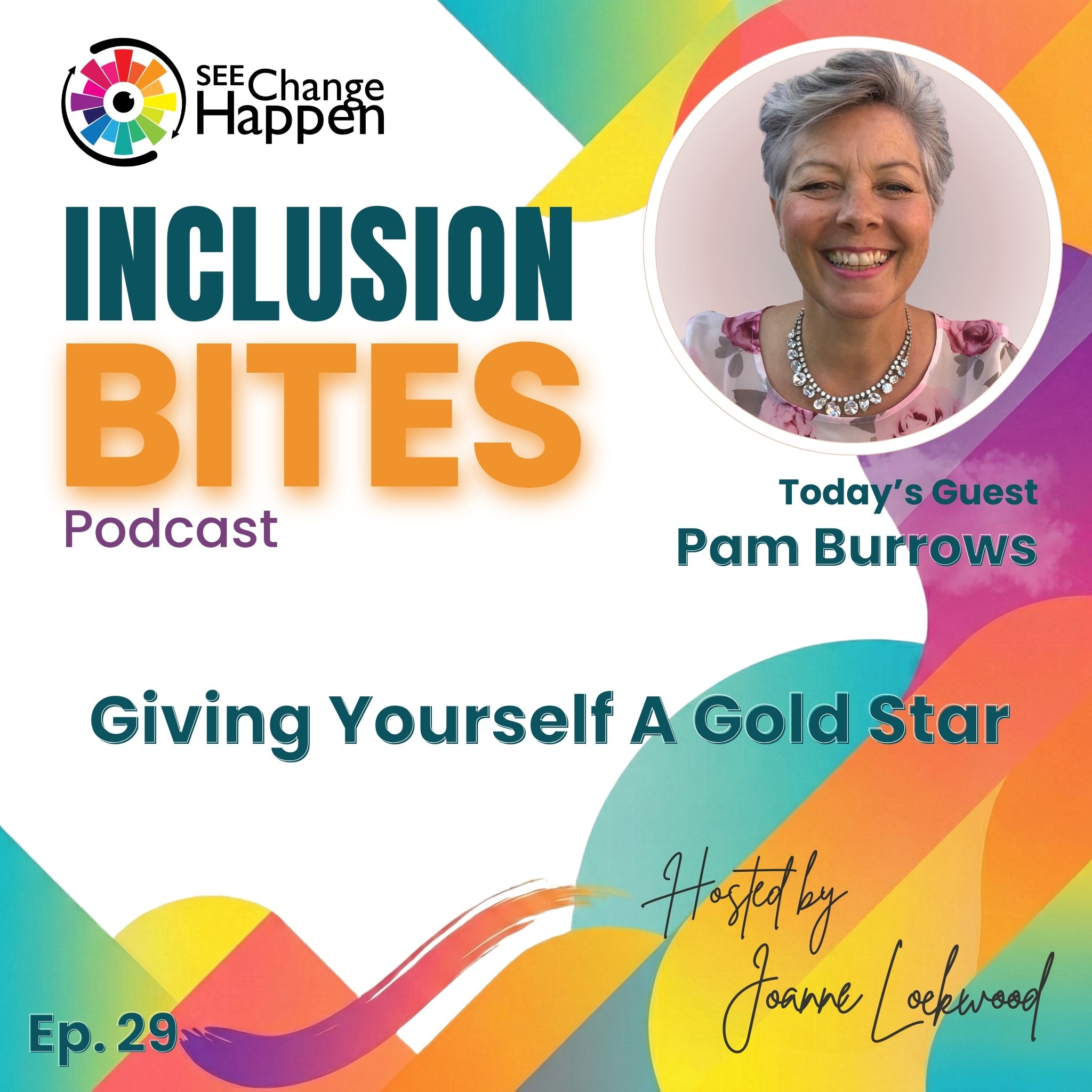
Hello, everyone. My name is Joanne Lockwood, and I'm your host for the InclusionBites podcast. In this series, I've been interviewing a number ofamazing people and simply having a conversation around the subject of inclusion,belonging, and generally making the world a better place for everyone tothrive. If you'd like to join me in the future, then please do drop mea line to jo.lockwood@seechangehappen.co.uk.That's S-E-E Change Happen dot co dot uk. Of course, you cancatch up with all of the previous shows on iTunes, Spotify, and the usualplaces. So plug in your headphones, grab a decaf,and let's get going. Today isepisode 29 with the title, giving yourselfa gold star. I have the absolute honor and privilege to be joinedby Pam Burrows. Pam describes herself as someone who helpsorganizations manage and reduce stress, and she workswith their teams to build their own well-being toolkit.When I asked Pam to describe her superpower, she said it's herability to sparkle. Hello, Pam. Welcometo the show. Thank you, Jo. Chuffed to be here.Awesome. Happy New Year. I mean, where are we now? Yeah. We'll have to say
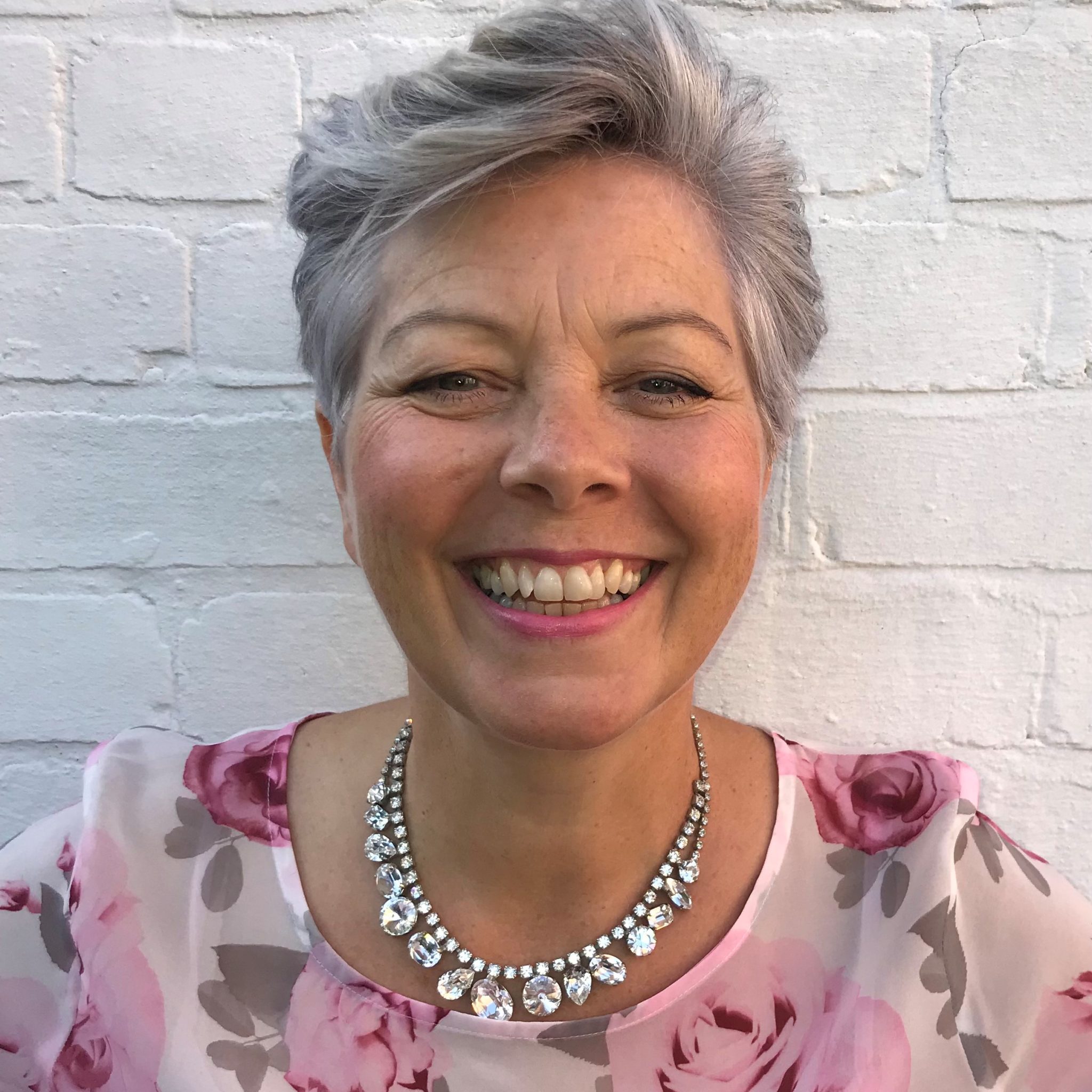
Pam Burrowsguest
that. We're into the, we're up to the 7th now? Well, I Iwould say if I if I haven't seen you yet, we can say happy NewYear. Yeah. Christmas Decades Away,
Joanne Lockwoodhost
terrorist acts going on in Capitol Hill in America. The world has gonecrazy. I really hoped we're going to see the end of the worldunprecedented, but everything still seems to be unprecedented.What's going on in the world? Who knows? Yeah. It's crazy.It's just crazy. And as I I hopethat after the year of Brexit, after the year ofCOVID, unprecedented will be because signed in history because we're now precedent,we've done it all before, but no no no no all the customsembargos, the paperwork is there, the fact is we've now gotan unprecedentedunprecedented is here to stay for another year. Jo, so,Pam, tell me about your gold stars. Where do they come from?
Pam Burrowsguest
Well, they come off the Internet, actually, in a physical sense. Sowhen I, in in the olden days when we were in persondoing conferences and training courses, I would giveeverybody a little sparkly star sticker at the end of oursession. And the idea is that, they can have gold one, or theycan have a silver one if gold's not their color. And,and, basically, I tell them they can stick it where they like, andit's to remind them it's to remindthem that they are a star and star stands for someonetruly amazing. And then when they get all shy and go,oh, really? Then that's what the r is for. Yes. Really.Someone truly amazing. Yes. Really. And thesession leading up to them getting their star sticker isbasically me helping them to realize what they bring to the world,to stop undermining that and denying it and tocelebrate it because, there's there's now plenty ofresearch to show that it's not just a a bit of anAmericanism of positive thinking to recognize yourstrengths, but actually it's it's a huge plays a hugepart in our resilience and our ability to thrive, which you're allabout. Well, I still
Joanne Lockwoodhost
proudly got my gold star, and I snuck it on a a name Joanne,actually. And I remember when I saw you speak, anddo your sort of brief session you did for the PSAone evening, I remember you came along with your big inflatable malletand you all talked about how we we all want to beat ourselves up allthe time, we we see the negatives in ourselves. And I seem to remember about3 or 4 months ago I had this incident where I was really beating myselfup about something and that image of you with your mallet kept popping into myhair, my gold star, and I just thought I just gotta get over this. Igotta see the positives out of this, not all the negatives. Andso that session that you did that night really inspired me and I've heard stillcarry that with me today. Oh, that's gorgeous. Thank you so much
Pam Burrowsguest
for sharing that. That's lovely. I think that's the thing about being aspeaker and using props or a teacher or, you know, anybodyusing a some kind of visual. You know, if ifthere's something visual, something auditory, something that relates topeople's emotions, then they're more likely to remember that. And I I feel very,passionate. It's a bit of an overused word. But my my focusnow, especially since lockdown, is to reallydo lots and lots of things that stick with people. Youknow? So, in the past, I might have done,a whole day or or even series of days on stressreduction, but I might have done more, talkingthrough with people what they could do. Whereas now, especially,since the the the last 10 months that we've just had, I'vebeen saying to people, right, let's do that now. Let's do this stressreduction breathing technique or visualization ora way of thinking, some kind of physical movements thatchange the nervous system. And and what I'm finding isit makes more of a difference because people might say,oh, yes, that's a good idea. I'll try that tomorrow. And they don't. Whereasif they actually do it in the session, feel the difference,they go, oh my god. I'm gonna do this again. And, so I'mgetting, a lot more feedback now about,the things that people are doing differently. So I'm chuffed about that.And the the star, of course, is a little visual to remind peopleto to do whatever their thing was that they thought, yeah, I'mgonna pledge to to do that. But as you said inthe in the introduction, Jo, for me, it's got to be a2 part thing. So I could go inand teach whole organizations toindividually have a great toolkit for stress reduction andwell-being. But if the organization itself structurallyis, you know, putting too much pressure on people, notsupporting them well enough, having unreasonabledemands, you know, all of these things, then,really I'm just teaching people how to be tolerant of,an unsafe situation. So I like to I like to talk to theorganisation first about what they're gonna set up with policies, procedures,and strategies, which enable people tobring their whole self to work and feel safe. When I say bring to work,that might be to their own dining table, but to to bringthemselves and feel safe in that environment and, thatthey're acknowledged, respected, cared for, and, that they're,you know, they're not given undue pressure.
Joanne Lockwoodhost
Because it everyone reacts to stress differently or situations differently,so there's no one size fits all. So somebody who is copingwell in a situation is not the sameas somebody who is taking on anxieties, that they'reperceiving their interactions with their with their colleagues, their boss, theirworkload in a subtly different way, aren't they? And so we can't justsay well I'm I'm I'm not stressed, I'm okay, the work's fine, but But mayI ask you, somebody maybe have maybe masking and covering that, won't they? Oh, yeah.
Pam Burrowsguest
Some people are really, really good. I've got, a little book, calledburnout buster. And in there, I talk about 33 red flags that you'reheading for burnout, 33 things to do about it. And one of thosethings is when you keep saying you're fine, you know, andespecially if those who love and care about you are saying, are yousure you're fine? I I don't think you're fine, and you're gettingirritated by that. That that's a huge red flagbecause, you know, one of the one of the things that we say aroundburnout and overwhelm is that people whofinally go pop are not weak people. They're people who'vebeen too strong for too long. And, and that'sthat's really key. You know, if you'rechecking in with somebody, the the question needs to be, how are youreally? You know? And to to do that, you've got tohave, you know, if we're talking about an organization, you've got to have a cultureof trust for people to be able to answer that honestly and notfeel that their job's in danger or they're gonna be seen as not copingand not not competent. And so it's about how youcreate that culture of it's it's okay to say you're notokay, to to quote the phrase around mental illness.And, and then to toto have something in your organisation that you can dowith that, you know. You can't just ask the question, have people feel safeenough to say, actually, Jo. I'm not okay. And then you're like, what do Ido with that? You know? I don't actually know how to help you. So it'sa it's about having a a whole strategy for that. But Ithink the the I'm fine stuff is a real issue.
Pam Burrowsguest
And through lockdown, well, right since lastMarch, really, II defy anybody to say that they haven't, at some point, been a littlebit stressed for whatever reason. And it's like there'sa background You know? Even if you feel like you're coping, you'reeating well, you're, you know, you're cutting out the alcohol, you'regetting outside, you're, you know, kind of doing all those healthy things,it's likely that there's still that sense of a background ofa of a national and international crisis.And so, you know, it doesn't take much to scratch beneath the surface.There was a few people that said to me, no, the pandemic, you know,I'm just getting on with things. I'm I'm okay. And then in theconversation, they'd say something about that they were drinking more wine than usual orthat they weren't sleeping very well. It just made me smile really because Iwas thinking, you know, the signs are there, those little red flagsthat actually, even if it's unconscious, you're beingaffected by that. So you might be saying that you're fine, but actually you doneed to have some strategies in place to make sure thatyou are getting good sleep because that boosts the immune system andthat you're focused on what you what you need to stay healthy.
Joanne Lockwoodhost
Yeah. For sure. Picking up on on what you're sayingthere, pre COVID,when you bumped into someone and said, oh, how are you? How are you doing?That was like a a 5 second conversation. I'm alright. You're alright. We're alright.But do you find now that with COVID we're jumping on a Zoom call likethis, we're having a we're doing a podcast interview, we both spend a lotof time online talking to people. I'm how are you is no longera 5 second conversation. It's it's become a more in-depth. Peopleare willing to be more vulnerable because they don't feel so alone in thisin this storm we're all in. We're all in different boats, but we're in thebig same storm. So saying, no, I'm struggling is actually allowednow, isn't it? So do you think people have got more permission to be moreauthentic about not being fine? I think Jo. And I think
Pam Burrowsguest
that that that's come through various Joanne.Like, you know, I I phoned the HMRC to talk about mytax, And it was a a young woman who,the dog started barking because Amazon had arrived, you know, and she had toleave the call to go and get a parcel. I'm thinking this is the HMRC,you know? And then I was talking to a customer on Zoomand, he showed me his new baby, which, I mean, that would never havehappened in his office, you know, where we'd normally have had a a meeting abouthis, the training I was doing for his team. Andso, and so then I'd seen the baby. We'd had a lot of laugh. Wefeel more comfortable. And andthat whole thing about saying that you're not okay, you know, if people can seeeach other in their home environments over video,I think just that in itself has has opened up a wholething about people being able to, becomfortable with being honest about how they are. But alsothat as you just said there, we're all experiencing athing. We're experiencing it differently, but it's the same thingthat we we're being affected by. And there really issomething about that, you know, because mostly, if you're Idon't know. Let's say you're experiencing a relationship breakdownor, health problems or, you know,maybe a parent's gone into a care home. It's your individualexperience and finding somebody who wantsto listen to that, and and is gonna be the person you feel comfortabletalking to is, you know, it's a whole different matter. But nowwe've got this commonality and, yeah, it's permission to tosay because so many people are really struggling,it's it's no longer you're you're an usual person overhere having an individual experience. You you're you're inthis in this thing that everybody can relate to, and, and peopleare expecting you to say, actually, I'm not brilliant today. Andand suddenly the the level of I'm fine has has changed.And I think it's all there's a lot of good things. I I work with,an organization called Harmless who work withpeople, with, issuesaround self harm and suicide. And,they're rushed off their feet. Unbelievable amount of supportthey're having to put in. But having said that, there are some peopleexperiencing severe anxiety who aren't nowhaving to do the things that that ramped up that anxiety, you know, thesocial situations and, and such. So,yeah. But I I do think the it's much easier to speakabout how you're feeling right now, and and and that's a good thing.
Joanne Lockwoodhost
I I started analyzing my own psyche at the moment becauseI've detected that I've become a bit of a recluse.I don't actively seek an opportunity to go out out of the home.If I actively, if we weren't going shopping toSainsbury's, I wouldn't go out. And I'm not doing anyexercise, I'm not walking up and down the road or or taking my half anhour, not doing anything. So I'm I'm being very conscious about the fact that I'mI'm kind comfortable in my own little home bubble and we only live in a2 bedroom flat. So it's not like we've got got a garden or any space,you know, our front door is into the common area. And I itreminded me of when I was at San Diego Zoo back in the late nineties.I I I saw this polar bear in its in its enclosureand superficially, this polar bear looked great. It itwas a big area, lots of there's some rocks, some grass,a tree in there, and there was a big big, pool whereyou could dive in and it was it was you go into the pool andshake it. Jo I I just sort of sat and watched it, oh, this polarbear looks like it's having a great time. But after 5 minutes, Irealized this polar bear was doing an identical thing inrepeat. He was walking out to the tree, rubbing his bottom onit in the same place. He would take 4 paces, he would then dive intothe water. He'd push off the bottom of the of the water in the sameplace, put the same paw up and climb out, shake,touch the tree, back and repeat. So this was like a 15, 22ndrepeated cycle. And most people who went into that zoowould have just seen, ah, happy polar bear, but it's only the fact that Istood there and watched this polar bear for 10 minutes and I thought,wow. And so I'm starting to feel that polar bear syndrome now. I'm gettingout of bed. I'm sitting in this chair. I'm doing mypodcast. I'm doing my my training, whatever I'm doing. I'm getting up atlunchtime, putting a can of soup in the microwave, 2 slices of toast, sittingback down, eating it, starting the next Zoom call. And then we'llsit down, have tea in the evening, we'll watch 2 or 3 hours of television,bit of Netflix, whatever we do. And the same happens weekends, we getup, Netflix, binge, maybe go shoppingand then Monday morning we start again. And I started thinking, I'm thepolar bear. I've become this polar bear. There's no variety in my life. I'm justI'm not unhappy as a person. I've I just don't have anythingmore going on. And I've I think my 2021 kindof thought process is to now I've now I've identified that, what can Ido? How can I how can I disrupt that? Otherwise, I'm gonna bein trouble by the end of the year if I just keep being that polarbear. And that's that's what I've gotta kinda work on now. Jo, I mean, doyou have any any thoughts on that? Any advice? Well, the the very first thing
Pam Burrowsguest
that comes to mind is my mum. She's 83. We lost mydad a year ago, and, she's basically beengrieving alone in isolation. You know, to start with, we couldonly see each other through the window. And I was doing the shopping for itafter Levy set the door. And,yeah. And and she's really been struggling. And she, shestarted doing a little, diorama. So sheput little Lego people and different things out on,on the sofa, and put what day it was. And it was toinitially, it was to remind herself what day it was because it all everything becameblursday, which is a phrase I learned yesterday that was quite cool.Blursday. What day is it? I have no idea. And so sheshe did that, and then she started photographing it and putting it up on Facebookeach day. Well, it's grown into this. She's got so muchstuff now. She's got all kinds of props and littlelittle scenes. And only yesterday, she,for the first time, she's been doing it for nearly 200 days, I think,now. But the, yesterday for the first time, sheput the exact same diorama, little littledisplay out as the day before. And the phrase she put on itwas Groundhog Day question mark. And so many people arelike, yes. That's what it feels like. And that's what she's been struggling withthat every day is the same. You get up, you go to the bathroom, youhave your breakfast, you watch the same telly, but she watches morning tellyand, and and that sense of repetitiveness. Now it'sinteresting that you say, Jo, that you're you're a happy polar bear,for the most part, but, I think sometimesthe feelings of, low mood cancreep up on us because we've we've not reallychanged that routine and and judged it up a little bit. So
Pam Burrowsguest
one of the things that we know about that background ofstress is that the adrenaline and the cortisolthat come with being on kind of medium alert all of the time,rising to high alert when there's some kind of newscoming coming with the next next challenge is thatthat's that's keeping us switched on,and it stops us from, fully relaxing sothat the body can do its maintenance. So what we really needis to, to find ways to completely switchoff so that we switch off those stress hormones, but also togenerate the good hormones that that lift ourspirits and our immune system. So going back to the gold starthing, I have something called the CARE model, which ismy model of well-being. And the,the a of the CARE model stands for acknowledgebecause what we what we know through, quite a bit of researchnow is the lift in spirit that you getwhen you start acknowledging your even little successes.You get a little burst of serotonin, the feel good hormone, which,if we don't get enough of that, there is there is,some science that says we get it through chocolate and cheese. So if you're ifyou're eating more chocolate and cheese than you really should or wantto, if you want to eat less of that, then the alternativebecause the other thing we know through neuroscience is thatit's much easier to do more of something than to try and do less ofsomething. So if you say, right, I'm gonna have less chocolate today, you'll obsess aboutchocolate. Whereas if you say, I'm gonna have more fruit today or I'm gonnahave more exercise today, then that's what you're focused on. And sowhen we when we start to acknowledge what's happened in theday, get a little burst of serotonin, we feel verysatisfied, get to the end of the day and actually write thosethings down in a little notebook at the side of your bed, then you'll you'llactually fall asleep easier and, have better dreamsand wake more refreshed. So fascinating stuff,just that very small habit of noticing the goodstuff even if it's just, you know, I I actually puttrousers on today or I didn't shout toanybody. You know? Just those little little wings thatmay may actually need, you know, a little bit of acknowledgmentbecause there's there's not a huge amount to to celebrate. But the other thingis is, rather than thinking, well, I can't go to aparty, I can't go to the pub, I can't meet with friends, is think, howcan I get something similar? So I'vedone things like, I've had a weekend camping withfriends, been to birthday parties,I started running online spa retreats all onZoom. So it's all possible. You know, the camping trip, we allpost well, those that could put a tent up in our gardens, had abonfire, And, we were on Zoom for the for themost of the weekend. We did yoga together. We had a dog show. We didall kinds of things all on Zoom. And and don't underestimatethe lift in your spirits when you do those things even though you're notin person with those people that you're close to. It does make adifference to have that social contact. And, and, youknow, the fact that you're on video and you can make eye contact,which also gives us a little bit more chemistry for you. Itgives us a burst of oxytocin, which is, sometimes known as the lovedrug. It gives us a little lift. So never underestimatethe the power of doing those things. The the problem being, of course,if you if you're on, if you're on video callsfor most of the day through work, then you think, oh, I can't do anotherZoom tonight for social. But, you know, maybe don't look at thescreen so much, but just still experience that socialconnection. It's really, really important. We we actually,as humans, we die without enough oxytocin, without thatconnection with another human being. So don't underestimate how much youmight need those top ups. Yeah. Jo
Joanne Lockwoodhost
I I scheduleZoom calls with people not for work purposes. Well, thethe the the the the professional colleagues or associates are peopleI know, but actually the purpose of the call really is just to have alaugh, have a chat. I mean, one of the reasons I love doing these podcastsis I get to have chats with people I haven't spoken to for a while,we get an hour together, etcetera. And I had a good chat with, a mutualfriend of ours, Peter Edge, yesterday, and he wanted he wantedsome help with something around, live translations and andsubtitling. And, we we did a bit of that and then we spent therest of the probably an hour and a half just having like a comedydouble act, we were just talking about stuff. And at the end of it, wewere laughing our heads off, we were falling around and we both said weshould have recorded this, this is this is this is die metal material, we couldhave we could have put this out of podcast series. But it was itwas such good fun. Like, at the end of it, I just felt really, reallylifted. And you're so right. That's what we need. We need to make sure wekeep projecting ourselves with the with the laugh, with thefun, with the with the for the face we haven't seen for a while. Doesthat bring that snap us out our polar bearroutine, isn't it? It's just to give us something else to think about. Yeah. You'reso right. Yeah. Absolutely. And you gotta do it on purpose because, of course, it
Pam Burrowsguest
used to happen by accident. You know, you'd just have a a meeting that youwere going to, and you'd end up having a chat with somebody over the coffeebreak that would lift your spirits. You know, things would happen that so a friendwould invite you out or you just pop out to dinner without, you know,without having planned it. Let's go out to a restaurant tonight. Those things wouldhappen spontaneously, but we have to do it on purpose now. And I think that'sone of the problems if people do have issues around anxietyand or depression is that you kind of spiral down, you startto close in because you don't feel like you've got the energy or, you know,people often hear people say, well, who would want to spend time with meeven on Zoom when I'm so miserable? And sothey close down when actually the the very thing that's that's going to help usout of that situation is making those connections and,having a bit of a laugh. But, I mean, you can you can do itwithout having to connect with somebody. You know, get on YouTube and don't get drawninto all the news stuff or the depressing stuff. You know, find finda comedian, find find some slapstick comedy fromfrom the black and white era, you know, whatever it is that's that's that's gonnabe good for you. Even a, you know, a soppy film that you can havea good cry, you know, a good cry releases tension and allowingthat kind of, you know, the peaks and troughs of emotionsthat were were much more natural before before lockdown.But, yeah, Peter Edge is very funny. I could imagine you 2 being areal good double act. I would have liked to have seen that recording.
Joanne Lockwoodhost
Yeah. It it it was yeah. It was I I don't knowif I I know if I'm betraying you as he could say, but he's he's,taking a course to be a a wedding celebrant at the moment. Yes. No. You
Pam Burrowsguest
did say that. And we were talking about we were cracking jokes around that
Joanne Lockwoodhost
and, and joked about the fact it's probably this isa bad taste joke that you should have you should have been a funeral celebrant.You've probably been far busier right now. And then we weretalking about all of the sort of, like, the the irony of of that. Andthen we could talk about, funeral directors and and and informations, and itit it was quite black black type humor, but it wasquite it wasn't at anyone's expense. It was just kinda dark humor. But, yeah, itwas quite funny. We were really were a bit roaring a bit roaring away.And that just came out of him to say, oh, yeah. I'm I'm becoming abetting celebrant. Wow. But, yeah, it's it's easyit's easily done. I think if you've got someone you can relate to, just havethat laugh. And I I we started doing it as a family.We do we do WhatsApp calls. We do a 5 way WhatsApp call justwith my son, daughter, daughter fiance, my wife andI, so all joining in. It started on a couple of birthdays. We did it.Now we can't try and do it regularly and my mom will always FaceTime meon a Sunday morning, 11 o'clock. Sometimes I'm in bed. I haven't gotout, but I think, what the heck? It doesn't matter. Sometimes I'm up and I'meating my breakfast, but we just have an hour together just to make sure we'vegot that time. And I I think I'm actuallyseeing more of people. Althoughit's in the in the polar bear cage, you know, I'm still in my polarbear cage, but I'm still seeing more people having more conversations than I everdid before. Yeah. And geography is not an issue, which is which is
Pam Burrowsguest
great. We're we're me and my mom have been having some calls with our Canadianrelatives, and, that's just been really special. Thetime time difference is a is a little bit tricky. But,my just very quickly, my my mom was adopted as adopted as a baby,and she only found birth family when she was in her late sixties.And so, through the Internet. Andso the cousins that we, now have aremy mum's you know, the first first time she's ever had aconversation with somebody that she's actually got a blood past with.You know? And, so those those conversations havebeen very, very precious. And we could have been having them for the last fewyears, but we're having them more regularly now because they're all locked down and nothingto do. So, they've been really, really specialand, have meant a lot to my mum. So that's that'sgorgeous. They did come over a few years ago and spent a couple of weekswith us, and my mom was just at her happiest. So when whenthey call and do a video call, it, you know, revives that those memories.And we chat about going for a picnic at Chatsworth and the lovely thingsthat we did. Because, of course, the the other thing just just going,onto the the subject of thriving again is thatwhen you when you imagine or rememberhappy times, the the brain and the body willrespond as if that's happening right now. Now the bad news is that youcan do that with negative things. So you start to, oh god, what's gonna happen
Pam Burrowsguest
next? And, oh, what about that awful thing that happened yesterday? The body willreact as if that's happening for real right now. But, you know, the goodnews is, the other side of the coin is when you just start to imaginethings, which is which is why the online spa that I doworks. I've got a, a video. Actually, it's available just on onmy YouTube channel, which is a holiday in the Maldives, And there's a videoof the sea rolling into the Maldives beach with my voiceover, doing doing a relaxation. So you watch the beach fora few moments, then you close your eyes, imagine yourself there,and you can actually this is the mad freaky thingabout the body. You can start to generate vitamind, by imagining the sunshine on yourface. So, you know, you're not actually out there in the sunshinegetting the the the vitamin d in the traditional way. So the power of beingable to imagine. So we need to really notice what we're, youknow, what we're driving ourselves crazy with. You know, what are you filling your headwith, and how can you switch that to you know, even if you're justimagining a time when you were happy and did somethinglovely outside of the polar bear cage, you know,remember that time when? I think it just just reminded me actually.Did you see that film? I can't remember which zoo it was, butthey because the zoo was closed down and not open to the public,they gave the penguins a wander around the zoo. It'salmost you should find that video. It is so gorgeous. Yeah. So youknow those things where there's like the aquarium and you can gothey've made like a glass tunnel through the aquarium. So you youwalk through and the fish and whatever sharks or whateverare swimming all around you. And the little penguins are walking through and we'rekinda looking at all the fish. That is just the most adorablething. And, I think they did it with other animals as well because, like, whynot? You know, it's the because the animals aren't getting that interaction withthe visitors. And, so, yeah, theanimals went to the zoo, which is just gorgeous. It'sjust weird thinking out of the box, you know, do something you've neverdone before. But but isn't that what's
Joanne Lockwoodhost
going on at the moment? We've we've had all these years of you can't, thatwould never work. And suddenly all of the can'ts, all of the won't work,all of that fixed mindset, everyone's had to sort of they'vebeen nudged out of orbit and now you have to think of something new. Andsome of the things that are going on, the creativity, the inspiration,and the innovation that's going on is incredible. So I'm not saying that the theends justify the means or something, but but out of this I hope weretain a lot of the spirit. We've we've gained a lot of inspiration. Well,
Pam Burrowsguest
the one of the things that I, noticed a few years ago isthat I dress for my mood. So if I if I'm feeling quitechirpy in the morning, I will wear a tutu and diamantesjust even if I'm just around the house. I just kind of addressto, then sometimes I'll do that to cheer myself up. So Istarted a little Facebook group called Dress Up to Cheer Up, and,we post photos of dressing up for taking the bins outor going to the supermarket. And, and thenI started a a little Zoom weekly Zoom,on a Wednesday morning for people with Alzheimer's and their carers,but, actually, there's my mom and all her friends and lots of peoplejust join in. And we sing. And we have the,everybody's on mute, and we have the lyrics on the screen.And, it's about 45 minutes, and we justand we have chats in between. And it's just lovely. Andpeople are like, oh, Pam, you're such an angel putting that on for free. I'mlike, no. This is social. This is fun. Thisis me being able to sing even though I can't sing in tune. Iam having the time of my life, and I get to excuse mynonsense because somebody's joining me who's also enjoying it. So I'mallowed. And, it's just the bestest fun.So, yeah, just doing you know, there's no way I would have satdoing an online spa with my feet in a bucket of bubble bath. Well,it's not even a bucket. It's, it's a plastic drawer from astorage unit, not even a proper foot spa. There's no wayand and to start with it, it was in the summer. So I was doingit in my shed. In my shed, in a tutu in diamantes withmy feet in a bucket kit on Zoom telling otherpeople how to do self massage, self reflexology,pretend you're on a Maldives beach, breathing techniques, reduce stress.Never would I have ever thought of doing that, butbut neither would I have been able to take it,the step further. And I'm now getting paid to do that. AndI spoke to a business adviser in the summer, and she said to me, oh,I think it's fab. If you've got individuals who want to do that with you,that's brilliant. But I don't think you're gonna be selling that into organizations.And I said, no. You're probably right. And now I am becauseeverybody's thinking well, not everybody. So manymore people are thinking, we don't have to do what we always do. You know,
Pam Burrowsguest
if we're having a team meeting or a staff conferenceor, or a Christmas party, you know, whatever we'redoing, if everybody's at home, why not make itthat everybody's got their feet in a bucket? I want a mission to get asmany people with their feet in a bucket as possible. And,and and then now I'm getting paid to do exactlywhat I would just love to do anyway. And, yeah, I justfeel really lucky about that. But as I said before, what I'malso realizing is, there's a there's afamous quote, and I can't remember who said it, but it's about,writing. And it's something like, no tears in the eyesof the writer, no tears in the eyes of the reader. Andit feels like that because I've chosen something, whichabsolutely lights me up, makes me I could almost crysometimes when I'm doing it because I love it so much.And so because I feel so strongly about it, of course there's, you know,I'm not a unique human being. There's gonna be other people who are gonnalove to do that too. Some people don't. You know, I did a conversation witha customer yesterday who said, I don't think we'll run a spa past ourour people. You know, they're they're gonna be a bit cynical about that. So canwe do something a little less fluffy? And I'm like, yeah. Of course. We cando it. We can we can still do the shoulder massage and stuff. We youdon't have to don't have to wear a tutu, and you don't have to haveyour feet in a bucket. But, yeah, just to to be ableto to to find other people who enjoy what I do ratherJoanne, you know, you kind of think, oh, well, we'll do somethingmiddle ground, little bit beige, it'll suit everybody.And, you know, it it wouldn't it wouldn'tspark me up, So then I'm not bringing my sparkle to the tothe screen. And, and it's not sparking anybody else upreally either. We're just kind of going through the motions. No.
Joanne Lockwoodhost
You've you've gotta try and inject some energy and personality ininto the into the well, through the black mirror and out and out the otherside. That's that's the technique. And, you know, we've got some mutual friends, people likeTom Morley, who is energizing people, activating their innerrock star. And I've I've I've helped him,emcee a few of those and, and done a few of it,sort of, Zoom productions with him. And just being part of theenergy, you know, you've got you've got 50, 60 people in this onthis call from all over the world, from this corporate background, and they're all dancing,they're all shaking, they're all having fun. And it is. It's aboutbringing that energy. And I think when you said about that story about your tearin your eye in the in the right side, not the in the reader'seye, as as speakers, as trainers,we that's part of our storytelling, isn't it? We have to tell that storywith that passion, with that experience. And if it's a tear in oureye, if it's a glint, if it's if it's a passion, if it'san excitement, that's how we convey through the feelings,not just through the logic, isn't it? Yeah. That's the important. Yeah. You're absolutely right.
Pam Burrowsguest
And then there's also I mean, it's it's all about balance because there's there'sanother phrase that's relevant for speakers, which is you should alwaysspeak from the, from the scar, not thewound. So, like, if you're if you feel like you're still bleeding abouta particularly emotional issue, then that's not the time to speak about it. Youneed to heal the wound, and then the scar will be there. And you're talkingfrom that place, which is and then you're much more likely to get themessage across rather than people just feel sorry for you or distressed by thestory or whatever. So that so there is a balance. But you're absolutelyright. Without that, without the tear in the eye,you're you're just imparting information. And, you know, the people just read abook, you know, read a handout, you know, flip through flipthrough the PowerPoint slides that you might have produced for it. Youknow, it's the in the storytelling your phone out and start wandering off or
Joanne Lockwoodhost
or getting your email up and just and put yourself turn your camera off putyourself on mute and you're just you're just doing this presenteeism stuff again all overagain aren't you? Just Yeah yeah yeah and people people want that
Pam Burrowsguest
that that reality. You know, the very first timeI, had a tear in my eye whilst doing a presentation,I came off stage. I thought, oh my goodness. What's theperson who's bud the budget holder for this conferencegonna say about, you know, she's up there with a tear in her eye and,you know, like, little catch in my throat trying to say what it was Iwanted to say. And, I came off stage toa queue of people wanting to talk to me to, you know, tell methat it was, you know, really touched them and that's the thing. You know,I had a tear in my eye That that connected the storyconnected. It was about my dad with Alzheimer's. And,and that connected with people in the audience,and and made it just very, very real what we were talking about. You know,we're we're all, you know I I love the phrase, we're all just walking eachother home, which is a roomy quote.And, and it's that thing, you know, we'reconnecting on a human level and that's, you know, when when we firstwent online, there are a few of us saying, well, you don't haveto be sitting down just because you're on screen, You can set it up sothat you're standing up and you're due using all the energy that you Iwas absolutely exhausted. Yes. I was using the energythat I would normally use on stage, but normally when you're on stage, you'vealso got a huge room with people that you're engaging andyou're calling out or they're asking question. You know, it it'sa it there's a cycle of energy. But sometimes,especially when it was a webinar setup or flippingMicrosoft Teams where most people have their cameras off, which drives me crazy.You're just looking into the lens. You're not you know? So so,yes, I was coming across with more energy, but a 2 hoursession, and I'd have to lie down for 2 days afterwards. That'sabsolutely crashing. So, I'll just,I've not got one to hand, but I went from from thatto sitting down, absolutely fine. I can still bevery energized. And I had a flip chart with very lowlegs sitting here. But then I realized, well, youcan still only see about an a 4 sized piece of the flip chart thatcan actually use. So I started using a clipboard as my flip chart because ifit's near enough to the camera, it's the same size as the flip chart wouldbe if you were set up that way. So kept it really low tech,and, managing my energy and making surethat it's interactive enough that it feels more like a cycle. Youknow, it's not just I'm giving you everything and then I'm, you know, empty.It's about and and that's, you know, and that's something about speakersthriving, teachers right now, teachers having to go online, so feelfor teachers. Well, all school staff right now having tohandle that. And and I just saw a conversation on Twitter thismorning. A teacher saying, she'd done something like40 hours live, and she said, I am broken.And another teacher saying, you know, you have to give yourself permission to useto do recordings, and you can while the kids are watching therecording, you can be supporting the kids who are struggling, you know,offline and and all of that. So wehave to we have to think about how are you using yourenergy and how how does it become cyclical because,the when when you're just giving, youwon't have anything left and people aren't as engaged in it either. So
Pam Burrowsguest
yeah. Yeah. I I remember certainly going back a
Joanne Lockwoodhost
little while, Steve Jobs, when he first when he first went back to Apple andlaunched the iPhone, I remember seeing an interview or hearingabout his his kind of mantra for those presentations that he he onlyever did things in 10 minute segments. So if you're gonna have a speaker, theyspeak for 10 minutes, then you go for something different like a product demo. Thenyou go from a product demo to a video, then you go from a videoto a different presenter. So that there's always this 10 minute cycle.And so when I deliver my online training, my coaching that I do,is I again I try and bring video, I bring in interaction,breakout rooms, so I never talk myself more than for5 or 10 minutes at a time, then interact, then show a video, then discussthat, then chat about it. So there's always something going on thatis not just this talk and talk or you appear as a match box inthe corner of the window and everyone's listening to you drone on. So I thinkwe're all learning about engagement now, aren't we, and how we can a,look after our own sense of self because I was finding it a killer talkingto this black mirror all the time and getting no feedback. So I said, Idon't want to do that anymore. I wanna be I wanna be in the audienceand I wanna be I wanna have the same kind of interactions I would ifI was in the room with you. This is about me asking you questions andget you to do some of the talking as well. And it it people reallyrespond. That that's where that's where the learning happens, isn't it? Yeah. Absolutely.
Pam Burrowsguest
Generally speaking, I do about an hour and a half, 2 hours for mostsessions, occasionally, 3 hours. Andand if you if you do that engagement stuff andyou are it's all the different things we've just talked about.You're you're getting them engaged. You're talking about stuff that they connect to, and they'relike, oh god. Yeah. They get me.And, and you've given them something of value. The timeflies by. You know? People sometimes say at the end, oh, I wasthinking, oh, god. 2 hours, 3 hours on Zoom. What's that gonna be like? Andthen they get to the end, they go, oh, is it time to finish already?Yeah. More. More. Sign. Yeah. Yeah. I want some
Joanne Lockwoodhost
more. Kiko. Kiko. Yeah. I was Sorry,
Pam Burrowsguest
Con. Jo you talk about your care model, and and when you talk about,
Joanne Lockwoodhost
awareness, it reminded me of I saw something for itmust have come out for a year ago where someone talked about the CIA model,which is if you can't, you know, c for control, if you can't controlsomething and you can't influence something, you either accept,acknowledge or adapt, so the a.And I kinda always refer that to myself, you know, I I can'tdirectly control what's going on in the world in terms of COVID, in terms ofthe political, in terms of Brexit, whatever whatever the political thing is going on about,I can't control that. I don't really have an influence. Yes, I can have anopinion. I can shout about it. But fundamentally, if I if I get stuckin trying to fight it, what I'm going to do is drag myself down. Soif I can move in to accept, I can move in to acknowledge, I canmove in to adapt, I could work myself, I could then take control of myselfand feel empowered that I I now have some responsibilityabout how I can how to deal with this. Whereas I think Iwas I get I was getting Jo stuck in I can't control. I was inthis sort of tailspin of I can't I can't do anything.And you've got to back right out of that avenue and take control again byadapting yourself or how you how you see that problem.
Pam Burrowsguest
Absolutely right. And I I love the CIA thing. That's that'slovely. And, and what I'd say about thatis that, some of the some of the time we get stuck in what wecan't control, you know, the stuff that's going off in America right now. There'ssome very, very little we can do about that.So we get stuck in that news loop of something we can'tcontrol. So not only are we getting stressed about something wecan do nothing about, but we're not taking control of the things we cando something about, which is, our breathing rate,getting getting out there and moving the body or, youknow, clearing clearing your workspace so that you your yourbrain feels a little clear, you know, the things you can do. And that's,that's the, the double whammy is stop, stop getting stressedabout things you can't do anything about and do start doing somethingabout things you can do something about. And don't underestimate the little things.There's there's something quite magical aboutcleaning things. So whether you're sweeping or moppingor, you know, wiping down the kitchen tops,hand washing the pots instead of putting them in the dishwasher,clean the windows. There's something about that repetitive armmovement that is, it it just shifts theshifts the mood, shifts our state. So,yeah, so that's a good thing to do. When you don't know what else todo, just go clean something.
Joanne Lockwoodhost
Or cook or bake something or Yes. A lot of banana bread and
Pam Burrowsguest
sourdough went on, wouldn't it, at the start of the 1st lockdown.Yeah. Is that produce is that producing or being
Joanne Lockwoodhost
useful, having sort of productive come out of it when you clean, you can actuallysee the result. Yeah. You think, oh, that's a bit dusty. You just say, oh.It's when you can't be bothered that means you're kind of in that depressed state.But as soon as you notice it, oh, right, let me do that, you goback you you this you sort of the brain chemicals, you've thengot satisfaction of achievement, haven't you? Yeah. You've rewarded yourself,you're going, yay, I've done something. Yes, absolutely. I think that'sincredibly powerful. I I was looking on Facebook this morning and up poppeda picture that I took a year ago today of mylaptop and my remote speaking setup that I did a year ago. And I lookedand thought, wow, was that a year ago? It's a tiny little laptop, laptop, atiny little microphone, tiny little webcam on the corner of thisdesk. I thought, how could I ever have coped with that?And nowhere have I literally I I I finished reassembling my desk for2021 the other day, and I look at it now and it's like the backshots takaalactica in front of me at the moment. So I'vegot screens, I've got lights, I've got stuff going on. And I just look atthe 2 thinking, wow, in a year I've gone from that to that. But whenI was reassembling my desk over Christmas, I had it all stripped down, Ihad it all in piles and bits everywhere and when I put it back togetherand I sat down when it's finished yesterday, I went, wow.I feel really, really good. I feel really empowered and I I'm really,really excited by the whole thing. It's like a new release of life. I supposeit's like getting a new car or or getting a new dress or something. It'sjust you you got that feeling of of newness, haven't you, toreinvigorate yourself. Yeah. And you just reminded me about
Pam Burrowsguest
a friend of mine who, when her children were little, she never hadall their toys out available at all times. She would havea proportion because most, most kids, if, if they're lucky,have more toys than they know what to do with. So she'd keep some away,and then she'd swap them around. And even though the kids had seen those toysmaybe 3 months, 6 months ago, they'd be like, this is like a new thingbecause I haven't seen it for ages. And, and I imagine it was a bitof a similar thing for you when, when you set everything up again.But but also realizing that, that thatachievement, that movement that you've made over over 12 months andrealizing it. And one one of the things that, I like to do every nowand again, somebody said to me a few years ago, is look at your lifethrough the eyes of somebody you'd love to have what you've got, and you suddenlygo, link an act. Look look what I've got rather than what I haven't gotor what isn't perfect. You know? And,and it's not about thinking, oh god, I'm, you know, recognizingyour privilege and feeling bad about it. It's just about celebrating itand enjoying it because, you know, feeling guilty about having morethan somebody else might have is no use either. And so
Joanne Lockwoodhost
so Shame and guilt aren't great emotions. It's how you can leverage itand inspire others and, and give. Yeah. Thatthat's that's the power of privilege is where you can use it for the benefitof society. And, yeah, I'm a great believer in that.So so we're we're we're in this second lockdown. The worldis is struggling withthe vaccine isn't gonna come quick enough. We've all had our ourChristmas hopes dashed. We were all expected to be flying off to our holidayhomes by now. And, yeah, we're in the UK, so now we'rethinking, well, Easter, April 5th is a date that's been banned aroundmiddle of March. And I saw something yesterday, that even talkingabout another potential COVID spike next winter. Soit's not going to be over this year. So we've we've maybe evengot another 12 to 18 months of this. So do you think peopleare coping better? Do you think, I mean, the schools are nowclosed? We've got we we know that disproportionatelywomen who tend to be the primary parent when it comes to educating,home education still even in a gender equal relationship,there there's still a lot more pressure on women to provide the home ed,provide the home admin and the cooking and etcetera, even the most eventhe most progressive households. So do you think we're gonnasee a backward step in terms of, femaleempowerment and and female growth in the workplace? Do you thinkwe'd have to reset? And and are these anxieties thatpeople are facing at the moment? I think the the the picture you
Pam Burrowsguest
describe is very accurate. Certainly anecdotally,you know, the women that I know who are in very high powered jobs workingfull time are also now homeschooling their children.And, some getting support from their partner, some not,some single parents, obviously. So I think it's a hugeissue. I think it's something which workplaces needto address, but they need to,just just from this last week, I think workplaces needto be more proactive about addressingthat in terms of saying to everybody, not justwomen, but particularly, you do not have to try andoperate at the normal 100% level. Please donot do that. We're not just saying it's okay if you don't. We're saying pleasedon't even try. I I do,
Pam Burrowsguest
quite regular work with the Crown Prosecution Service, and they havegot such a massive backlog. And the people that I was talkingto, who are working at home,still putting the same pressure on themselves to,try and, clear the backlog of work that they have for thecourts, whilst also some of them beingisolated with no support, some of them trying to homeschoolkids or support elderly relatives or whatever, just allof that stuff. And actually trying to do more than theynormally would because of the backlog that they're experiencing.And we need the people who are leadersto say you are not allowed to try and operate atthat same level because people will just burn out. You know? And so so they'lldo things like, oh, I I put on a load ofwashing earlier during work time. Jo Ibetter workAnd when you think about it, if you were in the workplace, you'd have anatter with your friends. You'd, you know, meander over a cup of coffeeor you might nip out to get something for lunch. There'd be times of theday where you weren't fully operational because that's the nature. Ithas to ebb and flow. You can't be full on all the time and expectyourself to operate at the same level. You know, you kindaskip lunch, work through. You're exhausted in the afternoon. You're not thinkingstraight. You might make mistakes. You're, you know, you're not operatingwell. There's such a blurring between work and home.So I think we need to be more careful with thatourselves. It goes back to what we're saying at the beginning. We need individuallyto have our little toolkit, but leaders and organizationsneed to be aware of, you know, what whatelse people are experiencing and the the burdenthat may be disproportionate to to certain people.
Joanne Lockwoodhost
Do you think people are are kind of feeling worried or vulnerable about their theirjobs? Yeah. When you've got, you know, we go back at18 months. It there was a we talked about the skills crisis. Thethe there was more people employed. There was itwas there was a basically there was talentwas in demand. Now we've got talent oversupply anda 1,000 people applying for every role whereas in the past people have to bereally careful. So do you think people are kind of hyper aware thatthey're not indispensable anymore, are they creating this self pressure because they're feelingthat, hang on a minute, if I don't if I'm not top of my gameevery 5 seconds, they'll they'll they'll make redundant, they'll furlough me,they'll push me out, they can't see me, they can't see what I'm doing anymore.
Pam Burrowsguest
Of those, companies completely folding andeverybody losing their jobs. And, yeah,and I think that is one of the things that can can lead tooverwhelm and burnout and illness because people are thinking, well,I can't slack enough because, you know, I'llbe I'll be first out of the door. The trouble is withadrenaline, which is what happens when we start to get stressed about all ofthis stuff, is it's addictive. Doing mode,fixing. There must besomething else I should be doing. You almost doing mode,fixing. There must be something else I should be doing. You almost feel guilty whenyou stop. And I think of it being like a hamster wheel that keeps spinningeven though the the day's finished. You know? So so it's goodto have some, some habitsin the morning to set you up for the day and at the end ofthe day to switch off in order that that doesn't become a hamsterwheel that that actually is on all the time. Because it itit actually is a a self fulfilling prophecy. Youthink, oh, there's a risk of being made redundant, therefore, I'll do x,y, zed. But actually, you're more likely to, tonot be able to work. If you if you don't ease up on that pressure,you know, it's actually gonna happen, in another way perhaps through beingill and not being able to work. So, you know, people areeven using their commuting time. You know, let's sayyou used to leave the house at 7 and start work at 8,say. They're starting work at 7. So you'd have beencommuting in that time. So don't think that using thatextra hour means you will be able to fulfill that to dolist. 1 one of the, like, going back to the care model, ther of the care model is for reality. So youmight have 10 things on your list that need doing, but only inreality, only 5 of them are possible in that one day. It's onlyhumanly possible to do 5 in that one day.So, you know, look at what's what's humanlypossible and then celebrate that at the end of the day. Because if you've got10 things on your list and you get to the end of the day, you'veonly done 5, you're gonna feel downhearted. You're gonna beat yourself up. You're gonnaset off those stress chemicals. You set yourself 5 and manage5. Yay. Well done me. And I'll do the the other 5tomorrow. So, yeah, it's about it's about howyou, you probably areactually a superhero that can do you keep pushingand keep pushing and running on an empty tank. Yeah. You can, but onlyfor a certain amount of time, and then you've got to you've got torefuel. Yeah.
Joanne Lockwoodhost
And I'm a great believer in the in the, the quadrant urgentimportant, not urgent, not important. And just focus onthe urgent and important. If it's not urgent, not important, just just throw it inthe bin. Just don't do it. And or delegate if it's if it's if it'snot, yeah, not important, but it's urgent. But get somebody else to do it foryou. I think the trick really focus on that top quadrant. Yeah. The trick is
Pam Burrowsguest
not looking at your list and going, but everything's urgent and important. You know,when you're stressed, it's like, well, I have to do that because if I don'tdo that, x will happen and kind of catastrophizing about what will happenif you don't do every single thing. So, yeah, having a properthink about, right, that feels urgent, butthat's somebody else's urgent, you know, so maybe you could pass itback to them and say, I can't do this right now because I need todo this. And, but you need to, you need tohave a reasonably clear mind,and, you know, kind of feeling a in a relaxed enoughway to to think clearly about those things, to make those decisions.Otherwise, we're just constantly firefighting and don't take thetime to just take abreath and go, hang on a minute. Is is that does that reallyEmails are a great example. An email pops in because you've seen itpop in, because it needs action and you think, right, I've gotta do that now.Really? Does it really need to be done now, or can youjust take a breath and decide when you are gonna do that rather than zippingin between things and constantly being busy?
Joanne Lockwoodhost
Yeah. I I had a double pneumonia,7 8 years ago. And I was in I ranmy own business. I had some Jo directors and partners. I had hundreds of clientswith IT services, so it's all stress or or everyone's getting really tense about thewhole thing. And I had double pneumonia, and I I couldn't Iwas I was in hospital, not quite intensive care, but I was in I wasin a hospital ward for a week. And then I I could hardlybreathe or I can hardly walk for about 3 or 4 weeks afterwards.And I I suddenly realized at that point that the world still move theworld still turns, nobody's eyes, you know, you just those things you were worryingabout just happened in a different way without me havingto be involved. So now when I'm looking at my list and the things I
Joanne Lockwoodhost
have to do, I look at it and that's alternative. If I wasn't here tomorrow,what would happen? So I then start putting preemptive measures in place andsaying, well, if I if I couldn't deliver that, what would I do instead? SoI've got a I've got a PA who will handle stuff for me,I can make one I can send one text message Joanne and she will makethings happen and go away or reschedule or something, so I know that Idon't have that stress anymore. So I I know that I can go on mylife without worrying about tomorrow. There's always a plan. So I think that's thetechnique people need to do is if I if I'm if I'm not playingtomorrow, what would I do? And then it's put in that plan inplace. It always got its rolling plan. And that immediately just takes the stress awaybecause you think you're you're not letting people down because you've got a plana. That happens. That kicks in immediately. Joe's not around tomorrow.This is what we're gonna do instead. Brilliant. And then thenyou can focus on things in a better way and and truly work out what'surgent. And today, urgent was breathing, urgent was stayingalive, urgent was was was talked to my family, urgentwasn't worrying about someone's backup or someone's system crashing. I had somebody elseto worry about that. Yeah. Absolutely. We we sometimes this is
Pam Burrowsguest
one of the red flags that I talk about in the book is, one ofthem is thinking you're invincible, you know, and,irreplaceable. When I when I used to, I usedto do a lot of time management courses years ago, and and I used totalk about the double decker bus rating, which is a bit morbid. So if yougot I was gonna say the red I was gonna I talk about the red
Joanne Lockwoodhost
bus as well, so I'm not going for it. Yeah. Yeah. Cool. Yeah. So, yeah,
Pam Burrowsguest
if you got hit by a bus tomorrow, what what would nothappen as a result? And, yeah. Sonot having everything on your shoulders. Now for a lot of people, and you weretalking earlier about women having the kind of emotional load, the adminload, the physical loads, the homeschooling, all of that,you know, sometimes there isn't, there aren't thingsthat you can pass on to to other people. So it's reallyimportant to to recognize that there's, there's only somuch of you to go around. What are, what are your kind of,contingency plans? And if you really can't passanything on or knock it off your list entirely, then atleast you need to say, well, if that's what's going out, what's coming in?How do I get what I need to be able to You have to be
Joanne Lockwoodhost
able to sort of say is this more or less so you've got a list.You say is this more or is this less? If it's less, put it atthe bottom, if it's more, put it at the top and just shuffle things down.So you've got 8 hours. You've got you just you always have a window thatsays that that's 8 hours worth of tasks and anything at the bottom of thatjust gets cut off and it happens tomorrow or not. And not trying tosay well I've got 10 hours of things to do in 8 hours, it's sayingI've got 8 hours, That's all I can do. And it's being realistic about that.I I think that's what people try and do. They try and slot extra stuffin without thinking about where does it fit in the list and The the thing
Pam Burrowsguest
that I talk to people about with the our part of the care modelis the difference between intention and reality. So thereality is you've got 8 hours. Your intention is to say yes to everybodyand always be helpful and try and get things done and anddone, done, done, done. And the difference, betweenintention and reality is just taking a breath whena request comes in or, you're temptedto, offer to help before somebody's even askedyou, is to just take a breath in that moment to go, okay. What's reality?My intention is to be a good and helpful person.Okay. Let's just acknowledge that. That's true. No matter what, that's true.And in this situation, I can't help because in reality, I haven't gotthe time, the resources, the patience, the energy, whateverit might take to to do that. And and just, yeah, looking at thedifference between intention and reality, it's really crucial.
Joanne Lockwoodhost
That's that's that's a great way of looking at it. It is. Yeah. I II completely understand that. And the reality is that you may be you aren't thebest person to deal with it because of all the other things you've got onyour list. Actually, I'd love to help, but I'm not I'm not bestplaced. I wouldn't be able to do a good job for you. Yeah. Is isa good way of responding. Well, that person needs to try and find
Pam Burrowsguest
something themselves. You know, sometimes we support people too much and actuallythey need to figure out how to do that for themselves. You know, it's likeif you're if you're late leaving the house and your 3 year old can't dotheir shoes up, you might do it for them. But if they're 18 and you'restill doing that, that's a bit of a problem. They haven't learned how to dotheir own shoes. So with people sometimes it's, toughlove, you know, that we need to say, I can't help you with that.It's it's time for you to find a way to to figure that out foryourself. Or as you say, you know, somebody else could help or I can't helpnow, but I could help you at another point in time.But not feeling like you've got to be an absolute martyrand say yes to everything. And because you are going to keel overat some point, and then those things won't get done at all. You know, you'vegot to take a break before it breaks you.
Joanne Lockwoodhost
And on that note, how can people get in touch with you? Because we talkedabout your your star model, your care. I'm sure thatplenty of people listen to this podcast who'd love to get in touch and loveto find out how you Joanne help their organization. So what's the best way ofgetting in contact with you? So easiest way is email me, pam@pamborrows.com.
Pam Burrowsguest
I'm in the process of having a new website, so you can go to pamborrows.comif you want to, but it's going to be much better very soon. It's notreally got everything on there that that I'm currently doing. So emailand and have a chat is the best thing. The other thing you can dois find me on YouTube, Pamburo's people booster, becauseI've got loads of stuff on YouTube that you can just do for free.Particularly, there's a playlist of switch off techniques so that youcan properly unwind off the hunt hamster wheel at the end of the dayand get a good night's sleep. And if, if you do go tothe website, at the bottom of every page of the website, there's asign up for my Monday motivation message. And thereyou'll find out about, the spas,free unpaid spas that I'm doing and just all theother things that I can do for your team or individuals.
Joanne Lockwoodhost
So. Fantastic. I'm sure we could have carried on talking for another hour or Jo.We had so much to cover there. Well, a huge thank you to thelisteners, for tuning in and getting to this far and and the podcast.If you love what you've heard, please do subscribe to keep updated on future episodesof the Inclusion Bites podcast that's B-I-T-E-S. Tell your friends,if you have any, tell your colleagues. I mean, you may well be a polarbear wondering when you're engaged, but do do share the love and the inspiration.Because I've got a number of other exciting guests, even more exciting.I don't know. It's it's gonna be tough to tough to compete with Pam today.I'm sure you'll be inspired anyway over the next few weeks or months. Soand also maybe you would love to inspire us. If you'd like to be aguest, let me know. And if you've got any comments, feedback, suggestions, of course,I'd love to hear them. So do email me to jo.lockwood@seechangehappen.co.ukSo what remains for me to say is my name is Joanne Lockwood. It's beenan absolute pleasure to host this podcast for you today. Catch you next time.Bye.
Finding Passion in Your WorkBalancing Emotion in StorytellingMaintaining Engagement in Online Presentations
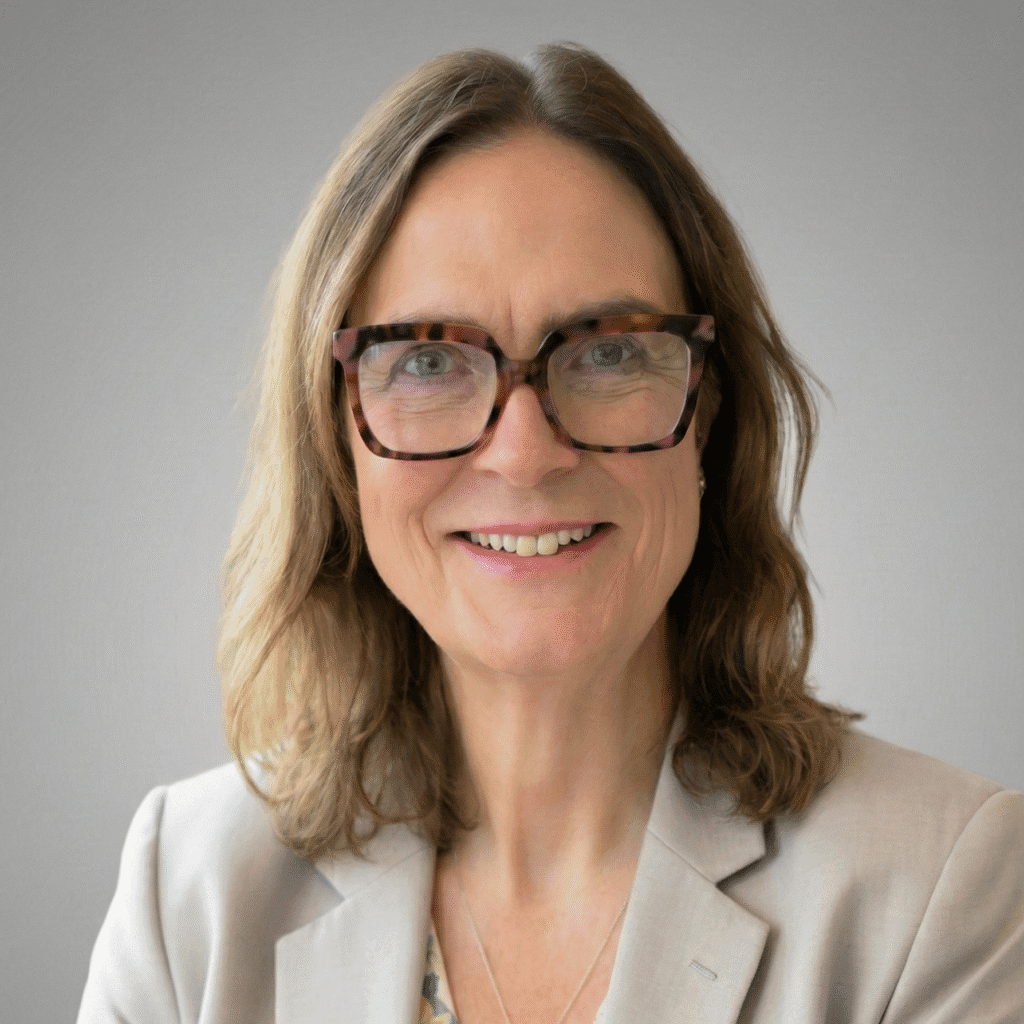
Joanne Lockwood is joined by wellbeing and stress-reduction specialist Pam Burrows to explore what it really means to “give yourself a gold star” — recognising your strengths, noticing small wins, and stopping the habit of beating yourself up.
Pam explains how acknowledging even minor successes can lift mood and support resilience, and shares practical ideas to help people switch off from the stress “hamster wheel”, sleep better, and create healthier routines during lockdown. The conversation also covers how connection and humour can counter isolation, and why it now takes more intention to build variety and joy into repetitive days.
They also discuss the workplace context: the need for organisational policies and a culture of trust so people can say they’re not okay without fear, as well as the risks of burnout when employees try to operate at 100% while juggling additional pressures such as caring and homeschooling. Pam argues for realistic expectations, supportive leadership, and building both individual toolkits and structural support so people can thrive.
“I like to talk to the organisation first about what they're gonna set up with policies, procedures, and strategies, which enable people to bring their whole self to work and feel safe.”
“There was a few people that said to me, no, the pandemic, you know, I'm just getting on with things. I'm I'm okay. And then in the conversation, they'd say something about that they were drinking more wine than usual or that they weren't sleeping very well.”
“But now we've got this commonality and, yeah, it's permission to to say because so many people are really struggling, it's it's no longer you're you're an usual person over here having an individual experience. You you're you're in this in this thing that everybody can relate to, and, and people are expecting you to say, actually, I'm not brilliant today.”
“The a of the CARE model stands for acknowledge because what we what we know through, quite a bit of research now is the lift in spirit that you get when you start acknowledging your even little successes.”
“Just that very small habit of noticing the good stuff even if it's just, you know, I actually put trousers on today or I didn't shout to anybody. You know? Just those little little wings that may may actually need, you know, a little bit of acknowledgment because there's there's not a huge amount to to celebrate.”
“I want a mission to get as many people with their feet in a bucket as possible. And, and and then now I'm getting paid to do exactly what I would just love to do anyway.”
“Yes. I was using the energy that I would normally use on stage, but normally when you're on stage, you've also got a huge room with people that you're engaging and you're calling out or they're asking question. You know, it it's a it there's a cycle of energy. But sometimes, especially when it was a webinar setup or flipping Microsoft Teams where most people have their cameras off, which drives me crazy. You're just looking into the lens. You're not you know? So so, yes, I was coming across with more energy, but a 2 hour session, and I'd have to lie down for 2 days afterwards.”
“And the people that I was talking to, who are working at home, still putting the same pressure on themselves to, try and, clear the backlog of work that they have for the courts, whilst also some of them being isolated with no support, some of them trying to homeschool kids or support elderly relatives or whatever, just all of that stuff.”
Creative techniques to inject energy and personality into online meetings and presentations.
The importance of sharing personal stories from a place of healing, not distress, to maintain emotional balance.
Strategies for combating burnout by focusing on achievable tasks and realistic expectations.
Balancing live sessions with pre-recorded materials to manage energy and support effectively.
The significance of intentional and regular social interactions to combat stress and boost mental health.
Innovative ways to create a supportive organisational environment that acknowledges employee well-being.
Practical tips on leveraging personal privileges positively, enhancing both individual and collective growth.
One thing to remember
The central theme of the episode "Giving Yourself a Gold Star" with guest Pam Burrows is the importance of maintaining energy, passion, and connection in remote interactions while acknowledging personal achievements and managing stress. Pam emphasises finding joy in one's work and life, utilising creative engagement tactics, balancing emotional storytelling, and prioritising mental and emotional well-being, both individually and within organisations.
Questions this episode helps answer
How do you think Pam's idea of incorporating fun activities like having feet in a bucket can influence team engagement and morale during remote interactions?
Pam talks about the importance of finding passion in your work. How do you balance passion and profession in your own career, and what strategies do you use to stay emotionally engaged?
Pam suggests sharing stories from 'the scar, not the wound.' Can you discuss a time when you have shared or heard a story that either followed or failed this advice?
Both Pam and Joanne discuss the difficulties of maintaining energy and connection during online presentations. What techniques have you found effective in keeping virtual sessions engaging and interactive?
Joanne mentions the CIA model (Control, Influence, Accept/Adapt). How do you apply this model in your daily life to manage stress, and what outcomes have you observed?
Pam emphasises the necessity of balancing work and personal life to prevent burnout. What are some practical steps you take to ensure this balance, especially in the current remote work scenario?
Explore topics
Ideas from this episode
Finding Passion in Your Work
One of the most enlightening parts of my recent conversation was exploring the idea of finding and nurturing passion in our professional lives. Pam Burrows articulated this beautifully, sharing her own journey and the transformative impact of doing work she’s genuinely passionate about.
Balancing Emotion in Storytelling
The nuanced art of storytelling, particularly focusing on finding the right emotional balance. Pam shared her insight on the importance of speaking from 'the scar, not the wound'—a powerful metaphor for sharing personal stories that have healed enough to be told without distress.
Maintaining Engagement in Online Presentations
Another critical topic we explored was the challenge of maintaining energy and engagement in online presentations. Both Pam and I shared our experiences and strategies for overcoming the unique obstacles posed by virtual formats.
Learn
Frequently asked questions
What is Pam Burrows' approach to more engaging remote interactions?
Pam suggests making remote interactions fun and memorable, such as having participants put their feet in a bucket during virtual meetings. Her goal is to introduce activities that invigorate and connect people.
Why does Pam believe passion is important in work?
Pam feels fortunate to be paid for work she loves and emphasizes that passion is crucial for emotional engagement, whether in writing, speaking, or any professional activity.
How does Pam Burrows balance emotion in storytelling?
Pam advises sharing personal stories from a place of healing—'the scar, not the wound'—to effectively convey messages without appearing distressed.
What challenges do Joanne and Pam identify in online presentations?
They mention the difficulties in maintaining energy and connection, such as the energy drain and lack of feedback when participants have their cameras off.
How has Pam adapted her presentation techniques for online formats?
Pam uses a clipboard instead of a flip chart to manage her energy better during online sessions and maintain engagement.
What advice do they offer for teachers struggling with online teaching?
They recommend balancing live sessions with pre-recorded materials to manage energy and support effectively.
Share this episode
Heard something worth passing on? Send this conversation to someone who needs to hear it.