Empowering everyone to be able to share their gifts with the world
Penny was just getting into her stride with managing in-person programmes when September 11th 2001 shifted her ways of working and forcing her to be an early adopter of virtual working.
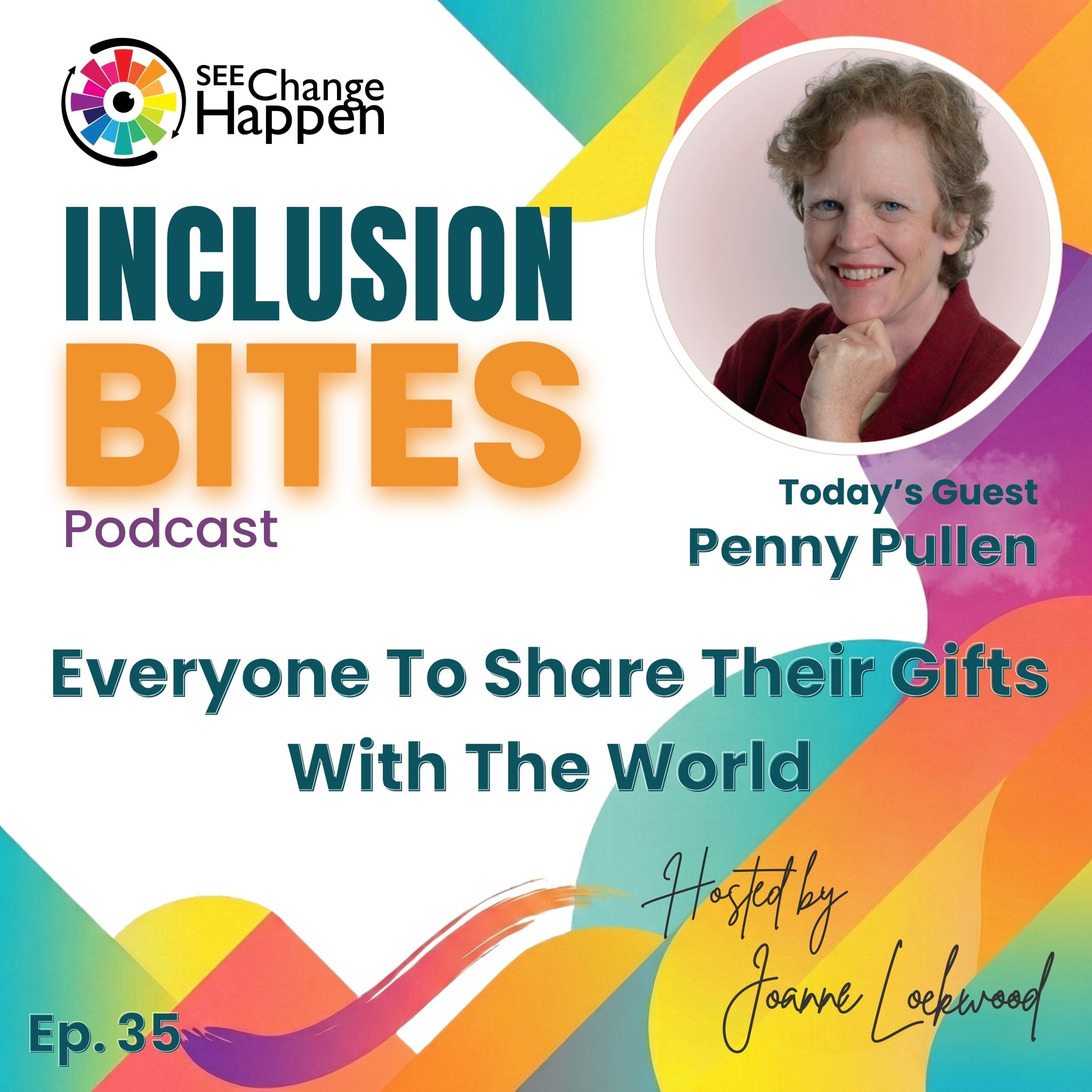
In this episode of Inclusion Bites, Joanne Lockwood speaks with Penny Pullen about workplace culture systems.
“You've asked me. You care about me. You thought about me.”
Explore
Navigate this episode
Joanne Lockwoodhost
Hello, everyone. My name is Joanne Lockwood, and I'll be your hostfor the Inclusion Bites podcast. In this series, I've intervieweda number of amazing people and simply had conversations around the subjectof inclusion, belonging, and generally making the world abetter place for everyone to thrive. If you'd like to join me inthe future, then please do drop me a line tojo.lockwood@seechangehappen.co.uk.That'S-E-E change Happen dot codot uk. You can catch up with all of the previous showson Itunes, Spotify and the usual places.So plug in the headphones, grab a decaf, and let'sget going. Today is episode35 with the title, empoweringeverybody to better share their gifts with the world.And I have the absolute honor and privilege to be joined byPenny Pullan. Penny describes herself as aspeaker, author, facilitator, and mentor.And when I asked Penny to describe her superpower, she said, shemakes workshops work, and that's a tongue twister.Hello, Penny. Welcome to the show.
Penny Pullenguest
Hello, Joanne, and thank you so much for your introduction. It's reallyfun to be here and to be chatting away with you.Yeah. You asked me, you say that Imake workshops work and yeah, I supposeI do that. And I've been doing that for about 20 years.I started off as a, project manager and programmanager and was very interested in, you know,how do I really make these projects and programs as good as theypossibly can be? And realized that actually it was all about people.I was just about getting that sorted andworking out how to work with groups in personwhen something happened thatshifted my whole worldinto virtual. About 19 years before everybody else,I was meant to be hosting a kickoff meetingfor a big program. This is the first time I'd everrun a whole program, just me. And there are all these people comingfrom all over the world. We're going to spend 2 weeks in New York.What fun. Except the date on my ticket when Iwas flying out from Heathrow to Newarkwas 13th September 2,001.Now, yes, the listeners can't see,but you've just pulled a face and gone, Oh, becausethat's 2 days after 9:11. And oh boy, we weren't goinganywhere. We were grounded for 3 months. So thatprogram had to happen virtually a little bit likeeverything had to suddenly go virtual at the beginning of thelockdowns of 2020. So, yes,so that added in virtual to the mix because I still hadto get this program done with quite ancient technology.It's much easier in a way now because we can see eachother on a desktop. Brilliant. But,then we just, nobody really knew about this virtual thing. And I spent agesworking on it and ended up being asked to help other people andwrite books on it. But I've probably carried on long enough. So back to you,John. Yeah. When you've when you're talking about that,
Joanne Lockwoodhost
those days weeks months after 9/11, Ilook back. Yeah. Most people kind of remember where theywere. It's one of those, you know where you were type type moments.I remember I was working on a project for a cableTV startup in Irvine in Scotland.And I remember we we just got the the head end, the thetechnology center up and running that, you know, the the massive bigdish in in the in the in the back, and they've plumbed it all in.And those were the first pictures we got livein in the in the computer room in the head end, in the in theknock. There's the picture we had up, and we all gather around this smallscreen looking at the I think it was well, it's obviously thesecond plane hitting the the tab because nobody saw the first planehit. And we were just stunnedsilent, and I was texting friendsthat I'd been in New York with, the year before,months before, just reminiscing and just stunnedsilence. So that was, yeah,a world changing day and time, wasn'tit? It was. And I had a friend, though. Yeah. It was in theair at that time, flying to theUS, andthey had no idea what's going on. They just know that they suddenly entered aholding path and go around the circles. I think they ended uplanding in Gander. And if you've ever landed in Gander atNewfoundland, it's quite an adventure. I mean, I've I've been there once on theway to Miami and sat on the tarmac in Gander for 5hours, because somebody had a suspect heart attack. But she wasin the air. And, of course, she knew nothing about what's going onat the time, and her husband obviously did.Obviously, knew that she was in the air. Her arrival timewasn't too dissimilar. So, ofcourse, he knew that it wasn't her on thoseplanes because he knew that wasn't her her flight. But he he wasworried. You know? He didn't know what's gonna happen. Jo, yeah, when shelanded, all these panicked phone calls and messages, she still had noidea until suddenly everyone became aware ofwhat had happened. And, yeah. So she tells that story from a different
Joanne Lockwoodhost
perspective, being up in here at the time. So, yeah, it's it'sa, yeah, one of those moments, but I and as shewas saying that, you're right. It's it's one of those pivotal moments in historywhere we suddenly have to adapt, change, learn about ourselves.So the need for you to develop the virtual training, the virtual way ofinteracting with people. And and as you say, at a timewhere Zoom didn't exist, Teams didn't exist, Maybe there's abit of Webex and then I used to remote IT support. So we're usingthings like, what's it called? TeamViewer,things like this. So a kind of IT tools, weren't they, for a remotedot. Yeah. The only way we saw each other face to face
Penny Pullenguest
is really when we were in the video conferencesuite, which tended to be a corner office,normally booked solid by senior very senior managersat the lovely time, you know, between 2 5 when the UK and theUS overlapped. We could book those,but we couldn't do video on the on the desktop like we cannow. I think we were able to see each other'sscreens, if we hadIT tech support tools, but yes, all very, very different. Andthe funniest thing is that there are now people in the workplace whodon't remember 911.
Joanne Lockwoodhost
And the phone in the mobile phones, they were they were phones.And I seem to remember cameras were just coming in our phones. They theyweren't defacto. They weren't the standard feature. No.
Penny Pullenguest
No. Not at all. Maybe some video messaging or you'd you
Joanne Lockwoodhost
share video clips with each other or you maybe just perhaps send apicture. And it's very early days with that. And I remember you Jo into companies,everybody wants to you had to prove that your camera was disabled when youwalked into the building, and everyone was scared about people stealing secrets.
Penny Pullenguest
Absolutely. Yeah. The world has changed so much, hasn't it?Yeah. Yeah. I remember we did most of the work by conference calls,so we couldn't see each other at all, but we had to listen outvery carefully. And we got a lot done thatway, but we had to be structured. It forced us to dothings well, And I think that's how Iit forced yeah. It forced me to develop all the things that I thenused and helped other people with and and ended up thinkingthrough properly in the year that I wrote my book, Virtual Leadership. And I'm soglad I had a chance to think through that book and writeit well before you know, a few years before the pandemichit, because then it was there. It was ready. People could just grab it.And, yeah, it's been selling like hotcakes, that one.
Joanne Lockwoodhost
So what was what's the cover of the big big nuggetsof, of lessons you've learned at that time or or put in your book? What'sthe what's the kind of big nuggets from that? Yeah. There are a few things.
Penny Pullenguest
One thing is, that I think people are just about gettingabout now, isthat virtual working is not just about beingin virtual meetings. That actually you need to think, howdo you as a team work effectively?And then work as much as you can asynchronously.You don't have to be together face to face like you andI are when we're recording this. You can do a lot ofwork in a much more flexible way. You can, you can dowork. If you do work asynchronously, so that means people can dothings at a time to suit them, then you canflex around people's needs. Perhaps people,
Penny Pullenguest
for example, have kids they want to collect from school. Yeah, they can go off,collect the kids from school, come back, but then they can make upthat time to produce the output that's needed ata different time. Perhaps they work far better first thing in the morningor last thing at night. And if people can do thework, the virtual work that they need to do at times when they can workbest, as opposed to being expected to be sitting downin front of a computer on meetings, you know, for a backto back all day, which I saw so many people doing last year.That's just not a good use of people's time. Not veryinclusive either. Mhmm. No. I completely agree. And I
Joanne Lockwoodhost
think I was probably one of those people that got sucked into this back toback 15 minute gaps. And then you Joanne wake you get at the end ofthe day, you can't move. You are you are numb and drainedbecause you've you've had no break at all, have you? It's just screentime. The thing that really helped the people who were in
Penny Pullenguest
those back to back meetings and didn't feel they couldchange the culture of their organization quicklywas, if they were in control of any meetings, Jo startthem at 5 past the hour and finish them at 52 rather than just I mean, there's so many people doing 9 to 10, 10to 11, 11 to 12, you know, maybe grab 5 minutes tograb a sandwich and then, you know, on 3 to 1. It was justcrazy. Yeah. That's certainly a lesson I've learned is to
Joanne Lockwoodhost
make sure I've got that time between the between the calls.And because inevitably, the calls was end up overrunning a bit, don'tthey? If you're not careful, every call overruns into the next. By the end ofthe day, you've just literally overrun or your contingency is yourlunch break or a coffee break. Yeah.And I've seen people when I'm running training,they arrive dead on time or 30 seconds late because they've just come for ameeting. And at the end of the training session, they're saying, well, I've gotta go.I'm into another meeting now. It's like, so you haven't really beenpresent because you've this this training is squashed between 2other activities. And I do question sometimes whether peopleneed that half an hour to decompress before and half an hour toabsorb at the end before doing something else. Otherwise, it's it's sucha transient activity that that there's no memory of it.
Penny Pullenguest
Yeah. And, actually, we need time to get actions done. There's a wholechapter in my new book coming up all about how do we make sureworkshops get actions done? Because so often, I mean, I don'tknow if you are like this, Joanne, but you find that, there aremeetings, particularly in big organizations, there are meetings andthen a couple of weeks later, they have a meeting and none of theactions have been done, and they essentially agree all the same actions to carry forward.It's crazy. I mean, I'm guilty of myself.
Joanne Lockwoodhost
I'm so busy schedulingnew business or or delivery. I very rarely havetime to focus on the admin or getting back topeople with information I said I would. And I end up squashing that inbetween 2 other meetings. I don't have an I don't say to myself,this afternoon is is catch up time or ordowntime. And, I said trying to keep keepon delivering is, yeah, quite a struggle to to think about that.Being good to yourself, isn't it? That's what you're trying to do, try and begood to yourself and be fair to yourself. Mhmm. And actually do the best
Penny Pullenguest
work you can. So I'm sure if you're trying to squash theactual core, really important bits of work, knowledgework now, we need time to think.And if you try and squash it into the odd snatch minute here and there,we're not going to be doing our best work, are we? No. For sure.
Joanne Lockwoodhost
We're not. No. It's and that also I mean,one of the purposes, yeah, the mattress of this podcast aroundinclusion, of course, different peoplethink, experience, interact differently. Andoften we design these constructs ofmeetings around the privileged or the leaders or or the way we'vealways done it. And I think we start to learn that that that doesn't workfor everybody, does it? No. Absolutely not. So, I mean,
Penny Pullenguest
my thing is to get the best if you want to get the best outof everybody, and surely, if you're bringing people together to work together,you want each person to do their best and to be at theirbest. So, create the conditions where eachperson can contribute theirbest to that group. And so the group as a whole can do theirbest possible work together and change the world, hopefully, just a littlebit. Mhmm. So that means when you're designinga work shop or a meeting or something, think about eachperson. What's going to be the environment ofthat meeting or workshop that will help them todo their best work? You probably can't imaginethis in, the the answers to these. You probably have to have discussions withthem unless you know them very well. But what's gonnasuit different people?
Joanne Lockwoodhost
Yeah. Well, ask them upfront. Absolutely.
Penny Pullenguest
And say, you know, what's going to be best for you? And andif they look blank, because nobody's ever asked them anything like that and hasjust expected them to fit in, they might well look blank. But you cansay, you know, we've got a whole range already. You know, somebody wantsthis, somebody suggested this, somebody else wanted, I don't know,to have to have fruit available in the room or whatever it mightbe. Sort of let let them knowhow how you really do genuinely want to make it possible for them to dotheir best possible work. Give them some examples of some of the things that suitother people. It's amazing. People's eyes light up and go, what?Really? Yeah.
Joanne Lockwoodhost
You've asked me. You care about me. You thought about me. Yeah. It'syou say, I've I've been some on some some great local courses,and you walk in. As you say, there's fruit on the table, there's chocolate, there'scoffee, there's cold water, And and immediately, you just feel,oh, you feel happy, you're conversational, everyone's talking about, oh, isn't this lovely?And you start off with positive frame of mind, don't you? So the room isall laid out. Despite working for Mars for 10 years,
Penny Pullenguest
I wouldn't have chocolate in a meeting or workshop. Because whatyou do is you get this sort of sugar high. The rush. Andthen what happens next is the crash, and everybody's, you know.So even when I was working for Mars, I actually banned chocolates from themeeting rooms, I would say, because of that. Just those little
Joanne Lockwoodhost
foxes boxes glass of mints that people put out Oh, no. No. No. Still sugar.
Penny Pullenguest
Still sugar. So apart from the jelly beans.Yeah. Absolutely. So fruit is good,but actually what's really helpful, unless you have someone with a nut allergy, sothis is important, nuts are actually really good because they give you enoughenergy to stop being hungry. Yeah. They're high in protein, aren't
Joanne Lockwoodhost
they? Low in fat, generally. Well, they have quite a lot offat from nuts. Almonds are the best, aren't they? So, yeah, nut
Penny Pullenguest
nuts are great as well, and and some fruit, and and that'll keep peoplegoing. The other thing I do is in in a inperson workshop, I like to use music. Sosomething that really gets people feeling, hang on, this is a little bitdifferent from your box standard boring meeting, is toplay some steel drum music justin the background as people coming in. Because that's the sort of classicwe're on holiday music, perhaps. Jo justso it's just so different from the standard work vibe.So I find that quite fun. I like the idea.
Joanne Lockwoodhost
So maybe just have it Yeah. As part of the warm up or the itwe're able to get their seat just a bit of a bit of a jumpin the background. Yeah. Yeah. Yeah. That's interesting. Yeah. I like that idea.
Penny Pullenguest
My accent arms people. Yeah. But don't doanything that is still drum music of standardtunes, especially ones that havewords, because it's very easy with music to switchpeople back into a state from the past. And the last thingyou want is to be playing a music that was, you know, our songwhen somebody's just gone through a dramatic andunhappy divorce, for example. So
Joanne Lockwoodhost
nothing that invokes a memory.Yeah. And that and that's part of the when I talk about inclusion,is thinking about all these permutationsabout not using your own lens all the time, thinking about theimpact or how that would resonate with somebodyelse. And as simple as that, yeah, as you say, triggering amemory, triggering an upset,overemphasis on family, overemphasis on children in discussions,that may well lead someone to feel sador upset if they've lost someone recently. So it's yeah.It's so difficult, though, because we we love these human interactionsand almost have to pause and take a break and step back andgo, is this gonna work? Is this a good conversation?
Penny Pullenguest
And think about what are the assumptions that I'm making aboutpeople? Soit's so easy to assume that people fit into the stereotypesof that age of the age that they are,or of the gender or of, well, all sorts ofthings. I remember, obviously, the group of
Joanne Lockwoodhost
friends is several years ago, and we were talkingabout television and soaps or films orwhatever's been going on. And one persondoesn't didn't have a television. And, of course, we were all fascinated abouthow this person was able to survive in their life without a television.Apparently, they didn't go to movies or the cinema, so they hadno visual media bias in their life. They had no visual entertainment.And we all find it really incredible, but then as the day andthe time with them progressed, we found it really difficult to haveconversations because we realized that so much of the context, the conversations,and discussed we had had a kind ofculture based on film and TV. Mhmm. Evenjust that expressions of humor oror scenarios or quoting a line, and we've had itreally strange. Joanne, that made me realize thatpeople experience the world differently. They have different paradigms, differentmetaphors to the ones I use. And what I thought were really goodreally good examples, suddenly it didn't work. And it it wasreally testing. So, yeah, we we can't make those assumptions that peoplethink and perceive the world as we do.
Penny Pullenguest
Absolutely. So that's why it's really, really important. Ifyou want to get the best work out of people, which is ifyou're bringing people together for a workshop, or ameeting of any sort, you're doing that to getsome work done together. Then actuallyknow who the people are and design the processof your session to sothat each person can do their best work. And, overall, you can do fantastic work,and you can have lots of fun doing it.
Joanne Lockwoodhost
Yeah. I I I think a fun element has to be enjoyable, doesn'tit? Work work shouldn't be tedious.Work with an element of satisfactionand enjoyment doesn't become mundane, in which case you're more like tobe diligent, engaged, productive. Absolutely.
Penny Pullenguest
Now, it's interesting, you see. I don't know if youknow the book Death by Meeting by Patrick Lenconi.
Joanne Lockwoodhost
I've not read the book, but I've been in the meeting. Yes,
Penny Pullenguest
absolutely. Now you see his answer to boringmeetings, I'm not quite this this,yeah, I wouldn't go quite as far, but he says the best thing to doif you're in a boring meeting is to mine for conflict.Because if you dive deeper and find things thatpeople care about enough to, for there to be conflictand a little bit of tension, then you've got to something that peoplecare about and not just, can't can't be bothered.Okay. Which I think is interesting, but but I suppose thecore of what he's saying is that actually people do care about things. Andif you're working just and you'resort of glossing over everything and it's just tedious and boring.You're not actually engaging with things that people care about. Somaybe mining for conflict is one of the ways to to do that.But I'd probably say mine for things people care about as opposedto try and find conflict. Yeah. Also, maybe as a as a
Joanne Lockwoodhost
when you're thinking as an inclusive leader or as an inclusive facilitator, asyou're you're the host of that session, you have to be awareand emotionally intelligent enough to understand you're losing the audience.Because how often do we see people running for the finish line, I'mgonna give you this. I'm gonna go I'm gonna finish. No matter what happens, I'mgonna you're gonna get this without stopping or reflecting. Oh, actually,the right thing to do here is to pause, change, and adapt.Because I I've sat in meetings where where we've ended up gettingour hankies out of our bags and waving the white flag. So it'slike, we give up. We surrender. It's interesting because I
Penny Pullenguest
talk about this a little bit in the, in the book that's coming outin July, And I talk about,how people tend to go into, I've got to be in controlmode. So I've got to finish this, whatever. Youknow,that I need to, I have the, I'm the authority, thespotlight is on me. I I'm you know,something's going on. I'm the one who has to know what's going on, and Ineed to make the decisions as to what happens next. And it's a complete disaster,you know, like you and your friends with your white handkeys.That's what it feels like. Whereas, if I've learnednow after many years of doing this, that if I'm in aworkshop and it feels like that, and I'm the workshop leader, I will saysomething like, to me, it feels like we areelephants when we're wading through thisgloopy field full of treacle. Doesn't
Penny Pullenguest
it feel a bit like that to you? And then everybody will smile andgo, yeah. And then I say, well, what Joanne we do? What whatare your suggestions for making it a little bit less like elephantsthrough a field of treacle? And there'll be all sorts of ideas popping up, andthen people will feel that they've, you know, we're all in it together,and that's a mode to switch away from. Switch awayfrom, I've got to be in control of everything to,We're in it together. But actually as a facilitator, that takes all theweight off your shoulders and actually lets you be muchbetter. And you're much less likely to head off into the fight,flight, freeze response that you tend to get when you're really stressed.That comes very quickly when you're in this, I've got to be in controlmode. Whereas if you're sort of, you know, we're in thistogether, you've got ideas, I've got ideas,you've got different perspectives to me. You may see things that I can't.All those sort of things can all work together really, reallyhelpfully, really effectively. So try and get people, orwhen you're running workshops, try and stop yourself heading off in that, I'vegot a control, I've got a control, I've got a control over and over again,going around your head and just think, well, if something goes wrong
Joanne Lockwoodhost
Yeah. Well, there's all of us who together can sort
Penny Pullenguest
it. But sometimes that takes a a
Joanne Lockwoodhost
person with the right experience, character, confidenceas a as a sort of, if you like, a group leader, as a sessionleader to be rather thanreach content, which often people reach content, is tohave conversations with the audience. So you're not telling,you're showing an example and letting people bring build their ownpictures. And then in that conversation, you could say, so how are we feeling aboutthat? Anyone anyone got any thoughts? How how does that feel to you? And arewe okay? Do we need a break or would we be okay to carry ona bit more? Almost like involving them in the decision of what whathappens next. Yeah. Because it's their meeting generally,
Penny Pullenguest
especially as an external facilitator, you know, it's their meeting. It'snot my meeting. I'm just there to be the catalyst to make it allhappen and work smoothly. I was very of what I'm delivering.
Joanne Lockwoodhost
I I look at the the con or listen to conversations going on. I think,well, actually, I don't wanna stop this. The next couple of slides and stuffI wanna talk about, I wanna I wanna cover. But what I try and dois drip them into the conversation rather than stop the conversation to hear theslides. I actually present into the conversationand allow people to carry on. And, once people are inflow, you wanna keep them in flow, don't you? Absolutely.
Penny Pullenguest
I used to trip up over flip chart Joanne.Obviously, you haven't been anywhere near a flip chart for a while, whenwe record this. I used to get really worried about it, andit would go round around my head. I mustn't trip over theflip chart stand. I mustn't trip over the flip chart. It would gorun around my head all day. And, youknow, I mean, you know, Joanne, by the end of this, I probably orthat day, I probably would have tripped over the flip chart. It's just something Ialways did. And then I
Joanne Lockwoodhost
thought, why don't I consider me tripping over the flip chart?
Penny Pullenguest
Sort of reframe it as, well, it's entertainingfor everybody. So if I do end up trippingover, I'll do it in a flamboyant and entertaining way.And, and, you know, so there you are. There's something for you to laughat. And, it's sort ofquite enjoyed it once or twice when it happened, but it's hardly happened ever sincebecause I'm not been thinking about it all the time. Yeah.
Joanne Lockwoodhost
I I just I was I was delivering a training session at a hotel ona Saturday morning once. And as I as I was just about to getinto my role, I just sort of said, hi. Welcome, everybody. There's such a massivecrack on the back of my head, and I went flat into the table infront of me. And the whiteboard has come detached from thewall and and pivoted and smacked me on the back of the head. Ofcourse, I was now seeing stars and days. Everybody in the room would rush intomy assistance. So we agreed that I was gonna gooff. The next customer would come on, and I come back later. So while Iwas off, I redesigned the first couple of slides. It had a littleemoji avatar of me with a big bandage around my head. So I cameback. Well, hopefully, we're okay in the future. But, yeah,you have to sort of fall with it, make a laugh, and and and Yeah.
Penny Pullenguest
Yeah. Reassure the audience I'm okay and and seeing the funny side. But, yeah, it
Joanne Lockwoodhost
was a trip over the flip shop, mind out forthe whiteboard on the back of the head. Yeah. I wonder if you were sort
Penny Pullenguest
of expecting the next few whiteboards to land on you or alittle bit wary. I'm now I'm now more cautious. I'm definitely
Joanne Lockwoodhost
more cautious about what's behind me and what's above me. But yeah.
Penny Pullenguest
Interestingly, a little while ago, you said that you needed oodles ofexperience to be able to switch into that we'rein it together state. I think it's not justit can come from years of experience, butalso you can learn about it and know about it and practiceit and actually get there without having to do the 20 yearsof actual high stress, and then working out foryourself that it's it's a better way to do things.Jo, you I agree. I've I've
Joanne Lockwoodhost
kinda learned it by experience over the lastcouple of years. So I have got I haven't got 20 years experience in doingthat. It's it's just it became a style thatevolved, and I detected it works.Therefore, I will be rewarded by good behavior by doing more of it, and itbecame a self fulfilling, action.It's just become part of your style, doesn't it? You just adapt and evolve toit. Yeah. But if somebody said to you upfront, you know, when you begin to
Penny Pullenguest
get really stressed and you're feeling like you have to be in control,just notice that and deflect away from it to actually knowthe whole room, we're all in it together.
Joanne Lockwoodhost
Mhmm. We can do it together. It's not about
Penny Pullenguest
I. If people in that sort of controlling stagego, it's all me, me, me, me, me, I, I, I, but actually it's notme, it's we. And if you think, actually, that's all of us.And I often think, and there's a picture in my book as well, ofa metaphorical spotlight. Imagine it on the ceilingabove you, if you're in person in a room. Andthe people who are in that sort of, you know, I've gotta be incontrol state often seem to have thismetaphorical spotlight. I mean, it's metaphorical, but itseems very real to them indeed. They've got this massive spotlight shiningonto them. And Jometaphorically, if you can just switch that spotlight Jo that itfocuses on the group that you're serving,again, it takes pressure off and it helps you to go from that, actually, it'sall about I, it's all about me controlling, to actually we're all init together. We can do this together. I'm just here as acatalyst and as a supporter.
Joanne Lockwoodhost
Yeah. That's a good point. Yeah. But that that could be a challenge where you'vegot people with different learning abilities, differentphysical capabilities in a mixed group, isn't it? Trying to reallymake everybody feel included. That can be a struggle whennot everybody can participate in the same way. You need to design.
Penny Pullenguest
You see, so there are 3 things with a a meeting or workshop. There'sa process that you're going to do, but you can'tjust design your process straight away. You need to know 2things before, and they're all P's. Sothe first P you need to know is the purpose. What is the purposefor your meeting or workshop? When you've got that sorted, thenyou can think, given that purpose, who are the people we need?Identify the people and then learn about them andhow are they unique? What are their preferences? What are theirstrengths? What are their weaknesses? What do they bring?What do they need? All those things about the people. And thenyou design the process of your workshop, whether it'sin person, whether it's virtual, whether it's hybrid,those three things apply. Know your purpose. From thepurpose, work out the people, and then knowingdeeply about the people and their perspectives and their preferences, all thatstuff, then design the process to suit that particular group.
Joanne Lockwoodhost
Yeah. Definitely. The otherthing I think people often forget is asking peopleif they have any needs or special special requirements,even down to do you need a regular break? Is there any anything goingon? So I I I did a few sessions the last couple of weekswhere one person was blind. I was having a conversation onZoom this morning where the person was deaf and Ihad to turn subtitles on on Zoom andspeak very clearly, articulatelybecause they weren't also there were non native English speakers also with lipreading and subtitling when English wasn't their first language. And it was,I felt I was very conscious about making sure that I took responsibilityfor being understood. And sometimes when we when we don't take thatleadership role in communication, we speak to beheard from our own lens, not the other person's lens.
Penny Pullenguest
It's interesting, Chris, of the virtual leadership work thatI've done, I'vehad a lot of people who were not Englishmother tongue speakers, who I've interacted withvirtually. And, I interviewed an expertin business English once for virtual,And it was really interesting because I completely put my foot in it. Imade a complete hash. I introduced him as a leadinglight in the world of business English. And hesaid, Penny, thank you for giving me that marvelous example of how not to doit. Because I'd used the phrase leading light.So while my pronunciation was impeccable andmy accent was understandableand even the words were quite simple, what I'd done wasI'd used a metaphor of a leading light, which is something thatwhen you're sailing and coming into a port, youmight have 2 lights that line up and you can use them to work outwhere the channel is. Now, how somebody who mightbe from Central China would knowanything about, you know, little lights on sticksin the sea off the coast of England,they just wouldn't. And so it was a way of excluding.And ever since then, I've been so careful thinking about notjust clarity and speed and all of that,but also the words that I'm using to make theminclusive. I'm very conscious about
Joanne Lockwoodhost
words that are associated with good, or words associated withbad, and often masculine wordsmasculine words are more worthy, better.Sometimes feminine words are less worthy or seems worse.And when we think about racism, some words are associated with the lightas being gray and the dark as not being gray. So you're sometimesreally conscious and mindful about, as you say, there's analogies, metaphors, or seminars we'reusing. What do we mean by that? Are we effectiveusing effectively a racist connotation to describe something asbad? Yeah. Really? Yeah. Sinister. Yeah. Yeah.
Penny Pullenguest
Yeah. Yeah. Sinister. You know, left handed people.
Joanne Lockwoodhost
That's me. Not good. Handed. Yeah. Yeah. Half my family are left
Penny Pullenguest
handed. I'm right handed. But, yes, you know, are theysinister? Well, it wasn't so long ago
Joanne Lockwoodhost
that we were excluded from certain jobopportunities. You couldn't work in a bank because they were worried you mightsmudge statements. You're handwriting them. You couldn't write envelopes.So the I've actually seen a memo from Barclays sayingthat we're now allowing people who are left handed to to work as clerks.And that that was like in the fifties. It wasn't that long ago.So it's it's incredible. I mean, example I often give is that I've gotone of these thermos soup flasks and it comes with aspoon in the lid. And the spoon only works if you'reright Joanne. Since you're left handed, it folds up every time you use it.And incredible that a company like Thermos designed thisproduct with a spoon that doesn't work for left handed people.And it just shows that we we all have these blindspots to design, to thinking about other people.
Penny Pullenguest
Absolutely. And I think I mean, I particularly think of lefthanded people because once I was doing something, and we had an activity thathad involved paper andscissors and glue, I think. I don't know what it was. It was,I don't like icebreakersand energizers that are for their own sake. But if there's somethingrelated to the content that you're covering, the work that you're doingtogether, that can change the state, then that's great.As long as it's something related, not just creating,the tallest possible towers out of spaghetti and marshmallowsjust for the sake of doing that.But, so we are doing something with paper and scissors and glue, except Ionly had standard scissors, which are right handed.And there's somebody who who is left handed who find it particularlydifficult to cut accurately. And ever since then, I've been muchmore careful and included that.
Joanne Lockwoodhost
Yeah. I've scissors because the paper always folds inthe scissors because the blades are the wrong way around. You always end up thewrong side. I end up having to sort of cut backwards to force myselfor and, yeah, I I have terrible trouble withtightening and loosening screws because for some reason, my brainjust doesn't wanna do it in the way that it works. It's always reversed. Andoften, I end up tightening something up, but I should be undoing itwithout realizing. And I have to I have to actually work get another screw thatI can turn and think, okay. Right. That got it now. Andit's and I'm not sure that's whether that's being left handed or whether that's justthe way my brain works because it's left handed. A lot of thesethings that seem natural to a right handed person just aren't for lefthanded people because everything works in reverse.
Penny Pullenguest
Well, something that I find usefulis not just saying, you know, would you like a break? Yes or Jo?Just jumping back to what we were talking about a little while, butsaying, what breaks do you need?So asking open questions asopposed to questions with yesno answers,which makes it easier for it's as if you're expecting aresponse to that question. It's not just a sort of,yeah, we'll have you know, brakes fine.But, actually, you know, what what dietary requirements do you haveas opposed to do you have dietary requirements? Yeah. I
Joanne Lockwoodhost
was I ran a workshop the other morning, and at the beginning of it,someone said, I I'll be having breaks during the session. It was a 2 hoursession. I said, yeah. I'm planning 1 around about an hour in,and if we need one, just the last 20 minutes. They say,oh, the reason I need to know is my dog needs tohave to be let out every so often.Jo it'd be really helpful for me if it was 40 minutes rather than anhour. I went, absolutely fine. 40 minutes ago for me.And so there was a just by planning the schedule andmy needs, it actually reminded me that I actually need to ask people about, wasthat okay for them? And we also have to you know,we've we've all got deliveries, Amazon,Hermes, DPD, everything's turning out. The doors are knocking. Pets are jumpingaround. Kids need feeding and schooling. So we'velearned really to be very adaptable to the needs of individuals.Whereas I think when we started this process, we were still thatregimented, I've got you in my room. You're gonna do as you're told. And nowwe've learned we we can't herd our cats in that way.
Penny Pullenguest
Perhaps my book should have come out a couple of couple of years earlier,the the one about workshops. But, anyway, it'll it'll be there. Now Ido have something that is quite useful when you'restarting up meetings and workshops, which I call my magic 6. Infact, I used to call it meeting startup steps,but then one of my clients said, Penny, you should call it a magic6. Quite useful for planning as well. Sothis, that discussion about where the break should be could,would come up if you, if you brought this up. So, andthere is a visual as well for it, but I can't share that on this.So, but the first question is, we are here to,What are we here to do? So make sure you can answer that question orcomplete that sentence. We are here to. The purpose of themeeting, ideally about 7 words. So not aparagraph, quite high level. How, you know, whathow will you know that this has been a success because you've donethis thing? And then the next of themagic 6 is, Today we will Jo, what arethe 4 or 5 objectives that we will cover today?The next one is our plan. And that's where things likestart times, end times, breaks, and so on comesin. Who's doingwhat is another one. So whatpeople are playing which roles in the session and make sure you'vegot them. I mean, with virtual, we need to have,somebody keeping time. We need to have somebody writing downactions, preferably in a shared way Jo everyone can seethem. And then they can, you know, say, actually, that's not quite what Imeant when I said I'd take that action on,and so on. One that's often forgotten is howwe're going to work together.Lots of things there. I mean, especially virtually.Things like we know about muting if we're in a noisy environment, you know, we'vehad so many dog box and so on over the last year orso, but one person speaking at any time.If you're on a big call, why not say, stay your name at the beginningof anything you contribute? Because it's not always clear. I know thelittle lights come around boxes, but it's not always clear. And especially if somebody says,I'll take that action, and nobody knows who it is.So, those sort of things, how are we going to work together?Which is, if it hadn't come up already, hopefully that's where the,can we break every 40 minutes Jo that my dog canJoanne nip outside quickly? And then the final step iswhat's happening next? What's next? Sothat right from the beginning, we're thinking about what's gonna happen afterwards.And if you get those six things, sortedand clear, both in your preparation, but then crucially at thebeginning of a meeting or workshop, then it will go much more smoothlyand it will be shorter as well than it would otherwise be.
Joanne Lockwoodhost
I think there's some great points there. I mean, I I thinkabout this when I'm running workshops and maybe not meetings, but manyworkshops, is I try and create this story. Because if we're goingon a car journey, we know we're a bit 10 miles away. We know whenwe're 20 miles away. We know the path, the route we're taking. So we canalmost our brains become used to that journey. So if we'resurprising everybody with micro bits of knowledge as we go,their brain can't plan ahead, so they don't know what's happening next. And I thinkthat's brilliant, the idea that we we create this story and say, well, we're gonnafirst of all, we're gonna talk about this. We're gonna show that. I'm gonna doa bit of this, I'm gonna do a bit of that, and we're gonna talkagain, and we're gonna have some of this. Is that okay? I'm gonna have abreak about there. And so you almost narrate the agendaand create this sort of kind of shared vision, don't you? I think I thinkthat's a great idea, just building it into that, the the 6 points at thebeginning, making that part of your routine. And I do it all visually
Penny Pullenguest
and draw it up all over the screen. Just meanseverybody's clear, and visual support is helpful as well.
Joanne Lockwoodhost
Yeah. I love that. I love that. So maybe I'm doing this withoutthinking, and it's, it's it's actually good practice.So you've got this new book coming out. Is that is that in the newbook, or is that in the original book? That's in the new book. In fact,
Penny Pullenguest
I think it's in pretty much every book I've written, but, because it justworks so well. It's one of those things I came up with in2007 and thought, oh, you know, next month I'll tweak it. And I haven't tweakedit since. But yes, it is in the new book,it talks about how to use those 6 steps for planning workshops,for running workshops, as well.Yeah. And, I do have some littlecards. If people want a little card, they can get in touch with me,and I can point them at a a link to signup to get sent 1 in the post.
Joanne Lockwoodhost
So is this is this a a digital ageuplift book? Is this is this a kind of a a 20 year2021 book, or is this a a different topic to the original one?
Penny Pullenguest
The book I wrote last was Virtual Leadership. So this is allabout getting things done virtually. I'm updatingthis to include a chapter on hybrid, but the one that's coming outshortly is Making Workshops Work.And it's about creative collaboration for our time. The title was actuallydecided before this whole COVID stuff kicked off, which Ithink was quite funny. But, and that'sabout how do you run workshops? And because it'snow, it's for our time, it's how to run workshops, whetheryou're in person, whether you're hybrid, or whether you're virtual.
Joanne Lockwoodhost
So we've got more nuggets. Yeah. I know you don't wanna ruin the entire book.You want people to buy it, but what there's a lot of nuggets have yougot in there that we can you can share? I'm happy to share. So let
Penny Pullenguest
me just I'll give you a feel for the flow, and thenmaybe some nuggets will emerge as we go through. So Italk through some of my own horror stories, you know, thecomplete disasters, and I got some other people to share theirs aswell, But also somestories that should be really inspiring, where where things have workedout incredibly well through using some of the ideasthat I talk about later.I've got a whole chunk around that bit we were talking about,which is about how can you be a a workshop leader orfacilitator? How do you go from that,I've gotta be in control mode to something more productive where youhave all your brain available to think other than, justrunning around going, ah, I've gotta be in control.There's a whole chapter around what makes people tick. Sothat's people in your workshop, but also yourself as a workshop leader.So a little bit of neuroscience, social psychology, stuff like that in there aswell. There's, it thengoes through the planning, running themeeting, well, planning, choosing the activities, then running themeeting, getting actions to happen afterwards. There's a whole chapter of alllots of complications, and loads of people contributedcomplications that had happened to them. So there's lots of very practicalstories for both in person, butalso virtual and hybrid examples. And then it finishesoff with 3 lovely case studies of people who, are usingworkshops to great effect in very different ways and in very differentindustries. So that's the book.
Joanne Lockwoodhost
And that's out in July, is that right? July
Penny Pullenguest
13th, it comes out as a printed book. But,on July 12th, just thatday, not the day after, even if you plead with me,because it's all done by the publishers, onJuly 12th, they're going to drop the Kindle price to 99pjust for one day.
Joanne Lockwoodhost
So So that should be about a week after thispodcast episode drops. So put it in yourdiary now so that you It's a Monday. It's a Monday. Sothis will this it should launch on a Thursday, so 3 days'time. Okay. Yeah. Yeah. That's right. So the Monday after this,
Penny Pullenguest
Monday 12th July, the 99p offer isthere. I mean, it's still very goodfor £20, which is the normal price. But I justthought people might like, you know, to have that. Or if you fancy the the
Joanne Lockwoodhost
paperback and the the the real print, invest in it, orif you just want a quick preview, read the nice IP version on Kindle.Yeah. Great bargain. And there will also be a
Penny Pullenguest
a color workbook to download, that you can actuallywrite your own stuff in for the whole planning,and preparing part, with lots of examples as well of doing thingsvery visually, which I hope will be helpful.
Joanne Lockwoodhost
Well, I'm looking forward to that. I'm gonna put my diary toremind myself to, on the on 12th, on the Monday tohave a look at that. Yeah. So so what's your vision for thefuture? We we're living in this changing world. We'vegot hybrid. We've got in person. We'vegot return to the office. Where do you see the world going,and and how do we adapt and and andnot ignore what we've learned? Oh, we need to not
Penny Pullenguest
ignore what we learned. The thing is this whole thing about how people workeffectively together, the core is the same, whether you'revirtual or hybrid or in person,it's about helping each person to do their best work.That is really dead simple, and it's also really complicated, butit is that simple. If we can look at everybody to do theirown best work and to interrelate with everybodyelse as effectively as they possibly can and work togetherto produce amazing stuff. Doesn't matter if we'rehybrid or virtual or in person. That's the challenge.
Joanne Lockwoodhost
Jo. It it is so obvious. Yeah.We know the facts don't change people. We know that we shouldn'tdrive too fast. We shouldn't eat too much red meat. We shouldn't drink too much.We still do. And we still don't reallyappreciate how to motivate people, to engage people, how to getpeople on our side and create that sense of belonging. We still struggle with that,don't we? And that's I guess that's our own human nature. If everybodywas the same and everybody could do that,there'd be something else we hadn't considered.
Penny Pullenguest
Well, hope that's probably why I'm using so manystories in in the books that I write because I think,yes, I can present the facts and I can present checklists and tips andall sorts of ways to make it as easy as possible. I think the mostpowerful thing that people remember are the storiesof the differences can make, and also what happens when itall goes horribly wrong. And some of the most horrific stories areones when I was in charge. I actually once shouted at anAmerican lawyer in a very high powered meetingin Brussels with all these very senior people. I shouted, shut up.Anyway, I analyze it in the book, not quite as long as I've analyzed itin the past, I think, 15 years or so.Anyway, it's not what I advocate. But lots of little things like thatjust bring it to life and make it real.
Joanne Lockwoodhost
That must have been kind of horrifying but gratifying.Did you get did you get looks around the table going, well said?
Penny Pullenguest
I was horrified, and I thought, oh, no. I havecommitted the ultimate sin as a workshop facilitator.I can remember looking around and they and what I saw in everybody else'sfaces was relief. We had 60minutes, and this guy had spoken for, what, 10 minutes and32 seconds, and other people had been trying to say something, and he just carriedon.But but I was so shocked that I'd actually said something so awfuland been so disrespectful. I was completely flabbergasted.
Joanne Lockwoodhost
But we do find those people at our workshops, don't we? But they ask aquestion. They actually launch into a huge monologue, which is allabout their opinion or their thoughts on how they would do it differently.And you wonder where the question is. Yeah. He didn't say anything for
Penny Pullenguest
the rest of the meeting, and I apologize afterwards. But actually, hefunny enough, he's only really an observer. He wasn't even a core partof the
Joanne Lockwoodhost
So if people wanna get a hold of you, I mean, we talked about yourbook coming out in July, 99 PM Kindleor or go for the full paperback if you want to with with the downloadableworkbook. But what how do people get ahold of you?
Penny Pullenguest
LinkedIn or website? They can get the workbook if they, ifthey get the Kindle as well. I probably shouldn't be, saying that today. Yeah. Ifpeople want to get hold of me, Penny Poulan, p u, doublel, a n, not e n. If you type that anywhereinto Google or LinkedIn or anything like that, Twitter, I'm the only one,as far as I know in the world, may at least the only onewho's who's reallyproducing books and writing and talking. It would be lovely to connect.If you want to connect with me though, please do introduce yourself because I getloads of connections that, I tend to onlyinteract with those who actually say, hi,I've heard Joanne's podcast and I've got some questions. If youconnect like that on LinkedIn or send me an email or leavea contact message on my website, which is www.makingprojectswork.co.uk. There should be apennypullen.com as well when thisgoes live. So if there isn't, then there'sSpanner in the works with website presence. But, anyway,hopefully, it should be easy for you to find me, and I would love tohear what you have to say and to respond.
Joanne Lockwoodhost
I can confirm. I have as you were speaking, I have Googled you,and you do occupy the first page of Twitter almost exclusivesorry. 1st page of Google almost exclusively. So you are easyto find. Jo, yeah, p u. A n. Almost
Penny Pullenguest
exclusively. How do you find anyone else withthe same name? Because I haven't so far, but you never know. There might bean n one. You're right. I have there is nobody else on that list. So
Joanne Lockwoodhost
the first page, you do own it in variousguises whether it's your book, as a speaker,on Amazon, or another site. So, yeah, you're quite correct. Youare the only one on the first two pages. So, yeah,that's it's very handy when you ownyour name in terms of marketing and brand and PR, isn't it?So yeah, you are the only one, which is fantastic.Easy to find it. Yeah. Yeah. I'm I've got a friend called
Penny Pullenguest
Alison Jones, who's actually the public owner of the publishers of mybook. And I think there are lotsof Alison Joneses, whereas Penny Pullen.Yeah, thanks to my husband. He Pullen's spelledstrangely. There is a Penny Pullen, but that's not me.
Joanne Lockwoodhost
Jo I've just been to your website, making projects work, and I can see thereyour virtual leadership book, your little bio, your search andcase studies. So that's, yeah, good stuff. There's some plenty of information. People want tofind out more about you there or on LinkedIn, orTwitter. I follow you everywhere. So, yeah, anyonelistening, please do get in contact with Penny. Please do dobuy her book. She'd love that. And then tell her how much you've enjoyed itand how you put it into practice. I think that's the feedback that every authorwants, isn't it? Or if you disagree if you disagree,
Penny Pullenguest
that'd be great too. Yeah. Absolutely fantastic. Yes.
Joanne Lockwoodhost
For sure. So thanks, Penny.I'm sure the listeners would agree. There's lots of inspiration, lots toponder there, and some resources that people can get hold of if they want tofind out more. So huge thanks, toyou, the listeners, for tuning in, for listening, for comingback. So do subscribe if you're a first timer,
Joanne Lockwoodhost
keep updated on future episodes of the Inclusion Bites podcast,that's B-I-T-E-S. Tell your friends,tell your colleagues, I'm sure you have some, because I've got anumber of exciting guests. I don't know if they're gonna be more exciting,but I've got loads more exciting guests come up, and I'm sure you're gonna beinspired by them over the next few weeks, Please do subscribe.And of course, if you're listening and you'd love to be a guest, then dropme a line to jo.lockwood@seechangehappen.co.uk.Tell me how can improve future shows. Tell me what you like, tell me whatwe hate. And finally, my name is Joanne Lockwood, andit's been an absolute pleasure Diversus podcast for you today.Catch you next time. Bye.
The Evolution and Impact of Virtual TechnologyCreating and Sustaining Inclusive Work EnvironmentsFacilitation and Effective Workshop Dynamics
Penny Pullan joins Joanne Lockwood to explore what it takes to design and lead workshops and meetings where everyone can contribute their best work. Drawing on her early shift to virtual working after 9/11, Penny explains why effective virtual collaboration is more than simply stacking video calls, and how asynchronous working and better meeting design can be both more productive and more inclusive.
They discuss practical techniques for reducing the drain of back-to-back meetings, creating the right conditions for participation, and avoiding assumptions about what people need. Penny shares a simple planning approach that starts with purpose, then people, and only then process, plus a “magic six” set of meeting start-up questions to clarify aims, roles, ways of working, breaks, and what happens next.
The conversation also highlights inclusive communication and accessibility considerations, from avoiding culturally specific metaphors to checking for participants’ needs such as subtitles for deaf attendees or adaptations for blind participants. Throughout, the focus stays on making workshops work in person, virtually, or in hybrid formats, so teams can turn discussion into action.
“How do you go from that, I've gotta be in control mode to something more productive where you have all your brain available to think other than, just running around going, ah, I've gotta be in control.”
“I think the most powerful thing that people remember are the stories of the differences can make, and also what happens when it all goes horribly wrong.”
“It would be lovely to connect. If you want to connect with me though, please do introduce yourself because I get loads of connections that, I tend to only interact with those who actually say, hi, I've heard Joanne's podcast and I've got some questions.”
Techniques for structuring effective meetings and workshops, including a detailed six-step plan.
Strategies for enhancing virtual and in-person collaboration by understanding individual preferences.
The importance of taking breaks during meetings to improve productivity and avoid exhaustion.
Insights on designing inclusive work environments and the impact of accommodating different needs.
Practical advice on handling mishaps during presentations with a humorous approach to defuse tension.
The need for inclusive language and thoughtful communication to ensure all participants feel valued.
Tips on using music and atmosphere to create a welcoming and engaging workshop environment.
One thing to remember
The key takeaway from this episode is the importance of effective and inclusive meeting and workshop structures. Penny Pollan and Joanne Lockwood emphasize that understanding the purpose, people, and process, as well as accommodating individual needs and employing strategic planning, are vital for creating productive and inclusive environments in both virtual and in-person settings. The conversation highlights practical strategies and personal anecdotes that can help listeners design better meetings and foster a sense of belonging among all participants.
Questions this episode helps answer
What was the impact of the 9/11 events on Penny Pollan's career, and how did it influence her approach to virtual programming and meetings?
Penny Pollan introduces a six-step plan for effective meetings and workshops. Could you elaborate on how defining the purpose and setting clear objectives can significantly enhance the productivity of a session?
In the episode, Joanne Lockwood discusses the importance of creating a narrative for workshops. How can structuring a meeting agenda as a story aid in participant engagement and comprehension?
Penny Pollan's book "Virtual Leadership" became highly relevant during the pandemic. What key lessons from this book can still be applied in today's hybrid work environments?
Joanne and Penny discuss the evolution of technology from early virtual communications to platforms like Zoom and Teams. How has this evolution impacted the way we conduct meetings and workshops today?
Penny Pollan's "magic 6" concept involves crucial questions to enhance meeting productivity and inclusivity. How can this approach be practically implemented in everyday corporate meetings?
Explore topics
Ideas from this episode
The Evolution and Impact of Virtual Technology
During our engaging conversation, Penny Pullan and I fondly reminisced about the early days of virtual programming, tracing its development from rudimentary beginnings to the advanced platforms we rely on today. We explored the impact of this evolution on how we conduct meetings and workshops.
Creating and Sustaining Inclusive Work Environments
Our discussion naturally gravitated towards the essential topic of inclusivity within work environments, both virtual and physical. Penny and I shared real-life anecdotes and strategies for fostering a sense of belonging and collaboration among diverse teams.
Facilitation and Effective Workshop Dynamics
Penny and I delved into the subtleties of effective workshop facilitation, sharing our own experiences and the wisdom drawn from Penny’s forthcoming book, "Making Workshops Work." We explored how to keep participants engaged and invested through thoughtful planning and creative interaction.
Learn
Frequently asked questions
What is the main focus of the "Inclusion Bites" podcast?
"Inclusion Bites," hosted by Joanne Lockwood, delves into the realms of inclusive cultures and nurturing belonging. The podcast engages with changemakers to explore profound topics in inclusion, diversity, and personal growth.
Who was the guest on episode 35, and what are her credentials?
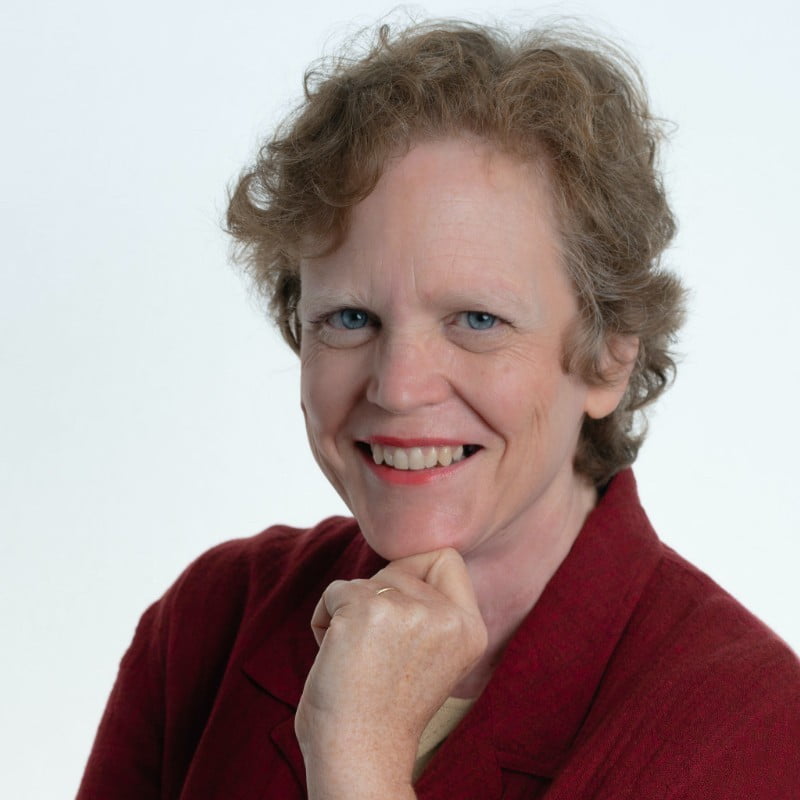
Episode 35 features Penny Pollan, a distinguished speaker, author, facilitator, and mentor. She is known for her expertise in running effective workshops and pioneering virtual programming since 2001.
How did Penny Pollan's experience with virtual programming begin?
Penny's journey into virtual programming started in 2001 when she had to adapt a programme following the 9/11 events, making her a forerunner in remote and virtual meetings well before they became ubiquitous during the 2020 pandemic lockdowns.
What book has Penny Pollan written that became particularly relevant during the pandemic?
Penny authored the book "Virtual Leadership," which provides comprehensive guidance on leading virtual meetings and workshops, drawn from her extensive early experiences in the field.
Can you outline Penny Pollan's six-step plan for effective meetings and workshops?
Certainly! Penny Pollan's six-step plan comprises:
What is Penny Pollan's forthcoming book, and when will it be released?
Penny Pollan's upcoming book, "Making Workshops Work," focuses on creative collaboration across in-person, hybrid, and virtual settings. It will be released as a print book on 13th July, with a Kindle version available for 99p on 12th July.
Share this episode
Heard something worth passing on? Send this conversation to someone who needs to hear it.