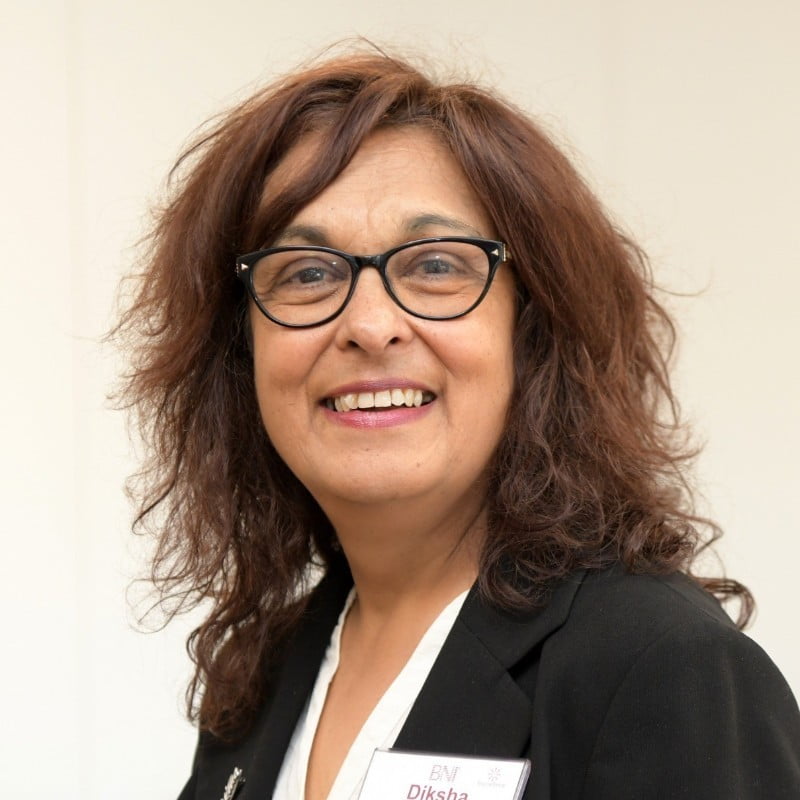
Diksha grew up in Uganda with Indian heritage and saw prejudice against the indigenous people first hand and then she herself became a refugee at the age of 15 and now wants to free all women from being prisoners of pain.
In this episode of Inclusion Bites, Joanne Lockwood speaks with Diksha Chakravarti about mental health wellbeing trauma.
“Everything we want is on the other side of fear.”
Explore
Navigate this episode
Joanne Lockwoodhost
Hello, everyone. My name is Joanne Lockwood, and I'm your host forthe Inclusion Bites podcast. In this series, I've interviewed anumber of amazing people who simply had a conversation around thesubject of inclusion, belonging and generally making theworld a better place for everyone to thrive. If you'd like to join mein the future, then please do drop me a line to jo.lockwood@seechangehappen.co.uk,that's S-E-E Change Happen dot co dot uk. Youcan catch up with all of the previous shows on iTunes, Spotify,and the usual places. So plug in your headphones,grab a kneecap and let's get going.Today is episode 36, thetitle, Freeing Women from Being Prisoners of TheirPain. I have the absolute honor and privilege to bejoined by Diksha Chakravarti. Dikshadescribes herself as someone who provides integrated well-being services forwomen. How can they manage their stress, anxiety andpain? When I asked Diksha to describe her superpower, shesays she believes that she can achieve anything that she puts herefforts into. Hello, Diksha, welcome to the show.
Diksha Chakravartiguest
Hello, Joanne. Thank you so very much for having meon your podcast. I feel it's an absolute privilege to behere. Oh, thank you for joining me. We first met probably
Joanne Lockwoodhost
just over a year ago online, right? I produced the #TruInclusionConference and you took part as part of the facilitators. So that's how we met,isn't it? That's correct. It was an eye opener. It
Diksha Chakravartiguest
was made me feel very happy to be part of such aninclusive community that were present over there. So, yeah, it wasa wonderful event, well done. And I can't believe it's a
Joanne Lockwoodhost
whole year ago. I know. Yeah. I know. It's been a traumatic year.
Diksha Chakravartiguest
It's it's it's flowing past in some ways and it'sdragged in other ways, you know, but I I can't say that I wouldbe sad to see the path of this. No, for
Joanne Lockwoodhost
sure. So when we were talking earlier, Dixiel, weset the thought up to be freeing women from being prisoners of theirpain. So tell me what that means to you.
Diksha Chakravartiguest
Okay. So Joanne, I'm using the word painas a generic term to include,physical, emotional, mental,societal, spiritual pain. Sothat's how I view pain today.I am essentially a therapist. I have been in practicefor 23 years. I started my life asa McTominay practitioner and,I added to my skill sets, so, you know, various different soft tissuetechniques, different types of massage, fascial release.I'm also a clinical hypnotherapist and an ergonomistas well. So I added to myskill set as I went along becauseI qualified and provided help thatmy my cohort of clients needed me to.
Diksha Chakravartiguest
And it's when, I decided to train in,clinical hypnotherapy, that's that's the time I made the decisionto provide, formally provide I've been doingthis informally but formally provide a trulyintegrated approach to pain management. So myclients now come in to see me for physical pain, for anxiety and stress andI am able to come in to see me for physical pain,for anxiety and stress, and I am able to provide body work for themthrough mindfulness, we work through calming them and relaxing them.Using hypnotherapy, we deal with, you know, long standing PTSDand demons in the past.So and then when this the coaching part of my work isactually enabling them to actually find out, dig deep withinthemselves and find the strength that they actuallyhave but haven't been able to access due to societalpressures, due to family pressures.So for me, I see myself as afacilitator more than anything else because I Idon't do, I don't use the word cure at all because I don'tbelieve the cure exists. I I don'tenable women to find their ownstrengths. So that actually meanslooking at the pain, that actually means sitting with the pain, that actuallymeans honouring and embracing the pain. Becauseunless you go through this dark tunnel, Joanne, you're not gonna find the light atthe end of it. And granted, sometimes there's long dark tunnel,trust me, I know, is very long and dark, but there islight at the end of it. SoI feel, that if we are ableto empower and enable womento get in touch with the pains that they areexperiencing, as I said, in whichever front or howevermany fronts they are challenged by, if we can get themto access it, to face it, to embrace it,to honour it, to work through it, then they can come outto live their true potential and their lives. Now thatI'm not saying that every woman should train as a consultant surgeon or go tobecome a PM of a country, not for a moment at all, butwhat I they will live their truth rather thanliving the truth that society forces upon them,they will live their own truths. That's what Imean by freeing women from being prisoners of their pain.
Joanne Lockwoodhost
So picking up on what you're saying there aboutsocietal pressures, I'm assuming that whatyou're implying there is the way women are often socializedfrom birth through childhood with limiting beliefs,expectations of being less than they can be,a baby machine, a wife. Soso how how much responsibility do you think society has to play in this? Itmust be huge, isn't it? It is a a big
Diksha Chakravartiguest
responsibility. I am notI have to say frankly, I have to say that I have nothing againstmen, you know, I some of my very goodfriends are men as well, but there is no discounting, I don'tthink. There is no discounting that we live in a very patriarchalsociety. We live in a very hypocritical society,and sadly I also have to say that sometimes women are theirown worst enemies. So in leadershiproles, I have often heard of my clients,senior women coming in, and the biggest problems they have, thebiggest obstacles they have are other women who aretrying to keep them down as well. So if you look at it, women,unfortunately, if you look at the whole situation as itis, patriarchy has kept womensuppressed for so long. Those who arecoming up, they haven't got to the point, some of them, ofcourse, they haven't got to the point where they feel safeenough where they are to actually welcome others in. Soit's almost they're in a protective mode at the moment. What happensif she comes in and maybe I'm gonna have to go out? Because we areso new in this role, because women are so new in this role and thissituation, I think it's a minimum forces that'sgonna take place but hasn't yet taken place.
Joanne Lockwoodhost
Yeah. I I I've heard of these kind of studies and this is phrase, youknow, the the crabs in the bucket syndrome where a crab tries toescape, all the other crabs pull it back down again. And there'san author called Margaret Hefferman and she wrote something at the superchicken where what happens is a woman in the senior leadershiprole will often peck at the the women coming up, destroyingtheir self esteem and credibility and and andbasically pull their feathers out for one of the better way of putting it. Soas you say, women are often pushing down other womenbecause they're trying to elevate themselves to compete in that world. Absolutely. Andthey will see other women as damaging their brand or damaging theircredibility, don't they? Exactly, because they're not safe yet. They're
Diksha Chakravartiguest
not yet safe enough in the position that they are in,and that's where, this is coming reverting back to whatI mean by pain and fearis something, Jack Canfield said, everything we want is onthe other side of fear. Now fear, for example, with thepandemic right now, I mean, you know, the reason why we areas we are is because we are so fearful of so much that is goingon. Some of that is true, of course, it is, but some of that ismade believe. Some of that is generated through from our own selves listening towhat the media has to say. So fear issomething that completely disables us. It completelyruins the balance in ourselves. If we are fearful,we cannot be generous. They are contradictory.So unless we deal with the fear, and thatis again sitting with the pain of fear, Unless we sitwith the pain of fear and work out where is this comingfrom, why am I feeling the way that I am andthe final step, what can I do about it? Unless we areable to look at our fear in a very honest way,our authentic self will not come out and unless our authenticself comes out, we cannot be confidentbecause we won't be living our truth. We will be living atruth that is not ours. So of course, we're not gonna fit inthere. Of course, we're not gonna fit in there.
Joanne Lockwoodhost
I love that soundbite. I'm gonna repeat it because I think it is wonderful. Everythingwe want is on the other side of fear. Howpowerful is that? Jack and feed. Yeah, Jack. Yeah, Jack. Yeah, howoften does fear of change, fear of going for something,fear of grasping that opportunity, fear of being humiliatedor rejection, how often does that stop us truly embracingwhat we could be? Absolutely. If we could get past it and thatis a really insightful statement and I love that because I look back atmy own life and think all the things that held me back and it'sthat. We perceive it to be a 1000 foot drop, but really itreally is 1 inch step, isn't it? And that's that's what we've got to realizeis that there is no big huge fall off and there are people thereto catch and support us. Yes. We're never alone, are we? And that's that's what
Diksha Chakravartiguest
we have to remember. No. You know Joanne,one thing that society has always looked down upon isvulnerability and it's only really strong,authentic people who can be vulnerable, you know, I mean,you know, how often I'm a member, I'm having coaching bythis phenomenal company called Heart Centred Business.It's run by a husband and wife team called Chris and Corinne,and they run this business and they they help therapistselevate to running practitioner businesses because as therapists, we areterrible. We are terrible with money, particularly. Oh my god. Ican't charge that much. But I'm in pain I'm in pain relief. Oh my god.I can't charge that much. But what they are teaching us verysuccessfully in a heart centered way is that you can have both.And that comes down to money mindset. What is your money mindset? What isbecause, you know, I grew up I grew up hearing money is bad. Everybody whomakes money is bad because they do it in a bad way, so money isbad, bad, bad, bad. And so if I want to be within conditions a goodperson, I can't have money, but that's gonna make me a bad person.So they deal with with with all of that. And one of thethings that they encourage you, a partial for, one of the encourage they theyencourage us to be truly honest and stand up and say, you know what, guys?I'm struggling. You know what, guys? I just got an idea of time. You know,guys, I don't know what to do about it. Now when I started,I'm one of the older, students on there, most ofthem are half my age, and I thought, oh my god. How can I turnaround and tell them that I'm struggling? I'm old enough to be the mother. Whatkind of what? That fear that fear thatI can't say I'm having a shit day, helpme, asking for help is that. It's a sign ofweakness. But if you embrace our weakness, that's when we become strong.That's when we become strong. I think back to my own
Joanne Lockwoodhost
history and I've probably had 3 or 4failed businesses for various reasons over the last 25years. And at the time, you feel so muchshame of admitting you're failing, so much anxietyabout the unknown and what comes next, so much, it's justthat internalization of that real senseof failure. And I remember hanging on to oneof the businesses much longer than I should have becauseit fundamentally lost its ability to dig itself outof the hole it was in. And I went too far withit. And one less I learned is you got tograb these moments whereyou're anxious, you have fear and really look on the other side of it andgo, I have to and I've got to learn that and I've learned aboutnot bearing things onto the carpet, not avoiding these conversations.And that's a life experience we all know, isn't it? And I think,yeah, without giving your age away, you're probably a few years oldolder than me and I'm in my mid fifties. So,we learn this when we get to a certain age. We've made these mistakes. We'velearned that the world doesn't stop turning. The sun still comes up in themorning and we brush ourselves down and think could begood again. But we we have to do that several times in our lifebefore we really make sense to Styx, doesn't it? This is it and that's another
Diksha Chakravartiguest
one of the pains that I was talking about. So for me, that constitutes apain, That constitutes a a pain of identity.That constitutes a spiritual pain. But, I mean,if one is fearful, like I spoke about my money mindset, if one isfearful of letting go, what's stopping us?You know? What's stopping us? And just like you said,if we sit down and say, why why am I holding on to this businessthat is failing? Why am I grasping? In Buddhism, it's a templegrasping, and grasping is a reason why we suffer. Yeah.You want to hold on to something like you just saw a little crunchy put.You're holding on to a business that has that is failing to deliver. It'sit's past a sell by date and you're still holding on to it.The pain there is why. Why,during, are you holding on to this? And that's the workthat needs to to to happen. On in mylife I have a very dear friend. I love climbingmountains. I love mountains, they don't love me because every time I try and climbthem something happens and, you know, I I sprained my ankleor yeah when I tried to do, Kilimanjaro inthe morning of the night they were going to summit, they had to stretch medown. Not only was notonly did I have altitude sickness, high DUTI, and bronchitis as well,so I was very sick, very, very sick indeed.But I still went on. I'm going to do this. I'm going to do this.I'm going to do this. And, Joanne, for a whole year,I could not forgive myself for not submitting. I couldnot forgive myself for not submitting. And avery dear friend of mine said to me, she said, Tisha, what is it withthis? Because you always want to do big things. Why aren't small thingsenough? And that is becausein my life or a very large part of my life,Joanne, I felt I was a failure. Ihadn't succeeded in what I had set out todo. I was a failure.And even as I speak to you right now, it makes me feel quite emotionalbecause I tortured myself for yearswith thinking I'm a failure. So when one views oneselfas a failure, one always tries to achievebigger things, hoping that that's gonna plug the hole,but it doesn't plug the hole. You're just lookingfor the next thing to see. Yeah. But that was that. I'm still not satisfied.What else can I go for? You know? Andfor years, I suffered with global depression because Iwas, I was walking through treacle. I was constantlywalking through treacle and I kept thinkingthis is going to make it okay. Yeah. I'm a course start. I doso many courses because I'm thinking if I have more lettersafter my name, that's going to give me credibility. I'm going to becomesomebody in society. I am going tobe respected in society, and I'm Indian. I'm a Bengali.Bengalis tend to be incredibly bright academicpeople. If I look around my society right now,you know, most Bengali, most Bengalis,all Bengalis are professionals in one way or the other. Yeah,medics galore, you walk into any hospital, you know, you find Bengali doctors,you know, there so achievement wasacademia. Achievement was academia. Achievement was beinga surgeon, being a consultant, you know, beinga, a lawyer, a partner in a big city firm,you know, being an accountant with a thriving practice. So that'swhat I grew up with, that's what expectations of me werebut when these expectations sound, they deemed to circumstances,did not come to fruition, there I was, I'm afailure. I'm a failure. So, I've got to achieve bigthings in order to make myself feel good but guess what, Joanne?It's temporary. Mhmm. It's that fix, isn't it?
Joanne Lockwoodhost
You get that high Yes. Yeah. Yes. Many years
Diksha Chakravartiguest
ago, I I caught an episode of Oprahand she was talking to this guy. I don't remember the names. I justfind his name. I just remember the details. So this guy was a dentist inAmerica, a thriving dentist.And, he was doing very well. Sofrom one small house became one big house, one big house became 2big house. So from 1 car became 2 cars, then became 3cars, then became 3 expensive cars, then became a yacht, thenbecome a a private play, exquisite jewelryfor his wife. He would choose the jewelry she would wear when they went out,etcetera. So she was the door. She was asymbol of his wealth and achievement and position in society.And then she left him. She had had enough.She left him. That was his wake up call.He sold everything he had.And when he came on Oprah, he was a prisondentist living with prisoners, eating their food, and hesaid, I've never been happier in my life.
Joanne Lockwoodhost
This is kind of size expectations when we're young to geton this conveyor belt to success Yeah. To growth.We want to acquire assets and property andstatus, don't we? I don't know,is that a patriarchal thing? Is that a female trait as welldo you think or is it a societal pressure fedby, if you like, the macho success need? I
Diksha Chakravartiguest
think it's a macho success need, I think, and Ithink I could be wrong. There are there might be somewomen who particularly want that of their own of their own back,which is absolutely fantastic, not a problem. Forsome women, it could be like my daughters challenge me all thetime, Joanne. And my daughters actually did say tomy is it that you don't like this is because you can't have it orbecause you can't afford it? Is it because truly you don't want it? You know,I love I love driving. One of my dreams is to actuallytake a 4 by 4 and go on safari on really rough terrain things. Ilove driving. So the question is, would I if I couldafford a 4 by 4, and I guess if I wanted it badly enough, Icould afford it. Would I want it? My point my questionis, yes, I would want it, but not to stand outside on my drive.I would want to take it on safari and use it in that way.So coming back to whether women want it. So some people some women likeme would want it, not because it's a status symbol. It's because they really dolove it and they want it. And I guess a lot of men are likethat as well. They love driving their sports cars and, you know, really enjoyit. So for enjoyment rather than status symbol. But, again, Ithink a large majority of women, I would say, havehave taken on this patriarchal cloak. Andso they feel as if theythey need all the status symbols to be somebodybecause that's what they're grown up in, that's what they're grown I mean, you know,it's the the the analogy that I said with with being anacademic. I mean, you have to be an academic to be a success.So for me, being an academicis successful. You know?Whether I'm clever or not, whetherI have the ability or not, if I'm not, thenI'm a failure because I can't be an academic. The same thing Ithink, the same thing I think applies to materialgoods as well. Yeah, I think back
Joanne Lockwoodhost
to my life 5 years ago when I sold mybusiness, I gender transitioned.In that moment, I kind of shed a skin, shedeverything that I kind of valued because standing on this side offear and the other side of fear was the realization Ihad to let go of all of these accoutrements andtrappings and statuses that suddenlybecame unimportant in my life and actually the really important thingwas finding myself. That became worth morethan everything I'd acquired over my lifetime with the exception to myfamily. Obviously, my family wasn't sacrificingthose relationships. But I went frombig house, status symbols, cars,BMWs, Audis, lots of they spent lots of money,and a lifestyle that was probably beyond my means most of thetime to a much more simple life where I live on cash.I paid for my car outright off of a Facebook ad.It's a small mini convertible. It's it's a bit clunky. It's a bitrattly. It cost me £2,000 and it cost me about5, £600 a year to keep it on the road. But I love it. Andit's so simple. And I've never had so much fun driving a caras that car had in years, all the BMWs I've spent 1,000and 1,000 on and lost huge amounts of money on depreciation.And so I really do appreciate now this simpler life, but ittook me this realization that Ihad to let go. I had to all those expectations, all whatsociety told me. I'd setmyself up to be this person with my friendsand my peer group to compete. And then Irealized that it was a false, it was a falsehood, I didn't need it.There was anyone who was truly my friend didn't needthat from me. And once I let go, the people who stayedwith me in my life are the people who saw me for me,not because of what I had and the stateside of the crowd and it'slisten to you speak. Letting go of that, being a prisonerof my own expectations, my own forcing myself into beingsomebody I wasn't. And then once I realized that wasthe freedom of letting that go, just dropping that shell on the floor,emerging, okay,it's amazingly empowering. And Inow find that my brain issimpler, my thoughts are simpler, I don't have such complication goingon. I can see clearly now where I'm heading.And if I get lost, it doesn't matter. Ijust sit down, have a sandwich, get up and have a walk off somewhereelse. And I don't have this destination where I must have this, I musthave that, I must have that. And yeah, listen to you speak andthat's being I was a prisoner to my needs, if youlike. It's not necessarily your needs
Diksha Chakravartiguest
but your wants. Yeah, expectations, right? Yeah,
Joanne Lockwoodhost
expectations and I- I feel for myself, yeah. Yes.
Diksha Chakravartiguest
And and that's the pain. This is another one of the painsthat I'm talking about and Iand like yourself, I mean, there's been a certain I'm stillvery much a work in progress, but I'm getting muchbetter, at just being whoI am and, notnot being fearful of showing my true faceto the world and, not beingfrightened of making mistakes, not beingembarrassed to say or do the wrong thing.But the other thing is also quite true, somy money mindsetand all my years whilst I was married,it was always we don't have money, we don't have money, we don't have money'.So my spending was very much do I need it? No, I don't, so I'mnot going to buy it. So the buying forwant just to just because I want to, justbecause I like it, just because I feel like it, notbecause someone's pressurizing me. So I have learned to do thatwith myself. So it's completely the flip of sayingI'll only buy what I need, I'm not gonna buy what I want because Ican't afford it, even though we could, But the pressure was, no, we can'tafford it. The control was such that, no, we can't afford it, so youcan't have it. So now it's the thefreedom that I have got, Joanne, is just to say, you know what, Dixit, youcan afford it, buy it. You can't afford it, but and thatfreedom to walk in and actually buy somethingbecause I like it. It's an impulse buy. I likeit, and I'm gonna buy it. It's great. Not that I'd walk inand get a Ferrari for £700,000. That's that's not what I'm talking about,but in my little world, I I am free nowbecause I spend money as I want to rather than ashas been imposed upon. See, and that tome is a freeing on the other side for me.
Joanne Lockwoodhost
I love that. So, yeah, I've realized that nowwhen I want to buy something, Idon't have all the other pressures that I'm servicing.The money really is free to spend as I wish. Yeah. Andif I don't have it, I don't spend. If I do have it, I candecide to spend it or not. Yeah. And I have more freedom of choice overhow I purchase because I'm not servicingprivate schools, big house, lots of cars. Basically, I'vemaintained the facade of life that I had for so long.And yeah, it's been really empowering. My wife and I,we've moved home recently and we have a fantastic home, we love it.So we're not poor by any means but we've readjustedour whole outlook on life and what we see as necessary and justbecome simpler. And when we spend more time with each other's company,then the big statements all the time, which is really powerful.I mean, I was looking at your bio andyou grew up in Uganda. Yeah. At a timewhere it was a different world, I'm assuming theculture of the world. And I'lllet you tell the story, but you left Uganda in1972, which would have been around Idi Amin's time andsome of the civil war or the atrocities that went on at thatpoint in time. So that must have been a really traumatic upbringingbecause you're what, 15 or so at the time.Tell tell us a bit about that time of your life.
Diksha Chakravartiguest
Yeah. Absolutely. Well, Uganda isan absolutely beautiful country,beautiful. It's Bangladesh on the equator. We were righton, the banks of Lake Victoria.Beautiful, beautiful country. 3 miles out of the township you are intowilderness. Absolutely gorgeous. So, when I went to
Diksha Chakravartiguest
Tanzania to climb into my jar room, my daughtersasked me, 'Mum, why don't you just hop across the border to Uganda?' because Iwas just literally a stone's throw from Uganda. I didn'tbecause I feel if I ever go back to Uganda, I'd like to take mydaughters with me so they could see where I grew up. So it was reallyquite, a charmed life we led there,very much so. Unfortunately, I wasobviously, you know, I was I was a youngster then,but the Indians and the white people inUganda lived child lives, but the indigenouspeople, the African Africans were suppressedand did not have any rights whatsoever.That makes me extremely sad that I was part of thepopulation that made that happen. And one of the reasonswhy Idi Amin did take the action he did against the Indians,and in my view rightfully so, isthat the Indians had monopolised the economyof the country andto unfortunately and disadvantaged the populationas, you know, the Africans said.Okay, the way he went about it was totally incorrect, but nonetheless,you could understand the sentiment as to why he did that.So it was a lovely life, you know, we went to school, the weatherwas phenomenal, during the day we need to get fans on because it wasso hot in the evening, we just needed a slight, very light duvet onor a blanket on, so it was a beautiful beautiful life. And then IdiAmin in 1972 gave the Indians 90 daysto leave the country. Now my father was a teacher in the local school, localsenior school, so as a civil servant he was actually exempt from fromthe Exodus but it became very dangerous for Indiansto to remain there because really, the EDME has given had givencarte blanche to the to the army so, you know, they wereraping, seething, and pillaging so it was extraordinarilydangerous and of course they were targeting Indians, you know, Soso my my, family decided overnightthat they I had to leave the country. Now my father was a disabled man,so mother had to stay behind to look after him. And Iwas 15 at the time, my brother was, Petit Mustase, he was23. So literally, one Monday I wastold that on Saturday I was gonna fly out of the country.And I was sent to India which is where my extended familywere. Now I have never ever ever been awayfrom my family. I mean, I've been away for a couple of nights when Igo and have Zico was with friends, but I've never left my family to goabroad. I've never been on an airplane before andI was going to have to travel all alone across to Indiawhere I'd only been once before. I knew thefamily but, you know, they weren't family family to me.The journey from home, to the airport was verytraumatic because at every kindof checkpoint, the soldiers are usually drunk,and they were assaulting Indians, and they were taking thejewelry, they were taking money off them, they were beating them at theside of the road. So the Indian people had totravel in convoys. Not that they that protected them, at leastthey felt some security by having, more thanjust their their only family there. So itwas a fearful journey, we were stopped atcheckpoints, my brother had some cigarettesthat he, you know, just my brother was a people personand he spoke Swahili, the local language, fluently.So as soon as we got to checkpoints, we would jump out in a ina very gregarious manner, say, you know, jumbo wana, how areyou doing to the soldiers and all of that and give them cigarettes andall. And somehow we managed to get to the airportquite safely. Our convoy our convoy wasn't
Diksha Chakravartiguest
assaulted or wasn't attacked in any way. And then we go to theairport, and, before Iknew it, I was saying goodbye to my parents and then,my brother just opened one set of double doors and shoved me inside and thiswas the immigration hall. So I walked into the immigrationhall and I just looked around and there was nobody there otherthan one immigration officer who was sitting in one cornerbehind, a kind of a glass screen and he wasjust swinging back and forth on his chair and when he sawme, he kind of beckoned, you know, cocked his finger and beckoned me.I had no idea what to expect. I, you know, I just went alongthere, I could smell alcohol and just held his hand outand I shouted passport. So I gave him my passport,he looked at it, he leant forward, looked at the picture, looked at me andI was saying he smelled of alcohol. And then he said, why?' He askedme, he said, why are you going?' I've beentold by my family to say that my grandmother was ill, I said my grandmother'svery ill and she's asking for me. And then he said, when are youcoming back? And again, Iwas I've been tutored to say I'll come back when she gets better.
Diksha Chakravartiguest
And then he says, okay, when you come back I'll marry you.And, and I just gave kind of a littlebit of what I recall now, kind of a hysterical laugh and said,yes, yes, yes, yes, of course, of course, of course. And he gave mea passport back and I turned around and I walkedaway, and thankfully there were people coming to theimmigration hall then. And then aswe've made our way to the aeroplane, we had towalk because Entebbe Airport is a very small it's like an aerodromereally and we had to walk and as we walked itwas, you know, the these porters were sitting, these African porters weresitting there, they were spitting at us and abusing usand they bought they had bottles of the local liquor that they were kind of,you know, throwing at us,basically mocking us as we left the country. And, again, I can understand why theywere doing it. And then when I got to the bottom of the stairs, Ithought I turned around and waved goodbye to my family and it was dark. Youknow, in factorial lights are very dark. As I turned around, John, Iwas so naive. As I turned around, all I saw waslights of the building, but I couldn't see my parents or my family because itwas darkness. So I couldn't even say goodbye to them, you know, kind of thinganyway. It took us a while to to climb the stepsto the plane because, you know, Indians, most of us hadn'tbeen on an airplane before. When we traveled to India,as most Indians did, we traveled by steamer.We traveled by, you know, by ship. And in the ship andprobably by ship, you have no limit on no luggage, you see?I remember Titanic and Kate Winslet's Hummingbird. Yeah.Exactly. So we used to travel like that as well.And I remember it used to be quite an expedition because mom'sfriends would come to the house before we traveled and theywould cook up all these, snacks, Indiansnacks to take on the voyage. Bigtins, you know, of of and stuff because, you know, we werenot like the food on on on the ship, and so we wouldn'tstop for 7 days because that's what it took from Mombasa to Mumbai.So they were used to traveling like that. So, of course, they brought in alot of luggage, and nobody told them they couldn't. So these first,you know, they were sweating trying to accommodate, and these Indians were holdingon to their goods because, good god, they lost so much. I thought, am Igoing to do this as well? They were very fearful. Anyway,somehow, you know, we got on board and then I arrived in, I arrived inBombay. Coming was early morning, still verydark, very hot. Didn't know what to do.I just walked up the stairs. I was just following people like sheep and thenthis lovely stewardess came forward because I was an unaccompaniedminor and she called up my name and I just raised my hand asif I was in school, and she took me under her wing,took me, got my immigration thing done and all of that, andthen touching my hand, she took me to this bus that was waitingoutside. And she said, just wait there and otherpassengers will come. You'll go to our hotel, and,we'll bring you back when it's time for your connecting flight to Delhi.So I started, Joanne, thinking, oh, okay. Other people are going to come on. AndI I can't remember how long I was there. Maybe 5, maybe 10 minutes. Andthe next thing under, the doors are shut. The driver jumps into the bus andtakes off, and I'm the only passenger in the bus. AndI'm sitting there shaking away thinking, I'm lost.I don't know where I'm going. I don't know what's happening. Anyway,then he saw them and said, you know, don't worry about it. You're you're homenow, betty daughter. We look after you.And then finally I went into I took my connecting plan to Delhi to goand stay with some relatives. So that particularjourney out of Uganda wasfrightening. So you've gone from living
Joanne Lockwoodhost
a privileged life Yeah. As a parentswho are quite be in society providing education services,teaching well respected Yeah.Indian community, holding the power in the in in the countryto effectively just being ejected out the back door atrisk of safety, even to the pointwhere the the person of immigration wasinappropriate for the propositioning you as a 15 year old, verysheltered life, dumped into another country that you don't even have been there once,that that must have been hugely traumatic for you. Absolutely.Yeah. And this thing about belonging, I know, like you
Diksha Chakravartiguest
said, your podcasts about inclusion, belonging andmaking the world a better place, I neverfelt I belonged anywhere. When I was inUganda, they would say,my you know, my friends and family would say, oh, you're a Ugandan?And I didn't like that. I'm not a Ugandan. But I wasborn in Uganda, so technically, it makes me Ugandan.My family were Bengalis, and there were fewBengali families. Primarily, there were there were a lot of Gujarati families, alot of Punjabi families. My friends wereall Gujaratis, and even though we are all Hindus, theycelebrate different things in different ways. Athome I had one, you know, I ate one type offood, spoke one language, I steppedout that long I no longer spoke that language, I had to speakvarious different languages. I mean, it served me well. I speak Hindi, I speakGujarati, I speak Punjabi.So it it it stood me good in that state, but I rememberthat when the rest of India celebrates Diwali, Bengalis don'tcelebrate Diwali quite that way. So I didn't belong. I constantlyfelt I didn't belong. And then when I went toIndia, I was this hybrid, you know, I wasa Bengali child born of Bengali parents who lived in Africafor 15 years of her life. My father, verystrict rule, we have to speak Bengali at home, but, of course, my accent wasvery foreign, very foreign, and the food wasvery different. The food was extremely different in India.So and, you know, I had to get used to their ways.Again, I didn't feel I belonged. I went to aschool where I didn't understandanything. They did what they called modern maths. I'd only done traditionalmaths. For someone who was, you know, who'salways been used to topping the class, when I start the first test, I cameup 3rd from the bottom. And I thought at least I was right at thebottom, there are 2 people who are below me. Yeah. And the girlsin the school, I was bullied. I was bullied in the school because I wasa foreigner, I was a stranger, I didn't see the language very well, I wasragged, I was bullied. My family thoughwere absolutely fabulous. My aunt, mymother's sister was like my surrogate mom. Theythey could not have done more to make me feelwelcome. I always got the largest piece of fish, I always got the largestpiece of meat, there was always something specialfor me before anybody else got it, so gosh they really went out ofthe way. But I didn't feel I belonged, I just didn't feel I belonged andthen my parents joined me about a year after I'd gone. Myfather was then a disabled well, he was a disabled man, yeah, his health wasfailing. We spent 2 years when I was 17 and in
Diksha Chakravartiguest
1974 my brother would come to the UK when we had gone toIndia and by then, set up home andgot married, got himself a job in the civil service and he said 'right, comeon over and we'll be a family again.'So in 1974, yet again, nobody asked meif I wanted to go I was in my final year, you know, up fromIndia to the UK.Very strange experience. Very strange experience.I've just contributed a chapter to an anthology called TheNew Woman and it's it's chapters that arewritten by women who have had difficulty that they've come out of and I've writtenthis particular bit in that in that because I I just the senseof belonging, I've always always been on theoutside. And we arrivedhere, struggled a lot with lots ofcultural things. Within a month of coming here my father unfortunatelypassed away and that was stress that killed him.The stress of the exodus, the fact that he was a sickman anyway, it killed him. And thingsbasically fell apart. I went to University,I was having problems at home as well because, you know, outside I was beingtold 'have you got a boyfriend?' I was 17 'have you got a boyfriend?'And Indian girls at the age of 17 don't have boyfriends.And whilst I I did have the courage to answer them, I said, no. I'mfrom India. We don't have boyfriends. I would I would just kind ofskulk away, and at home, I wanted to know why I couldn't have a boyfriend.And of course that caused issues, that caused big issuesthere. And then, you know,things fell apart in a big way for me. So I then,I then got married,and I got married completely on impulse. He was avery good man, but we were not suitable to each other. And guess what?When I arrived at my in laws, yet again, Ididn't fit in and didn't belong.
Joanne Lockwoodhost
So the UK must have been a tricky time, 1972.So the race relations came in in 1976.So there was a lot of racial tension about when there was EnochPowell, Rivers of Blood that between around that time. It was the tail end,the Windrush generation. Yes. Lots of racism going on incommunities and there are lots of people who've who've been bought into thecountry to rebuild Britain after after the warwere now being seen as the the evil job takersand there's a lot of racism on that. So you came here as anoutsider from an outsider from an outsider into another countrywhere you were again an outsider and there was no belonging again,I'm I'm assuming? Not at all. My brother, when he first
Diksha Chakravartiguest
came here, he came with the the influx ofIndians directly from Uganda. So they were housed in barracks.He was housed in Kensington Barracks, and, agroup of of of of friends would go out in the eveningand regularly, they were beaten up by skinheads.Regularly, they were beaten up by skinheads.So it was a very difficult time. I remember I was,walking, one day and these 2 women weretalking across fences, you know, as as they did,And I overheard one of them say that, oh, thesepeople, they need to have a bath every day. Theywaste so much water. Where do they think all this water'scoming? Why the hell don't they go back to where they came from? You know?And as I passed, I got the dirtiest of looks from them becausewe were not welcome. We were not welcome.
Joanne Lockwoodhost
So do you think at the time as a young woman, you sufferedless racism than the young men or do you think it was fairlyeven? You see,
Diksha Chakravartiguest
confession time, Joanne. My daughters off haveoften say to me, ma, if racism hit you in the face, you wouldn't recognizeit. I've never had that antenna up.When I reflect back, I now seewhere it was where it was. NowI've my mother's faced racism as an olderIndian woman. The the green grocer would try andpound her off rotten, bananas as it wasgiving the fresh vegetables she was asking for. I'veheard stories of of, Indian women sufferingracism. I'm I'm not sure whether womensuffered less or whether they spoke about it less,whether it was brought to the attention less. So Ican't answer that question with any kind of confidence because I have no evidenceto support it. But you were kind of in your own little
Joanne Lockwoodhost
bubble where you didn't really experience it or you weren't consciousof it? I wasn't conscious. Yeah. I wasn't conscious and again I
Diksha Chakravartiguest
would say it was not it was not a lack of consciousnessthat was healthy, it was an unhealthy,lack of consciousness. And let me explain.So sadly, I grew up in a very violent household.It wasn't towards me, it was towards my brother. My father was very violenttowards my brother. So I grew up, from in a very violent,household and with all the traumas that have happened in my life,I've just I've just continued to shut down.Shut down, shut down, totally disconnect. So when you spend yourlife disconnected, you are not aware of what isgoing on, you live in your head all the time. I'm a reader, Ilove reading, that was my paradise, I could lose myself in books. Sothat was my haven. So the fact that I was unawareis because I was disconnected and therefore not aware.So it wasn't a healthy way of healthy reason for notbeing aware, it was simply that I justdidn't have the wherewithal, I just do not have the awareness tobe aware of what was going on around me. I
Joanne Lockwoodhost
noticed when we're talking, Ali, you said that you've had a fair share of traumasof your life which you've just, reallyshared with with me and it's been really powerful to listen to. But you've you'vebecome resilient because of that. I've knew you've it's made you a strongerperson. It's allowed you to, in fact, embrace what you do nowand use your strength and resilience to help others who maybehaven't found that in themselves yet. That's how I have that's how I
Diksha Chakravartiguest
use it but it's been one hell of a wearingjourney. It's been one hell of a wearingjourney. My spirituality has stood by me,I always know there's a reason for going through whatever we gothrough and, youknow, believe in karma, and II don't stay down for too long. I have learned not to stay down fortoo long, and that's when I said my my super strength is Igo down I go down and, for many, many years, I was aglass half empty. And, again, I understand why Iwas glass half empty. So I'm still in as I said, I'm still workin progress. I'm still working on becoming glasshalf full, I believe, but it has beenextraordinarily tiring. And one of the things I didn't everhave growing up was support of any sort. Noawareness and no support of any sort. Somy mission in life is absolutely tosupport women who need it and actually to tellthem around. It's like Cato's Gray cave. Tell them around andsay, there's so much available out there. You've got you don't have to do thisalone. You don't have to do this alone. You can become free,but reach out. Reach it's okay to be vulnerable. It's okayto be weak. It's okay to say I'm feeling shit. It's okay to say I'mnot a single woman. Do not cry and be suitable woman. Taketime out. Let's help. Connect with yourself.Look for help around. And that's why I'm so passionate aboutproviding an integrated service rather than go andsee this person for this and this person for this and this person for thisand you're making all those journeys. You, you know, you're building trying to buildrapport with different people. It's it's it's shambolic. Join shambolic.When you build rapport and trust, right, when you buildrapport and trust, that's what the the thetherapeutic value of having a trusting relationshipcannot be overemphasized.
Joanne Lockwoodhost
No. You you yeah. You're right. I think trust isfundamental and and we think about when we're in a toxic relationshipin our family or even a toxic relationship in our work,the trust is broken down. We're we're basically going throughthe motions, fearing for the next step,not with we're paralyzed by ourcircumstances often, aren't we? We don't know how to break out of that becauseit's again, it's that everything we want is on the other side of fear. Whatwe know, what we've been socialized into, we must feelthat sort of Stockholm Syndrome safeness about it, don't we? Yes, absolutely.The other side is going to be better, but there's so much fear to getto the other side. We never break loose. No, we never break loose. That's whymany women, many people stay wherethey are because they don't have that at the tools or the resilienceto break through that fear barrier? Absolutely. My younger
Diksha Chakravartiguest
daughter who's had an incredibly challenging life, incrediblychallenging life,Maybe you should have her on the podcast. She's, she gave apresentation, about 5 years agoand she spoke about abusive toxic relationships, that's what youmentioned, and how she managed at last to extricate herselffrom one of those. And there was a woman in the, in theaudience who heard her, and she actually wentback home and took action. She got out of her toxic relationshipjust simply hearing my daughter stand up and deliver thatpresentation and say, you too can do it.
Joanne Lockwoodhost
You too can do it. Yes. Powerful words on there. Youcan do it. Everything you want is on the other sideof fear. You just gotta open that door, haven't you? Yeah. And you'renot alone. That's the key thing to remember, isn't it? And finally, I will say,
Diksha Chakravartiguest
and this is my very favorite saying from Doctor. WayneDyer is please don't die with the musicstill in you. Oh, that's beautiful. I
Joanne Lockwoodhost
mean, it's sad but beautiful, isn't it? It's Yeah. Yeah. Yeah.It's it's also good to don't die with money in the bank.
Diksha Chakravartiguest
Yes. You've earned it, enjoy it. Isn't it? Yeah. Absolutely. Andthat's my that's my passion in life. I want to say to as manysisters as I can, let's you can do it. Let's doit together. Let's do it together, withsupport team. Powerful. Very powerful. Thank you. Amazing. What
Joanne Lockwoodhost
a what a conversation and we should keep going, I'm sure.Tell us a bit more about how people get in contact with you. Okay.
Diksha Chakravartiguest
Thanks. So, my my company is called FIXme,F-I-X-M-E. My website iswww.fixme.org.uk.And my telephone number is 07878148229.My email is diksha@fixme.org.ukand people can connect with me on LinkedIn under Diksha Chakravarti
Joanne Lockwoodhost
So you, Diksha, someone to just drop you a line, have a quickZoom chat, see how you can help? Absolutely. With respect
Diksha Chakravartiguest
to I offer a complimentary discovery call,and if they just email me or pick up the phone and talk to me,I'm here. Please, If there's anybody that's listeningand feels they might like a conversation, please don't hesitate,honestly, just pick up the phone and talk, I'd love to hear fromthem. I can certainly say that, you know, we spoke a
Joanne Lockwoodhost
lot last year for the event and we had a great chat about half anhour before we started the podcast. And you're such a a great listener.I could feel you unlocking things for the questions and the justthat gentleness about looking into who I am.And, yeah, I felt like I was quite willing to pour my own heart outto you at the beginning of those. So you're very easy to talk to, veryeasy. And I feel that empathy and compassion from you despite and and thehuge smile you've got as well, because you can't tell from the podcast.So thank you so much, it's been an hour I thoroughlyenjoyed spending talking to you, listening to you andmoved by that story about your earlylife and as some sadness, it took youa long time in your life to find that sense of belonging, whichnow you found your passion and purpose. You've got itagain and you feel like you're right in the middle and This is
Diksha Chakravartiguest
it. I don't think Joanne, I will not I cannotimagine myself doing anything else. Ifif I if I could afford to, I can honestlysay that's all I would do. I would work with womenin refuges, in in, centers likethat where I can I can just be there for them? You know,sometimes it's just it's just being there for someone. It's justgiving them the hug and say, you know what? I understand. Come, you know, justhave a hug. That's, you know, this is it. So this is my life's missionand that's why I like, you know, opportunities for,public speaking, holding workshops on stress management, I'm a stress managementtrainer, holding workshops for that. But my focus is helpingwomen become free from me, persist to pain.What a pain that is. Even if I can't solve it, I'll find somebody whocan. Thank you. Thank you. Thank
Joanne Lockwoodhost
you. So if you've been listening, thank youso much for getting to the end for tuning in. Please dosubscribe and keep updated for future episodes of the InclusionBites podcast. That's B-I-T-E-S. Please do tell yourfriends and colleagues, share the links. I've a number of otherexciting guests lined up over the next few weeks months. I'm sure you'll be
Joanne Lockwoodhost
inspired with even more so, who knows.So please, please, please, please do subscribe. If you'd like to be aguest, if you've got a story, if you've got a passion you'd like to share,then please do let me know. And of course, I'd welcome any feedbacks andsuggestions you may have to jo.lockwood@seechangehappen.co.uk.I've always looked for ways I can improve the show. So finally, my nameis Joanne Lockwood. It's been an absolute pleasure to host thispodcast for you today. Catch you next time. Bye.
The Pain of Displacement and IdentityOvercoming Trauma and Building ResilienceLiving Authentically and Overcoming Societal Pressures
Diksha Chakravarti, a long-practising therapist, explains how she uses “pain” as a wide lens that includes physical discomfort alongside emotional, mental, societal and spiritual suffering. She describes an integrated approach that brings together bodywork, mindfulness and hypnotherapy to help women meet their pain directly, understand what sits beneath it, and find a way through rather than around it.
The conversation explores how fear can keep people stuck, how vulnerability is often misread as weakness, and how confidence grows when someone is able to live more authentically. Joanne and Diksha also discuss the pressures created by patriarchal expectations, internalised competition between women, and the ways status and achievement can become substitutes for self-worth.
Diksha shares significant parts of her own story, including leaving Uganda during Idi Amin’s expulsion of Asians, experiencing dislocation and bullying, and later navigating racism in the UK. She reflects on how trauma and disconnection shaped her early life, and how resilience, spirituality, and support networks have influenced her work and mission to help women feel less alone and more able to ask for help.
“And it's when, I decided to train in, clinical hypnotherapy, that's that's the time I made the decision to provide, formally provide I've been doing this informally but formally provide a truly integrated approach to pain management.”
“Sadly I also have to say that sometimes women are their own worst enemies. So in leadership roles, I have often heard of my clients, senior women coming in, and the biggest problems they have, the biggest obstacles they have are other women who are trying to keep them down as well.”
“I'm getting much better at just being who I am and, not being fearful of showing my true face to the world and, not being frightened of making mistakes, not being embarrassed to say or do the wrong thing.”
“And one of the reasons why Idi Amin did take the action he did against the Indians, and in my view rightfully so, is that the Indians had monopolised the economy of the country and to unfortunately and disadvantaged the population as, you know, the Africans said.”
“And then Idi Amin in 1972 gave the Indians 90 days to leave the country. Now my father was a teacher in the local school, local senior school, so as a civil servant he was actually exempt from from the Exodus but it became very dangerous for Indians to to remain there because really, the EDME has given had given carte blanche to the to the army so, you know, they were raping, seething, and pillaging so it was extraordinarily dangerous and of course they were targeting Indians, you know, So so my my, family decided overnight that they I had to leave the country.”
“The journey from home, to the airport was very traumatic because at every kind of checkpoint, the soldiers are usually drunk, and they were assaulting Indians, and they were taking the jewellery, they were taking money off them, they were beating them at the side of the road.”
“I've been told by my family to say that my grandmother was ill, I said my grandmother's very ill and she's asking for me. And then he said, when are you coming back? And again, I was I've been tutored to say I'll come back when she gets better.”
“So we used to travel like that as well. And I remember it used to be quite an expedition because mom's friends would come to the house before we travelled and they would cook up all these, snacks, Indian snacks to take on the voyage. Big tins, you know, of of and stuff because, you know, we were not like the food on on on the ship, and so we wouldn't stop for 7 days because that's what it took from Mombasa to Mumbai.”
“I've just contributed a chapter to an anthology called The New Woman and it's it's chapters that are written by women who have had difficulty that they've come out of and I've written this particular bit in that in that because I I just the sense of belonging, I've always always been on the outside.”
The impacts of violent and racist experiences faced by Indian families during the influx from Uganda, with reflections on cultural integration challenges.
The role of reading and mental escape as coping mechanisms during childhood trauma and household violence.
How resilience developed from trauma can fuel a passion for supporting others, specifically through integrated well-being services for women.
The importance of trust in overcoming toxic relationships and the barriers fear creates in leaving harmful environments.
The societal and patriarchal pressures that drive the pursuit of wealth and status, contrasted with the joy found in simpler, more authentic living.
Overcoming fear as a crucial step in realising one’s potential and the transformative power of embracing vulnerability.
Shifts in financial attitudes towards autonomy and making purchases for personal satisfaction rather than societal validation.
One thing to remember
The core message of this episode is the transformative power of addressing fear, embracing vulnerability, and seeking support in overcoming personal and societal challenges to live authentically and confidently. Diksha Chakravarti's journey underscores the importance of resilience in the face of trauma, the liberation that comes from confronting fears, and the empowerment women can achieve by refusing to be prisoners of pain.
Questions this episode helps answer
Diksha Chakravarti faced significant racial tensions during the Indian influx from Uganda to the UK. How did those experiences shape her understanding of inclusion and belonging?
Reflecting on Diksha's lack of awareness of racism in her youth, how might childhood trauma and household violence impact one’s perception of societal issues?
Diksha credits her resilience to her traumatic experiences. How can trauma serve as both a barrier and a catalyst for personal growth and advocacy?
Diksha advocates for integrated services to support women consistently. What are the key elements that such services should include to be effective?
Both Joanne and Diksha stress the transformative power of overcoming fear. What steps can individuals take to face their fears, particularly in the context of toxic relationships?
Diksha describes her struggles with identity and belonging after being uprooted from Uganda and moving to India and the UK. How do frequent relocations and cultural transitions affect one’s sense of identity?
Explore topics
Ideas from this episode
The Pain of Displacement and Identity
In our conversation, Diksha Chakravarti opened up about the profound experiences of displacement and the struggle for identity that she and her family endured. From the harrowing exodus from Uganda to the challenging adjustments in India and the UK, her story remarkably reflects the trials of preserving a sense of self amidst constant upheaval.
Overcoming Trauma and Building Resilience
The profound impact of trauma, both from familial violence and broader societal challenges, was another poignant topic. Diksha spoke candidly about the coping mechanisms she developed, the role of resilience in her life, and how these experiences now fuel her passion for helping other women.
Living Authentically and Overcoming Societal Pressures
Our discussion also touched on the journey towards authenticity, elucidating the significant shift from succumbing to societal pressures to embracing one's true self. Diksha's and my own experiences resonated on finding happiness beyond materialistic desires and societal expectations.
Learn
Frequently asked questions
Who is Diksha Chakravarti, and what is her background?
Diksha Chakravarti is the guest of Episode 36 on The Inclusion Bites Podcast. She grew up in Uganda and experienced the forced expulsion of the Indian community under Idi Amin's regime. Her background is rich with experiences of resilience and adaptation, having faced racial and cultural challenges both in India and the UK. Diksha runs a company called FIXme, which provides integrated well-being services for women.
What inspired Diksha Chakravarti's mission to support women?
Diksha's passion for supporting women stems from her own traumatic experiences, including witnessing domestic violence in her household and facing societal pressures. Her resilience built from these traumas fuels her dedication to offering consistent support and helping women to overcome resistance and pain.
What services does Diksha Chakravarti offer through FIXme?
FIXme provides integrated well-being services focusing on stress management, anxiety relief, and pain alleviation. Diksha incorporates various techniques like clinical hypnotherapy and massage in her therapeutic practices. Her services are tailored to empower women to confront their pain and live authentically.
How does the podcast explore the theme of overcoming fear?
The podcast delves into the idea that overcoming fear is essential for personal growth and authenticity. Both Diksha Chakravarti and host Joanne Lockwood discuss how fear can prevent people from making necessary changes in their lives, and how confronting these fears can unlock one's true potential.
What are some key reflections shared by Joanne Lockwood in the episode?
Joanne reflects on her life changes, including selling her business and transitioning gender, which helped her find happiness in simplicity and authenticity. She emphasises the significance of shedding societal expectations and materialistic desires to live a more fulfilling life.
How does Diksha Chakravarti relate to the story of a successful dentist featured on an Oprah episode?
Diksha references an episode of Oprah where a wealthy American dentist found true happiness after giving up his possessions and working in a prison. This story resonates with Diksha's own journey of realising that true contentment comes from within, beyond societal expectations of wealth and status.
Share this episode
Heard something worth passing on? Send this conversation to someone who needs to hear it.