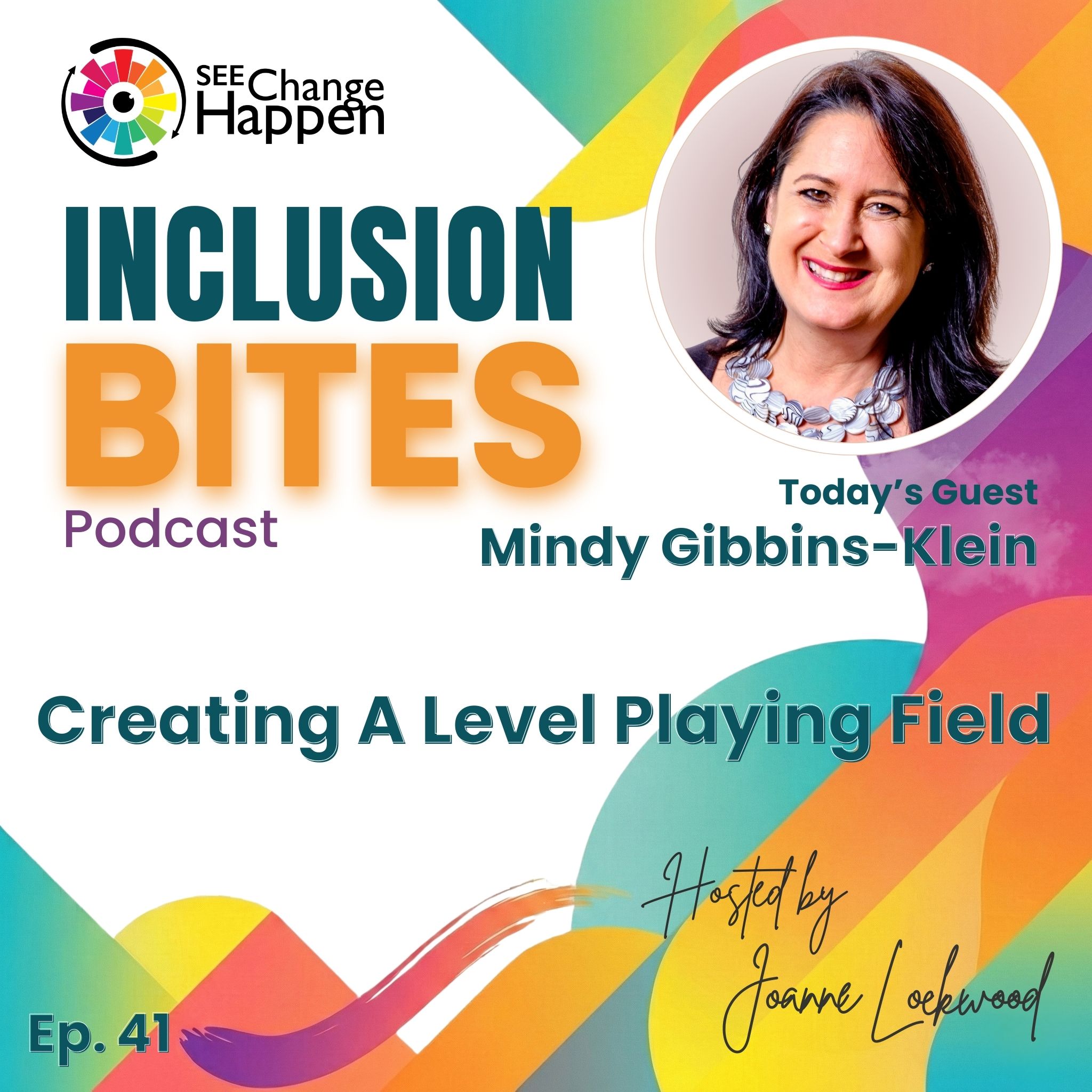
Creating a level playing field so every human can be inspired
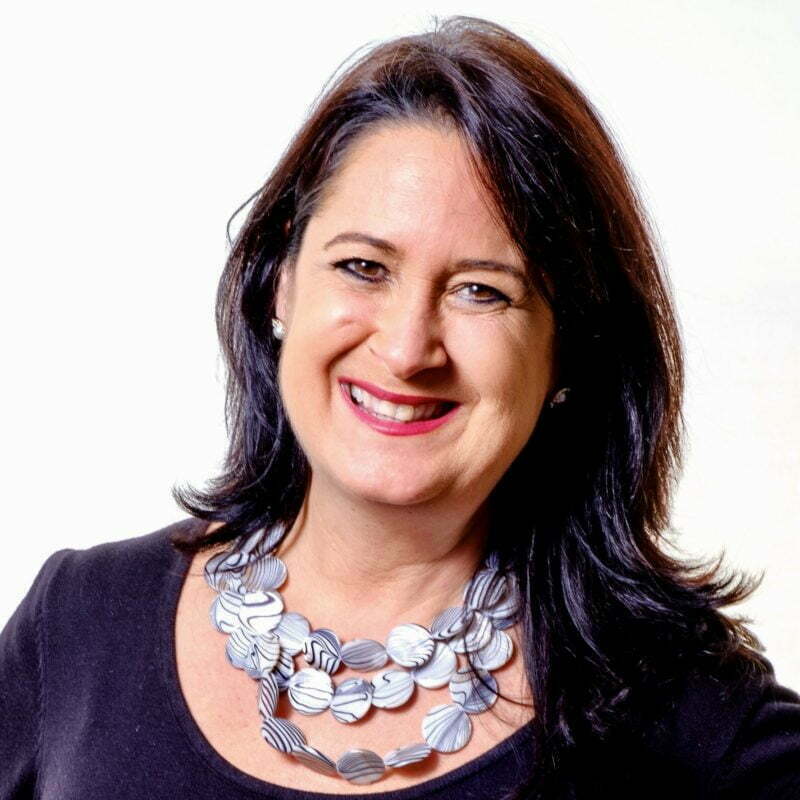
Mindy encourages people to be more thoughtful in their conversations, interactions and the way they show up in the world. This includes putting more thought' into 'thought leadership'.
In this episode of Inclusion Bites, Joanne Lockwood speaks with Mindy Gibbins-Klein about workplace culture systems.
“Left to chance, most people are not given a fair chance.”
Explore
Navigate this episode
Joanne Lockwoodhost
Hello, everyone. My name is Joanne Lockwood, and I'm your host for theInclusion Bites podcast. In this series, I have interviewed a numberof amazing people that simply had the conversation around the subject ofinclusion, belonging, and generally making the world a better placefor everyone to thrive. If you'd like to join me in the future, then pleasedo drop me a line to jo.lockwood@seechangehappen.co.uk.That's S-E-E Change Happen dot co dot uk. You cancatch up with all of the previous shows on iTunes, Spotifyand the usual places. So plug in your headphones, grab adecaf and let's get going. Todayis episode 41 with the title, creatinga level playing field Jo every human can be inspired.And I have the absolute honor and privilege to be joined by MindyGibbins-Klein. Mindy describes herself as someone whoencourages people to be more thoughtful in their conversations,interactions, and the way they show up in the world. When I askedMindy to describe her superpower, she said, helping peoplehone down their message in a way that makes their heart sing aswell as inspiring others. Hello, Mindy. Welcome to theshow. Hello, Jo. It's great to be here.We've been looking forward to this for ages. I mean, we've both been busy overlockdown, getting times in the diary. Finally, we made it. Absolutely,absolutely thrilled to have you here today. Thank you. So we were talkingearlier just before we started recording about this creating a level playing field soevery human could be inspired. What does that mean to you?
Mindy Gibbins-Kleinguest
Well, I think most people would recognize thefact that we don't have a level playing field in varioussectors, in various pockets of society, maybe the world as awhole. And I just feel thatthings could be different. You know? We like tonot only see change happen, we wanna make change happen. Andone of the things that we do here is we lookto inspiration because, we work with a lot ofpeople who want to inspire others, but they need to feelinspired. They need to feel that they're going to be given a Joanne, that theirvoice is going to be heard. Otherwise, they don't bother. Soit's a real shame when someone has an important message for the world and theydon't share it. And, I'm just looking to createmore opportunities so good peopledoing good work can inspire as many people aspossible. That's what we're doing. That's so
Joanne Lockwoodhost
true. We often find that when we're talking to people who are fromunderrepresented communities, minority faith groups, but even in manycases, women. We don't feel that we can speak out. We don't feellike we have a voice. We don't feel like we can be listened to. Andyou're so right. That almost de inspires us, doesn'tit? It sort of makes us feel, well, why bother? That's a real challengewe've gotta overcome. Yeah. That's that's why I do the work I do.Yeah. And we certainly we certainly noticed it when, I mean, theGeorge Floyd murder, the Black Lives Matter movementthat developed. We had in the UK, we had the Sarah SarahEverard murder, and we've talked about violence about women andgirls is now becoming more prevalent. Do you think that people arebecoming more inspired to speak out than they ever have?
Mindy Gibbins-Kleinguest
I think, as I say, people will feelinspired to speak out if they feel that that's gonnaland in a way that that does something.And plenty of people can speak out nowadays, you know, since the birth ofthe Internet. We have millions of blogs. We have millionsof podcasts, you know, millions of live streams. So a lot ofpeople are speaking out, but it it's about what happens after that.So, you know, in the work that we do, if somebody wants to bea speaker, they really want audiences. They don't just wannabe doing a live stream into a black hole. If they wanna writea book, they wanna see it published and they wanna see it touch lives.So I really think that people have to see that level playing field orsee that things are improving. You and I have been in the speaking world along time. I used to call people outwhen they planned a conference, and it was all, pardonme, single white men. And, you know, many peoplehave seen that. And, you know, when I called them on it, the organizers,they would say, oh, we never even thought. Never occurred tous. So I don't blame people for things they can'tsee. Right? I I you know, there's lots of things I don't see.But if you see it and you then don't do somethingabout it, then I'm I'm here to stir thingsup. That's what I do. That's a
Joanne Lockwoodhost
really insightful statement about we can't change things we don't see.And that often comes from privilege. We we we look aroundour our own echo chamber, our affinity of peoplearound us because we're mixing with people like us. We'rehaving conversations that are similar to our own, we oftenfind that we're not challenged by different thoughts, different viewpoints. And when we'rethinking about, as you said, this conference is having an all white animal orpeople call it a Joanne. I heard that's kind of like the term these days.People just think that's the norm because they've never they've never seen a differentway of doing things. Well, I work in the book world
Mindy Gibbins-Kleinguest
as you know, and I'm always looking at these lists ofbooks you must read. And this started a wholemovement. It it changed the direction of both my companies,and we have a stated mission, which we can talk about later, whichcame from seeing that something that wasn't right something wasn't right,and I wanted to make it right or go somewhere towards making itright. But I still see these lists coming out,and the phrase that we use in my companies is this,left to chance. Some people are not given a chance.There's different variants. But left to chance, mostpeople are not given a fair chance. So wedon't really want to see conferences and bookshelvesand, you know, the media left a chance. Isee it changing in in the broadcast media in the UK. I don't knowif you watch TV, but I'm I'm inspired and encouragedby what I've seen. And I don't think it's tokenism.We can talk about it. I don't I really see high quality,excellent standards. So it's just they're trying abit harder for equity, and that's the word that is drivingme, driving my team insane.It's driving me to create equity wherever it doesn'texist. I think that's brilliant. Left a chance,
Joanne Lockwoodhost
most people are not given a fair Joanne, and and that's where we think aboutallyship, isn't it, where the responsibility of somebodywho isn't of that group, community,or marginalized characteristic, the allyship is where we pick upthat strain and our role as allies is to amplify, tospotlight, to create room, to create an opportunity for voice tooccur so that it doesn't become chance. It becomes adeliberate act. And I always say that inclusion is holistic, active, anddeliberate because if we're not being deliberate, we're not being active aboutit, it's chance. As you just said, if it left chance, it doesn't happen. AndI love that quote. I'm gonna I'm gonna I can steal that, but I willaccredit you for it. Steal with pride. Yeah.
Joanne Lockwoodhost
I I think so ally I'm I'm really passionate myself about allyshiparound that, whether that's around female allyship, whether that's aboutLGBT allyship, black allyship, or brown people, or nonwhite people. Really passionate because you're right.I've seen a huge shift in the in the content of the BBC. II tend to watch the BBC in the UK. I've seen a hugeshift in the type of programs I was watching to mid last nighton how children in the fifties and sixties who are black from theCaribbean didn't receive the same education. I've seenone recently around Leanne from Little Mix when she was talking about how shefelt tokenized as a as a as a black girl on the on the crew,and she didn't have any any black support. It was all white support on theteam. And they really are shining a spot right now on these inequities.And this, as you say, we don't see it. We can't change it. People justhaven't seen it. And I am seeing the shift in BBC content. I'm seeingthe shift in presenters, the shift in the themes. And, okay,it's you can you can argue it's not going fast enough or not going farenough, but I've definitely seen that. For the last 2 years, I've definitely seen theBBC's editorial and and production as really, really changing.
Mindy Gibbins-Kleinguest
Yep. That's exactly what I was thinking. I didn't mention the BBC, but that, youknow, they're a they're a shining example for the rest of us.But we're you know, I see a lot of things on a smaller scale, asI know you do too. And we we're both inundatedwith requests and connections and, you know, informationabout events happening here, there, and everywhere. So we have the chance to look atthe smaller events and what's happening more locallyand the things that we can influence as well. I don'tfeel I have a particular influence, when it comes toBBC and, you know, who's reporting and what stories the producers choose.But I do have influence in lots of other areas. And for our listeners,you have influence. You may not realize it, butevery interaction, every piece of communication,every time you open your mouth or type something, youyou are choosing to use your influence. So it's really about choosingthat in a more intelligent not not intelligent way,emotionally intelligent way. You know what I mean?
Joanne Lockwoodhost
But most people don't they just think it's it's not ontheir radar. I mean, I I I'm a I'm a DNI specialist. I talk aboutthis all the time. I find myself sometimes you almost feel like you'rean inclusion bore sometimes or people end up sort of saying, oh, I can't saythat because you'll hear Joanne or that. No, no, you can say what you want,but just be mindful about what you're saying. If my presence makes youdouble think, then that's what I'm doing. I'm not policing you. I'm just makingyou think while I'm here. So maybe you should think while I'm not here aswell. But that's that's the challenge. People don'tthink consciously around their language, their whothey're excluding or tolerating or notreally embracing. How do we how do we get peopleto sort of bring that to the front of their mind more? Because onceyou've had a a life changing moment,maybe an illness, maybe an accident, you suddenly become more self aware ofthe space around you. But most people just progress through lifejust being them and never considering others in the same way. Well, you
Mindy Gibbins-Kleinguest
mentioned that you mentioned what happened with George Floyd, and I read about that ina recent ebook that I've published, which, you know, isabsolutely horrendous. And, you know, when I think aboutit, I still shudder. However, it did something good. It it,you know, shone that spotlight, as you were saying.And I do think it makes people more aware on a on a permanentbasis, maybe not one incident or one story.But once you once you open the door a crack,you can then open it a bit more. If it's locked shut, youcan't see anything. And I I thinkit's good to help people see things. I think the work that youdo is phenomenal. All of us do ENI specialists.I'm I'm not even one. Why am I including myself? Okay. I've includedmyself. But the work I do is in thatarea. And what I have noticed ispeople are willing when you don't see it, you you don't even know what you'renot seeing, as I said. But if you are thoughtfulabout the way you bring these things up, you remember yourinfluence, and influence is a privilege, thenyou Joanne, in fact, bring people into the conversation. TheyI I think most people really do want to be a betterperson, you know, do the right thing.And, you know, I think it's great when some people are rolemodels or, you know, just showing people the way in a gentle andthoughtful way with respect.
Joanne Lockwoodhost
I mean, I was kind of personally a bit shockedabout, yeah, the BAFTAs this year and and what and the andthe revelation about Noel Clark. Because in the past, we'vekind of associated this me too witholder white privileged men. And assuddenly we've got a young black guy whois propagating the same things that we thought was reallyjust just consigned to this the older generation. And Ithink that's really woken me up to the world that we've gotta keep being ontop of this. We can't let it slide, can we?
Mindy Gibbins-Kleinguest
If there's something that you notice in theworld, I'll keep it really broad, really high level,and it doesn't feel right, and you know it's not right,and you can do something to make it right orjust to kinda shine that spotlight, then that'san opportunity. So, you know, I really don'tthink that you or I or any individual cancreate world peace or end world hunger or any of these massive things.But it does happen on a personal level withmore people becoming thoughtful, becoming thoughtful leaders,doing their thing. Others will then see that andfollow. And so each one is a drop in the ocean.And I I feel inspired by what Isee. And, like yourself, I will alwaysbring something up in conversation that, you know, makes people'seyes roll or whatever. But until we have that level playingfield, that's what we need to do. The funny thing, though,is how threatened some people feel. Because whenI've called out these creators of the book lists,and said, how come there's 38 men on this listand 37 of them are white, in fact? They getdefensive. And, in the comments, you know, I'll get haterssaying, well, you know, what about us? And,you know, I just say, well, you've had 200 years of white privilege. You know,come on. That's so true.
Joanne Lockwoodhost
People are afraid to give ground andit's not about ceding privilege. It's not about giving ground. It's notabout losing anything. It's about winning by everybody else gettingmore. That doesn't mean you can say you get less. The old saying goes, it'snot pie. It's just about creating more space,not taking your space. And it should cost you nothingto embrace and amplify somebody. It shouldn't cost younothing to to think about somebody else's needs and feelings. It costs younothing to to accept someone else's identity,language, or however they wish to describe it. It doesn't cost you anything. Peoplefeel that that they've got a it's challenging their own rights.We just we've gotta really change the attitude, but it's not about changing your rights.It's about giving people more access, more opportunity, lesschance as you put it. So looking out for
Mindy Gibbins-Kleinguest
those opportunities. You know? If you don't seeit, don't blame yourself for not seeing something. Again,what can you do to get out of the echo echo chamber a littlebit? You know, I must admit, I like hanging around with peoplelike me. However, there are so many different aspectsto me that I can usually find a very diversegroup of people to talk to, to hang out with.It's you know, that's one of the things that I've started doing personally. If thiscan help anyone, great, because, you willalways gravitate towards people who make you feel good, people you havethings in common with. But think about all the different aspects ofyourself, your personality, your background, where you've traveled,your interests. So not just what you look like, your race, yourgender, you know, lots and lots of things. And then by definition,you will be associating with people from lots of diversegroups. If for example, you know,I I love Avatar, the film,and that's why, you know, I could watch that every dayof my life. And when I find another Avatar fan, Idon't think, oh, hang on. She's not a white gal like me. I don'tthat would never occur to me. I just know that there's a kindred spiritthere. Jo, and and yeah, you can get into all of all ofMindy's, favorite films and booksand foods and yeah. So that's the kind of way that you can diversifyyourself and, and your associations.
Joanne Lockwoodhost
As I was just to tell, I mean, I actually before I say, I Iquite like Avatar. I think it's a beautiful film. There's so many different dimension somany different dimensions to it. Andjust the the romance, the the hate and stuff that's goingon in there as well and the sort of the factions and and because they'rethey're they're blue creatures from another world, you can address thiskind of racism effectively in that filmwhen it's not not threatening anybody because nobody's identifying with the goodies or thebaddies, really. They're just but they can see what's going on andhow really it's all about love winning out, opportunity bringing it out,and just living peacefully. We don't need to create a conflict. So, no, I Iagree. I think it's I think it's a great hidden message in there that maybenot everybody sees through to, but it is fantastic.But, yeah, I forgot what I was gonna say now. Diversity, yes.I agree. I'min my mid fifties. I've had a fairly broadexperience in my life. I've traveled the world a lot. I know you have toI've got involved many things. I've had several careers. I've hadseveral careers and a couple of agendas. So I've I've had extradimensions in that. So I I do find that I when I talk to peoplewho you would believe weren't like me, actually, there'sso many things we can find in common. And it's just a case of justkeep probing, keep probing, keep asking. Okay. Right now, we've got it. We bothlike this. We both have done this. We've and we we often don't spend enoughtime finding out what makes us similar, do we? That's theI mean, I often use it as an icebreaker. Find out something you have incommon with the person in in your pair, find that's thatyou both like. But we how often do we sit and have that conversation? Wego straight into, we'd we'd we both have a opposing opinion onthis. Let's get stuck on it. You're right. You're
Mindy Gibbins-Kleinguest
right about that. I think it is we're gonna use one ofmy favorite words now, which is intention. That it thatis where it all starts. I write and speak about it all the time.We oh, how exciting.Somebody believed And the ice cream ice cream ad. Ihave, a real passion for peoplebehaving in an intentional way. And it goes back to whatI was saying about us not always remembering thepower we have to choose to choose what ourintention is and then act on that. And so if you go into aninteraction with that question in your mind, whatdo we have in common, you will find things. So II think this is easier than most people think. I don't know about you, Jo.
Joanne Lockwoodhost
Yeah. Jo. Completely. I mean, we we had a conversation just before we push pressrecord, and it turns out you you were well, stillare a gold card holder for certain airlines. And I said, well, actually, Iwas a gold card holder for certain airlines as well. And we loungepasses and all that. So suddenly, just by the fact we traveled alot, we have a similar kind of gold card experience, if youlike, and that we wouldn't have known that without that that briefconversation about, you know, what we've been doing for the last 12 months and someof the frustrations of airports. But you you do realize we've just
Mindy Gibbins-Kleinguest
alienated all of the, you know, carbon folks who are thinking,oh, you're adding to the problem.
Joanne Lockwoodhost
I I I haven't had a gold calf for 20 years. Well, it's so Itwas trendy back then. Yeah. Don't tell Greta. If Greta hears, thenit's just I'm one of the baddies, yes. But no, I agree.We've learned. I mean, in the same way we were talking just now aboutif we don't know, we can't change. We didn't know aboutcarbon. We didn't know about plastics. We were just blind to itbecause it wasn't a conversation people were having Or if they were,we weren't listening or it wasn't being said in a way we could hear it.And there's a whole load of things that we're probably still doing that we'll learnin the years to come that we should have done. And that's that's about tryingto be waking up to everything, isn't it? Yeah. And and I think
Mindy Gibbins-Kleinguest
the awareness and the willingness to say, hey. I don't alwaysget it right. In fact, lots of times I get it wrong. Here's here's mymistake or error of judgment. Here's how I want to putit right. And so if you don't mind, I'll apologize rightnow for using the word insane about 10 minutes ago.You maybe heard me hesitate before I said it, and there were 3similar words I could have used, all insulting in a mental healthsense. Jo, no, I'm really aiming to become more selfaware and more thoughtful about these things. But, you know, we're gonna put afoot wrong. We're we're human. And that's what it's all aboutis, you know, acknowledge your humanity and andcelebrate and give yourself a pat on the back every timeyou choose to behave in a more resourceful way.That's the best way I can put it. Every time you do something thatis heading in in the way you want to be living your life, whatever thatis, you know, more thoughtful, more caring, more inclusive,more generous, whatever, Just recognize that and giveyourself that pat on the back.
Joanne Lockwoodhost
Yeah. Completely. And I I think we're setting ourselvesan unwinnable target if we think we have to be right first timeevery time. It's about learning. It's about making mistakes. It'sabout, I also say, it's about being accountable. So if I know I've madea mistake, I apologize. I acknowledge it. I
Joanne Lockwoodhost
put that right rather than pushing it away saying, oh, don't oh,come on. Are you joking? Doesn't matter? It does matter topeople. And in the same way that I've I've learned those certain words orphrases that people many peoplebelieve or or feel are racist. AndI've looked up entomology, and I find some of thedefinitions questionable whether it is or isn't. But rather thanargue with somebody about whether something is or isn't racist, I I say tomyself, you feel it is. I I don't need to argue aboutthat. I could I could use a different word or phrase. It doesn't it doesn'tcost me anything to adopt my language. I don't need to arguewhether it is or isn't racist. I just accept it is for you,in which case I will never use that phrase again. And I in the sameway that because you care. That's because you care enough to do it.
Mindy Gibbins-Kleinguest
And so, you know, having the intention to care, havingthe intention to, you know, behave in this thoughtful and resourcefulway, It's wonderful when people areenlightened like yourself and they care enough. And so we'rehere doing this work to open the doors. I say toenlighten, not that we're enlightened,but we're enlightening. And that's the work that that needs to bedone. Right? Open the door and more light will come in.There was there was a real, fantasticquote I've just finished reading Daring Greatly byBrene Brown. And one of thequotes that I highlighted was I'm gonna paraphrase if I don't get itright, but we we need toappreciate the cracks. That's how the light gets in.I love that. Yeah. You know, we're not perfect. No. That's that's
Joanne Lockwoodhost
yeah. No. We're not perfect. I I also learned about,the indigenous people from Northern Canada and that part of theworld and the term I used for yearswas offensive and it meant eat war fish or something. It was kindof a really stereotyping word andI've learned the new word Inuit is I think which is the the name weuse now. I'm very conscious about making sure that I retrainmy brain every time I want to use the old Lockwood, Rememberthe meaning, remember how insulting it is, remember how stereotyping it is,and choose the choose the name that they describe themselves by, that theyrespect yourself by. And that's all we can do, learn that newword, practice it, practice it, practice it. In yourhead, you get it wrong, you you catch yourself before it comes out.Yeah. And you you get in the habit of saying that. If you can catch
Mindy Gibbins-Kleinguest
yourself before it comes out, not like me a few minutes ago.I want to, I wanna ask you about the word wokebecause my PR company has a whole campaign going on. Iwas called woke. I had to look it up because I'm not very trendyor cool or anything. I didn't even know what it was. I was like, oh.And I started saying to them as we were planning our marketing for this year,I said, but I'm I'm happy to be woke. In fact, I'm proud to bewoke. So our hashtag is now woke and proud. But whatis your take on that? I see
Joanne Lockwoodhost
people banding around as an insult or a slur. It's almost likeputting you down. Oh, that's just woke. It's like a snowflake, you're woke.Right. And I sat down, I Googled it like many of us probably did.I've researched the word and a phrase Ilove is woke is obviously woken,awoken is where it comes from. So the opposite of woke isasleep. Right. I don't want to be asleep. Right. Idon't want to let the world pass me by. Therefore, I'm proud tobe awoken Yay. Till we wake it up to the world. JoI'm proud, if you wanna call me woke, in the contextof aware, forward thinking, and not asleep atthe wheel. Great. That's me. Great. That's how I see the word wokeis it's a it's a state of mind to be aware of thesurroundings, aware of language, aware of environmental and sustainability,aware of the future of the planet. I think that's that's thepositive angle of woke. And, yeah, I'm woke. Woke and proud.
Mindy Gibbins-Kleinguest
So hashtag woke and proud, everybody who's listening. We'd welcomeyour support with this. I'm just gonna write that
Joanne Lockwoodhost
down. Woke and proud. Yeah. I'll make I'll make sure I tag that into theepisode. The only person who uses that. I'm not I'm not the only woke and
Mindy Gibbins-Kleinguest
proud person on planet Earth. So we we need to, youknow, we need to shift that. Woke is a great thing to be.
Joanne Lockwoodhost
It's not but but people weaponize it. They're trying to insult you by saying,you're one of the woke crowd. Yeah, I am. Yeah.Yes. What? Let me explainwhy. Yeah. I'm happy to talk about it. Yeah, yeah, exactly. I'm not asleep. I'mnot asleep, won't be asleep. Yeah. We met, what, 3or 4 years ago at PSA, Professional Speaking Association meeting, didn't we?Yes. And I think when we met, you were telling me about your TEDx.Mhmm. You you happy to talk about your TEDx? I am very happy talking about
Mindy Gibbins-Kleinguest
the TEDx, which is now 4 years ago.Yeah. Jo, I mean, people can look itup. Shall I spoil the the ending? No.
Joanne Lockwoodhost
No. I mean, I remember the conversation we had initially about how you toldme about the circumstances that led up. Yes. And howyou how you became woke about Yeah. Whatyou were talking about. You know what? Look. It won't be a surprise, but that
Mindy Gibbins-Kleinguest
that's fine. Look. I think it's still a powerful talk even if people know what'scoming up. The thing is I have a son who's transgender,and it's not even a word I knew. Sameas woke, the first time I heard it I thought what is it?But I had to definitely figure it outbecause this is my son. This is a member of my family.And my journey, the the point about the TEDxtalk was to show that I don't feelthat I made the most resourceful choices in my behavior.I didn't cope the way I would have liked to. I didn't act like theperson I thought I was or the person I wanted to be. Andit took me a while to come around to it andaccept and unconditionally accepthim. And, you know, it's so crazy talking about it now, butI had to oh, there we go. It's so different talking about itnow. And I didn't want there tobe, an association that there was somethingwrong with me or him or it wasn't. I used it as ajumping off place to talk about how when thingshappen or when something occurs to us,we feel whatever we feel, but we canchoose to act. So, you know, itit didn't take me as long as as long as it could havedone, but it was really about the message that came out of it. Youknow, if if you're not happy with your own behavior or somethingabout yourself that you can choose. You can, you know, thinkabout it. Be thoughtful. Do you want to learn,you know, unconditional love and acceptance? Is it possiblethat just if you look at it differently that that changes the way you lookat it? Or do you need to change the situation or somethingabout yourself? And that was my big realization.So obviously, my son was changing, you know, a big thing about himself,And it gave me the chance to change a lot about myself.It wasn't a situation I ever expected to be in. And thankyou for asking me to talk about it. The talk hasreally opened so many doors for me to have conversationswith other people, people from lots of differentpaths. So, yeah, that's that was my journeybased on my son's journey. I
Joanne Lockwoodhost
I, obviously, I experienced that journey for myself the other wayaround. So I was the I was in the center, and I ittook me a long while to realize the impact I hadon others. So at the beginning, I came from aworld where my echo chamber says, it's all about YOLO.It's your life, get on with it, you're going to live once.If everyone doesn't accept you, cut them loose and moveon. So that is the peer pressure you get withinmy community at the time, basically saying, justpush on ahead and don't care about anybody else's feelings. Andwhat happened to me was I I started to realize the impact Ihad on those close to me, my my wife, my my 2 children, my daughterand my son, my mother, my father, my brother, andalso the people who've known me for 20 or 30 or 40 years.I completely underestimated my impacton them. And I think in the same way, Ibecame awoken tothe needs and feelings of others where I had never probablyconsidered those feelings in the same way ever in the past. AndI had to accept that people needed to get to know meagain. I couldn't just demand recognition.I couldn't just demand acceptance. I couldn't demand anything.What I found was I had to reestablish,reconnect. I remember saying to mywife probably about 4 years ago, in a moment ofsadness, you'll never be proud of me again because we're going through thattough time in my life. I felt that I was an embarrassment. I feltlike I wrecked her life. I felt that everything we were goingthrough was really causing us so much pain. And Iremember probably 3, two and a half years ago when she said, I'm really proudof you. And the emotional release that gaveme was I'd I'd finally earned her respectand trust, and she was proud of me.But it took my daughter even longer.And my daughter's getting married in 6 weeks' time.And our relationship broke down to the point where shecompletely rejected me. She completely switched off about me. She wouldn't she wouldn't speakto me. She wouldn't return any of my calls. You know, to paraphrase, I wasdead to her effectively, the way she put it. And we wentout for coffee the other night. We reconnected about a year ago. We went outfor a meal, coffee in Brighton Marina. And she wanted totalk to me about that phase of our life together and howshe felt going into it and how I felt. And weboth sat thereMcFlurry and we fried in the car park and we really just bonded.
Joanne Lockwoodhost
But I think what happened was we we we failed tocommunicate at the right point and that that failed to communicate. Therewas an assumption, there was a feeling, and my daughter hadmassive anxiety attack about addressing the problem. She knew shecouldn't, so she walked away. And I'd never had a relationship with mydaughter where she wouldn't talk to me. We had we had a kind of aa hot relationship where we were either at each other's throatsand really dealing with things and scratching and screaming at eachother and really working on the issue live and hotor we were hugging. And so I'd never had the point I never underI never understand her that she could disengageand bury her head in the sand and and hide the the problem.And I didn't know how to deal with that. And when we we talked aboutit the other night, we both unpacked that, discovered it.And I learned something about her that I never knew. And I completely empathizeon her, know where she's coming from now, and I can actually see it asother things she did, how she used to hide her homework. Now when she wasgiven the task of ironing, she used to hide the ironing in the cupboard untilwe found it a month later. So she was a very much a head inthe sand person, and I I never saw that. And I think withoutthat conversation and me waking up toher needs as an individual, I'd never discoveredthat. Well,
Mindy Gibbins-Kleinguest
again, you both had the intention because youboth cared. So, you know, in in your case youcould have said, oh, whatever, you know, living my life.And she, thank goodness, you know, realized that it wasimportant to have to reconnect with you. You know,we, we're all on a journey and and it takes it takes2 to tango as they say. And you can do what youcan do, if anybody listening to usfeels they're not accepted or they don't belong to bring that wordin. You can only do so much. Again in theBrene Brown, it says Jo fresh in my mind, but I know I have toquote the study that she did, the difference between belonging andfitting in. I'm sure you know it. I'm sure you quote it yourself. Youknow, belonging is you being part of a groupwhere they also want you there.And, and if you're not, then and you're not fittingin, you know, you want to belong but it's not happening,then you have some choices to make. And, you know, it does goback to what I was saying about, unconditional love andacceptance of the situation or yourself or them orchange something about it. So we always have that choice.
Joanne Lockwoodhost
I I think for me, fitting in is forcing yourselfinto a hole where you almost fit,whereas belonging is that hole is just for you. It's yourwhole. You create space, and thespace absorbs you around you where whoever you are, psychological safety, theshowing up, The real you, but fitting in is you'realways compromising that the edges are slightly you can'tquite go there. You're slightly square edges in the roundholes within. That's the fitting in. You're you're always worried aboutcompromise. Well, it's just is that. It's fitting in
Mindy Gibbins-Kleinguest
trying to fit in is stressful, whereas belonging just is. Youyou know you have a sense of belonging when and, you know, it it's,it goes back to what I was saying before. You know, people havecertain, I don't know what you call them, criteriaor or just aspects that they are using to figure out ifthey belong with with someone else or if they're part of that group or ifwe have things in common. But if you expand your definition and yourunderstanding of the whole person, chancesare, you know, you you you do belong together in in, youknow, in pretty much any situation. You can be with someone else. There's very fewpeople that I couldn't form a connection with.And I and and I have connections with I was just gonnasay a word that I'm not sure is right. I was gonnasay psychopath. But I have no idea. I'm not apsychologist, and I'm not gonna say if the person I'm thinking about is 1 ornot. All I can say is that it takes an extra effort withsome people, and then I have a choice. Do I want to make that extraeffort? And if I do and they don't, then we're still in a bit ofa bind. But, yeah. It's it's it isfun. Is there empathy? Is there compassion to be truly
Joanne Lockwoodhost
do we truly give wanna give time to other people? And Yeah. Yeah, as yousay, that word you use psychopath, the traits there are there is noempathy. There is no consideration of others. It's all about Right. Personalself, if you like. But can you have empathy for that person so that, you
Mindy Gibbins-Kleinguest
know, that this is a lot of the work I do is around,being thoughtful even when others aren't. Showing respect even when someonedoes not. And, you know, caring about someone evenwhen it's pretty obvious they don't care about you. This is the grittystuff that I like working with, you know, and and it'sit's comes down to your intention and your choices.
Joanne Lockwoodhost
Yeah. You may know this lady as well. I met somebodyat PSA, Official Speaking Association Scotland meetingand she was married to a multiple pagerist whoobviously had, psychopathic, sociopathicinstincts because they had no empathy for the situation they're causing. Iremember her saying, it's like blaming the lion foreating the antelope. The the lion doesn't have feelings for the antelope.We may go, oh, that's so sad, but the lion is doing what it doesnaturally. So you can't blame the lion for doing what it does. So sociopath orpsychopath, you can't blame them necessarily for being that way. That's just theway their brain is. See, it's not a blamething, it's just acknowledging this person doesn't have empathy.I can't change that. I have to accept in the same way that I wantthem to accept I have empathy. I have to accept they don't have empathy, andwe can agree to differ on that or I learned to manage thatrelationship. So I'm I have safety in my own feelings and they don'tabsorb me. Yes. That's right. So it's acknowledging that difference ofcharacter, difference of thinking different to them and not treating it asa they're bad, I'm good. Right. That's a bias again, isn't it? That's our ownbias of kicking them. Whatever I do is good or whatever someone else does isbad. I have Jo, no, you're just a lion, I'm just theantelope. There's no remorse, it's just the way you are. If I letyou eat me, you will eat me. That's fine. I know that. I'm stepping awaynow. Well, thank you for leading straight into one
Mindy Gibbins-Kleinguest
of my topics, because in the thoughtful leader, I talk about thebubble. And it's it is a very interesting concept because alot of people are saying you shouldn't have yourself in a bubble, but the bubbleis all around psychological safety. The bubbleis all about you making sure thatyou are not being influenced, in a negative wayby people who are in your sphere of influence. So wesometimes don't even realize who and what is influencing us.That comes back to, again, open your eyes, be awake, bewoke, and see what's happening. And then ifyou realize that, you know, somebody is behaving in a certain wayand you aim to have that thoughtful conversation and they're not playing,you have your choice. And step away is a valid response.So we do not have to engage with every singleperson in every single situation. That that's a lot of pressurethat people put on themselves. However,it's it's a spectrum of a of a certain kind because ifyou disengage to the point where you're totally protected,you you feel totally safe, but you never talk to a living soul, and youdon't leave your house, and you you know, that that's you're missing out onsome really beautiful aspects of humanity, I feel.Maybe some people don't think that way, but, you know, I I thinkthere's it's somewhere in the middle. What do you think, Jo?
Joanne Lockwoodhost
Yeah. I I think you're right. And often when I talk to people in inin my inclusion and belonging work, there's this fear of gettingit wrong. There's also this fear ofit's too enormous. How do I include everybody? Isay, well, actually, inclusion is not about including everybody.And it comes down to the idea if you've got the freedom principles, fairness,respect, equality, dignity and autonomy.So when you're making a decision about whether whether to include or excludesomebody, are you being fair? Are you given opportunity andchoice and equality? Are you making sure that you're you're dignifying themwith the with the way you're treating them? And if you could apply that testto every decision you make and you don't and you feel that somebodyisn't for you, then you've done it fairly. You haven't you'vebeen subjective. You haven't been unkind. You haven't been manipulated andwent on that. So that's the test I would use. And when we think aboutin the recruitment process, you can't hire everybody. Soas long as your recruitment process is fair, equitable,you've got opportunities for all people, and you don't get the jobpiece, you don't have the best skills, that's you're still includedin the process, you just didn't make it to the end. I think that's themistake people make is they gotta try and make everybody feel included. Mhmm. It'sabout being fair about who is selected, who does have theopportunity. I think that's what we've got to try and think about here is isthe mindset that goes into our thought, always thinking, isthat fair? Is that kind? We may make a judgment. You know, we see peoplein the street, oh, I don't like her shoes or that's a a handbagdoesn't go with that dress. And there's a little micro adjustments we make all thetime, but it's stopping it coming out of your mouth because it go, that's that'sthat's unkind. That's not fair. That that has no value to anybody. I'll just keepthat thought to myself and train myself to to try and ignore that nexttime. Aw. And and that and that's because youcan't you can't expect people to not have biases.Biases are there. You can't expect people to not have judgments because judgmentsand biases are all part of us evaluating the world around us. Whatit's about doing is how we manage, though, and how it comes out when wetalk, and that's what we gotta be careful. Yeah. Well, thank you for bringing that
Mindy Gibbins-Kleinguest
up. You and I meet a lot of influencers,and I don't mean, you know, celebrity types. Wepeople who have influence in the sense that they are organizingevents. They have tickets for things. They haveopportunities, collaborations, podcast interviews.So I think when we open up the opportunity toeverybody, we are inclusive. And so it's creating thespace. It's about creating the opportunity. And then thepeople who step in, well, that's up to them.Where we have an issue is where we think we're being inclusive,but the other party doesn't feel that it is anequitable situation, which is a perception. Because maybebecause that particular conference has always had a certaintype of speaker. They all look the same, sound the same, smell thesame. So, you know, the person who's kind of standing on the edgethinks, well, there's no point applyingbecause it it's pointless. I'm not gonna get thatopportunity. I'm not gonna get that gig.I can see that because I've I've had those thoughts myself. Ithink, oh, do I wanna bang my head against the wall?No. Even though it does feel better when you stop. I don'twant to be the person who stops myselfgetting an opportunity. So, you know, I just sortof take a deep breath and and charge in again. And, you know,we have to make an extra effort. So I guess my pointis we have to make an extra effort as the organizer of thatopportunity or event or whatever, in my case, being apublisher. 80% of our publishingslots are dedicated, allocated, and reserved forpeople from underrepresented groups. 80%nonnegotiable. That was my big moment 2 yearsago, and we've stuck to that. And if you're inthat position of influence or or you have that privilege,which it is, to stick to it, make it really clear. Everybody'swelcome. So, you know, when I get pushback, I say, well, we'll still have20% available to people who are not from underrepresentedgroups. It's just, you know, there's a lot of other places where you can publisha book. We're aiming to to, you know,improve that part of the industry. And then if you'rethe person who is thinking, oh, is it worth applying? Is it even?Yes. I might my answer would be yes. It's always worth puttingyourself forward. It might be an extra effort. But imagineif you get that and you pave the way for otherpeople and show that it's possible when you like toinspire others. No.
Joanne Lockwoodhost
For sure. I I think I I dropped in on your conference youorganized recently. It's more US time zone based, I believe.I think I was I was helping one of your conference organizers with their tech,and I got a link, and I just dropped in and had to listen toa few sessions. And you had a verybalanced set of speakers. I I would probably sayleaned more female than male for the for the ratio.And when people say that it's I mean, I hear this all the time. It'sjust so difficult to find good women speakers. It's so difficult to find good
Joanne Lockwoodhost
black lawyers. It's so difficult to find. And Isay, if you're not winning games, change the manager,and then you start winning games. If you if you can't get adiverse lineup, you can't get diverse workforce, change thehiring manager, change the booker, change that because I guarantee you, if youput a a woman in charge of a speaking event, you'll get more women. Ifyou put a black person in charge, you get more black people. Right. And whenI was talking to this recruitment consultant, they said it's really hard to find goodblack lawyers with the specialism. I said, but there were black led legalfirms that have black lawyers and I bet they don't have trouble findingthem. So it's about getting into the community, understanding the valueproposition, speak the language, sound attractive, the brand ofthe organization. And if you're not getting attract if you're not attracted topeople, look in the mirror, look at who you are, look at what you standfor because it's you that's not attractive.
Mindy Gibbins-Kleinguest
Well, for our conference, we didallocate 80% of the speaking slots to people fromunderrepresented groups. That was our intention, and that's what wedid. So thank you for noticing. I really appreciate that. We had peoplefrom every community. We had people. I I'm notsure how well we did in the LGBTQ plus community becausewe we have certain well, we can't have aquota for each yet because it's it isquite difficult to find just the right number of people. Butwe opened it up. We made it clear. We I actually do talk about it,
Mindy Gibbins-Kleinguest
which is it does sound very woke and almost non PCto say we want you because you're froma minority group. I mean but I've I've just got used tohaving those conversations. Not we want you. We we we especiallywant you because you're from that group and you're a good speaker.So as long as I'm coming from the right place, as long as I havethe right intention, everybody raved about theconference. I don't know who else noticed because some people wouldjust be like, okay, those were the 20 speakers. Would they noticethat 16 were not middle aged white men, middle agedstraight white men? I don't know. Able-bodiedanyway, you you you get the idea. We didn't. We opened itup, and we managed that.It's it's a choice, and it is extra effort. And some peopleare thinking, oh, you know, I don't I don't know howand and I don't really have time to put in the extra effort. Butthen again, you know, this is gonna reflect onyou. Yeah. Complete I completely agree. I I as
Joanne Lockwoodhost
I say, I did notice because, I I mean, first of all, I noticedbecause the lead emcee was female.All of the organizing committee were female. So I knew Iknew how it was being structured and organized. Therefore, it wasinclusive by default rather than inclusive as an afterthought. You weren't trying to boltin other people after the event, it was startedoff with that as the framework and I think that's the problem some people makeis they try and reverse engineer the diversity quotient. Jo, I mean, Itokenized. Sorry. I only run one conference a year. I can't
Mindy Gibbins-Kleinguest
afford to play, you know, tokenism becauseif that conference doesn't achieve everything that we hopefor, we're we're not gonna be able to continue in future. We'vegot big plans. It's, people are wondering what we're talking about. It's called theAbove and Beyond Thoughtful Leadership Conference. It's all aboutthoughtful leadership, so we kinda have to walk our talk. And,we will get you to speak at one of the conferences, Jo, forsure. Okay. Okay. Jo we're,yeah. Well, I mean, I guess we still have a little time. I don't knowwhat other question you have for me, but I could Oh, I was gonna go
Joanne Lockwoodhost
back to the title of the show Okay. About Chris' level playing
Joanne Lockwoodhost
field. It's easy for us to sayas white people with privilege that we're living the playingfield. I perceive that manypeople would consider the playing field to be so stacked against them.We're not even we haven't even got the new turf ordered yet.We're still trying to we're still trying to get the diggers into trying addsome dirt into that. The whole playing field is builton probably structural racism, societal.We look at stop and search, we look at we talked at BBC program earlierabout the inequities in their education system, theopportunities that failed to exist. This this playingfield is so bumpy and so stacked against a large part of thecommunity. Are are the are the privileged peoplegetting more privileged? I mean, there was a thing about the the governmentdepartments, the senior civil servants about this velvet drainpipe, how the ratio of privileged middle agedwhite men generally starting straight up this drain pipeinto these positions where people who are from the minority communities really arestruggling to get into these higher opportunities. So we may be living in theplaying field at the front door, but actually when you get to where it counts,it's still stacked. I think it counts at every stage, to
Mindy Gibbins-Kleinguest
be honest. I I think, when you get when it justbecomes the norm and nobody really thinks about it, but theysee a truly diverse organizationor group or team, then, youknow, you you have a diverse group who who are all, you know,aiming to move up. Then you can address it at the next level and thenthe next level and then so it it it's like you said, you know,you you Joanne tackle the whole thing all at once. You you can't, youknow, say, well, I have to include everybody. That's a big ask. That's a lotof stress. It's like boiling the ocean. Not gonna happen.Never. Well, I don't know. Climate change folks might say it'shappening. Yeah. I'm sure the dinosaurs thought that and then it
Joanne Lockwoodhost
it kinda happened, didn't it? Yeah. But we You know,
Mindy Gibbins-Kleinguest
being enlightened about these things is the first step.It acknowledging that you're a caring person and then askingyourself, are you willing to do a little bit more? Yes. It's tough. Yes. It'sbumpy. There's no turf. Get your shin pads on and get in thereand play. Play the game. Just enter the fray.It it, Yeah. It's hard, and a lot of people won't gofor it, but then that's that's kind ofPareto, you know, the 80 20 principle.80% of of people are justhappy, you know, ticking along, doing their thing, keeping their heads downand, you know but the 20% who think,yeah. You know what? I could do more. I could create more. I could createmore opportunities. I could help more. I couldspeak and use my influence in a positive way.Yes, you can. And, I feel I feel like I'mon a a political podium and, yes, you can. Yeah. That's good.But the soapbox is out. Let's go for it. Yeah. No. I mean,
Joanne Lockwoodhost
I often say it, and it Joanne sound a bit cliche if you're not careful,but you can't change the world, but you can change theone. Be the one, be the one person thatsays not on my watch, I can make a difference personally.And then to coin a kind of a COVID phrase, becomeinfectious. Get the r number of inclusion, the I numberif you want, up to up to 2. Infect people with yourethos of inclusion, belonging, leveling the playing field,then the one becomes the many. And then we can do that one at atime. The other thing I often say is a snowflake on itsown hits the ground and melts. A snowflake with its friendsbecomes an avalanche. Avalanches change landscapes.So be that part of that avalanche of of momentum andbe the one that joins in. I love that.
Mindy Gibbins-Kleinguest
I I use a snowball metaphor, but it it's saying thesame thing. The only thing I would add to thatis focus on yourself. Do yourthing, you know, think about your intentions, put extrathought and care into your interactions, goout there, put it out into the world,and be be thoughtfully inclusiveand equitable and and create that.What happens after that, we need to almost let go of thatbecause I feel very strongly that, we cannotreally control how our message lands,how people will react to what we're doing and saying.So just remember your influenceis all about what you put out there. And if you doyour best with the best intentions, it it will have thateffect. But, just just keep your eye on yourself because Ido see a lot of people getting upset whenthey don't seem to get the traction and they they knowthat you know, you won't always, but keep doing it anyway.That's what I would say. Brilliant.
Joanne Lockwoodhost
And those words of inspiration, I think we'll,we'll let our listeners check the show notes. I'll say, how how can peopleget a hold of you and tell people a bit more about what you dobefore we move on? So how do they get a hold of you? Hold of
Mindy Gibbins-Kleinguest
me, https://mindygk.com. It's my supposed to bemy official website. There are so many other places though wherepeople can find me. I'm trying to use Mindy GK here and there because,people spell my last name in a funny way andthen they don't find me. The Thoughtful Leader The thoughtful leaderhas many formats of book, ebook, audiobook, aswell as my podcast, as well as my clubhouse club called The Thoughtful Leaders,plural, because we wanted to be more inclusive, not just 1,and reach out. I have a very inclusiveand expansive connectionand relationship strategy. Until Iget up to my limit on any social network,I'm open. If someone abuses it, they're cutoff. But until then, you know, connect with me. Iwould love to chat more about these topics.
Joanne Lockwoodhost
I suppose if anyone's got a book inside them they're dying to bring out tothe world, look you up. Yes. And if ifyou can't help, you know people that could help. Well. Especially if they'renot a typical If they're from an
Mindy Gibbins-Kleinguest
underrepresented group. Yeah. So I do I do
Mindy Gibbins-Kleinguest
run 3 companies. I I run the thoughtful leadershipcompany where I do my speaking and training on these topics. Ialso run a book coaching company that is going strong19 years now, running the book midwife, and the bookmidwife is a metaphor. I'm not a real midwife, so don't call mein the middle of the night. I've got the baby. And I run Panomo PressPublishing Company. So Panomo Press is,the publisher for business, self help, and lifestory type books that, yeah, 80%are authored by people from underrepresented groups. So I would love to speak withanyone about any of those things.
Joanne Lockwoodhost
Fantastic. Well, thank you so much.I I'm sure we could talk for another couple of hours. There's lots we couldhave covered and absolutely fantastic. Thank you so much for your time.And of course, thank you to the listeners for tuning inand getting to this point in the podcast. Thank you for sticking with it. Andif you haven't subscribed, please do subscribe to keep updates on futureepisodes of the Inclusion Bites podcast. That's B-I-T-E-S.Tell your friends. I'm sure you have a couple. Tell your colleagues. Spread the wordand share. I've got a number of other exciting guestslined up. I'm sure you'll also be inspired by over the next few weeksmonths. And, of course, if you'd like to be a guest, if you've got someinspiration or a story you'd like to tell, then join me. I'd alsowelcome any feedback and suggestions on how we can improve the show.Just email me jo.lockwood@seechangehappen.co.uk My name is JoanneLockwood . And it's been anabsolute pleasure to host this podcast for you today. Catch you nexttime. Bye.
Creating a Level Playing FieldBias and Judgement in the WorkplaceReclaiming the Concept of 'Woke'
Joanne Lockwood speaks with Mindy Gibbins-Klein about what it really takes to create a more level playing field so more people can be inspired and, crucially, feel able to speak up.
They explore how opportunity and access are often left to chance, and why intentional action matters in environments like conferences, publishing, recruitment, and media. Mindy and Joanne discuss allyship as a deliberate practice: noticing who is missing, creating space, amplifying voices, and taking responsibility for changing patterns that otherwise repeat by default.
The conversation also covers how people can become more thoughtful about language and impact, including acknowledging mistakes, apologising, and building psychological safety through everyday choices. Both share personal reflections on acceptance, belonging, and connection, including Mindy’s experience as the parent of a transgender son and Joanne’s experience of rebuilding relationships through openness and dialogue.
The episode ends with practical encouragement: focus on what you can influence, act with intention, and keep going even when traction feels slow—because small, consistent actions can compound into meaningful change.
“If there's something that you notice in the world, I'll keep it really broad, really high level, and it doesn't feel right, and you know it's not right, and you can do something to make it right or just to kinda shine that spotlight, then that's an opportunity.”
“Think about all the different aspects of yourself, your personality, your background, where you've travelled, your interests. So not just what you look like, your race, your gender, you know, lots and lots of things.”
“Do your thing, you know, think about your intentions, put extra thought and care into your interactions, go out there, put it out into the world, and be be thoughtfully inclusive and equitable and and create that.”
“The Thoughtful Leader has many formats of book, ebook, audiobook, as well as my podcast, as well as my clubhouse club called The Thoughtful Leaders, plural, because we wanted to be more inclusive, not just 1, and reach out.”
The importance of creating equity without tokenism, and proactive measures like allotting a significant portion of opportunities to underrepresented groups.
Challenges of racial and societal inequities in achieving genuine inclusivity and how organisations can take gradual steps to address these.
The role of privilege and structural disadvantage in perpetuating exclusion, illustrated through metaphors like the "velvet drain pipe" and "stacked playing fields."
Strategies for making inclusion a deliberate effort, such as revisiting recruitment methods and ensuring diverse representation in organising teams.
Insights into the misconception of inclusion, highlighting that it's about fairness and respect, not unconditional inclusivity.
The power of good intentions in creating a "snowballing" effect for meaningful, long-term change in diversity and inclusion initiatives.
Personal reflections on empathy, acceptance, and the balance between fitting in versus belonging, drawing from both Mindy’s and Joanne’s experiences.
One thing to remember
The primary takeaway from Episode 41 of The Inclusion Bites Podcast is the importance of creating a level playing field to inspire everyone, especially those from underrepresented groups. It involves intentional actions, thoughtful leadership, and recognising individual responsibility to influence change. Organisations and individuals must make concerted efforts to ensure diversity and inclusion, fostering a broad societal impact over time.
Questions this episode helps answer
Mindy mentioned the importance of avoiding tokenism in her conference. How can event organisers ensure they are promoting genuine diversity rather than token gestures?
What are some of the key strategies organisations can employ to address racial and societal inequities in their efforts to create a level playing field?
Joanne used metaphors like "velvet drain pipe" and "stacked playing fields." How have these metaphors helped you understand structural disadvantages better?
Mindy compared tackling large-scale initiatives to "boiling the ocean." What are some practical, incremental steps organisations can take to address inequities?
The episode discussed the "snowballing" effect of individuals acting with good intentions. Can you share examples of how such actions have influenced positive change in your community or organisation?
The speakers clarified that inclusion is about fairness, respect, equality, dignity, and autonomy. How can organisations ensure they are upholding these principles in their inclusion efforts?
Explore topics
Ideas from this episode
Creating a Level Playing Field
In a recent conversation with Mindy Kibbins-Klein, we delved into the essential topic of creating a level playing field for everyone, especially in the context of her annual Above and Beyond Thoughtful Leadership Conference. We discussed the intricate challenges of ensuring that such platforms are genuinely inclusive and free from tokenism.
Bias and Judgement in the Workplace
Our discussion then moved towards understanding how biases and judgements play out in workplace environments. Mindy was candid about the natural presence of biases and emphasised the importance of managing their influence on behaviour and communication.
Reclaiming the Concept of 'Woke'
One of the more enlightening parts of our conversation was about reclaiming the term "woke" and using it as a badge of enlightened, socially aware thinking. Both Mindy and I shared our perspectives on this often misunderstood term and how it can be turned into a positive force for good.
Learn
Frequently asked questions
What is the mission of the Above and Beyond Thoughtful Leadership Conference mentioned by Mindy Kibbins-Klein?
The mission of the Above and Beyond Thoughtful Leadership Conference is to promote leadership without tokenism and to ensure a genuinely level playing field that inspires everyone, irrespective of their background.
How does the podcast address the challenges of creating a level playing field?
The podcast discusses the significant challenges posed by racial and societal inequities, highlighting the necessity for proactive measures to ensure fairness, respect, equality, dignity, and autonomy in inclusion efforts.
What metaphors does Joanne Lockwood use to illustrate issues of privilege and structural disadvantages?
Joanne Lockwood uses metaphors like "velvet drain pipe" and "stacked playing fields" to highlight the embedded nature of privilege and the cumulative disadvantages faced by underrepresented groups.
How does Mindy Kibbins-Klein suggest tackling inequities within organisations?
Mindy suggests taking gradual steps to address inequities at all organisational levels, comparing large-scale initiatives to “boiling the ocean.” She emphasises the importance of individuals acting with good intentions to create a snowballing effect for inclusion and equity.
What misconception about inclusion is clarified in this episode?
The episode clarifies that inclusion isn’t about unconditionally including everyone, but about ensuring fairness, respect, equality, dignity, and autonomy when making decisions about who to include.
How does bias and judgement fit into the discussion of inclusion?
Biases and judgements are natural, and the key is to manage how they influence behaviour and speech. Mindy and Joanne discuss ways to recognise and mitigate these biases to foster an inclusive environment.
Share this episode
Heard something worth passing on? Send this conversation to someone who needs to hear it.